Tag Archives: history

Beauty in the Eyes of Truth: Debunking Satoshi Kanazawa’s Racist “Study” on Black Women.

When Satoshi Kanazawa published his article, “Why Are Black Women Less Physically Attractive Than Other Women?” in 2011 on Psychology Today’s blog The Scientific Fundamentalist, he set off a firestorm of global outrage. His so-called “research” claimed that Black women were “objectively less attractive” than women of other races based on statistical data. What he called “scientific evidence” was, in reality, a misuse of data, steeped in racial bias, colonial beauty standards, and poor methodology.

Kanazawa drew from a database called the Add Health survey, which included self-reported ratings of physical attractiveness by interviewers. However, these interviewers were not trained in objective aesthetic assessment — they were individuals influenced by their own biases, cultural norms, and Eurocentric ideals of beauty. Instead of acknowledging this obvious flaw, Kanazawa treated subjective opinions as biological fact, thereby perpetuating pseudoscience.

The title alone — “Why Are Black Women Less Physically Attractive” — betrayed a racist premise. It positioned Black women as a scientific question to be explained rather than human beings deserving of dignity. This type of racial pseudoscience has roots in 19th-century eugenics, which sought to justify white supremacy through “biology.” In Kanazawa’s case, the problem wasn’t science — it was the misuse of science to validate prejudice.

The article provoked an immediate global backlash. Black women scholars, writers, and readers flooded Psychology Today with demands for its removal. Within days, the post was taken down and disavowed by the publication. The London School of Economics publicly condemned Kanazawa’s statements, suspended him from teaching duties, and launched an investigation into his conduct. Psychology Today later issued an apology for publishing the article at all, acknowledging that it failed editorial standards and promoted harmful racial stereotypes.

Satoshi Kanazawa was not a random internet blogger — he was a university lecturer and evolutionary psychologist who often courted controversy. He had previously published inflammatory posts suggesting that African nations were “less intelligent” due to genetics, and that men were “more rational” than women. His work consistently displayed a pattern of racial and gender bias disguised as evolutionary psychology, leading many experts to label his theories as “scientific racism.”

But why did he specifically target Black women? Because Black women have historically been positioned at the intersection of both racism and sexism — where both systems of oppression overlap. Kanazawa’s post reflected a broader societal narrative that devalues Black womanhood while glorifying Eurocentric beauty. From slavery-era stereotypes of the “mammy” and “jezebel” to modern media’s glorification of lighter skin and straighter hair, his article fed into a centuries-old lie: that whiteness equals beauty, and Blackness does not.

Yet the truth is exactly the opposite. The concept of beauty is not objective, and it certainly cannot be reduced to statistical averages. Beauty is in the eye of the beholder, as Proverbs 31:30 (KJV) reminds us: “Favour is deceitful, and beauty is vain: but a woman that feareth the Lord, she shall be praised.” The Most High never created one standard of beauty — He created diversity as a reflection of His glory.

The melanin-rich skin of Black women is a divine masterpiece of strength and radiance. Scientifically, melanin protects against ultraviolet radiation, delays aging, and carries powerful antioxidant properties. Spiritually, melanin symbolizes resilience and divine design — “I am black, but comely,” declares the Shulamite woman in Song of Solomon 1:5 (KJV), affirming that her dark skin is beautiful in the eyes of God.

Kanazawa’s so-called “findings” crumble under both scientific and spiritual truth. Studies since then have proven that perceptions of beauty are culturally constructed and heavily influenced by exposure, familiarity, and societal power dynamics. When media and academia have long centered white features as the norm, it’s no surprise that biases emerge in subjective surveys. The real issue is not the appearance of Black women — it’s the conditioning of the observers.

The damage from Kanazawa’s article, however, was not purely academic. It caused emotional harm to millions of Black women and girls who saw themselves being demeaned in the name of science. But out of that pain came power — Black women writers, scholars, and activists began challenging not just Kanazawa, but the entire structure of racialized beauty standards. Movements like #BlackGirlMagic and The Melanin Movement emerged to celebrate the uniqueness, intelligence, and glory of Black femininity.

The Bible teaches that every human is “fearfully and wonderfully made” (Psalm 139:14, KJV). There is no hierarchy in God’s creation, only purpose. The notion that any race of women could be “less attractive” defies both the natural order and divine truth. God does not rank beauty — He defines it by character, spirit, and righteousness.

Satoshi Kanazawa’s downfall serves as a lesson in accountability. His attempt to use science to degrade a people group backfired and exposed how racism still lurks in academic institutions. The removal of his article and suspension from LSE marked an important moment in the fight against institutional racism disguised as research.

To this day, Psychology Today has never republished the post, and Kanazawa’s reputation remains stained by his unethical approach. His legacy is a warning: intelligence without morality becomes manipulation. Data without empathy becomes oppression.

The truth is simple — Black women do not need validation from biased scientists or manipulated statistics. Their worth is intrinsic, God-given, and undeniable. Their features — full lips, textured hair, radiant skin — are not deviations from beauty but divine blueprints of creation.

In a world still influenced by Eurocentric ideals, it is critical to remember that beauty is not comparative — it is collective. Every shade and feature tells the story of a God who delights in variety.

Satoshi Kanazawa’s article was not science; it was prejudice cloaked in data. Its removal was an act of justice. And its legacy reminds us that truth and beauty cannot be measured by biased eyes — only by the Creator who made all flesh in His image.

Black Women Are Divine: The Truth About Melanin and Beauty Beyond Eurocentrism

For centuries, the beauty of the Black woman has been misunderstood, misrepresented, and mischaracterized. Western ideals — rooted in colonialism and white supremacy — have attempted to distort what God Himself called “good.” Yet, the truth remains: the Black woman is not an accident of biology, nor a deviation from beauty’s standard. She is divine design — formed with intention, wrapped in melanin, and crowned with resilience.

The Eurocentric gaze has long defined beauty through a narrow lens — lighter skin, straight hair, delicate features. But this standard was born not of truth, but of hierarchy. It emerged during colonization when European men sought to establish dominance by devaluing darker skin. To elevate whiteness, they had to diminish Blackness. And so, the war against Black womanhood became not just physical, but psychological.

But the Most High made no mistake. Genesis 2:7 (KJV) says, “And the LORD God formed man of the dust of the ground, and breathed into his nostrils the breath of life.” The dust of the ground is brown — the color of earth, rich in nutrients and minerals. In the same way, the skin of the Black woman carries the essence of creation itself. Her melanin is not a flaw; it is the fingerprint of God’s first masterpiece.

Melanin is the biological evidence of divine wisdom. It absorbs light, protects from radiation, preserves youth, and enhances the body’s connection to natural energy. Spiritually, it symbolizes endurance and divine covering. Isaiah 60:2 (KJV) proclaims, “For, behold, the darkness shall cover the earth… but the LORD shall arise upon thee, and his glory shall be seen upon thee.” The darkness that covers the Black woman is not a curse — it is glory manifested.

Every curl, every coil, every shade of brown tells a sacred story. Black hair, often stigmatized under European ideals, is in fact a marvel of design — coiled to protect the scalp, regulate heat, and retain moisture in tropical climates. It grows toward the heavens as a living symbol of strength and connection to the divine. 1 Corinthians 11:15 (KJV) declares, “If a woman have long hair, it is a glory to her.” Black hair, in all its natural forms, is an expression of that glory.

The lie of Eurocentric beauty has long told Black women they must alter themselves to be accepted — straighten their hair, lighten their skin, shrink their bodies, and quiet their voices. But these are not acts of self-love; they are symptoms of systemic programming. Romans 12:2 (KJV) warns, “And be not conformed to this world: but be ye transformed by the renewing of your mind.” To renew the mind is to remember divine truth: that you were already perfect in the eyes of your Creator.

Science, when freed from bias, testifies to the same truth. Melanin not only defines skin tone but also enhances vision, strengthens the immune system, and synchronizes the body’s natural rhythm with the sun. It is, quite literally, life-giving carbon — the same element found in stars, soil, and all living things. To possess melanin is to carry the universe within.

The Black woman’s lips, full and expressive, symbolize nourishment and truth. Her hips, wide and strong, represent creation and continuation of life. Her eyes, deep and radiant, reflect wisdom and empathy. Her skin, luminous and resilient, tells the story of survival through centuries of oppression — yet still she glows. Isaiah 61:3 (KJV) calls her a woman “to give unto them beauty for ashes.” She has walked through fire, yet she remains gold.

Historically, European colonialism labeled African features as “primitive” while simultaneously fetishizing them. This hypocrisy continues in modern media, where non-Black women are praised for features that originate in Black beauty — full lips, curvy bodies, sun-kissed skin. Yet when the Black woman bears them naturally, she is too often told she is “too much.” This contradiction exposes the world’s envy of what it cannot reproduce: divine authenticity.

To understand the sacredness of melanin is to understand covenant. Deuteronomy 7:6 (KJV) declares, “For thou art an holy people unto the LORD thy God: the LORD thy God hath chosen thee to be a special people unto himself.” The melanin in the Black woman is more than pigment — it is purpose. It connects her to the elements of the earth and the energy of creation. She embodies both survival and sanctity.

The Black woman is also the cradle of civilization. Archaeological and genetic evidence affirms that humanity’s maternal ancestry traces back to Africa — to the very women whose descendants are still walking the earth. The mitochondrial DNA of all humans today originates from an African mother scientists call “Mitochondrial Eve.” Long before Eurocentric ideals existed, the Black woman was the standard — the mother of nations.

Yet despite being the mother of humanity, she has been vilified, hypersexualized, and devalued. But God always restores what man destroys. Psalm 113:7 (KJV) reminds us, “He raiseth up the poor out of the dust, and lifteth the needy out of the dunghill.” The modern awakening of Black womanhood — in faith, culture, and scholarship — is that divine lifting in action.

To the Black woman, you are not defined by social metrics or colonial constructs. You are defined by the Word of God and the truth of creation. Your strength does not make you hard; your beauty does not make you vain; your melanin does not make you less. It makes you chosen.

Black woman, your skin is anointed with the same carbon that fuels the stars. Your heart beats with the rhythm of ancient drums. Your voice carries the tone of prophets and poets. Your presence testifies that the Creator’s design is intentional, balanced, and breathtaking.

Let no man or magazine define you. Let no algorithm rank you. Let no false science demean you. For you were not created to fit into the mold of European fantasy — you were shaped by divine reality. You are living evidence of God’s brilliance and endurance.

In a world obsessed with imitation, your authenticity is rebellion. In a society obsessed with whiteness, your blackness is truth. And in a culture obsessed with erasure, your existence is resistance. You are, and always will be, the living expression of the Most High’s creativity.

As Psalm 45:13 (KJV) says, “The king’s daughter is all glorious within: her clothing is of wrought gold.” Black woman, your skin is that gold. It shines not because others approve of it, but because Heaven does.

The world’s definition of beauty is fleeting, but yours is eternal. Your melanin, your essence, your truth — all are divine signatures. You are not less than. You are the blueprint.

KJV References:
Genesis 2:7; Isaiah 60:2; 1 Corinthians 11:15; Romans 12:2; Psalm 139:14; Song of Solomon 1:5; Deuteronomy 7:6; Psalm 113:7; Isaiah 61:3; Psalm 45:13; Proverbs 31:30; Revelation 7:9. Genesis 1:27; Psalm 139:14; Song of Solomon 1:5; Proverbs 31:30; Romans 2:11; James 2:1; 1 Samuel 16:7; Galatians 3:28; Revelation 7:9.

From King to Commodity: The Exploitation of Black Male Beauty

For centuries, the Black male body has existed at the crossroads of reverence and exploitation. In ancient African civilizations, the Black man was often crowned as divine—embodying leadership, spiritual authority, physical excellence, and intellectual brilliance. Yet through the transatlantic slave trade and subsequent Western sociopolitical systems, this image was distorted into a commodified form—an object to be controlled, feared, marketed, consumed, and surveilled. The Black male aesthetic, once a symbol of sovereignty, was stripped and weaponized for profit, entertainment, and domination.

The transformation from king to commodity began during slavery, where enslaved Black men were appraised for strength, endurance, and reproductive potential rather than humanity or intellect. Plantation records reveal how enslavers measured, bred, and traded Black men as physical capital (Gomez, 1998). This legacy birthed an enduring paradox: the Black male admired for his athletic body and masculine power, yet simultaneously denied autonomy, dignity, and emotional depth.

In the modern era, this commodification evolved into media, sports, fashion, and entertainment industries that profit from Black male image and labor. Professional athletics serve as a modern plantation metaphor, where predominantly white ownership capitalizes on Black physicality while often suppressing political voice and cultural authenticity (Rhoden, 2006). Rap and film industries selectively magnify hyper-masculinity, aggression, and sexual prowess, reinforcing stereotypes rooted in slavery’s breeding logic. Even luxury fashion and modeling spaces now celebrate melanin, strong facial structure, and athletic builds—traits historically mocked or criminalized—yet Black men still navigate barriers to economic ownership and narrative control in these industries.

Paradoxically, while the Black male body is commodified, the Black male spirit remains heavily policed. Society praises the physique but fears the presence; celebrates the style but rejects the voice; desires the look but not the lived experience. This duality contributes to mental strain, identity conflict, and hyper-visibility intertwined with invisibility. Black men must constantly negotiate spaces where their beauty is praised but their humanity is questioned.

Yet reclaiming sovereignty is underway. Increasingly, Black men reject objectification and redefine beauty beyond physicality—embracing intellectual excellence, emotional intelligence, spiritual grounding, and entrepreneurial power. Cultural movements uplift the dignified, introspective, protective, visionary roles Black men play as fathers, scholars, artists, healers, and leaders. From ancient Kemet to Nubia, from Timbuktu to Harlem Renaissance salons, the Black man’s beauty has always been multidimensional—rooted not in body alone, but in mind, spirit, and legacy.

The journey forward requires dismantling systems that consume Black masculinity for profit while denying agency and humanity. It calls for honoring the king before the commodity, the purpose before the performance, the soul before the spectacle. The Black male is not merely to be viewed—he is to be valued, respected, and restored to his rightful place in the narrative of global civilization.


References

Gomez, M. A. (1998). Exchanging our country marks: The transformation of African identities in the colonial and antebellum South. University of North Carolina Press.

Rhoden, W. C. (2006). Forty million dollar slaves: The rise, fall, and redemption of the Black athlete. Crown Publishing.

African Kings’ Aesthetic Legacy — Shaka Zulu, Mansa Musa, and the Menelik Lineage.

Across the tapestry of African history, the aesthetic and regal expressions of its kings reveal a profound cultural sophistication. Far more than adornment, African royal aesthetics embodied spiritual authority, political power, divine lineage, and communal identity. This legacy—rooted in ancestral dignity, biblical heritage, and sociopolitical strategy—remains etched in the memory of the African diaspora, shaping contemporary visions of beauty, pride, and leadership.

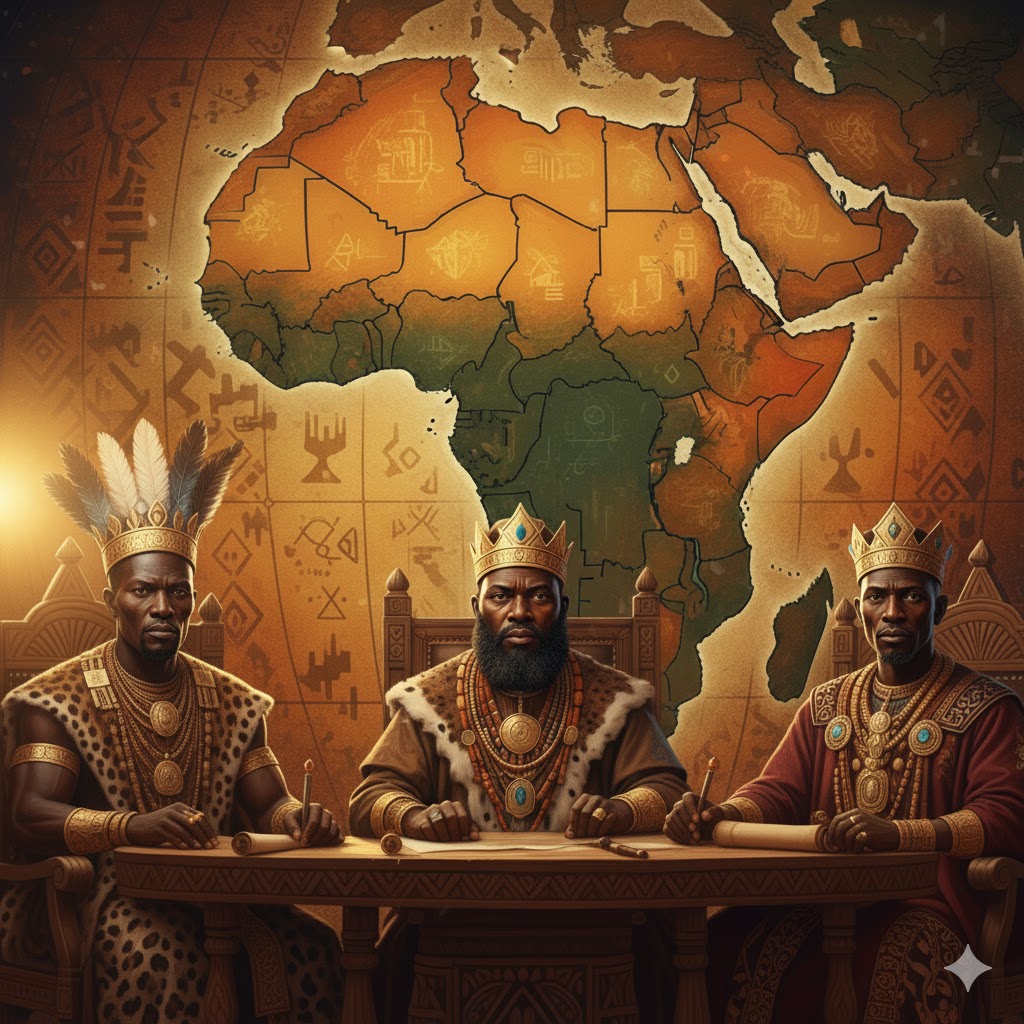
Shaka Zulu, the legendary king of the Zulu Kingdom, is often remembered for military revolution, but his visual presence was equally symbolic. His regalia—leopard skins, feathered headpieces, and the formidable iklwa spear—embodied authority and spiritual connection to ancestral power. In Zulu culture, leopard skin signified rulership and sacred status, marking Shaka as chosen by both lineage and divine purpose.

Shaka’s aesthetic choices were not mere performance. Royal attire served as psychological warfare, instilling fear in enemies and reverence among followers. His bare-chested stature, adorned in animal skins and traditional ornaments, portrayed strength, discipline, and a warrior-king archetype. This image continues to inspire modern African aesthetics rooted in courage, masculinity, and ethnic honor.

While Shaka’s visual legacy radiates martial might, Mansa Musa’s majesty reflects wealth, scholarship, and spiritual devotion. Known as the wealthiest ruler in recorded history, the emperor of Mali broadcast divine prosperity through gold-embroidered robes, luxurious fabrics, and grand caravans laden with gold during his pilgrimage to Mecca. His aesthetic was sanctified opulence—material abundance presented as a testament to divine favor.

Mansa Musa’s attire and gifts symbolized more than personal wealth; they expressed Mali’s intellectual and religious elevation. His support for Islamic scholarship and architectural development, including the famed Sankore University, reveals a king whose regal splendor mirrored cultural enlightenment. To look upon Musa was to witness the glory of a spiritually anchored kingdom infused with educational prestige.

A great king is often measured not only by wealth or war but by their ability to uplift their nation’s beauty and identity. In both Shaka and Mansa Musa’s reigns, attire communicated a message: African sovereignty was majestic, cultured, and God-ordained. Their legacy resists colonial narratives that sought to reduce African kingdoms to primitiveness.

The Menelik lineage—tracing origins to King Solomon and the Queen of Sheba—offers another dimension to African royal aesthetics: biblical legitimacy. Ethiopian emperors, believed to descend from Menelik I, carried themselves with divine authority. Crowns adorned with crosses, ceremonial robes, lion symbolism, and sacred scepters proclaimed their connection to the Lion of Judah.

This lineage grounded royal aesthetics in scripture, blending Hebraic tradition with African identity. Ethiopian kings and queens, from Menelik to Haile Selassie, wore garments that mirrored priesthood and ancient Israelite tradition—silk robes, jeweled crowns, and embroidered crosses. Their appearance declared covenant heritage and sacred kingship.

The Solomonic tradition did not merely borrow from biblical imagery; it asserted Africa’s centrality in salvation history. Through attire, ritual, and royal posture, Ethiopia preserved a visual theology: that God’s chosen lineage flowed through African bloodlines. Such aesthetics challenged Western religious narratives by rooting biblical heritage in the Black experience.

Across African kingdoms, beauty was political. Regalia conveyed legitimacy, commanded unity, and inspired resistance. It affirmed African dignity against centuries of distortion and erasure. The royal aesthetic stood as evidence that African civilization produced rulers equal to, and often surpassing, those of Europe and Asia.

Moreover, African royal aesthetics fused spirituality and statehood. Kings were more than rulers—they were shepherds, protectors, and spiritual intercessors. Whether through animal symbolism, gold ornamentation, or embroidered sacred garments, regalia reminded subjects that rulership was divine stewardship. Visual splendor communicated sacred responsibility.

Today, the aesthetic legacy of African kings influences modern fashion, leadership imagery, and cultural pride. From contemporary artists drawing inspiration from royal attire to global celebrations of African textiles, jewelry, and hairstyles, the regal memory still reigns. It informs movements reclaiming African identity from colonial distortion.

In the diaspora, this legacy also sustains psychological empowerment. Images of African kings counterbalance narratives of enslavement and inferiority. They offer icons of nobility, strength, and divine selection—foundations for renewed cultural confidence. Aesthetic tradition becomes a tool for spiritual and social restoration.

Biblically, kingship and beauty intertwine with divine covenant. The scriptures declare: “I have said, Ye are gods; and all of you are children of the most High” (Psalm 82:6, KJV). African kings embodied this truth, wearing majesty not for vanity but for sacred duty. Their appearance testified to the divine imprint upon Black identity.

Thus, the aesthetic legacies of Shaka Zulu, Mansa Musa, and the Menelik line are not relics—they are living testimonies. They call today’s generation to reclaim dignity, honor, and spiritual royalty. Through wardrobe, posture, and cultural pride, the descendants of these kingdoms continue to rise, embodying a beauty forged in history and blessed by God.

Below the surface of gold, feathers, hides, and crowns lies a fundamental truth: African kings dressed as heirs of divine promise. Their aesthetic legacy remains a spiritual inheritance—an invitation to walk in royal identity, remembering that Black majesty is not a myth but a recorded, sacred reality.


References
Boahen, A. A. (2011). African perspectives on colonialism. Diasporic Press.
Davidson, B. (1998). A history of West Africa. Longman.
Isaac, S. (2020). Ethiopia and the lineage of Solomon: An African biblical heritage. Hebraic Studies Journal, 12(3), 45–62.
Knight, I. (2015). Zulu rising: The epic story of iSandlwana and Rorke’s Drift. Macmillan.
Levtzion, N., & Hopkins, J. F. P. (Eds.). (2000). Corpus of early Arabic sources for West African history. Markus Wiener.
Trimingham, J. S. (2018). Islam in West Africa. Oxford African Texts.

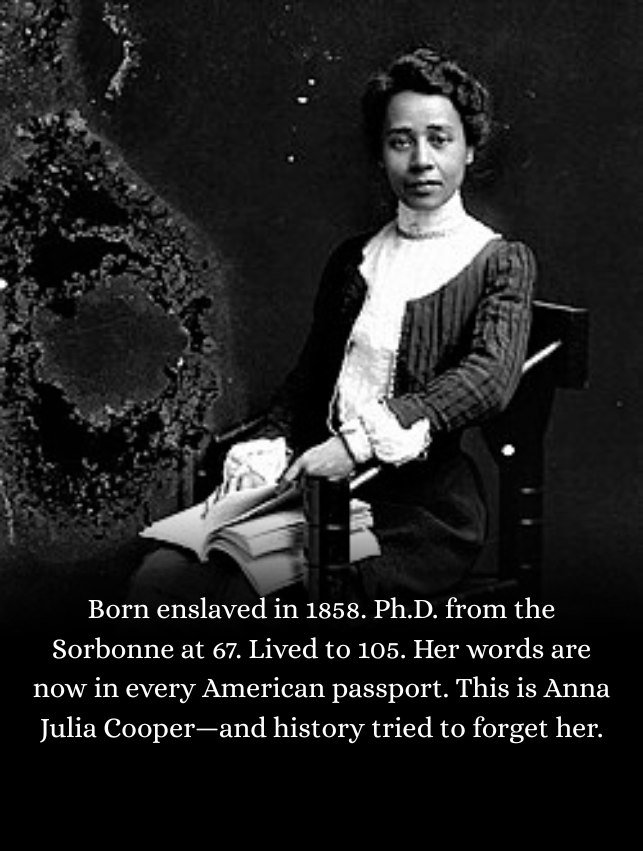
The Slave Files: Anna Julie Cooper

This photograph is the property of its respective owner. No copyright infringement intended.

Anna Julia Cooper was born on August 10, 1858 in Raleigh, North Carolina

Anna Julia Cooper was an influential African American educator, scholar, and author whose life and work left a profound impact on Black education and intellectual thought. Born in the late 19th century, she emerged during a period of systemic oppression and racial discrimination, when opportunities for African Americans—particularly women—were severely limited. Despite these obstacles, Cooper dedicated her life to uplifting her community through education, moral leadership, and scholarly contributions.

Cooper’s early life was marked by a determination to pursue learning despite societal barriers. She believed that education was a fundamental tool for liberation and empowerment. Her passion for teaching and scholarship became a central theme in her life, guiding her professional endeavors and public influence.

As an educator, Julia Cooper worked tirelessly to improve access to quality schooling for African Americans. She advocated for rigorous academic standards, the establishment of Black educational institutions, and curricula that fostered critical thinking and self-worth among students. Her efforts emphasized the transformative power of knowledge as a means to resist systemic oppression.

In addition to teaching, Cooper was a prolific writer and thinker. She authored essays and treatises on the moral, social, and intellectual development of African Americans, emphasizing the necessity of self-respect, cultural pride, and educational attainment. Her writings served as a blueprint for Black uplift during the early 20th century.

Cooper also engaged in public speaking and community organizing. She traveled widely, addressing audiences on the importance of education, civic responsibility, and moral development. Her speeches encouraged African Americans to embrace their intellectual potential and challenge societal narratives that sought to marginalize them.

Her impact extended to her mentorship of younger generations of Black scholars and educators. By providing guidance, encouragement, and access to educational resources, Cooper helped cultivate a new class of African American leaders committed to intellectual excellence and social progress.

Anna Julia Cooper’s work was informed by a deep moral and spiritual philosophy. She believed that personal character and ethical integrity were inseparable from educational and professional achievement. Her vision emphasized holistic development—intellectual, moral, and civic—as essential to individual and communal advancement.

Throughout her career, Cooper confronted racism, sexism, and social prejudice. Her ability to navigate these systemic challenges while achieving professional recognition serves as a testament to her resilience and strategic acumen. She became a symbol of Black female agency in a society structured to limit her potential.

Her legacy is visible in the educational institutions she influenced, the students she inspired, and the broader discourse on African American intellectual empowerment. Cooper’s life exemplifies the potential for knowledge and moral courage to transform communities and challenge entrenched inequalities.

Anna Julia Cooper remains a vital figure in African American history, her life and work illustrating the enduring power of education, scholarship, and leadership in advancing justice and equality. Her contributions continue to inspire educators, students, and leaders committed to intellectual rigor and moral responsibility.


References

  1. Gates, H. L., & Higginbotham, E. B. (2014). African American lives. Oxford University Press.
  2. Gutman, H. G. (1976). The black family in slavery and freedom, 1750-1925. Pantheon Books.
  3. Kelley, R. D. G. (1994). Race rebels: Culture, politics, and the Black working class. Free Press.
  4. Theoharis, J. (2018). A more beautiful and terrible history: The uses and misuses of civil rights history. Beacon Press.
  5. Wiggins, W. H. (2000). The intellectual tradition of African Americans: A historical overview. Greenwood Press.

Algorithmic Colorism: Digital Bias, Beauty Hierarchies, and the New Face of Discrimination.

Colorism has long shaped social, economic, and psychological realities within the global Black and Brown diaspora. But today, the battlefield has shifted into a new arena: technology. Algorithmic colorism refers to the ways digital systems — from social media filters to AI beauty ranking tools to facial recognition — reinforce, re-normalize, and amplify historic hierarchies based on skin tone. This phenomenon merges old prejudice with modern power, cloaking racial bias in the seeming objectivity of data and mathematics.

Historically, colorism was expressed through colonial power structures, slavery, caste systems, and Western beauty standards that privileged fair-skinned individuals. Digital technology, instead of dismantling these hierarchies, frequently embeds them deeper. The algorithm becomes the new overseer — sorting, elevating, suppressing, and shaping perceptions of beauty and humanity. What was once plantation logic now exists as platform logic.

Social media platforms reward certain facial types and color tones. Lighter skin often receives more visibility, engagement, and algorithmic boosting, while darker skin tones are frequently filtered out, shadow-suppressed, or made to appear lighter via “beauty” filters. These filters normalize Eurocentric features — slender noses, lighter skin, narrower jawlines — subtly training young users to internalize standards that privilege whiteness and proximity to whiteness.

Facial recognition systems also demonstrate measurable racial bias, particularly against dark-skinned women. MIT researcher Joy Buolamwini famously revealed that some systems misclassified darker-skinned women up to 35% more frequently than lighter-skinned men. In essence, the darker the skin, the less “visible” the person in digital systems. Invisibility becomes digital erasure — an electronic version of saying “you do not exist” or “you do not belong.”

This bias affects how people experience everyday life. From phone cameras that fail to recognize darker faces to auto-tagging tools misidentifying Black individuals as threats, algorithmic colorism has real-world consequences. It shapes hiring software, law enforcement databases, beauty industry AI, and academic proctoring tools that cannot detect the faces of darker-skinned test-takers. Prejudice becomes code.

Beauty, historically shaped by white supremacy and colonial order, is now shaped by machine learning. AI “beauty scoring” systems — often trained on databases of overwhelmingly white faces — routinely rank lighter-skinned individuals higher. In turn, these systems feed back into social media feedback loops, determining who is labeled “beautiful,” who gets platform attention, and who is pushed to the margins.

Colorism intersects with desirability politics. Young users internalize digital reinforcement, believing that lightness equals attractiveness and darker tones equal less value. As a result, algorithmic systems become silent teachers — instructing generations to view beauty through a skewed, Eurocentric lens. Thus, algorithmic colorism does not just reflect bias; it manufactures it.

Even within communities of color, digital platforms multiply existing color hierarchies. “Brown-skinned” and “yellow-bone” filters flood platforms, enabling the synthetic lightening of melanin and the idealization of mixed-race aesthetics. While dark skin remains celebrated in certain empowering artistic and cultural circles, algorithms often work counter to this empowerment, drowning out dark-skinned beauty under the weight of digital preference.

For the entertainment industry, algorithmic bias determines who is cast, whose music goes viral, and whose aesthetic the machine recognizes as marketable. Lighter-skinned artists often benefit from platform amplification. Meanwhile, darker-skinned artists — especially women — battle invisibility, tokenism, and algorithmic suppression. Technology becomes a gatekeeper and taste-maker.

This digital inequity extends to product design. Filters created primarily for lighter skin produce distortions on darker tones. Lighting and photography technologies in devices often privilege lighter subjects. Developers’ unconscious biases surface in pixels and code, shaping cultural preferences without public debate or consent. Invisibility becomes system design.

Algorithmic colorism also reinforces patriarchal beauty hierarchies. Women bear disproportionate burden as beauty-focused systems magnify color bias in dating algorithms, social media ranking, and digital marketplaces for modeling and branding. Dark-skinned women once again endure dual oppression — racism layered with colorism, now automated.

But resistance rises. Scholars, technologists, and activists call for algorithmic transparency, diverse coding teams, and ethical AI design. Movements centering melanin — from #MelaninMagic to #Unbothered — challenge the narrative. Yet resistance alone cannot match corporate scale; regulation, equity engineering, and truthful representation must follow.

The biblical warning in Psalm 82:2–4 resonates: “How long will ye judge unjustly, and accept the persons of the wicked? Defend the poor and fatherless: do justice to the afflicted and needy.” Injustice coded into digital systems becomes modern oppression requiring moral response, not just technological fixes.

True equity demands confronting the myth of algorithmic neutrality. Algorithms inherit human prejudice unless intentionally purified. Diversity in technology leadership is not cosmetic — it is mandatory for fairness. Ethical coding becomes civil rights work. Data justice becomes a spiritual and social mandate.

The next era of discrimination will not always wear white robes or badges. It will live in lines of code, camera lenses, and AI systems deciding who is visible, desirable, and worthy. The battleground is digital; the stakes are human. Society must choose whether technology reflects our worst biases or our highest ideals.

At stake is more than beauty — it is belonging, self-worth, and humanity’s reflection back to itself. Algorithmic colorism reveals a truth: systems are not neutral. They either liberate or oppress. The fight for melanin dignity continues — not only in streets and classrooms, but in servers, datasets, and screens shaping the modern soul.

Artificial intelligence must evolve beyond artificial bias. The future must honor melanin, not erase it. Beauty must expand beyond filters and code. And the digital world must reflect the full spectrum of humanity — in truth, not distortion.

The Digital Plantation

Colorism—the preferential treatment of lighter-skinned individuals within the same racial or ethnic group—has been a pervasive feature of Black history, tracing back to slavery, colonial hierarchies, and social stratification (Hunter, 2007). In contemporary society, this prejudice has evolved into digital forms, embedded within artificial intelligence, social media algorithms, and beauty standards. These manifestations continue to reinforce oppressive narratives that devalue darker-skinned Black individuals while elevating Eurocentric features.

Theologically, colorism mirrors the human tendency toward superficial judgment condemned in Scripture. The King James Version warns against favoritism: “My brethren, have not the faith of our Lord Jesus Christ, the Lord of glory, with respect of persons” (James 2:1, KJV). Similarly, the Apocrypha highlights the spiritual danger of human vanity and superficial valuation: “For the wickedness of man is great upon the earth” (Wisdom of Solomon 14:12, Apocrypha). Understanding the historical roots of colorism allows for meaningful reflection on both spiritual and societal dimensions of human prejudice.


Historical Roots of Colorism

1. Pre-Colonial African Societies

In many pre-colonial African societies, beauty and social status were complexly coded through hair, skin tone, and body adornment rather than strict hierarchies privileging lighter skin. However, as European colonial powers advanced, notions of skin tone became intertwined with proximity to power, wealth, and survival, laying the foundation for systemic colorism (Harris, 2015).

2. Slavery and the Plantation Hierarchy

During the transatlantic slave trade, slaveholders leveraged colorism as a tool of division. Mixed-race children of European slave owners and enslaved African women were often granted preferential treatment, lighter work duties, and social advantages (Hunter, 2007). This stratification fostered internalized oppression and a hierarchy privileging lighter skin that persisted long after emancipation.

3. Post-Emancipation and Media Representation

Colorism intensified in the 20th century through media, film, and advertising, which predominantly celebrated lighter-skinned Black individuals (Russell, Wilson, & Hall, 2016). The rise of Hollywood, beauty pageants, and commercialized ideals codified skin-tone biases that informed social mobility and cultural capital.


The Digital Plantation: AI and Modern Colorism

The metaphor of “The Digital Plantation” captures how contemporary technology—AI algorithms, facial recognition, and social media filters—perpetuates historical biases. AI systems trained on Eurocentric datasets tend to misclassify, underrepresent, or render invisible darker-skinned individuals (Buolamwini & Gebru, 2018). This represents a digital reincarnation of the same hierarchical systems that defined plantations, enforcing standards of beauty, intelligence, and value based on skin tone.

Visual Concept: The Digital Plantation

  • Foreground: Diverse Black individuals of varying skin tones interacting with smartphones and screens, some celebrated, some obscured by digital shadows.
  • Background: A plantation-like grid subtly overlaid with algorithmic code, symbolizing surveillance, ranking, and control.
  • Lighting: Warm golden light highlights lighter-skinned figures while darker-skinned figures sit in subtle shadow, representing algorithmic bias.
  • Symbolism: Broken chains and floating pixels suggest the potential for liberation from both historical and digital oppression.

Scriptural Reflection

Colorism and AI bias can be seen as modern manifestations of humanity’s spiritual blindness to equality and divine worth. The Scriptures provide moral guidance:

  • James 2:1 (KJV): Condemns favoritism based on appearance.
  • Wisdom of Solomon 14:12 (Apocrypha): Warns against the corruption of judgment by superficial values.
  • Genesis 1:27 (KJV): Affirms that all humans are made in God’s image, irrespective of skin tone.

From a theological perspective, resisting algorithmic colorism is not only a social imperative but a spiritual one, emphasizing justice, discernment, and honoring God’s creation.


Historical Timeline of Colorism → AI

EraManifestationEvidence & Scripture Integration
Pre-1500sCultural beauty diversity in AfricaHighlighted by ethnographic studies (Harris, 2015)
1500s-1800sSlavery, mixed-race privileging, plantation hierarchies“Owe no man any thing, but to love one another” (Rom 13:8, KJV)
1900sHollywood, advertisements, colorism in mediaSocial stratification codified, mirrors James 2:1 warnings
2000sSocial media, digital beauty filtersAlgorithmic reinforcement of bias, e.g., Buolamwini & Gebru (2018)
2020sAI and facial recognitionModern “Digital Plantation” reflecting historical hierarchies

Conclusion

Colorism, historically rooted in slavery and colonialism, persists today in digital landscapes through biased algorithms and representation systems. Addressing these inequities requires historical understanding, technical interventions in AI, and a theological commitment to justice and equality. Scripture, both canonical and apocryphal, provides a moral framework condemning favoritism and promoting the inherent dignity of every human being. The concept of the Digital Plantation visualizes these ongoing struggles, connecting past and present while advocating for liberation in both spiritual and technological realms.


References

  • Buolamwini, J., & Gebru, T. (2018). Gender shades: Intersectional accuracy disparities in commercial gender classification. Proceedings of Machine Learning Research, 81, 1–15.
  • Harris, A. P. (2015). Skin tone stratification and social inequality: Historical and contemporary perspectives. Oxford University Press.
  • Hunter, M. (2007). The persistent problem of colorism: Skin tone, status, and inequality. Sociology Compass, 1(1), 237–254.
  • Russell, K., Wilson, M., & Hall, R. (2016). The color complex: The politics of skin color in a new millennium. Anchor Books.

Pagan Holiday Series: Halloween – The Night of Darkness and Deception

Halloween is one of the most celebrated holidays in modern America, yet few understand its true origins or the sinister spiritual meanings behind its traditions. Beneath the costumes, candy, and laughter lies a dark history rooted in ancient paganism, witchcraft, and the glorification of death. What appears to be harmless fun for children and adults alike was once a night devoted to spirits, demons, and the worship of false gods.

The origin of Halloween dates back over 2,000 years to the Celtic festival of Samhain (pronounced “Sow-en”), celebrated in what is now Ireland, Scotland, and parts of Britain. The Celts believed that on October 31st, the veil between the living and the dead was at its thinnest, allowing spirits to cross over into the mortal world (Frazer, 1922). Fires were lit, animals were sacrificed, and offerings were left out to appease the wandering dead. This festival marked the end of the harvest season and the beginning of the dark winter — symbolizing death and decay.

When the Roman Empire conquered Celtic territories, they merged Samhain with their own pagan festivals, such as Feralia, honoring the spirits of the dead, and Pomona, the goddess of fruit and trees. Pomona’s symbol was the apple, which explains the Halloween tradition of bobbing for apples — a practice originally meant to divine one’s future through witchcraft (Hutton, 1996).

Centuries later, the Roman Catholic Church attempted to Christianize these pagan rituals by introducing All Saints’ Day (November 1) and All Souls’ Day (November 2), collectively known as “All Hallows.” The night before became “All Hallows’ Eve,” which eventually evolved into “Halloween.” However, instead of erasing paganism, these efforts only blended the two worlds, creating a hybrid holiday filled with superstition, necromancy, and rebellion against the Most High.

In its original context, Halloween was a night of fear, not fun. The Celts believed that evil spirits roamed freely, bringing sickness, curses, and misfortune. To protect themselves, they disguised their appearance with animal skins, masks, and costumes to confuse or ward off the spirits. This practice of “dressing up” was born out of fear and demonic superstition — not celebration (Miles, 1912).

The tradition of trick-or-treating also emerged from dark roots. During Samhain, villagers would leave food outside their doors to appease spirits or fairies, hoping to prevent curses. Later, beggars and impersonators of the dead would go door to door asking for food or coins in exchange for prayers. If denied, they would perform mischief or invoke a curse — the origin of the phrase “trick or treat.” This was spiritual bribery masked as festivity.

Candy, now a symbol of joy, carries this same spiritual deception. Each piece of candy represents an offering to the spirits — a modern echo of ancient sacrifices. Some believe that the sweetness was meant to lure spirits and keep them from causing harm, symbolizing humanity’s attempt to pacify evil rather than resist it (Nissenbaum, 1997). It is chilling that what was once an act of appeasement has become a tradition for children, teaching them to “celebrate” the very forces Scripture warns against.

The act of carving pumpkins also has a demonic history. In Ireland, people originally carved faces into turnips or potatoes to create lanterns, known as Jack-o’-lanterns, which were said to house wandering spirits or ward them off. The legend of “Stingy Jack,” a man who tricked the devil and was condemned to roam the earth with a burning coal inside a hollowed gourd, gave rise to this eerie custom (Santino, 2014). When Irish immigrants came to America, they used pumpkins, a native fruit, and the tradition became a Halloween staple.

Throughout history, Halloween has been closely tied to witchcraft and sorcery. Witches considered October 31st one of their holiest nights, known as the Witches’ Sabbath. They believed that spirits of the dead were most active and that dark powers could be summoned more easily. The Bible strictly forbids these practices: “There shall not be found among you… an enchanter, or a witch” (Deuteronomy 18:10, KJV). Yet every year, millions unwittingly take part in the same rituals through costumes, spells, and horror-themed celebrations.

The fascination with death, skeletons, ghosts, and demons on Halloween reflects a culture obsessed with darkness. Costumes portraying monsters, witches, vampires, and devils glorify evil and desensitize people to sin. What was once feared has become entertainment. The enemy has repackaged darkness as fun, fulfilling the prophecy that people would “call evil good, and good evil” (Isaiah 5:20, KJV).

One of the most disturbing aspects of modern Halloween is the malicious practice of tampering with candy. In the late 20th century, reports surfaced of razor blades, needles, and poison being hidden in children’s treats. While some cases were exaggerated, documented incidents did occur, creating widespread fear (Best & Horiuchi, 1985). This evil act symbolizes the spiritual truth of the holiday: what appears sweet and innocent can conceal danger and destruction.

The Bible teaches that Satan disguises himself as an “angel of light” (2 Corinthians 11:14, KJV). Similarly, Halloween disguises death, fear, and demonic worship as fun and fellowship. Children, the most impressionable among us, are led to glorify darkness through costumes, horror movies, and haunted houses — practices that dull their sensitivity to evil and open spiritual doors to fear and bondage.

Why, then, do people love Halloween? The answer lies in the human heart’s attraction to rebellion and mystery. Halloween allows people to step into roles of power, fantasy, and fear — to escape moral restraint for one night. The masks symbolize hidden sin, and the darkness gives permission for indulgence. Yet Scripture reminds us: “Men loved darkness rather than light, because their deeds were evil” (John 3:19, KJV).

For many, Halloween offers a thrill — a temporary flirtation with danger. Horror movies, haunted attractions, and macabre decorations allow people to experience fear in a controlled setting. This fascination with terror feeds the flesh but starves the spirit. God did not give us the spirit of fear (2 Timothy 1:7, KJV); He calls His people to walk in light, not darkness.

The devil delights in Halloween because it normalizes what God detests. Witches, demons, and death become jokes, and children learn to celebrate rebellion. The imagery of black cats, cauldrons, and broomsticks still represents witchcraft, yet society embraces them with laughter. Through commercialization, Satan has turned his worship into a billion-dollar industry.

Halloween’s popularity also reveals a spiritual void. Many are drawn to its darkness because they lack the true Light of Christ. The night becomes an outlet for suppressed desires — lust, fear, and power — all things contrary to the fruit of the Spirit (Galatians 5:22–23, KJV). What began as pagan worship has become psychological release for a lost world.

In truth, Halloween celebrates death — the very thing Christ came to conquer. Every skull, tombstone, and ghost decoration is a mockery of resurrection. But the believer knows that “death is swallowed up in victory” (1 Corinthians 15:54, KJV). To celebrate death is to reject life; to celebrate darkness is to deny the Light.

Some Christians attempt to “reclaim” Halloween with alternative events or “harvest festivals,” yet the roots of this holiday remain unholy. The Most High commands His people to “come out from among them, and be ye separate” (2 Corinthians 6:17, KJV). There can be no fellowship between light and darkness.

Halloween’s persistence shows how deeply the world loves what God hates. It celebrates fear, lust, and rebellion, dressed up in costumes and candy. It teaches children that sin is fun, demons are funny, and death is entertaining. Yet the truth remains: this night belongs to the enemy.

For those who follow God, Halloween is a reminder to stay vigilant. We are not called to blend with the world but to stand apart from it. “And have no fellowship with the unfruitful works of darkness, but rather reprove them” (Ephesians 5:11, KJV). Instead of partaking in Halloween’s darkness, we should shine the light of truth — for only light drives out darkness.


References
Best, J., & Horiuchi, G. (1985). The Razor Blade in the Apple: The Social Construction of Urban Legends. Social Problems, 32(5), 488–499.
Frazer, J. G. (1922). The Golden Bough: A Study in Magic and Religion. Macmillan.
Hutton, R. (1996). The Stations of the Sun: A History of the Ritual Year in Britain. Oxford University Press.
Miles, C. (1912). Christmas in Ritual and Tradition, Christian and Pagan. T. Fisher Unwin.
Nissenbaum, S. (1997). The Battle for Christmas. Vintage.
Santino, J. (2014). Halloween and Other Festivals of Death and Life. University of Tennessee Press.
KJV Bible (1611/1769). Authorized King James Version.

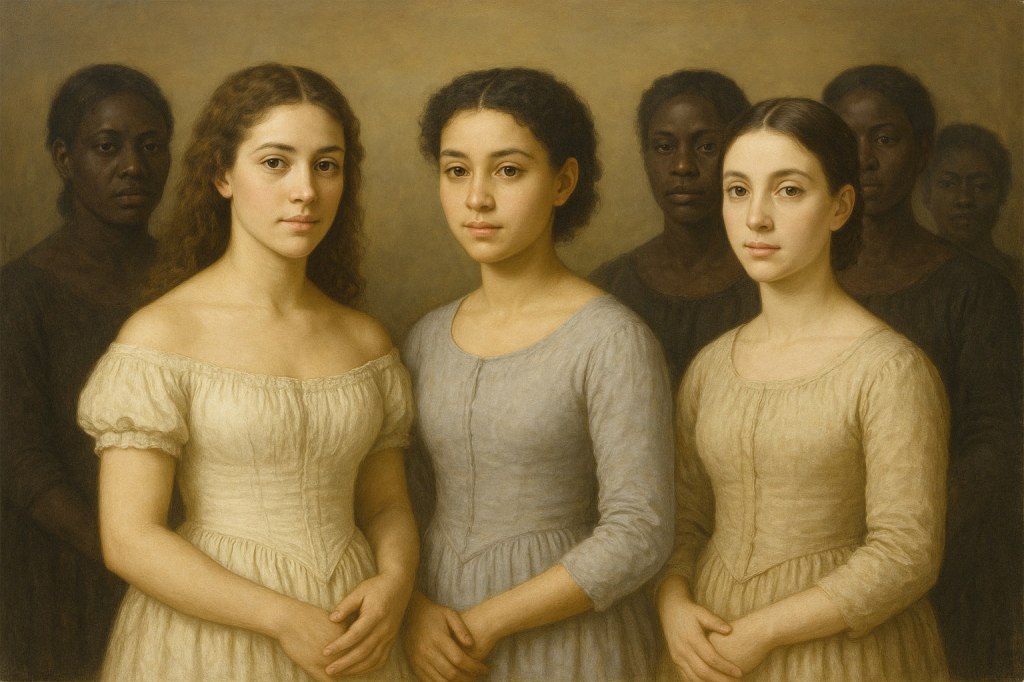
The Mulatto: The Complex Legacy of Mixed-Race Identity in Slavery.

During the transatlantic slave trade and the centuries of chattel slavery that followed in the Americas, a tragic and complex racial hierarchy emerged. At its center was the “Mulatto”—a person of mixed African and European ancestry. The term itself, derived from the Spanish and Portuguese mulato, meaning “young mule,” was intended to signify something unnatural—a mix between species. This offensive origin reveals the dehumanizing way in which enslaved people were viewed, even those who bore the blood of their enslavers.

Mulattoes often came into existence through non-consensual sexual relationships between white male slave owners and enslaved African women. These unions were rarely romantic or voluntary; they were products of exploitation, coercion, and the unchecked power of white patriarchy. The children of these unions occupied an ambiguous social status. They were visibly lighter and sometimes given privileges over darker-skinned Africans, yet they were still enslaved and denied full humanity.

Economically, lighter-skinned slaves were often valued more highly in the slave markets. Auction records from New Orleans, Charleston, and the Caribbean show that Mulattoes, Quadroons, and Octoroons—terms denoting fractions of African ancestry—were sold for higher prices due to their perceived proximity to whiteness. In some cases, a beautiful light-skinned woman could fetch thousands of dollars—sometimes twice the price of a strong field laborer (Berry, 2007).

The hierarchy extended as follows: a Mulatto was half African, half European; a Quadroon was one-quarter African; and an Octoroon was one-eighth African. Each degree of whiteness supposedly brought refinement, beauty, and docility, qualities European buyers associated with superiority. This false racial science was a cornerstone of both slavery and early American eugenics.

Quadroon and Octoroon women, especially in New Orleans and parts of Louisiana, were sometimes groomed for what was known as the “plaçage” system. Under this arrangement, wealthy white men entered into unofficial unions with mixed-race women who were often educated, well-dressed, and trained in European manners. These relationships were not legal marriages but resembled concubinage. In exchange for companionship, these women received homes, money, and privileges denied to field slaves (Clark, 2013).

Plantation wives often felt deep resentment and humiliation over their husbands’ relationships with these women. The presence of mixed-race children—who sometimes lived in close proximity to the white household—served as constant reminders of betrayal. Historical letters and diaries reveal the rage, jealousy, and psychological torment many white women endured as they silently tolerated this hypocrisy (White, 1999).

Mulattoes, Quadroons, and Octoroons often worked inside the master’s home as cooks, maids, and nurses rather than in the fields. Their lighter complexion was falsely associated with higher intelligence and beauty. They became symbols of white men’s domination over both Black bodies and the institution of the family. This system reinforced colorism—a social order that persists even today.

Despite their elevated positions, these individuals lived under the same oppressive laws as all enslaved Africans. The “one-drop rule” in America classified anyone with African ancestry as Black, ensuring that even the lightest Octoroon remained enslaved if born to an enslaved mother. This legal principle ensured that slavery perpetuated itself across generations, regardless of physical appearance.

Mulattoes also faced rejection from both sides of society. They were often too “Black” to be accepted by whites, and too “white” to be fully trusted by darker-skinned slaves. This liminal identity created a painful dual consciousness—one that mirrored W.E.B. Du Bois’s later description of the “two-ness” of being both Black and American.

The valuation of mixed-race people as commodities is evident in slave ledgers and advertisements. For example, in the 1850s, a young Octoroon woman could sell for up to $3,000—a staggering sum when a skilled field hand might sell for $1,000 (Johnson, 1999). The intersection of race, beauty, and sex created a disturbing marketplace of human trafficking.

In urban centers like New Orleans, Charleston, and Havana, mixed-race women became central to elite social scenes. Some even gained temporary freedoms or wealth, though their status was always precarious. Freedom papers could be revoked, and any sign of rebellion risked severe punishment.

The plantation economy used these women as both workers and instruments of control. Their presence created divisions among enslaved people—divisions based on skin tone that mirrored European racial ideologies. This psychological warfare weakened unity among the enslaved, reinforcing white supremacy.

Christianity was also manipulated to justify this system. Slaveholders preached obedience while violating every moral tenet of the Bible. Yet enslaved people, including Mulattoes, found in Scripture the promise of deliverance. The story of Moses, the Exodus, and Deuteronomy 28 became powerful symbols of hope and identity.

After emancipation, colorism continued to shape Black communities. Some mixed-race families gained social advantages through education, passing, or wealth. Others were caught between worlds—accepted by neither the white elite nor the broader Black population.

The legacy of the Mulatto is thus deeply ambivalent. It reveals both the violence of racial oppression and the resilience of identity. The beauty, intelligence, and strength of mixed-race descendants are testimonies not to European “refinement” but to African endurance and divine grace.

The language of “Quadroon” and “Octoroon” has since been rejected as racist pseudoscience. Yet the scars of this history remain visible in modern discussions of beauty standards, social hierarchy, and representation in media.

For plantation wives, the mixed-race presence was a symbol of both moral failure and racial anxiety. For white men, it represented unchecked power. For the enslaved, it was a daily reminder of a world built on sexual exploitation and systemic cruelty.

Ultimately, the story of the Mulatto is not about privilege but pain—a reflection of how slavery corrupted family, faith, and love. It reveals the perverse intersection of race and desire that shaped America’s social fabric.

Today, scholars revisit these histories not merely to recount suffering, but to reclaim truth. The bloodlines of the enslaved, the Mulatto, the Quadroon, and the Octoroon tell a story of survival—one written not by choice, but by resilience and faith in freedom’s promise.

References

Berry, D. R. (2007). The Price for Their Pound of Flesh: The Value of the Enslaved from Womb to Grave, in the Building of a Nation. Beacon Press.

Clark, E. (2013). The Strange History of the American Quadroon: Free Women of Color in the Revolutionary Atlantic World. University of North Carolina Press.

Johnson, W. (1999). Soul by Soul: Life Inside the Antebellum Slave Market. Harvard University Press.

White, D. G. (1999). Ar’n’t I a Woman?: Female Slaves in the Plantation South. W.W. Norton & Company.

The Origins of White Skin

The study of human pigmentation, particularly the origins of white skin, intertwines anthropology, genetics, and evolutionary biology. Understanding how and why skin color diversified requires an exploration of migration patterns, environmental adaptation, and genetic mutations that shaped the physical diversity among humankind. This essay will explore the scientific, historical, and sociocultural dimensions of white skin evolution through an integrative scholarly lens.

The terms “white” and “black” are social and symbolic designations, not literal reflections of human pigmentation. Scientifically and anthropologically, all humans fall along a spectrum of brown skin tones determined by melanin concentration, hemoglobin visibility, and other pigmentary factors.

In biological terms, skin color arises from three main pigments: melanin, carotene, and hemoglobin. Melanin, produced by melanocytes, gives skin its brown to dark brown shades. Carotene adds yellow or golden undertones, while hemoglobin contributes pink to red hues visible through lighter skin. Therefore, so-called “white” people actually possess light beige or pinkish skin tones, influenced by low melanin levels and higher visibility of underlying blood vessels (Jablonski, 2021).

Similarly, “black” skin is not black in the literal sense but represents varying concentrations of eumelanin that create rich brown tones ranging from bronze to deep espresso. Under sunlight, darker skin often reveals golden, red, or blue undertones rather than pure blackness. This continuous gradation underscores that human pigmentation exists along a chromatic continuum, not binary categories.

The labels white and black originated during European colonial expansion to reinforce social hierarchies, not biological realities. In the 17th and 18th centuries, racial theorists used color as a metaphor for moral and intellectual worth—“white” symbolizing purity and civilization, and “black” denoting savagery and sin (Smedley & Smedley, 2011). These associations, rooted in ideology rather than anatomy, shaped enduring racial constructs that persist today.

Modern genetics and anthropology confirm that all humans share over 99.9% identical DNA, and differences in skin color are governed by a handful of genes (Norton et al., 2007). Thus, color terminology reflects cultural identity and historical power dynamics more than any genuine biological division.

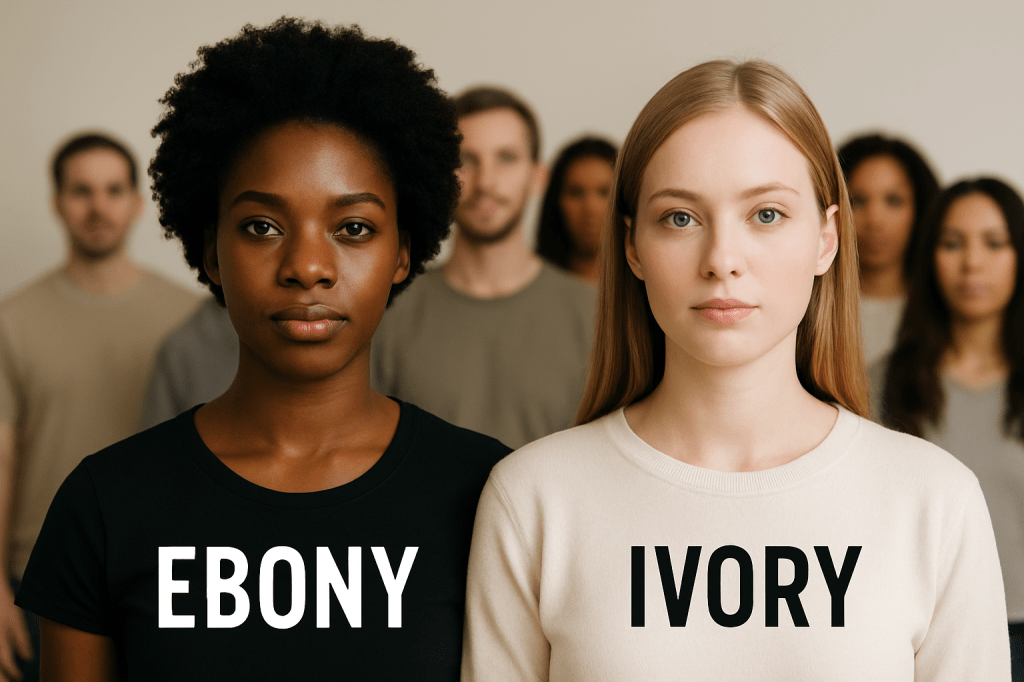
In truth, all people are various shades of brown—from the lightest ivory to the deepest mahogany—demonstrating our shared origin and diversity within unity. As the biblical verse reminds, “And hath made of one blood all nations of men” (Acts 17:26, KJV). Science and scripture converge here: humanity’s distinctions are aesthetic and adaptive, not hierarchical.

Early human populations originated in sub-Saharan Africa, where high ultraviolet radiation levels favored dark skin pigmentation rich in melanin. Melanin serves as a natural barrier protecting the skin from UV-induced damage and degradation of folate, an essential nutrient for reproductive success (Jablonski & Chaplin, 2010). Thus, the earliest Homo sapiens possessed dark skin as a biological adaptation to equatorial sunlight.

As human groups migrated northward out of Africa roughly 60,000 years ago, they encountered regions with lower UV exposure. In these environments, dark pigmentation became less advantageous. To maintain adequate vitamin D synthesis—a process reliant on UV-B radiation—lighter skin gradually evolved through natural selection (Norton et al., 2007).

One of the most significant genetic factors in light skin evolution is the SLC24A5 gene. A single nucleotide change in this gene (Ala111Thr) is strongly associated with light pigmentation among Europeans (Lamason et al., 2005). This mutation, which likely arose around 8,000 years ago, spread rapidly due to selective pressures in northern latitudes where sunlight was weaker.

Another key gene, SLC45A2, also contributes to depigmentation in European populations (Stokowski et al., 2007). Together with TYR and OCA2 genes, these variants represent a cluster of evolutionary adaptations that reshaped melanin production, producing the light skin phenotypes common in Europe.

The emergence of white skin was not instantaneous but gradual. Genetic modeling suggests multiple independent depigmentation events occurred among non-African populations. East Asians, for example, developed lighter skin through different genetic pathways (notably the DCT and MFSD12 genes), demonstrating convergent evolution (Yamaguchi et al., 2018).

Archaeogenetic evidence indicates that early Europeans, such as the Mesolithic hunter-gatherers of Western Europe, still had dark skin and blue eyes (Olalde et al., 2014). It was only during the Neolithic agricultural revolution—when farming spread from the Near East—that genes for lighter skin became dominant in Europe.

This agricultural transition likely accelerated depigmentation. Diets deficient in vitamin D due to reduced consumption of animal products made lighter skin advantageous for efficient synthesis of the vitamin from limited sunlight (Hofmanová et al., 2016). Thus, whiteness as a phenotype arose through both environmental and dietary adaptation.

Cultural evolution soon intersected with biological change. As populations developed hierarchies, skin color became symbolically charged—first as a marker of regional origin, later as a social construct of superiority and purity (Smedley & Smedley, 2011). The scientific origins of white skin were therefore overlaid by ideological meanings during the rise of European colonialism.

European societies, beginning in the Renaissance and Enlightenment periods, reinterpreted physical difference through racial taxonomy. Thinkers like Linnaeus and Blumenbach used skin color to classify humanity, cementing whiteness as the “norm” of civilization (Eze, 1997). These frameworks distorted evolutionary diversity into hierarchical racial structures.

The biological reality, however, undermines these racialized assumptions. Modern genomic data reveal that skin color variation represents a small portion of overall genetic diversity among humans—roughly 0.1% of total DNA difference (Lewontin, 1972). Thus, “race” is more a sociopolitical invention than a biologically discrete category.

The theological narrative also influenced perceptions of white skin. In medieval Europe, depictions of Adam and Eve as white reinforced Eurocentric conceptions of divine image-bearing, contrasting with African and Semitic biblical origins (Goldenberg, 2003). This ideological whiteness would later justify slavery, colonialism, and systemic inequality.

Anthropologically, lighter skin in Eurasia should be seen not as superiority but as regional adaptation. It parallels the Inuit’s dietary vitamin D compensation or the dark skin retention of equatorial peoples despite varying UV exposure—each reflecting environmental equilibrium rather than hierarchy (Jablonski, 2021).

The adaptation process reveals the remarkable plasticity of the human genome. Mutations in pigmentation genes often occurred within a few thousand years—a rapid pace in evolutionary terms—demonstrating the strong influence of climate and diet on phenotype (Liu et al., 2015).

Moreover, studies of ancient DNA reveal that pigmentation genes continued evolving even in historical times. For example, the allele for light eyes and skin (HERC2/OCA2) rose in frequency in Europe during the Bronze Age (Mathieson et al., 2015). This continuous selection underscores skin color as a dynamic trait rather than a fixed racial essence.

Socially, the valorization of whiteness became a cultural invention with far-reaching consequences. Colonial narratives equated light skin with intelligence, civility, and divine favor—distortions that persist in global colorism today (Hunter, 2013). The origin of white skin, therefore, cannot be divorced from the ideologies it later inspired.

Biomedically, understanding the genetics of pigmentation informs research into health disparities. Lighter skin correlates with higher risks of UV-related cancers and folate deficiency, while darker skin populations in northern latitudes face vitamin D deficiencies (Nina et al., 2019). Both extremes highlight the adaptive trade-offs of human evolution.

The story of white skin also illustrates humanity’s shared ancestry. Despite visible differences, all modern humans trace their lineage to a common African origin roughly 200,000 years ago (Stringer, 2016). Skin color differences merely represent evolutionary responses along a continuum of adaptation.

From a spiritual-humanistic perspective, these findings reaffirm the unity of mankind. As the Apostle Paul declared, “And hath made of one blood all nations of men” (Acts 17:26, KJV). Scientific inquiry thus harmonizes with scriptural truth: diversity is divine design, not division.

Contemporary discussions on race and identity must therefore distinguish between biological pigmentation and sociocultural constructs. Whiteness as an identity emerged not from genetics but from power, empire, and ideology—constructed upon natural adaptation but weaponized through social stratification.

Ultimately, the origins of white skin testify to human resilience and adaptability. Our ancestors’ capacity to evolve physically, migrate globally, and adapt spiritually underscores the interconnectedness of all humanity under one Creator.

Science continues to demystify color, revealing that beneath the epidermis lies a shared human essence. In understanding how white skin evolved, we come closer to transcending the myths it inspired and embracing the unity embedded in our DNA.

References

Eze, E. C. (1997). Race and the Enlightenment: A reader. Blackwell.
Goldenberg, D. M. (2003). The curse of Ham: Race and slavery in early Judaism, Christianity, and Islam. Princeton University Press.
Hofmanová, Z., et al. (2016). Early farmers from across Europe directly descended from Neolithic Aegeans. Proceedings of the National Academy of Sciences, 113(25), 6886–6891.
Hunter, M. (2013). Race, gender, and the politics of skin tone. Routledge.
Jablonski, N. G., & Chaplin, G. (2010). Human skin pigmentation as an adaptation to UV radiation. Proceedings of the National Academy of Sciences, 107(Suppl 2), 8962–8968.
Jablonski, N. G. (2021). Living color: The biological and social meaning of skin color. University of California Press.
Lamason, R. L., et al. (2005). SLC24A5, a putative cation exchanger, affects pigmentation in zebrafish and humans. Science, 310(5755), 1782–1786.
Lewontin, R. C. (1972). The apportionment of human diversity. Evolutionary Biology, 6, 381–398.
Liu, F., et al. (2015). Genetics of skin color variation. Annual Review of Genomics and Human Genetics, 16, 99–120.
Mathieson, I., et al. (2015). Genome-wide patterns of selection in ancient Eurasians. Nature, 528(7583), 499–503.
Nina, G., et al. (2019). Pigmentation and health: The evolutionary legacy of skin color adaptation. Nature Reviews Genetics, 20(10), 705–718.
Norton, H. L., et al. (2007). Genetic evidence for the convergent evolution of light skin in Europeans and East Asians. Molecular Biology and Evolution, 24(3), 710–722.
Olalde, I., et al. (2014). Derived immune and ancestral pigmentation alleles in a 7,000-year-old Mesolithic European. Nature, 507(7491), 225–228.
Smedley, A., & Smedley, B. D. (2011). Race in North America: Origin and evolution of a worldview. Westview Press.
Stokowski, R. P., et al. (2007). A genomewide association study of skin pigmentation in a South Asian population. American Journal of Human Genetics, 81(6), 1119–1132.
Stringer, C. (2016). The origin and evolution of Homo sapiens. Philosophical Transactions of the Royal Society B, 371(1698), 20150237.
Yamaguchi, Y., et al. (2018). Diverse pathways to depigmentation: Evolution of light skin in different human populations. Pigment Cell & Melanoma Research, 31(3), 338–350.

Dilemma: Spiritually Shell-Shocked.

Spiritual Prisoners of War.

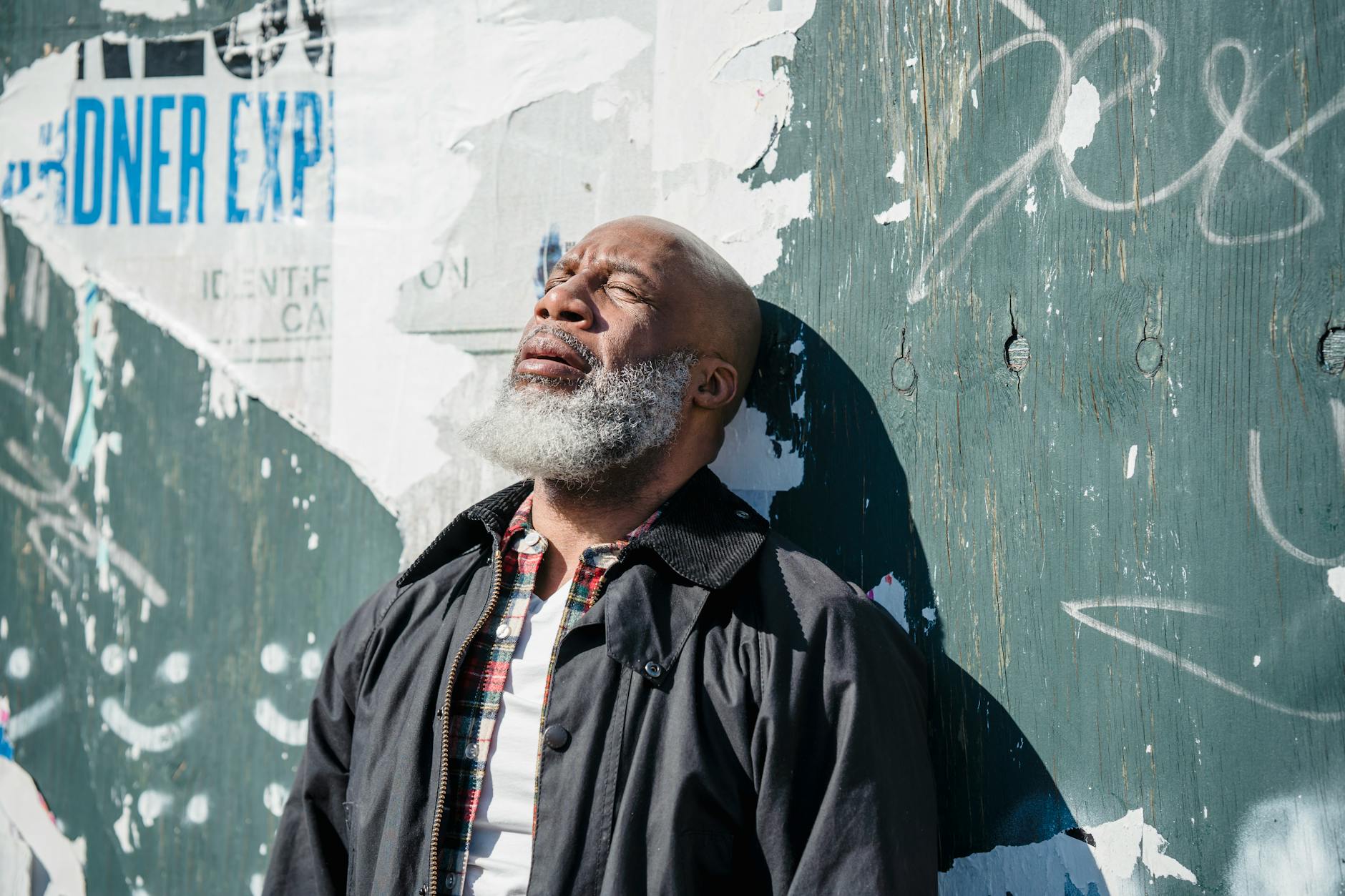
Photo by Nicola Barts on Pexels.com

In the landscape of American history, the Black experience remains a story marked by both divine endurance and deep trauma. The spiritual and psychological wounds inflicted by systemic racism, economic disenfranchisement, police brutality, and the remnants of Jim Crow laws have created generations that are spiritually shell-shocked—alive yet aching, breathing yet broken. The dilemma lies in navigating faith amid oppression, maintaining hope in a society designed to erode it, and remembering God’s promises when the world appears to forget justice.

From slavery to segregation, the Black soul has endured centuries of assault. The spiritual shell-shock of oppression echoes through time, a collective PTSD that manifests in our communities, churches, and identities. Just as soldiers return from war carrying invisible wounds, so too do descendants of the enslaved carry inherited pain. The difference is that this war was not fought overseas—it was fought on American soil, in cotton fields, courtrooms, and city streets.

Systemic racism operates not merely as prejudice, but as a structured power that undermines entire communities. It infiltrates schools, healthcare, housing, and employment, creating barriers that cripple progress. This machinery of inequity causes spiritual fatigue—a despair that whispers, “You are less than.” Yet Scripture declares otherwise: “I will praise thee; for I am fearfully and wonderfully made” (Psalm 139:14, KJV). This biblical truth must combat societal lies.

The economics of racial inequality further deepen the wound. The wealth gap between Black and white families is not accidental but a continuation of the theft of labor, land, and opportunity. During Reconstruction, promises like “forty acres and a mule” dissolved into betrayal, leaving many freedmen impoverished and powerless. The spiritual result was disillusionment—a people free in name but bound by poverty.

This cycle of economic despair is a modern plantation, disguised as urban poverty and wage disparity. Financial oppression strips dignity and fosters hopelessness. Yet the Bible reminds us that “The borrower is servant to the lender” (Proverbs 22:7, KJV). The struggle for economic liberation, therefore, is not only political but deeply spiritual—a fight for self-determination and divine restoration.

Police brutality represents the contemporary form of public terror once embodied by lynching. The televised deaths of unarmed Black men and women mirror the postcards of hangings sent during Jim Crow. The uniform replaced the hood, but the system remains. When another Black life is unjustly taken, the community collectively grieves—not just the person, but the persistence of evil.

This trauma accumulates. Every hashtag and protest becomes another reminder of a system that sees our skin as a weapon. For many, faith becomes both refuge and rebellion. It is the cry of Psalm 13:1—“How long wilt thou forget me, O Lord? forever? how long wilt thou hide thy face from me?” This ancient lament still echoes in our streets.

Jim Crow’s ghost still walks among us, haunting courtrooms, schools, and neighborhoods. Though its laws were repealed, its logic endures—in redlining, mass incarceration, and inequitable education. The spiritual dilemma emerges when those once oppressed by the whip now face oppression by the pen and policy.

Violence—both physical and structural—has long been a tool of control. From slave patrols to modern policing, from bombed Black churches to mass shootings, violence serves as a reminder that progress is fragile. This constant threat instills a collective fear, a hypervigilance that mirrors soldiers in combat. Spiritually, it breeds exhaustion and distrust, even toward divine promises.

The community’s resilience, however, is nothing short of miraculous. The same Bible that slaveholders misused to justify bondage became the source of liberation for the enslaved. The Exodus story, with Moses leading the Israelites from Egypt, became the heartbeat of the Black spiritual imagination. “Let my people go” (Exodus 5:1, KJV) was not only a biblical command but a declaration of human dignity.

Churches became sanctuaries for both the soul and the movement. Spiritual shell-shock was met with sacred song, protest, and prayer. The Negro spirituals—“Go Down, Moses,” “Swing Low, Sweet Chariot”—carried coded messages of freedom and theological hope. These songs were both therapy and theology, merging lament with resistance.

Yet in today’s world, the faith of our ancestors collides with a modern crisis of belief. Many young Black men and women question God’s justice in the face of persistent inequality. The dilemma deepens: How does one trust a God who allows suffering? But Scripture reminds us that “The sufferings of this present time are not worthy to be compared with the glory which shall be revealed in us” (Romans 8:18, KJV).

This verse reframes pain as purpose. What we endure is not meaningless, but molding. Oppression has refined our faith, producing resilience that outlasts empires. Every attempt to destroy us has revealed God’s sustaining hand. The survival of Black faith is a miracle greater than any political reform.

Education, too, has been weaponized and redeemed. During segregation, Black excellence flourished in spite of systemic neglect. Teachers and parents instilled divine worth in children the world rejected. Today, the erosion of that moral foundation contributes to spiritual shell-shock. The mind cannot heal if it is constantly fed inferiority.

Media and pop culture compound this by distorting Black identity. The glorification of violence, hypersexuality, and materialism numbs spiritual awareness. It’s a different kind of warfare—psychological colonization. Romans 12:2 urges, “Be not conformed to this world: but be ye transformed by the renewing of your mind.” This transformation is critical for our collective healing.

The Black home once stood as a fortress of love and resilience. However, systemic pressures—from mass incarceration to economic hardship—have fractured family structures. Absentee fathers, struggling mothers, and disillusioned youth form the triad of generational pain. This fragmentation contributes to our spiritual disorientation.

Healing, therefore, must be both individual and communal. It begins with acknowledgment—confessing that we are wounded yet worthy, broken yet beloved. Psalm 34:18 assures us, “The Lord is nigh unto them that are of a broken heart; and saveth such as be of a contrite spirit.”

True liberation requires spiritual reawakening. Policy changes may improve conditions, but only divine renewal can restore identity. When people recognize that their worth is not defined by systems but by God, they reclaim the power once stripped away.

The dilemma of being spiritually shell-shocked also exposes the hypocrisy of America’s Christian conscience. The same nation that quotes Scripture to justify its actions often ignores the Bible’s call for justice: “Learn to do well; seek judgment, relieve the oppressed, judge the fatherless, plead for the widow” (Isaiah 1:17, KJV).

Economic justice is a biblical command, not a political suggestion. The prophets denounced exploitation and greed. Amos cried, “Let judgment run down as waters, and righteousness as a mighty stream” (Amos 5:24, KJV). Martin Luther King Jr. echoed this cry, linking faith with civil rights, spirituality with social action.

Racial reconciliation cannot occur without repentance. America must confront its original sins of slavery and genocide with humility, not denial. Forgiveness without truth is false peace. Healing requires both justice and grace, both accountability and compassion.

Mental health, often stigmatized in the Black community, is another battlefield. The trauma of racism manifests as depression, anxiety, and despair. Churches must evolve into spaces of both prayer and therapy, merging spiritual and psychological care. For faith without healing is fragile.

As generational trauma lingers, hope becomes revolutionary. The very act of believing in God’s goodness amid injustice defies despair. Hebrews 11:1 declares, “Now faith is the substance of things hoped for, the evidence of things not seen.” Black faith, in this sense, is radical—it believes when the world gives no reason to.

The modern civil rights struggle continues through education, protest, and policy, but it must also continue through prayer. Spiritual warfare demands spiritual weapons: truth, righteousness, and perseverance. Ephesians 6:12 reminds us that “we wrestle not against flesh and blood, but against principalities, against powers, against the rulers of the darkness of this world.”

To be spiritually shell-shocked is not to be defeated—it is to be aware of the cost of survival. It is the weariness of a people who have prayed, marched, and bled for centuries, yet still believe. That belief is the bridge between trauma and triumph.

Every generation must decide whether to remain wounded or to walk toward wholeness. Healing demands confrontation—with history, with injustice, and with ourselves. But as 2 Chronicles 7:14 promises, “If my people, which are called by my name, shall humble themselves, and pray… then will I hear from heaven, and will forgive their sin, and will heal their land.”

The Healing of the Shell: Faith After the Fire

After centuries of endurance, the Black spirit stands at a crossroads—scarred but not destroyed, wounded but still whispering songs of survival. “We are troubled on every side, yet not distressed; we are perplexed, but not in despair” (2 Corinthians 4:8, KJV). These words encapsulate the paradox of our condition: to have walked through fire and yet to still reach toward heaven. Healing the spiritual shell-shock of oppression requires not only remembrance of the pain but the reclaiming of divine purpose that outlasts it.

The shell, once a defense mechanism, is also a symbol of transformation. It represents the hardened exterior formed by centuries of struggle, the thick skin we developed to survive injustice. Yet true healing calls for the courage to shed that shell—to allow vulnerability, forgiveness, and faith to reemerge. For too long, survival has been mistaken for healing. Now, the time has come for restoration.

The first step toward healing is truth. Healing cannot occur where denial persists. The nation must confront its sins, and individuals must acknowledge their pain. As Christ said, “Ye shall know the truth, and the truth shall make you free” (John 8:32, KJV). The truth liberates both the oppressed and the oppressor, for only through confession can grace begin its work.

Healing also requires remembrance without reliving. To remember is to honor our ancestors who carried crosses not of their choosing. To relive, however, is to remain bound by yesterday’s trauma. Faith becomes the bridge between memory and freedom. It transforms lament into legacy.

Forgiveness remains one of the hardest lessons. How can a people forgive centuries of cruelty? The answer is not found in excusing evil but in freeing the heart from its grip. Christ’s command to forgive seventy times seven (Matthew 18:22, KJV) was not meant to minimize injustice, but to preserve the soul from bitterness. To forgive is to reclaim control over one’s spirit.

Economic and psychological restoration must accompany spiritual healing. Poverty is not only material but mental—a conditioned belief in lack. The renewed Black mind must recognize that abundance begins in purpose, not possessions. Deuteronomy 8:18 reminds us, “But thou shalt remember the Lord thy God: for it is he that giveth thee power to get wealth.” True wealth is wisdom, faith, and community.

Education becomes both the sword and the salve. Where ignorance once enslaved, knowledge now emancipates. Every degree earned, every book read, every child taught is an act of spiritual warfare. Hosea 4:6 warns, “My people are destroyed for lack of knowledge.” Education is not merely academic—it is divine awakening.

The Black Church, though wounded, remains a pillar of healing. It must evolve beyond emotional worship to holistic restoration—addressing mental health, family stability, and financial literacy alongside prayer. A healed church produces healed people, and healed people transform nations.

Prayer, too, takes on new meaning after the fire. No longer the desperate cry of the oppressed, it becomes the steady declaration of the redeemed. Prayer changes posture—it lifts bowed heads and strengthens weary hearts. Philippians 4:6–7 teaches, “Be careful for nothing; but in every thing by prayer and supplication with thanksgiving let your requests be made known unto God.” Gratitude after grief is evidence of divine maturity.

Generational trauma must meet generational transformation. The pain inherited from slavery, segregation, and systemic racism must end where revelation begins. When we teach our children who they are—royalty, not remnants—we disrupt the cycle. Psalm 127:3 reminds us, “Lo, children are an heritage of the Lord.” Healing, therefore, is not just for us, but for those who come after.

Black love is also a revolutionary form of healing. To love oneself in a world that taught you to hate your reflection is an act of holy defiance. To love one another, beyond pain and prejudice, restores the image of God in humanity. 1 John 4:7 declares, “Beloved, let us love one another: for love is of God.” Love becomes our new language of deliverance.

Art, music, and storytelling continue to serve as instruments of spiritual recovery. Every poem, painting, and melody created from the ashes of struggle is testimony that beauty still lives in us. The creative spirit is sacred—it mirrors the Creator’s power to bring light out of darkness.

Faith must also be paired with works. James 2:17 reminds us, “Faith, if it hath not works, is dead.” The healing of our communities requires action—voting, mentoring, organizing, and building. Spirituality must step out of the sanctuary and into the streets. Healing is faith in motion.

Black women, as the backbone of resilience, deserve rest as part of healing. Too long have they carried the dual burdens of race and gender, faith and fatigue. Their healing is essential for the restoration of families and nations. Proverbs 31 describes a virtuous woman, but she must also be valued beyond her labor—honored for her soul.

Black men, too, must rediscover their divine identity beyond trauma. They are not statistics or stereotypes, but kings in covenant with God. The healing of their minds and spirits restores balance to homes and communities. Psalm 82:6 declares, “Ye are gods; and all of you are children of the most High.” The rediscovery of this truth breaks the curse of inferiority.

Community healing requires unity. Division—by class, colorism, or creed—only prolongs our pain. Christ’s prayer in John 17:21 was for oneness: “That they all may be one; as thou, Father, art in me, and I in thee.” Healing begins when we see each other not as rivals, but as reflections.

Healing after the fire also means redefining justice. Justice is not revenge but restoration—repairing what was broken and returning what was stolen. The call for reparations is not greed but biblical righteousness. Exodus 22:1 shows that restitution follows wrongdoing. A healed people must also be a just people.

Our relationship with God deepens through suffering. Pain teaches empathy, dependence, and humility. The scars of our history become testimonies of grace. As Joseph told his brothers, “Ye thought evil against me; but God meant it unto good” (Genesis 50:20, KJV). Our collective suffering has birthed divine wisdom.

Faith after the fire demands hope beyond sight. Hebrews 10:23 declares, “Let us hold fast the profession of our faith without wavering; (for he is faithful that promised).” The promise is not that the fire will not come, but that it will refine, not consume.

Healing also requires joy. After centuries of lament, we must learn to laugh again, to celebrate victories both great and small. Psalm 30:5 promises, “Weeping may endure for a night, but joy cometh in the morning.” That morning has not yet fully come, but dawn is near.

Cultural healing emerges when we reclaim the narratives once stolen from us. The story of the African diaspora is not solely one of suffering, but of strength, innovation, and divine purpose. We are not victims of history—we are vessels of prophecy.

The healing journey is incomplete without gratitude. Gratitude acknowledges that despite everything—chains, whips, and systemic cruelty—we are still here. Gratitude is a weapon of faith. It transforms trauma into triumph, sorrow into song.

In the ashes of oppression, new seeds of purpose take root. Out of the pain of racism grows the fruit of resilience; out of exile comes excellence. The fire was never meant to destroy us—it was meant to purify us for destiny.

Each generation must decide whether to inherit pain or pursue peace. Healing is a choice, one made daily in the face of adversity. Joshua 24:15 declares, “Choose you this day whom ye will serve.” To choose healing is to choose God’s will over generational wounds.

Ultimately, the healing of the shell represents resurrection. The same God who raised Christ from the dead can revive a people once buried under oppression. Romans 8:11 promises, “He that raised up Christ from the dead shall also quicken your mortal bodies by his Spirit.” Our spirits, too, are being quickened.

The fire has passed. The smoke still lingers, but so does the song. We rise not as victims, but as visionaries. Our shells may be cracked, but light now shines through them. The healing has begun—not just for a people, but for the soul of a nation.

And when the world asks how we survived, our answer will be simple: because grace never left us. “But they that wait upon the Lord shall renew their strength; they shall mount up with wings as eagles” (Isaiah 40:31, KJV). The spiritually shell-shocked have become spiritually restored—healed after the fire, whole by faith.

That healing is the hope of the spiritually shell-shocked. Despite every injustice, we endure. Despite every wound, we rise. The dilemma of our suffering becomes the testimony of our faith: that though the world may bruise the body, it cannot break the spirit.


References

  • The Holy Bible, King James Version (KJV).
  • Alexander, M. (2010). The New Jim Crow: Mass Incarceration in the Age of Colorblindness. The New Press.
  • Du Bois, W. E. B. (1903). The Souls of Black Folk. A. C. McClurg & Co.
  • Cone, J. H. (1970). A Black Theology of Liberation. Orbis Books.
  • King Jr., M. L. (1963). Letter from Birmingham Jail.
  • Wilkerson, I. (2020). Caste: The Origins of Our Discontents. Random House.
  • West, C. (1993). Race Matters. Beacon Press.
  • Thurman, H. (1949). Jesus and the Disinherited. Abingdon Press.

Ebony and Ivory: Two Shades, One Standard of Beauty.

From the dawn of civilization, beauty has been both a mirror and a weapon—reflecting ideals shaped by power and privilege, and wielded to define worth within social hierarchies. Within the globalized gaze of modernity, the politics of skin color continue to influence how femininity and desirability are perceived, especially among women of African descent. The notion of “Ebony and Ivory” evokes more than just color; it symbolizes the ongoing dialogue between light and dark, between acceptance and exclusion, and between the internalized and externalized standards of beauty that shape identity (hooks, 1992).

The idea of “two shades, one standard” captures the paradox of colorism: the simultaneous elevation and devaluation of Blackness within the same racial group. While “ivory” tones have historically been exalted as closer to Western ideals, “ebony” skin has often been marginalized, caricatured, or fetishized. Both ends of the spectrum, however, are measured against the same Eurocentric barometer that privileges whiteness as the ultimate aesthetic reference (Hunter, 2005).

This phenomenon, deeply rooted in colonialism, reveals how beauty became a tool of control. During the transatlantic slave trade, lighter-skinned enslaved individuals were often granted domestic positions and social proximity to white power structures, breeding intra-racial hierarchies that persist today. These legacies still echo in media representation, where lighter skin is frequently coded as “refined,” while darker tones are portrayed as “exotic” or “primitive” (Craig, 2006).

For many women of color, navigating these coded perceptions can be exhausting. The “brown girl dilemma” emerges when one feels too dark to be celebrated and too light to be considered authentically Black. This liminal existence is both a burden and a revelation—proof that beauty, as defined by Western constructs, remains an unattainable illusion that fractures rather than unites.

Beauty standards, much like colonial borders, were imposed rather than chosen. From the powdered faces of the Victorian era to the filtered glow of Instagram, the valuation of lightness has remained a constant aesthetic undercurrent. Yet, even within African and Afro-diasporic communities, this colonial inheritance continues to dictate preferences in partners, media icons, and even professional opportunities (Glenn, 2008).

In popular culture, colorism is often masked by phrases like “preference” or “type.” However, these preferences are rarely organic—they are sociologically constructed through centuries of imagery that equate lightness with purity and success, and darkness with defiance and struggle. The entertainment industry’s casting choices often reinforce these biases, rewarding lighter skin with visibility while relegating darker complexions to supporting or stereotypical roles (Russell, Wilson, & Hall, 2013).

This bias extends beyond film and television. In the global beauty market, skin-lightening creams generate billions annually, a grim testament to the internalization of Eurocentric ideals (Glenn, 2008). The psychological effects of such products are profound, suggesting that beauty is not only skin-deep but soul-deep, affecting one’s perception of self-worth and belonging.

For Black women, beauty is an act of survival. To adorn oneself becomes an assertion of existence in a world that often demands invisibility. From the regal hairstyles of precolonial Africa to the natural hair movement, Black women have continuously redefined and reclaimed their beauty on their own terms (Byrd & Tharps, 2014).

Yet, this reclamation is not without struggle. Within the Black community itself, hierarchies persist. The glorification of lighter women as more “marriageable” or “acceptable” continues to fracture solidarity. It is an unspoken inheritance of slavery’s psychological residue, perpetuated by both men and women who unconsciously valorize proximity to whiteness.

The darker-skinned woman often bears the weight of invisibility and hypervisibility simultaneously—ignored in spaces of admiration, yet scrutinized as the embodiment of resistance or rebellion. This double-bind mirrors W.E.B. Du Bois’ concept of “double consciousness,” wherein one is forced to see oneself through the lens of a world that refuses full recognition (Du Bois, 1903).

Light-skinned women, conversely, navigate their own complexities. While society may privilege them aesthetically, they are often accused of benefiting from colorism or being “not Black enough.” Thus, both ebony and ivory tones bear distinct forms of cultural alienation, tied together by an oppressive standard neither created (Monk, 2014).

In this context, beauty becomes not celebration but negotiation. Every compliment, every criticism, every casting call, and every social media post reinforces the invisible hierarchy of shade. The struggle is not between dark and light, but against the system that pits them against each other.

Media representation plays a critical role in dismantling or reinforcing these divides. When dark-skinned actresses like Lupita Nyong’o or Viola Davis are celebrated, it signals progress—but also exposes how rare such representation remains. Likewise, the inclusion of mixed-race models in campaigns may appear inclusive, yet often centers features still aligned with Eurocentric beauty (Tate, 2009).

To heal from this color divide, we must first acknowledge that beauty is not a monolith. It is plural, diverse, and spiritually rooted. In the biblical sense, humanity was created “in the image of God” (Genesis 1:27, KJV), meaning all shades reflect divine artistry. The rejection of any hue is, therefore, a rejection of the Creator’s design.

Moreover, Proverbs 31:30 reminds us that “favor is deceitful, and beauty is vain: but a woman that feareth the Lord, she shall be praised.” This verse redirects the gaze from the external to the eternal, urging women to seek validation not from comparison but from divine purpose.

Ebony and ivory are not opposites but complements, each contributing to the symphony of creation. Just as piano keys of contrasting colors produce harmony, so too can diverse complexions coexist in mutual admiration and respect. The beauty of one does not diminish the beauty of the other; together, they reveal the fullness of God’s palette.

True beauty transcends complexion—it emanates from character, compassion, and conviction. In a world obsessed with appearances, spiritual and cultural consciousness must redefine the standard. Beauty should not divide but dignify, not exclude but exalt.

To love one’s shade is to reclaim agency over identity. When Black women, in all their hues, embrace their reflection without apology, they dismantle centuries of aesthetic oppression. “Ebony and Ivory” then becomes more than a contrast—it becomes a covenant of self-acceptance and collective healing.

As we move forward, let beauty be measured not by shade but by soul. For when light and dark come together, they create balance, harmony, and wholeness—the true reflection of divine beauty.


References

Byrd, A. D., & Tharps, L. L. (2014). Hair Story: Untangling the Roots of Black Hair in America. St. Martin’s Press.
Craig, M. L. (2006). Race, beauty, and the tangled knot of a guilty pleasure. Feminist Theory, 7(2), 159–177.
Du Bois, W. E. B. (1903). The Souls of Black Folk. Chicago: A.C. McClurg.
Glenn, E. N. (2008). Yearning for lightness: Transnational circuits in the marketing and consumption of skin lighteners. Gender & Society, 22(3), 281–302.
hooks, b. (1992). Black Looks: Race and Representation. South End Press.
Hunter, M. L. (2005). Race, gender, and the politics of skin tone. Routledge.
Monk, E. P. (2014). Skin tone stratification among Black Americans, 2001–2003. Social Psychology Quarterly, 77(4), 360–379.
Russell, K., Wilson, M., & Hall, R. (2013). The Color Complex (Revised): The Politics of Skin Color Among African Americans. Anchor.
Tate, S. A. (2009). Black Beauty: Aesthetics, Stylization, Politics. Ashgate Publishing.
The Holy Bible, King James Version (KJV). (1611).