Tag Archives: history

Proximity to Whiteness: Colorism’s Impact on Mixed-Race Black Identity and Status

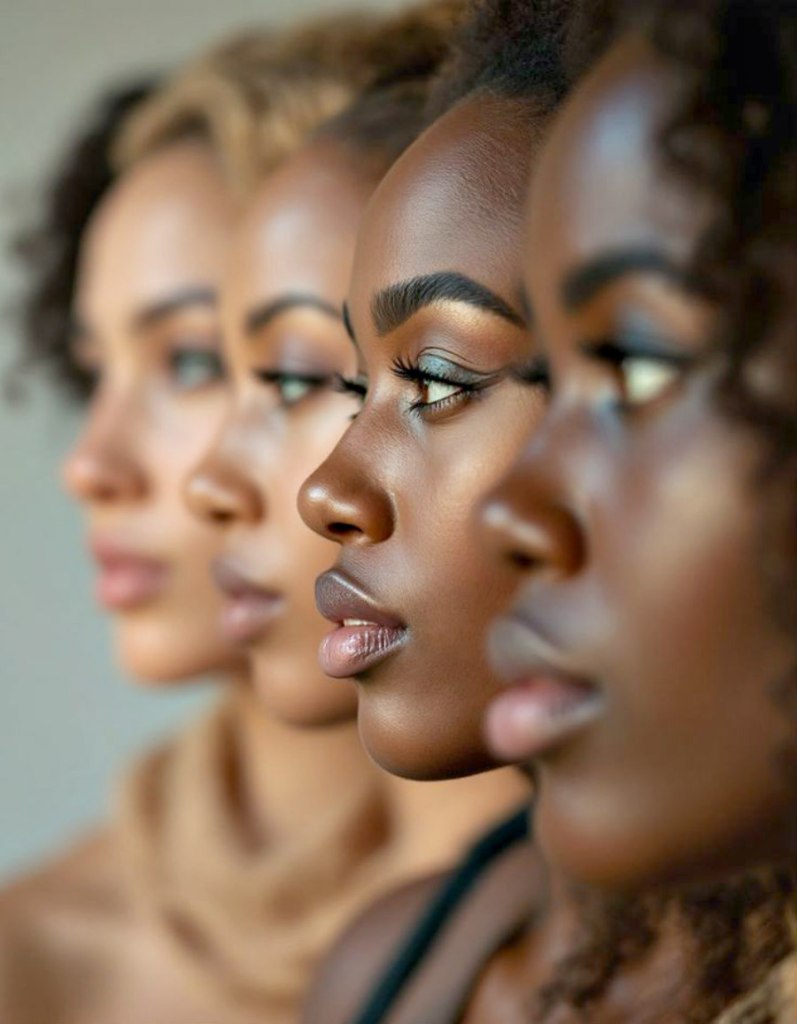
Mixed-race refers to individuals whose ancestry comes from more than one racial or ethnic group, often resulting from the blending of genetic lineages across continents such as African, European, Asian, or Indigenous populations. Genetically, mixed-race people inherit a unique combination of alleles from each parent, leading to a wide range of physical features such as skin tone, hair texture, eye color, and facial structure. Because African populations carry the greatest genetic diversity on Earth, mixed-race individuals with African ancestry often show especially varied traits, including undertones in the skin, curl patterns in the hair, and combinations of Afrocentric and Eurocentric features. The expression of these traits is influenced by dominant and recessive genes, polygenic inheritance, and the randomness of genetic recombination, which is why mixed-race siblings can look very different from one another.

Other names for mixed-race include biracial, multiracial, bi-ethnic, multiethnic, racially blended, racially mixed, dual-heritage, interracial, mixed heritage, ethnically mixed, and in older or regional terms, words like mulatto, mestizo, creole, or colored—though many of these older terms are now considered outdated, offensive, or tied to colonial racism and should not be used today. Modern preferred terms are mixed-race, biracial, or multiracial because they respect identity without repeating painful language from slavery and segregation.

Throughout history, the treatment of all Black people—including mixed-race Black individuals—has been shaped by systems built on anti-Blackness and white supremacy. Even when mixed-race people were given certain privileges because of lighter skin or Eurocentric features, they were still classified as Black under the “one-drop rule” in America and still subjected to racism, discrimination, and exclusion. Mixed-race individuals sometimes benefited from proximity to whiteness, but they were never accepted as white and often lived in a fragile position between worlds. Within these systems, all Black people—light or dark, mixed or fully African-descended—were treated as inferior to whiteness, controlled socially, economically, and politically, and denied equal rights.

In modern times, colorism still influences how different Black people are treated. Mixed-race or lighter-skinned individuals may experience social advantages in beauty standards, employment, and representation, while darker-skinned Black people often face harsher discrimination. But all Black people remain targets of systemic racism, regardless of shade or heritage. In short, mixed-race identity may change the shade of one’s experience, but it does not erase the reality of being Black in a society that still struggles with deep-rooted anti-Blackness.

Colorism has long shaped the lived experiences of Black people across the African diaspora, but its impact on mixed-race Black individuals is uniquely complex. At the core of colorism is a deeply rooted social hierarchy built on proximity to whiteness—skin tone, hair texture, and facial features that align more closely with European standards. For mixed-race Black people, this proximity often determines how they are perceived, accepted, or marginalized in both society at large and within Black communities. The legacy of slavery, colonialism, and white supremacy continues to shape these dynamics in ways that profoundly influence identity, mental health, and social positioning.

Mixed-race Black individuals often encounter a peculiar duality: they may be celebrated for embodying certain beauty standards while simultaneously facing exclusion or skepticism about their “authenticity.” This tension forms the backdrop of their psychological experience. When society assigns social value based on skin tone or features, those with lighter skin or more Eurocentric traits frequently experience privileges that may boost external status while quietly eroding internal security and belonging.

The concept of proximity to whiteness is rooted in historical systems that privileged lighter-skinned people for labor, education, and interpersonal treatment. During enslavement, Eurocentric traits were often rewarded, while dark skin became linked to labor-intensive roles and dehumanization. This legacy remains embedded in contemporary institutions, media, and interpersonal relationships. Mixed-race individuals with lighter skin may be treated as more approachable, less threatening, or more desirable by non-Black individuals, reinforcing an internalized sense of conditional acceptance.

Within the Black community, mixed-race people may encounter both privilege and resistance. Lighter skin may bring admiration or elevated social positioning, but it can also provoke suspicion or accusations of cultural detachment. Many experience moments of feeling “not Black enough,” particularly when their physical features align more closely with whiteness. This can create a fractured sense of identity in which belonging is both offered and withheld.

Those with darker skin or more Afrocentric features, even if mixed-race, often face the harsher realities of colorism. They may not receive the same advantages in media portrayal, dating preferences, or workplace respect. Their Blackness becomes hyper-visible, and the social penalties associated with dark skin persist. Being mixed-race does not exempt them from anti-Blackness; in many cases, it magnifies it because they do not receive the protective cover of light-skin privilege.

Psychologically, these dynamics contribute to long-standing conflicts around self-esteem, identity development, and internalized racism. Mixed-race individuals often grapple with a sense of duality, forced to navigate stereotypes, expectations, and judgments from multiple sides. They may feel pressure to identify more strongly with one racial group over another or to “prove” their Blackness through cultural knowledge, speech patterns, or political positions.

Internal conflict intensifies when they recognize the privileges they benefit from while also experiencing the discrimination tied to their Black identity. Some carry guilt for advantages they did not choose, while others carry frustration for disadvantages imposed on them despite their mixed heritage. This creates a fragile internal balance where identity feels fluid, conditional, and at times, contested.

Light-skin privilege operates across several domains—beauty standards, employment opportunities, educational treatment, and social desirability. In media and pop culture, lighter skin is often portrayed as more beautiful, marketable, or universally appealing. This is not accidental; it reflects Eurocentric beauty norms that have dominated global aesthetics. Mixed-race models and actors with Eurocentric traits often rise to visibility more quickly, reinforcing public perception that lighter equals better.

Within the dating world, lighter-skinned mixed-race individuals may be idealized or fetishized. They may be praised for “good hair” or “exotic beauty,” terms rooted in colonial ideologies that define beauty by its distance from African features. Conversely, darker-skinned mixed-race people may struggle to receive the same admiration or may be stereotyped as less refined or less desirable. This creates a painful divide in how beauty is perceived within the same racial category.

The psychological impact of being consistently valued—or devalued—based on appearance is profound. Those praised for their lightness may internalize a sense of superiority, often without realizing that the foundation of that praise is rooted in oppressive systems. Over time, this can manifest as entitlement, insecurity, or anxiety around aging or changes in appearance. For those devalued, the internal wounds often include shame, resentment, or a lifelong struggle to affirm their beauty and humanity outside societal standards.

In Black communities, mixed-race individuals may encounter the painful tension between representation and resentment. Some are uplifted as symbols of elevated status, closer to whiteness, and therefore considered more acceptable or beautiful. Others are accused of being the benefactors of privilege they did not ask for. The community’s relationship to mixed-race people is shaped by historical trauma and the lingering impact of color hierarchy imposed from the outside.

These tensions often reveal themselves in comments about hair, skin tone, and features from childhood onward. A mixed-race child may be praised for having “pretty hair” while a darker sibling is ignored, or the child may be told they are “lucky” to look the way they do. These early messages shape how individuals come to understand themselves and the value placed on their Blackness.

Genetics plays a significant role in the diversity of appearances among mixed-race Black people. The interaction between African, European, and sometimes Indigenous ancestry influences skin tone, hair texture, and facial features. The vast genetic diversity of African populations means that even two dark-skinned parents can produce a range of features, and two light-skinned parents may have children with darker tones. This complexity shows that the racial hierarchy built around physical appearance is socially constructed rather than biologically grounded.

The multigenerational impact of interracial unions and the social messages surrounding them continue to shape how mixed-race individuals perceive themselves. Some navigate life with ease due to their privileges, but others experience profound confusion regarding their place in racial discussions. When whiteness becomes the standard for beauty or acceptance, the implication is clear: proximity to whiteness equals value, and distance from whiteness equals struggle.

In modern society, mixed-race individuals often become the face of diversity in branding, advertising, and entertainment. This selective representation reinforces the idea that lighter-skinned or racially ambiguous individuals are more palatable or digestible to mainstream audiences. While it appears to celebrate diversity, it subtly prioritizes certain phenotypes over others, excluding dark-skinned Black people from equal visibility.

The internalization of these dynamics can create a sense of dissonance. Mixed-race people may feel grateful for certain privileges while also recognizing the painful cost of them. They may feel used as tokens of diversity or pressured to represent multiple communities at once. This can create emotional exhaustion and fragmented identity, particularly when they face invalidation from people who insist they are “too light” or “too Black.”

Proximity to whiteness also influences how mixed-race individuals experience police interactions, professional environments, and social mobility. Those with lighter skin may find they are treated with less suspicion, offered more opportunities, or assumed to be more educated or trustworthy. These privileges shape life outcomes in ways that are often invisible to those who benefit from them.

At the same time, mixed-race people are not shielded from racism. In many cases, they experience it in nuanced or confusing forms—microaggressions, tokenization, or assumptions about their background. These layered experiences often lead to a psychological state known as “racial liminality,” a state of existing between worlds without fully belonging to either.

Photo by Andrea Piacquadio on Pexels.com

The esteem granted to light-skinned mixed-race individuals is deeply tied to the colonial beauty hierarchy. European colonizers created a system in which whiteness equaled beauty, purity, and power, while Blackness was portrayed as lesser. These ideologies were internalized across generations, influencing standards of attraction, desirability, and social worth.

Even today, many people subconsciously associate Eurocentric features—thin noses, small lips, loose curls—with beauty. This is not a reflection of intrinsic attractiveness but of historical conditioning. Mixed-race individuals with these traits are often uplifted as the ideal, while those with broader noses, fuller lips, or darker tones face unfair comparison.

The genetic aspect of mixed-race identity adds another layer of complexity. Even siblings can present differently, creating intra-family disparities that mirror broader societal biases. A lighter-skinned child might receive different treatment from relatives, peers, or teachers compared to a darker-skinned sibling, shaping their sense of self-worth from an early age.

The ongoing consequences of colorism and proximity to whiteness can be seen in the workplace, where lighter-skinned mixed-race individuals are often perceived as more professional or marketable. Research has shown that skin tone can predict income, arrest records, and employment opportunities. These disparities illustrate how deeply colorism shapes economic outcomes.

Photo by Olha Ruskykh on Pexels.com

Mixed-race individuals frequently navigate these inequalities with heightened awareness. They may develop a unique form of racial consciousness, recognizing their privileges while also experiencing discrimination. This awareness can create empathy, but it can also create isolation, as few people fully understand the duality of their experience.

In romantic relationships, mixed-race individuals may feel objectified or fetishized. Some people date them to gain proximity to whiteness, while others avoid them due to assumptions about personality, politics, or cultural understanding. These dynamics create emotional challenges in forming genuine, grounded relationships.

Within Black communities, there is often an unspoken tension between embracing mixed-race individuals as part of the collective and critiquing the privileges they receive. This push-and-pull dynamic shapes how many mixed-race people learn to navigate their Blackness—with caution, sensitivity, and an acute understanding of social hierarchy.

Many mixed-race individuals grow up receiving conflicting messages: praised for being lighter, yet questioned for their authenticity. These inconsistencies can form cracks in their self-perception, requiring intentional healing and cultural grounding to overcome.

The privileging of mixed-race beauty has long-term cultural consequences as well. When only certain phenotypes are uplifted, the full spectrum of Black beauty goes uncelebrated. This harms not only darker-skinned individuals but also mixed-race individuals who feel valued for their traits rather than their humanity.

Healing from colorism requires dismantling these hierarchies and embracing the diversity of Black identity. Mixed-race individuals must be allowed to define themselves beyond appearance, and Black communities must be empowered to celebrate all shades and features without reproducing colonial hierarchies.

While mixed-race individuals often sit at the intersection of privilege and discrimination, their experiences highlight the deeper issue: a world conditioned to see whiteness as superior. True liberation comes when Blackness in all its forms is recognized as inherently worthy, beautiful, and powerful.

Photo by Luan Nunes on Pexels.com

In the end, proximity to whiteness does not determine value—society does. As awareness grows and voices challenge these hierarchies, mixed-race individuals can reclaim their identity without the burden of historical bias.

Colorism is not simply about appearance; it is about power, history, psychology, and identity. Mixed-race Black individuals continue to navigate this terrain with resilience, complexity, and a deep desire to belong.

Their stories reveal not just the cost of colorism but the possibility of healing when communities confront the truth of their shared history and choose unity over hierarchy.

Ultimately, mixed-race identity is not defined by proximity to whiteness but by personal truth, lived experience, and the rich cultural heritage that shapes who they are beyond society’s expectations

References

Adams, R. E., & Dressler, W. W. (1988). Skin color and social status in the U.S. Sociological Spectrum, 8(4), 415–438.

Banks, T. L. (2000). Colorism: A darker shade of pale. University of California Press.

Bonilla-Silva, E. (2018). Racism without racists: Color-blind racism and the persistence of racial inequality in America (5th ed.). Rowman & Littlefield.

Burke, M. A., & Embrich, R. (2020). Colorism and stratification among siblings. American Sociological Review, 85(2), 255–280.

Crenshaw, K. (1991). Mapping the margins: Intersectionality, identity politics, and violence against women of color. Stanford Law Review, 43(6), 1241–1299.

Daniel, G. R. (2002). More than Black? Multiracial identity and the new racial order. Temple University Press.

Hall, R. E. (2010). An historical analysis of skin color discrimination. Springer.

Harris, C. (1993). Whiteness as property. Harvard Law Review, 106(8), 1707–1791.

Hunter, M. (2005). Race, gender, and the politics of skin tone. Routledge.

Keith, V. M., & Herring, C. (1991). Skin tone and stratification in the Black community. American Journal of Sociology, 97(3), 760–778.
The Wrath of Black Resilience

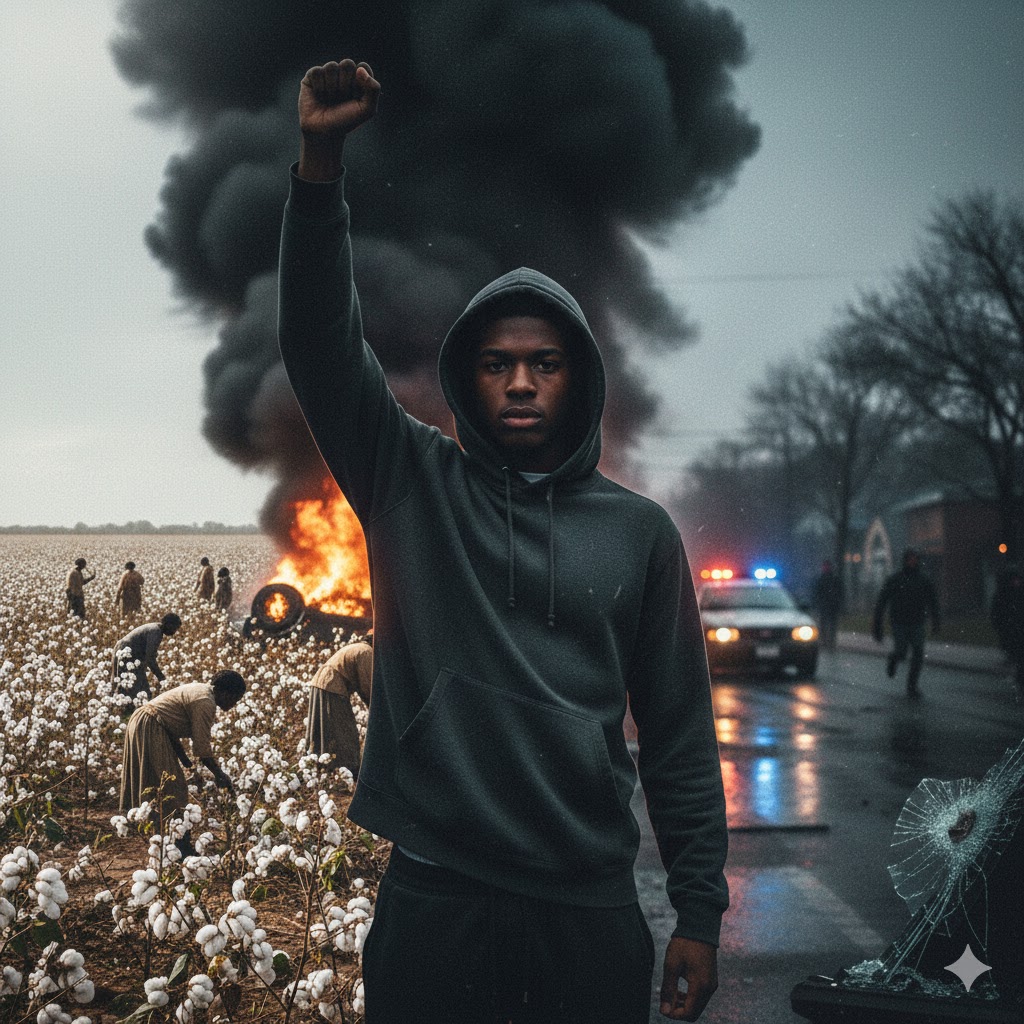
Black resilience is not a gentle force; it is a righteous wrath forged through centuries of pressure, pain, and perseverance. It is the fire that refuses to be extinguished, the power that rises from ashes with dignity still intact. This resilience is both a shield and a sword, shaped by generational survival and spiritual endurance.

The wrath of Black resilience is not destructive—it is transformative. It is the fierce determination to exist in a world that has tried, repeatedly, to erase, distort, or diminish Black life. This resilience emerges from the collision of suffering and hope, forming a strength unmatched in its depth and sacred in its origin.

This wrath carries memory. It remembers slave ships, plantations, whips, auctions, and chains. It remembers the cries of mothers whose children were torn from their arms and the prayers whispered in dark cabins to a God who seemed far yet remained present. Memory sharpens resilience into conviction.

It is a wrath tempered by wisdom. Black people have learned to survive without surrendering their humanity. The resilience that flows through the diaspora is a testimony to what happens when faith meets fire and refuses to break. It is refusal wrapped in courage—refusal to bow, to be silent, or to disappear.

The wrath of Black resilience is seen in the unyielding pursuit of justice. It is the righteous anger that propelled rebellions, marches, sit-ins, and court battles. It is the same spirit that fueled leaders like Malcolm X, Fannie Lou Hamer, Marcus Garvey, and Ida B. Wells—individuals who understood that survival alone was not enough; liberation was the goal.

It is a sacred wrath, aligned with the God of the oppressed. Scripture affirms that the Most High hears the cries of the afflicted. Black resilience draws strength from this divine truth, knowing that justice is not merely a human demand but a spiritual inheritance. This wrath becomes a holy resistance against systems of exploitation and dehumanization.

Yet, Black resilience also holds tenderness. Despite centuries of brutality, Black communities created art, music, family, culture, and spiritual practices that nourished life. This duality—wrath against injustice, tenderness toward each other—is the secret to its power.

This resilience is generational. From enslaved ancestors to modern activists, the flame of endurance has been passed down like a torch. Each generation fans it into something greater—revival, rebellion, restoration. The wrath of resilience ensures that the trauma of the past does not silence the future.

It also manifests in economic creativity. From sharecropping to Black Wall Street, from entrepreneurship to global influence, Black communities have repeatedly built and rebuilt despite sabotage and systemic barriers. This relentless reconstruction is a form of wrathful hope—hope that refuses to die.

The wrath of Black resilience is poetic. It sings through spirituals and hip-hop, dances through jazz and blues, and speaks through literature, sermons, and scholarship. Art becomes protest; creativity becomes survival; expression becomes liberation.

It is seen in Black love—the protective, enduring, healing love that withstands external assault. Black families have survived legal restrictions, targeted destabilization, and economic pressure. Yet the love still blossoms. That love is an act of defiance.

This resilience is intellectual as well. Black scholars have dismantled false histories, reconstructed truth, and reclaimed identity. The wrath here is quiet but profound—a refusal to let lies prevail. Knowledge becomes warfare, and scholarship becomes a pathway to cultural redemption.

The wrath of Black resilience also operates spiritually. Through Christianity, Islam, African traditional religions, and Hebrew Israelite faith practices, Black communities cultivated belief systems that affirmed their worth when the world denied it. Faith became resistance; prayer became strategy.

This resilience is communal. It is seen in mutual aid networks, church gatherings, neighborhood protection, and intergenerational mentorship. Black communities have learned that survival is collective work. Their wrath is unified; their resilience, intertwined.

Even in grief, Black resilience rises. Mourning becomes movement; sorrow becomes strategy. Whether after lynchings, massacres, police brutality, or generational trauma, the community finds a way to speak, march, organize, and heal without losing its soul.

The wrath of Black resilience is global. In Africa, the Caribbean, South America, and throughout the diaspora, colonization could not destroy the spirit of the people. Revolutions erupted; cultures survived; languages adapted; identities persisted. The global Black experience is one of endurance and rebirth.

This resilience is also prophetic. It does not simply react to injustice—it anticipates liberation. It sees beyond present oppression to future restoration. Black resilience believes in the possibility of a world made right, and it fights relentlessly until that vision becomes reality.

The wrath of resilience is not rage without direction—it is purpose wrapped in fire. It is the sharpened edge of survival and the disciplined determination to rise above systems built for destruction. It is righteousness standing firm against wickedness.

Ultimately, the wrath of Black resilience is a divine inheritance. It is the echo of ancestors, the strength of the present generation, and the promise of those yet to come. It is the collective heartbeat of a people who refuse to die, refuse to bend, and refuse to be forgotten.


References

Alexander, M. (2012). The new Jim Crow: Mass incarceration in the age of colorblindness. The New Press.

Cone, J. H. (1975). God of the oppressed. Orbis Books.

Davis, A. (2016). Freedom is a constant struggle: Ferguson, Palestine, and the foundations of a movement. Haymarket Books.

Gates, H. L. (2019). Stony the road: Reconstruction, white supremacy, and the rise of Jim Crow. Penguin Press.

Wells, I. B. (2020). Crusade for justice: The autobiography of Ida B. Wells. University of Chicago Press.

West, C. (2017). Race matters. Beacon Press.

Indigenous People of America

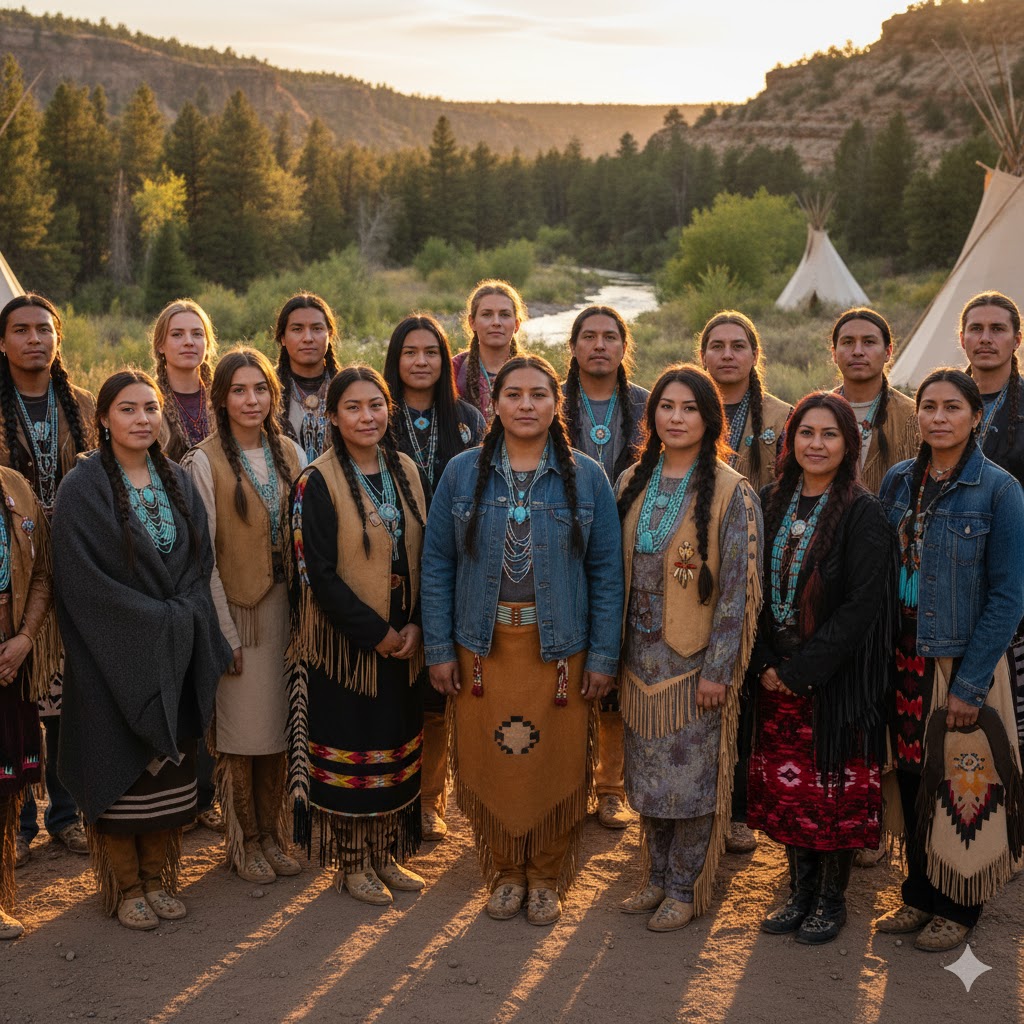
Native American people are the Indigenous peoples of the land now called the United States, and they are known by many names depending on the region and cultural group. The term “Native Americans” is commonly used today, but older names include “American Indians,” “Indigenous Americans,” “First Nations,” and “First Peoples.” Each tribe, however, has its own original name in its own language, often meaning “the people,” “the original ones,” or “human beings.” This diversity reflects the rich cultural and linguistic complexity of Indigenous civilizations long before European arrival.

Native Americans came in a wide range of skin tones, reflecting geographic diversity and ancient migrations. Historical accounts, genetic studies, and artwork created before European contact describe Indigenous peoples as brown-skinned, copper-toned, or deep reddish-brown. Some early explorers described them using terms like “tawny,” “brown,” or “dark.” A small group of historians and Afrocentric scholars argues that some Indigenous groups were Black or had African admixture prior to Columbus, but mainstream anthropology concludes that the first peoples of the Americas descended from ancient Asian populations.

Christopher Columbus’s arrival in 1492 dramatically altered the lives of Indigenous people. Columbus and his crew initially described the Indigenous people of the Caribbean as generous, peaceful, and welcoming. However, his treatment of them quickly turned violent. Columbus enslaved Native men, women, and children, forced them to mine gold, and imposed brutal punishments for failing to meet quotas. Many Indigenous people died from torture, forced labor, and diseases introduced by Europeans. These early actions set the stage for centuries of exploitation and colonization.

The history of Native Americans after Columbus is marked by war, displacement, forced assimilation, and systematic oppression. European settlers pushed Indigenous peoples off their ancestral lands through military force, broken treaties, and deliberate starvation campaigns. Entire communities were destroyed through massacres such as Wounded Knee, Sand Creek, and the Trail of Tears, which forced the Cherokee and other nations to relocate under deadly conditions. These events devastated populations, cultures, and social structures.

Many people ask what happened to the Native Americans, and the answer is complex. Disease brought by Europeans—smallpox, influenza, measles—caused massive population decline. Historians estimate that tens of millions of Indigenous people may have lived in the Americas before 1492, but up to 90% perished within the first century of contact. Survivors were pushed into reservations, stripped of cultural rights, and subjected to assimilation efforts, including boarding schools that prohibited Native languages and traditions.

Regarding reparations, the United States treated Native Americans differently from Black Americans. While Black Americans received no national reparations for slavery, Native Americans received limited forms of compensation in the form of treaties, land rights, and financial settlements—though these were often inadequate or unenforced. The Indian Claims Commission, established in 1946, offered monetary compensation for stolen land, but the payments were small compared to the value of what was taken. Many Indigenous activists note that no amount of money can compensate for genocide, cultural loss, and the destruction of entire nations.

Compared to Black people, Native Americans were treated through a system of removal and replacement, while Black people were subjected to chattel slavery and generational bondage. Both groups experienced racial violence, dehumanization, and systemic oppression, but the mechanisms differed. Enslaved Africans were forced into labor, while Indigenous people were pushed off their land or exterminated. Yet both suffered under white supremacy and colonial expansion.

The languages spoken by Native Americans before colonization were vast and varied. More than 300 Indigenous languages existed in North America, belonging to major language families such as Algonquian, Iroquoian, Siouan, Athabaskan, Uto-Aztecan, and Muskogean. Many tribes today work to preserve or revive these languages through immersion schools and cultural programs.

How Native Americans arrived in the Americas is a continuing subject of research. The most widely accepted theory holds that ancient peoples migrated from Siberia into Alaska across a land bridge called Beringia around 15,000–20,000 (not sure if this is true the amount of years)years ago. Alternative theories suggest coastal migration by boat or earlier arrivals, but these remain debated. Regardless of the exact method, Indigenous peoples developed sophisticated civilizations long before European contact.

The land now known as America had many Indigenous names before colonization. Different tribes had different names for regions, but the continent itself had no single unified name since there was no single unified nation. The English name “America” comes from Amerigo Vespucci, an Italian navigator whose writings incorrectly suggested he discovered a “New World.” European mapmakers later used his name to describe the continents.

Columbus Day has a complicated and painful history. First celebrated in the late 18th century, the holiday gained national recognition in 1937 as a celebration of Italian American heritage and Columbus’s voyages. However, for Native Americans, Columbus Day represents colonization, enslavement, massacres, and the beginning of genocide. This has led many states and cities to replace Columbus Day with Indigenous Peoples’ Day to honor Native resilience and history.

The treatment of Native Americans varied by region and time period, but their experiences consistently reflected displacement, violence, and cultural suppression. Treaties were broken, families were separated, and children were taken from their homes to be “Americanized.” Yet Indigenous peoples survived through resistance, resilience, and a commitment to preserving their identity.

The debate over whether some Indigenous peoples were Black adds another layer to the discussion. Some scholars point to early European reports describing “dark-skinned” or “Black” Native peoples, while others argue that these descriptions referred to natural variations in skin tone among Indigenous populations. Most anthropologists conclude that any similarity to African features developed independently.

Native Americans today continue to fight for sovereignty, land rights, cultural preservation, and justice. Their survival in spite of centuries of oppression is a testament to their strength. Across the United States, Indigenous nations maintain vibrant cultures, languages, and traditions, ensuring that the legacy of their ancestors endures.

The question of reparations remains ongoing. Many Indigenous communities seek not only financial compensation but also land restoration, legal recognition, and protection of sacred sites. Some progress has been made, but the historical wounds run deep.

Ultimately, Native American history is central to the story of America. Their experiences reveal the contradictions of a nation built on ideals of freedom while practicing colonization and racial hierarchy. By understanding this history, modern society can better honor Indigenous contributions and acknowledge the injustices committed against them.

The legacy of Columbus is deeply contested. While some view him as an explorer, others see him as the initiator of a brutal colonial system. His actions toward Indigenous peoples—including enslavement, torture, and exploitation—serve as a stark reminder of the destructive impact of European colonization.

Native American history is not just a story of suffering but also one of survival, identity, and endurance. Through cultural revival, language preservation, and political activism, Indigenous peoples continue to shape the future. Their presence and contributions remain foundational to the story of the Americas.


References

Calloway, C. G. (2012). First peoples: A documentary survey of American Indian history (4th ed.). Bedford/St. Martin’s.

Dunbar-Ortiz, R. (2014). An Indigenous peoples’ history of the United States. Beacon Press.

Loewen, J. W. (2007). Lies my teacher told me: Everything your American history textbook got wrong. The New Press.

Mann, C. C. (2005). 1491: New revelations of the Americas before Columbus. Vintage Books.

Stannard, D. E. (1992). American Holocaust: The conquest of the New World. Oxford University Press.

Thornton, R. (1987). American Indian Holocaust and survival. University of Oklahoma Press.

Dilemma: Reparations

“Reparations are not about a handout—they are about restoring justice, repairing wounds, and reconciling with the truth of our shared history.” — Dr. Cornel West

Reparations have long stood at the center of Black America’s moral, historical, and spiritual struggle for justice. They represent not merely financial compensation but a public acknowledgment of the harm inflicted upon millions of African-descended people who endured chattel slavery, racial terrorism, legal segregation, and generational dispossession. Yet despite the magnitude of these injustices, the United States has continually resisted granting African Americans what has been afforded to other groups. This dilemma reflects the nation’s unresolved relationship with truth, accountability, and its own historical narrative.

Reparations remain a contentious issue because they force America to confront its past without euphemism. They require the nation to admit that slavery was not an accidental blemish but a deliberate economic system built on inhumanity. The refusal to offer reparations stems from the denial of responsibility—an unwillingness to accept that the wealth of the nation was constructed through Black suffering. While some argue that time has healed old wounds, generational inequality remains a living consequence that can be traced through the socioeconomic conditions of Black communities today.

Black people deserve reparations because the injustices committed against them were unique in scale, duration, and brutality. Enslaved Africans were legally defined as property, denied humanity, and subjected to violence, rape, forced family separations, and the destruction of cultural identity. Even after emancipation, racist laws such as Black Codes, Jim Crow legislation, redlining, and discriminatory policing reinforced the conditions of inequality. Reparations acknowledge that the effects of slavery did not end in 1865; they echo across generations.

America’s lies to Black people have been vast and intentional. The promise of “forty acres and a mule” never materialized. The idea that freedom would naturally lead to equality proved untrue as the nation constructed new systems of oppression. Meanwhile, myths were created to distort history: that slavery was benevolent, that Black people were inferior, and that racial disparities were due to cultural failings rather than structural inequities. These lies became embedded in school curricula, political rhetoric, and national identity.

Responsibility for this legacy lies not only with the enslavers but also with the federal government, religious institutions, financial corporations, and those who profited from Black labor. Each played a role in perpetuating harm. The U.S. Constitution protected slavery, banks insured enslavers’ “property,” and churches often misused Scripture to justify bondage. Collectively, these institutions built wealth by extracting the life force of an entire people, while simultaneously shaping a narrative that minimized their culpability.

One of the most insidious aspects of American slavery was its misuse of the Bible. Passages were selectively cited to suggest divine approval for slavery, while the liberating themes of the Exodus, justice, and human dignity were ignored. Enslavers weaponized religion to control enslaved people, teaching obedience while forbidding them from reading Scripture in full. Yet Black people found in the Bible—especially the King James Version—promises of deliverance, justice, and divine retribution against oppressors. They recognized that true biblical teaching contradicted the slaveholder’s theology.

The torture inflicted on Black people was systematic and state-sanctioned. Whippings, brandings, mutilation, forced breeding, sexual assault, medical experimentation, and psychological terror were common tools of control. Enslaved children were sold away from their parents; women were violated for profit; men were dehumanized to break their spirit. After slavery, brutality continued through lynching, convict leasing, and racial massacres such as Tulsa in 1921 and Rosewood in 1923. These acts were not isolated incidents but expressions of a national ideology that devalued Black life.

Native Americans also endured genocide, land theft, cultural destruction, and forced assimilation. In some cases, the U.S. government offered financial settlements, land returns, and federal recognition—imperfect but tangible forms of reparative justice. Their experience demonstrates that reparations are not unprecedented; America has the capacity to compensate groups it has harmed. The contrast raises the question: why were African Americans excluded?

The purpose of slavery was economic exploitation and racial domination. The outcome was the creation of a racial caste system where whiteness became associated with power and Blackness with subjugation. The legacy includes wealth disparities, underfunded schools, mass incarceration, health inequalities, and cultural erasure. Generations of Black families have been denied the opportunity to accumulate wealth, resulting in the deep socioeconomic chasm we observe today.

The answer to the dilemma lies in truth-telling, repair, and systemic transformation. Reparations are not merely about money but about addressing the structural conditions that slavery created. They involve formal apologies, financial restitution, educational investments, land returns, business grants, policy reforms, and national remembrance. They require acknowledging the ongoing nature of racial inequality.

Reparations are defined as compensation given to a group for past harms, typically by the government responsible for those harms. They may include monetary payments, community investments, or institutional reforms. Historically, reparations have been provided to Holocaust survivors, Japanese Americans interned during World War II, Native American tribes, and victims of certain state injustices. The absence of reparations for African Americans reveals a contradiction in American values.

Many ethnic groups have received reparations because their suffering was publicly acknowledged as unjust and undeserved. Yet Black suffering was normalized, rationalized, or erased. The failure to grant reparations to Black people is not due to logistical difficulty but to a societal unwillingness to confront racism’s foundational role in American identity. This reluctance is reinforced by political rhetoric that portrays reparations as divisive rather than healing.

Efforts to remove Black history from schools, libraries, and public discourse represent a modern continuation of historical erasure. By censoring slavery, Jim Crow, and systemic racism, America seeks to avoid accountability. This suppression not only distorts national memory but also undermines progress toward justice. When a nation refuses to teach its children the truth, it ensures that oppression will repeat itself in new forms.

The solution begins with acknowledging historical facts without dilution. Reparations commissions should gather documentation, hear testimonies, and formulate actionable plans. Churches and corporations should be required to confess their roles in slavery and contribute to repair. Educational institutions must restore truthful curricula. Policies should address wealth gaps through homeownership grants, student loan forgiveness, and investments in Black-owned businesses and schools.

Spiritually, the Bible affirms reparations. In Exodus, God commands Egypt to compensate the Israelites for their forced labor. In Luke 19:8 (KJV), Zacchaeus pledges to restore fourfold what he has taken unjustly. These passages demonstrate that repentance requires both confession and restitution. Justice is incomplete without repair.

A national program of reparations would not erase the past, but it would create a foundation for healing and reconciliation. It would honor the resilience of Black people whose ancestors endured the unthinkable. It would affirm that America is capable of truth, justice, and transformation.

Reparations are not charity—they are the moral debt owed to a people whose contributions built the nation while their humanity was denied. They represent not only compensation but also dignity restored. For Black America, reparations are not merely a request—they are a rightful claim grounded in history, faith, and justice.

Only through honesty, restitution, and a commitment to systemic change can America move beyond its broken legacy. Reparations are not the end of the story, but they are the beginning of a new chapter where truth prevails over denial and justice triumphs over inequality.

References
Alexander, M. (2012). The new Jim Crow: Mass incarceration in the age of colorblindness. The New Press.
Coates, T.-N. (2014). The case for reparations. The Atlantic.
Du Bois, W. E. B. (1903). The souls of Black folk. A.C. McClurg.
Horne, G. (2018). The apocalypse of settler colonialism. Monthly Review Press.
King James Bible. (1769/2021). King James Version.
West, C. (1993). Race matters. Beacon Press.
Zinn, H. (2005). A people’s history of the United States. Harper Perennial.

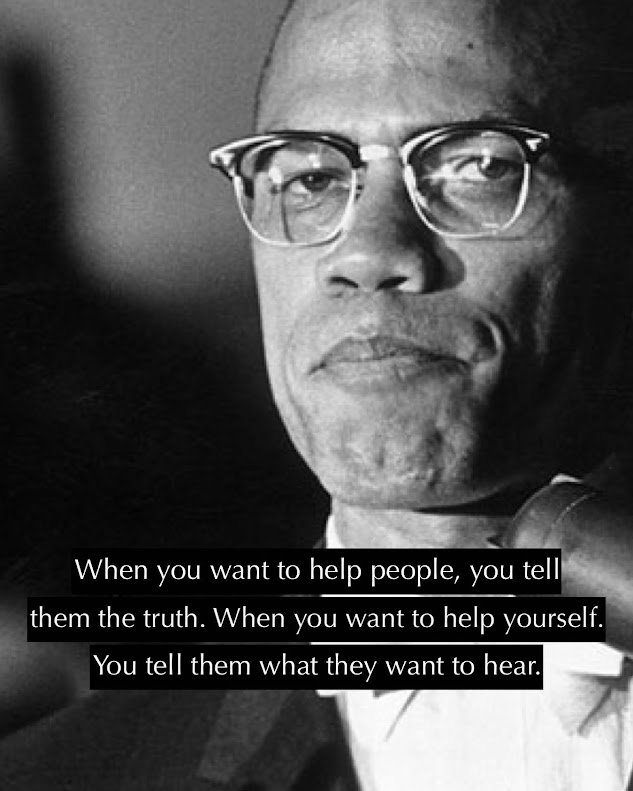
Malcolm X and the Psychology of Black Liberation.

Malcolm X occupies a singular place in the global liberation narrative. More than an activist or orator, he was a psychological architect of Black consciousness—one who shattered internalized inferiority, challenged systems of domination, and reconstructed Black identity on the pillars of knowledge, discipline, dignity, and divine self-worth. His message was not merely political but deeply psychological and spiritual: liberation begins in the mind before it manifests in the world.

Malcolm X understood that oppression functions through psychological mechanisms long before chains or laws are imposed. Colonialism and slavery inflicted wounds on Black identity, systematically eroding self-perception and community cohesion. As he stated, “The greatest mistake of the movement has been trying to organize a sleeping people around specific goals. You have to wake the people up first.” Awakening—not appeasement—was his mission. His emphasis on mental elevation reflected a core truth of liberation psychology: freedom is impossible when the oppressed unconsciously adopt the worldview of their oppressor (Fanon, 1952).

Through teachings rooted in historical reclamation, religious discipline, and moral rectitude, Malcolm X sought to reconstruct the Black psyche. He insisted that Black people must unlearn inferiority, reclaim ancestral dignity, and reject white supremacist valuations of humanity. To him, Black liberation required a sacred internal covenant: “Who taught you to hate yourself?” This question was not rhetorical—it was psychological surgery, cutting away mental chains forged by centuries of dehumanization.

Malcolm X’s philosophy aligns with the principles of Afrocentric psychology, which asserts that healing begins when Black people see themselves as agents of divine and historical purpose (Nobles, 1986). He created a mirror for Black people to witness their brilliance, history, and potential. By redefining self-perception, he disrupted the neurological imprint of oppression. Identity became resistance; pride became political armor.

Self-defense in Malcolm X’s framework extended beyond physical protection. It was also emotional, intellectual, and spiritual defense against systems that distort Black humanity. He believed the oppressed should not tolerate violence, humiliation, or psychological manipulation. His doctrine of self-respect—“We are nonviolent with people who are nonviolent with us”—restored psychological agency. The right to dignity was not negotiable.

Malcolm X’s stance on separation versus integration reflected deeper psychological logic. He opposed integration not out of hatred, but as resistance against internal assimilation into a hostile system. Integration without empowerment, he warned, reinforces dependency and preserves structural dominance. True liberation required building, not begging; creating institutions rooted in Black values, not blending into systems built to erase them.

His later years, shaped by pilgrimage and expanded global consciousness, marked a psychological evolution rather than contradiction. Experiencing a multiracial brotherhood of faith during Hajj led him to condemn racism universally. Yet he never abandoned the psychological duty to uplift Black people. Global human brotherhood remained conditional on justice and equality. His transformation did not soften his message—it broadened its moral and spiritual reach.

Malcolm X challenged Black people to embrace intellectual rigor. He was a student of history, law, sociology, geopolitics, and scripture. He believed literacy and knowledge were weapons, echoing the biblical call to renewal of the mind (Romans 12:2). His discipline—prayer, study, dietary structure, moral constraint—modeled psychological sovereignty. Liberation was not chaos; it was ordered growth.

His advocacy for the protection and elevation of Black women was revolutionary psychological intervention. “The most disrespected person in America is the Black woman.” In affirming her worth, he restored the psychological core of Black family and nationhood. He recognized that no people rise without honoring their mothers, daughters, and sisters.

Malcolm X understood that fear of the oppressor maintains oppression. He believed courage—spiritual, intellectual, communal—breaks generational trauma. His life demonstrated that proximity to oppression does not determine destiny—consciousness does. He did not merely preach freedom; he embodied the psychological evolution required for it.

In the end, Malcolm X was martyred not only for challenging white supremacy but for awakening a sleeping people. His legacy endures because he taught that liberation is not granted—it is claimed. It begins with truth, expands through knowledge, matures in discipline, and manifests in unity and divine conviction.

To study Malcolm X through the lens of psychology is to recognize that his revolution was internal before it was external. He gave Black people back their minds, their names, their dignity, and their sacred understanding of self. His legacy remains a clarion call: liberation begins when the oppressed believe they are worthy of freedom, capable of power, and destined for greatness.


References

Fanon, F. (1952). Black Skin, White Masks. Grove Press.
Nobles, W. (1986). African Psychology: Toward Its Reclamation, Reascension and Revitalization. Black Family Institute.

The Ebony Dolls: Halle Berry

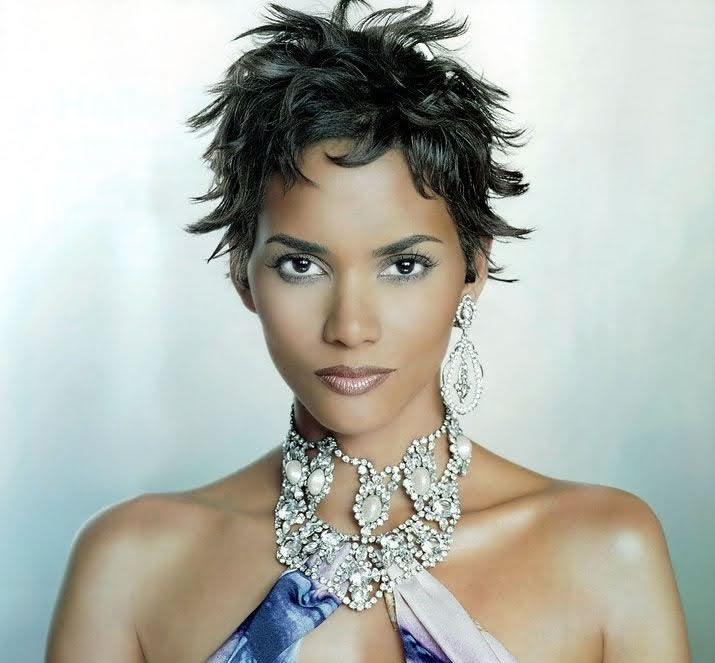
Many have said that Halle Berry is the most beautiful woman in the world, making her a living icon of beauty and timeless elegance.

In the early 1990s, after the release of Strictly Business (1991), Halle Berry captivated Hollywood and the world with her magnetic screen presence and extraordinary beauty. The film served as her breakout role, introducing audiences to a new kind of Black leading lady—radiant, confident, and effortlessly alluring. Her appearance in Strictly Business marked a cultural turning point, as Berry’s blend of sophistication and sensuality transcended racial boundaries in an industry still grappling with representation. Television host Arsenio Hall famously declared her “the most beautiful woman in the world,” echoing the collective awe of audiences and critics alike who saw in Berry not just a starlet, but a genetic marvel – the complete package in terms of beauty whose elegance and charisma would redefine Hollywood’s standards of beauty for decades to come.

These photographs are the property of their respective owners. No copyright infringement intended.

Halle Berry has long been celebrated as one of the most beautiful women in the world—a vision of timeless elegance, grace, and radiant femininity. Her symmetrical features, luminous skin, and captivating eyes embody a beauty that transcends race and age. With a sculpted jawline, flawless complexion, and confidence that radiates from within, she redefined the global perception of Black beauty. Whether walking a red carpet or appearing barefaced in interviews, Halle’s natural glow and poise reflect inner strength and divine self-assurance. Her presence commands attention—not merely for her looks, but for the spirit and perseverance behind them.

Born Maria Halle Berry on August 14, 1966, in Cleveland, Ohio, she was raised by her mother, Judith Ann, after her parents divorced when she was young. Her mother, a psychiatric nurse, taught her resilience, while her father, Jerome Berry, an African American hospital attendant, contributed to her rich biracial heritage. Halle’s early life was marked by challenges, including racial discrimination, but she turned adversity into motivation. Her drive and determination pushed her to excel academically and artistically.

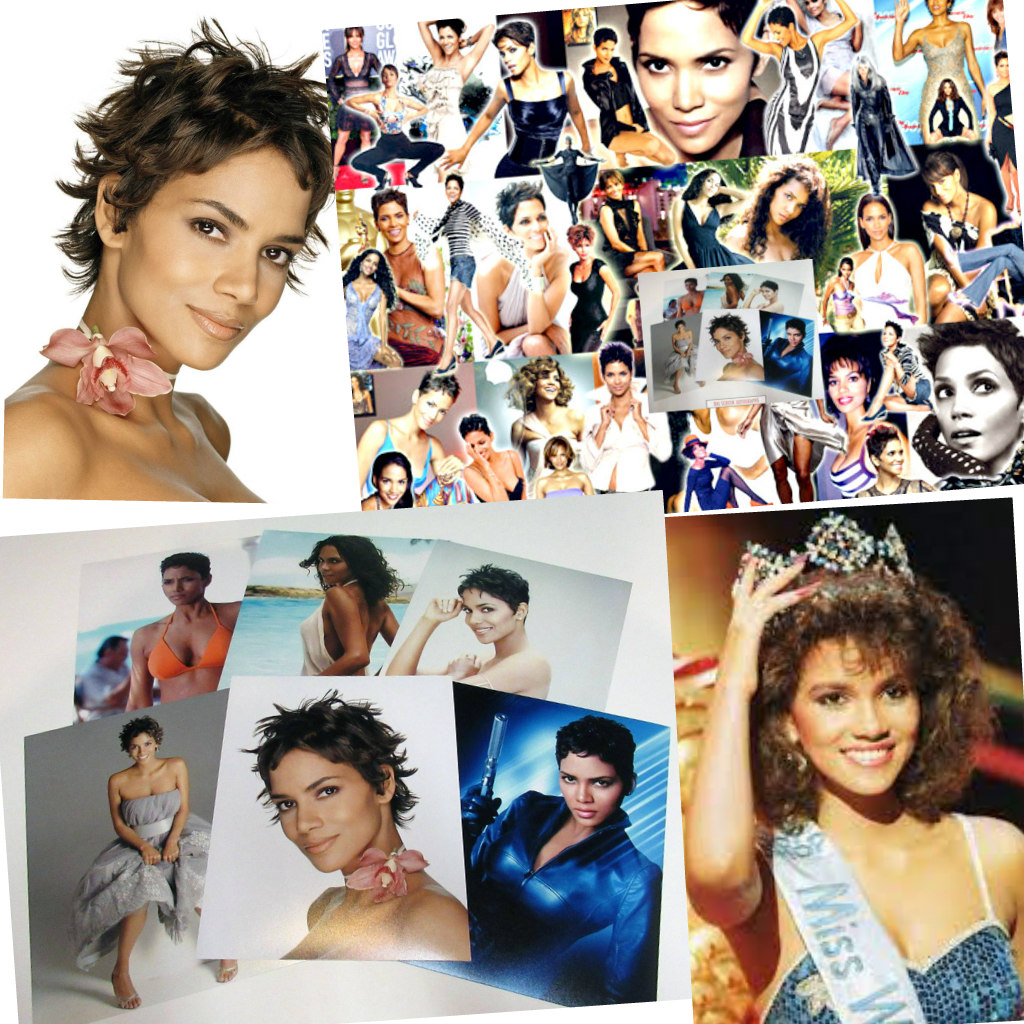
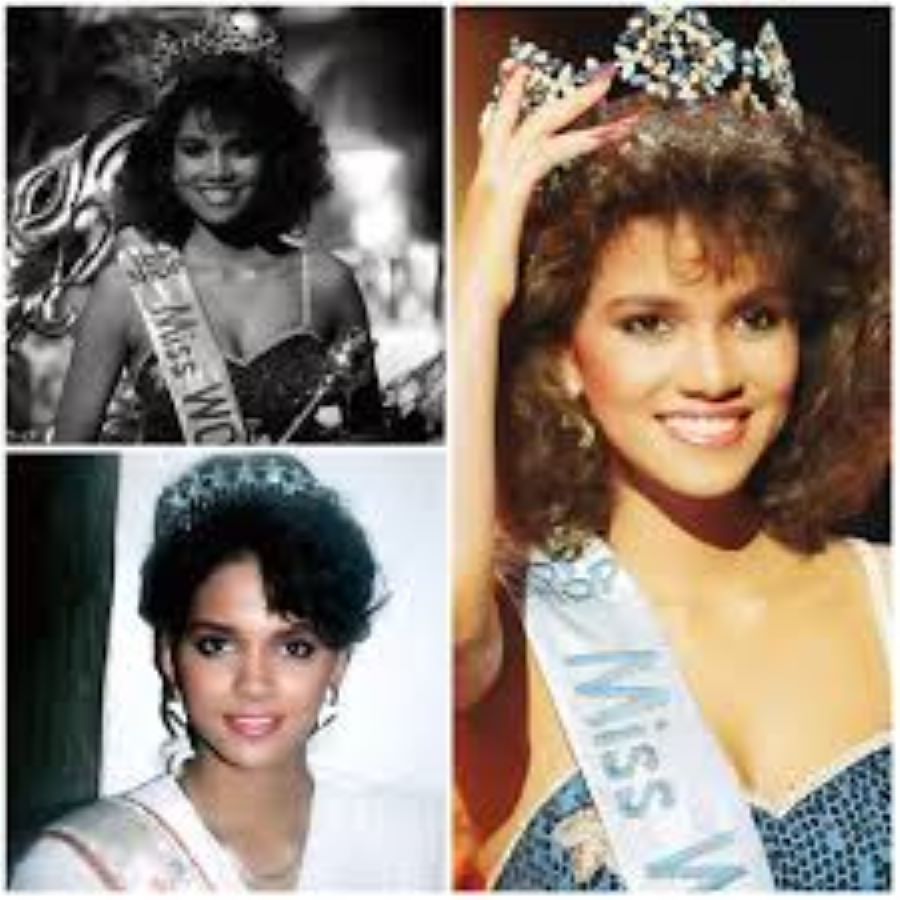
Before her rise to stardom, Halle Berry began her career in modeling and beauty pageants. In 1985, she won the title of Miss Teen All-American and later became the first runner-up in the 1986 Miss USA pageant. That same year, she represented the United States in the Miss World competition, where she placed sixth. Her pageant success opened doors to modeling and acting opportunities, giving her visibility in an industry where diversity was still limited.

These photographs are the property of their respective owners. No copyright infringement intended.

Halle’s modeling career flourished throughout the 1980s, appearing in high-profile campaigns and fashion spreads that highlighted her natural beauty and grace. She was a muse for photographers who saw in her the perfect balance between strength and softness. But it wasn’t just her looks that set her apart—it was her professionalism, intelligence, and ability to carry herself with royal composure.

Her transition to acting began with small television roles, including Living Dolls in 1989. However, her breakthrough came in Spike Lee’s Jungle Fever (1991), where she portrayed a crack addict named Vivian. This role proved that she was more than just a beauty queen—she was an actress capable of depth, vulnerability, and emotional truth. Halle’s early film choices often centered around complex female characters navigating identity, love, and survival.

This photograph is the property of its respective owner. No copyright infringement intended.

As her career expanded, Berry starred in a wide range of films that showcased her versatility. She appeared in Boomerang (1992) alongside Eddie Murphy, The Flintstones (1994), Bulworth (1998), and the critically acclaimed Introducing Dorothy Dandridge (1999). Her portrayal of the legendary actress Dorothy Dandridge earned her an Emmy, a Golden Globe, and a Screen Actors Guild Award. This performance was especially meaningful, as Dandridge had been the first Black woman nominated for an Academy Award for Best Actress—a barrier Berry herself would later break.

In 2002, Halle Berry made history when she became the first Black woman to win the Academy Award for Best Actress for her role in Monster’s Ball (2001). In her emotional acceptance speech, she dedicated the moment to “every nameless, faceless woman of color who now has a chance because this door tonight has been opened.” Her performance in the film, as a struggling widow seeking redemption, cemented her place among Hollywood’s elite and broke racial boundaries in the industry.

This photograph is the property of its respective owner. No copyright infringement intended.

Beyond her Oscar, Berry’s trophy case includes a Golden Globe, multiple NAACP Image Awards, and recognition from the BET Honors and Essence Black Women in Hollywood Awards. She also received a star on the Hollywood Walk of Fame in 2007, a testament to her enduring influence and body of work.

People Magazine

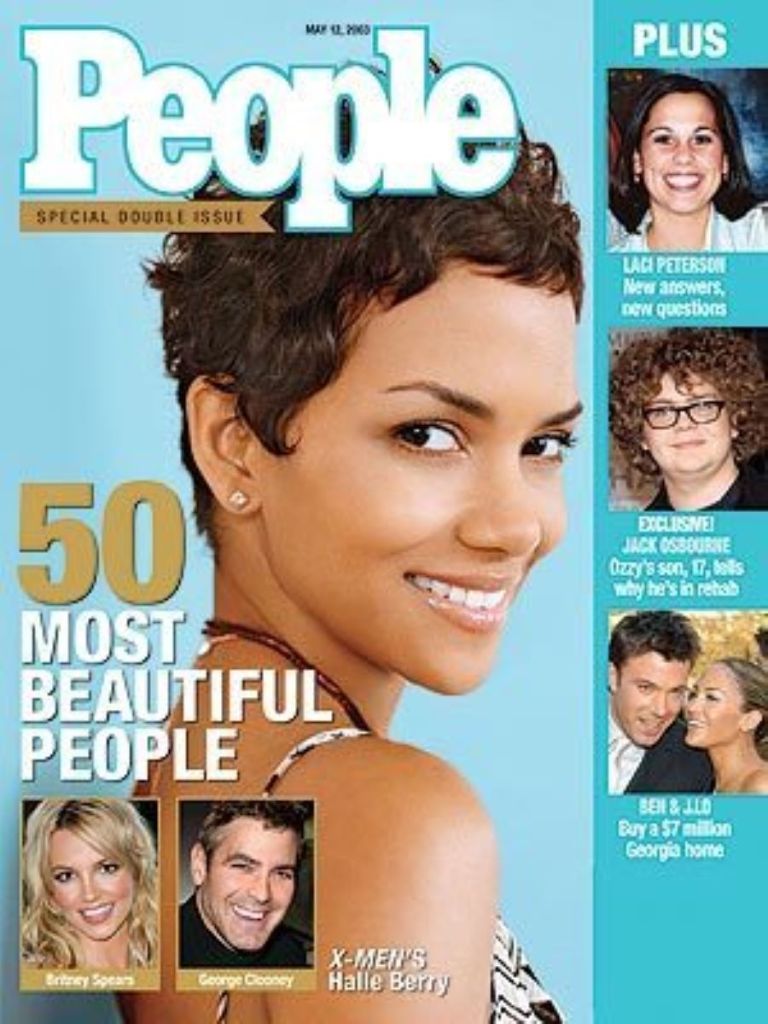
Halle’s beauty has often been celebrated alongside her talent. She was named People magazine’s “Most Beautiful Woman in the World” in 2003 and has graced the cover multiple times since. Her appeal lies not just in physical perfection but in authenticity and confidence. She embodies the kind of beauty that grows richer with time—a combination of fitness, spiritual balance, and self-love.

Her beauty regimen has always emphasized simplicity and consistency. Berry advocates for hydration, clean eating, regular exercise, and a focus on inner wellness. She follows a ketogenic diet, practices yoga, and prioritizes mental health. In interviews, she often states that “beauty begins with the soul,” emphasizing peace, faith, and gratitude as key components of lasting radiance.

Health has been a lifelong priority for Halle, especially after being diagnosed with type 1 diabetes at age 22. This diagnosis changed her relationship with food, fitness, and discipline. She became an advocate for holistic wellness, encouraging others to take control of their health through natural living and balance. Her fitness routine includes strength training, cardio, martial arts, and meditation.

This photograph is the property of its respective owner. No copyright infringement intended.

As Halle matured in her career, she took on new roles that reflected her growth as both a woman and an artist. Films like Gothika (2003), Catwoman (2004), Cloud Atlas (2012), and Bruised (2020)—which she also directed—demonstrated her fearlessness in exploring challenging roles. Her ability to reinvent herself in each decade of her career shows a rare kind of endurance and artistic evolution.

Revlon Cosmetics

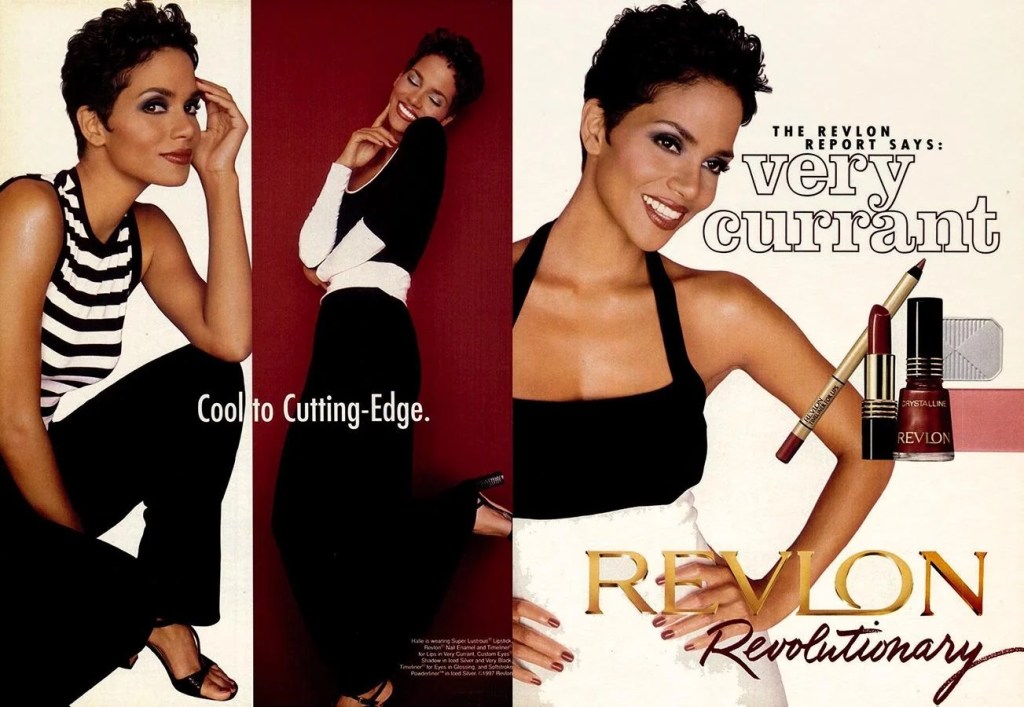
Halle Berry’s enduring beauty and cinematic prestige have made her one of the most sought-after celebrity endorsers in Hollywood. Her long-term partnership with Revlon, beginning in 1996, established her as a global ambassador and symbol of timeless glamour. Berry also became a collaborative partner and campaign face for Finishing Touch Flawless, a beauty-tech brand emphasizing women’s self-care and confidence, and launched her own fragrance line with Coty in 2009, showcasing her elegance and entrepreneurial vision. Her flawless complexion, sculpted bone structure, and magnetic screen presence—paired with her historic Academy Award win as the first Black woman to receive Best Actress—solidified her appeal as the epitome of sophistication and modern femininity, aligning perfectly with brands seeking a face that transcends race and radiates universal beauty.

Her personal life has also been under public scrutiny, particularly her high-profile marriages and relationships. Berry was married to baseball player David Justice (1993–1997), musician Eric Benét (2001–2005), and actor Olivier Martinez (2013–2016). Despite the challenges, she has maintained dignity and optimism, focusing on her children and her work. Her transparency about heartbreak and healing has made her relatable to women worldwide. After these marriages, she entered a committed relationship in 2020 with Grammy-winning musician Van Hunt. Hunt proposed to Berry, though she has stated she doesn’t need marriage to validate their relationship. People.com

As a mother to two children, Nahla and Maceo, Halle has spoken openly about balancing motherhood and career. She has emphasized the importance of teaching her children about self-worth, resilience, and faith. Her nurturing yet disciplined nature mirrors the Proverbs 31 woman—strong, wise, and compassionate.

This photograph is the property of its respective owner. No copyright infringement intended.

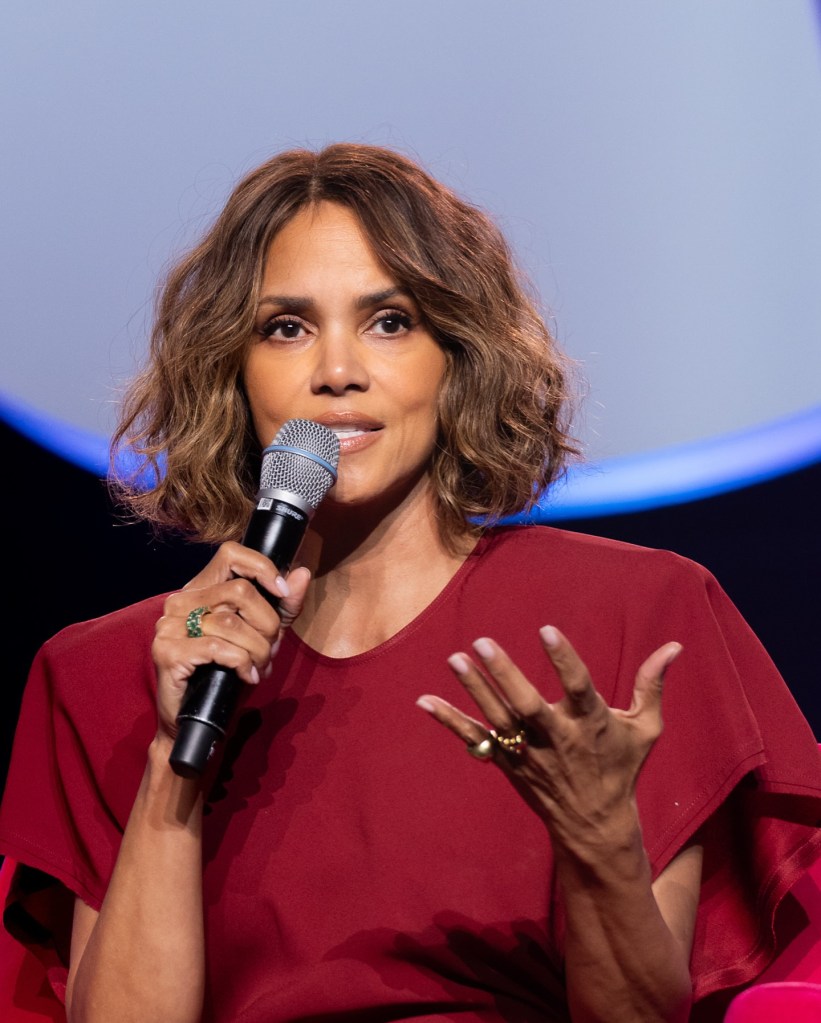
Berry’s activism extends beyond entertainment. She is a passionate advocate for women’s rights, domestic violence survivors, and health awareness. In recent years, she has become an outspoken voice for menopause education, challenging the stigma surrounding it. Halle uses her platform to empower women to embrace their changing bodies and find beauty in every stage of life.

In discussing menopause, Berry highlights the importance of embracing transformation with grace. She rejects the notion that aging diminishes worth or attractiveness. Instead, she champions the idea that true beauty deepens with experience, wisdom, and peace of mind. Her advocacy reflects her mission to redefine womanhood in Hollywood and beyond.

This photograph is the property of its respective owner. No copyright infringement intended.

Today, Halle Berry continues to inspire not only through her performances but through her authenticity. She has proven that beauty, talent, and intelligence can coexist powerfully. Her influence reaches far beyond film; she has become a symbol of endurance, elegance, and empowerment for generations of women. She has become the face and co-founder of Re•Spin Menopause, a wellness brand that seeks to redefine and destigmatize the conversation around menopause. Through her platform, Berry advocates for education, empowerment, and holistic health during midlife, encouraging women to embrace this transition with confidence and self-love. Her candid discussions about her own journey with perimenopause have inspired millions, highlighting the importance of open dialogue about women’s health. Berry’s mission with Re•Spin and her partnership with Pendulum Therapeutics mark a cultural shift toward celebrating aging as strength, not decline.

Her legacy as an “Ebony Doll” represents more than physical beauty—it is a celebration of Black excellence, resilience, and divine femininity. Halle Berry’s journey reminds the world that true allure is found not in perfection but in purpose, perseverance, and self-love. She remains a beacon of light, defying age, stereotypes, and limitations.

References

Chains of Complexion: How History Shaped the Modern Brown Identity.

This photograph is the property of its respective owner. No copyright infringement intended.

Color is more than skin deep—it is history etched into flesh. Every shade of brown tells a story of migration, enslavement, colonization, and resistance. The complexion of the African diaspora is both a map and a mirror, reflecting the global journey of a people who endured fragmentation yet remained whole in spirit. To understand the modern brown identity, one must first confront the historical chains that bound it—chains not only of iron but of ideology.

The origins of color-based hierarchy began with colonization. As European empires expanded, they encountered people with darker skin across Africa, Asia, and the Americas. Instead of celebrating difference, they weaponized it. Color became the currency of control—an outward symbol of who was to rule and who was to serve. The darker the hue, the lower the worth assigned. Thus, the global structure of colorism was born—not from truth, but from the convenience of power.

In the transatlantic slave trade, complexion became both identifier and punishment. Enslaved Africans were categorized by skin tone—those with lighter complexions, often the offspring of white masters and Black mothers, were sometimes granted minor privileges within the plantation hierarchy. This created an internalized schism within the enslaved community, one that would persist for centuries: the illusion that proximity to whiteness meant elevation.

The colonial powers extended this pigmentocracy beyond the Americas. In India, the British reinforced pre-existing caste notions through their preference for lighter skin. In the Caribbean, Spanish and French colonizers created entire systems of racial classification—mulatto, quadroon, octoroon—each reflecting how deeply skin tone was tied to social mobility. The hierarchy of color became global, shaping not just how others saw us, but how we saw ourselves.

Psychologically, this division created generational trauma. People of color internalized shame toward their own reflection. Light skin became aspiration; dark skin became condemnation. This self-hatred was nurtured through education, religion, and beauty standards that praised the pale while vilifying the deep brown. The chains of complexion were mental as much as material.

Even after emancipation, the residue of these systems lingered. In post-slavery America, organizations like the “Blue Vein Societies” admitted only those whose skin was light enough to reveal blue veins beneath. Meanwhile, darker-skinned individuals faced exclusion not only from white spaces but from within their own communities. Colorism became an invisible whip that outlasted the plantation.

The entertainment and beauty industries deepened this divide. For decades, Hollywood and advertising glorified lighter-skinned Black actors and models as the standard of beauty. The “brown paper bag test” haunted social circles, while bleaching creams became symbols of internalized oppression. The damage was generational—entire lineages raised to equate lightness with desirability and darkness with deficiency.

Yet, despite this oppression, resistance rose. The Black Power Movement of the 1960s ignited a revolution of self-love. Phrases like “Black is Beautiful” challenged centuries of conditioning. Dark-skinned men and women began to see themselves as embodiments of royal lineage rather than colonial inferiority. The celebration of afros, natural features, and brown skin was not vanity—it was vindication.

The legacy of colorism, however, remains. Today, social media exposes how deeply color bias persists even among people of African descent. Lighter tones often receive more visibility and validation, while darker tones are marginalized or fetishized. The struggle is no longer about survival alone—it is about recognition and restoration. The modern brown identity must therefore wrestle with both pride and pain.

Historically, the Bible has been misused to justify racial hierarchies. European colonizers reimagined biblical figures as white, erasing their Afro-Asiatic origins. This spiritual bleaching further detached brown people from divine identity. But scripture tells another story—one of people from lands “black as the tents of Kedar” (Song of Solomon 1:5, KJV). Reclaiming that truth is central to healing the psychological scars of color-based oppression.

Sociologically, the “brown identity” today exists as both unity and complexity. Across the globe, people of African, Latin, Indigenous, and South Asian descent share the struggle against colorism. The brown identity is no longer regional—it is diasporic. It symbolizes the shared inheritance of colonial trauma and the collective awakening to self-worth.

Culturally, music, film, and literature have become tools of reclamation. Artists like Nina Simone, Toni Morrison, and Kendrick Lamar have used their platforms to affirm the depth and beauty of brownness. Through art, the brown identity becomes more than skin—it becomes song, rhythm, and revolution. It speaks to both the pain of being unseen and the power of being undeniable.

Psychologically, decolonizing beauty remains the next frontier. It requires that we dismantle the subconscious hierarchies implanted by colonialism. That means redefining professionalism, beauty, and intelligence beyond Eurocentric standards. It means teaching children that melanin is not a mark of shame but a medal of divine craftsmanship. Healing begins when brown becomes holy again.

Spiritually, melanin carries symbolism that transcends science. It absorbs light, transforms energy, and protects life. In that sense, it mirrors the spiritual essence of the brown-skinned people—absorbing pain, transforming it into art, faith, and resilience. The ability to survive centuries of oppression while radiating strength is itself a form of divine alchemy.

The future of the brown identity depends on solidarity. Bridging the internal divides between light and dark, between Afro-Latino and African American, between African and Caribbean, is crucial. The enemy was never one another—it was the system that taught us to distrust our own reflection. True liberation means seeing beauty in every shade of our spectrum.

Education plays a vital role in this transformation. Schools must teach the real history of how complexion was politicized. When young people learn that colorism was engineered to divide and conquer, they gain the power to reject it. Knowledge becomes liberation; truth becomes therapy.

Economically, representation still matters. When brands, corporations, and media campaigns embrace all shades of brown authentically—not tokenistically—they contribute to cultural healing. Every dark-skinned model, every brown-skinned CEO, every melanated hero on screen chips away at centuries of erasure. Visibility becomes victory.

Ultimately, the modern brown identity is an act of reclamation. It is the conscious decision to love the skin that history taught us to hate. It is choosing pride over pain, unity over division, and truth over imitation. It is the realization that every shade of brown carries the fingerprint of God and the legacy of survival.

The chains of complexion may have shaped our past, but they do not define our future. Today’s brown identity stands as both memory and movement—a declaration that what was once weaponized can now be worshiped. In embracing our full spectrum, we unshackle not just our image but our spirit. The brown identity, once bound by hierarchy, now rises as heritage—unbroken, unashamed, and undeniably divine.

References

  • The Holy Bible, King James Version (Song of Solomon 1:5).
  • hooks, b. (1992). Black Looks: Race and Representation. South End Press.
  • Russell, K., Wilson, M., & Hall, R. (1992). The Color Complex: The Politics of Skin Color Among African Americans. Doubleday.
  • Hall, S. (1997). Representation: Cultural Representations and Signifying Practices. Sage.
  • Davis, A. (1981). Women, Race, & Class. Random House.
  • Hill Collins, P. (2000). Black Feminist Thought. Routledge.
  • Morrison, T. (1992). Playing in the Dark: Whiteness and the Literary Imagination. Vintage.
  • Tate, S. (2009). Black Beauty: Aesthetics, Stylization, Politics. Routledge.
  • Craig, M. L. (2002). Ain’t I a Beauty Queen?: Black Women, Beauty, and the Politics of Race. Oxford University Press.
  • West, C. (1993). Race Matters. Beacon Press.

The Olmec Civilization: The Mother Culture of Mesoamerica

The Olmec civilization, often hailed as the “mother culture” of Mesoamerica, represents one of humanity’s earliest high cultures in the Americas. Flourishing between 1500 BCE and 400 BCE along the Gulf Coast of present-day Veracruz and Tabasco, Mexico, the Olmecs laid the foundation for later civilizations such as the Maya and Aztec. Renowned for their monumental artistry, religious symbolism, and complex social organization, the Olmecs embody the ingenuity, spirituality, and resilience of early American civilization (Diehl, 2004).

The term Olmec, derived from the Nahuatl word Olmeca meaning “rubber people,” refers to both the civilization and the region known for its rubber production (Coe, 2011). The Olmec heartland’s fertile river valleys and humid lowlands allowed for advanced agriculture and sustained population centers like San Lorenzo, La Venta, and Tres Zapotes. The Olmecs cultivated maize, cacao, beans, and squash—crops that later became staples of Mesoamerican culture.


Artistic and Architectural Achievements

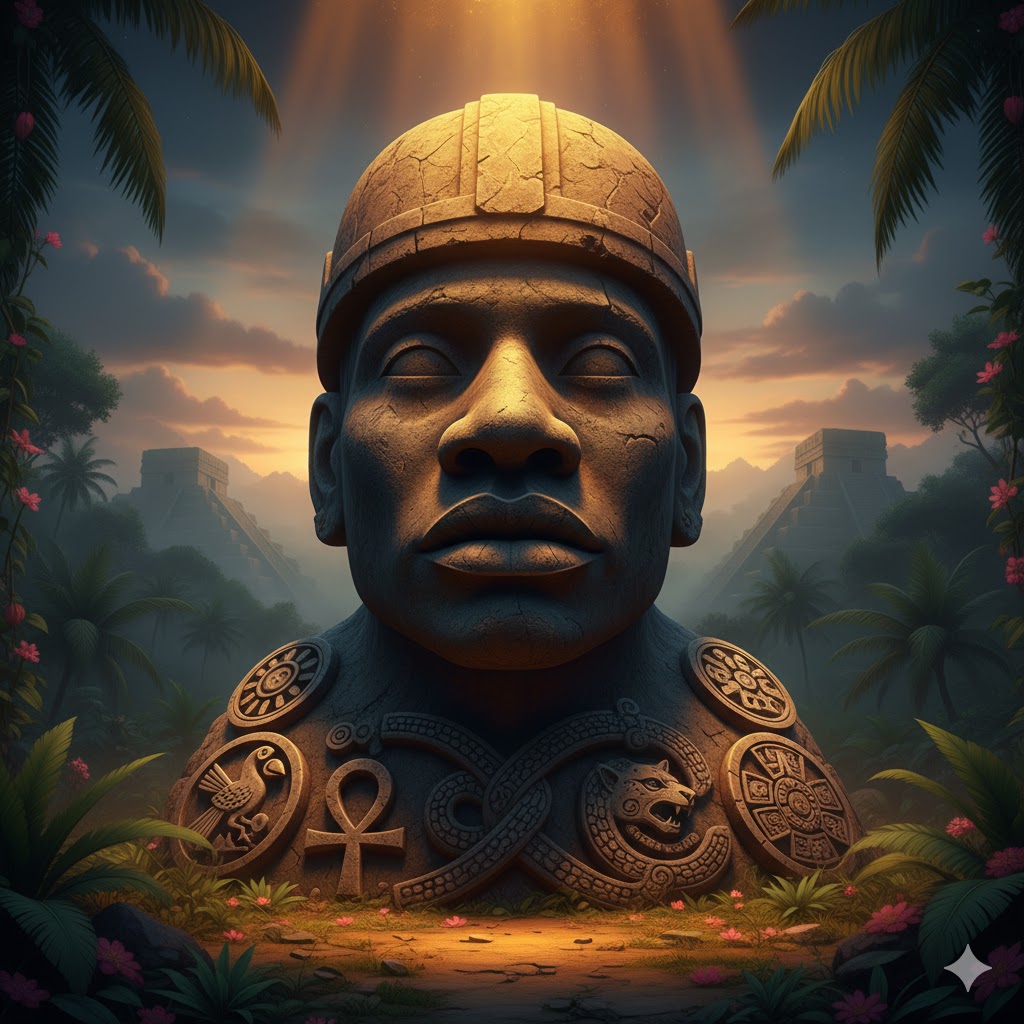
The colossal stone heads—some weighing up to 50 tons—remain the most enduring symbols of Olmec artistry. These sculptures, carved from basalt transported over long distances, are believed to represent rulers or ballplayers. Each head bears unique facial features, suggesting individualized portrayals rather than idealized forms (Pool, 2007). The sheer craftsmanship demonstrates centralized governance, skilled artisans, and an aesthetic philosophy linking power to sacred representation.

In addition to colossal heads, the Olmecs mastered jade and greenstone carvings, producing figurines, masks, and ritual objects that reveal their refined sense of symmetry and spiritual symbolism. The preference for greenstone—associated with fertility and life—reflects a worldview in which art, agriculture, and divinity were inseparable.


Religion and Cosmology

Olmec religion revolved around deities representing natural forces—rain, maize, and fertility—and often took zoomorphic forms. The “Were-jaguar” figure, half-human and half-jaguar, is among the most pervasive motifs, symbolizing divine transformation or shamanic power (Reilly, 1995). Temples and pyramidal mounds were often aligned with celestial phenomena, emphasizing the Olmecs’ advanced understanding of astronomy.

Ritual bloodletting, offerings, and early forms of the Mesoamerican ballgame appear to have originated among the Olmecs. These rituals reflected the eternal cycles of life, death, and rebirth—core spiritual beliefs that later civilizations inherited.


Society and Governance

Archaeological and linguistic evidence suggests a hierarchical society led by priest-kings who fused political authority with religious power. Trade networks extended from Central America to the Valley of Mexico, spreading Olmec influence and artistic motifs across vast territories. Obsidian, jade, pottery, and feathers were among the traded materials, fostering economic and cultural exchange (Blomster, 2012).

Proto-writing and calendrical systems—evidenced in the Cascajal Block—suggest that the Olmecs developed one of the earliest written languages in the Americas (Rodríguez & Ortiz, 2006). This linguistic sophistication indicates a society of intellectual and ritual complexity rivaling early civilizations in Africa and Asia.


The African Connection: Theories and Debates

The colossal heads’ distinct features—broad noses, full lips, and strong jawlines—have long sparked debate among historians, archaeologists, and Afrocentric scholars. Proponents of the African connection argue that these sculptures bear striking resemblances to West African physiognomy, particularly to the features common among ancient Nubians and West Africans (Van Sertima, 1976). In his seminal work They Came Before Columbus, Ivan Van Sertima argued that African explorers may have reached the Americas centuries before Columbus, influencing early Mesoamerican culture. He pointed to the Olmec heads’ Negroid features, the presence of botanical similarities (such as the African cotton species Gossypium herbaceum), and shared pyramid-building traditions as potential evidence of pre-Columbian transatlantic contact.

Similarly, Black historian Clyde A. Winters (2013) has proposed that African migrants—possibly of the Mande or Nubian cultures—may have contributed to Olmec civilization’s rise through maritime exploration across Atlantic currents. These Afrocentric theories emphasize the historical agency of ancient African peoples and challenge Eurocentric narratives that minimize Africa’s global impact.

However, mainstream archaeologists interpret the facial features differently. Many argue that the Olmec heads reflect the indigenous physiognomy of the native populations of the Gulf Coast, whose features—broad noses and full lips—are naturally diverse and regionally adapted. Modern DNA studies and cranial analyses have not conclusively linked Olmec remains to African populations, instead situating them within the broader indigenous Mesoamerican genetic spectrum (Pool, 2007; Coe, 2011).

While definitive proof of transatlantic contact before Columbus remains elusive, the discussion itself highlights deeper questions of representation, racial bias, and the politics of archaeology. As Asante (2007) notes, Afrocentric inquiry seeks not to impose African origins on every civilization but to restore African humanity to the global historical narrative from which it has often been erased.


Legacy and Cultural Influence

Regardless of the debate, the Olmec legacy in Mesoamerican civilization is indisputable. Their iconography, ritual practices, and urban planning profoundly shaped later societies such as the Maya and Aztec. The concept of divine kingship, the calendar system, and pyramid architecture all bear traces of Olmec origin.

Culturally, the Olmecs symbolize the dawn of intellectual and spiritual consciousness in the Americas. Their art bridges heaven and earth, the visible and invisible worlds, offering timeless testimony to the human desire for divine connection and order.


Conclusion

The Olmec civilization stands as a foundational pillar in world history—a society of builders, artists, priests, and visionaries who defined Mesoamerican identity for millennia. Whether viewed through the lens of indigenous ingenuity or possible African contact, their story underscores the interconnectedness of human cultures. The colossal heads, staring silently through centuries, remind the world of a people whose beauty, intellect, and craftsmanship transcended their time.

As global discourse continues to evolve, revisiting the Olmec question through both scientific and Afrocentric frameworks enriches—not diminishes—our understanding of ancient history. For in every sculpted face of basalt lies not only a ruler of old but the universal face of humanity—diverse, divine, and eternally creative.


References

  • Asante, M. K. (2007). An Afrocentric Manifesto: Toward an African Renaissance. Polity Press.
  • Blomster, J. P. (2012). The Origins of Olmec Civilization: Theories of Formative Mesoamerican Development. Annual Review of Anthropology, 41(1), 223–239.
  • Coe, M. D. (2011). Mexico: From the Olmecs to the Aztecs (6th ed.). Thames & Hudson.
  • Diehl, R. A. (2004). The Olmecs: America’s First Civilization. Thames & Hudson.
  • Pool, C. A. (2007). Olmec Archaeology and Early Mesoamerica. Cambridge University Press.
  • Reilly, F. K. (1995). Art, Ritual, and Rulership in the Olmec World. Dumbarton Oaks.
  • Rodríguez, M. C., & Ortiz, P. (2006). New Evidence for Early Olmec Writing: The Cascajal Block. Science, 313(5793), 1610–1614.
  • Van Sertima, I. (1976). They Came Before Columbus: The African Presence in Ancient America. Random House.
  • Winters, C. A. (2013). African Empires in Ancient America: The Olmecs, the Mande, and the Transatlantic Legacy. African Diaspora Press.

Reclaiming Truth: A Scholarly Rebuttal to Eurocentric History.

Photo by Deesarkee photos on Pexels.com

Eurocentric history has dominated the narrative of global civilization for centuries, portraying Europe as the cradle of culture, innovation, and morality while minimizing or erasing Africa’s role. This approach not only distorts facts but also perpetuates psychological oppression by marginalizing Black contributions. A careful examination of archaeology, genetics, theology, and anthropology reveals the truth of African primacy and the falsity of Eurocentric supremacy.

1. The Origins of Humanity Are African

Eurocentric historiography often frames humanity as a European achievement. In reality, the oldest Homo sapiens fossils — including Omo Kibish and Herto in Ethiopia — date back over 200,000 years (White et al., 2009). Genetic studies corroborate this: mitochondrial DNA diversity is greatest in African populations, confirming their position as the root of humanity (Tishkoff et al., 2009).

The Eurocentric myth of a “white Adam” contradicts both science and scripture. Genesis 2:7 (KJV) affirms that God formed man from the dust of the earth — the rich soils of Africa, where humanity first emerged.


2. Africa: Cradle of Civilization

Europe often claims credit for early civilization, yet empirical evidence shows that:

  • Ancient Egypt (Kemet) developed writing, mathematics, and monumental architecture over 5,000 years ago (Diop, 1974; Ehret, 2021).
  • Nubia, Axum, Mali, and Songhai established complex urban centers, international trade, metallurgy, and governance before European feudalism (Hunwick, 2003).
  • Timbuktu’s libraries and universities predated European Enlightenment, containing texts on medicine, astronomy, and philosophy (Diagne, 2016).

These facts demonstrate that technological and intellectual foundations attributed to Europe were built upon African precedent.


3. The Erasure of Black Agency in History

European colonial powers systematically erased Black achievements:

  • African scholars, inventors, and leaders were excluded from textbooks.
  • African knowledge of astronomy, navigation, and mathematics was appropriated and reframed as European “discovery.”
  • Artistic and literary contributions were minimized or exoticized.

For example, Greek civilization borrowed heavily from Egypt and other African sources, yet Eurocentric history positions Greece as the originator of philosophy, politics, and art.


4. Slavery and the Myth of Black Inferiority

Slavery is often narrated as punishment for alleged inferiority. In truth, Europeans enslaved educated, skilled, and politically organized Africans, precisely because they were a threat to European economic expansion. This inverted morality reinforced the false narrative of Black incapacity and subservience (Gates, 2014).


5. Biblical Evidence for African Centrality

Scripture repeatedly situates African peoples in positions of significance:

  • Cush, Mizraim, and Put are progenitors in Genesis 10, connecting Africa to the Abrahamic narrative.
  • Moses’ Ethiopian wife (Numbers 12:1–10) and Christ’s sojourn in Egypt (Matthew 2:13–15) affirm Black presence in sacred history.
  • Prophecies in Deuteronomy 28 and Isaiah 11 reflect both the hardships and the eventual restoration of the African diaspora.

6. Genetic Evidence Challenges Racial Hierarchies

Modern genetics contradicts European notions of superiority:

  • Africans harbor the most diverse alleles, indicating evolutionary sophistication and adaptability (Tishkoff et al., 2009).
  • Melanin provides UV protection, free radical scavenging, and neuromelanin in the brain supports cognitive resilience (Zecca et al., 2017).

Biology, therefore, refutes Eurocentric claims that Black people were biologically “less advanced.”


7. Cultural Continuity Across Diaspora

African cultural systems survived the Atlantic slave trade, demonstrating resilience and ingenuity:

  • Music, rhythm, and oral tradition preserved memory and identity.
  • Religion and communal structures adapted while maintaining theological and ethical continuity.
  • These cultural legacies challenge Eurocentric narratives that depict enslaved Africans as passive, cultureless victims.

8. European “Discovery” Is Misnomer

The Eurocentric narrative glorifies Columbus as “discoverer,” ignoring African and Phoenician maritime activity along the Atlantic and Caribbean coasts. African navigators had sophisticated seafaring knowledge long before European expansion (Diop, 1974).


9. Intellectual Resistance

Figures such as Anton Wilhelm Amo, Olaudah Equiano, and Phillis Wheatley challenge Eurocentric intellectual hegemony. Their writings and scholarship demonstrate that African-descended peoples were literate, philosophical, and politically astute despite systemic oppression.


10. The Psychological Weapon of Eurocentric History

By suppressing Black achievement, Europe imposed internalized inferiority, echoing Fanon’s “colonized mind” (Fanon, 1952). The narrative creates generations of people doubting their own worth, perpetuating racial hierarchy.


11. Reclaiming Historical Truth Is Liberation

Education rooted in accurate historiography restores agency. Black people, learning their ancestral contributions, regain cognitive, spiritual, and cultural sovereignty.


12. Melanin as Evidence of Divine Design

Melanin’s biochemical and neuroprotective functions demonstrate intentionality in creation (Hoogduijn, 2021; Solano, 2020). Its presence in skin, hair, and brain aligns with biblical affirmations of sacred human design (Psalm 139:14, KJV).


13. Misconceptions About Blackness in Scripture

Some Eurocentric interpretations attempted to “whiten” biblical figures. Critical scholarship and anthropological evidence reveal that ancient Israelites, Cushites, and Egyptians were likely dark-skinned Afro-Asiatic peoples, challenging European depictions.


14. African Empires Preceded European Expansion

West African kingdoms minted gold coins, established trade routes, and developed governance centuries before the European Renaissance. Mansa Musa’s pilgrimage (1324 CE) displayed wealth, knowledge, and diplomacy unmatched in Europe at the time.


15. Artistic and Scientific Appropriation

From pyramids to Greek philosophy to algebraic systems, Europe frequently appropriated African knowledge. Eurocentric historiography ignores or reassigns these contributions to white actors.


16. Modern Implications

The Eurocentric historical lens still shapes education, policy, and social perception. Reclaiming African-centered history empowers Black communities to rebuild identity, mental health, and socio-political agency.


17. Black Destiny and Restoration

Biblical prophecy supports eventual restoration:

“I will bring again the captivity of my people of Israel… and they shall build the waste cities, and inhabit them.” (Isaiah 49:22, KJV)

This aligns with diasporic resurgence in culture, technology, and global influence.


18. Integrating Science, Scripture, and History

Genetic evidence, archaeological data, and biblical scripture converge to affirm Black centrality in human history. Eurocentric distortion cannot withstand interdisciplinary scrutiny.


19. Conclusion: Rewriting the Narrative

A scholarly rebuttal demands that we:

  1. Recognize Africa as the cradle of humanity.
  2. Acknowledge African civilizations’ intellectual and spiritual achievements.
  3. Correct centuries of historical misrepresentation.
  4. Integrate science, scripture, and culture to reconstruct identity.

20. Call to Action

Black education must center ancestral knowledge, scripture-informed history, and scientific evidence. The liberation of the mind precedes liberation of society. Eurocentric myths are dismantled not through rhetoric alone but through evidence, pride, and scholarly rigor.


References

  • Diop, C. A. (1974). The African origin of civilization: Myth or reality. Lawrence Hill Books.
  • Ehret, C. (2021). Ancient Africa: A global history, to 300 CE. Princeton University Press.
  • Fanon, F. (1952). Black Skin, White Masks. Grove Press.
  • Gates, H. L. (2014). The African Americans: Many rivers to cross. SmileyBooks.
  • Hoogduijn, M. J. (2021). Melanin and its role in skin physiology. International Journal of Molecular Sciences, 22(9), 4352.
  • Hunwick, J. O. (2003). Timbuktu and the Songhay Empire. Brill.
  • Solano, F. (2020). Melanin and melanogenesis: Recent advances in melanocyte biology and function. International Journal of Molecular Sciences, 21(20), 7584.
  • Tishkoff, S. A., et al. (2009). The genetic structure and history of Africans and African Americans. Science, 324(5930), 1035–1044.
  • White, T. D., et al. (2009). Ardipithecus ramidus and early human evolution. Science, 326(5949), 64–86.
  • Zecca, L., et al. (2017). The role of neuromelanin in neurodegenerative diseases. Frontiers in Aging Neuroscience, 9, 1–12.

Dilemma: The “N” Word

The N‑word is a linguistic atomic bomb: it is capable of inflicting instantaneous injury, yet its power depends on historical context, speaker identity, and audience. It embodies centuries of subjugation, hatred, and oppression, and no neutral intent can erase that history.”
— Randall Kennedy, The N Word: Who Can Say It, Who Shouldn’t, and Why (2007, Beacon Press)

The word commonly referred to as the “N‑word” occupies one of the most charged spaces in the English language, carrying with it a history of slavery, segregation, dehumanisation, and ongoing racial violence. Its use, whether overt or subtle, signals more than mere insult—it implicates power, identity, culture, and memory. The dilemma lies in how the term continues to resonate, be contested, be reclaimed, and to injure.

Originally derived from the Latin niger (black), the term entered the English lexicon as “negro” (black person) and then evolved into “nigger”, a pejorative term whose first recorded uses as a slur date back to the seventeenth century. AAIHS+3PBS+3AA Registry+3 Even though a linguistic transformation occurred, the historic weight of racialised domination never abated. The term became embedded within the lexicon of white supremacy as a tool of dehumanisation.

In its historic usage, the slur served to mark Black persons as inferior, as property, as objects of violence and contempt. Through slavery, lynching, Jim Crow segregation, and systemic disenfranchisement, the word was more than an insult—it was an instrument of terror. AAIHS+2The Washington Post+2 To call someone this word was to place them at the lowest rung of society, to deny their humanity, to reduce them to a racialised subordinate.

Its meaning, however, is not fixed. Recent scholarship emphasises that context matters: the same lexical form may carry different pragmatic values depending on speaker identity, target, setting, intonation and community. A study of various uses of the slur in film and African American intra‑group settings argues that context determines nuance. PMC+1 In other words, the slur’s semantics are entangled with social and cultural dynamics.

When a non‑Black person uses the word towards a Black person, the meaning is rarely neutral. Given the historical legacy, it almost always signals contempt, racial threat or dominance. The slur thus acts as a linguistic embodiment of racial hierarchy—reinforcing what scholar Randall Kennedy called the “atomic bomb of racial slurs.” PBS+1 The emotional weight carried by the utterance cannot be divorced from the structural history.

Within the Black community, some use a variant ending in “‑a” (i.e., “nigga”) as a form of intra‑group address, signalling camaraderie, shared suffering, and cultural belonging. But this intra‑group appropriation remains contested. On one hand, it is reclamation; on the other, it is still rooted in a lexicon of oppression. PMC+1 This duality captures the complexity of language, identity, and power.

From a sociolinguistic and psychological perspective, the impact of the slur is substantial. Hearing or being addressed with the word has been associated with increased stress, lowered self‑esteem, internalised stigma, and social alienation. A qualitative study of African Americans’ feelings toward the word found strong negative reactions when used by non‑Black persons, and ambivalent or contextually bounded responses when used within the Black community. ScholarWorks The marker of difference and devaluation is thus deeply internalised.

The ethical and theological dimensions are equally weighty. If humanity is grounded in the imago Dei (Genesis 1:27) and dignity is recognized as universal, then the use of a slur that denies that dignity is a moral wrong. The N‑word becomes not merely a linguistic issue but a theological one: the denial of image, the denial of voice, the denial of equal worth. The Christian prophetic tradition that calls for justice (Isaiah 1:17; Amos 5:24) compels an interrogation of how language participates in oppression.

At a cultural level, the proliferation of the slur in media, music (especially hip‑hop), literature, and everyday speech complicates its mitigation. One analysis noted that the N‑word appears half a million times a day in social‑media use of the variant “nigga”. The Washington Post+1 This saturation suggests the word is both hyper‑present and normalized in certain contexts, even as it remains banned or taboo in others.

This juxtaposition—between taboo and normalization—underscores the dilemma. For many youth, especially across racial lines, the word may carry diminished sting or may function as slang. Yet for many older generations and for persons subjected to its historical brutality, the word still evokes chains, lynchings, segregation, and racial terror. The generational and intra‑community divide is thus real and significant. Learning for Justice

Moreover, the double standard inherent in discourse is explicit. Many educators and scholars note that Black persons may face fewer consequences (or different ones) when using the variant among themselves, whereas non‑Black persons often face condemnation, social censure, or institutional discipline. Lester, for instance, taught a college‐level course on the N‑word and observed that discussions often revolved around this double standard. Learning for Justice+1 The question of who may legitimately say the word is itself a question of power and membership.

In workplaces, educational institutions, and legal settings, the slur can trigger claims of hostile work environment, harassment, or discriminatory bias. Courts have grappled with whether intra‑racial use by Black workers can also constitute actionable harassment, demonstrating that the slur remains legally potent. Digital Commons@DePaul The law recognises that language can be a vehicle of structural oppression.

Language scholarship emphasises that slurs are performative: they do things—they wound, intimidate, exclude, subordinate. The N‑word performs historical violence, racial demotion, and cultural silencing. It enacts through sound and symbol what structural racism does through policy and practice. The reclamation rhetoric tries to invert that performance, to transform a scar into a badge—but the original wound remains.

Why do people use the N‑word today? Several motivations exist. Some non‑Black speakers may use it in ignorance of its history, other speakers may use it deliberately as taunt or threat. Sometimes it is used for shock, rebellion or humour (though harm remains). Within the Black community, usage may serve as marker of intimacy or cultural identity. But the asymmetry of power remains: when the speaker is non‑Black, the word seldom escapes the baggage of hate. The refusal of some non‑Black persons to recognise the word’s history is itself an expression of racial insensitivity.

When directed at Black persons in peer or social settings by non‑Black persons, the word often functions as a racial insult, an invocation of threat, or a reaffirmation of inferior status. Its use is fundamentally interlinked with racial hostility because of the long history of its deployment in violence, exclusion and demeaning treatment. It is an instrument of racial harm.

In interpersonal relations it also fosters distrust, emotional injury and intergenerational trauma. The repeated hearing or expectation of the word can condition psychological hyper‑vigilance, identity stress and a sense of perpetual othering. The phenomenon of “racial battle fatigue” resonates here: Black individuals develop cumulative stress responses to recurrent micro‑ and macro‑aggressions, among which the N‑word is a symbolic anchor.

At the community level, the ubiquity of the word among youth, popular culture and digital spaces intersects with structural inequalities and racial hierarchies. The word’s presence signals that racial devaluation remains socially acceptable in many contexts. This undermines collective efforts to build inclusive institutions and equal dignity. The normalization of the slur—especially when used casually—reduces the social impetus for change.

From a historical vantage, the N‑word is deeply tied to structural racism: from its evolution during the era of slavery, where it served as a descriptor of enslaved Africans, to the post‑emancipation era where it reinforced segregation and Jim Crow disenfranchisement, to the present where it persists in linguistic and cultural domains. The scholarly review of its history emphasises its continuity across centuries of racial subordination. AA Registry+1

Critically, the mere elimination of the word does not eliminate the racism behind it. Some commentators argue that focusing solely on “banning the word” distracts from addressing the power structures that allowed the word to thrive. One scholar argued that eradicationists confuse the form of the word with the conditions of its use. PMC In other words, the slur is a symptom, not the root, of racial devaluation.

In light of your interest in theology, genetics, identity and historical injustice, the N‑word invites reflection on how language intersects with inherited trauma, communal identity and racialised bodies. For example, when Black lineages (including Y‑DNA haplogroups such as E1b1a) are reclaimed and celebrated, the presence of a slur undermines the narrative of dignity restoration, reminding us that language remains a battleground for identity.

In conclusion, the dilemma of the N‑word is not simply a lexical matter—it is deeply social, historical, psychological, cultural and structural. Its significance lies in the interplay of language and power, identity and trauma, resistance and reclamation. Addressing the issue meaningfully requires attention not only to who uses the word, but the reasons behind its use, the relational context, the historical weight, and the healing work that must accompany language transformation.

References
Lester, N. A. (2011). Straight talk about the N‑word. Learning for Justice. Retrieved from https://www.learningforjustice.org/magazine/fall-2011/straight-talk-about-the-nword Learning for Justice
Rahman, J. (2014). Contextual determinants on the meaning of the N word. Philosophy & Social Criticism, 40(2), 123‑141. https://doi.org/10.1177/0191453714550430 PMC
Kennedy, R. (2007). The N Word: Who Can Say It, Who Shouldn’t, and Why. Beacon Press. (Referenced in Kennedy’s public commentary). Digital Commons@DePaul+1
National Association for the Advancement of Colored People. (2014). NAACP official position on the use of the word “nigger” and the “N‑word.” Retrieved from https://naacp.org/resources/naacp-official-position-use-word-nigger-and-n-word NAACP
“Analysis of the Reclamation and Spread of the N‑word in Pop Culture.” (n.d.). Undergraduate Showcase. Retrieved from https://www.journals.uc.edu/index.php/Undergradshowcase/article/download/4116/3123 Journals at UC
“A brief history: The word nigger.” African American Registry. (n.d.). Retrieved from https://aaregistry.org/story/nigger-the-word-a-brief-history/ AA Registry