Tag Archives: history

Dilemma: Racialized Double Consciousness

The concept of racialized double consciousness, first articulated by W. E. B. Du Bois remains one of the most enduring frameworks for understanding the psychological and social realities of Black life in America. It describes the internal conflict experienced by Black individuals who must navigate their own cultural identity while simultaneously viewing themselves through the lens of a dominant society that has historically marginalized them. This dual awareness is not merely theoretical; it is lived, embodied, and passed down through generations.

At its core, racialized double consciousness reflects a fractured sense of self. Black individuals are often compelled to reconcile who they are with how they are perceived. This tension produces a heightened awareness of identity, one that requires constant adjustment depending on the social environment. It is both a survival mechanism and a psychological burden, shaping how one speaks, behaves, and even thinks.

The historical roots of this phenomenon are deeply embedded in the legacy of slavery and segregation in the United States. From the era of bondage to the aftermath of the American Civil War, Black identity was constructed in opposition to a dominant white framework that denied full humanity. Even after emancipation, systems of exclusion such as Jim Crow laws reinforced a dual existence—one public and constrained, the other private and authentic.

During the early twentieth century, Du Bois argued that Black Americans were “gifted with second sight,” a profound awareness that allowed them to see both their own world and the world of the dominant culture. While this duality could foster resilience and insight, it also created a persistent sense of internal division. This division continues to shape contemporary experiences of race and identity.

In modern society, racialized double consciousness manifests in professional spaces, where Black individuals often feel pressure to code-switch to conform to dominant cultural norms. This adaptation can involve altering speech, appearance, or behavior to be perceived as acceptable or non-threatening. While effective in navigating systemic barriers, it can also lead to emotional exhaustion and a diminished sense of authenticity.

Education systems also play a significant role in reinforcing this dual awareness. Curricula that center Eurocentric perspectives can marginalize Black history and contributions, forcing Black students to engage with knowledge that does not fully reflect their lived experiences. This dissonance contributes to a fragmented educational identity and underscores the broader societal imbalance.

The media further amplifies racialized double consciousness by perpetuating stereotypes that distort Black identity. From film to news coverage, representations often oscillate between hypervisibility and invisibility. Influential figures such as Lupita Nyong’o have spoken openly about the psychological impact of colorism and representation, highlighting how external perceptions shape internal self-worth.

In addition to media, economic structures reinforce this duality. Wealth disparities, employment discrimination, and limited access to resources create an environment where Black individuals must constantly navigate structural inequities. The tension between aspiration and systemic limitation deepens the conundrum of identity and opportunity.

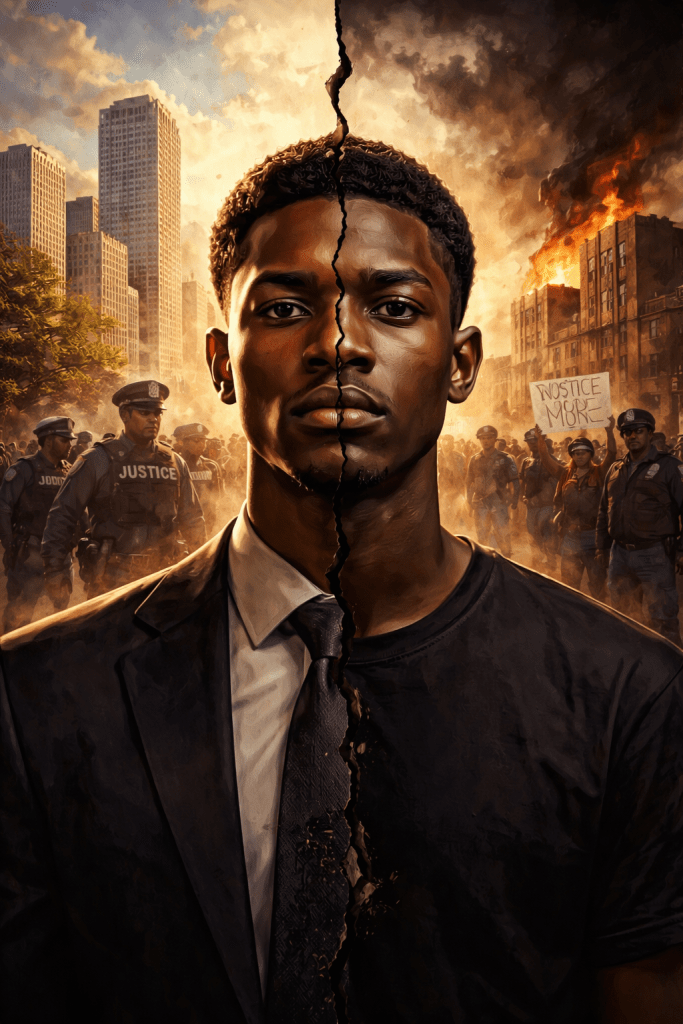
Racialized double consciousness is also evident in interactions with law enforcement and the criminal justice system. The need to be hyper-aware of one’s behavior in order to avoid suspicion or harm reflects a lived reality rooted in historical and contemporary injustice. This awareness is not abstract; it is often a matter of survival.

Within interpersonal relationships, this duality can influence how Black individuals relate to others, both within and outside their communities. The pressure to conform to external expectations can create internal conflict, particularly when those expectations conflict with cultural values or personal authenticity.

Despite its challenges, racialized double consciousness can also be a source of strength. The ability to navigate multiple cultural frameworks fosters adaptability, resilience, and a nuanced understanding of the world. This “double vision” can empower individuals to challenge dominant narratives and advocate for change.

The Black intellectual tradition has long engaged with this concept, expanding upon Du Bois’s original framework. Scholars have examined how gender, class, and other intersecting identities complicate the experience of double consciousness. Black women, for instance, often navigate multiple layers of marginalization, resulting in a more complex form of dual awareness.

Spirituality and faith traditions also provide a lens through which to understand and cope with this duality. For many, biblical narratives of exile, struggle, and redemption resonate deeply with the Black experience. These frameworks offer both comfort and a means of interpreting historical and contemporary realities.

Artistic expression has become a powerful outlet for articulating the tensions of double consciousness. Through music, literature, and visual art, Black creators explore themes of identity, belonging, and resistance. These expressions not only reflect individual experiences but also contribute to a collective cultural narrative.

The civil rights movement brought national attention to the realities of racial injustice and the internal conflicts it produces. Leaders and activists sought to dismantle the structures that necessitated double consciousness, advocating for a society in which Black identity could exist without compromise.

In contemporary discourse, the concept remains highly relevant. Movements for racial justice continue to highlight the psychological and structural dimensions of inequality. The persistence of systemic racism ensures that double consciousness is not a relic of the past but an ongoing reality.

Global perspectives further enrich the understanding of racialized double consciousness. Black individuals in different parts of the world experience similar tensions, though shaped by distinct cultural and historical contexts. This global dimension underscores the व्यापक impact of racial hierarchies.

The digital age has introduced new dimensions to this experience. Social media platforms allow for both self-expression and surveillance, creating spaces where identity can be affirmed or contested. The visibility afforded by these platforms can amplify both empowerment and scrutiny.

Ultimately, racialized double consciousness speaks to the enduring complexity of Black identity in a world structured by racial inequality. It is a testament to both the resilience and the vulnerability of those who navigate its demands daily.

As society continues to grapple with issues of race and justice, the insights offered by Du Bois remain profoundly relevant. Understanding and addressing the conditions that produce double consciousness is essential to creating a more equitable and inclusive world.

References

Du Bois, W. E. B. (1903). The Souls of Black Folk. Chicago, IL: A. C. McClurg & Co.

Lupita Nyong’o. (2014). Speech on beauty and colorism at Essence Black Women in Hollywood.

Alexander, M. (2010). The New Jim Crow: Mass Incarceration in the Age of Colorblindness. New York, NY: The New Press.

Coates, T.-N. (2015). Between the World and Me. New York, NY: Spiegel & Grau.

Fanon, F. (1952). Black Skin, White Masks. Paris, France: Éditions du Seuil.
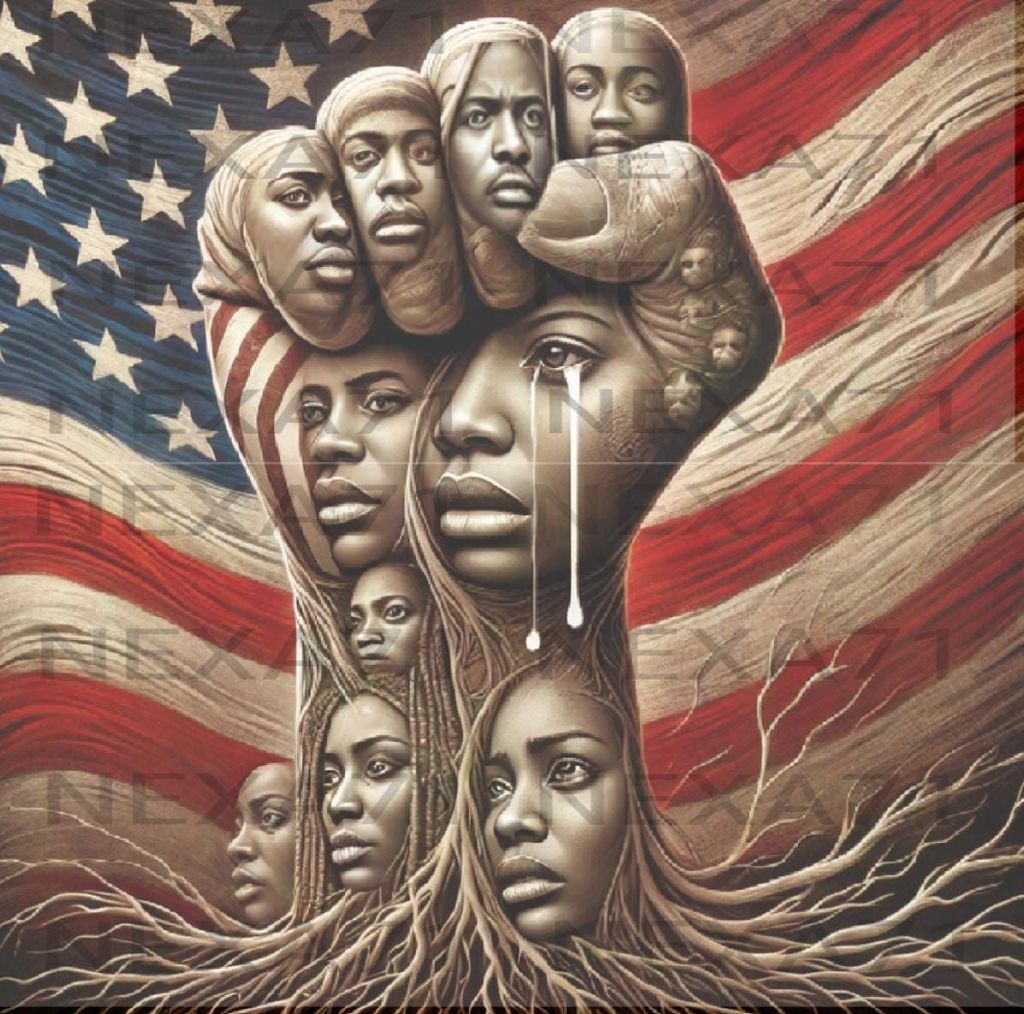
America, the Great? Power, Paradox, and the Price of Progress.

This photograph is the property of its respective owner.

America has long been celebrated as a beacon of freedom, democracy, and opportunity. The phrase “America the Great” echoes through political speeches, national anthems, and cultural narratives. Yet beneath this polished identity lies a complex and often troubling history shaped by conquest, exploitation, racial hierarchy, and systemic inequality. To understand why America considers itself “great,” one must examine both its achievements and the deeply rooted injustices that have defined its development.

The notion of American greatness is largely tied to its economic power, global influence, and foundational ideals of liberty outlined in the Declaration of Independence. These ideals, however, were not extended to all people. From its inception, the nation operated within contradictions—proclaiming freedom while institutionalizing slavery.

The economic foundation of the United States was built significantly through the exploitation of enslaved Africans during the Transatlantic Slave Trade. Millions of Black bodies were commodified, stripped of identity, and subjected to chattel slavery, a system in which human beings were treated as property. This system fueled agricultural wealth, particularly in cotton and tobacco industries, making America a global economic force.

Chattel slavery in America was uniquely brutal. Enslaved people were denied legal rights, family stability, and bodily autonomy. Their labor was extracted without compensation, and violence was used to maintain control. The wealth generated from slavery directly contributed to the nation’s infrastructure, banking systems, and early industrialization.

The myth of meritocracy often overshadows the reality that America’s prosperity was not built on equal opportunity but on unequal exploitation. Black labor laid the foundation of American capitalism while Black people themselves remained excluded from its benefits.

The presidency of Abraham Lincoln is often highlighted as a turning point in American history. Lincoln’s issuance of the Emancipation Proclamation symbolized a shift toward ending slavery. However, it is important to recognize that this act was as much a strategic wartime decision as it was a moral one.

While Lincoln played a role in the abolition of slavery, freedom did not equate to equality. The end of slavery ushered in a new era of oppression through systems like Black Codes and later the Jim Crow Laws, which legally enforced racial segregation and disenfranchisement.

The Jim Crow era institutionalized racial inequality across the South and beyond. Black Americans were subjected to separate and unequal facilities, denied voting rights, and lived under constant threat of racial violence. Lynching became a tool of terror, reinforcing white supremacy.

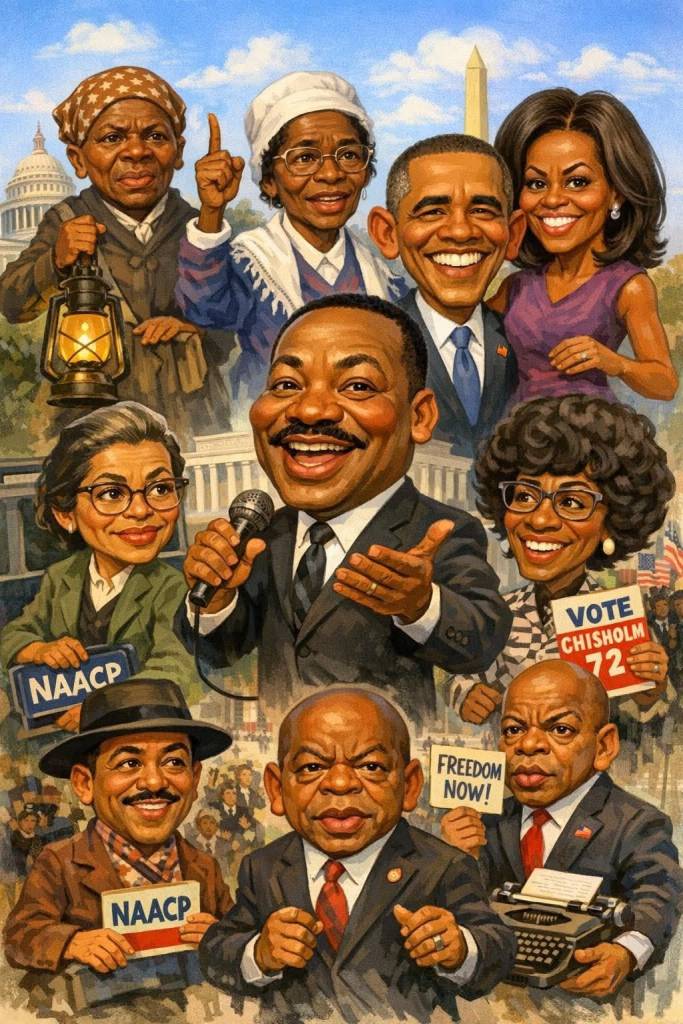
The Civil Rights Movement emerged as a response to these injustices. Leaders like Martin Luther King Jr., Malcolm X, and Rosa Parks challenged systemic racism and demanded equal rights under the law.

Legislation such as the Civil Rights Act of 1964 and the Voting Rights Act of 1965 marked significant victories. However, these legal gains did not dismantle the structural inequalities embedded within American society.

The concept of “shadow slavery” refers to modern systems that disproportionately affect Black communities, such as mass incarceration, economic disenfranchisement, and exploitative labor practices. These systems mirror aspects of slavery by controlling bodies and limiting freedom through institutional mechanisms.

Mass incarceration, often referred to as the “New Jim Crow,” disproportionately targets Black men, perpetuating cycles of poverty and marginalization. Policies such as the War on Drugs intensified these disparities, criminalizing entire communities.

Economic inequality remains a defining feature of American society. Despite being one of the wealthiest nations in the world, millions of Americans live in poverty. Black Americans, in particular, face systemic barriers to wealth accumulation, including discriminatory housing practices like redlining.

The American Dream promises upward mobility through hard work, yet this ideal is not equally accessible. Structural inequalities in education, employment, and healthcare continue to hinder progress for marginalized groups.

America’s global image as a land of opportunity often obscures the lived realities of its most vulnerable populations. Homelessness, food insecurity, and wage stagnation challenge the narrative of greatness.

The treatment of Black people in America cannot be divorced from its history. From slavery to segregation to systemic racism, each era has left an indelible mark on the social and economic fabric of the nation.

In recent years, Diversity, Equity, and Inclusion (DEI) initiatives have attempted to address these disparities. However, there has been significant backlash, with many institutions rolling back or eliminating such programs.

The dismantling of DEI efforts reflects a broader resistance to acknowledging and addressing systemic inequality. Critics argue that these programs are divisive, while proponents see them as necessary for achieving equity.

The tension surrounding DEI highlights the ongoing struggle over America’s identity. Is it a nation committed to equality, or one that resists confronting its past?

Education plays a critical role in shaping national narratives. The omission or sanitization of historical truths in curricula perpetuates ignorance and hinders progress.

The legacy of slavery and segregation continues to influence contemporary issues such as police brutality, racial profiling, and voter suppression.

Movements like Black Lives Matter have brought renewed attention to these injustices, challenging the notion that America has moved beyond its racist past.

The concept of greatness is often tied to power and dominance. America’s military strength and economic influence contribute to its global standing, but these factors do not necessarily equate to moral or ethical superiority.

Patriotism can sometimes function as a barrier to critical reflection. Questioning America’s history is often met with resistance, as it challenges deeply held beliefs about national identity.

The idea of American exceptionalism suggests that the United States is inherently different from and superior to other nations. This belief can obscure the need for accountability and reform.

Historical amnesia allows injustices to persist. Without a full reckoning with the past, systemic inequalities remain entrenched.

The labor of enslaved Africans was not merely a footnote in American history—it was central to the nation’s development. Acknowledging this truth is essential to understanding present-day disparities.

Reparations have been proposed as a means of addressing the enduring impact of slavery and systemic racism. This debate continues to spark controversy and resistance.

The criminal justice system reflects broader societal inequalities. Disparities in sentencing, policing, and incarceration rates reveal deep-rooted biases.

Healthcare inequality is another manifestation of systemic racism. Black Americans face higher rates of chronic illness and lower access to quality care.

Housing discrimination has long-term effects on wealth accumulation and community stability. Redlining and discriminatory lending practices have created lasting disparities.

Education inequality limits opportunities for upward mobility. Underfunded schools in predominantly Black communities perpetuate cycles of disadvantage.

The media plays a role in shaping perceptions of Black people, often reinforcing stereotypes and biases.

Cultural contributions of Black Americans—music, art, language—have profoundly influenced American identity, yet the creators are often marginalized.

The resilience of Black communities in the face of systemic oppression is a testament to strength and perseverance.

America’s greatness, if it exists, may lie not in its perfection but in its potential for growth and transformation.

True greatness requires accountability, justice, and a commitment to equity. Without these, the label becomes hollow.

The question is not whether America is great, but for whom it has been great—and at what cost.

A nation cannot fully realize its ideals while ignoring the suffering that built it.

The path forward requires honest dialogue, systemic change, and a willingness to confront uncomfortable truths.

Only then can America begin to reconcile its identity with its reality.


References

Alexander, M. (2010). The New Jim Crow: Mass incarceration in the age of colorblindness. The New Press.

Anderson, C. (2016). White Rage: The unspoken truth of our racial divide. Bloomsbury.

Baptist, E. E. (2014). The half has never been told: Slavery and the making of American capitalism. Basic Books.

Du Bois, W. E. B. (1903). The souls of Black folk. A.C. McClurg & Co.

Foner, E. (2010). The fiery trial: Abraham Lincoln and American slavery. W.W. Norton.

Hannah-Jones, N. (2019). The 1619 Project. The New York Times Magazine.

Massey, D. S., & Denton, N. A. (1993). American apartheid: Segregation and the making of the underclass. Harvard University Press.

Muhammad, K. G. (2010). The condemnation of Blackness: Race, crime, and the making of modern urban America. Harvard University Press.

Omi, M., & Winant, H. (2014). Racial formation in the United States. Routledge.

Wilkerson, I. (2020). Caste: The origins of our discontents. Random House.

They Buried Us, But We Rose: A Journey Through Black History.

This photograph is the property of its respective owner.

Black history is a testament to endurance, resistance, and transformation in the face of systematic dehumanization. It is not merely a narrative of suffering, but a chronicle of a people who, despite being buried under centuries of oppression, continually rose with dignity, innovation, and strength.

The journey begins with the Transatlantic Slave Trade, one of the most devastating forced migrations in human history. Millions of Africans were taken from their homelands, stripped of identity, language, and kinship, and thrust into a system designed to exploit their labor and erase their humanity.

Chattel slavery in the Americas institutionalized the idea that Black people were property rather than persons. Enslaved Africans were subjected to unimaginable violence, yet they preserved elements of their culture, spirituality, and communal identity, laying the groundwork for future resistance.

Resistance took many forms, from subtle acts of defiance to organized rebellions. Figures like Nat Turner led uprisings that challenged the institution of slavery, while others resisted through escape, sabotage, and the preservation of African traditions.

The abolition of slavery following the Civil War marked a significant turning point, yet freedom was incomplete. The Reconstruction era promised integration and equality, but these gains were quickly undermined by the rise of the Jim Crow Laws, which codified racial segregation and disenfranchisement.

During this period, Black Americans built institutions—churches, schools, and businesses—that served as pillars of community resilience. These institutions fostered education, leadership, and collective empowerment despite systemic barriers.

Violence remained a constant threat. Lynchings and racial terror were used to enforce white supremacy and suppress Black advancement. These acts were not isolated incidents but part of a broader system of control and intimidation.

The early twentieth century saw the rise of intellectual and cultural movements that redefined Black identity. Thinkers like W. E. B. Du Bois emphasized the importance of education and political engagement, while the Harlem Renaissance celebrated Black creativity and expression.

Migration also played a crucial role in reshaping Black history. The Great Migration saw millions of Black Americans move from the rural South to urban centers in the North and West, seeking economic opportunity and escape from racial violence.

The mid-twentieth century marked the emergence of the Civil Rights Movement, a transformative period characterized by mass mobilization and demands for legal equality. Leaders such as Martin Luther King Jr. advocated for nonviolent resistance and justice.

Simultaneously, figures like Malcolm X called for Black empowerment, self-defense, and a reevaluation of identity beyond the constraints imposed by a racially oppressive society.

Legislative victories, including the Civil Rights Act of 1964 and the Voting Rights Act of 1965, marked significant progress. However, these achievements did not eradicate systemic racism or economic inequality.

The late twentieth century introduced new challenges, including mass incarceration, economic restructuring, and persistent educational disparities. These issues disproportionately affected Black communities, reinforcing cycles of disadvantage.

Scholars like Michelle Alexander have argued that the criminal justice system functions as a modern mechanism of racial control, echoing earlier systems of oppression.

Despite these challenges, Black culture has profoundly influenced global society. Music, literature, art, and language rooted in Black experiences have shaped mainstream culture, often without equitable recognition or compensation.

The resilience of Black women and men alike has been central to this journey. Figures such as Harriet Tubman exemplify courage and sacrifice, leading others to freedom and inspiring generations.

Faith and spirituality have also played a vital role. The Black church has historically served as a center for resistance, community organization, and moral guidance, reinforcing a sense of hope and purpose.

In the twenty-first century, movements such as Black Lives Matter have reignited global conversations about racial justice, police brutality, and systemic inequality. These movements continue the legacy of resistance established by earlier generations.

Black history is not confined to the past; it is a living, evolving narrative. It encompasses both the pain of oppression and the triumph of survival, reflecting the complexity of the Black experience.

To study Black history is to confront uncomfortable truths about power, privilege, and inequality. It challenges dominant narratives and calls for a more inclusive and accurate understanding of the past.

Ultimately, the story of Black history is one of rising despite being buried—of reclaiming identity, asserting humanity, and striving for justice. It is a testament to the enduring strength of a people who refused to be erased.


References

Alexander, M. (2010). The New Jim Crow: Mass incarceration in the age of colorblindness. The New Press.

Du Bois, W. E. B. (1903). The souls of Black folk. A.C. McClurg & Co.

Foner, E. (2014). Reconstruction: America’s unfinished revolution, 1863–1877. Harper & Row.

Franklin, J. H., & Higginbotham, E. B. (2010). From slavery to freedom: A history of African Americans. McGraw-Hill.

Gates, H. L. (2013). Life upon these shores: Looking at African American history, 1513–2008. Alfred A. Knopf.

Hine, D. C., Hine, W. C., & Harrold, S. (2006). The African-American odyssey. Pearson.

Kendi, I. X. (2016). Stamped from the beginning: The definitive history of racist ideas in America. Nation Books.

Wilkerson, I. (2010). The warmth of other suns: The epic story of America’s great migration. Random House.

The Unseen Black Woman

The unseen Black woman lives at the intersection of power and pain, shaped by histories that sought to silence her and a world that often refuses to acknowledge her presence. Her story is one of resilience, complexity, and unshakable dignity—a story too often misinterpreted or completely ignored. From the days of enslavement to contemporary society, the Black woman remains both foundational and marginalized, desired yet devalued, visible only when convenient yet erased when truth is required. She is the cultural womb of nations, and yet she continues to battle the shadows of invisibility.

Historically, Black women have been overlooked and unprotected by social structures that elevate others while dismissing their humanity. During slavery, their labor and bodies were exploited without recognition or care, laying the foundation for stereotypes that still persist today. This invisibility is not accidental but systematically produced through institutions that benefit from her silence. Scholars have long noted that the Black woman is rarely seen as the standard of beauty, intelligence, or femininity in mainstream society, despite her profound contributions (Collins, 2000).

Rejection by other races, particularly within a white-dominated beauty and social hierarchy, has created layers of psychological warfare against the Black woman’s self-worth. Colorism—rooted in colonialism—has placed lighter skin on a pedestal while disregarding darker-skinned women. Media representation has amplified this hierarchy, rewarding proximity to whiteness and punishing features deeply tied to African ancestry. The Black woman’s rejection is not just personal; it is structural, echoing across fashion, film, workplace settings, and even healthcare outcomes.

Yet perhaps even more painful is the rejection she often experiences within her own community. Internalized racism and colorism, taught across generations, have led some Black men and women to subconsciously prefer lighter skin or Eurocentric features. This is not natural or innate—it is learned behavior shaped by centuries of conditioning. Enslavers strategically favored lighter-skinned enslaved people for domestic labor and created hierarchies among the enslaved that persist today. These psychological wounds have evolved but not disappeared.

Despite this, the Black woman’s beauty remains unmatched and deeply rooted in cultural, genetic, and ancestral strength. Her beauty defies narrow Western standards and emerges in endless forms—in tightly coiled hair, deep brown hues, high cheekbones, full lips, and regal posture. Studies on global beauty standards are increasingly recognizing the universality of features traditionally associated with African women, challenging outdated paradigms (Wade, 2017). Black beauty has not only survived exclusion; it has reshaped global culture, influencing art, fashion, language, and music.

The unseen Black woman is the backbone of movements, families, and spiritual communities, often leading without acknowledgment. She nurtured children who weren’t her own during slavery. She pioneered movements for civil rights while others received the spotlight. She protected her community, advocated for justice, and birthed cultural revolutions only to be written out of the narrative. Even today, Black women are the most educated demographic in America yet remain underpaid and under-promoted (NCES, 2022). This contradiction shows a society eager to benefit from her labor but unwilling to reward her leadership.

Her invisibility also appears in modern love dynamics. Many Black women face rejection on dating apps, in media pairings, and in social perceptions. Studies reveal that Black women are the most marginalized demographic in online dating algorithms (Hobbs et al., 2019). The social myth that Black women are “too strong,” “too independent,” or “undesirable” is not only untrue but dehumanizing. These narratives shape how the world interacts with Black women and how Black women learn to navigate relationships, often feeling unseen or undervalued.

But the unseen Black woman is not just a victim of rejection. She is a survivor who has learned to adapt, rebuild, and reimagine herself. She creates communities of healing—sister circles, natural hair movements, maternal health activism, and artistic spaces where she can breathe freely. She redefines beauty on her own terms, crafts new languages of empowerment, and challenges the structures that diminish her. She is not waiting for validation from society because she recognizes her worth internally.

Her spirituality has long been a source of strength. From traditional African religions to Christianity and modern spiritual practices, the Black woman’s connection to the divine has given her clarity and purpose. She understands suffering and redemption not as abstract concepts but lived realities. Her prayers have carried families, her faith has sustained movements, and her moral compass has shaped entire communities.

Black women have also served as cultural innovators, setting trends that the world imitates yet rarely credits. Hairstyles, fashion, vernacular, music, and social movements all bear the imprint of Black womanhood. The global appropriation of Black culture, without acknowledgment or respect, further demonstrates how she can be hyper-visible in influence yet invisible in recognition.

The unseen Black woman continues to face stereotypes—angry, loud, aggressive—labels manufactured to control her. These stereotypes mask her real emotions, preventing her from expressing pain, frustration, or vulnerability. They create barriers in workplaces, where she must work twice as hard while navigating biases that others do not face. They silence her in medical settings, where her pain is dismissed, leading to disproportionate maternal mortality rates.

Yet she persists. She continues to rise in academic fields, corporate leadership, entrepreneurship, and political influence. From Kamala Harris to Viola Davis, from everyday mothers to grassroots organizers, Black women are shaping the future. They are rewriting the narrative in real time, proving that invisibility is not destiny but a condition imposed by others.

Despite rejection from society, Black women remain deeply connected to one another. The solidarity found among Black women is powerful, nurturing, and healing. Within these bonds, they see each other fully. They uplift, affirm, and celebrate what the world ignores. In those circles, the unseen Black woman becomes seen again.

This invisibility has generational roots, but modern generations are actively dismantling it. Social media has allowed Black women to tell their own stories, challenge Eurocentric standards, and build platforms that center their experiences. From beauty influencers to scholars, Black women now control narratives once dictated by others.

The unseen Black woman is learning to rest, prioritize her mental health, and unlearn survival mode. She is healing from generational trauma, redefining femininity, and embracing softness without fear. She is discovering that her worth is inherent, not earned through suffering or sacrifice.

She is also demanding accountability—from media, corporations, governments, healthcare, and within her own communities. Black women are no longer silent about colorism, misogynoir, or the ways they have been mistreated. This new era is one of self-advocacy and bold truth-telling.

The unseen Black woman is not unseen because she lacks brilliance or beauty—she is unseen because society refuses to acknowledge what it cannot control. But she is rising, reclaiming her power, name by name, voice by voice. She carries the legacy of ancestors who walked through fire and still birthed nations. Her story is not one of defeat but victory.

Ultimately, the unseen Black woman is becoming the most visible she has ever been. She is taking her place in history and demanding that the world recognize her. Her resilience, beauty, intellect, and spiritual depth are undeniable. She is no longer waiting to be seen—she is choosing to be seen, loudly and unapologetically. And in doing so, she transforms not only her world but the world around her.

References

Collins, P. H. (2000). Black feminist thought: Knowledge, consciousness, and the politics of empowerment. Routledge.
Hobbs, L., Owen, J., & Gerstenberger, K. (2019). Online dating preferences and racial biases. Journal of Social and Personal Relationships, 36(7), 1992–2013.
National Center for Education Statistics. (2022). Status and trends in the education of racial and ethnic groups.
Wade, L. (2017). Beauty standards and race: A sociocultural analysis. Sociology Compass, 11(6), e12482.

Milk & Honey Conversations

Photo by Ninthgrid on Pexels.com

Milk and honey are not just metaphors in Scripture; they symbolize abundance, blessing, and the fulfillment of God’s promises. For Black women, conversations grounded in these principles—honesty, faith, and nurturing dialogue—become spaces where wisdom, empowerment, and healing flow freely. Just as the Israelites were promised a land flowing with milk and honey (Exodus 3:8, KJV), so too can women cultivate communities rich in guidance, support, and spiritual nourishment.

The act of conversation carries profound power. Proverbs 25:11 (KJV) teaches, “A word fitly spoken is like apples of gold in pictures of silver.” Words exchanged in safe, faith-centred spaces can uplift, challenge, and transform. Milk & Honey Conversations are intentional dialogues where women affirm one another, share insights, and confront life’s complexities without judgment.

Creating such spaces begins with intentional listening. James 1:19 (KJV) instructs, “Wherefore, my beloved brethren, let every man be swift to hear, slow to speak, slow to wrath.” By prioritizing listening over responding, women validate experiences, honor emotions, and establish trust, allowing for authentic exchanges that nourish the spirit.

Vulnerability is central to Milk & Honey Conversations. Sharing struggles, triumphs, and lessons learned encourages authenticity. 2 Corinthians 1:4 (KJV) reminds us, “Who comforteth us in all our tribulation, that we may be able to comfort them which are in any trouble…” Through openness, women create a ripple effect of healing, guidance, and encouragement.

These conversations also bridge generational wisdom. Older sisters impart life lessons grounded in faith and experience, while younger women bring fresh perspectives and energy. Titus 2:3-4 (KJV) highlights this exchange: “The aged women likewise, that they be in behaviour as becometh holiness…that they may teach the young women to be sober, to love their husbands, to love their children.” Such dialogue strengthens bonds across age, experience, and circumstance.

Milk & Honey Conversations are not limited to personal struggles; they address cultural, spiritual, and professional realities. From navigating systemic barriers to celebrating milestones, these discussions equip women with tools to flourish in multiple dimensions of life. Proverbs 15:23 (KJV) reminds us, “A man hath joy by the answer of his mouth: and a word spoken in due season, how good is it!” Timely, faith-informed dialogue produces guidance that is both practical and divine.

Spiritual grounding is essential. Prayer, scripture, and reflection underpin these conversations, ensuring they are anchored in God’s wisdom. Colossians 3:16 (KJV) encourages, “Let the word of Christ dwell in you richly in all wisdom; teaching and admonishing one another in psalms and hymns and spiritual songs, singing with grace in your hearts to the Lord.” This spiritual foundation distinguishes Milk & Honey Conversations from ordinary exchanges.

Accountability is another pillar. Sisters who engage in honest dialogue hold one another to standards of integrity, faith, and personal growth. Galatians 6:2 (KJV) exhorts, “Bear ye one another’s burdens, and so fulfill the law of Christ.” By gently challenging one another, women cultivate character, resilience, and spiritual maturity.

The environment matters. Conversations flourish in spaces that are safe, welcoming, and free from judgment. Proverbs 27:17 (KJV) states, “Iron sharpeneth iron; so a man sharpeneth the countenance of his friend.” A supportive environment ensures dialogue is enriching, rather than depleting, fostering strength, insight, and spiritual clarity.

Milk & Honey Conversations also celebrate identity and heritage. They provide a space to honor culture, history, and shared experiences, acknowledging the unique journey of Black women. Lamentations 3:22-23 (KJV) reminds us of God’s steadfast love and mercy, “It is of the Lord’s mercies that we are not consumed, because his compassions fail not. They are new every morning…” Recognizing this allows women to reclaim narratives of resilience and triumph.

These conversations cultivate emotional intelligence. By sharing feelings, fears, and victories, women learn empathy, patience, and compassion. Proverbs 16:24 (KJV) notes, “Pleasant words are as a honeycomb, sweet to the soul, and health to the bones.” Emotional depth strengthens connection, enhancing relational and spiritual growth.

Milk & Honey Conversations encourage boldness. Women are empowered to speak truths, share visions, and assert boundaries in loving yet assertive ways. 2 Timothy 1:7 (KJV) declares, “For God hath not given us the spirit of fear; but of power, and of love, and of a sound mind.” Courageous dialogue fosters confidence, clarity, and divine alignment.

Reflection is a key practice. After each conversation, taking time to meditate, journal, or pray on shared insights deepens understanding and embeds lessons into daily life. Psalm 1:2-3 (KJV) illustrates the power of reflection: “But his delight is in the law of the Lord; and in his law doth he meditate day and night. And he shall be like a tree planted by the rivers of water…” Spiritual reflection transforms dialogue into actionable wisdom.

Mentorship naturally flows from these conversations. Women who speak openly inspire others to lead, nurture, and guide. Exodus 18:21 (KJV) highlights this principle, “Moreover thou shalt provide out of all the people able men, such as fear God, men of truth, hating covetousness; and place such over them, to be rulers…” Mentorship ensures knowledge and wisdom are shared, strengthening communities.

Conversations also normalize struggle and perseverance. Sharing challenges reminds women that they are not alone, reducing shame and isolation. Romans 5:3-4 (KJV) teaches, “Tribulation worketh patience; and patience, experience; and experience, hope.” Understanding that difficulty is part of growth encourages resilience and hope.

Celebration is equally important. Milestones, victories, and answered prayers are acknowledged and honoured within these sacred spaces. 1 Thessalonians 5:11 (KJV) exhorts, “Wherefore comfort yourselves together, and edify one another, even as also ye do.” Joy strengthens bonds and amplifies collective gratitude.

Milk & Honey Conversations can also serve as spiritual discernment sessions. Through prayerful dialogue, women discern God’s will for decisions, relationships, and personal growth. James 1:5 (KJV) reminds, “If any of you lack wisdom, let him ask of God…” Seeking God’s guidance ensures that choices are aligned with divine purpose.

Boundaries are reinforced through these dialogues. Women learn to protect their time, energy, and spiritual health while still engaging meaningfully. Proverbs 4:23 (KJV) teaches, “Keep thy heart with all diligence; for out of it are the issues of life.” Healthy boundaries ensure that abundance flows without depletion.

These conversations create generational impact. Wisdom shared today equips the next generation of women to navigate life with faith, grace, and confidence. Deuteronomy 6:6-7 (KJV) emphasizes teaching the young: “And these words, which I command thee this day, shall be in thine heart: and thou shalt teach them diligently unto thy children.” Sharing knowledge ensures continuity of strength, culture, and spiritual alignment.

Finally, Milk & Honey Conversations are a lifestyle. They are intentional, faith-based, and nurturing, offering women a framework to grow emotionally, spiritually, and relationally. They celebrate authenticity, embrace vulnerability, and cultivate empowerment. In creating these sacred spaces, women embody the fullness of God’s blessing—flowing, abundant, and transformative.


References:

  • Holy Bible, King James Version. (1611). Exodus 3:8; Proverbs 25:11; James 1:19; 2 Corinthians 1:4; Titus 2:3-4; Proverbs 15:23; Colossians 3:16; Galatians 6:2; Proverbs 27:17; Lamentations 3:22-23; Proverbs 16:24; 2 Timothy 1:7; Psalm 1:2-3; Exodus 18:21; Romans 5:3-4; 1 Thessalonians 5:11; James 1:5; Proverbs 4:23; Deuteronomy 6:6-7.

Unseen, Uncelebrated, Unstoppable: Dark-Skinned Women Who Changed Everything.

Dark-skinned women have long shaped history, art, culture, and politics, yet their contributions are often overlooked or undervalued. These women embody resilience, brilliance, and transformative power that defy societal limitations.

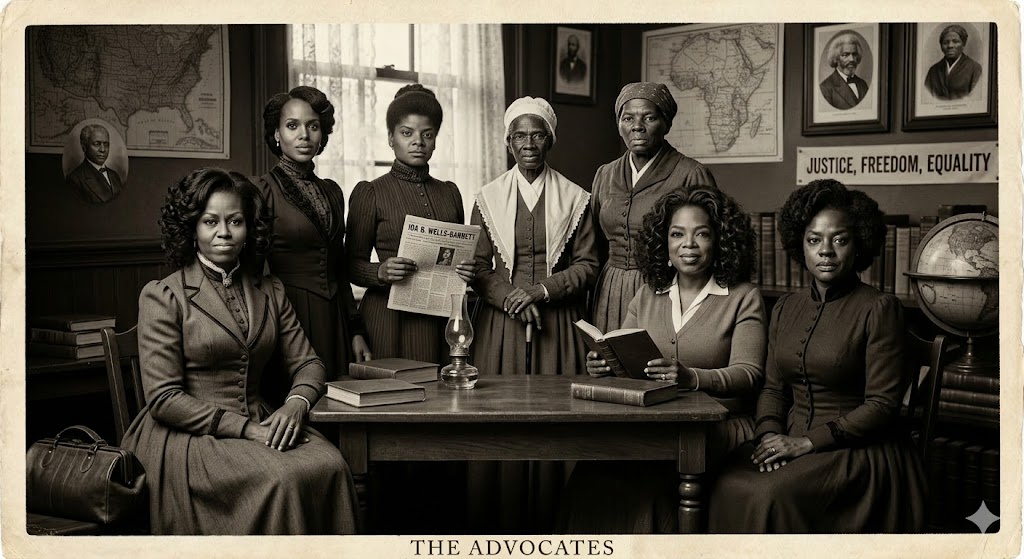
Harriet Tubman is one of the most iconic figures in American history. Born into slavery, she risked her life repeatedly to lead enslaved people to freedom via the Underground Railroad. Her courage and strategic brilliance exemplify the profound impact of dark-skinned women on the fight for justice.

Ida B. Wells transformed journalism and activism by exposing lynching and systemic racial violence. Through her fearless reporting, she challenged entrenched social norms and advocated for civil rights long before the modern civil rights movement.

Sojourner Truth, born into slavery, became a compelling orator and activist for abolition and women’s rights. Her speech “Ain’t I a Woman?” continues to inspire generations, illustrating the intersection of race and gender in advocacy.

Michelle Obama redefined the role of First Lady, advocating for education, health, and empowerment for young women. Her public presence and initiatives have had global influence, elevating the visibility and authority of Black women in leadership.

Viola Davis has reshaped Hollywood’s understanding of talent and representation. Her Emmy, Tony, and Academy Awards highlight not only her personal achievements but also the need for equitable opportunities for women of color in the entertainment industry.

Lupita Nyong’o’s Oscar-winning performance in 12 Years a Slave brought grace, strength, and visibility to dark-skinned actresses worldwide. Beyond acting, she challenges beauty standards and inspires young women to embrace their natural skin.

Angela Davis, a scholar and activist, has dedicated her life to fighting for civil rights, prison reform, and gender equality. Her fearless advocacy demonstrates the intellectual and moral leadership of Black women in public discourse.

Toni Morrison used literature to give voice to Black experiences and histories. Through novels like Beloved and The Bluest Eye, she illuminated the struggles and triumphs of dark-skinned women, creating a legacy of empowerment through storytelling.

Maya Angelou, a poet, singer, and activist, intertwined artistry and advocacy. Her work celebrated Black identity, resilience, and self-expression, leaving an enduring cultural imprint on generations of readers and performers.

Serena Williams transformed sports and broke racial and gender barriers in tennis. Her dominance on the court and influence off it showcase the resilience and versatility of dark-skinned women excelling in highly visible arenas.

Shirley Chisholm broke political barriers as the first Black woman elected to Congress and the first to run for a major party presidential nomination. Her courage inspired countless women to pursue leadership roles.

Oprah Winfrey’s rise from poverty to global influence demonstrates the transformative power of determination and vision. Her philanthropy and media presence have created platforms for countless underrepresented voices.

Madam C.J. Walker became the first self-made female millionaire in the U.S., creating economic opportunities and challenging social barriers for Black women in the early 20th century.

Mae Jemison, the first Black woman in space, shattered barriers in STEM and exploration, inspiring generations of girls to pursue careers in science and technology.

Zora Neale Hurston preserved African American folklore and heritage through literature and anthropology, elevating cultural narratives often ignored in mainstream history.

Coretta Scott King continued her husband’s civil rights work, advocating for equality, peace, and justice. Her leadership exemplifies the often unseen roles women play in movements for societal transformation.

Alice Walker, author of The Color Purple, illuminated the lived experiences of Black women, addressing trauma, resilience, and empowerment, shaping contemporary conversations around race and gender.

Ella Baker’s grassroots activism was pivotal in the civil rights movement, emphasizing collective leadership and community empowerment over personal recognition.

Shonda Rhimes revolutionized television by centering Black female characters in mainstream media, creating cultural influence and changing industry standards for representation.

Audre Lorde, a poet and activist, challenged oppression through her writing, encouraging Black women to embrace their voices and assert their identities unapologetically.

Angela Rye’s political commentary and advocacy work amplify marginalized voices, highlighting the continued need for equity and justice in modern society.

Kerry Washington blends artistry and activism, using her platform to engage in civic causes while portraying multidimensional Black women in film and television.

Ruby Dee’s career as an actress and activist highlighted the intersection of artistry and social advocacy, reflecting a lifelong dedication to both craft and justice.

Maya Rudolph, through comedy and performance, brings intelligence, cultural commentary, and visibility to dark-skinned women in entertainment, expanding the narrative of influence.

These women, past and present, demonstrate the unstoppable force of dark-skinned women in shaping history, culture, and society. Their achievements remind us that leadership, talent, and courage are not defined by visibility but by impact.

By celebrating their stories, society acknowledges not only their individual achievements but also the broader legacy of dark-skinned women who continue to inspire and transform the world.

Through their lives, we see a pattern: resilience, brilliance, and the ability to break barriers are hallmarks of dark-skinned women. Their impact is profound, enduring, and unstoppable.

The ongoing work of highlighting, recognizing, and celebrating these women is essential to rewriting narratives and empowering future generations. Their stories remind us that greatness often emerges in spite of societal neglect.

The legacies of these extraordinary women prove that being unseen or uncelebrated does not diminish influence. Their courage, intellect, and creativity continue to change the world in every sphere.

Ultimately, dark-skinned women have always been drivers of progress. By learning from and amplifying their stories, we ensure that their transformative power is recognized, celebrated, and passed on to inspire the leaders of tomorrow.


References

The Holy Bible, King James Version. (1611).

Clinton, C. (2004). Harriet Tubman: The Road to Freedom. Little, Brown.

Obama, M. (2018). Becoming. Crown Publishing Group.

Davis, V. (Interviews and speeches). Various sources.

Nyong’o, L. (Interviews, various). Media coverage and awards.

Walker, A. (1982). The Color Purple. Harcourt.

Angelou, M. (1993). Phenomenal Woman: Four Poems Celebrating Women. Random House.

Hooks, B. (1992). Black Looks: Race and Representation. South End Press.

Gates, H. L., Jr. (2019). Stony the Road: Reconstruction, White Supremacy, and the Rise of Jim Crow. Penguin Press.

Winfrey, O. (2007). The Wisdom of Sundays. Flatiron Books.

Dilemma: Denial of Racism and the Racist Mascots.

Racism is more than individual prejudice—it is a system of power, privilege, and oppression that shapes every level of society. It is the belief, whether conscious or unconscious, that one race is superior to another, and this ideology has fueled centuries of injustice toward Black people and other nonwhite groups. Denial of racism, therefore, is a form of complicity. It allows prejudice to persist unchecked, normalizing discrimination under the illusion of equality. In modern America, this denial manifests not only in speech and policy but also in symbols—especially racist mascots that trivialize entire cultures for entertainment and profit (Tatum, 2017).

Racist mascots are public symbols, images, or characters that depict racial or ethnic groups through stereotypes. They include sports team names, cartoon logos, and advertising imagery that caricature people of color, particularly Indigenous, Asian, and Black individuals. The purpose of such mascots has historically been to create a sense of fun or team spirit, but beneath the surface lies the dehumanization of real people. These mascots perpetuate racism by turning living identities into costumes or cartoons, mocking heritage and reinforcing white dominance (King, Davis-Delano, Staurowsky, & Baca, 2006).

Examples of racist mascots include the Washington Redskins (now Commanders), Cleveland Indians (now Guardians), and the use of Native caricatures like “Chief Wahoo.” In addition, Black caricatures such as “Aunt Jemima,” “Uncle Ben,” and the “Sambo” figures have long stood as consumer symbols rooted in slavery and Jim Crow imagery. These depictions present people of color as servile, ignorant, or primitive—images designed to comfort white audiences while reminding Black people of their social “place” (Pilgrim, 2012).

The denial of racism allows these symbols to persist under the justification of “tradition” or “harmless fun.” Yet such arguments ignore the historical and emotional damage caused by these portrayals. To deny racism is to silence the voices of those who endure its consequences. White individuals who resist the removal of racist mascots often do so because acknowledging their harm would mean confronting uncomfortable truths about privilege and the legacies of colonization (Sue et al., 2019).

For Black people, racism manifests not only through overt hatred but also through the cultural symbols that reinforce inferiority. Racist mascots, jokes, and media portrayals perpetuate the myth of white superiority, making it harder for Black individuals to assert pride and dignity. These representations influence how others perceive them—affecting hiring decisions, media representation, and even internalized self-worth. When a culture is continually mocked or minimized, it becomes a psychological burden that echoes across generations (Williams & Mohammed, 2009).

The psychological effect of racist imagery cannot be overstated. Studies show that exposure to racial caricatures can reinforce stereotypes, reduce empathy toward minority groups, and diminish the sense of belonging among young people of color. For Black children, seeing racist imagery in public life communicates a painful message: that their identity is a joke, their culture a costume, and their history unworthy of respect. The harm of these images is cumulative and intergenerational (Clark, 2019).

White supremacy, the ideology that whiteness is inherently superior, underpins both the denial of racism and the creation of racist mascots. It is the invisible hand guiding policies, media narratives, and cultural norms that prioritize white comfort over Black liberation. White supremacy thrives in denial—it insists that racism is a relic of the past while continuing to shape the present. It operates through coded language like “heritage” and “pride,” which often mask bigotry behind nostalgia (Kendi, 2019).

The most blatant expression of white supremacy in American history is the Ku Klux Klan (KKK). Founded after the Civil War, the KKK terrorized Black communities through violence, lynchings, and intimidation. Its mission was to maintain white dominance in political, social, and economic spheres. Members of the Klan saw themselves as defenders of a “pure” America, using fear and brutality to suppress Black advancement. Their robes, burning crosses, and public parades became symbols of white terror and racial hatred (Alexander, 2010).

The impact of the KKK on Black people was devastating. Generations were traumatized by violence and systemic exclusion. Families were torn apart, homes burned, and entire towns destroyed under the pretext of racial purity. Even today, the Klan’s legacy persists in modern hate groups, racial profiling, and police violence. The ideology never died—it evolved into new forms of systemic control such as mass incarceration and economic disenfranchisement.

White supremacy continues to hurt Black people by limiting access to wealth, education, and justice. Redlining, discriminatory hiring, and unequal school funding are structural extensions of the same mindset that birthed the KKK and racist mascots. These systems rely on the same falsehood—that Black people are less deserving of opportunity. By denying racism’s existence, society allows these injustices to flourish behind the facade of fairness (Bonilla-Silva, 2018).

Denial of racism often appears as “colorblindness.” When white individuals claim they “don’t see race,” they erase the lived experiences of Black people who face racism daily. Colorblindness is not equality—it is avoidance. It refuses to confront historical trauma or acknowledge current inequalities. This denial maintains white innocence and blocks progress toward reconciliation and justice (Wise, 2010).

Racist mascots are powerful tools of denial because they hide oppression behind art and entertainment. They turn centuries of suffering into amusement, trivializing racism itself. By normalizing these caricatures, society teaches future generations to see racism as exaggerated or irrelevant. The mascot becomes a smiling mask covering a violent history of enslavement and dehumanization (Fryberg et al., 2008).

To overcome this, institutions must replace symbols of oppression with those of truth and empowerment. Education is key—students should learn the origins of these images and why they are harmful. Removing racist mascots and replacing them with culturally respectful symbols is not “erasing history,” but correcting it. True history must expose oppression, not celebrate it.

Community conversations about race and symbolism are also essential. Many white Americans cling to racist mascots because they lack understanding of their impact. Honest dialogue, paired with empathy and accountability, can transform ignorance into awareness. This process requires humility—the willingness to listen rather than defend.

Faith-based and moral frameworks remind us that racism is a sin of pride. The Bible teaches that all people are created in the image of God (Genesis 1:27, KJV). To deny racism or perpetuate racist symbols is to deny God’s design for equality and justice. The work of dismantling white supremacy is therefore both a social and spiritual responsibility.

For Black people, confronting racist mascots is an act of liberation. It is a declaration that identity will no longer be mocked or commodified. Cultural restoration begins with reclaiming representation—telling stories from within rather than allowing others to define Blackness from without. Every statue removed, logo retired, and stereotype challenged marks a step toward collective healing.

The denial of racism also prevents national unity. A country that refuses to face its truth cannot heal from it. Reconciliation requires repentance—an acknowledgment of harm and a commitment to change. Only when the truth of racism is faced with courage can justice begin to take root.

Ultimately, racist mascots are symptoms of a deeper disease: the refusal to see Black humanity. The denial of racism enables the disease to spread unchecked, poisoning institutions and relationships. Challenging these symbols is not about political correctness—it is about moral clarity. Racism cannot die where denial lives.

The path forward requires truth-telling, accountability, and love rooted in justice. Dismantling racist mascots, confronting white supremacy, and rejecting the lies of the KKK are not acts of division—they are acts of restoration. The goal is not revenge but righteousness. As James Baldwin wrote, “Not everything that is faced can be changed, but nothing can be changed until it is faced.”

References
Alexander, M. (2010). The new Jim Crow: Mass incarceration in the age of colorblindness. The New Press.
Bonilla-Silva, E. (2018). Racism without racists: Color-blind racism and the persistence of racial inequality in America. Rowman & Littlefield.
Clark, C. R. (2019). Psychological impact of racial imagery on youth. Journal of Black Psychology, 45(2), 105–122.
Fryberg, S. A., Markus, H. R., Oyserman, D., & Stone, J. M. (2008). Of warrior chiefs and Indian princesses: The psychological consequences of American Indian mascots. Basic and Applied Social Psychology, 30(3), 208–218.
Kendi, I. X. (2019). How to be an antiracist. One World.
King, C. R., Davis-Delano, L. R., Staurowsky, E. J., & Baca, L. (2006). The Native American mascot controversy: A handbook. Scarecrow Press.
Pilgrim, D. (2012). Understanding Jim Crow: Using racist memorabilia to teach tolerance and promote social justice. Ferris State University.
Sue, D. W., Alsaidi, S., Awad, M. N., Calle, C. Z., & Mendez, N. (2019). Disarming racial microaggressions: Microintervention strategies for targets, White allies, and bystanders. American Psychologist, 74(1), 128–142.
Tatum, B. D. (2017). Why are all the Black kids sitting together in the cafeteria? Basic Books.
Wise, T. (2010). Colorblind: The rise of post-racial politics and the retreat from racial equity. City Lights Books.
Williams, D. R., & Mohammed, S. A. (2009). Discrimination and racial disparities in health: Evidence and needed research. Journal of Behavioral Medicine, 32(1), 20–47.

Ann Lowe: The Hidden Architect of Fashion with American Elegance.

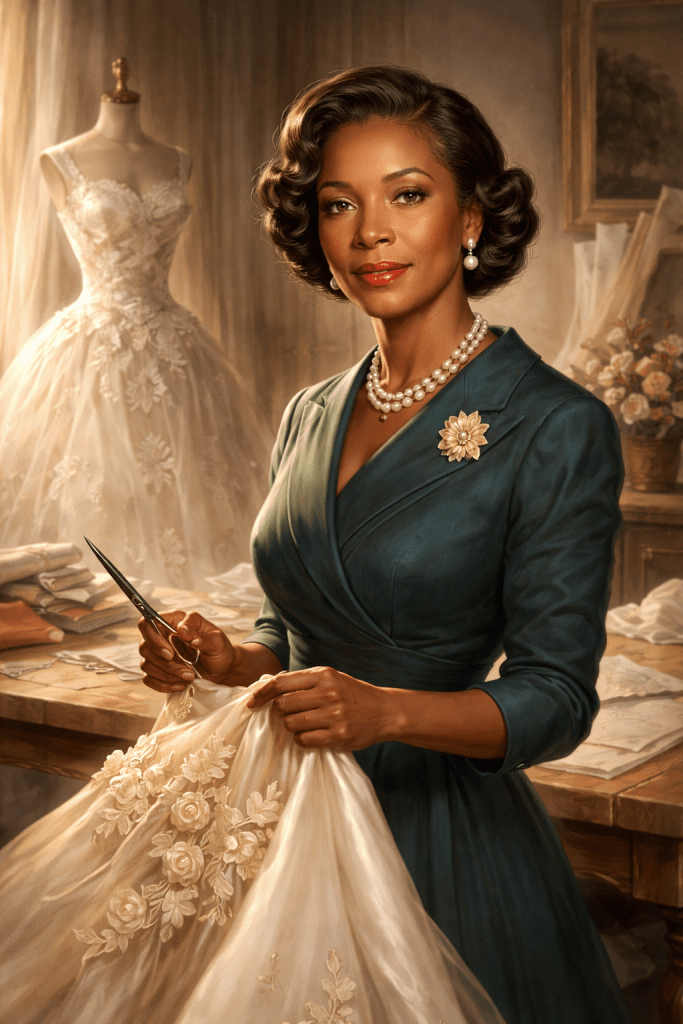
Ann Lowe stands as one of the most underrecognized yet profoundly influential figures in American fashion history, a woman whose genius was stitched into some of the most iconic garments of the twentieth century. Born into a lineage shaped by both artistry and oppression, Lowe’s life and career represent a powerful intersection of race, resilience, and refined craftsmanship. Despite working during an era deeply entrenched in racial segregation, she rose to dress some of the most elite women in America, leaving behind a legacy that continues to inspire designers and historians alike.

Born in 1898 in Clayton, Alabama, Ann Lowe was the great-granddaughter of an enslaved seamstress and the daughter of a skilled dressmaker. Her family’s talent for design was cultivated under the harsh conditions of slavery, where Black women were often forced to create garments for wealthy white families. This generational inheritance of skill became Lowe’s foundation, transforming what began as forced labor into a refined art form that would later captivate high society.

Lowe’s early exposure to couture techniques came through her mother and grandmother, who designed elaborate gowns for prominent Southern families. After her mother’s death, Lowe completed an unfinished set of dresses for a governor’s wife at just sixteen years old, astonishing clients with her ability. This moment marked the beginning of her independent career, signaling a rare and extraordinary talent that would defy the limitations imposed on Black women in her time.

Determined to refine her craft, Lowe enrolled in a design school in New York, where she faced segregation even within education. She was separated from her white classmates but excelled beyond expectations, completing her program ahead of schedule. Her perseverance in the face of discrimination highlighted both her resilience and her commitment to excellence.

Lowe eventually established herself in New York City, where she opened her own salon. She became known for her intricate hand-sewn floral appliqués, delicate embroidery, and structured silhouettes that reflected both European couture traditions and her own distinct aesthetic. Her work was often described as ethereal, feminine, and technically masterful.

Among her elite clientele were members of America’s most prominent families, including the Rockefellers and the du Ponts. Yet, despite her high-profile clients, Lowe remained largely uncredited due to the racial dynamics of the era. Many of the women who wore her gowns received public admiration, while Lowe’s name remained hidden behind the seams.

One of the most significant moments in her career came when she was commissioned to design the wedding gown for Jacqueline Bouvier Kennedy, who would later become the wife of John F. Kennedy. This gown would become one of the most iconic bridal dresses in American history.

The dress itself was a masterpiece of ivory silk taffeta, featuring a portrait neckline, fitted bodice, and a voluminous skirt adorned with intricate folds. Lowe also designed the bridesmaids’ dresses, ensuring a cohesive and elegant visual presentation for the entire wedding party. Her attention to detail and commitment to perfection were evident in every stitch.

However, just days before the wedding, a catastrophic flood in Lowe’s studio destroyed the dresses she had painstakingly created. Without informing her client, Lowe worked tirelessly to recreate each garment in time for the ceremony, absorbing the financial loss herself. This act of dedication exemplified her professionalism and unwavering commitment to her craft.

Despite the monumental success of the wedding and the global attention it received, Lowe was not publicly credited at the time. When asked about the designer, Jacqueline Kennedy reportedly described the dress as made by “a colored dressmaker,” reflecting the racial attitudes that obscured Lowe’s recognition.

Lowe’s connection to Jacqueline Kennedy remains one of the most discussed aspects of her legacy, symbolizing both her brilliance and the systemic barriers she faced. It was not until years later that her role in creating the gown was widely acknowledged, allowing her to finally receive the recognition she deserved.

In addition to her work for high society, Lowe also designed dresses for debutantes, particularly for the annual Azalea Ball in Florida. These gowns became a rite of passage for wealthy young women, further cementing her reputation as a designer of elegance and tradition.

Lowe’s designs are now preserved in several prestigious institutions, most notably the Smithsonian Institution, where her work is recognized as a vital part of American cultural and fashion history. Her garments are also held in collections at the Metropolitan Museum of Art, ensuring that her legacy endures for future generations.

Her inclusion in these museums represents a significant shift in how her contributions are valued, transforming her from an overlooked artisan into a celebrated pioneer. These institutions acknowledge not only her technical skill but also the cultural significance of her work as a Black woman navigating a segregated industry.

Lowe’s career was not without hardship. Financial instability plagued her business, partly due to her reluctance to charge her wealthy clients what her work was truly worth. This, combined with systemic racism, limited her financial success despite her immense talent.

Nevertheless, her influence can be seen in the generations of designers who followed. Her emphasis on craftsmanship, detail, and elegance set a standard that continues to resonate within the fashion industry today. She remains a symbol of excellence achieved against overwhelming odds.

Lowe’s story also serves as a lens through which to examine the broader history of Black labor in America. From slavery to the twentieth century, Black artisans have often been the invisible architects of beauty and culture, their contributions minimized or erased. Lowe’s life challenges this narrative, demanding recognition and respect.

Her work embodies a quiet form of resistance, demonstrating that excellence can thrive even in the most restrictive conditions. Through her designs, she asserted her identity and artistry in a society that sought to marginalize both.

Today, Ann Lowe is increasingly celebrated as a trailblazer, a woman who transformed inherited skill into high art. Her story is not just one of fashion but of perseverance, dignity, and the enduring power of creativity.

In reclaiming her legacy, we honor not only Ann Lowe but also the countless unnamed Black women whose talents shaped history from behind the scenes. Her stitches, once hidden, now tell a story of brilliance that can no longer be ignored.

References

Bolton, A. (2016). Jacqueline Kennedy: The White House Years. Metropolitan Museum of Art.

Harris, A. (2018). The Hidden History of American Fashion: Rediscovering Ann Lowe. Fashion Studies Journal, 12(3), 45–62.

Smithsonian Institution. (n.d.). Ann Lowe: American Couturier. National Museum of African American History and Culture.

Vreeland, D. (1965). American Fashion and Its Designers. New York: Harper & Row.

Walker, R. (2020). Threads of Legacy: African American Dressmakers and the Politics of Recognition. Journal of American History, 107(2), 389–412.

Strength and Struggle: Examining the Social Pressures Placed on Black Women.

Black women in the United States occupy a unique social position shaped by the intersection of race, gender, and historical inequality. Their experiences are influenced by centuries of systemic discrimination, cultural expectations, and social pressures that affect economic opportunities, health outcomes, and societal perceptions. Understanding the realities facing Black women requires examining the historical and structural forces that shape their daily lives.

One of the most significant frameworks used to analyze these experiences is intersectionality, a concept introduced by legal scholar Kimberlé Crenshaw. Intersectionality explains how different forms of discrimination—particularly racism and sexism—interact simultaneously. For Black women, this means facing social barriers that cannot be fully explained by race alone or gender alone but by the combination of both.

Historically, Black women have endured unique forms of labor exploitation and social marginalization. During slavery in the United States, Black women were forced to perform both agricultural labor and domestic work while also being subjected to sexual exploitation. These conditions created enduring stereotypes that portrayed Black women as either excessively strong or morally deviant.

These stereotypes evolved into several harmful archetypes that continue to influence public perception. The “mammy,” “jezebel,” and “angry Black woman” stereotypes emerged from historical narratives that sought to justify inequality and control. These caricatures have persisted in popular culture, shaping how Black women are viewed in workplaces, media, and social institutions.

Economic inequality represents another major pressure affecting Black women. Despite high levels of labor participation, Black women frequently encounter wage disparities compared with white men, white women, and sometimes Black men. Data from the U.S. Bureau of Labor Statistics consistently demonstrates a persistent racial and gender wage gap.

The consequences of wage inequality extend beyond individual income. Lower earnings reduce opportunities for homeownership, savings, and wealth accumulation. Over time, these disparities contribute to the broader racial wealth gap observed across American society.

Education has been an area where Black women have demonstrated remarkable progress. In recent decades, Black women have become one of the fastest-growing groups earning college and advanced degrees. Despite these achievements, barriers to leadership roles and executive positions remain prevalent in many industries.

Healthcare disparities also represent a critical concern. Studies conducted by the Centers for Disease Control and Prevention show that Black women face significantly higher maternal mortality rates than women from other racial groups. These disparities have been linked to unequal access to healthcare, implicit bias among medical providers, and systemic inequalities in the healthcare system.

Mental health pressures are also significant. Many Black women report experiencing high levels of stress related to workplace discrimination, financial responsibilities, and caregiving obligations. Yet cultural expectations often encourage them to appear emotionally resilient regardless of the circumstances.

This expectation is commonly referred to as the “Strong Black Woman” trope. While resilience is often celebrated, scholars argue that the expectation of constant strength can discourage Black women from seeking emotional support or mental health care when needed.

Black feminist scholars have played a central role in analyzing these dynamics. Intellectual leaders such as Patricia Hill Collins and bell hooks have written extensively about the ways Black women resist oppression while simultaneously navigating complex social expectations.

Media representation also shapes how Black women are perceived. Historically, film and television often depicted Black women through narrow stereotypes. Although representation has improved, scholars continue to debate whether contemporary portrayals adequately reflect the diversity and complexity of Black womanhood.

Another significant pressure involves beauty standards and colorism. Western beauty ideals have historically favored lighter skin tones and European features, often marginalizing darker-skinned women. Colorism can influence opportunities in employment, media representation, and social relationships.

Black women are also deeply involved in community leadership and social activism. Throughout American history, they have organized movements advocating for civil rights, gender equality, and social justice. Their leadership has often been underrecognized despite its profound impact.

Figures such as Harriet Tubman, Ida B. Wells, and Shirley Chisholm exemplify the tradition of Black female leadership in American history. Their contributions helped reshape political and social landscapes.

Family and community responsibilities also create unique pressures. Black women frequently play central roles in caregiving, household leadership, and community support networks. These responsibilities often exist alongside professional obligations, creating additional demands on time and emotional energy.

Religious and spiritual institutions have historically provided important support systems. Churches and faith-based organizations have served as spaces where Black women could find community, leadership opportunities, and emotional resilience.

Despite these pressures, Black women have demonstrated extraordinary cultural influence. Their contributions to literature, music, fashion, and art have profoundly shaped American culture and global artistic expression.

Scholars emphasize that understanding the experiences of Black women requires recognizing both the challenges they face and the strength they demonstrate. Their resilience reflects not only personal determination but also collective strategies developed within communities to resist inequality.

Addressing the social pressures facing Black women requires policy reforms that promote economic equity, healthcare access, educational opportunity, and fair representation in leadership positions.

Ultimately, examining the experiences of Black women reveals broader truths about inequality within American society. By acknowledging these realities and addressing systemic barriers, society can move toward a more inclusive and equitable future.


References

Collins, P. H. (2000). Black feminist thought: Knowledge, consciousness, and the politics of empowerment. Routledge.

Crenshaw, K. (1989). Demarginalizing the intersection of race and sex. University of Chicago Legal Forum.

hooks, b. (1981). Ain’t I a woman: Black women and feminism. South End Press.

Jones, C. P. (2000). Levels of racism: A theoretical framework and a gardener’s tale. American Journal of Public Health.

Centers for Disease Control and Prevention. (2023). Racial and ethnic disparities in maternal health.

U.S. Bureau of Labor Statistics. (2023). Labor force statistics by race and gender.

The Weight of Two Worlds: Racism, Sexism, and the Burden Carried by Black Women.

Black women in the United States have historically navigated a complex social landscape shaped by the intersecting forces of racism and sexism. These overlapping systems of inequality have produced a unique set of challenges that influence the economic, social, and psychological realities of Black womanhood. Scholars across sociology, gender studies, and African American studies emphasize that the experiences of Black women cannot be fully understood through the lens of race alone or gender alone, but through the interaction of both.

One of the most influential frameworks for understanding this dynamic is intersectionality, a term developed by legal scholar Kimberlé Crenshaw. Intersectionality describes how different systems of oppression overlap and compound one another. For Black women, discrimination may occur simultaneously along racial and gender lines, creating experiences that differ significantly from those faced by Black men or white women.

Historically, Black women have faced social stereotypes that shape how they are perceived and treated within American society. Images such as the “mammy,” the “jezebel,” and the “angry Black woman” have long circulated within media and cultural narratives. These stereotypes not only distort public perceptions but also influence workplace dynamics, healthcare interactions, and broader social relationships.

The historical roots of these stereotypes can be traced back to the era of slavery in the United States. During slavery, Black women were often forced into labor roles while simultaneously being subjected to sexual exploitation and dehumanization. These experiences contributed to long-standing myths about Black women’s strength, sexuality, and emotional resilience that persist in modern society.

Economic inequality represents another significant challenge. Black women participate in the labor force at high rates, yet they often encounter wage disparities and occupational segregation. According to data from the U.S. Bureau of Labor Statistics, Black women on average earn less than white men, white women, and in many cases Black men, highlighting the intersection of racial and gender pay gaps.

These economic disparities have broader implications for household wealth and financial stability. Because income inequality accumulates over time, Black women frequently face greater barriers to building generational wealth through homeownership, investment, and retirement savings.

In the realm of healthcare, Black women experience notable disparities in medical outcomes. Studies from the Centers for Disease Control and Prevention indicate that Black women face significantly higher rates of maternal mortality compared with women from other racial groups in the United States. Researchers attribute these disparities to factors including unequal healthcare access, systemic bias within medical institutions, and chronic stress associated with discrimination.

Mental health is also shaped by these pressures. Many scholars discuss the cultural expectation that Black women must embody resilience and emotional strength, often referred to as the “Strong Black Woman” archetype. While strength is widely celebrated, this expectation can discourage individuals from expressing vulnerability or seeking mental health support.

Black feminist scholars have long examined these social pressures. Thinkers such as Patricia Hill Collins and bell hooks have explored how Black women develop intellectual traditions and cultural strategies to resist systems of domination while affirming their identities and experiences.

Education represents both a challenge and a space of remarkable achievement for Black women. In recent decades, Black women have become one of the fastest-growing groups earning college and graduate degrees in the United States. Despite these accomplishments, barriers to leadership positions and career advancement remain present in many professional fields.

Media representation plays a powerful role in shaping public perception. Historically, film and television have portrayed Black women through narrow character types. While representation has improved in recent decades, scholars continue to argue that media portrayals influence broader social attitudes and expectations.

Another dimension of inequality involves the criminal justice system. Black women are disproportionately affected by policing, incarceration, and legal inequities compared with women of other racial groups. These patterns reflect broader systemic disparities within the justice system.

Housing inequality also affects many Black women and their families. Historical policies such as housing discrimination and segregation contributed to patterns of residential inequality that continue to shape access to resources such as schools, healthcare facilities, and employment opportunities.

Despite these structural barriers, Black women have historically served as leaders in social justice movements. Figures such as Harriet Tubman, Ida B. Wells, and Fannie Lou Hamer played transformative roles in abolitionism, anti-lynching campaigns, and the civil rights movement.

In politics, Black women have continued to break barriers and influence national conversations about equity and representation. Their leadership has expanded discussions around voting rights, criminal justice reform, healthcare access, and economic opportunity.

Culturally, Black women have shaped American music, literature, art, and fashion. Their contributions have influenced global culture while also serving as forms of creative resistance and self-expression.

Community networks and faith institutions have also historically provided support systems for Black women navigating systemic challenges. Churches, civic organizations, and grassroots movements have played central roles in fostering solidarity and empowerment.

Scholars emphasize that understanding the experiences of Black women requires acknowledging both struggle and resilience. While structural inequalities persist, Black women have continuously demonstrated leadership, creativity, and perseverance in confronting social barriers.

Addressing the challenges facing Black women requires systemic change. Policies aimed at reducing wage inequality, improving healthcare access, strengthening educational opportunity, and addressing discrimination are essential components of achieving social equity.

Ultimately, the experiences of Black women illustrate the broader consequences of intersecting forms of inequality within society. Recognizing and addressing these complexities is crucial for building a more just and inclusive future.


References

Collins, P. H. (2000). Black feminist thought: Knowledge, consciousness, and the politics of empowerment. Routledge.

Crenshaw, K. (1989). Demarginalizing the intersection of race and sex. University of Chicago Legal Forum.

hooks, b. (1981). Ain’t I a woman: Black women and feminism. South End Press.

Jones, C. P. (2000). Levels of racism: A theoretical framework. American Journal of Public Health.

Centers for Disease Control and Prevention. (2023). Maternal health disparities in the United States.

U.S. Bureau of Labor Statistics. (2023). Labor force statistics by race and gender.