Tag Archives: books

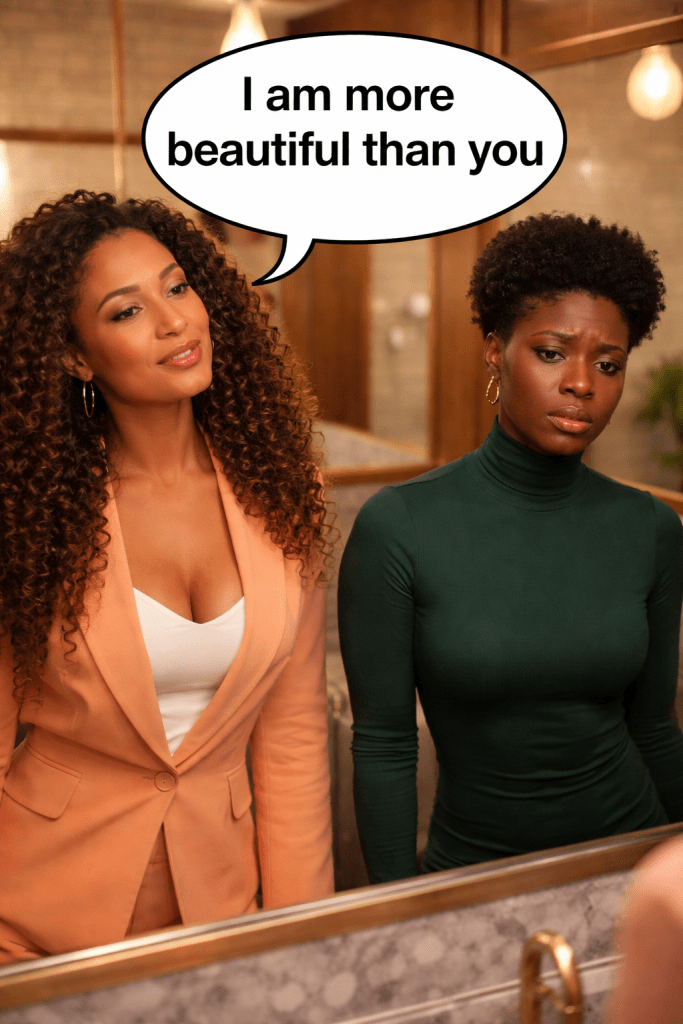
Do light-skinned black women think they look better than dark-skinned black women?

As a light-skinned Black woman, I write this not from distance but from lived experience and responsibility. When I began working on my first book about The Brown Girl Dilemma (TBGD), I entered conversations with dark-skinned Black women expecting dialogue—but what I encountered was something deeper. Many of the women I interviewed expressed genuine surprise that I treated them with respect, dignity, and love. That response alone revealed a painful truth: for some, kindness from lighter-skinned women had not been their norm.

Their words stayed with me. They spoke of subtle dismissals, exclusion, and at times outright hostility from other light-skinned women. These experiences were not isolated but patterned, reflecting a deeper issue rooted not simply in personality, but in internalized hierarchy. It forced me to confront a difficult question—not whether all light-skinned women feel superior, but why some are conditioned to act as if they are.

The answer is complex. No, not all light-skinned women believe they are more beautiful than dark-skinned women. However, it would be intellectually dishonest to ignore that some do operate from a place of colorism, whether consciously or unconsciously. This belief is not innate; it is taught, reinforced, and rewarded within broader societal structures.

Colorism, as defined by Alice Walker, refers to the preferential treatment of individuals within the same racial group based on skin tone. Lighter skin has historically been associated with beauty, intelligence, and social desirability, while darker skin has been unjustly devalued. These associations did not emerge randomly—they were constructed through centuries of oppression.

The roots of this hierarchy can be traced back to slavery. Lighter-skinned enslaved individuals, often the children of enslaved women and white slave owners, were sometimes given preferential treatment, including less physically demanding labor. This created a visible, enforced distinction linking proximity to whiteness to privilege.

After slavery, these divisions did not disappear—they evolved. Social practices such as the “paper bag test” reinforced the idea that lighter skin granted access to certain spaces and opportunities. Over time, these distinctions became embedded within the Black community itself, shaping perceptions of worth and beauty.

Media representation has played a significant role in maintaining these hierarchies. Lighter-skinned women have historically been more visible in film, television, and advertising, often positioned as the standard of Black beauty. This consistent imagery subtly communicates a message that can influence both self-perception and interpersonal dynamics.

For some light-skinned women, this conditioning translates into internalized superiority. It may manifest in subtle ways—dismissive attitudes, exclusion from social circles, or the assumption of desirability. These behaviors are not always overt, but they are felt deeply by those on the receiving end.

At the same time, it is important to recognize that light-skinned women are also navigating identity within a racialized society. While they may benefit from colorism, they are not exempt from racism. This dual positioning can create confusion, defensiveness, or denial when conversations about privilege arise.

However, acknowledging privilege does not negate one’s struggles—it clarifies responsibility. Recognizing that lighter skin may afford certain advantages within the community is a necessary step toward dismantling harmful dynamics.

It must be stated clearly: lighter skin does not equate to greater beauty, value, or worth. Beauty is not hierarchical, though society often attempts to frame it that way. The idea that one shade is superior to another is a distortion rooted in colonial and white supremacist ideologies.

Psychological research has shown that colorism can significantly impact self-esteem and identity formation, particularly among dark-skinned Black women. Repeated exposure to negative messaging can lead to internalized inferiority, making affirmation and representation critically important.

Conversely, unearned validation can reinforce entitlement. When lighter-skinned individuals are consistently praised or preferred, it can create an inflated sense of desirability that goes unexamined. Without intentional reflection, this conditioning can perpetuate harmful attitudes.

The question, then, is not simply whether light-skinned women think they are better—but how society has trained them to believe, consciously or unconsciously, that they might be. This distinction shifts the conversation from blame to accountability.

In recent years, there has been a cultural shift. Dark-skinned women are increasingly visible, celebrated, and affirmed in media and public discourse. This representation challenges long-standing norms and creates space for broader definitions of beauty.

Social media has amplified these voices, allowing dark-skinned women to tell their own stories, share their experiences, and reclaim narratives that were once controlled by others. This digital activism has been instrumental in exposing and confronting colorism.

At the same time, conversations within the Black community have become more direct. Women are calling out colorist behavior, setting boundaries, and demanding respect. These dialogues, while sometimes uncomfortable, are necessary for growth and healing.

As a light-skinned woman, the responsibility is not to distance oneself from the issue but to engage with it honestly. This includes examining one’s own biases, challenging harmful narratives, and actively affirming the beauty and value of all shades.

Love must replace hierarchy. Respect must replace comparison. And unity must replace division. The legacy of colorism is heavy, but it is not immutable.

Ultimately, the answer is both yes and no. Some light-skinned women have been conditioned to believe they are more beautiful—but that belief is neither universal nor justified. It is a learned perspective that can be unlearned.

The work moving forward is collective. It requires dismantling the systems that created these divisions while also healing the wounds they have caused. Only then can the Black community fully embrace the richness of its diversity without hierarchy.

Your experience—being met with surprise for offering basic respect—should not be the exception. It should be the standard. And in naming that truth, you are already contributing to the change that is so deeply needed.

References

Hunter, M. (2007). The persistent problem of colorism: Skin tone, status, and inequality. Sociology Compass, 1(1), 237–254. https://doi.org/10.1111/j.1751-9020.2007.00006.x

Keith, V. M., & Herring, C. (1991). Skin tone and stratification in the Black community. American Journal of Sociology, 97(3), 760–778.

Alice Walker. (1983). In Search of Our Mothers’ Gardens: Womanist Prose. Harcourt Brace Jovanovich.

Wilder, J. (2015). Color Stories: Black Women and Colorism in the 21st Century. Temple University Press.
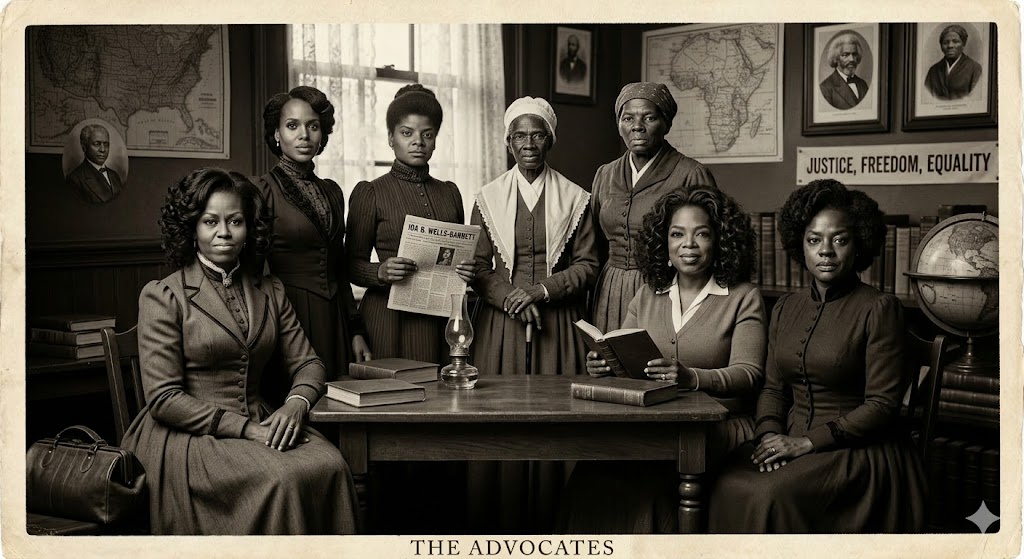

Unseen, Uncelebrated, Unstoppable: Dark-Skinned Women Who Changed Everything.

Dark-skinned women have long shaped history, art, culture, and politics, yet their contributions are often overlooked or undervalued. These women embody resilience, brilliance, and transformative power that defy societal limitations.

Harriet Tubman is one of the most iconic figures in American history. Born into slavery, she risked her life repeatedly to lead enslaved people to freedom via the Underground Railroad. Her courage and strategic brilliance exemplify the profound impact of dark-skinned women on the fight for justice.

Ida B. Wells transformed journalism and activism by exposing lynching and systemic racial violence. Through her fearless reporting, she challenged entrenched social norms and advocated for civil rights long before the modern civil rights movement.

Sojourner Truth, born into slavery, became a compelling orator and activist for abolition and women’s rights. Her speech “Ain’t I a Woman?” continues to inspire generations, illustrating the intersection of race and gender in advocacy.

Michelle Obama redefined the role of First Lady, advocating for education, health, and empowerment for young women. Her public presence and initiatives have had global influence, elevating the visibility and authority of Black women in leadership.

Viola Davis has reshaped Hollywood’s understanding of talent and representation. Her Emmy, Tony, and Academy Awards highlight not only her personal achievements but also the need for equitable opportunities for women of color in the entertainment industry.

Lupita Nyong’o’s Oscar-winning performance in 12 Years a Slave brought grace, strength, and visibility to dark-skinned actresses worldwide. Beyond acting, she challenges beauty standards and inspires young women to embrace their natural skin.

Angela Davis, a scholar and activist, has dedicated her life to fighting for civil rights, prison reform, and gender equality. Her fearless advocacy demonstrates the intellectual and moral leadership of Black women in public discourse.

Toni Morrison used literature to give voice to Black experiences and histories. Through novels like Beloved and The Bluest Eye, she illuminated the struggles and triumphs of dark-skinned women, creating a legacy of empowerment through storytelling.

Maya Angelou, a poet, singer, and activist, intertwined artistry and advocacy. Her work celebrated Black identity, resilience, and self-expression, leaving an enduring cultural imprint on generations of readers and performers.

Serena Williams transformed sports and broke racial and gender barriers in tennis. Her dominance on the court and influence off it showcase the resilience and versatility of dark-skinned women excelling in highly visible arenas.

Shirley Chisholm broke political barriers as the first Black woman elected to Congress and the first to run for a major party presidential nomination. Her courage inspired countless women to pursue leadership roles.

Oprah Winfrey’s rise from poverty to global influence demonstrates the transformative power of determination and vision. Her philanthropy and media presence have created platforms for countless underrepresented voices.

Madam C.J. Walker became the first self-made female millionaire in the U.S., creating economic opportunities and challenging social barriers for Black women in the early 20th century.

Mae Jemison, the first Black woman in space, shattered barriers in STEM and exploration, inspiring generations of girls to pursue careers in science and technology.

Zora Neale Hurston preserved African American folklore and heritage through literature and anthropology, elevating cultural narratives often ignored in mainstream history.

Coretta Scott King continued her husband’s civil rights work, advocating for equality, peace, and justice. Her leadership exemplifies the often unseen roles women play in movements for societal transformation.

Alice Walker, author of The Color Purple, illuminated the lived experiences of Black women, addressing trauma, resilience, and empowerment, shaping contemporary conversations around race and gender.

Ella Baker’s grassroots activism was pivotal in the civil rights movement, emphasizing collective leadership and community empowerment over personal recognition.

Shonda Rhimes revolutionized television by centering Black female characters in mainstream media, creating cultural influence and changing industry standards for representation.

Audre Lorde, a poet and activist, challenged oppression through her writing, encouraging Black women to embrace their voices and assert their identities unapologetically.

Angela Rye’s political commentary and advocacy work amplify marginalized voices, highlighting the continued need for equity and justice in modern society.

Kerry Washington blends artistry and activism, using her platform to engage in civic causes while portraying multidimensional Black women in film and television.

Ruby Dee’s career as an actress and activist highlighted the intersection of artistry and social advocacy, reflecting a lifelong dedication to both craft and justice.

Maya Rudolph, through comedy and performance, brings intelligence, cultural commentary, and visibility to dark-skinned women in entertainment, expanding the narrative of influence.

These women, past and present, demonstrate the unstoppable force of dark-skinned women in shaping history, culture, and society. Their achievements remind us that leadership, talent, and courage are not defined by visibility but by impact.

By celebrating their stories, society acknowledges not only their individual achievements but also the broader legacy of dark-skinned women who continue to inspire and transform the world.

Through their lives, we see a pattern: resilience, brilliance, and the ability to break barriers are hallmarks of dark-skinned women. Their impact is profound, enduring, and unstoppable.

The ongoing work of highlighting, recognizing, and celebrating these women is essential to rewriting narratives and empowering future generations. Their stories remind us that greatness often emerges in spite of societal neglect.

The legacies of these extraordinary women prove that being unseen or uncelebrated does not diminish influence. Their courage, intellect, and creativity continue to change the world in every sphere.

Ultimately, dark-skinned women have always been drivers of progress. By learning from and amplifying their stories, we ensure that their transformative power is recognized, celebrated, and passed on to inspire the leaders of tomorrow.


References

The Holy Bible, King James Version. (1611).

Clinton, C. (2004). Harriet Tubman: The Road to Freedom. Little, Brown.

Obama, M. (2018). Becoming. Crown Publishing Group.

Davis, V. (Interviews and speeches). Various sources.

Nyong’o, L. (Interviews, various). Media coverage and awards.

Walker, A. (1982). The Color Purple. Harcourt.

Angelou, M. (1993). Phenomenal Woman: Four Poems Celebrating Women. Random House.

Hooks, B. (1992). Black Looks: Race and Representation. South End Press.

Gates, H. L., Jr. (2019). Stony the Road: Reconstruction, White Supremacy, and the Rise of Jim Crow. Penguin Press.

Winfrey, O. (2007). The Wisdom of Sundays. Flatiron Books.

Smart Brown Girl Series: Condoleezza Rice – Strategic Intelligence on a Global Stage.

This photograph is the property of its respective owner. No copyright infringement is intended.

Condoleezza Rice is one of the most remarkable figures of modern American history—a woman whose intellect, poise, and leadership have earned her a place among the world’s most influential statespersons. Born on November 14, 1954, in Birmingham, Alabama, Rice grew up in a segregated South, where racial discrimination was a daily reality. Her parents—her mother a teacher and her father a guidance counselor—instilled in her the importance of education, excellence, and dignity in the face of prejudice. Rice’s early talents were evident: she skipped grades, excelled academically, and demonstrated an exceptional capacity for learning from a young age.

Rice began her college education at age 15 and originally pursued music as a concert pianist before discovering her passion for international politics. She earned her bachelor’s degree in political science from the University of Denver in 1974, a master’s degree from the University of Notre Dame in 1975, and a Ph.D. in political science from the University of Denver in 1981.

Her academic biography itself speaks volumes about her discipline and intellectual breadth. Studying Russian at Moscow State University and gaining expertise in Soviet political structures positioned her as a scholar with a deep understanding of global affairs. Years later, her academic credentials made her a sought-after voice in national security and foreign policy.

Rice began teaching political science at Stanford University immediately after completing her doctorate, quickly ascending through academic ranks. In 1993, she became the first woman and first African American to serve as Stanford’s Provost, the university’s chief academic and budget officer. During her tenure, she helped guide Stanford through financial challenges and expanded educational access.

Her career bridged academia and government. In 1989 she advised President George H.W. Bush on Soviet and Eastern European affairs during a pivotal moment in world history, including the collapse of the Soviet Union. By 2001, Rice had left Stanford to become National Security Advisor to President George W. Bush, the first African American woman to hold the position.

In 2005 she was appointed the 66th U.S. Secretary of State, making her the first African American woman to serve in that role. As Secretary of State, Rice championed what she termed “Transformational Diplomacy,” a strategy aimed at expanding democratic governance and global cooperation, including redeploying diplomats to challenging regions and emphasizing local capacity building.

Her years in Washington coincided with seismic international events, including the post‑9/11 landscape, the wars in Afghanistan and Iraq, and complex negotiations involving North Korea and the Middle East. These arenas tested her diplomatic expertise and strategic resolve at the highest levels of global politics.

Beyond government service, Rice has written extensively, contributing books on statecraft, international relations, and her own experiences, including Extraordinary, Ordinary People and No Higher Honor. These works reflect not only her high‑level engagements but her reflective insights on leadership and service.

Rice’s life is a testament to intellectual rigor and perseverance. Her journey from a segregated Alabama childhood to the world stage underscores how education can equip one to navigate and lead amid global complexity. Her doctoral work in political science is a rare achievement, testifying to her scholarly discipline and analytical acumen.

Despite her professional accomplishments, she has remained single, choosing to devote her life to public service and scholarship. Early in her life she was once engaged to NFL player Rick Upchurch, but she never married.

Rice continues to shape public discourse today. She serves as the director of Stanford University’s Hoover Institution, where she influences research, policy dialogues, and intellectual thought leadership on freedom, democracy, and global rule of law. In 2025 she launched a Substack venture called Freedom Frequency from Hoover, aiming to promote principled ideas rooted in liberty and democratic values.

Her involvement also extends into the private sector and corporate governance. Rice has served on the boards of major companies and institutions, applying her strategic insight beyond academia and government.

Rice’s intellectual influence is widely recognized. She has received numerous honorary degrees, recognition awards, and was one of the first women to be admitted to the historically male Augusta National Golf Club, symbolizing both social progress and her wide‑ranging impact.

Rice’s legacy within the Smart Brown Girl Series lies in her embodiment of disciplined intelligence, academic excellence, and global leadership. She navigated barriers of race and gender to achieve roles once unimaginable for African American women, and her career illustrates that intellect combined with resolve can redefine possibility.

Her life challenges reductive stereotypes about women of color in leadership, demonstrating that scholarly brilliance and strategic acumen are fundamental to shaping world affairs. Her example offers inspiration not only to young Black girls but to anyone striving for intellectual achievement and meaningful impact in public life.

In a broader sense, Condoleezza Rice represents what it means to live a life of scholarship, service, and civic engagement. Her contributions to diplomacy, education, and public thought affirm the importance of intellectual preparation and principled leadership.

She remains a figure of study for students of international relations, leadership, and history, continuing to publish, speak, teach, and guide public discourse well into her later years.

References

Condoleezza Rice | National Women’s History Museum biography. womenshistory.org
Condoleezza Rice | Britannica. britannica.com
Condoleezza Rice | Biography.com. biography.com
Condoleezza Rice PragerU Magazine. assets.ctfassets.net
Rice launches Freedom Frequency from Hoover Institution. axios.com
Condoleezza Rice board and net worth details. architectureadrenaline.com
White House archives Rice biography and honors. georgewbush-whitehouse.archives.gov

Light Enough to Love, Dark Enough to Hate.

Colorism, the preferential treatment of lighter skin tones within communities of color, is a deeply rooted social phenomenon that emerged from colonialism and slavery. It reflects a hierarchy imposed by systems of white supremacy, where proximity to whiteness determined social status, safety, and opportunity. Within the Black community, this stratification produced complex psychological and social consequences that continue to shape relationships, identity, and perceptions of beauty. The phrase “light enough to love, dark enough to hate” captures the painful duality experienced by many Black women navigating these inherited hierarchies.

From the perspective of a light-skinned girl, the privileges of colorism are often subtle but unmistakable. Growing up, she may have noticed that teachers describe her as “pretty,” “approachable,” or “exotic,” labels that quietly elevate her within beauty standards shaped by Eurocentric ideals. Her lighter complexion becomes a form of social currency, though one she did not consciously seek. She may sense admiration from some and suspicion from others, realizing that her skin tone carries historical meaning beyond her own identity.

At the same time, the light-skinned girl may encounter the uneasy knowledge that her perceived advantages come at the expense of others who share her racial heritage. Compliments about her complexion may be framed in contrast to darker skin, reinforcing a hierarchy she did not create but is nonetheless implicated in. Statements such as “You’re pretty for a Black girl” or “Your skin is the perfect shade” subtly reinforce a narrative that beauty and worth are measured against proximity to whiteness.

The dark-skinned girl experiences a markedly different reality. Her childhood memories may include comments that diminish her beauty or question her desirability. She hears comparisons between her complexion and lighter peers, sometimes from strangers, sometimes from within her own community. These comments accumulate over time, shaping her self-perception and reminding her that her natural features exist within a social hierarchy she never consented to.

For the dark-skinned girl, colorism often manifests as exclusion in subtle and overt ways. In school, she may notice that lighter-skinned girls are more frequently chosen for performances, pageants, or leadership roles. In media representations, women who resemble her may appear less frequently or be cast in stereotypical roles. The cumulative effect is a quiet but persistent message: darker skin is less desirable.

Friendships between light-skinned and dark-skinned girls are often shaped by these unspoken dynamics. While genuine affection may exist, societal biases sometimes create tension or misunderstanding. The light-skinned girl may struggle to recognize the privileges associated with her complexion, while the dark-skinned girl may carry the emotional burden of comparison.

In some cases, colorism creates divisions that undermine solidarity. Dark-skinned girls may feel overshadowed by the social attention given to their lighter counterparts, while light-skinned girls may feel unfairly blamed for advantages they did not intentionally pursue. These tensions reflect the lingering effects of historical systems that deliberately fractured Black communities.

To understand the origins of colorism, one must return to the institution of slavery in the Americas. Enslaved Africans were subjected to brutal systems designed to maximize labor and control. Within this system, European enslavers frequently granted preferential treatment to enslaved individuals with lighter skin, many of whom were the mixed-race children of sexual exploitation by slaveholders.

These lighter-skinned enslaved individuals were sometimes assigned domestic roles within the slaveholder’s household, while darker-skinned individuals were forced into field labor under harsher conditions. Although both groups remained enslaved and oppressed, the distinction created a visible hierarchy based on complexion.

This division served a strategic purpose. By granting marginal privileges to lighter-skinned individuals, slaveholders reinforced internal divisions among enslaved people. The hierarchy discouraged unity and resistance by fostering competition and resentment within the enslaved population.

The trauma of these divisions did not disappear after emancipation. Instead, they evolved into social practices that continued to privilege lighter skin within Black communities. One of the most infamous manifestations of this legacy was the “brown paper bag test,” an informal practice used by certain social clubs, churches, and organizations in the late nineteenth and early twentieth centuries.

The brown paper bag test involved comparing a person’s skin tone to the color of a brown paper bag. Individuals whose complexions were darker than the bag were often excluded from certain social spaces. While not universally practiced, the test symbolized the internalization of color hierarchies rooted in slavery.

For the light-skinned girl, learning about this history can evoke feelings of discomfort and guilt. She may realize that her acceptance in certain spaces historically depended on a hierarchy that excluded others who looked like her own family members. This awareness complicates her understanding of privilege and belonging.

For the dark-skinned girl, the history of colorism confirms experiences she has long felt but struggled to articulate. The social patterns she encounters are not isolated incidents but part of a centuries-old structure of inequality. Recognizing this history can be both validating and painful.

White supremacy played a central role in constructing these hierarchies. European colonizers established racial classifications that placed whiteness at the top and Blackness at the bottom. Within this system, lighter skin among Black populations was perceived as evidence of proximity to whiteness and therefore treated as more valuable.

These beliefs were reinforced through media, education, and cultural narratives that celebrated Eurocentric features such as lighter skin, straight hair, and narrow facial structures. Over time, these standards influenced perceptions of beauty and desirability across societies shaped by colonial history.

In the United States, colorism also intersected with economic opportunity. Historically, lighter-skinned Black individuals were sometimes granted greater access to education and professional employment due to discriminatory hiring practices that favored those perceived as more “acceptable” to white institutions.

The light-skinned girl may grow up hearing relatives describe her complexion as an advantage in navigating the world. These comments may be intended as encouragement but carry implicit recognition of systemic bias. She learns that her skin tone may influence how others perceive her intelligence, professionalism, or beauty.

Meanwhile, the dark-skinned girl may receive messages encouraging her to compensate for perceived disadvantages. She may be told to work harder, dress more carefully, or present herself in ways that challenge stereotypes associated with darker skin. These expectations place additional burdens on her self-presentation.

Within friendships, these dynamics can create complicated emotional landscapes. The dark-skinned girl may feel invisible when attention consistently gravitates toward her lighter friend. The light-skinned girl may struggle with feelings of defensiveness or confusion when confronted with discussions about privilege.

Despite these tensions, many friendships endure through honest conversations and mutual empathy. When both individuals acknowledge the historical forces shaping their experiences, they can develop a deeper understanding and solidarity. These dialogues challenge the divisions that colorism was designed to create.

Media representation plays a significant role in perpetuating or dismantling colorism. Historically, film, television, and advertising have disproportionately featured lighter-skinned actresses as symbols of beauty and desirability. Darker-skinned women have often been marginalized or cast in limited roles.

However, recent decades have seen increasing recognition of the need for diverse representation. Celebrated figures such as Lupita Nyong’o have openly discussed the impact of colorism and advocated for broader definitions of beauty. Their visibility challenges longstanding biases.

The psychological effects of colorism can be profound. Studies in social psychology demonstrate that repeated exposure to negative messages about skin tone can influence self-esteem, identity formation, and interpersonal relationships. These effects can persist across generations.

For the light-skinned girl, confronting colorism may involve examining how society rewards her appearance while simultaneously objectifying it. She may struggle to separate genuine appreciation from biases rooted in historical inequality.

For the dark-skinned girl, resistance often involves reclaiming narratives about beauty and worth. Movements celebrating dark skin, natural hair, and African features have emerged as powerful cultural responses to centuries of marginalization.

Healing from colorism requires both individual reflection and structural change. Communities must confront the ways in which inherited biases influence social interactions, beauty standards, and opportunities. Education about history plays a crucial role in this process.

Friendships between women of different skin tones can become spaces of healing when grounded in honesty and compassion. By acknowledging the historical roots of colorism, individuals can dismantle the assumptions that once divided them.

Ultimately, the legacy of colorism reminds us that systems of oppression often extend beyond the boundaries of race into internal hierarchies within marginalized communities. These divisions were deliberately constructed to weaken collective resistance.

The phrase “light enough to love, dark enough to hate” encapsulates a painful contradiction within societies shaped by colonial history. Yet understanding this legacy also opens the possibility of transformation.

By rejecting color hierarchies and affirming the beauty of every shade, communities can challenge the narratives imposed by centuries of oppression. In doing so, they move toward a future where identity is no longer measured against the distorted standards of the past.


References

Hunter, M. (2007). The persistent problem of colorism: Skin tone, status, and inequality. Sociology Compass, 1(1), 237–254. https://doi.org/10.1111/j.1751-9020.2007.00006.x

Keith, V. M., & Herring, C. (1991). Skin tone and stratification in the Black community. American Journal of Sociology, 97(3), 760–778. https://doi.org/10.1086/229819

Russell, K., Wilson, M., & Hall, R. (1992). The color complex: The politics of skin color among African Americans. New York, NY: Harcourt Brace Jovanovich.

Walker, A. (1983). If the present looks like the past, what does the future look like? In search of our mothers’ gardens: Womanist prose. San Diego, CA: Harcourt Brace Jovanovich.

Wilder, J. (2015). Color stories: Black women and colorism in the 21st century. New York, NY: Routledge.

The Male Files: A Study of Black Masculinity.

Black masculinity has long existed at the intersection of history, theology, psychology, and sociopolitical reality. From a biblical standpoint, masculinity is not primarily defined by dominance, wealth, or physical strength, but by spiritual authority, moral responsibility, and covenantal leadership. Scripture presents man as created in the image of God (imago Dei), entrusted with stewardship, protection, and purpose (Genesis 1:26–28). In this framework, masculinity is inherently relational—man is called to lead through service, to love through sacrifice, and to govern through righteousness (Ephesians 5:25; Micah 6:8).

The biblical archetype of manhood is embodied in figures such as Adam, Abraham, Moses, David, and ultimately Christ, whose life redefines power as humility and leadership as servanthood (Mark 10:42–45). Christological masculinity subverts worldly conceptions of patriarchy by centering emotional discipline, spiritual submission, and moral accountability. In this sense, true masculinity is not measured by domination over others but by mastery of self (Proverbs 16:32). For Black men, whose bodies and identities have historically been politicized and criminalized, the biblical model offers a counter-narrative rooted in dignity, divine purpose, and sacred identity.

From a worldly and sociological perspective, Black masculinity has been profoundly shaped by the historical forces of enslavement, colonialism, Jim Crow, mass incarceration, and media stereotyping. Scholars such as W.E.B. Du Bois (1903) and Frantz Fanon (1952) argue that Black male identity in Western societies has been constructed through a lens of hypervisibility and dehumanization, where the Black male body becomes both feared and fetishized. This has produced what Du Bois famously termed “double consciousness”—the psychological conflict of seeing oneself through the eyes of a society that simultaneously denies one’s humanity.

Contemporary studies further reveal that dominant models of masculinity in Western culture—often termed hegemonic masculinity—emphasize emotional suppression, sexual conquest, economic dominance, and physical aggression (Connell, 2005). For many Black men, these norms intersect with systemic barriers such as racial profiling, educational inequality, labor market discrimination, and disproportionate policing. As a result, masculinity becomes a site of psychological tension, where survival often demands performative toughness rather than emotional vulnerability or spiritual development (hooks, 2004).

Media representations exacerbate this crisis by narrowing Black masculinity into a limited set of archetypes: the athlete, the entertainer, the criminal, or the hypersexual figure. These images, while profitable within capitalist frameworks, distort the multidimensional realities of Black male identity and constrain the imagination of what Black men can be and become (Gray, 1995). This cultural scripting has tangible consequences, influencing self-perception, interpersonal relationships, and even mental health outcomes among Black men (APA, 2018).

The tension between the biblical and worldly constructions of masculinity reveals a fundamental philosophical divide. While the world defines masculinity through power, performance, and possession, the biblical worldview defines it through purpose, character, and spiritual alignment. The Black man, situated within both paradigms, often navigates a fractured identity—caught between social expectations and divine calling. Yet within this tension lies the potential for transformation. As theology and critical race scholarship converge, a liberatory vision of Black masculinity emerges—one that is intellectually grounded, spiritually anchored, emotionally whole, and historically conscious.

Ultimately, The Male Files argues that the restoration of Black masculinity requires both spiritual reorientation and structural reform. Biblically, this entails returning to a model of manhood rooted in covenant, accountability, and moral leadership. Sociologically, it requires dismantling the systems that continue to pathologize Black male existence. Black masculinity, when reclaimed through both sacred and scholarly lenses, becomes not a crisis to be managed, but a legacy to be redeemed—an identity not defined by trauma, but by transcendence.


References

American Psychological Association. (2018). Guidelines for psychological practice with boys and men. APA.

Connell, R. W. (2005). Masculinities (2nd ed.). University of California Press.

Du Bois, W. E. B. (1903). The souls of Black folk. A.C. McClurg & Co.

Fanon, F. (1952). Black skin, white masks. Grove Press.

Gray, H. (1995). Watching race: Television and the struggle for Blackness. University of Minnesota Press.

hooks, b. (2004). We real cool: Black men and masculinity. Routledge.

The Holy Bible, King James Version. (1611/2017). Cambridge University Press.

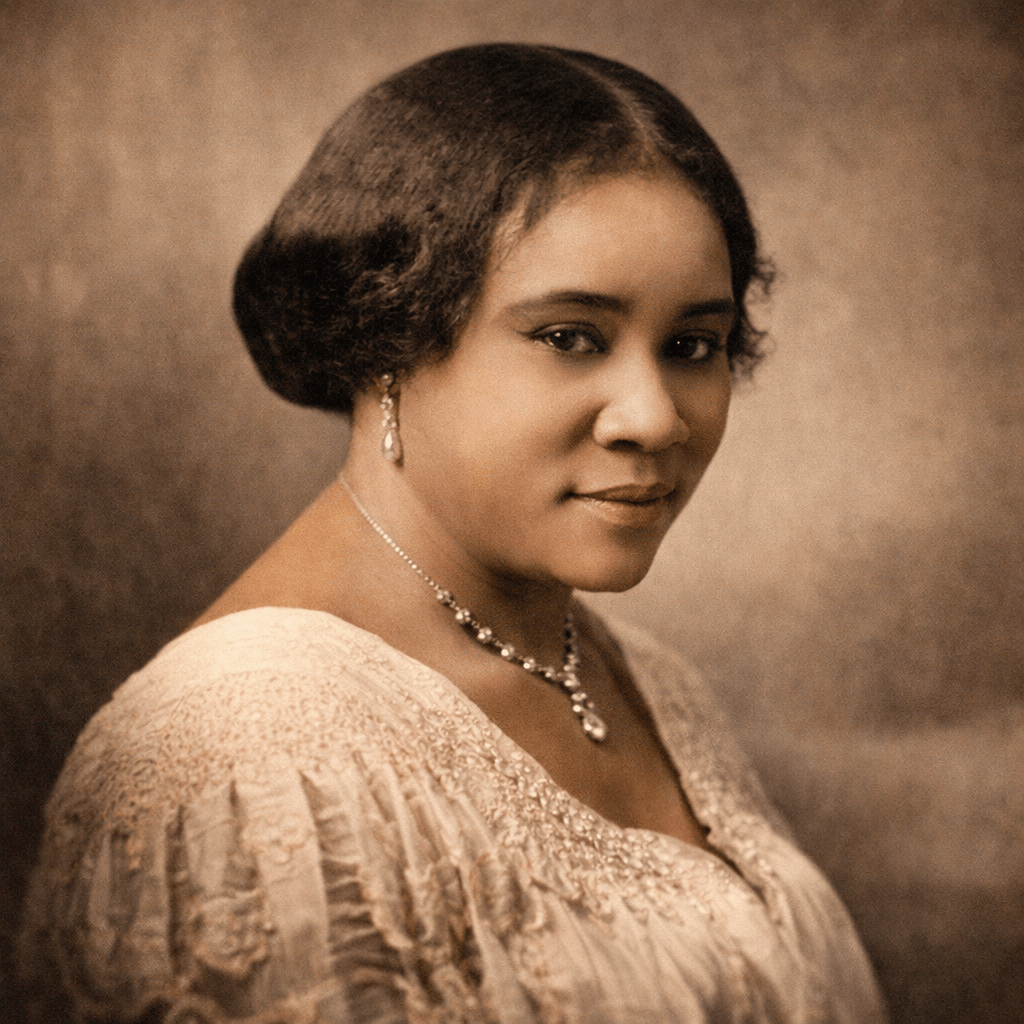
Black History: Madam C. J. Walker – The First Black Millionaire

Madam C. J. Walker stands as one of the most extraordinary figures in American history, not only for her business success but for what she represented in an era defined by racial terror, gender exclusion, and economic apartheid. Born into the aftermath of slavery, Walker transformed personal hardship into a global enterprise that reshaped Black beauty culture and redefined what was possible for Black women in capitalism.

Madam C. J. Walker was born Sarah Breedlove in 1867 in Delta, Louisiana, the first child in her family born free after the Emancipation Proclamation. Orphaned by the age of seven, she grew up in extreme poverty, working in cotton fields and as a domestic laborer. Her early life reflected the harsh conditions of post-slavery Black America, where survival itself required resilience.

Walker married at fourteen to escape abuse in her sister’s home, becoming a widow by twenty with a young daughter to raise. She supported herself as a washerwoman, earning barely enough to live while enduring long hours of physical labor. This stage of her life exposed her to the brutal realities faced by Black women—low wages, limited education, and no access to economic mobility.

Her turning point came when she began losing her hair due to scalp diseases caused by poor hygiene conditions, harsh chemicals, and lack of proper hair care knowledge. Hair loss was common among Black women at the time, and there were no reliable products designed for their needs. What began as a personal crisis became the seed of a global industry.

Walker started experimenting with homemade formulas, drawing from folk remedies and early cosmetic chemistry. She eventually developed a scalp treatment that restored her hair and improved overall scalp health. Recognizing the demand, she began selling her products door to door, personally demonstrating their effectiveness to Black women.

She later married Charles Joseph Walker, a newspaper advertising salesman, and adopted the professional name Madam C. J. Walker. The title “Madam” was intentional, projecting authority, elegance, and European-style professionalism in a world that refused to see Black women as legitimate business leaders.

Walker’s most famous innovation was her hair care system, which included scalp ointments, shampoos, and hot-comb styling techniques. Contrary to modern misconceptions, her products were not designed to “make Black women white,” but to promote hair health, hygiene, and growth in an era where basic sanitation was inaccessible for many Black communities.

Her business exploded through a network of Black female sales agents known as “Walker Agents.” These women were trained not only in sales but in financial literacy, hygiene, public speaking, and self-presentation. For many, this was the first time they earned independent income, owned property, or traveled professionally.

Walker built factories, beauty schools, and salons across the United States, the Caribbean, and Central America. Her company employed thousands of Black women at a time when most corporations excluded them entirely. She created an alternative economic system inside a segregated society.

By 1910, she established her headquarters in Indianapolis, turning it into a Black industrial hub. The Madam C. J. Walker Manufacturing Company became one of the largest Black-owned businesses in the nation. Her success made her the first documented self-made Black female millionaire in American history.

Her wealth, however, was never purely personal. Walker was a radical philanthropist who funded Black schools, orphanages, civil rights organizations, and anti-lynching campaigns. She donated large sums to the NAACP, Tuskegee Institute, and Black churches across the country.

Walker used her platform to speak openly about racial violence, economic injustice, and women’s empowerment. She was not merely a beauty entrepreneur but a political figure who believed capitalism should serve liberation, not just profit.

Her daughter, A’Lelia Walker, inherited the business and expanded its cultural influence. A’Lelia became a major patron of the Harlem Renaissance, hosting salons that brought together artists, writers, musicians, and political thinkers. Their wealth became cultural infrastructure for Black intellectual life.

Walker’s legacy also reshaped beauty standards. She taught Black women that grooming and self-care were not signs of vanity but acts of dignity and resistance in a society that dehumanized them. Her message was radical: Black women deserved luxury, care, and self-respect.

She also redefined Black womanhood in business. At a time when women could not vote, and Black women were excluded from most professions, Walker owned property, controlled capital, managed factories, and employed thousands.

Walker died in 1919 at the age of 51, leaving behind an empire and a blueprint. Her funeral was attended by major civil rights leaders, including Booker T. Washington and Mary McLeod Bethune, confirming her status as not just a businesswoman but a historical force.

Her mansion, Villa Lewaro, became a symbol of Black wealth and architectural power in a nation that denied both. It was designed to showcase that Black success did not need to mimic whiteness but could exist on its own cultural terms.

Modern debates about hair politics, natural hair movements, and Black beauty industries all trace back to Walker’s foundational work. Every Black-owned beauty brand today stands on the infrastructure she built.

She proved that generational wealth could emerge from the margins, that Black women could control industries, and that capitalism could be weaponized for racial uplift.

Madam C. J. Walker’s true legacy is not just that she became rich, but that she taught thousands of Black women how to become free.


References

Bundles, A. (2001). On Her Own Ground: The Life and Times of Madam C. J. Walker. Scribner.

Bundles, A. (2015). Madam C. J. Walker: Entrepreneur. Chelsea House.

Gates, H. L., Jr. (2013). Life Upon These Shores: Looking at African American History, 1513–2008. Knopf.

Rooks, N. (1996). Hair Raising: Beauty, Culture, and African American Women. Rutgers University Press.

Walker, A. L. (1925). The Madam C. J. Walker Standard Beauty Manual. Madam C. J. Walker Manufacturing Company.

Hine, D. C., Hine, W. C., & Harrold, S. (2010). The African-American Odyssey. Pearson.

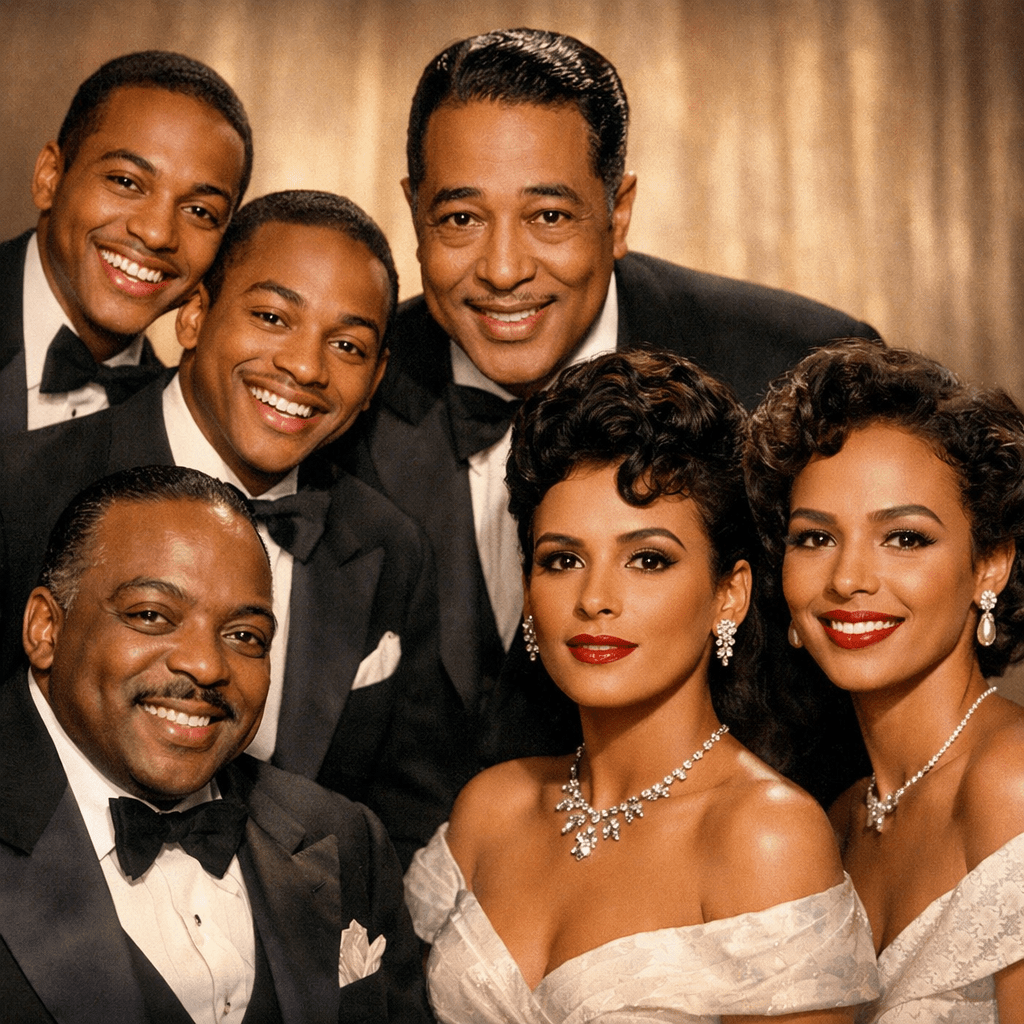
Black History: Harlem Renaissance Icons

The Harlem Renaissance is often remembered as a golden age of Black brilliance, a period when music, theater, literature, and fashion converged into a global statement of cultural power. Yet behind the elegance, tuxedos, and spotlight glamour existed a harsher reality of emotional trauma, racial exploitation, violent relationships, and broken families. The icons of this era were not only cultural heroes but also human beings navigating fame inside a deeply racist society that consumed their talent while disregarding their humanity.

At the center of this world stood Duke Ellington, whose orchestra became the sound of Black sophistication. Ellington’s genius reshaped American music, elevating jazz into an art form worthy of concert halls and classical comparison. Yet his personal life reflected the era’s contradictions. Constant touring strained his marriage, and his emotional distance from his family mirrored a broader pattern among male entertainers whose careers required near-total devotion at the cost of intimacy and fatherhood.

Ellington’s rise was inseparable from the Cotton Club, a glamorous but deeply ironic institution. The club showcased the finest Black talent in America, yet barred Black patrons entirely, catering exclusively to wealthy white audiences. Black performers were celebrated on stage but segregated in the audience, reinforcing a system where Black excellence was profitable but Black dignity remained negotiable.

Another towering figure was Count Basie, whose Kansas City swing style brought raw energy and improvisation into the mainstream. Basie’s orchestra became legendary for its tight rhythms and blues-infused arrangements. Yet like many musicians of the era, Basie endured exhausting schedules, exploitative contracts, and a culture of heavy drinking, gambling, and infidelity that destroyed numerous marriages and family structures.

The Harlem Renaissance was not only sound but spectacle, and no performers embodied physical artistry more than the Nicholas Brothers. Fayard and Harold Nicholas stunned audiences with gravity-defying acrobatics and revolutionary tap technique. Their performances symbolized Black excellence at its most athletic and joyful, yet Hollywood consistently limited them to specialty acts, cutting their scenes from films to avoid placing Black men too centrally in white narratives.

One of the most significant cultural artifacts of the era was the film Stormy Weather, a rare Hollywood production centered entirely on Black performers. The film showcased Lena Horne, Bill Robinson, and the Nicholas Brothers, and became a landmark in Black cinematic history. Its impact was both empowering and bittersweet, as it represented possibility within an industry that still refused to grant Black actors complex, romantic, or authoritative roles.

At the emotional core of Harlem glamour stood Lena Horne, whose beauty and voice made her one of the first Black women marketed as a global sex symbol. Horne broke color barriers in Hollywood but paid a severe psychological price. She faced constant racism, was prohibited from romantic scenes with white actors, and lived under surveillance from studios that feared interracial desire more than injustice.

Horne’s personal life exposed even deeper wounds, particularly her relationship with Joe Louis, the most famous Black athlete in the world at the time. Their affair was passionate but devastating. Louis repeatedly cheated on Horne, humiliating her publicly and reinforcing a pattern of emotional abandonment that haunted many Black women whose partners were consumed by fame, ego, and unhealed trauma.

The image of Black male celebrity during this era was often violent beneath the surface. Many stars engaged in domestic abuse, alcoholism, and emotional neglect, behaviors rooted in unresolved rage from racism, poverty, and emasculation. Fame did not heal these wounds; it amplified them, turning private pain into public dysfunction and generational trauma.

Another tragic icon was Dorothy Dandridge, the first Black woman nominated for an Academy Award for Best Actress. Dandridge’s beauty made her famous, but her vulnerability made her exploitable. She endured abusive relationships, financial mismanagement, studio manipulation, and the emotional devastation of raising a daughter with severe disabilities while being denied meaningful roles.

Dandridge’s love life was marked by violent men, emotional instability, and betrayal. She was beaten by partners, financially drained by managers, and psychologically crushed by Hollywood’s rejection. Her story represents how Black women were hypersexualized, commodified, and discarded once their youth or novelty faded.

Beneath the elegance of Harlem nightlife existed a culture of physical violence, emotional neglect, and fractured families. Many entertainers fathered children they barely raised, leaving behind single mothers and emotionally abandoned sons and daughters. These children grew up in the shadow of famous names but without stability, guidance, or protection.

The psychological toll of passing, colorism, and racial performance also shaped these lives. Lighter-skinned stars like Lena Horne and Dorothy Dandridge were promoted more aggressively, reinforcing internal hierarchies within the Black community itself. Darker-skinned performers were often excluded from leading roles, feeding cycles of resentment, insecurity, and identity conflict.

The Harlem Renaissance thus produced not only artistic revolutions but psychological casualties. Many stars self-medicated through alcohol, drugs, gambling, and sex. The pressure to represent an entire race while being denied full humanity created emotional contradictions that manifested as addiction, narcissism, and relational dysfunction.

Even male icons like Duke Ellington and Count Basie struggled with emotional availability. Their dedication to craft demanded emotional withdrawal from family life. The myth of the brilliant Black genius often came paired with the reality of absent fathers and emotionally distant husbands.

The Cotton Club itself symbolized this contradiction perfectly. Black bodies created white pleasure, Black culture generated white profit, and Black suffering remained invisible behind velvet curtains and champagne glasses. Harlem glittered, but it was built on structural inequality.

The Nicholas Brothers, despite their brilliance, were never allowed narrative depth. They were celebrated for physicality but denied psychological complexity, reinforcing a stereotype of Black men as entertainers rather than thinkers, lovers, or leaders.

Stormy Weather remains iconic because it briefly shattered that ceiling, allowing Black performers to exist without white intermediaries. Yet even that film existed as an exception, not a new rule.

The legacies of Lena Horne and Dorothy Dandridge reveal how Black women paid the highest emotional price for proximity to fame. Their bodies were adored, their souls neglected, and their pain silenced beneath glamour.

Joe Louis represents the darker side of Black male hero worship, where athletic power replaced emotional maturity, and fame excused infidelity, neglect, and misogyny.

Ultimately, the Harlem Renaissance was not only a cultural awakening but a psychological battlefield. These icons were pioneers navigating fame inside a system designed to exploit them, isolate them, and emotionally fracture them.

Their stories remind us that Black excellence has always coexisted with Black suffering, and that beauty, talent, and legacy do not erase trauma. Behind the tuxedos, stage lights, and platinum records were slashed emotions, broken homes, and souls trying to survive history itself.


References

Bogle, D. (2016). Toms, Coons, Mulattoes, Mammies, and Bucks: An Interpretive History of Blacks in American Films. Bloomsbury Academic.

Cohen, H. G. (2010). Duke Ellington’s America. University of Chicago Press.

Giddins, G. (2014). Visions of Jazz: The First Century. Oxford University Press.

Horne, L. (2018). Lena: A Personal and Professional Biography. Da Capo Press.

Lewis, D. L. (2004). When Harlem Was in Vogue. Penguin Books.

Shipton, A. (2007). A New History of Jazz. Continuum.

Dandridge, D. (1999). Everything and Nothing: The Dorothy Dandridge Story. Hyperion.

Bogle, D. (2001). Dorothy Dandridge: A Biography. Amistad.

Erenberg, L. A. (1981). Steppin’ Out: New York Nightlife and the Transformation of American Culture. Greenwood Press.

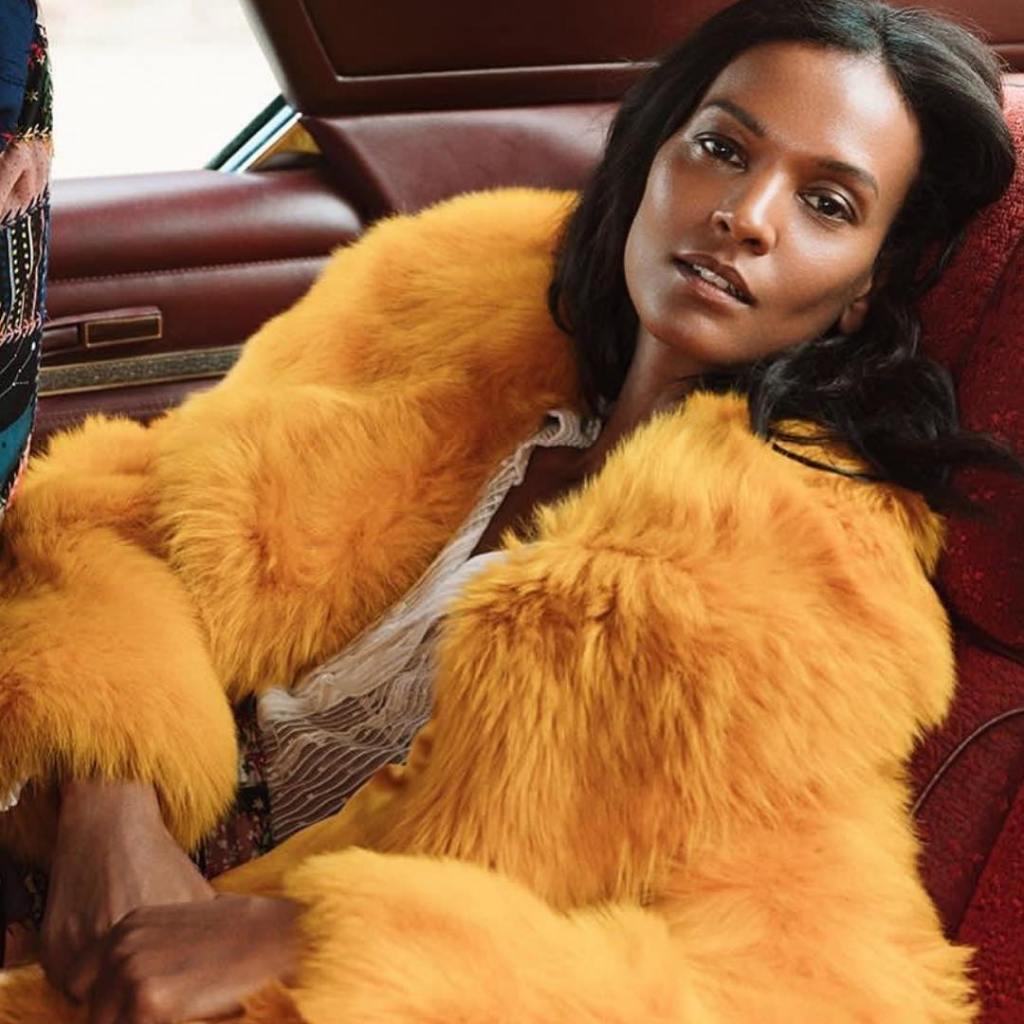
The Ebony Dolls: Liya Kebede

Ethiopian Supermodel and Maternal Health Advocate

This photograph is the property of its respective owners. No copyright infringement intended.

Liya Kebede is an internationally celebrated Ethiopian supermodel, entrepreneur, and global maternal health advocate whose career has transcended fashion to become a platform for humanitarian impact. Born on January 3, 1978, in Addis Ababa, Ethiopia, Kebede emerged as one of the first African models to achieve sustained global dominance in high fashion, redefining the visibility of African beauty within Eurocentric modeling industries.

Kebede was discovered in 1998 while attending Lycée Guebre-Mariam, a French international school in Addis Ababa. A French filmmaker spotted her and encouraged her to pursue modeling in Paris, where she soon signed with a major agency. Her entry into the European fashion scene marked a pivotal moment, as African models had historically been marginalized within elite fashion circuits.

Her breakthrough came in the early 2000s when she walked exclusive runways for designers such as Tom Ford for Gucci, Yves Saint Laurent, Louis Vuitton, Jean Paul Gaultier, and Estée Lauder. In 2003, she made history as the first Ethiopian model to become the face of Estée Lauder, a milestone that placed her among the world’s highest-paid models at the time.

Liya Kebede’s modeling career is distinguished not only by commercial success but by symbolic representation. She embodied a shift in beauty politics, bringing dark-skinned African features into luxury branding spaces that had long privileged whiteness and Eurocentric aesthetics. Her presence disrupted narrow beauty standards and affirmed Black femininity on a global stage.

This photograph is the property of its respective owners. No copyright infringement intended.

In addition to runway and editorial success, Kebede became the face of major advertising campaigns for brands including Estée Lauder, Dolce & Gabbana, Victoria’s Secret, Gap, and L’Oréal. Her campaigns were marked by elegance, refinement, and a classical visual identity that resonated with both haute couture and mass-market audiences.

Beyond fashion, Kebede’s life mission shifted toward global health advocacy, particularly maternal health in Africa. In 2005, she founded the Liya Kebede Foundation, a nonprofit organization dedicated to improving maternal and newborn health in Ethiopia and other developing countries. Her advocacy was inspired by her own experiences and exposure to high maternal mortality rates in sub-Saharan Africa.

In 2011, she was appointed a World Health Organization (WHO) Goodwill Ambassador for Maternal, Newborn, and Child Health. In this role, Kebede worked closely with international institutions to raise awareness about preventable maternal deaths and the structural inequalities affecting African women’s healthcare systems.

Kebede is also a successful entrepreneur. She launched Lemlem, an ethical fashion brand that supports Ethiopian artisans and promotes traditional handwoven textiles. The brand integrates fashion with economic empowerment, creating sustainable employment for African women while preserving indigenous craftsmanship.

Her awards and recognitions include being named among Time Magazine’s “100 Most Influential People in the World” and receiving numerous humanitarian honors for her global advocacy work. These accolades reflect her rare position as both cultural icon and social reformer.

Liya Kebede was married to hedge fund manager Kassy Kebede (Kassé Kebede), and they share two children. Although they later divorced, Kebede has maintained a private family life, emphasizing balance between motherhood, activism, and professional leadership.

As an “Ebony Doll,” Liya Kebede represents a form of Black beauty rooted in classical proportion, regal poise, and ancestral elegance. The term “Ebony Doll” in cultural aesthetics refers not to objectification, but to symbolic idealization—an archetype of dark feminine beauty that embodies grace, depth, and timeless appeal.

Her skin tone, facial symmetry, high cheekbones, almond-shaped eyes, and natural Afrocentric features align with what scholars describe as “classical Black beauty,” a form of aesthetics historically erased or marginalized in Western visual culture. Kebede’s beauty operates not as spectacle but as dignity—quiet, composed, and sovereign.

In contrast to hypersexualized or exoticized portrayals of Black women, Kebede’s image has consistently reflected restraint, intellect, and moral authority. Her modeling persona is refined rather than performative, aligning beauty with character rather than consumption.

From a sociological perspective, Kebede embodies what Pierre Bourdieu would call symbolic capital: beauty converted into cultural authority and ethical influence. She did not merely accumulate visibility; she transformed it into institutional power and social change.

Her role in reshaping African representation in global fashion parallels earlier cultural icons such as Iman, Naomi Campbell, and Alek Wek. However, Kebede’s distinctive legacy lies in her integration of beauty with global health politics.

Liya Kebede stands as a living example of how Black beauty can function as both aesthetic excellence and moral agency. She is not simply admired—she is emulated, respected, and historically significant.

In the broader framework of racial and gender representation, Kebede represents the re-humanization of African femininity within systems that once rendered it invisible. Her success reframes Black womanhood as intellectual, ethical, maternal, and powerful.

Ultimately, Liya Kebede is an Ebony Doll not because she fits a fantasy, but because she transcends one. Her beauty is classical, her mission is humanitarian, and her legacy is cultural sovereignty.


References

Kebede, L. (2010). Liya Kebede Foundation: Maternal health initiatives in Ethiopia. Liya Kebede Foundation.

Time Magazine. (2010). The 100 most influential people in the world: Liya Kebede.

World Health Organization. (2011). WHO Goodwill Ambassador for Maternal, Newborn and Child Health: Liya Kebede.

Entwistle, J. (2009). The aesthetic economy of fashion: Models and symbolic capital. Berg Publishers.

Hunter, M. (2011). Buying racial capital: Skin bleaching and cosmetic surgery in a globalized world. The Journal of Pan African Studies, 4(4), 142–164.

Bourdieu, P. (1986). The forms of capital. In J. Richardson (Ed.), Handbook of theory and research for the sociology of education (pp. 241–258). Greenwood.

Iman. (2011). The beauty of color: Skin, fashion, and representation. HarperCollins.

Crenshaw, K. (1991). Mapping the margins: Intersectionality and identity politics. Stanford Law Review, 43(6), 1241–1299.

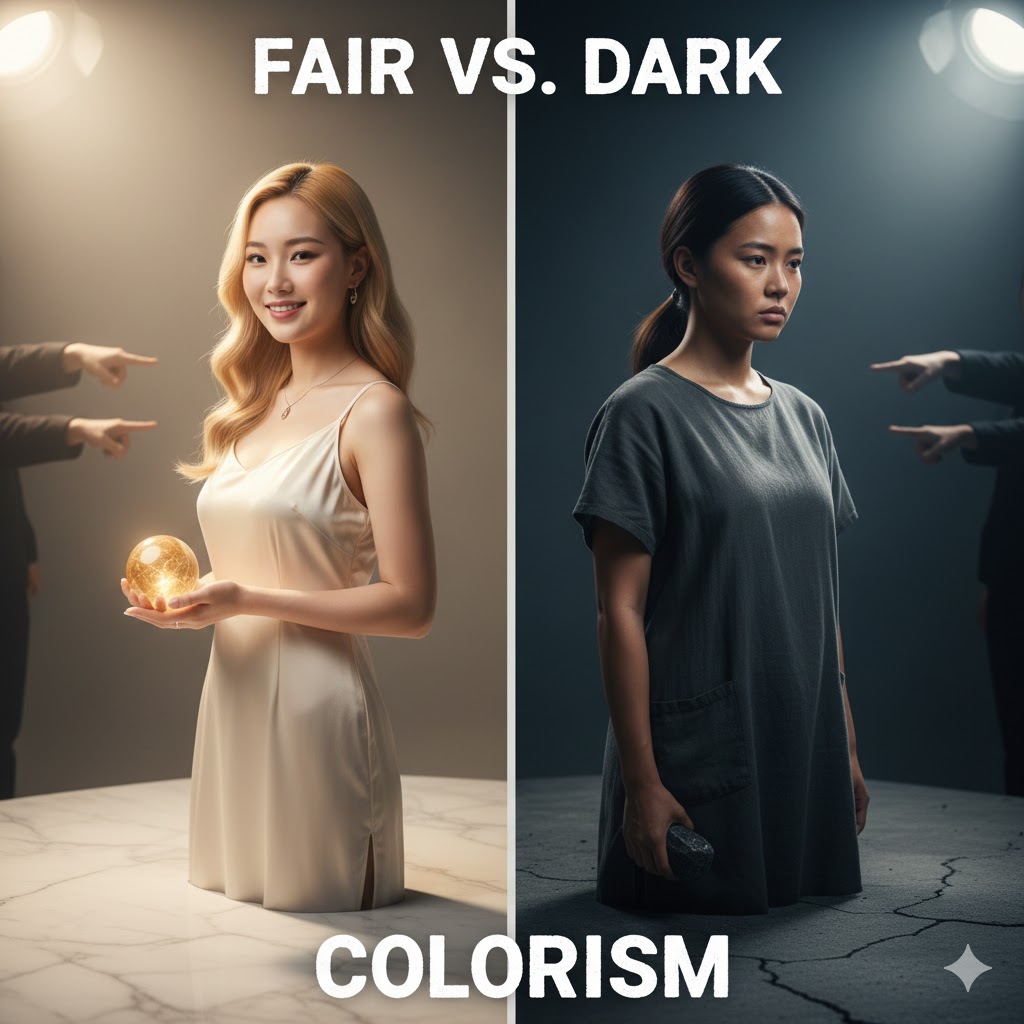
Colorism in Asia

Colorism in Asia is a pervasive social phenomenon in which lighter skin is culturally valued over darker skin, creating systemic advantages for those perceived as fairer. Unlike racism, which often categorizes by ethnicity, colorism operates within racial and ethnic groups, privileging lighter tones as a symbol of wealth, status, and beauty. Its impact spans social, economic, and psychological domains, influencing marriage, employment, media representation, and daily interactions.

The roots of colorism in Asia are complex, intertwining pre-colonial class distinctions with European colonial influence. Historically, fair skin was associated with the elite or ruling classes who worked indoors, while darker skin indicated labor-intensive outdoor work. European colonialism reinforced and codified these associations, idealizing whiteness as superior and desirable.

In India, colorism is deeply entrenched. Fair skin has long been linked to beauty, marriageability, and social status. Advertisements promoting skin-lightening products are widespread, and matrimonial ads often specify preference for fair-skinned partners. Caste and colonial legacy amplify this preference, embedding it in social and cultural norms (Ludhianvi, 2020).

Pakistan similarly exhibits strong colorist tendencies. Lighter skin is associated with higher social class and greater marital prospects. The skin-lightening industry thrives, with consumers believing fairness equates to upward mobility, attractiveness, and professional credibility. Media, film, and advertising reinforce these ideals.

In Southeast Asia, countries like the Philippines, Thailand, and Indonesia exhibit pervasive colorism due to colonial history and media influence. In the Philippines, Spanish colonization and American media created ideals of beauty that favor lighter skin, influencing both professional opportunities and romantic desirability. Fair skin continues to be a marker of privilege and social mobility.

Thailand has a cultural preference for lighter skin, evident in beauty advertisements, television, and social expectations. The legacy of colonial trade and the association of light skin with urban elites amplify this hierarchy. Skin-whitening products dominate the market, signaling the perceived necessity of fair skin for social acceptance.

In China and East Asia, colorism is widespread, though nuanced. Lighter skin is historically associated with refinement, status, and scholarly pursuits, contrasting with rural laborers. Modern media, fashion, and entertainment reinforce these ideals, sustaining societal bias and shaping self-perception from a young age (Li & Min, 2014).

Japan and South Korea also reflect colorism influenced by historical class structures and Western beauty ideals. In South Korea, skin whitening and cosmetic surgery are widespread, with lighter skin seen as a standard of beauty and sophistication. In Japan, light skin is tied to elegance, status, and femininity, although contemporary media sometimes diversifies representation.

The worst-affected countries in Asia tend to be those with both colonial history and rigid social hierarchies. India, Pakistan, the Philippines, and Thailand experience intense societal pressure to conform to fair-skinned beauty ideals, reinforced through marriage markets, media, and professional spaces. The combination of historical caste or class divisions and globalized beauty standards intensifies the penalty for darker skin.

Colorism in Asia intersects with gender, disproportionately affecting women. Women are judged more harshly by skin tone, and their social, marital, and professional opportunities are more tightly linked to appearance. This leads to heightened use of skin-lightening products, cosmetic procedures, and restrictive beauty practices.

Economically, colorism affects career prospects. In India and Southeast Asia, lighter-skinned individuals are more likely to be hired for front-facing roles, leadership positions, and customer-oriented professions. Appearance is often equated with competence and professionalism, creating systemic advantage.

Marriage markets are heavily influenced by colorism. Matrimonial advertisements frequently specify preference for fair-skinned partners, reflecting the perception that lighter skin signals social status, family wealth, and desirability. Darker-skinned individuals are marginalized, even when other qualities are equal.

Media representation reinforces colorism by prioritizing lighter-skinned actors, models, and influencers. Television, film, and advertisements overwhelmingly feature fair-skinned individuals in roles of power, romance, and beauty, while darker-skinned people are underrepresented or typecast. This perpetuates bias in both perception and aspiration.

The skin-lightening industry is a multi-billion-dollar sector in Asia, indicating both the intensity of societal preference for fair skin and the psychological impact of colorism. Consumers internalize the message that lighter skin equates to opportunity, attractiveness, and social capital, sustaining demand and normalizing bias.

Colorism also has psychological consequences, contributing to low self-esteem, anxiety, and body image dissatisfaction. Individuals internalize societal preferences, leading to shame, identity conflict, and social comparison, particularly among women and youth.

Education is not immune. Teachers and peers may implicitly favor lighter-skinned students, assuming greater intelligence, discipline, or refinement. These biases influence expectations, opportunities, and social inclusion, reinforcing systemic inequality from early childhood.

Social mobility in Asia is intertwined with skin tone. Lighter skin is often equated with urbanity, cosmopolitanism, and modernity, while darker skin signals rural labor, poverty, or lower status. This creates a persistent cycle where appearance directly affects life trajectory.

Historically, colorism was reinforced by colonial hierarchies and caste systems. In India, fair skin was associated with higher castes, while darker skin correlated with servitude or laboring classes. European colonization globally reinforced these associations, elevating whiteness as aspirational and moralized.

To challenge colorism in Asia, cultural, institutional, and personal efforts are required. Media representation must diversify, educational systems must address bias, and beauty industries must be held accountable for perpetuating harmful standards. Individual awareness and advocacy play key roles in dismantling internalized preference.

Overcoming colorism involves redefining beauty, valuing diverse appearances, and affirming dignity independent of skin tone. Societies must confront historical roots, economic incentives, and cultural reinforcement to create equitable spaces where color does not determine opportunity, respect, or love.


References

Ludhianvi, R. (2020). Skin-deep bias: The politics of complexion in India. Journal of South Asian Studies, 43(2), 215–232.

Hunter, M. (2007). The persistent problem of colorism: Skin tone, status, and inequality. Sociology Compass, 1(1), 237–254.

Li, W., & Min, S. (2014). Cultural beauty standards in East Asia: Colorism and social perception. Asian Journal of Social Psychology, 17(3), 192–201.

Hamermesh, D. S., & Biddle, J. E. (1994). Beauty and the labor market. American Economic Review, 84(5), 1174–1194.

Hosoda, M., Stone-Romero, E. F., & Coats, G. (2003). The effects of physical attractiveness on job-related outcomes: A meta-analysis of experimental studies. Personnel Psychology, 56(2), 431–462.

Eagly, A. H., Ashmore, R. D., Makhijani, M. G., & Longo, L. C. (1991). What is beautiful is good, but…: A meta-analytic review of research on the physical attractiveness stereotype. Psychological Bulletin, 110(1), 109–128.

Frisby, C. M. (2004). Does race or gender matter? Effects of media images on self-perception. Journal of Broadcasting & Electronic Media, 48(2), 301–317.

Unapologetically Brown

To be unapologetically brown is to embrace a lineage of strength, beauty, and resilience. It is a declaration that the skin one inhabits is not a limitation but a testament to survival, creativity, and divine design. In a society that often marginalizes or misrepresents brownness, asserting identity without apology becomes both an act of self-love and resistance.

Brownness carries history. From African kingdoms to the diasporic experiences shaped by colonization and slavery, the brown individual is connected to a legacy of leadership, innovation, and cultural richness. Recognizing this heritage strengthens identity and fosters pride, counteracting narratives of inferiority.

Psychologically, embracing brownness combats the internalized biases imposed by colorism and societal hierarchy. Hunter (2007) notes that internalized colorism can affect self-esteem, emotional health, and social interactions. To live unapologetically brown is to reject these limiting perceptions and affirm inherent worth.

Scripture affirms the value of every individual. Psalm 139:14 (KJV) states, “I will praise thee; for I am fearfully and wonderfully made: marvellous are thy works; and that my soul knoweth right well.” Brown skin is part of God’s deliberate creation, a mark of intentionality and beauty.

Celebrating brownness is an act of courage. Society often privileges lighter skin, Eurocentric features, and Western standards of beauty. Standing firm in brown identity challenges these hierarchies and affirms the dignity of one’s natural self.

Unapologetic brownness is intersectional. It encompasses culture, hair, features, language, and heritage. Each aspect is a thread in the tapestry of identity, deserving of affirmation and respect. It is a refusal to conform to external expectations at the expense of authenticity.

Historical awareness strengthens unapologetic brown identity. Understanding the contributions of African civilizations, Caribbean resistance, and Black excellence in America provides context for pride. Knowledge of history transforms marginalization into empowerment, validating existence and achievement.

The Bible speaks to embracing identity and purpose. Jeremiah 1:5 (KJV) declares, “Before I formed thee in the belly I knew thee; and before thou camest forth out of the womb I sanctified thee, and I ordained thee a prophet unto the nations.” God’s intentionality in creation extends to skin, culture, and personal gifts.

Psychologically, embracing brownness correlates with higher self-esteem and resilience. Studies indicate that racial pride mediates stress and enhances mental well-being, particularly in contexts of discrimination or systemic bias (Sellers et al., 2003).

Unapologetic brownness is also expressed through aesthetics. Hair, fashion, and style become forms of self-expression and cultural affirmation. Whether in natural hairstyles, traditional dress, or contemporary fashion, these choices celebrate heritage and individuality.

The arts have long been a vehicle for unapologetic brown expression. Literature, music, visual art, and performance highlight narratives of brown lives, affirming identity and challenging societal misrepresentation. Figures like Toni Morrison, Chimamanda Ngozi Adichie, and Maya Angelou exemplify this power.

Faith and spirituality reinforce unapologetic brownness. Believing in one’s worth as divinely created provides confidence and purpose. Proverbs 31:25 (KJV) states, “Strength and honour are her clothing; and she shall rejoice in time to come.” Spiritual grounding fortifies resilience against societal marginalization.

Community support enhances the experience of living unapologetically brown. Mentorship, family, and cultural networks reinforce pride, provide guidance, and offer affirmation, ensuring that identity is nurtured rather than suppressed.

Rejecting negative stereotypes is essential. Media often portrays brownness through narrow or pejorative lenses. Critical media literacy allows individuals to engage with representation thoughtfully, asserting their own narrative instead of internalizing harmful imagery.

Education empowers unapologetic brown identity. Knowledge of history, literature, science, and social dynamics strengthens self-concept and equips individuals to challenge systemic inequities with informed confidence.

Unapologetic brownness is inherently political. In a world that seeks to marginalize or erase, asserting presence, voice, and value becomes a form of activism. Every act of self-affirmation challenges structures of oppression and asserts dignity.

Mental and emotional well-being is nurtured through affirmation. Daily practices of self-love, gratitude, and reflection reinforce the choice to live authentically, honoring both ancestry and personal journey.

Unapologetically brown individuals inspire future generations. By modeling pride, achievement, and resilience, they teach youth to embrace identity fully, countering generational trauma and societal discouragement.

Brownness is dynamic, multifaceted, and resilient. To live unapologetically is to reject shame, embrace heritage, and move confidently in the world with authenticity and grace.

Ultimately, unapologetic brownness celebrates life, history, and divine intention. It integrates self-love, cultural pride, and spiritual affirmation into an empowered existence. It is not a momentary stance but a lifelong declaration: that to be brown is to be whole, worthy, and beloved.


References

Psalm 139:14, KJV.
Jeremiah 1:5, KJV.
Proverbs 31:25, KJV.
Hunter, M. L. (2007). The Persistent Problem of Colorism: Skin Tone, Status, and Inequality. Sociology Compass, 1(1), 237–254.
Sellers, R. M., Smith, M. A., Shelton, J. N., Rowley, S. A., & Chavous, T. M. (2003). Multidimensional model of racial identity: A reconceptualization of African American racial identity. Personality and Social Psychology Review, 7(3), 210–224.
Asante, M. K. (2007). The History of Africa: The Quest for Eternal Harmony. Routledge.
Gates, H. L. (2019). The Black Experience in America: Identity, Culture, and Achievement. Vintage Press.