Tag Archives: black history

Dilemma: The Modern & Slave Plantations

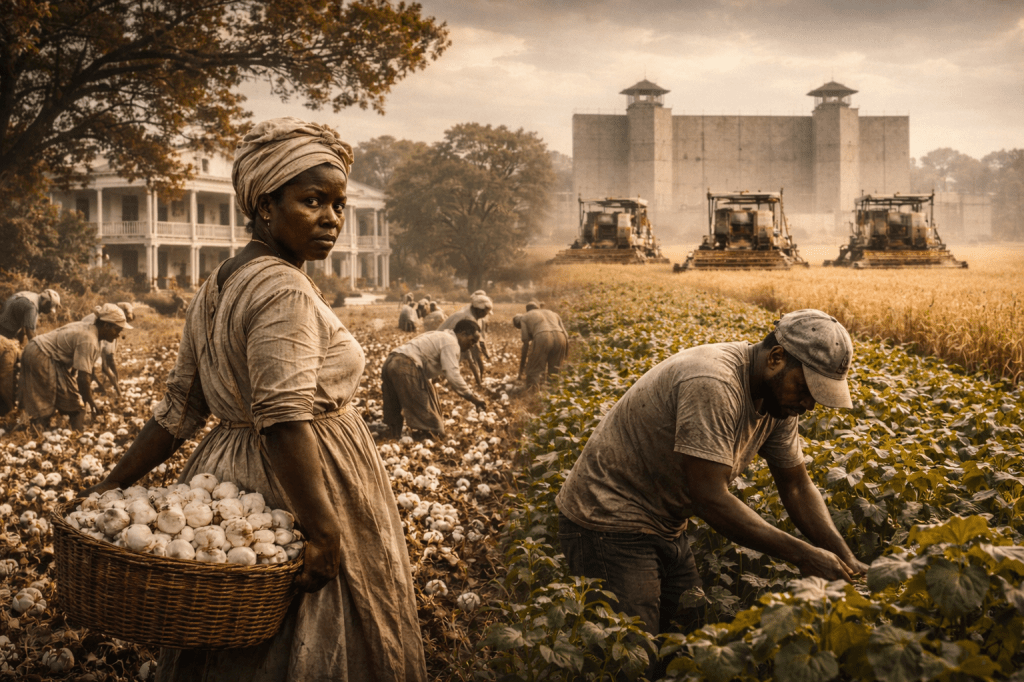
The legacy of slavery continues to shape the modern world in ways that are often overlooked. While chattel slavery in the United States officially ended in 1865, its economic, social, and psychological structures persist in subtle yet profound forms. Modern “plantations” manifest not only as historical sites but also as systemic systems of exploitation that disproportionately impact Black communities.

During the antebellum period, plantations were economic engines built on the labor of enslaved Africans. They relied on dehumanization, control, and violence to maintain productivity, wealth, and social hierarchy. The plantation system created lasting inequities in land ownership, education, and wealth accumulation.

Enslaved individuals were subjected to grueling labor from dawn to dusk, often under extreme conditions in the fields or as domestic workers. Families were torn apart, and basic human rights were denied. The psychological and cultural impact of this trauma has resonated across generations, creating long-lasting challenges in Black communities.

Plantations were also centers of cultural erasure. Enslaved Africans were forbidden from speaking their native languages, practicing their religions, or maintaining cultural traditions. This forced assimilation sought to strip individuals of identity while normalizing the supremacy of white culture.

The “modern plantation” can be understood metaphorically in terms of systemic oppression. Mass incarceration, exploitative labor practices, and economic marginalization of Black Americans are frequently described as contemporary forms of plantation-like control. While the methods differ, the underlying structures of surveillance, discipline, and economic extraction remain.

Historically, plantations relied on racialized hierarchies to maintain control. White supremacy dictated who could own property, access education, or participate in governance. These hierarchies have influenced social and institutional structures into the 21st century, contributing to persistent racial disparities in wealth, health, and political representation.

The psychological effects of plantation life continue to manifest in generational trauma. Studies on epigenetics suggest that stress and trauma experienced by enslaved ancestors may impact the mental and physical health of descendants, contributing to disparities in mental health, chronic illness, and resilience.

Education on plantation history often sanitizes the brutality experienced by enslaved individuals. Museums and historical sites sometimes focus on the architecture, wealth, or “heritage” of plantation owners while minimizing the suffering, resistance, and humanity of the enslaved population. This selective narrative reinforces systemic racism by erasing the lived experiences of Black Americans.

Labor exploitation continues in modern industries. Many low-wage sectors disproportionately employ Black workers under precarious conditions, echoing the economic dependency that existed on plantations. Farm labor, domestic work, and service industries reveal structural patterns reminiscent of historical exploitation.

Slavery and modern oppression are also interconnected through wealth disparities. The descendants of enslaved individuals were denied the ability to accumulate land, start businesses, or inherit wealth for generations. In contrast, many modern corporations and institutions trace their wealth back to slavery, creating intergenerational inequities that persist today.

Plantations were not only economic sites but also spaces of resistance and culture. Enslaved Africans preserved languages, songs, spiritual practices, and social networks, which formed the foundation of Black American culture. This resilience contrasts sharply with the narrative of passive subjugation often presented in history.

Modern parallels are visible in prison labor systems, where predominantly Black populations are employed for minimal wages. Scholars argue that this represents a continuation of the plantation logic: controlled labor extracted under constrained autonomy, producing profit for others while restricting freedom.

Cultural representations of plantations also shape perceptions. Films, literature, and tourism often romanticize plantation life, masking the violence and oppression that defined the institution. This misrepresentation perpetuates myths about the benevolence of slavery and undermines the acknowledgment of Black suffering and agency.

Plantations in the modern imagination can also refer to economic environments where Black workers are overexploited, surveilled, and restricted in mobility. Corporations, supply chains, and gig economies sometimes mirror the control mechanisms of historical plantations through low wages, lack of benefits, and limited upward mobility.

Land ownership remains a critical issue. After emancipation, Black farmers and landowners faced systemic barriers through discriminatory lending practices, violence, and legal maneuvers, preventing them from achieving economic independence. This mirrors the historical denial of land and wealth that characterized the plantation economy.

The plantation metaphor extends to education. Schools in under-resourced Black communities often suffer from overcrowding, poor facilities, and limited access to quality instruction. These conditions reflect structural neglect that echoes the constraints placed on enslaved individuals, shaping long-term outcomes.

Healthcare disparities also reflect plantation legacies. Limited access to medical services, environmental injustices, and systemic bias within healthcare institutions continue to disproportionately affect Black communities, echoing the neglect and exploitation of enslaved populations.

Understanding the link between historical plantations and modern inequalities is critical for policy and social justice. Recognizing systemic patterns enables more effective interventions, targeted support, and reparative measures that address the roots of inequity rather than treating symptoms superficially.

Resistance has always been part of the story. Enslaved Africans organized revolts, preserved cultural practices, and forged communities of resilience. Today, activism, scholarship, and advocacy continue this legacy, challenging modern forms of oppression and advocating for racial equity.

Ultimately, the dilemma of modern plantations reminds society that the end of slavery did not end its effects. The structures, ideologies, and systems established during slavery continue to shape economic, social, and cultural realities for Black Americans. Addressing this requires critical awareness, structural reform, and historical reckoning.


References

Berlin, I. (2003). Generations of Captivity: A History of African-American Slaves. Belknap Press.

Davis, A. Y. (2003). Are Prisons Obsolete? Seven Stories Press.

Kolchin, P. (2003). American Slavery, 1619–1877. Hill and Wang.

Wood, P. H. (1999). Black Majority: Negroes in Colonial South Carolina from 1670 through the Stono Rebellion. W. W. Norton & Company.

Alexander, M. (2010). The New Jim Crow: Mass Incarceration in the Age of Colorblindness. The New Press.

White, D. G. (1999). Ar’n’t I a Woman? Female Slaves in the Plantation South. W. W. Norton & Company.

Finkelman, P. (2009). Slavery and the Founders: Race and Liberty in the Age of Jefferson. M.E. Sharpe.

Gates, H. L., Jr., & Higginbotham, E. B. (2010). African American Lives. Oxford University Press.

Black History: Queen Charlotte of Mecklenburg-Strelitz – The First Black Queen of England.

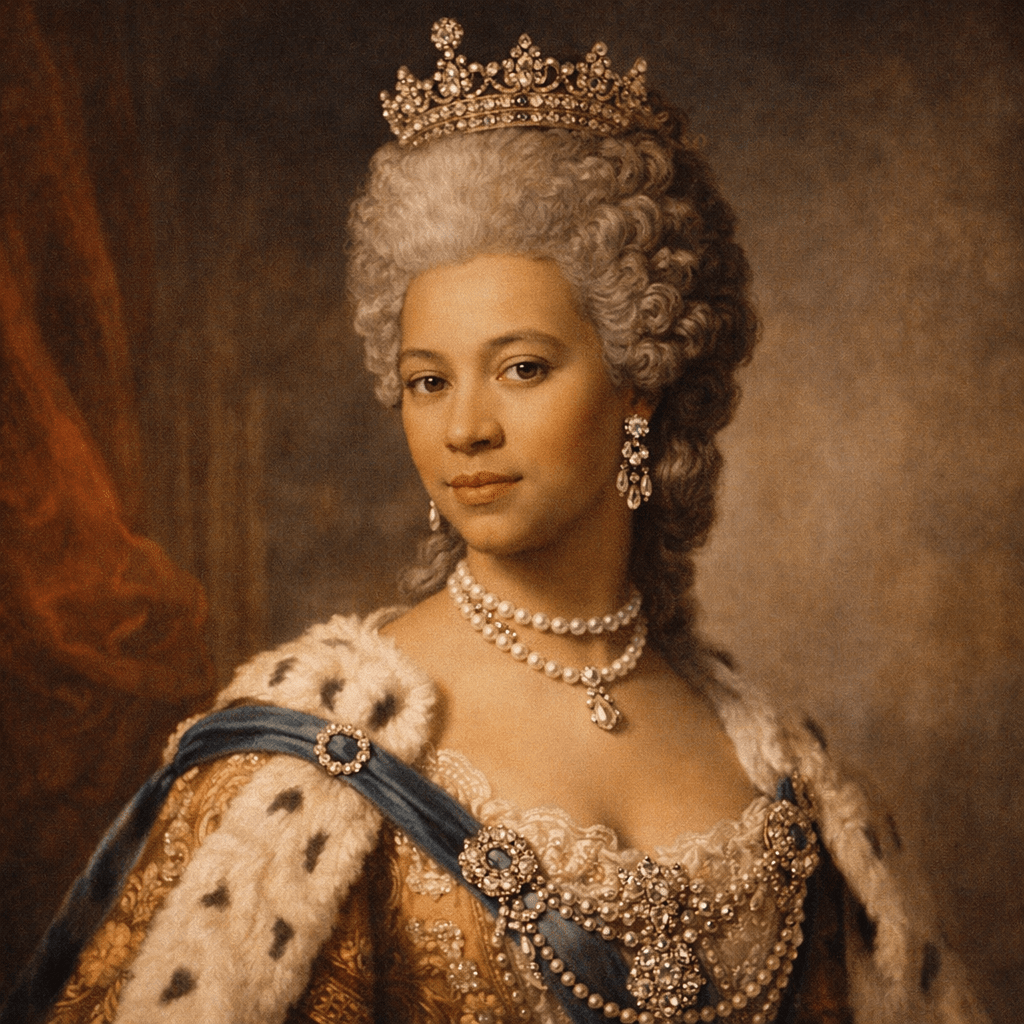
Queen Charlotte of Mecklenburg-Strelitz remains one of the most fascinating and contested figures in European royal history, particularly within discussions of Black presence in premodern Europe. While often portrayed in traditional British narratives as a conventional white European queen, growing historical scholarship and portrait analysis suggest that Charlotte may have been Britain’s first biracial monarch, with documented African ancestry embedded within her royal lineage.

Queen Charlotte of Mecklenburg-Strelitz was born in 1744 in the German duchy of Mecklenburg-Strelitz, a small but politically significant principality within the Holy Roman Empire. She married King George III of Great Britain in 1761 at the age of seventeen and immediately became Queen Consort of Great Britain and Ireland, later also Queen of Hanover.

Charlotte was the daughter of Duke Charles Louis Frederick of Mecklenburg-Strelitz and Princess Elisabeth Albertine of Saxe-Hildburghausen. Her family belonged to the minor German nobility, but through intermarriage with Iberian royal houses, her bloodline extended into Portuguese and Moorish ancestry. It is this lineage that forms the basis of arguments for her African heritage.

The strongest historical claim regarding Charlotte’s African ancestry comes from her descent from Margarita de Castro y Sousa, a noblewoman of the Portuguese royal court. Margarita herself was a descendant of King Afonso III of Portugal and Madragana, a Moorish woman described in historical documents as having African features and Muslim heritage. Through this line, Queen Charlotte inherited traceable African ancestry approximately fifteen generations back.

Portuguese royal records and genealogical studies show that Madragana was referred to as a “Moor” — a term used in medieval Europe for North African and sub-Saharan Africans, especially Muslims of African descent. This makes Charlotte genetically biracial by historical definition, even if diluted through centuries of intermarriage.

What makes Queen Charlotte particularly unique is not only her lineage, but how she was visually represented. Several contemporary portraits painted during her lifetime depict her with visibly African facial features: a broad nose, full lips, darker complexion, and tightly curled hair. Artists such as Allan Ramsay and Sir Thomas Lawrence painted Charlotte in ways that differed significantly from the idealized European beauty standards of the time.

Allan Ramsay, a known abolitionist, intentionally emphasized Charlotte’s African traits in his royal portraits. This was a political act, as Ramsay believed art could challenge white supremacist ideologies by showing Black presence in elite European spaces. His portraits stand in contrast to later revisions that whitened her appearance.

British society during the 18th century was deeply racialized, yet paradoxically fascinated by Blackness. While enslaved Africans existed in England, the presence of a biracial queen was never publicly acknowledged or celebrated. Instead, her African ancestry was quietly ignored, softened, or erased in official royal discourse.

Queen Charlotte herself never publicly claimed African identity, which would have been politically impossible in a monarchy built on white European supremacy. Her legitimacy depended on assimilation, not racial visibility. Thus, her Black ancestry existed as an unspoken truth hidden within aristocratic genealogy.

Despite this silence, many contemporaries commented on her appearance. Some British courtiers privately referred to her as having a “mulatto face,” while foreign diplomats described her features as “unusual for a German princess.” These coded racial descriptions reveal that her difference was noticed, even if never openly discussed.

Charlotte gave birth to fifteen children, making her the matriarch of modern European royal bloodlines. Through her descendants, African ancestry entered nearly every royal house in Europe, including the current British monarchy. This fact alone radically challenges the myth of racial purity in European royalty.

Her influence extended beyond race into culture, education, and abolitionist politics. She was a patron of Black composers, supported the education of poor children, and advocated for anti-slavery reforms through private influence on King George III.

Queen Charlotte’s story disrupts the dominant narrative that Black history exists only in Africa or the Americas. Her existence proves that Africans and their descendants have always been embedded in European power structures, even at the highest levels of monarchy.

Modern historians increasingly recognize Charlotte as a symbol of erased Black presence in European history. Her whitening in textbooks and portraits reflects a broader pattern of historical revisionism designed to maintain white exclusivity in narratives of power.

The popular television series Bridgerton did not invent the idea of a Black Queen Charlotte — it revived a truth long buried by racial politics. While dramatized, the concept is grounded in legitimate historical research.

Queen Charlotte stands today as a powerful reminder that Black history is not marginal, peripheral, or modern. It is ancient, royal, and deeply woven into the foundations of Western civilization itself.


References

Adams, G. (2019). The Queen’s Hidden Heritage: African Ancestry in the British Royal Family. Journal of Black Studies, 50(3), 234–251.

Ramsay, A. (1762–1780). Royal Portraits of Queen Charlotte. Royal Collection Trust.

Oliveira, M. (2008). Moorish Lineages in the Portuguese Royal House. Lisbon Historical Review.

Fryer, P. (1984). Staying Power: The History of Black People in Britain. Pluto Press.

Jeffries, S. (2018). “Was Queen Charlotte Black? The Real History Behind Bridgerton.” The Guardian.

BBC History. (2020). Queen Charlotte: Britain’s First Black Queen? British Broadcasting Corporation.

Royal Collection Trust. (2021). Queen Charlotte of Mecklenburg-Strelitz: Portraits and Legacy.

Black History: Madam C. J. Walker – The First Black Millionaire

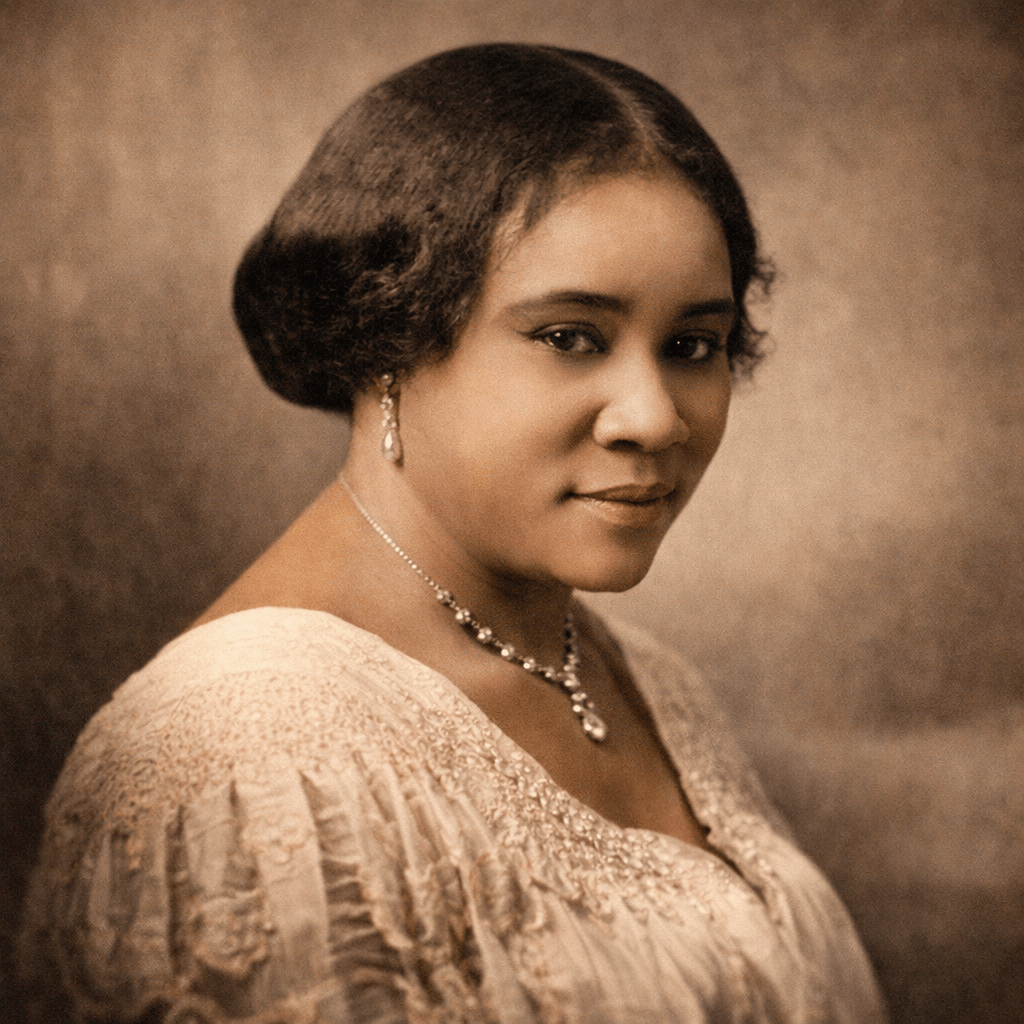
Madam C. J. Walker stands as one of the most extraordinary figures in American history, not only for her business success but for what she represented in an era defined by racial terror, gender exclusion, and economic apartheid. Born into the aftermath of slavery, Walker transformed personal hardship into a global enterprise that reshaped Black beauty culture and redefined what was possible for Black women in capitalism.

Madam C. J. Walker was born Sarah Breedlove in 1867 in Delta, Louisiana, the first child in her family born free after the Emancipation Proclamation. Orphaned by the age of seven, she grew up in extreme poverty, working in cotton fields and as a domestic laborer. Her early life reflected the harsh conditions of post-slavery Black America, where survival itself required resilience.

Walker married at fourteen to escape abuse in her sister’s home, becoming a widow by twenty with a young daughter to raise. She supported herself as a washerwoman, earning barely enough to live while enduring long hours of physical labor. This stage of her life exposed her to the brutal realities faced by Black women—low wages, limited education, and no access to economic mobility.

Her turning point came when she began losing her hair due to scalp diseases caused by poor hygiene conditions, harsh chemicals, and lack of proper hair care knowledge. Hair loss was common among Black women at the time, and there were no reliable products designed for their needs. What began as a personal crisis became the seed of a global industry.

Walker started experimenting with homemade formulas, drawing from folk remedies and early cosmetic chemistry. She eventually developed a scalp treatment that restored her hair and improved overall scalp health. Recognizing the demand, she began selling her products door to door, personally demonstrating their effectiveness to Black women.

She later married Charles Joseph Walker, a newspaper advertising salesman, and adopted the professional name Madam C. J. Walker. The title “Madam” was intentional, projecting authority, elegance, and European-style professionalism in a world that refused to see Black women as legitimate business leaders.

Walker’s most famous innovation was her hair care system, which included scalp ointments, shampoos, and hot-comb styling techniques. Contrary to modern misconceptions, her products were not designed to “make Black women white,” but to promote hair health, hygiene, and growth in an era where basic sanitation was inaccessible for many Black communities.

Her business exploded through a network of Black female sales agents known as “Walker Agents.” These women were trained not only in sales but in financial literacy, hygiene, public speaking, and self-presentation. For many, this was the first time they earned independent income, owned property, or traveled professionally.

Walker built factories, beauty schools, and salons across the United States, the Caribbean, and Central America. Her company employed thousands of Black women at a time when most corporations excluded them entirely. She created an alternative economic system inside a segregated society.

By 1910, she established her headquarters in Indianapolis, turning it into a Black industrial hub. The Madam C. J. Walker Manufacturing Company became one of the largest Black-owned businesses in the nation. Her success made her the first documented self-made Black female millionaire in American history.

Her wealth, however, was never purely personal. Walker was a radical philanthropist who funded Black schools, orphanages, civil rights organizations, and anti-lynching campaigns. She donated large sums to the NAACP, Tuskegee Institute, and Black churches across the country.

Walker used her platform to speak openly about racial violence, economic injustice, and women’s empowerment. She was not merely a beauty entrepreneur but a political figure who believed capitalism should serve liberation, not just profit.

Her daughter, A’Lelia Walker, inherited the business and expanded its cultural influence. A’Lelia became a major patron of the Harlem Renaissance, hosting salons that brought together artists, writers, musicians, and political thinkers. Their wealth became cultural infrastructure for Black intellectual life.

Walker’s legacy also reshaped beauty standards. She taught Black women that grooming and self-care were not signs of vanity but acts of dignity and resistance in a society that dehumanized them. Her message was radical: Black women deserved luxury, care, and self-respect.

She also redefined Black womanhood in business. At a time when women could not vote, and Black women were excluded from most professions, Walker owned property, controlled capital, managed factories, and employed thousands.

Walker died in 1919 at the age of 51, leaving behind an empire and a blueprint. Her funeral was attended by major civil rights leaders, including Booker T. Washington and Mary McLeod Bethune, confirming her status as not just a businesswoman but a historical force.

Her mansion, Villa Lewaro, became a symbol of Black wealth and architectural power in a nation that denied both. It was designed to showcase that Black success did not need to mimic whiteness but could exist on its own cultural terms.

Modern debates about hair politics, natural hair movements, and Black beauty industries all trace back to Walker’s foundational work. Every Black-owned beauty brand today stands on the infrastructure she built.

She proved that generational wealth could emerge from the margins, that Black women could control industries, and that capitalism could be weaponized for racial uplift.

Madam C. J. Walker’s true legacy is not just that she became rich, but that she taught thousands of Black women how to become free.


References

Bundles, A. (2001). On Her Own Ground: The Life and Times of Madam C. J. Walker. Scribner.

Bundles, A. (2015). Madam C. J. Walker: Entrepreneur. Chelsea House.

Gates, H. L., Jr. (2013). Life Upon These Shores: Looking at African American History, 1513–2008. Knopf.

Rooks, N. (1996). Hair Raising: Beauty, Culture, and African American Women. Rutgers University Press.

Walker, A. L. (1925). The Madam C. J. Walker Standard Beauty Manual. Madam C. J. Walker Manufacturing Company.

Hine, D. C., Hine, W. C., & Harrold, S. (2010). The African-American Odyssey. Pearson.

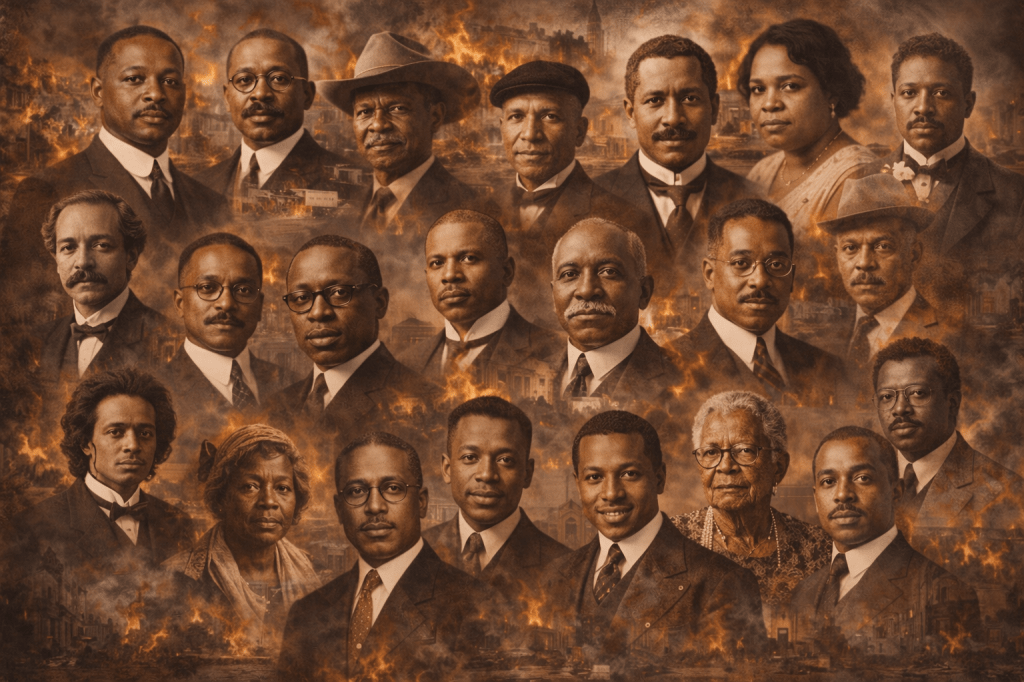
Black History: Black Millionaires They Tried to Erase from History.

In early 20th‑century America, Black entrepreneurs in segregated communities defied racism by generating unprecedented wealth. These men and women built thriving businesses, owned property, and created entire economic ecosystems — only to have their legacies diminished, erased, or violently destroyed by systemic racism and white supremacist violence.

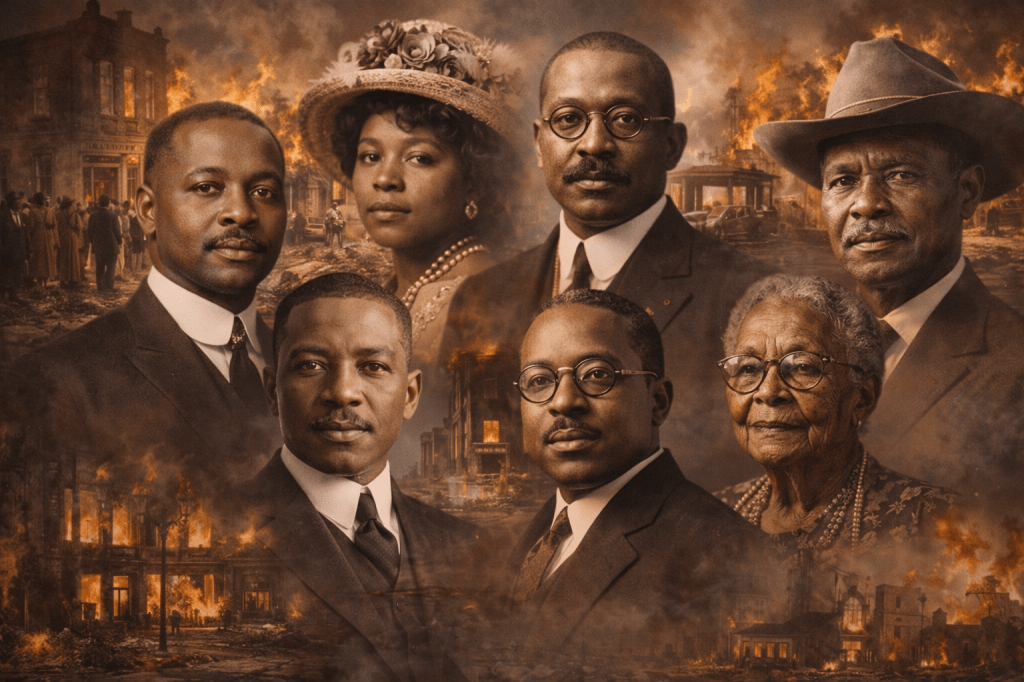
In Tulsa, Oklahoma, the Greenwood district — known as “Black Wall Street” — was one of the most remarkable examples of Black prosperity in American history. Founded by visionary Black businessmen and professionals, Greenwood became a symbol of independence, economic self‑sufficiency, and community resilience.

Among Greenwood’s earliest millionaires was O.W. Gurley, a real‑estate developer and entrepreneur. Born to formerly enslaved parents in Alabama, Gurley moved to Tulsa and purchased land designated for Black ownership. He built hotels, apartment buildings, a grocery store, and sponsored other local businesses, accumulating an estimated net worth that translated into the millions in today’s dollars.

Gurley’s success helped inspire others to invest in Greenwood. J.B. Stradford, another eminent figure, was the son of an emancipated slave who became a lawyer, real‑estate magnate, and hotelier. His crowning achievement was the Stradford Hotel, the largest Black‑owned hotel in the United States at the time. It offered luxury services equal to those in white Tulsa and hosted a thriving social life, attracting wealthy travelers and local elites.

John and Loula Williams were another Black power couple in Greenwood. They owned multiple businesses — including the Dreamland Theatre, a confectionary, and a rooming house — and became among the wealthiest Black residents. Loula was a partner in these ventures, showing how women also played central roles in building Black wealth.

Greenwood was far more than a collection of storefronts: it had its own bank, schools, hospital, newspaper, and even private transportation networks, all built and operated by Black entrepreneurs. The Tulsa Star, founded by A.J. Smitherman, became a prominent voice advocating civil rights, economic empowerment, and community solidarity.

Despite this economic miracle, Greenwood was targeted by white supremacists fearful of Black success. From May 31 to June 1, 1921, a white mob attacked the district in what is now known as the Tulsa Race Massacre, burning businesses, homes, and churches to the ground. Up to 300 Black residents were killed and roughly 1,200 homes destroyed. This coordinated assault erased generational wealth in a matter of hours.

The destruction of Greenwood exemplifies how racial violence was used to prevent Black Americans from maintaining wealth and influence. Millionaires like Gurley and Stradford lost everything; there was no restitution for survivors or descendants for decades. Their stories, once widely known locally, faded from mainstream historical memory.

Beyond Tulsa, there were other Black millionaires whose achievements were overshadowed or forgotten due to systemic racism. Jake Simmons Jr., an oilman from Oklahoma, became one of the most successful Black oil entrepreneurs in the mid‑20th century, partnering with major petroleum companies and opening opportunities in Africa’s energy sector. His rise showcased Black leadership in the global industry, yet his legacy remains underrecognized.

Black businesspeople in areas outside Tulsa also built considerable wealth during Jim Crow. In many segregated towns and cities, Black physicians, lawyers, educators, and merchants created thriving practices serving Black customers, generating stable incomes and propelling local economies. However, many were omitted from national business histories, minimized by the dominant narrative.

Black Millionaires Who Were Erased or Forgotten

  1. O.W. Gurley – Real estate developer and founder of Greenwood, Tulsa (“Black Wall Street”). Built hotels, grocery stores, and a thriving Black community before the Tulsa Race Massacre destroyed his fortune.
  2. J.B. Stradford – Lawyer and entrepreneur; owner of the Stradford Hotel, the largest Black-owned hotel in the U.S. before 1921. Lost property in the Tulsa Race Massacre.
  3. John and Loula Williams – Business power couple in Greenwood, owning multiple enterprises including theaters, confectionaries, and rooming houses.
  4. A.J. Smitherman – Publisher of the Tulsa Star, the influential newspaper in Greenwood that advocated Black economic empowerment and civil rights.
  5. Jake Simmons Jr. – Oklahoma oil tycoon and international businessman; instrumental in opening opportunities in Africa’s oil sector.
  6. Moses Austin – Early 19th-century businessman who invested in land and local enterprises; lesser-known due to records focusing on white counterparts.
  7. Paul Cuffe – African American entrepreneur and shipowner in the late 18th and early 19th centuries; financed Black migration to Sierra Leone and traded globally.
  8. Madam C.J. Walker – First female self-made millionaire in America through haircare and beauty products; her story was overshadowed for decades despite her philanthropy.
  9. Robert Reed Church – Memphis real estate mogul; accumulated wealth through investments and urban development in the post-Civil War South.
  10. Anthony Overton – Entrepreneur and publisher; owned the Overton Hygienic Company and the Chicago Bee newspaper.
  11. Alonzo Herndon – Founder of Atlanta Life Insurance Company; born enslaved and became one of the wealthiest Black men in the U.S.
  12. Norbert Rillieux – Inventor and businessman; revolutionized sugar refining and built wealth that was largely unrecognized in mainstream history.
  13. John H. Johnson – Founder of Johnson Publishing Company (Ebony, Jet); a 20th-century millionaire whose financial influence in media is often underappreciated.
  14. Viola Fletcher – Survivor and symbolic figure of Tulsa’s Greenwood, representing families who had generational wealth destroyed in the massacre.
  15. Samuel Coleridge-Taylor (U.S. connections) – Composer and businessman in music ventures; recognized in Europe but often omitted from U.S. economic history discussions.
  16. Mary Ellen Pleasant – Wealthy Black entrepreneur and philanthropist in San Francisco during the 19th century; aided civil rights causes but was historically obscured.
  17. Madison Jones – Oil and landowner in the early 20th century; wealth erased through discriminatory policies and lack of historical recognition.
  18. John Merrick – Founder of North Carolina Mutual Life Insurance Company; amassed wealth but is often only recognized regionally.
  19. Robert W. Johnson – Entrepreneur in early 1900s Chicago; built wealth in real estate and business before being written out of mainstream histories.
  20. Frederick McGhee – Lawyer and businessman; helped build economic infrastructure for Black communities in Minneapolis but largely forgotten in national narratives.

The erasure of these figures was not accidental. Throughout U.S. history, Black success has been met with legislative discrimination, economic exclusion, violence, and historical suppression. After the massacre, Greenwood’s rebuilt community prospered again for decades — only to be dismantled a second time in the mid‑20th century through “urban renewal” projects and highway construction that obliterated much of the neighborhood.

The consequences of this erasure persist. Without preservation and education about these Black millionaires, their contributions are excluded from textbooks, newspapers, and national consciousness. This has furthered false narratives that Black communities did not achieve economic success prior to the Civil Rights Movement.

Historians and activists today work to recover these stories, ensuring that Gurley, Stradford, the Williamses, Simmons, and many more are acknowledged as pioneers of Black wealth in America. Their legacy demonstrates profound resilience and innovation under adversity.

Black Wall Street’s destruction also disrupted generational wealth transfer; properties and businesses never regained their pre‑1921 value, and families were denied inheritance opportunities that could have sustained future prosperity.

In recent years, Tulsa has taken steps to confront its history. Reparations efforts, educational initiatives, and public memorialization aim to restore recognition for Greenwood’s lost entrepreneurs and honor survivors like Viola Fletcher, who testified about the massacre’s enduring impact.

The story of these Black millionaires is a reminder that racial oppression targeted not only individual lives but collective economic power. Their erasure from history reflects broader social resistance to acknowledging Black achievement.

Engaging with these histories allows for a more accurate understanding of American capitalism, one that includes both Black contributions and the violence used to undermine them.

Recognizing Black millionaires lost to history also challenges contemporary narratives about wealth, race, and opportunity, showing clearly that Black success was possible — and existed — long before today’s conversations about equity and inclusion.

These narratives also inspire modern generations of Black entrepreneurs, emphasizing the importance of legacy, community investment, and perseverance despite systemic barriers.

Understanding the erased histories of Black millionaires is vital not only for historical accuracy but for framing present discussions about wealth inequality, reparations, and racial justice in the United States.


References

National Geographic Society. (n.d.). Before the Tulsa Race Massacre, Black business was booming in Greenwood. National Geographic. https://www.nationalgeographic.com/history/history-magazine/article/before-tulsa-race-massacre-black-business-booming-greenwood

History.com Editors. (n.d.). 9 Entrepreneurs Who Helped Build Tulsa’s “Black Wall Street”. HISTORY. https://www.history.com/articles/black-wall-street-tulsa-visionaries

CNBC. (2020). What Is “Black Wall Street”? History of the community and its massacre. CNBC. https://www.cnbc.com/2020/07/04/what-is-black-wall-street-history-of-the-community-and-its-massacre.html

ABC7 New York. (n.d.). Tulsa Race Massacre: Story behind Black Wall Street destroyed by racist mob. https://abc7ny.com/tulsa-race-massacre-1921-black-wall-street-greenwood/10707747

Wikipedia contributors. (n.d.). Greenwood District, Tulsa. Wikipedia. https://en.wikipedia.org/wiki/Greenwood_District%2C_Tulsa

Wikipedia contributors. (n.d.). Jake Simmons. Wikipedia. https://en.wikipedia.org/wiki/Jake_Simmons

Wikipedia contributors. (n.d.). Viola Fletcher. Wikipedia. https://en.wikipedia.org/wiki/Viola_Fletcher

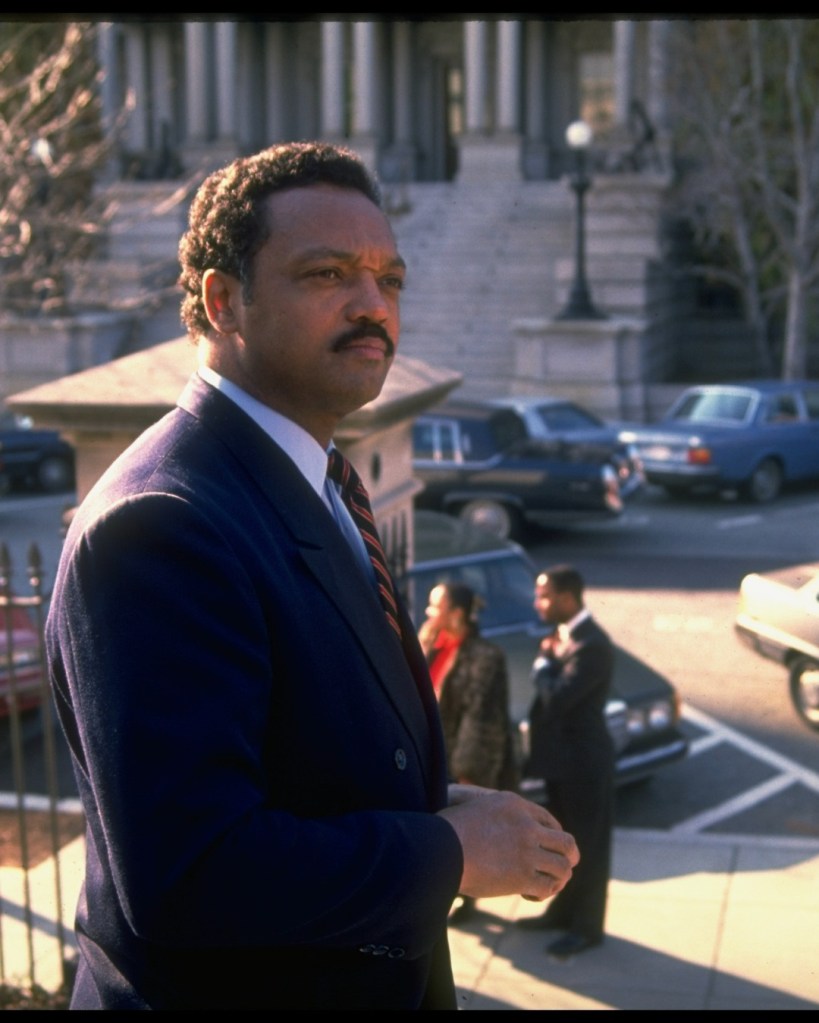
“Keep Hope Alive”: The Life, Legacy, and Impact of Jesse Jackson (1941–2026)

“I am somebody. I may be small, but I am somebody.” — Jesse Jackson

This photograph is the property of its respective owner. No copyright infringement is intended.

Jesse Louis Jackson, who passed away on February 17, 2026, at the age of 84, was a towering figure in American civil rights history. Born on October 8, 1941, in Greenville, South Carolina, Jackson grew up during the era of Jim Crow segregation. His early exposure to systemic racism deeply shaped his lifelong commitment to equality, justice, and empowerment for Black Americans.

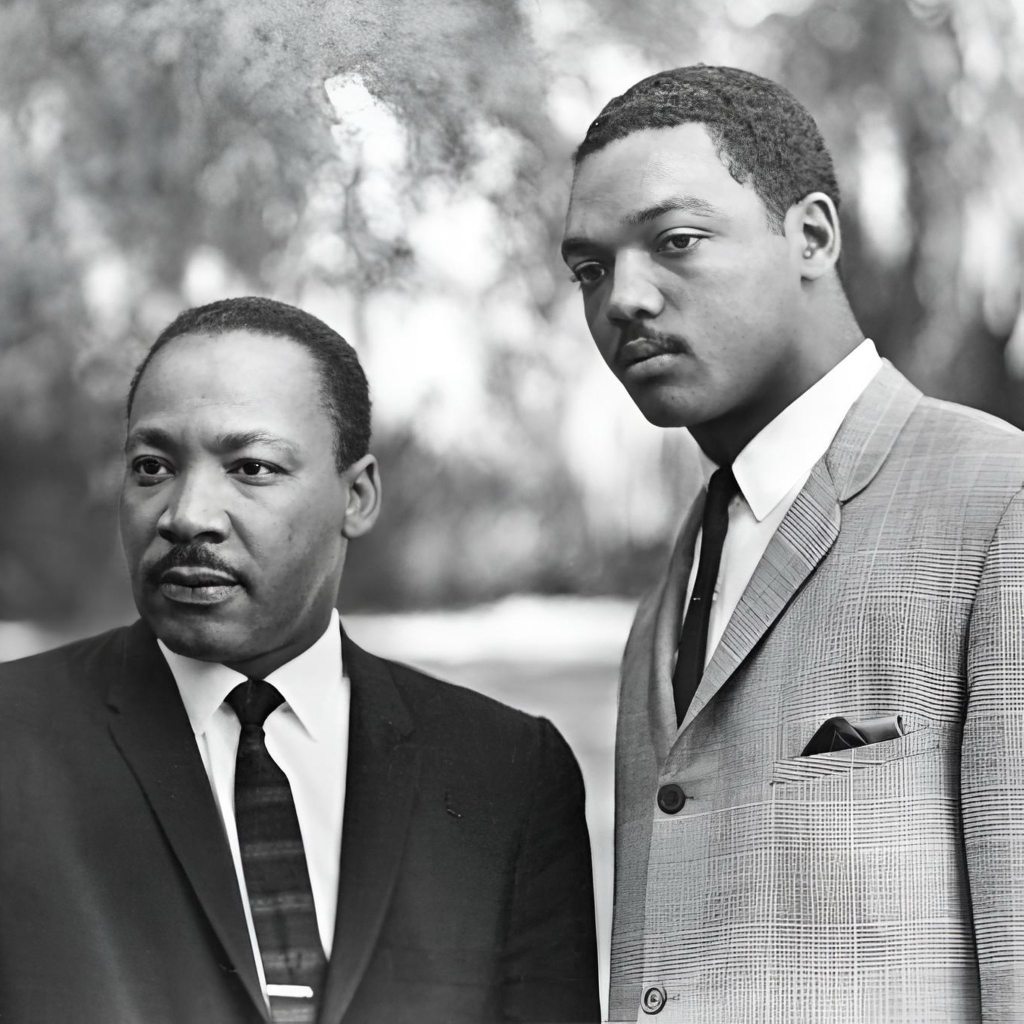
Jackson’s journey into activism began in the 1960s when he joined the Southern Christian Leadership Conference (SCLC), where he met Dr. Martin Luther King Jr. King recognized Jackson’s leadership potential, and Jackson later described those years as “a phenomenal four years of work” alongside King. Jackson was present in Memphis, Tennessee, when King was assassinated on April 4, 1968, and his close association with King further solidified his resolve to continue the civil rights movement.

This photograph is the property of its respective owner. No copyright infringement is intended.

Following King’s death, Jackson became a national leader, sustaining momentum in civil rights activism through voter registration drives, economic justice campaigns, and grassroots organizing. In 1971, he founded Operation PUSH (People United to Save Humanity) in Chicago to combat poverty, unemployment, and discrimination. PUSH later merged with the Rainbow Coalition to form Rainbow/PUSH, an organization dedicated to social justice, workplace diversity, and community empowerment.

Jackson’s advocacy was not limited to the United States. He engaged in international human rights work, negotiating the release of political prisoners and hostages, opposing apartheid in South Africa, and speaking on behalf of oppressed populations worldwide. His global activism reinforced his belief that the struggle for justice transcends borders.

Jackson also made a significant mark in politics. He ran for the Democratic presidential nomination in 1984 and 1988, energizing minority communities and introducing national discourse on civil rights, economic inequality, and foreign policy. His campaigns helped shape the political landscape for future generations of Black leaders.

A hallmark of Jackson’s activism was his ability to inspire with words and action. Phrases like “I am Somebody” and “Keep hope alive” became synonymous with his mission to uplift marginalized communities and foster dignity and self-worth among the oppressed.

Jackson’s faith played a central role in his work. As a Baptist minister, he linked spiritual responsibility with social action, framing activism as a moral imperative. His sermons, speeches, and writings consistently emphasized that justice and human rights were both ethical and spiritual obligations.

Education reform was another focus of Jackson’s advocacy. He fought for equitable funding, greater access to higher education, and programs supporting underprivileged youth. Jackson believed education was a key pathway to economic and social empowerment.

Throughout his career, Jackson also championed economic justice, challenging corporations to diversify workforces and increase opportunities for minority-owned businesses. He consistently used public advocacy and negotiation to create meaningful change.

Family was at the heart of Jackson’s life. He married Jacqueline Lavinia Brown Jackson, and together they raised six children, including Jesse Jackson Jr., who became a U.S. Congressman. Jackson emphasized the importance of instilling values of justice, community, and moral responsibility in his children.

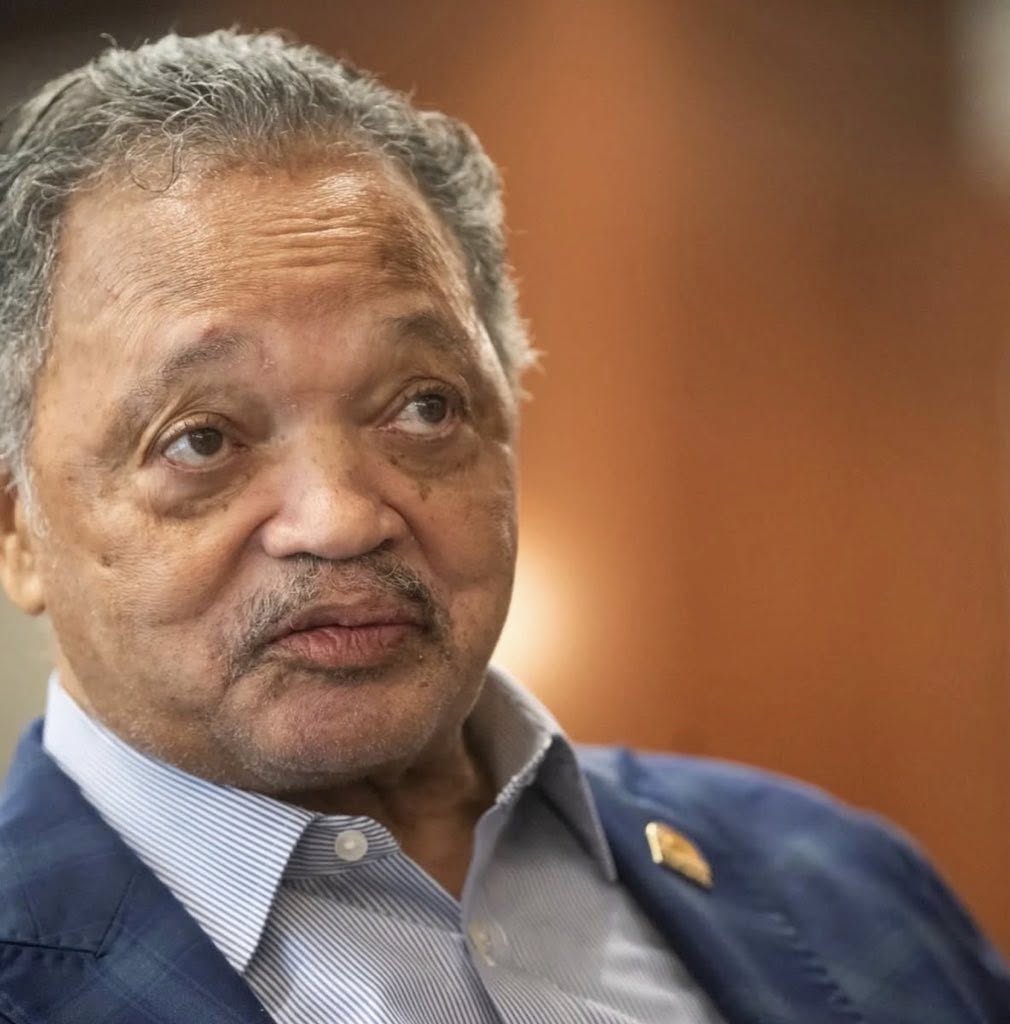
Jackson’s contributions earned him numerous awards, including the Presidential Medal of Freedom in 2000, the highest civilian honor in the United States. He was also recognized by the NAACP, the National Urban League, and faith-based organizations for his lifelong dedication to civil rights, social justice, and humanitarian efforts.

This photograph is the property of its respective owner. No copyright infringement is intended.

Despite facing criticism, political challenges, and health struggles, including progressive supranuclear palsy in his later years, Jackson remained active and engaged. He continued to mentor activists, inspire young leaders, and encourage civic participation until his final days.

Jesse Jackson’s life was a testament to resilience, faith-driven activism, and unwavering dedication to equality and human dignity. From his work alongside Martin Luther King Jr. to his global advocacy and political campaigns, Jackson left an indelible mark on history. His passing represents a profound loss, but his words, deeds, and legacy continue to inspire the fight for justice and the upliftment of marginalized communities worldwide.


References

Black History: Harlem Renaissance Icons

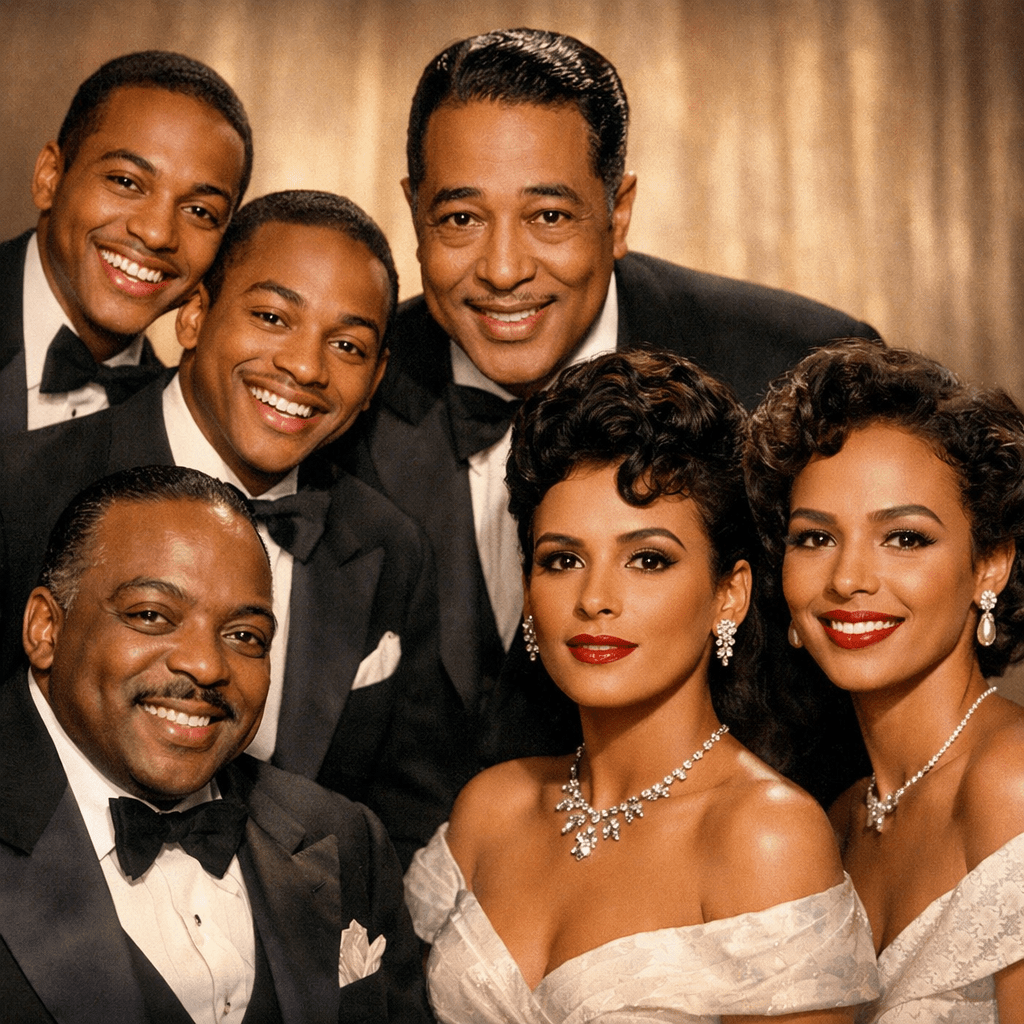
The Harlem Renaissance is often remembered as a golden age of Black brilliance, a period when music, theater, literature, and fashion converged into a global statement of cultural power. Yet behind the elegance, tuxedos, and spotlight glamour existed a harsher reality of emotional trauma, racial exploitation, violent relationships, and broken families. The icons of this era were not only cultural heroes but also human beings navigating fame inside a deeply racist society that consumed their talent while disregarding their humanity.

At the center of this world stood Duke Ellington, whose orchestra became the sound of Black sophistication. Ellington’s genius reshaped American music, elevating jazz into an art form worthy of concert halls and classical comparison. Yet his personal life reflected the era’s contradictions. Constant touring strained his marriage, and his emotional distance from his family mirrored a broader pattern among male entertainers whose careers required near-total devotion at the cost of intimacy and fatherhood.

Ellington’s rise was inseparable from the Cotton Club, a glamorous but deeply ironic institution. The club showcased the finest Black talent in America, yet barred Black patrons entirely, catering exclusively to wealthy white audiences. Black performers were celebrated on stage but segregated in the audience, reinforcing a system where Black excellence was profitable but Black dignity remained negotiable.

Another towering figure was Count Basie, whose Kansas City swing style brought raw energy and improvisation into the mainstream. Basie’s orchestra became legendary for its tight rhythms and blues-infused arrangements. Yet like many musicians of the era, Basie endured exhausting schedules, exploitative contracts, and a culture of heavy drinking, gambling, and infidelity that destroyed numerous marriages and family structures.

The Harlem Renaissance was not only sound but spectacle, and no performers embodied physical artistry more than the Nicholas Brothers. Fayard and Harold Nicholas stunned audiences with gravity-defying acrobatics and revolutionary tap technique. Their performances symbolized Black excellence at its most athletic and joyful, yet Hollywood consistently limited them to specialty acts, cutting their scenes from films to avoid placing Black men too centrally in white narratives.

One of the most significant cultural artifacts of the era was the film Stormy Weather, a rare Hollywood production centered entirely on Black performers. The film showcased Lena Horne, Bill Robinson, and the Nicholas Brothers, and became a landmark in Black cinematic history. Its impact was both empowering and bittersweet, as it represented possibility within an industry that still refused to grant Black actors complex, romantic, or authoritative roles.

At the emotional core of Harlem glamour stood Lena Horne, whose beauty and voice made her one of the first Black women marketed as a global sex symbol. Horne broke color barriers in Hollywood but paid a severe psychological price. She faced constant racism, was prohibited from romantic scenes with white actors, and lived under surveillance from studios that feared interracial desire more than injustice.

Horne’s personal life exposed even deeper wounds, particularly her relationship with Joe Louis, the most famous Black athlete in the world at the time. Their affair was passionate but devastating. Louis repeatedly cheated on Horne, humiliating her publicly and reinforcing a pattern of emotional abandonment that haunted many Black women whose partners were consumed by fame, ego, and unhealed trauma.

The image of Black male celebrity during this era was often violent beneath the surface. Many stars engaged in domestic abuse, alcoholism, and emotional neglect, behaviors rooted in unresolved rage from racism, poverty, and emasculation. Fame did not heal these wounds; it amplified them, turning private pain into public dysfunction and generational trauma.

Another tragic icon was Dorothy Dandridge, the first Black woman nominated for an Academy Award for Best Actress. Dandridge’s beauty made her famous, but her vulnerability made her exploitable. She endured abusive relationships, financial mismanagement, studio manipulation, and the emotional devastation of raising a daughter with severe disabilities while being denied meaningful roles.

Dandridge’s love life was marked by violent men, emotional instability, and betrayal. She was beaten by partners, financially drained by managers, and psychologically crushed by Hollywood’s rejection. Her story represents how Black women were hypersexualized, commodified, and discarded once their youth or novelty faded.

Beneath the elegance of Harlem nightlife existed a culture of physical violence, emotional neglect, and fractured families. Many entertainers fathered children they barely raised, leaving behind single mothers and emotionally abandoned sons and daughters. These children grew up in the shadow of famous names but without stability, guidance, or protection.

The psychological toll of passing, colorism, and racial performance also shaped these lives. Lighter-skinned stars like Lena Horne and Dorothy Dandridge were promoted more aggressively, reinforcing internal hierarchies within the Black community itself. Darker-skinned performers were often excluded from leading roles, feeding cycles of resentment, insecurity, and identity conflict.

The Harlem Renaissance thus produced not only artistic revolutions but psychological casualties. Many stars self-medicated through alcohol, drugs, gambling, and sex. The pressure to represent an entire race while being denied full humanity created emotional contradictions that manifested as addiction, narcissism, and relational dysfunction.

Even male icons like Duke Ellington and Count Basie struggled with emotional availability. Their dedication to craft demanded emotional withdrawal from family life. The myth of the brilliant Black genius often came paired with the reality of absent fathers and emotionally distant husbands.

The Cotton Club itself symbolized this contradiction perfectly. Black bodies created white pleasure, Black culture generated white profit, and Black suffering remained invisible behind velvet curtains and champagne glasses. Harlem glittered, but it was built on structural inequality.

The Nicholas Brothers, despite their brilliance, were never allowed narrative depth. They were celebrated for physicality but denied psychological complexity, reinforcing a stereotype of Black men as entertainers rather than thinkers, lovers, or leaders.

Stormy Weather remains iconic because it briefly shattered that ceiling, allowing Black performers to exist without white intermediaries. Yet even that film existed as an exception, not a new rule.

The legacies of Lena Horne and Dorothy Dandridge reveal how Black women paid the highest emotional price for proximity to fame. Their bodies were adored, their souls neglected, and their pain silenced beneath glamour.

Joe Louis represents the darker side of Black male hero worship, where athletic power replaced emotional maturity, and fame excused infidelity, neglect, and misogyny.

Ultimately, the Harlem Renaissance was not only a cultural awakening but a psychological battlefield. These icons were pioneers navigating fame inside a system designed to exploit them, isolate them, and emotionally fracture them.

Their stories remind us that Black excellence has always coexisted with Black suffering, and that beauty, talent, and legacy do not erase trauma. Behind the tuxedos, stage lights, and platinum records were slashed emotions, broken homes, and souls trying to survive history itself.


References

Bogle, D. (2016). Toms, Coons, Mulattoes, Mammies, and Bucks: An Interpretive History of Blacks in American Films. Bloomsbury Academic.

Cohen, H. G. (2010). Duke Ellington’s America. University of Chicago Press.

Giddins, G. (2014). Visions of Jazz: The First Century. Oxford University Press.

Horne, L. (2018). Lena: A Personal and Professional Biography. Da Capo Press.

Lewis, D. L. (2004). When Harlem Was in Vogue. Penguin Books.

Shipton, A. (2007). A New History of Jazz. Continuum.

Dandridge, D. (1999). Everything and Nothing: The Dorothy Dandridge Story. Hyperion.

Bogle, D. (2001). Dorothy Dandridge: A Biography. Amistad.

Erenberg, L. A. (1981). Steppin’ Out: New York Nightlife and the Transformation of American Culture. Greenwood Press.

Black History: Ebony, Jet, Negro Digest, Ebony Fashion Fair & Fashion Fair Cosmetics.

Building the Black Standard of Beauty, Intelligence, and Power.

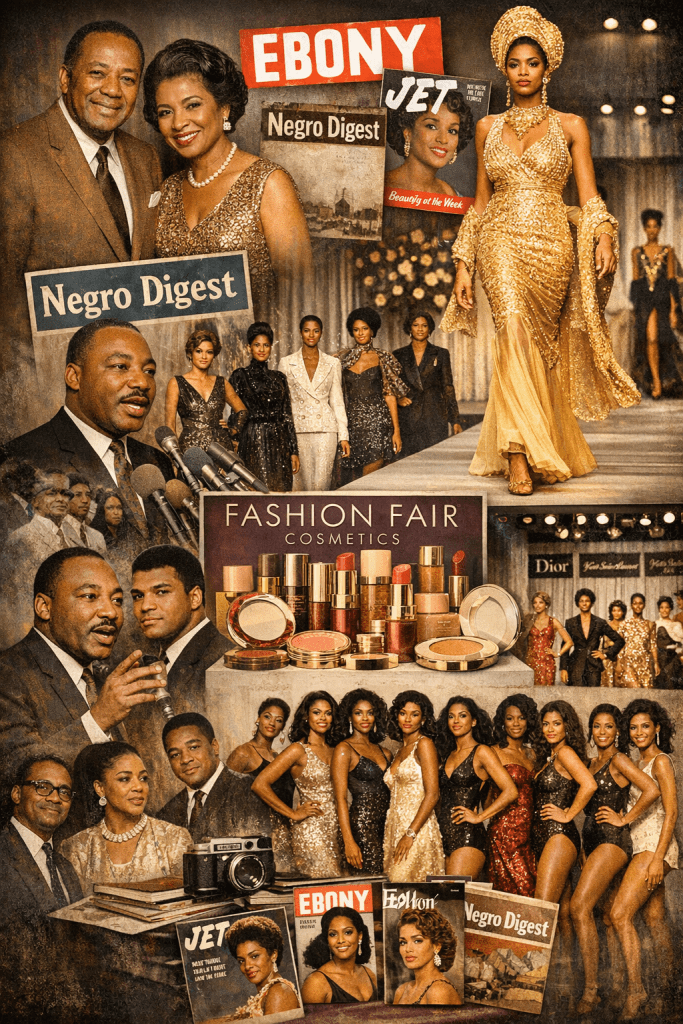
The story of Ebony, Jet, Negro Digest, Ebony Fashion Fair, and Fashion Fair Cosmetics represents one of the most important cultural revolutions in Black history. These institutions did far more than publish magazines or sell beauty products; they created a complete Black world—one in which Black people could finally see themselves reflected with dignity, intelligence, luxury, and divine beauty. At a time when American society systematically erased or distorted Black identity, this media and beauty empire boldly declared that Black people were not inferior, invisible, or marginal, but central to history, culture, and global excellence.

This revolutionary movement was founded by John H. Johnson, one of the most influential Black businessmen and publishers in American history. Born in 1918 in Arkansas and raised in Chicago, Johnson understood that representation was not simply about images, but about psychological power. In 1942, he launched the Johnson Publishing Company, which would grow into the largest Black-owned publishing company in the world. Johnson believed that Black people needed more than civil rights; they needed cultural authority, self-definition, and platforms that affirmed their humanity.

Standing alongside him was his wife, Eunice Johnson, a visionary entrepreneur, fashion editor, and cultural architect. Eunice Johnson was not merely a supportive spouse—she was the creative engine behind the Black beauty and fashion revolution. As the fashion director of Ebony, she reshaped how Black women were represented in style, luxury, and global elegance. Together, the Johnsons did something unprecedented in American history: they created a complete Black cultural mirror, one that allowed Black people to see themselves not through the distorted lens of racism, but through their own truth.

Founded in 1945, Ebony was created as the Black answer to Life magazine. Its mission was simple yet radical—to portray Black people as successful, educated, cultured, and aspirational. Ebony featured Black doctors, lawyers, professors, entrepreneurs, and political leaders. It showcased Black families, marriages, homes, and generational wealth. It highlighted African royalty, global Black leadership, and diasporic excellence. At a time when mainstream media associated Blackness with poverty, crime, and pathology, Ebony unapologetically presented Black affluence, Black intellect, and Black dignity. The magazine created what can be described as a visual theology of Black excellence, teaching Black people that they belonged in luxury, history, and greatness.

In 1951, Johnson expanded this vision with the launch of Jet, known as The Weekly Negro News Digest. Smaller in size but massive in cultural impact, Jet became the visual pulse of Black America. It documented the Civil Rights Movement in real time, including police brutality, racial violence, and social injustice that mainstream media often ignored. It also celebrated everyday Black life—weddings, graduations, church events, and community milestones—proving that Black life was worthy of documentation and historical memory.

One of Jet’s most powerful contributions was its iconic “Beauty of the Week” feature. This single section revolutionized global beauty standards by consistently centering Black women of every complexion, body type, and background. Dark-skinned women, light-skinned women, natural hair, Afro-textured beauty—Jet made visible what the world had erased. Long before diversity became a marketing trend, Jet declared that Black women were not exceptions to beauty, but the standard of beauty itself.

Before Ebony and Jet, Johnson also launched Negro Digest, later renamed Black World. This publication became the intellectual backbone of Black consciousness in America. Negro Digest published Black scholars, historians, theologians, and political thinkers who addressed African history, racism, colonialism, Pan-Africanism, and Black psychology. It served as a philosophical and political platform during the rise of Black Power and global liberation movements. Through Negro Digest, Johnson proved that Black media was not only aesthetic, but deeply intellectual and revolutionary—it nurtured the Black mind.

Across all these platforms, a single unspoken message echoed powerfully: “Look at Black people.” Not as slaves. Not as criminals. Not as stereotypes. But as stylish, educated, intelligent, wealthy, cultured, and global. These publications functioned as psychological counter-propaganda to white supremacy. They repaired centuries of racial misrepresentation by producing positive Black mirrors. They did not simply inform Black audiences; they healed identity and reprogrammed self-perception.

One of the most extraordinary extensions of this cultural revolution was the creation of the Ebony Fashion Fair, founded by Eunice Johnson in 1958. The Ebony Fashion Fair was a traveling luxury fashion show that brought Paris haute couture directly into Black communities across America. For the first time in U.S. history, Black women exclusively modeled designs from elite fashion houses such as Dior, Givenchy, and Yves Saint Laurent. At a time when the fashion industry was segregated and excluded Black models, Eunice Johnson forced global fashion to recognize Black women as symbols of elegance, luxury, and high culture. Ebony Fashion Fair transformed churches, auditoriums, and community centers into international runways, allowing Black audiences to see themselves as part of the global elite.

Out of Ebony Fashion Fair emerged one of the most important Black-owned beauty companies in history: Fashion Fair Cosmetics. Founded in 1973 by Eunice Johnson, Fashion Fair became the largest and most successful Black-owned cosmetics brand in the world. It was created because mainstream cosmetic companies refused to make products for darker skin tones. Fashion Fair developed foundations, powders, and lipsticks specifically for Black undertones and deep complexions. It was sold in major department stores such as Macy’s and became the official makeup brand for Black models and professional fashion shows.

For the first time, Black women could walk into luxury retail spaces and find makeup designed for their skin—not approximations of whiteness, but products made with Black beauty in mind. Fashion Fair Cosmetics sent a revolutionary message: Black women did not need to lighten, hide, or dilute their appearance. They were not a niche market. They were the standard.

Together, Ebony, Jet, Negro Digest, Ebony Fashion Fair, and Fashion Fair Cosmetics created the most powerful Black cultural ecosystem in modern history. This empire produced Black news, Black beauty, Black fashion, Black intellect, Black luxury, and Black self-worth. It set global beauty standards, built Black middle-class identity, preserved Black historical memory, created Black celebrity culture, and rewired Black self-esteem.

Ebony: The Black Answer to Life Magazine

Founded in 1945, Ebony was created to showcase Black people the way white magazines showcased white America—successful, educated, aspirational, and human. Ebony featured:

  • Black doctors, lawyers, professors, and CEOs
  • Black families, marriages, and generational wealth
  • African royalty and global Black leaders
  • Black entertainers, scholars, and activists

At a time when Blackness was associated with poverty and pathology, Ebony portrayed Black affluence, Black intellect, and Black excellence. It created the visual theology of the Black middle and upper class.

The unspoken message was radical:
Black people belong in history, luxury, and greatness.


Jet: The Visual Pulse of Black America

Founded in 1951, Jet became the heartbeat of Black America. Known as The Weekly Negro News Digest, Jet documented Black life in real time:

  • Civil Rights Movement coverage
  • Police brutality and racial injustice
  • Black celebrities and athletes
  • Weddings, graduations, and community milestones

One of Jet’s most revolutionary contributions was “Beauty of the Week.” This single feature redefined global beauty standards by consistently centering Black women of all shades, textures, and body types—long before diversity was fashionable.

Dark-skinned women, light-skinned women, natural hair, Afro-textured beauty—Jet said to the world:
Black women are the beauty standard.


Negro Digest: The Black Intellectual Renaissance

Before Ebony and Jet, Johnson launched Negro Digest, later renamed Black World. This magazine became the intellectual backbone of Black consciousness.

It published:

  • Black scholars and theologians
  • African historians and Pan-African thinkers
  • Writers on racism, colonialism, and psychology
  • Political philosophy and liberation theology

Negro Digest proved that Black media was not just visual—it was philosophical, theological, and revolutionary. It nurtured the Black mind.


“Look at Black People”: Reprogramming the Black Image

Across all Johnson platforms, one message echoed loudly:

Look at Black people.

Not as slaves.
Not as criminals.
Not as stereotypes.

But as:

  • Stylish
  • Intelligent
  • Educated
  • Wealthy
  • Global
  • Elegant

This media empire functioned as counter-propaganda to white supremacy. It repaired the psychological damage of racism by showing Black people who they really were.

These publications didn’t just inform—they healed identity.


Ebony Fashion Fair: Black Models, Global Luxury

One of Eunice Johnson’s greatest achievements was the creation of the Ebony Fashion Fair, a traveling luxury fashion show that brought Paris couture directly into Black communities.

For the first time in American history:

  • Black women modeled Dior, Givenchy, and Yves Saint Laurent
  • Black audiences saw luxury on Black bodies
  • Black beauty entered the global elite fashion world

This was revolutionary. In a segregated fashion industry that excluded Black models, Eunice Johnson forced haute couture to recognize Black women as luxury incarnate.

She didn’t just put Black women in fashion—
She placed Black women at the center of global elegance.


Fashion Fair Cosmetics: The Largest Black-Owned Beauty Brand

Out of Ebony Fashion Fair emerged one of the most important Black-owned companies in beauty history: Fashion Fair Cosmetics.

Founded in 1973 by Eunice Johnson, Fashion Fair became the largest and most successful Black-owned cosmetics brand in the world. It was created because mainstream brands refused to make makeup for darker skin tones.

Fashion Fair:

  • Created foundations for deep complexions
  • Produced lipsticks and powders for Black undertones
  • Sold in major department stores like Macy’s
  • Served professional Black models and everyday women

For the first time, Black women could walk into luxury stores and find makeup designed for their skin—not approximations of whiteness.

Fashion Fair Cosmetics told Black women:

You do not need to lighten, hide, or dilute your beauty.
You are the market. You are the standard.


The Greatest Black Media Empire Ever Created

Together, Ebony, Jet, Negro Digest, Ebony Fashion Fair, and Fashion Fair Cosmetics created a complete Black ecosystem:

  • Black news
  • Black beauty
  • Black fashion
  • Black intellect
  • Black luxury
  • Black self-worth

This empire:

  • Set global Black beauty standards
  • Built Black middle-class identity
  • Preserved Black historical memory
  • Created Black celebrity culture
  • Rewired Black self-esteem

These institutions functioned as:

  • Cultural archives
  • Psychological liberation tools
  • Visual theology of Black excellence

John H. Johnson and Eunice Johnson did not just build magazines and makeup brands.
They reprogrammed Black consciousness.

They taught generations of Black people how to see themselves:
Not through white validation.
Not through colonial distortion.
But through Black truth, Black dignity, and Black divine beauty.

These institutions were not merely businesses; they were cultural liberation tools, psychological healing systems, and visual archives of Black greatness. John H. Johnson and Eunice Johnson did not simply build magazines and makeup brands. They built a Black world within a society that tried to erase Black humanity. They taught generations of Black people how to see themselves—not through white validation, colonial distortion, or racist ideology—but through Black truth, Black dignity, and Black divine beauty.

This was not just media.
This was nation-building.

References

Johnson, J. H. (1989). Succeeding against the odds. Warner Books.

Autobiography of John H. Johnson detailing the founding of Johnson Publishing, Ebony, and Jet, including philosophy of Black representation.

Johnson, E. (2003). Ebony fashion fair: 50 years of style. Johnson Publishing Company.

Primary source on the history, mission, and cultural impact of Ebony Fashion Fair, written by Eunice Johnson herself.

Smith, J. L. (2004). Becoming something: The story of Ebony magazine. Northwestern University Press.

Scholarly history of Ebony’s role in shaping Black middle-class identity and visual culture.

Byrd, R. P., & Gates, H. L. Jr. (2009). The Black intellectual tradition. Harvard University Press.

Context for Negro Digest and Black World as intellectual platforms.

Davis, A. Y. (2016). Freedom is a constant struggle: Ferguson, Palestine, and the foundations of a movement. Haymarket Books.

Used for cultural and political framing of Black media as resistance.

Weems, R. E. (1998). Desegregating the dollar: African American consumerism in the twentieth century. New York University Press.

Key academic text on Black-owned businesses, including Johnson Publishing and Fashion Fair Cosmetics.

Walker, S. (2002). Style and status: Selling beauty to African American women, 1920–1975. University Press of Kentucky.

Scholarly source on Black beauty culture and cosmetics history.

Craig, M. L. (2002). Ain’t I a beauty queen? Black women, beauty, and the politics of race. Oxford University Press.

Supports analysis of Jet’s “Beauty of the Week” and Black beauty standards.

Bennett, J. (2015). Being property once myself: Blackness and the end of man. Harvard University Press.

Theoretical grounding for psychological impact of representation.

Hine, D. C., Hine, W. C., & Harrold, S. (2014). The African American odyssey (6th ed.). Pearson.

General Black history reference supporting media, civil rights, and cultural institutions.

National Museum of African American History and Culture. (n.d.). Ebony and Jet magazines collection. Smithsonian Institution.

Archival institutional source confirming historical importance and preservation.

The Slave Files: Harriet Tubman & Frederick K.C. Douglass

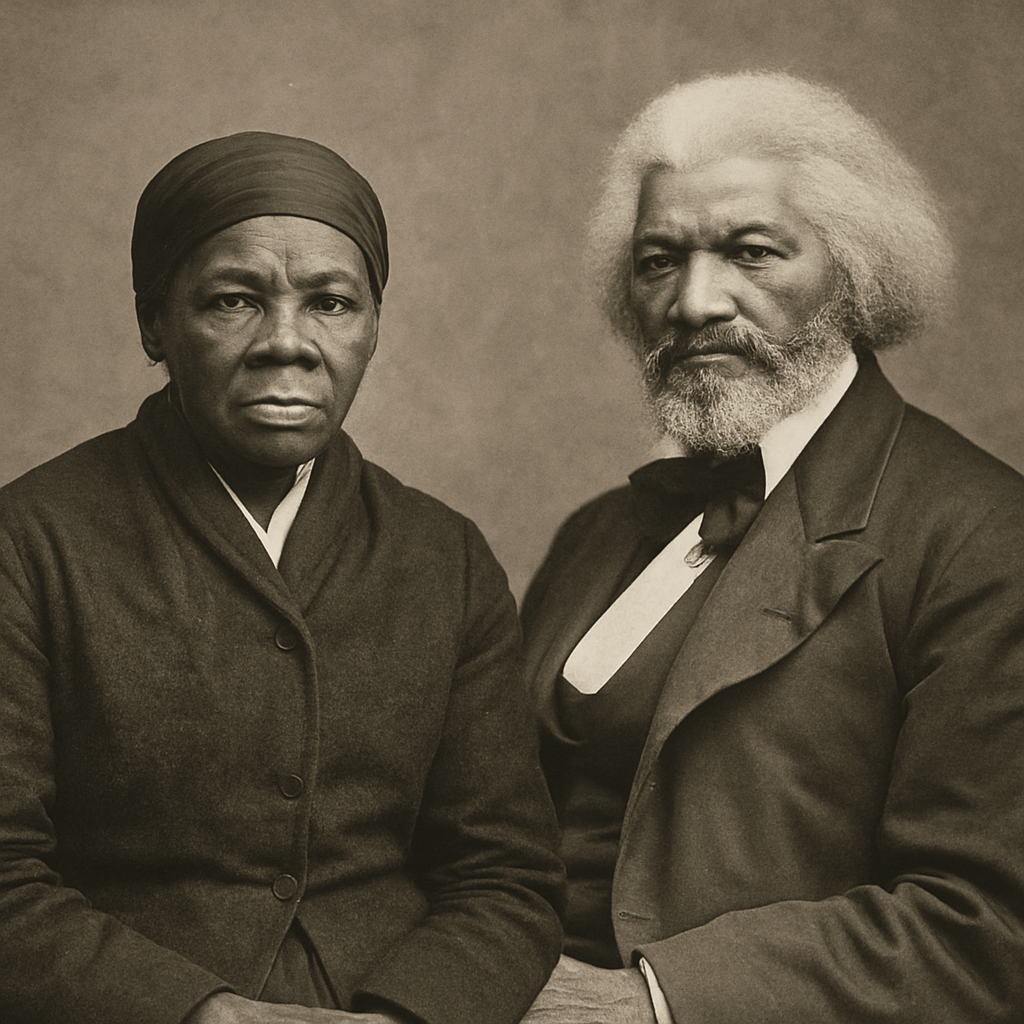
Harriet Tubman and Frederick K.C. Douglass remain towering figures in the memory of the enslaved, the emancipated, and the freedom-seeking. Their lives, though emerging from the same soil of Maryland slavery, unfolded into two complementary wings of liberation—one leading people through the hidden corridors of the night, the other leading a nation through the piercing clarity of truth. Their testimonies stand as a sacred record, binding faith, intellect, and courage into an enduring legacy.

Harriet Tubman was born Araminta Ross around 1822 on the Brodess plantation in Dorchester County, Maryland. Her parents, Benjamin Ross and Harriet “Rit” Green, were enslaved but deeply spiritual, planting in her a sense of identity that no system could break. Tubman was one of nine children, and she experienced the trauma of family separation early, watching her sisters being sold away. This fear of fragmentation shaped her later work—freedom meant nothing unless her family could share it.

Frederick K.C. Douglass entered the world in February 1818 as Frederick Augustus Washington Bailey. He was born in Talbot County, Maryland, to Harriet Bailey, an enslaved woman, and likely to a white father whose identity he was never officially told. He saw his mother only a handful of times before her death, forming a childhood built on absence and longing. These early wounds sharpened his understanding of slavery’s psychological violence.

Tubman married John Tubman, a free Black man, in 1844. Their marriage was strained—her desire for freedom clashed with his fear of risking his own status. When she escaped in 1849, he refused to join her. Later, she remarried Nelson Davis, a Civil War veteran, with whom she shared a quiet companionship in her later years. Though Tubman had no biological children, she adopted a daughter, Gertie, whom she raised with fierce devotion.

Douglass married Anna Murray, a free Black woman from Baltimore who played a crucial role in his escape. She saved money, supplied clothing, and believed in his potential long before the world acknowledged it. Together, they had five children: Rosetta, Lewis Henry, Frederick Jr., Charles Remond, and Annie (who died young). After Anna’s passing in 1882, Douglass later married Helen Pitts, a white abolitionist and intellectual, in a union that stirred controversy but reflected his unwavering belief in human equality.

Harriet Tubman’s education came not from books but from the wilderness, the stars, and the whispers of enslaved elders. She mastered the marshlands, the seasonal rhythms, herbal medicine, and spiritual discernment. Her literacy was in intuition, geography, and divine communication—skills that would later guide hundreds to freedom. Her “visions,” often linked to the head injury she suffered as a teen, became her compass in moments when logic alone could not ensure survival.

Douglass’s education was both miraculous and dangerous. Sophia Auld, the wife of his enslaver, began teaching him the alphabet before being ordered to stop. That prohibition ignited his hunger for knowledge. Douglass secretly traded bread for reading lessons among white boys and devoured abolitionist newspapers. Literacy became his key to mental emancipation, and later, his primary weapon in dismantling slavery’s ideological chains.

Harriet Tubman’s work on the Underground Railroad made her the most successful conductor in its history. The Railroad was not a literal railway but a clandestine network of safe houses, coded messages, abolitionist allies, free Black communities, and courageous fugitives. Tubman led at least thirteen missions into slave territory, rescuing family members, neighbors, and strangers. Her methods were sophisticated: timing journeys during winter when nights were long, using the North Star as direction, employing disguises, carrying a pistol for protection, and trusting her spiritual instincts. She never lost a single passenger.

Frederick K.C. Douglass supported the Underground Railroad from a different position. His home in Rochester, New York, became a major station, sheltering more than 400 fugitive slaves. His newspaper, The North Star, spread vital information about abolitionist efforts, and his speeches raised funds for escape missions. While Tubman moved bodies through forests and swamps, Douglass moved minds across continents.

Tubman’s Civil War contributions remain some of the most historically overlooked achievements of any American figure. She served as a nurse, spy, scout, and strategist for the Union Army. Her greatest achievement—the Combahee River Raid of 1863—freed more than 700 enslaved people in a coordinated military operation she helped plan and lead. Tubman became the first woman in U.S. history to command a military assault.

Douglass, too, played a critical role during the war. He met with Abraham Lincoln multiple times, urging equal pay for Black soldiers, fair treatment for the United States Colored Troops, and full citizenship for freedmen. His sons Lewis and Charles served in the 54th Massachusetts Regiment, embodying the family’s multi-generational commitment to liberation.

Tubman received honors in her later years, though far fewer than she deserved. She became a symbol of heroism, receiving recognition from women’s suffrage leaders like Susan B. Anthony and from Black communities nationwide. Today, schools, battleships, monuments, and proposed currency designs bear her name. Her later life was devoted to community building, including establishing the Harriet Tubman Home for the Aged in Auburn, New York.

Douglass’s list of awards and honors is extensive. He became U.S. Marshal for the District of Columbia, Recorder of Deeds, and U.S. Minister Resident to Haiti. Colleges and cities honored him, and international leaders sought his counsel. He was one of the most photographed men of the 19th century—a deliberate strategy to combat racist imagery.

Harriet Tubman’s final years were marked by illness, poverty, and continued generosity. She died in 1913 surrounded by friends and family, reportedly saying, “I go to prepare a place for you.” Frederick Douglass died in 1895 after attending a women’s rights meeting, his voice still committed to justice until his last breath.

Together, these two figures reveal the full architecture of liberation: Tubman’s embodied courage and Douglass’s intellectual fire. One delivered people from bondage by the movement of her feet, the other by the movement of his words. One freed the body; the other freed the mind. Both shattered the idea that enslaved people were powerless.

Their stories—intertwined yet unique—remain essential chapters in the history of Black resistance. Through them, we learn that freedom is neither a gift nor an accident; it is a choice, a strategy, and a sacrifice. The Slave Files preserve their testimony so that future generations might understand the cost of freedom and the magnitude of their courage.

Harriet Tubman and Frederick K.C. Douglass stand as two of the most luminous figures in the long night of American slavery. Their lives, though shaped by brutality, testify to a divine strength that transcended chains, ignorance, and fear. Together, they represent a dual legacy—one of action and one of articulation; one who liberated through movement, and one who liberated through speech. Their stories continue to ignite the moral imagination of generations seeking freedom.

Tubman and Douglass were born into the same system but carved remarkably different paths. Tubman, born Araminta Ross in Maryland, would grow into the most revered conductor of the Underground Railroad. Douglass, born Frederick Bailey, would rise from the plantations of Maryland’s Eastern Shore to become one of the greatest orators and writers in American history. Though shaped by the same soil, they blossomed into distinct instruments of liberation.

Harriet Tubman’s early years were marked by violence that left permanent scars. A blow to her head from a heavy iron weight resulted in seizures, visions, and intense headaches that accompanied her throughout her life. Yet Tubman came to understand these visions as spiritual guidance, believing God was directing her path. Her faith became her compass as she navigated both literal and spiritual darkness.

Frederick Douglass, meanwhile, discovered liberation through literacy. After being taught the alphabet by Sophia Auld, he continued learning in secret, understanding that education was the gateway to freedom. “Once you learn to read, you will be forever free,” he later wrote—words that encapsulate the transformative power of knowledge for the enslaved.

Tubman’s escape from slavery in 1849 marked the beginning of her life’s mission. She could have settled into anonymity in the North, as many fugitives did. Instead, she returned repeatedly to the South, risking recapture, torture, and death. Her journeys rescued nearly seventy people directly, and her guidance influenced hundreds more. Her courage was unmatched, her instincts uncanny, and her leadership unwavering.

Douglass’s escape in 1838 was a carefully executed strategy involving forged documents and borrowed courage. Once free, he quickly became a leading voice in abolitionist circles. His autobiography, Narrative of the Life of Frederick Douglass, published in 1845, shocked the nation. Readers immediately recognized that slavery was not merely a political issue—it was a moral catastrophe.

Despite their different approaches, Tubman and Douglass shared a deep respect for each other. Douglass once wrote to her, “The difference between us is very marked… I have wrought in the day—you in the night.” He acknowledged that while his advocacy was praised openly, Tubman’s was carried out in shadows, under threat of death. In his eyes, Tubman’s work demanded a bravery far beyond his own.

Tubman’s service extended beyond the Underground Railroad. During the Civil War, she became a scout, nurse, cook, and eventually the first woman to lead a military expedition in U.S. history. Her Combahee River Raid freed more than seven hundred enslaved people in a single night—an operation still studied in military strategy.

Douglass, on the other hand, used rhetoric to shape national consciousness. He advised presidents, debated intellectuals, and championed voting rights, education, and equality. Lincoln consulted him concerning the arming of Black soldiers, recognizing Douglass’s influence among African Americans. His speeches thundered across the country, challenging the hypocrisy of a nation founded on liberty yet built on bondage.

The spiritual dimension of both leaders cannot be overlooked. Tubman believed God spoke to her, guiding her steps and warning her of danger. Douglass grounded his activism in a Christian critique of American hypocrisy, distinguishing between the Christianity of Christ and the corrupted Christianity of slaveholders. Both found faith to be a weapon against injustice.

Though they survived slavery, neither escaped its long shadow. Tubman lived in poverty for much of her life, often giving away what little she had to others. Douglass faced threats, racially motivated attacks, and the emotional scars of family separation. Yet both persisted, refusing to allow suffering to define them.

Tubman’s commitment to her people endured long after the war. She established a home for elderly and indigent African Americans, understanding that freedom required more than legal emancipation—it required community care. Her final years were spent nurturing the very people she once risked her life to save.

Douglass continued fighting until his last breath. His speeches on Reconstruction, citizenship, and dignity shaped African American political thought for decades. He served in government roles, traveled internationally, and remained a fierce critic of injustice until his death in 1895.

Together, Tubman and Douglass embodied a complete portrait of resistance: Tubman representing movement, Douglass representing message; Tubman freeing bodies, Douglass freeing minds. Both understood that freedom required action and truth, courage and articulation, strategy and spirit.

Their stories remind us that slavery sought to erase Black humanity, but could not extinguish Black brilliance. The Slave Files record not a narrative of defeat but of victory—testimonies of those who refused to remain silent, still, or subjugated. Their lives demonstrate that even in the darkest systems, God raises deliverers.

Today, Tubman and Douglass remain symbols of what is possible when the oppressed rise with purpose. Their journeys continue to inspire activists, scholars, faith leaders, and communities across the world. The story of Black liberation is incomplete without their names etched boldly into its chapters.

Harriet Tubman and Frederick K.C. Douglass challenged a nation, awakened a conscience, and altered the trajectory of history. Their legacy is a call to action—a reminder that justice is never given, only demanded. Through them, the world learns that freedom is both a birthright and a battle.

Their stories endure not because of myth, but because of truth: these were ordinary individuals who made extraordinary choices. The Slave Files preserve their witness, ensuring that every generation understands the cost of liberation and the power of a determined spirit.

References

Blight, D. W. (2018). Frederick Douglass: Prophet of freedom. Simon & Schuster.

Bradford, S. (1869). Harriet Tubman: The Moses of her people. Lockwood & Co.

Clinton, C. (2004). Harriet Tubman: The road to freedom. Little, Brown and Company.

Douglass, F. (1845). Narrative of the life of Frederick Douglass, an American slave. Anti-Slavery Office.

Humez, J. (2003). Harriet Tubman: The life and the life stories. University of Wisconsin Press.

Larson, K. C. (2004). Bound for the promised land: Harriet Tubman, portrait of an American hero. Ballantine Books.

McFeely, W. S. (1991). Frederick Douglass. W. W. Norton.

Nell, W. C. (1855). The colored patriots of the American Revolution. Robert F. Wallcut.

Sterling, D. (Ed.). (1997). We are your sisters: Black women in the nineteenth century. W.W. Norton.

Taylor, Y. (2017). Remaking Black power: How Black women transformed an era. University of North Carolina Press.

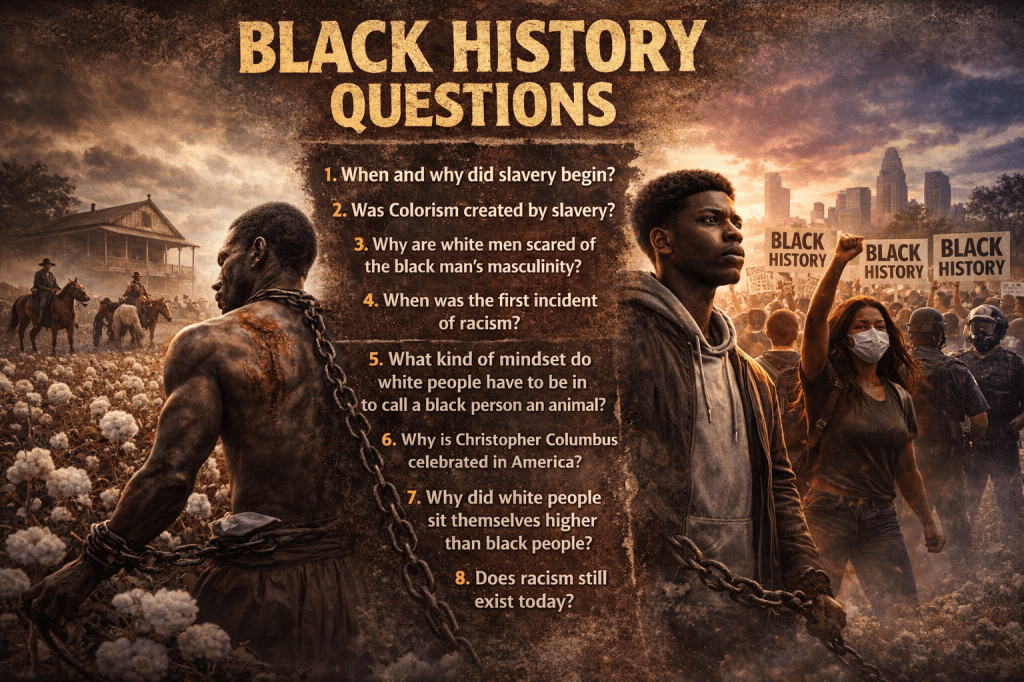
Black History Questions

Black history is the story of a people who were enslaved, resisted, survived, built civilizations, transformed nations, preserved faith, and continue to struggle for full human dignity in a world shaped by their forced labor and spiritual resilience.

Black history is not merely a record of past suffering, but a critical lens through which modern systems of power, identity, race, and inequality can be understood. To ask questions about Black history is to interrogate the foundations of Western civilization, colonial expansion, capitalism, and the psychological construction of race. These questions do not only concern Black people; they expose how the modern world was built and at whose expense.

One of the most fundamental questions is: When and why did slavery begin? While systems of servitude existed in ancient societies, racialized chattel slavery as practiced in the Americas began in the 15th century with European colonial expansion. This form of slavery was unique because it permanently dehumanized Africans based on race and transformed human beings into inheritable property for economic profit (Williams, 1944).

Slavery expanded primarily to meet the labor demands of European empires. The rise of sugar, cotton, and tobacco plantations required massive labor forces, and Africans were targeted because they were perceived as physically resilient, culturally unfamiliar, and politically vulnerable due to Africa’s lack of unified global military power at the time (Rodney, 1972).

Another important question is: Was colorism created by slavery? While color hierarchies existed in some societies before European contact, modern global colorism was systematized through slavery. Lighter-skinned enslaved people were often favored, given domestic roles, and granted marginal privileges, creating internal racial stratification that persists today (Hunter, 2007).

Colorism functioned as a psychological extension of white supremacy. It trained Black people to associate proximity to whiteness with value, safety, and humanity, while equating darker skin with inferiority and criminality. This internalized hierarchy continues to shape beauty standards, dating preferences, employment outcomes, and media representation.

A more controversial but critical question is: Why are white men historically threatened by Black male masculinity? Sociologically, Black masculinity has been framed as dangerous because it challenges white male dominance in systems built on racial and patriarchal hierarchy (hooks, 2004). The myth of the hypersexual, aggressive Black man was constructed to justify control, surveillance, and violence.

This fear was not biological but political. The Black male body symbolized physical strength, reproductive power, and resistance to domination. During slavery, lynching, and segregation, Black men were portrayed as sexual predators to justify their castration, imprisonment, and execution (Alexander, 2010).

Another core question is: When was the first incident of racism? Racism as a structured ideology emerged during European colonialism in the 15th and 16th centuries. Before this, societies practiced tribalism and ethnocentrism, but not race-based biological hierarchy (Smedley & Smedley, 2005).

Modern racism required pseudoscience. European thinkers classified humans into racial categories and assigned moral and intellectual traits to physical features. This gave slavery a “scientific” justification and made inequality appear natural rather than political.

This leads to the disturbing question: What kind of mindset allows someone to call a Black person an animal? Psychologically, this requires dehumanization. Dehumanization occurs when one group denies the full humanity of another, allowing cruelty without guilt (Fanon, 1967).

Colonial ideology trained Europeans to see Africans as subhuman, primitive, and savage. This worldview was necessary to resolve the moral contradiction of Christian societies committing mass enslavement, rape, and murder while claiming moral superiority.

Another major question is: Why is Christopher Columbus celebrated in America? Columbus represents the myth of “discovery,” which erases Indigenous genocide and African enslavement. He is celebrated not because of moral achievement, but because he symbolizes European expansion and empire (Zinn, 2003).

Columbus initiated systems of conquest, forced labor, sexual violence, and mass death across the Americas. His celebration reflects how dominant societies preserve heroic narratives while suppressing historical trauma.

This raises another question: Why did white people place themselves above Black people? The answer lies in power. Whiteness was invented as a social category to unify Europeans across class lines and justify colonial domination (Allen, 1994).

Race became a political tool. By creating a racial hierarchy, elites ensured that poor whites identified with their race rather than their economic exploitation, preserving systems of inequality through psychological allegiance.

A central modern question is: Does racism still exist today? Racism absolutely exists, but it has evolved. Instead of explicit segregation, it now operates through institutions such as housing, education, policing, healthcare, and the criminal justice system (Bonilla-Silva, 2018).

Racism is now coded into algorithms, zoning laws, school funding, and media narratives. It functions less through open hatred and more through structural inequality and systemic bias.

Another question is: Is racism individual or systemic? While individuals can be racist, racism is primarily systemic. It is embedded in laws, policies, and historical patterns that continue to produce unequal outcomes regardless of personal intent (Feagin, 2013).

Systemic racism means one does not need to “hate” Black people to benefit from racial privilege. The system itself distributes resources and opportunities unevenly.

A related question is: How did slavery shape capitalism? Capitalism was built on enslaved labor. The wealth of Europe and America emerged directly from plantation economies and global trade networks fueled by African exploitation (Beckert, 2014).

Banks, insurance companies, universities, and corporations all profited from slavery. Modern wealth inequality cannot be understood without this historical foundation.

Another question is: What role did religion play in slavery? Christianity was used to justify enslavement through distorted interpretations of scripture. Enslavers taught obedience, submission, and divine hierarchy to maintain control.

However, Black people reinterpreted Christianity as liberation theology. Biblical stories like Exodus became metaphors for escape, resistance, and divine justice (Cone, 1997).

This leads to: Why is Black faith so central to survival? The Black church provided psychological refuge, political organization, cultural continuity, and communal identity during centuries of oppression.

Faith became a tool not of submission, but of resistance. It allowed Black people to envision dignity beyond the material conditions imposed upon them.

Another key question is: How did Jim Crow replace slavery? After emancipation, systems like sharecropping, convict leasing, and segregation maintained economic control over Black labor (Blackmon, 2008).

Slavery did not end; it transformed. Control shifted from plantations to prisons, courts, and labor markets.

This raises: How does mass incarceration relate to slavery? The U.S. prison system disproportionately targets Black men, continuing patterns of forced labor and social control through criminalization (Alexander, 2010).

The 13th Amendment abolished slavery “except as punishment for a crime,” legally preserving coerced labor under incarceration.

Another question is: What is historical trauma? Historical trauma refers to psychological wounds passed across generations through collective memory, stress, and social conditions (Brave Heart, 2003).

Trauma is transmitted not only culturally, but biologically through epigenetics, shaping stress responses and health outcomes.

This leads to: Why do disparities persist in education and health? Black communities face underfunded schools, medical neglect, environmental racism, and economic exclusion rooted in historical policy decisions.

These disparities are not accidental; they are the predictable outcomes of centuries of structural inequality.

Another question is: What is the racial wealth gap? The average white family holds nearly ten times more wealth than the average Black family, primarily due to inheritance, home ownership, and historical exclusion from economic opportunity (Oliver & Shapiro, 2006).

Wealth is intergenerational. Slavery prevented Black people from accumulating capital for over 250 years.

This brings up: Are reparations justified? Reparations are not charity but restitution. They address stolen labor, land, and life through economic, educational, and institutional repair (Coates, 2014).

Reparations acknowledge that historical injustice created present inequality.

Another question is: How has the media shaped Black identity? The media often portrays Black people as criminals, athletes, entertainers, or victims, limiting the public imagination of Black humanity.

Representation affects self-esteem, opportunity, and public policy.

This leads to: What is internalized racism? Internalized racism occurs when marginalized people absorb negative stereotypes about themselves and their group.

It manifests through self-hatred, colorism, assimilation, and cultural erasure.

Another question is: What is Black excellence? Black excellence is not wealth or celebrity alone; it is resilience, creativity, spiritual depth, community building, and survival against impossible odds.

Black excellence exists in families, churches, classrooms, and neighborhoods, not just in elite spaces.

What is Black History Month, and why was it created?
Black History Month was created to recognize the historical contributions of Black people who were excluded from mainstream history. It began as “Negro History Week” in 1926 and became a month in 1976.

Who was Carter G. Woodson?
Carter G. Woodson was a historian who founded Black History Month. He believed Black people must know their history to understand their identity, power, and humanity.

What were the goals of the Civil Rights Movement?
To end legal segregation, secure voting rights, dismantle racial discrimination, and achieve full citizenship and equality under the law.

What was the Emancipation Proclamation?
An 1863 executive order by Abraham Lincoln declared enslaved people free in Confederate states. It weakened slavery but did not fully end it.

How did the transatlantic slave trade shape the modern world?
It built Western wealth, capitalism, and global racial hierarchies through forced African labor.


Major African empires?
Ghana, Mali, Songhai, Egypt, Kush, Axum—highly advanced in trade, education, architecture, and governance.

Who was Mansa Musa?The
Emperor of Mali, the wealthiest person in recorded history, whose empire controlled the global gold trade.

How did Africans govern themselves?
Through complex political systems: kingdoms, councils of elders, city-states, and federations.

African contributions to science?
Mathematics, astronomy, medicine, metallurgy, architecture, and writing systems.

African spirituality’s influence?
It shaped diasporic religions like Vodun, Santería, Candomblé, and Black Christianity.


Conditions of slavery?
Forced labor, family separation, sexual violence, no legal rights, and psychological terror.

Forms of resistance?
Revolts, escapes, sabotage, spirituals, maroon communities, and education.

Who were Turner, Tubman, and Vesey?
Leaders of armed rebellion, underground resistance, and liberation.

Religion’s role?
Provided hope, coded messages, and survival theology.

Impact on families?
Destroyed kinship structures but created resilient communal bonds.


What was Reconstruction?
Post-slavery rebuilding period, where Black people gained rights briefly.

Why did it fail?
White supremacist violence, political betrayal, economic sabotage.

Jim Crow laws?
Legal racial segregation and disenfranchisement.

Plessy v. Ferguson?
Legalized segregation under “separate but equal.”

Great Migration?
Mass Black movement from South to North for safety and jobs.

Lynching?
Racial terror to enforce white dominance.


MLK vs Malcolm X?
MLK: nonviolence and integration.
Malcolm: self-defense and Black nationalism.

Role of women?
Core organizers, strategists, fundraisers, and leaders.

Black Panther Party?
Revolutionary group focused on self-defense, food programs, and education.

COINTELPRO?
FBI program to destroy Black leadership.

Voting Rights Act?
Outlawed voter suppression.


Colorism?
Preference for lighter skin due to colonial beauty standards.

Double consciousness?
Living with both Black identity and white societal gaze.

Media representation?
Shapes self-worth and public perception.

Internalized racism?
Absorbing negative beliefs about one’s own race.

Hip-hop?
Political voice of marginalized youth.


Racial wealth gap?
Result of slavery, segregation, and housing discrimination.

Redlining?
Banks denied loans to Black neighborhoods.

Black Wall Street?
Prosperous Black business district destroyed by racial massacre.

Mass incarceration?
Modern extension of racial control.

School-to-prison pipeline?
Criminalization of Black youth through education system.


Black women’s role?
Foundational leaders in all justice movements.

Key figures?
Sojourner Truth, Ida B. Wells, Angela Davis, Fannie Lou Hamer.

Intersectionality?
Overlapping racism and sexism.

Black motherhood?
Historically exploited, now culturally politicized.

Church role?
Spiritual backbone and organizers.


U.S. vs global?
Different histories, same racial hierarchy.

Pan-Africanism?
Global Black unity.

Garvey and Nkrumah?
Leaders of Black nationalism and African independence.

Colonialism’s impact?
Economic extraction, political instability.

Haitian Revolution?
First successful slave revolution in history.


Christianity as oppression and liberation?
Used to justify slavery but also inspire resistance.

Black church’s role?
Political center and liberation hub.

Deuteronomy 28?
Parallels of exile, curses, and survival.

Spirituals?
Encoded escape routes and hope.

Liberation theology?
God sides with the oppressed.


Is racism individual or systemic?
Systemic—embedded in laws and institutions.

Reparations?
Moral and economic response to historical theft.

National identity?
America cannot face the truth without rewriting itself.

Historical trauma?
Passed through culture, biology, and psychology.

Post-Civil Rights freedom?
Legal rights without economic justice.


What would enslaved Africans say?
Remember us. Finish the fight.

Black excellence beyond wealth?
Spiritual integrity, family, and knowledge.

True liberation?
Mental, economic, and spiritual freedom.

Silenced history?
African civilizations, resistance leaders, and global revolutions.

Future generations?
Must know history to avoid repeating bondage.

Finally, the most profound question is: What does true liberation mean? Liberation is not simply legal equality, but psychological freedom, economic justice, spiritual healing, and cultural self-definition.

True freedom requires dismantling the systems that created racial hierarchy, not merely integrating into them.

Black history, therefore, is not a side narrative. It is the central story of modern civilization. To study Black history is to confront the moral foundations of the world itself.


References

Alexander, M. (2010). The New Jim Crow: Mass Incarceration in the Age of Colorblindness. New Press.

Allen, T. W. (1994). The Invention of the White Race. Verso.

Beckert, S. (2014). Empire of Cotton: A Global History. Knopf.

Blackmon, D. A. (2008). Slavery by Another Name. Anchor.

Bonilla-Silva, E. (2018). Racism Without Racists. Rowman & Littlefield.

Brave Heart, M. Y. H. (2003). The historical trauma response. Journal of Psychoactive Drugs, 35(1), 7–13.

Coates, T. (2014). The case for reparations. The Atlantic.

Cone, J. H. (1997). God of the Oppressed. Orbis Books.

Fanon, F. (1967). Black Skin, White Masks. Grove Press.

Feagin, J. (2013). Systemic Racism. Routledge.

hooks, b. (2004). We Real Cool: Black Men and Masculinity. Routledge.

Hunter, M. (2007). The persistent problem of colorism. Sociology Compass, 1(1), 237–254.

Oliver, M. L., & Shapiro, T. M. (2006). Black Wealth/White Wealth. Routledge.

Rodney, W. (1972). How Europe Underdeveloped Africa. Bogle-L’Ouverture.

Smedley, A., & Smedley, B. D. (2005). Race as biology is fiction. American Psychologist, 60(1), 16–26.

Williams, E. (1944). Capitalism and Slavery. University of North Carolina Press.

Zinn, H. (2003). A People’s History of the United States. HarperCollins.

Dilemma: Black Hair Discrimination

The Politics of Policing Black Identity

Angela Davis

“I had been looking at pictures of women who were free, and they were wearing their hair the way it grows out of their heads.”
(Davis, A. Y., Women, Race & Class, 1981)

Chimamanda Ngozi Adichie

“Hair is political. Hair is personal. Hair is identity.”
(Adichie, C. N., Americanah, 2013)

Bell Hooks

“Straightening our hair is one of the many ways we try to erase the reality of our Blackness.”
(Hooks, b., Black Looks: Race and Representation, 1992)

Lupita Nyong’o

“What I learned is that when the world tells you you’re not enough, you don’t have to believe it.”
(Nyong’o, L., Sulwe, 2019)

“Black hair is not a trend, a problem, or a phase—it is a living archive of survival, resistance, and ancestral memory.”

Black hair discrimination remains one of the most visible and normalized forms of racial bias in modern society. From classrooms to corporate offices, Black hair is disproportionately scrutinized, regulated, and punished under the guise of “professionalism,” “neatness,” or “dress code policies.” These standards are not neutral; they are rooted in Eurocentric ideals that define straight, loose, and non-textured hair as the default measure of beauty and respectability. As a result, Black people are often forced to alter their natural hair to gain acceptance, employment, or basic dignity.

In schools, Black children are suspended, sent home, or humiliated for wearing braids, locs, Afros, twists, or even natural curls. These disciplinary practices communicate a dangerous message: that Black identity itself is disruptive and unacceptable. When a child’s natural hair becomes grounds for punishment, the educational system participates in psychological harm that can shape self-esteem and identity formation for life. The classroom becomes not a place of learning, but a site of racial conditioning.

In the workplace, similar patterns persist. Black professionals are routinely told their hair is “unprofessional,” “distracting,” or “unkept,” even when it is clean, styled, and culturally appropriate. This forces many to chemically straighten their hair, wear wigs, or suppress their natural texture in order to be perceived as competent. Such pressures reveal how deeply white norms are embedded in institutional culture, where assimilation is often required for survival.

The hatred toward Black hair did not originate in modern offices or schools—it was cultivated during slavery. Enslaved Africans were stripped of their cultural grooming practices and taught to associate straight hair with proximity to whiteness and social advantage. Field laborers, who often had tightly coiled hair, were deemed inferior, while those with looser textures were privileged within the plantation hierarchy. Hair became a racial marker used to rank human worth.

This legacy did not disappear after emancipation. It evolved into colorism and texture discrimination, where straighter hair is still associated with beauty, intelligence, and professionalism, while kinky or coiled hair is labeled “nappy,” “bad,” or “ugly.” These terms, passed down through generations, reflect internalized racism—a psychological inheritance from white supremacy that continues to shape how Black people see themselves.

One of the most painful aspects of Black hair discrimination is that it is often reinforced within Black families themselves. Many Black parents, conditioned by their own experiences of rejection and survival, teach their children that their natural hair is something to be fixed, relaxed, or hidden. Phrases like “your hair is too nappy” or “you need a perm” are not harmless—they transmit shame and self-rejection at the most formative stages of identity.

This internalization is not accidental; it is a direct result of systemic oppression. When society consistently rewards whiteness and penalizes Blackness, marginalized communities may adopt those standards as coping mechanisms. However, survival strategies should not become permanent ideologies. Black parents must wake up to the reality that teaching children to hate their natural features only perpetuates the same system that devalues them.

White supremacy plays a central role in Black hair discrimination because it establishes whiteness as the universal standard of normality. Under this system, anything outside of European phenotypes is constructed as deviant, exotic, or inferior. Hair texture becomes political, not because Black people made it so, but because racism made Black bodies sites of control.

The concept of “professionalism” itself is racially coded. There is no scientific or moral basis for associating straight hair with competence or intelligence. These associations are cultural myths that developed within colonial and capitalist systems that centered white identity as the model citizen. Black hair challenges these myths simply by existing in its natural state.

Black hair has also been criminalized. From police stops to courtroom bias, Afro-textured hair has been associated with deviance and threat. Studies show that Black people with natural hairstyles are more likely to be perceived as aggressive, untrustworthy, or less intelligent, even when all other factors are controlled. This demonstrates how aesthetic bias becomes a mechanism of social exclusion.

The rise of movements like the Natural Hair Movement and the passing of the CROWN Act represent resistance against these injustices. These efforts aim to legally protect individuals from discrimination based on hair texture and style. However, legal reform alone cannot dismantle deeply ingrained psychological and cultural beliefs. Laws can change policies, but they cannot instantly heal internalized self-hatred.

True liberation requires a cultural shift in how Black beauty is defined and taught. Black hair must be reframed not as a problem to manage, but as a sacred inheritance—genetically rich, biologically diverse, and historically powerful. The same coils once mocked were used to map escape routes during slavery, braid seeds for survival, and encode communal identity.

Education plays a crucial role in this transformation. Schools must incorporate Black history and African aesthetics into curricula, not as side notes, but as central narratives. When children learn that their features have historical meaning and cultural value, they are less likely to internalize racist hierarchies imposed by society.

Media representation is equally important. For decades, Black beauty was only celebrated when it approximated whiteness—light skin, straight hair, narrow features. Today, although representation has expanded, Eurocentric beauty standards still dominate advertising, film, and fashion industries. The normalization of natural Black hair must move beyond trends and become structural.

The policing of Black hair is ultimately about control. It is about who gets to define beauty, respectability, and humanity. When institutions regulate how Black people wear their hair, they are not managing aesthetics—they are managing identity. Hair becomes a battlefield where cultural memory confronts colonial ideology.

Psychologically, hair discrimination contributes to identity fragmentation. Black individuals are often forced to perform different versions of themselves depending on context—natural at home, altered at work, cautious in public. This constant self-monitoring produces emotional fatigue and reinforces the idea that authenticity is unsafe.

Black parents, educators, and leaders have a responsibility to disrupt this cycle. Teaching children that their hair is “good” exactly as it grows is not a trivial affirmation—it is a radical act of resistance. It challenges centuries of propaganda designed to disconnect Black people from their bodies and ancestry.

Healing from hair discrimination requires both structural and spiritual work. Structurally, institutions must dismantle biased policies. Spiritually and psychologically, Black communities must unlearn the lie that proximity to whiteness equals worth. The reclamation of Black hair is inseparable from the reclamation of Black identity.

Black hair is not unprofessional, unclean, or undesirable. It is African. It is genetic. It is historical. It is political because oppression made it so. And until society confronts the racial logic behind its beauty standards, Black hair will continue to be policed—not because it is wrong, but because it refuses to conform to a system built on white supremacy.

Ultimately, the hatred of Black hair reflects a deeper hatred of Black existence. To love Black hair fully is to reject the entire hierarchy that ranks human value by proximity to Europe. In that sense, every Afro worn freely, every loc grown proudly, and every child taught to love their coils is an act of cultural revolution.


References

Banks, I. (2000). Hair matters: Beauty, power, and Black women’s consciousness. New York, NY: New York University Press.

Byrd, A. D., & Tharps, L. L. (2014). Hair story: Untangling the roots of Black hair in America. New York, NY: St. Martin’s Press.

Collins, P. H. (2004). Black sexual politics: African Americans, gender, and the new racism. New York, NY: Routledge.

Crenshaw, K. (1991). Mapping the margins: Intersectionality, identity politics, and violence against women of color. Stanford Law Review, 43(6), 1241–1299.

Johnson, T. R., & Bankhead, T. (2014). Hair it is: Examining the experiences of Black women with natural hair. Open Journal of Social Sciences, 2(1), 86–100.

Rooks, N. (1996). Hair raising: Beauty, culture, and African American women. New Brunswick, NJ: Rutgers University Press.

Rosette, A. S., & Dumas, T. L. (2007). The hair dilemma: Conformity versus authenticity. Journal of Applied Psychology, 92(6), 1601–1616.

Tate, S. A. (2009). Black beauty: Aesthetics, stylization, politics. Farnham, UK: Ashgate.

The CROWN Act. (2019). Creating a Respectful and Open World for Natural Hair. U.S. legislation on hair discrimination.