Tag Archives: black aesthetics

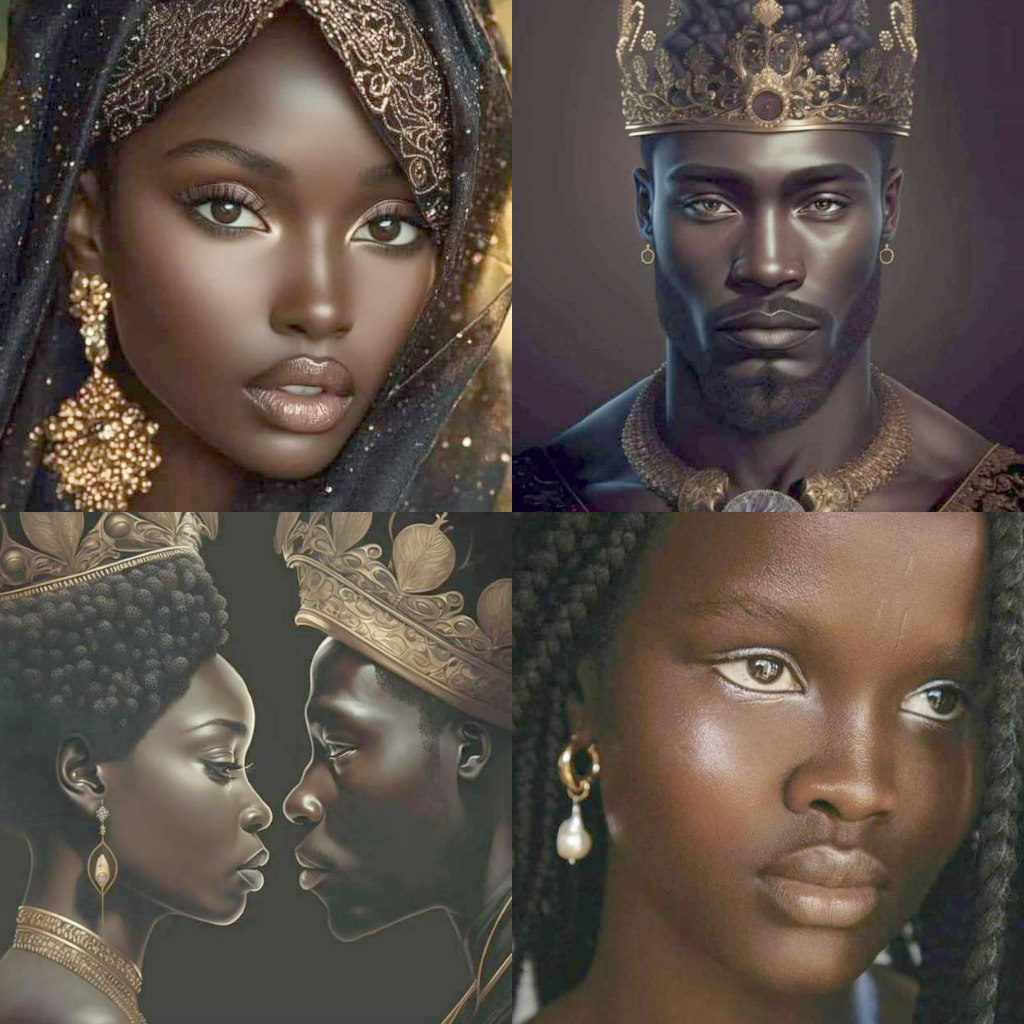
Epistemologies of the Black Aesthetic and Phenomenology of the Black Woman and Man.

The epistemologies of the Black aesthetic begin with the recognition that knowledge itself is not neutral but socially and historically constructed. Epistemology, as the study of how knowledge is produced and legitimized, reveals that Western systems of knowing have long excluded Black experiences from the category of universal truth. Within this framework, Black aesthetics emerge not merely as artistic expressions but as alternative ways of knowing, rooted in embodied history, cultural memory, and collective survival.

The Black aesthetic operates as a counter-epistemology, challenging dominant paradigms that privilege Eurocentric modes of perception. Rather than separating reason from emotion, or mind from body, Black aesthetic traditions often integrate feeling, rhythm, spirituality, and storytelling as legitimate sources of knowledge. Music, dance, oral tradition, fashion, and visual art function as epistemic practices—ways of interpreting reality and transmitting meaning across generations.

Phenomenology, the philosophical study of lived experience, provides a powerful lens for understanding the Black woman and man as subjects rather than objects of knowledge. Phenomenology asks how individuals experience the world from within their own consciousness. Applied to Black existence, it shifts attention from how Black people are represented to how Black people perceive, feel, and inhabit social reality.

The phenomenology of the Black subject is inseparable from history. Slavery, colonialism, segregation, and systemic racism have shaped not only material conditions but also modes of perception. Black embodiment carries historical memory within it, producing what Frantz Fanon described as a “racial epidermal schema,” where the body is experienced through the gaze of others before it is experienced as self.

For the Black woman, phenomenology is marked by intersectionality—the simultaneous experience of racialized and gendered embodiment. Her body is not only racialized but sexualized, politicized, and surveilled. She is often forced to see herself through external projections that define her as laborer, caretaker, object of desire, or symbol of strength. These imposed meanings distort self-perception and fracture subjectivity.

Yet Black women also generate epistemologies of resistance. Through intellectual traditions such as Black feminism, womanism, and Africana philosophy, Black women reclaim authority over their own experiences. Knowledge emerges from lived reality, testimony, and embodied wisdom. The Black woman becomes not an object of study but a producer of theory.

The phenomenology of the Black man is shaped by a different but equally complex symbolic structure. Black masculinity has historically been framed through stereotypes of hyperphysicality, aggression, criminality, or emotional absence. These representations shape how Black men experience their own bodies in public space—often as sites of threat rather than humanity.

Black male subjectivity is therefore marked by hypervisibility and invisibility at once. The Black man is seen as a body but not recognized as a mind. His presence is often interpreted through fear rather than empathy. This produces what phenomenologists describe as alienation—the feeling of being estranged from one’s own existence.

Despite these constraints, Black men also produce alternative epistemologies of selfhood. Through music, literature, spirituality, and political consciousness, Black men articulate modes of being that resist dehumanization. Hip-hop, blues, jazz, and spoken word become philosophical forms—ways of narrating reality and reclaiming interior life.

The Black aesthetic unites these experiences through symbolic form. It functions as a visual, sonic, and cultural language through which Black people encode knowledge. Aesthetic practices become epistemic tools—mechanisms for understanding suffering, joy, memory, and hope. Art becomes theory in motion.

Unlike Western aesthetics, which often prioritize abstraction and detachment, the Black aesthetic emphasizes embodiment and relationality. Meaning is not discovered through distance but through participation. Knowledge emerges from the body in motion, from rhythm, from ritual, from collective experience. The aesthetic becomes a site of epistemological authority.

Memory plays a central role in this framework. The Black body functions as an archive, carrying ancestral trauma and resilience within its gestures, postures, and expressions. Cultural memory is transmitted not only through texts but through performance, language, and social practice. Knowledge lives in movement and sound.

Spirituality also operates as an epistemic dimension of Black life. In many African and diasporic traditions, knowledge is inseparable from divine order. Truth is not merely rational but spiritual, intuitive, and communal. The sacred becomes a way of knowing that resists Western secular epistemology.

The Black aesthetic thus collapses the boundary between art and life. Fashion becomes philosophy. Music becomes metaphysics. Beauty becomes political theory. These practices are not decorative but constitutive of reality. They shape how Black people understand themselves and the world.

From an epistemological standpoint, the Black woman and man exist within what philosopher Sylvia Wynter calls a struggle over the definition of the human. Western modernity constructs a narrow model of humanity based on whiteness, rationality, and individualism. Black existence challenges this model by revealing its exclusions.

Phenomenologically, Black existence is defined by what it means to live in a world that questions one’s humanity. The everyday experience of navigating institutions, media, and social space becomes a philosophical problem. The Black subject lives philosophy before studying it.

The Black aesthetic offers a new grammar of being. It allows Black people to name themselves, see themselves, and know themselves outside of imposed frameworks. This is not merely cultural expression but epistemic sovereignty—the right to define reality from within one’s own experience.

Knowledge, in this context, becomes relational rather than hierarchical. Truth is produced through dialogue, community, and shared struggle. The Black aesthetic rejects the idea of detached objectivity in favor of situated knowledge grounded in lived experience.

Both the Black woman and man embody what can be called epistemic resistance. Their existence disrupts dominant systems of meaning by revealing contradictions within Western claims to universality. Their bodies become sites where philosophy, history, and politics intersect.

The phenomenology of Black life ultimately reveals that subjectivity itself is political. To exist as Black in a racialized world is to experience reality through layers of meaning imposed from outside and reclaimed from within. Consciousness becomes a space of struggle and creativity.

The Black aesthetic, therefore, operates as both epistemology and ontology. It does not simply describe how Black people know the world; it reveals how Black people are in the world. Being and knowing collapse into each other, producing a distinct philosophical tradition.

In this sense, the Black woman and man are not marginal figures within philosophy but central figures in redefining what philosophy can be. Their experiences generate new questions about knowledge, reality, beauty, and humanity itself.

Ultimately, epistemologies of the Black aesthetic and the phenomenology of Black existence assert a radical claim: that Black life is not an object of analysis but a source of knowledge. Black being becomes Black knowing, and Black knowing becomes a new foundation for understanding the human condition.


References

Fanon, F. (1967). Black skin, white masks. Grove Press.

hooks, b. (1990). Yearning: Race, gender, and cultural politics. South End Press.

Collins, P. H. (2000). Black feminist thought: Knowledge, consciousness, and the politics of empowerment. Routledge.

Wynter, S. (2003). Unsettling the coloniality of being/power/truth/freedom. The New Centennial Review, 3(3), 257–337.

Gordon, L. R. (1995). Bad faith and antiblack racism. Humanity Books.

Du Bois, W. E. B. (1903). The souls of Black folk. A. C. McClurg.

Weheliye, A. G. (2014). Habeas viscus: Racializing assemblages, biopolitics, and Black feminist theories of the human. Duke University Press.

Hall, S. (1997). Representation: Cultural representations and signifying practices. Sage.

Tate, S. A. (2015). Black beauty: Aesthetics, stylization, politics. Routledge.

Merleau-Ponty, M. (2012). Phenomenology of perception. Routledge.
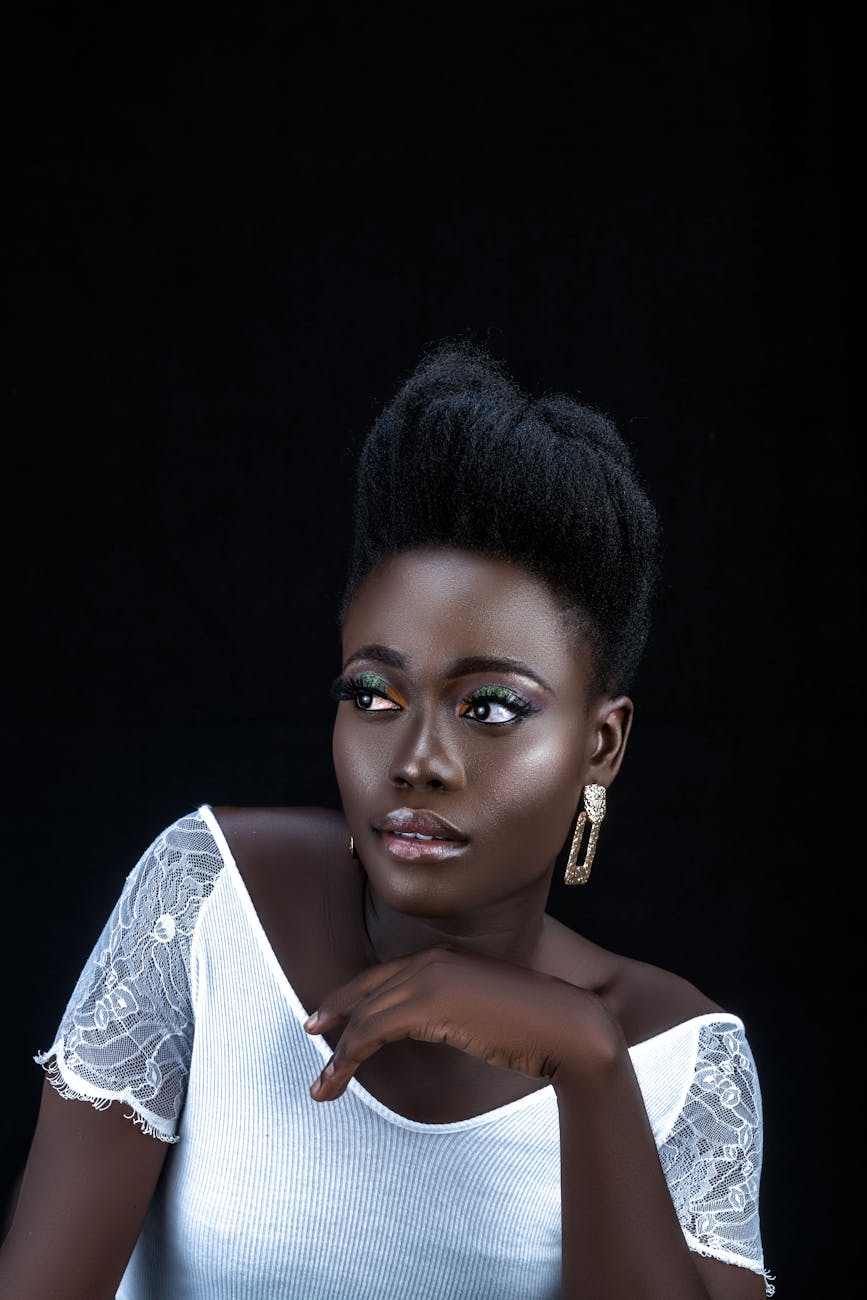
Pretty Privilege Series: The Shade Hierarchy — Breaking Free from the Color Caste System.

Photo by King Cyril Kalu on Pexels.com

Colorism, often described as prejudice or discrimination based on skin tone, creates a hierarchy within the Black community that values lighter skin over darker shades. This “shade hierarchy” functions like an internal caste system, influencing beauty standards, social acceptance, and economic opportunities (Hunter, 2007).

The origins of this hierarchy are deeply entwined with colonialism and slavery. European colonizers created a system where proximity to whiteness equaled privilege. Lighter-skinned enslaved Africans were often assigned domestic work and given preferential treatment, while darker-skinned individuals labored in the fields, cementing a perception that lighter skin was inherently superior (Williams, 1987).

Media and pop culture perpetuated these notions over centuries. Hollywood films frequently cast light-skinned Black women in romantic or leading roles while relegating darker-skinned women to subservient, villainous, or hypersexualized stereotypes. This not only shaped public perception but also influenced self-image among Black women (Bogle, 2016).

The psychological impact of the shade hierarchy is profound. Dark-skinned individuals often experience lower self-esteem, body image dissatisfaction, and internalized racism. Being told, explicitly or implicitly, that one’s skin is “too dark” to be desirable produces lasting trauma (Hill, 2002).

Dating preferences also reveal the pervasiveness of this hierarchy. Studies show that lighter-skinned Black women are often perceived as more attractive and desirable for relationships, while darker-skinned women are marginalized in the dating market (Wilder, 2010). Men’s internalization of colorist standards reinforces systemic bias.

Colorism extends into education and professional opportunities. Research demonstrates that darker-skinned Black men and women earn less than lighter-skinned peers, even when controlling for education and experience. This colorism wage gap mirrors the historical privileging of lighter skin (Goldsmith, Hamilton, & Darity, 2006).

Schools are microcosms where colorism manifests early. Dark-skinned children are often subject to teasing, social exclusion, or disproportionate disciplinary actions. This reinforces societal hierarchies and internalized biases before adulthood (Monk, 2014).

Family and community can either reinforce or challenge the shade hierarchy. Favoring lighter-skinned relatives in compliments, marriage prospects, or inheritance decisions perpetuates the caste system. Conversely, affirming all shades equally fosters resilience and pride in melanin-rich identities (Russell, Wilson, & Hall, 2013).

Language plays a crucial role in perpetuating colorism. Terms like “redbone,” “high yellow,” and backhanded compliments such as “pretty for a dark-skinned girl” normalize hierarchy and shape self-perception. Challenging and changing this language is essential for liberation (Charles, 2003).

Social media has emerged as both a challenge and a solution. While platforms sometimes reinforce colorism through algorithmic biases and influencer culture, they also provide spaces for celebrating dark-skinned beauty, such as #MelaninPoppin and #DarkSkinIsBeautiful campaigns. These initiatives help counter harmful narratives and create visible representation.

Religious and spiritual frameworks can aid in dismantling the shade hierarchy. Scriptures such as Song of Solomon 1:5 — “I am black, but comely” — affirm that melanin is not a flaw but a feature worthy of pride. Church communities can preach against favoritism and celebrate beauty in all skin tones (James 2:1-4).

Media literacy is another tool. Teaching children and adults to critically assess representations in television, film, and advertising reduces the internalization of harmful beauty norms. Awareness of how light-skinned individuals are often elevated helps viewers resist accepting a biased standard unconsciously.

Empowerment programs targeting youth can directly counter colorism. Workshops that teach self-esteem, beauty appreciation, and historical knowledge about African ancestry encourage young people to embrace their skin tone with pride (Hall, 1992).

Feminist scholars emphasize that dismantling the shade hierarchy is not just about aesthetics; it is about power. Colorism intersects with sexism and racism, creating compounded oppression for dark-skinned women. Addressing these structural inequalities is critical for holistic liberation (Hunter, 2007).

Representation in professional and artistic spaces also matters. Featuring dark-skinned Black men and women in leadership roles, creative industries, and political office challenges societal hierarchies and normalizes their presence in positions of influence.

Black men’s participation is key in dismantling the hierarchy. By affirming dark-skinned women as desirable partners, celebrating them publicly, and rejecting societal pressure to prefer lighter skin, men can help erode internalized colorist standards in the community (Harris, 2015).

Economic interventions are also necessary. Organizations should prioritize diversity in hiring and promotion, ensuring that darker-skinned candidates are not overlooked due to unconscious bias. Equitable opportunities disrupt the cycle of privilege attached to lighter skin.

Education and mentorship programs should include historical context about colorism and practical strategies for resistance. Teaching children about African history, melanin-rich heroes, and cultural pride counteracts centuries of negative messaging about dark skin (Smedley, 1999).

Personal reflection and therapy can help individuals confront internalized colorism. Journaling, counseling, and group discussions offer spaces to unlearn harmful messages and rebuild self-worth, allowing people to embrace their natural complexion fully.

Breaking free from the color caste system requires sustained effort across generations. By challenging social norms, affirming diverse beauty, and creating supportive spaces, the Black community can replace hierarchical thinking with pride, dignity, and unity.


References

  • Bogle, D. (2016). Toms, Coons, Mulattoes, Mammies, and Bucks: An Interpretive History of Blacks in American Films. Bloomsbury.
  • Charles, C. (2003). Skin Bleaching, Self-Hate, and Black Identity in Jamaica. Journal of Black Studies, 33(6), 711–728.
  • Goldsmith, A., Hamilton, D., & Darity, W. (2006). Shades of Discrimination: Skin Tone and Wages. American Economic Review, 96(2), 242–245.
  • Hall, R. E. (1992). Bias Among African Americans Regarding Skin Color: Implications for Social Work Practice. Research on Social Work Practice, 2(4), 479–486.
  • Harris, A. (2015). The Influence of Fathers on the Self-Esteem of African American Daughters. Journal of Black Psychology, 41(3), 257–276.
  • Hunter, M. (2007). The Persistent Problem of Colorism: Skin Tone, Status, and Inequality. Sociology Compass, 1(1), 237–254.
  • Monk, E. P. (2014). Skin Tone Stratification among Black Americans, 2001–2003. Social Forces, 92(4), 1313–1337.
  • Russell, K., Wilson, M., & Hall, R. (2013). The Color Complex: The Politics of Skin Color Among African Americans. Anchor Books.
  • Smedley, A. (1999). Race in North America: Origin and Evolution of a Worldview. Westview Press.
  • Williams, E. (1987). Capitalism and Slavery. UNC Press.
  • Wilder, J. (2010). Revisiting “Color Names and Color Notions”: A Contemporary Examination of the Language and Attitudes of Skin Color among Young Black Women. Journal of Black Studies, 41(1), 184–206.

The Aesthetic of Black Beauty: Genetics, Psychology, and Divine Design.

Black beauty is not a single expression but a spectrum of genetic diversity that manifests in facial features, body composition, skin tone, hair texture, and overall presence. From African roots to diasporic populations across the globe, these features convey strength, resilience, and divine artistry. Understanding this beauty requires an exploration of genetics, psychology, history, and spirituality.

Melanin-rich skin is one of the most defining features of Black beauty. High melanin content provides natural protection against ultraviolet radiation, contributes to a radiant glow, and displays a spectrum of shades from deep ebony to golden brown. The Bible celebrates skin as a divine creation: “Thou art all fair, my love; there is no spot in thee” (Song of Solomon 4:7, KJV). This scripture underscores the inherent perfection of pigmentation.

Facial structure in Black populations varies widely but often includes high cheekbones, broad noses, and full lips, reflecting African and Egyptian ancestry. These features have evolved over millennia to adapt to environmental factors, providing functional benefits such as enhanced oxygenation and protection from the sun. Anthropologists note that these structures also contribute to facial symmetry, a key element of perceived beauty (Rhodes, 2006).

The eyes, often large and expressive, are framed by naturally arched brows and long eyelashes. Psychologically, eye contact conveys dominance, confidence, and emotional depth. “The eyes of the LORD are in every place, beholding the evil and the good” (Proverbs 15:3, KJV) reminds us that vision, both literal and figurative, carries spiritual significance.

Nose shapes within the Black diaspora range from wide and rounded to straight and sculpted, reflecting genetic variation and admixture. Broad noses historically helped with humid climates and enhanced nasal airflow. Full lips, often prominent, serve not only as markers of identity but are aesthetically celebrated in global beauty paradigms.

Hair is one of the most versatile and culturally significant features. Excessively curly or coiled hair, typical in many African-descended populations, reflects high genetic diversity in hair follicle shape (Powell et al., 2012). Hair texture has symbolic importance: it represents ancestry, resilience, and adaptability. In the Bible, hair often signifies strength and identity, as in Samson’s story (Judges 16:17, KJV).

The jawline and chin provide structural strength and character. Strong jawlines in Black populations are often linked to evolutionary pressures for durability and facial symmetry. This contributes to psychological perceptions of leadership, power, and assertiveness (Little et al., 2011).

Skin elasticity and body composition vary, with many Black populations exhibiting mesomorphic or athletic builds. Muscle density, bone strength, and proportionality have both functional and aesthetic implications, highlighting physical resilience and adaptability. Scripture recognizes the body as God’s creation: “I praise thee; for I am fearfully and wonderfully made” (Psalm 139:14, KJV).

Neck and shoulder structures contribute to posture and perceived presence. Broad shoulders and muscular necks convey strength and authority, signaling both evolutionary fitness and cultural ideals of masculinity.

Hand and finger morphology, often graceful yet strong, plays roles in artistry, physical labor, and nonverbal communication. In African cultures, hands are celebrated for their expressive and functional capacities, bridging work and identity.

Torso structure varies across African and diasporic populations. A well-proportioned torso, often associated with endurance and physical capability, is both aesthetically admired and functionally advantageous. The body becomes a living testament to evolutionary adaptation and divine engineering.

Legs and lower body features display powerful musculature and athleticism, reflective of both lifestyle and genetic adaptation. Longer limbs relative to the torso, common in certain African populations, facilitate agility and endurance. Psychologically, these features contribute to perceptions of vitality and grace.

Visual “Feature Map” of Black Beauty

1. Skin Tone (Melanin Spectrum)

  • Deep ebony
  • Brown
  • Golden caramel
  • Tan/olive
    (Illustrates melanin diversity and natural protection)

2. Hair Texture

  • Coily / kinky (Type 4)
  • Curly (Type 3)
  • Wavy (Type 2)
    (Shows versatility and genetic variation across African and diasporic populations)

3. Facial Features

  • High cheekbones
  • Broad to medium noses
  • Full lips
  • Almond-shaped or rounded eyes
  • Defined jawline and chin
    (Highlights evolutionary adaptation, aesthetic symmetry, and Egyptian influence)

4. Body Proportions

  • Mesomorphic build (muscular, athletic)
  • Broad shoulders, strong neck
  • Proportional torso
  • Long, strong legs
    (Represents strength, endurance, and functional beauty)

5. Cultural and Historical Notes

  • Egyptian elongation of faces and noses
  • African sculpted features
  • Diaspora adaptations across Caribbean, Americas, and Europe

6. Psychological & Spiritual Layer

  • Confidence and presence linked to symmetry
  • Expressive eyes signaling emotional depth
  • Biblical affirmation: Psalm 139:13-14 (KJV)

Genetic diversity across the African continent explains the variation in features globally. From the Nilotic peoples of East Africa to West African populations and Egyptian descendants, phenotypes differ due to historical migration, environmental adaptation, and admixture. Melanin-rich skin, hair texture, and facial structure are markers of evolutionary resilience and aesthetic value.

Egyptian features, often admired historically and across cultures, include elongated faces, almond-shaped eyes, and slender noses. Art and sculpture from ancient Egypt preserve these features, which influenced Mediterranean and African aesthetics. The spread of Egyptian traits across Africa reflects both migration and intermixing of populations.

Beyond physiology, the psychology of Black beauty is tied to self-perception and societal validation. Internalized biases from colonialism and slavery have historically devalued African features, creating psychological stress and colorism. Embracing ancestral aesthetics restores dignity and affirms identity (Hunter, 2007).

Cultural adornments, including hair styling, body art, and jewelry, enhance perceived beauty while preserving heritage. Hairstyles such as braids, locs, and twists are both aesthetic expressions and cultural statements, linking identity to ancestry.

The symmetry of facial features plays a key role in attractiveness. Across populations, symmetrical faces are psychologically associated with health, genetic fitness, and beauty. African-descended populations often display facial symmetry enhanced by pronounced features, which contributes to aesthetic appeal (Rhodes, 2006).

Height and overall proportions vary widely, yet commonality lies in the harmony of features. Balanced proportions, combined with melanin-rich skin and expressive facial characteristics, create a sense of visual coherence and presence.

Eyes and facial expression are central to perceived beauty. Expressiveness conveys emotion, intelligence, and social engagement. Psychological studies show that expressive eyes increase interpersonal attraction and perceived trustworthiness.

Ultimately, Black beauty reflects a combination of genetics, evolutionary adaptation, cultural heritage, and divine design. As the Bible reminds us, each individual is crafted with intentionality and wonder: “Thou hast possessed my reins: thou hast covered me in my mother’s womb. I will praise thee; for I am fearfully and wonderfully made” (Psalm 139:13-14, KJV). Recognizing, celebrating, and understanding these features fosters pride, identity, and self-worth across the diaspora.


References

Clark, K., & Clark, M. (1947). Racial identification and preference in Negro children. Journal of Negro Education, 16(3), 169–175.

Hunter, M. (2007). The persistent problem of colorism: Skin tone, status, and inequality. Sociology Compass, 1(1), 237–254. https://doi.org/10.1111/j.1751-9020.2007.00006.x

Little, A. C., Jones, B. C., & DeBruine, L. M. (2011). Facial attractiveness: Evolutionary based research. Philosophical Transactions of the Royal Society B: Biological Sciences, 366(1571), 1638–1659. https://doi.org/10.1098/rstb.2010.0404

Powell, B., Shriver, M. D., & Parra, E. J. (2012). Genetic variation and the evolution of African hair texture. American Journal of Physical Anthropology, 149(1), 1–14. https://doi.org/10.1002/ajpa.22195

Rhodes, G. (2006). The evolutionary psychology of facial beauty. Annual Review of Psychology, 57, 199–226. https://doi.org/10.1146/annurev.psych.57.102904.190208

The Holy Bible, King James Version. (1611). Thomas Nelson.