Tag Archives: Beauty

The Handsome Burden: How Society Looks at Black Male Beauty.

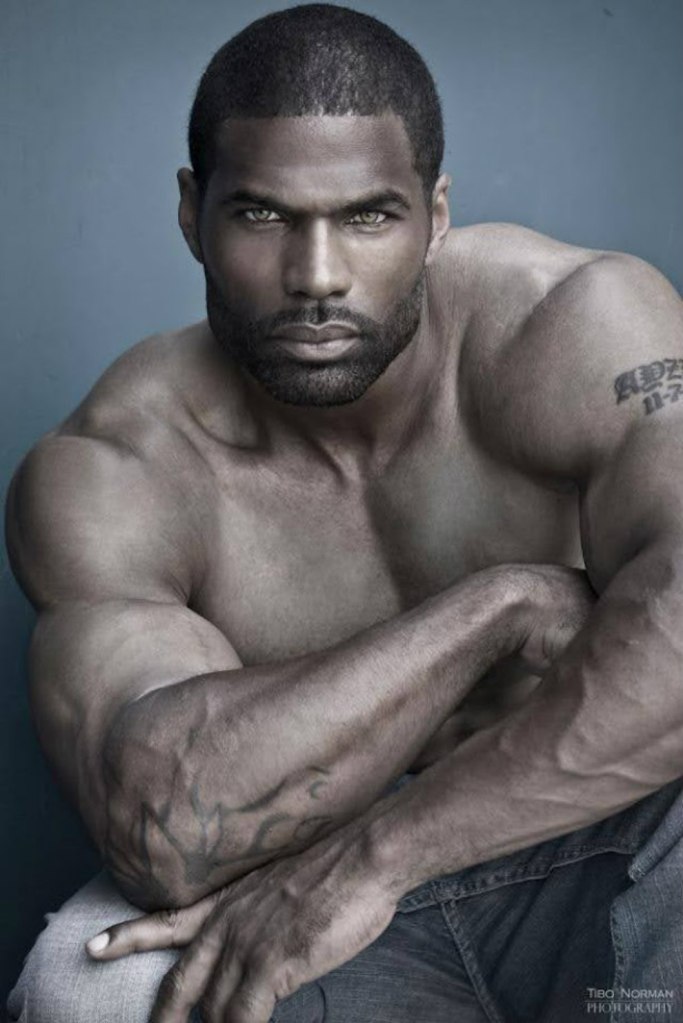
Photo Credit: Tibo Norman (used with permission)

Black male beauty has historically existed in a complex intersection of admiration and marginalization. In Western culture, ideals of masculinity and attractiveness have often been racially coded, favoring Eurocentric features such as light skin, straight hair, and narrow noses, leaving Black men to negotiate a beauty standard that often excludes them (Hunter, 2007). Despite these systemic barriers, Black men have consistently exemplified a wide range of physical beauty that challenges monolithic societal expectations.

The aesthetic evaluation of Black men is heavily influenced by historical and social contexts. During slavery and colonial periods, Black male bodies were subjected to objectification and dehumanization, yet their physicality was simultaneously fetishized as symbols of raw strength and virility (hooks, 1992). This duality created a paradoxical space where Black male attractiveness was both feared and desired.

Skin tone continues to play a significant role in how Black male beauty is perceived. Colorism, an intra-racial bias favoring lighter-skinned individuals, disproportionately affects Black men, impacting their representation in media and the dating market (Keith & Herring, 1991). Darker-skinned men often confront stereotypes associating them with aggression or hyper-masculinity, while lighter-skinned men are more frequently idealized in romantic or social contexts.

Facial features are another critical component in perceptions of beauty. Broad noses, full lips, and strong jawlines, which are characteristic of many Black men, are alternately fetishized and stigmatized in popular culture (Hall, 1997). Media representations often distort these features to fit palatable norms, leading to both admiration in certain subcultures and marginalization in mainstream society.

Hair texture and style also heavily influence social reception. Natural hair, afros, dreadlocks, and braids have long been sites of both cultural pride and discrimination. The policing of Black male hair in professional and social settings reflects broader societal discomfort with expressions of Black identity and beauty (Byrd & Tharps, 2014).

Athleticism is frequently conflated with attractiveness in Black men, reinforcing narrow definitions of beauty tied to physical performance rather than aesthetic nuance. This overemphasis perpetuates the stereotype that Black men’s value lies predominantly in their bodies’ functional capacity, rather than their individuality or style (Sailes, 1998).

The concept of “handsome burden” emerges from the paradox that Black male beauty, while celebrated in certain spaces, carries additional social costs. Attractive Black men are often hyper-visible, subjected to scrutiny, and stereotyped in ways that can impede social mobility and personal relationships (Griffin, 2012). The very features that draw admiration can also elicit bias.

Media representation is central to shaping societal views. Historically, Black men were either absent from mainstream portrayals of romantic leads or depicted in hypersexualized or villainized roles (Bogle, 2016). The lack of nuanced representation has contributed to a skewed understanding of Black male attractiveness, privileging exoticism over authenticity.

Black male celebrities frequently navigate the tension between societal fascination and personal agency over their image. Figures like Idris Elba, Michael B. Jordan, and Denzel Washington have gained recognition for their appearance, yet their visibility often subjects them to reductive discussions centered on looks rather than accomplishments (Russell, 2008).

Society’s obsession with physique and style creates pressures unique to Black men. Fashion, grooming, and fitness become mechanisms through which Black men negotiate social acceptance and desirability, amplifying the burden of external expectations (Banks, 2000).

Intersecting identities—such as socioeconomic status, sexuality, and regional background—further complicate the reception of Black male beauty. For example, a wealthy Black man may gain admiration that is denied to a working-class counterpart, illustrating how social capital intersects with racialized beauty standards (Patton, 2006).

Racialized beauty ideals also affect intimate relationships. Studies show that Black men often face exclusion in dating markets due to stereotypes about their masculinity or desirability (Felmlee, 2001). This phenomenon highlights how social perceptions of Black male beauty can influence both personal and emotional wellbeing.

The global circulation of Black male aesthetics offers a counter-narrative to Eurocentric beauty norms. Across Africa, the Caribbean, and the diaspora, Black men are celebrated for features that are undervalued in Western contexts, creating a multiplicity of beauty frameworks that resist homogenization (Ekine & Abbas, 2013).

Social media has amplified both the pressures and opportunities for Black men to curate their appearance. Platforms like Instagram provide spaces for self-representation and affirmation, yet they also expose individuals to heightened scrutiny and comparison, reinforcing anxieties about desirability (Tynes et al., 2016).

The commodification of Black male beauty through advertising and branding further complicates its social reception. Black men are often marketed as symbols of sexual allure or physical prowess, reducing complex identities to consumable aesthetic traits (Cole, 2015).

Historical trauma and generational narratives contribute to contemporary experiences of beauty for Black men. The lingering effects of slavery, segregation, and systemic oppression influence internalized self-perception and the valuation of physical traits, creating a psychological dimension to the “handsome burden” (Anderson, 2010).

Mental health implications are significant. Hypervisibility and the pressure to perform attractiveness can lead to stress, anxiety, and identity conflicts, revealing how aesthetic ideals intersect with emotional wellbeing (Wyatt et al., 2015).

Resistance movements have emerged, celebrating Black male beauty on its own terms. Cultural expressions such as hip hop, Afrofuturism, and Black fashion activism challenge normative aesthetics and create spaces where diverse Black male appearances are celebrated (Morgan & Bennett, 2011).

Education and scholarship play essential roles in redefining beauty narratives. By analyzing and challenging historical biases, researchers and cultural critics help to broaden society’s understanding of Black male attractiveness beyond reductive stereotypes (hooks, 1992).

Ultimately, Black male beauty exists as both a gift and a burden. The societal gaze can elevate and constrain, praise and stereotype, celebrate and marginalize. Understanding the intricate dynamics of this perception is critical to fostering cultural equity and dismantling limiting beauty paradigms.


References

Anderson, C. (2010). The psychology of African American male identity: Understanding the impact of historical trauma. Journal of Black Psychology, 36(4), 357–381.

Banks, I. (2000). Hair matters: Beauty, power, and Black men’s culture. New York University Press.

Bogle, D. (2016). Toms, coons, mulattoes, mammies, and bucks: An interpretive history of Blacks in American films (4th ed.). Bloomsbury Academic.

Byrd, A., & Tharps, L. (2014). Hair story: Untangling the roots of Black hair in America. St. Martin’s Press.

Cole, D. (2015). Advertising Blackness: Representation and racialization in marketing. Media, Culture & Society, 37(8), 1238–1254.

Ekine, S., & Abbas, H. (2013). African men and masculinities: Gendered transformations. Palgrave Macmillan.

Felmlee, D. (2001). No couple is an island: Social networks and mate selection. Social Forces, 79(4), 1259–1283.

Griffin, R. (2012). Beauty and the burden: Racialized perceptions of African American men. Journal of African American Studies, 16(3), 345–360.

Hall, R. (1997). The standard of beauty: A critical review of racialized aesthetics. Race & Society, 1(2), 123–138.

hooks, b. (1992). Black looks: Race and representation. South End Press.

Hunter, M. (2007). The persistent problem of colorism: Skin tone, status, and inequality. Sociology Compass, 1(1), 237–254.

Keith, V., & Herring, C. (1991). Skin tone and stratification in the Black community. American Journal of Sociology, 97(3), 760–778.

Morgan, M., & Bennett, D. (2011). Hip hop & the global imagination: Black male beauty and cultural resistance. Cultural Studies, 25(5), 643–664.

Patton, T. (2006). In the house of hip hop: Black masculinity and cultural capital. Gender & Society, 20(5), 599–617.

Russell, R. (2008). Image and identity: Black male celebrity culture. Media, Culture & Society, 30(5), 675–693.

Sailes, G. (1998). African American male athletes: Phenomenalism and stereotypes. Journal of Sport & Social Issues, 22(4), 390–402.

Tynes, B., Giang, M., Williams, D., & Thompson, G. (2016). Online racial discrimination and psychological adjustment among adolescents. Journal of Adolescent Health, 58(1), 30–36.

Wyatt, S., Gilbert, R., & Rivers, R. (2015). The impact of societal beauty standards on Black male mental health. Journal of Black Psychology, 41(2), 123–147.
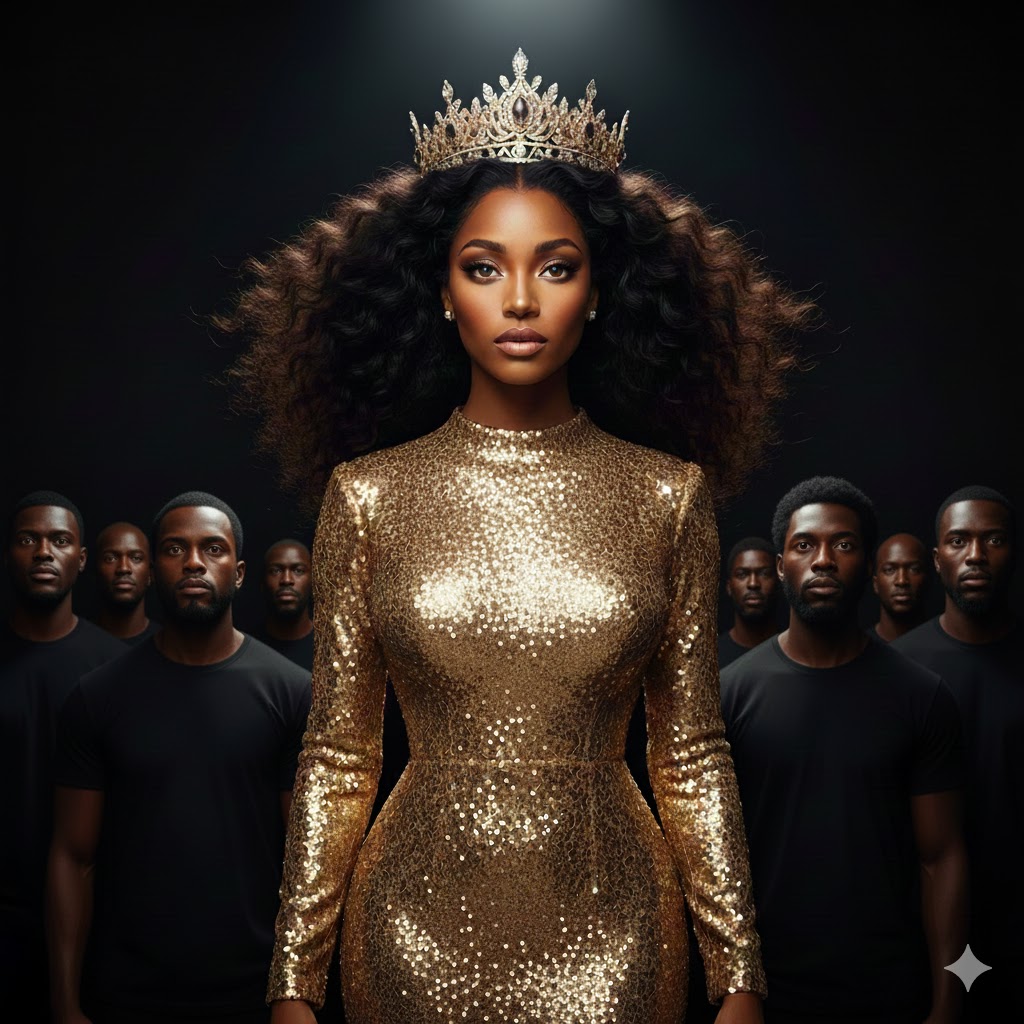
Aesthetics as Inequality: The Rise of Beautyism.

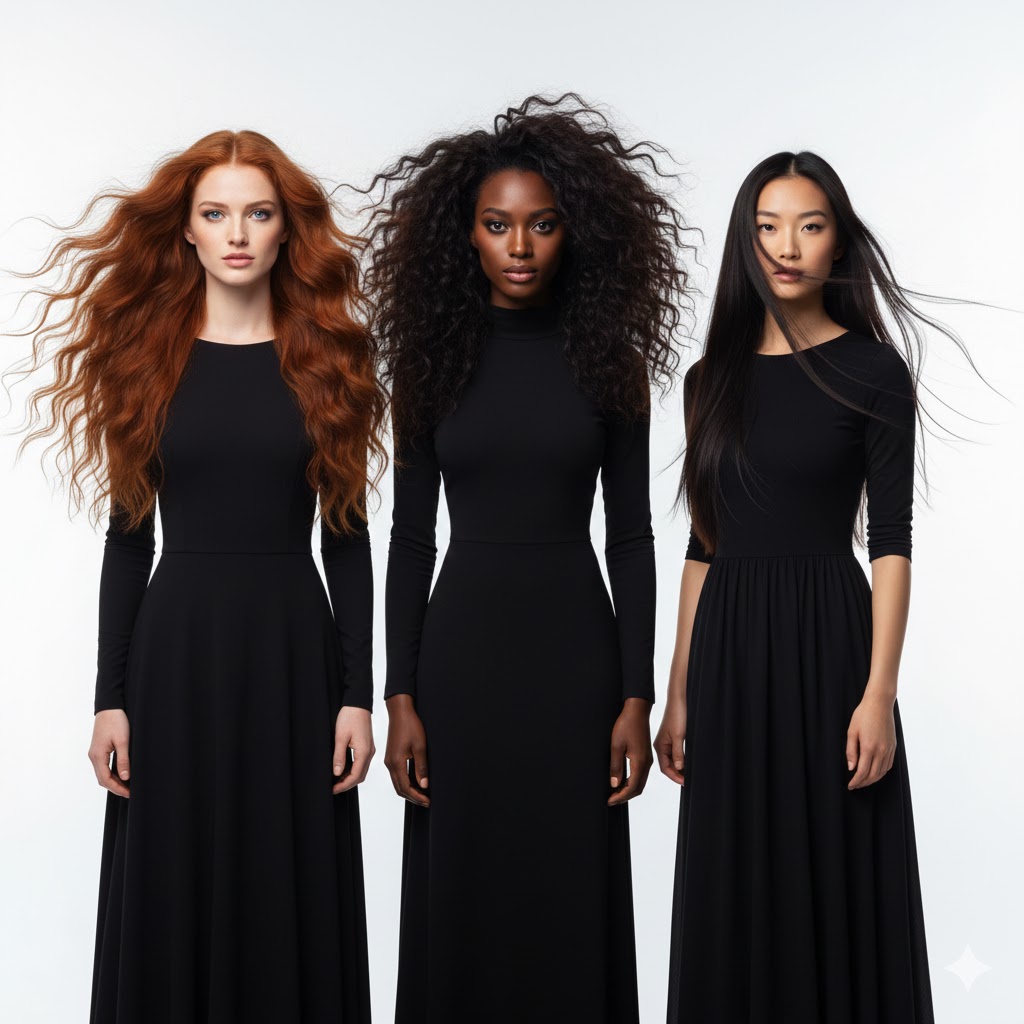
Beautyism, the systematic bias based on physical appearance, functions as a social and economic hierarchy that privileges certain aesthetic traits while marginalizing others. Unlike racism or sexism, beautyism often operates under the guise of “preference” or “merit,” making it less visible yet no less damaging. Cultural norms, media representation, and historical hierarchies have transformed beauty into a form of currency that dictates opportunity, influence, and social value.

The origins of beautyism are deeply entwined with colonialism and European imperialism. Eurocentric standards of beauty were exported globally, creating benchmarks for skin tone, facial features, and body proportions. These norms were framed as universal ideals, elevating certain traits while devaluing others. In effect, beauty became a marker of social hierarchy (Hamermesh & Biddle, 1994).

In professional environments, beautyism manifests as differential treatment in hiring, promotions, and salary. Research demonstrates that attractive individuals are more likely to be hired, perceived as competent, and receive higher wages. These advantages often operate unconsciously, reinforcing inequality in ostensibly meritocratic systems (Hosoda, Stone-Romero, & Coats, 2003).

Beautyism intersects with race, gender, and class, compounding advantage for those whose appearance aligns with dominant cultural norms. Lighter skin, Eurocentric facial features, and specific body types are disproportionately rewarded, while darker skin and Afrocentric features are often penalized. The result is an embedded social hierarchy that favors appearance in ways that mirror historical oppression (Hunter, 2007).

In social interactions, beautyism shapes perceived personality and character. The “halo effect” demonstrates that people attribute positive traits such as intelligence, kindness, and reliability to those deemed attractive. Conversely, individuals judged less attractive are more likely to face skepticism, distrust, or diminished respect (Eagly et al., 1991).

Romantic and relational dynamics are also shaped by beautyism. Culturally preferred features increase desirability, creating inequitable distribution of attention, marriage proposals, and social affirmation. Those outside the beauty hierarchy are frequently marginalized, fetishized, or objectified, reproducing social inequality.

Within families, beautyism can exacerbate favoritism. Children deemed more attractive may receive greater encouragement, resources, and protection, while those judged less appealing experience neglect or lower expectations. These early disparities influence self-esteem, ambition, and life outcomes.

Women face disproportionate consequences of beautyism due to gendered expectations. Societal pressure to conform to beauty norms imposes emotional, financial, and social labor. Women are more harshly judged for aging, body shape, and skin tone, making appearance a persistent determinant of perceived worth.

Media and culture perpetuate beautyism by normalizing narrow aesthetic ideals. Television, film, advertising, and social media consistently privilege certain body types, facial features, and skin tones, while underrepresenting or misrepresenting others. Repetition reinforces internalized bias and shapes public perception (Frisby, 2004).

Psychologically, beautyism contributes to low self-esteem, anxiety, and body dysmorphia. Internalized preference for certain appearances fosters shame and self-policing, disproportionately affecting marginalized groups whose natural features diverge from dominant standards.

Education systems also reflect beauty-based inequities. Attractive students are often perceived as more capable or motivated, receiving more encouragement and leniency. Less attractive students face higher scrutiny and lower expectations, which can impact long-term academic trajectories.

Economic impact of beautyism is measurable. Attractive individuals receive higher compensation, more promotions, and broader social networks. Beauty operates as a form of social and cultural capital, granting opportunities inaccessible to those outside the aesthetic norm (Hamermesh, 2011).

Beautyism functions as social mobility currency. Conformity to idealized aesthetics facilitates entry into elite spaces, mentorship networks, and influential social circles, while deviation can hinder progress, access, and visibility. Appearance thus becomes a gatekeeper for success.

Theologically, beautyism contradicts the principle that worth is determined by the heart rather than outward appearance. Scripture instructs, “Man looketh on the outward appearance, but the Lord looketh on the heart” (1 Samuel 16:7, KJV). Favoritism based on looks violates this divine standard.

Faith communities are not immune. Even where racial or socioeconomic partiality is rejected, appearance-based favoritism subtly influences leadership selection, visibility, and social validation. Spiritual integrity demands that beauty hierarchies be challenged.

Overcoming beautyism requires conscious awareness of bias and its structural implications. Individuals must interrogate personal preferences, institutions must audit policies, and media must diversify representation. Recognition of privilege tied to appearance is crucial for reform.

Internalized beautyism must be addressed to heal its psychological effects. Self-worth should be disentangled from societal standards, and programs emphasizing character, talent, and virtue over appearance can mitigate the impact of bias.

Collective action involves creating equitable environments where appearance does not dictate value or opportunity. Policies and practices must be scrutinized to prevent subtle favoritism based on looks, just as society addresses racial and gender inequities.

Beautyism is a social construct that entrenches inequality. Its dismantling requires intentional cultural, institutional, and personal reform, prioritizing character, skill, and virtue over conformity to aesthetic norms.

Ultimately, addressing beautyism affirms the inherent dignity and worth of all individuals. When societies reject hierarchical valuation based on appearance, they foster environments of justice, inclusion, and human flourishing.


References

The Holy Bible, King James Version. (1611). Various passages.

Hamermesh, D. S., & Biddle, J. E. (1994). Beauty and the labor market. American Economic Review, 84(5), 1174–1194.

Hosoda, M., Stone-Romero, E. F., & Coats, G. (2003). The effects of physical attractiveness on job-related outcomes: A meta-analysis of experimental studies. Personnel Psychology, 56(2), 431–462.

Hunter, M. (2007). The persistent problem of colorism: Skin tone, status, and inequality. Sociology Compass, 1(1), 237–254.

Eagly, A. H., Ashmore, R. D., Makhijani, M. G., & Longo, L. C. (1991). What is beautiful is good, but…: A meta-analytic review of research on the physical attractiveness stereotype. Psychological Bulletin, 110(1), 109–128.

Frisby, C. M. (2004). Does race or gender matter? Effects of media images on self-perception. Journal of Broadcasting & Electronic Media, 48(2), 301–317.

Hamermesh, D. S. (2011). Beauty pays: Why attractive people are more successful. Princeton University Press.

Beautyism: The Social Hierarchy of Appearance.

Beautyism is a pervasive form of bias in which physical attractiveness becomes a determinant of social, economic, and professional value. Unlike racism or sexism, which are widely recognized, beautyism often operates invisibly, normalized as preference or merit. Yet its consequences are tangible, affecting employment, compensation, social treatment, and interpersonal relationships. Appearance, particularly facial symmetry, skin tone, and adherence to cultural beauty norms, functions as an unspoken gatekeeper of opportunity.

Historically, beautyism has roots in class and colonial systems that equated aesthetic traits with worth. Eurocentric standards of beauty were imposed globally, privileging lighter skin, narrow noses, specific body shapes, and “refined” facial features. This legacy persists in contemporary media, professional expectations, and social judgment, reinforcing hierarchies based on appearance (Hamermesh & Biddle, 1994).

In the workplace, beautyism manifests in hiring, promotions, and wage disparities. Attractive individuals are often perceived as more competent, intelligent, and socially skilled, regardless of actual ability. Research indicates that more physically appealing candidates are statistically more likely to be hired, receive higher salaries, and attain leadership roles (Hosoda, Stone-Romero, & Coats, 2003).

Beautyism intersects with race and colorism, amplifying advantage for those whose features align with dominant aesthetic ideals. Lighter-skinned, Eurocentric features are often rewarded, while darker skin or features associated with non-European ancestry are penalized. This creates a compounded effect where racial bias and beauty bias reinforce each other (Hunter, 2007).

Socially, beautyism shapes relational dynamics. Attractive individuals receive more attention, favor, and trust in interpersonal interactions. Studies on the “halo effect” demonstrate that perceived beauty leads observers to attribute positive personality traits, competence, and moral character to an individual solely based on appearance (Eagly et al., 1991).

Within romantic and social spheres, beautyism dictates desirability and perceived worth. Partners with culturally valued features are more likely to receive attention, admiration, and romantic interest, while those outside these norms are often marginalized, fetishized, or overlooked. This hierarchy reinforces societal inequities and internalized self-judgment.

In families and communities, beautyism can exacerbate favoritism and differential treatment. Children with features perceived as attractive may receive more encouragement, praise, and social capital, while less “beautiful” children may experience neglect or lower expectations. Such disparities impact self-esteem, social development, and life trajectories.

Beautyism also intersects with gender, disproportionately affecting women. Societal pressure for women to maintain attractiveness translates into emotional, financial, and professional labor. Women are judged more harshly by appearance than men, facing scrutiny for aging, body size, skin tone, and facial symmetry.

Media and popular culture are key vehicles for perpetuating beautyism. Films, television, advertisements, and social media frequently elevate a narrow standard of beauty, often white-centered, while marginalizing diverse representation. Repetition trains collective perception, normalizing hierarchy and preference (Frisby, 2004).

Psychologically, beautyism contributes to anxiety, body dysmorphia, and low self-esteem. Internalized societal preference for certain features causes individuals to view themselves and others through biased lenses. This internal policing perpetuates inequality even in private or informal spaces.

Education is not immune to beautyism. Teachers’ perceptions of attractiveness influence grading, disciplinary decisions, and expectations. Attractive students are often seen as more capable or disciplined, while those judged less attractive may face harsher critique or reduced encouragement.

Economically, beautyism translates into measurable disparity. Attractive individuals command higher salaries, receive more bonuses, and have access to greater professional networks. Studies show a wage premium for attractive people across industries, indicating structural reinforcement of appearance-based advantage (Hamermesh, 2011).

Beautyism is also intertwined with social mobility. Individuals who conform to aesthetic norms are more likely to navigate elite spaces, gain mentorship, and access resources unavailable to those outside dominant beauty standards. This creates a cycle where beauty functions as currency.

Biblically, beautyism contradicts the principle that God evaluates by heart rather than outward appearance. Scripture warns, “Man looketh on the outward appearance, but the Lord looketh on the heart” (1 Samuel 16:7, KJV). Favoritism based on looks is therefore morally and spiritually flawed.

Churches and faith communities are not exempt. While congregations may reject racial or economic partiality, appearance-based favoritism often persists subtly through leadership selection, social visibility, and interpersonal validation. Spiritual integrity demands confrontation of this bias.

Overcoming beautyism requires intentional awareness and disruption of these hierarchies. Individuals and institutions must examine unconscious bias, challenge media narratives, and affirm diverse forms of beauty. Recognition of privilege tied to appearance is necessary for systemic and personal reform.

Intervention must also address internalized belief systems. Self-worth must be disentangled from aesthetic validation. Educational programs, counseling, and mentorship that prioritize character, talent, and virtue over looks can mitigate the psychological burden of beautyism.

Collective resistance involves creating inclusive environments where appearance does not dictate access or value. Policy, culture, and leadership structures must actively counteract favoritism based on looks, just as they address racial, gender, and class discrimination.

Ultimately, beautyism is a social construct that both reflects and reinforces inequality. Addressing it is not about denying aesthetics, but refusing hierarchy rooted in appearance. Justice, fairness, and human dignity demand that value be measured by character and action rather than physical conformity to cultural standards.

The dismantling of beautyism is a moral, cultural, and spiritual imperative. When societies cease rewarding superficial conformity, they open space for equitable recognition of talent, intelligence, and virtue, affirming the inherent worth of every individual.


References

The Holy Bible, King James Version. (1611). Various passages.

Hamermesh, D. S., & Biddle, J. E. (1994). Beauty and the labor market. American Economic Review, 84(5), 1174–1194.

Hosoda, M., Stone-Romero, E. F., & Coats, G. (2003). The effects of physical attractiveness on job-related outcomes: A meta-analysis of experimental studies. Personnel Psychology, 56(2), 431–462.

Hunter, M. (2007). The persistent problem of colorism: Skin tone, status, and inequality. Sociology Compass, 1(1), 237–254.

Eagly, A. H., Ashmore, R. D., Makhijani, M. G., & Longo, L. C. (1991). What is beautiful is good, but…: A meta-analytic review of research on the physical attractiveness stereotype. Psychological Bulletin, 110(1), 109–128.

Frisby, C. M. (2004). Does race or gender matter? Effects of media images on self-perception. Journal of Broadcasting & Electronic Media, 48(2), 301–317.

Hamermesh, D. S. (2011). Beauty pays: Why attractive people are more successful. Princeton University Press.

The Beautiful Brown That Changed the Room.

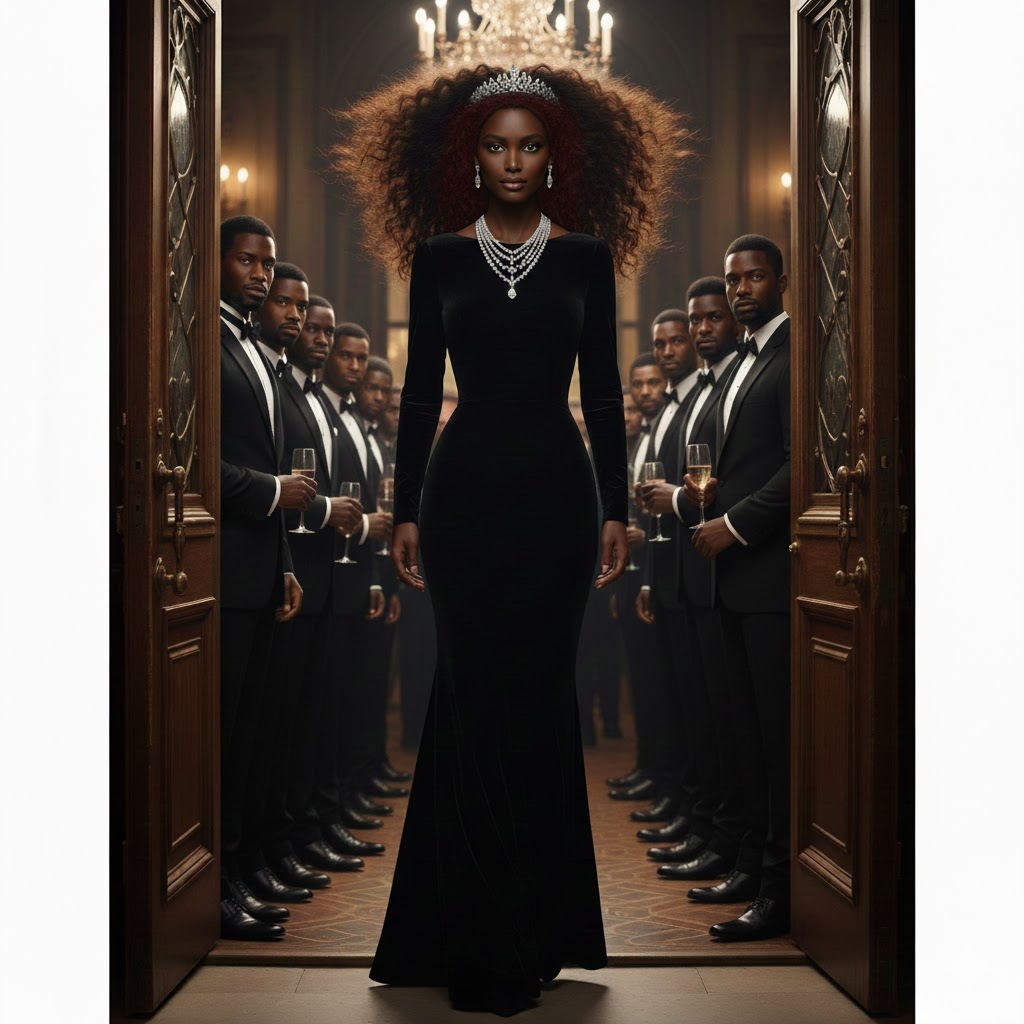
When she enters, the air seems to shift. There is a gravity to her presence, an energy that demands attention without demanding it. Her brown skin, rich and radiant, tells a story of ancestry, resilience, and divine design. She does not need adornment to shine; her essence alone commands the room.

Society has long tried to dictate standards of beauty that favor lighter skin, a legacy of colorism rooted in slavery, colonialism, and media representation. Yet, the beautiful brown woman challenges these narratives simply by existing unapologetically. Her presence is a rebellion, a reclamation of self-worth, and a demonstration of ancestral pride (Hunter, 2007).

Her beauty is holistic—her brownness is inseparable from her poise, intellect, and confidence. It is in her posture, the deliberate cadence of her speech, and the self-assuredness in her eyes. This combination disrupts preconceived notions and reshapes perceptions of what it means to be beautiful (Bradshaw, 2012).

In professional settings, social gatherings, or casual encounters, her brown skin communicates a quiet authority. People instinctively take notice, not because she demands it, but because she emanates authenticity and power. She is a walking testament to the majesty of her people.

Her presence is also culturally symbolic. Dark skin, often stigmatized in media and society, becomes a banner of resilience. She carries the legacy of queens, activists, artists, and pioneers who navigated systemic oppression with grace, leaving imprints that continue to inspire.

The room changes not only because of her external beauty but because of her mindset. She radiates intelligence, creativity, and spiritual depth. These qualities amplify the effect of her appearance, showing that beauty is not skin-deep but soul-deep (Strober, 2017).

Fashion, style, and personal expression become tools to complement her brownness rather than define it. She chooses garments that honor her body, colors that celebrate her tone, and accessories that accentuate her essence without overshadowing it. Every choice is intentional, reflecting self-awareness and artistry.

Her influence extends beyond aesthetics. She inspires other Black women to embrace their own shades of brown, fostering communities of affirmation and empowerment. Through mentorship, social media, and everyday interactions, she reshapes cultural definitions of attractiveness and success (Russell-Cole et al., 2013).

Even in spaces where colorism persists, she refuses to diminish herself. She walks boldly, speaks clearly, and exists fully. Her refusal to conform challenges societal norms and encourages others to do the same, cultivating a ripple effect of confidence and liberation.

The beautiful brown woman also embodies spiritual and emotional depth. Her faith, compassion, and resilience enhance her presence, allowing her to engage the world with a blend of humility and authority. Her brownness becomes not just a visual marker but a symbol of wisdom and inner strength.

Her laughter fills the room, warm and inviting, softening tension and inviting camaraderie. Her smile is a reminder that joy, confidence, and self-acceptance are revolutionary acts for women whose beauty has historically been undervalued.

Even the way she moves—her gestures, her posture, the rhythm of her speech—changes the atmosphere. People are drawn to her authenticity, her refusal to imitate, and her natural elegance. Presence, in her case, becomes a form of empowerment.

In social and professional circles alike, she commands respect through competence, insight, and composure. Her brownness is intertwined with her achievements, a visual testament to capability and excellence (Patton, 2006).

Her beauty is not static; it evolves with experience, reflection, and growth. Each challenge she overcomes and every skill she masters adds depth to her presence, demonstrating that the most impactful beauty is dynamic and multifaceted.

Her brownness is also political. In a world that often undervalues dark skin, she asserts her value daily, challenging ingrained hierarchies and shifting collective consciousness. Her existence questions assumptions and redefines societal standards of desirability and authority.

She carries herself with dignity in all situations, transforming spaces with grace and assurance. People notice not because she seeks approval, but because her essence radiates self-possession and excellence.

Her influence extends to younger generations, who see in her a reflection of possibility and potential. She becomes a visual and moral guidepost, illustrating that beauty, intellect, and strength are not mutually exclusive but complementary.

Her presence challenges stereotypes, proving that the dark-skinned woman is multifaceted—intelligent, creative, resilient, and aesthetically striking. She disrupts monolithic narratives and invites a richer, more inclusive understanding of beauty (Banks, 2000).

Even in fleeting interactions, her impact lingers. People remember her warmth, her confidence, and the way her brownness seemed to illuminate the space. She leaves an imprint that goes beyond sight, touching hearts and minds.

Ultimately, the beautiful brown woman changes the room because she is unapologetically herself. She embodies the intersection of heritage, talent, faith, and self-acceptance. Her presence is a celebration of what it means to thrive as a Black woman, and a reminder that true beauty—grounded in authenticity and pride—is transformative.


References

  • Banks, I. (2000). Hair matters: Beauty, power, and Black women’s consciousness. NYU Press.
  • Bradshaw, K. (2012). Skin deep: Exploring colorism in Black communities. Journal of Black Studies, 43(1), 21–39.
  • Hunter, M. (2007). The persistent problem of colorism: Skin tone, status, and inequality. Sociology Compass, 1(1), 237–254.
  • Patton, T. O. (2006). Hey girl, am I more than my hair? African American women and their struggles with beauty, body image, and hair. NWSA Journal, 18(2), 24–51.
  • Russell-Cole, K., Wilson, M., & Hall, R. E. (2013). The color complex: The politics of skin color among African Americans. HarperCollins.
  • Strober, R. (2017). Dark girls: Embracing beauty and identity. Psychology of Women Quarterly, 41(4), 487–500.

Overcoming Colorism

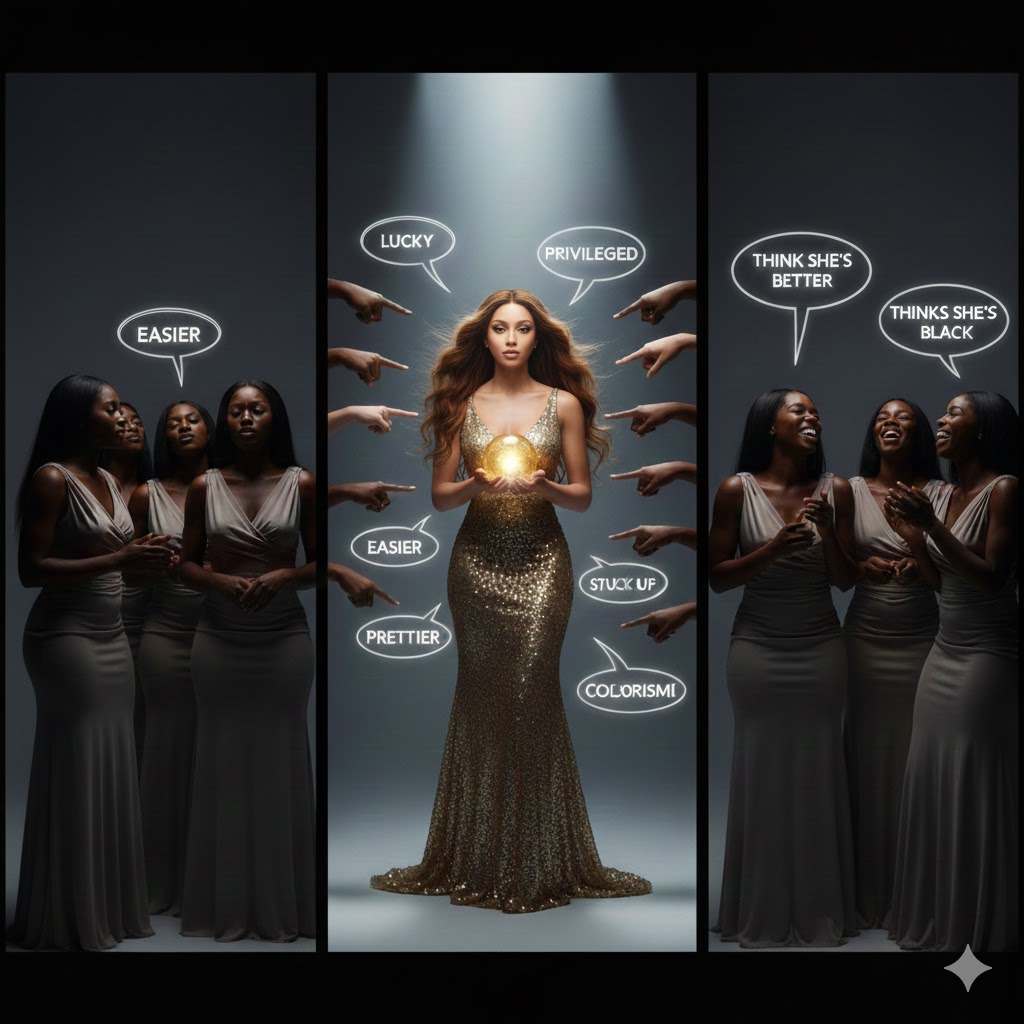
Overcoming colorism requires confronting a system that was never accidental but intentionally engineered to rank human worth by shade. Colorism is the internalization of white supremacist ideology, operating within communities of color to privilege lightness and punish darkness. Healing begins with truth—acknowledging that colorism is not preference, personality, or coincidence, but a learned hierarchy rooted in historical violence.

Colorism was born in slavery and colonialism, where proximity to whiteness determined access to safety, labor conditions, and social value. These hierarchies were imposed by force, reinforced by law, and justified by distorted theology. Over time, what began as external control became internal belief, passed down as culture rather than recognized as trauma.

The first step in overcoming colorism is naming it without defensiveness. Silence protects systems, not people. When communities deny colorism, they allow it to operate unchecked in families, churches, schools, and relationships. Scripture affirms that truth is the pathway to freedom, not comfort (John 8:32, KJV).

Healing requires rejecting the lie that colorism is harmless. Research consistently demonstrates that skin tone affects income, education, sentencing, marriage prospects, and mental health (Hunter, 2007; Monk, 2014). These outcomes reveal colorism as structural inequality, not individual insecurity.

Psychologically, overcoming colorism demands deprogramming. Racialized hierarchies shape self-concept from early childhood, influencing whom people admire, desire, and trust. Proverbs reminds us that as a person thinks in their heart, so they become (Proverbs 23:7, KJV). Without intentional intervention, internalized bias reproduces itself unconsciously.

Families play a central role in dismantling colorism. Differential treatment of children based on skin tone communicates worth long before identity is formed. Overcoming colorism requires equal affirmation, protection, and expectation for all children, regardless of shade. What is nurtured in the home either heals or deepens generational wounds.

Education is another critical site of resistance. Schools must address colorism explicitly, not merely racism. Darker-skinned children are disciplined more harshly and underestimated academically, while lighter-skinned peers receive grace and encouragement. Equity requires awareness, accountability, and structural correction.

Media literacy is essential for overcoming colorism. Representation shapes desire and self-perception. When lighter skin dominates narratives of beauty, success, and love, hierarchy is normalized. Challenging these images and elevating diverse representations disrupts the feedback loop that trains bias.

In romantic relationships, overcoming colorism requires honesty about attraction. Preferences are not neutral when they consistently mirror oppression. Scripture warns against lust shaped by the eyes rather than righteousness (1 John 2:16, KJV). Desire itself must be examined, not defended.

Church spaces must also confront colorism. Partiality based on appearance directly violates biblical law. James condemns favoritism as sin, regardless of cultural norms (James 2:1–9, KJV). Overcoming colorism in faith communities is not optional; it is obedience.

Spiritually, colorism contradicts creation theology. Humanity was made in God’s image, not graded by complexion (Genesis 1:27, KJV). To esteem one shade above another is to dispute God’s craftsmanship and substitute colonial aesthetics for divine truth.

Overcoming colorism also requires addressing shame. Dark-skinned individuals often carry internalized rejection that manifests as self-doubt or overcompensation. Healing involves affirming that darkness is not deficiency but depth, origin, and beauty. African history affirms Blackness as foundational, not marginal (Diop, 1974).

For lighter-skinned individuals, overcoming colorism involves acknowledging unearned advantage without guilt or denial. Recognition is not accusation; it is responsibility. Scripture teaches that to whom much is given, much is required (Luke 12:48, KJV).

Community accountability is essential. Jokes, compliments, and casual comments often reinforce hierarchy. Overcoming colorism means interrupting harmful language and refusing to normalize shade-based value systems, even when they appear subtle or affectionate.

Psychological research affirms that intentional exposure to counter-stereotypical imagery and narratives reduces implicit bias. This aligns with the biblical principle of renewing the mind rather than conforming to inherited patterns (Romans 12:2, KJV).

Overcoming colorism also demands structural change. Institutions must examine hiring practices, promotion criteria, disciplinary policies, and representation. Individual healing cannot substitute for systemic accountability.

Forgiveness is part of the process, but forgiveness without truth is denial. Scripture teaches that repentance precedes restoration. Communities must grieve the damage colorism has caused before reconciliation can occur.

The dismantling of colorism restores unity. Hierarchy fractures solidarity, but truth repairs it. When shade no longer determines worth, collective strength increases, and internal conflict diminishes.

Overcoming colorism is not about reversing hierarchy but abolishing it. Liberation is not achieved by making darkness dominant, but by eliminating dominance altogether.

Ultimately, overcoming colorism is a moral, psychological, and spiritual imperative. God is no respecter of persons (Acts 10:34, KJV). Any system that contradicts this truth must be confronted and dismantled.

When colorism is overcome, communities move closer to wholeness. What replaces hierarchy is not sameness, but dignity. And dignity, once restored, becomes the foundation for justice, unity, and healing.


References

The Holy Bible, King James Version. (1611). Various passages.

Hunter, M. (2007). The persistent problem of colorism: Skin tone, status, and inequality. Sociology Compass, 1(1), 237–254.

Monk, E. P. (2014). Skin tone stratification among Black Americans. Social Forces, 92(4), 1317–1337.

Monk, E. P. (2019). The color of punishment: African Americans, skin tone, and the criminal justice system. Ethnic and Racial Studies, 42(10), 1593–1612.

Russell, K., Wilson, M., & Hall, R. (1992). The color complex: The politics of skin color among African Americans. Anchor Books.

Fanon, F. (1952). Black skin, white masks. Grove Press.

Cross, W. E. (1991). Shades of Black: Diversity in African-American identity. Temple University Press.

Diop, C. A. (1974). The African origin of civilization: Myth or reality. Lawrence Hill Books.

Wilkerson, I. (2020). Caste: The origins of our discontents. Random House.

She Is Shulamite in Brown: Loved, Not Compared.

The Shulamite is a central figure in the Song of Solomon (Song of Songs) in the King James Version of the Bible, celebrated for her beauty, sensuality, and beloved status. She represents the ideal of feminine virtue, desire, and intimacy, yet her character is often misunderstood or misappropriated. She is a Black or brown-skinned woman in the biblical narrative, often interpreted as a representation of a woman fully embraced in her own skin, proud of her heritage, and cherished for her intrinsic worth (Song of Solomon 1:5–6, KJV).

The Shulamite’s brownness is highlighted in the text: “I am black, but comely, O ye daughters of Jerusalem” (Song of Solomon 1:5, KJV). This acknowledgment of her dark skin is not a limitation but a declaration of beauty and dignity. She stands as a model for self-acceptance, unapologetic in her appearance, and fully loved for who she is. Her character challenges societies that equate fairness with favor, asserting that worth is inherent, not comparative.

The Shulamite lived in Shulam (or Shunem), a region in ancient Israel, giving her the name “Shulamite.” She embodies the ideal beloved woman, both physically appealing and morally grounded, whose beauty is holistic—spiritual, emotional, and physical. Her brownness, celebrated in scripture, is integral to her identity and her desirability.

Biblically, the Shulamite’s love story is with King Solomon, the wisest man of Israel, though she is not defined solely by this relationship. The text emphasizes mutual love, respect, and admiration. Unlike many narratives where women are objects of comparison, the Shulamite is loved uniquely, for herself, not measured against other women (Song of Solomon 2:16, KJV).

Her narrative teaches that beauty is multifaceted. While society often emphasizes physical appearance alone, the Shulamite’s appeal encompasses confidence, poise, character, and spirituality. Her brown skin is a source of pride, not shame, highlighting a biblical affirmation of melanin-rich beauty.

The Shulamite is also a symbol of agency and voice. She speaks openly about desire, fear, and longing. She is not passive but actively expresses love and commands attention through both words and presence. This autonomy challenges the reduction of women to mere physicality or comparison.

In Black and brown communities today, the Shulamite serves as a powerful archetype. She represents self-love, resisting societal hierarchies that favor lighter skin. Her example validates darker skin tones, encouraging pride, confidence, and recognition of divine favor despite external prejudice.

The Shulamite’s brownness is frequently misinterpreted by Eurocentric translations or artwork, which often depict her with lighter skin. Recognizing her true skin tone restores cultural and spiritual integrity, affirming that God delights in her appearance as He created it.

Her story also emphasizes relational equality. Solomon’s love for her is personal, tender, and unwavering. He values her character alongside her appearance, demonstrating that true affection is holistic and not conditional upon conformity to societal beauty standards.

In the Song of Solomon, she is contrasted with others only to highlight her uniqueness, not to diminish her worth. The text teaches that comparison is unnecessary when one is fully embraced and valued by God and by those who truly love them (Song of Solomon 1:8–10, KJV).

The Shulamite’s wisdom extends beyond romance. She navigates societal pressures and male attention with discernment. She balances desire with dignity, modeling how women can assert themselves in relationships while maintaining self-respect.

Her narrative also underscores the divine intention behind diverse beauty. Scripture repeatedly affirms that God is no respecter of persons (Acts 10:34, KJV). The Shulamite’s brown skin and unique traits are celebrated, not subordinated, demonstrating that true beauty is in God’s creation, not human comparison.

The Shulamite inspires contemporary discussions around colorism. She embodies resistance to the idea that darker-skinned women must conform to Eurocentric ideals to be desirable, proving that divine approval and human admiration are independent of societal bias.

Spiritually, the Shulamite reflects the intimacy between God and His people. Her self-assuredness and acceptance mirror the believer’s call to embrace God’s design fully, including one’s physical attributes. Her narrative is an invitation to celebrate God’s image in diverse forms.

Her brown skin is a source of identity, pride, and relational power. By acknowledging her melanin, she asserts that value is intrinsic, not assigned by external standards. This principle challenges centuries of social prejudice favoring lighter tones.

The Shulamite’s love is mutual and affirming. She is not defined by comparison to other women but by the depth of connection with her beloved, exemplifying the principle that worth is relationally and spiritually grounded rather than competitively measured.

Her voice, confidence, and presence teach that women should speak, act, and love without seeking validation through societal benchmarks. Her beauty is self-contained and self-affirmed, a model for self-love and divine recognition.

In literary and theological studies, the Shulamite is increasingly understood as a symbol of marginalized beauty and voice. Scholars highlight her role in demonstrating that God honors diversity, contrasts human standards, and delights in those whom society may overlook.

The Shulamite remains a powerful icon for women of color, especially Black and brown women. She affirms that their beauty, dignity, and worth are not contingent upon comparison, but are fully loved by God and those who embrace true affection.

Her legacy is timeless: to be Shulamite in brown is to embody confidence, dignity, and divine love. She teaches that self-worth is intrinsic, beauty is multifaceted, and comparison is unnecessary when one is fully embraced and valued.


References

The Holy Bible, King James Version. (1611). Song of Solomon 1:5–6, 2:16, 1:8–10.

West, M. L. (2007). The Songs of Solomon: A study of poetic love and symbolism. Oxford University Press.

Alter, R. (2010). The Art of Biblical Poetry. Basic Books.

Knight, F. (1995). Song of Songs: A Black woman’s reflection. Journal of Biblical Literature, 114(2), 215–230.

Hobbs, J. (2018). Melanin and the Bible: Reclaiming brown and Black beauty in scripture. Faith & Culture Review, 12(1), 45–62.

Hunter, M. (2007). The persistent problem of colorism: Skin tone, status, and inequality. Sociology Compass, 1(1), 237–254.

Latin Lineages: Spanish/Latin/Hispanic

Here’s the breakdown:

TermMeaning
SpanishSomeone from Spain (the country) — nationality/ethnicity tied to the Iberian Peninsula.
Spanish-speaking / Hispan(o/a/ic)People from countries that speak Spanish because of Spanish colonization. This includes Mexico and Puerto Rico, so in this sense they are part of the Hispanic (Spanish-speaking) world, but not Spanish by nationality.
Latino/LatinaA person from Latin America or the Caribbean, regardless of the language. Mexicans and Puerto Ricans are Latino/a.
Race/EthnicityMexican and Puerto Rican people can be Indigenous, European, African, mixed (mestizo/mulatto/triracial), etc., depending on family ancestry. This is separate from being “Spanish.”

So:

  • A Mexican person is not Spanish, unless their family is literally from Spain.
  • A Puerto Rican person is not Spanish by nationality, but is Hispanic because Puerto Rico is a Spanish-speaking Caribbean island.
  • Both Mexico and Puerto Rico are part of the Spanish-speaking/Hispanic world, but their people are Mexican or Puerto Rican, not Spanish, unless their ancestry traces directly to Spain.

Why the confusion?

Because:

  • They speak Spanish
  • Their countries were colonized by Spain
  • Hispanic culture carries Spanish influence

That sometimes leads to the umbrella assumption that “Spanish = anyone who speaks Spanish,” but formally, Spanish refers only to Spain.

Final clarity:

✅ Mexicans & Puerto Ricans are Hispanic (Spanish-speaking)
✅ They are Latino/a
❌ They are not Spanish, unless their lineage is from Spain itself

Let me know if you want this explained next through ancestry, genetics, or cultural identity too!

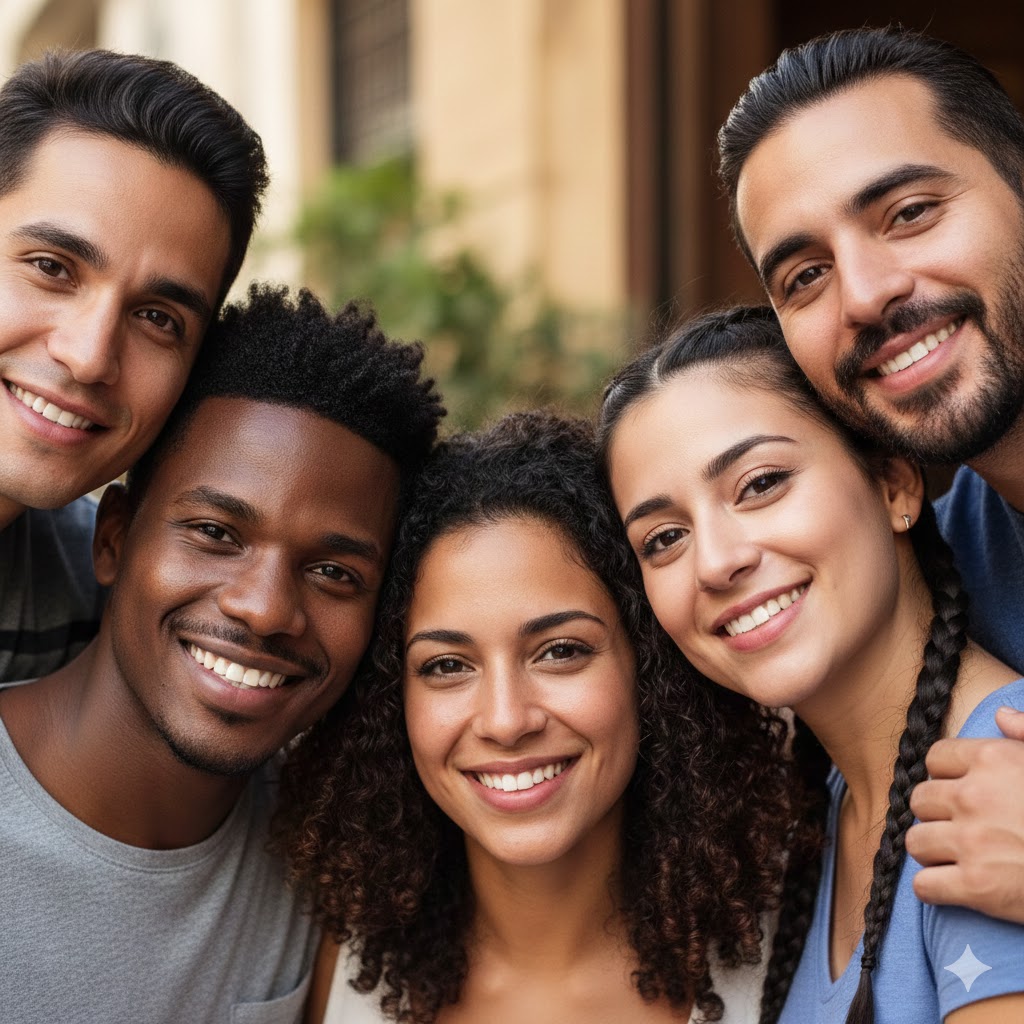
Latin beauty is an aesthetic concept shaped by the histories, peoples, and cultures of Latin America, the Caribbean, and the Iberian-influenced Spanish-speaking world. It is not one single look or race, but a constellation of shared beauty markers, cultural values, and presentation styles that come from regions where Indigenous, European (especially Spanish/Portuguese), African, and later Middle Eastern and Asian influences blended over centuries.


Core elements of Latin beauty

1. Diversity within unity

Latin beauty thrives on mixture—mestizaje (racial and cultural blending).
A Latin woman may have:

  • Indigenous features (e.g., flat nasal bridge, deep-set black/brown eyes)
  • European symmetry (often Iberian)
  • African influence (curly/afro-textured hair, full lips, warm undertones)
  • Middle Eastern influence in some families (arched brows, dramatic eyes like Salma Hayek)
    Latin beauty doesn’t require one ancestry, but often reflects the results of many intersecting ones.

2. Expressive facial features

Frequently celebrated markers include:

  • Large, luminous, emotionally expressive eyes
  • Long, dark, or thick eyelashes
  • Naturally arched or full eyebrows
  • Balanced or defined nose shapes (varies by ancestry)
  • High or sculpted cheekbones
  • Full to medium lips with natural pigmentation

3. Warm, glowing skin tones

Latin beauty tends to emphasize:

  • Olive, caramel, honey, bronze, or golden undertones
  • Skin described as sun-kissed, radiant, or warm rather than pale
  • A complexion associated with life, climate, identity, and vitality

4. Hair richness

Common hair aesthetics include:

  • Dark hues (jet black to deep brown)
  • Thick texture
  • Natural movement (from sleek and straight to wavy, curly, or coiled, depending on region)
    Hair is often treated as a symbol of femininity and sensuality.

5. Femininity, cultural presence, and style storytelling

Latin beauty is not only physical—it reflects:

  • Confidence without coldness, warmth without fragility
  • Cultural embrace of color, rhythm, and sensual expression
  • Beauty rituals that celebrate adornment, care, fragrance, skin oils, jewelry, bold eye makeup, and natural lip tones
    It is beauty with personality attached, like a story rather than a sculpture alone.

Regional aesthetics that feed the Latin beauty identity

RegionInfluence on beauty
Mexico, Central & South AmericaStrong Indigenous + Spanish mix, known for dark eyes, warm undertones, thick hair
Caribbean (Puerto Rico, DR, Cuba)More Afro-Latina presence, soft skin, bright smiles, curly or textured hair, girl-next-door warmth like Roselyn Sánchez
Spain & Portugal connectionBrings Iberian symmetry, elegance, old-world glamour, dramatic eye shapes (Penelope Cruz archetype)
Latin celebrities in U.S. mediaCreated the modern imagination of Spanish dolls: glamorous but culturally rooted

Why “doll” imagery became associated with Latin beauty

Because of:

  • Symmetrical faces
  • Large, captivating eyes
  • Glossy dark hair
  • Golden or brown complexions
  • A beauty that feels both idealized and ornamental
    But unlike plastic dolls, Latin beauty carries identity, voice, legacy, and heritage beneath the surface.

Final definition

Latin beauty is the celebration of multiracial harmony, warm and expressive features, dark hair richness, glowing skin, and a culturally embodied femininity that blends strength with warmth, glamour with relatability. It is not just seen—it is felt.

Yes—Mexican, Spanish (from Spain), and Puerto Rican people can all be considered Latin, but in slightly different ways.

Explanation:

GroupLatin?Why
Mexican✅ YesMexico is part of Latin America, a Latin region.
Puerto Rican✅ YesPuerto Rico is in the Latin Caribbean, also a Latin region.
Spanish (from Spain)✅ Yes (Culturally Latin)Spain is not in Latin America, but it is a Romance/Latin-based culture (Latin language influence, Roman + Iberian history). They are often included in broader “Latin world” discussions, but not Latino/a unless living identity ties to Latin America.

Key terms clarified:

  • Latino/Latina = someone from Latin America or the Caribbean → (Mexico & Puerto Rico qualify)
  • Hispanic = Spanish-speaking countries → (Mexico, Puerto Rico, and Spain qualify)
  • Latin = Romance-language influenced regions/cultures (Spanish, Portuguese, French, Italian roots) → (All 3 fit culturally)
  • Latin American = specifically from the Americas → (Spain does not fit this one)

Final clarity:

✅ Mexicans are Latino/a
✅ Puerto Ricans are Latino/a
✅ Spanish people are Latin culturally, but not Latino/a by nationality unless they identify through Latin American heritage or upbringing

Shades of Power: How Colorism Functions as a Hidden Caste System

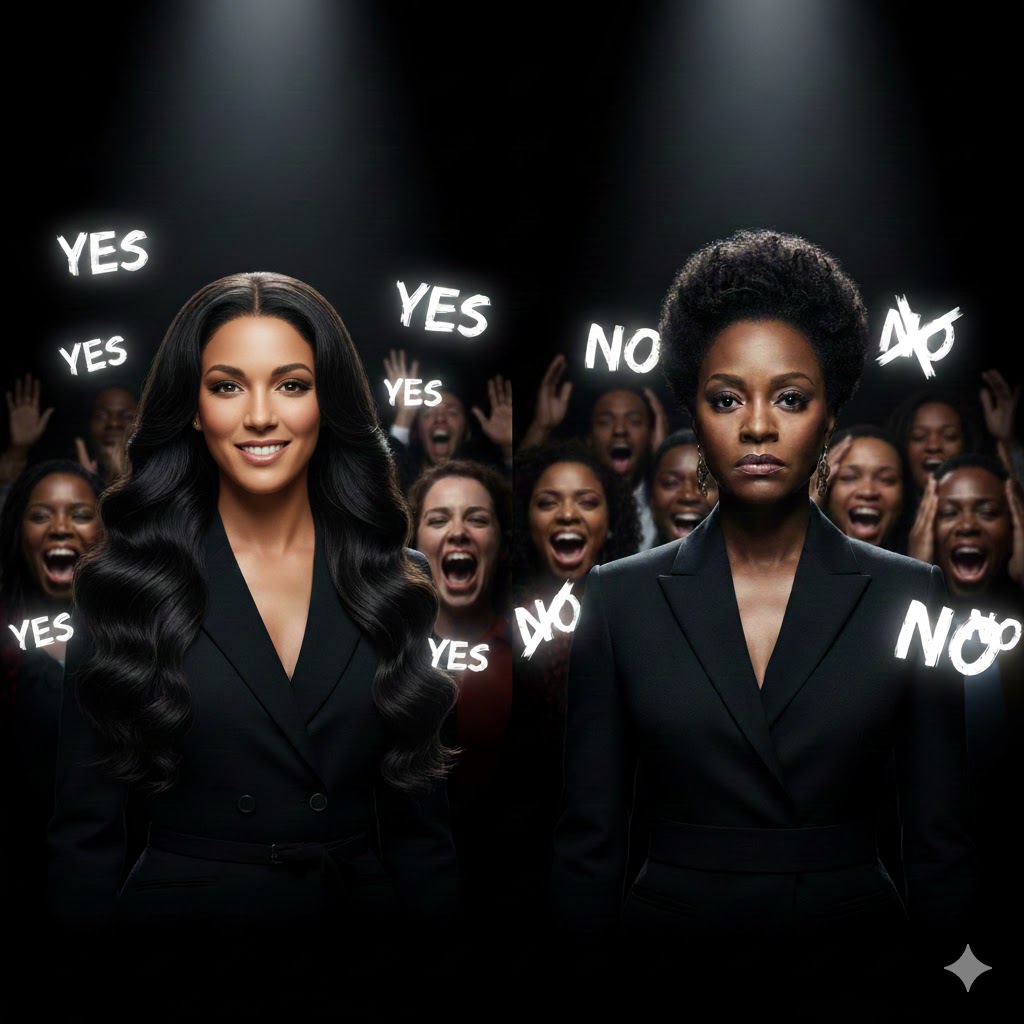
Colorism operates as an unspoken caste system within racialized communities, privileging proximity to whiteness while punishing darker skin. Unlike racism, which is imposed externally, colorism thrives internally, making it both more difficult to confront and more psychologically destructive. It functions quietly, shaping social outcomes while masquerading as “preference” or “aesthetic.”

Historically, colorism was engineered during slavery, where lighter-skinned enslaved people were granted marginal advantages such as indoor labor or literacy access. These privileges were not benevolence but strategy—designed to fracture solidarity and create internal hierarchies that mirrored white supremacy. Over generations, these imposed distinctions calcified into social norms.

The Bible warns against such partiality, stating, “But if ye have respect to persons, ye commit sin” (James 2:9, KJV). Colorism is precisely this sin—assigning value based on appearance rather than character or righteousness. When communities internalize this hierarchy, they replicate the logic of their oppressors.

Psychologically, colorism distorts self-concept. Darker-skinned individuals often internalize shame, while lighter-skinned individuals may experience conditional acceptance tied to appearance rather than identity. This dynamic reinforces anxiety, comparison, and alienation, aligning with Fanon’s analysis of racialized inferiority complexes (Fanon, 1952).

Sociologically, colorism influences hiring, sentencing, marriage markets, and media representation. Studies consistently show that lighter skin correlates with higher income and social mobility within Black populations (Hunter, 2007). These outcomes expose colorism as structural, not merely personal bias.

Spiritually, colorism contradicts the doctrine of creation. Scripture affirms that humanity is made in God’s image, not graded by shade (Genesis 1:27, KJV). Any hierarchy of skin tone is therefore a theological error, not a cultural quirk.

Until colorism is named as a system—rather than an attitude—it will continue to operate invisibly. Liberation requires dismantling not only white supremacy, but its internalized offspring.

References

The Holy Bible, King James Version.
Fanon, F. (1952). Black skin, white masks.
Hunter, M. (2007). “The persistent problem of colorism.” Sociology Compass.

Dermal Divinity: When God Painted Her Brown.

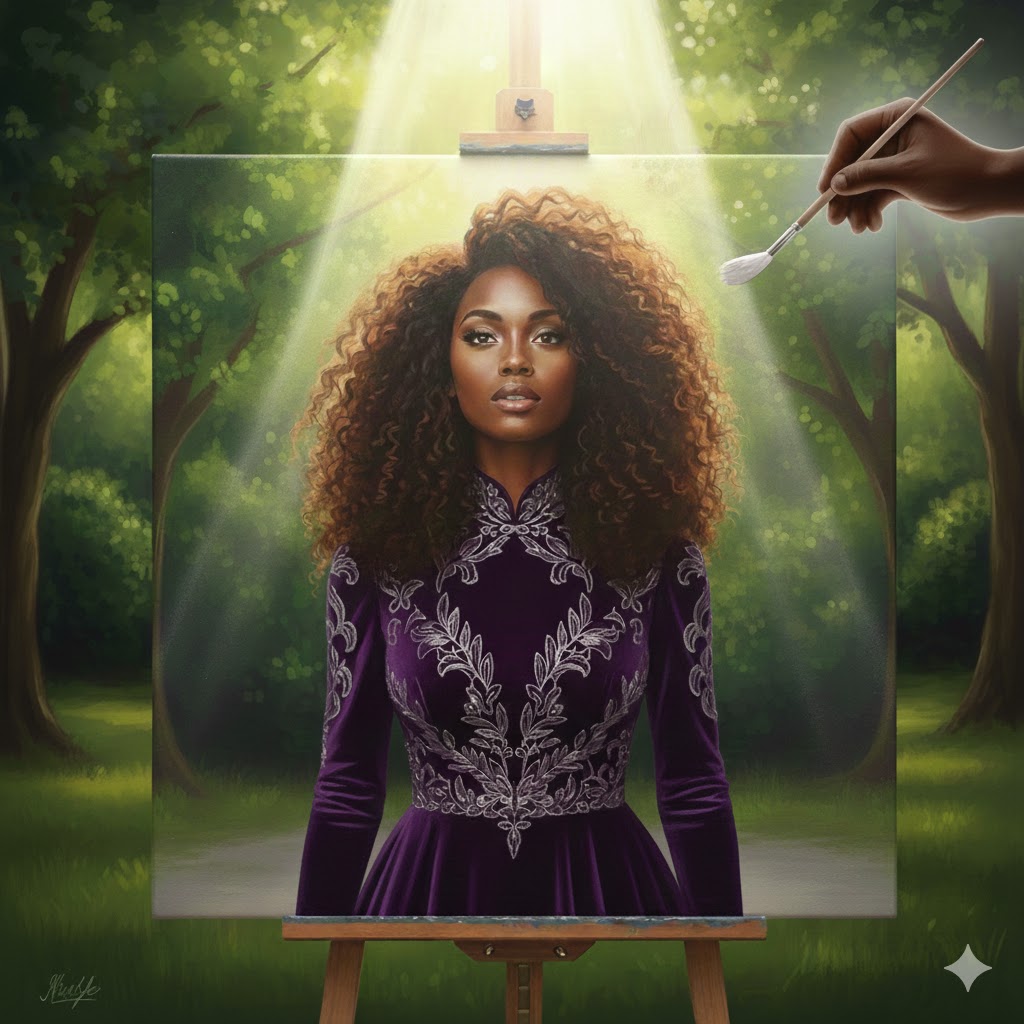
Dermal divinity is the sacred truth that her skin is not an accident, not a mistake, and not a burden—but a masterpiece crafted with intentionality. When God painted her brown, He dipped His brush into centuries of resilience, wisdom, and ancestral strength. Her melanin is theology written in pigment, a divine proclamation that she is fearfully, wonderfully, and beautifully made (Psalm 139:14, KJV).

When God painted her brown, He thought of sunlight and soil, of beginnings and blessings. Brown is the color of the earth that nourishes life, the foundation beneath nations, the cradle of humanity itself. Science confirms Africa as the birthplace of mankind (Stringer, 2016), and scripture affirms God formed humanity from the dust of the ground (Genesis 2:7, KJV). Her shade is not merely melanin—it is memory, origin, and divine intention.

Her brown skin carries history that cannot be erased. Within its tones lie stories of queens, warriors, mothers, and visionaries. From Kush to Nubia, from the banks of the Nile to the diasporic world, her ancestors walked with a dignity that no empire could destroy. The strength in her skin is not just biological but spiritual, encoded through generations.

Dermal divinity is the understanding that her complexion exists beyond beauty—it is inheritance. Her skin is a living testament to survival through systems that sought to devalue it. Yet no chain, law, or ideology could diminish what God declared good from the beginning. Her brownness has outlived every attempt to shame it.

When God painted her brown, He adorned her with richness that absorbs light and reflects radiance. Melanin is a biological miracle—protective, powerful, and purposeful. It shields, strengthens, and sustains. Studies show melanin plays a crucial role in biological protection and adaptive evolution (Jablonski, 2021). God wove science into her skin before science learned to name it.

Her brownness is also emotional terrain. It holds the complexities of joy and trauma, of cultural pride and societal misunderstanding. She learns, sometimes slowly, that the world’s discomfort with her hue is not her burden to carry. Colorism, racism, and misogynoir may attempt to dim her, but they cannot undo divine craftsmanship.

The sacredness of her skin becomes clearer as she grows. She learns to see her body not through colonized lenses but through the eyes of the One who created her. The Bible teaches that all creation reflects God’s glory (Isaiah 60:1, KJV). Her brownness, therefore, shines with holy intention, a reminder that beauty is not Eurocentric—it is God-designed.

When God painted her brown, He gifted her a crown of textured glory. Coils, curls, and kinks spiral like galaxies, echoing divine creativity. Her hair is not a rebellion; it is a revelation. It testifies to her lineage, to the creative diversity of a God who delights in variety, complexity, and bold expression.

Dermal divinity also acknowledges that her body is not merely aesthetic—it is prophetic. Her skin tells a story before she speaks, declaring the triumphs and trials of people who refused to break. Layers of pigment hold generations of laughter, tears, labor, and liberation. She carries her people with her, even when she walks alone.

When God painted her brown, He placed her in communities of richness and cultural brilliance. She belongs to a tapestry of traditions, languages, rhythms, and spiritualities that stretch across continents. Her identity is not isolated; it is collective, woven into global Blackness.

Her brownness holds a beauty that is both inward and outward. It reflects confidence that has been hard-earned, reclaimed from the distortions of media, history, and hierarchy. She realizes beauty is not a comparison but an awakening—a recognition that her reflection has always been worthy.

Dermal divinity means embracing herself without apology. She does not shrink to make others comfortable or dilute her light to fit into narrow expectations. Her brownness is not negotiable; it is divine signature. To dim it would be to distort God’s artistry.

When God painted her brown, He knew the battles she would face. He equipped her with resilience stitched into her spiritual DNA. Biblical narratives show God’s favor upon those who endure hardship with faith (James 1:12, KJV). Her strength is not accidental—it is appointed.

Her skin becomes sacred armor, not because it is impenetrable, but because it is intentional. She learns that the beauty of being brown is not in perfection but in perseverance. Each shade of melanin carries sacred meaning, a reminder that she survives because she was designed to.

Her brownness makes her a living reflection of divine diversity. God did not create a monochrome world; He created a spectrum of human beauty. To love her skin is to honor the Creator who crafted it. To reject it would be to reject His vision.

As she matures, she learns to love the parts of herself she once questioned. Healing becomes part of blooming, and self-love becomes part of worship. Affirming her beauty aligns her with God’s truth, not the world’s distortions.

When God painted her brown, He planted within her the power to heal others. Her testimony strengthens, inspires, and liberates. She becomes a voice for girls still learning to see themselves through divine eyes. Her presence shifts atmospheres; her story births courage.

Dermal divinity is a calling to walk boldly in identity. It is the understanding that her skin is not a barrier but a blessing. She rises knowing she is seen, chosen, valued, and intentionally crafted. Her brownness is a reflection of glory, not deficit.

And finally, when God painted her brown, He made her a masterpiece—timeless, necessary, and unrepeatable. Her melanin is ministry. Her skin is scripture in color. She is the evidence of holy creativity. She is divine art in human form.


References

Jablonski, N. G. (2021). Living color: The biological and social meaning of skin color. University of California Press.

King James Bible. (1611). Authorized Version.

Stringer, C. (2016). The origin and evolution of Homo sapiens. Philosophical Transactions of the Royal Society B: Biological Sciences, 371(1698), 20150237.

Wells, I. B. (2020). Crusade for justice: The autobiography of Ida B. Wells. University of Chicago Press. (Original work published 1928)

Truth, S. (1995). Narrative of Sojourner Truth. Penguin Books. (Original work published 1850)

Brown Girl Blooming

Brown girl blooming is the sacred story of becoming—an unfolding that resists erasure and outgrows every attempt to confine it. Her bloom is not accidental but intentional, watered by ancestors who endured storms she will never fully see. She rises with the memory of those who survived, those who fought, and those who refused to let the world define their worth. Her beauty grows from lineage, truth, and unbreakable Black resilience.

Brown girl blooming means learning to love the soil you were planted in, even when that soil feels too heavy, too harsh, or too overlooked. The richness of melanin carries a testimony of survival, a melody of triumph sung through generations. No flower is judged for the darkness of its petals; rather, it is celebrated for its rare and incomparable brilliance. So too is the brown girl who steps into her own light.

Her bloom is not simply external but deeply spiritual. She learns that God did not make a mistake when He shaped her features, deepened her tones, and crowned her with textured glory. She discovers scriptures that affirm her value, reminding her that she is “fearfully and wonderfully made” (Psalm 139:14, KJV). This truth becomes the wind that pushes her toward self-acceptance.

Brown girl blooming is transformative because it requires the courage to reclaim what society taught her to reject. For decades, she was told that her hair needed to be tamed, her voice softened, her presence minimized. Now, she blooms by taking up space unapologetically, stepping into rooms that were never built with her in mind, yet cannot thrive without her influence.

Society often demanded her labor while dismissing her identity. Yet she continues to rise, drawing from the legacy of women like Sojourner Truth, Ida B. Wells, and Maya Angelou—women who bloomed defiantly in the face of oppression. Their courage becomes fertilizer for her growth, reminding her that blooming is both a right and a responsibility.

Every brown girl carries stories in her skin—stories of migration, resistance, creativity, and spiritual strength. These stories are not burdens; they are seeds. When nurtured, they bloom into purpose, wisdom, and generational healing. Her body becomes a living archive of her people’s triumph.

Some seasons of blooming come through pain. Colorism, misogynoir, and systemic bias attempt to stunt her growth. But even broken branches can sprout again. Research on racial identity development shows how affirming environments help women of color thrive despite systemic oppression (Cross & Vandiver, 2001). Brown girl blooming is not a denial of hardship but a declaration of perseverance.

And when she blooms, she helps others bloom too. Her glow becomes a mirror for her sisters, reflecting possibility and belonging. She becomes a sanctuary for other brown girls who are still learning to see their own beauty, offering encouragement and empathy as they fight to bloom in unfriendly soil.

Brown girl blooming is also intellectual. She reads, studies, questions, and innovates. She pursues degrees, builds businesses, writes books, and reconstructs narratives that once excluded her. Education becomes a form of blossoming—a quiet rebellion against historic attempts to keep her mind unwatered.

Her bloom is emotional as well. She learns to love herself in full dimension, not just the polished parts. Healing from trauma, anxiety, and generational wounds is part of her process. She embraces therapy, sisterhood, and faith as tools that prune her soul, making room for new blossoms.

Spiritually, she blooms by understanding her divine identity. She realizes she is made in the image of the Most High (Genesis 1:27, KJV), and that truth radiates through her confidence. Prayer becomes her sunlight; scripture becomes her living water. Her relationship with God sustains her growth even in barren seasons.

Brown girl blooming is cultural. She adorns herself in braids, curls, coils, locs, Ankara fabrics, and sacred traditions that remind her of home. She celebrates her ancestry unapologetically, allowing heritage to be both her root and her blossom.

Her bloom strengthens when she learns to love her voice. For centuries, society silenced Black women’s truths. Now, she speaks with clarity, power, and purpose. She becomes an advocate, a visionary, a storyteller, and a protector of her community.

The world does not always know how to honor her bloom, but that has never stopped her from flowering. She is not fragile—she is resilient, adaptable, and divinely crafted. Her bloom can withstand harsh winds and still grow toward the sun.

Each stage of blooming reveals a new dimension of her identity. Sometimes she is a bud—still closed, still developing. Other times she is in full bloom—radiant, confident, and unstoppable. There is no shame in her process; blooming takes time.

Brown girl blooming also means unlearning the lies of Eurocentric beauty standards. Studies show that internalized colorism and bias affect the self-esteem and mental health of Black women (Huber & Solorzano, 2015). Yet she uproots these lies and plants new truths: she is beautiful, worthy, and complete in her God-given design.

Her bloom inspires the next generation—girls watching their mothers, aunties, teachers, and mentors flourish with dignity and self-love. They learn from her example that beauty is not measured by complexion but by character, brilliance, and inner strength.

Brown girl blooming is not a trend; it is a lifelong journey. It is the ongoing process of learning who she is, what she carries, and why she matters. Each chapter of her life adds new petals to her story.

She blooms when she builds healthy relationships. She surrounds herself with people who see her, honor her, and water her growth. She releases those who only drain her soul, trusting that God will provide better companions for her journey.

She blooms when she chooses joy—unapologetic joy that refuses to be dimmed. She dances, laughs, celebrates, and embraces her own softness. In doing so, she shows the world that Black women deserve pleasure, ease, and rest.

And ultimately, brown girl blooming is a testament to divine promise. Despite every force that tried to bury her, she grew. She survived. She blossomed. And she will continue to bloom for generations to come.


References

Angelou, M. (1986). All God’s children need traveling shoes. Random House.

Cross, W. E., & Vandiver, B. J. (2001). Nigrescence theory and measurement: Introducing the Cross Racial Identity Scale (CRIS). Journal of Counseling Psychology, 48(3), 278–287.

Huber, L. P., & Solorzano, D. G. (2015). Racial microaggressions as a tool for critical race research. Race Ethnicity and Education, 18(3), 297–320.

King James Bible. (1611). Authorized Version.

Truth, S. (1995). Narrative of Sojourner Truth. Penguin Books. (Original work published 1850)

Wells, I. B. (2020). Crusade for justice: The autobiography of Ida B. Wells. University of Chicago Press. (Original work published 1928)