Category Archives: The Brown Girl Experience

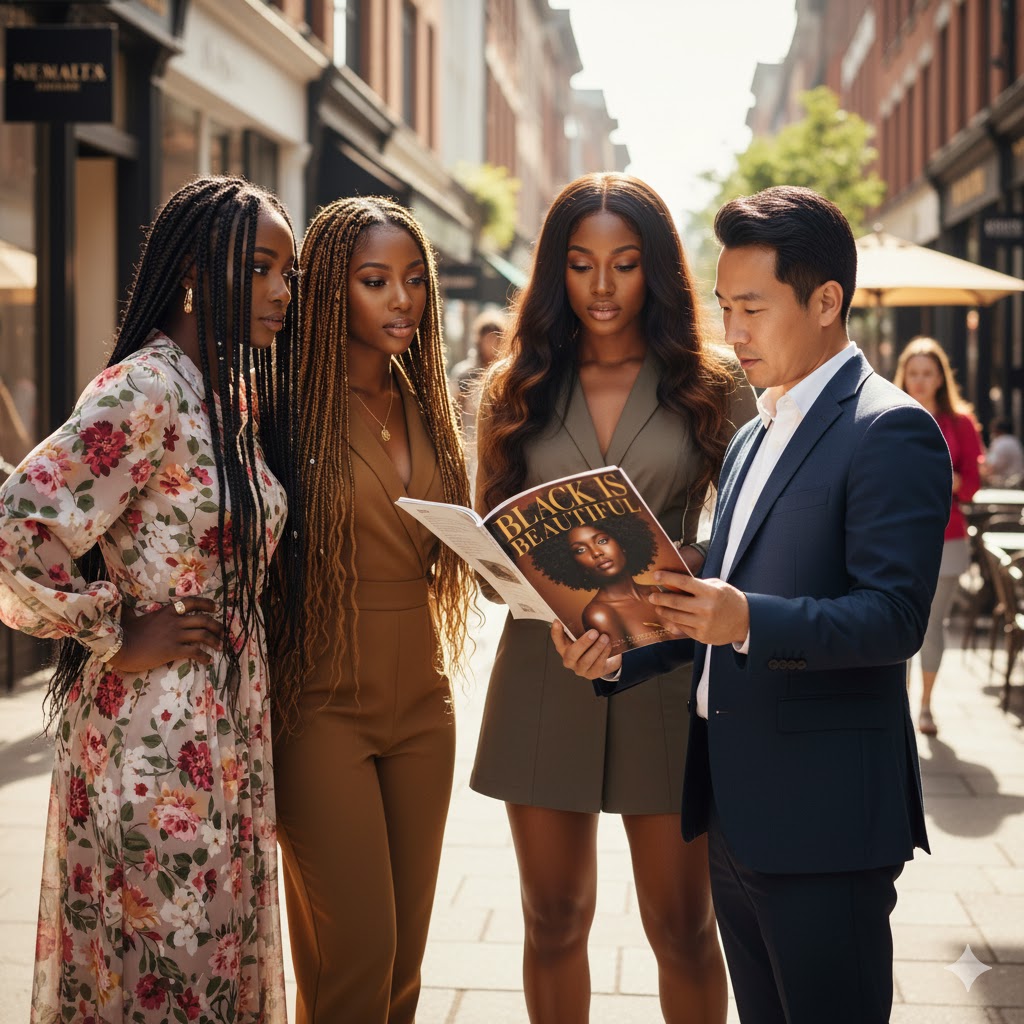
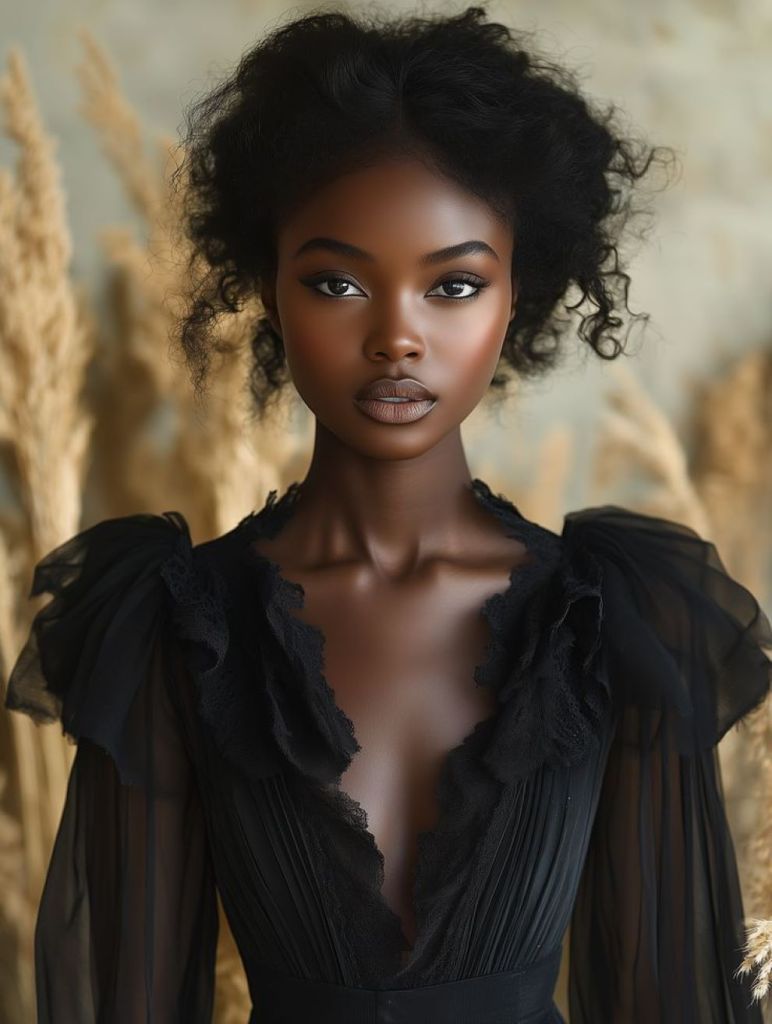
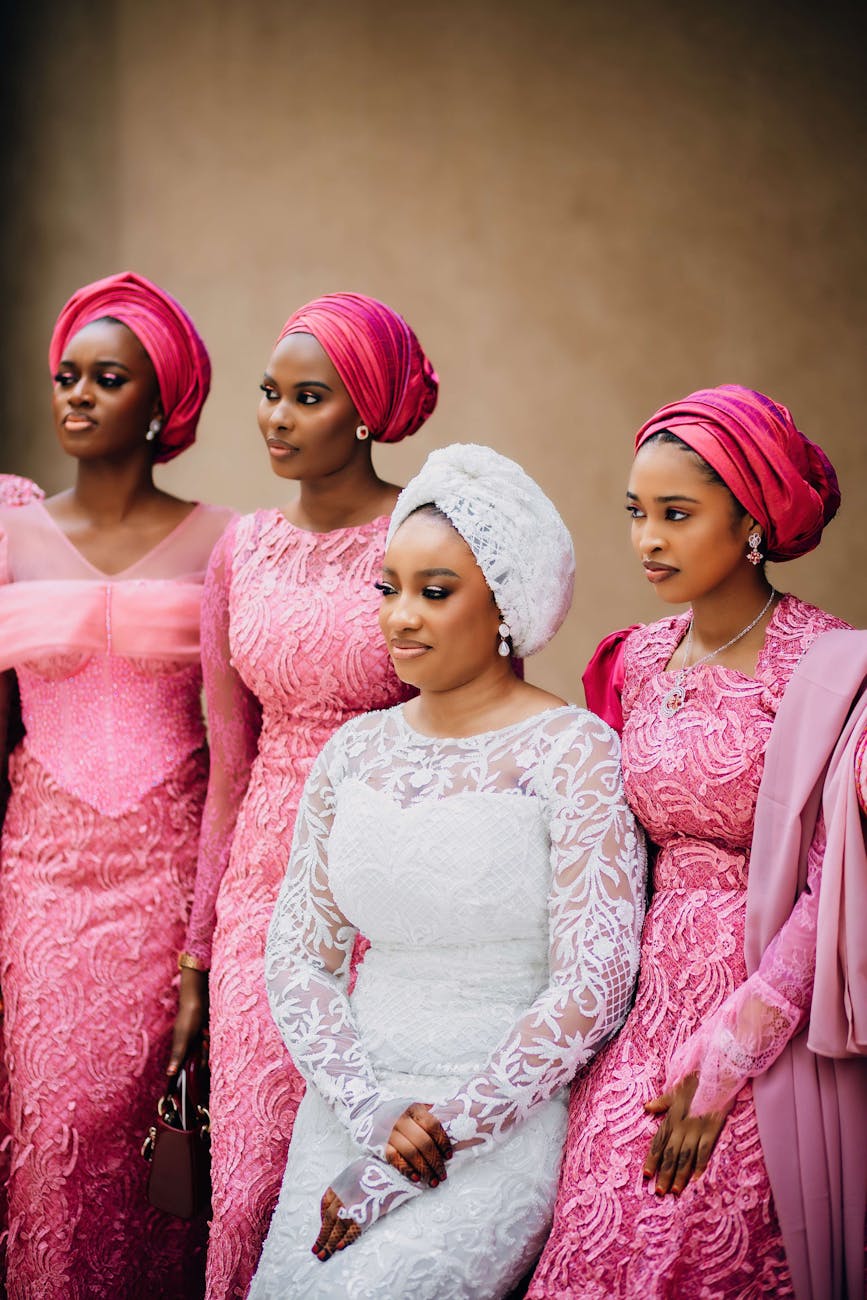
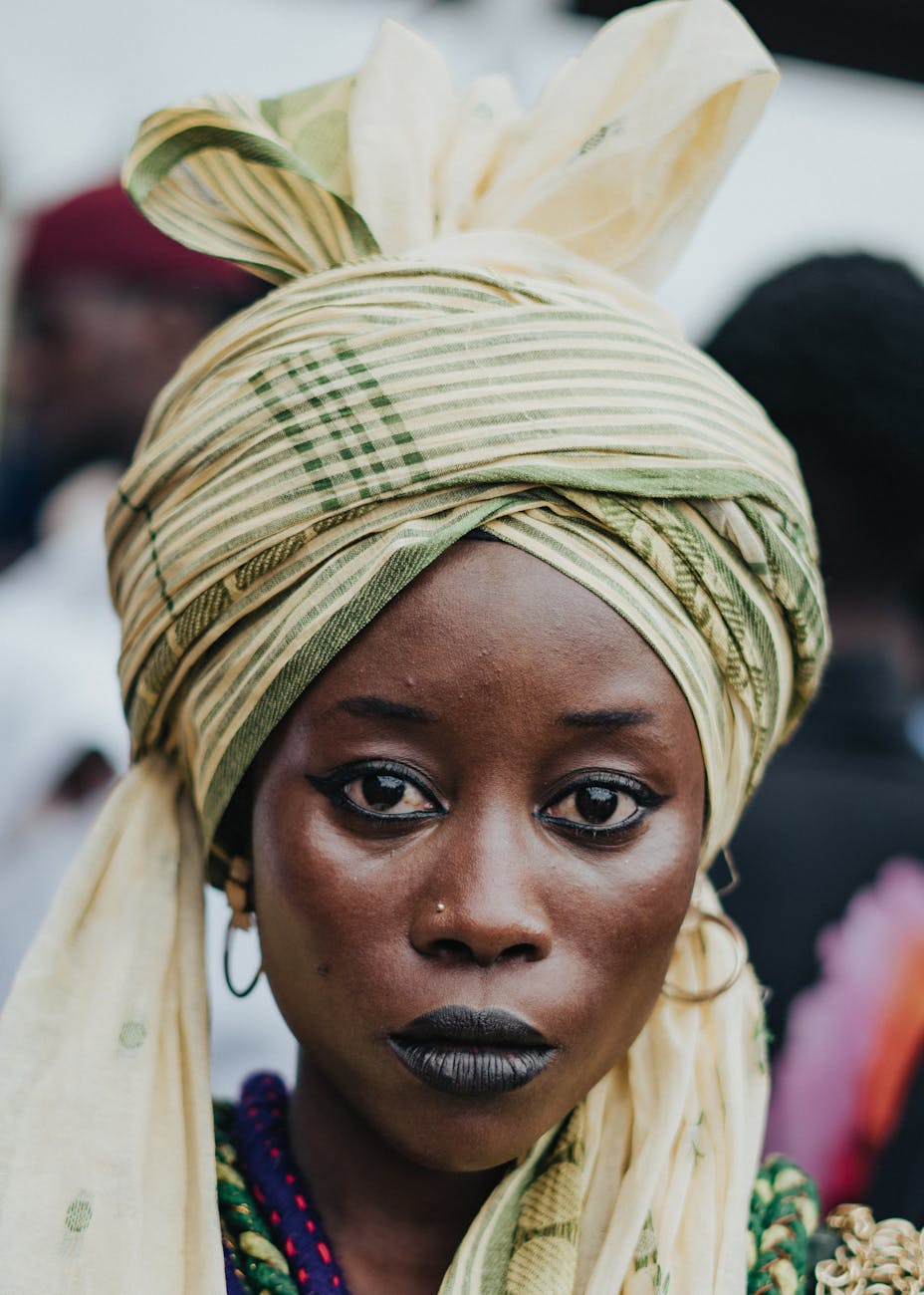
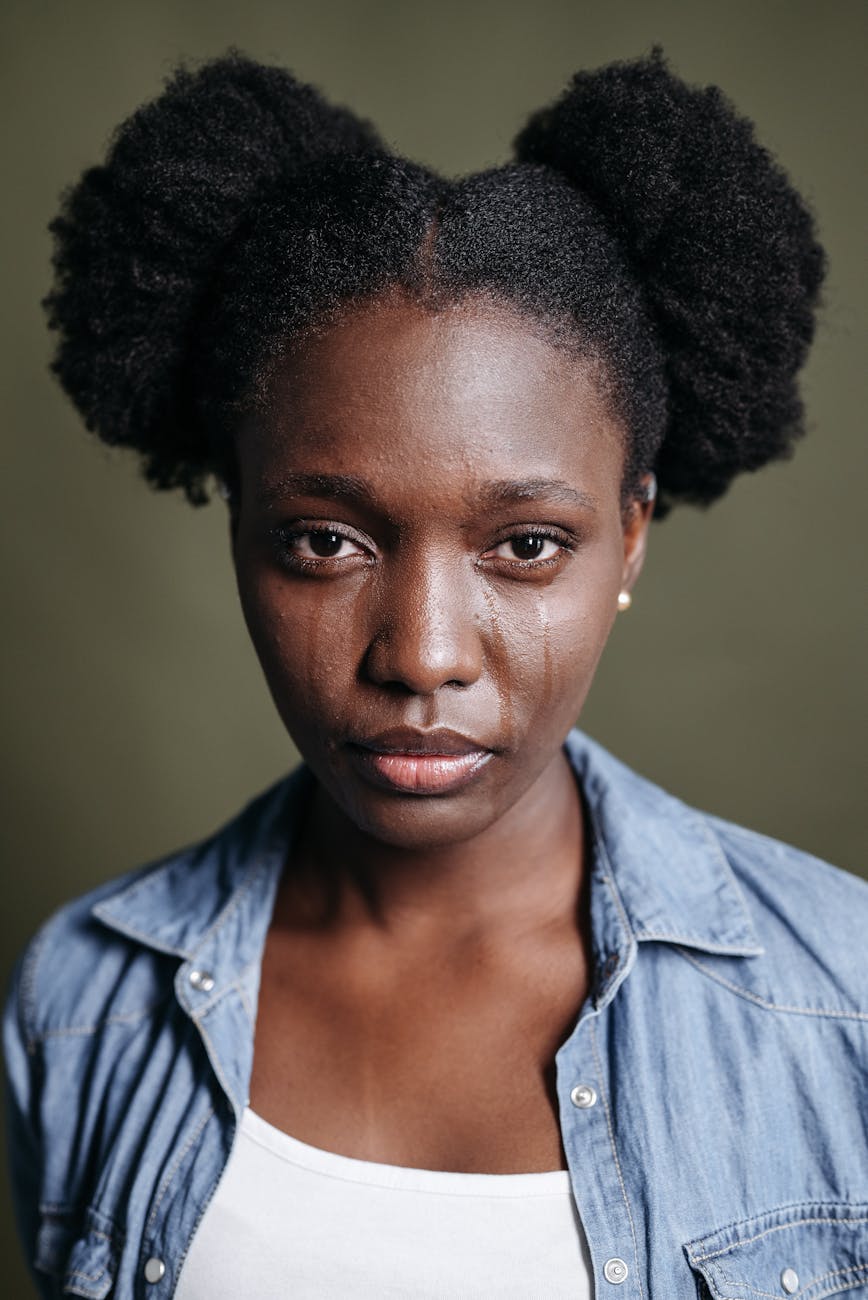
🌸Unapologetically Her🌸

To be unapologetically her is to live fully in alignment with one’s divine identity, embracing every facet of self—strengths, imperfections, beauty, and purpose—without compromise or fear of judgment. In a world that constantly pressures Black women to conform to ideals that erase individuality, stepping into unapologetic authenticity is both radical and necessary. Psalm 139:14 (KJV) reminds us, “I will praise thee; for I am fearfully and wonderfully made.” Every feature, every talent, every choice reflects a design rooted in intentionality and divine love.

Being unapologetically herself requires courage. It means acknowledging societal pressures and expectations without allowing them to define self-worth. Romans 12:2 exhorts, “And be not conformed to this world: but be ye transformed by the renewing of your mind…” Transformation begins when a woman dares to reject the notion that she must dilute her identity to fit in or be accepted. She honors her God-given uniqueness and refuses to apologize for it.

This authenticity extends across all areas of life—relationships, career, creativity, and personal style. A woman unapologetically herself recognizes that her voice matters, her contributions are valuable, and her boundaries are sacred. Proverbs 31:25 (KJV) illustrates this strength: “Strength and honour are her clothing; and she shall rejoice in time to come.” Living unapologetically is not arrogance; it is the quiet confidence that comes from knowing one’s purpose and walking faithfully within it.

Community and sisterhood are essential in this journey. Surrounding herself with those who celebrate authenticity, rather than enforce conformity, reinforces a woman’s ability to remain true. Ecclesiastes 4:9-10 teaches, “Two are better than one…For if they fall, the one will lift up his fellow.” Sisters who affirm one another create environments where individuality flourishes, and where authenticity is met with love and encouragement.

Living unapologetically also involves embracing vulnerability and imperfection. It is a recognition that mistakes, emotions, and evolving perspectives are part of the human experience. 2 Corinthians 12:9 (KJV) reminds us, “My grace is sufficient for thee: for my strength is made perfect in weakness.” Strength emerges not from perfection but from the courage to stand fully in one’s truth, trusting that God’s grace sustains every step.

Ultimately, to be unapologetically her is to embody freedom, faith, and intentional living. It is a declaration of self-worth, a celebration of divine design, and a model for other women to claim their space in the world boldly. Black women who embrace this ethos inspire generations, break cycles of conformity, and manifest the beauty, power, and purpose inherent in their God-given identity. To live unapologetically is to shine without hesitation, love without limits, and step into one’s destiny with unwavering confidence.

Beauty in the Eyes of Truth: Debunking Satoshi Kanazawa’s Racist “Study” on Black Women.

When Satoshi Kanazawa published his article, “Why Are Black Women Less Physically Attractive Than Other Women?” in 2011 on Psychology Today’s blog The Scientific Fundamentalist, he set off a firestorm of global outrage. His so-called “research” claimed that Black women were “objectively less attractive” than women of other races based on statistical data. What he called “scientific evidence” was, in reality, a misuse of data, steeped in racial bias, colonial beauty standards, and poor methodology.

Kanazawa drew from a database called the Add Health survey, which included self-reported ratings of physical attractiveness by interviewers. However, these interviewers were not trained in objective aesthetic assessment — they were individuals influenced by their own biases, cultural norms, and Eurocentric ideals of beauty. Instead of acknowledging this obvious flaw, Kanazawa treated subjective opinions as biological fact, thereby perpetuating pseudoscience.

The title alone — “Why Are Black Women Less Physically Attractive” — betrayed a racist premise. It positioned Black women as a scientific question to be explained rather than human beings deserving of dignity. This type of racial pseudoscience has roots in 19th-century eugenics, which sought to justify white supremacy through “biology.” In Kanazawa’s case, the problem wasn’t science — it was the misuse of science to validate prejudice.

The article provoked an immediate global backlash. Black women scholars, writers, and readers flooded Psychology Today with demands for its removal. Within days, the post was taken down and disavowed by the publication. The London School of Economics publicly condemned Kanazawa’s statements, suspended him from teaching duties, and launched an investigation into his conduct. Psychology Today later issued an apology for publishing the article at all, acknowledging that it failed editorial standards and promoted harmful racial stereotypes.

Satoshi Kanazawa was not a random internet blogger — he was a university lecturer and evolutionary psychologist who often courted controversy. He had previously published inflammatory posts suggesting that African nations were “less intelligent” due to genetics, and that men were “more rational” than women. His work consistently displayed a pattern of racial and gender bias disguised as evolutionary psychology, leading many experts to label his theories as “scientific racism.”

But why did he specifically target Black women? Because Black women have historically been positioned at the intersection of both racism and sexism — where both systems of oppression overlap. Kanazawa’s post reflected a broader societal narrative that devalues Black womanhood while glorifying Eurocentric beauty. From slavery-era stereotypes of the “mammy” and “jezebel” to modern media’s glorification of lighter skin and straighter hair, his article fed into a centuries-old lie: that whiteness equals beauty, and Blackness does not.

Yet the truth is exactly the opposite. The concept of beauty is not objective, and it certainly cannot be reduced to statistical averages. Beauty is in the eye of the beholder, as Proverbs 31:30 (KJV) reminds us: “Favour is deceitful, and beauty is vain: but a woman that feareth the Lord, she shall be praised.” The Most High never created one standard of beauty — He created diversity as a reflection of His glory.

The melanin-rich skin of Black women is a divine masterpiece of strength and radiance. Scientifically, melanin protects against ultraviolet radiation, delays aging, and carries powerful antioxidant properties. Spiritually, melanin symbolizes resilience and divine design — “I am black, but comely,” declares the Shulamite woman in Song of Solomon 1:5 (KJV), affirming that her dark skin is beautiful in the eyes of God.

Kanazawa’s so-called “findings” crumble under both scientific and spiritual truth. Studies since then have proven that perceptions of beauty are culturally constructed and heavily influenced by exposure, familiarity, and societal power dynamics. When media and academia have long centered white features as the norm, it’s no surprise that biases emerge in subjective surveys. The real issue is not the appearance of Black women — it’s the conditioning of the observers.

The damage from Kanazawa’s article, however, was not purely academic. It caused emotional harm to millions of Black women and girls who saw themselves being demeaned in the name of science. But out of that pain came power — Black women writers, scholars, and activists began challenging not just Kanazawa, but the entire structure of racialized beauty standards. Movements like #BlackGirlMagic and The Melanin Movement emerged to celebrate the uniqueness, intelligence, and glory of Black femininity.

The Bible teaches that every human is “fearfully and wonderfully made” (Psalm 139:14, KJV). There is no hierarchy in God’s creation, only purpose. The notion that any race of women could be “less attractive” defies both the natural order and divine truth. God does not rank beauty — He defines it by character, spirit, and righteousness.

Satoshi Kanazawa’s downfall serves as a lesson in accountability. His attempt to use science to degrade a people group backfired and exposed how racism still lurks in academic institutions. The removal of his article and suspension from LSE marked an important moment in the fight against institutional racism disguised as research.

To this day, Psychology Today has never republished the post, and Kanazawa’s reputation remains stained by his unethical approach. His legacy is a warning: intelligence without morality becomes manipulation. Data without empathy becomes oppression.

The truth is simple — Black women do not need validation from biased scientists or manipulated statistics. Their worth is intrinsic, God-given, and undeniable. Their features — full lips, textured hair, radiant skin — are not deviations from beauty but divine blueprints of creation.

In a world still influenced by Eurocentric ideals, it is critical to remember that beauty is not comparative — it is collective. Every shade and feature tells the story of a God who delights in variety.

Satoshi Kanazawa’s article was not science; it was prejudice cloaked in data. Its removal was an act of justice. And its legacy reminds us that truth and beauty cannot be measured by biased eyes — only by the Creator who made all flesh in His image.

Black Women Are Divine: The Truth About Melanin and Beauty Beyond Eurocentrism

For centuries, the beauty of the Black woman has been misunderstood, misrepresented, and mischaracterized. Western ideals — rooted in colonialism and white supremacy — have attempted to distort what God Himself called “good.” Yet, the truth remains: the Black woman is not an accident of biology, nor a deviation from beauty’s standard. She is divine design — formed with intention, wrapped in melanin, and crowned with resilience.

The Eurocentric gaze has long defined beauty through a narrow lens — lighter skin, straight hair, delicate features. But this standard was born not of truth, but of hierarchy. It emerged during colonization when European men sought to establish dominance by devaluing darker skin. To elevate whiteness, they had to diminish Blackness. And so, the war against Black womanhood became not just physical, but psychological.

But the Most High made no mistake. Genesis 2:7 (KJV) says, “And the LORD God formed man of the dust of the ground, and breathed into his nostrils the breath of life.” The dust of the ground is brown — the color of earth, rich in nutrients and minerals. In the same way, the skin of the Black woman carries the essence of creation itself. Her melanin is not a flaw; it is the fingerprint of God’s first masterpiece.

Melanin is the biological evidence of divine wisdom. It absorbs light, protects from radiation, preserves youth, and enhances the body’s connection to natural energy. Spiritually, it symbolizes endurance and divine covering. Isaiah 60:2 (KJV) proclaims, “For, behold, the darkness shall cover the earth… but the LORD shall arise upon thee, and his glory shall be seen upon thee.” The darkness that covers the Black woman is not a curse — it is glory manifested.

Every curl, every coil, every shade of brown tells a sacred story. Black hair, often stigmatized under European ideals, is in fact a marvel of design — coiled to protect the scalp, regulate heat, and retain moisture in tropical climates. It grows toward the heavens as a living symbol of strength and connection to the divine. 1 Corinthians 11:15 (KJV) declares, “If a woman have long hair, it is a glory to her.” Black hair, in all its natural forms, is an expression of that glory.

The lie of Eurocentric beauty has long told Black women they must alter themselves to be accepted — straighten their hair, lighten their skin, shrink their bodies, and quiet their voices. But these are not acts of self-love; they are symptoms of systemic programming. Romans 12:2 (KJV) warns, “And be not conformed to this world: but be ye transformed by the renewing of your mind.” To renew the mind is to remember divine truth: that you were already perfect in the eyes of your Creator.

Science, when freed from bias, testifies to the same truth. Melanin not only defines skin tone but also enhances vision, strengthens the immune system, and synchronizes the body’s natural rhythm with the sun. It is, quite literally, life-giving carbon — the same element found in stars, soil, and all living things. To possess melanin is to carry the universe within.

The Black woman’s lips, full and expressive, symbolize nourishment and truth. Her hips, wide and strong, represent creation and continuation of life. Her eyes, deep and radiant, reflect wisdom and empathy. Her skin, luminous and resilient, tells the story of survival through centuries of oppression — yet still she glows. Isaiah 61:3 (KJV) calls her a woman “to give unto them beauty for ashes.” She has walked through fire, yet she remains gold.

Historically, European colonialism labeled African features as “primitive” while simultaneously fetishizing them. This hypocrisy continues in modern media, where non-Black women are praised for features that originate in Black beauty — full lips, curvy bodies, sun-kissed skin. Yet when the Black woman bears them naturally, she is too often told she is “too much.” This contradiction exposes the world’s envy of what it cannot reproduce: divine authenticity.

To understand the sacredness of melanin is to understand covenant. Deuteronomy 7:6 (KJV) declares, “For thou art an holy people unto the LORD thy God: the LORD thy God hath chosen thee to be a special people unto himself.” The melanin in the Black woman is more than pigment — it is purpose. It connects her to the elements of the earth and the energy of creation. She embodies both survival and sanctity.

The Black woman is also the cradle of civilization. Archaeological and genetic evidence affirms that humanity’s maternal ancestry traces back to Africa — to the very women whose descendants are still walking the earth. The mitochondrial DNA of all humans today originates from an African mother scientists call “Mitochondrial Eve.” Long before Eurocentric ideals existed, the Black woman was the standard — the mother of nations.

Yet despite being the mother of humanity, she has been vilified, hypersexualized, and devalued. But God always restores what man destroys. Psalm 113:7 (KJV) reminds us, “He raiseth up the poor out of the dust, and lifteth the needy out of the dunghill.” The modern awakening of Black womanhood — in faith, culture, and scholarship — is that divine lifting in action.

To the Black woman, you are not defined by social metrics or colonial constructs. You are defined by the Word of God and the truth of creation. Your strength does not make you hard; your beauty does not make you vain; your melanin does not make you less. It makes you chosen.

Black woman, your skin is anointed with the same carbon that fuels the stars. Your heart beats with the rhythm of ancient drums. Your voice carries the tone of prophets and poets. Your presence testifies that the Creator’s design is intentional, balanced, and breathtaking.

Let no man or magazine define you. Let no algorithm rank you. Let no false science demean you. For you were not created to fit into the mold of European fantasy — you were shaped by divine reality. You are living evidence of God’s brilliance and endurance.

In a world obsessed with imitation, your authenticity is rebellion. In a society obsessed with whiteness, your blackness is truth. And in a culture obsessed with erasure, your existence is resistance. You are, and always will be, the living expression of the Most High’s creativity.

As Psalm 45:13 (KJV) says, “The king’s daughter is all glorious within: her clothing is of wrought gold.” Black woman, your skin is that gold. It shines not because others approve of it, but because Heaven does.

The world’s definition of beauty is fleeting, but yours is eternal. Your melanin, your essence, your truth — all are divine signatures. You are not less than. You are the blueprint.

KJV References:
Genesis 2:7; Isaiah 60:2; 1 Corinthians 11:15; Romans 12:2; Psalm 139:14; Song of Solomon 1:5; Deuteronomy 7:6; Psalm 113:7; Isaiah 61:3; Psalm 45:13; Proverbs 31:30; Revelation 7:9. Genesis 1:27; Psalm 139:14; Song of Solomon 1:5; Proverbs 31:30; Romans 2:11; James 2:1; 1 Samuel 16:7; Galatians 3:28; Revelation 7:9.

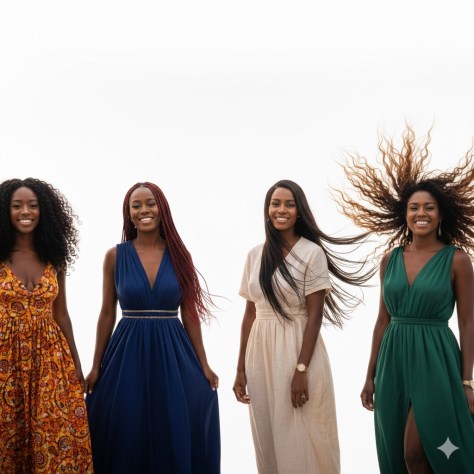
Brown Girl Blueprint: Beauty, Brilliance & Becoming

The journey of a brown girl is one of discovery, resilience, and transformation. Beauty, Brilliance & Becoming reflects the multidimensional essence of her identity—honoring her physical presence, cultivating her intellect, and stepping into her God-given purpose. This blueprint is not merely a guide for success; it is a roadmap to self-realization, confidence, and divine alignment.

Beauty for the brown girl transcends skin tone or societal standards. It encompasses authenticity, self-love, and the embrace of natural features that reflect her heritage. In a world that often equates beauty with Eurocentric ideals, embracing melanin-rich skin, natural hair textures, and unique features becomes an act of reclamation and empowerment. Psalm 139:14 (KJV) reminds her: “I will praise thee; for I am fearfully and wonderfully made.” True beauty begins with recognition of divine design.

Brilliance is the cultivation of the mind, talents, and wisdom. Intellectual growth, creativity, and problem-solving are forms of empowerment that equip the brown girl to navigate life’s challenges. Proverbs 4:7 (KJV) exhorts: “Wisdom is the principal thing; therefore get wisdom: and with all thy getting get understanding.” Brilliance is nurtured through education, mentorship, and deliberate pursuit of excellence.

Becoming is the ongoing process of fulfilling potential. It is the journey of self-discovery, character development, and spiritual alignment. Becoming requires courage—the courage to defy limiting narratives, overcome systemic barriers, and step into spaces where her voice and vision are recognized. Jeremiah 29:11 (KJV) promises: “For I know the thoughts that I think toward you, saith the LORD, thoughts of peace, and not of evil, to give you an expected end.”

The brown girl blueprint encourages intentionality in all aspects of life. It emphasizes self-care, emotional intelligence, and spiritual grounding. By prioritizing mental and physical wellness, she strengthens her ability to contribute meaningfully to her family, community, and world.

Identity is a foundational pillar. Recognizing the value of her ancestry, culture, and heritage empowers the brown girl to stand with confidence in spaces that may not always affirm her worth. Historical context, from African civilizations to modern Black excellence, forms a legacy of resilience and brilliance to be honored and advanced.

Self-expression is also central to this blueprint. Fashion, hair, art, and communication serve as tools for authenticity, creativity, and empowerment. Celebrating individuality fosters confidence and challenges societal stereotypes, allowing the brown girl to claim her narrative.

Relationships shape growth and influence. Surrounding oneself with mentors, peers, and spiritual guides who affirm values, vision, and purpose cultivates an environment where brilliance can flourish. Proverbs 27:17 (KJV) reminds us: “Iron sharpeneth iron; so a man sharpeneth the countenance of his friend.” The right community catalyzes development and accountability.

Education and skill-building are pathways to empowerment. From formal schooling to personal development, knowledge equips the brown girl to navigate systemic challenges and seize opportunities. Intellectual empowerment is inseparable from confidence and spiritual alignment.

Financial literacy and independence are essential components of becoming. Mastery over resources ensures autonomy, reduces vulnerability, and enables her to support herself and her community responsibly. Proverbs 21:20 (KJV) emphasizes prudence: “There is treasure to be desired and oil in the dwelling of the wise; but a foolish man spendeth it up.”

Faith is the anchor of the brown girl blueprint. Spiritual grounding provides clarity, perseverance, and discernment. Prayer, meditation, and alignment with God’s purpose shape decision-making and fortify resilience. Isaiah 40:31 (KJV) promises: “But they that wait upon the LORD shall renew their strength; they shall mount up with wings as eagles; they shall run, and not be weary; and they shall walk, and not faint.”

Resilience is cultivated through embracing challenges as opportunities for growth. Life’s trials refine character, deepen faith, and enhance wisdom. Every setback becomes a stepping stone toward fulfillment and impact.

Self-confidence grows from acknowledging accomplishments, strengths, and potential. The brown girl is encouraged to celebrate victories, however small, as evidence of her brilliance and progression toward purpose.

Leadership is an extension of becoming. Empowered brown girls are equipped to lead with integrity, compassion, and vision. Influence is exercised responsibly, shaping communities and mentoring future generations.

Creativity fuels innovation and personal expression. Art, music, writing, and entrepreneurship allow the brown girl to channel brilliance into tangible contributions that leave lasting impact.

Service and community engagement solidify purpose. Using talents, resources, and knowledge to uplift others reinforces the values of compassion, justice, and stewardship. Strength is measured not only in personal success but in the ability to positively influence the world.

Reflection and self-assessment ensure continuous growth. Regular evaluation of personal goals, values, and spiritual alignment keeps the brown girl on track toward fulfilling her blueprint with intentionality.

Courage underpins every step of the journey. Fear of failure, judgment, or limitation is overcome through faith, resilience, and self-belief. Courage transforms potential into achievement and vision into reality.

Gratitude and humility balance ambition. Recognizing God’s hand, mentors’ support, and ancestral legacy fosters perspective, grounding the brown girl in values that honor both self and community.

Ultimately, Brown Girl Blueprint: Beauty, Brilliance & Becoming is a call to action and a framework for intentional living. It empowers young women to embrace their identity, cultivate their gifts, and step boldly into destiny. Beauty is acknowledged, brilliance is developed, and becoming is actualized—a holistic journey toward purpose, empowerment, and divine fulfillment.


References

Holy Bible, King James Version. (1611). Thomas Nelson.

Guthrie, D. (1994). The NIV application commentary: Proverbs. Grand Rapids, MI: Zondervan.

Wright, C. J. H. (2002). Old Testament ethics for the people of God. Downers Grove, IL: InterVarsity Press.

Rooks, N. (2021). Hair politics: Beauty, culture, and Black identity. New York, NY: Beacon Press.

Harris, T. (2019). Black girls rising: A roadmap to excellence and empowerment. Chicago, IL: University of Chicago Press.

Media, Money, and Melanin: How Culture Shapes Perception.

Photo by Oladimeji Ajegbile on Pexels.com

Media is one of the most powerful forces in shaping societal perceptions of beauty, success, and desirability, and it often reinforces colorism, especially against Brown and Black women. Representation is tightly linked to economics, as visibility in advertising, television, film, and digital platforms directly correlates with financial opportunity. The intersection of media and money amplifies certain standards of beauty—typically lighter skin, Eurocentric features, and straight hair—while marginalizing darker-skinned individuals (Hunter, 2007).

The economic incentives of media shape perception by privileging images that attract attention, engagement, and revenue. Brands often market beauty products, clothing, and lifestyles that align with Eurocentric ideals, perpetuating narrow standards that exclude Brown-skinned and dark-skinned women. Television shows, films, and music videos frequently cast lighter-skinned actors and models, signaling societal value and desirability while creating a visual hierarchy rooted in complexion (Byrd & Tharps, 2014).

Digital media accelerates these patterns through algorithmic amplification. Platforms like Instagram, TikTok, and YouTube favor images that generate high engagement, often reinforcing Eurocentric aesthetics. Influencers with lighter skin tend to gain broader visibility, while darker-skinned users may receive less exposure. These algorithmic biases replicate historical colorist hierarchies, merging cultural perception with financial reward, and demonstrating how melanin becomes both a marker of identity and a determinant of social and economic value (Fardouly et al., 2015).

However, counter-narratives are emerging. Movements like #BlackGirlMagic, #UnapologeticallyBlack, and #MelaninPoppin celebrate darker complexions, natural hair textures, and culturally distinct features. These campaigns challenge traditional media standards while creating market demand for products, representation, and content that reflect authentic diversity. Brands are beginning to invest in campaigns featuring dark-skinned women, demonstrating that cultural affirmation and economic value can align.

Media also influences self-perception. Continuous exposure to lighter-skinned ideals fosters comparison and internalized bias, which can impact confidence, self-esteem, and career ambition. Psychological studies show that individuals who consume media lacking representation of their skin tone and features often experience diminished self-worth (Festinger, 1954). Providing positive, diverse portrayals allows Brown girls to see themselves in aspirational roles, countering centuries of exclusion.

Cultural context further shapes these dynamics. The historical legacy of colonialism and slavery has ingrained Eurocentric beauty standards within global media. Skin tone hierarchy, hair texture preference, and facial feature bias are all culturally mediated constructs that persist through advertising, film, and music. Recognizing the economic and cultural forces behind these standards equips communities to challenge bias and demand authentic representation (Hunter, 2007).

Faith and ethical perspective provide guidance in navigating these pressures. Proverbs 31:30 (KJV) reminds, “Favour is deceitful, and beauty is vain: but a woman that feareth the LORD, she shall be praised.” True value transcends media-driven metrics of desirability and economic reward. By rooting self-worth in character and faith, Brown girls can navigate the influence of media while preserving confidence and authenticity.

In conclusion, the interplay of media, money, and melanin shapes perception in profound ways, influencing societal beauty standards, financial opportunity, and self-esteem. While historical and algorithmic biases have favored lighter-skinned ideals, emerging cultural movements, diverse representation, and conscious media consumption provide avenues for empowerment. Recognizing the economics behind visibility enables Brown girls to understand both the influence of media and their power to redefine perception, asserting their worth in all spheres of life.


Exoticized and Erased: Brown Girls in Global Pop Culture

Brown girls occupy a complicated space in global pop culture, often simultaneously exoticized and erased. While their features, skin tone, and cultural markers are fetishized in music, fashion, and film, their full humanity, voices, and stories are frequently overlooked. This duality—being celebrated for appearance yet marginalized in representation—creates unique challenges for self-perception, identity formation, and societal inclusion (Hunter, 2007).

Exoticization occurs when Brown girls are portrayed as “other,” framed as alluring, mysterious, or hypersexualized, rather than as individuals with diverse talents, ambitions, and personalities. Fashion editorials, music videos, and film often employ tropes that commodify brownness for visual appeal, catering to a Eurocentric or Western gaze. While these portrayals provide visibility, they reduce complex identities to aesthetic consumption, reinforcing limited narratives about desirability and cultural value (Byrd & Tharps, 2014).

Erasure manifests when Brown girls are absent from leading roles, influential positions, and decision-making spaces in media and culture. Hollywood, global advertising, and international modeling frequently favor lighter-skinned actors and models, marginalizing darker-skinned or ethnically ambiguous performers. This absence diminishes representation, leaving Brown girls without aspirational figures in mainstream media while reinforcing colorist hierarchies and internalized bias (Hunter, 2007).

Celebrity culture both reflects and challenges these dynamics. Figures like Lupita Nyong’o, Issa Rae, and Priyanka Chopra have broken barriers, using visibility to showcase talent and authentic cultural identity. Lupita Nyong’o’s red carpet appearances celebrate her dark, radiant skin and African heritage, while Issa Rae’s work in media emphasizes narratives of Black life that are rarely centered globally. These successes demonstrate that Brown girls can redefine cultural perception when given opportunity, platform, and recognition.

Digital platforms provide new avenues to combat exoticization and erasure. Social media campaigns like #BrownSkinGirls and #UnapologeticallyBrown allow young women to claim narratives of beauty, talent, and intellect. User-generated content democratizes representation, enabling Brown girls to showcase their artistry, voice, and personal style beyond the limitations imposed by traditional media. This visibility challenges global audiences to recognize and value their full humanity.

The psychological impact of exoticization and erasure is significant. Internalizing limited portrayals can produce self-doubt, low self-esteem, and identity confusion. Conversely, positive representation strengthens resilience, cultural pride, and confidence. Exposure to authentic role models, media literacy education, and supportive community networks enables Brown girls to navigate cultural pressures while embracing their identity fully (Festinger, 1954).

Spiritual grounding also offers a corrective lens. As Proverbs 31:30 (KJV) states, “Favour is deceitful, and beauty is vain: but a woman that feareth the LORD, she shall be praised.” True recognition is not contingent on exoticization, social validation, or media presence. Anchoring identity in character, virtue, and faith equips Brown girls to value themselves beyond global narratives that often distort or minimize their significance.

In conclusion, Brown girls face the dual challenge of being exoticized yet erased in global pop culture. While these forces can distort self-perception, digital platforms, celebrity advocacy, and cultural affirmation provide tools to reclaim identity and celebrate authentic beauty. By resisting reductive narratives and embracing representation, Brown girls can assert agency, redefine cultural standards, and inspire a future in which their presence, talent, and beauty are fully recognized and celebrated.


References

Byrd, A. D., & Tharps, L. L. (2014). Hair Story: Untangling the Roots of Black Hair in America. St. Martin’s Press.

Fardouly, J., Diedrichs, P. C., Vartanian, L. R., & Halliwell, E. (2015). Social comparisons on social media: The impact of Facebook on young women’s body image concerns and mood. Body Image, 13, 38–45.

Festinger, L. (1954). A theory of social comparison processes. Human Relations, 7(2), 117–140.

Hunter, M. (2007). The persistent problem of colorism: Skin tone, status, and inequality. Sociology Compass, 1(1), 237–254.

Brown Girl Blues: “Why don’t you do something with your hair?” They Say….

Photo by KoolShooters on Pexels.com

The question, “Why don’t you do something with your hair?” may seem harmless to some, but to many Black women, it cuts deeper than strands and styles—it reaches the roots of identity, history, and self-worth. Beneath the surface of that question lies centuries of cultural conditioning, where European aesthetics became the measuring rod for beauty, and anything deviating from that ideal was deemed unkempt, unruly, or undesirable.

For the brown girl, hair has never been “just hair.” It has been a site of both pride and pain, rebellion and respectability, resistance and reinvention. The texture of Black hair tells a story—one of survival through enslavement, assimilation through colonization, and reclamation through self-love. When society asks her to “do something” with it, it’s not simply asking for grooming—it’s demanding conformity.

Historically, enslaved African women were stripped not only of their homeland but also of their cultural expressions. Hair, once a symbol of tribal identity and spirituality, was forcibly shaved or hidden beneath rags. This act was psychological warfare—a way to erase selfhood. The lingering echo of that erasure still reverberates when a Black woman is told that her natural curls, coils, or kinks are “unprofessional” or “too much.”

The “Brown Girl Blues” emerge when the pressure to assimilate collides with the yearning to be authentic. Straightening, relaxing, and weaving became not merely beauty choices but survival tactics. For decades, many Black women internalized the message that straight hair equaled success, and natural hair equaled defiance. The corporate world, media, and even schools reinforced these codes of respectability through policies and imagery that favored Eurocentric beauty.

The Crown Act, passed in several U.S. states, sought to challenge these biases by legally protecting natural hairstyles. Yet, laws alone cannot undo generations of psychological conditioning. The battle over Black hair is not only fought in courtrooms but also in mirrors, classrooms, and boardrooms—everywhere a brown girl silently wonders if she’s “enough.”

In biblical terms, hair has always been symbolic of identity and covenant. Samson’s strength was connected to his locks (Judges 16:17), and a woman’s hair was often referred to as her “glory” (1 Corinthians 11:15). Yet for Black women, this glory has been distorted by societal judgment. The question, “Why don’t you do something with your hair?”, becomes not about maintenance but about value—an attempt to measure worth through assimilation.

The modern natural hair movement represents a spiritual and cultural awakening. It is a declaration that Black beauty, in its raw and natural form, is divine. Afro-textured hair defies gravity—it rises upward, toward the heavens—symbolizing resilience, creativity, and connection to something higher than human approval. Each coil, each curl, is a fingerprint of divine design.

However, the journey toward self-acceptance is not always smooth. Many brown girls recall being teased in childhood for their “nappy” hair or “kitchen.” These early wounds leave imprints that resurface in adulthood, influencing how they view their reflection. Healing requires unlearning not only external prejudice but internalized shame.

This healing is both emotional and theological. When a Black woman begins to see herself as fearfully and wonderfully made (Psalm 139:14), her relationship with her hair transforms. What was once a burden becomes a crown—an emblem of divine artistry. The process of detangling, twisting, and moisturizing becomes a sacred ritual of self-love and restoration.

Still, the societal gaze remains relentless. Even as representation increases, media often celebrates “acceptable” versions of natural hair—looser curls, lighter skin, or “manageable” textures—while sidelining tighter coils and darker complexions. Thus, colorism and texturism intertwine, creating a hierarchy within Black beauty itself.

The “Brown Girl Blues” is not just a personal lament; it is a cultural diagnosis. It asks: why must the Black woman still defend her right to simply be? Why must her hair still be politicized, policed, or tokenized? Why must she apologize for the crown God gave her? These questions echo through generations of women who have fought to redefine beauty on their own terms.

In academia, thinkers like bell hooks and Audre Lorde have explored how hair politics reflect the intersection of race, gender, and power. Lorde (1984) argued that self-care is an act of political warfare; for the Black woman, wearing her natural hair is exactly that—a rebellion against centuries of aesthetic colonization. It is a declaration that her beauty needs no validation from oppressive systems.

Faith and psychology converge here. While the world critiques, God affirms. The anxious heart that once craved acceptance learns to rest in divine identity. As Romans 12:2 urges, “Be not conformed to this world, but be ye transformed by the renewing of your mind.” Transformation begins internally, when the brown girl realizes her reflection already bears the image of God—no alterations necessary.

Black hair, in all its forms, is a metaphor for spiritual resilience. It bends but does not break; it shrinks yet expands; it endures heat, tension, and pressure but always finds a way to thrive. That endurance mirrors the Black woman’s soul—a living testimony of beauty born from struggle.

Community has been vital in reclaiming this narrative. Natural hair expos, YouTube tutorials, and sister circles have become spaces of affirmation where brown girls uplift one another and rediscover pride in their roots. These collective affirmations function like modern-day psalms—songs of freedom and healing sung through shared experience.

Still, not every Black woman chooses natural hair, and that, too, deserves respect. True liberation means freedom of choice, not obligation to any one aesthetic. Whether she wears braids, wigs, locs, or silk presses, her worth is not in the texture but in her authenticity. The problem was never the style—it was the shame.

To dismantle “Brown Girl Blues,” society must stop pathologizing Blackness. It must stop framing Black beauty as a problem to be solved and begin honoring it as a reflection of cultural genius. The question must shift from “Why don’t you do something with your hair?” to “What stories does your hair tell?”—because every strand carries history, faith, and pride.

Ultimately, the healing of the brown girl begins with reclaiming her divine mirror. She looks at her reflection and no longer sees deficiency, but design. She hears the old question—“Why don’t you do something with your hair?”—and smiles, because she already did: she learned to love it.

In that moment, the blues fade into gold, and her crown—once questioned—now glows with the glory of a woman who finally knows she was never the problem. Her hair, her hue, her heritage—all of it—is holy.


References

  • The Holy Bible, King James Version.
  • hooks, b. (1994). Outlaw culture: Resisting representations. Routledge.
  • Lorde, A. (1984). Sister outsider: Essays and speeches. Crossing Press.
  • Byrd, A. D., & Tharps, L. L. (2014). Hair story: Untangling the roots of Black hair in America. St. Martin’s Griffin.
  • Johnson, T. A., & Bankhead, T. (2014). Hair it is: Examining the experiences of Black women with natural hair. Open Journal of Social Sciences, 2(1), 86–100.
  • Tate, S. A. (2007). Black beauty: Shade, hair and anti-racist aesthetics. Ethnic and Racial Studies, 30(2), 300–319.

Faith, Femininity, and the Brown Girl Dilemma. #thebrowngirldilemma

Photo by Kaybee Photography on Pexels.com

The dilemma of the brown girl is not only social or psychological—it is deeply spiritual. To be a brown-skinned woman in a world built on whiteness is to wrestle daily with questions of identity, worth, and divine purpose. Femininity, already loaded with societal expectations, is further complicated by skin tone, hair texture, and cultural stereotypes. For the brown girl, faith often becomes both shield and sword: a shield against the arrows of colorism, and a sword to cut through lies of inferiority with the truth of divine affirmation.

Faith is the compass that helps brown girls navigate a world that questions their beauty, their womanhood, and their place. Scripture affirms what society denies. In Song of Solomon 1:5 (KJV), the Shulammite woman boldly declares, “I am black, but comely.” This verse not only acknowledges the reality of dark skin but also affirms its beauty. It is a reminder that femininity, in God’s design, is not diminished by melanin—it is magnified.

Yet, the dilemma remains. Brown girls are too often forced to choose between being hyper-visible and invisible, between being fetishized or ignored. Their femininity is policed: too strong, they are labeled masculine; too soft, they are accused of weakness. This paradox is a reflection of cultural double standards rooted in both racism and sexism (Crenshaw, 1989). But faith offers an alternative narrative: that femininity is not a performance for societal approval but a sacred expression of God’s image.

Femininity, when grounded in faith, is liberated from comparison. The Proverbs 31 woman, often cited as the biblical model of womanhood, was not defined by her appearance but by her character, her wisdom, and her strength. For brown girls, this scripture dismantles the lie that their worth is tied to Eurocentric beauty standards. Instead, it affirms that divine femininity is about purpose, resilience, and compassion.

Psychologically, faith functions as a protective factor against the internalized effects of colorism and sexism. Studies show that spiritual practices such as prayer, meditation, and scriptural reflection can foster resilience and positive self-concept in women of color (Watson & Hunter, 2015). When a brown girl declares herself fearfully and wonderfully made (Psalm 139:14), she is not reciting empty words but reclaiming her mental and spiritual health from a society invested in her doubt.

Faith also empowers brown girls to reimagine femininity as collective rather than competitive. In many spiritual traditions, sisterhood is sacred. The church, when functioning rightly, provides community, mentorship, and affirmation for women struggling under the weight of colorism. In this space, femininity is not weaponized but celebrated, not measured against whiteness but grounded in holiness.

The brown girl dilemma, then, is not an unsolvable curse but a calling to resist, redefine, and rise. Through faith, femininity becomes not a burden but a blessing, not a source of shame but a channel of divine glory. The words of Isaiah 61:3 (KJV) remind us that God gives “beauty for ashes, the oil of joy for mourning, the garment of praise for the spirit of heaviness.” For every insult hurled at her, there is a crown prepared. For every stereotype imposed on her, there is a truth that sets her free.

Faith and femininity converge to transform the brown girl dilemma into the brown girl testimony: a story of survival, grace, and sacred beauty. She is not simply enduring the weight of her existence—she is walking in divine purpose.


References

  • Crenshaw, K. (1989). Demarginalizing the intersection of race and sex: A Black feminist critique of antidiscrimination doctrine, feminist theory, and antiracist politics. University of Chicago Legal Forum, 1989(1), 139–167.
  • Watson, N. N., & Hunter, C. D. (2015). “I had to be strong”: Tensions in the strong Black woman schema. Journal of Black Psychology, 41(5), 424–452.
  • The Holy Bible, King James Version.

Overcoming Insecurity Through Faith, Self-Awareness, and Renewal.

Photo by Anchau on Pexels.com

Insecurity is a silent weight that many carry but few discuss openly. It creeps into our minds, whispering that we are not enough— not beautiful enough, smart enough, loved enough, or worthy enough. Whether it stems from childhood experiences, social comparison, or internalized self-doubt, insecurity has the power to distort our self-perception and limit our potential. The struggle with insecurity is universal, but the journey toward freedom begins with understanding where it comes from and how to dismantle its hold on our hearts and minds.

Often, insecurity takes root early in life through experiences that shape our self-image. Words spoken over us as children—whether affirming or damaging—become the internal dialogue we repeat as adults. If we were criticized, neglected, or made to feel less than others, insecurity can become our default emotional state. These wounds, if left unhealed, manifest in how we view ourselves and how we relate to others.

In a society that glorifies perfection and appearance, insecurity is amplified by constant comparison. Social media, advertising, and entertainment create unrealistic standards of success, beauty, and happiness. When we measure ourselves against these illusions, we begin to feel inadequate. Yet, these portrayals are often far removed from reality. Recognizing that comparison is a thief of joy is a crucial step toward reclaiming a healthy self-view.

The Bible reminds us that true worth is not found in external approval but in our divine identity. Psalm 139:14 declares, “I will praise thee; for I am fearfully and wonderfully made.” This scripture is not a poetic sentiment—it is a truth that directly confronts insecurity. When we understand that our value is rooted in how God designed us, rather than in how others perceive us, we begin to replace self-doubt with divine assurance.

Another cause of insecurity lies in fear—fear of rejection, failure, or not meeting expectations. These fears create an inner tension that makes us question our every move. However, 2 Timothy 1:7 reminds us that “God hath not given us the spirit of fear; but of power, and of love, and of a sound mind.” When we embrace this promise, we can confront insecurity not as a permanent flaw but as a challenge that can be overcome through faith and spiritual renewal.

Healing from insecurity requires honest self-reflection. We must identify the sources of our doubts and challenge the negative narratives we tell ourselves. Journaling, prayer, and counseling can be valuable tools in this process. Writing down moments when we feel unworthy and tracing their origins helps us understand the emotional triggers behind insecurity. Awareness becomes the first step toward transformation.

Insecurity also thrives in environments where validation is conditional. When people only affirm us for our achievements, appearance, or status, we begin to associate love with performance. Breaking this cycle means embracing the truth that love and worthiness are unconditional. God’s love is not based on how much we do, but on who we are—His creation, His image, His children.

It is equally important to recognize the role of community in overcoming insecurity. Surrounding ourselves with positive, faith-filled individuals helps reinforce a healthy mindset. Proverbs 27:17 states, “Iron sharpeneth iron; so a man sharpeneth the countenance of his friend.” Supportive people remind us of our strengths when we forget them and help us stay grounded in truth when insecurity tries to return.

Practical strategies can also help combat insecurity in daily life. Practicing gratitude redirects our focus from what we lack to what we have. Setting small, achievable goals builds confidence through action. Learning to celebrate progress, rather than perfection, creates momentum toward self-assurance.

Replacing negative self-talk with affirmations rooted in scripture is another powerful tool. Instead of thinking, “I’m not good enough,” we can declare, “I can do all things through Christ which strengtheneth me” (Philippians 4:13). Over time, these declarations reshape our inner narrative and align our thoughts with God’s truth rather than worldly lies.

Insecurity also affects relationships. When we operate from a place of self-doubt, we may become overly dependent on others for validation or, conversely, push people away out of fear of rejection. Healthy relationships require confidence in one’s own identity. When we learn to love ourselves properly, we can love others without insecurity sabotaging connection.

Spiritual growth plays a vital role in this process. Reading the Word, spending time in prayer, and cultivating intimacy with God strengthen the foundation of self-worth. The closer we draw to the Creator, the more clearly we see ourselves through His eyes. His presence replaces our broken self-image with the reflection of divine purpose and love.

Forgiveness is another step toward healing insecurity. Sometimes our insecurities are tied to unresolved pain caused by others. Letting go of resentment and forgiving those who hurt us frees our hearts from emotional captivity. Forgiveness does not excuse wrongdoing—it releases us from carrying the burden of bitterness.

Additionally, learning self-compassion helps neutralize insecurity. Many people treat themselves far harsher than they would treat anyone else. Speaking kindly to ourselves, acknowledging our efforts, and accepting that growth takes time nurtures emotional resilience. As Jesus taught in Mark 12:31, we are to “love thy neighbour as thyself”—meaning love for self is part of divine balance.

Overcoming insecurity is not about becoming flawless; it is about embracing authenticity. True confidence is quiet and steady—it comes from knowing who we are, not from seeking constant validation. When we live authentically, we attract relationships and opportunities aligned with truth rather than pretense.

There will always be moments when insecurity tries to resurface. However, recognizing it early and responding with truth and grace keeps it from regaining power. Growth involves setbacks, but each step forward is proof of strength. Healing is not linear, but it is possible with persistence and faith.

Over time, as we practice these habits, insecurity loses its grip. The person who once doubted their worth begins to stand tall in confidence, not arrogance, but in the assurance of divine identity. This transformation is both spiritual and psychological—a rebirth of self-perception rooted in God’s truth.

We must remember that self-worth cannot be earned; it is inherited through creation. Our flaws do not disqualify us from purpose—they often become the very vessels through which God’s strength is revealed. Insecurity tells us we are not enough; faith answers, “You are complete in Him” (Colossians 2:10).

Ultimately, breaking free from insecurity means breaking agreement with lies and embracing the truth of who we are. It requires courage to unlearn years of self-doubt and replace them with confidence built on grace. When we stop striving to be accepted and start believing we already are, we experience peace beyond performance.

In the end, overcoming insecurity is not about fixing ourselves but rediscovering the divine reflection that was never broken. The journey is lifelong, but every step toward self-acceptance and faith-filled confidence brings us closer to the person God designed us to be—whole, loved, and secure.


References

  • The Holy Bible, King James Version.
  • Brown, B. (2010). The gifts of imperfection: Let go of who you think you’re supposed to be and embrace who you are. Hazelden Publishing.
  • Joyce Meyer. (2008). Battlefield of the mind: Winning the battle in your mind. FaithWords.
  • Tchividjian, T. (2013). One way love: Inexhaustible grace for an exhausted world. David C Cook.

The Brown Girl Dilemma: Am I Not Pretty Enough? #thebrowngirldilemma

Photo by Pavel Danilyuk on Pexels.com

The question “Am I pretty enough?” echoes painfully in the hearts of many brown girls, shaped by centuries of colonialism, colorism, and the politics of beauty. This question, though personal, is deeply historical. It emerges from a social system that has long placed Eurocentric aesthetics above the natural beauty of African-descended women. The dilemma is not that brown girls lack beauty—it is that the world has refused to recognize it.

For generations, the definition of beauty has been filtered through a Eurocentric lens that idealizes fair skin, straight hair, and delicate features. Such imagery, perpetuated through media, advertising, and even religious iconography, has systematically marginalized darker complexions. The brown girl’s dilemma is thus not about self-hate, but about surviving within a framework that weaponizes aesthetics as a form of psychological control.

Colorism, a byproduct of slavery and colonial rule, created a hierarchy within the Black community itself, rewarding proximity to whiteness. Lighter skin often granted access to privilege, while darker tones were stigmatized. Scholars such as Hunter (2007) and Russell et al. (1992) have documented how skin tone discrimination persists in education, employment, and romantic relationships. The “brown girl”—situated between light and dark—often experiences a unique form of invisibility, neither exalted nor celebrated.

Psychologically, this produces what researchers term aesthetic trauma—the internalized belief that one’s natural appearance is inferior or undesirable. Brown girls grow up navigating dual consciousness: seeing themselves through their own cultural pride, yet perceiving rejection through society’s biased gaze. W. E. B. Du Bois described this tension as “double consciousness,” a feeling of “two-ness” that fractures identity.

The dilemma extends beyond beauty; it touches self-worth, femininity, and belonging. When darker shades are deemed “too strong” and lighter ones “more beautiful,” brown girls are often caught in an unspoken limbo. Their beauty is acknowledged only when diluted—when softened by makeup, filtered lighting, or proximity to Eurocentric features. Such conditional acceptance reinforces the idea that natural Black aesthetics must be modified to be marketable.

Media representation continues to play a defining role in shaping this bias. Studies by Dixon and Linz (2000) reveal that lighter-skinned Black women are more frequently cast in romantic or leading roles, while darker-skinned actresses are often stereotyped as aggressive or hypersexual. The absence of diverse shades in mainstream beauty campaigns reinforces a singular, exclusionary image of desirability.

The brown girl’s dilemma is further compounded by intra-community pressures. In some social circles, the preference for “light-skinned girls” or “mixed features” becomes normalized, creating internalized color hierarchies. This manifests in subtle forms—compliments like “You’re pretty for a dark girl,” or “You have good hair,” implying that beauty among Black women is exceptional rather than inherent.

Biblically, however, beauty has always been defined by divine design, not social hierarchy. “I will praise thee; for I am fearfully and wonderfully made” (Psalm 139:14, KJV). In this verse, the Creator’s craftsmanship affirms all shades of melanin as sacred. Spiritual truth dismantles the illusion that one hue holds higher value than another. Beauty, in divine law, reflects purpose, not pigment.

Historically, pre-colonial African societies celebrated deep skin tones as symbols of vitality, ancestry, and divinity. Statues, murals, and oral traditions across kingdoms such as Kush, Mali, and Benin exalted dark, radiant complexions. The notion that beauty must be fair-skinned is a colonial import, not an indigenous truth. When the brown girl reclaims this ancestral knowledge, she begins to heal the historical wounds of erasure.

In psychological terms, healing from colorism involves dismantling internalized oppression—the process by which marginalized individuals adopt the beliefs of the oppressor. Scholars like hooks (1992) and Fanon (1952) have emphasized that self-acceptance requires both personal and collective re-education. For the brown girl, this means redefining beauty on her own terms, rejecting the gaze that measures her worth by foreign standards.

The brown girl’s dilemma is also spiritual warfare. The enemy of identity thrives on confusion and comparison. When women compete for validation instead of recognizing their shared divinity, the entire community suffers. Scripture warns, “For we wrestle not against flesh and blood, but against principalities, against powers” (Ephesians 6:12, KJV). Beauty bias is not merely social—it is systemic and spiritual.

Modern beauty industries exploit this insecurity through marketing strategies that equate lightness with luxury and desirability. Skin-lightening products, often harmful, remain billion-dollar markets in parts of Africa, the Caribbean, and Asia. These products perpetuate a colonial logic: that to be lighter is to be better. Psychologists argue this is a form of self-objectification, where self-value is determined by external validation rather than internal affirmation.

The digital age offers both healing and harm. Social media has become a mirror where brown girls either find empowerment through representation or further isolation through comparison. Movements such as #MelaninMagic and #BlackGirlMagic have challenged dominant beauty narratives, fostering a collective celebration of color and confidence. Yet, even within these spaces, lighter tones sometimes dominate visibility, showing that the struggle is far from over.

Cultural reclamation is an act of resistance. When brown women wear their natural hair, embrace darker lip tones, or showcase deep skin in high fashion, they are not merely expressing style—they are restoring truth. They are rewriting the visual theology of beauty. Each unfiltered photo, each confident step, is an act of protest against centuries of misrepresentation.

Educational reform also plays a role in reshaping perception. Schools and curricula rarely teach the aesthetics of African beauty. Incorporating art, history, and literature that celebrate Black womanhood can help dismantle generational bias. As Lorde (1984) wrote, “The master’s tools will never dismantle the master’s house.” The redefinition of beauty must emerge from within, not from systems built to exclude.

Faith-based communities, too, must challenge colorism. Churches and ministries that elevate lighter features in leadership or imagery unconsciously reinforce worldly standards. The gospel calls believers to unity in diversity. “There is neither Jew nor Greek… for ye are all one in Christ Jesus” (Galatians 3:28, KJV). In spiritual terms, beauty reflects God’s infinite creativity, not man’s limited ideal.

Healing the brown girl’s dilemma requires visibility, validation, and voice. Visibility means more inclusive representation across media and art. Validation means recognizing beauty as intrinsic, not comparative. Voice means creating spaces where brown girls can articulate their experiences without shame. Each of these elements forms part of the collective restoration of self-image.

Ultimately, the brown girl’s dilemma can only be resolved by truth—truth that her beauty was never deficient, only denied. The revolution begins in the mirror, when she looks upon her reflection and sees royalty, not rejection. Her melanin is not a burden but a blessing, her hue not a hindrance but heritage.

The words of Solomon resonate prophetically: “I am black, but comely, O ye daughters of Jerusalem” (Song of Solomon 1:5, KJV). This verse stands as a divine affirmation across time, countering every lie told by colonizers, media, or misinformed culture. The brown girl was never “not pretty enough”—she was always more than enough, divinely sculpted, fearfully made, and chosen to reflect the richness of creation itself.

References

  • The Holy Bible, King James Version (KJV)
  • Du Bois, W. E. B. (1903). The Souls of Black Folk. Chicago: A. C. McClurg.
  • Fanon, F. (1952). Black Skin, White Masks. Grove Press.
  • hooks, b. (1992). Black Looks: Race and Representation. South End Press.
  • Hunter, M. (2007). The Persistent Problem of Colorism: Skin Tone, Status, and Inequality. Sociology Compass, 1(1), 237–254.
  • Lorde, A. (1984). Sister Outsider: Essays and Speeches. Crossing Press.
  • Russell, K., Wilson, M., & Hall, R. (1992). The Color Complex: The Politics of Skin Color Among African Americans. Doubleday.
  • Dixon, T. L., & Linz, D. (2000). Overrepresentation and Underrepresentation of African Americans and Latinos as Lawbreakers on Television News. Journal of Communication, 50(2), 131–154.

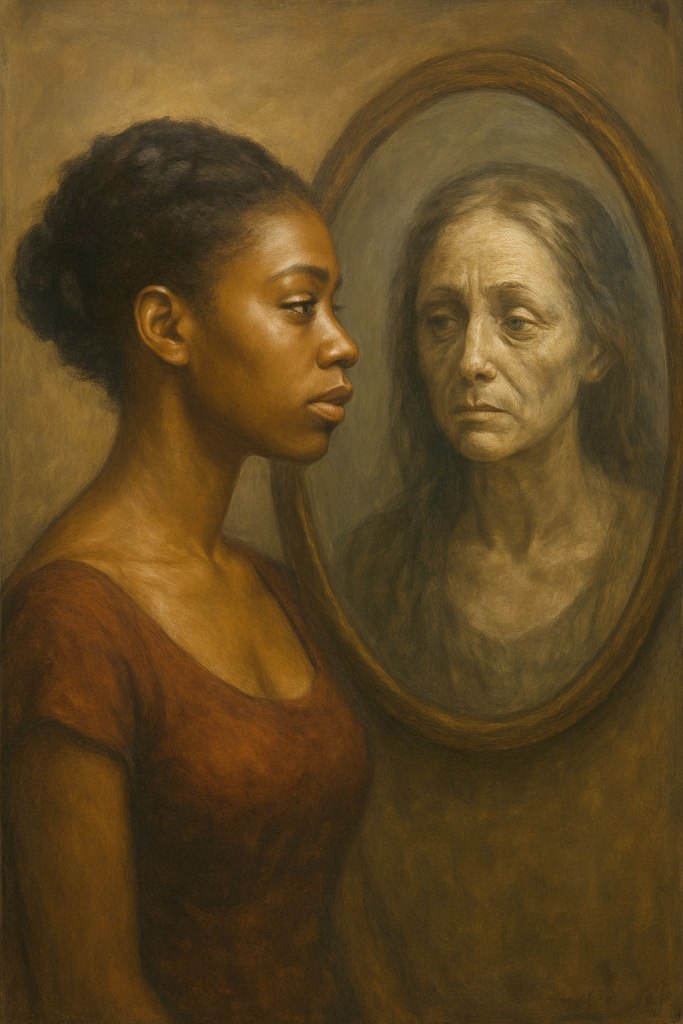
Brown Girl, What Do You See in the Mirror? #thebrowngirldilemma

When a brown girl stands before the mirror, she is not merely gazing at her reflection — she is confronting centuries of history, identity, and perception layered upon her skin. Her reflection is more than flesh and bone; it is the embodiment of resilience, survival, and beauty shaped by ancestral struggle and divine design. Yet for many, the mirror has been weaponized, transformed into a site of doubt, comparison, and internalized pain. The question, “What do you see?” becomes both a challenge and a call to reclaim the sacredness of one’s image in a world that often denies its worth.

The mirror tells stories that society refuses to hear. Through colonial legacies, colorism, and Eurocentric beauty standards, the brown girl has been taught that her value is conditional — that lighter is better, straighter is prettier, and proximity to whiteness equals worth. These distorted messages have shaped her psyche, leaving many to struggle with self-acceptance. Yet, every reflection of melanin is a testimony of divine artistry — “I will praise thee; for I am fearfully and wonderfully made” (Psalm 139:14, KJV). The mirror, when reclaimed, becomes an altar of affirmation, not condemnation.

The brown girl’s image has often been policed, fetishized, or erased. From the historical denigration of African features to the commercialization of beauty that imitates them, she lives within a paradox of being both desired and devalued. The lips, hips, and skin once mocked are now monetized, while the original bearers of these traits are left fighting for recognition. This paradox breeds confusion and spiritual exhaustion, forcing her to navigate an identity that is both celebrated and shamed.

To look in the mirror and see beauty is therefore an act of rebellion. It is a spiritual reclamation that defies centuries of psychological conditioning. When a brown girl declares herself beautiful, she is not practicing vanity — she is practicing healing. She is rewriting the narrative imposed upon her, aligning her reflection with God’s original intention, not man’s limited imagination. “For man looketh on the outward appearance, but the LORD looketh on the heart” (1 Samuel 16:7, KJV).

From early childhood, brown girls receive messages that shape how they perceive themselves. Dolls, media, and social standards subtly reinforce a hierarchy of beauty where darker tones are placed at the bottom. This conditioning embeds itself into the subconscious, leading to internalized colorism and self-doubt. But through self-awareness and spiritual renewal, she can learn to see herself through God’s eyes — radiant, royal, and redeemed.

The mirror reflects more than appearance; it reveals internal wounds. A brown girl’s relationship with her reflection often mirrors her journey of healing from rejection, abandonment, and societal erasure. The mirror becomes a witness to her silent battles — with self-worth, comparison, and belonging. Yet, through grace and truth, she can transform that space into a sanctuary of empowerment. The woman in the mirror becomes a warrior, no longer a captive to lies about her worth.

In Scripture, mirrors are symbolic of reflection and revelation. James 1:23–24 (KJV) describes the one who hears the word but does not act as a man who “beholdeth his natural face in a glass” and forgets who he is. Likewise, when the brown girl forgets her divine origin, she risks adopting a counterfeit identity. But when she remembers that she was made in the image of God (Genesis 1:27), her reflection shifts from insecurity to sacredness.

The journey to self-love for the brown girl is not about arrogance but about restoration. It is about healing generational trauma and rejecting the lie that she must conform to be accepted. Her melanin, her texture, her features — all speak the language of creation’s diversity. She is the living canvas of God’s brilliance, carrying in her complexion the warmth of the earth and the fire of the sun.

The mirror also challenges her to ask: What kind of beauty do I chase? The world glorifies vanity, filters, and digital perfection, but godly beauty radiates from character, wisdom, and grace. “Favour is deceitful, and beauty is vain: but a woman that feareth the LORD, she shall be praised” (Proverbs 31:30, KJV). The brown girl’s glow is not cosmetic; it is spiritual. Her shine comes from within — from peace, purpose, and divine presence.

Society often fears the confident brown girl because she defies stereotypes. When she stands unapologetically in her power, she disrupts systems built on inferiority complexes. Her confidence is not arrogance — it is awareness of who she is and Whose she is. Every time she looks in the mirror and smiles, she is dismantling centuries of lies that told her she wasn’t enough.

Yet, this journey requires community. The brown girl must surround herself with affirming voices — sisters who reflect her light back to her when she forgets. Together, they create mirrors of truth, reminding one another that they are daughters of royalty, not remnants of oppression. This sisterhood of reflection becomes the foundation of healing and liberation.

Media and culture play a profound role in shaping how brown girls view themselves. Representation matters. When they see women of their hue and texture portrayed with dignity, it expands their vision of beauty. From Lupita Nyong’o’s grace to Viola Davis’s power, these reflections in media serve as counter-narratives to centuries of invisibility. The mirror begins to tell new stories — stories of visibility, pride, and victory.

Faith also redefines beauty for the brown girl. When she sees herself through the lens of scripture, she no longer measures herself against impossible standards. Instead, she embraces her divine essence, knowing that God’s definition of beauty transcends culture and trend. “Thou art all fair, my love; there is no spot in thee” (Song of Solomon 4:7, KJV) becomes not just poetry, but prophecy — a declaration over every brown girl who ever doubted her reflection.

Even in pain, her beauty persists. The brown girl’s reflection carries history — of mothers who survived, of daughters who dreamed, and of generations that refused to disappear. Her scars do not diminish her beauty; they sanctify it. The mirror becomes a sacred archive of endurance, showing that true beauty is not in flawlessness, but in faith that endures through adversity.

To teach brown girls to love themselves is to undo centuries of psychological bondage. It means equipping them with the spiritual and emotional tools to reject harmful narratives. It means teaching them to look into the mirror and see divinity — not deficiency. Through this, the next generation of brown girls will stand taller, speak louder, and shine brighter.

In relationships, careers, and faith, how the brown girl sees herself determines how she moves through the world. When she views herself as lesser, she settles; when she views herself as divine, she ascends. Her reflection dictates her standard. Therefore, self-knowledge becomes sacred — a form of worship, because knowing herself honors the God who made her.

The mirror, once a site of comparison, can become a place of communion. When the brown girl prays before her reflection, she reclaims that space as holy ground. She learns to affirm: “I am enough. I am loved. I am created with purpose.” These declarations become spiritual warfare, dismantling every lie whispered by a society afraid of her power.

Ultimately, the mirror reflects not what she sees, but what she believes. If her heart is rooted in God’s truth, her reflection will radiate confidence and peace. Her worth is not measured by societal approval but by divine affirmation. She is a masterpiece — not because of what she wears or how she looks, but because of the Spirit that dwells within her.

So, brown girl, when you look in the mirror, see not what the world says you are, but what God declares you to be: chosen, beloved, royal, and radiant. Let your reflection remind you of the light within. For the mirror does not define you — it only reveals the glory already placed inside you by the Creator.

References (KJV):

  • Psalm 139:14
  • 1 Samuel 16:7
  • Genesis 1:27
  • Proverbs 31:30
  • James 1:23–24
  • Song of Solomon 4:7
  • Ecclesiastes 3:11
  • 1 Peter 3:3–4
  • Romans 12:2
  • 2 Corinthians 3:18

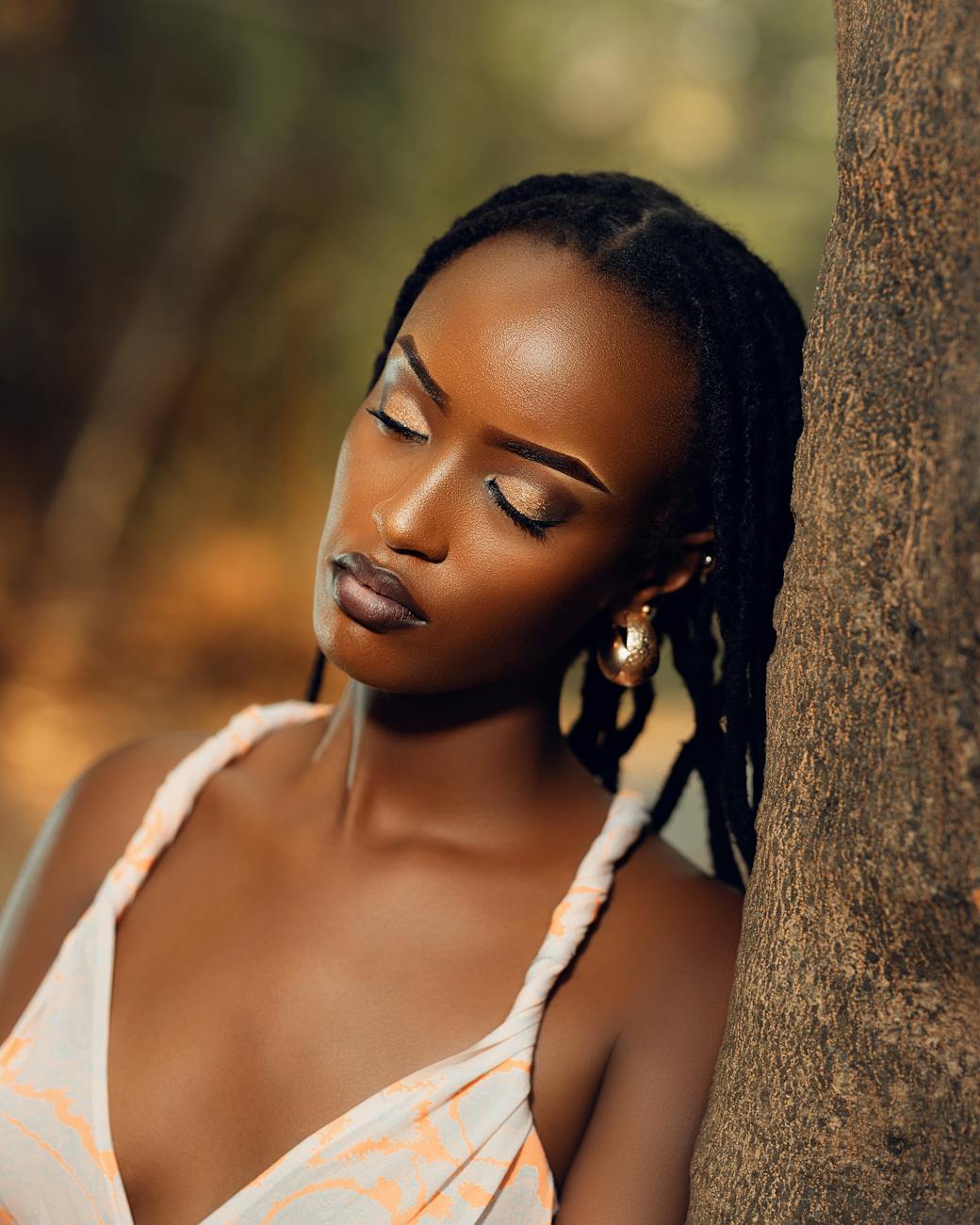
Whispers of Melanin: A Brown Girl Confession.

Photo by K Studios on Pexels.com

There is a quiet story that lives beneath my skin, one painted in shades of bronze and buried beneath years of misunderstanding. I have carried this melanin like both a crown and a curse—an inheritance too heavy to celebrate without apology. In the mirror, I see generations of women who learned to whisper their beauty instead of shouting it. This is my confession: that I am still learning to love the color I was told to hide.

I was born the color of dusk, where the day meets the night and light begins to soften. My mother’s hands, darker than mine, held both love and warning. “Stay out of the sun,” she would say, not out of vanity but survival. For her, color was protection and punishment, memory and mark. Her words carried the echo of centuries when darker skin meant harder labor and harsher judgment. She wanted me safe, even if it meant small.

As a girl, I envied light. The girls with honey skin and loose curls were called “pretty” before they even spoke. Teachers smiled longer at them. Boys looked longer too. I learned early that my reflection came with footnotes—beautiful for a dark girl, smart but intimidating. Compliments became backhanded blessings that taught me my worth depended on proximity to something else.

My skin, rich and warm, began to feel like an apology I never owed. I remember standing under fluorescent lights in a department store, trying on foundation shades that stopped two tones before me. I laughed to hide the sting. Beauty, it seemed, had a boundary, and I was standing just outside of it.

Colorism does not always scream; sometimes it sighs. It hides in the way cameras wash out brown tones, in casting calls that demand “racially ambiguous,” in the way a family photo subtly favors the fair. It’s in the whispered advice to “marry light,” to “improve the bloodline,” as if love were a ladder out of darkness.

But I have come to realize that my color is not a flaw in the palette of creation—it is the very hue of resilience. My skin remembers the sun of my ancestors, the soil of kingdoms before captivity. Within every cell of melanin lives a story of survival, brilliance, and divine intention. This brown is not burden; it is blueprint.

Still, confession means honesty, and honesty means I have wept over this skin. I have prayed for lighter mornings, wondered if the world would love me more if I were less of me. I have worn long sleeves in summer and smiled at jokes that bruised me. There were seasons I wanted invisibility more than visibility, peace more than pride.

There is a peculiar exhaustion that comes from constantly explaining your beauty. From having to convince the world that your darkness does not need redemption. From seeing your shade turned into a trend when it decorates others but remains a stigma when it clothes you.

Yet healing began in the mirror. The day I stopped comparing, stopped apologizing, stopped shrinking into palatable shades of brown, I met myself anew. I looked at my reflection not as something to correct but as a miracle. My melanin is the poetry of creation—God’s intentional brushstroke against the backdrop of existence.

In learning to love my skin, I began to reclaim language. I stopped calling it “dark” as if it were a warning. I began to call it sun-kissed, bronzed by divine fire, rooted in earth. Words matter. They shape the self before the world ever does.

There is also joy in being brown—a quiet, grounded joy. The way sunlight deepens into me, the way my skin gleams like copper and cocoa, the way strangers see strength in my stride. I have learned that this hue holds power: the power to absorb light and reflect it stronger.

Culturally, being brown is more than complexion; it is history embodied. It connects me to the diaspora, to women who carried water, wisdom, and worlds within them. It ties me to India’s spices, Africa’s soil, the Caribbean’s rhythm, and the American South’s sorrow songs. My melanin is global—it is the map of migration, memory, and majesty.

Yet colorism remains an unspoken war among sisters. We compare, compete, and sometimes wound each other with the same weapons used against us. The healing must begin within us—when we stop measuring worth by shade and start celebrating every tone as a note in our shared harmony.

Psychologically, loving brown skin in a world that profits from insecurity is rebellion. It means unlearning centuries of propaganda that sold bleach in bottles and shame in magazines. It means confronting the colonial ghosts that still whisper in beauty aisles and boardrooms. It is both radical and restorative to say, I am enough as I am.

Spiritually, my melanin feels sacred. It reminds me that I was formed from dust and destined for light. Scripture says, “I am fearfully and wonderfully made” (Psalm 139:14, KJV), and I believe that includes every shade of brown, every curl and kink, every feature the world once mocked. The divine does not make errors in pigment.

This confession is also a love letter—to every brown girl who has been told she was too dark to dream or too visible to belong. To the girls who hid from cameras or edited their photos until their skin forgot its truth. To the women who are rediscovering their beauty after years of silence. You are the color of endurance, the reflection of sun and soil, the embodiment of balance.

Brown is not less; it is more—more ancient, more layered, more luminous. It holds the past and the promise. It does not fade; it deepens. To be brown is to carry the world’s warmth in your skin and to shine even when unseen.

My confession ends where my healing begins: I no longer whisper my beauty. I let it echo. I let it speak in the language of confidence and softness, in the rhythm of self-acceptance. My melanin no longer hides—it radiates. I am the daughter of dusk and dawn, and I no longer apologize for the color of my becoming.

References

hooks, b. (1992). Black looks: Race and representation. South End Press.

Fanon, F. (1952). Black skin, white masks. Grove Press.

Hunter, M. (2007). The persistent problem of colorism: Skin tone, status, and inequality. Sociology Compass, 1(1), 237–254.

Russell, K., Wilson, M., & Hall, R. (1992). The color complex: The politics of skin color among African Americans. Anchor Books.

Tate, S. A. (2016). Black beauty: Aesthetics, stylization, politics. Routledge.