Category Archives: the brown girl dilemma

Chasing Sunlight: A Brown Girl’s Story

From her earliest memories, the brown girl learned that the world often measured beauty through a narrow lens. Yet even as she navigated these constraints, she discovered that her own radiance came from a deeper, more spiritual source—one that could not be dimmed by society’s expectations.

Growing up, she noticed subtle differences in the way people were treated. Lighter meant better. Paler meant prettier. Straighter hair meant more acceptable. These unspoken rules shaped how she saw herself, but they also birthed questions that would redefine her journey.

She soon realized that colorism—the preferential treatment of lighter skin within and outside the Black community—was not merely personal but historical. It was a legacy of colonialism that still lingered in classrooms, families, and media portrayals (Hunter, 2007).

At school, she felt the quiet sting of invisibility. Teachers praised the girls who looked nothing like her. Boys whispered admiration for complexions far from hers. Yet the brown girl refused to shrink; instead, she learned to observe, analyze, and grow stronger through insight.

Her grandmother became her first source of light. With stories of African queens, biblical women of strength, and ancestral wisdom, she taught the brown girl that her melanin was a sacred inheritance, not a flaw (hooks, 2000).

In adolescence, she began experimenting with beauty rituals—some meant to enhance her features and others designed to change them. The pressure to conform was heavy, but each time she looked in the mirror, she felt a tug toward authenticity.

The turning point came when she noticed that even those who met society’s beauty standards still struggled with insecurity. It revealed a powerful truth: beauty built on comparison is fragile, but beauty rooted in identity is unbreakable (Hall, 1997).

She started seeking images that reflected her. Books by Black women, films with diverse representation, and social movements celebrating melanin-rich beauty began to shift her understanding of self (Banks, 2017).

Her world widened. Lupita Nyong’o’s presence on global stages, the rise of natural hair movements, and conversations about inclusivity in fashion reshaped the cultural landscape in which she lived (Ferguson, 2015).

Even with these changes, she still faced microaggressions—people touching her hair without consent, questioning her heritage, or assuming she was less refined. Each encounter reminded her that representation does not erase bias overnight (Crenshaw, 1991).

Yet she refused to internalize these wounds. Instead, she began documenting her experiences, writing poetry, and sharing her story with others. She discovered that vulnerability could become activism.

As she stepped into adulthood, she noticed how beauty standards shaped professional and social opportunities. Those seen as “more presentable” were often treated with more respect. The brown girl learned to navigate these spaces with grace but also with a sharpened awareness of systemic bias.

Her faith deepened her resilience. Scriptures reminding her that she was “fearfully and wonderfully made” became anchors, grounding her in divine identity rather than societal ranking.

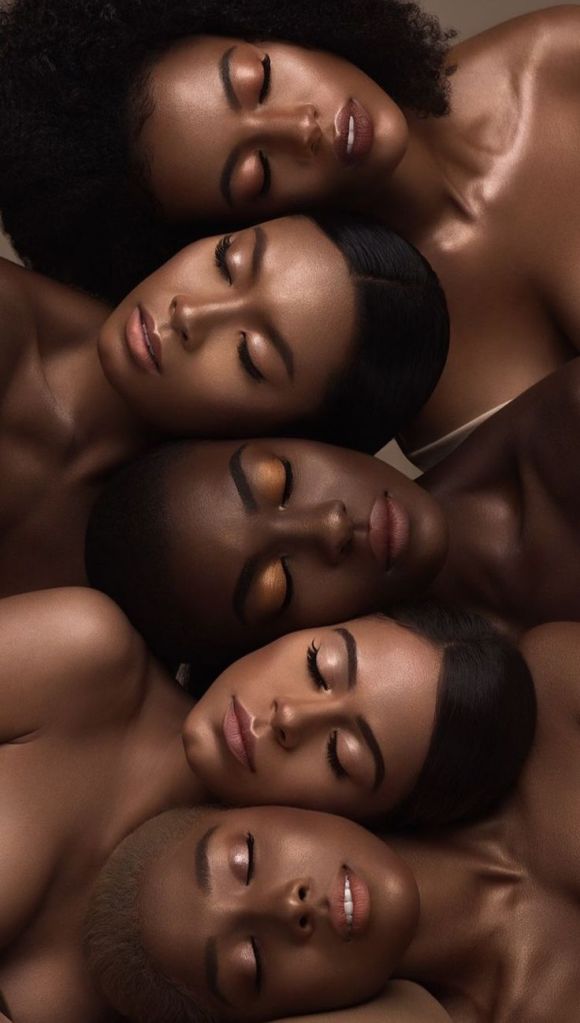
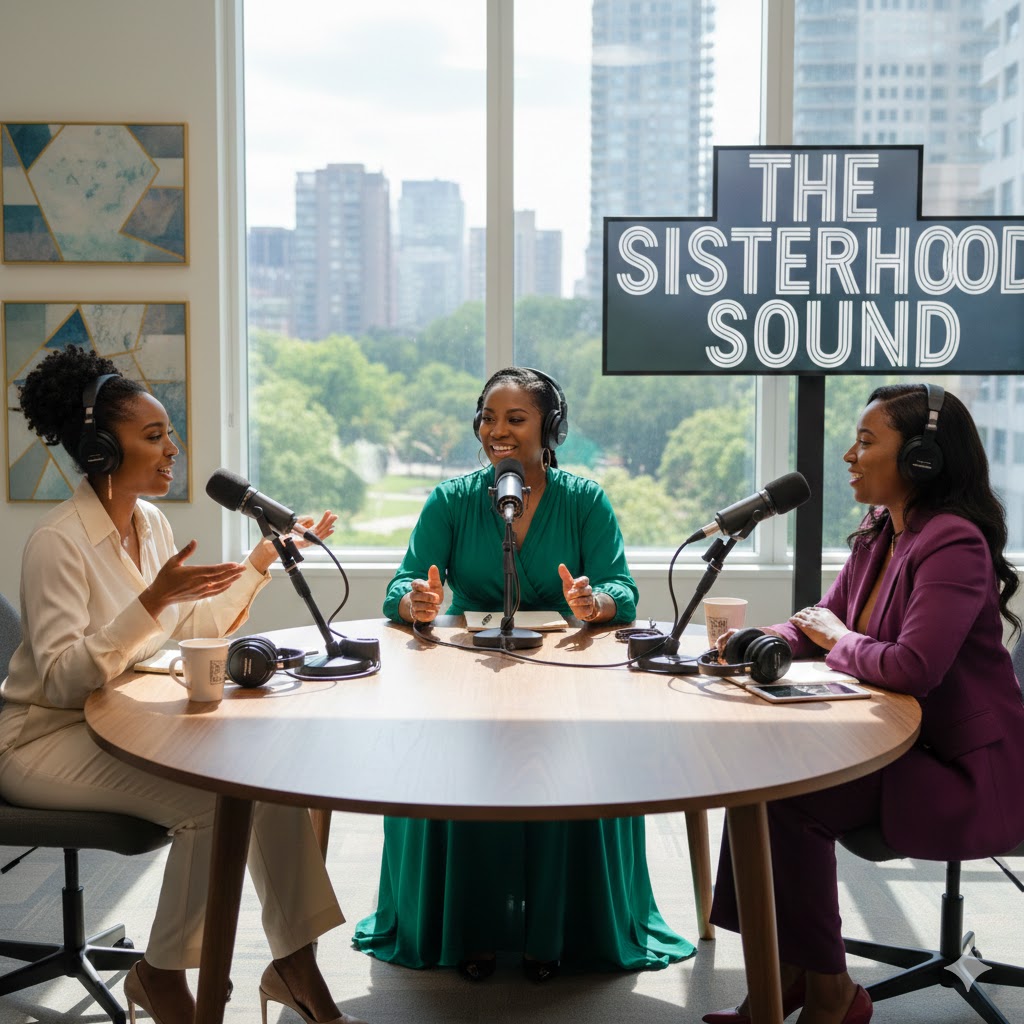
She also discovered a sisterhood among other brown girls—women who shared her struggles, victories, and dreams. Together, they formed communities where their stories were honored and their brilliance celebrated.

In time, she embraced her melanin as a symbol of survival. It held the memory of ancestors who endured displacement, injustice, and generational pain yet still carried glory in their skin.

Her career became another avenue of transformation. Whether she pursued art, leadership, education, or business, she found ways to elevate voices like hers and challenge the beauty hierarchy that once confined her.

She learned that her story was more than personal. It was political, cultural, and spiritual. Her journey illuminated the intersections of race, gender, and color, revealing how they shape identity in a world still learning to see fully.

The brown girl became a woman who no longer chased sunlight to feel seen. She recognized that she carried her own light—one born of resilience, culture, and faith.

Today, she stands boldly in the fullness of her identity. She knows that sunlight does not give her worth; it only reflects what has always been there.

In her triumph, she leaves a path for others—an invitation for every brown girl to embrace her own radiance and rewrite the narrative: you are enough, you are beautiful, and your melanin is a miracle.


References

  • Banks, T. (2017). Representation and beauty in Black media: Celebrating melanin-rich identity. Journal of Black Studies, 48(7), 657–678.
  • Collins, P. H. (2000). Black feminist thought: Knowledge, consciousness, and the politics of empowerment. Routledge.
  • Crenshaw, K. (1991). Mapping the margins: Intersectionality, identity politics, and violence against women of color. Stanford Law Review, 43(6), 1241–1299.
  • Ferguson, R. (2015). Representation matters: African American women in contemporary media. Cultural Studies Review, 21(2), 45–67.
  • Hall, R. E. (1997). Beauty and power: Race, gender, and the visual culture of Black women. Feminist Media Studies, 3(1), 23–45.
  • hooks, bell. (2000). Feminism is for everybody: Passionate politics. South End Press.
  • Hunter, M. L. (2007). The persistent problem of colorism: Skin tone, status, and inequality. Sociology Compass, 1(1), 237–254.

Dilemma: Redlining

The Architecture of Racial Segregation in American Housing

Redlining refers to a discriminatory practice in which financial institutions, lenders, insurers, and government agencies systematically denied or limited access to loans, mortgages, and other financial services to residents of certain neighborhoods based on race or ethnicity. The practice disproportionately targeted Black communities and other minority populations, reinforcing residential segregation and economic inequality across the United States. Redlining became one of the most enduring structural mechanisms used to maintain racial hierarchy in housing, wealth accumulation, and urban development.

The term “redlining” originated from the literal red lines drawn on government-sponsored maps to designate neighborhoods considered risky for mortgage lending. These maps were produced by the Home Owners’ Loan Corporation during the 1930s as part of federal housing initiatives implemented during the Great Depression. Neighborhoods with large Black populations were almost automatically labeled hazardous for investment, regardless of the income or stability of the residents who lived there.

Redlining emerged during the era of sweeping federal housing reform under the Franklin D. Roosevelt administration. In 1933, the U.S. government created the Home Owners’ Loan Corporation to refinance mortgages and prevent mass foreclosures. However, the agency developed color-coded maps to guide lending decisions. Areas marked in green were considered the best investments, while areas marked in red—often where Black Americans lived—were deemed undesirable.

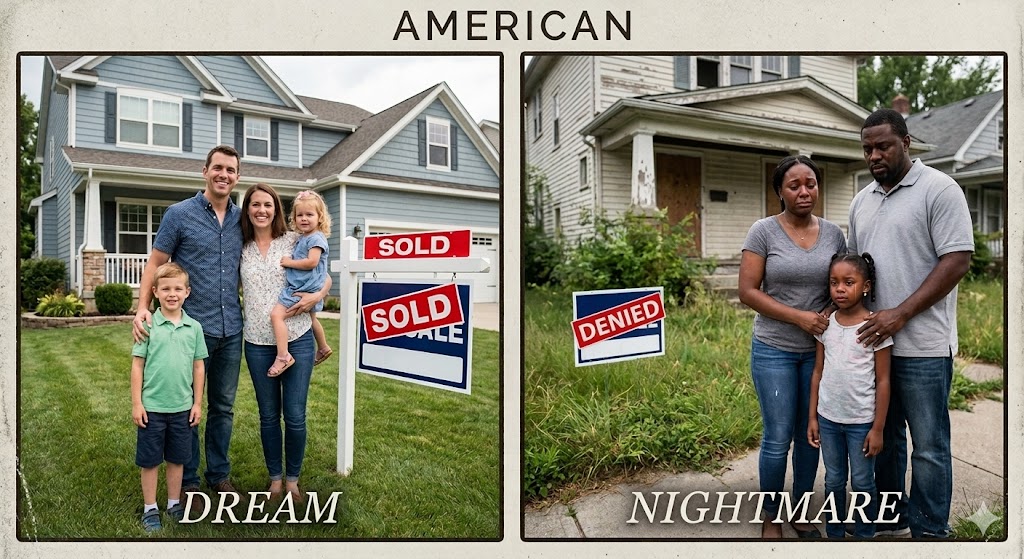
These classifications were further reinforced by policies associated with the Federal Housing Administration (FHA), which was established in 1934. The FHA promoted homeownership through federally insured mortgages but refused to insure loans in neighborhoods with Black residents. This meant that white families could more easily obtain mortgages and build wealth through homeownership, while Black families were largely excluded from these opportunities.

Redlining was not merely an economic practice but a social system that institutionalized racial segregation. Mortgage lenders, real estate brokers, and city planners used these maps to guide investment decisions. Even middle-class Black neighborhoods with stable property values were marked as hazardous. As a result, banks refused to provide loans to Black homeowners seeking to buy, repair, or refinance their properties.

White homeowners and real estate developers frequently benefited from redlining policies. Suburban developments constructed after World War II often included racially restrictive covenants that explicitly prohibited the sale of homes to Black buyers. Developments such as Levittown became symbols of postwar suburban prosperity for white families while simultaneously excluding Black Americans from homeownership opportunities.

Because Black families were prevented from accessing traditional mortgage financing, many were forced into exploitative housing arrangements such as contract buying. Under these arrangements, buyers paid inflated prices for homes but did not gain ownership until the entire payment was completed. Missing even a single payment could result in eviction and loss of all previously paid funds, leaving many Black families financially devastated.

Redlining also restricted Black access to suburban neighborhoods, forcing many African Americans to remain concentrated in urban centers. Cities like Chicago, Detroit, and Baltimore became emblematic of racially segregated housing patterns produced by redlining policies. These patterns shaped the demographic landscape of American cities for generations.

One of the most devastating effects of redlining was its impact on generational wealth. Homeownership is one of the primary mechanisms through which American families accumulate wealth. By denying Black families access to mortgage credit, redlining prevented them from building home equity that could be passed down to future generations.

Redlining also affected neighborhood infrastructure and public services. Communities labeled as hazardous received fewer public investments, including reduced funding for schools, parks, and transportation. Businesses were less likely to open in these areas because banks refused to provide commercial loans, leading to economic stagnation in many Black neighborhoods.

Educational inequality also emerged as a secondary consequence of redlining. Because public school funding in the United States is often tied to local property taxes, neighborhoods with declining property values—often those affected by redlining—experienced underfunded schools. This created a cycle of disadvantage that affected educational attainment among Black children.

Health disparities also correlate with historically redlined neighborhoods. Researchers have found that communities once marked as hazardous often experience higher rates of environmental pollution, limited access to healthcare facilities, and increased prevalence of chronic illnesses such as asthma and hypertension.

Although redlining was formally outlawed with the passage of the Fair Housing Act of 1968, its legacy remains deeply embedded in the American housing system. The law prohibited discrimination in housing based on race, color, religion, or national origin, yet the structural inequalities created by decades of redlining have proven difficult to dismantle.

Modern forms of housing discrimination continue to resemble redlining practices. Some lenders engage in “reverse redlining,” targeting minority communities with predatory loans and subprime mortgages. These financial products often carry higher interest rates and fees, increasing the risk of foreclosure.

Urban scholars have noted that historically redlined neighborhoods still exhibit lower property values compared to areas that were graded favorably in the 1930s. This demonstrates how past policies continue to influence contemporary economic outcomes and spatial inequality.

Redlining also shaped patterns of urban disinvestment that contributed to the decline of many American inner cities during the mid-twentieth century. As white families moved to suburbs with government-backed mortgages, tax bases in urban Black communities declined, limiting municipal resources for infrastructure and public services.

Many historians and sociologists argue that redlining represents one of the clearest examples of structural racism in American policy. Unlike individual acts of prejudice, redlining was embedded within federal institutions, banking systems, and real estate practices, making it a systemic barrier to economic equality.

In recent years, scholars and policymakers have called for reparative housing policies to address the enduring legacy of redlining. Proposals include expanded access to homeownership programs, targeted investments in historically marginalized neighborhoods, and reforms to lending practices to promote equitable access to credit.

Understanding redlining is essential for comprehending the racial wealth gap in the United States. While individual success stories exist, structural barriers created by discriminatory policies significantly shaped economic outcomes for generations of Black Americans.

Ultimately, redlining reveals how government policy, financial institutions, and social attitudes combined to produce lasting racial inequality. Its legacy continues to influence patterns of housing segregation, economic mobility, and urban development in modern American society.


References

Aaronson, D., Hartley, D., & Mazumder, B. (2017). The effects of the 1930s HOLC “redlining” maps. Federal Reserve Bank of Chicago.

Jackson, K. T. (1985). Crabgrass frontier: The suburbanization of the United States. Oxford University Press.

Massey, D. S., & Denton, N. A. (1993). American apartheid: Segregation and the making of the underclass. Harvard University Press.

Rothstein, R. (2017). The color of law: A forgotten history of how our government segregated America. Liveright Publishing.

Satter, B. (2009). Family properties: Race, real estate, and the exploitation of Black urban America. Metropolitan Books.

U.S. Department of Housing and Urban Development. (2023). History of housing discrimination and redlining in America. HUD Archives.

Contract Selling – The Hidden Housing Exploitation of Black America

Contract selling was a predatory housing practice that targeted Black families who were excluded from traditional mortgage financing due to redlining and racial discrimination. Because banks refused to lend to Black homebuyers in many neighborhoods, African Americans were forced to purchase homes through private contracts rather than legitimate mortgages. These contracts allowed sellers to exploit Black buyers by charging inflated prices and denying them legal protections normally associated with homeownership.

This practice became widespread in cities such as Chicago, Detroit, Cleveland, and Philadelphia during the mid-twentieth century. In these urban centers, real estate investors realized that the housing restrictions imposed by redlining created a desperate market among Black families seeking stable housing. Investors capitalized on this demand by purchasing homes cheaply and reselling them to Black buyers at drastically inflated prices through installment contracts.

Unlike a traditional mortgage, contract buyers did not receive the title to the home until the full purchase price was paid. This meant that even after years of payments, the buyer technically did not own the property. If a payment was missed—even once—the seller could cancel the contract, evict the family, and keep all previous payments.

Because of these terms, contract selling created a cycle of economic exploitation. Black families paid far more for homes than their white counterparts while receiving fewer legal protections. In many cases, homes were sold for two or three times their actual market value.

The practice was closely connected to the discriminatory lending policies enforced by institutions such as the Federal Housing Administration and the Home Owners’ Loan Corporation. These agencies systematically refused to insure mortgages in Black neighborhoods, forcing African Americans into informal and often predatory housing arrangements.

White real estate speculators played a central role in this system. Many investors purchased homes in white neighborhoods after white residents fled due to racial panic—a process known as blockbusting. Once these properties were acquired cheaply, they were sold to Black families through exploitative contracts.

In cities like Chicago, historians estimate that thousands of Black families were trapped in these contracts between the 1950s and 1970s. Entire neighborhoods became sites of financial extraction where Black residents paid excessive housing costs without building equity.

One of the most tragic aspects of contract selling was the illusion of homeownership it created. Families believed they were purchasing homes and investing in their futures, yet the legal structure of the contracts ensured that wealth accumulation remained extremely difficult.

These practices also resulted in housing instability. Because contract sellers remained the legal owners, they were not obligated to maintain the properties. Repairs and maintenance were usually the responsibility of the buyer, even though the buyer did not yet legally own the home.

The economic consequences were severe. Families often spent decades paying off contracts only to lose the property if financial hardship occurred. When this happened, sellers could resell the same home repeatedly to new buyers, profiting multiple times from the same property.

The system eventually sparked organized resistance. In the late 1960s, activists in Chicago formed the Contract Buyers League, a grassroots organization that fought against predatory housing contracts. Members demanded fair prices, mortgage conversions, and legal protections.

The movement gained national attention and forced some lenders to renegotiate contracts with Black homeowners. Although not all families received justice, the activism exposed the hidden exploitation occurring within the housing market.

Contract selling also played a major role in widening the racial wealth gap in the United States. Because Black families paid inflated housing prices without building equity, they were unable to accumulate wealth in the same way white homeowners did through traditional mortgages.

Scholars argue that the wealth lost through these exploitative contracts amounts to billions of dollars in modern value. This represents generational wealth that could have been passed down through property ownership.

The system also reinforced residential segregation. Since Black families were limited to certain neighborhoods and forced into exploitative housing arrangements, economic mobility was severely restricted.

Even after the passage of the Fair Housing Act in 1968, the economic damage caused by decades of contract selling continued to affect Black communities. Many neighborhoods continue to experience lower property values and higher rates of housing instability.

Today, historians view contract selling as one of the clearest examples of how discriminatory housing policies created structural barriers to Black wealth accumulation. It demonstrates how racism within financial institutions extended beyond overt segregation into more subtle and hidden economic practices.

Understanding this history is essential for recognizing how housing inequality developed in the United States. The legacy of contract selling continues to shape the economic landscape of many Black communities.

Ultimately, contract selling represents a painful chapter in American housing history—one in which the dream of homeownership was manipulated and weaponized against those who had already been excluded from the mainstream financial system.


References

Coates, T.-N. (2014). The case for reparations. The Atlantic. https://www.theatlantic.com

Hirsch, A. R. (1983). Making the second ghetto: Race and housing in Chicago 1940–1960. Chicago: University of Chicago Press.

Jackson, K. T. (1985). Crabgrass frontier: The suburbanization of the United States. New York: Oxford University Press.

Rothstein, R. (2017). The color of law: A forgotten history of how our government segregated America. New York: Liveright Publishing.

Satter, B. (2009). Family properties: Race, real estate, and the exploitation of Black urban America. New York: Metropolitan Books.

Taylor, K.-Y. (2019). Race for profit: How banks and the real estate industry undermined Black homeownership. Chapel Hill: University of North Carolina Press.

U.S. Department of Housing and Urban Development. (2023). History of housing discrimination and redlining in America. Washington, DC: HUD Office of Policy Development and Research.

Mapping Inequality Project. (2023). Redlining in New Deal America. University of Richmond Digital Scholarship Lab.

The Brown Girl Dilemma Anthology

Essays on Identity, Faith, and Resilience

Photo by Matheus Henrin on Pexels.com

Introduction: Naming the Dilemma

The story of the brown girl has too often been told by others—distorted by colonial narratives, diminished by Eurocentric beauty standards, and overshadowed by the structures of white supremacy. To be a brown girl is to exist at the crossroads of invisibility and hyper-visibility, of longing and defiance, of burden and brilliance. Yet, it is also to carry within one’s skin, history, and faith an unshakable strength.

This anthology, The Brown Girl Dilemma, weaves together eight reflections that explore the psychological, theological, and cultural experiences of brown girls. Each essay unpacks a layer of her reality: her struggles, her triumphs, her beauty, her biases, her faith, and her crown. Together, they paint a portrait of resilience and hope, testifying that the brown girl’s story is not merely one of survival but of victory.


Beyond the Mirror: Unpacking the Brown Girl Dilemma

Photo by Mwabonje Ringa on Pexels.com

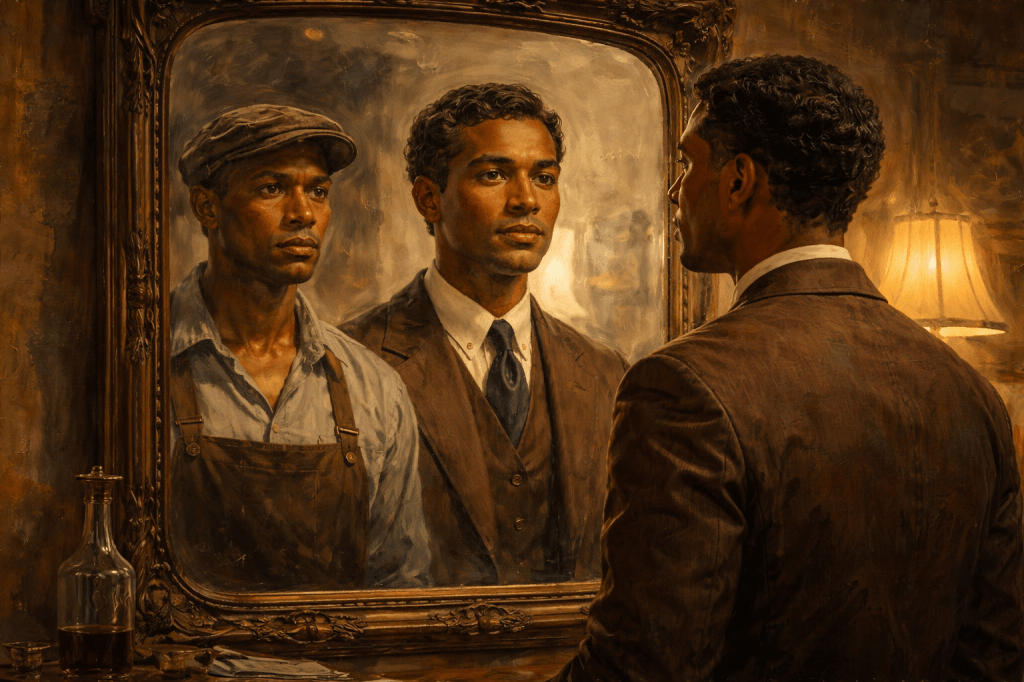
The mirror often reflects not only one’s face but also the stories society has told about it. For brown girls, the mirror has been a site of battle. From childhood, they have been fed images that elevate whiteness as the pinnacle of beauty while positioning melanin as a flaw (Hunter, 2007). Yet beyond the mirror lies the truth: the brown girl is not a mistake but a masterpiece, fearfully and wonderfully made (Psalm 139:14, KJV). Her dilemma, therefore, is not inherent in her skin but imposed by cultural lies. The work of unpacking begins when she refuses to internalize the distortion, reclaiming the mirror as a site of affirmation rather than shame.


Beauty, Bias, and the Brown Girl Battle

Photo by Megwara Favour on Pexels.com

Beauty is not neutral. It is shaped by bias, wielded as a weapon, and coded into systems that privilege certain shades over others. Colorism—bias within communities of color that favors lighter skin tones—continues to affect employment, marriage prospects, and social mobility (Monk, 2014). The brown girl’s battle is not against her reflection but against these structures of exclusion. Yet resilience emerges when she embraces her natural beauty as sacred. Like the Shulamite woman of Song of Solomon, she can boldly declare: “I am black, but comely” (Song of Solomon 1:5, KJV). Her beauty becomes both resistance and revolution.


Sacred Shades: A Theological Look at the Brown Girl Dilemma

Photo by Ivan Samkov on Pexels.com

Scripture affirms the diversity of creation: “And God saw everything that he had made, and, behold, it was very good” (Genesis 1:31, KJV). Her melanin is no accident—it is sacred. Yet theology has been misused, with distorted readings of texts like the “curse of Ham” weaponized to justify slavery and racism (Goldenberg, 2003). A theological re-examination reveals that the brown girl is not cursed but chosen, not marginalized but mighty. Her shades are not blemishes but blessings, woven intentionally into the divine tapestry.


Brown Skin, Heavy Crown: The Weight of Representation

Photo by John Ray Ebora on Pexels.com

Representation is both privilege and burden. The brown girl often carries the pressure of being “the first,” “the only,” or “the token” in schools, workplaces, and media. Research on “tokenism” highlights the psychological toll of being isolated in professional settings (Kanter, 1977). Her crown is heavy because she is asked to stand not just for herself but for her entire community. Yet within this weight lies an opportunity: her very presence disrupts narratives of exclusion. Like Queen Esther, she steps into spaces of power “for such a time as this” (Esther 4:14, KJV), bearing her crown with dignity even when it feels crushing.


Invisible Yet Hyper-Visible: The Brown Girl Paradox

Photo by Jonatan Galvis on Pexels.com

The brown girl’s life is marked by paradox. In many contexts, she is invisible—overlooked in promotions, underrepresented in media, and silenced in public discourse (Collins, 2000). Yet in others, she is hyper-visible—her body fetishized, her features policed, her presence scrutinized. This double-bind echoes W.E.B. Du Bois’ (1903/1994) notion of “double consciousness.” Psychology confirms the strain of such contradictions (Harris-Perry, 2011), but it also testifies to the adaptability born from them. The brown girl learns to navigate invisibility and visibility with wisdom, asserting her presence in spaces that once denied her.


The Skin They Can’t Ignore: Brown Girls in a World of Whiteness

Photo by Bave Pictures on Pexels.com

Despite centuries of erasure, the brown girl’s skin refuses to disappear. From the runways of fashion to the classrooms of academia, from pulpits to parliaments, brown girls are reshaping global narratives (Craig, 2021). Their melanin is a marker of survival, a testimony to ancestors who endured and resisted. The world of whiteness may attempt to silence them, but their skin speaks—a language of resilience, beauty, and truth.


From Colorism to Confidence: Redefining the Brown Girl Dilemma

Photo by Andrea Piacquadio on Pexels.com

The journey from colorism to confidence is neither linear nor easy, but it is necessary. Healing begins when the brown girl rejects society’s scales of worth and embraces her own. Confidence does not erase the pain of exclusion, but it transforms it into power. With each affirmation, each step of self-love, she dismantles the very dilemma that once sought to define her. Psychology shows that affirming racial identity correlates with higher self-esteem and resilience (Sellers et al., 1998). The narrative shifts: she is no longer trapped in the binary of lighter versus darker but liberated in the fullness of her identity.


Shades of Struggle, Shades of Strength: The Brown Girl Experience

Photo by Lucas Pezeta on Pexels.com

The brown girl experience is a tapestry woven with both pain and power. Struggles with racism, sexism, and colorism are undeniable, but so is the strength cultivated through them. History remembers the voices of brown women who transformed struggle into legacy—Sojourner Truth, Audre Lorde, Maya Angelou, and countless unnamed others. Their resilience becomes inheritance, passed down to new generations of brown girls who rise stronger than those before them. Their lives declare that struggle and strength are not opposites but companions.


Conclusion: Rewriting the Dilemma

Photo by Darksight Image on Pexels.com

The brown girl dilemma is not an unsolvable riddle—it is a story in the process of being rewritten. Each essay in this anthology testifies to a different dimension of her truth: beauty, bias, theology, representation, paradox, visibility, confidence, and resilience. Together, they reveal that the dilemma was never truly hers but society’s.

The final word belongs to the brown girl herself. She is more than the reflection in the mirror, more than the burden of bias, more than the paradox of presence. She is sacred, crowned, resilient, and radiant. She is a daughter of the Most High, created in His image, carrying both the weight of her history and the brilliance of her destiny. And in her story, we find not only the struggle of brown girls but the strength of all humanity.


References

Collins, P. H. (2000). Black feminist thought: Knowledge, consciousness, and the politics of empowerment. Routledge.

Craig, M. L. (2021). Ain’t I a beauty queen?: Black women, beauty, and the politics of race. Oxford University Press.

Du Bois, W. E. B. (1994). The souls of Black folk. Dover Publications. (Original work published 1903)

Goldenberg, D. M. (2003). The curse of Ham: Race and slavery in early Judaism, Christianity, and Islam. Princeton University Press.

Harris-Perry, M. V. (2011). Sister citizen: Shame, stereotypes, and Black women in America. Yale University Press.

Hunter, M. (2007). The persistent problem of colorism: Skin tone, status, and inequality. Sociology Compass, 1(1), 237–254. https://doi.org/10.1111/j.1751-9020.2007.00006.x

Kanter, R. M. (1977). Men and women of the corporation. Basic Books.

Monk, E. P. (2014). Skin tone stratification among Black Americans, 2001–2003. Social Forces, 92(4), 1313–1337. https://doi.org/10.1093/sf/sou007

Sellers, R. M., Caldwell, C. H., Schmeelk-Cone, K. H., & Zimmerman, M. A. (1998). Racial identity, racial discrimination, perceived stress, and psychological well-being among African American young adults. Journal of Health and Social Behavior, 39(3), 302–314. https://doi.org/10.2307/2676348

The Holy Bible, King James Version.

From Cotton Fields to Catwalks: The Brown Woman’s Journey to Self-Love.

The story of the Brown woman is one of resilience, rebirth, and reclamation. Her journey from servitude to sovereignty—both internal and external—has been marked by centuries of struggle and transcendence. From the brutal realities of plantation life to the glittering lights of fashion runways, the evolution of her image mirrors a greater spiritual awakening: the rediscovery of her worth, beauty, and divine identity. Her path is not just a chronicle of survival but a testament to the enduring radiance that oppression could never extinguish.

In the cotton fields of America’s South, the Brown woman was both the backbone and the burden of a system designed to exploit her body and silence her voice. Her skin, kissed by the sun, became a symbol of labor and loss. Yet, even as she toiled under inhumane conditions, her strength radiated an unspoken grace. Enslaved women bore the brunt of physical, sexual, and emotional exploitation, yet within them lay the seeds of future generations who would redefine Black and Brown womanhood (Collins, 2000).

Her labor was not only agricultural but existential. Every day, she cultivated survival strategies—songs, prayers, and quiet defiance—that preserved her humanity. Spirituals sung in the fields were coded messages of freedom and hope, expressing an inner beauty that no master could steal. The Brown woman’s endurance was divine resistance, an echo of the Hebrew women in Exodus who “feared God, and did not as the king of Egypt commanded them” (Exodus 1:17, KJV).

As centuries turned, the Brown woman carried her ancestral pain into new forms of identity. The Reconstruction era offered minimal reprieve, yet the cultural memory of servitude continued to shape her self-image. Society imposed new shackles—colorism, Eurocentric beauty standards, and class-based discrimination. Lightness became currency, while darker tones were dismissed as undesirable. The trauma of the cotton fields mutated into the social hierarchies of complexion (Hunter, 2007).

In the early 20th century, Black and Brown women began to redefine beauty on their own terms. The Harlem Renaissance gave birth to a cultural revolution where art, literature, and music celebrated melanin and femininity. Icons like Josephine Baker and Zora Neale Hurston embodied a new consciousness of self-love. They challenged the world’s gaze, asserting that beauty was not confined to whiteness but could emerge proudly from the soil of struggle.

Still, the world continued to commodify the Brown woman’s image. In the age of advertising and media, she was alternately hypersexualized or erased altogether. The Brown woman became both muse and martyr, desired yet devalued. Her body was used to sell products, her curves celebrated only when worn by non-Black bodies. The struggle for representation became an extension of the plantation’s legacy—her labor admired but her personhood denied.

Yet, from this erasure rose a fierce reclamation. The Brown woman began to take control of her narrative, reshaping the lens through which she was seen. The natural hair movement, melanin-positive campaigns, and digital activism became modern-day revolutions. Social media platforms became her new battleground, where she could proclaim unapologetically, “I am my ancestors’ wildest dream.”

Fashion, once an industry of exclusion, began to shift under the pressure of her presence. The catwalk, a space that once rejected her, now bore witness to her glory. Models like Naomi Campbell, Alek Wek, and Duckie Thot redefined what global beauty could look like. Each stride on the runway became an act of defiance—a declaration that the daughter of the field worker had ascended to the stage of the world.

The symbolism of this transformation is profound. The same hands that once picked cotton now shape couture. The same skin once mocked for its depth of hue now commands admiration under golden lights. It is not simply a story of economic mobility or fashion inclusion, but of spiritual elevation. The Brown woman’s body, once a site of oppression, has become a canvas of divine artistry.

Still, her journey to self-love remains layered and complex. Generational trauma and systemic inequities continue to haunt her psyche. Colorism persists within her own community, and media still struggles to portray her diversity. Yet, the Brown woman’s resilience endures. Her love for herself is not a trend but a spiritual revolution—a return to the truth that she was always enough.

This self-love is radical because it challenges centuries of indoctrination. To love oneself in a world that profits from one’s insecurity is a political act. When the Brown woman looks into the mirror and sees beauty, she dismantles the psychological residue of colonialism. Her reflection becomes a form of resistance—a reminder that her worth was never for sale.

Spiritually, her journey mirrors the biblical narrative of restoration. Like Ruth gleaning in the fields before being elevated to royalty, the Brown woman’s life is marked by divine orchestration. Her pain prepared her for purpose. Her ancestors’ prayers planted the seeds of the empowerment she now harvests. “He hath made every thing beautiful in his time” (Ecclesiastes 3:11, KJV) captures the essence of her evolution.

In embracing her melanin, her curls, her history, and her imperfections, she reclaims her crown. This reclamation is not only external but deeply internal. She no longer measures herself by European standards, but by divine ones. Her beauty, like her spirit, is infinite—rooted in the soil of her ancestors and watered by the tears of generations who refused to disappear.

Education, art, and faith have become her tools of restoration. Through poetry, scholarship, and entrepreneurship, she is rewriting her narrative. From Maya Angelou’s “Phenomenal Woman” to Beyoncé’s Brown Skin Girl, every creative expression becomes a hymn of affirmation. These cultural works reaffirm that self-love is not vanity but healing—an act of remembrance and liberation.

The Brown woman’s presence on catwalks across Paris, New York, and Lagos is more than fashion; it is prophecy fulfilled. The world now watches what God already ordained: that the first shall be last and the last shall be first (Matthew 19:30, KJV). The once-overlooked is now celebrated, yet her power lies not in external validation but in self-realization.

Her journey continues, for the fight for equitable representation, safety, and dignity is ongoing. But each generation rises taller, walking with greater confidence and consciousness. She carries the voices of her foremothers in every graceful step. From the cotton fields to catwalks, her story is a sacred dance between pain and glory, oppression and freedom, despair and divine deliverance.

To love herself fully is to love the God who made her. Her journey is not merely about beauty but about identity—about returning to the sacred truth that she is fearfully and wonderfully made (Psalm 139:14, KJV). The Brown woman’s journey to self-love is, therefore, not an ending but a resurrection—a radiant testimony that from suffering can come splendor, and from bondage can bloom brilliance.

Her crown, once tarnished by history, now gleams with wisdom, faith, and grace. She stands on the shoulders of queens who came before her, not just as a model or icon, but as a miracle. The Brown woman is the living embodiment of triumph, the divine muse of history’s redemption song. Her journey is every woman’s reminder that no matter where the story begins, it can end in glory.


References

Collins, P. H. (2000). Black feminist thought: Knowledge, consciousness, and the politics of empowerment (2nd ed.). Routledge.

Hunter, M. (2007). The persistent problem of colorism: Skin tone, status, and inequality. Sociology Compass, 1(1), 237–254.

Holy Bible, King James Version. (2017). Cambridge University Press.

Hooks, B. (1992). Black looks: Race and representation. South End Press.

Walker, A. (1983). In search of our mothers’ gardens: Womanist prose. Harcourt Brace Jovanovich.

West, C. (1993). Race matters. Beacon Press.

Dilemma: Double Consciousness

The Psychological Struggle of Identity in Black America

Double consciousness is a sociological and psychological concept describing the internal conflict experienced by African Americans who must navigate their identity within a society shaped by racial inequality. The term was first introduced by W. E. B. Du Bois in his groundbreaking book The Souls of Black Folk. Du Bois used the concept to explain how Black Americans often feel divided between their own sense of self and the identity imposed upon them by a racially prejudiced society.

Du Bois famously described double consciousness as a feeling of “two-ness.” According to his explanation, African Americans exist as both Black and American simultaneously, yet these identities are often placed in conflict by social structures that marginalize Blackness. This duality creates a constant awareness of how one is perceived by the dominant culture.

The origins of double consciousness can be traced to the historical conditions created by slavery and racial hierarchy in the United States. From the seventeenth century onward, Black people were legally and socially defined as inferior within a system designed to maintain white supremacy. These conditions forced African Americans to constantly interpret their lives through the lens of both their own experiences and the expectations of a racially stratified society.

During the era of slavery, African Americans were denied basic human rights and subjected to brutal labor systems that treated them as property. Although enslaved people maintained rich cultural traditions and strong communal bonds, they were forced to exist within a social order that rejected their humanity. This contradiction laid the foundation for the psychological tension that Du Bois later described as double consciousness.

Following the American Civil War and the abolition of slavery, African Americans entered a new phase of struggle during Reconstruction. Although freedom brought hope for equality, the reality of discrimination, violence, and political backlash quickly became evident. Black Americans were technically citizens but continued to face widespread exclusion from economic and political power.

The development of Jim Crow laws further intensified the experience of double consciousness. These laws enforced racial segregation and reinforced the idea that Black Americans were second-class citizens. In everyday life, African Americans had to constantly navigate spaces where their presence was restricted or stigmatized.

Double consciousness affected nearly every aspect of social life. Black individuals often felt compelled to monitor their speech, behavior, and appearance in order to avoid reinforcing negative stereotypes. This heightened awareness created a psychological burden that required constant self-regulation.

Education was one area where the tension of double consciousness became particularly visible. African Americans pursued education as a pathway to advancement and empowerment, yet many educational institutions were structured around Eurocentric values that marginalized Black history and culture. Students often learned to succeed within systems that did not fully acknowledge their identity.

The workplace also reflected the pressures of double consciousness. Many Black professionals found themselves navigating predominantly white environments where they felt compelled to prove their competence repeatedly. This experience sometimes required balancing cultural authenticity with professional expectations shaped by white norms.

Cultural expression became one way that African Americans resisted the limitations imposed by double consciousness. Literature, music, art, and religion provided spaces where Black identity could be affirmed and celebrated. Movements such as the Harlem Renaissance allowed Black artists and intellectuals to explore and redefine cultural identity.

The concept of double consciousness also influenced political activism. African American leaders recognized that achieving equality required challenging both external discrimination and internalized perceptions shaped by racism. Activists worked to redefine Black identity in ways that emphasized dignity, strength, and intellectual achievement.

The civil rights movement of the twentieth century further highlighted the tensions of double consciousness. Leaders such as Martin Luther King Jr. encouraged African Americans to demand full citizenship and equality while maintaining moral and cultural integrity. Their efforts helped dismantle many legal forms of segregation.

Despite these advancements, the psychological impact of double consciousness did not disappear. Many African Americans continued to experience subtle forms of discrimination, social bias, and unequal opportunities. As a result, the awareness of being viewed through the lens of race remained a persistent reality.

In modern society, double consciousness often appears in conversations about representation and identity. African Americans frequently navigate expectations from both their own communities and broader society. Balancing these expectations can create complex questions about authenticity and belonging.

Media representation has also influenced the experience of double consciousness. For many years, portrayals of Black people in film, television, and literature were shaped by stereotypes that reinforced negative perceptions. These images contributed to the external gaze that Du Bois described.

Social mobility sometimes intensifies the experience of double consciousness. As African Americans enter professional fields historically dominated by whites, they may find themselves negotiating cultural differences between their personal backgrounds and workplace environments.

At the same time, double consciousness has also fostered resilience and creativity within the Black community. The ability to understand multiple perspectives has contributed to rich intellectual traditions, artistic innovation, and social leadership.

Many scholars argue that the concept remains relevant for understanding race relations today. Issues such as systemic inequality, representation, and cultural identity continue to shape how African Americans navigate society.

Importantly, Du Bois did not view double consciousness solely as a burden. He believed that the ability to see the world from multiple perspectives could also offer unique insight and moral clarity. This dual awareness could empower African Americans to challenge injustice and imagine new possibilities for society.

Ultimately, double consciousness reflects the broader struggle for dignity and equality in a nation built on racial divisions. It captures the psychological complexity of living within a society that simultaneously claims ideals of freedom while historically denying them to many of its citizens.

Understanding double consciousness helps illuminate the historical and contemporary experiences of African Americans. By examining the origins and impact of this concept, scholars and citizens alike can better appreciate the resilience, creativity, and determination that have shaped the Black American journey.


References

Du Bois, W. E. B. (1903). The Souls of Black Folk. A.C. McClurg & Co.

Franklin, J. H., & Moss, A. A. (2000). From Slavery to Freedom: A History of African Americans. McGraw-Hill.

Hine, D. C., Hine, W. C., & Harrold, S. (2014). The African American Odyssey. Pearson.

Gates, H. L., & McKay, N. Y. (2004). The Norton Anthology of African American Literature. W.W. Norton.

Appiah, K. A. (1992). In My Father’s House: Africa in the Philosophy of Culture. Oxford University Press.

Library of Congress. African American history and culture collections.

Smithsonian National Museum of African American History and Culture. Historical resources on race and identity in the United States.

Skin Deep Secrets: Confessions of a Brown Woman.

This photograph is the property of its respective owner. No copyright infringement intended.

In a world where skin tone often determines social acceptance, professional opportunity, and even perceived beauty, the “brown woman” stands at the crossroads of identity and judgment. Her complexion is both her armor and her battlefield, a silent storyteller of ancestral roots, resilience, and rejection. Yet beneath the surface lies a profound narrative of self-discovery — the confessions of a woman learning to love the skin she’s been taught to hide.

Colorism, a byproduct of colonialism and slavery, remains an insidious force in modern society. While racism distinguishes between races, colorism divides within them, privileging lighter complexions and marginalizing darker tones. The brown woman, often caught between societal ideals and her true self, is forced to reconcile with internalized hierarchies of shade and desirability.

In beauty culture, brown skin is often commodified — praised when exoticized yet criticized when authentic. The media portrays it as “sun-kissed,” “mocha,” or “golden,” terms that sanitize Blackness and dilute cultural identity. The brown woman’s skin becomes a marketing strategy rather than a manifestation of divine creation. Her image is reshaped not to celebrate her but to fit neatly into Eurocentric standards of beauty.

Growing up, many brown girls are told to “stay out of the sun” or “use this cream to lighten your skin.” These comments, passed down through generations, become psychological chains. They create a self-image dependent on proximity to whiteness. What begins as casual advice becomes an internalized inferiority complex, teaching young women to see themselves as “almost enough,” but never fully beautiful.

For many, this painful legacy begins at home. Families unconsciously perpetuate colorism through praise and criticism rooted in shade. “You’re pretty for a dark girl,” a common backhanded compliment, suggests that beauty is exceptional when found in darker tones. Such words wound deeply, shaping how brown women view themselves and others.

The entertainment industry reinforces these wounds. Light-skinned actresses and models often receive more roles, endorsements, and visibility. Meanwhile, brown women are relegated to the margins, portrayed as side characters, helpers, or symbols of struggle rather than elegance. The camera’s gaze has long been biased, framing beauty through a colonial lens.

In music videos, advertisements, and fashion campaigns, the ideal woman often resembles a hybrid — ethnically ambiguous yet close enough to whiteness to be universally marketable. This aesthetic erases brown women who reflect the majority of the global population, especially within the African diaspora, South Asia, and Latin America.

But amidst these systemic structures, the brown woman has begun reclaiming her power. Social media has become both her platform and her protest. Movements like #MelaninMagic and #BrownSkinGirl have amplified voices once silenced. Through self-photography, digital storytelling, and community building, women of color are redefining the narrative.

Still, empowerment comes with complexity. Online validation can be double-edged, reinforcing beauty hierarchies based on features, filters, and follower counts. The brown woman must navigate between self-love and digital performance, questioning whether the praise she receives is genuine or conditional.

Behind every confident selfie lies years of unlearning. It takes courage to stand before the mirror and see beauty rather than burden. It takes faith to reject billion-dollar industries built on bleaching creams and color-correcting foundations. To love brown skin is a political act — a rebellion against centuries of imposed shame.

The confessions of a brown woman are not only about pain; they are about survival. They are stories whispered in dressing rooms, sung in poetry, and written in journals — testaments to endurance and grace. Each confession is a declaration that says, “I am enough as I am.”

Brown women often discover that their beauty lies not in comparison but in contrast. Their tones mirror the earth, the cocoa bean, the sun at dusk — elements of nature itself. They are the shades of continuity, the living tapestry of humanity.

Education plays a crucial role in dismantling colorism. Teaching children about historical oppression, media literacy, and representation cultivates self-acceptance. When young brown girls see women like Lupita Nyong’o, Viola Davis, or Mindy Kaling celebrated for their achievements, it reshapes the standard of beauty for future generations.

Faith also anchors this transformation. Many brown women turn to spirituality to heal internalized wounds. Biblical affirmations such as “I am fearfully and wonderfully made” (Psalm 139:14, KJV) remind them that divine creation does not discriminate by shade. Their melanin is sacred, not shameful.

The global beauty market is slowly shifting. Brands are beginning to expand shade ranges and highlight diverse models, though often for profit rather than principle. True progress will come when darker skin is normalized, not exoticized — when representation reflects authenticity, not tokenism.

Yet the struggle continues. The brown woman’s journey toward self-acceptance is not linear but layered — a process of peeling back colonial residue to uncover divine identity. She learns that her worth cannot be defined by tone, trends, or validation, but by truth.

Her confession ends not in bitterness but in rebirth. She realizes that her melanin holds memory of sun, soil, ancestors, and God’s artistry. The very skin she once prayed to lighten now glows with confidence and consciousness.

The brown woman, once silenced, now speaks boldly. Her skin tells stories of resilience, rebellion, and revelation. She is no longer asking for recognition — she commands it. Her beauty is not skin-deep; it is soul-deep.

References

Ali, S. (2021). Colorism: The social and psychological impact of shadeism. Oxford University Press.
Hunter, M. (2017). Race, gender, and the politics of skin tone. Routledge.
Nyong’o, L. (2014). Lupita Nyong’o’s speech on beauty and self-acceptance. Essence Magazine.
Russell, K., Wilson, M., & Hall, R. (2013). The color complex: The politics of skin color among African Americans (2nd ed.). Anchor Books.
Walker, A. (1983). In search of our mothers’ gardens: Womanist prose. Harcourt.
Wilder, J. (2015). Color stories: Black women and colorism in the 21st century. Praeger.

Girl Talk Series: What Love Is—and Isn’t

Love is one of the most misused words in modern culture. It is often confused with desire, attention, chemistry, or access to someone’s body. This confusion has caused many women to mistake emotional intensity for commitment and physical intimacy for proof of care. This conversation exists to clarify—not to shame, romanticize, or encourage—but to protect.

Before discussing what love is, it is necessary to warn women about what love is not. Love is not urgent. When a man pressures you to rush intimacy, commitment, or decisions, he is revealing impatience, not devotion. True love respects timing, boundaries, and the weight of consequences.

Sleeping with you is not love. Physical access is not a declaration of commitment, nor is it evidence of emotional investment. Desire is biological; love is intentional. Many men are willing to enjoy intimacy without responsibility, which is why actions must always outweigh words.

Love is not manipulation disguised as passion. Excessive flattery, future promises without follow-through, jealousy framed as protection, and guilt used to bypass your standards are all warning signs. Love does not coerce or corner; it invites and honors choice.

A man who truly loves you is willing to wait. Waiting for sex until marriage is not repression; it is restraint. It demonstrates discipline, foresight, and respect for the covenant. A man who can govern his desires is more likely to govern his character.

Biblically, love is patient. Patience is not passive—it is active self-control. A man waiting until marriage shows that he values your soul, your future, and the sacredness of union more than momentary pleasure. That kind of waiting is evidence of reverence, not weakness.

Love does not require you to prove yourself physically. You are not auditioning for commitment through intimacy. If access to your body becomes the price of staying, the relationship is transactional, not loving.

Love is consistent. It does not disappear when boundaries are enforced. A man who withdraws affection, attention, or kindness because you will not sleep with him has revealed his true motivation. Love does not punish purity.

Love is protective, not possessive. A man who loves you will care about your spiritual health, emotional well-being, and long-term stability. He will not place you in situations that compromise your values or peace.

Love involves responsibility. A man serious about love is also serious about provision, leadership, accountability, and legacy. Sex without covenant creates emotional and spiritual vulnerability without security. Love never asks you to accept risk alone.

Love is honest. It does not keep you confused or guessing. If a man says he loves you but avoids commitment, avoids clarity, or avoids future planning, his behavior contradicts his words. Love does not thrive in ambiguity.

Waiting until marriage is not about perfection; it is about alignment. It aligns intimacy with commitment, passion with protection, and desire with destiny. This alignment safeguards women emotionally, spiritually, and psychologically.

Psychological research supports what Scripture has long taught: delayed sexual involvement is associated with higher relationship satisfaction, stronger commitment, and lower rates of regret and emotional distress. Boundaries are not barriers to love; they are frameworks that support it.

Love does not exploit trauma. Men who rush intimacy often target emotional vulnerability, loneliness, or insecurity. Healing should precede bonding. Love contributes to healing; it does not capitalize on wounds.

Love allows room for growth without pressure. It does not rush milestones to secure control. It respects process, seasons, and readiness. What is built slowly is often built to last.

Marriage-centered love understands covenant. Sex within marriage is not merely physical—it is a spiritual union, trust, and responsibility. Love that leads toward marriage honors this reality rather than dismissing it.

A man who waits communicates long-term vision. He sees you as a wife, not an experience. He is willing to sacrifice immediate gratification for lasting union. That sacrifice is a form of love many women have been taught to undervalue.

Love does not ask women to lower their standards to be chosen. It rises to meet standards. If your boundaries repel someone, that person was not aligned with your future.

Women must be cautious not to romanticize struggle or confusion as passion. Peace, safety, and clarity are signs of healthy love. Chaos is not chemistry.

This conversation is not meant to encourage dating or desire but discernment. Love is serious. It is sacred. And it requires wisdom to recognize before intimacy clouds judgment.

Love is patient, disciplined, respectful, and accountable. Anything less—no matter how intense—falls short of what love truly is.


References

Holy Bible, King James Version. (1611/1769).

Gottman, J. M., & Silver, N. (2015). The seven principles for making marriage work. Harmony Books.

Stanley, S. M., Rhoades, G. K., & Markman, H. J. (2006). Sliding versus deciding: Inertia and the premarital cohabitation effect. Family Relations, 55(4), 499–509.

Regnerus, M. (2017). Cheap sex: The transformation of men, marriage, and monogamy. Oxford University Press.

Wilcox, W. B., & Dew, J. (2016). The social and cultural predictors of generosity in marriage. Journal of Family Issues, 37(2), 251–271.

Peplau, L. A., & Fingerhut, A. W. (2007). The close relationships of lesbians and gay men. Annual Review of Psychology, 58, 405–424.

Dilemma: Barriers to Black Advancement- Discrimination in Employment, Housing, and Access to Credit.

Discrimination in the United States persists as a multifaceted and entrenched phenomenon, extending across domains of employment, housing, and lending. For Black Americans, the impact of discriminatory barriers in these arenas compounds historically embedded disadvantages, reflecting systemic patterns of prejudice, exclusion, and economic dispossession. In examining the hiring process, housing access, and discriminatory lending, we uncover the structural mechanisms that limit opportunity for Black individuals – even those with education – and perpetuate racial wealth gaps and labour‑market segregation.

In the domain of hiring, empirical studies consistently reveal that Black applicants face markedly lower callback and employment rates compared to otherwise equally qualified White applicants. A meta‑analysis of field experiments found that since 1989, White applicants receive on average 36 % more callbacks than African Americans, and 24 % more than Latinos, while controlling for applicant education, gender, method, occupation and local labour market context. PubMed+1

Such findings challenge narratives of progress toward racial equality in employment. Despite decades of civil rights legislation, the level of hiring discrimination against African Americans has changed little. PubMed+1 This means that Black applicants—even those with credentials—face structural barriers at the outset of labour‑market entry that their White counterparts do not.

A large correspondence study of more than 83,000 fictitious applications sent to over 11,000 jobs across 108 major U.S. employers found that Black applicants received approximately 21 fewer callbacks per 1,000 applications than White applicants. Becker Friedman Institute+1 The authors further identified that the discrimination was not evenly distributed: a relatively small group of firms accounted for a large share of the lost opportunities for Black applicants.

From a theological or sociological perspective, these patterns amount to more than individual prejudice—they are manifestations of structural injustice, wherein the “imago Dei” of Black persons is undermined by systems that assign lesser value to their human capital. The fact that educated Black individuals may still be rejected highlights that the barrier is not simply about skills or experience, but about race.

When examining layoffs, job instability and employment insecurity, Black workers are recognised to experience higher vulnerability. According to the Pew Research Centre, 41% of Black workers say they have experienced discrimination or unfair treatment by an employer in hiring, pay or promotions because of their race or ethnicity. Pew Research Centre. While the data on indiscriminate layoffs specific to Black educated workers is sparser, the broader context of racial labour‑market disadvantage forms a backdrop.

The labour‐market disadvantage is compounded by social and spatial isolation, lower networks of opportunity, and cumulative disadvantage of prior schooling, which the Brookings Institution notes as contributing factors in the low employment rates among Black men. Brookings This reveals that even when credentials are comparable, the social context for Black workers diverges from that of White workers.

In addition to blatant discrimination in contacts and callbacks, the phenomenon of “taste‐based” discrimination (employer prejudice) combined with search frictions can reproduce racial gaps across skill levels. One labour‑market model shows that discriminatory hiring can account for 44% to 52% of the average wage gap and 16% of the median wealth gap between Black and White workers. arXiv Thus, hiring discrimination is not only a hiring problem but a wealth‑creation hindrance.

Turning to housing, Black Americans similarly face differentiated treatment in the rental and housing markets. A correspondence study of over 25,000 interactions with rental property managers in the fifty largest U.S. cities found that African American and Hispanic/Latinx renters continue to face significant constraints. Russell Sage Foundation. The study links these constraints to higher levels of residential segregation and lower intergenerational income mobility for Black families.

Moreover, home‑ownership trends for Black households reveal persistent structural obstacles. For example, enforcement of fair‑housing policy correlates positively with growth in Black homeownership from the 1970s through the 1990s, yet the rate has stagnated in recent decades. SpringerLink Even when Black families achieve homeownership, they often pay a “premium” relative to Whites or live in lower‑value neighbourhoods—facts that reflect deeper discrimination beyond mere access. Brookings

In the arena of lending, Black applicants similarly confront systemic discrimination in both small business and consumer credit markets. A study of the Paycheck Protection Program (PPP) found that Black‐owned businesses received loans approximately 50% lower than those of White‐owned businesses with comparable characteristics. PubMed. This disparity existed even after controlling for business size, risk, and geography.

In consumer credit markets, adverse differential treatment emerges clearly. For instance, a study of auto lending combined credit‐bureau records with borrower characteristics and found that Black and Hispanic applicants had approval rates 1.5 percentage points lower than equally creditworthy White applicants, and paid higher interest rates by about 70 basis points—consistent with racial bias. OUP Academic These gaps persist even where risk is controlled, indicating bias rather than purely statistical discrimination.

In mortgage lending, a preprint review of data from 2007‑2016 found that White applicants had higher approval rates than Black applicants with identical financial profiles in 23 of 25 analyzable cells, with disparities of 17–18 percentage points in many groups. Preprints Such substantial gaps in approval reflect discriminatory practices in the mortgage market, which in turn inhibit wealth accumulation via home equity for Black families.

These discriminatory patterns in hiring, housing, and lending do not occur in isolation—they intersect and compound. A Black individual who faces difficulty being hired, lives in a less‑valued neighbourhood, pays higher costs for housing, and is denied equitable lending is locked into a spiral of limited upward mobility and constrained wealth accumulation. From a scriptural lens, this resembles the “cursings” described in Deuteronomy 28, where structural injustice results in generational disadvantage.

On hiring: One subtle aspect of discrimination arises in layoffs and job losses during downturns. Though less studied in field experiments, qualitative and quantitative reports suggest that Black workers are disproportionately the first to be laid off in struggling firms, and face longer spells of unemployment when they lose employment. Investopedia The result is a greater wage‑loss and longer recovery time, further deepening racial economic inequality.

The educational attainment of Black applicants does not always shield them from discrimination. Indeed, research shows that even college‑educated Black applicants suffer callback disadvantages. A classic study by Devah Pager found that Black men without criminal records fared about as poorly in callback rates as White men with felony convictions. While newer data exist, the pattern remains: credentials alone do not eliminate racial hiring gaps. Brookings+1

In housing the consequences of discrimination are both direct and indirect. Directly, Black renters are steered to less desirable units or denied access outright. Indirectly, devaluation of homes in Black neighbourhoods reduces generational wealth building. Brookings reports that homes in majority‑Black neighbourhoods are valued about 23 % less than comparable homes in White neighbourhoods—about $48,000 less per home on average. Brookings Such devaluation reflects systemic discounting of Black neighbourhoods and underscores how housing discrimination inhibits capital formation.

Turning to discriminatory lending for wealth creation: The inability of Black families to access mortgages at the same rate as White families with comparable financial profiles restricts their ability to build home‑equity wealth. Homeownership remains one of the primary channels of wealth generation in the United States. The persistent disparities in approval rates and loan terms therefore contribute to the racial wealth divide. The combination of lower approval rates, higher interest rates, and lower appraised values for properties creates a triple bind for Black borrowers.

It is instructive to consider how competition and regulatory oversight may reduce discrimination. In the mortgage context, a working paper showed that greater bank competition following relaxed branching laws in the 1990s reduced the approval differential for Black versus White borrowers by roughly one quarter. Stanford Graduate School of Business This suggests that policy levers can moderate but not eliminate discrimination entirely.

Given these patterns, the ethical and theological implications are profound. From a faith perspective, the consistent undervaluing of Black human potential and the obstruction of access to opportunity reflect a violation of social justice as rooted in scripture. For example, the biblical imperative to “do justice, love mercy” (Micah 6:8) is compromised when structural systems persist in disadvantaging persons based on race. The persistent barriers faced by Black candidates in hiring, housing, and lending call for remedial as well as restorative responses.

Moreover, the intersectionality of these domains intensifies the problem: many Black individuals face simultaneous workplace discrimination, housing segregation and inferior access to credit. As scholars have shown, residential segregation correlates with lower intergenerational income mobility, and discriminatory housing outcomes amplify labour‑market disadvantage. Russell Sage Foundation+1 Addressing one domain without the others is insufficient for full justice.

In considering the lived experience of educated Black applicants who still cannot secure commensurate employment, one must recognise that the barrier is not simply skills or credentials, but employer perception, network bias, and racialised hiring norms. These are harder to quantify, but the experimental evidence on contact rates confirms their reality. The meta‑analysis cited earlier shows little change in hiring discrimination over time despite improvements in education and credentialing among Black jobseekers. PubMed

The context of discriminatory layoffs and job instability means that even when Black workers are hired, they may occupy more precarious positions, less protected from economic downturns and likely to experience choking effects in career progression. The result is a career path that often stalls, reducing lifetime earnings and inhibiting wealth accumulation. From a material‑justice vantage point, this contributes significantly to the wealth gap and economic marginalisation of Black families.

In housing, the longstanding practice of redlining (and its modern equivalents) has meant that Black neighbourhoods have been systematically starved of capital, banking services, and favourable mortgage access. Qualitative work like “Riding the Stagecoach to Hell” documents how Black borrowers received higher‐cost, higher‐risk loans even when controlling for other relevant risk factors. PMC This amplifies debt burdens and slows wealth building.

In small business and entrepreneurial lending, the PPP evidence underscores that seemingly neutral pandemic programmes still reproduced racial disparities in access. The disproportionate relative disadvantage of Black‐owned businesses in PPP loan size demonstrates how even emergency policy initiatives may fall short of equity unless explicitly designed to overcome structural discrimination. PubMed

When assessing solutions, the evidence suggests multi‑pronged approaches. In employment, audit studies and regulatory enforcement (e.g., through the Equal Employment Opportunity Commission) remain vital. On the lending side, increasing competition among lenders and stricter anti‑discrimination oversight show promise, as the branching competition finding indicates. In housing, stronger fair‑housing enforcement and targeted investment in majority‑Black communities are indicated by the homeownership‐law enforcement correlation.

Nevertheless, structural inertia persists. Hiring discrimination has remained largely unchanged for decades; housing discrimination remains robust; and lending discrimination continues despite regulatory regimes. These patterns underscore that the dilemma is not merely one of individual behaviour but of institutional reproduction of racial disadvantage. The theology of restoration thus must engage systemic transformation, not just individual moral change.

Finally, addressing these interlocking domains has implications for economic literacy, financial inclusion, and community wealth in the Black community. From a capitalist society vantage, when half the talent pool is systematically under‑hired, when entire neighbourhoods are devalued via housing discrimination, and when entire segments are denied credit, the economy suffers from inefficiency, under‑utilised human capital, and stunted growth. From a faith perspective, the prophetic vision of justice demands not only legal equality but substantive parity in opportunity and capital access.

In conclusion, the dilemma of discrimination in hiring, housing, and lending remains one of the most persistent structural injustices facing Black Americans. The evidence is clear: the barriers are measurable, the effects are profound, and the remedies require sustained policy, regulatory, theological and communal commitment. Only by understanding the interconnectedness of employment, housing, and credit discrimination—and their cumulative effect on human dignity and societal flourishing—can we hope to move toward genuine racial and economic justice.

References
Borowczyk‑Martins, D., Bradley, J., & Tarasonis, L. (n.d.). Racial discrimination in the U.S. labor market: Employment and wage differentials by skill. Retrieved from https://ideas.repec.org/p/bri/uobdis/14‑637.html
Brookings Institution. (2023, August 31). For Labor Day, Black workers’ views and experiences of work. Pew Research Center. Retrieved from https://www.pewresearch.org/short‑reads/2023/08/31/black‑workers‑views‑and‑experiences‑in-the‑us‑labor-force‑stand‑out‑in‑key‑ways/
Christensen, P., Sarmiento‑Barbieri, I., & Timmins, C. (2021). Racial discrimination and housing outcomes in the United States rental market. (NBER Working Paper 29516). Retrieved from https://www.nber.org/papers/w29516
Ghoshal, R. (2019). Flawed measurement of hiring discrimination against African Americans. North Carolina Sociological Association. Retrieved from https://nc‑soc.org/articles/flawed‑measurement‑of‑hiring‑discrimination‑against‑african‑americans
Kline, P. M., Rose, E. K., & Walters, C. R. (2021). Systemic discrimination among large U.S. employers. IZA Discussion Paper 14634. Retrieved from https://ideas.repec.org/p/iza/izadps/dp14634.html
Leung, W., Zhang, Z., Jibuti, D., Zhao, J., Klein, M., Pierce, C., Robert, L., & Zhu, H. (2020). Race, gender and beauty: The effect of information provision on online hiring biases. arXiv. Retrieved from https://arxiv.org/abs/2001.09753
Massey, D. S., Rugh, J. S., Steil, J. P., & Albright, L. (2016). Riding the stagecoach to hell: A qualitative analysis of racial discrimination in mortgage lending. City & Community, 15(2), 118‑136. doi:10.1111/cico.12179
Perry, A. M. (2021, February 24). How racial disparities in home prices reveal widespread discrimination. Brookings. Retrieved from https://www.brookings.edu/articles/how‑racial‑disparities‑in‑home‑prices‑reveal‑widespread‑discrimination/
Turner, M. A., Ross, S. L., Galster, G. C., & Yinger, J. (2002). Discrimination in metropolitan housing markets: National results from phase 1 of the Housing‑Discrimination Study. U.S. Department of Housing and Urban Development.
(Additional references for auto‑lending and PPP lending studies as cited above).


The Representation of Black

The representation of Black people has never been neutral; it has been shaped by power, history, and ideology. From colonial narratives to modern media, images of Blackness have been constructed to serve political, economic, and psychological agendas rather than truth. Representation functions not merely as visibility, but as meaning-making—determining who is seen as human, valuable, intelligent, dangerous, beautiful, or disposable.

Historically, Western representation of Black people emerged through the lens of enslavement and colonial domination. Early depictions framed Africans as primitive, savage, and inferior, providing moral justification for conquest and exploitation. These narratives were not accidental but foundational to the racial hierarchy that undergirded the modern world-system (Fanon, 1952; Said, 1978).

During transatlantic slavery, Black bodies were represented as labor units rather than persons. Art, literature, and pseudoscience portrayed Black people as biologically suited for servitude, stripping them of complexity, spirituality, and intellect. These portrayals reinforced dehumanization and normalized violence against Black communities (Davis, 1981).

Biblical misrepresentation also played a role. Scripture was selectively interpreted to portray Blackness as cursed, despite no such racial designation existing in the biblical text. This theological distortion shaped Western Christian consciousness and cemented racialized representations that persist today (Haynes, 2002).

Post-emancipation representation did not immediately improve. Minstrelsy, caricatures, and early film continued to depict Black people as comic relief, criminals, or hypersexual figures. These images reassured white audiences of racial superiority while limiting Black social mobility (Bogle, 2016).

The rise of mass media in the twentieth century amplified these portrayals globally. Hollywood became a powerful tool for exporting distorted images of Black life, often disconnected from lived reality. Representation became repetition, and repetition hardened stereotype into assumed truth.

Black women faced a distinct burden within representation. Tropes such as the Jezebel, Mammy, Sapphire, and Welfare Queen confined Black womanhood to narrow, degrading roles. These images justified both sexual exploitation and social neglect while erasing vulnerability and dignity (Collins, 2000).

Black men were similarly constrained through representations of hypermasculinity, aggression, and criminality. Media narratives disproportionately linked Black male identity to violence and threat, shaping public perception and policy, including over-policing and mass incarceration (Alexander, 2010).

Representation also operates through absence. The exclusion of Black people from narratives of intellect, leadership, romance, and innocence communicates inferiority just as powerfully as negative imagery. What is not shown can be as damaging as what is shown.

In response, Black communities have consistently resisted imposed representations. From slave narratives to the Harlem Renaissance, Black creators reclaimed authorship and asserted humanity through literature, music, art, and theology. Representation became a site of survival and self-definition.

The Civil Rights and Black Power movements challenged not only legal inequality but symbolic domination. Slogans like “Black is Beautiful” directly confronted Eurocentric standards and re-centered Black aesthetics and self-worth. Representation shifted from apology to affirmation.

Contemporary media has seen increased Black visibility, yet representation remains contested. Tokenism, colorism, and commodified diversity often replace genuine inclusion. Visibility without power risks reproducing the same hierarchies under new language (hooks, 1992).

Colorism remains a critical issue within representation. Lighter skin, looser hair textures, and Eurocentric features continue to be privileged in media portrayals, reinforcing internalized anti-Blackness and stratification within Black communities (Hunter, 2007).

Social media has democratized representation, allowing Black individuals to tell their own stories outside institutional gatekeeping. However, it has also intensified surveillance, commodification, and performance pressures, complicating authenticity and agency.

Representation affects material outcomes. Studies show that media portrayals shape public opinion, educational expectations, employment opportunities, and criminal justice outcomes. Representation is not symbolic alone—it is structural (Entman & Rojecki, 2000).

Spiritual representation also matters. Depictions of God, holiness, and virtue overwhelmingly coded as white distort theological imagination and alienate Black believers. Reclaiming sacred representation is central to psychological and spiritual liberation.

Authentic representation requires more than inclusion; it demands narrative control. Who writes, directs, edits, funds, and distributes stories determines how Black life is framed and understood. Power behind the image is as important as the image itself.

True representation must reflect complexity—joy and pain, faith and doubt, intellect and emotion. Black people are not a monolith, and any representation that flattens diversity perpetuates harm, even when well-intentioned.

Decolonizing representation involves interrogating whose standards define excellence, beauty, and normalcy. It requires dismantling Eurocentric frameworks and honoring African diasporic histories, epistemologies, and aesthetics.

The future of Black representation depends on sustained cultural literacy, institutional accountability, and community self-definition. Representation must move from reaction to creation, from correction to sovereignty.

Ultimately, the representation of Black people is a moral issue. It reflects how society understands humanity itself. When Black life is represented truthfully and fully, it expands the moral imagination and affirms the dignity of all people.


References

Alexander, M. (2010). The new Jim Crow: Mass incarceration in the age of colorblindness. The New Press.

Bogle, D. (2016). Toms, coons, mulattoes, mammies, and bucks: An interpretive history of Blacks in American films. Bloomsbury.

Collins, P. H. (2000). Black feminist thought: Knowledge, consciousness, and the politics of empowerment. Routledge.

Davis, A. Y. (1981). Women, race & class. Vintage Books.

Entman, R. M., & Rojecki, A. (2000). The Black image in the white mind: Media and race in America. University of Chicago Press.

Fanon, F. (1952). Black skin, white masks. Grove Press.

Haynes, S. R. (2002). Noah’s curse: The biblical justification of American slavery. Oxford University Press.

hooks, b. (1992). Black looks: Race and representation. South End Press.

Hunter, M. (2007). The persistent problem of colorism. Sociology Compass, 1(1), 237–254.

Said, E. W. (1978). Orientalism. Pantheon Books.