Category Archives: the brown boy dilemma

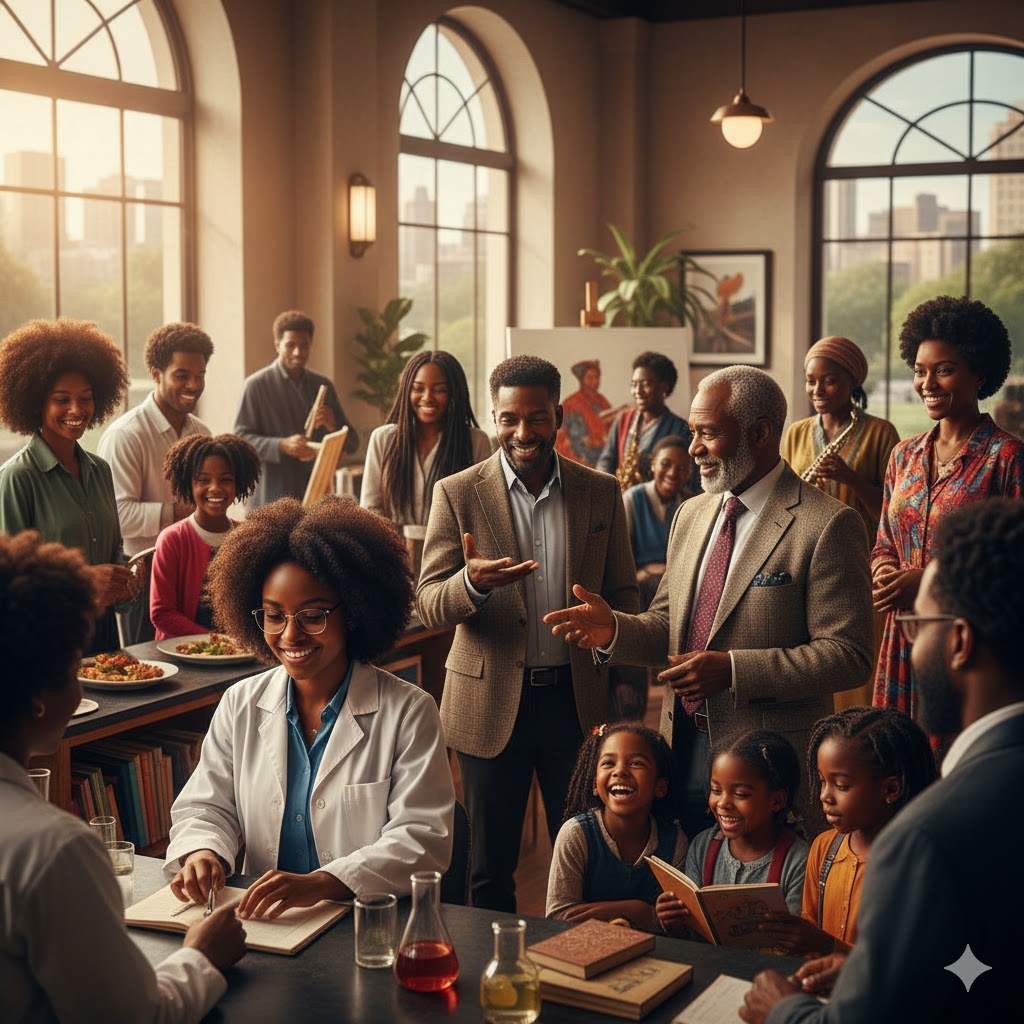
Brown. Brilliant. Beloved

Brown skin tells a story written in melanin, history, and resilience. It is a tapestry of ancestors who survived oppression, fought for freedom, and cultivated culture. To be brown is to carry that legacy, to stand on the shoulders of those who came before, and to embrace identity with pride and consciousness.

Brilliance is inherent in the brown experience. Historically, African civilizations such as Mali, Kush, and Songhai produced scholars, leaders, and innovators whose contributions shaped the world. This intellect is not only historical but living, manifesting in contemporary achievements across academia, arts, and leadership (Asante, 2007).

Belovedness is divine. Psalm 139:14 (KJV) reminds us, “I will praise thee; for I am fearfully and wonderfully made: marvellous are thy works; and that my soul knoweth right well.” This scripture affirms that every brown life is crafted with intention, valued, and worthy of love.

To embrace brownness fully is to resist colorism and societal bias. Hunter (2007) emphasizes the psychological impact of colorism on self-esteem. Rejecting internalized messages of inferiority allows the brown individual to celebrate their heritage and cultivate self-respect.

Brilliance extends beyond natural intelligence; it encompasses creativity, innovation, and strategic thinking. Brown people have continuously contributed to literature, science, music, and politics, demonstrating a multidimensional brilliance that defies stereotypical limitations.

Belovedness requires self-love and acceptance. 1 John 4:19 (KJV) declares, “We love him, because he first loved us.” Recognizing God’s love allows brown individuals to extend that grace inward, affirming their worth and embracing their identity.

The intersection of brownness and brilliance challenges societal narratives. By excelling academically, professionally, and creatively, brown people rewrite misrepresentations and assert visibility, demonstrating the intellectual and cultural wealth of their communities.

Being beloved is also relational. Proverbs 27:17 (KJV) teaches, “Iron sharpeneth iron; so a man sharpeneth the countenance of his friend.” Through supportive networks, mentorship, and community engagement, brown individuals cultivate love, trust, and mutual growth.

Brownness carries historical memory. Awareness of ancestral struggles—from slavery to colonization—anchors identity in resilience. This awareness transforms inherited trauma into motivation, perseverance, and empowerment.

Brilliance flourishes when nurtured. Education, curiosity, and mentorship are tools that enable brown individuals to cultivate gifts and achieve their full potential. The celebration of intellect becomes a radical act of self-determination.

Belovedness involves forgiveness and compassion. Colossians 3:13 (KJV) urges, “Forbearing one another, and forgiving one another, if any man have a quarrel against any: even as Christ forgave you, so also do ye.” Embracing love for self and others strengthens relational bonds and reinforces emotional wellbeing.

Brown bodies are sites of beauty, power, and representation. From the elegance of historical leaders to contemporary icons, physicality is intertwined with identity, affirming dignity and aesthetic pride.

Brilliance is also moral and spiritual. Proverbs 4:7 (KJV) states, “Wisdom is the principal thing; therefore get wisdom: and with all thy getting get understanding.” Ethical and spiritual wisdom enhances intellectual brilliance, guiding decisions and character.

Being beloved requires self-protection and boundary setting. Recognizing one’s value means refusing environments or relationships that diminish self-worth, while cultivating spaces that nurture growth and affirmation.

Brown identity intersects with culture. Music, literature, and traditions are vessels of storytelling and creativity. By engaging with these cultural expressions, brown people celebrate heritage, history, and collective brilliance.

Brilliance persists in adversity. Overcoming systemic oppression, prejudice, and marginalization demonstrates resilience, strategic thinking, and emotional intelligence, all facets of true genius.

Belovedness demands gratitude. Psalm 118:24 (KJV) reminds, “This is the day which the LORD hath made; we will rejoice and be glad in it.” Recognizing daily blessings reinforces joy, self-worth, and connection to divine purpose.

Brownness is revolutionary. Simply existing with pride, intellect, and authenticity challenges narratives of inferiority and inspires future generations to embrace their identity fully.

Brilliance is communal as well as personal. By mentoring, teaching, and uplifting others, brown individuals multiply the impact of knowledge, wisdom, and creativity within their communities.

To be beloved is to affirm life, celebrate achievements, and honor one’s journey. It is a holistic recognition of self, integrating history, intellect, emotion, and spirituality into an empowered existence.

Brown. Brilliant. Beloved. It is an identity, a declaration, and a daily choice. It is the integration of ancestry, intellect, and divine affirmation—a continuous act of living fully, resisting oppression, and embodying purpose.


References

Psalm 139:14, KJV.
1 John 4:19, KJV.
Proverbs 27:17, KJV.
Colossians 3:13, KJV.
Proverbs 4:7, KJV.
Psalm 118:24, KJV.
Asante, M. K. (2007). The History of Africa: The Quest for Eternal Harmony. Routledge.
Hunter, M. L. (2007). The Persistent Problem of Colorism: Skin Tone, Status, and Inequality. Sociology Compass, 1(1), 237–254.
Gates, H. L. (2019). The Black Experience in America: Identity, Culture, and Achievement. New York: Vintage Press.
Du Bois, W. E. B. (2007). The Souls of Black Folk. Oxford University Press.

📜 The Male Files: Kings Without Crowns

A king without a crown is not a man without power—he is a man without placement. In the digital age, masculinity is promoted as territory to seize, not a role to steward. Scripture defines the male purpose differently: “The steps of a good man are ordered by the LORD” (Psa. 37:23, KJV). A man becomes a king only when God becomes the one ordering his direction—not popularity, ideology, or trend.

Many men know the language of kingship, but few understand the theology of crowning. Crowns in scripture are given, not taken. “I have found David… a man after mine own heart, which shall fulfil all my will” (Acts 13:22, KJV). His kingship began the moment God found him, not the moment humans favored him. Modern masculinity movements reverse this order.

The manosphere tells men to master women, wealth, and dominion, yet scripture calls men to master themselves first. “He that ruleth his spirit is better than he that taketh a city” (Prov. 16:32, KJV). Internal governance is the biblical inauguration of kings, long before social influence ever recognizes them.

A generation of men now seek crowns through controversy, commentary, or charisma. Amplified voices have replaced consecrated ones. Online platforms reward dominance performance more than devotional grounding, shaping men into rhetoricians, not patriarchs (Ging, 2019). This produces kings in vocabulary, but orphans in covenant.

The deepest masculine wound is not irrelevance—it is fatherlessness. Even when fathers are present physically, many sons remain unfathered spiritually and emotionally. Scripture reveals the necessity of generational anchoring: “One generation shall praise thy works to another” (Psa. 145:4, KJV). But inheritance cannot flow where identity was never affirmed.

Many young men trade intimacy with God for brotherhood with echo chambers. These communities offer belonging, but not becoming. Digital masculine networks thrive on social identity formation through grievance-based solidarity (Ribeiro et al., 2020). A man may gain community and still lose self.

The rejection of vulnerability is another missing piece of the crown. The world shames wounded men for bleeding, yet God draws near to men who break without abandoning Him. “The LORD is nigh unto them that are of a broken heart” (Psa. 34:18, KJV). Healing is not a disqualification from kingship—it is often the prerequisite for it.

Without a crown, many men adopt hardness as a throne. They equate emotional restraint with authority and detachment with discipline. Yet scripture rejects emotional amputation as strength. God never calls men to bury emotion—He calls them to submit it.

The social narrative also labels men by dominance rank—alpha, sigma, beta—as though personality category determines divine assignment. Scripture disrupts the taxonomy entirely: “Man looketh on the outward appearance, but the LORD looketh on the heart” (1 Sam. 16:7, KJV). A man may be “quiet” socially and crowned spiritually, or “viral” digitally and bankrupt internally.

Men without covenant begin to idolize conquest as coronation—money, physiques, sexual access, and endorsement from other unhealed men. But crowns in scripture are moral, not muscular. “He crowneth thee with lovingkindness and tender mercies” (Psa. 103:4, KJV). The biblical masculine crown is a heart posture, not a public one.

Modern masculinity movements are also monetized emotional ecosystems. They capitalize on male loneliness, insecurity, identity confusion, and resentment, offering ideology as a prosthetic for unhealed trauma (Marwick & Caplan, 2018). When pain becomes a marketplace, purpose becomes product packaging, not priesthood.

Kingship in scripture is inseparable from service. A man crowned by God eventually carries responsibility toward others, not leverage over them. True biblical masculinity is Christ-modeled servant leadership (hooks, 2004). Jesus never destroyed women to validate manhood, nor discarded disciples to preserve authority.

Many “lost sons” become “loud prophets” online—preaching dominion but rejecting discipleship, declaring kingship but refusing kings, demanding crowns but avoiding correction. Yet scripture insists: “For whom the LORD loveth he correcteth” (Heb. 12:6, KJV). If there is no correction, there is no crowning.

A man without a crown can still become one, but not by digital decree. It happens through surrender, internal rulership, covenantal obedience, father-anchored identity, spiritual accountability, and a re-ordered heart. Kings are formed under covenant, not comment sections.

The tragedy is not that men lack crowns—it is that many no longer recognize the God who gives them. They seek kingdoms without the King who assigns them, becoming sovereigns of self rather than sons under spirit. Biblical kings are not autonomous—they are anointed.

A crowned man is not a perfect man, but an obedient one. He does not rise because he never fell—he rises because God raised him. “Humble yourselves… and he shall lift you up” (James 4:10, KJV). When God lifts a man, no algorithm can replace the mantle.


📚 References

Ging, D. (2019). Manosphere cultures and the rise of digital masculine identity movements. Social Media + Society, 5(2), 1–14.

Marwick, A., & Caplan, R. (2018). Drinking male rage: The monetization of patriarchy on social platforms. Data & Society Research Institute.

Ribeiro, M., Ottoni, R., West, R., Almeida, V., & Meira Jr., W. (2020). The evolution of grievance masculinity networks across the web. Proceedings of the International AAAI Conference on Web and Social Media, 14, 196–207.

hooks, b. (2004). The Will to Change: Men, Masculinity, and Love. Washington Square Press.

American Psychological Association. (2017). Guidelines for Psychological Practice with Boys and Men.

👑 Girl Talk Series: Crowns, Confidence & Calling

Hello Ladies – a crown is more than decoration—it is a declaration. When a woman places a crown on her head, even symbolically, she asserts royalty, identity, and worth. Scripture affirms a woman crowned in dignity: “Strength and honour are her clothing; and she shall rejoice in time to come” (Prov. 31:25, KJV). Ladies, before the world ever defined beauty or worth, God already crowned you in His purpose.

Many women admire crowns without recognizing that they already wear one inwardly. A woman aligned with God carries a spiritual diadem, not a borrowed vanity. “Thou shalt also be a crown of glory in the hand of the Lord” (Isa. 62:3, KJV). The crown is His, but the purpose is yours.

Confidence today is often manufactured through trends, influencers, or aesthetics, yet biblical confidence is nurtured through God’s voice, not echo chambers. “The Lord is my light and my salvation; whom shall I fear?” (Psa. 27:1, KJV). Real confidence begins without fear, not without opposition.

Many women struggle with insecurity because their identity was placed in mirrors instead of meaning. But scripture secures femininity deeper than reflection: “For we are his workmanship, created in Christ Jesus unto good works” (Eph. 2:10, KJV). A woman is crafted, not accidental.

Covenantal confidence does not walk loudly—it walks anchored. Social confidence boasts, but spiritual confidence bows. “Humble yourselves in the sight of the Lord, and he shall lift you up” (James 4:10, KJV). Lift comes after posture, not performance.

Calling is not something chased, but something uncovered through obedience. Many women run after purpose while running from submission. Yet scripture explains alignment brings assignment: “Commit thy works unto the Lord, and thy thoughts shall be established” (Prov. 16:3, KJV).

God’s calling for women includes mentorship, nurture, emotional articulation, and spiritual inheritance transmission. But not every voice online stewards identity correctly. “Take heed what ye hear” (Mark 4:24, KJV). Listening determines shaping.

A woman who walks without calling will eventually walk toward validation markets—likes, praise, trends, competition. But calling frees a woman from comparison prison. “The Lord is the portion of mine inheritance” (Psa. 16:5, KJV). Purpose comes pre-inherited under God.

Many ladies were taught to seek crowns socially—beauty crowns, success crowns, marriage crowns—but not to seek the God who crowns covenantally. Yet scripture promises the most important crowning: “He crowneth thee with lovingkindness and tender mercies” (Psa. 103:4, KJV). Mercy is the first crown, not reward.

The world celebrates outspoken women, but often mocks obedient women. Yet scripture centers quiet strength as divine feminine power: “A meek and quiet spirit… is in the sight of God of great price” (1 Pet. 3:4, KJV).

Many ladies seek confidence through economic or romantic elevation, not realizing divine positioning precedes earthly inheritance. God uplifts womanhood through righteousness, not rivalry. Christ uplifts through covenant, not conquest.

A crowned woman must still carry accountability. Crowns do not remove correction. “Whom the Lord loveth he correcteth” (Prov. 3:12, KJV). If He corrects you, you are not lost, you are loved.

Confidence without covenant becomes vanity, but confidence under covenant becomes testimony. God makes women glorious by spiritual alignment, not social applause. “The Lord shall establish thee an holy people unto himself” (Deut. 28:9, KJV). Purpose stays holy when covenant stays intact.

Many ladies carry a diagnosis of insecurity, father-wounds, fractured religious history, and relational trust ruptures, and bring those unmet needs online to influencers who monetize what God should have fathered. Scripture warns against replacing the shepherd with sectors. “Woe unto the shepherds that destroy and scatter the sheep” (Ezek. 34:2, KJV).

A woman healed under God does not deny femininity; she redefines it through scripture, not trends. She carries faith’s original blueprint, not digital doctrine. Identity was God-instated before platform-marketed.

Girls must stop believing that confidence is the absence of tears, softness, or uncertainty. Strength is not emotional burial; it is emotional clarity surrendered to God. God welcomes the tears that influencers shame. “The Lord is nigh unto them that are of a broken heart” (Psa. 34:18, KJV).

The voices online divide men into alpha/beta ranks, yet scripture reverses the ranking system entirely. “The Lord looketh on the heart” (1 Sam. 16:7, KJV). Purpose is internal rulership, not external hierarchy.

The crisis in modern feminine purpose is that many want crowns without process, confidence without covenant, influence without instruction. Yet scripture confirms true feminine inheritance flows only through divine ordering.

A crowned woman must eventually step into a calling that endures longer than applause. Influence is seasonal, calling is eternal. God began a purpose in you intentionally, and scripture promises the follow-through: “He which hath begun a good work in you will perform it” (Phil. 1:6, KJV).

Covenantal womanhood disciples nurture, guidance, humility, covenant, assignment, and inheritance—not opinion gladiatorship or grievance markets. The internet has microphones; God has mantles.

The real power of a crowned woman is not dominating rooms—but discerning them. “Give not that which is holy unto the dogs” (Matt. 7:6, KJV). Discernment is feminine spiritual rulership.

Purpose-seeking ends only when noise bows to knowledge, grievances bow to God, insecurity bows to identity, trends bow to scripture, and womanhood bows to a covenant that does not scatter under social duress. Godliness is not a trend; it is an eternal feminine inheritance installed by the spirit over the stage.

Therefore, ladies, wear your crowns spiritually first. Walk in God’s confidence before social confidence. Uncover calling through obedience rather than ideological markets. Your crown is not your burden—lack of covenant is. But once covenant returns, crowns become testimonies, confidence becomes inheritance, and calling becomes performed destiny.


📚 References

The Holy Bible, King James Version. (1611). Cambridge University Press.

hooks, b. (2004). The Will to Change: Men, Masculinity, and Love. Washington Square Press.

Tatum, B. D. (1997). Why Are All the Black Kids Sitting Together in the Cafeteria? Basic Books.

When Adam Fell: The Consequences of Silent Men. #thebrownboydilemma

Photo by cottonbro studio on Pexels.com

When Adam fell, it was not with a shout—but with silence. The first man’s downfall was not an act of overt rebellion, but a quiet surrender of responsibility. In that single moment in Eden, silence became sin, passivity became peril, and the echoes of Adam’s inaction still reverberate through generations of men today. His fall was not merely the loss of paradise; it was the loss of purpose, voice, and divine order.

Adam’s silence in the Garden of Eden remains one of the most profound moments in Scripture. When the serpent deceived Eve, Adam stood beside her (Genesis 3:6, KJV). He heard the lie, watched the deception unfold, and said nothing. This was not ignorance—it was abdication. The one called to lead, to guard, and to name creation chose comfort over confrontation. His failure was not in speaking wrongly, but in failing to speak at all.

The silence of Adam reveals a universal truth about manhood: when men fail to lead with courage and conviction, chaos fills the void. The serpent speaks whenever the man refuses to. In families, communities, and nations, this spiritual law repeats itself. Broken homes, abandoned children, and moral confusion often trace their lineage back to the same origin—men who knew truth but withheld it.

In that sense, Adam’s fall is not just historical; it is hereditary. Each generation inherits not only the sin but the silence of the first man. The world continues to suffer from men who are physically present but spiritually absent. They work, provide, and exist—but do not speak, guide, or protect. Their silence, like Adam’s, invites deception into the lives of those they were meant to guard.

In theological context, Adam was not deceived—Eve was (1 Timothy 2:14). That distinction is critical. It means Adam knew the truth but lacked the courage to act on it. He chose relational peace over divine obedience. He feared losing Eve more than losing Eden. Many men today repeat this pattern, trading truth for approval and conviction for convenience. This is not love—it is cowardice disguised as harmony.

When Adam fell, leadership collapsed. Dominion turned into domination, and partnership turned into power struggle. The man who once walked with God began to hide from Him, covering himself with fig leaves of pride and excuses. “The woman whom Thou gavest to be with me, she gave me of the tree, and I did eat” (Genesis 3:12, KJV). Even in confession, Adam shifted blame instead of bearing it. Silence had become self-defense.

Modern men still wear fig leaves—titles, careers, and material success—to cover inner emptiness. Yet beneath the masks lie generations of unspoken pain, unmet expectations, and unresolved guilt. The silence of fathers becomes the confusion of sons. The emotional distance of husbands becomes the loneliness of wives. The unspoken becomes the inherited. The fall of Adam thus repeats in homes, not as rebellion, but as neglect.

The silence of men is costly. It leaves women unprotected, children unguided, and communities leaderless. It births generations that do not know how to hear the voice of righteousness because the men who should have spoken it chose instead to be silent. The serpent still whispers in every home where men do not guard the gates.

Yet redemption begins when men reclaim their voices. Christ, often called the “second Adam” (1 Corinthians 15:45), came to restore what the first Adam lost. Unlike Adam, Jesus spoke with authority. He confronted lies, resisted temptation, and accepted responsibility even unto death. Where Adam hid, Christ revealed. Where Adam fell silent, Christ proclaimed, “It is finished” (John 19:30, KJV). Redemption for men, therefore, begins not in strength, but in speech—truth spoken in love and obedience.

The consequences of silent men extend beyond households—they shape nations. Corruption thrives where moral men refuse to speak. Injustice grows where righteous men remain quiet. Oppression endures not because evil is strong, but because good men are still silent. History’s greatest atrocities were not committed by monsters alone, but permitted by men who looked away.

Silence is seductive because it feels safe. It avoids conflict, preserves relationships, and hides fear behind politeness. But silence in the face of sin is complicity. When men do not use their God-given authority to confront evil, they become participants in it. Adam’s sin teaches us that neutrality is not innocence—it is surrender.

To break this cycle, men must redefine strength. True strength is not measured by domination, but by devotion. It is not in silence, but in stewardship. It is the courage to say, “As for me and my house, we will serve the Lord” (Joshua 24:15, KJV). It is the willingness to be unpopular for truth’s sake, to lead with integrity even when it costs comfort.

Fathers must teach sons that voice is power, not violence. Husbands must speak life into wives, not retreat into silence. Leaders must model moral courage, not passive compliance. The restoration of manhood begins with the return of voice—a voice rooted in truth, humility, and accountability before God.

When Adam fell, the serpent gained influence. When Christ rose, the serpent’s power was broken. Every man who chooses to speak truth today continues that victory. Each confession, each prayer, each stand for righteousness reclaims territory once lost in Eden. The garden can grow again—but only when men return to their original design as guardians and givers of life.

Silence, then, is not neutral—it is spiritual warfare. It is the battleground between fear and faith, between apathy and accountability. To speak truth in a world of lies is not rebellion; it is redemption. When men open their mouths in prayer, protest, and purpose, heaven responds.

The call today is not for louder men, but for truthful ones. The world does not need more noise—it needs moral clarity. It needs men who, like Christ, will confront the serpent with Scripture, lead with compassion, and love with conviction. It needs men who will no longer hide behind excuses but stand before God unashamed.

Adam’s fall began with silence, but his restoration begins with confession. Every man must ask himself: Where was I silent when I should have spoken? Where was I passive when I should have protected? The answers to those questions hold the keys to personal and generational healing.

When men reclaim their voices, families heal, communities strengthen, and societies reform. The silence that once caused the fall becomes the sound of redemption. When Adam speaks again—truthfully, tenderly, and boldly—Eden is no longer lost. It is reborn.


References

Eldredge, J. (2001). Wild at heart: Discovering the secret of a man’s soul. Thomas Nelson.
Lewis, C. S. (1952). Mere Christianity. HarperOne.
Lewis, R. (2019). The return of manhood: Restoring male voice and vision. Lionheart Press.
Moore, R. (2018). The storm-tossed family: How the cross reshapes the home. B&H Publishing Group.
Ortberg, J. (2010). The me I want to be: Becoming God’s best version of you. Zondervan.
Piper, J., & Grudem, W. (Eds.). (1991). Recovering biblical manhood and womanhood. Crossway.
Tchividjian, T. (2012). Glorious ruin: How suffering sets you free. David C. Cook.
The Holy Bible, King James Version. (1611). Thomas Nelson.
Voddie Baucham Jr. (2009). What he must be: If he wants to marry my daughter. Crossway.
Wright, N. T. (2012). After you believe: Why Christian character matters. HarperOne.

Just Leave: Exodus from Babylon to the Holy Scriptures

Just leave. That’s the command our spirits whisper when the world grows too loud, too heavy, and too hostile for our survival. But even that command requires clarity, because no man can touch us when we choose truth over bondage, identity over illusion, and liberation over fear. Yet we often respond with the question, “Leave and go where?” It is a valid question, a necessary question, but it is the wrong first question. Before we ask where, we must ask what we are leaving behind.

Leave the mythology. The mythology that insists your worth is measured by proximity to whiteness, by respectability, by silence, or by a palatable softness that does not disturb the empire. Leave the mythology that you must shrink to survive, that your power is dangerous, that your heritage is a burden instead of a blessing.

Leave the lie that you are three-fifths human. That wicked arithmetic still circulates in institutions, in policies, in economic systems, and in subtle social cues that undervalue your intellect, your labor, and your life. Leave the lie that your blood is inherently rebellious, your mind inherently inferior, or your dreams too large for the box they try to confine you in.

Leave the shame they taught you about your hair. The shame that made you hide your curls, your coils, your kinks. Leave the shame they taught you about your skin—its richness, its radiance, its history written in melanin and memory. Leave the shame they placed on your body, treating it as a commodity, a spectacle, or a threat instead of a temple.

Leave the history they curated for you. The watered-down version that sanitizes oppression and glorifies the oppressor. Leave the edited pages, the missing chapters, the erased kingdoms, the silenced voices. Leave the lies that tell you your people began in chains instead of civilizations.

Leave the doctrine that suffering is noble. Especially the doctrine that teaches patience as a virtue only when your suffering benefits those in power. Leave the sermons that glorify endurance when liberation is possible, necessary, and divine.

Leave the celebrity pastors who preach prosperity while their people drown. Leave those who sell visions of wealth without demanding justice, who offer emotional sugar but no spiritual nourishment, who build kingdoms for themselves instead of communities for their people.

Leave the political parties that arrive every four years with promises as temporary as campaign posters. Leave the illusion of loyalty to institutions that invest in your vote but not your well-being. Leave the cycles of hope and disappointment that steal generations of possibility.

Leave the schools that teach your children to dislike their reflection. The schools that discipline their curiosity, punish their brilliance, and withhold their history. Leave the educators who mistake cultural difference for deficiency and who lower expectations instead of raising understanding.

Leave the media that shapes your imagination into narrow roles. The media that scripts you as a sidekick, victim, or clown instead of a leader, builder, and originator. Leave the narratives that deny you complexity, nuance, and humanity.

Leave the debt cycles that suffocate your future. The predatory systems disguised as opportunity, the loans that become chains, the credit traps that mimic freedom but deliver bondage. Leave the financial mythology that praises hustle but hides exploitation.

Leave every system that extracts your labor but denies your dignity. Systems that benefit from your creativity, resilience, and intellect while rewarding you with crumbs. Leave the corporate cultures that want your ideas but not your leadership.

Leave the trauma industries that profit from your pain. The news cycles that sensationalize Black suffering, the social platforms that amplify outrage but not solutions, the institutions that study your wounds but ignore their origins.

Leave the relationships that drain your energy. The people who demand emotional labor without reciprocity, who expect your loyalty without offering love, who take your light but panic when you shine too brightly.

Leave the internal oppressor you inherited. The voice that tells you to dim your brilliance, to fear your own greatness, to distrust your intuition. Leave the self-doubt planted by centuries of psychological warfare.

Leave the silence. The silence that protects those who harm you and imprisons those who carry the truth. Leave the silence that keeps wounds unhealed, stories untold, and futures unbuilt.

Leave the smallness you did not choose. The smallness projected onto you by systems, people, and histories that could not comprehend your magnitude. Leave the places that cannot hold the weight of your calling.

Leave the fear that you must choose between survival and authenticity. Liberation does not ask you to abandon yourself; it invites you to return to yourself. Leave the assumption that freedom is elsewhere—it is first within.

Leave the question “Leave and go where?” behind long enough to ask the deeper question: “Leave what?” Because the departure begins long before the destination is revealed. Leaving is a mental exodus, a spiritual shedding, a reclamation of identity that precedes any physical move.

Just leave—leave the lies, the limitations, the labels. Leave until you rediscover the truth: that you are untouchable, unbreakable, immeasurable, and destined for more than survival. Leave until you walk fully into the power that was always yours.

References
Alexander, M. (2010). The new Jim Crow: Mass incarceration in the age of colorblindness. The New Press.
hooks, b. (1994). Teaching to transgress: Education as the practice of freedom. Routledge.
Kendi, I. X. (2019). How to be an antiracist. One World.
Taylor, K.-Y. (2016). From #BlackLivesMatter to Black liberation. Haymarket Books.
West, C. (1993). Race matters. Beacon Press.

Baby , I’m Scared of You 💜

Learning to trust someone with your heart is one of the most courageous actions a person can take. Fear of intimacy often develops from past experiences that taught you that loving deeply is dangerous and being vulnerable invites disappointment. Yet the longing for companionship persists, inviting you to face the fears that keep love at a distance. Overcoming this begins with acknowledging your fear rather than masking it with pride or emotional withdrawal.

People carry invisible wounds from childhood, past relationships, and social conditioning. These wounds shape how they interpret a partner’s intentions. Fear can distort reality, making safe people seem unsafe and genuine affection appear suspicious. Healing requires learning the difference between spiritual intuition and emotional fear—intuition protects you; fear reminds you of your past. Strengthening discernment allows the heart to feel without panicking.

Trust becomes possible when you first trust yourself. Self-trust means believing you can handle disappointment, recognize red flags, and still remain whole. When you honor your boundaries and know your worth, you become less afraid of being abandoned or betrayed. Instead of clinging to the wrong person out of fear, you become comfortable walking away when something threatens your peace.

Red flags usually appear early, though many ignore them out of loneliness or desire. Someone who lies about small things will eventually lie about important things. A partner who gaslights, manipulates, or mocks your feelings is signaling emotional danger. Inconsistency, emotional unavailability, disrespect of boundaries, entitlement, silent treatment, or love bombing are also signs of an unhealthy connection.

The wrong partner does not merely break your heart—they disturb your spirit. Your peace becomes fragile, your self-esteem slowly erodes, and your emotional stability weakens. When your intuition repeatedly warns you through anxiety, confusion, or spiritual tension, it is essential to pay attention. Love should not leave you drained or spiritually oppressed.

Healing requires releasing old stories about yourself. Many people fear love because they expect to be hurt the same way they were before. But healthy relationships cannot grow in soil filled with old trauma. Forgiveness—of yourself and others—creates emotional space for new experiences. Forgiveness does not excuse wrongdoing; it simply frees your heart from being ruled by pain.

Healthy love requires vulnerability. Letting someone in does not mean abandoning your boundaries; it means trusting someone enough to allow connection to grow naturally. Vulnerability is not an instant process—it unfolds through honest communication, consistency, and emotional safety. A partner who is patient with your fears is showing you that love can exist without pressure.

Pay attention to how someone handles conflict. A partner who refuses accountability, deflects blame, or shuts down emotionally is signaling relational immaturity. Maturity looks like apology, empathy, and the willingness to repair emotional ruptures. Trust grows not because a person is flawless but because they are responsible enough to honor the relationship.

Healing is also internal. Your confidence, emotional intelligence, and spiritual grounding shape how you love and who you choose. When you increase self-love, you stop choosing emotionally unhealthy partners. You no longer fear losing someone bad for you, because you know they are not aligned with your destiny.

Fear of love shows up differently in men and women, but the root is often the same—wounds that were never healed. Men often fear failing someone. Women often fear being hurt by someone. Both end up protecting their hearts in ways that limit intimacy. Healing requires understanding not only yourself, but the opposite gender’s emotional reality.

Many men grew up being taught to suppress vulnerability, so trusting a woman feels risky. Showing emotion has long been associated with weakness, so opening up often requires deep courage. A man may fear being judged, misunderstood, or emasculated. He worries that if he reveals his softness, it will be used against him. For a man, love is a battlefield between wanting closeness and fearing exposure.

Women, on the other hand, often fear emotional danger. Many have experienced betrayal, inconsistency, or abandonment. Their fear is rooted in being misled by someone who appeared loving but lacked character. A woman’s heart becomes cautious not because she cannot love, but because she has loved deeply and been wounded profoundly. Her fear is losing herself while trying to love someone who does not love her well.

The warning signs of the wrong man often include emotional inconsistency, lack of accountability, possessiveness disguised as passion, manipulation, love bombing, or refusal to mature. A man who avoids responsibility, dismisses your feelings, or misuses your nurturing spirit is showing you he is not ready for a healthy relationship. His charm may be strong, but his character will reveal itself in time.

The warning signs of the wrong woman often include emotional volatility, entitlement, insecurity disguised as dependency, manipulation through withdrawal, or using affection as leverage. A woman who only values what a man provides but not who he is will drain him emotionally. Her beauty may attract him, but her lack of emotional stability will exhaust him.

A good man is consistent, protective, accountable, emotionally self-aware, and spiritually grounded. He communicates openly, stands on his word, and respects the emotional and physical boundaries of the woman he loves. He does not weaponize her vulnerability.

A good woman is nurturing, emotionally mature, supportive, honest, and secure within herself. She brings peace, not chaos. She communicates her needs with clarity and respects the emotional process of the man she loves. She does not punish him for opening up.

Trust becomes easier when both partners understand each other’s fears. A man needs safety for his vulnerability. A woman needs safety for her heart. When both feel protected, intimacy blossoms naturally.

Healing also involves accepting the truth about past choices. Many men stay with women who drain them because they feel obligated to “fix” her. Many women stay with men who hurt them because they hope he will “change.” Growth begins when you stop confusing potential with character.

The right relationship requires two healed or healing individuals—people who choose peace over drama, honesty over ego, and accountability over excuses. Love grows when both partners take responsibility for their emotional patterns and strive toward wholeness.

Trusting again means you must allow yourself to be known. Men must learn that vulnerability is strength, not weakness. Women must learn that discernment is wisdom, not fear. Both must learn to love with boundaries but without bitterness.

Love thrives where emotional safety is mutual. When trust is earned slowly, consistently, and respectfully, the fear begins to fade. The right man will protect her spirit. The right woman will protect his heart. Together, fear transforms into partnership.

You deserve a love that grows you, strengthens you, and honors the best parts of you. Fear will not stop you once you understand that the right person will never benefit from your pain—they will help you heal from it.

The right person brings clarity, not chaos. Their presence brings calm, not confusion. Their actions match their words. They respect your boundaries, support your growth, and protect your heart. When love is right, it feels like partnership—not survival.

Overcoming the fear of love is a journey. It involves prayer, introspection, therapy, and daily courage. Healing is not linear, but every step forward counts. Your heart is not fragile—it is resilient. And when the right person arrives, they will not punish you for your fears; they will help you feel safe enough to let them go.

You deserve a love that restores you, not one that destroys you. In time, trust becomes easier, peace grows stronger, and fear loses its power. Love will find you when you are ready—not when you are perfect.


REFERENCES

Bartholomew, K., & Horowitz, L. M. (1991). Attachment styles among young adults: A test of a four-category model. Journal of Personality and Social Psychology, 61(2), 226–244.

Brown, B. (2012). Daring greatly: How the courage to be vulnerable transforms the way we live, love, parent, and lead. Gotham Books.

Cloud, H., & Townsend, J. (2017). Boundaries in dating: How healthy choices grow healthy relationships. Zondervan.

Johnson, S. M. (2019). Hold me tight: Seven conversations for a lifetime of love. Little, Brown Spark.

Tatum, B. D. (2017). Why are all the Black kids sitting together in the cafeteria? Basic Books.

Melanin: The Golden Fleece

This photograph is the property of its respective owner. No copyright infringement intended.

Melanin has long been viewed through a social, aesthetic, and at times oppressive lens, yet beneath surface narratives lies profound biological, historical, and spiritual significance. Melanin is not merely pigment—it is a biochemical treasure, a molecular shield, and a marker of resilience. To speak of melanin is to enter a conversation about identity, memory, divinity, and survival.

Biologically, melanin is a natural polymer responsible for skin, hair, and eye color. It exists in eumelanin, pheomelanin, and neuromelanin forms, each with precise biological functions (Simon et al., 2009). Eumelanin produces rich brown and black hues, functioning as the body’s natural armor against ultraviolet radiation. Those richly endowed with melanin possess enhanced protection from sun damage and oxidative stress.

The molecular properties of melanin have led many scholars and thinkers to call it a biochemical jewel. It absorbs and transforms light, protects DNA, neutralizes free radicals, and supports cellular stability (Hill, 1992). It is a biological blessing—an evolutionary adaptation honed to thrive under intense sunlight. In this way, melanin becomes symbolic of ancestral endurance in equatorial regions, where ancient civilizations flourished.

Neuromelanin—found in the brain—invites deeper conversation. It is concentrated in regions associated with movement, memory, and emotional regulation (Zecca et al., 2008). The presence of melanin in neural structures has fueled scientific curiosity and cultural pride. Though still under study, neuromelanin may play a role in neurological health, stress resilience, and cognitive processes.

The historical framing of melanin diverges sharply from its biological brilliance. Colonial narratives weaponized skin tone, divorcing melanin from its scientific majesty. People with higher melanin content were cast into artificial hierarchies designed to devalue their humanity and legacy. Yet the very trait used to marginalize Black people is one of nature’s greatest evolutionary triumphs.

Melanin’s perceived mystical value predates colonial discourse. Ancient African civilizations viewed dark skin as a sign of divine power, lineage, and sacred connection to the sun. In Kemet (Egypt), the term Khem symbolized Blackness, fertility, and sacred life (Diop, 1974). To be melanated was to be spiritually potent and cosmically aligned.

Thus arises the metaphor of melanin as “the Golden Fleece.” In Greek mythology, the Golden Fleece symbolized royalty, cosmic blessing, and divine right. To liken melanin to the Golden Fleece is to reclaim the narrative—it is a crown, not a curse. This metaphor challenges societies to re-evaluate the value systems that commodified white aesthetics and vilified Black embodiment.

Spiritually, melanin carries a symbolic weight in Black consciousness movements. The Bible proclaims, “I am black, but comely” (Song of Solomon 1:5, KJV), affirming beauty and dignity in dark skin. Scripture often references dark skin in contexts of royalty, ancestral lineage, and divine intimacy. Spiritual identity and physical identity intertwine.

Social narratives around melanin continue to evolve. The reclamation of Black beauty, culture, and identity represents a collective unshackling from Eurocentric paradigms. Melanin becomes not simply a biological trait, but a cultural banner—a reminder of ancestral legacy and global influence. It is an emblem of survival in systems designed to erase it.

Psychologically, embracing melanin strengthens self-concept and mental resilience. When individuals internalize pride in their natural features—skin, hair, facial structure—they reclaim agency from colorist and racist conditioning (Banks, 2010). The mind becomes liberated when the body is no longer viewed as inferior.

Colorism remains a lingering shadow over melanin discourse. Preference for lighter skin persists globally, rooted in colonial history and social stratification. Yet the global shift toward celebrating dark skin disrupts this narrative, signaling a cultural renaissance. The body becomes a site of revolution and rebirth.

Social media contributes to this awakening. While it has perpetuated beauty hierarchies, it has also become a platform for melanated celebration. Campaigns honoring dark skin tones challenge historical erasure and elevate diverse aesthetics. Visibility becomes liberation.

Scientifically, melanin may hold future technological and medical promise. Research explores melanin’s potential in radiation shielding, bioelectronics, and regenerative medicine (Kim et al., 2019). The same pigment marginalized socially may become a key to future innovation. Such irony underscores the disconnect between perception and reality.

Economically, “melanin markets” emerge in beauty and media spaces. The world profits from Black style, culture, and features even as Black bodies fight for recognition and safety. To claim melanin’s value is to demand equity, representation, and ownership in industries enriched by Black aesthetics.

The spiritual dimension remains profound. Melanin symbolizes creation, depth, and cosmic mystery. It evokes earth, night, and universe—the fertile darkness from which life emerges. In Genesis, creation begins in darkness before light. Darkness is not absence; it is origin.

To honor melanin is not to elevate one group above another, but to correct historical lies. It is a restoration of dignity and truth. Melanin becomes metaphor, biology, legacy, and prophecy—a reminder that identity is both physical and sacred.

The Golden Fleece metaphor anchors melanin as treasure, not because others lack value, but because Blackness has been historically undervalued. To value melanin is to heal collective wounds and uplift future generations. The world flourishes when every hue is honored.

Ultimately, melanin embodies resilience and radiance. It reflects sunlight, history, struggle, and triumph. Those who carry it inherit a story of survival and sacredness. Melanin is memory written into flesh.

To know melanin is to honor the past and walk boldly into the future. It is a science, a symbol, and a song. It is the Golden Fleece—rare, royal, radiant.


References

Banks, K. H. (2010). African American college students’ experiences with racial discrimination and the role of racism socialization. Journal of Applied Social Psychology, 40(6).
Diop, C. A. (1974). The African origin of civilization: Myth or reality. Lawrence Hill Books.
Hill, H. Z. (1992). The function of melanin or six blind people examine an elephant. BioEssays, 14(1).
Kim, Y. J., et al. (2019). Melanin’s applications in bioelectronics and medicine. Biomaterials, 214.
Simon, J. D., Peles, D., & Wakamatsu, K. (2009). Current challenges in understanding melanogenesis. Pigment Cell & Melanoma Research, 22(5).
Zecca, L., et al. (2008). The role of neuromelanin in neurological disorders. Journal of Neural Transmission, 115(11).

Unveiling the Soul: The Masks We Wear

This photograph is the property of its respective owner. No copyright infringement intended

Humanity has long mastered the art of concealment. Beneath polished smiles and carefully curated identities lie the masks we wear to survive, to belong, and to be loved. These masks are not always physical but psychological—crafted through years of conditioning, trauma, and fear. The Bible reminds us in 1 Samuel 16:7 (KJV), “for man looketh on the outward appearance, but the LORD looketh on the heart.” This divine truth reveals that while we can deceive others with appearances, God alone sees the soul behind the mask.

The concept of wearing masks has deep roots in psychology. Carl Jung’s theory of the persona describes the social face an individual presents to the world, a mask designed to make a particular impression on others while concealing the true self. This persona is a necessary adaptation, yet when it becomes our identity, it separates us from authenticity. We begin to live not as who we are, but as who we think others need us to be. This fragmentation of self creates emotional dissonance, anxiety, and spiritual emptiness.

Scripture exposes this duplicity in human nature. Jesus warns in Matthew 23:27 (KJV), “Woe unto you, scribes and Pharisees, hypocrites! for ye are like unto whited sepulchres, which indeed appear beautiful outward, but are within full of dead men’s bones.” The term “hypocrite” in Greek literally means “actor”—one who wears a mask. Christ’s rebuke was not merely moral but psychological, exposing the destructive power of living a lie and confusing external virtue with internal truth.

The masks we wear vary with context: the mask of confidence hiding insecurity, the mask of kindness concealing resentment, or the mask of holiness veiling secret sin. These disguises form as defense mechanisms against pain and rejection. Sigmund Freud described such mechanisms as ways the ego protects itself from anxiety. While they serve a temporary purpose, prolonged use leads to spiritual decay. When we hide behind facades, we forfeit intimacy with others and with God.

In relationships, masks can become prisons. Many people fall in love not with each other but with each other’s illusions. The psychological toll of maintaining appearances leads to exhaustion and disconnection. The Apostle Paul speaks to this struggle, urging believers to “put off concerning the former conversation the old man, which is corrupt according to the deceitful lusts” (Ephesians 4:22, KJV). In essence, Paul calls for the removal of masks and the embrace of renewed identity in Christ.

Our masks are often born of fear—fear of rejection, failure, exposure, or inadequacy. Yet fear itself is a deceptive teacher. It tells us that we must perform to be accepted. God’s Word contradicts this notion by assuring us that divine love is unconditional. Romans 8:38–39 (KJV) declares that nothing “shall be able to separate us from the love of God.” When we understand this truth, the need for deception begins to crumble, and the soul can breathe again.

The psychology of authenticity emphasizes congruence between the inner self and outward behavior. Psychologist Carl Rogers believed that authenticity is the foundation of psychological health, a state where a person’s real feelings and experiences align with their actions. This echoes the biblical principle found in James 1:8 (KJV): “A double minded man is unstable in all his ways.” To live authentically before God is to live undivided—to let truth govern both heart and behavior.

The danger of masks lies in their comfort. They protect us from vulnerability, but they also imprison us in falsehood. Over time, we can forget who we are beneath the mask. This self-alienation leads to depression and spiritual numbness. In Revelation 3:17 (KJV), the church of Laodicea is chastised for self-deception: “Thou sayest, I am rich… and knowest not that thou art wretched, and miserable, and poor, and blind, and naked.” When the soul believes its own illusion, repentance becomes distant and healing impossible.

Authenticity requires courage—the courage to confront one’s inner contradictions. It is a process of stripping away illusions, a spiritual unveiling that exposes the heart’s hidden wounds. The Psalmist pleads in Psalm 139:23–24 (KJV), “Search me, O God, and know my heart: try me, and know my thoughts.” This prayer is the cry of the unmasked soul, willing to be examined by divine light. True healing begins when we invite God into our hidden places.

Modern psychology recognizes the therapeutic value of self-disclosure. When individuals speak truthfully about their emotions and experiences, the burden of secrecy is lifted, and shame loses its power. Likewise, 1 John 1:9 (KJV) promises, “If we confess our sins, he is faithful and just to forgive us our sins.” Both psychology and Scripture affirm that confession—whether in therapy or prayer—transforms concealment into freedom.

The masks we wear are also cultural. Society rewards image over integrity, performance over purity. In an age dominated by social media, many curate digital personas that distort reality. Likes and followers become measures of worth, while the soul quietly starves. Romans 12:2 (KJV) warns believers, “Be not conformed to this world: but be ye transformed by the renewing of your mind.” Spiritual transformation begins when we reject the false standards of visibility and embrace the unseen virtue of sincerity.

Even within religious spaces, masks can thrive. The mask of piety can disguise spiritual pride; the mask of humility can conceal envy or ambition. Jesus saw through such pretense in His encounters with the Pharisees. His call remains timeless: “Take heed that ye do not your alms before men, to be seen of them” (Matthew 6:1, KJV). True worship arises not from performance but from purity of heart.

The process of unmasking is rarely easy. It involves confession, forgiveness, and grace. It requires facing parts of ourselves we’d rather deny. Yet the reward of authenticity is peace. Isaiah 26:3 (KJV) affirms, “Thou wilt keep him in perfect peace, whose mind is stayed on thee.” When we align our inner life with divine truth, the chaos of duplicity dissolves.

The mask often symbolizes control—a way to manage how others perceive us. However, the need to control perception reveals a lack of trust in God’s design. The Creator who fashioned us in His image (Genesis 1:27) did not make mistakes. To live unmasked is to honor the divine artistry within us. The acceptance we crave from others already exists in the eyes of God.

Psychologically, removing the mask allows for genuine connection. Vulnerability invites empathy. When we present our true selves, we give others permission to do the same. This mutual authenticity fosters community and healing. In the words of Proverbs 27:17 (KJV), “Iron sharpeneth iron; so a man sharpeneth the countenance of his friend.” Only unmasked souls can sharpen one another in truth.

The journey toward authenticity is both spiritual and psychological. It is a return to Eden, to the moment before humanity hid from God among the trees (Genesis 3:8–10). Since that first act of concealment, humanity has been sewing fig leaves of self-protection. But the gospel invites us to lay them down. Christ’s sacrifice tore the veil of separation, granting us access to God without pretense.

To unveil the soul is to embrace vulnerability as strength. It is to recognize that the light of God exposes not to shame but to heal. John 3:21 (KJV) teaches, “He that doeth truth cometh to the light, that his deeds may be made manifest.” The light of truth does not condemn; it clarifies. It restores us to wholeness by aligning appearance with essence.

In psychological healing and spiritual renewal alike, authenticity becomes the foundation of transformation. The unmasked life is not about perfection but honesty—an honest walk with God and others. It is living without duplicity, without the heavy burden of pretending to be more or less than what we are.

The Masks We Wear

The Mask of Deception
Used to hide truth and manipulate perception; a mask that thrives on illusion, lies, and self-deceit. It creates distance from both God and others, severing intimacy and trust.

The Mask of Morality
Appears righteous and upright, but often hides self-righteousness and pride. Worn by those who want to appear holy before men rather than pure before God.

The Mask of Strength
Conceals vulnerability and pain behind bravado or toughness. It says “I’m fine” while the soul quietly bleeds beneath the armor.

The Mask of Confidence
A polished exterior that hides deep insecurity. This mask seeks validation and affirmation from others while masking self-doubt.

The Mask of Perfection
Driven by fear of failure and rejection, it portrays flawlessness while denying human weakness. It exhausts the soul in pursuit of an impossible ideal.

The Mask of Control
Used by those who fear chaos or abandonment. It micromanages, dictates, and manipulates outcomes to maintain emotional safety.

The Mask of People-Pleasing
Rooted in fear of disapproval, it seeks acceptance at any cost. It silences the true voice to keep peace, even when peace means self-betrayal.

The Mask of Success
Adorns the face of ambition and achievement while concealing inner emptiness. It thrives on applause but dreads stillness.

The Mask of Humor
Covers pain with laughter. The smiling face becomes a shield against vulnerability and exposure of deep emotional wounds.

The Mask of Victimhood
A self-protective identity that clings to hurt and injustice, using past pain as a justification for inaction or bitterness.

The Mask of Independence
Rejects help and intimacy to avoid rejection. It shouts, “I don’t need anyone,” while inwardly longing for connection.

The Mask of Religion
Appears pious but hides spiritual pride and hypocrisy. It follows form without faith, rules without relationship, and rituals without repentance.

The Mask of Seduction
Uses charm and allure to manipulate affection or power. It disguises insecurity with sensual confidence.

The Mask of Anger
Deflects pain by projecting aggression. It conceals grief, fear, or rejection under a hard, defensive exterior.

The Mask of Silence
Withdraws and hides emotions, avoiding confrontation or truth. This mask is worn by those afraid to speak or be misunderstood.

The Mask of Busyness
Keeps the mind occupied to avoid introspection or conviction. It thrives on productivity as a substitute for peace.

The Mask of Spiritual Superiority
Cloaks ego in the language of enlightenment. It compares faith, wisdom, or revelation to elevate self above others.

The Mask of Suffering
Finds identity in pain and martyrdom. It uses struggle to gain sympathy or moral superiority rather than growth.

The Mask of False Humility
Pretends to be modest while secretly desiring praise. It hides ambition behind self-deprecation.

The Mask of Loyalty
Pretends devotion while harboring resentment or divided motives. This mask is common in toxic relationships built on pretense.

The Mask of Indifference
Covers caring with apathy. It numbs the soul to avoid feeling rejected or hurt again.

The Mask of Self-Righteousness
Justifies judgment of others by moral or religious standards, often to hide personal flaws or guilt.

The Mask of Forgiveness
Claims to have forgiven while secretly holding grudges. It smiles in peace but remembers every wound.

The Mask of Intelligence
Uses intellect or academic achievement to mask emotional insecurity or fear of being seen as vulnerable or weak.

The Mask of Beauty
Seeks validation through physical appearance, fashion, or admiration. It hides deep feelings of inadequacy and self-worth issues.

The Mask of Fearlessness
Pretends courage while internally trembling. It refuses to show weakness, often leading to emotional burnout.

The Mask of Identity
Assumes cultural, social, or racial stereotypes to fit in, losing the divine individuality crafted by God.

Ultimately, to unveil the soul is to return to the truth of divine identity. God does not bless the mask; He blesses the man or woman behind it. When we stand before Him unmasked, we rediscover the beauty of being fully known and yet fully loved. In the stillness of divine presence, the masks fall away, and the soul breathes again in freedom and light.

References

American Psychological Association. (2020). Publication manual of the American Psychological Association (7th ed.).
Freud, S. (1961). The ego and the id. W. W. Norton & Company.
Jung, C. G. (1953). Two essays on analytical psychology. Princeton University Press.
King James Bible. (1611). The Holy Bible. Oxford University Press.
Rogers, C. (1961). On becoming a person: A therapist’s view of psychotherapy. Houghton Mifflin.
Scott, S. (2017). The masks we wear: Psychology of self-presentation and authenticity. Routledge.
Tournier, P. (1954). The Meaning of Persons. Harper & Brothers.
Van der Kolk, B. (2014). The body keeps the score: Brain, mind, and body in the healing of trauma. Viking Press.

Dilemma: Fornication & Baby-Mama Culture

Fornication culture describes the widespread normalization of sexual intimacy outside of the biblical marriage covenant, forming one of the greatest moral, spiritual, and sociological dilemmas of this generation (Foster, 2019). It does not exist in isolation—it partners with baby-mama culture, where motherhood and fatherhood emerge without covenantal structure, shared governance, or spiritual oversight.

Though culture may call it “freedom,” the Bible calls fornication flight-worthy: “Flee fornication. Every sin that a man doeth is without the body; but he that committeth fornication sinneth against his own body” (1 Corinthians 6:18, KJV). Scripture frames it not simply as a mistake but a corruption of the self, spiritually, physically, and psychologically.

When sex becomes common, covenant becomes optional. Yet scripture does not treat sexual union casually: “Marriage is honourable in all, and the bed undefiled: but whoremongers and adulterers God will judge” (Hebrews 13:4, KJV). The bed is divine, but only when the ring governs engagement.

Culture now teaches that commitment can follow sex, but scripture teaches that marriage prevents fornication, not results from it: “Nevertheless, to avoid fornication, let every man have his own wife, and let every woman have her own husband” (1 Corinthians 7:2, KJV). Marriage is covering, not cleanup.

Fornication removes structure from relationships, replacing wife and husband with labels that feel lighter than vows. Proverbs warns that results follow doctrines of the heart: “Keep thy heart with all diligence; for out of it are the issues of life” (Proverbs 4:23, KJV). The culture in the heart becomes the society in the home.

When relationships begin without covenant, trust is thin and rupture is thick. Jesus explains: “A good man out of the good treasure of the heart bringeth forth good things…” (Matthew 12:35, KJV). Treasureless foundations produce unstable emotional economy.

Rather than spiritual stewardship, co-parenting often becomes government-mediated guardianship, legal oversight, and financial arbitration. “Except the Lord build the house, they labour in vain that build it” (Psalm 127:1, KJV) remains the great indictment—families work harder when God works less in them.

Children conceived through fornication often inherit instability long before articulation. Scripture declared children are heritage: “Lo, children are an heritage of the Lord…” (Psalm 127:3, KJV). Yet heritage without covenant becomes struggle before identity, survival before vision.

A father is meant to be more than finance; he is meant to be formation: “And ye fathers, provoke not your children to wrath: but bring them up in the nurture and admonition of the Lord” (Ephesians 6:4, KJV). Legal systems may extract checks, but only fathers deposit consciousness.

Many fathers become known more for child-support documents than household discipleship. Paul warns that lack of provision is denial of faith, yet provision without presence creates distortion: “But if any provide not for his own…he hath denied the faith…” (1 Timothy 5:8, KJV).

Generational wounds compound the story. Black families were historically denied marriage, fatherhood, and kinship rights during slavery, creating structural precedent for relational rupture (Franklin, 2010). “The fathers have eaten sour grapes, and the children’s teeth are set on edge” (Jeremiah 31:29, KJV) captures the symbolic multi-generation effect.

Many mothers live the double weight of motherhood without wifehood, raising children as economic heads without spiritual covering. Scripture affirms feminine spiritual posture heals rather than retaliates: “Let it not be that outward adorning only…but a meek and quiet spirit…” (1 Peter 3:3-4, KJV).

Men also carry consequence when seed is created without structure. Deuteronomy warns covenant disorder results in economic vulnerability: “He shall lend to thee, and thou shalt not lend to him…he shall be the tail” (Deuteronomy 28:44, KJV). This is the arithmetic of covenantlessness.

Child-support culture enters as a legal remedy, yet without covenant, it can feel like punishment instead of responsibility. Many men work multiple jobs, wages garnished, time extracted, identity exhausted, carrying provision but not paternal story honor (Payne, 2023).

Disordered desire creates disordered communication. Jesus clarifies: “For out of the abundance of the heart the mouth speaketh…” (Matthew 12:34, KJV). Accusation becomes the language when accountability isn’t the lifestyle.

Fornication culture fuels relationship turnover, not relational endurance. Proverbs warns sexual recklessness brings dishonor: “He shall get a wound and dishonour…” (Proverbs 6:32-33, KJV). The wound is emotional, economic, and communal.

When marriage is removed, relationships function on desire—not design. Paul instructs the correct escape: “Flee also youthful lusts…” (2 Timothy 2:22, KJV). Lust builds moments, not mountains.

Society absorbs fatherlessness as social identity diffusion, gang affiliation, emotional displacement, hyper-masculine defense scripting, and unanchored familial belonging (Anderson, 2023). When fathers exit the home, society adopts the survivors.

The community promotes sexual access over covenantal alignment, making relationships emotionally expensive and spiritually cheap. Proverbs rebukes imbalance as abomination: “A false balance is abomination to the Lord…” (Proverbs 11:1, KJV).

Healing begins when men reclaim identity beyond economy, and women reclaim identity beyond emotional aftermath, covenant before creation, covering before consequence. Malachi gives the vision: “And he shall turn the heart of the fathers to the children…” (Malachi 4:6, KJV). This is restoration, not retaliation.

God calls family to revival, not mere survival. Fatherhood is glory, guidance, government: “The glory of children are their fathers…” (Proverbs 17:6, KJV). Glory lives in presence, not enforcement.

Thus, the answer to fornication culture is covenant culture—marriage before mother, God before seed, father before finance, order before womb, kingdom before courts. This is the counterculture: God-built homes, father-turned hearts, and covenant-rooted legacies.


References

Anderson, E. (2023). Fatherlessness and community identity construction. Urban Family Psychology Review.
Franklin, J. H. (2010). From Slavery to Freedom. McGraw-Hill.
Foster, T. (2019). Sexual ethics and cultural normalization. Journal of Faith & Society.
Payne, R. (2023). Economic survival among non-custodial fathers. Urban Social Economics Review.
Rhodes, G. (2006). Facial beauty and identity perception. Annual Review of Psychology.

Dilemma: Introduction to Colorism — The Field Negro and the House Negro.

Colorism did not begin as a social preference or a beauty hierarchy. It began as a weapon. The moment enslavers divided African people by skin tone, the seeds of generational fragmentation were planted. This system of racialized favoritism did not emerge from African communities but from the brutality and strategic manipulation of chattel slavery in the Americas. Colorism was engineered to weaken solidarity among enslaved people, to create distrust, to manufacture false hierarchies, and to keep them psychologically controlled.

During slavery, the division between the “house Negro” and the “field Negro” became one of the earliest and most destructive manifestations of colorism. Enslavers created these categories intentionally, assigning different duties, privileges, and punishments based on appearance. Those with lighter skin—often the result of rape, coercion, and abuse by white slaveholders—were more likely to be placed inside the slaveholder’s home. Those with darker skin tones were more frequently relegated to the grueling labor of the fields. This division birthed a social hierarchy that still impacts Black communities today.

To understand the emotional depth of this dilemma, one must examine why certain slaves were placed inside the house. Light-skinned enslaved women were often the victims of sexual abuse. Their proximity to the slaveholder was not privilege; it was violation. Their lighter children became a physical reminder of the violent mixing of oppression and power. Because they resembled the master, they were considered easier to control, more “civilized,” or more acceptable within the home environment.

The field Negro lived under conditions of extraordinary brutality. They labored from sunrise to sunset in scorching heat, cutting sugarcane, picking cotton, or cultivating tobacco. Their bodies bore the scars of whips, chains, and exhaustion. Their work was physically punishing, and their living quarters were typically small, overcrowded cabins with poor sanitation. Yet, despite the harshness of their environment, the field Negro was often seen as mentally and spiritually resilient, unfiltered, and unbroken by proximity to the master’s household.

By contrast, the house Negro was seen as more privileged, but this privilege came with psychological chains. They lived under constant surveillance, forced politeness, and proximity to danger. They had to navigate the emotional volatility of their enslavers, protect their children from being sold, and maintain an appearance of loyalty even while suffering silently. Their clothing, food, and tasks were different—but they were still enslaved, still property, still unfree.

The treatment of each group created emotional fractures that enslavers deliberately exploited. In the house, enslaved people were sometimes given clothing, verbal favors, or lighter workloads—not as kindness, but as manipulation. In the fields, enslaved people viewed those inside with suspicion, believing they were aligned with the master. The house and the field were crafted to be enemies, not allies, and this division became a direct pipeline to colorism.

The purpose of this division was not only physical but psychological. If enslaved people distrusted one another, they would be less likely to organize rebellions, plan escapes, or unite against their oppressors. The slave system relied on internal conflict to maintain external control. The lighter enslaved person, closer to the master’s environment, was conditioned to adopt certain mannerisms, speech patterns, and behaviors that seemed to elevate them in the eyes of the oppressor. The system rewarded assimilation while punishing authenticity.

The darker enslaved person, laboring outdoors, embodied the strength and rawness of African identity. Their deeper skin tone was stigmatized because it symbolized an unbreakable connection to their roots. Slavery punished them more harshly for this. Whipping, backbreaking labor, and deprivation were used to reinforce the lie that darker skin was inferior, dangerous, or less deserving of humane treatment.

The house Negro stereotype later became associated with cooperation with white society, while the field Negro became a symbol of resistance. This dichotomy was famously described by Malcolm X, who used the terms metaphorically to highlight differences in mindset, identity, and resistance within the Black community. These categories still influence how Black people view one another today—through complexion, hair texture, and perceived proximity to whiteness.

Colorism grew as an internalized belief passed down through generations. Lightness became associated with safety, with reduced punishment, with proximity to privilege. Darkness became associated with hardship, danger, and rebellion. These internalized beliefs spread through families, shaping everything from beauty standards to marriage preferences to socioeconomic assumptions.

The legacy of the house-field division deeply influenced Black identity formation. Children born of the master often received special attention not because they were valued, but because they were reminders of the master’s dominance. Their slightly elevated status placed them in the crossfire of envy, resentment, and painful expectations. Meanwhile, darker children were taught strength and survival early because their punishment was more immediate and their labor more severe.

The house Negro often faced psychological trauma that is rarely discussed. They witnessed the master’s private life, endured constant scrutiny, and lived with the threat of sudden violence. They were expected to maintain the household’s emotional balance, sometimes acting as surrogate caregivers, nurses, cooks, or concubines. Their pain was often invisible, dismissed under the myth of “privilege.”

In the fields, pain was more visible. Brutality was public, and suffering was communal. Yet there was also a deep sense of connection, unity, and shared experience. The field Negro carried the collective heartbeat of the community. Their songs, rituals, and traditions preserved African culture in ways the house environment sought to erase.

As the generations progressed, these divisions morphed into color-based discrimination within Black communities. After slavery, lighter-skinned Black people were more likely to be hired, educated, and socially accepted by white institutions. This gave colorism additional fuel, leading to intra-racial discrimination that still shapes identity, relationships, and self-esteem.

The roots of colorism are not accidental—they are engineered. The slave system used complexion as a tool of division, and those wounds did not disappear with emancipation. They became embedded in the social fabric, passed down quietly through families who equated lighter skin with opportunity and darker skin with struggle.

Understanding this history is essential for undoing its damage. The dilemma of colorism is not merely about appearance; it is about identity, trauma, power, and legacy. To heal, Black communities must recognize how deeply slavery shaped perceptions of worth based on skin tone. The field and the house were never natural divisions—they were created by oppression.

Even today, the remnants of these categories influence how people see themselves and each other. Healing begins with confronting the origins of these divisions and refusing to carry forward the hierarchies slavery created. Unifying Black identity requires acknowledging these wounds, rejecting the false narratives of superiority, and reclaiming a collective sense of worth rooted in truth, history, and God’s design.

In Scripture, God declares that all humans bear His image (Genesis 1:27). There was no hierarchy in His creation—only dignity. Recognizing that truth is a crucial step toward dismantling the scars of colorism. The field and the house were systems of bondage, not identity. Understanding their historical purpose allows modern communities to rise above them.

Modern Colorism: A Psychological and Biblical Analysis

Colorism did not end with the plantation; it was modernized, repackaged, and woven into the cultural fabric of the Black experience across the diaspora. Its contemporary expressions can be found in media representation, employment discrimination, dating preferences, beauty standards, and socioeconomic advantages tied to complexion. Although enslavement created the hierarchy, modern institutions continue to reward lighter skin in subtle and measurable ways. In the workforce, research shows that lighter-skinned African Americans often receive higher wages and are perceived as more “professional” compared to darker-skinned counterparts, even with equal qualifications. This reflects the internalized residue of slavery that still shapes perception, value, and opportunity.

Social media has intensified this hierarchy. Filters, photo-editing apps, and beauty algorithms frequently lighten skin, sharpen features, and promote Eurocentric aesthetics as the universal definition of beauty. Colorism becomes normalized in the subconscious because beauty is rewarded with likes, visibility, and digital validation. This reinforcement affects self-esteem, particularly among young girls who internalize the belief that darker skin is a disadvantage to femininity, desirability, or social acceptance. The psychological impact is long-term, deeply emotional, and often unspoken.

Romantic relationships reflect another battleground of colorism. Preferences that appear “personal” are often shaped by societal conditioning. Studies show that both men and women may associate lighter skin with softness, elegance, and femininity, while darker skin is associated with strength, aggression, or hypersexuality. These stereotypes are direct remnants of the slave plantation: the “house” perceived as delicate and desirable, and the “field” viewed as rugged and worn. Though the physical plantation ended, the mental plantation still operates in the subconscious mind.

Women bear the heaviest burden of colorism in modern culture. Beauty is still a form of currency, and society frequently measures worth by appearance. Dark-skinned women often face harsher policing of their tone, attitude, confidence, and femininity. Their beauty is acknowledged reluctantly, conditionally, or only when exoticized. Meanwhile, lighter-skinned women may be celebrated more quickly, assumed to be more approachable or charismatic, and receive privileges that have nothing to do with character. This generational wound shapes sisterhood, self-perception, and community dynamics.

Psychologically, colorism creates identity fractures within the Black community. It produces insecurity in some, superiority in others, and distrust in many. These dynamics weaken unity, creating an internal battleground where people fight over proximity to whiteness instead of reclaiming the richness of their own image. Colorism becomes a device of division, mirroring the same tactics enslavers used to keep the oppressed from rising in collective strength. The trauma persists because systems have not fully dismantled the biases that birthed it.

From a trauma-informed lens, colorism is a form of intergenerational psychological conditioning. The mind learns what it repeatedly sees, and when beauty, intelligence, or success are consistently associated with lighter skin, the subconscious registers this as truth. Healing requires more than awareness—it demands intentional unlearning. Cognitive restructuring, positive representation, cultural education, and community affirmation are necessary steps to breaking the psychological hold of complexion-based hierarchy.

A biblical perspective reveals that colorism is inconsistent with God’s design. Scripture affirms that humanity is made in the image of God, with no hierarchy of value based on physical features. “So God created man in his own image…” (Genesis 1:27, KJV). This means every shade of melanin reflects divine artistry, not a system of worth. The Bible consistently condemns partiality, calling it sin. “But if ye have respect to persons, ye commit sin…” (James 2:9, KJV). Colorism is a form of partiality, a man-made ranking that God never authored.

The Bible also acknowledges the beauty of dark skin. Solomon’s beloved declares, “I am black, but comely…” (Song of Solomon 1:5, KJV), affirming that complexion does not diminish beauty or worth. Yet society reversed this truth, weaponizing skin tone to oppress the very people God adorned with richness and depth. Restoring a biblical perspective allows the community to challenge the lies of colorism with scriptural truth and reclaim identity through God rather than societal perception.

From a spiritual lens, colorism is an attack on purpose. Anything that diminishes self-worth ultimately diminishes potential, confidence, and calling. When people internalize inferiority, they subconsciously limit themselves, shrink before opportunity, or settle for less than what God intended. Colorism becomes not only a social issue but a spiritual barrier to identity and destiny. Healing requires spiritual realignment—seeing oneself not through the gaze of society, but through the eyes of the Creator.

Unity is essential in confronting the residue of the house-versus-field divide. Christ taught that a kingdom divided cannot stand (Mark 3:24–25). The Black community cannot rise while internal fractures persist. Healing colorism requires transparent conversation, generational accountability, and willingness to dismantle inherited mindsets. It also requires celebrating the beauty and diversity of Black skin in all its shades, recognizing each as a reflection of God’s intentional creativity.

Modern colorism will not disappear overnight, but awareness, healing, education, and spiritual grounding create a pathway forward. When the community rejects inherited lies and embraces the fullness of its identity, the plantation in the mind collapses. The descendants of both the “house” and the “field” rise together—not as divided categories, but as one people walking in truth, restored dignity, and renewed understanding.

References

Alexander, M. (2010). The new Jim Crow: Mass incarceration in the age of colorblindness. The New Press.

Billingsley, A., & Caldwell, C. H. (1991). The social roles of Black men and women in the family. Journal of Family Issues, 12(1), 3–25.

Glenn, E. N. (2008). Yearning for lightness: Transnational circuits in the marketing and consumption of skin lighteners. Gender & Society, 22(3), 281–302.

Hunter, M. (2007). The persistent problem of colorism: Skin tone, status, and inequality. Sociology Compass, 1(1), 237–254.

Monk, E. P. (2014). Skin tone stratification among Black Americans, 2001–2003. Social Forces, 92(4), 1313–1337.

Neal, A. M., & Wilson, M. L. (1989). The role of skin color and features in the Black community: Implications for counseling. Journal of Counseling & Development, 67(6), 54–57.

Walker, A. (1982). In search of our mothers’ gardens. Harcourt Brace.

King James Bible. (1769/2023). Cambridge Edition.

Biblical (KJV)

Genesis 1:27
Exodus 1:12
Psalm 139:14
Proverbs 22:2Boyd, T. (2008). The African American experience. Greenwood Press.
Hunter, M. (2007). The persistent problem of colorism: Skin tone, status, and inequality. Sociology Compass, 1(1), 237–254.
Painter, N. (2023). The history of white people. W. W. Norton.
Williamson, J. (1980). New people: Miscegenation and mulattoes in the United States. LSU Press.
Wilder, C. S. (2010). In the shadow of slavery: African Americans in New York City, 1626–1863. University of Chicago Press.