Category Archives: Colorist

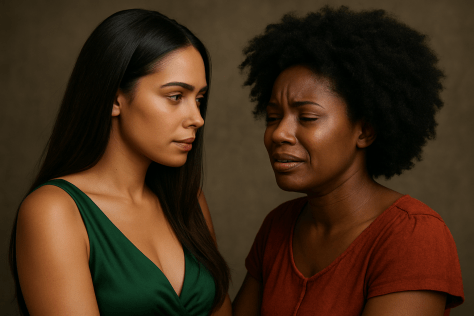
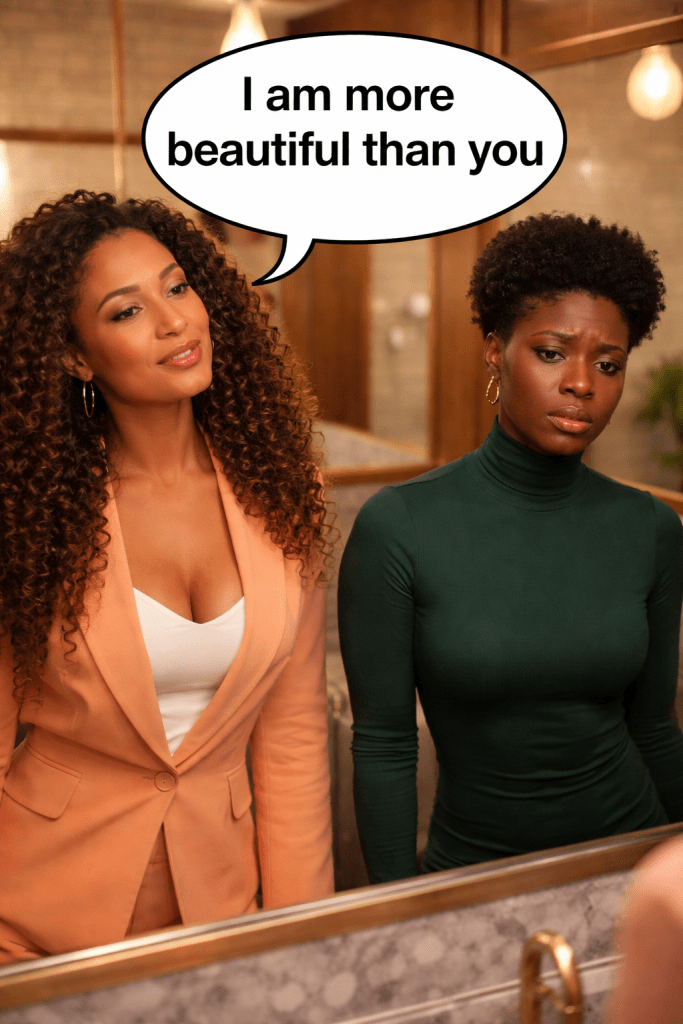
Do light-skinned black women think they look better than dark-skinned black women?

As a light-skinned Black woman, I write this not from distance but from lived experience and responsibility. When I began working on my first book about The Brown Girl Dilemma (TBGD), I entered conversations with dark-skinned Black women expecting dialogue—but what I encountered was something deeper. Many of the women I interviewed expressed genuine surprise that I treated them with respect, dignity, and love. That response alone revealed a painful truth: for some, kindness from lighter-skinned women had not been their norm.

Their words stayed with me. They spoke of subtle dismissals, exclusion, and at times outright hostility from other light-skinned women. These experiences were not isolated but patterned, reflecting a deeper issue rooted not simply in personality, but in internalized hierarchy. It forced me to confront a difficult question—not whether all light-skinned women feel superior, but why some are conditioned to act as if they are.

The answer is complex. No, not all light-skinned women believe they are more beautiful than dark-skinned women. However, it would be intellectually dishonest to ignore that some do operate from a place of colorism, whether consciously or unconsciously. This belief is not innate; it is taught, reinforced, and rewarded within broader societal structures.

Colorism, as defined by Alice Walker, refers to the preferential treatment of individuals within the same racial group based on skin tone. Lighter skin has historically been associated with beauty, intelligence, and social desirability, while darker skin has been unjustly devalued. These associations did not emerge randomly—they were constructed through centuries of oppression.

The roots of this hierarchy can be traced back to slavery. Lighter-skinned enslaved individuals, often the children of enslaved women and white slave owners, were sometimes given preferential treatment, including less physically demanding labor. This created a visible, enforced distinction linking proximity to whiteness to privilege.

After slavery, these divisions did not disappear—they evolved. Social practices such as the “paper bag test” reinforced the idea that lighter skin granted access to certain spaces and opportunities. Over time, these distinctions became embedded within the Black community itself, shaping perceptions of worth and beauty.

Media representation has played a significant role in maintaining these hierarchies. Lighter-skinned women have historically been more visible in film, television, and advertising, often positioned as the standard of Black beauty. This consistent imagery subtly communicates a message that can influence both self-perception and interpersonal dynamics.

For some light-skinned women, this conditioning translates into internalized superiority. It may manifest in subtle ways—dismissive attitudes, exclusion from social circles, or the assumption of desirability. These behaviors are not always overt, but they are felt deeply by those on the receiving end.

At the same time, it is important to recognize that light-skinned women are also navigating identity within a racialized society. While they may benefit from colorism, they are not exempt from racism. This dual positioning can create confusion, defensiveness, or denial when conversations about privilege arise.

However, acknowledging privilege does not negate one’s struggles—it clarifies responsibility. Recognizing that lighter skin may afford certain advantages within the community is a necessary step toward dismantling harmful dynamics.

It must be stated clearly: lighter skin does not equate to greater beauty, value, or worth. Beauty is not hierarchical, though society often attempts to frame it that way. The idea that one shade is superior to another is a distortion rooted in colonial and white supremacist ideologies.

Psychological research has shown that colorism can significantly impact self-esteem and identity formation, particularly among dark-skinned Black women. Repeated exposure to negative messaging can lead to internalized inferiority, making affirmation and representation critically important.

Conversely, unearned validation can reinforce entitlement. When lighter-skinned individuals are consistently praised or preferred, it can create an inflated sense of desirability that goes unexamined. Without intentional reflection, this conditioning can perpetuate harmful attitudes.

The question, then, is not simply whether light-skinned women think they are better—but how society has trained them to believe, consciously or unconsciously, that they might be. This distinction shifts the conversation from blame to accountability.

In recent years, there has been a cultural shift. Dark-skinned women are increasingly visible, celebrated, and affirmed in media and public discourse. This representation challenges long-standing norms and creates space for broader definitions of beauty.

Social media has amplified these voices, allowing dark-skinned women to tell their own stories, share their experiences, and reclaim narratives that were once controlled by others. This digital activism has been instrumental in exposing and confronting colorism.

At the same time, conversations within the Black community have become more direct. Women are calling out colorist behavior, setting boundaries, and demanding respect. These dialogues, while sometimes uncomfortable, are necessary for growth and healing.

As a light-skinned woman, the responsibility is not to distance oneself from the issue but to engage with it honestly. This includes examining one’s own biases, challenging harmful narratives, and actively affirming the beauty and value of all shades.

Love must replace hierarchy. Respect must replace comparison. And unity must replace division. The legacy of colorism is heavy, but it is not immutable.

Ultimately, the answer is both yes and no. Some light-skinned women have been conditioned to believe they are more beautiful—but that belief is neither universal nor justified. It is a learned perspective that can be unlearned.

The work moving forward is collective. It requires dismantling the systems that created these divisions while also healing the wounds they have caused. Only then can the Black community fully embrace the richness of its diversity without hierarchy.

Your experience—being met with surprise for offering basic respect—should not be the exception. It should be the standard. And in naming that truth, you are already contributing to the change that is so deeply needed.

References

Hunter, M. (2007). The persistent problem of colorism: Skin tone, status, and inequality. Sociology Compass, 1(1), 237–254. https://doi.org/10.1111/j.1751-9020.2007.00006.x

Keith, V. M., & Herring, C. (1991). Skin tone and stratification in the Black community. American Journal of Sociology, 97(3), 760–778.

Alice Walker. (1983). In Search of Our Mothers’ Gardens: Womanist Prose. Harcourt Brace Jovanovich.

Wilder, J. (2015). Color Stories: Black Women and Colorism in the 21st Century. Temple University Press.
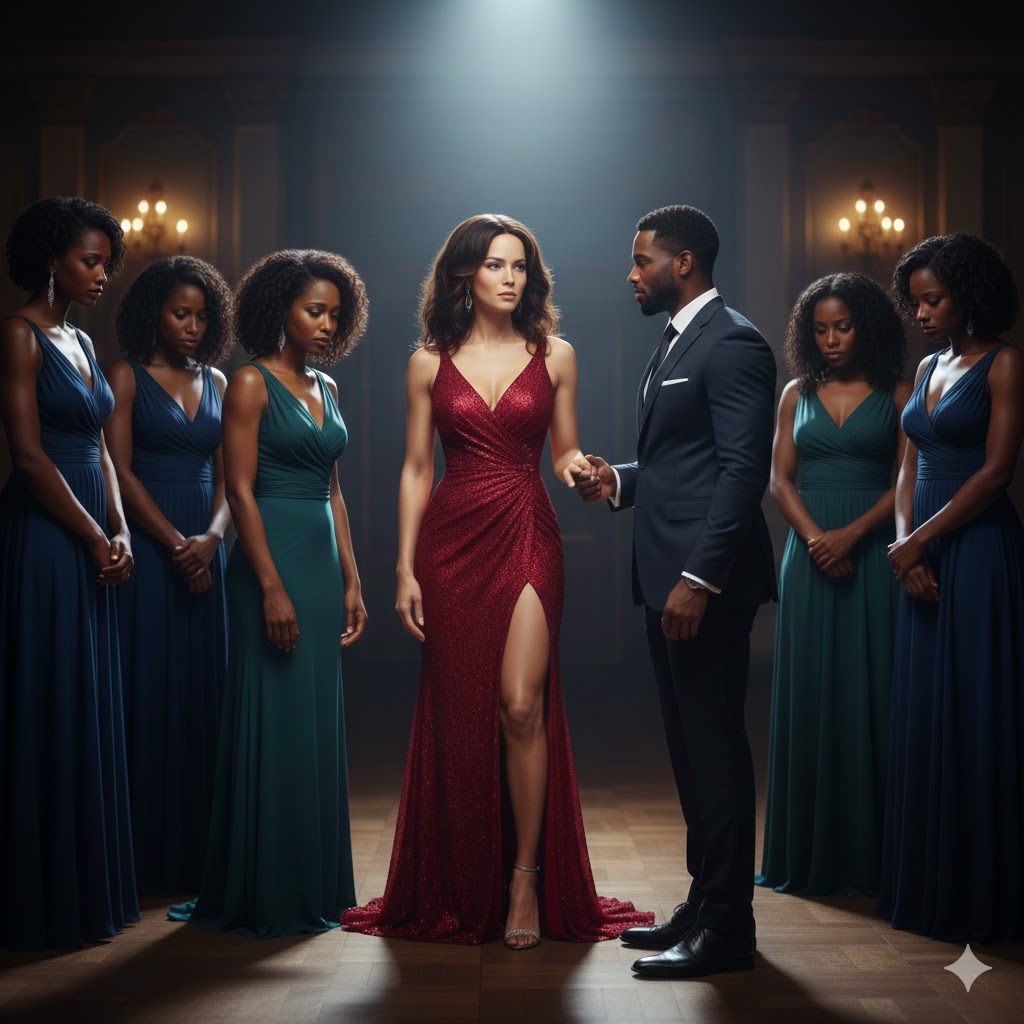

When Preference Is Programming: Debunking the Myth of “Just a Type”

Colorist bias is often defended as a harmless preference. “I just like lighter skin” is framed as personal taste rather than social conditioning. Yet preferences do not emerge in a vacuum—they are programmed by power, repetition, and reward.

Scripture teaches that desire itself can be corrupted. “Lust of the eyes” is named as a worldly influence, not a neutral impulse (1 John 2:16, KJV). When attraction aligns consistently with racial hierarchy, it reveals indoctrination, not individuality.

Colonial regimes aggressively promoted whiteness as the ideal through art, religion, and science. Over time, these ideals shaped attraction patterns globally. What is now called “preference” was once policy—enforced through violence, law, and theology.

Colorism in dating reinforces generational inequality. Marriage and partnership influence wealth accumulation, social networks, and emotional stability. When darker-skinned individuals are systematically excluded, the effects compound across generations.

The Bible’s depiction of attraction challenges these hierarchies. The woman in Song of Solomon declares, “I am black, but comely” (Song of Solomon 1:5, KJV), rejecting the notion that darkness negates desirability. This verse stands in direct opposition to modern colorist logic.

Psychologically, unchecked “preference” becomes prejudice when it dehumanizes or devalues others. Research shows that attraction patterns shift when representation shifts, proving desire is malleable, not fixed (Banks, 2015).

Calling colorism a preference protects it from critique. Calling it programming exposes it to correction. True freedom requires interrogating what we desire and why.

References

The Holy Bible, King James Version.
Banks, T. L. (2015). Is marriage for white people?
Wilkerson, I. (2020). Caste: The origins of our discontents.

Beyond Eurocentric Standards: Redefining Beauty on Your Own Terms in this colorist world.

Photo by Marcelo Dias on Pexels.com

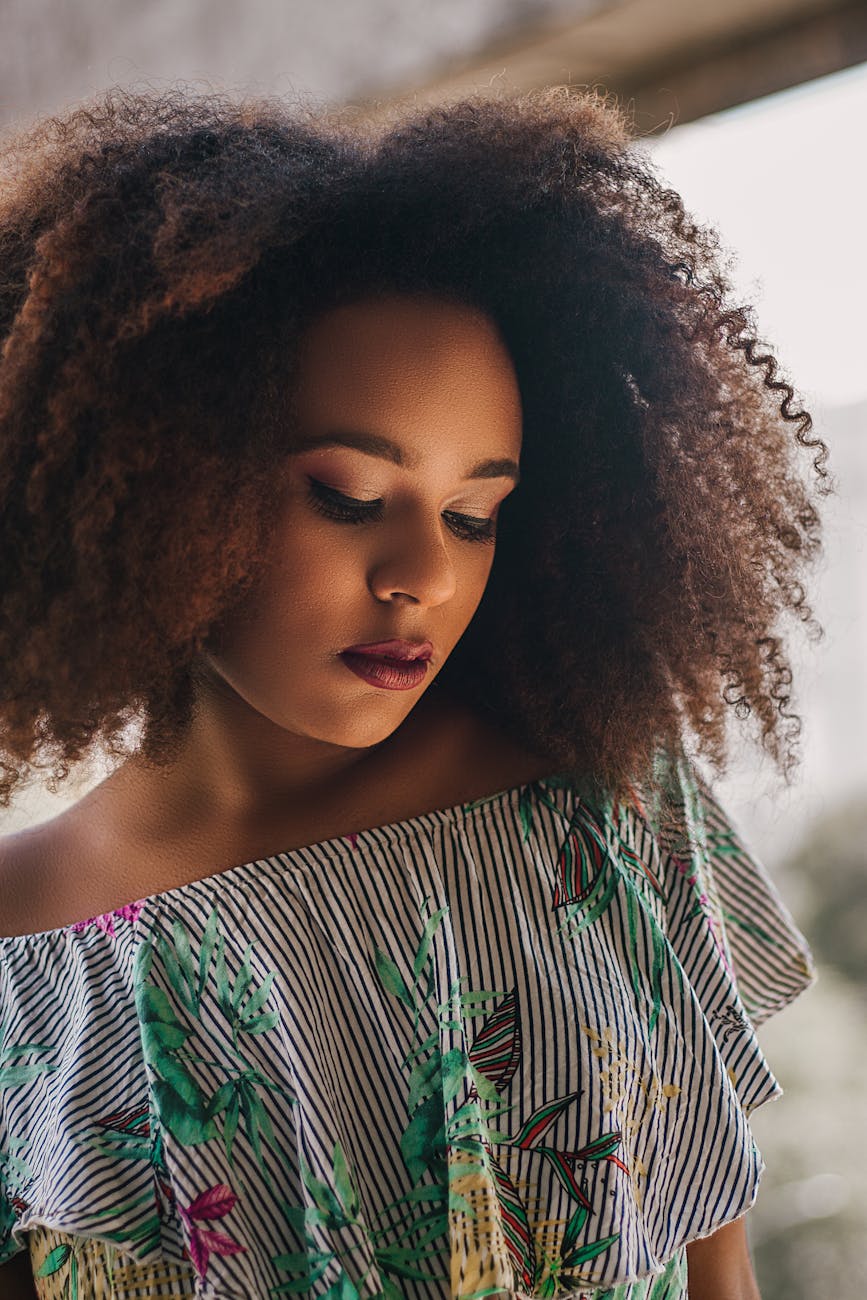
For centuries, Eurocentric beauty standards have dominated media, fashion, and societal perceptions. Fair skin, straight hair, narrow noses, and European facial features have been positioned as the ideal, marginalizing melanin-rich features and fostering a culture of colorism. In a world where lighter shades are often prioritized, redefining beauty on your own terms is an act of empowerment, resilience, and self-love.

The Roots of Eurocentric Beauty

Eurocentric beauty standards are deeply intertwined with colonialism, slavery, and systemic oppression. These ideals were used historically to assert superiority, devalue people of color, and enforce social hierarchies. Colorism—the preferential treatment of lighter skin tones within communities of color—remains a pervasive issue today, impacting self-esteem, career opportunities, and media representation (Hunter, 2007). Understanding this history is essential for reclaiming beauty on one’s own terms.

Owning Your Features

Redefining beauty starts with self-recognition and acceptance. Embracing natural hair textures, melanin-rich skin, and unique facial features counters societal bias and affirms personal identity. Influencers and celebrities like Lupita Nyong’o, Tracee Ellis Ross, Adut Akech, and Rihanna exemplify how celebrating natural features elevates cultural pride and inspires others to do the same. By owning what makes you unique, beauty becomes a personal statement rather than a standard to conform to.

Redefining Beauty Beyond Eurocentric Standards: A Toolkit for Empowerment

1. Celebrate Your Natural Features

  • Tips:
    • Embrace natural hair textures, melanin-rich skin, and unique facial features.
    • Daily affirmations:
      • “My skin, my hair, my features are beautiful and powerful.”
      • “I define my beauty, not society’s standards.”
  • Visual Idea: Color-rich illustrations of diverse skin tones with empowering typography.

2. Curate Representation

  • Tips:
    • Follow influencers and media that celebrate melanin-rich beauty.
    • Support inclusive brands in fashion, haircare, and beauty.
  • Examples: Lupita Nyong’o, Tracee Ellis Ross, Adut Akech, Rihanna.
  • Visual Idea: Collage of influencer photos showing a range of hairstyles, skin tones, and fashion statements.

3. Build Supportive Communities

  • Tips:
    • Engage with peers, mentorship programs, and online spaces that affirm brown beauty.
    • Participate in challenges and campaigns celebrating melanin (#BrownSkinGirl, #MelaninMagic).
  • Visual Idea: Network-style graphic showing community connection and peer support.

4. Educate Yourself

  • Tips:
    • Learn about the history of colorism and Eurocentric beauty standards.
    • Share knowledge to empower yourself and others.
  • Visual Idea: Timeline showing historical context and modern reclamation of beauty.

5. Advocate and Speak Out

  • Tips:
    • Challenge biased media, workplace norms, or social commentary that privileges Eurocentric ideals.
    • Amplify voices and platforms that celebrate diverse beauty.
  • Visual Idea: Bold call-to-action graphics with messages like “Celebrate All Shades” or “Your Beauty, Your Rules.”

6. Affirm Daily

  • Tips:
    • Use mirror affirmations, journaling, or social media posts to reinforce self-worth.
    • Examples: “I am radiant, I am powerful, I am brown and brilliant.”
  • Visual Idea: Shareable, colorful affirmation templates for Instagram, TikTok, or personal use.

Navigating a Colorist World

Living in a colorist society requires intentional strategies:

  • Curate Representation: Follow media and influencers who celebrate diverse skin tones and features.
  • Affirm Identity: Use daily affirmations such as, “My skin is radiant, my heritage is powerful.”
  • Build Supportive Communities: Engage with peers and online spaces that uplift melanin-rich beauty.
  • Advocate: Challenge biased media, workplace standards, or social norms that perpetuate Eurocentric ideals.

Psychological and Cultural Impacts

Embracing your natural features strengthens self-esteem and counters internalized colorism (Russell, Wilson, & Hall, 1992). Culturally, it honors heritage and ancestral identity, reinforcing that beauty is multifaceted and deeply personal. By redefining beauty beyond Eurocentric norms, individuals also influence society, expanding definitions of attractiveness and challenging restrictive ideals.

Redefining Beauty for Future Generations

When brown girls and women redefine beauty on their own terms, they set powerful examples for younger generations. They teach that confidence, cultural pride, and authenticity are central to self-worth. Rejecting Eurocentric standards creates space for representation, self-love, and a more inclusive understanding of beauty that celebrates all shades, textures, and forms.

Conclusion

Beauty is not dictated by societal preference—it is a personal, cultural, and empowering declaration. Beyond Eurocentric standards, embracing melanin-rich skin, natural hair, and unique features is an act of resistance, self-love, and identity affirmation. In a colorist world, redefining beauty on your own terms is both radical and necessary, proving that true beauty lies in authenticity, heritage, and confidence. Redefining beauty is an act of resistance, self-love, and empowerment. By celebrating natural features, seeking representation, building supportive communities, educating oneself, advocating, and affirming daily, brown girls can navigate a colorist world with confidence. Beauty is personal, cultural, and powerful—it belongs to you to define.


References

  • Hunter, M. (2007). The Persistent Problem of Colorism: Skin Tone, Status, and Inequality. Sociology Compass, 1(1), 237–254.
  • Russell, K., Wilson, M., & Hall, R. E. (1992). The Color Complex: The Politics of Skin Color in a New Millennium. Anchor Books.

How Colorism Influences Attraction and Marriage Patterns.

Photo by cottonbro studio on Pexels.com

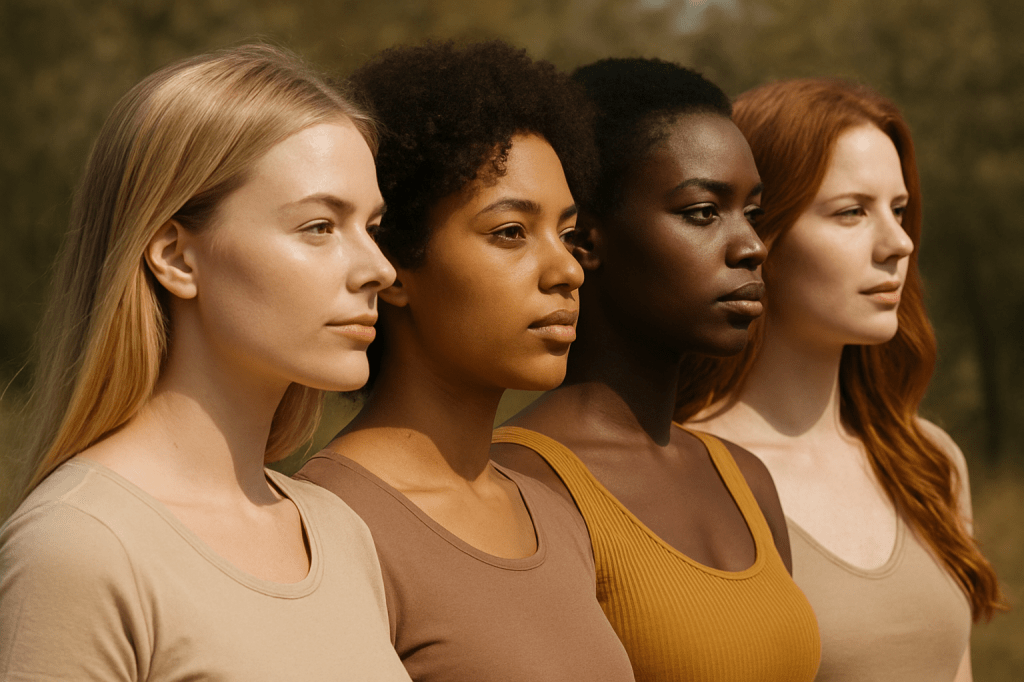
Colorism, the system of discrimination that privileges lighter skin tones over darker ones within the same racial or ethnic group, has deep and lasting effects on personal relationships, particularly in the realms of attraction and marriage. Rooted in slavery, colonialism, and Eurocentric beauty ideals, colorism continues to shape how individuals perceive desirability, compatibility, and social status in romantic relationships. These biases not only affect who people date and marry but also reinforce systemic inequities across generations.

Historically, the origins of colorism in America can be traced back to slavery, when lighter-skinned enslaved people—often the offspring of white slave owners and Black women—were given preferential treatment, including less physically demanding work and occasional access to education (Hunter, 2007). This distinction laid the foundation for associating lighter skin with privilege, desirability, and higher social standing. These values, rooted in white supremacy, carried over into post-slavery society and became embedded in ideas of beauty and mate selection.

Attraction, often seen as a deeply personal and subjective experience, is not immune to these social hierarchies. Numerous studies have shown that lighter-skinned individuals are frequently perceived as more attractive, feminine, or masculine in socially acceptable ways (Hill, 2002). In media and popular culture, lighter-skinned Black women are often cast in roles of love interests or wives, while darker-skinned women are more likely to be portrayed as aggressive, hypersexual, or undesirable. These portrayals reinforce biases that influence dating preferences across racial and cultural lines.

For men, colorism influences partner selection by shaping perceptions of status and desirability. Men who select lighter-skinned partners may be viewed as having achieved higher social standing, as these choices align with Eurocentric standards of beauty and social capital (Monk, 2014). Conversely, women with darker skin tones often report being overlooked, rejected, or fetishized in the dating market, facing unique struggles in establishing romantic relationships that validate their worth.

The Influence of Skin Tone on Attraction and Marriage Patterns

Section 1: Dating Preferences by Skin Tone

Skin TonePerceived AttractivenessDating Market OpportunitiesNotes
LightHighMore options, higher social mobilityOften favored in media and social circles (Hunter, 2002)
MediumModerateModerate optionsMay face mixed perceptions in social and professional settings
DarkLower (due to societal bias)Fewer options, often fetishized or overlookedPsychological effects include lower self-esteem, feelings of invisibility (Keith & Herring, 1991)

Section 2: Marriage Patterns by Skin Tone

Skin ToneLikelihood to MarrySpouse Socioeconomic StatusNotes
LightHigherOften higher SES partners“Marriage market capital” based on social perceptions (Goldsmith et al., 2007)
MediumModerateMixed SES partnersVaries by social circle and geographic location
DarkLowerOften lower SES partnersColorism influences social and economic outcomes; may experience delayed marriage or less partner choice

Section 3: Psychological & Spiritual Impacts

  • Dark-skinned women: Increased risk of low self-esteem, body image dissatisfaction, internalized colorism, and rejection in dating.
  • Light-skinned women: Higher social capital but may experience imposter syndrome or pressure to maintain image.
  • Spiritual perspective: KJV Bible emphasizes God looks at the heart, not outward appearance (1 Samuel 16:7).
  • Community impact: Need for affirmations, media representation, and celebration of all skin tones (#MelaninMagic, #BlackGirlMagic).

Section 4: Key Takeaways

  • Colorism is a systemic influence shaping dating and marriage patterns.
  • Light skin often provides social advantages, while dark skin faces bias even in elite or professional circles.
  • Internalized biases affect self-esteem, relationships, and life choices.
  • Spiritual and community affirmation are essential tools to counteract colorism.

Marriage patterns reflect the cumulative impact of these biases. Studies have found that lighter-skinned women are more likely to marry, and they tend to marry partners with higher socioeconomic status compared to their darker-skinned counterparts (Goldsmith, Hamilton, & Darity, 2007). These trends suggest that skin tone operates as a form of “marriage market capital,” where lighter-skinned individuals are afforded more opportunities for upward mobility through marriage. For darker-skinned individuals, limited marriage prospects can exacerbate social and economic inequality.

Colorism also affects interracial marriages. Black women with lighter skin tones are statistically more likely to marry outside their race compared to darker-skinned Black women, in part because lighter skin is perceived as more aligned with mainstream beauty ideals (Hunter, 2002). This trend reflects how racialized beauty hierarchies shape romantic choices not only within the Black community but also in broader society.

Case Study 1: Beyoncé and Jay-Z

Beyoncé, often cited as one of the most powerful and admired Black women in the world, is light-skinned with a caramel complexion. Her marriage to Jay-Z, who himself comes from a slightly lighter-skinned African American background, reflects a dynamic where skin tone and status intersect. While their union is also grounded in shared values and artistic collaboration, some scholars note that lighter skin and societal beauty standards likely amplified Beyoncé’s social capital, increasing her visibility, desirability, and access to elite circles (Hunter, 2007).

Case Study 2: Lupita Nyong’o and Relationships

Lupita Nyong’o, a darker-skinned actress who gained international acclaim for her role in 12 Years a Slave, has spoken about facing colorism within Hollywood and dating circles. Her experience highlights how darker-skinned Black women often encounter fetishization or erasure in romantic contexts. Despite her global recognition, societal biases still shape the perception of desirability, illustrating that colorism is not limited to casual dating but extends into perceptions of high-status partners.

Case Study 3: Michael B. Jordan and Dating Preferences

Actor Michael B. Jordan, who is lighter-skinned compared to some of his peers, has often been paired romantically with women in Hollywood who are either lighter-skinned or mixed-race. Media narratives around these pairings frequently emphasize their beauty and perceived “marketability,” underscoring how skin tone remains a silent influencer in high-profile relationships. Such pairings demonstrate colorism’s subtle but persistent influence on attraction even among successful Black individuals.

Psychologically, these patterns create damaging effects on self-esteem and self-worth. Dark-skinned women often internalize rejection as a reflection of their inherent value, leading to feelings of invisibility, unworthiness, or bitterness toward the dating process. Conversely, lighter-skinned women may grapple with imposter syndrome, questioning whether their desirability is based on genuine love or simply their proximity to whiteness. Both experiences reflect the way colorism undermines authentic human connection in relationships.

Spiritually, colorism directly contradicts biblical teachings on love and marriage. Scripture emphasizes that love is not based on outward appearances but on the heart and character: “But the Lord said unto Samuel, Look not on his countenance, or on the height of his stature; because I have refused him: for the Lord seeth not as man seeth; for man looketh on the outward appearance, but the Lord looketh on the heart” (1 Samuel 16:7, KJV). Likewise, Proverbs 31 highlights the value of a virtuous woman over fleeting physical attributes. These verses affirm that God’s standard for attraction and marriage is rooted in righteousness and inner beauty, not skin tone or social status.

To break free from colorism’s hold on attraction and marriage patterns, both individuals and communities must confront their internalized biases. Media must continue diversifying portrayals of love and beauty, ensuring that darker-skinned individuals are celebrated as desirable, worthy partners. Within Black communities, fostering affirmations that embrace the full spectrum of melanin can help dismantle generational hierarchies. Spiritually, returning to God’s standard of love and marriage can provide healing, as couples root their unions not in skin tone but in faith, commitment, and character.

In conclusion, colorism continues to shape attraction and marriage patterns in profound ways, reinforcing inequities and damaging self-perceptions. By acknowledging these influences, embracing self-worth, and prioritizing character and faith, individuals can create relationships that reflect true love, equality, and divine worth.


References

  • Goldsmith, A. H., Hamilton, D., & Darity, W. (2007). From dark to light: Skin color and wages among African-Americans. Journal of Human Resources, 42(4), 701–738.
  • Hill, M. E. (2002). Skin color and the perception of attractiveness among African Americans: Does gender make a difference? Social Psychology Quarterly, 65(1), 77–91.
  • Hunter, M. (2002). If you’re light you’re alright: Light skin color as social capital for women of color. Gender & Society, 16(2), 175–193.
  • Hunter, M. (2007). The persistent problem of colorism: Skin tone, status, and inequality. Sociology Compass, 1(1), 237–254.
  • Monk, E. P. (2014). Skin tone stratification among Black Americans, 2001–2003. Social Forces, 92(4), 1313–1337.
  • The Holy Bible, King James Version.

Beneath the Bronze: The Hidden Pain of Being Overlooked.

There is a quiet ache that lives inside those who shine naturally, yet remain unseen. To be beautifully made—bronze-skinned, strong-featured, soul-deep—and still be treated as if one were invisible, is a wound many never speak aloud. It is the paradox of being regal in a world that refuses to acknowledge the crown.

Beauty is not merely aesthetics; it is presence, dignity, posture, spirit. There are those whose very existence reflects divine craftsmanship, and yet society trains its eyes elsewhere. They carry the hue of sun-kissed earth, the line of warrior kings, the depth of ancient blood and covenant promise—but subtle wounds form when their radiance is met with indifference, envy, or dismissal.

The pain here is not vanity. It is identity.
It is the longing to be seen for who one truly is, not what the world has been conditioned to perceive.

Colorism, Eurocentric beauty hierarchies, media bias, and generational wounds intersect to create a psychological burden. Dark skin—once exalted in royal courts, priesthoods, and ancient temples—was re-cast as lesser in colonial narrative structures. And so countless bronze souls grow up feeling like background characters in stories where they were meant to be kings, prophets, and chosen vessels.

Yet beneath the ache lies power. There is a sacred refinement in being overlooked and still standing royal. The overlooked learn resilience, depth, humility, spiritual discernment. They seek validation from Heaven rather than crowds. Their value is not borrowed from applause—it is breathed by the Creator.

Scripture reminds us that divinely chosen vessels are often initially unseen:

“Man looketh on the outward appearance, but the Lord looketh on the heart.”
— 1 Samuel 16:7 (KJV)

David was overlooked among his brothers. Joseph was rejected before he was exalted. Christ Himself was “despised and rejected of men” before glory was revealed (Isaiah 53:3). Often the hidden ones are Heaven’s chosen.

To be overlooked is not proof of lack—
it is often proof of threat to the world’s fragile illusions.

For bronze-skinned men and women especially, their beauty carries memory—of sun-carved kingdoms, divine melanin, ancestral nobility, covenant lineage. Their presence challenges the false narratives built by those who once feared the power in their gaze, the authority in their features, the fire in their blood.

And so, the overlooked rise quietly.

Not through bitterness, but revelation.
Not through pleading to be seen, but walking in the truth of who they already are.

Beauty rooted in spirit and ancestry does not need permission to exist. The world may overlook gold for glitter, but time always reveals what was real.

To you who feels unseen—
You are not hidden. You are protected.
You are not ignored. You are reserved.
You are not undesirable. You are set apart.

The bronze will shine.
The overlooked will be called forward.
And those once bypassed will stand in the light they were born for—
not because the world decides to see them,
but because the Most High always did.

Your beauty was never for the crowd—
it was for the kingdom.

Scriptural References (KJV)
1 Samuel 16:7
Isaiah 53:3
Psalm 139:14
Deuteronomy 7:6
Romans 8:18

The Unchosen Shade: Colorism and the Crisis of Self-Worth

This photograph is the property of its respective owner. No copyright infringement intended.

Colorism—prejudice or discrimination based on skin tone within the same racial or ethnic group—is one of the most insidious legacies of colonialism and slavery. Unlike racism, which operates across racial lines, colorism operates within them, fracturing communities from the inside. The dilemma of colorism lies in how it distorts identity and self-worth, privileging lighter skin as beautiful, desirable, and superior while marking darker skin as less valuable or “other.”

The roots of colorism reach deep into history. During slavery, lighter-skinned Black people were often given preferential treatment, working inside plantation houses while darker-skinned people labored in the fields. This racial hierarchy was not accidental—it was engineered to divide and control. The closer one appeared to whiteness, the more “human” they were perceived to be (Hunter, 2007). This system embedded a psychological wound that continues to shape beauty ideals, social mobility, and self-esteem in communities of color.

In the post-slavery era, colorism was perpetuated through social institutions and cultural practices. Exclusive clubs and fraternities in the early 20th century used the infamous “paper bag test” to determine admission: if one’s skin was darker than a brown paper bag, they were denied entry. These acts codified self-rejection, turning proximity to whiteness into a false badge of honor (Russell, Wilson, & Hall, 1992).

Colorism’s effects are particularly damaging among women. Dark-skinned women often face compounded discrimination—both racism and colorism—resulting in fewer opportunities in entertainment, employment, and even dating. Media and beauty industries have historically promoted Eurocentric ideals: straight hair, narrow noses, and fair skin. As a result, darker-skinned women have often been portrayed as aggressive, unattractive, or less feminine compared to their lighter counterparts (Hill, 2002).

The crisis of self-worth begins early. Studies have shown that even young children associate lighter skin with beauty and intelligence. The infamous “doll test,” conducted by psychologists Kenneth and Mamie Clark in the 1940s, revealed that Black children preferred white dolls over Black ones, describing them as “good” and “pretty” (Clark & Clark, 1947). This heartbreaking evidence demonstrated how internalized racism and colorism warp self-perception from childhood.

For men, colorism manifests differently but no less destructively. Light-skinned men are often viewed as more approachable or “safe,” while dark-skinned men are stereotyped as intimidating or dangerous. These perceptions influence job prospects, policing, and romantic desirability. The darker the skin, the more one becomes the object of fear or fetishization rather than acceptance (Hunter, 2005).

Hollywood and global media have long reinforced this bias. From the early days of cinema to modern advertising, lighter skin has been synonymous with success and desirability. Black actresses like Lupita Nyong’o and Viola Davis have spoken openly about the struggle to be recognized as beautiful in an industry that has long celebrated lighter tones. Their success represents not just personal triumph but cultural healing—a redefining of beauty that honors the fullness of Blackness.

Colonialism globalized colorism. Across Africa, Asia, and the Caribbean, lighter skin is still marketed as an advantage. Skin-whitening creams, a billion-dollar industry, prey upon insecurities cultivated by centuries of Eurocentric dominance. In countries like India and Nigeria, “fairness” is often advertised as a prerequisite for marriage, employment, and respect. The colonial message persists: to ascend, one must become less of oneself (Glenn, 2008).

Colorism also thrives in the digital age. Filters, editing apps, and social media trends subtly lighten complexions, reinforcing subconscious biases. The aesthetic algorithms of beauty—crafted largely by Western designers—often favor lighter features, excluding darker skin tones from digital visibility and validation. The new colonizer is not a person, but a pixel.

Spiritually, colorism distorts divine identity. When people internalize inferiority based on skin tone, they reject the image of God within themselves. In biblical context, melanin—the pigment that gives darker skin its color—can be seen as a divine design, a testament to strength, protection, and resilience. As Psalm 139:14 declares, “I am fearfully and wonderfully made.” This verse challenges every ideology that devalues dark skin.

The psychological impact of colorism can lead to anxiety, depression, and chronic insecurity. For many, the quest to be “lighter” becomes a quest for acceptance. But this pursuit only deepens self-alienation, as it demands rejecting the very heritage and beauty that define one’s identity. Healing begins when individuals and communities confront the internalized lies that whiteness equals worth.

Education and representation are key to dismantling colorism. Schools must teach not only about racism but also about the hierarchy of shade that perpetuates inequality. Media must elevate diverse representations of Blackness, from deep ebony to golden brown, as equally beautiful. Each shade tells a story of resilience and identity that deserves visibility and validation.

Colorism also fractures solidarity. When internal prejudice divides the oppressed, the struggle for liberation weakens. True unity within the Black diaspora—and across communities of color—requires acknowledging and addressing this inherited bias. Liberation must include the healing of the mind as well as the body.

Artists, activists, and scholars are reclaiming the narrative. Campaigns like “Dark Is Beautiful” and “Melanin Magic” have redefined global conversations about shade and self-love. Poets, filmmakers, and painters now celebrate the hues once despised, restoring dignity to complexions that history sought to erase. The rise of figures like model Duckie Thot, actress Lupita Nyong’o, and activist Rashida Strober signals a cultural reckoning.

Social healing also demands accountability from within. Families must stop perpetuating colorist language—phrases like “don’t get too dark” or “you’re pretty for a dark-skinned girl.” Churches and communities must replace shame with celebration. Healing begins when love replaces comparison and appreciation replaces envy.

The crisis of self-worth cannot be healed by cosmetics but by consciousness. True beauty emerges when identity aligns with purpose. Dark skin, radiant under the sun, carries the memory of continents and the story of survival. To reject it is to reject ancestry. To embrace it is to reclaim sovereignty.

Colorism’s undoing requires cultural courage—to confront painful truths and to teach new generations that worth is not measured by shade but by soul. As Toni Morrison wrote, “The function of freedom is to free someone else.” In this light, freedom begins when we learn to see beauty where the world taught us to see blemish.

Ultimately, “The Unchosen Shade” is not a curse but a crown. It represents endurance through centuries of erasure, beauty unbought and unaltered. The unchosen shade is chosen by God—crafted in divine melanin, unafraid of the sun, and unapologetically radiant. When we learn to love the unchosen shade, we begin the work of restoring not just self-worth, but collective wholeness.


References

Clark, K., & Clark, M. (1947). Racial Identification and Preference in Negro Children. Journal of Negro Education, 19(3), 341–350.
Glenn, E. N. (2008). Yearning for Lightness: Transnational Circuits in the Marketing and Consumption of Skin Lighteners. Gender & Society, 22(3), 281–302.
Hill, M. E. (2002). Skin Color and the Perception of Attractiveness Among African Americans: Does Gender Make a Difference? Social Psychology Quarterly, 65(1), 77–91.
Hunter, M. (2005). Race, Gender, and the Politics of Skin Tone. Routledge.
Hunter, M. (2007). The Persistent Problem of Colorism: Skin Tone, Status, and Inequality. Sociology Compass, 1(1), 237–254.
Russell, K., Wilson, M., & Hall, R. E. (1992). The Color Complex: The Politics of Skin Color Among African Americans. Harcourt Brace Jovanovich.

When I See You, I Don’t See Black — And Other Microaggressions of Erasure”

Photo by Vitor Diniz on Pexels.com

It is a curious thing to be told, “When I see you, I don’t see Black.” On the surface, it sounds like a compliment — a supposed sign of acceptance. But beneath those words lies a deep and painful reality: erasure. To “not see Black” is to refuse to see a person fully. Blackness is not an insult that must be airbrushed away. It is a heritage, a culture, and a divine design that carries resilience, beauty, and history.

The phrase “What are you mixed with?” often accompanies this colorblind assertion. It suggests that the person’s beauty, intelligence, or refinement must have come from something other than pure African ancestry. This is the residue of white supremacy — the idea that to be fully Black is to be less than, and that any perceived excellence must be explained by proximity to whiteness (Bell, 1992).

These phrases are examples of racial microaggressions, subtle verbal slights that communicate bias, even when unintended (Sue et al., 2007). “I don’t see color” is often framed as a way to express equality, but research shows that colorblindness actually perpetuates racial inequality by ignoring structural racism (Neville et al., 2013). To deny race is to deny racism — and thus to deny the need for justice.

Biblically, God is not colorblind. Revelation 7:9 (KJV) paints a vision of heaven where “a great multitude… of all nations, and kindreds, and people, and tongues” stand before the throne. God sees color, ethnicity, and culture — and calls it good. To erase Blackness is to erase part of the divine mosaic of humanity.

For many Black people, hearing “When I see you, I don’t see Black” is a reminder that Blackness is still considered something one must look past in order to value someone. “It felt like they were saying, ‘I only respect you because you’re not like the others,’” said Renee, 28. “As if being Black is inherently negative.” This is a classic case of the “exceptional Negro” trope — praising an individual while degrading the group.

Similarly, “What are you mixed with?” is a coded way of expressing surprise that a Black person could be attractive or articulate. “People ask me that all the time,” said Marcus, 31. “When I tell them I’m just Black, they look confused, like I should apologize for not having some exotic backstory.” This curiosity reveals a hierarchy of desirability rooted in colorism — the privileging of light skin and mixed features over darker skin and African features (Hunter, 2007).

The historical roots of this hierarchy run deep. During slavery, lighter-skinned enslaved people — often the children of white masters — were sometimes given preferential treatment, fueling division within the Black community (Williamson, 1980). This legacy lingers, as seen in modern media where lighter-skinned actors, models, and musicians are often elevated as the “acceptable” face of Blackness.

Celebrities have spoken out about this painful phenomenon. Actress Lupita Nyong’o shared that she once prayed for lighter skin, believing it would make her beautiful. “I was teased and taunted about my dark skin,” she said in her powerful 2014 speech on beauty. “And my one prayer to God was that I would wake up lighter-skinned.” Nyong’o’s testimony underscores the damage caused by a culture that treats dark skin as undesirable.

Other celebrities have shared their personal experiences with these exact microaggressions. Meghan Markle has spoken openly about being asked repeatedly, “What are you?” growing up. In her interview with Oprah Winfrey, she revealed how her biracial identity was scrutinized both by the media and behind palace walls, with questions about how dark her son’s skin might be (Winfrey, 2021). Her story illustrates how curiosity about mixed heritage can carry undertones of fear and exclusion.

Zendaya has also used her platform to discuss colorism and the privilege of being a lighter-skinned Black woman in Hollywood. In interviews, she has admitted that her lighter complexion has allowed her access to roles and opportunities that darker-skinned actresses are often denied. “I have to be honest about my privilege,” she said, “and make sure I’m using my platform to showcase darker-skinned women too” (Robinson, 2018).

Colin Kaepernick, who is biracial, has shared how his identity was questioned from both sides. In his Netflix series Colin in Black & White, he recalls being constantly asked what he was “mixed with” and feeling like an outsider in both Black and white spaces. This experience reflects Du Bois’ (1903) concept of double-consciousness — the constant negotiation of identity in a society that categorizes by race.

The question “What are you mixed with?” can also exoticize and objectify. It turns identity into a guessing game, as if the person must justify their existence. “I’m not a math equation,” said Jasmine, 25. “I don’t owe anyone a breakdown of my ancestry so they can decide how to treat me.”

This line of questioning also erases the beauty of being fully African-descended. Psalm 68:31 (KJV) prophetically declares, “Princes shall come out of Egypt; Ethiopia shall soon stretch out her hands unto God.” African heritage is not a stain to be diluted but a glory to be embraced.

The deeper harm is that these statements normalize whiteness as the default and Blackness as the deviation. Saying “I don’t see you as Black” implies that Black is something negative to overcome. It also denies the lived reality of racism. As Dr. Beverly Daniel Tatum argues, to say you are colorblind is to close your eyes to injustice — and people who claim not to see race are less likely to notice or confront discrimination (Tatum, 2017).

Moreover, these phrases pressure Black individuals to perform a palatable version of Blackness. They subtly reward assimilation, encouraging people to soften their dialect, straighten their hair, or distance themselves from stereotypical “Blackness” to gain approval. This double-consciousness, as W.E.B. Du Bois (1903) called it, is the struggle to see oneself through both one’s own eyes and the eyes of a society that devalues you.

Some people genuinely believe they are being kind when they say these things. They intend to affirm equality, but true equality does not erase difference — it celebrates it. Paul’s words in 1 Corinthians 12:18 (KJV) remind us that “God set the members every one of them in the body, as it hath pleased him.” Diversity is divine design, not a problem to be solved.

The work of dismantling this erasure requires both education and empathy. Non-Black people must learn why colorblindness harms rather than heals. They must also recognize how fetishizing mixed heritage reinforces harmful hierarchies. Black people must reclaim their identity unapologetically, refusing to let others define their worth by proximity to whiteness.

Representation plays a crucial role here. When Blackness is portrayed in its full spectrum — from deep mahogany to golden brown — it challenges the idea that only certain shades are beautiful or acceptable. Campaigns like #MelaninPoppin and #BlackGirlMagic have helped shift cultural narratives, reminding the world that Blackness needs no qualifier to be celebrated.

Healing from these microaggressions is both personal and collective. It means telling children that their Blackness is not something to overcome but something to rejoice in. It means calling out subtle biases when they occur, with both grace and truth. It means creating spaces where Black identity can be expressed in all its complexity — natural hair, vernacular speech, cultural traditions — without apology.

The next time someone says, “I don’t see Black,” we must gently but firmly reply: “See me fully — my Blackness included.” To be truly seen is to be known, and to be known is to be loved. And when someone asks, “What are you mixed with?” we can answer with pride: “I am fearfully and wonderfully made — fully, beautifully, unapologetically who God created me to be.”


References

  • Bell, D. (1992). Faces at the bottom of the well: The permanence of racism. Basic Books.
  • Du Bois, W. E. B. (1903). The souls of Black folk. A.C. McClurg & Co.
  • Hunter, M. (2007). The persistent problem of colorism: Skin tone, status, and inequality. Sociology Compass, 1(1), 237–254.
  • Neville, H. A., Awad, G. H., Brooks, J. E., Flores, M. P., & Bluemel, J. (2013). Color-blind racial ideology: Theory, training, and measurement implications in psychology. American Psychologist, 68(6), 455–466.
  • Sue, D. W., Capodilupo, C. M., Torino, G. C., Bucceri, J. M., Holder, A. M. B., Nadal, K. L., & Esquilin, M. (2007). Racial microaggressions in everyday life: Implications for clinical practice. American Psychologist, 62(4), 271–286.
  • Tatum, B. D. (2017). Why are all the Black kids sitting together in the cafeteria? (Rev. ed.). Basic Books.
  • Williamson, J. (1980). New people: Miscegenation and mulattoes in the United States. Free Press.

Light Skin Warfare, Dark Skin Denial

Colorism has been a pervasive force in Black communities for centuries, originating during slavery when European colonizers assigned value and privilege based on proximity to whiteness. Lighter-skinned enslaved people often received marginally better treatment, from less grueling labor to domestic positions, creating a hierarchy that placed darker-skinned individuals at the bottom. This historical legacy of “light skin preference” seeded deep psychological wounds, shaping self-perception and community dynamics for generations. The battle over skin tone, often internalized, has been aptly described as “light skin warfare,” where lighter skin is idolized, and darker skin is undervalued or denied.

The psychological consequences of this internalized hierarchy are profound. Dark-skinned individuals often experience lower self-esteem, social marginalization, and even economic disadvantage due to preferential treatment of lighter skin. Research in sociology and psychology underscores that colorism affects educational opportunities, workplace advancement, and social mobility. Dark-skinned children frequently internalize negative messages about their worth, perpetuating cycles of self-doubt and identity suppression.

Media representation amplifies these disparities. Historically, films, television, and advertisements have disproportionately cast lighter-skinned Black actors and models in prominent roles while relegating darker-skinned individuals to stereotypical or subservient characters. This visual reinforcement of light skin as ideal perpetuates what sociologists call “cultural hegemony,” conditioning societies to equate beauty, intelligence, and value with proximity to whiteness.

The Bible addresses the consequences of favoring outward appearance over spiritual truth. 1 Samuel 16:7 (KJV) reminds, “The Lord seeth not as man seeth; for man looketh on the outward appearance, but the Lord looketh on the heart.” This scripture underscores the spiritual principle that intrinsic worth and character surpass superficial traits such as skin tone. Yet, when communities internalize light skin as superior, they violate this divine precept, creating divisions that echo generational trauma.

Light skin warfare also manifests socially in interpersonal relationships. In dating, marriage, and social networks, preference for lighter skin often guides choices, sometimes subconsciously. Darker-skinned individuals are frequently denied opportunities for love, acceptance, or recognition. The resulting emotional toll contributes to mental health disparities within Black communities, fostering resentment, envy, and self-alienation.

Historically, the transatlantic slave trade reinforced these divisions. European colonizers’ policies exploited mixed-race offspring to weaken solidarity among enslaved Africans, creating internal conflicts along color lines. Plantation owners often positioned lighter-skinned individuals in supervisory roles over darker-skinned laborers, embedding a hierarchy that normalized self-denial for darker-skinned people and unearned privilege for lighter-skinned peers.

Colorism has persisted in modern times through the beauty and cosmetic industry, which frequently promotes skin-lightening products targeted at darker-skinned populations. This commercial exploitation reinforces the notion that lighter skin equates to social advantage, perpetuating cycles of shame, self-rejection, and assimilationist ideals. This form of cultural warfare damages self-love and spiritual identity, undermining biblical principles of dignity and divine creation.

Culturally, music, film, and social media perpetuate light skin worship. Popular music lyrics often celebrate fair skin while vilifying dark skin, and social media filters and editing apps enable the erasure of natural melanin-rich features. Dark-skinned individuals are compelled to modify or deny their authentic appearance to gain societal approval. This denial is a subtle yet potent form of oppression, internalizing the colonizer’s value system.

Dark-skinned resistance has always existed, however. From early Black literature and arts to contemporary movements celebrating dark-skinned beauty, activists, writers, and cultural icons have championed self-love, authenticity, and pride. Figures like Lupita Nyong’o, Cicely Tyson, and Rashida Strober have publicly confronted colorism, reframing dark skin as powerful, beautiful, and divinely designed. Their advocacy embodies the principle that recognition of God’s creation supersedes societal bias.

The biblical perspective further affirms this truth. Genesis 1:27 (KJV) teaches, “So God created man in his own image, in the image of God created he him; male and female created he them.” Skin tone, therefore, is an aspect of divine artistry, not a measure of value. To deny dark skin is to reject God’s intentional design, a spiritual error as much as a social one.

Education is critical in dismantling light skin warfare. Teaching children and adults about the historical roots of colorism, alongside biblical affirmations of intrinsic worth, can interrupt cycles of preference and self-denial. Social programs, mentorship, and media representation that celebrate dark-skinned excellence help cultivate pride and resilience.

Psychologically, affirmations of dark-skinned beauty counteract internalized oppression. Counseling and therapy that address colorism equip individuals to reject societal biases, embrace their natural complexion, and cultivate healthy self-esteem. Encouraging self-love and spiritual grounding strengthens identity in ways that appearance-based validation cannot.

Economically, colorism can influence opportunities in careers, promotions, and social capital. Research shows that darker-skinned professionals face wage disparities and are underrepresented in leadership roles. This modern extension of historical privilege requires conscious institutional reform, alongside individual empowerment.

Communities must actively recognize and challenge light skin preference. Family dynamics often perpetuate subtle biases, from complimenting lighter-skinned children more frequently to encouraging them to pursue higher social status. Awareness and intentional action can prevent perpetuation of self-denial among darker-skinned youth.

Social media campaigns and contemporary art have become powerful tools for challenging light skin warfare. Viral movements celebrating melanin-rich beauty and historical awareness of colorism empower younger generations to reject internalized bias, fostering collective healing and pride.

Religious institutions can play a role by teaching scripture-based affirmations of worth. Churches and faith-based organizations emphasizing that God values the heart above outward appearance help counter societal norms that glorify light skin. Preaching against colorism aligns with spiritual principles of equality and justice.

Mentorship from dark-skinned leaders, entertainers, and entrepreneurs reinforces positive identity. When children and young adults see dark-skinned individuals achieving excellence, it disrupts stereotypes and encourages self-belief. Representation matters not only in media but in everyday life.

Self-expression through fashion, hair, and culture also combats denial. Celebrating natural hairstyles, traditional dress, and melanin-positive imagery strengthens cultural pride and challenges imposed beauty hierarchies. These visual affirmations serve as both rebellion and healing.

Finally, light skin warfare is a battle not just of aesthetics but of the soul. To overcome it, communities must embrace God’s vision of equality and honor the divine in every shade. When dark skin is denied, the spirit is diminished. When it is celebrated, identity, pride, and faith are strengthened. Colorism is not inevitable; with education, representation, and biblical grounding, Black communities can dismantle internalized hierarchies and honor the full spectrum of God’s creation.

References

  • The Holy Bible, King James Version (KJV) – 1 Samuel 16:7; Genesis 1:27
  • Hunter, M. (2016). Race, Gender, and the Politics of Skin Tone. Routledge.
  • Hall, R. E., & Carter, R. T. (2006). Skin Color, Psychological Functioning, and Black Identity. Journal of Black Psychology, 32(3), 319–346.
  • Strober, R. (2020). Colorism: The Psychological and Social Effects. Essence Magazine.
  • Russell-Cole, K., Wilson, M., & Hall, R. E. (2013). The Color Complex: The Politics of Skin Color in a New Millennium. Anchor Books.

Radiance From Within: Cultivating Confidence in a Colorist World.

Photo by Marcelo Dias on Pexels.com

Beyond Eurocentric Standards: Redefining Beauty on Your Own Terms

Beauty has long been defined by Eurocentric ideals: fair skin, straight hair, narrow noses, and Westernized features. These standards, deeply rooted in historical oppression and colonialism, continue to influence media, advertising, and societal perceptions, creating a colorist hierarchy that devalues melanin-rich skin and diverse features. However, redefining beauty on your own terms is both a radical and empowering act.

Challenging Historical Bias

Eurocentric beauty standards originated during colonialism and slavery, where European features were positioned as superior, and darker skin was stigmatized. Colorism, the preferential treatment of lighter skin tones within communities of color, persists as a result, affecting self-esteem, representation, and opportunities (Hunter, 2007). Understanding this history is essential for dismantling internalized biases and reclaiming a personal definition of beauty.

Owning Your Features

Redefining beauty starts with self-acceptance. Celebrating your natural hair texture, melanin-rich skin, facial features, and body shape affirms your identity and challenges imposed norms. Figures like Lupita Nyong’o, Tracee Ellis Ross, and Adut Akech exemplify how embracing one’s heritage and physical features reshapes cultural perceptions of beauty. By owning what makes you unique, you assert that beauty is not a standard to meet but a personal declaration of worth.

Navigating a Colorist World

Living in a society where colorism persists requires intentional strategies:

  • Representation Matters: Seek media, fashion, and beauty content that celebrates melanin and diverse features.
  • Community Support: Surround yourself with peers, mentors, and influencers who uplift and affirm your beauty.
  • Affirmation Practices: Daily self-affirmations reinforce self-worth and counter societal messages of inadequacy.
  • Advocacy: Speak out against discriminatory or biased standards in professional, educational, and social spaces.

Cultural and Psychological Implications

Beauty is deeply intertwined with cultural identity and psychological health. Celebrating your features as part of your heritage strengthens self-esteem, reduces internalized colorism, and affirms belonging (Russell, Wilson, & Hall, 1992). Moreover, redefining beauty encourages society to broaden its perceptions, creating space for more inclusive representations across media and culture.

Redefining Beauty for the Next Generation

By rejecting Eurocentric standards, brown girls and women become role models for authenticity. They demonstrate that beauty is multifaceted, culturally grounded, and rooted in confidence rather than conformity. The legacy is powerful: empowering younger generations to embrace their natural features and instilling pride in their melanin-rich skin.

Redefining Beauty Beyond Eurocentric Standards: A Guide for Brown Girls

1. Celebrate Your Features

Tips:

  • Embrace natural hair textures, melanin-rich skin, and facial features.
  • Practice daily affirmations such as:
    • “My skin, my hair, my features are beautiful and powerful.”
    • “I define my beauty, not society’s standards.”
      Visual Idea: Side-by-side graphics of diverse hairstyles, skin tones, and facial features with empowering quotes.

2. Seek Representation

Tips:

  • Follow influencers, creators, and media showcasing melanin-rich beauty.
  • Support brands that are inclusive in makeup, fashion, and media campaigns.
    Examples: Lupita Nyong’o, Tracee Ellis Ross, Adut Akech, Rihanna.
    Visual Idea: A collage highlighting diverse influencers with their iconic looks.

3. Build Supportive Communities

Tips:

  • Engage with online groups and social media spaces that celebrate brown beauty.
  • Participate in discussions and challenges that uplift and affirm cultural pride.
    Hashtags: #BrownSkinGirl, #MelaninMagic, #BlackGirlJoy
    Visual Idea: Network-style graphic showing connection between community and empowerment.

4. Educate Yourself

Tips:

  • Learn the history of colorism and Eurocentric beauty standards.
  • Share knowledge to empower yourself and others.
    Visual Idea: Timeline infographic showing the origins of Eurocentric standards and modern reclamation.

5. Advocate and Speak Out

Tips:

  • Challenge biased representations in professional or social spaces.
  • Support media, brands, and initiatives that uplift all shades of brown.
    Visual Idea: Call-to-action graphics with messages like “Celebrate All Shades” or “Your Beauty is Your Voice.”

6. Affirm Daily

Tips:

  • Use mirror affirmations, journaling, or social media posts to reinforce self-worth.
  • Examples: “I am beautiful, I am powerful, I am brown and brilliant.”
    Visual Idea: Inspirational, colorful templates for daily affirmations.

Conclusion

Redefining beauty on your own terms is both an act of self-love and resistance. Beyond Eurocentric standards lies the freedom to celebrate individuality, heritage, and authenticity. In a colorist world, embracing your features, amplifying representation, and affirming your worth transforms beauty from a restrictive standard into a personal, empowering, and inclusive declaration. Redefining beauty is an act of self-love and resistance. By celebrating natural features, seeking representation, building supportive communities, educating oneself, advocating, and affirming daily, brown girls can navigate a colorist world with confidence and pride. Beauty is not a standard to follow—it is a declaration of identity, heritage, and empowerment.


References

  • Hunter, M. (2007). The Persistent Problem of Colorism: Skin Tone, Status, and Inequality. Sociology Compass, 1(1), 237–254.
  • Russell, K., Wilson, M., & Hall, R. E. (1992). The Color Complex: The Politics of Skin Color in a New Millennium. Anchor Books.

Beauty: Is Colorism Still a Problem?

Colorism, the preferential treatment of lighter skin over darker tones within the same racial or ethnic group, remains one of the most persistent and insidious social issues in the world today. While many assume racism is the only barrier to equality, colorism operates subtly within communities, shaping perceptions of beauty, value, and worth. In the 21st century, beauty standards continue to be influenced by colonial history, media representation, and internalized biases that favor light skin as a marker of status and desirability.

Historically, colorism emerged during slavery and colonization when lighter skin was associated with proximity to whiteness and privilege. In many societies, lighter-skinned individuals were granted better jobs, education, and marriage prospects. This hierarchy, deeply rooted in systemic racism, was intentionally designed to divide and control populations. Even after the abolition of slavery, this ideology persisted, mutating into cultural preferences and unspoken norms.

In modern beauty industries, colorism manifests through the marketing of skin-lightening products, selective casting in film and fashion, and the underrepresentation of darker-skinned models and actresses. Major beauty campaigns often celebrate “diversity” yet center women with fairer complexions, looser curls, and Eurocentric features. This sends a message that beauty is conditional — that dark skin is beautiful only when it is softened, filtered, or lightened.

Social media has amplified both progress and prejudice in beauty standards. Platforms like Instagram and TikTok have allowed people of all skin tones to share their beauty, but they also perpetuate colorism through filters, lighting tricks, and algorithms that favor lighter complexions. Even within hashtags like #BlackGirlMagic or #MelaninQueen, lighter-skinned women often receive more visibility and engagement, reinforcing subtle hierarchies of attractiveness.

The psychological effects of colorism are profound. Studies show that darker-skinned individuals, especially women, often experience lower self-esteem, body dysmorphia, and social exclusion. Children are not immune — research indicates that skin tone bias can shape identity formation as early as preschool age. This conditioning creates long-term emotional scars and perpetuates cycles of insecurity and comparison.

Colorism is not confined to the Black community. In South Asia, particularly in India, Pakistan, and Bangladesh, fair skin remains a standard of beauty, reinforced by billion-dollar industries that promote whitening creams. Similarly, in East Asia, lighter skin is linked to purity and class, while in Latin America and the Caribbean, the colonial legacy has deeply influenced racial hierarchies. The global pervasiveness of colorism demonstrates that it is not merely a personal bias but a cultural institution.

In Western media, the lack of representation for dark-skinned women has long been a concern. Only recently have actresses like Lupita Nyong’o, Viola Davis, and Michaela Coel begun to reshape global perceptions of dark beauty. Their visibility challenges the Eurocentric narrative and offers a counterbalance to the longstanding idolization of light skin in Hollywood and fashion.

Yet, even within the Black community, internalized colorism persists. Lighter-skinned individuals are often stereotyped as more attractive or “refined,” while darker-skinned individuals may be perceived as “intimidating” or “less approachable.” These perceptions, though unspoken, influence everything from dating preferences to employment opportunities.

The music and entertainment industries have historically reinforced colorism. From casting light-skinned women as love interests in music videos to promoting rappers and singers who conform to Eurocentric beauty ideals, the industry perpetuates an uneven playing field. Artists like Beyoncé, Rihanna, and Nicki Minaj have faced both privilege and criticism related to their lighter complexions, while darker artists have had to fight for mainstream acceptance.

Education and awareness are crucial in dismantling colorism. Conversations about skin tone bias must extend beyond racial lines, addressing how colonization and white supremacy created this hierarchy. Schools, churches, and families play vital roles in teaching young people that beauty is not measured by lightness but by confidence, character, and identity.

The natural hair movement and the rise of melanin-positive campaigns have made significant progress in redefining beauty standards. Movements celebrating darker complexions have created new spaces of empowerment, allowing Black women to embrace their skin without shame. However, the persistence of bleaching products and aesthetic surgeries reveals that society still struggles with internalized inferiority.

Social justice movements like Black Lives Matter have also brought renewed attention to colorism’s impact on justice and equality. Studies show that darker-skinned individuals often receive harsher sentences in the criminal justice system and face higher unemployment rates. These inequalities prove that colorism extends far beyond vanity — it has material, life-altering consequences.

In Africa, colorism has also taken root despite being a continent of diverse melanin tones. The popularity of skin-bleaching products in countries like Nigeria, Ghana, and South Africa demonstrates how colonial legacies have reshaped beauty ideals. Many people associate lighter skin with success, education, and marriageability — a mindset that reflects centuries of psychological conditioning.

In Latin America, nations like Brazil, the Dominican Republic, and Cuba grapple with racial hierarchies rooted in colonization and slavery. Media in these regions continues to favor mestizo or light-skinned actors, while Afro-Latino communities struggle for recognition and representation. Colorism thus remains intertwined with both classism and racism.

Men are not exempt from colorism. Darker-skinned men often face stereotypes of aggression or hypermasculinity, while lighter-skinned men are seen as more desirable or “safe.” These stereotypes influence romantic dynamics, casting choices, and even perceptions of intelligence and professionalism.

The cosmetics industry plays a dual role in both perpetuating and challenging colorism. Brands like Fenty Beauty, founded by Rihanna, have revolutionized makeup inclusivity by offering wide shade ranges. Yet many global companies continue to promote “brightening” and “whitening” products, especially in non-Western markets, highlighting the tension between progress and profit.

Faith-based perspectives can also challenge colorism. Biblical teachings, for example, emphasize that all people are made in God’s image, regardless of complexion. Scriptures like Song of Solomon 1:5 (“I am black, but comely”) affirm dark beauty and dignity. The spiritual lens reframes beauty as divine creation rather than social hierarchy.

Ultimately, colorism is still a problem because it remains embedded in cultural consciousness. It has evolved, becoming less overt yet equally harmful. Whether through biased algorithms, selective admiration, or self-loathing industries, colorism continues to define who gets to be seen as “beautiful.”

Healing from colorism requires both unlearning and reimagining. It demands honest conversations, media accountability, and collective empowerment. True beauty celebrates all shades as reflections of human diversity — radiant, equal, and worthy of love. Until society dismantles its fixation with lightness, colorism will persist as an invisible barrier to self-acceptance and unity.


References

Bailey, M. (2018). Misogynoir transformed: Black women’s digital resistance. New York University Press.
Glenn, E. N. (2009). Shades of difference: Why skin color matters. Stanford University Press.
Hunter, M. (2007). The persistent problem of colorism: Skin tone, status, and inequality. Sociology Compass, 1(1), 237–254.
Russell, K., Wilson, M., & Hall, R. (2013). The color complex: The politics of skin color in a new millennium. Anchor Books.
Tharps, L. L. (2016). Same family, different colors: Confronting colorism in America’s diverse families. Beacon Press.
Wilder, J. (2015). Color stories: Black women and colorism in the 21st century. Praeger.