Category Archives: colorism

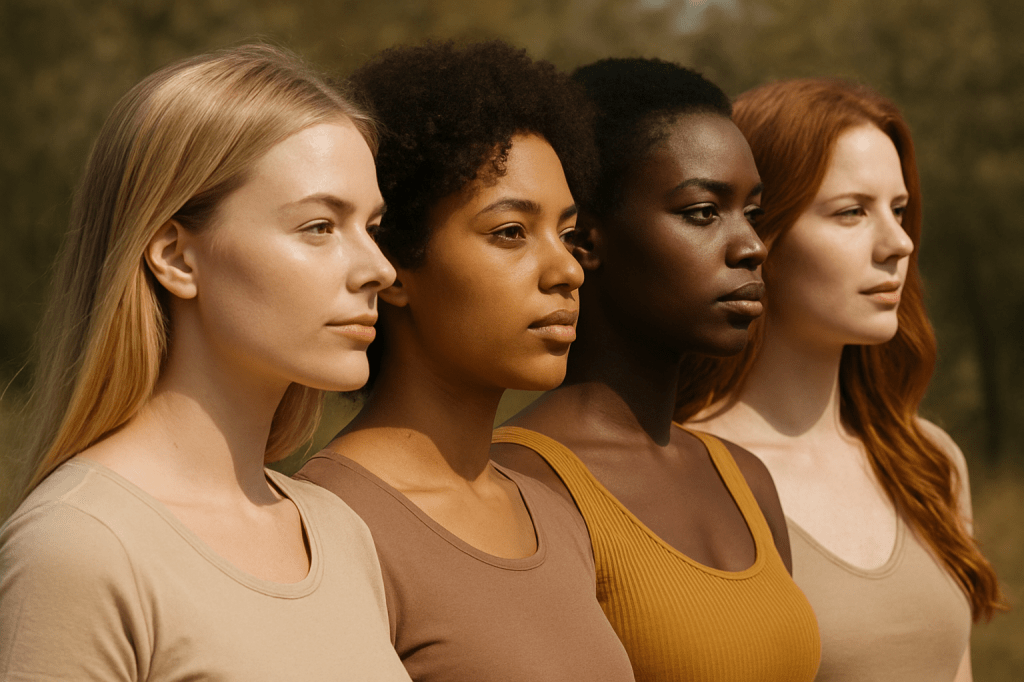
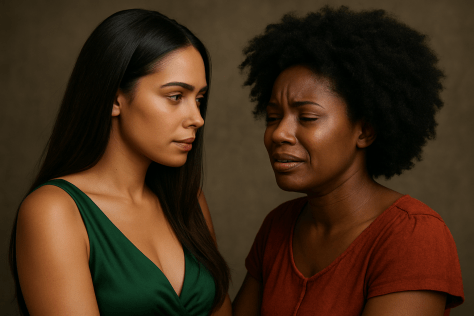
Light Skin Warfare, Dark Skin Denial

Colorism has been a pervasive force in Black communities for centuries, originating during slavery when European colonizers assigned value and privilege based on proximity to whiteness. Lighter-skinned enslaved people often received marginally better treatment, from less grueling labor to domestic positions, creating a hierarchy that placed darker-skinned individuals at the bottom. This historical legacy of “light skin preference” seeded deep psychological wounds, shaping self-perception and community dynamics for generations. The battle over skin tone, often internalized, has been aptly described as “light skin warfare,” where lighter skin is idolized, and darker skin is undervalued or denied.

The psychological consequences of this internalized hierarchy are profound. Dark-skinned individuals often experience lower self-esteem, social marginalization, and even economic disadvantage due to preferential treatment of lighter skin. Research in sociology and psychology underscores that colorism affects educational opportunities, workplace advancement, and social mobility. Dark-skinned children frequently internalize negative messages about their worth, perpetuating cycles of self-doubt and identity suppression.

Media representation amplifies these disparities. Historically, films, television, and advertisements have disproportionately cast lighter-skinned Black actors and models in prominent roles while relegating darker-skinned individuals to stereotypical or subservient characters. This visual reinforcement of light skin as ideal perpetuates what sociologists call “cultural hegemony,” conditioning societies to equate beauty, intelligence, and value with proximity to whiteness.

The Bible addresses the consequences of favoring outward appearance over spiritual truth. 1 Samuel 16:7 (KJV) reminds, “The Lord seeth not as man seeth; for man looketh on the outward appearance, but the Lord looketh on the heart.” This scripture underscores the spiritual principle that intrinsic worth and character surpass superficial traits such as skin tone. Yet, when communities internalize light skin as superior, they violate this divine precept, creating divisions that echo generational trauma.

Light skin warfare also manifests socially in interpersonal relationships. In dating, marriage, and social networks, preference for lighter skin often guides choices, sometimes subconsciously. Darker-skinned individuals are frequently denied opportunities for love, acceptance, or recognition. The resulting emotional toll contributes to mental health disparities within Black communities, fostering resentment, envy, and self-alienation.

Historically, the transatlantic slave trade reinforced these divisions. European colonizers’ policies exploited mixed-race offspring to weaken solidarity among enslaved Africans, creating internal conflicts along color lines. Plantation owners often positioned lighter-skinned individuals in supervisory roles over darker-skinned laborers, embedding a hierarchy that normalized self-denial for darker-skinned people and unearned privilege for lighter-skinned peers.

Colorism has persisted in modern times through the beauty and cosmetic industry, which frequently promotes skin-lightening products targeted at darker-skinned populations. This commercial exploitation reinforces the notion that lighter skin equates to social advantage, perpetuating cycles of shame, self-rejection, and assimilationist ideals. This form of cultural warfare damages self-love and spiritual identity, undermining biblical principles of dignity and divine creation.

Culturally, music, film, and social media perpetuate light skin worship. Popular music lyrics often celebrate fair skin while vilifying dark skin, and social media filters and editing apps enable the erasure of natural melanin-rich features. Dark-skinned individuals are compelled to modify or deny their authentic appearance to gain societal approval. This denial is a subtle yet potent form of oppression, internalizing the colonizer’s value system.

Dark-skinned resistance has always existed, however. From early Black literature and arts to contemporary movements celebrating dark-skinned beauty, activists, writers, and cultural icons have championed self-love, authenticity, and pride. Figures like Lupita Nyong’o, Cicely Tyson, and Rashida Strober have publicly confronted colorism, reframing dark skin as powerful, beautiful, and divinely designed. Their advocacy embodies the principle that recognition of God’s creation supersedes societal bias.

The biblical perspective further affirms this truth. Genesis 1:27 (KJV) teaches, “So God created man in his own image, in the image of God created he him; male and female created he them.” Skin tone, therefore, is an aspect of divine artistry, not a measure of value. To deny dark skin is to reject God’s intentional design, a spiritual error as much as a social one.

Education is critical in dismantling light skin warfare. Teaching children and adults about the historical roots of colorism, alongside biblical affirmations of intrinsic worth, can interrupt cycles of preference and self-denial. Social programs, mentorship, and media representation that celebrate dark-skinned excellence help cultivate pride and resilience.

Psychologically, affirmations of dark-skinned beauty counteract internalized oppression. Counseling and therapy that address colorism equip individuals to reject societal biases, embrace their natural complexion, and cultivate healthy self-esteem. Encouraging self-love and spiritual grounding strengthens identity in ways that appearance-based validation cannot.

Economically, colorism can influence opportunities in careers, promotions, and social capital. Research shows that darker-skinned professionals face wage disparities and are underrepresented in leadership roles. This modern extension of historical privilege requires conscious institutional reform, alongside individual empowerment.

Communities must actively recognize and challenge light skin preference. Family dynamics often perpetuate subtle biases, from complimenting lighter-skinned children more frequently to encouraging them to pursue higher social status. Awareness and intentional action can prevent perpetuation of self-denial among darker-skinned youth.

Social media campaigns and contemporary art have become powerful tools for challenging light skin warfare. Viral movements celebrating melanin-rich beauty and historical awareness of colorism empower younger generations to reject internalized bias, fostering collective healing and pride.

Religious institutions can play a role by teaching scripture-based affirmations of worth. Churches and faith-based organizations emphasizing that God values the heart above outward appearance help counter societal norms that glorify light skin. Preaching against colorism aligns with spiritual principles of equality and justice.

Mentorship from dark-skinned leaders, entertainers, and entrepreneurs reinforces positive identity. When children and young adults see dark-skinned individuals achieving excellence, it disrupts stereotypes and encourages self-belief. Representation matters not only in media but in everyday life.

Self-expression through fashion, hair, and culture also combats denial. Celebrating natural hairstyles, traditional dress, and melanin-positive imagery strengthens cultural pride and challenges imposed beauty hierarchies. These visual affirmations serve as both rebellion and healing.

Finally, light skin warfare is a battle not just of aesthetics but of the soul. To overcome it, communities must embrace God’s vision of equality and honor the divine in every shade. When dark skin is denied, the spirit is diminished. When it is celebrated, identity, pride, and faith are strengthened. Colorism is not inevitable; with education, representation, and biblical grounding, Black communities can dismantle internalized hierarchies and honor the full spectrum of God’s creation.

References

  • The Holy Bible, King James Version (KJV) – 1 Samuel 16:7; Genesis 1:27
  • Hunter, M. (2016). Race, Gender, and the Politics of Skin Tone. Routledge.
  • Hall, R. E., & Carter, R. T. (2006). Skin Color, Psychological Functioning, and Black Identity. Journal of Black Psychology, 32(3), 319–346.
  • Strober, R. (2020). Colorism: The Psychological and Social Effects. Essence Magazine.
  • Russell-Cole, K., Wilson, M., & Hall, R. E. (2013). The Color Complex: The Politics of Skin Color in a New Millennium. Anchor Books.
The Brown Girl Dilemma: Am I Not Pretty Enough? #thebrowngirldilemma

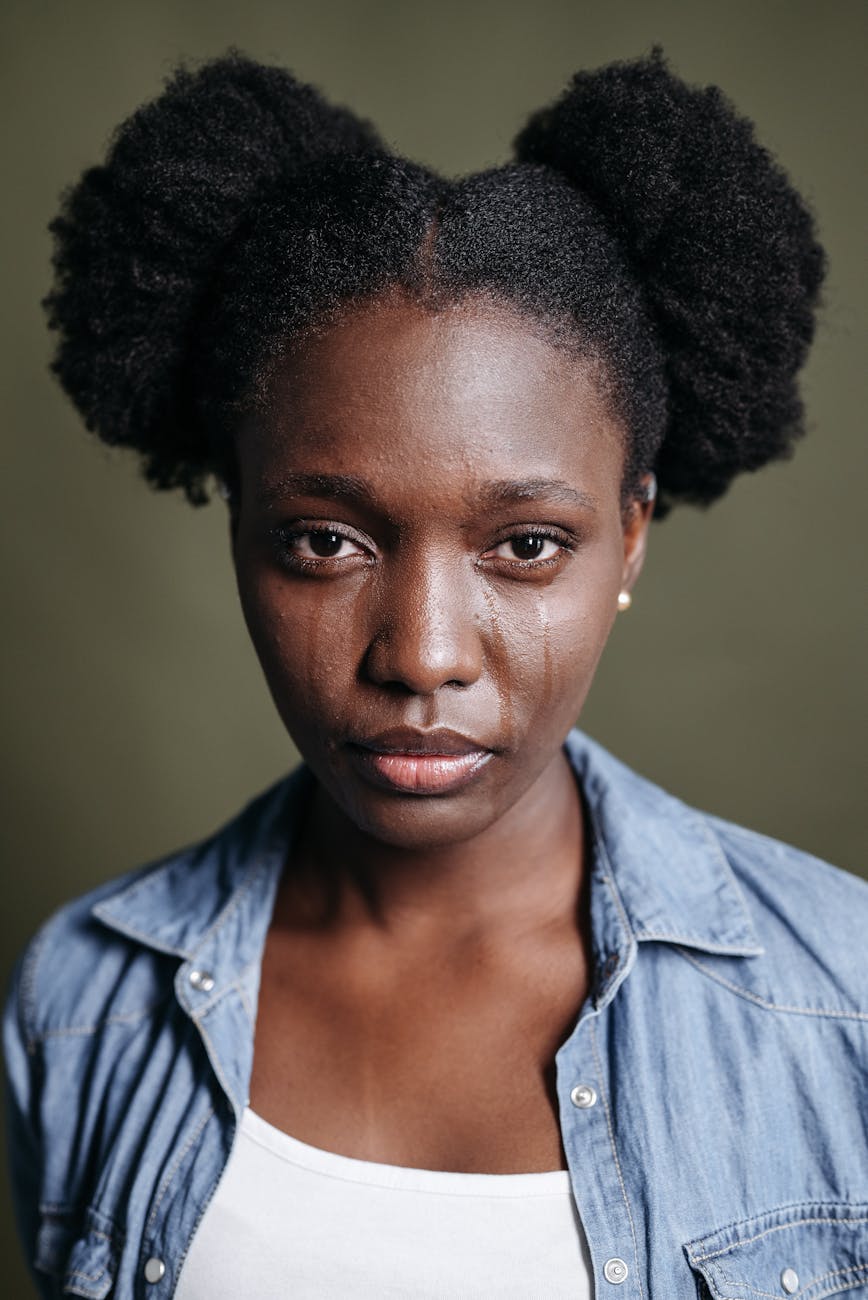
Photo by Pavel Danilyuk on Pexels.com

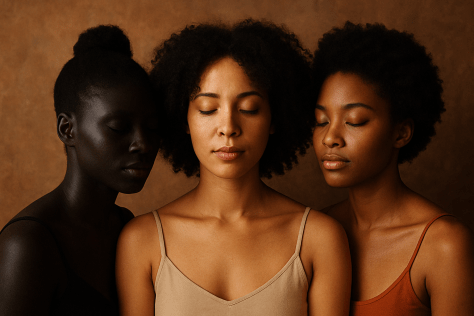
The question “Am I pretty enough?” echoes painfully in the hearts of many brown girls, shaped by centuries of colonialism, colorism, and the politics of beauty. This question, though personal, is deeply historical. It emerges from a social system that has long placed Eurocentric aesthetics above the natural beauty of African-descended women. The dilemma is not that brown girls lack beauty—it is that the world has refused to recognize it.

For generations, the definition of beauty has been filtered through a Eurocentric lens that idealizes fair skin, straight hair, and delicate features. Such imagery, perpetuated through media, advertising, and even religious iconography, has systematically marginalized darker complexions. The brown girl’s dilemma is thus not about self-hate, but about surviving within a framework that weaponizes aesthetics as a form of psychological control.

Colorism, a byproduct of slavery and colonial rule, created a hierarchy within the Black community itself, rewarding proximity to whiteness. Lighter skin often granted access to privilege, while darker tones were stigmatized. Scholars such as Hunter (2007) and Russell et al. (1992) have documented how skin tone discrimination persists in education, employment, and romantic relationships. The “brown girl”—situated between light and dark—often experiences a unique form of invisibility, neither exalted nor celebrated.

Psychologically, this produces what researchers term aesthetic trauma—the internalized belief that one’s natural appearance is inferior or undesirable. Brown girls grow up navigating dual consciousness: seeing themselves through their own cultural pride, yet perceiving rejection through society’s biased gaze. W. E. B. Du Bois described this tension as “double consciousness,” a feeling of “two-ness” that fractures identity.

The dilemma extends beyond beauty; it touches self-worth, femininity, and belonging. When darker shades are deemed “too strong” and lighter ones “more beautiful,” brown girls are often caught in an unspoken limbo. Their beauty is acknowledged only when diluted—when softened by makeup, filtered lighting, or proximity to Eurocentric features. Such conditional acceptance reinforces the idea that natural Black aesthetics must be modified to be marketable.

Media representation continues to play a defining role in shaping this bias. Studies by Dixon and Linz (2000) reveal that lighter-skinned Black women are more frequently cast in romantic or leading roles, while darker-skinned actresses are often stereotyped as aggressive or hypersexual. The absence of diverse shades in mainstream beauty campaigns reinforces a singular, exclusionary image of desirability.

The brown girl’s dilemma is further compounded by intra-community pressures. In some social circles, the preference for “light-skinned girls” or “mixed features” becomes normalized, creating internalized color hierarchies. This manifests in subtle forms—compliments like “You’re pretty for a dark girl,” or “You have good hair,” implying that beauty among Black women is exceptional rather than inherent.

Biblically, however, beauty has always been defined by divine design, not social hierarchy. “I will praise thee; for I am fearfully and wonderfully made” (Psalm 139:14, KJV). In this verse, the Creator’s craftsmanship affirms all shades of melanin as sacred. Spiritual truth dismantles the illusion that one hue holds higher value than another. Beauty, in divine law, reflects purpose, not pigment.

Historically, pre-colonial African societies celebrated deep skin tones as symbols of vitality, ancestry, and divinity. Statues, murals, and oral traditions across kingdoms such as Kush, Mali, and Benin exalted dark, radiant complexions. The notion that beauty must be fair-skinned is a colonial import, not an indigenous truth. When the brown girl reclaims this ancestral knowledge, she begins to heal the historical wounds of erasure.

In psychological terms, healing from colorism involves dismantling internalized oppression—the process by which marginalized individuals adopt the beliefs of the oppressor. Scholars like hooks (1992) and Fanon (1952) have emphasized that self-acceptance requires both personal and collective re-education. For the brown girl, this means redefining beauty on her own terms, rejecting the gaze that measures her worth by foreign standards.

The brown girl’s dilemma is also spiritual warfare. The enemy of identity thrives on confusion and comparison. When women compete for validation instead of recognizing their shared divinity, the entire community suffers. Scripture warns, “For we wrestle not against flesh and blood, but against principalities, against powers” (Ephesians 6:12, KJV). Beauty bias is not merely social—it is systemic and spiritual.

Modern beauty industries exploit this insecurity through marketing strategies that equate lightness with luxury and desirability. Skin-lightening products, often harmful, remain billion-dollar markets in parts of Africa, the Caribbean, and Asia. These products perpetuate a colonial logic: that to be lighter is to be better. Psychologists argue this is a form of self-objectification, where self-value is determined by external validation rather than internal affirmation.

The digital age offers both healing and harm. Social media has become a mirror where brown girls either find empowerment through representation or further isolation through comparison. Movements such as #MelaninMagic and #BlackGirlMagic have challenged dominant beauty narratives, fostering a collective celebration of color and confidence. Yet, even within these spaces, lighter tones sometimes dominate visibility, showing that the struggle is far from over.

Cultural reclamation is an act of resistance. When brown women wear their natural hair, embrace darker lip tones, or showcase deep skin in high fashion, they are not merely expressing style—they are restoring truth. They are rewriting the visual theology of beauty. Each unfiltered photo, each confident step, is an act of protest against centuries of misrepresentation.

Educational reform also plays a role in reshaping perception. Schools and curricula rarely teach the aesthetics of African beauty. Incorporating art, history, and literature that celebrate Black womanhood can help dismantle generational bias. As Lorde (1984) wrote, “The master’s tools will never dismantle the master’s house.” The redefinition of beauty must emerge from within, not from systems built to exclude.

Faith-based communities, too, must challenge colorism. Churches and ministries that elevate lighter features in leadership or imagery unconsciously reinforce worldly standards. The gospel calls believers to unity in diversity. “There is neither Jew nor Greek… for ye are all one in Christ Jesus” (Galatians 3:28, KJV). In spiritual terms, beauty reflects God’s infinite creativity, not man’s limited ideal.

Healing the brown girl’s dilemma requires visibility, validation, and voice. Visibility means more inclusive representation across media and art. Validation means recognizing beauty as intrinsic, not comparative. Voice means creating spaces where brown girls can articulate their experiences without shame. Each of these elements forms part of the collective restoration of self-image.

Ultimately, the brown girl’s dilemma can only be resolved by truth—truth that her beauty was never deficient, only denied. The revolution begins in the mirror, when she looks upon her reflection and sees royalty, not rejection. Her melanin is not a burden but a blessing, her hue not a hindrance but heritage.

The words of Solomon resonate prophetically: “I am black, but comely, O ye daughters of Jerusalem” (Song of Solomon 1:5, KJV). This verse stands as a divine affirmation across time, countering every lie told by colonizers, media, or misinformed culture. The brown girl was never “not pretty enough”—she was always more than enough, divinely sculpted, fearfully made, and chosen to reflect the richness of creation itself.

References

  • The Holy Bible, King James Version (KJV)
  • Du Bois, W. E. B. (1903). The Souls of Black Folk. Chicago: A. C. McClurg.
  • Fanon, F. (1952). Black Skin, White Masks. Grove Press.
  • hooks, b. (1992). Black Looks: Race and Representation. South End Press.
  • Hunter, M. (2007). The Persistent Problem of Colorism: Skin Tone, Status, and Inequality. Sociology Compass, 1(1), 237–254.
  • Lorde, A. (1984). Sister Outsider: Essays and Speeches. Crossing Press.
  • Russell, K., Wilson, M., & Hall, R. (1992). The Color Complex: The Politics of Skin Color Among African Americans. Doubleday.
  • Dixon, T. L., & Linz, D. (2000). Overrepresentation and Underrepresentation of African Americans and Latinos as Lawbreakers on Television News. Journal of Communication, 50(2), 131–154.

The Hue Complex

The Hue Complex is more than a matter of color; it is a condition of the soul shaped by centuries of conditioning. It is the silent division within the Black community, where shades of brown become social currency and beauty is measured not by character but by complexion. This phenomenon, born from colonialism and nurtured by white supremacy, continues to infiltrate families, friendships, and faith communities, leaving behind a trail of fractured identities and quiet resentments.

The roots of the Hue Complex trace back to the plantation, where skin tone determined proximity to privilege. Light-skinned enslaved Africans, often the children of their oppressors, were granted limited access to education, domestic labor, or marginal comfort—while darker-skinned individuals were condemned to the fields. This systematic stratification planted seeds of psychological division that outlived the physical chains of slavery. Generations later, those same hierarchies echo in boardrooms, classrooms, and even pews.

Colorism became the unspoken language of belonging and exclusion. Lighter skin, associated with refinement and desirability, became a silent passport to perceived opportunity, while darker skin was stigmatized as inferior, aggressive, or undesirable. This distorted lens, internalized and repeated, fractured Black unity. The Hue Complex, therefore, is not simply external oppression—it is the internalization of racial hierarchy that turns community against itself.

In families, this complex often shows up subtly. Grandmothers call one grandchild “high yellow” and another “pretty chocolate,” unaware that both compliments are loaded with comparison. Schoolgirls whisper about whose skin “glows” more, while boys casually describe their preference for “redbones.” What may seem harmless becomes harmful, teaching young hearts that worth is conditional and shade-dependent. The cycle continues because the lie has been normalized.

Spiritually, the Hue Complex contradicts the very essence of divine creation. Scripture declares that all humankind was made in the image of God (Genesis 1:27, KJV). Yet colonial theology distorted that truth, promoting a Eurocentric image of divinity—pale, narrow, and exclusive. The result was a subconscious association between whiteness and holiness, and between darkness and sin. This spiritual miseducation continues to shape how many perceive God and themselves.

Psychologically, colorism fuels low self-esteem, identity confusion, and even depression. Dark-skinned women often report feeling overlooked in love and employment, while light-skinned women express guilt and alienation from their community. Both suffer under the same oppressive system, though in different ways. The Hue Complex thus operates as a two-edged sword—cutting both directions and leaving scars that bleed silently.

Media perpetuates this imbalance. In films, music videos, and advertisements, lighter-skinned individuals are often cast as the romantic lead, while darker tones are relegated to supporting or antagonistic roles. Even within Black entertainment, the preference persists, shaping the subconscious of global audiences. It teaches viewers, subtly yet consistently, that to be lighter is to be lovable, and to be darker is to be tolerated.

The solution to the Hue Complex begins with confrontation. It demands honest conversations about bias, confession of internal prejudice, and unlearning of generational myths. It requires elders to stop repeating phrases that pit shades against one another and parents to raise children who celebrate their skin as sacred. Healing begins where silence ends. As James 5:16 (KJV) says, “Confess your faults one to another… that ye may be healed.”

The Church, too, must confront its role. True ministry cannot ignore the psychological residue of slavery and colonialism. Pastors and leaders must teach that divine image is not color-coded. Christ was not European; His message transcends complexion. By re-centering theology in historical and cultural truth, the Church can help dismantle the Hue Complex and restore dignity to all shades of Blackness.

Culturally, the reclamation of melanin is already underway. Movements like “Black Girl Magic” and “Melanin Poppin” serve as affirmations of beauty long denied. Yet even within these affirmations, vigilance is needed to ensure inclusivity. True liberation celebrates the full spectrum—from the deepest ebony to the fairest brown—without hierarchy or exclusion. Unity, not uniformity, is the goal.

Socially, education and representation must intersect. When dark-skinned women are celebrated on magazine covers, in film, and in leadership, cultural equilibrium begins to form. When light-skinned women stand against colorism rather than benefit from it, solidarity becomes possible. Each shade has a role to play in dismantling the system that once defined them.

Emotionally, healing the Hue Complex means reclaiming the right to love oneself without apology. It means standing before the mirror and declaring, “I am fearfully and wonderfully made” (Psalm 139:14, KJV). It means understanding that one’s hue is not happenstance but heritage—each tone a reflection of God’s intentional design.

Historically, it requires acknowledgment that colorism is not self-created but systemically imposed. The Hue Complex is the residue of colonization—a social poison meant to divide and conquer. Recognizing its origin empowers the community to rewrite the narrative, transforming shame into pride and competition into kinship.

The ultimate revelation is that the Hue Complex cannot survive where love reigns. Love, in its truest biblical form, “beareth all things, believeth all things, hopeth all things, endureth all things” (1 Corinthians 13:7, KJV). It does not compare, compete, or categorize. In divine love, every hue is holy, every shade is sacred, and every soul is seen.

When the Hue Complex is dismantled, the community becomes whole again. Blackness, in all its radiant variations, stands as testimony to divine artistry and ancestral strength. What once divided now unites; what once caused shame now inspires pride. The complex dissolves, and in its place rises a truth long suppressed—that the hues of Blackness are not hierarchies but harmonies, each singing a different note of the same beautiful song.

References

  • The Holy Bible, King James Version. (1611).
  • Banks, T. A. (2019). Colorism and the politics of beauty. Journal of Black Studies, 50(3), 243–261.
  • Hunter, M. (2007). The persistent problem of colorism: Skin tone, status, and inequality. Sociology Compass, 1(1), 237–254.
  • Walker-Barnes, C. (2020). Too heavy a yoke: Black women and the burden of strength. Cascade Books.
  • Russell, K., Wilson, M., & Hall, R. (2013). The color complex: The politics of skin color in a new millennium. Anchor Books.
  • West, C. (1993). Race matters. Beacon Press.

Psychological and Emotional Depths of Racism, Colorism, and Lookism.

Photo by Ali Drabo on Pexels.com

Racism, colorism, and lookism represent a triad of psychological violence that shapes human experience, distorting both identity and emotional well-being. These constructs intertwine to create hierarchies of worth rooted in superficial attributes—skin color, facial symmetry, and physical appearance—while leaving lasting scars on the psyche of those marginalized by them. Their effects extend far beyond social exclusion; they penetrate the self-concept, dismantling the foundations of self-esteem and belonging.

Racism is not merely an external act of discrimination—it is an internalized poison that teaches individuals to view themselves through the eyes of their oppressors. When a person of African descent absorbs racist messages about inferiority or hyper-visibility, a split occurs between their authentic self and their socially imposed identity. This psychological rupture, described by W.E.B. Du Bois (1903) as “double consciousness,” forces Black individuals to exist between two conflicting perceptions: who they truly are and how they are seen.

Colorism deepens this fracture by introducing an internal hierarchy within racial groups, privileging lighter skin as more beautiful, intelligent, or desirable. Rooted in colonial history, colorism functions as an inherited trauma that reinforces Eurocentric standards of worth. Studies have shown that darker-skinned individuals face harsher judgments in employment, education, and romantic desirability (Hunter, 2007). This creates an invisible caste system within the same racial identity, perpetuating cycles of low self-esteem and division.

The emotional consequences of colorism are profound, particularly for women. Dark-skinned women are often depicted as less feminine or less worthy of love, a stereotype perpetuated by media and societal norms. The absence of representation or the presence of negative portrayals leads to what psychologists term “internalized colorism”—a form of self-loathing or constant comparison to lighter peers. This condition manifests in depression, anxiety, and body dysmorphia, echoing generations of colonial degradation.

Men, too, are not immune to this system of valuation. In a world where light skin and European features are exalted, darker-skinned men are frequently stereotyped as aggressive or undesirable unless they attain wealth or fame. This conditional acceptance feeds into what scholars call “compensatory masculinity,” where self-worth becomes tied to external achievements rather than intrinsic identity (Majors & Billson, 1992). The psychological toll is heavy, fostering performance-based validation instead of authentic self-acceptance.

Lookism—the discrimination based on physical appearance—intersects with both racism and colorism, reinforcing social hierarchies of attractiveness that favor Eurocentric beauty ideals. The psychological effects of lookism can be as damaging as racial prejudice, leading to social anxiety, isolation, and chronic insecurity. Individuals who deviate from mainstream beauty standards often develop what psychologists refer to as “appearance-based self-worth,” where self-esteem fluctuates based on perceived attractiveness.

Racism, colorism, and lookism collectively weaponize the human gaze. The eyes of others become a source of judgment and trauma, transforming the act of being seen into an emotional burden. Frantz Fanon (1952) described this phenomenon in Black Skin, White Masks, recounting how the colonial gaze reduces the Black body to an object of otherness. Such dehumanization fractures the self, replacing the joy of identity with the anxiety of perception.

The family, often a place of refuge, can also become the site where these hierarchies are reinforced. Generations of internalized color preference lead parents to praise lighter children or to discourage darker-skinned ones from embracing their natural features. This subtle form of intra-racial discrimination plants seeds of insecurity early in life. Over time, these messages crystallize into adult self-doubt and relational struggles, perpetuating a cycle of self-denial.

In the context of love and relationships, colorism and lookism operate as silent dictators of desirability. Studies show that both men and women subconsciously associate lighter skin and Eurocentric features with higher social status and compatibility (Maddox & Gray, 2002). For darker individuals, this creates a psychological dilemma—wanting to be loved authentically yet fearing rejection for something immutable.

The emotional depth of these issues cannot be understood without addressing media influence. Hollywood, fashion, and advertising have historically upheld narrow definitions of beauty, centering whiteness as the ideal. Even when diversity is celebrated, it is often curated within acceptable limits—favoring lighter tones, looser curls, and symmetrical features. This reinforces the narrative that true beauty requires proximity to whiteness.

Social media, though often praised for democratizing visibility, has amplified lookism. Platforms that reward filtered perfection encourage constant comparison and digital self-surveillance. The curated self replaces the authentic self, and validation becomes addictive. For Black and brown users, the algorithm often mirrors historical biases—prioritizing lighter-skinned influencers or Eurocentric aesthetics.

Psychologically, this environment breeds what some researchers term “mirror trauma”—a form of emotional distress that arises from seeing distorted versions of oneself reflected in culture and technology. The self becomes fragmented between the reality of one’s body and the idealized digital fantasy that gains approval. Over time, this can lead to emotional numbness, perfectionism, and identity confusion.

The intersection of racism, colorism, and lookism also shapes social mobility. Those who visually conform to beauty norms often experience what sociologists call “aesthetic privilege.” This unearned advantage affects job opportunities, income levels, and even criminal sentencing outcomes. Studies reveal that lighter-skinned Black individuals are more likely to receive lenient treatment in the justice system (Viglione, 2018). Beauty thus becomes currency—a silent economy of worth rooted in colonial logic.

In educational settings, these biases shape teacher expectations and peer interactions. Research indicates that darker-skinned students are disciplined more harshly and perceived as less capable, even when their performance matches that of their lighter peers. These early experiences internalize inferiority, breeding self-doubt and academic disengagement (Hannon et al., 2013).

From a psychological standpoint, the internalization of beauty hierarchies functions as a form of self-surveillance—a mental colonization where individuals police their own features. This creates what bell hooks (1992) described as “aesthetic trauma,” where Black individuals struggle to see themselves as beautiful outside of white validation. Healing from this requires unlearning centuries of visual propaganda.

Spiritually, the damage runs deeper still. Many who grow up under the shadow of colorism question their divine worth. They subconsciously associate lighter skin with purity or godliness, reflecting how colonial religion once depicted holiness through whiteness. Reclaiming one’s spiritual identity, therefore, becomes an act of resistance—seeing oneself as made in the image of the Creator, not the colonizer.

Healing from these intertwined oppressions requires collective re-education. Communities must confront how they perpetuate colorist and lookist narratives through jokes, preferences, or casting choices. Recognizing these patterns allows for intentional change, transforming inherited bias into self-awareness.

Therapeutically, interventions must address both the individual and societal dimensions of appearance-based trauma. Cognitive-behavioral therapy can help reframe distorted beliefs about worth, while cultural therapy reconnects individuals to ancestral pride and historical truth. For many, embracing natural hair, melanin, or cultural fashion becomes a symbolic act of psychological liberation.

Emotionally, the journey toward self-acceptance involves mourning—grieving the years lost to self-hate, rejection, or invisibility. This grief process allows for rebirth, where identity is no longer contingent upon comparison but rooted in divine and cultural truth.

Art, literature, and music serve as tools of resistance. From Nina Simone’s defiant “To Be Young, Gifted and Black” to contemporary movements like #MelaninMagic, creative expression reclaims narrative control. These acts remind the world—and the self—that beauty is not a European export but a human inheritance.

The emotional healing of colorism and lookism requires a mirror reimagined—not one that distorts but one that reflects truth. Each shade, each feature, carries ancestral memory and divine intention. When individuals learn to see themselves as sacred art, the gaze of oppression loses power.

Ultimately, the psychological liberation from racism, colorism, and lookism is both personal and collective. It demands that we dismantle the systems that define beauty as hierarchy and worth as appearance. True freedom begins not when others affirm us, but when we affirm ourselves beyond their gaze.

References

Du Bois, W. E. B. (1903). The souls of Black folk. Chicago: A.C. McClurg.

Fanon, F. (1952). Black skin, white masks. Grove Press.

Hannon, L., Defina, R., & Bruch, S. (2013). The relationship between skin tone and school suspension for African Americans. Race and Social Problems, 5(4), 281–295.

hooks, b. (1992). Black looks: Race and representation. South End Press.

Hunter, M. (2007). The persistent problem of colorism: Skin tone, status, and inequality. Sociology Compass, 1(1), 237–254.

Majors, R., & Billson, J. M. (1992). Cool pose: The dilemmas of Black manhood in America. Lexington Books.

Maddox, K. B., & Gray, S. A. (2002). Cognitive representations of Black Americans: Reexploring the role of skin tone. Personality and Social Psychology Bulletin, 28(2), 250–259.

Viglione, J. (2018). The impact of skin tone on the criminal justice process. Race and Justice, 8(2), 175–200.

The Conversations About Colorism Are Being Hijacked by Black Men — Why?

Photo by Jep Gambardella on Pexels.com

In recent years, colorism—the discrimination within the Black community based on skin tone—has reemerged as a central topic in discussions on race, identity, and representation. Yet, as the conversation has gained visibility, a troubling pattern has surfaced: Black men increasingly dominate or redirect discussions that were originally centered on the lived experiences of Black women. This phenomenon reveals not only gendered power dynamics but also deeper insecurities, social conditioning, and historical patterns of male-centered discourse in the Black community.

Colorism affects both genders, but its manifestations differ sharply. For Black women, it often determines beauty standards, desirability, and social value (Hunter, 2007). For Black men, colorism intersects more with social perception, criminalization, and masculinity (Hall, 2010). Yet, when colorism is discussed publicly—particularly online—many Black men position themselves as equal or greater victims, reframing the issue around their own grievances. This redirection often invalidates or minimizes the gendered suffering that darker-skinned Black women have historically endured.

At the root of this hijacking is defensiveness. Many Black men interpret critiques of colorism as personal attacks rather than systemic analysis. When Black women point out that men frequently idealize lighter-skinned women in media, dating, and social hierarchies, some men respond by claiming they too experience colorism from women. While men can experience shade bias, the scale, visibility, and historical roots of female-targeted colorism are far deeper.

This defensiveness is also a product of patriarchal conditioning. In patriarchal societies, men are socialized to lead conversations—even those about women’s pain. Within the Black community, this dynamic is intensified by centuries of emasculation under white supremacy, leading some Black men to over-assert authority in racial and gender dialogues (hooks, 2004). When colorism is raised, they may subconsciously reclaim the center stage to reestablish power and control over the narrative.

Furthermore, the male gaze in Black culture often amplifies colorist biases. From hip-hop videos to film and advertising, light-skinned women are frequently depicted as the ideal partner or feminine standard. When women challenge this imagery, some men perceive it as an indictment of their preferences rather than a critique of systemic conditioning (Stephens & Phillips, 2003). The reaction is often defensive, shifting focus from accountability to victimhood.

Social media has magnified this divide. Online platforms provide visibility for darker-skinned women to share their experiences of exclusion, ridicule, and invisibility. However, whenever these conversations gain traction, they are often derailed by men insisting that “colorism affects Black men too” or “dark-skinned men are fetishized, so it’s not the same.” These counterarguments distort the conversation’s intent, transforming a gendered critique into a false equivalence.

The fetishization of dark-skinned men—often cited by male participants—does not equate to systemic bias. It is frequently a hypersexualized stereotype rooted in colonial myths of Black male virility (Collins, 2000). This fetishization benefits neither gender, but it differs fundamentally from the colorist exclusion and humiliation endured by darker-skinned women in beauty, marriage, and media representation.

Another reason for male hijacking of colorism discourse lies in emotional illiteracy. Many Black men are not encouraged to process vulnerability or collective responsibility. Instead of engaging empathetically with women’s experiences, they intellectualize or deflect the issue to avoid guilt. This response is symptomatic of broader issues of gender relations and communication in the Black community.

Historically, the conversation around colorism was initiated by Black women scholars and activists, such as Alice Walker, who coined the term “colorism” in 1982 (Walker, 1982). Later scholars like Margaret Hunter (2007) and Ronald Hall (2010) analyzed how color hierarchies shape gendered oppression. Yet, as the discourse entered mainstream culture, male voices increasingly reframed the issue as a unisex problem, erasing the distinctly gendered dimensions.

Part of the reason this hijacking persists is because Black women’s pain is often minimized in both white and Black spaces. The intersection of race and gender renders their experiences less visible. When women assert that colorism harms them uniquely, they are accused of “dividing the community.” This silencing mirrors historical patterns in which Black women were expected to prioritize racial unity over gender justice (Crenshaw, 1991).

Another factor is male privilege within Blackness. Even within an oppressed racial group, men often benefit from patriarchal structures that validate their voices more than women’s. Thus, when Black men speak on colorism, their perspectives receive more attention and legitimacy, even when their narratives distort or misrepresent the issue.

Media representation further amplifies this imbalance. Films, songs, and podcasts that address colorism often feature male-led discussions, focusing on how men are “judged for being too dark” or “overlooked by women.” Meanwhile, darker-skinned actresses and public figures are still underrepresented, underpaid, or stereotyped (Monk, 2014). The structural inequity remains gendered, even if both genders experience forms of bias.

There is also an economic incentive behind this derailment. Male creators and influencers who discuss colorism from a male-centered perspective often gain larger audiences, as their narratives resonate with both male defensiveness and patriarchal norms. In contrast, women who speak about colorism face online harassment, accusations of bitterness, or dismissal as “divisive feminists.”

Psychologically, the hijacking of colorism discourse reflects projection. Many men project their internalized pain—stemming from racism, classism, or emotional neglect—onto discussions about women. Rather than confronting their own conditioning, they reframe the issue to validate their victimhood. This projection protects the ego but prevents accountability.

Colorism is, at its core, a gendered system of preference and exclusion. While men may experience it in terms of status or stereotype, women endure it in ways that intersect with desirability, marriage prospects, and self-worth. When men dominate these conversations, they obscure these nuances, flattening a multidimensional issue into a one-size-fits-all grievance narrative.

The solution lies not in silencing Black men but in rebalancing the dialogue. True allyship requires men to listen, not lead, when the topic concerns women’s pain. They must learn to amplify women’s voices without centering themselves. Doing so transforms the conversation from competition into collaboration.

Academically and culturally, it is vital to reassert that Black women’s experiences of colorism are foundational to the discourse. Their stories, research, and activism birthed this conversation; erasing or minimizing them reproduces the very inequality colorism exposes. The aim should not be to debate who suffers more, but to dismantle the structures that create suffering altogether.

Ultimately, the hijacking of colorism discussions by Black men is a reflection of unresolved patriarchal dynamics within the Black community. It reveals the lingering effects of colonial trauma—how oppression can turn inward, causing those once silenced to silence others. Healing requires courage: the courage for men to decenter themselves and for women to reclaim their voices unapologetically.

In the end, the conversation about colorism must return to its rightful center: the Black woman’s experience. Her story is not a subset of the Black struggle—it is the mirror that reflects how deeply white supremacy has fractured our perception of beauty, worth, and identity. Until her truth is fully heard and honored, the dialogue remains incomplete.


References

Collins, P. H. (2000). Black Feminist Thought: Knowledge, Consciousness, and the Politics of Empowerment. Routledge.
Crenshaw, K. (1991). Mapping the Margins: Intersectionality, Identity Politics, and Violence against Women of Color. Stanford Law Review, 43(6), 1241–1299.
Hall, R. E. (2010). The Melanin Millennium: Skin Color as 21st Century International Discourse. Springer.
hooks, b. (2004). We Real Cool: Black Men and Masculinity. Routledge.
Hunter, M. (2007). The Persistent Problem of Colorism: Skin Tone, Status, and Inequality. Sociology Compass, 1(1), 237–254.
Monk, E. P. (2014). Skin Tone Stratification among Black Americans, 2001–2003. Social Forces, 92(4), 1313–1337.
Stephens, D. P., & Phillips, L. D. (2003). Freaks, Gold Diggers, Divas, and Dykes: The Sociohistorical Development of Adolescent African American Women’s Sexual Scripts. Sexuality & Culture, 7(1), 3–49.
Walker, A. (1982). In Search of Our Mothers’ Gardens: Womanist Prose. Harcourt Brace.

When Male Beauty Becomes a Burden: Colorism and the Politics of Attraction.

This photograph is the property of its respective owner. No copyright infringement intended.

Physical beauty has long been a currency in society, shaping social interactions, economic opportunities, and romantic desirability. For Black men, however, beauty is a double-edged sword. While aesthetically appealing features may garner admiration, they often invite stereotyping, envy, and social pressures that complicate self-identity. Colorism—the preferential treatment of lighter-skinned individuals—further complicates these dynamics, particularly for Black men whose physical appearance challenges or conforms to prevailing ideals.

Historical Context of Male Beauty
The legacy of colonialism and slavery established Eurocentric standards of beauty, privileging lighter skin, straight hair, and specific facial features. Black men with lighter complexions or features closer to these standards were sometimes afforded relative advantages, creating an intra-racial hierarchy. These historical frameworks continue to shape perceptions of male beauty today, making physical attractiveness a socially loaded trait.

The Intersection of Masculinity and Beauty
Black masculinity is often measured against cultural ideals of strength, dominance, and resilience. Handsome Black men frequently face a tension between being admired for physical beauty and being perceived as less “authentically” masculine. Society sometimes infantilizes or exoticizes attractive men, undermining their authority and complicating professional and interpersonal relationships.

Colorism and the Male Experience
Within Black communities, colorism manifests in subtle and overt ways. Darker-skinned men are often stereotyped as hyper-masculine, aggressive, or less refined, while lighter-skinned men are sexualized or praised for their aesthetic appeal. These dynamics pressure Black men to negotiate their attractiveness carefully, balancing self-expression with societal expectation.

Beauty as a Source of Pressure
Attractive Black men may experience heightened scrutiny. Physical appeal often leads to assumptions about wealth, charm, or promiscuity, creating unrealistic expectations. This pressure can be psychologically taxing, as men are forced to navigate admiration, envy, and objectification simultaneously.

Romantic Dynamics
In dating and romantic contexts, colorism intensifies the stakes. Studies show that lighter-skinned Black men are often perceived as more desirable partners in heterosexual dating markets, a reflection of internalized beauty hierarchies. Yet this perceived desirability can provoke jealousy, resentment, or fetishization, complicating genuine connection.

Stereotypes and Misperceptions
Attractive Black men frequently confront damaging stereotypes. For example, the “playboy” or “dangerous” tropes cast them as either hypersexual or intimidating, regardless of personal character. These misperceptions are rooted in long-standing racialized narratives, which amplify the burdens of beauty.

Professional Implications
In professional settings, beauty is both an asset and a liability. Handsome men may initially benefit from “halo effects” in hiring or social situations, but they may also encounter bias if colleagues assume they rely on appearance rather than competence. For Black men, this dynamic intersects with racial bias, creating a complex terrain of advantage and disadvantage.

The Mental Health Dimension
Navigating the politics of attraction can take a toll on mental health. Anxiety, imposter syndrome, and social isolation are common for Black men whose beauty provokes both admiration and envy. The pressure to maintain a particular image can undermine authenticity, leading to long-term psychological strain.

Media Representation
Media often reinforces beauty hierarchies. Lighter-skinned, conventionally attractive Black men are more visible in film, television, and advertising, while darker-skinned men are underrepresented or cast in stereotypical roles. This disparity perpetuates the notion that beauty equates to social value, influencing both self-perception and public perception.

The Role of Social Media
Social media amplifies the politics of male beauty. Platforms that celebrate aesthetics can magnify both praise and criticism, creating intense pressure to conform to beauty standards. Viral trends, beauty filters, and online discourse reinforce colorism, shaping public ideas of desirability in real-time.

Familial and Community Pressure
Within families and communities, male beauty can create envy or favoritism. Attractive sons may receive praise or elevated expectations, while less conventionally attractive siblings experience neglect or judgment. This dynamic reinforces internalized hierarchies and complicates self-worth.

Navigating Relationships with Women
Attractive Black men may face challenges in dating due to assumptions about their intentions or availability. Women—shaped by societal narratives about race and beauty—may fetishize or distrust these men, forcing them to navigate romantic spaces cautiously. These dynamics complicate intimacy and trust.

The Burden of Hypervisibility
Physical attractiveness can make Black men hypervisible in public spaces. This visibility can invite unwanted attention, harassment, or stereotyping. While beauty may open doors, it simultaneously exposes men to risk, judgment, and over-scrutiny, reinforcing the duality of their experience.

Intersectionality and Identity
The burden of beauty cannot be separated from intersecting identities. Factors such as socioeconomic status, hair texture, body type, and regional culture influence how male beauty is perceived. Colorism interacts with these factors, shaping a multifaceted experience of privilege and limitation.

The Role of Education and Awareness
Addressing the politics of male beauty requires education and awareness. Families, schools, and communities can challenge stereotypes and dismantle colorist norms, fostering environments where Black men are valued beyond aesthetics. Cultural literacy and critical engagement with media play essential roles in this process.

Psychological Resilience and Self-Acceptance
Developing resilience is key to navigating beauty-related pressures. Mindfulness, therapy, and mentorship can help Black men cultivate self-worth independent of appearance. Emphasizing character, integrity, and skill counters societal narratives that equate physical appeal with value.

Cultural Reclamation
Black communities can reclaim beauty narratives by celebrating diverse skin tones and features. Highlighting achievements and authentic representations of Black men challenges Eurocentric standards, promotes self-pride, and diminishes the burden of external validation.

Toward a More Equitable Standard
Society must interrogate the ways colorism and attractiveness intersect. By questioning biased beauty standards, promoting diverse representation, and acknowledging the pressures faced by Black men, communities can foster environments where beauty is not a burden but a facet of holistic identity.

Conclusion
The politics of male beauty reflect complex intersections of race, colorism, masculinity, and societal expectation. For Black men, physical attractiveness is simultaneously a privilege and a burden, offering opportunity while inviting stereotyping, objectification, and psychological strain. True liberation lies in redefining value beyond appearance, embracing diversity within Black masculinity, and dismantling the colorist hierarchies that shape attraction and social perception.

References

The History of Colorism in Africa.

Colorism, the preferential treatment of lighter-skinned individuals over darker-skinned individuals, has deep historical roots in Africa. Its origins are complex, shaped by indigenous hierarchies, colonial influence, and global perceptions of beauty. While often associated with the transatlantic slave trade and European colonization, colorism predates these periods in African history.

In many pre-colonial African societies, lighter skin was sometimes associated with elite status or spiritual purity. Certain ethnic groups linked complexion to lineage, nobility, or proximity to power. However, these distinctions were not uniform across the continent.

In West Africa, for example, the Yoruba and Igbo societies had intricate social hierarchies where physical features, including skin tone, played a symbolic role in determining social standing. Lighter skin was occasionally linked to a higher social rank or a closer relation to ruling families.

Colorism in Africa became more pronounced with the expansion of trade networks. Contact with North African, Arab, and European traders introduced new aesthetic ideals, privileging lighter skin as a mark of beauty, sophistication, and social mobility.

The arrival of Europeans during the colonial period amplified these biases. Colonizers often positioned themselves as racially and culturally superior, framing African features as inferior. This instilled a hierarchy of skin tones that favored proximity to whiteness.

Colonial administration reinforced color-based hierarchies through legal and social systems. Access to education, economic opportunities, and positions in governance were often easier for lighter-skinned Africans. This institutionalized colorism at systemic levels.

Missionary activities also played a role. Western missionaries frequently associated lighter skin with morality, civility, and Christian virtue, while darker skin was linked to backwardness or paganism. This created a lasting cultural association between skin tone and virtue.

During the era of slavery and the transatlantic slave trade, European traders specifically valued lighter-skinned Africans for domestic roles, believing them to be more “manageable” or aesthetically appealing. This preference further entrenched color-based biases.

Colorism was not only external; internalized notions of skin hierarchy emerged within African communities. Families and communities sometimes perpetuated preferential treatment of lighter-skinned children, associating their complexion with potential social advantage.

In urban centers during the 20th century, the rise of Western media, cinema, and advertising propagated ideals of beauty centered on lighter skin. Africans were exposed to globalized beauty standards, often favoring Eurocentric features.

Skin-lightening practices became widespread in some regions, driven by the desire for social mobility, attractiveness, and acceptance. This practice reflects a deep-rooted historical preference for lighter skin that continues to impact African societies.

In contemporary Africa, colorism manifests in employment, education, marriage, and media representation. Lighter-skinned individuals frequently receive preferential treatment, while darker-skinned individuals face prejudice and stereotyping.

Celebrity culture plays a role in perpetuating these ideals. Public figures with lighter complexions often receive heightened visibility and acclaim, reinforcing societal biases about beauty and status.

In East Africa, historical interactions with Arab traders introduced complexions lighter than the indigenous population, which sometimes became associated with higher status or exotic beauty. These interactions created a nuanced color hierarchy in the region.

In North Africa, colorism intersected with issues of ethnicity, particularly between Arab and Sub-Saharan African populations. Skin tone became a marker not only of beauty but also of social belonging and perceived racial identity.

In Southern Africa, colonial settlers imposed racial hierarchies that privileged whiteness. Colorism extended beyond colonial times, influencing post-apartheid perceptions of beauty, success, and social capital.

Despite its long history, colorism is not universally accepted or uncontested. African societies have consistently resisted imposed hierarchies through cultural pride, advocacy, and artistic expression celebrating darker skin.

Literature and oral traditions in Africa often feature protagonists and heroes of darker complexions, challenging prevailing narratives and asserting the value of all skin tones.

In media, the portrayal of lighter-skinned Africans as elite or desirable continues to marginalize darker-skinned individuals, influencing self-esteem, mental health, and social dynamics.

Educational campaigns in several African countries aim to combat colorism by promoting skin positivity and cultural pride, highlighting the historical roots and contemporary consequences of prejudice based on complexion.

Colorism also intersects with gender. Women, in particular, face heightened pressures to conform to lighter-skinned beauty ideals, affecting marriage prospects, career opportunities, and social mobility.

The legacy of slavery, colonization, and global beauty standards collectively shaped colorism as a pervasive social issue. Understanding its historical trajectory is crucial to addressing contemporary manifestations.

Today, scholars emphasize the need to recognize colorism as distinct from racism, though the two often overlap. Colorism is an intraracial and intracultural phenomenon with unique historical and social determinants.

African diasporic communities continue to grapple with colorism, which has been transmitted across generations. Media, education, and family practices all play a role in sustaining or challenging these biases.

Activism, particularly among young Africans and diasporic communities, seeks to dismantle colorist standards. Campaigns promoting melanin appreciation and diverse beauty standards are part of a broader movement toward social equity.

In conclusion, colorism in Africa is a multi-layered phenomenon with origins in pre-colonial social structures, intensified by colonialism, slavery, and globalized beauty ideals. Combating it requires historical understanding, cultural advocacy, and systemic change.


References

  • Hunter, M. (2007). The persistent problem of colorism: Skin tone, status, and inequality. Sociology Compass, 1(1), 237–254.
  • Glenn, E. N. (2008). Yearning for lightness: Transnational circuits in the marketing and consumption of skin lighteners. Gender & Society, 22(3), 281–302.
  • Lewis, R. (2018). Skin deep: Race and colorism in modern African societies. African Studies Review, 61(2), 45–67.
  • Tate, S. A. (2009). Black beauty: Skin color and the cultural politics of race. New York, NY: Routledge.
  • Nzewi, M. (2016). Historical roots of colorism in Africa. Journal of African Cultural Studies, 28(3), 245–263.
  • Hunter, M., & Davis, D. (2021). Colorism, identity, and African social structures. Journal of African Sociology, 12(1), 101–122.
  • Williams, L. (2015). Shades of privilege: Colorism and social hierarchy in Africa. International Journal of African Studies, 7(2), 89–105.

How Pop Culture Perpetuates Colorism.

Photo by Kampus Production on Pexels.com

Pop culture significantly shapes societal norms and perceptions, including attitudes toward race and skin tone. Colorism, the preferential treatment of lighter skin over darker skin, is often perpetuated through various channels in popular media, reinforcing stereotypes and societal biases.

In the film industry, a noticeable bias favors lighter-skinned actors, particularly women of color. Research has shown that Black female characters in Hollywood films are predominantly light or medium-skinned, marginalizing darker-skinned women and influencing public perceptions of beauty and worth.

Television similarly reflects and amplifies these biases. Studies reveal that lighter-skinned actors are more frequently cast in leading or positive roles, whereas darker-skinned actors are often typecast in stereotypical or minor roles. This representation reinforces social hierarchies tied to skin color.

Advertising is another domain where colorism is evident. Commercials frequently feature lighter-skinned individuals as idealized figures of beauty, success, and desirability. Darker-skinned individuals are underrepresented or shown in subservient, background, or comedic roles.

The fashion industry contributes to the problem by favoring lighter-skinned models in runway shows, magazine covers, and advertising campaigns. Darker-skinned models are often underrepresented or relegated to secondary roles, sending subliminal messages about beauty standards.

Music videos also reflect colorist preferences. Lighter-skinned women are often highlighted as romantic or sexualized objects of desire, while darker-skinned women receive less visibility or are presented in less flattering contexts. This trend reinforces societal biases about attractiveness.

Pop culture profoundly influences societal norms and perceptions, including those related to race and skin tone. Colorism, the preferential treatment of individuals with lighter skin tones over those with darker skin tones, is a pervasive issue within various facets of popular media. This essay explores how colorism is perpetuated through film, television, music, advertising, and social media, and examines its implications on individuals and communities.

Film Industry

  1. In Hollywood, there is a noticeable preference for lighter-skinned Black actresses in leading roles. Studies have shown that nearly 80% of Black female characters in popular films have light or medium skin tones, which perpetuates colorism by underrepresenting darker-skinned individuals. Geena Davis Institute
  2. Movies like The Woman King and Black Panther have faced criticism for casting lighter-skinned actresses in prominent roles, leading to discussions about the industry’s bias towards lighter skin tones. Colorism Healing
  3. The casting of Halle Berry in Die Another Day and Zendaya in Spider-Man: Homecoming exemplifies the industry’s tendency to favor lighter-skinned actresses, even when darker-skinned actresses could portray the roles effectively.
  4. The underrepresentation of dark-skinned actresses in leading roles limits opportunities and reinforces societal biases that equate lighter skin with beauty and desirability.

Television

  1. Television shows often reflect and amplify colorist preferences. For instance, Gossip Girl and In the Heights have been criticized for erasing dark-skinned Afro-Latinx characters, highlighting the industry’s tendency to favor lighter-skinned portrayals. Refinery29
  2. In the Gossip Girl reboot, the casting of predominantly light-skinned Black actresses has led to discussions about the erasure of darker-skinned Black women in media.
  3. The portrayal of Black characters in television often aligns with Eurocentric beauty standards, favoring lighter skin tones and straight hair, which marginalizes darker-skinned individuals.
  4. This trend perpetuates the notion that lighter skin is more acceptable and desirable, influencing public perceptions and reinforcing colorist attitudes.

Music

  1. In the music industry, lighter-skinned Black women often receive more visibility and success. Artists like Beyoncé, Rihanna, and Alicia Keys have achieved significant mainstream success, while darker-skinned artists face greater challenges in gaining similar recognition. DoSomething.org
  2. The glorification of terms like “yellowbone” and “redbone” in music lyrics perpetuates colorism by idealizing lighter skin tones and marginalizing those with darker complexions.
  3. Artists such as Jesy Nelson have faced backlash for “blackfishing,” a practice where non-Black individuals alter their appearance to mimic Black aesthetics, which commodifies Black features while ignoring the struggles associated with them. Teen Vogue
  4. The industry’s preference for lighter-skinned artists reinforces the idea that lighter skin is more commercially viable, leading to disparities in opportunities and representation.

Advertising

  1. Advertising has long been a platform for promoting colorist ideals. The rebranding of Unilever’s “Fair & Lovely” to “Glow & Lovely” was a response to criticism that the original name perpetuated colorism by promoting skin-lightening products. TIME
  2. Despite the name change, the product’s marketing continues to target consumers seeking lighter skin, indicating that the industry’s approach to colorism remains largely unchanged.
  3. Advertisements often feature lighter-skinned models as the epitome of beauty and success, while darker-skinned individuals are underrepresented or portrayed in less favorable contexts.
  4. This portrayal reinforces societal biases that equate lighter skin with attractiveness and desirability, influencing consumer behavior and perpetuating colorist attitudes.

Social Media

  1. Social media platforms have amplified colorism by providing a space where beauty standards are often dictated by influencers who conform to Eurocentric ideals.
  2. The prevalence of filters that lighten skin tones contributes to the normalization of lighter skin as the beauty standard, marginalizing those with darker complexions.
  3. Influencers and celebrities with lighter skin tones often receive more engagement and sponsorships, reinforcing the notion that lighter skin is more desirable and commercially viable.
  4. This digital environment perpetuates colorism by valuing appearance over authenticity and by promoting unrealistic beauty standards that are difficult for many to attain.

Implications

  1. The perpetuation of colorism in pop culture has profound implications on individuals’ self-esteem and identity. Exposure to media that predominantly features lighter-skinned individuals can lead to internalized colorism among darker-skinned individuals.
  2. Children and adolescents are particularly susceptible to these influences, as they are in critical stages of developing self-concept and identity.
  3. The lack of diverse representation in media can lead to feelings of invisibility and inadequacy among darker-skinned youth, affecting their mental health and social development.
  4. Addressing colorism requires a multifaceted approach, including promoting diverse representation in media, challenging existing beauty standards, and educating audiences about the harmful effects of colorism.
  5. Initiatives like the #BrownSkinGirlChallenge, inspired by Beyoncé’s song “Brown Skin Girl,” aim to celebrate and uplift darker-skinned individuals, countering the negative effects of colorism. Wikipedia
  6. Educational programs and campaigns that raise awareness about colorism can help dismantle the stereotypes and biases that perpetuate it.
  7. By fostering an environment that values diversity and inclusivity, society can work towards eliminating colorism and promoting equity for all individuals, regardless of skin tone.

Colorism remains a pervasive issue within pop culture, influencing public perceptions and reinforcing societal inequalities. Through concerted efforts to promote diversity and inclusion, there is potential to mitigate the impact of colorism and foster a more inclusive cultural environment. Media creators, advertisers, and influencers must recognize their role in shaping societal norms and take responsibility for promoting positive and inclusive representations that reflect the true diversity of human experiences.

Social media has amplified colorism in contemporary culture. Influencers and celebrities with lighter skin often receive more engagement, sponsorships, and visibility, which reinforces the perception that lighter skin is more desirable.

Children and adolescents are particularly susceptible to the effects of colorism in media. Exposure to predominantly light-skinned characters can negatively impact self-esteem, body image, and social confidence among darker-skinned youth.

Merchandising and toys also reflect colorist biases. Dolls, action figures, and animated characters are often lighter-skinned, subtly teaching children that lighter skin is normative and desirable.

Educational environments are not immune. Teachers’ unconscious biases can lead to preferential treatment of lighter-skinned students, resulting in disparities in academic attention, praise, and opportunities.

The intersection of colorism and gender further exacerbates the issue. Darker-skinned girls face compounded challenges, as media consistently portrays lighter-skinned females as more attractive and socially valuable than their darker-skinned peers.

Celebrity culture perpetuates colorism by reinforcing standards of beauty that favor lighter skin. Red carpet events, magazine spreads, and award shows often highlight lighter-skinned stars, marginalizing those with darker complexions.

Film franchises and mainstream storytelling often cast lighter-skinned actors in heroic roles while relegating darker-skinned actors to antagonistic or minor characters, reinforcing implicit societal hierarchies based on skin tone.

Advertising campaigns for skin-lightening products perpetuate colorism by promoting the notion that lighter skin is superior and more desirable, further embedding this bias in both children and adults.

Reality television programs, such as modeling competitions, frequently favor lighter-skinned contestants, normalizing a hierarchy based on skin color in highly visible public platforms.

Cosmetic and beauty industries reinforce colorism by marketing products that lighten skin, emphasizing lighter skin as the beauty ideal and shaping cultural perceptions of worth and attractiveness.

Online streaming platforms contribute as well, where trending shows and viral content often feature lighter-skinned actors as protagonists, giving them greater cultural visibility and influence.

Community and cultural events sometimes mirror these biases, where lighter-skinned individuals are celebrated or idealized, while darker-skinned participants receive less attention, reflecting internalized colorist values.

Activism and advocacy campaigns have emerged to challenge colorism in pop culture, promoting diversity, equitable representation, and the celebration of all skin tones. These initiatives are crucial in countering systemic bias and fostering inclusivity.

Ultimately, pop culture continues to perpetuate colorism across films, television, social media, fashion, music, and advertising. Addressing these biases requires conscious efforts in representation, awareness, and education to dismantle harmful stereotypes and promote equity.


References

Brown, C. S., & Bigler, R. S. (2005). Children’s perceptions of discrimination: A developmental model. Child Development, 76(3), 533–553. https://www.learningforjustice.org/magazine/fall-2015/whats-colorism

Chandana, S. (2020). Colorism in fashion and media. Rutgers University. https://sites.rutgers.edu/nb-senior-exhibits/wp-content/uploads/sites/442/2020/08/Chandana-Singathi-final-pdf.pdf

Crutchfield, J. (2022). A scoping review of colorism in schools: Academic, social, and emotional impacts on students of color. International Journal of Environmental Research and Public Health, 11(1), 15. https://www.mdpi.com/2076-0760/11/1/15

Fergus, E. (2015). What’s “colorism”? Understanding skin tone bias in Latino high school students. Learning for Justice. https://www.learningforjustice.org/magazine/fall-2015/whats-colorism

Hunter, M. (2007). The persistent problem of colorism: Skin tone, status, and inequality. Sociology Compass, 1(1), 237–254. https://doi.org/10.1111/j.1751-9020.2007.00006.x

Nyong’o, L. (2019). Sulwe. Puffin Books. https://time.com/5107926/lupita-nyongo-childrens-book/

Spann, M. S. (2023). The effects of colorism on the self-esteem and academic achievement of African American children. Journal of Research in Education, 33(2), 112–128. https://digitalcommons.uncfsu.edu/cgi/viewcontent.cgi?article=1312&context=jri

Thibault, O. (2020). The impact of colorism on early childhood learners. SOAR Theses and Dissertations. https://soar.suny.edu/bitstream/handle/20.500.12648/7181/thibault.formatted.accessible.pdf?isAllowed=y&sequence=1

Wilder, C. R., & Cain, H. (2011). The role of Black families in developing skin tone bias. Journal of Family Psychology, 25(5), 746–754. https://pmc.ncbi.nlm.nih.gov/articles/PMC3970169/

Exposing the Harsh Truth About Colorism & Stereotypes Black Women Still Face.

Photo by EZEKIXL AKINNEWU on Pexels.com
  1. Colorism, defined as discrimination based on skin tone, is a pervasive issue that disproportionately impacts Black women worldwide. While racism focuses on the broader hierarchy between races, colorism operates within racial groups, creating internalized biases and a preference for lighter skin (Hunter, 2007).
  2. Historically, colorism among Black populations in the United States emerged from slavery, when lighter-skinned enslaved women, often the daughters of white slaveholders, were granted marginally better treatment and opportunities than their darker-skinned counterparts (Keith & Herring, 1991).
  3. These historical dynamics laid the foundation for persistent societal perceptions that associate lighter skin with beauty, intelligence, and social value, while darker skin is often linked to criminality, poverty, and sexual promiscuity (Hill, 2002).
  4. Media representation reinforces these biases. Television, film, and advertising predominantly feature light-skinned Black women as the ideal of beauty, reinforcing a Eurocentric standard that excludes darker-skinned women from mainstream admiration (Hall, 2009).
  5. Celebrities such as Halle Berry and Lupita Nyong’o demonstrate how skin tone can shape public perception. While both are celebrated for their beauty, lighter-skinned figures historically have received more consistent opportunities in film and modeling industries, illustrating a systemic preference (Banks, 2000).
  6. Colorism also influences romantic desirability and social mobility. Studies show that lighter-skinned Black women are more likely to receive positive attention in dating contexts and have greater access to professional advancement (Russell-Cole, Wilson, & Hall, 2013).
  7. Social media exacerbates colorism by creating algorithms and engagement patterns that reward lighter skin, influencing self-esteem and identity formation among young Black women (Nash, 2018).
  8. Within Black communities, internalized colorism can create tension and division. Darker-skinned women often report being marginalized, even by peers, and subjected to derogatory labels that valorize lighter skin (Tyree, 2006).
  9. Workplace discrimination persists as well. Employers and colleagues may unconsciously associate darker skin with unprofessionalism or lower competence, impacting hiring, promotion, and salary decisions (Herring & Henderson, 2012).
  10. Educational settings are not immune. Teachers’ biases, often subconscious, can lead to harsher disciplinary actions and lower academic expectations for darker-skinned girls (Madison, 2014).
  11. Colorism intersects with gender in a way that magnifies its impact. Black women face a dual burden of racial and gendered discrimination, making the consequences of skin-tone bias particularly harsh (Collins, 2000).
  12. Beyond institutional structures, personal relationships are affected. Surveys reveal that darker-skinned Black women report lower self-esteem and higher rates of social exclusion compared to their lighter-skinned peers (Hunter, 2007).
  13. Beauty standards enforced through colorism have psychological consequences. Many Black women resort to skin-lightening products or cosmetic procedures to conform, risking physical and mental health (Dlova et al., 2015).
  14. Colorism is not limited to the U.S. It is a global phenomenon, affecting Black women in the Caribbean, Latin America, Africa, and Europe, with colonial histories intensifying preferences for lighter skin (Glenn, 2008).
  15. In Brazil, for example, a complex racial hierarchy favors lighter-skinned individuals, impacting marriage prospects, employment, and social status, often more rigidly than in the United States (Telles, 2004).
  16. African nations such as Nigeria and South Africa also witness pervasive skin-lightening practices, demonstrating that global beauty standards remain Eurocentric and exclusionary (Charles, 2009).
  17. Religious and cultural ideologies sometimes reinforce these biases. Misinterpretations of biblical texts have been used historically to justify hierarchies of race and beauty, further marginalizing dark-skinned women (Jewell, 2020).
  18. Media campaigns that celebrate natural Black beauty, like Lupita Nyong’o’s advocacy for dark-skinned representation, are slowly challenging these norms but face resistance due to entrenched social preferences (Wade, 2015).
  19. Combating colorism requires conscious cultural and institutional intervention, including diverse representation in media, inclusive hiring practices, and education that addresses internalized biases (Russell-Cole et al., 2013).
  20. Family structures also play a role. Parents who reinforce Eurocentric beauty ideals inadvertently transmit colorist attitudes to children, perpetuating cycles of self-doubt and prejudice (Hunter, 2007).
  21. Literature and arts have long provided a space for Black women to reclaim narratives around beauty. Authors, filmmakers, and photographers are using their platforms to showcase darker-skinned women as powerful, desirable, and multidimensional (Hall, 2009).
  22. Faith communities can also contribute to healing, emphasizing spiritual identity over physical appearance. Scriptures such as 1 Samuel 16:7 highlight that divine value is determined not by outward appearance but by the heart, challenging societal obsessions with skin tone.
  23. Advocacy and education are crucial. Programs that engage youth and communities in discussions about colorism can foster awareness, empathy, and systemic change (Tyree, 2006).
  24. Despite progress, the pervasive nature of colorism indicates that systemic and internalized biases remain deeply rooted. Black women continue to navigate an intersection of societal pressures that demand both racial and gendered resilience (Collins, 2000).
  25. Ultimately, exposing colorism is not merely about aesthetics; it is about justice, dignity, and equality. Addressing the stereotypes Black women face requires collective acknowledgment of historical roots, present biases, and active commitment to cultural transformation.

References

Banks, I. (2000). Hair matters: Beauty, power, and black women’s consciousness. NYU Press.

Charles, C. A. D. (2009). Skin bleaching, self-hate, and black identity in Jamaica. Journal of Black Studies, 39(3), 521–539.

Collins, P. H. (2000). Black feminist thought: Knowledge, consciousness, and the politics of empowerment (2nd ed.). Routledge.

Dlova, N. C., Hamed, S. H., Tsoka-Gwegweni, J., Grobler, A., & Hift, R. (2015). Skin lightening practices: An epidemiological study of South African women. Journal of the American Academy of Dermatology, 72(3), 464–470.

Glenn, E. N. (2008). Yearning for lightness: Transnational circuits in the marketing and consumption of skin lighteners. Gender & Society, 22(3), 281–302.

Hall, R. E. (2009). Colorism and the media: Black women and beauty standards. Media, Culture & Society, 31(5), 615–636.

Herring, C., & Henderson, L. (2012). Skin deep: How race and complexion matter in the workplace. Annual Review of Sociology, 38, 353–374.

Hill, M. (2002). Skin color and the persistence of colorism in American society. Journal of African American Studies, 6(2), 7–13.

Hunter, M. (2007). The persistent problem of colorism: Skin tone, status, and inequality. Sociology Compass, 1(1), 237–254.

Jewell, R. (2020). Biblical misinterpretations and racial hierarchies: A critical analysis. Journal of Religious Studies, 45(2), 112–130.

Keith, V., & Herring, C. (1991). Skin tone and stratification in the black community. American Journal of Sociology, 97(3), 760–778.

Madison, D. (2014). Teacher bias and colorism in schools. Education and Urban Society, 46(6), 691–712.

Nash, R. (2018). Social media and the reinforcement of colorism. New Media & Society, 20(6), 1–18.

Russell-Cole, K., Wilson, M., & Hall, R. E. (2013). The color complex: The politics of skin color among African Americans. HarperCollins.

Telles, E. E. (2004). Race in another America: The significance of skin color in Brazil. Princeton University Press.

Tyree, T. (2006). The influence of colorism on self-esteem and interpersonal relationships among African Americans. Journal of Black Psychology, 32(1), 41–60.

Wade, L. (2015). Dark beauty: Celebrating black women in media. Feminist Media Studies, 15(3), 433–447.

Beauty: Is Colorism Still a Problem?

Colorism, the preferential treatment of lighter skin over darker tones within the same racial or ethnic group, remains one of the most persistent and insidious social issues in the world today. While many assume racism is the only barrier to equality, colorism operates subtly within communities, shaping perceptions of beauty, value, and worth. In the 21st century, beauty standards continue to be influenced by colonial history, media representation, and internalized biases that favor light skin as a marker of status and desirability.

Historically, colorism emerged during slavery and colonization when lighter skin was associated with proximity to whiteness and privilege. In many societies, lighter-skinned individuals were granted better jobs, education, and marriage prospects. This hierarchy, deeply rooted in systemic racism, was intentionally designed to divide and control populations. Even after the abolition of slavery, this ideology persisted, mutating into cultural preferences and unspoken norms.

In modern beauty industries, colorism manifests through the marketing of skin-lightening products, selective casting in film and fashion, and the underrepresentation of darker-skinned models and actresses. Major beauty campaigns often celebrate “diversity” yet center women with fairer complexions, looser curls, and Eurocentric features. This sends a message that beauty is conditional — that dark skin is beautiful only when it is softened, filtered, or lightened.

Social media has amplified both progress and prejudice in beauty standards. Platforms like Instagram and TikTok have allowed people of all skin tones to share their beauty, but they also perpetuate colorism through filters, lighting tricks, and algorithms that favor lighter complexions. Even within hashtags like #BlackGirlMagic or #MelaninQueen, lighter-skinned women often receive more visibility and engagement, reinforcing subtle hierarchies of attractiveness.

The psychological effects of colorism are profound. Studies show that darker-skinned individuals, especially women, often experience lower self-esteem, body dysmorphia, and social exclusion. Children are not immune — research indicates that skin tone bias can shape identity formation as early as preschool age. This conditioning creates long-term emotional scars and perpetuates cycles of insecurity and comparison.

Colorism is not confined to the Black community. In South Asia, particularly in India, Pakistan, and Bangladesh, fair skin remains a standard of beauty, reinforced by billion-dollar industries that promote whitening creams. Similarly, in East Asia, lighter skin is linked to purity and class, while in Latin America and the Caribbean, the colonial legacy has deeply influenced racial hierarchies. The global pervasiveness of colorism demonstrates that it is not merely a personal bias but a cultural institution.

In Western media, the lack of representation for dark-skinned women has long been a concern. Only recently have actresses like Lupita Nyong’o, Viola Davis, and Michaela Coel begun to reshape global perceptions of dark beauty. Their visibility challenges the Eurocentric narrative and offers a counterbalance to the longstanding idolization of light skin in Hollywood and fashion.

Yet, even within the Black community, internalized colorism persists. Lighter-skinned individuals are often stereotyped as more attractive or “refined,” while darker-skinned individuals may be perceived as “intimidating” or “less approachable.” These perceptions, though unspoken, influence everything from dating preferences to employment opportunities.

The music and entertainment industries have historically reinforced colorism. From casting light-skinned women as love interests in music videos to promoting rappers and singers who conform to Eurocentric beauty ideals, the industry perpetuates an uneven playing field. Artists like Beyoncé, Rihanna, and Nicki Minaj have faced both privilege and criticism related to their lighter complexions, while darker artists have had to fight for mainstream acceptance.

Education and awareness are crucial in dismantling colorism. Conversations about skin tone bias must extend beyond racial lines, addressing how colonization and white supremacy created this hierarchy. Schools, churches, and families play vital roles in teaching young people that beauty is not measured by lightness but by confidence, character, and identity.

The natural hair movement and the rise of melanin-positive campaigns have made significant progress in redefining beauty standards. Movements celebrating darker complexions have created new spaces of empowerment, allowing Black women to embrace their skin without shame. However, the persistence of bleaching products and aesthetic surgeries reveals that society still struggles with internalized inferiority.

Social justice movements like Black Lives Matter have also brought renewed attention to colorism’s impact on justice and equality. Studies show that darker-skinned individuals often receive harsher sentences in the criminal justice system and face higher unemployment rates. These inequalities prove that colorism extends far beyond vanity — it has material, life-altering consequences.

In Africa, colorism has also taken root despite being a continent of diverse melanin tones. The popularity of skin-bleaching products in countries like Nigeria, Ghana, and South Africa demonstrates how colonial legacies have reshaped beauty ideals. Many people associate lighter skin with success, education, and marriageability — a mindset that reflects centuries of psychological conditioning.

In Latin America, nations like Brazil, the Dominican Republic, and Cuba grapple with racial hierarchies rooted in colonization and slavery. Media in these regions continues to favor mestizo or light-skinned actors, while Afro-Latino communities struggle for recognition and representation. Colorism thus remains intertwined with both classism and racism.

Men are not exempt from colorism. Darker-skinned men often face stereotypes of aggression or hypermasculinity, while lighter-skinned men are seen as more desirable or “safe.” These stereotypes influence romantic dynamics, casting choices, and even perceptions of intelligence and professionalism.

The cosmetics industry plays a dual role in both perpetuating and challenging colorism. Brands like Fenty Beauty, founded by Rihanna, have revolutionized makeup inclusivity by offering wide shade ranges. Yet many global companies continue to promote “brightening” and “whitening” products, especially in non-Western markets, highlighting the tension between progress and profit.

Faith-based perspectives can also challenge colorism. Biblical teachings, for example, emphasize that all people are made in God’s image, regardless of complexion. Scriptures like Song of Solomon 1:5 (“I am black, but comely”) affirm dark beauty and dignity. The spiritual lens reframes beauty as divine creation rather than social hierarchy.

Ultimately, colorism is still a problem because it remains embedded in cultural consciousness. It has evolved, becoming less overt yet equally harmful. Whether through biased algorithms, selective admiration, or self-loathing industries, colorism continues to define who gets to be seen as “beautiful.”

Healing from colorism requires both unlearning and reimagining. It demands honest conversations, media accountability, and collective empowerment. True beauty celebrates all shades as reflections of human diversity — radiant, equal, and worthy of love. Until society dismantles its fixation with lightness, colorism will persist as an invisible barrier to self-acceptance and unity.


References

Bailey, M. (2018). Misogynoir transformed: Black women’s digital resistance. New York University Press.
Glenn, E. N. (2009). Shades of difference: Why skin color matters. Stanford University Press.
Hunter, M. (2007). The persistent problem of colorism: Skin tone, status, and inequality. Sociology Compass, 1(1), 237–254.
Russell, K., Wilson, M., & Hall, R. (2013). The color complex: The politics of skin color in a new millennium. Anchor Books.
Tharps, L. L. (2016). Same family, different colors: Confronting colorism in America’s diverse families. Beacon Press.
Wilder, J. (2015). Color stories: Black women and colorism in the 21st century. Praeger.