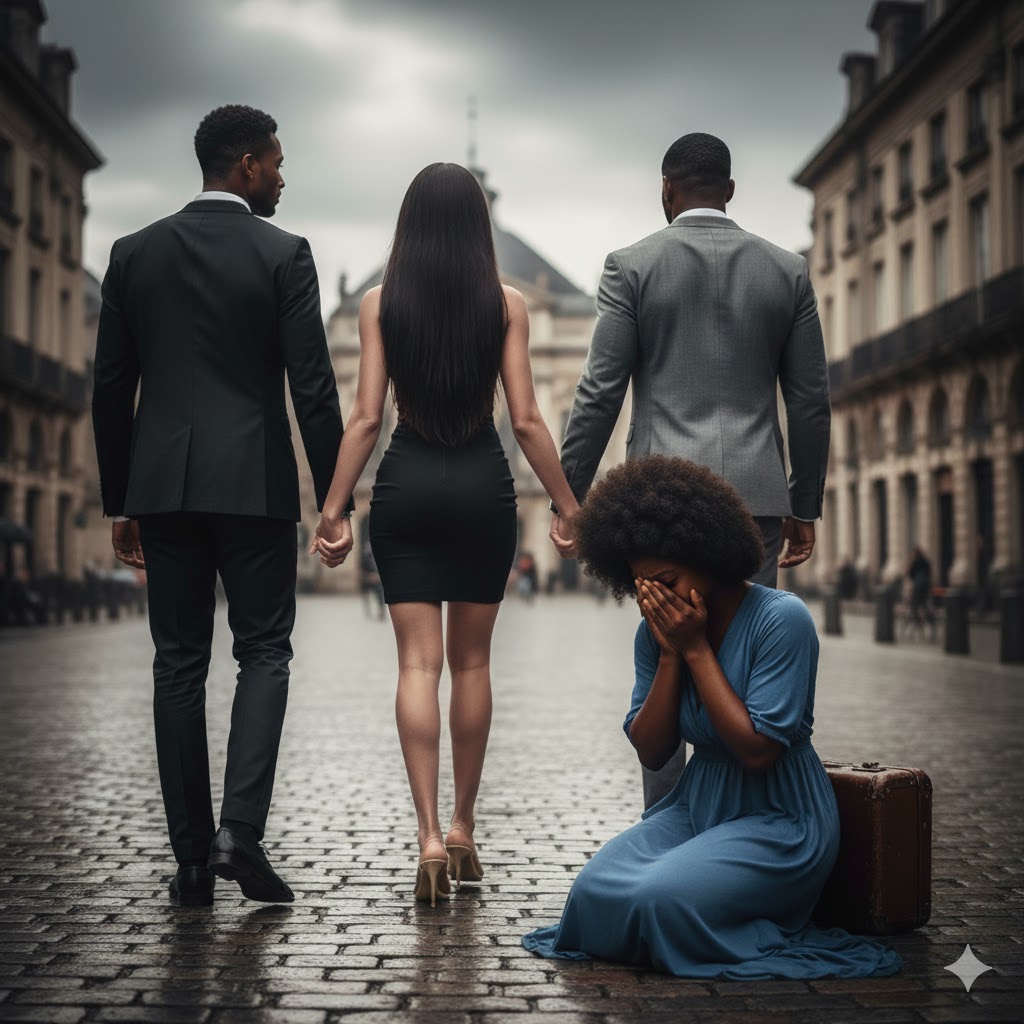
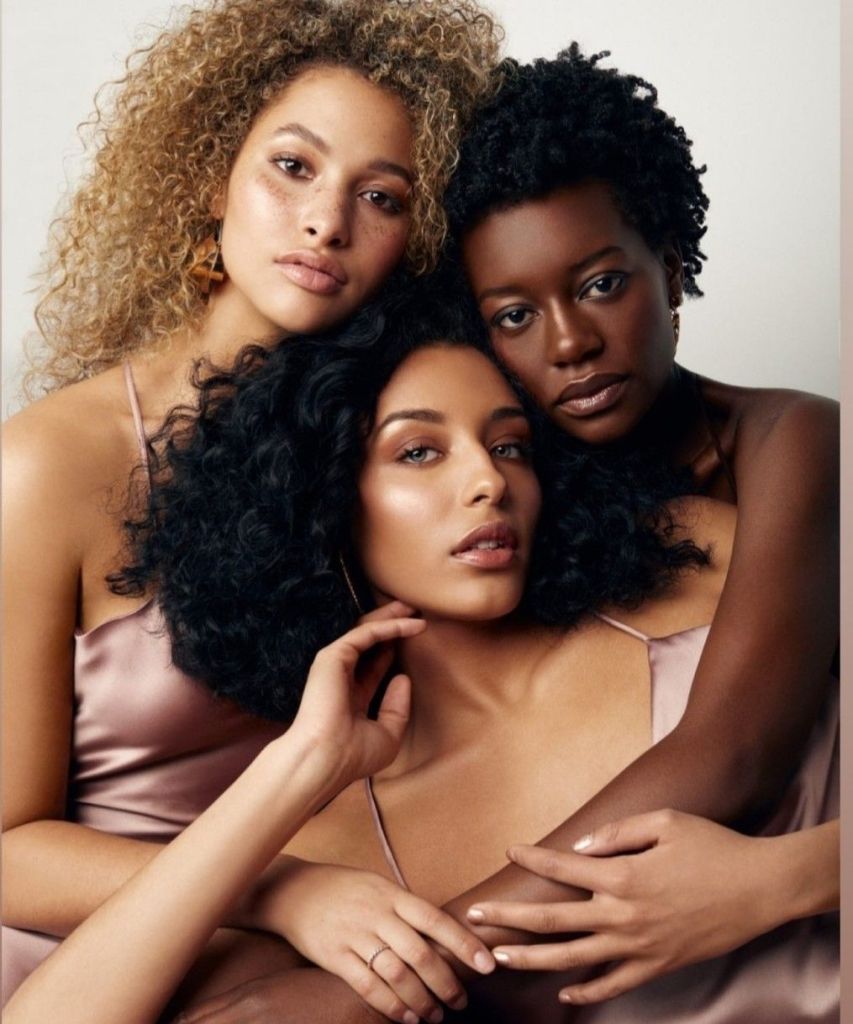
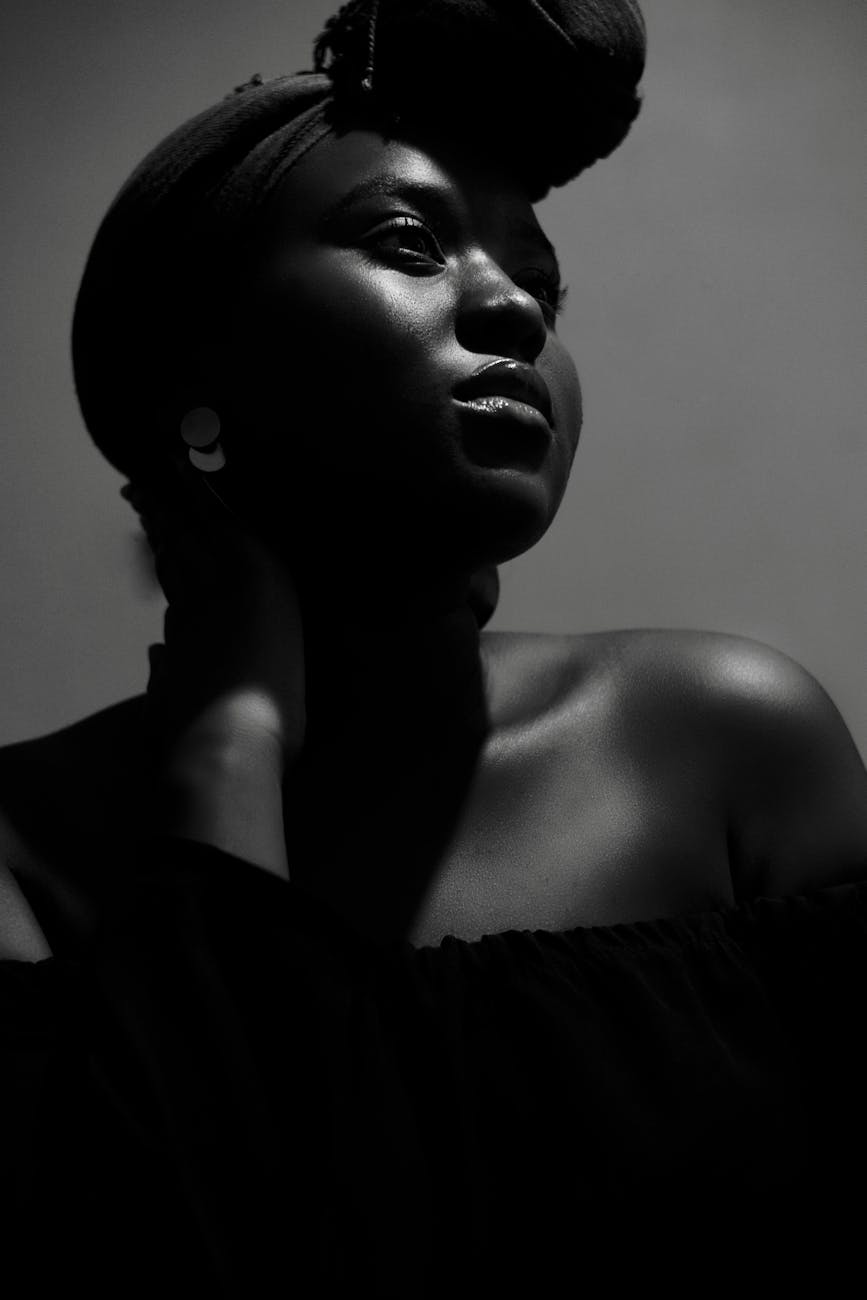
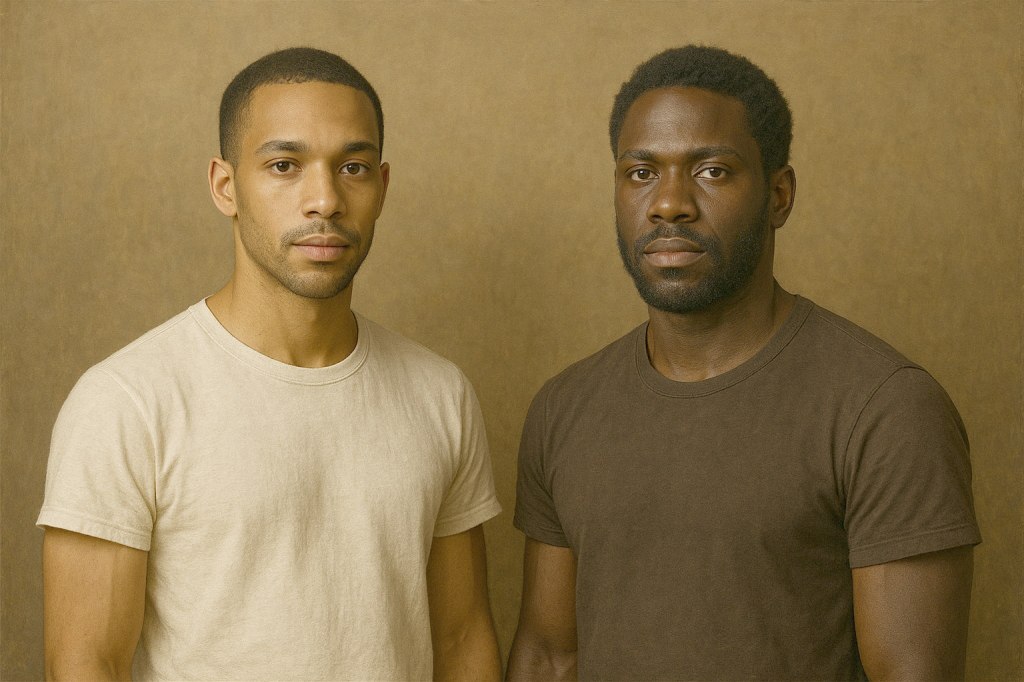
There is a quiet ache that lives inside those who shine naturally, yet remain unseen. To be beautifully made—bronze-skinned, strong-featured, soul-deep—and still be treated as if one were invisible, is a wound many never speak aloud. It is the paradox of being regal in a world that refuses to acknowledge the crown.
Beauty is not merely aesthetics; it is presence, dignity, posture, spirit. There are those whose very existence reflects divine craftsmanship, and yet society trains its eyes elsewhere. They carry the hue of sun-kissed earth, the line of warrior kings, the depth of ancient blood and covenant promise—but subtle wounds form when their radiance is met with indifference, envy, or dismissal.
The pain here is not vanity. It is identity. It is the longing to be seen for who one truly is, not what the world has been conditioned to perceive.
Colorism, Eurocentric beauty hierarchies, media bias, and generational wounds intersect to create a psychological burden. Dark skin—once exalted in royal courts, priesthoods, and ancient temples—was re-cast as lesser in colonial narrative structures. And so countless bronze souls grow up feeling like background characters in stories where they were meant to be kings, prophets, and chosen vessels.
Yet beneath the ache lies power. There is a sacred refinement in being overlooked and still standing royal. The overlooked learn resilience, depth, humility, spiritual discernment. They seek validation from Heaven rather than crowds. Their value is not borrowed from applause—it is breathed by the Creator.
Scripture reminds us that divinely chosen vessels are often initially unseen:
“Man looketh on the outward appearance, but the Lord looketh on the heart.” — 1 Samuel 16:7 (KJV)
David was overlooked among his brothers. Joseph was rejected before he was exalted. Christ Himself was “despised and rejected of men” before glory was revealed (Isaiah 53:3). Often the hidden ones are Heaven’s chosen.
To be overlooked is not proof of lack— it is often proof of threat to the world’s fragile illusions.
For bronze-skinned men and women especially, their beauty carries memory—of sun-carved kingdoms, divine melanin, ancestral nobility, covenant lineage. Their presence challenges the false narratives built by those who once feared the power in their gaze, the authority in their features, the fire in their blood.
And so, the overlooked rise quietly.
Not through bitterness, but revelation. Not through pleading to be seen, but walking in the truth of who they already are.
Beauty rooted in spirit and ancestry does not need permission to exist. The world may overlook gold for glitter, but time always reveals what was real.
To you who feels unseen— You are not hidden. You are protected. You are not ignored. You are reserved. You are not undesirable. You are set apart.
The bronze will shine. The overlooked will be called forward. And those once bypassed will stand in the light they were born for— not because the world decides to see them, but because the Most High always did.
Your beauty was never for the crowd— it was for the kingdom.
This photograph is the property of its respective owner. No copyright infringement intended.
Colorism—prejudice or discrimination based on skin tone within the same racial or ethnic group—is one of the most insidious legacies of colonialism and slavery. Unlike racism, which operates across racial lines, colorism operates within them, fracturing communities from the inside. The dilemma of colorism lies in how it distorts identity and self-worth, privileging lighter skin as beautiful, desirable, and superior while marking darker skin as less valuable or “other.”
The roots of colorism reach deep into history. During slavery, lighter-skinned Black people were often given preferential treatment, working inside plantation houses while darker-skinned people labored in the fields. This racial hierarchy was not accidental—it was engineered to divide and control. The closer one appeared to whiteness, the more “human” they were perceived to be (Hunter, 2007). This system embedded a psychological wound that continues to shape beauty ideals, social mobility, and self-esteem in communities of color.
In the post-slavery era, colorism was perpetuated through social institutions and cultural practices. Exclusive clubs and fraternities in the early 20th century used the infamous “paper bag test” to determine admission: if one’s skin was darker than a brown paper bag, they were denied entry. These acts codified self-rejection, turning proximity to whiteness into a false badge of honor (Russell, Wilson, & Hall, 1992).
Colorism’s effects are particularly damaging among women. Dark-skinned women often face compounded discrimination—both racism and colorism—resulting in fewer opportunities in entertainment, employment, and even dating. Media and beauty industries have historically promoted Eurocentric ideals: straight hair, narrow noses, and fair skin. As a result, darker-skinned women have often been portrayed as aggressive, unattractive, or less feminine compared to their lighter counterparts (Hill, 2002).
The crisis of self-worth begins early. Studies have shown that even young children associate lighter skin with beauty and intelligence. The infamous “doll test,” conducted by psychologists Kenneth and Mamie Clark in the 1940s, revealed that Black children preferred white dolls over Black ones, describing them as “good” and “pretty” (Clark & Clark, 1947). This heartbreaking evidence demonstrated how internalized racism and colorism warp self-perception from childhood.
For men, colorism manifests differently but no less destructively. Light-skinned men are often viewed as more approachable or “safe,” while dark-skinned men are stereotyped as intimidating or dangerous. These perceptions influence job prospects, policing, and romantic desirability. The darker the skin, the more one becomes the object of fear or fetishization rather than acceptance (Hunter, 2005).
Hollywood and global media have long reinforced this bias. From the early days of cinema to modern advertising, lighter skin has been synonymous with success and desirability. Black actresses like Lupita Nyong’o and Viola Davis have spoken openly about the struggle to be recognized as beautiful in an industry that has long celebrated lighter tones. Their success represents not just personal triumph but cultural healing—a redefining of beauty that honors the fullness of Blackness.
Colonialism globalized colorism. Across Africa, Asia, and the Caribbean, lighter skin is still marketed as an advantage. Skin-whitening creams, a billion-dollar industry, prey upon insecurities cultivated by centuries of Eurocentric dominance. In countries like India and Nigeria, “fairness” is often advertised as a prerequisite for marriage, employment, and respect. The colonial message persists: to ascend, one must become less of oneself (Glenn, 2008).
Colorism also thrives in the digital age. Filters, editing apps, and social media trends subtly lighten complexions, reinforcing subconscious biases. The aesthetic algorithms of beauty—crafted largely by Western designers—often favor lighter features, excluding darker skin tones from digital visibility and validation. The new colonizer is not a person, but a pixel.
Spiritually, colorism distorts divine identity. When people internalize inferiority based on skin tone, they reject the image of God within themselves. In biblical context, melanin—the pigment that gives darker skin its color—can be seen as a divine design, a testament to strength, protection, and resilience. As Psalm 139:14 declares, “I am fearfully and wonderfully made.” This verse challenges every ideology that devalues dark skin.
The psychological impact of colorism can lead to anxiety, depression, and chronic insecurity. For many, the quest to be “lighter” becomes a quest for acceptance. But this pursuit only deepens self-alienation, as it demands rejecting the very heritage and beauty that define one’s identity. Healing begins when individuals and communities confront the internalized lies that whiteness equals worth.
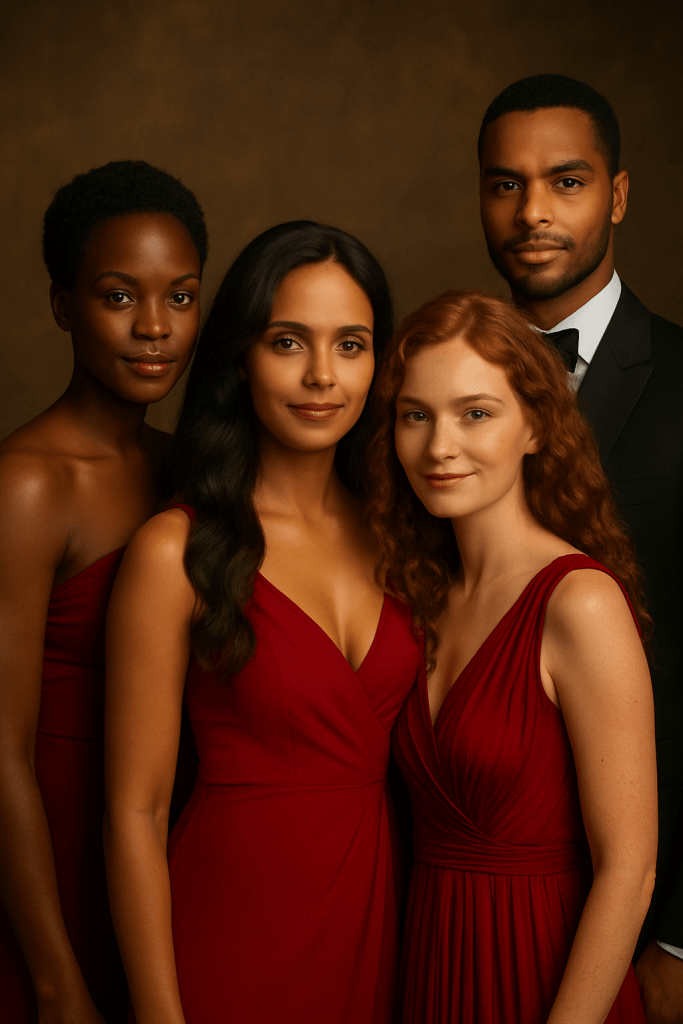
Education and representation are key to dismantling colorism. Schools must teach not only about racism but also about the hierarchy of shade that perpetuates inequality. Media must elevate diverse representations of Blackness, from deep ebony to golden brown, as equally beautiful. Each shade tells a story of resilience and identity that deserves visibility and validation.
Colorism also fractures solidarity. When internal prejudice divides the oppressed, the struggle for liberation weakens. True unity within the Black diaspora—and across communities of color—requires acknowledging and addressing this inherited bias. Liberation must include the healing of the mind as well as the body.
Artists, activists, and scholars are reclaiming the narrative. Campaigns like “Dark Is Beautiful” and “Melanin Magic” have redefined global conversations about shade and self-love. Poets, filmmakers, and painters now celebrate the hues once despised, restoring dignity to complexions that history sought to erase. The rise of figures like model Duckie Thot, actress Lupita Nyong’o, and activist Rashida Strober signals a cultural reckoning.
Social healing also demands accountability from within. Families must stop perpetuating colorist language—phrases like “don’t get too dark” or “you’re pretty for a dark-skinned girl.” Churches and communities must replace shame with celebration. Healing begins when love replaces comparison and appreciation replaces envy.
The crisis of self-worth cannot be healed by cosmetics but by consciousness. True beauty emerges when identity aligns with purpose. Dark skin, radiant under the sun, carries the memory of continents and the story of survival. To reject it is to reject ancestry. To embrace it is to reclaim sovereignty.
Colorism’s undoing requires cultural courage—to confront painful truths and to teach new generations that worth is not measured by shade but by soul. As Toni Morrison wrote, “The function of freedom is to free someone else.” In this light, freedom begins when we learn to see beauty where the world taught us to see blemish.
Ultimately, “The Unchosen Shade” is not a curse but a crown. It represents endurance through centuries of erasure, beauty unbought and unaltered. The unchosen shade is chosen by God—crafted in divine melanin, unafraid of the sun, and unapologetically radiant. When we learn to love the unchosen shade, we begin the work of restoring not just self-worth, but collective wholeness.
References
Clark, K., & Clark, M. (1947). Racial Identification and Preference in Negro Children.Journal of Negro Education, 19(3), 341–350. Glenn, E. N. (2008). Yearning for Lightness: Transnational Circuits in the Marketing and Consumption of Skin Lighteners.Gender & Society, 22(3), 281–302. Hill, M. E. (2002). Skin Color and the Perception of Attractiveness Among African Americans: Does Gender Make a Difference?Social Psychology Quarterly, 65(1), 77–91. Hunter, M. (2005). Race, Gender, and the Politics of Skin Tone. Routledge. Hunter, M. (2007). The Persistent Problem of Colorism: Skin Tone, Status, and Inequality.Sociology Compass, 1(1), 237–254. Russell, K., Wilson, M., & Hall, R. E. (1992). The Color Complex: The Politics of Skin Color Among African Americans. Harcourt Brace Jovanovich.
Colorism—the privileging of lighter skin tones over darker ones within the same racial group—has deep historical roots and contemporary consequences in global society. Within the fashion industry, colorism functions not only as a discriminatory practice but also as a mechanism that shapes visibility, opportunity, and representation. Fashion, as both an art form and a business, reflects and reinforces cultural hierarchies. Thus, the underrepresentation of dark-skinned models and the preference for lighter-skinned ones underscores the persistence of Eurocentric beauty ideals in an industry that prides itself on innovation and inclusivity.
Historical Roots of Colorism in Fashion
The origins of colorism trace back to slavery and colonialism, where lighter skin was often associated with proximity to whiteness, privilege, and desirability (Hunter, 2007). In the United States, enslaved individuals with lighter complexions were sometimes favored for domestic work, while darker-skinned individuals were relegated to harsher labor. This hierarchical system established a cultural preference for lighter skin that extended into media, beauty, and eventually fashion. As the fashion industry developed, Eurocentric beauty standards became codified in runway shows, advertising, and editorial spreads, marginalizing darker-skinned women and men.
The Runway and Editorial Exclusion
Runways and fashion magazines have historically privileged models with lighter skin, straighter hair, and Eurocentric features. Even within “diverse” campaigns, darker-skinned Black models often remain tokenized. For instance, Naomi Campbell, despite her status as one of the most famous supermodels of all time, revealed she had to fight harder for opportunities that her white counterparts received effortlessly (Campbell, 2016). Dark-skinned models such as Alek Wek and Duckie Thot broke barriers, but their presence has often been treated as exceptions rather than norms. This reveals the systemic nature of colorism: representation is granted selectively and sparingly, rather than broadly embraced.
Case Study – Naomi Campbell, Alek Wek, and Adut Akech
Naomi Campbell (1980s–Present)
Naomi Campbell emerged in the late 1980s as one of the first globally recognized Black supermodels. While she reached heights few models—regardless of race—could achieve, Campbell herself revealed that she often had to fight harder for opportunities that her white peers received with ease. She once said, “I was never picked for certain shows—not because I couldn’t do the job, but because of the color of my skin” (Campbell, 2016). Her career symbolizes both the barriers imposed by colorism and the resilience required to break through them.
Alek Wek (1990s)
In the 1990s, South Sudanese model Alek Wek revolutionized the industry by unapologetically showcasing her deep dark skin, natural hair, and African features. When she rose to prominence, many Western critics doubted whether her look could be commercially viable. Yet Wek’s success redefined beauty and inspired a new generation of young women, particularly dark-skinned Black girls, to embrace their appearance. Her visibility disrupted Eurocentric norms and served as a cultural turning point in fashion’s global aesthetic (Hall, 2010).
Adut Akech (2010s–Present)
Adut Akech, another South Sudanese model, continues to advance the legacy of dark-skinned representation in fashion. A refugee turned international supermodel, Akech has walked for major houses like Valentino and Chanel, becoming a muse for designers while advocating for refugee rights. She has spoken openly about colorism and racism in the fashion world, noting that makeup artists are often unprepared to work with her skin tone (Lewis, 2011). Akech’s presence represents both progress and the work yet to be done in dismantling systemic biases.
Comparative Analysis
These three women represent different eras of struggle and triumph in the face of colorism. Campbell fought for inclusion, often being the lone dark-skinned figure on global stages. Wek expanded the vision of Black beauty, embodying features once excluded from mainstream fashion. Akech, in the digital age, uses her platform to not only model but also advocate for social justice. Collectively, they embody resilience and redefine beauty standards, proving that dark skin is not only viable but invaluable in fashion’s ongoing evolution.
Colorism in Advertising and Branding
Advertising campaigns often reinforce a narrow vision of Black beauty by privileging lighter-skinned women in mainstream branding. Lighter skin is frequently equated with “universality,” while darker skin is portrayed as “niche.” This not only affects representation but also market access: darker-skinned models are underbooked, underpaid, and less visible, despite global recognition of Black culture’s influence on fashion trends (Lewis, 2011). The commodification of “acceptable” Blackness perpetuates an insidious cycle where lighter-skinned women are celebrated as symbols of diversity, while darker-skinned women remain marginalized.
Psychological Effects of Colorism in Fashion
The exclusion and marginalization of darker-skinned models create lasting psychological effects. Research shows that colorism contributes to internalized racism, self-esteem struggles, and body image issues among Black women (Hall, 2010). For young women aspiring to careers in fashion, the lack of role models who reflect their skin tone signals that beauty and desirability are tethered to lightness. Scripture warns against such vanity and distorted perceptions of beauty: “For the LORD seeth not as man seeth; for man looketh on the outward appearance, but the LORD looketh on the heart” (1 Samuel 16:7, KJV). This biblical reminder challenges the industry to move beyond surface-level valuations of beauty.
Resistance and Breaking the Bias
Despite systemic barriers, dark-skinned women have reclaimed space in fashion. Alek Wek’s rise in the 1990s challenged Eurocentric ideals by celebrating her Sudanese heritage and skin tone, inspiring countless young women globally. More recently, the success of models like Adut Akech and Nyakim Gatwech demonstrates the possibility of breaking entrenched biases. Additionally, designers and makeup brands such as Rihanna’s Fenty Beauty and Thebe Magugu have embraced darker tones and African aesthetics as integral, not peripheral, to their visions. These efforts represent resistance against colorism, although structural changes in casting, marketing, and pay equity remain necessary.
The Role of Social Media Activism
Social media has been a powerful tool in challenging colorism. Hashtags like #MelaninPoppin and #DarkSkinMagic celebrate darker skin tones, countering narratives that have historically marginalized them. Models bypass traditional gatekeepers by building platforms directly with audiences, forcing brands to acknowledge and adapt to consumer demands for inclusivity. This digital activism represents a democratization of fashion, where consumers and creators hold institutions accountable for bias.
A Biblical and Ethical Challenge
From a biblical perspective, the challenge to colorism in fashion is not merely about inclusion but about justice and truth. James 2:1 warns against favoritism: “My brethren, have not the faith of our Lord Jesus Christ, the Lord of glory, with respect of persons.” Favoring lighter skin over darker skin perpetuates a false hierarchy that contradicts the truth of human equality before God. Thus, breaking the bias in fashion is not only socially progressive but also spiritually imperative.
Conclusion: Toward True Inclusivity
Colorism in the fashion industry reveals how deeply embedded Eurocentric ideals remain in structures of representation. While progress has been made, particularly through the visibility of dark-skinned models and consumer-driven activism, systemic inequities persist. Breaking the bias requires structural reform, cultural accountability, and a commitment to genuine inclusivity rather than tokenism. For Black women, the reclamation of dark skin beauty in fashion is not just a trend—it is a revolution that affirms dignity, identity, and divine worth.
References
Campbell, N. (2016). Interview with the Guardian on race and modeling. Guardian Media Group. Hall, R. E. (2010). An historical analysis of skin color discrimination in America: Victimism among victim group populations. Springer. Hunter, M. (2007). The persistent problem of colorism: Skin tone, status, and inequality. Sociology Compass, 1(1), 237–254. Lewis, R. (2011). Race, representation, and fashion media: Shaping Blackness in cultural industries. Fashion Theory, 15(2), 153–174. The Holy Bible, King James Version. (1611/2017). Thomas Nelson.
Reverse colorism is a concept that flips the traditional dynamics of colorism but is often misunderstood or oversimplified.
1. What Colorism Is
Colorism is the social prejudice or discrimination against people with darker skin tones, often privileging lighter skin within the same racial or ethnic group. It’s historically rooted in colonialism, slavery, and Eurocentric beauty standards.
Example: In many communities, lighter-skinned Black women may receive more social, economic, or romantic advantages than darker-skinned women.
2. What “Reverse Colorism” Means
Reverse colorism refers to a situation where, in a given context, darker skin is favored over lighter skin.
It’s relative and context-dependent.
It does not erase the historic and systemic oppression of darker-skinned people.
Often, it arises within communities as a reaction to mainstream colorism, sometimes promoting darker skin as the ideal within specific social or cultural spaces.
Example: In certain African or Caribbean communities, there may be a trend where darker-skinned individuals are celebrated as embodying “authentic” or “true” beauty, whereas lighter-skinned people may feel less valued.
3. Key Considerations
Reverse colorism is not systemic oppression the way traditional colorism is. Traditional colorism has roots in historical oppression (slavery, colonialism) and carries material consequences in jobs, media representation, and marriage prospects.
Reverse colorism is often cultural or social preference, sometimes tied to pride in Black identity or heritage.
It can, however, still create intra-community bias and emotional harm when one skin tone is favored over another.
4. Biblical / Faith-Based Lens
From a biblical perspective, both traditional colorism and reverse colorism are forms of valuing people by outward appearance rather than God’s creation:
1 Samuel 16:7 – “But the LORD said unto Samuel, Look not on his countenance, or on the height of his stature; because I have refused him: for the LORD seeth not as man seeth; for man looketh on the outward appearance, but the LORD looketh on the heart.”
God values character, faith, and righteousness over skin tone.
Summary
Reverse colorism is essentially a preference for darker skin, often arising in reaction to historical colorism. While it may feel empowering in certain contexts, it still perpetuates valuation based on skin tone, which the Bible cautions against. True liberation and unity in communities comes from celebrating all skin tones as God-designed.
It is a curious thing to be told, “When I see you, I don’t see Black.” On the surface, it sounds like a compliment — a supposed sign of acceptance. But beneath those words lies a deep and painful reality: erasure. To “not see Black” is to refuse to see a person fully. Blackness is not an insult that must be airbrushed away. It is a heritage, a culture, and a divine design that carries resilience, beauty, and history.
The phrase “What are you mixed with?” often accompanies this colorblind assertion. It suggests that the person’s beauty, intelligence, or refinement must have come from something other than pure African ancestry. This is the residue of white supremacy — the idea that to be fully Black is to be less than, and that any perceived excellence must be explained by proximity to whiteness (Bell, 1992).
These phrases are examples of racial microaggressions, subtle verbal slights that communicate bias, even when unintended (Sue et al., 2007). “I don’t see color” is often framed as a way to express equality, but research shows that colorblindness actually perpetuates racial inequality by ignoring structural racism (Neville et al., 2013). To deny race is to deny racism — and thus to deny the need for justice.
Biblically, God is not colorblind. Revelation 7:9 (KJV) paints a vision of heaven where “a great multitude… of all nations, and kindreds, and people, and tongues” stand before the throne. God sees color, ethnicity, and culture — and calls it good. To erase Blackness is to erase part of the divine mosaic of humanity.
For many Black people, hearing “When I see you, I don’t see Black” is a reminder that Blackness is still considered something one must look past in order to value someone. “It felt like they were saying, ‘I only respect you because you’re not like the others,’” said Renee, 28. “As if being Black is inherently negative.” This is a classic case of the “exceptional Negro” trope — praising an individual while degrading the group.
Similarly, “What are you mixed with?” is a coded way of expressing surprise that a Black person could be attractive or articulate. “People ask me that all the time,” said Marcus, 31. “When I tell them I’m just Black, they look confused, like I should apologize for not having some exotic backstory.” This curiosity reveals a hierarchy of desirability rooted in colorism — the privileging of light skin and mixed features over darker skin and African features (Hunter, 2007).
The historical roots of this hierarchy run deep. During slavery, lighter-skinned enslaved people — often the children of white masters — were sometimes given preferential treatment, fueling division within the Black community (Williamson, 1980). This legacy lingers, as seen in modern media where lighter-skinned actors, models, and musicians are often elevated as the “acceptable” face of Blackness.
Celebrities have spoken out about this painful phenomenon. Actress Lupita Nyong’o shared that she once prayed for lighter skin, believing it would make her beautiful. “I was teased and taunted about my dark skin,” she said in her powerful 2014 speech on beauty. “And my one prayer to God was that I would wake up lighter-skinned.” Nyong’o’s testimony underscores the damage caused by a culture that treats dark skin as undesirable.
Other celebrities have shared their personal experiences with these exact microaggressions. Meghan Markle has spoken openly about being asked repeatedly, “What are you?” growing up. In her interview with Oprah Winfrey, she revealed how her biracial identity was scrutinized both by the media and behind palace walls, with questions about how dark her son’s skin might be (Winfrey, 2021). Her story illustrates how curiosity about mixed heritage can carry undertones of fear and exclusion.
Zendaya has also used her platform to discuss colorism and the privilege of being a lighter-skinned Black woman in Hollywood. In interviews, she has admitted that her lighter complexion has allowed her access to roles and opportunities that darker-skinned actresses are often denied. “I have to be honest about my privilege,” she said, “and make sure I’m using my platform to showcase darker-skinned women too” (Robinson, 2018).
Colin Kaepernick, who is biracial, has shared how his identity was questioned from both sides. In his Netflix series Colin in Black & White, he recalls being constantly asked what he was “mixed with” and feeling like an outsider in both Black and white spaces. This experience reflects Du Bois’ (1903) concept of double-consciousness — the constant negotiation of identity in a society that categorizes by race.
The question “What are you mixed with?” can also exoticize and objectify. It turns identity into a guessing game, as if the person must justify their existence. “I’m not a math equation,” said Jasmine, 25. “I don’t owe anyone a breakdown of my ancestry so they can decide how to treat me.”
This line of questioning also erases the beauty of being fully African-descended. Psalm 68:31 (KJV) prophetically declares, “Princes shall come out of Egypt; Ethiopia shall soon stretch out her hands unto God.” African heritage is not a stain to be diluted but a glory to be embraced.
The deeper harm is that these statements normalize whiteness as the default and Blackness as the deviation. Saying “I don’t see you as Black” implies that Black is something negative to overcome. It also denies the lived reality of racism. As Dr. Beverly Daniel Tatum argues, to say you are colorblind is to close your eyes to injustice — and people who claim not to see race are less likely to notice or confront discrimination (Tatum, 2017).
Moreover, these phrases pressure Black individuals to perform a palatable version of Blackness. They subtly reward assimilation, encouraging people to soften their dialect, straighten their hair, or distance themselves from stereotypical “Blackness” to gain approval. This double-consciousness, as W.E.B. Du Bois (1903) called it, is the struggle to see oneself through both one’s own eyes and the eyes of a society that devalues you.
Some people genuinely believe they are being kind when they say these things. They intend to affirm equality, but true equality does not erase difference — it celebrates it. Paul’s words in 1 Corinthians 12:18 (KJV) remind us that “God set the members every one of them in the body, as it hath pleased him.” Diversity is divine design, not a problem to be solved.
The work of dismantling this erasure requires both education and empathy. Non-Black people must learn why colorblindness harms rather than heals. They must also recognize how fetishizing mixed heritage reinforces harmful hierarchies. Black people must reclaim their identity unapologetically, refusing to let others define their worth by proximity to whiteness.
Representation plays a crucial role here. When Blackness is portrayed in its full spectrum — from deep mahogany to golden brown — it challenges the idea that only certain shades are beautiful or acceptable. Campaigns like #MelaninPoppin and #BlackGirlMagic have helped shift cultural narratives, reminding the world that Blackness needs no qualifier to be celebrated.
Healing from these microaggressions is both personal and collective. It means telling children that their Blackness is not something to overcome but something to rejoice in. It means calling out subtle biases when they occur, with both grace and truth. It means creating spaces where Black identity can be expressed in all its complexity — natural hair, vernacular speech, cultural traditions — without apology.
The next time someone says, “I don’t see Black,” we must gently but firmly reply: “See me fully — my Blackness included.” To be truly seen is to be known, and to be known is to be loved. And when someone asks, “What are you mixed with?” we can answer with pride: “I am fearfully and wonderfully made — fully, beautifully, unapologetically who God created me to be.”
References
Bell, D. (1992). Faces at the bottom of the well: The permanence of racism. Basic Books.
Du Bois, W. E. B. (1903). The souls of Black folk. A.C. McClurg & Co.
Hunter, M. (2007). The persistent problem of colorism: Skin tone, status, and inequality. Sociology Compass, 1(1), 237–254.
Neville, H. A., Awad, G. H., Brooks, J. E., Flores, M. P., & Bluemel, J. (2013). Color-blind racial ideology: Theory, training, and measurement implications in psychology. American Psychologist, 68(6), 455–466.
Sue, D. W., Capodilupo, C. M., Torino, G. C., Bucceri, J. M., Holder, A. M. B., Nadal, K. L., & Esquilin, M. (2007). Racial microaggressions in everyday life: Implications for clinical practice. American Psychologist, 62(4), 271–286.
Tatum, B. D. (2017). Why are all the Black kids sitting together in the cafeteria? (Rev. ed.). Basic Books.
Williamson, J. (1980). New people: Miscegenation and mulattoes in the United States. Free Press.
Hollywood has historically privileged lighter-skinned actors and actresses in lead roles, reinforcing colorism and Eurocentric beauty ideals (Russell, Wilson, & Hall, 2016). Darker-skinned performers have often been relegated to secondary roles, villainous characters, or stereotypical archetypes. For example:
Lupita Nyong’o vs. Halle Berry: Despite critical acclaim, darker-skinned actresses like Lupita Nyong’o face fewer commercial opportunities than light-skinned actresses such as Halle Berry, highlighting a systemic bias favoring lighter complexions.
Historical Casting Practices: Classic films like Gone with the Wind and The Birth of a Nation used colorism and whitewashing to construct narratives of Black inferiority or tokenized beauty, while light-skinned Black actors were positioned as “acceptable” for mainstream audiences.
From a biblical lens, this aligns with James 2:1 (KJV), warning against favoritism based on outward appearance: casting decisions reflect societal bias in determining perceived value, perpetuating inequality even in creative spaces.
African Cinema: Between Liberation and Color Hierarchies
African cinema, while more culturally authentic, is not immune to colorism. Films across Nigeria (Nollywood), Ghana, and South Africa often unconsciously reflect colonial beauty hierarchies:
Nollywood: Lighter-skinned actors frequently dominate romantic leads and high-status roles, while darker-skinned actors are cast in “everyday” or comedic roles (Nzewi, 2018).
Historical Influence: This phenomenon stems from colonial-era European ideals imposed on African societies, which valued lighter skin as a marker of proximity to power and sophistication (Harris, 2015).
Scripturally, the Apocrypha’s Wisdom of Solomon 14:12 warns against human vanity and superficial valuation, suggesting that privileging light skin over dark skin constitutes moral as well as social corruption.
Intersection with Digital Platforms
Casting bias is increasingly codified in AI-driven content recommendation, image recognition, and automated casting tools. For example:
Algorithms trained on biased datasets often recommend lighter-skinned actors for lead roles or editorial prominence in digital marketing.
Social media platforms amplify these choices, rewarding lighter-skinned beauty standards with visibility and engagement.
The Digital Plantation metaphor extends here: the same hierarchical systems that controlled enslaved populations now influence cultural representation through digital and algorithmic means, perpetuating historical inequities.
Theological and Social Implications
Spiritual Perspective: Romans 2:11 (KJV) states, “For there is no respect of persons with God.” Casting favoritism based on skin tone contradicts the divine principle that all humans are created in God’s image (Genesis 1:27).
Cultural Responsibility: Filmmakers and casting directors carry the ethical obligation to counteract colorist tendencies, ensuring representation reflects diversity in beauty, talent, and human dignity.
Societal Impact: Colorist casting reinforces internalized oppression among audiences, shaping self-esteem, identity formation, and career opportunities for darker-skinned individuals.
Examples and Case Studies
Hollywood: Zendaya, a light-skinned actress, often receives more commercial opportunities than darker-skinned peers in the same age group, illustrating the persistent preference for lighter complexions in casting.
African Cinema: In Nollywood, actresses like Omotola Jalade Ekeinde (light-skinned) often secure lead roles in international-facing films, while darker-skinned actresses remain underrepresented.
These examples show that even in Black-centered industries, colorism remains a barrier to equitable representation.
References
Nzewi, O. (2018). Colorism in Nollywood: Representation, identity, and audience perception. Journal of African Media Studies, 10(3), 345–362.
Russell, K., Wilson, M., & Hall, R. (2016). The color complex: The politics of skin color in a new millennium. Anchor Books.
Harris, A. P. (2015). Skin tone stratification and social inequality: Historical and contemporary perspectives. Oxford University Press.
The Brown Paper Bag Test was an informal but widely practiced method of color-based discrimination within Black communities—especially among elite African Americans in the early 20th century. In this test, a person’s skin tone was compared to a standard brown paper bag. If their complexion was lighter than the bag, they were allowed access to certain social privileges, such as entry into exclusive clubs, organizations, churches, schools, and social events. If they were darker, they were denied.
This practice was not enforced by white society, but by Black elites who had internalized the racial hierarchies of white supremacy. It was a form of colorism, which is discrimination based on skin tone, often within the same racial or ethnic group.
Historical Origins and Locations
The Brown Paper Bag Test is believed to have originated in the early 1900s, particularly during the post-Reconstruction and Jim Crow era, as Black communities began forming their own institutions amid segregation. The test gained prominence among the so-called “Black bourgeoisie,” especially in southern cities like New Orleans, Charleston, Atlanta, and Savannah, as well as northern cities like Washington D.C., New York, and Philadelphia.
This color-based gatekeeping was especially prevalent in:
Black sororities and fraternities
Churches
Private social clubs
HBCUs (Historically Black Colleges and Universities)
Debutante balls and elite Black social circles
Why Did It Happen? The Premise Behind the Rule
The Brown Paper Bag Test was rooted in internalized racism and colorism, legacies of colonialism and slavery. During slavery, lighter-skinned Black people—usually mixed-race offspring of white slaveowners and Black women—were often given preferential treatment. They were more likely to work in the house, receive basic education, or even be freed.
After Emancipation, many light-skinned Black people were able to accumulate more wealth, education, and social capital. As they formed upper-class enclaves within the Black community, they sometimes adopted white supremacist values—including the belief that light skin was more beautiful, intelligent, and “civilized.” The Brown Paper Bag Test became a way to preserve that class advantage by controlling access to elite Black spaces.
Organizations and Institutions That Used It
Several prominent Black institutions, especially between 1900 and 1940, were known or rumored to have used the Brown Paper Bag Test, either formally or informally. These include:
Alpha Kappa Alpha (AKA) and Delta Sigma Theta sororities
Alpha Phi Alpha and Kappa Alpha Psi fraternities
The Blue Vein Society – a club for African Americans who were so light-skinned their veins showed
Jack and Jill of America, Inc. – an exclusive social club for Black families
Certain Black churches and elite congregations
The Paper Bag Club in New Orleans, known for having this policy
Note: Many of these organizations have since acknowledged and rejected these practices, striving for inclusivity today.
How Was It Justified Within the Black Community?
Black elites justified the Brown Paper Bag Test through several rationalizations:
Respectability Politics – Light-skinned Black people were perceived to be more “palatable” to white society, and therefore better representatives of the race.
Social Advancement – Gatekeeping was seen as a way to protect upward mobility and avoid association with Blackness perceived as “too low,” “uneducated,” or “uncultured.”
Survival Strategy – Some believed light skin offered better economic opportunities and social access, so prioritizing it helped protect families from racial violence or marginalization.
These justifications were deeply flawed and ultimately damaging, reinforcing white supremacist beauty and value systems within the Black community.
Celebrities Who Would Have “Passed” and Those Who Would Not
Celebrities Who Likely Would Have Passed:
Lena Horne – Light-skinned actress and singer often cast in roles that required a “racially ambiguous” appearance.
Dorothy Dandridge – The first Black woman nominated for an Oscar; often praised for her “exotic” beauty.
Halle Berry – Often referred to as the most beautiful woman in the world.
Vanessa Williams – The first Black Miss America, frequently cited for her light eyes and skin tone.
Celebrities Who Would Not Have Passed (Based on Skin Tone):
Viola Davis – Known for her rich, dark complexion and celebrated for breaking barriers despite colorist bias in Hollywood.
Whoopi Goldberg – Faced open ridicule for not fitting Eurocentric beauty standards.
Wesley Snipes – Celebrated for redefining Black masculinity but would have been excluded from elite colorist spaces.
Lupita Nyong’o – Famously spoke about feeling unattractive as a child because of her dark skin, until seeing Alek Wek, a dark-skinned model, celebrated publicly.
The Legacy of the Brown Paper Bag Test
Though the literal use of brown paper bags has faded, the mentality behind the test persists in modern forms:
Casting biases in film and media
Skin-lightening products
Dating preferences shaped by colonial standards
Disparities in beauty pageants, modeling, and corporate hiring
It also continues to influence mental health, self-esteem, and identity formation among Black youth, who still wrestle with messages that lighter is better.
Conclusion: Unpacking the Internalized Oppression
The Brown Paper Bag Test is a painful symbol of the internalized oppression that colonialism, slavery, and systemic racism embedded into Black consciousness. By confronting this history, we unearth the ways Black communities have been conditioned to self-police, segregate, and discriminate based on proximity to whiteness.
To move forward, Black people must continue the work of decolonizing beauty, class, and value systems—affirming the full spectrum of Blackness, from the darkest skin to the broadest nose, and rejecting any measure of worth tied to the legacy of white supremacy.
References
Russell, K., Wilson, M., & Hall, R. (1992). The Color Complex: The Politics of Skin Color in a New Millennium. Anchor Books.
Gates, H. L. Jr. (1994). Colored People: A Memoir. Vintage.
Hines, D. C. (2004). Black Women in White America: A Documentary History. Vintage.
Hunter, M. (2007). The Persistent Problem of Colorism: Skin Tone, Status, and Inequality. Sociology Compass, 1(1), 237–254.
Davis, A. (1981). Women, Race, and Class. Random House.
Colorism is not merely a sociological phenomenon; it is a psychological wound. It is a trauma imprinted on the collective consciousness of the African diaspora, rooted in the violent histories of slavery, colonialism, and Eurocentric beauty hierarchies. While society reinforces these hierarchies externally, they take deeper residence in the human mind, shaping identity, relational dynamics, self-worth, and community cohesion. Healing colorism requires more than awareness; it demands internal restoration, cultural re-education, and spiritual renewal.
Colorism functions as an internalized system of valuation, assigning worth based on proximity to whiteness. According to Hunter (2007), colorism privileges lighter-skinned individuals socially, economically, and romantically, creating a tiered hierarchy among people of African descent. This internal stratification produces shame, insecurity, and self-doubt in darker-skinned individuals while simultaneously burdening lighter-skinned individuals with distorted expectations and identity conflicts. It is oppression turned inward and projected outward.
Psychologically, colorism creates cognitive dissonance — the tension between knowing one’s inherent worth and navigating a world that denies it. Young Black children often develop color-based biases as early as kindergarten, internalizing societal cues that equate lightness with beauty and goodness (Wilder, 2015). These early messages distort developing self-concepts and can manifest in adulthood as anxiety, depression, or body image struggles.
This emotional burden becomes spiritual when one recognizes that humanity is made in the image of God (Genesis 1:27, KJV). To despise one’s God-given hue is to unconsciously question divine intention. The biblical text affirms the beauty of melanated skin — Solomon describes his beloved as “black and comely” (Song of Solomon 1:5, KJV). Yet centuries of Western theology weaponized whiteness as purity, a manipulation that severed many from sacred self-recognition. True healing requires reclaiming a divine understanding of Blackness.
Community fractures deepen the wound. Colorism teaches competition instead of kinship, suspicion instead of solidarity. Dark-skinned women are stereotyped as aggressive or undesirable, while light-skinned women are hypersexualized and envied — both flattened into caricatures. Dark-skinned men are exoticized or deemed threatening, while light-skinned men face challenges asserting masculinity within cultural narratives. No shade escapes psychological consequence; all suffer under the illusion of hierarchy.
Healing begins with acknowledgment. Naming colorism disrupts invisibility. It invites self-reflection: Where have we internalized bias? How do we treat our brothers and sisters? How do we speak to ourselves? Through introspection, one confronts social conditioning and replaces it with truth — every shade holds beauty, dignity, and purpose.
Education plays a critical role. Schools, churches, media creators, and parents must actively counter color-based stereotypes. Children especially benefit from representation that celebrates the full spectrum of Black skin tones. Affirmation builds resilience against societal messages and cultivates pride in one’s natural image.
Therapeutic intervention is equally necessary. Mental health frameworks, particularly those grounded in Afrocentric psychology, offer tools for healing self-esteem wounds and navigating racialized experiences (Akbar, 2004). Therapy becomes not a sign of weakness, but a form of liberation — reclaiming one’s narrative from oppression’s lies.
Community healing circles and culturally rooted dialogue can restore connection. When individuals confess insecurities, biases, or wounds, vulnerability births compassion. In shared testimony, the illusion of isolation dissolves. Love becomes the antidote to generational distortion. Healing is communal, not individual.
Faith also serves as a healing anchor. Scripture proclaims that humans are “fearfully and wonderfully made” (Psalm 139:14, KJV). Divine affirmation dismantles color-based inferiority. Spiritual identity supersedes beauty hierarchies, grounding worth in God’s image, not societal constructs. For many, prayer, meditation, and ancestral reverence restore emotional balance.
Cultural reclamation is vital. From the rich mahogany of Nubian royalty to the bronze beauty of ancient Israelites, history affirms dark-skinned excellence long erased by colonial lenses. Relearning and teaching this truth repairs psychological fractures and reawakens pride in African aesthetics.
Healing colorism also demands accountability — calling out harmful jokes, media portrayals, dating biases, and generational comments. Silence sustains oppression; courageous resistance loosens its grip. Every moment we challenge shade-based discrimination, we affirm collective dignity.
Finally, healing is an act of love. Love for oneself, love for one’s people, love for one’s heritage. Love dismantles shame and renews identity. Love sees beauty not as a hierarchy, but a divine spectrum.
Colorism was inherited; healing must be chosen. To heal colorism from within is to reclaim spiritual truth, psychological freedom, and cultural pride. It is a journey of returning to self — the self untainted by Western gaze, anchored in divine design, affirmed through history, and celebrated within community. As we heal, we restore not just image, but soul.
References
Akbar, N. (2004). Know thyself. Mind Productions.
Hunter, M. (2007). The persistent problem of colorism: Skin tone, status, and inequality. Sociology Compass, 1(1), 237–254.
Wilder, J. (2015). Color stories: Black women and colorism in the 21st century. Praeger.
Holy Bible, King James Version. Genesis 1:27; Song of Solomon 1:5; Psalm 139:14.
Colorism has long shaped social, economic, and psychological realities within the global Black and Brown diaspora. But today, the battlefield has shifted into a new arena: technology. Algorithmic colorism refers to the ways digital systems — from social media filters to AI beauty ranking tools to facial recognition — reinforce, re-normalize, and amplify historic hierarchies based on skin tone. This phenomenon merges old prejudice with modern power, cloaking racial bias in the seeming objectivity of data and mathematics.
Historically, colorism was expressed through colonial power structures, slavery, caste systems, and Western beauty standards that privileged fair-skinned individuals. Digital technology, instead of dismantling these hierarchies, frequently embeds them deeper. The algorithm becomes the new overseer — sorting, elevating, suppressing, and shaping perceptions of beauty and humanity. What was once plantation logic now exists as platform logic.
Social media platforms reward certain facial types and color tones. Lighter skin often receives more visibility, engagement, and algorithmic boosting, while darker skin tones are frequently filtered out, shadow-suppressed, or made to appear lighter via “beauty” filters. These filters normalize Eurocentric features — slender noses, lighter skin, narrower jawlines — subtly training young users to internalize standards that privilege whiteness and proximity to whiteness.
Facial recognition systems also demonstrate measurable racial bias, particularly against dark-skinned women. MIT researcher Joy Buolamwini famously revealed that some systems misclassified darker-skinned women up to 35% more frequently than lighter-skinned men. In essence, the darker the skin, the less “visible” the person in digital systems. Invisibility becomes digital erasure — an electronic version of saying “you do not exist” or “you do not belong.”
This bias affects how people experience everyday life. From phone cameras that fail to recognize darker faces to auto-tagging tools misidentifying Black individuals as threats, algorithmic colorism has real-world consequences. It shapes hiring software, law enforcement databases, beauty industry AI, and academic proctoring tools that cannot detect the faces of darker-skinned test-takers. Prejudice becomes code.
Beauty, historically shaped by white supremacy and colonial order, is now shaped by machine learning. AI “beauty scoring” systems — often trained on databases of overwhelmingly white faces — routinely rank lighter-skinned individuals higher. In turn, these systems feed back into social media feedback loops, determining who is labeled “beautiful,” who gets platform attention, and who is pushed to the margins.
Colorism intersects with desirability politics. Young users internalize digital reinforcement, believing that lightness equals attractiveness and darker tones equal less value. As a result, algorithmic systems become silent teachers — instructing generations to view beauty through a skewed, Eurocentric lens. Thus, algorithmic colorism does not just reflect bias; it manufactures it.
Even within communities of color, digital platforms multiply existing color hierarchies. “Brown-skinned” and “yellow-bone” filters flood platforms, enabling the synthetic lightening of melanin and the idealization of mixed-race aesthetics. While dark skin remains celebrated in certain empowering artistic and cultural circles, algorithms often work counter to this empowerment, drowning out dark-skinned beauty under the weight of digital preference.
For the entertainment industry, algorithmic bias determines who is cast, whose music goes viral, and whose aesthetic the machine recognizes as marketable. Lighter-skinned artists often benefit from platform amplification. Meanwhile, darker-skinned artists — especially women — battle invisibility, tokenism, and algorithmic suppression. Technology becomes a gatekeeper and taste-maker.
This digital inequity extends to product design. Filters created primarily for lighter skin produce distortions on darker tones. Lighting and photography technologies in devices often privilege lighter subjects. Developers’ unconscious biases surface in pixels and code, shaping cultural preferences without public debate or consent. Invisibility becomes system design.
Algorithmic colorism also reinforces patriarchal beauty hierarchies. Women bear disproportionate burden as beauty-focused systems magnify color bias in dating algorithms, social media ranking, and digital marketplaces for modeling and branding. Dark-skinned women once again endure dual oppression — racism layered with colorism, now automated.
But resistance rises. Scholars, technologists, and activists call for algorithmic transparency, diverse coding teams, and ethical AI design. Movements centering melanin — from #MelaninMagic to #Unbothered — challenge the narrative. Yet resistance alone cannot match corporate scale; regulation, equity engineering, and truthful representation must follow.
The biblical warning in Psalm 82:2–4 resonates: “How long will ye judge unjustly, and accept the persons of the wicked? Defend the poor and fatherless: do justice to the afflicted and needy.” Injustice coded into digital systems becomes modern oppression requiring moral response, not just technological fixes.
True equity demands confronting the myth of algorithmic neutrality. Algorithms inherit human prejudice unless intentionally purified. Diversity in technology leadership is not cosmetic — it is mandatory for fairness. Ethical coding becomes civil rights work. Data justice becomes a spiritual and social mandate.
The next era of discrimination will not always wear white robes or badges. It will live in lines of code, camera lenses, and AI systems deciding who is visible, desirable, and worthy. The battleground is digital; the stakes are human. Society must choose whether technology reflects our worst biases or our highest ideals.
At stake is more than beauty — it is belonging, self-worth, and humanity’s reflection back to itself. Algorithmic colorism reveals a truth: systems are not neutral. They either liberate or oppress. The fight for melanin dignity continues — not only in streets and classrooms, but in servers, datasets, and screens shaping the modern soul.
Artificial intelligence must evolve beyond artificial bias. The future must honor melanin, not erase it. Beauty must expand beyond filters and code. And the digital world must reflect the full spectrum of humanity — in truth, not distortion.
The Digital Plantation
Colorism—the preferential treatment of lighter-skinned individuals within the same racial or ethnic group—has been a pervasive feature of Black history, tracing back to slavery, colonial hierarchies, and social stratification (Hunter, 2007). In contemporary society, this prejudice has evolved into digital forms, embedded within artificial intelligence, social media algorithms, and beauty standards. These manifestations continue to reinforce oppressive narratives that devalue darker-skinned Black individuals while elevating Eurocentric features.
Theologically, colorism mirrors the human tendency toward superficial judgment condemned in Scripture. The King James Version warns against favoritism: “My brethren, have not the faith of our Lord Jesus Christ, the Lord of glory, with respect of persons” (James 2:1, KJV). Similarly, the Apocrypha highlights the spiritual danger of human vanity and superficial valuation: “For the wickedness of man is great upon the earth” (Wisdom of Solomon 14:12, Apocrypha). Understanding the historical roots of colorism allows for meaningful reflection on both spiritual and societal dimensions of human prejudice.
Historical Roots of Colorism
1. Pre-Colonial African Societies
In many pre-colonial African societies, beauty and social status were complexly coded through hair, skin tone, and body adornment rather than strict hierarchies privileging lighter skin. However, as European colonial powers advanced, notions of skin tone became intertwined with proximity to power, wealth, and survival, laying the foundation for systemic colorism (Harris, 2015).
2. Slavery and the Plantation Hierarchy
During the transatlantic slave trade, slaveholders leveraged colorism as a tool of division. Mixed-race children of European slave owners and enslaved African women were often granted preferential treatment, lighter work duties, and social advantages (Hunter, 2007). This stratification fostered internalized oppression and a hierarchy privileging lighter skin that persisted long after emancipation.
3. Post-Emancipation and Media Representation
Colorism intensified in the 20th century through media, film, and advertising, which predominantly celebrated lighter-skinned Black individuals (Russell, Wilson, & Hall, 2016). The rise of Hollywood, beauty pageants, and commercialized ideals codified skin-tone biases that informed social mobility and cultural capital.
The Digital Plantation: AI and Modern Colorism
The metaphor of “The Digital Plantation” captures how contemporary technology—AI algorithms, facial recognition, and social media filters—perpetuates historical biases. AI systems trained on Eurocentric datasets tend to misclassify, underrepresent, or render invisible darker-skinned individuals (Buolamwini & Gebru, 2018). This represents a digital reincarnation of the same hierarchical systems that defined plantations, enforcing standards of beauty, intelligence, and value based on skin tone.
Visual Concept: The Digital Plantation
Foreground: Diverse Black individuals of varying skin tones interacting with smartphones and screens, some celebrated, some obscured by digital shadows.
Background: A plantation-like grid subtly overlaid with algorithmic code, symbolizing surveillance, ranking, and control.
Lighting: Warm golden light highlights lighter-skinned figures while darker-skinned figures sit in subtle shadow, representing algorithmic bias.
Symbolism: Broken chains and floating pixels suggest the potential for liberation from both historical and digital oppression.
Scriptural Reflection
Colorism and AI bias can be seen as modern manifestations of humanity’s spiritual blindness to equality and divine worth. The Scriptures provide moral guidance:
James 2:1 (KJV): Condemns favoritism based on appearance.
Wisdom of Solomon 14:12 (Apocrypha): Warns against the corruption of judgment by superficial values.
Genesis 1:27 (KJV): Affirms that all humans are made in God’s image, irrespective of skin tone.
From a theological perspective, resisting algorithmic colorism is not only a social imperative but a spiritual one, emphasizing justice, discernment, and honoring God’s creation.
Historical Timeline of Colorism → AI
Era
Manifestation
Evidence & Scripture Integration
Pre-1500s
Cultural beauty diversity in Africa
Highlighted by ethnographic studies (Harris, 2015)
“Owe no man any thing, but to love one another” (Rom 13:8, KJV)
1900s
Hollywood, advertisements, colorism in media
Social stratification codified, mirrors James 2:1 warnings
2000s
Social media, digital beauty filters
Algorithmic reinforcement of bias, e.g., Buolamwini & Gebru (2018)
2020s
AI and facial recognition
Modern “Digital Plantation” reflecting historical hierarchies
Conclusion
Colorism, historically rooted in slavery and colonialism, persists today in digital landscapes through biased algorithms and representation systems. Addressing these inequities requires historical understanding, technical interventions in AI, and a theological commitment to justice and equality. Scripture, both canonical and apocryphal, provides a moral framework condemning favoritism and promoting the inherent dignity of every human being. The concept of the Digital Plantation visualizes these ongoing struggles, connecting past and present while advocating for liberation in both spiritual and technological realms.
References
Buolamwini, J., & Gebru, T. (2018). Gender shades: Intersectional accuracy disparities in commercial gender classification. Proceedings of Machine Learning Research, 81, 1–15.
Harris, A. P. (2015). Skin tone stratification and social inequality: Historical and contemporary perspectives. Oxford University Press.
Hunter, M. (2007). The persistent problem of colorism: Skin tone, status, and inequality. Sociology Compass, 1(1), 237–254.
Russell, K., Wilson, M., & Hall, R. (2016). The color complex: The politics of skin color in a new millennium. Anchor Books.
Colorism, the preferential treatment of lighter skin within a racial group, remains one of the most insidious and unspoken wounds in the Black community. For Black men, its effects stretch across centuries—from the brutal days of slavery to the modern workplace and the realm of romantic relationships. This silent divider, rooted in white supremacy, has shaped self-perception, opportunity, and the psychology of manhood itself.
During slavery, color determined labor and proximity to power. Lighter-skinned Black men, often the offspring of white slave owners, were more likely to work inside the plantation homes, serving as butlers, drivers, or craftsmen. In contrast, darker-skinned men endured the harshest field labor, under the blazing sun, viewed as stronger but less intelligent. This early stratification sowed seeds of division that still bear fruit in today’s society.
The color hierarchy in slavery was not only a social construct—it was a method of control. By favoring lighter slaves and pitting them against darker ones, slave masters ensured that unity among Black men remained fractured. Scripture warns of such division, “Every kingdom divided against itself is brought to desolation” (Matthew 12:25, KJV). Colorism became one of the most effective psychological chains ever forged.
After emancipation, many lighter-skinned Black men found greater access to education and economic advancement through institutions that valued European features. Some were even able to “pass” as white to escape racial discrimination entirely. Meanwhile, darker men were left to face the full brutality of Jim Crow laws, systemic oppression, and exclusion from economic resources. This dual reality bred resentment, confusion, and a longing for acceptance that persists through generations.
In modern times, colorism still influences the way Black men are perceived in the workforce. Studies reveal that lighter-skinned Black men often receive more job offers, higher salaries, and better treatment than their darker counterparts (Keith & Herring, 1991). This reality echoes James 2:9, “But if ye have respect to persons, ye commit sin, and are convinced of the law as transgressors” (KJV). Society’s preference for lightness continues to sin against God’s creation by judging men based on melanin rather than merit.
In love and relationships, colorism manifests in subtle but damaging ways. Dark-skinned men are often stereotyped as hypermasculine, aggressive, or intimidating, while lighter-skinned men are portrayed as more desirable or approachable. Media representation reinforces these narratives, making it difficult for Black men to escape the psychological confines of stereotype.
Many Black women, themselves victims of colorism, have internalized similar biases. Preference for lighter-skinned men can mirror a subconscious belief that proximity to whiteness offers safety or beauty. Yet, as Proverbs 31:30 reminds us, “Favour is deceitful, and beauty is vain: but a woman that feareth the Lord, she shall be praised” (KJV). God’s measure of manhood is not complexion but character.
The entertainment industry has historically perpetuated color-based casting. From old Hollywood to hip-hop videos, lighter-skinned men were often depicted as romantic leads or cultural icons, while darker men were relegated to roles of brute strength or villainy. This not only limited opportunities but distorted self-image for young Black boys growing up without balanced representation.
Within the Black community, these divisions create invisible walls. Darker-skinned men may feel alienated or undervalued, developing insecurities masked as arrogance or emotional detachment. Conversely, lighter-skinned men sometimes face accusations of not being “Black enough,” leading to confusion about belonging and cultural authenticity.
This internal conflict is a remnant of colonial thinking that sought to rank human worth by appearance. The Apostle Paul’s teaching in Acts 17:26, “And hath made of one blood all nations of men for to dwell on all the face of the earth,” (KJV) directly dismantles this lie. God’s word affirms equality where man’s systems deny it.
The psychological damage of colorism among Black men is also seen in competition and mistrust. Brotherhood weakens when one man’s skin tone becomes another’s burden. The enemy exploits these differences to divide families, churches, and communities. Unity, which should be their strength, becomes fractured by suspicion and jealousy.
Historically, colorism also influenced leadership and politics within the Black race. During the early 20th century, the “Blue Vein Societies” and elite circles favored light-skinned men, granting them influence in civil and educational institutions. This bias hindered collective liberation, as some leaders subconsciously sought validation through proximity to whiteness rather than solidarity with their darker brethren.
Spiritually, colorism contradicts divine creation. Genesis 1:27 declares, “So God created man in his own image.” To despise one’s brother for the shade of his skin is to insult the very image of God. Black men, whether light or dark, embody divine beauty and strength born of survival and grace.
Colorism also shapes dating dynamics in the age of social media. Online algorithms often amplify Eurocentric features, pushing lighter-skinned Black men to the forefront of visibility. This artificial hierarchy damages self-esteem and perpetuates false notions of worthiness. The result is an identity crisis masked by aesthetics and status.
In workplaces, darker-skinned Black men report more incidents of racial profiling, microaggressions, and stereotyping. Their assertiveness is often mistaken for aggression, while their confidence is labeled as arrogance. Meanwhile, lighter men may be tokenized or expected to conform to white comfort. Both experiences rob Black men of full authenticity.
Even in brotherhood, sports, and ministry, shade bias can subtly influence trust and leadership preference. The healing of this generational trauma requires spiritual renewal, honesty, and repentance. “Be kindly affectioned one to another with brotherly love; in honour preferring one another” (Romans 12:10, KJV).
Healing from colorism begins when Black men learn to see each other as divine reflections rather than societal projections. The rebuilding of unity must be intentional—celebrating every shade as a manifestation of God’s artistry. Only then can they reclaim identity beyond colonial lies.
In the end, colorism is not merely a social problem—it is a spiritual sickness born of racism. It thrives where ignorance reigns and where self-hate is disguised as preference. Through faith, education, and love, the Black man can rediscover his worth not in complexion, but in divine purpose.
For centuries, Black men have been divided by hue yet united by struggle. The path to healing requires collective repentance and re-education. When Black men recognize that their worth is not in tone but in testimony, they reclaim what slavery and colonization tried to destroy: brotherhood, dignity, and divine identity.
References
Holy Bible, King James Version. (1611).
Keith, V. M., & Herring, C. (1991). Skin tone and stratification in the Black community. American Journal of Sociology, 97(3), 760–778.
Russell, K., Wilson, M., & Hall, R. (2013). The Color Complex (Revised): The Politics of Skin Color Among African Americans. Anchor Books.
Hunter, M. (2007). The persistent problem of colorism: Skin tone, status, and inequality. Sociology Compass, 1(1), 237–254.
Where faith, history, and truth illuminate the Black experience.






 THE BROWN GIRL DILEMMA