Category Archives: beauty hierarchies

Aesthetics as Inequality: The Rise of Beautyism.

Beautyism, the systematic bias based on physical appearance, functions as a social and economic hierarchy that privileges certain aesthetic traits while marginalizing others. Unlike racism or sexism, beautyism often operates under the guise of “preference” or “merit,” making it less visible yet no less damaging. Cultural norms, media representation, and historical hierarchies have transformed beauty into a form of currency that dictates opportunity, influence, and social value.

The origins of beautyism are deeply entwined with colonialism and European imperialism. Eurocentric standards of beauty were exported globally, creating benchmarks for skin tone, facial features, and body proportions. These norms were framed as universal ideals, elevating certain traits while devaluing others. In effect, beauty became a marker of social hierarchy (Hamermesh & Biddle, 1994).

In professional environments, beautyism manifests as differential treatment in hiring, promotions, and salary. Research demonstrates that attractive individuals are more likely to be hired, perceived as competent, and receive higher wages. These advantages often operate unconsciously, reinforcing inequality in ostensibly meritocratic systems (Hosoda, Stone-Romero, & Coats, 2003).

Beautyism intersects with race, gender, and class, compounding advantage for those whose appearance aligns with dominant cultural norms. Lighter skin, Eurocentric facial features, and specific body types are disproportionately rewarded, while darker skin and Afrocentric features are often penalized. The result is an embedded social hierarchy that favors appearance in ways that mirror historical oppression (Hunter, 2007).

In social interactions, beautyism shapes perceived personality and character. The “halo effect” demonstrates that people attribute positive traits such as intelligence, kindness, and reliability to those deemed attractive. Conversely, individuals judged less attractive are more likely to face skepticism, distrust, or diminished respect (Eagly et al., 1991).

Romantic and relational dynamics are also shaped by beautyism. Culturally preferred features increase desirability, creating inequitable distribution of attention, marriage proposals, and social affirmation. Those outside the beauty hierarchy are frequently marginalized, fetishized, or objectified, reproducing social inequality.

Within families, beautyism can exacerbate favoritism. Children deemed more attractive may receive greater encouragement, resources, and protection, while those judged less appealing experience neglect or lower expectations. These early disparities influence self-esteem, ambition, and life outcomes.

Women face disproportionate consequences of beautyism due to gendered expectations. Societal pressure to conform to beauty norms imposes emotional, financial, and social labor. Women are more harshly judged for aging, body shape, and skin tone, making appearance a persistent determinant of perceived worth.

Media and culture perpetuate beautyism by normalizing narrow aesthetic ideals. Television, film, advertising, and social media consistently privilege certain body types, facial features, and skin tones, while underrepresenting or misrepresenting others. Repetition reinforces internalized bias and shapes public perception (Frisby, 2004).

Psychologically, beautyism contributes to low self-esteem, anxiety, and body dysmorphia. Internalized preference for certain appearances fosters shame and self-policing, disproportionately affecting marginalized groups whose natural features diverge from dominant standards.

Education systems also reflect beauty-based inequities. Attractive students are often perceived as more capable or motivated, receiving more encouragement and leniency. Less attractive students face higher scrutiny and lower expectations, which can impact long-term academic trajectories.

Economic impact of beautyism is measurable. Attractive individuals receive higher compensation, more promotions, and broader social networks. Beauty operates as a form of social and cultural capital, granting opportunities inaccessible to those outside the aesthetic norm (Hamermesh, 2011).

Beautyism functions as social mobility currency. Conformity to idealized aesthetics facilitates entry into elite spaces, mentorship networks, and influential social circles, while deviation can hinder progress, access, and visibility. Appearance thus becomes a gatekeeper for success.

Theologically, beautyism contradicts the principle that worth is determined by the heart rather than outward appearance. Scripture instructs, “Man looketh on the outward appearance, but the Lord looketh on the heart” (1 Samuel 16:7, KJV). Favoritism based on looks violates this divine standard.

Faith communities are not immune. Even where racial or socioeconomic partiality is rejected, appearance-based favoritism subtly influences leadership selection, visibility, and social validation. Spiritual integrity demands that beauty hierarchies be challenged.

Overcoming beautyism requires conscious awareness of bias and its structural implications. Individuals must interrogate personal preferences, institutions must audit policies, and media must diversify representation. Recognition of privilege tied to appearance is crucial for reform.

Internalized beautyism must be addressed to heal its psychological effects. Self-worth should be disentangled from societal standards, and programs emphasizing character, talent, and virtue over appearance can mitigate the impact of bias.

Collective action involves creating equitable environments where appearance does not dictate value or opportunity. Policies and practices must be scrutinized to prevent subtle favoritism based on looks, just as society addresses racial and gender inequities.

Beautyism is a social construct that entrenches inequality. Its dismantling requires intentional cultural, institutional, and personal reform, prioritizing character, skill, and virtue over conformity to aesthetic norms.

Ultimately, addressing beautyism affirms the inherent dignity and worth of all individuals. When societies reject hierarchical valuation based on appearance, they foster environments of justice, inclusion, and human flourishing.


References

The Holy Bible, King James Version. (1611). Various passages.

Hamermesh, D. S., & Biddle, J. E. (1994). Beauty and the labor market. American Economic Review, 84(5), 1174–1194.

Hosoda, M., Stone-Romero, E. F., & Coats, G. (2003). The effects of physical attractiveness on job-related outcomes: A meta-analysis of experimental studies. Personnel Psychology, 56(2), 431–462.

Hunter, M. (2007). The persistent problem of colorism: Skin tone, status, and inequality. Sociology Compass, 1(1), 237–254.

Eagly, A. H., Ashmore, R. D., Makhijani, M. G., & Longo, L. C. (1991). What is beautiful is good, but…: A meta-analytic review of research on the physical attractiveness stereotype. Psychological Bulletin, 110(1), 109–128.

Frisby, C. M. (2004). Does race or gender matter? Effects of media images on self-perception. Journal of Broadcasting & Electronic Media, 48(2), 301–317.

Hamermesh, D. S. (2011). Beauty pays: Why attractive people are more successful. Princeton University Press.

Beautyism: The Social Hierarchy of Appearance.

Beautyism is a pervasive form of bias in which physical attractiveness becomes a determinant of social, economic, and professional value. Unlike racism or sexism, which are widely recognized, beautyism often operates invisibly, normalized as preference or merit. Yet its consequences are tangible, affecting employment, compensation, social treatment, and interpersonal relationships. Appearance, particularly facial symmetry, skin tone, and adherence to cultural beauty norms, functions as an unspoken gatekeeper of opportunity.

Historically, beautyism has roots in class and colonial systems that equated aesthetic traits with worth. Eurocentric standards of beauty were imposed globally, privileging lighter skin, narrow noses, specific body shapes, and “refined” facial features. This legacy persists in contemporary media, professional expectations, and social judgment, reinforcing hierarchies based on appearance (Hamermesh & Biddle, 1994).

In the workplace, beautyism manifests in hiring, promotions, and wage disparities. Attractive individuals are often perceived as more competent, intelligent, and socially skilled, regardless of actual ability. Research indicates that more physically appealing candidates are statistically more likely to be hired, receive higher salaries, and attain leadership roles (Hosoda, Stone-Romero, & Coats, 2003).

Beautyism intersects with race and colorism, amplifying advantage for those whose features align with dominant aesthetic ideals. Lighter-skinned, Eurocentric features are often rewarded, while darker skin or features associated with non-European ancestry are penalized. This creates a compounded effect where racial bias and beauty bias reinforce each other (Hunter, 2007).

Socially, beautyism shapes relational dynamics. Attractive individuals receive more attention, favor, and trust in interpersonal interactions. Studies on the “halo effect” demonstrate that perceived beauty leads observers to attribute positive personality traits, competence, and moral character to an individual solely based on appearance (Eagly et al., 1991).

Within romantic and social spheres, beautyism dictates desirability and perceived worth. Partners with culturally valued features are more likely to receive attention, admiration, and romantic interest, while those outside these norms are often marginalized, fetishized, or overlooked. This hierarchy reinforces societal inequities and internalized self-judgment.

In families and communities, beautyism can exacerbate favoritism and differential treatment. Children with features perceived as attractive may receive more encouragement, praise, and social capital, while less “beautiful” children may experience neglect or lower expectations. Such disparities impact self-esteem, social development, and life trajectories.

Beautyism also intersects with gender, disproportionately affecting women. Societal pressure for women to maintain attractiveness translates into emotional, financial, and professional labor. Women are judged more harshly by appearance than men, facing scrutiny for aging, body size, skin tone, and facial symmetry.

Media and popular culture are key vehicles for perpetuating beautyism. Films, television, advertisements, and social media frequently elevate a narrow standard of beauty, often white-centered, while marginalizing diverse representation. Repetition trains collective perception, normalizing hierarchy and preference (Frisby, 2004).

Psychologically, beautyism contributes to anxiety, body dysmorphia, and low self-esteem. Internalized societal preference for certain features causes individuals to view themselves and others through biased lenses. This internal policing perpetuates inequality even in private or informal spaces.

Education is not immune to beautyism. Teachers’ perceptions of attractiveness influence grading, disciplinary decisions, and expectations. Attractive students are often seen as more capable or disciplined, while those judged less attractive may face harsher critique or reduced encouragement.

Economically, beautyism translates into measurable disparity. Attractive individuals command higher salaries, receive more bonuses, and have access to greater professional networks. Studies show a wage premium for attractive people across industries, indicating structural reinforcement of appearance-based advantage (Hamermesh, 2011).

Beautyism is also intertwined with social mobility. Individuals who conform to aesthetic norms are more likely to navigate elite spaces, gain mentorship, and access resources unavailable to those outside dominant beauty standards. This creates a cycle where beauty functions as currency.

Biblically, beautyism contradicts the principle that God evaluates by heart rather than outward appearance. Scripture warns, “Man looketh on the outward appearance, but the Lord looketh on the heart” (1 Samuel 16:7, KJV). Favoritism based on looks is therefore morally and spiritually flawed.

Churches and faith communities are not exempt. While congregations may reject racial or economic partiality, appearance-based favoritism often persists subtly through leadership selection, social visibility, and interpersonal validation. Spiritual integrity demands confrontation of this bias.

Overcoming beautyism requires intentional awareness and disruption of these hierarchies. Individuals and institutions must examine unconscious bias, challenge media narratives, and affirm diverse forms of beauty. Recognition of privilege tied to appearance is necessary for systemic and personal reform.

Intervention must also address internalized belief systems. Self-worth must be disentangled from aesthetic validation. Educational programs, counseling, and mentorship that prioritize character, talent, and virtue over looks can mitigate the psychological burden of beautyism.

Collective resistance involves creating inclusive environments where appearance does not dictate access or value. Policy, culture, and leadership structures must actively counteract favoritism based on looks, just as they address racial, gender, and class discrimination.

Ultimately, beautyism is a social construct that both reflects and reinforces inequality. Addressing it is not about denying aesthetics, but refusing hierarchy rooted in appearance. Justice, fairness, and human dignity demand that value be measured by character and action rather than physical conformity to cultural standards.

The dismantling of beautyism is a moral, cultural, and spiritual imperative. When societies cease rewarding superficial conformity, they open space for equitable recognition of talent, intelligence, and virtue, affirming the inherent worth of every individual.


References

The Holy Bible, King James Version. (1611). Various passages.

Hamermesh, D. S., & Biddle, J. E. (1994). Beauty and the labor market. American Economic Review, 84(5), 1174–1194.

Hosoda, M., Stone-Romero, E. F., & Coats, G. (2003). The effects of physical attractiveness on job-related outcomes: A meta-analysis of experimental studies. Personnel Psychology, 56(2), 431–462.

Hunter, M. (2007). The persistent problem of colorism: Skin tone, status, and inequality. Sociology Compass, 1(1), 237–254.

Eagly, A. H., Ashmore, R. D., Makhijani, M. G., & Longo, L. C. (1991). What is beautiful is good, but…: A meta-analytic review of research on the physical attractiveness stereotype. Psychological Bulletin, 110(1), 109–128.

Frisby, C. M. (2004). Does race or gender matter? Effects of media images on self-perception. Journal of Broadcasting & Electronic Media, 48(2), 301–317.

Hamermesh, D. S. (2011). Beauty pays: Why attractive people are more successful. Princeton University Press.
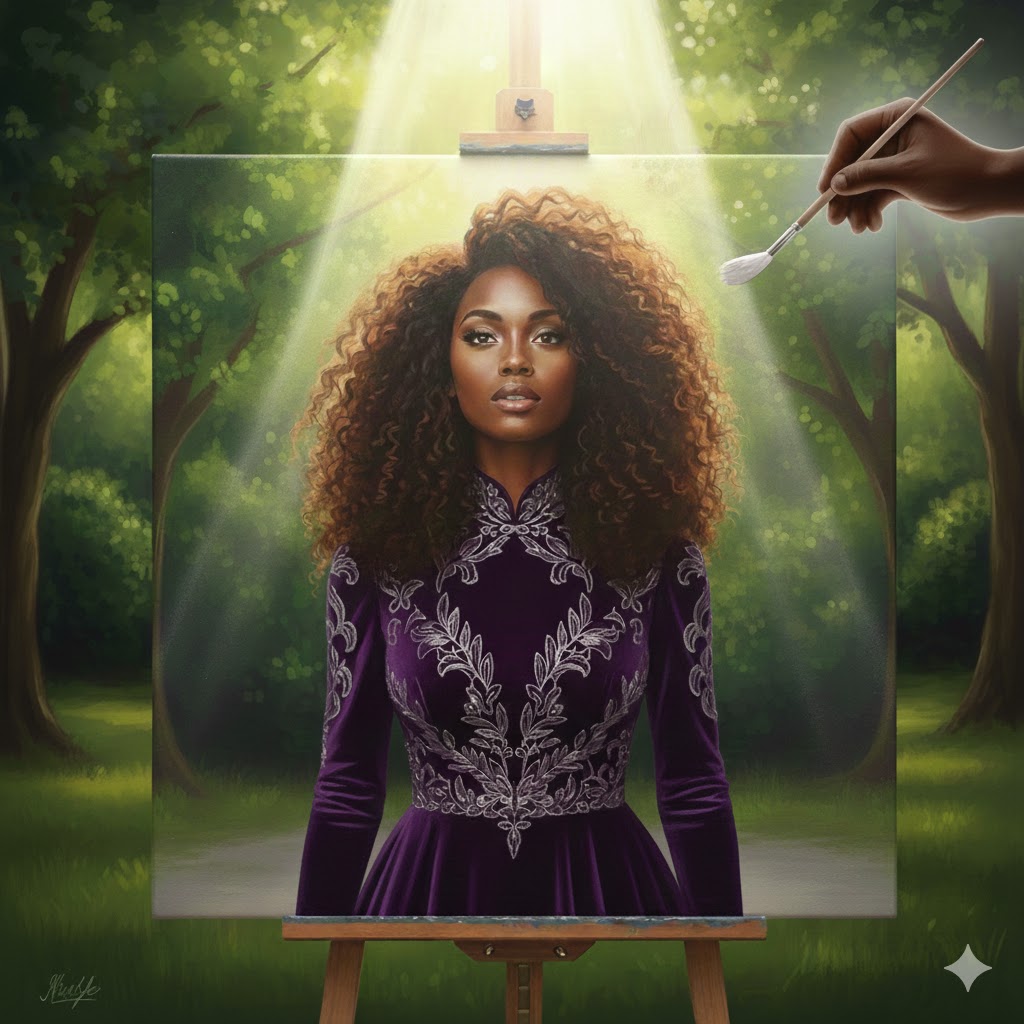
She Is Shulamite in Brown: Loved, Not Compared.

The Shulamite is a central figure in the Song of Solomon (Song of Songs) in the King James Version of the Bible, celebrated for her beauty, sensuality, and beloved status. She represents the ideal of feminine virtue, desire, and intimacy, yet her character is often misunderstood or misappropriated. She is a Black or brown-skinned woman in the biblical narrative, often interpreted as a representation of a woman fully embraced in her own skin, proud of her heritage, and cherished for her intrinsic worth (Song of Solomon 1:5–6, KJV).

The Shulamite’s brownness is highlighted in the text: “I am black, but comely, O ye daughters of Jerusalem” (Song of Solomon 1:5, KJV). This acknowledgment of her dark skin is not a limitation but a declaration of beauty and dignity. She stands as a model for self-acceptance, unapologetic in her appearance, and fully loved for who she is. Her character challenges societies that equate fairness with favor, asserting that worth is inherent, not comparative.

The Shulamite lived in Shulam (or Shunem), a region in ancient Israel, giving her the name “Shulamite.” She embodies the ideal beloved woman, both physically appealing and morally grounded, whose beauty is holistic—spiritual, emotional, and physical. Her brownness, celebrated in scripture, is integral to her identity and her desirability.

Biblically, the Shulamite’s love story is with King Solomon, the wisest man of Israel, though she is not defined solely by this relationship. The text emphasizes mutual love, respect, and admiration. Unlike many narratives where women are objects of comparison, the Shulamite is loved uniquely, for herself, not measured against other women (Song of Solomon 2:16, KJV).

Her narrative teaches that beauty is multifaceted. While society often emphasizes physical appearance alone, the Shulamite’s appeal encompasses confidence, poise, character, and spirituality. Her brown skin is a source of pride, not shame, highlighting a biblical affirmation of melanin-rich beauty.

The Shulamite is also a symbol of agency and voice. She speaks openly about desire, fear, and longing. She is not passive but actively expresses love and commands attention through both words and presence. This autonomy challenges the reduction of women to mere physicality or comparison.

In Black and brown communities today, the Shulamite serves as a powerful archetype. She represents self-love, resisting societal hierarchies that favor lighter skin. Her example validates darker skin tones, encouraging pride, confidence, and recognition of divine favor despite external prejudice.

The Shulamite’s brownness is frequently misinterpreted by Eurocentric translations or artwork, which often depict her with lighter skin. Recognizing her true skin tone restores cultural and spiritual integrity, affirming that God delights in her appearance as He created it.

Her story also emphasizes relational equality. Solomon’s love for her is personal, tender, and unwavering. He values her character alongside her appearance, demonstrating that true affection is holistic and not conditional upon conformity to societal beauty standards.

In the Song of Solomon, she is contrasted with others only to highlight her uniqueness, not to diminish her worth. The text teaches that comparison is unnecessary when one is fully embraced and valued by God and by those who truly love them (Song of Solomon 1:8–10, KJV).

The Shulamite’s wisdom extends beyond romance. She navigates societal pressures and male attention with discernment. She balances desire with dignity, modeling how women can assert themselves in relationships while maintaining self-respect.

Her narrative also underscores the divine intention behind diverse beauty. Scripture repeatedly affirms that God is no respecter of persons (Acts 10:34, KJV). The Shulamite’s brown skin and unique traits are celebrated, not subordinated, demonstrating that true beauty is in God’s creation, not human comparison.

The Shulamite inspires contemporary discussions around colorism. She embodies resistance to the idea that darker-skinned women must conform to Eurocentric ideals to be desirable, proving that divine approval and human admiration are independent of societal bias.

Spiritually, the Shulamite reflects the intimacy between God and His people. Her self-assuredness and acceptance mirror the believer’s call to embrace God’s design fully, including one’s physical attributes. Her narrative is an invitation to celebrate God’s image in diverse forms.

Her brown skin is a source of identity, pride, and relational power. By acknowledging her melanin, she asserts that value is intrinsic, not assigned by external standards. This principle challenges centuries of social prejudice favoring lighter tones.

The Shulamite’s love is mutual and affirming. She is not defined by comparison to other women but by the depth of connection with her beloved, exemplifying the principle that worth is relationally and spiritually grounded rather than competitively measured.

Her voice, confidence, and presence teach that women should speak, act, and love without seeking validation through societal benchmarks. Her beauty is self-contained and self-affirmed, a model for self-love and divine recognition.

In literary and theological studies, the Shulamite is increasingly understood as a symbol of marginalized beauty and voice. Scholars highlight her role in demonstrating that God honors diversity, contrasts human standards, and delights in those whom society may overlook.

The Shulamite remains a powerful icon for women of color, especially Black and brown women. She affirms that their beauty, dignity, and worth are not contingent upon comparison, but are fully loved by God and those who embrace true affection.

Her legacy is timeless: to be Shulamite in brown is to embody confidence, dignity, and divine love. She teaches that self-worth is intrinsic, beauty is multifaceted, and comparison is unnecessary when one is fully embraced and valued.


References

The Holy Bible, King James Version. (1611). Song of Solomon 1:5–6, 2:16, 1:8–10.

West, M. L. (2007). The Songs of Solomon: A study of poetic love and symbolism. Oxford University Press.

Alter, R. (2010). The Art of Biblical Poetry. Basic Books.

Knight, F. (1995). Song of Songs: A Black woman’s reflection. Journal of Biblical Literature, 114(2), 215–230.

Hobbs, J. (2018). Melanin and the Bible: Reclaiming brown and Black beauty in scripture. Faith & Culture Review, 12(1), 45–62.

Hunter, M. (2007). The persistent problem of colorism: Skin tone, status, and inequality. Sociology Compass, 1(1), 237–254.

Dermal Divinity: When God Painted Her Brown.

Dermal divinity is the sacred truth that her skin is not an accident, not a mistake, and not a burden—but a masterpiece crafted with intentionality. When God painted her brown, He dipped His brush into centuries of resilience, wisdom, and ancestral strength. Her melanin is theology written in pigment, a divine proclamation that she is fearfully, wonderfully, and beautifully made (Psalm 139:14, KJV).

When God painted her brown, He thought of sunlight and soil, of beginnings and blessings. Brown is the color of the earth that nourishes life, the foundation beneath nations, the cradle of humanity itself. Science confirms Africa as the birthplace of mankind (Stringer, 2016), and scripture affirms God formed humanity from the dust of the ground (Genesis 2:7, KJV). Her shade is not merely melanin—it is memory, origin, and divine intention.

Her brown skin carries history that cannot be erased. Within its tones lie stories of queens, warriors, mothers, and visionaries. From Kush to Nubia, from the banks of the Nile to the diasporic world, her ancestors walked with a dignity that no empire could destroy. The strength in her skin is not just biological but spiritual, encoded through generations.

Dermal divinity is the understanding that her complexion exists beyond beauty—it is inheritance. Her skin is a living testament to survival through systems that sought to devalue it. Yet no chain, law, or ideology could diminish what God declared good from the beginning. Her brownness has outlived every attempt to shame it.

When God painted her brown, He adorned her with richness that absorbs light and reflects radiance. Melanin is a biological miracle—protective, powerful, and purposeful. It shields, strengthens, and sustains. Studies show melanin plays a crucial role in biological protection and adaptive evolution (Jablonski, 2021). God wove science into her skin before science learned to name it.

Her brownness is also emotional terrain. It holds the complexities of joy and trauma, of cultural pride and societal misunderstanding. She learns, sometimes slowly, that the world’s discomfort with her hue is not her burden to carry. Colorism, racism, and misogynoir may attempt to dim her, but they cannot undo divine craftsmanship.

The sacredness of her skin becomes clearer as she grows. She learns to see her body not through colonized lenses but through the eyes of the One who created her. The Bible teaches that all creation reflects God’s glory (Isaiah 60:1, KJV). Her brownness, therefore, shines with holy intention, a reminder that beauty is not Eurocentric—it is God-designed.

When God painted her brown, He gifted her a crown of textured glory. Coils, curls, and kinks spiral like galaxies, echoing divine creativity. Her hair is not a rebellion; it is a revelation. It testifies to her lineage, to the creative diversity of a God who delights in variety, complexity, and bold expression.

Dermal divinity also acknowledges that her body is not merely aesthetic—it is prophetic. Her skin tells a story before she speaks, declaring the triumphs and trials of people who refused to break. Layers of pigment hold generations of laughter, tears, labor, and liberation. She carries her people with her, even when she walks alone.

When God painted her brown, He placed her in communities of richness and cultural brilliance. She belongs to a tapestry of traditions, languages, rhythms, and spiritualities that stretch across continents. Her identity is not isolated; it is collective, woven into global Blackness.

Her brownness holds a beauty that is both inward and outward. It reflects confidence that has been hard-earned, reclaimed from the distortions of media, history, and hierarchy. She realizes beauty is not a comparison but an awakening—a recognition that her reflection has always been worthy.

Dermal divinity means embracing herself without apology. She does not shrink to make others comfortable or dilute her light to fit into narrow expectations. Her brownness is not negotiable; it is divine signature. To dim it would be to distort God’s artistry.

When God painted her brown, He knew the battles she would face. He equipped her with resilience stitched into her spiritual DNA. Biblical narratives show God’s favor upon those who endure hardship with faith (James 1:12, KJV). Her strength is not accidental—it is appointed.

Her skin becomes sacred armor, not because it is impenetrable, but because it is intentional. She learns that the beauty of being brown is not in perfection but in perseverance. Each shade of melanin carries sacred meaning, a reminder that she survives because she was designed to.

Her brownness makes her a living reflection of divine diversity. God did not create a monochrome world; He created a spectrum of human beauty. To love her skin is to honor the Creator who crafted it. To reject it would be to reject His vision.

As she matures, she learns to love the parts of herself she once questioned. Healing becomes part of blooming, and self-love becomes part of worship. Affirming her beauty aligns her with God’s truth, not the world’s distortions.

When God painted her brown, He planted within her the power to heal others. Her testimony strengthens, inspires, and liberates. She becomes a voice for girls still learning to see themselves through divine eyes. Her presence shifts atmospheres; her story births courage.

Dermal divinity is a calling to walk boldly in identity. It is the understanding that her skin is not a barrier but a blessing. She rises knowing she is seen, chosen, valued, and intentionally crafted. Her brownness is a reflection of glory, not deficit.

And finally, when God painted her brown, He made her a masterpiece—timeless, necessary, and unrepeatable. Her melanin is ministry. Her skin is scripture in color. She is the evidence of holy creativity. She is divine art in human form.


References

Jablonski, N. G. (2021). Living color: The biological and social meaning of skin color. University of California Press.

King James Bible. (1611). Authorized Version.

Stringer, C. (2016). The origin and evolution of Homo sapiens. Philosophical Transactions of the Royal Society B: Biological Sciences, 371(1698), 20150237.

Wells, I. B. (2020). Crusade for justice: The autobiography of Ida B. Wells. University of Chicago Press. (Original work published 1928)

Truth, S. (1995). Narrative of Sojourner Truth. Penguin Books. (Original work published 1850)

The Mirror and the Myth: Somali Identity, Colorism, and the Question of Blackness

Somali identity sits at the crossroads of Africa, the Middle East, and the Indian Ocean world, shaped by centuries of migration, trade, and cultural blending. Because of this complex history, conversations about how some Somalis perceive Black people—and even how they perceive themselves—carry emotional, historical, and sociological weight. While it is inaccurate to claim that all Somalis dislike Black people, anti-Black attitudes indeed exist in parts of Somali society, much like in many cultures around the world influenced by colonialism and colorism.

The foundational issue is identity. Many Somalis see themselves not simply as “Black Africans,” but as Cushitic people, a linguistic and cultural group indigenous to the Horn of Africa. This Cushitic identity predates modern racial categories and often separates Somalis from other African ethnic groups in their own cultural memory. For some, this difference becomes a way to claim uniqueness rather than sameness.

Another layer is the historical Arabian connection. For over a thousand years, the Horn of Africa was tied to the Arabian Peninsula through trade, religion, and intermarriage. Somali clans trace parts of their lineage to Arab traders and Islamic scholars, especially after the spread of Islam in the 7th century. While genetic studies show that Somalis are overwhelmingly East African, the presence of some Arabian ancestry became culturally emphasized over time.

This emphasis contributed to a racial hierarchy that elevated proximity to Arab identity. Arab societies historically developed their own colorist and caste-like distinctions, and these ideas traveled back across the Red Sea. Within this framework, darker-skinned Africans were placed at the bottom, while “Arab-adjacent” identities were seen as more respectable. These beliefs influenced Somali beauty standards and self-perception.

Another contributing factor is colonialism. Italian and British powers reinforced racial categories that separated Somalis from other African groups. The more colonizers insisted Somalis were “not like other Africans,” the more some Somali elites embraced this distinction. Colonialism often amplifies preexisting anxieties, and racial hierarchy became a painful legacy that survived long after independence.

In many Somali communities, especially among diaspora youth, the tension around Black identity emerges from confusion rather than malice. Many grow up hearing conflicting narratives: that they are African, but not “Black”; that they are different, but not superior; that they should distance themselves from Blackness, yet they are racially profiled as Black everywhere they go outside Somalia. This creates an identity crisis.

Colorism further complicates the story. Lighter skin is often praised in Somali society, while darker skin may be stigmatized. These views are not unique to Somalis—they appear throughout Africa, the Middle East, and Asia due to global beauty standards shaped by colonialism, slavery, and media. In this system, “beauty” becomes racialized, and some people internalize the idea that proximity to Arab or Eurasian features is more desirable.

Because of these influences, some Somalis adopt an anti-Black worldview even while they themselves are viewed as Black in Western racial structures. This contradiction produces internalized tension and sometimes open prejudice. Yet, at the same time, there are many Somalis who identify proudly as Black, who celebrate African culture, and who reject colorism entirely. Somali societies are not monolithic.

Another significant factor is clan and ethnic hierarchy. Somali culture is deeply clan-oriented, and these hierarchies sometimes extend into attitudes toward neighboring African groups. Historically, pastoral communities often viewed agricultural or hunter-gatherer groups as socially inferior. Over time, these attitudes sometimes merged with racial ideas introduced through Arab societies and colonial rule.

The diaspora experience reshapes Somali identity in new ways. Young Somalis in the West often become more aware of race because they face the same racism as African Americans and other Black people. Many begin to question the old narratives and reject anti-Blackness, choosing instead to embrace broader Black solidarity. Others, however, cling to ideas of distinction as a coping mechanism for racism.

When people ask why some Somalis “think they are beautiful,” the deeper issue is that global beauty standards themselves are warped. Many societies have been conditioned to associate beauty with specific features—lighter skin, looser hair, narrow noses—because these were historically tied to social status and power. In Somali communities, beauty is often associated with a blend of Cushitic, Afro-Arab, and East African phenotypes. This has nothing to do with superiority and everything to do with cultural conditioning.

Moreover, Somali beauty is frequently celebrated within the global modeling and fashion world. This external validation reinforces cultural pride but can also unintentionally deepen colorist tendencies. When beauty becomes linked to specific features rather than the full spectrum of Somali diversity, it fuels exclusion and competition.

The question of “what is going on with them?” cannot be answered with a single explanation. Instead, Somali attitudes toward Blackness are shaped by layers of history—Arab influences, colonial classifications, clan structures, colorism, migration, and modern media. These forces shape self-perception, sometimes in harmful ways, but they are not fixed or universal.

There are many Somalis who actively challenge anti-Blackness, educate their communities, and advocate for unity with the broader African diaspora. Activists, scholars, and artists within Somali communities speak openly about dismantling these internalized biases. They argue that Black identity is not something to avoid, but something to honor and embrace.

At the same time, it is important to recognize that conversations about Somali identity must be nuanced. No ethnic group is uniformly prejudiced or uniformly enlightened. Just as some Somali individuals hold anti-Black beliefs, many others are deeply committed to solidarity, justice, and cross-cultural understanding.

It is also essential to avoid narratives that paint Somalis as uniquely problematic. Anti-Blackness is a global phenomenon—found in Arab countries, Asian countries, Latin America, Europe, and even among some Africans. Somali society reflects this global influence, not an inherent flaw.

Ultimately, the relationship between Somalis and Black identity is a story of internal conflict shaped by external forces. It reflects a broader truth: colonization, racial hierarchy, and colorism have left deep scars across the world. Healing requires honest dialogue, historical literacy, and intentional unlearning.

When Somalis embrace the fullness of their East African heritage, they challenge the myth of separation. When they reject colonial beauty hierarchies, they dismantle the internalized shame that feeds colorism. When they stand in solidarity with other Black communities, they reclaim a shared history of resilience, faith, and cultural pride.

In the end, identity is not just what one inherits—it is also what one chooses. And many Somalis today are choosing a narrative of unity rather than division, truth rather than myth, and empowerment rather than stigma.


References

Abdi, C. M. (2015). Elusive Jannah: The Somali Diaspora and Borderless Muslim Identity. University of Minnesota Press.
Lewis, I. M. (2002). A Modern History of the Somali. James Currey.
Samatar, A. I. (1994). The Somali Challenge: From Catastrophe to Renewal? Lynne Rienner.
Hassan, M. (2017). “Anti-Blackness in the Arab and Horn Regions.” Journal of African Studies, 44(2), 215–231.
Harper, K. (2019). Colorism and the Horn of Africa: Historical Roots and Modern Realities. Routledge.
Ali, N. (2021). “Somali Identity in the Diaspora: Negotiating Blackness, Islam, and Migration.” Diaspora Studies, 14(1), 55–73.

The Politics of Pretty: Brown Girls and Beauty Hierarchies. #thebrowngirldilemma

Photo by Sherman Trotz on Pexels.com

Beauty has never existed in a vacuum; it is deeply political, intertwined with power, culture, and societal hierarchy. For Brown girls, the politics of pretty are particularly complex, as beauty standards are often constructed to privilege lighter skin, Eurocentric features, and Western ideals. These hierarchies shape not only social perception but also opportunities, self-esteem, and cultural identity, producing both overt and subtle forms of discrimination (Hunter, 2007).

Historical legacies of colonialism and slavery play a central role in these hierarchies. Lighter-skinned individuals were historically afforded social, economic, and educational advantages, while darker-skinned people were marginalized. These structures created lasting beauty hierarchies in which skin tone, facial features, and hair texture became markers of status and desirability. Brown girls inherit these dynamics, navigating social spaces that often value proximity to whiteness over authentic cultural identity (Byrd & Tharps, 2014).

The media reinforces these hierarchies by promoting narrow definitions of beauty. Television, film, fashion, and social media often highlight lighter-skinned women as aspirational figures while darker-skinned women remain underrepresented or stereotyped. Celebrities like Yara Shahidi, Salli Richardson, and Mari Morrow illustrate the visibility and privilege associated with lighter skin, whereas Lupita Nyong’o, Kenya Moore, and Issa Rae challenge conventional beauty hierarchies by embracing melanin-rich skin, natural hair, and culturally distinct features (Fardouly et al., 2015).

Psychologically, these hierarchies impact self-perception and identity. Social comparison theory demonstrates that individuals evaluate themselves against societal standards, often internalizing bias. For Brown girls, repeated exposure to hierarchical standards of beauty can produce low self-esteem, body dissatisfaction, and feelings of exclusion. However, mentorship, representation, and culturally affirming environments can counteract these pressures, fostering resilience, confidence, and pride in one’s natural features (Festinger, 1954).

Economic implications of beauty hierarchies are equally significant. Lighter-skinned women often experience advantages in employment, income, and social mobility, demonstrating that beauty standards are not purely aesthetic but are tied to systemic privilege and opportunity. This inequity underscores how societal valuation based on appearance intersects with broader structures of power and access, perpetuating disadvantage for darker-skinned individuals (Hunter, 2007).

Cultural affirmation and advocacy provide pathways for resistance. Celebrating African and diasporic heritage, highlighting achievements of dark-skinned women, and promoting inclusive representation in media and education empower Brown girls to challenge hierarchical standards. Initiatives like #BlackGirlMagic, #MelaninPoppin, and #UnapologeticallyBrown amplify voices historically marginalized, affirming that beauty is multidimensional and not dictated by proximity to Eurocentric ideals (Banks, 2015).

Spiritual grounding complements cultural and social strategies. Proverbs 31:30 (KJV) declares, “Favour is deceitful, and beauty is vain: but a woman that feareth the LORD, she shall be praised.” Faith provides an enduring lens through which Brown girls can measure worth by character, integrity, and divine purpose rather than societal approval. Spiritual perspective reinforces resilience and affirms that authentic beauty emerges from self-awareness, virtue, and confidence.

In conclusion, the politics of pretty create hierarchical structures that privilege lighter skin and Eurocentric features, influencing perception, opportunity, and self-worth for Brown girls. Yet through cultural affirmation, representation, mentorship, and spiritual grounding, these hierarchies can be challenged. By redefining beauty on their own terms, Brown girls assert agency, embrace authentic features, and inspire a new paradigm in which melanin-rich beauty is celebrated, affirmed, and empowered.


References

Banks, J. A. (2015). Cultural diversity and education: Foundations, curriculum, and teaching. Routledge.

Byrd, A. D., & Tharps, L. L. (2014). Hair Story: Untangling the Roots of Black Hair in America. St. Martin’s Press.

Fardouly, J., Diedrichs, P. C., Vartanian, L. R., & Halliwell, E. (2015). Social comparisons on social media: The impact of Facebook on young women’s body image concerns and mood. Body Image, 13, 38–45.

Festinger, L. (1954). A theory of social comparison processes. Human Relations, 7(2), 117–140.

Hunter, M. (2007). The persistent problem of colorism: Skin tone, status, and inequality. Sociology Compass, 1(1), 237–254.

Algorithmic Colorism: Digital Bias, Beauty Hierarchies, and the New Face of Discrimination.

Colorism has long shaped social, economic, and psychological realities within the global Black and Brown diaspora. But today, the battlefield has shifted into a new arena: technology. Algorithmic colorism refers to the ways digital systems — from social media filters to AI beauty ranking tools to facial recognition — reinforce, re-normalize, and amplify historic hierarchies based on skin tone. This phenomenon merges old prejudice with modern power, cloaking racial bias in the seeming objectivity of data and mathematics.

Historically, colorism was expressed through colonial power structures, slavery, caste systems, and Western beauty standards that privileged fair-skinned individuals. Digital technology, instead of dismantling these hierarchies, frequently embeds them deeper. The algorithm becomes the new overseer — sorting, elevating, suppressing, and shaping perceptions of beauty and humanity. What was once plantation logic now exists as platform logic.

Social media platforms reward certain facial types and color tones. Lighter skin often receives more visibility, engagement, and algorithmic boosting, while darker skin tones are frequently filtered out, shadow-suppressed, or made to appear lighter via “beauty” filters. These filters normalize Eurocentric features — slender noses, lighter skin, narrower jawlines — subtly training young users to internalize standards that privilege whiteness and proximity to whiteness.

Facial recognition systems also demonstrate measurable racial bias, particularly against dark-skinned women. MIT researcher Joy Buolamwini famously revealed that some systems misclassified darker-skinned women up to 35% more frequently than lighter-skinned men. In essence, the darker the skin, the less “visible” the person in digital systems. Invisibility becomes digital erasure — an electronic version of saying “you do not exist” or “you do not belong.”

This bias affects how people experience everyday life. From phone cameras that fail to recognize darker faces to auto-tagging tools misidentifying Black individuals as threats, algorithmic colorism has real-world consequences. It shapes hiring software, law enforcement databases, beauty industry AI, and academic proctoring tools that cannot detect the faces of darker-skinned test-takers. Prejudice becomes code.

Beauty, historically shaped by white supremacy and colonial order, is now shaped by machine learning. AI “beauty scoring” systems — often trained on databases of overwhelmingly white faces — routinely rank lighter-skinned individuals higher. In turn, these systems feed back into social media feedback loops, determining who is labeled “beautiful,” who gets platform attention, and who is pushed to the margins.

Colorism intersects with desirability politics. Young users internalize digital reinforcement, believing that lightness equals attractiveness and darker tones equal less value. As a result, algorithmic systems become silent teachers — instructing generations to view beauty through a skewed, Eurocentric lens. Thus, algorithmic colorism does not just reflect bias; it manufactures it.

Even within communities of color, digital platforms multiply existing color hierarchies. “Brown-skinned” and “yellow-bone” filters flood platforms, enabling the synthetic lightening of melanin and the idealization of mixed-race aesthetics. While dark skin remains celebrated in certain empowering artistic and cultural circles, algorithms often work counter to this empowerment, drowning out dark-skinned beauty under the weight of digital preference.

For the entertainment industry, algorithmic bias determines who is cast, whose music goes viral, and whose aesthetic the machine recognizes as marketable. Lighter-skinned artists often benefit from platform amplification. Meanwhile, darker-skinned artists — especially women — battle invisibility, tokenism, and algorithmic suppression. Technology becomes a gatekeeper and taste-maker.

This digital inequity extends to product design. Filters created primarily for lighter skin produce distortions on darker tones. Lighting and photography technologies in devices often privilege lighter subjects. Developers’ unconscious biases surface in pixels and code, shaping cultural preferences without public debate or consent. Invisibility becomes system design.

Algorithmic colorism also reinforces patriarchal beauty hierarchies. Women bear disproportionate burden as beauty-focused systems magnify color bias in dating algorithms, social media ranking, and digital marketplaces for modeling and branding. Dark-skinned women once again endure dual oppression — racism layered with colorism, now automated.

But resistance rises. Scholars, technologists, and activists call for algorithmic transparency, diverse coding teams, and ethical AI design. Movements centering melanin — from #MelaninMagic to #Unbothered — challenge the narrative. Yet resistance alone cannot match corporate scale; regulation, equity engineering, and truthful representation must follow.

The biblical warning in Psalm 82:2–4 resonates: “How long will ye judge unjustly, and accept the persons of the wicked? Defend the poor and fatherless: do justice to the afflicted and needy.” Injustice coded into digital systems becomes modern oppression requiring moral response, not just technological fixes.

True equity demands confronting the myth of algorithmic neutrality. Algorithms inherit human prejudice unless intentionally purified. Diversity in technology leadership is not cosmetic — it is mandatory for fairness. Ethical coding becomes civil rights work. Data justice becomes a spiritual and social mandate.

The next era of discrimination will not always wear white robes or badges. It will live in lines of code, camera lenses, and AI systems deciding who is visible, desirable, and worthy. The battleground is digital; the stakes are human. Society must choose whether technology reflects our worst biases or our highest ideals.

At stake is more than beauty — it is belonging, self-worth, and humanity’s reflection back to itself. Algorithmic colorism reveals a truth: systems are not neutral. They either liberate or oppress. The fight for melanin dignity continues — not only in streets and classrooms, but in servers, datasets, and screens shaping the modern soul.

Artificial intelligence must evolve beyond artificial bias. The future must honor melanin, not erase it. Beauty must expand beyond filters and code. And the digital world must reflect the full spectrum of humanity — in truth, not distortion.

The Digital Plantation

Colorism—the preferential treatment of lighter-skinned individuals within the same racial or ethnic group—has been a pervasive feature of Black history, tracing back to slavery, colonial hierarchies, and social stratification (Hunter, 2007). In contemporary society, this prejudice has evolved into digital forms, embedded within artificial intelligence, social media algorithms, and beauty standards. These manifestations continue to reinforce oppressive narratives that devalue darker-skinned Black individuals while elevating Eurocentric features.

Theologically, colorism mirrors the human tendency toward superficial judgment condemned in Scripture. The King James Version warns against favoritism: “My brethren, have not the faith of our Lord Jesus Christ, the Lord of glory, with respect of persons” (James 2:1, KJV). Similarly, the Apocrypha highlights the spiritual danger of human vanity and superficial valuation: “For the wickedness of man is great upon the earth” (Wisdom of Solomon 14:12, Apocrypha). Understanding the historical roots of colorism allows for meaningful reflection on both spiritual and societal dimensions of human prejudice.


Historical Roots of Colorism

1. Pre-Colonial African Societies

In many pre-colonial African societies, beauty and social status were complexly coded through hair, skin tone, and body adornment rather than strict hierarchies privileging lighter skin. However, as European colonial powers advanced, notions of skin tone became intertwined with proximity to power, wealth, and survival, laying the foundation for systemic colorism (Harris, 2015).

2. Slavery and the Plantation Hierarchy

During the transatlantic slave trade, slaveholders leveraged colorism as a tool of division. Mixed-race children of European slave owners and enslaved African women were often granted preferential treatment, lighter work duties, and social advantages (Hunter, 2007). This stratification fostered internalized oppression and a hierarchy privileging lighter skin that persisted long after emancipation.

3. Post-Emancipation and Media Representation

Colorism intensified in the 20th century through media, film, and advertising, which predominantly celebrated lighter-skinned Black individuals (Russell, Wilson, & Hall, 2016). The rise of Hollywood, beauty pageants, and commercialized ideals codified skin-tone biases that informed social mobility and cultural capital.


The Digital Plantation: AI and Modern Colorism

The metaphor of “The Digital Plantation” captures how contemporary technology—AI algorithms, facial recognition, and social media filters—perpetuates historical biases. AI systems trained on Eurocentric datasets tend to misclassify, underrepresent, or render invisible darker-skinned individuals (Buolamwini & Gebru, 2018). This represents a digital reincarnation of the same hierarchical systems that defined plantations, enforcing standards of beauty, intelligence, and value based on skin tone.

Visual Concept: The Digital Plantation

  • Foreground: Diverse Black individuals of varying skin tones interacting with smartphones and screens, some celebrated, some obscured by digital shadows.
  • Background: A plantation-like grid subtly overlaid with algorithmic code, symbolizing surveillance, ranking, and control.
  • Lighting: Warm golden light highlights lighter-skinned figures while darker-skinned figures sit in subtle shadow, representing algorithmic bias.
  • Symbolism: Broken chains and floating pixels suggest the potential for liberation from both historical and digital oppression.

Scriptural Reflection

Colorism and AI bias can be seen as modern manifestations of humanity’s spiritual blindness to equality and divine worth. The Scriptures provide moral guidance:

  • James 2:1 (KJV): Condemns favoritism based on appearance.
  • Wisdom of Solomon 14:12 (Apocrypha): Warns against the corruption of judgment by superficial values.
  • Genesis 1:27 (KJV): Affirms that all humans are made in God’s image, irrespective of skin tone.

From a theological perspective, resisting algorithmic colorism is not only a social imperative but a spiritual one, emphasizing justice, discernment, and honoring God’s creation.


Historical Timeline of Colorism → AI

EraManifestationEvidence & Scripture Integration
Pre-1500sCultural beauty diversity in AfricaHighlighted by ethnographic studies (Harris, 2015)
1500s-1800sSlavery, mixed-race privileging, plantation hierarchies“Owe no man any thing, but to love one another” (Rom 13:8, KJV)
1900sHollywood, advertisements, colorism in mediaSocial stratification codified, mirrors James 2:1 warnings
2000sSocial media, digital beauty filtersAlgorithmic reinforcement of bias, e.g., Buolamwini & Gebru (2018)
2020sAI and facial recognitionModern “Digital Plantation” reflecting historical hierarchies

Conclusion

Colorism, historically rooted in slavery and colonialism, persists today in digital landscapes through biased algorithms and representation systems. Addressing these inequities requires historical understanding, technical interventions in AI, and a theological commitment to justice and equality. Scripture, both canonical and apocryphal, provides a moral framework condemning favoritism and promoting the inherent dignity of every human being. The concept of the Digital Plantation visualizes these ongoing struggles, connecting past and present while advocating for liberation in both spiritual and technological realms.


References

  • Buolamwini, J., & Gebru, T. (2018). Gender shades: Intersectional accuracy disparities in commercial gender classification. Proceedings of Machine Learning Research, 81, 1–15.
  • Harris, A. P. (2015). Skin tone stratification and social inequality: Historical and contemporary perspectives. Oxford University Press.
  • Hunter, M. (2007). The persistent problem of colorism: Skin tone, status, and inequality. Sociology Compass, 1(1), 237–254.
  • Russell, K., Wilson, M., & Hall, R. (2016). The color complex: The politics of skin color in a new millennium. Anchor Books.

Beauty Bias: The Silent Oppressor

Beauty has always been more than skin deep. Across societies, the standards of attractiveness are not merely aesthetic preferences—they are mechanisms of privilege, discrimination, and social control. Those who meet societal ideals are often rewarded, while those who diverge face subtle and overt marginalization. This phenomenon, widely referred to as beauty bias, operates silently but powerfully, influencing career trajectories, social opportunities, and interpersonal relationships (Hamermesh & Biddle, 1994).

From an early age, children learn who is “desirable” and who is not. Research shows that teachers often unconsciously favor students deemed more attractive, offering them more attention and positive reinforcement (Langlois et al., 2000). This early conditioning establishes a lifelong connection between appearance and social advantage. In many ways, it mirrors the biblical admonition that God judges the heart rather than outward appearance (1 Samuel 16:7, KJV). Yet society’s persistent fixation on outward beauty undermines this spiritual principle.

In professional spaces, beauty bias manifests as a measurable advantage in hiring, promotion, and salary. Attractive individuals are often perceived as more competent, intelligent, and socially adept, even when qualifications are identical (Riniolo et al., 2006). For Black women and men, this bias is compounded by colorism, where lighter skin tones receive preferential treatment within and outside their communities (Hunter, 2007). The resulting inequity is both economic and psychological, reinforcing systemic barriers.

Media and advertising perpetuate and normalize narrow beauty standards. From fashion magazines to television commercials, the celebration of Eurocentric features marginalizes those who do not conform. These representations create a cultural hierarchy that equates beauty with moral worth and social value (Wolf, 1991). The spiritual dimension of this bias cannot be overstated: scripture repeatedly warns against superficial judgment (Matthew 23:27-28, KJV), highlighting the danger of equating external beauty with inner virtue.

The psychological toll of beauty bias is profound. Individuals who fail to meet societal ideals experience lower self-esteem, higher rates of depression, and social anxiety (Cash & Pruzinsky, 2002). For adolescents, particularly girls, these pressures intensify as social media amplifies curated images of perfection. The silent oppressor thus infiltrates the mind, shaping identity, self-perception, and life choices.

Beauty bias intersects with race, gender, and socioeconomic status. Black women, for instance, face a dual burden: discrimination based on both race and deviation from Western beauty norms. Studies indicate that darker-skinned Black women earn less and are less likely to be considered for leadership positions than lighter-skinned peers (Hannon, 2019). In workplaces, schools, and social spaces, these compounded biases reinforce cycles of marginalization.

Cultural institutions often codify beauty bias. Lawsuits against companies for discrimination based on appearance reveal a troubling reality: while race, gender, and age are protected, appearance often remains a loophole for inequity (Eagly & Makhijani, 1992). The lack of formal recognition allows beauty bias to operate invisibly, shaping lives without accountability.

Historically, beauty bias has been weaponized to enforce social hierarchies. Colonialism and slavery manipulated perceptions of beauty to privilege Eurocentric features, fostering internalized inferiority among colonized populations (Hunter, 2007). This historical layering explains why contemporary beauty bias often overlaps with colorism and racialized ideals, particularly in the African diaspora.

In religious contexts, beauty bias is also evident. The biblical story of Leah and Rachel (Genesis 29:17, KJV) reflects societal preferences for outward beauty, highlighting how cultural values can distort human relationships and worth. Rachel’s favor due to her appearance sparked envy and relational tension, mirroring modern experiences of beauty-based preferential treatment.

Social media has amplified beauty bias to unprecedented levels. Algorithms prioritize images conforming to conventional attractiveness, creating a feedback loop of validation for some and exclusion for others (Fardouly et al., 2015). The constant exposure to idealized appearances magnifies the pressure to conform, often at the expense of mental health and authentic self-expression.

Education and intervention are key to combating beauty bias. Awareness campaigns and inclusive media representation can help dismantle harmful stereotypes. Research underscores the importance of cultivating environments where competence, character, and creativity are valued over appearance (Hosoda et al., 2003). This approach aligns with spiritual teachings emphasizing inner virtue over external form (Proverbs 31:30, KJV).

Beauty bias is not limited to women. Men also face societal pressures to conform to physical ideals, affecting employment opportunities, social acceptance, and self-perception (Grammer & Thornhill, 1994). These expectations create a gendered dimension to bias, showing that societal obsession with appearance impacts everyone, albeit differently.

Consumer culture intensifies beauty bias through commodification of attractiveness. Cosmetic procedures, fashion, and fitness industries profit from insecurities created by narrow beauty ideals (Wolf, 1991). This economic exploitation transforms appearance into currency, perpetuating inequality and reinforcing the silent oppressor.

Intersectionality offers a critical lens to understand beauty bias. Kimberlé Crenshaw’s framework illustrates how overlapping identities—race, gender, age, and class—shape the intensity and impact of appearance-based discrimination (Crenshaw, 1991). Black women, low-income individuals, and non-conforming genders often face compounded pressures that limit access to opportunities and social mobility.

The workplace remains a battleground for beauty bias. Studies show that attractive employees are often evaluated more favorably during performance reviews and receive more promotions, regardless of skill level (Hamermesh & Biddle, 1994). These inequities exacerbate existing disparities in income and professional advancement, particularly for marginalized groups.

Mental health consequences extend beyond self-esteem. Individuals targeted by beauty bias may develop body dysmorphic disorder, eating disorders, and chronic stress, creating long-term psychological harm (Cash & Pruzinsky, 2002). Addressing beauty bias, therefore, is not merely an aesthetic concern but a public health imperative.

Media representation can challenge beauty bias. Initiatives highlighting diverse body types, skin tones, and features disrupt conventional hierarchies and provide validation for marginalized groups (Hunter, 2007). Representation matters because it shapes cultural norms, informs perceptions of worth, and challenges the silent oppressor embedded in social consciousness.

Biblical scripture offers guidance on resisting societal fixation on appearance. In 1 Peter 3:3-4 (KJV), the apostle emphasizes inner beauty and a gentle spirit over external adornment, urging believers to cultivate virtues that endure beyond fleeting aesthetics. Such spiritual insight directly counters the societal obsession with physical attractiveness.

Ultimately, beauty bias operates as a form of structural and cultural oppression. It silently privileges some while disadvantaging others, creating invisible barriers in education, employment, social interaction, and personal development. Recognizing and addressing this bias requires intentionality, cultural critique, and systemic intervention.

By elevating character, competence, and inner virtue over superficial standards, societies can mitigate the silent oppressor of beauty bias. Through education, media representation, and spiritual alignment with biblical principles, individuals and institutions can begin to dismantle these inequities, creating a world where worth is measured by substance rather than appearance.


References

  • Cash, T. F., & Pruzinsky, T. (2002). Body image: A handbook of theory, research, and clinical practice. Guilford Press.
  • Crenshaw, K. (1991). Mapping the margins: Intersectionality, identity politics, and violence against women of color. Stanford Law Review, 43(6), 1241–1299.
  • Eagly, A. H., & Makhijani, M. G. (1992). Gender and the evaluation of leaders: A meta-analysis. Psychological Bulletin, 111(1), 3–22.
  • Fardouly, J., Diedrichs, P. C., Vartanian, L. R., & Halliwell, E. (2015). Social comparisons on social media: The impact of Facebook on young women’s body image concerns and mood. Body Image, 13, 38–45.
  • Grammer, K., & Thornhill, R. (1994). Human facial attractiveness and sexual selection: The role of symmetry and averageness. Journal of Comparative Psychology, 108(3), 233–242.
  • Hamermesh, D. S., & Biddle, J. E. (1994). Beauty and the labor market. American Economic Review, 84(5), 1174–1194.
  • Hannon, P. A. (2019). Colorism in the workplace: Skin tone and employment outcomes. Journal of Black Studies, 50(4), 350–372.
  • Hosoda, M., Stone-Romero, E. F., & Coats, G. (2003). The effects of physical attractiveness on job-related outcomes: A meta-analysis of experimental studies. Personnel Psychology, 56(2), 431–462.
  • Hunter, M. L. (2007). The persistent problem of colorism: Skin tone, status, and inequality. Sociology Compass, 1(1), 237–254.
  • Langlois, J. H., Kalakanis, L., Rubenstein, A. J., Larson, A., Hallam, M., & Smoot, M. (2000). Maxims or myths of beauty? A meta-analytic and theoretical review. Psychological Bulletin, 126(3), 390–423.
  • Riniolo, T. C., Johnson, K. D., Sherman, S. J., & Trezza, G. (2006). Is beauty best? Physical attractiveness and the accumulation of social resources. Personality and Social Psychology Bulletin, 32(9), 1157–1169.
  • Wolf, N. (1991). The beauty myth: How images of beauty are used against women. HarperCollins.

The Cost of Being Beautiful: Exploitation, Validation, and Visibility.

This photograph is the property of its respective owner. No copyright infringement intended.

Beauty has long been a currency in human society—admired, desired, and exploited. For women, especially women of color, beauty has functioned both as power and prison. The cost of being beautiful extends beyond vanity; it is the psychological, emotional, and even spiritual toll exacted by a world that defines worth through appearance. Beauty becomes both an asset and a liability, offering validation but demanding visibility on terms not of one’s own making.

From childhood, individuals—particularly girls—are taught that beauty opens doors. Compliments, attention, and social privileges reinforce a belief that attractiveness equates to value. Yet, this same system exploits that very beauty, commodifying it through media, marketing, and male desire. The pursuit of beauty thus becomes a performance sustained by approval, not authenticity (Wolf, 1991).

In modern culture, beauty is no longer natural—it is manufactured. Billions are spent annually on cosmetics, plastic surgery, and digital enhancement. Social media platforms like Instagram and TikTok amplify this obsession, turning faces and bodies into brands. The line between identity and image blurs, leaving many women trapped between their true selves and the perfected versions projected online (Gill, 2007).

Beauty’s validation often comes through the male gaze. Women are socialized to see themselves as objects of desire rather than subjects of their own narratives. This gaze not only dictates standards but defines visibility—who is seen, who is desirable, and who is invisible. To be beautiful is to be watched; to be watched is to be controlled (Mulvey, 1975).

For Black women, beauty carries a distinct complexity. Eurocentric standards historically excluded them from being perceived as beautiful, relegating them to stereotypes of strength or hypersexuality. The struggle for validation becomes an act of resistance—a reclaiming of aesthetics, identity, and self-worth against centuries of misrepresentation (Hooks, 1992).

The beauty industry profits from insecurity. Advertisements subtly tell women they are never enough—never young enough, thin enough, light enough. This manufactured dissatisfaction fuels perpetual consumption. Beauty, in capitalist culture, is not about empowerment but about profit, built upon cycles of comparison and competition (Bordo, 2003).

Exploitation hides beneath the surface of glamour. Models, influencers, and entertainers often face objectification disguised as opportunity. Their visibility is contingent upon maintaining desirability, which can breed anxiety, eating disorders, and burnout. The emotional labor of beauty—the pressure to be flawless at all times—is invisible yet exhausting.

In the realm of Hollywood and fashion, women of color face the dual burden of representation and tokenism. Their inclusion often serves as aesthetic diversity rather than genuine equity. The “exotic” label objectifies rather than honors their heritage, turning cultural identity into spectacle (Craig, 2002).

Historically, beauty has also been weaponized as social currency. During slavery and segregation, lighter-skinned Black women were often favored in domestic work or entertainment, reinforcing colorism within the community. Beauty became not only personal but political—a marker of proximity to whiteness and privilege (Hunter, 2005).

Psychologically, the constant pursuit of beauty erodes self-esteem. When identity becomes contingent on appearance, the individual lives under the tyranny of external validation. This fragile self-worth can fracture when youth fades or trends shift, revealing the emptiness behind conditional love and approval.

Religiously and spiritually, beauty holds deeper implications. Scripture reminds us that “favor is deceitful, and beauty is vain” (Proverbs 31:30, KJV). True beauty, in divine terms, is moral and internal, not material. Yet society reverses this order, idolizing outward appearance and neglecting inner substance—a form of modern idolatry masked as self-care.

The commodification of beauty also intersects with racial capitalism. Global markets exploit African, Asian, and Latin American women’s bodies through skin-lightening products, hair extensions, and Eurocentric fashion ideals. What is marketed as “choice” often conceals economic coercion and cultural colonization (Glenn, 2008).

Visibility, while often framed as empowerment, carries its own cost. Women in the public eye face surveillance and criticism that erode privacy and authenticity. The more visible a woman becomes, the less control she has over how she is seen. Visibility thus becomes exposure—a light that illuminates and burns simultaneously.

In relationships, beauty can distort power dynamics. Attractive women may receive attention but not respect; love offered for appearance rather than character is shallow and fleeting. Men conditioned by visual culture may desire beauty but fear its autonomy, leading to control, jealousy, or emotional abuse (Fredrickson & Roberts, 1997).

The digital age amplifies these dynamics. Filters, edits, and algorithms dictate what is beautiful, rewarding conformity and punishing difference. The result is a homogenized global aesthetic where individuality is lost. Even empowerment movements risk becoming commodified slogans that sell beauty under the guise of “self-love.”

Yet, beauty is not inherently evil—it is divine when redefined. When women reclaim beauty as expression rather than validation, it transforms from exploitation to empowerment. True beauty becomes a mirror of spirit, creativity, and cultural identity. It ceases to be about approval and becomes an act of liberation.

Cultural redefinition requires dismantling Eurocentric beauty norms and celebrating diversity of complexion, texture, and form. Movements such as “Black Girl Magic” and natural hair advocacy challenge oppressive aesthetics, restoring pride to what was once marginalized. Beauty, reimagined through cultural authenticity, becomes resistance and restoration.

The cost of being beautiful can only be paid back through truth—by acknowledging the pain behind the polish. Women must reclaim the narrative of beauty, detaching it from consumption and control. Beauty must once again serve humanity, not hierarchy.

Ultimately, beauty’s truest form lies in freedom: the freedom to exist beyond the gaze, to define oneself without permission, and to embody a worth that no mirror can measure. When beauty ceases to be a burden and becomes a birthright, visibility transforms into vision—and validation becomes self-love.


References

Bordo, S. (2003). Unbearable weight: Feminism, Western culture, and the body. University of California Press.

Craig, M. L. (2002). Ain’t I a beauty queen? Black women, beauty, and the politics of race. Oxford University Press.

Fredrickson, B. L., & Roberts, T.-A. (1997). Objectification theory: Toward understanding women’s lived experiences and mental health risks. Psychology of Women Quarterly, 21(2), 173–206.

Gill, R. (2007). Gender and the media. Polity Press.

Glenn, E. N. (2008). Yearning for lightness: Transnational circuits in the marketing and consumption of skin lighteners. Gender & Society, 22(3), 281–302.

Hooks, B. (1992). Black looks: Race and representation. South End Press.

Hunter, M. (2005). Race, gender, and the politics of skin tone. Routledge.

Mulvey, L. (1975). Visual pleasure and narrative cinema. Screen, 16(3), 6–18.

Wolf, N. (1991). The beauty myth: How images of beauty are used against women. HarperCollins.