Category Archives: a brown girl’s beauty

Epistemologies of the Black Aesthetic and Phenomenology of the Black Woman and Man.

The epistemologies of the Black aesthetic begin with the recognition that knowledge itself is not neutral but socially and historically constructed. Epistemology, as the study of how knowledge is produced and legitimized, reveals that Western systems of knowing have long excluded Black experiences from the category of universal truth. Within this framework, Black aesthetics emerge not merely as artistic expressions but as alternative ways of knowing, rooted in embodied history, cultural memory, and collective survival.

The Black aesthetic operates as a counter-epistemology, challenging dominant paradigms that privilege Eurocentric modes of perception. Rather than separating reason from emotion, or mind from body, Black aesthetic traditions often integrate feeling, rhythm, spirituality, and storytelling as legitimate sources of knowledge. Music, dance, oral tradition, fashion, and visual art function as epistemic practices—ways of interpreting reality and transmitting meaning across generations.

Phenomenology, the philosophical study of lived experience, provides a powerful lens for understanding the Black woman and man as subjects rather than objects of knowledge. Phenomenology asks how individuals experience the world from within their own consciousness. Applied to Black existence, it shifts attention from how Black people are represented to how Black people perceive, feel, and inhabit social reality.

The phenomenology of the Black subject is inseparable from history. Slavery, colonialism, segregation, and systemic racism have shaped not only material conditions but also modes of perception. Black embodiment carries historical memory within it, producing what Frantz Fanon described as a “racial epidermal schema,” where the body is experienced through the gaze of others before it is experienced as self.

For the Black woman, phenomenology is marked by intersectionality—the simultaneous experience of racialized and gendered embodiment. Her body is not only racialized but sexualized, politicized, and surveilled. She is often forced to see herself through external projections that define her as laborer, caretaker, object of desire, or symbol of strength. These imposed meanings distort self-perception and fracture subjectivity.

Yet Black women also generate epistemologies of resistance. Through intellectual traditions such as Black feminism, womanism, and Africana philosophy, Black women reclaim authority over their own experiences. Knowledge emerges from lived reality, testimony, and embodied wisdom. The Black woman becomes not an object of study but a producer of theory.

The phenomenology of the Black man is shaped by a different but equally complex symbolic structure. Black masculinity has historically been framed through stereotypes of hyperphysicality, aggression, criminality, or emotional absence. These representations shape how Black men experience their own bodies in public space—often as sites of threat rather than humanity.

Black male subjectivity is therefore marked by hypervisibility and invisibility at once. The Black man is seen as a body but not recognized as a mind. His presence is often interpreted through fear rather than empathy. This produces what phenomenologists describe as alienation—the feeling of being estranged from one’s own existence.

Despite these constraints, Black men also produce alternative epistemologies of selfhood. Through music, literature, spirituality, and political consciousness, Black men articulate modes of being that resist dehumanization. Hip-hop, blues, jazz, and spoken word become philosophical forms—ways of narrating reality and reclaiming interior life.

The Black aesthetic unites these experiences through symbolic form. It functions as a visual, sonic, and cultural language through which Black people encode knowledge. Aesthetic practices become epistemic tools—mechanisms for understanding suffering, joy, memory, and hope. Art becomes theory in motion.

Unlike Western aesthetics, which often prioritize abstraction and detachment, the Black aesthetic emphasizes embodiment and relationality. Meaning is not discovered through distance but through participation. Knowledge emerges from the body in motion, from rhythm, from ritual, from collective experience. The aesthetic becomes a site of epistemological authority.

Memory plays a central role in this framework. The Black body functions as an archive, carrying ancestral trauma and resilience within its gestures, postures, and expressions. Cultural memory is transmitted not only through texts but through performance, language, and social practice. Knowledge lives in movement and sound.

Spirituality also operates as an epistemic dimension of Black life. In many African and diasporic traditions, knowledge is inseparable from divine order. Truth is not merely rational but spiritual, intuitive, and communal. The sacred becomes a way of knowing that resists Western secular epistemology.

The Black aesthetic thus collapses the boundary between art and life. Fashion becomes philosophy. Music becomes metaphysics. Beauty becomes political theory. These practices are not decorative but constitutive of reality. They shape how Black people understand themselves and the world.

From an epistemological standpoint, the Black woman and man exist within what philosopher Sylvia Wynter calls a struggle over the definition of the human. Western modernity constructs a narrow model of humanity based on whiteness, rationality, and individualism. Black existence challenges this model by revealing its exclusions.

Phenomenologically, Black existence is defined by what it means to live in a world that questions one’s humanity. The everyday experience of navigating institutions, media, and social space becomes a philosophical problem. The Black subject lives philosophy before studying it.

The Black aesthetic offers a new grammar of being. It allows Black people to name themselves, see themselves, and know themselves outside of imposed frameworks. This is not merely cultural expression but epistemic sovereignty—the right to define reality from within one’s own experience.

Knowledge, in this context, becomes relational rather than hierarchical. Truth is produced through dialogue, community, and shared struggle. The Black aesthetic rejects the idea of detached objectivity in favor of situated knowledge grounded in lived experience.

Both the Black woman and man embody what can be called epistemic resistance. Their existence disrupts dominant systems of meaning by revealing contradictions within Western claims to universality. Their bodies become sites where philosophy, history, and politics intersect.

The phenomenology of Black life ultimately reveals that subjectivity itself is political. To exist as Black in a racialized world is to experience reality through layers of meaning imposed from outside and reclaimed from within. Consciousness becomes a space of struggle and creativity.

The Black aesthetic, therefore, operates as both epistemology and ontology. It does not simply describe how Black people know the world; it reveals how Black people are in the world. Being and knowing collapse into each other, producing a distinct philosophical tradition.

In this sense, the Black woman and man are not marginal figures within philosophy but central figures in redefining what philosophy can be. Their experiences generate new questions about knowledge, reality, beauty, and humanity itself.

Ultimately, epistemologies of the Black aesthetic and the phenomenology of Black existence assert a radical claim: that Black life is not an object of analysis but a source of knowledge. Black being becomes Black knowing, and Black knowing becomes a new foundation for understanding the human condition.


References

Fanon, F. (1967). Black skin, white masks. Grove Press.

hooks, b. (1990). Yearning: Race, gender, and cultural politics. South End Press.

Collins, P. H. (2000). Black feminist thought: Knowledge, consciousness, and the politics of empowerment. Routledge.

Wynter, S. (2003). Unsettling the coloniality of being/power/truth/freedom. The New Centennial Review, 3(3), 257–337.

Gordon, L. R. (1995). Bad faith and antiblack racism. Humanity Books.

Du Bois, W. E. B. (1903). The souls of Black folk. A. C. McClurg.

Weheliye, A. G. (2014). Habeas viscus: Racializing assemblages, biopolitics, and Black feminist theories of the human. Duke University Press.

Hall, S. (1997). Representation: Cultural representations and signifying practices. Sage.

Tate, S. A. (2015). Black beauty: Aesthetics, stylization, politics. Routledge.

Merleau-Ponty, M. (2012). Phenomenology of perception. Routledge.
The Semiotics of Black Beauty

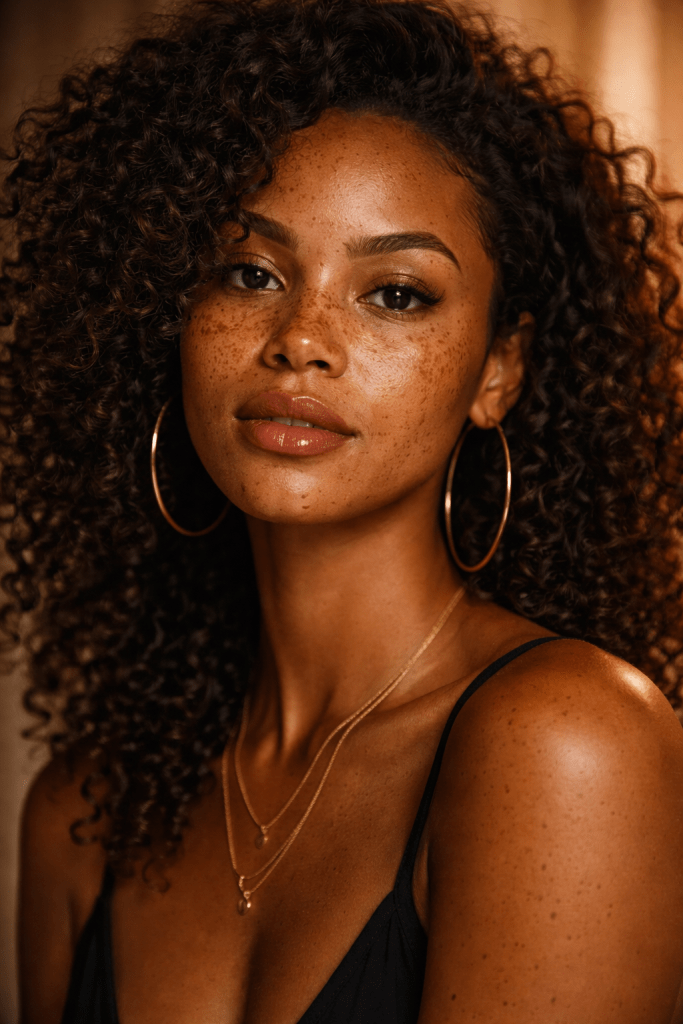
The semiotics of Black beauty begins with the understanding that beauty is not merely an aesthetic category but a system of signs, meanings, and cultural codes. Within semiotic theory, beauty operates as a language—one that communicates values, hierarchies, power relations, and historical memory. Black beauty, in particular, has functioned as a contested sign within Western modernity, simultaneously hyper-visible and marginalized, fetishized and erased. To analyze Black beauty semiotically is to examine how Black bodies, features, and aesthetics have been encoded, decoded, and re-signified across history.

In classical semiotics, Ferdinand de Saussure distinguished between the signifier (the form of the sign) and the signified (the concept it represents). Applied to Black beauty, the signifier may include dark skin, Afro-textured hair, full lips, broad noses, and curvilinear bodies, while the signified has historically been shaped by colonial ideology, racial hierarchy, and Eurocentric aesthetic standards. These physical features were not interpreted neutrally but loaded with meanings such as primitiveness, hypersexuality, exoticism, or inferiority. Thus, Black beauty became a distorted sign within the colonial visual grammar.

Colonialism produced what Frantz Fanon described as a racialized visual order in which Black bodies were rendered objects of surveillance and symbolic domination. In this system, beauty was weaponized as a tool of power, with whiteness positioned as the universal aesthetic norm. Blackness was defined in opposition to this norm, creating what semioticians would call a binary structure: beautiful versus ugly, civilized versus primitive, pure versus excessive. Black beauty was not simply excluded from the category of beauty; it was actively re-coded as its opposite.

Roland Barthes’ concept of myth is especially useful here. Myths transform cultural constructs into naturalized truths. The myth of beauty in Western society presents whiteness as neutral and universal while presenting Blackness as deviation. Over time, this myth became embedded in media, advertising, fashion, film, and even scientific discourse. Beauty standards ceased to appear ideological and instead appeared “natural,” obscuring their historical and political origins.

Black women’s bodies, in particular, have functioned as semiotic battlegrounds. From the exhibition of Sarah Baartman in the nineteenth century to contemporary hypersexualized representations in popular culture, Black femininity has been encoded through signs of excess—too sexual, too loud, too visible, too much. These representations operate as what Stuart Hall called regimes of representation, systems that fix meaning through repetition. The Black woman becomes a sign that circulates independently of her humanity.

Yet semiotics is not only about domination; it is also about resistance and re-signification. Black beauty has undergone profound symbolic transformation through cultural movements such as the Harlem Renaissance, the Black Arts Movement, Afrofuturism, and contemporary digital Black feminism. These movements challenge dominant sign systems by producing alternative visual codes—natural hair, dark skin celebration, Afrocentric fashion, and non-Eurocentric facial aesthetics. Here, Black beauty becomes a counter-sign, disrupting inherited meanings.

The politics of hair provides one of the clearest examples of semiotic struggle. Afro-textured hair has historically been encoded as unprofessional, wild, or undesirable, while straight hair has been associated with respectability and beauty. However, the natural hair movement re-signifies Afro-textured hair as a symbol of authenticity, resistance, and self-definition. Hair becomes a political sign, not merely a cosmetic choice.

Skin tone operates similarly within what scholars describe as colorism. Lighter skin has been historically coded as more beautiful due to proximity to whiteness, while darker skin has been marked as undesirable. This semiotic hierarchy is internalized within Black communities themselves, revealing how colonial sign systems reproduce themselves psychologically. Black beauty thus exists within a complex internal semiotics, where oppression is not only external but also internalized.

Media plays a central role in the production and circulation of beauty signs. Film, fashion, social media, and advertising function as symbolic machines that teach society what to desire and what to devalue. When Black women are underrepresented or represented through stereotypes, the sign of Black beauty becomes constrained, flattened, and commodified. Representation is not simply about visibility but about the range of meanings allowed to exist.

Digital culture has introduced new semiotic possibilities. Platforms such as Instagram, TikTok, and YouTube allow Black women to become producers of their own visual narratives rather than passive objects of representation. The rise of Black influencers, models, and artists creates decentralized beauty codes that challenge traditional gatekeepers. Semiotically, this represents a shift from imposed meaning to negotiated meaning.

The concept of the gaze is central to understanding Black beauty. Laura Mulvey’s theory of the male gaze can be extended to what many scholars call the white gaze—a visual framework through which Black bodies are interpreted and judged. Black beauty under the white gaze becomes spectacle rather than subject. However, the emergence of what is termed the Black female gaze reclaims visual authority, allowing Black women to define beauty on their own terms.

From a psychological perspective, beauty functions as symbolic capital. Pierre Bourdieu argued that symbolic capital produces social power through recognition and legitimacy. When Black beauty is denied legitimacy, Black women are denied access to certain forms of social mobility, desirability, and validation. Thus, beauty is not trivial; it is structurally linked to inequality.

Semiotically, Black beauty also intersects with spirituality. In many African cosmologies, beauty is not separated from morality, ancestry, or divine order. Physical appearance reflects harmony, balance, and spiritual alignment. This contrasts sharply with Western aesthetics, which prioritize surface over substance. Reclaiming Afrocentric aesthetics therefore represents not just cultural pride but epistemological resistance.

Fashion becomes another site of symbolic struggle. Historically, Black fashion was either appropriated or marginalized, yet contemporary Black designers and models are redefining aesthetic language globally. Clothing, hairstyles, and body presentation operate as visual texts through which Black identity is communicated. Fashion becomes semiotic activism.

Black beauty also functions as memory. It carries ancestral traces, historical trauma, and collective survival. The body itself becomes an archive, storing cultural meaning beyond written language. Semiotically, the Black body is a living sign, shaped by slavery, colonialism, migration, and resistance.

The commodification of Black beauty introduces further complexity. While Black aesthetics increasingly dominate popular culture, they are often consumed without acknowledging Black humanity. This produces what bell hooks called “eating the other,” where difference becomes a marketable aesthetic rather than a site of ethical engagement. Black beauty becomes profitable but not liberating.

At the level of language, even the word “beautiful” is semiotically loaded. To call Black women beautiful may appear affirming, yet it risks reinforcing the same system that requires validation from external authority. True semiotic liberation requires not merely inclusion within dominant categories but transformation of the categories themselves.

Thus, the semiotics of Black beauty is ultimately about power over meaning. Who gets to define beauty? Who controls the image? Who benefits from the sign? These are not aesthetic questions but political ones. Beauty operates as a symbolic economy, distributing value unevenly across racial and gendered lines.

Black beauty, when re-signified, becomes epistemological. It produces knowledge about the self, the body, and the world. It challenges Western philosophy’s separation of mind and body by asserting the body as a site of intelligence, history, and meaning. The Black woman becomes not an object of theory but a producer of theory.

In this sense, Black beauty is not simply visual; it is discursive. It speaks. It argues. It remembers. It resists. It transforms the semiotic field itself, expanding what beauty can mean and who gets to embody it.

Ultimately, the semiotics of Black beauty reveals that beauty is never innocent. It is a language shaped by history, power, and ideology. Yet within that language lies the possibility of rewriting the code. Black beauty, when claimed as self-authored meaning, becomes not a sign of exclusion but a symbol of cultural sovereignty.


References

Barthes, R. (1972). Mythologies. Hill and Wang.

Bourdieu, P. (1984). Distinction: A social critique of the judgement of taste. Harvard University Press.

Fanon, F. (1967). Black skin, white masks. Grove Press.

Hall, S. (1997). Representation: Cultural representations and signifying practices. Sage.

hooks, b. (1992). Black looks: Race and representation. South End Press.

Mulvey, L. (1975). Visual pleasure and narrative cinema. Screen, 16(3), 6–18.

Saussure, F. de. (2011). Course in general linguistics. Columbia University Press.

Tate, S. A. (2015). Black beauty: Aesthetics, stylization, politics. Routledge.

Weheliye, A. G. (2014). Habeas viscus: Racializing assemblages, biopolitics, and Black feminist theories of the human. Duke University Press.

Craig, M. L. (2002). Ain’t I a beauty queen? Black women, beauty, and the politics of race. Oxford University Press.

Galaxies of Gold Presents: The World’s Most Beautiful Woman, a visual phenomenon – A Black Woman’s Story.

A memoir written by © Scientist Arieyah Naseek

She makes beauty envious, and perfection wants to commit suicide.

Golden Café Au Lait is the color of her skin. “Beauty” is her name, christened by an African king who once declared that her birth name simply would not do. To him, she was the embodiment of perfection and beauty, the woman who defines what divine beauty could look like in human form. From that day forward, she was known only as Beauty, the woman whose very presence seemed regal yet ethereal, human yet divine. From the time she was a child, the world seemed to pause when she entered a room. Beauty’s aura filled every room, commanding attention without uttering a word. Her light golden skin shimmered like polished bronze infused with honeyed sunlight, and her presence drew admiration as naturally as flowers turn toward the sun.

By adolescence, photographers and artists vied for the chance to capture her likeness. They said her skin tone was “liquid light caramel,” a hue that defied description and reflected every ray of light. She was only sixteen when she appeared in her first major advertising campaign in Germany. The image—a portrait of her smiling softly against a gold backdrop—was sold around the world, inspiring a generation of young Black girls to see beauty reflected in their own skin for the first time.

Everywhere she went, people stared. In college, professors remembered her face before her name. Boys competed for her attention as if her affection were a trophy. Even when she spoke with depth and intelligence, the conversation always circled back to her looks. “You could be a model,” they’d say—never realizing she already was. Her image had graced global billboards, her likeness immortalized in ad campaigns that declared her “the most beautiful woman on earth.”

Her face became both a blessing and a burden. When she entered a room, all eyes gravitated toward her. Teachers remembered her beauty before her brilliance. Classmates praised her appearance but never asked about her dreams. Men admired her, women studied her, and somewhere in between, Beauty lost the comfort of simply being herself.

Her family, especially her grandmother and aunt, adored her beauty and never hesitated to remind her of it. “You’re our precious jewel,” her grandmother would say, smoothing Beauty’s hair. “God must’ve taken His time with you.” Beauty would smile but quietly wonder if being admired meant being understood. Her aunt always stated that she had that kind of beauty that could knock a man to his knees.

There was a time when she became almost protective of her appearance—guarded about who touched her, half-jokingly insisting she didn’t want anyone’s skin to “rub off” on her. It wasn’t arrogance but armor. She had learned how beauty could invite both praise and envy, love and projection. People either worshipped her or resented her—few ever simply saw her.

The men around her had placed her on pedestals and showered her with gifts. Jewelry, flowers, promises—affection often disguised as possession. Later in life came the grander gestures: extravagant marriage proposals and gifts.

Beauty became an international model. Her image adorned billboards around the world. She became the face of the Black Diamond. Yet, even as the world praised her, she remained deeply grounded. When reporters asked what made her beautiful, she often smiled and said, “I am simply who my Creator designed me to be—nothing more, nothing less.”

Even as her modeling career soared—her likeness becoming known to the world—Beauty carried that ache. She could pose for hours, mastering every angle, yet behind the lens, she wondered if anyone cared who she was when the camera stopped clicking. People spoke about her beauty as though it existed separately from her soul.

Behind the flawless photos and radiant smiles was a woman quietly questioning: Is this all they see?

Yet the more people praised her beauty, the more Beauty learned to shrink herself. She noticed how other women tensed around her, how conversations would shift, laughter turn brittle, and compliments become comparisons. So she began to downplay her glow—wearing looser clothes, softening her speech, dimming her confidence—just to make others feel comfortable in her presence. What the world called a blessing often felt like a burden she had to manage carefully.

Beauty’s beauty was not only admired—it was studied. Photographers, sculptors, and scientists alike sought to capture her essence, though many admitted that no lens could ever fully translate the magnitude of her allure. Her face appeared on billboards across continents, representing extraordinary beauty, grace, luxury, and timeless splendor. She was not simply a model; she was a symbol—a vision of Black femininity both celebrated and contested.

For her, beauty was both a crown and a cage. She loved God, studied His Word, and lived by faith, yet the world continued to measure her by her reflection instead of her revelation. No matter how much she achieved—degrees, philanthropy, ministry work—people always returned to her modeling days as though they defined her entirely. It was as if her face spoke louder than her voice.

Her complexion, a rare golden café au lait tone, became her signature, along with her large, mesmerizing eyes, which have a mirror effect to them, small nose, and full lips. Some described it as sunlight kissing caramel; others said it was a color that could only exist in dreams. A male friend said that her beauty is like a sunset. But beyond the admiration lay whispers—jealousy, envy, and critique. Beauty’s rise to the public eye became a mirror reflecting society’s long, complicated relationship with color and beauty within the Black diaspora.

Women were envious of Beauty. She often felt the weight of her own appearance, learning early that her beauty, though praised, was also isolating. “I had to learn to downplay myself,” she once confided in an interview. “Sometimes I’d hide behind plain clothes, no makeup, just to make others feel comfortable.” Her light skin was both her blessing and her burden.

People often said that her success came easily because of her skin tone. “She got this or that because she’s light,” they whispered, reducing her years of effort to the shade of her skin. Yet, even under such scrutiny, Beauty carried herself with humility. She made it her mission to celebrate darker-skinned women, reminding them that their melanin was not a disadvantage but a divine hue in its own right.

In one of her most iconic speeches after being crowned Miss Ultimate Beauty, she addressed the audience directly: “Beauty does not belong to a single shade. Every complexion comes from God.” The crowd erupted in applause, not because of her ethereal face, but because of her truth.

Her reign as Miss Ultimate Beauty made global headlines. Everyone clamored to work with her, seeing in Beauty a living canvas of light and depth. Yet amid the attention, she remained grounded—returning often to her roots in the United States, where she visited schools to mentor young girls about confidence and inner worth.

A group of Scientists and a famous film director, captivated by her ethereal features, began production on a documentary series titled Beauty about her and The Science of Beauty. They described her beauty as “so spectacular she looks unreal—a genetic masterpiece, a visual phenomenon.” The documentary, already in development, aimed to explore not just her life but also the science, art, and sociology behind human attraction. The Documentary Series set to be released in 2028 or 2029.

Beauty’s face became synonymous with the title of “the most beautiful woman in the world” and “Genetic Masterpiece.” She has the kind of beauty that transcends time, evoking comparisons to the great black beauties of this world, yet distinctly her own—look, extraordinary, astonishing, rare, unique, unparalleled, regal, and radiant. Her dark coal curls danced in the wind like liquid fire while cascading down her back like sheets of molasses, and her eyes—large, expressive, hypnotic, piercing, and filled with quiet wisdom—invited the world to see beyond the surface.

Her gold gown, worn at a world foundation gala, became legendary. The fabric rippled like sunlight on water, modest yet magnetic. No skin was exposed, yet all eyes were on her. The designer later confessed, “It wasn’t the dress that shone—it was Beauty herself.”

But Beauty knew beauty was never enough. She wrestled with loneliness, aware that admiration often lacked understanding. “People love what they see,” she said, “but they rarely ask who I am beneath the gold.” Her journals, later published in a book, revealed her deepest dilemmas and her wish to be valued for her soul as much as her beauty or skin.

In private moments, Beauty admitted she sometimes wished to be ordinary—to walk into a room without the echo of awe or envy following her. Yet destiny would not allow her anonymity; she was born to be seen.

Her story became the heart of global conversations about colorism and representation. Scholars cited her as a living paradox—a woman praised for beauty that both challenged and reinforced societal bias. Her beauty sparked debates in articles, classrooms, and beauty forums worldwide.

When asked about her thoughts on colorism, Beauty said, “Lightness does not make me better, darkness does not make you lesser. We are all tones of God’s imagination.” Her words inspired campaigns that began redefining beauty standards across Africa and the diaspora.

Her influence extended beyond modeling. Beauty launched a foundation supporting young women of all complexions in creative industries. She funded scholarships for photographers and artists to challenge color bias through their work.

Years later, at a major art exhibition in Africa, her portrait was unveiled—a depiction of her draped in gold and crowned with sunlight. The Gold Standard of Beauty. Critics called it “The Eighth Wonder of the Modern World.” It wasn’t vanity; it was legacy.

In interviews, she reflected, “If I’m to be remembered, let it not be for my face, but for the love I inspired in those who once doubted their reflection and my love and devotion to the Most High God of Israel.”

Beauty’s name became immortalized, not as an object of beauty, but as a force of healing in the ongoing dialogue of identity and self-worth. Her beauty—golden, astonishing, glowing, godlike—became less about appearance and more about awakening.

In every photo, in every glimmer of light touching her light cafe au lait skin, Beauty’s message remains—beauty is not what you see; this is temporal. True beauty comes from within, and only the things you do for Christ will last.

As her faith deepened, Beauty began to see her reflection differently. The same face that once burdened her became a vessel of purpose. She no longer viewed her features as random genetics but as a deliberate brushstroke from a divine Artist. Genesis 1:27 reminded her: “So God created man in his own image.” That meant her beauty was not hers to idolize or to fear—it was His signature on her soul.

She began to use her platform to speak about inner worth, teaching young women that outward beauty without spiritual grounding is like perfume on an empty bottle—sweet for a moment, but fading fast. Her favorite verse, Proverbs 31:30, became her mantra: “Favour is deceitful, and beauty is vain: but a woman that feareth the Lord, she shall be praised.”

Through faith, Beauty learned to laugh at the irony of her journey—that the woman called “The 8th Wonder of the World” was never truly seeking wonder at all. She was seeking wisdom. And she found it in Christ, who taught her that beauty is not what the world sees, but what Heaven recognizes.

Now, as she walks in purpose, her glow feels different. Her presence unsettles the superficial and awakens the meaningful. It’s not the shimmer of camera lights but the radiance of peace. She is still breathtaking, but not because of her symmetry—because of her spirit. Her beauty no longer introduces her; her light does.

In Beauty’s story, we see that beauty is neither a curse nor a crown—it is temporal. When surrendered to God, even the most admired woman learns that the truest form of grace is not in being seen, but in being sanctified.

Written by © Scientist Arieyah Naseek

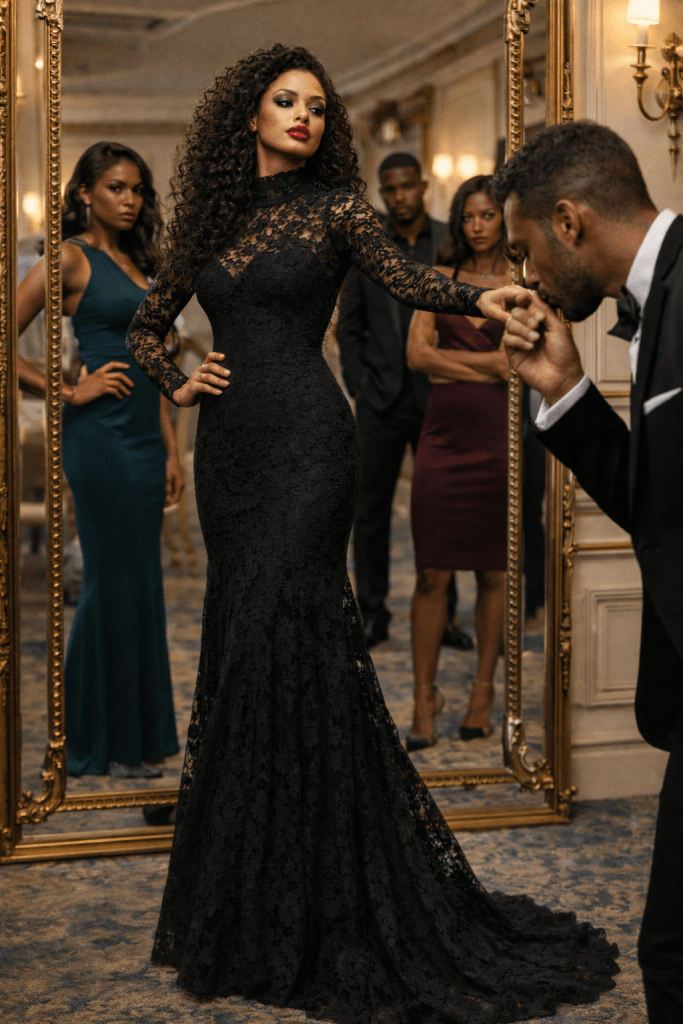
It is Okay to be “The Most Beautiful Woman in the Room” but are you making everyone else sick with it? Beverly says….

Beauty has always carried social power. From ancient civilizations to modern digital culture, physical attractiveness has functioned as a form of symbolic capital—something that grants attention, access, and influence. To be the most beautiful woman in the room is not inherently wrong; in fact, it can be a gift. The problem arises not from beauty itself, but from how it is performed, weaponized, or used to dominate social space.

Psychological research consistently shows that attractive individuals receive preferential treatment in hiring, education, and social relationships—a phenomenon known as the “halo effect.” Beauty is often unconsciously equated with intelligence, kindness, and competence. This distortion creates a power imbalance before a single word is spoken.

When a woman becomes aware of this power, she faces a choice: will she carry her beauty with humility, or with entitlement? Arrogance emerges when beauty shifts from being a trait to being an identity—when self-worth becomes entirely anchored in how one is seen rather than who one is.

Arrogance with beauty often manifests subtly. It appears in body language, tone, dismissiveness, constant comparison, or the need to dominate attention. It is not loud narcissism alone; it is a quiet assumption of superiority that others can feel immediately.

For other women in the room, this dynamic can generate insecurity, competition, and emotional fatigue. Social comparison theory explains that people evaluate themselves relative to others, especially in appearance-based environments. When one woman positions herself as the standard, others are forced into a hierarchy they never consented to.

Jealousy is not always petty—it is often psychological pain produced by unequal social valuation. When beauty is flaunted rather than shared, it can create a climate of silent hostility, where women feel diminished simply by proximity.

Men, meanwhile, respond differently. Beauty can trigger sexualization, fantasy, and projection. Research in evolutionary psychology suggests that physical attractiveness activates reward circuits in the brain similar to drugs or gambling. Lustful attention is not neutral; it changes social energy in a room.

When a woman consciously or unconsciously cultivates male desire as validation, she may enjoy attention without realizing its ripple effects. Conversations shift. Boundaries blur. Other women become invisible. Men become performative. The social space becomes eroticized rather than communal.

Over time, this environment becomes emotionally toxic. People do not feel seen; they feel measured. The most beautiful woman becomes the emotional sun around which everyone else must orbit.

This is where beauty becomes harmful—not because it exists, but because it consumes relational space. It monopolizes attention, distorts dynamics, and subtly communicates: “I matter more than you.”

The irony is that true beauty is expansive, not extractive. It makes others feel comfortable, uplifted, and safe. Arrogant beauty makes others feel smaller, anxious, or invisible.

Narcissism research shows that individuals who rely heavily on external validation often lack stable self-esteem. The need to be admired becomes addictive. Beauty becomes a performance that must be maintained at all costs—through comparison, competition, and dominance.

This is why some beautiful people leave others feeling drained. They are not just attractive; they are emotionally demanding. They require constant affirmation, attention, and deference.

Social environments thrive on reciprocity. When one person absorbs all the light, others are forced into shadow. Over time, resentment replaces admiration.

Even the beautiful woman herself becomes trapped. Her value becomes conditional. Aging, weight change, or shifting attention threatens her identity. What once felt like power becomes fragility.

The most dangerous illusion is believing that beauty makes one better than others. Attractiveness is not virtue. It is not wisdom. It is not moral superiority. It is a biological lottery shaped by genetics, culture, and social bias.

Humility is what redeems beauty. A woman who knows she is beautiful but does not need to prove it becomes magnetic without harm. She does not compete; she collaborates. She does not dominate; she invites.

Beauty with humility creates safety. It allows other women to exist without fear of comparison. It allows men to engage without objectification. It restores balance to the social field.

The real question is not “Am I the most beautiful woman in the room?” but “How do people feel when I enter the room?” Do they feel tense or at ease? Smaller or affirmed? Observed or welcomed?

It is okay to be beautiful. It is not okay to make others sick with it. Beauty should be a gift to the room, not a threat to it. When beauty becomes a mirror instead of a spotlight—reflecting humanity rather than demanding worship—it finally becomes what it was always meant to be: connection, not control.


References

Buss, D. M. (2019). Evolutionary psychology: The new science of the mind (6th ed.). Routledge.

Cash, T. F., & Smolak, L. (2011). Body image: A handbook of science, practice, and prevention (2nd ed.). Guilford Press.

Festinger, L. (1954). A theory of social comparison processes. Human Relations, 7(2), 117–140.

Hamermesh, D. S. (2011). Beauty pays: Why attractive people are more successful. Princeton University Press.

Langlois, J. H., et al. (2000). Maxims or myths of beauty? A meta-analytic and theoretical review. Psychological Bulletin, 126(3), 390–423.

Twenge, J. M., & Campbell, W. K. (2009). The narcissism epidemic: Living in the age of entitlement. Free Press.

Tate, S. A. (2009). Black beauty: Aesthetics, stylization, politics. Ashgate.

Vohs, K. D., et al. (2014). Objectification and self-objectification. Current Directions in Psychological Science, 23(6), 416–420.

The Golden Girls: A Portrait of Black Excellence and Timeless Beauty

Black women embody a unique and unparalleled beauty that transcends physical appearance. Their elegance, strength, and resilience reflect centuries of history, culture, and triumph. From deep, rich ebony to sun-kissed brown and honey-toned skin, the spectrum of Black beauty is vast, vibrant, and powerful, carrying with it stories of survival, creativity, and legacy.

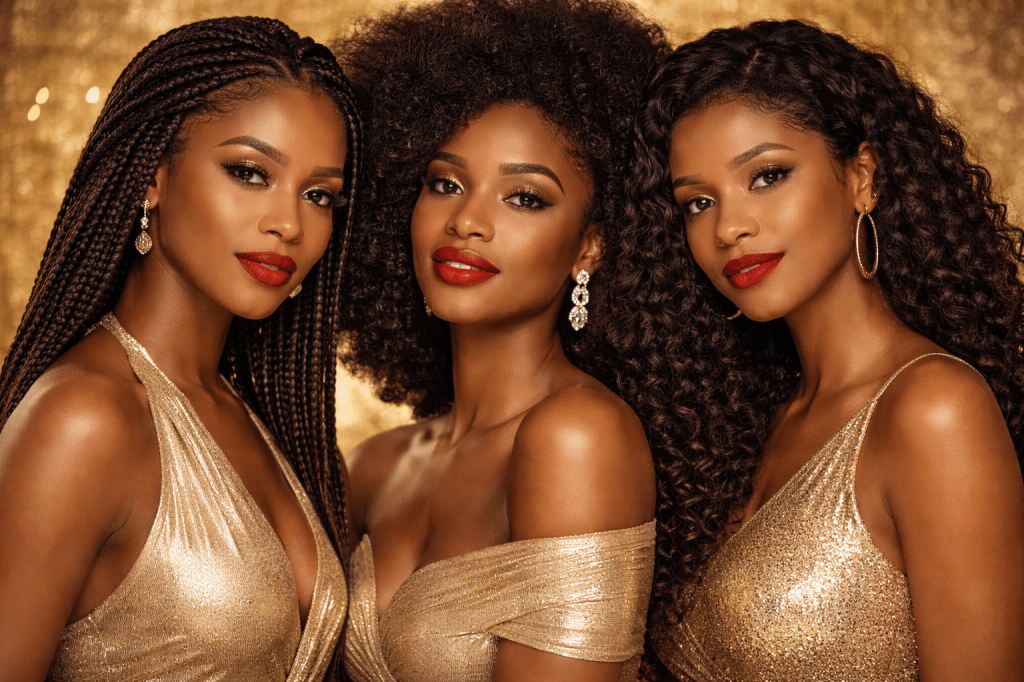
The beauty of Black women is not simply skin-deep; it is expressed in their presence, their confidence, and the ways they carry themselves. Hairstyles—from intricate braids to voluminous afros, flowing curls, and sleek straight styles—serve as both cultural symbols and personal statements, celebrating heritage while embracing individuality. Each strand tells a story, a connection to ancestors, and a declaration of self-love.

Facial features—high cheekbones, full lips, wide-set eyes, and diverse nose shapes—create a breathtaking tapestry of diversity. These features, celebrated in art, media, and fashion, challenge conventional beauty norms that have historically marginalized Black women. The modern reclamation of Black beauty is a radical act of self-affirmation and cultural pride.

Dressing with elegance and style is another expression of this excellence. Clothing choices, whether bold or understated, allow Black women to communicate identity, creativity, and sophistication. From flowing gowns to tailored ensembles, fashion becomes a canvas for self-expression and empowerment. Accessories, makeup, and color choices further highlight individuality, enhancing features and radiance rather than masking them.

Red lipstick, for instance, is more than a cosmetic choice; it is a statement of power, confidence, and daring. Paired with gold, jewel-toned, or neutral ensembles, it draws attention to the wearer’s courage and poise. Makeup in the hands of Black women is an art form, celebrating rather than concealing their natural beauty.

The beauty of Black women extends beyond appearance; it is intertwined with character, intelligence, and spirit. Grace, empathy, resilience, and leadership form the foundation of this timeless elegance. Many Black women balance professional achievement, personal growth, and community involvement, demonstrating that true beauty lies in action, integrity, and impact.

Media representation plays a crucial role in how Black beauty is perceived. Historically, images of Black women have been limited or distorted. Today, artists, photographers, and creators are reclaiming narratives, producing portraits that honor Black women in their full complexity and dignity. Representation validates identity and inspires future generations to embrace themselves fully.

Hair, skin, and fashion intersect with culture and history, reflecting traditions passed down through generations. Cornrows, twists, afros, and protective styles connect women to their roots while serving as markers of resistance, pride, and artistry. Skin tones, melanin-rich and luminous, are celebrated through makeup, photography, and lighting that highlight natural radiance rather than obscure it.

Community and mentorship further amplify the beauty of Black women. Sisterhood, collaboration, and support networks provide spaces for affirmation, growth, and empowerment. In these circles, beauty is recognized holistically—embracing intelligence, courage, creativity, and authenticity alongside physical grace.

Black women continue to redefine elegance on global stages. From film, music, and literature to fashion and entrepreneurship, they challenge stereotypes, shape trends, and set standards for excellence. Their influence is undeniable, demonstrating that beauty is inseparable from strength, vision, and leadership.

The celebration of Black women’s beauty is also a call to action. It reminds society to honor diversity, reject narrow definitions of attractiveness, and value contributions beyond surface appearances. A portrait of Black excellence encompasses cultural heritage, personal achievement, and a commitment to lifting others.

Spirituality and faith often inform the confidence and poise of Black women. Belief in divine purpose, resilience in adversity, and gratitude for natural gifts enhance their presence and radiance. This spiritual dimension adds depth to outward beauty, connecting it to identity, purpose, and legacy.

Art and photography serve as powerful mediums to document and celebrate Black women. Visual storytelling captures elegance, personality, and emotion, preserving history while inspiring viewers. Portraits emphasize individuality while highlighting shared experiences, cultural pride, and the continuum of beauty across generations.

Education and professional accomplishments further amplify the brilliance of Black women. Intellectual achievement, creative innovation, and leadership roles contribute to the narrative of excellence, proving that beauty and brains coexist in harmony. Recognition of these accomplishments challenges reductive stereotypes and broadens societal understanding of worth.

Ultimately, the beauty of Black women is holistic, enduring, and transformative. It combines physical features, personal expression, intelligence, and spirit into a unique form of excellence. Each Black woman is a testament to resilience, creativity, and grace, a living portrait of beauty that inspires, uplifts, and endures.

References

Essien, A. (2019). Black beauty and identity: Cultural pride in visual arts. Journal of African Cultural Studies, 31(2), 145–160.

Hooks, B. (1992). Black looks: Race and representation. South End Press.

Patton, T. O. (2006). Beauty and Black identity: Examining African American women’s perceptions of self and society. Journal of Black Studies, 36(2), 166–190.

Sims, S. (2016). African American hair as cultural identity. Routledge.

White, R. (2020). The power of representation: Portraits of Black women in contemporary art. Arts & Culture Review, 14(3), 33–47.

Golden Resistance: The Triumph of the Brown-Skinned Woman

The brown-skinned woman embodies resilience, beauty, and cultural heritage. Across centuries, she has faced systemic oppression, colorism, and societal erasure, yet she persists, embodying a narrative of triumph against all odds.

Historical narratives often marginalized dark- and brown-skinned women, privileging Eurocentric ideals of beauty. Despite this, brown-skinned women cultivated spaces of empowerment within communities, families, and spiritual traditions (Hunter, 2007).

Colonialism and slavery imposed external definitions of worth, linking lighter skin to privilege and darker tones to subjugation. Yet brown-skinned women resisted these narratives, preserving identity, culture, and dignity (Gates, 2019).

Beauty standards have long been weaponized against brown-skinned women. Media and literature often depicted them as exotic or undesirable, fostering internalized oppression. Still, many embraced their natural beauty as a form of defiance (Hall, 1997).

The brown-skinned woman’s strength is rooted in cultural memory. Oral histories, music, and literature have documented resilience, transmitting lessons of perseverance and self-respect across generations (hooks, 2000).

Education became a site of resistance. Brown-skinned women have historically fought to access learning, literacy, and leadership roles, challenging societal assumptions of intellect and capability (Collins, 2000).

In contemporary times, brown-skinned women are redefining standards of beauty and success. Social media and grassroots movements celebrate melanin-rich skin, natural hair, and Afrocentric features, reclaiming visibility and pride (Banks, 2017).

Colorism within communities posed internal challenges. Brown-skinned women navigated both external oppression and intra-community hierarchies, cultivating solidarity and mentorship to foster empowerment (Hunter, 2007).

Representation in media and entertainment has been transformative. Figures like Lupita Nyong’o, Kerry Washington, and Tracee Ellis Ross challenge stereotypes, embodying success, beauty, and influence for brown-skinned women worldwide (Ferguson, 2015).

Brown-skinned women have shaped social justice movements. Their leadership in civil rights, feminist movements, and contemporary activism underscores the intersection of gender, race, and color in the struggle for equality (Crenshaw, 1991).

Entrepreneurship is another arena of triumph. Brown-skinned women create businesses, brands, and platforms celebrating Black excellence, simultaneously challenging economic marginalization and societal biases (Smith, 2020).

Art and literature provide spaces to assert identity. Brown-skinned women use creative expression to celebrate heritage, critique oppression, and cultivate self-love, creating enduring cultural legacies (Gates, 2019).

Physical beauty, while celebrated, is not the sole measure of triumph. Intelligence, courage, resilience, and leadership are equally central to the brown-skinned woman’s legacy (hooks, 2000).

Intersectionality shapes the lived experience of brown-skinned women. Navigating race, gender, class, and color, they demonstrate adaptability and agency, crafting strategies for survival and success (Collins, 2000).

Global movements like #MelaninPoppin and #BlackGirlMagic highlight the celebratory reclamation of brown skin, challenging centuries of marginalization and providing visible role models for younger generations (Banks, 2017).

Brown-skinned women’s triumphs are evident in academia. Scholars and researchers assert authority, contribute to global knowledge, and dismantle stereotypes regarding intellectual capacity (Smith, 2020).

In family and community life, brown-skinned women often serve as anchors. They nurture, mentor, and cultivate resilience, passing on wisdom and cultural pride to future generations (hooks, 2000).

Spirituality and faith provide sustenance. Many brown-skinned women draw strength from religious and cultural traditions, which reinforce identity, hope, and perseverance (Hall, 1997).

Overcoming systemic barriers requires courage. Brown-skinned women navigate discrimination in workplaces, media, and education, asserting presence and excellence despite societal prejudice (Crenshaw, 1991).

The triumph of the brown-skinned woman is a continuous narrative. Through resilience, creativity, leadership, and unapologetic self-expression, she transforms historical oppression into a legacy of empowerment, inspiration, and beauty (Hunter, 2007).


References

  • Banks, T. (2017). Representation and beauty in Black media: Celebrating melanin-rich identity. Journal of Black Studies, 48(7), 657–678.
  • Collins, P. H. (2000). Black feminist thought: Knowledge, consciousness, and the politics of empowerment. Routledge.
  • Crenshaw, K. (1991). Mapping the margins: Intersectionality, identity politics, and violence against women of color. Stanford Law Review, 43(6), 1241–1299.
  • Ferguson, R. (2015). Representation matters: African American women in contemporary media. Cultural Studies Review, 21(2), 45–67.
  • Gates, H. L. (2019). The Black image in the White mind: Media and race in America. Vintage Books.
  • Hall, R. E. (1997). Beauty and power: Race, gender, and the visual culture of Black women. Feminist Media Studies, 3(1), 23–45.
  • hooks, b. (2000). Feminism is for everybody: Passionate politics. South End Press.
  • Hunter, M. L. (2007). The persistent problem of colorism: Skin tone, status, and inequality. Sociology Compass, 1(1), 237–254.
  • Smith, D. (2020). Entrepreneurship, empowerment, and the brown-skinned woman. Journal of Black Business, 17(3), 115–130.

Dermal Divinity: When God Painted Her Brown.

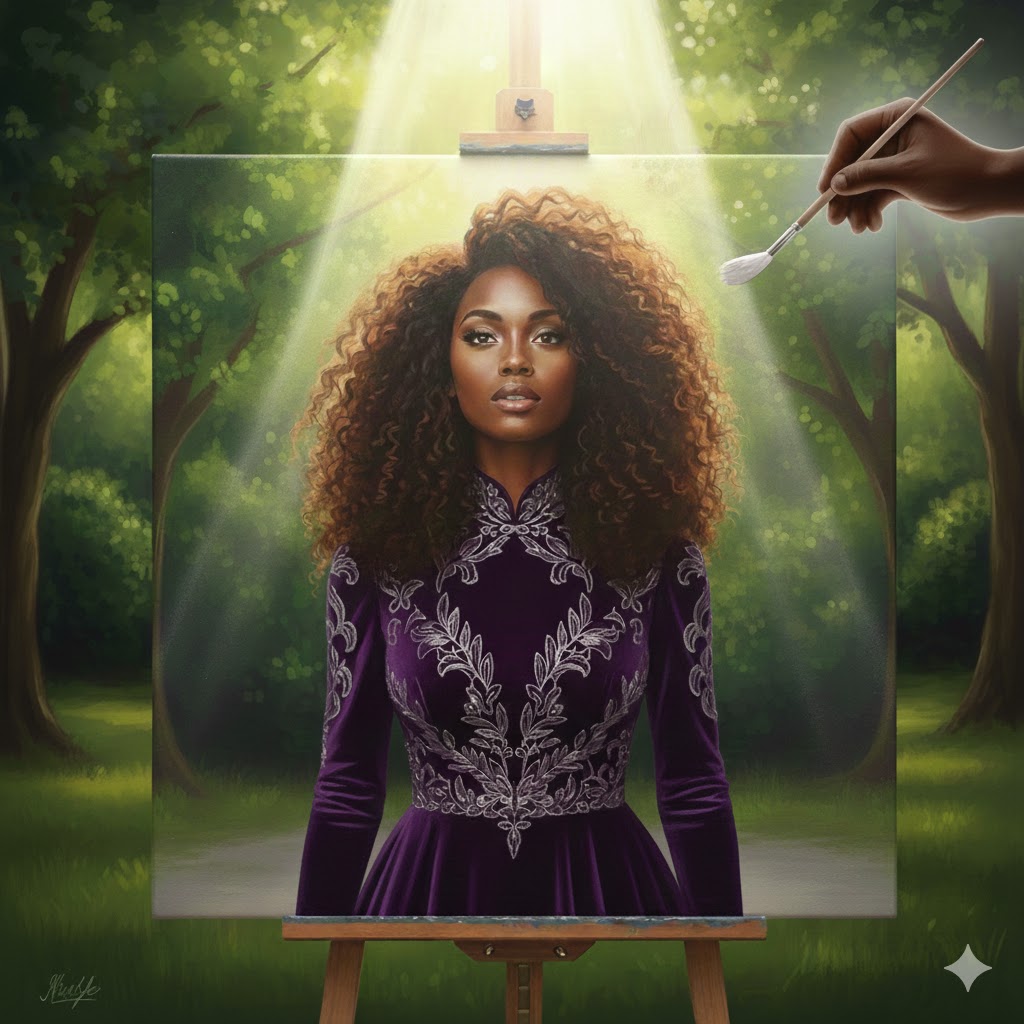
Dermal divinity is the sacred truth that her skin is not an accident, not a mistake, and not a burden—but a masterpiece crafted with intentionality. When God painted her brown, He dipped His brush into centuries of resilience, wisdom, and ancestral strength. Her melanin is theology written in pigment, a divine proclamation that she is fearfully, wonderfully, and beautifully made (Psalm 139:14, KJV).

When God painted her brown, He thought of sunlight and soil, of beginnings and blessings. Brown is the color of the earth that nourishes life, the foundation beneath nations, the cradle of humanity itself. Science confirms Africa as the birthplace of mankind (Stringer, 2016), and scripture affirms God formed humanity from the dust of the ground (Genesis 2:7, KJV). Her shade is not merely melanin—it is memory, origin, and divine intention.

Her brown skin carries history that cannot be erased. Within its tones lie stories of queens, warriors, mothers, and visionaries. From Kush to Nubia, from the banks of the Nile to the diasporic world, her ancestors walked with a dignity that no empire could destroy. The strength in her skin is not just biological but spiritual, encoded through generations.

Dermal divinity is the understanding that her complexion exists beyond beauty—it is inheritance. Her skin is a living testament to survival through systems that sought to devalue it. Yet no chain, law, or ideology could diminish what God declared good from the beginning. Her brownness has outlived every attempt to shame it.

When God painted her brown, He adorned her with richness that absorbs light and reflects radiance. Melanin is a biological miracle—protective, powerful, and purposeful. It shields, strengthens, and sustains. Studies show melanin plays a crucial role in biological protection and adaptive evolution (Jablonski, 2021). God wove science into her skin before science learned to name it.

Her brownness is also emotional terrain. It holds the complexities of joy and trauma, of cultural pride and societal misunderstanding. She learns, sometimes slowly, that the world’s discomfort with her hue is not her burden to carry. Colorism, racism, and misogynoir may attempt to dim her, but they cannot undo divine craftsmanship.

The sacredness of her skin becomes clearer as she grows. She learns to see her body not through colonized lenses but through the eyes of the One who created her. The Bible teaches that all creation reflects God’s glory (Isaiah 60:1, KJV). Her brownness, therefore, shines with holy intention, a reminder that beauty is not Eurocentric—it is God-designed.

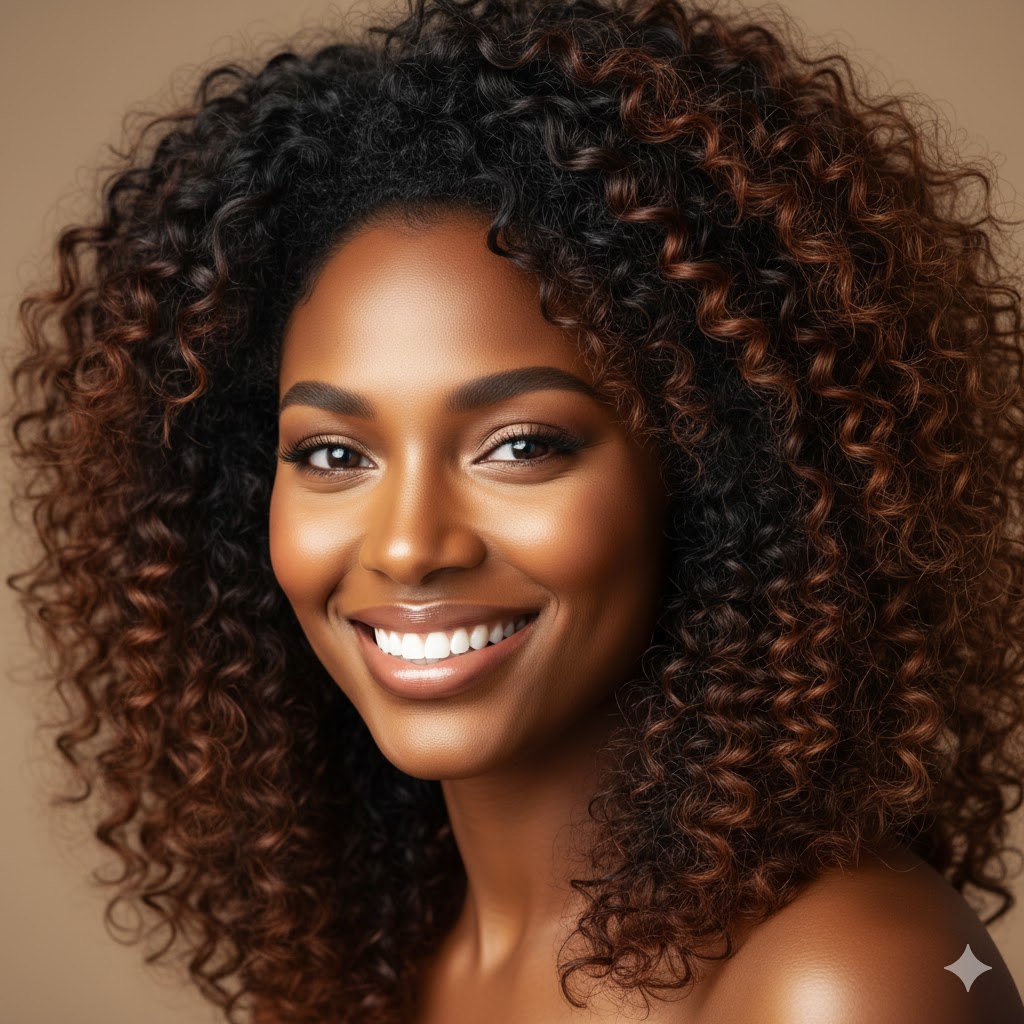
When God painted her brown, He gifted her a crown of textured glory. Coils, curls, and kinks spiral like galaxies, echoing divine creativity. Her hair is not a rebellion; it is a revelation. It testifies to her lineage, to the creative diversity of a God who delights in variety, complexity, and bold expression.

Dermal divinity also acknowledges that her body is not merely aesthetic—it is prophetic. Her skin tells a story before she speaks, declaring the triumphs and trials of people who refused to break. Layers of pigment hold generations of laughter, tears, labor, and liberation. She carries her people with her, even when she walks alone.

When God painted her brown, He placed her in communities of richness and cultural brilliance. She belongs to a tapestry of traditions, languages, rhythms, and spiritualities that stretch across continents. Her identity is not isolated; it is collective, woven into global Blackness.

Her brownness holds a beauty that is both inward and outward. It reflects confidence that has been hard-earned, reclaimed from the distortions of media, history, and hierarchy. She realizes beauty is not a comparison but an awakening—a recognition that her reflection has always been worthy.

Dermal divinity means embracing herself without apology. She does not shrink to make others comfortable or dilute her light to fit into narrow expectations. Her brownness is not negotiable; it is divine signature. To dim it would be to distort God’s artistry.

When God painted her brown, He knew the battles she would face. He equipped her with resilience stitched into her spiritual DNA. Biblical narratives show God’s favor upon those who endure hardship with faith (James 1:12, KJV). Her strength is not accidental—it is appointed.

Her skin becomes sacred armor, not because it is impenetrable, but because it is intentional. She learns that the beauty of being brown is not in perfection but in perseverance. Each shade of melanin carries sacred meaning, a reminder that she survives because she was designed to.

Her brownness makes her a living reflection of divine diversity. God did not create a monochrome world; He created a spectrum of human beauty. To love her skin is to honor the Creator who crafted it. To reject it would be to reject His vision.

As she matures, she learns to love the parts of herself she once questioned. Healing becomes part of blooming, and self-love becomes part of worship. Affirming her beauty aligns her with God’s truth, not the world’s distortions.

When God painted her brown, He planted within her the power to heal others. Her testimony strengthens, inspires, and liberates. She becomes a voice for girls still learning to see themselves through divine eyes. Her presence shifts atmospheres; her story births courage.

Dermal divinity is a calling to walk boldly in identity. It is the understanding that her skin is not a barrier but a blessing. She rises knowing she is seen, chosen, valued, and intentionally crafted. Her brownness is a reflection of glory, not deficit.

And finally, when God painted her brown, He made her a masterpiece—timeless, necessary, and unrepeatable. Her melanin is ministry. Her skin is scripture in color. She is the evidence of holy creativity. She is divine art in human form.


References

Jablonski, N. G. (2021). Living color: The biological and social meaning of skin color. University of California Press.

King James Bible. (1611). Authorized Version.

Stringer, C. (2016). The origin and evolution of Homo sapiens. Philosophical Transactions of the Royal Society B: Biological Sciences, 371(1698), 20150237.

Wells, I. B. (2020). Crusade for justice: The autobiography of Ida B. Wells. University of Chicago Press. (Original work published 1928)

Truth, S. (1995). Narrative of Sojourner Truth. Penguin Books. (Original work published 1850)

Simply Brown, Simply Beautiful

Brown is a color, a heritage, a story, and a statement. To be simply brown is to embrace one’s skin with pride, acknowledging the legacy, resilience, and beauty woven into every shade. It is an affirmation that identity is sacred and worth celebrating without apology.

Beauty is not just physical; it is layered with culture, intelligence, creativity, and spirit. Psalm 139:14 (KJV) proclaims, “I will praise thee; for I am fearfully and wonderfully made: marvellous are thy works; and that my soul knoweth right well.” Every brown face is a testament to divine artistry, crafted with intention and purpose.

Historically, brown communities have contributed immeasurably to human knowledge, art, and leadership. African kingdoms, Caribbean leaders, and diasporic innovators exemplify brilliance, reminding us that brownness and beauty are inseparable from achievement and intellect (Asante, 2007).

Simply brown is a rejection of imposed standards that seek to diminish worth. Colorism and Eurocentric ideals often undermine confidence, yet embracing natural beauty strengthens self-esteem and affirms heritage (Hunter, 2007).

Brown beauty is diverse. It is in every tone, texture, and feature, ranging from deep mahogany to honeyed gold. Each expression of brownness tells a unique story of ancestry, resilience, and creativity.

Confidence grows when beauty is recognized as holistic. Proverbs 31:30 (KJV) observes, “Favor is deceitful, and beauty is vain: but a woman that feareth the LORD, she shall be praised.” True beauty emerges from character, wisdom, and spiritual grounding, complementing physical radiance.

Simply beautiful extends beyond appearance. It encompasses intelligence, emotional maturity, compassion, and resilience. Brown individuals radiate beauty when they embody integrity, love, and authenticity.

Self-love is fundamental. 1 John 4:19 (KJV) reminds, “We love him, because he first loved us.” Recognizing God’s love provides a foundation for affirming one’s value, nurturing confidence, and embracing identity fully.

Brown hair, eyes, and skin are markers of heritage and culture. Wearing them proudly resists societal pressures to conform and affirms that natural identity is inherently beautiful.

Art and literature reflect brown beauty. From classical African artistry to contemporary works, brown creators celebrate identity, challenge stereotypes, and inspire pride across generations.

Cultural expression enhances beauty. Music, dance, dress, and language serve as vessels for self-expression and affirmation, demonstrating that beauty thrives when heritage is honored and celebrated.

Brilliance complements beauty. Brown individuals excel intellectually, creatively, and professionally, proving that beauty is multidimensional and inclusive of mind, spirit, and culture. Proverbs 4:7 (KJV) instructs, “Wisdom is the principal thing; therefore get wisdom: and with all thy getting get understanding.”

Simply brown, simply beautiful is also spiritual. Faith provides purpose, grounding, and confidence. Jeremiah 29:11 (KJV) declares, “For I know the thoughts that I think toward you, saith the LORD, thoughts of peace, and not of evil, to give you an expected end.” Divine intention underscores value and worth.

Community strengthens affirmation. Mentorship, family, and cultural networks nurture confidence and help individuals recognize beauty in themselves and others. Proverbs 27:17 (KJV) emphasizes, “Iron sharpeneth iron; so a man sharpeneth the countenance of his friend.”

Resilience enhances beauty. Overcoming adversity, systemic bias, and societal challenges shapes character and fortifies confidence. Brown beauty shines brighter when tested by life and adversity.

Physical health contributes to beauty, but so does emotional and spiritual well-being. Self-care, mental health, and faith nurture holistic beauty, reflecting inner strength outwardly. 1 Corinthians 6:19-20 (KJV) reminds, “Ye are not your own; for ye are bought with a price: therefore glorify God in your body, and in your spirit, which are God’s.”

Representation matters. Visibility of brown beauty in media, education, and leadership inspires future generations to embrace identity, demonstrating that beauty is valid and powerful across contexts.

Confidence grows when achievements are celebrated alongside heritage. Brown’s excellence in science, art, politics, and education proves that beauty and intellect are not mutually exclusive but mutually enhancing.

Simply brown, simply beautiful is revolutionary. It challenges societal standards, redefines norms, and empowers individuals to embrace identity fully without compromise.

Ultimately, to be simply brown and simply beautiful is to live authentically, honoring ancestry, embracing brilliance, and radiating self-love. It is a holistic celebration of heritage, intellect, spirit, and aesthetic, embodying the fullness of divine creation.


References

Psalm 139:14, KJV.
Proverbs 31:30, KJV.
1 John 4:19, KJV.
Proverbs 4:7, KJV.
Jeremiah 29:11, KJV.
Proverbs 27:17, KJV.
1 Corinthians 6:19-20, KJV.
Asante, M. K. (2007). The History of Africa: The Quest for Eternal Harmony. Routledge.
Hunter, M. L. (2007). The Persistent Problem of Colorism: Skin Tone, Status, and Inequality. Sociology Compass, 1(1), 237–254.
Gates, H. L. (2019). The Black Experience in America: Identity, Culture, and Achievement. Vintage Press.

Melanin Manuscript: The Story Written in Brown Skin

The construct of “self” is multidimensional, but within melanated populations, selfhood is often somatically indexed—experienced and interpreted through embodied markers such as skin pigmentation, hair texture, and phenotypic inheritance. These markers operate both as identity anchors and sociopolitical targets within racialized hierarchies (Cross, 1991).

Human pigmentation is a product of evolutionary epigenetics, wherein melanin concentration reflects adaptive responses to ultraviolet radiation exposure across geographic lineages. The result is not a genetic defect or deviation from beauty, but a biological brilliance that protects DNA integrity and resists photodamage (Jablonski & Chaplin, 2010).

Despite its biological advantages, brownness has historically endured semiotic distortion, recoded within colonial discourse as inferior, primitive, or occupationally servant-bound. This manufactured semiology exemplifies the psychology of domination, where identity scriptwriting becomes an instrument of societal control (DiAngelo, 2018; Fanon, 1952/2008).

In developmental psychology, the internalization of color narratives begins early. The Clarks’ doll studies revealed that children within oppressed groups are psychologically conditioned to prefer dominant-group aesthetics, demonstrating the emotional and cognitive consequences of white supremacist value systems on self-image formation (Clark & Clark, 1947).

The psychological burden of being “othered” is especially pronounced for brown-skinned women, who frequently navigate contradictions between heritage-based belonging and global media infrastructures that elevate whiteness as normative femininity. This is not a deficit in brown women, but an indictment on systems that reward proximity to whiteness and punish distance from it (Hunter, 2007).

From a theological standpoint, Scripture presents a counter-archive to colonial identity distortion. Genesis records humanity being formed from the dust, rooting creation in the brownness of origin. Thus, melanated skin aligns ontologically with the earth-tone prototype of the first human form (Genesis 2:7, KJV).

Further, Psalmic anthropology affirms that God views His craftsmanship not through societal metrics but divine intentionality; melanation is not incidental but God-coded precision (Psalm 139:14, KJV).

Song of Solomon introduces a pivotal exegetical disruption to colorist beauty politics. The Bride self-identifies as “black, but comely,” confronting complexion prejudice with confidence, divine desirability, and aesthetic dignity long before modern identity theory conceptualized affirmation frameworks (Song of Solomon 1:5, KJV).

Melanin also operates symbolically as an ancestral quill, recording collective survival strategies, familial memory, spiritual inheritance, and psychological resistance. It is both ink and armor—a text written on and a shield defending the carriers of the narrative (DeGruy, 2005).

Psychological resilience literature contends that adversity generates identity expansion through adaptive compensation, emotional complexity, spiritual dependency, and cognitive reorganization. In this way, hardship becomes psychological weight-training for destiny (Masten, 2014; Duckworth, 2016).

Scripturally, identity outgrowth follows a death-to-self pattern. Paul’s theology of self-graduation instructs believers to put off the “old man,” implying transformation as identity departure, not identity addition (Ephesians 4:22-24, KJV; Colossians 3:9-10, KJV).

This reflects a divine psychology of change: growth is not the improvement of the old self but burial of it, so God-authentication can govern new existence (Galatians 2:20, KJV).

Cognitive psychology reveals that belief systems operate as identity scaffolding; replacing former mental strongholds reconstructs future self-behavior. Scripture preempts this through meditation and spoken-word cognition, showing that cognitive reframing is not new science but old Scripture (Joshua 1:8, KJV; Proverbs 23:7, KJV).

The racialization of skin tone also created intragroup class stratifications where enslaved Africans were divided by labor assignment and social access. Those in the field received the sun’s unfiltered glare, while those in the house received comparative visual proximity to whiteness, birthing the psychological pathology now called colorism (Byrd & Tharps, 2014).

Modern psychological literature affirms that colorism operates differently than racism, functioning intragroup and extracting value based on gradation rather than race membership itself, producing unique intimacy-based identity harm (Hunter, 2007).

Brown-skinned identity outgrowth constitutes psychological rebellion against narrated misreadings, external hierarchies, aesthetic excommunication, and internalized doubt.

Faith-based identity reclamation exemplifies the psychology of self-authorship; what is spoken over the self repeatedly becomes believed by the self eventually (Romans 10:17, KJV; Beck, 1976).

Suffering, identity contamination, and hiddenness often precede purpose unveiling in Scripture—Joseph was pit-pressed before palace-positioned, Job was stripped before doubled, Christ was crucified before coronated (Genesis 41, KJV; Job 42:10, KJV; Philippians 2:8-11, KJV).

Thus, brownness is both testimony and teleology. The biological ink is ancient, but the story is ongoing, edited by God, interrupted by glory, fortified by hardship, and reclaimed through divine language (Romans 8:28-18, KJV).

The manuscript of melanin cannot be erased—it can only be read, misread, or reclaimed. But the Author Himself is God, and He calls His work “very good” (Genesis 1:31, KJV).


References

Beck, A. T. (1976). Cognitive Therapy and Emotional Disorders. International Universities Press.

Byrd, A. D., & Tharps, L. L. (2014). Hair Story: Untangling the Roots of Black Hair in America. St. Martin’s Press.

Clark, K. B., & Clark, M. P. (1947). Racial identification and preference in Negro children. In T. M. Newcomb & E. L. Hartley (Eds.), Readings in Social Psychology (pp. 169–178). Holt.

Cross, W. E. (1991). Shades of Black: Diversity in African-American Identity. Temple University Press.

DeGruy, J. (2005). Post-Traumatic Slave Syndrome. Uptone Press.

Duckworth, A. L. (2016). Grit: The Power of Passion and Perseverance. Scribner.

Fanon, F. (2008). Black Skin, White Masks. Grove Press. (Original work published 1952)

Hunter, M. (2007). The persistent problem of colorism: Skin tone, status, and inequality. Sociology Compass, 1(1), 237–254.

Jablonski, N. G., & Chaplin, G. (2010). Human skin pigmentation as an adaptation to UV radiation. Journal of Human Evolution, 58(5), 390–397.

The Holy Bible: King James Version (Authorized 1611/1769).

The Room Fell Silent When Brown Walked In.

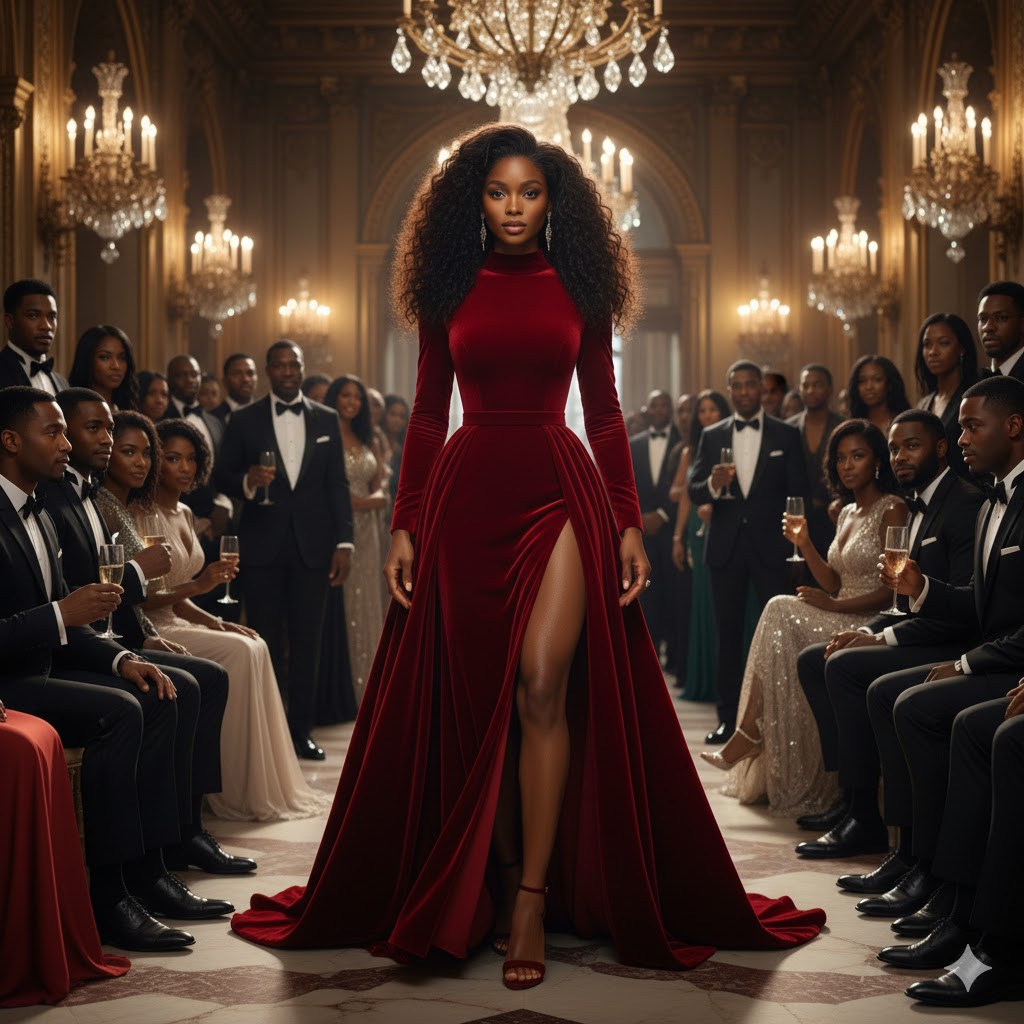
The room fell silent when Brown walked in—not because of fear, but because presence demanded recognition. Her brown skin radiated warmth and authority, a visual testament to a heritage that refused to be diminished. Scripture reminds us, “She is clothed with strength and dignity; and she laugheth without fear of the future” (Proverbs 31:25, KJV). In that instant, silence became respect.

Brown skin has always been more than pigment; it is history written on living canvas. Each shade carries stories of triumph, survival, and resilience. The African diaspora’s journey, marred by slavery and oppression, made beauty in brown skin revolutionary (Gates, 2011). When Brown entered, that history accompanied her quietly, demanding acknowledgment.

Her entrance defied societal norms. In a world obsessed with Eurocentric ideals of beauty, her presence challenged perceptions and reframed standards. Hunter (2007) notes that colorism often distorts self-worth, yet those who embody and embrace their melanin disrupt oppressive narratives. Brown walked in, a living refutation of shallow judgments.

Eyes turned not out of envy, but fascination. Her gaze carried a quiet authority, a recognition that she understood her worth. “For the LORD seeth not as man seeth; for man looketh on the outward appearance, but the LORD looketh on the heart” (1 Samuel 16:7, KJV). Her heart, confident and unshaken, was the source of her silent power.

Her hair crowned her with history. Coils, curls, and braids spoke to generations that survived through creativity and culture, transforming even adversity into beauty. Biblical accounts often describe hair as a symbol of strength and identity (1 Corinthians 11:15, KJV). Her hair proclaimed her ancestry without uttering a word.

Brown skin shone with subtle luminosity, reflecting both light and resilience. Social psychology suggests that self-confidence amplified by embracing one’s natural features affects perception in interpersonal dynamics (Ashikali & Dittmar, 2010). People instinctively recognized her value because she claimed it fully.

The room was not silent out of awe alone—it was humility. To see a woman wholly comfortable in her skin is rare in a society that constantly devalues her. The girl in brown skin reminds the world that authenticity is revolutionary. Her dignity demanded attention without demanding it.

In her walk, grace became power. Movement was measured, yet fluid; commanding, yet gentle. Scripture often equates poise with righteousness and moral strength (Proverbs 31:26, KJV). Brown’s entrance was a living sermon of dignity and self-possession.

Her presence transcended physicality; it was intellectual and spiritual. The room was silent because her mind radiated clarity, wisdom, and insight. In studies of leadership perception, presence and confidence are key determinants of influence (Goleman, 1998). Brown’s silence spoke louder than words.

The room’s stillness mirrored the reverence her ancestors deserved. Each step she took was imbued with lineage, a continuum from queens and scholars whose contributions were often erased (Davis, 1983). Her brown skin carried legacy with elegance.

Even the light seemed to honor her. Sunlight against her skin revealed depth and richness, symbolic of inner strength. In biblical terms, light often represents truth, divine favor, and revelation (John 8:12, KJV). Brown walked in like sunlight made flesh.

Her laughter, when it came, was deliberate and musical, breaking the silence gently. It reminded all present that while her presence commanded respect, it also invited connection. Joy radiates in those confident in their God-given beauty and purpose.

The room fell silent because the world often misunderstands such women. Strength paired with grace can intimidate, yet this is not vanity—it is an acknowledgment of God’s work in creation. “Thou art all fair, my love; there is no spot in thee” (Song of Solomon 4:7, KJV). Her beauty was complete and undeniable.

Brown’s fashion was not just adornment but declaration. Every color, pattern, and texture harmonized with her skin, asserting cultural pride and personal taste. Melanin-rich skin transforms aesthetics into statements of identity and visibility (Hunter, 2007).

In conversation, her voice commanded attention effortlessly. Eloquence, confidence, and knowledge made silence turn into listening. She embodied Proverbs 31:26: “She openeth her mouth with wisdom; and in her tongue is the law of kindness.” Words flowed, yet the room remembered the silence that preceded them.

Her impact was not temporary. Silence lingered even after she left, a testament to the lingering effect of authenticity. Leadership, presence, and identity have echoes; the room carried hers long after she passed.

Brown skin has historically been politicized, yet her presence reclaimed it as sacred and regal. The room’s silence became a microcosm of society finally seeing Black beauty as deserving of respect and admiration (Gates, 2011).

Even subtle gestures—the tilt of her head, a nod, a smile—spoke volumes. Nonverbal cues in psychology show that confidence without aggression often establishes authority (Goleman, 1998). Brown communicated power without confrontation.

The silence of the room was not emptiness; it was recognition, reflection, and reverence. It was a pause to acknowledge history, culture, and divine creation embodied in one person.

Finally, Brown’s presence affirmed a universal truth: to be wholly oneself is to command space. Her brown skin, intellect, grace, and poise reminded all that true beauty, strength, and legacy are inseparable. The room fell silent, but her story spoke loudly.


References

  • Ashikali, E., & Dittmar, H. (2010). Clothes, sex, and self-esteem: The impact of appearance-related social comparison on self-evaluation. Psychology of Women Quarterly, 34(2), 179–191.
  • Davis, A. Y. (1983). Women, race, & class. Random House.
  • Gates, H. L. Jr. (2011). Life upon these shores: Looking at African American history, 1513–2008. Knopf.
  • Goleman, D. (1998). Working with emotional intelligence. Bantam Books.
  • Hunter, M. L. (2007). The persistent problem of colorism: Skin tone, status, and inequality. Sociology Compass, 1(1), 237–254.
  • King James Bible. (1611). Proverbs 31:25-26; 1 Samuel 16:7; Song of Solomon 4:7; John 8:12; 1 Corinthians 11:15.