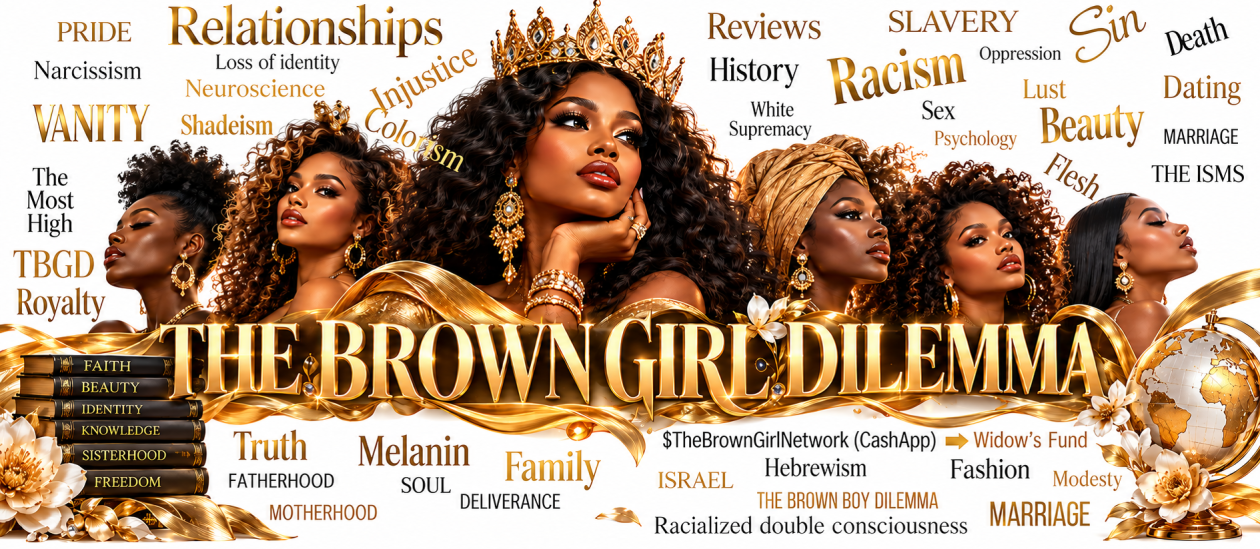


Beauty standards are not innocent preferences; they are social systems of valuation disguised as taste. Across cultures and eras, what is labeled “beautiful” has consistently mirrored power, hierarchy, and access to resources rather than any universal truth about human aesthetics. Beauty is not just seen—it is assigned.
In modern society, beauty operates as a form of soft power that influences social mobility, romantic desirability, and professional opportunity. This creates what scholars describe as an aesthetic economy, where appearance becomes a currency that yields unequal returns depending on how closely one aligns with dominant ideals.
These ideals are not neutral. They are historically constructed through colonialism, media representation, class stratification, and racial hierarchy. Over time, these forces have normalized specific facial features, body types, hair textures, and skin tones as “ideal,” while marginalizing others as deviations.
Within this structure, beauty standards function as a ranking system rather than a spectrum of diversity. This ranking is what can be described as an aesthetic hierarchy—a structured ordering of bodies based on proximity to culturally dominant traits.
The consequences of this hierarchy are deeply psychological. Social comparison processes, as outlined in Social Comparison Theory, shape how individuals internalize perceived beauty rankings and measure their own worth accordingly.
For Black women in particular, these hierarchies are intensified through the legacy of racialization and colorism. Skin tone, hair texture, and facial features become overdetermined markers that are socially interpreted through inherited racial scripts rather than individual identity.
The result is not simply exclusion, but conditional inclusion. Certain features are celebrated only when they approximate Eurocentric norms, while others are hypervisible yet undervalued. This contradiction produces psychological tension and identity fragmentation.
From a structural standpoint, beauty standards are enforced through repetition. Media, advertising, film, and social media platforms continuously circulate narrow representations of desirability until they appear natural. This repetition creates normalization, which is one of the most powerful mechanisms of cultural control.
Even when diversity is introduced into media spaces, it is often curated in limited or symbolic ways. Representation becomes performative rather than transformative, reinforcing the hierarchy while appearing inclusive on the surface.
The concept of intersectionality, developed within Intersectionality Studies, is essential to understanding how beauty standards intersect with race, gender, and class to produce layered experiences of inclusion and exclusion.
In romantic markets, aesthetic hierarchies directly influence perceived desirability. Individuals are often evaluated before they are known, creating a system where appearance shapes access to intimacy, attention, and emotional investment.
This has measurable psychological effects. Studies in implicit bias show that individuals often associate Eurocentric features with competence, trustworthiness, and attractiveness, even when consciously rejecting such beliefs. These biases operate below conscious awareness.
For marginalized groups, this creates a dual consciousness: an awareness of how one sees oneself and an awareness of how one is likely to be seen by others. This tension is emotionally taxing and can influence behavior, self-presentation, and identity formation.
Hair texture politics illustrate this clearly. Natural hair, especially in its unaltered state, has historically been stigmatized in professional and social contexts, while straighter textures are often rewarded with greater acceptance and perceived professionalism.
Skin tone hierarchy is another layer within this system. Lighter skin is frequently privileged within both dominant and intra-community contexts due to historical associations between proximity to whiteness and social advantage. This is not a preference—it is an inherited structure.
Facial feature bias further reinforces the hierarchy. Features associated with European ancestry are often framed as refined or balanced, while others are coded as exaggerated or unconventional. These judgments are culturally learned rather than biologically determined.
The emotional impact of these hierarchies is cumulative. Over time, repeated exposure to preference patterns can influence self-esteem, self-concept, and even relational expectations. Identity becomes negotiated through external validation systems.
However, aesthetic hierarchies are not static. They are being actively challenged through digital media, cultural movements, and global shifts in representation. Platforms that allow self-publishing and self-representation have disrupted traditional gatekeeping structures.
Despite this disruption, resistance does not automatically dismantle hierarchy. In many cases, alternative aesthetics are commodified and reabsorbed into the system, repackaged as trends without dismantling underlying valuation structures.
The commodification of diversity creates a paradox: visibility increases while structural inequality persists. This produces what can be described as aesthetic inclusion without aesthetic equity.
Within diasporic communities, aesthetic hierarchies can also be internalized and reproduced. This does not reflect individual failure but systemic conditioning that operates through repeated exposure and social reinforcement across generations.
Healing from aesthetic hierarchy requires more than representation; it requires the deconstruction of valuation itself. This involves challenging the assumption that beauty must be ranked, measured, or compared in order to have meaning.
From a psychological perspective, interventions must address both conscious beliefs and unconscious associations. Implicit bias training, media literacy, and cultural re-education are all necessary but insufficient without structural change.
At a cultural level, redefining beauty requires expanding the symbolic language used to describe human appearance. Moving away from hierarchies toward plurality allows for recognition without ranking.
This shift also requires emotional unlearning. Many individuals must detach self-worth from external aesthetic validation systems that have been reinforced since childhood through media and social feedback.
The truth is that beauty standards are not reflections of truth but reflections of power. They tell us less about what is beautiful and more about who has historically had the authority to define it.
To confront aesthetic hierarchy is therefore to confront cultural authority itself. It is to ask who gets to decide value, visibility, and desirability in a society shaped by unequal histories.
This is not merely an intellectual exercise but an emotional and spiritual one. Because aesthetic hierarchies do not only shape how people are seen—they shape how people see themselves.
Ultimately, dismantling aesthetic hierarchy requires both critique and creation. It requires exposing the system while also building new frameworks of seeing that are not dependent on comparison or domination.
The first step is recognition. Once the hierarchy is seen clearly, it can no longer operate invisibly. And once it is no longer invisible, it becomes contestable.
This is where Episode 1 begins—not with answers, but with exposure. Because what is normalized must first be named before it can ever be transformed.
References
Crenshaw, K. (1989). Demarginalizing the intersection of race and sex. University of Chicago Legal Forum, 139–167.
Fanon, F. (1952). Black skin, white masks. Grove Press.
Fiske, S. T. (1998). Stereotyping, prejudice, and discrimination. In Handbook of social psychology. McGraw-Hill.
Hall, S. (1997). Representation: Cultural representations and signifying practices. Sage.
Hunter, M. (2007). The persistent problem of colorism. Sociology Compass, 1(1), 237–254. https://doi.org/10.1111/j.1751-9020.2007.00006.x
Jones, T. R. (2000). Shades of brown: The law of skin color. Duke Law Journal, 49(6), 1487–1557.
Russell-Cole, K., Wilson, M., & Hall, R. E. (2013). The color complex. Anchor Books.
Tajfel, H., & Turner, J. C. (1979). An integrative theory of intergroup conflict. In The social psychology of intergroup relations. Brooks/Cole.
Discover more from THE BROWN GIRL DILEMMA
Subscribe to get the latest posts sent to your email.