
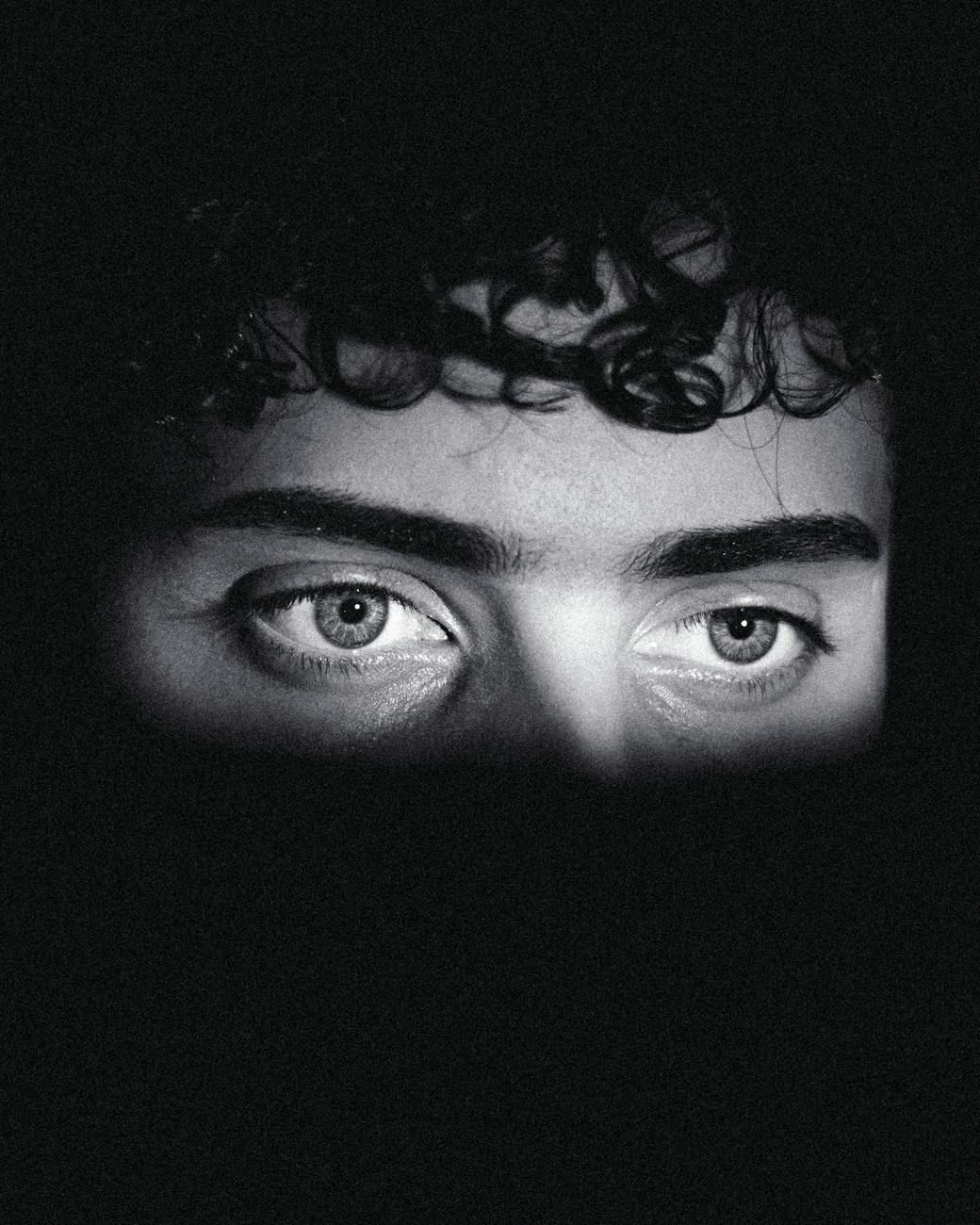
It is a curious thing to be told, “When I see you, I don’t see Black.” On the surface, it sounds like a compliment — a supposed sign of acceptance. But beneath those words lies a deep and painful reality: erasure. To “not see Black” is to refuse to see a person fully. Blackness is not an insult that must be airbrushed away. It is a heritage, a culture, and a divine design that carries resilience, beauty, and history.
The phrase “What are you mixed with?” often accompanies this colorblind assertion. It suggests that the person’s beauty, intelligence, or refinement must have come from something other than pure African ancestry. This is the residue of white supremacy — the idea that to be fully Black is to be less than, and that any perceived excellence must be explained by proximity to whiteness (Bell, 1992).
These phrases are examples of racial microaggressions, subtle verbal slights that communicate bias, even when unintended (Sue et al., 2007). “I don’t see color” is often framed as a way to express equality, but research shows that colorblindness actually perpetuates racial inequality by ignoring structural racism (Neville et al., 2013). To deny race is to deny racism — and thus to deny the need for justice.
Biblically, God is not colorblind. Revelation 7:9 (KJV) paints a vision of heaven where “a great multitude… of all nations, and kindreds, and people, and tongues” stand before the throne. God sees color, ethnicity, and culture — and calls it good. To erase Blackness is to erase part of the divine mosaic of humanity.
For many Black people, hearing “When I see you, I don’t see Black” is a reminder that Blackness is still considered something one must look past in order to value someone. “It felt like they were saying, ‘I only respect you because you’re not like the others,’” said Renee, 28. “As if being Black is inherently negative.” This is a classic case of the “exceptional Negro” trope — praising an individual while degrading the group.
Similarly, “What are you mixed with?” is a coded way of expressing surprise that a Black person could be attractive or articulate. “People ask me that all the time,” said Marcus, 31. “When I tell them I’m just Black, they look confused, like I should apologize for not having some exotic backstory.” This curiosity reveals a hierarchy of desirability rooted in colorism — the privileging of light skin and mixed features over darker skin and African features (Hunter, 2007).
The historical roots of this hierarchy run deep. During slavery, lighter-skinned enslaved people — often the children of white masters — were sometimes given preferential treatment, fueling division within the Black community (Williamson, 1980). This legacy lingers, as seen in modern media where lighter-skinned actors, models, and musicians are often elevated as the “acceptable” face of Blackness.
Celebrities have spoken out about this painful phenomenon. Actress Lupita Nyong’o shared that she once prayed for lighter skin, believing it would make her beautiful. “I was teased and taunted about my dark skin,” she said in her powerful 2014 speech on beauty. “And my one prayer to God was that I would wake up lighter-skinned.” Nyong’o’s testimony underscores the damage caused by a culture that treats dark skin as undesirable.
Other celebrities have shared their personal experiences with these exact microaggressions. Meghan Markle has spoken openly about being asked repeatedly, “What are you?” growing up. In her interview with Oprah Winfrey, she revealed how her biracial identity was scrutinized both by the media and behind palace walls, with questions about how dark her son’s skin might be (Winfrey, 2021). Her story illustrates how curiosity about mixed heritage can carry undertones of fear and exclusion.
Zendaya has also used her platform to discuss colorism and the privilege of being a lighter-skinned Black woman in Hollywood. In interviews, she has admitted that her lighter complexion has allowed her access to roles and opportunities that darker-skinned actresses are often denied. “I have to be honest about my privilege,” she said, “and make sure I’m using my platform to showcase darker-skinned women too” (Robinson, 2018).
Colin Kaepernick, who is biracial, has shared how his identity was questioned from both sides. In his Netflix series Colin in Black & White, he recalls being constantly asked what he was “mixed with” and feeling like an outsider in both Black and white spaces. This experience reflects Du Bois’ (1903) concept of double-consciousness — the constant negotiation of identity in a society that categorizes by race.
The question “What are you mixed with?” can also exoticize and objectify. It turns identity into a guessing game, as if the person must justify their existence. “I’m not a math equation,” said Jasmine, 25. “I don’t owe anyone a breakdown of my ancestry so they can decide how to treat me.”
This line of questioning also erases the beauty of being fully African-descended. Psalm 68:31 (KJV) prophetically declares, “Princes shall come out of Egypt; Ethiopia shall soon stretch out her hands unto God.” African heritage is not a stain to be diluted but a glory to be embraced.
The deeper harm is that these statements normalize whiteness as the default and Blackness as the deviation. Saying “I don’t see you as Black” implies that Black is something negative to overcome. It also denies the lived reality of racism. As Dr. Beverly Daniel Tatum argues, to say you are colorblind is to close your eyes to injustice — and people who claim not to see race are less likely to notice or confront discrimination (Tatum, 2017).
Moreover, these phrases pressure Black individuals to perform a palatable version of Blackness. They subtly reward assimilation, encouraging people to soften their dialect, straighten their hair, or distance themselves from stereotypical “Blackness” to gain approval. This double-consciousness, as W.E.B. Du Bois (1903) called it, is the struggle to see oneself through both one’s own eyes and the eyes of a society that devalues you.
Some people genuinely believe they are being kind when they say these things. They intend to affirm equality, but true equality does not erase difference — it celebrates it. Paul’s words in 1 Corinthians 12:18 (KJV) remind us that “God set the members every one of them in the body, as it hath pleased him.” Diversity is divine design, not a problem to be solved.
The work of dismantling this erasure requires both education and empathy. Non-Black people must learn why colorblindness harms rather than heals. They must also recognize how fetishizing mixed heritage reinforces harmful hierarchies. Black people must reclaim their identity unapologetically, refusing to let others define their worth by proximity to whiteness.
Representation plays a crucial role here. When Blackness is portrayed in its full spectrum — from deep mahogany to golden brown — it challenges the idea that only certain shades are beautiful or acceptable. Campaigns like #MelaninPoppin and #BlackGirlMagic have helped shift cultural narratives, reminding the world that Blackness needs no qualifier to be celebrated.
Healing from these microaggressions is both personal and collective. It means telling children that their Blackness is not something to overcome but something to rejoice in. It means calling out subtle biases when they occur, with both grace and truth. It means creating spaces where Black identity can be expressed in all its complexity — natural hair, vernacular speech, cultural traditions — without apology.
The next time someone says, “I don’t see Black,” we must gently but firmly reply: “See me fully — my Blackness included.” To be truly seen is to be known, and to be known is to be loved. And when someone asks, “What are you mixed with?” we can answer with pride: “I am fearfully and wonderfully made — fully, beautifully, unapologetically who God created me to be.”
References
- Bell, D. (1992). Faces at the bottom of the well: The permanence of racism. Basic Books.
- Du Bois, W. E. B. (1903). The souls of Black folk. A.C. McClurg & Co.
- Hunter, M. (2007). The persistent problem of colorism: Skin tone, status, and inequality. Sociology Compass, 1(1), 237–254.
- Neville, H. A., Awad, G. H., Brooks, J. E., Flores, M. P., & Bluemel, J. (2013). Color-blind racial ideology: Theory, training, and measurement implications in psychology. American Psychologist, 68(6), 455–466.
- Sue, D. W., Capodilupo, C. M., Torino, G. C., Bucceri, J. M., Holder, A. M. B., Nadal, K. L., & Esquilin, M. (2007). Racial microaggressions in everyday life: Implications for clinical practice. American Psychologist, 62(4), 271–286.
- Tatum, B. D. (2017). Why are all the Black kids sitting together in the cafeteria? (Rev. ed.). Basic Books.
- Williamson, J. (1980). New people: Miscegenation and mulattoes in the United States. Free Press.
 THE BROWN GIRL DILEMMA