Tag Archives: travel

Smart Brown Girl Series: Condoleezza Rice – Strategic Intelligence on a Global Stage.

This photograph is the property of its respective owner. No copyright infringement is intended.

Condoleezza Rice is one of the most remarkable figures of modern American history—a woman whose intellect, poise, and leadership have earned her a place among the world’s most influential statespersons. Born on November 14, 1954, in Birmingham, Alabama, Rice grew up in a segregated South, where racial discrimination was a daily reality. Her parents—her mother a teacher and her father a guidance counselor—instilled in her the importance of education, excellence, and dignity in the face of prejudice. Rice’s early talents were evident: she skipped grades, excelled academically, and demonstrated an exceptional capacity for learning from a young age.

Rice began her college education at age 15 and originally pursued music as a concert pianist before discovering her passion for international politics. She earned her bachelor’s degree in political science from the University of Denver in 1974, a master’s degree from the University of Notre Dame in 1975, and a Ph.D. in political science from the University of Denver in 1981.

Her academic biography itself speaks volumes about her discipline and intellectual breadth. Studying Russian at Moscow State University and gaining expertise in Soviet political structures positioned her as a scholar with a deep understanding of global affairs. Years later, her academic credentials made her a sought-after voice in national security and foreign policy.

Rice began teaching political science at Stanford University immediately after completing her doctorate, quickly ascending through academic ranks. In 1993, she became the first woman and first African American to serve as Stanford’s Provost, the university’s chief academic and budget officer. During her tenure, she helped guide Stanford through financial challenges and expanded educational access.

Her career bridged academia and government. In 1989 she advised President George H.W. Bush on Soviet and Eastern European affairs during a pivotal moment in world history, including the collapse of the Soviet Union. By 2001, Rice had left Stanford to become National Security Advisor to President George W. Bush, the first African American woman to hold the position.

In 2005 she was appointed the 66th U.S. Secretary of State, making her the first African American woman to serve in that role. As Secretary of State, Rice championed what she termed “Transformational Diplomacy,” a strategy aimed at expanding democratic governance and global cooperation, including redeploying diplomats to challenging regions and emphasizing local capacity building.

Her years in Washington coincided with seismic international events, including the post‑9/11 landscape, the wars in Afghanistan and Iraq, and complex negotiations involving North Korea and the Middle East. These arenas tested her diplomatic expertise and strategic resolve at the highest levels of global politics.

Beyond government service, Rice has written extensively, contributing books on statecraft, international relations, and her own experiences, including Extraordinary, Ordinary People and No Higher Honor. These works reflect not only her high‑level engagements but her reflective insights on leadership and service.

Rice’s life is a testament to intellectual rigor and perseverance. Her journey from a segregated Alabama childhood to the world stage underscores how education can equip one to navigate and lead amid global complexity. Her doctoral work in political science is a rare achievement, testifying to her scholarly discipline and analytical acumen.

Despite her professional accomplishments, she has remained single, choosing to devote her life to public service and scholarship. Early in her life she was once engaged to NFL player Rick Upchurch, but she never married.

Rice continues to shape public discourse today. She serves as the director of Stanford University’s Hoover Institution, where she influences research, policy dialogues, and intellectual thought leadership on freedom, democracy, and global rule of law. In 2025 she launched a Substack venture called Freedom Frequency from Hoover, aiming to promote principled ideas rooted in liberty and democratic values.

Her involvement also extends into the private sector and corporate governance. Rice has served on the boards of major companies and institutions, applying her strategic insight beyond academia and government.

Rice’s intellectual influence is widely recognized. She has received numerous honorary degrees, recognition awards, and was one of the first women to be admitted to the historically male Augusta National Golf Club, symbolizing both social progress and her wide‑ranging impact.

Rice’s legacy within the Smart Brown Girl Series lies in her embodiment of disciplined intelligence, academic excellence, and global leadership. She navigated barriers of race and gender to achieve roles once unimaginable for African American women, and her career illustrates that intellect combined with resolve can redefine possibility.

Her life challenges reductive stereotypes about women of color in leadership, demonstrating that scholarly brilliance and strategic acumen are fundamental to shaping world affairs. Her example offers inspiration not only to young Black girls but to anyone striving for intellectual achievement and meaningful impact in public life.

In a broader sense, Condoleezza Rice represents what it means to live a life of scholarship, service, and civic engagement. Her contributions to diplomacy, education, and public thought affirm the importance of intellectual preparation and principled leadership.

She remains a figure of study for students of international relations, leadership, and history, continuing to publish, speak, teach, and guide public discourse well into her later years.

References

Condoleezza Rice | National Women’s History Museum biography. womenshistory.org
Condoleezza Rice | Britannica. britannica.com
Condoleezza Rice | Biography.com. biography.com
Condoleezza Rice PragerU Magazine. assets.ctfassets.net
Rice launches Freedom Frequency from Hoover Institution. axios.com
Condoleezza Rice board and net worth details. architectureadrenaline.com
White House archives Rice biography and honors. georgewbush-whitehouse.archives.gov

Urban Renewal and the Hidden Architecture of Displacement: From “Negro Removal” to Modern Segregation.

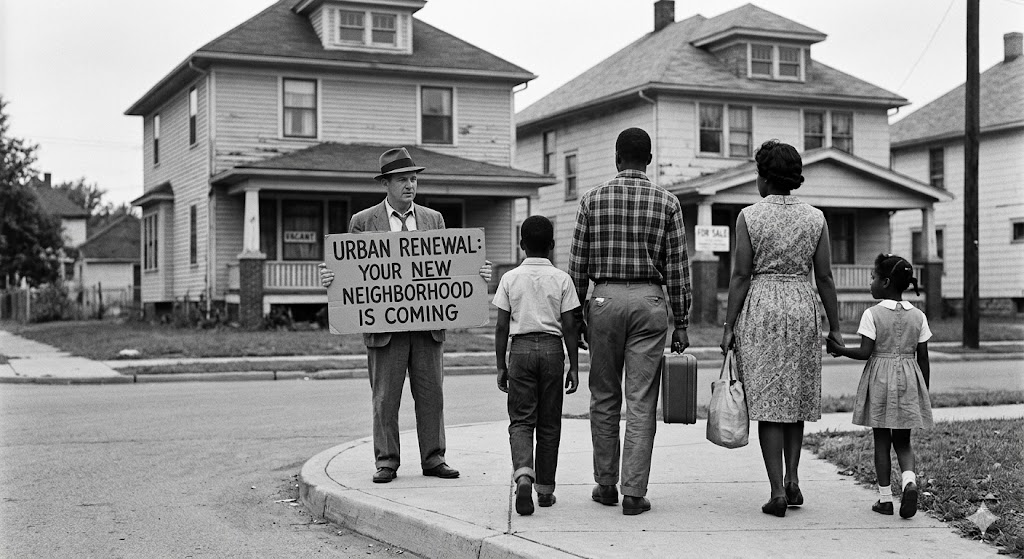
Urban renewal was a federal policy initiative in the United States during the mid-twentieth century that aimed to modernize cities by removing what officials labeled “blighted” neighborhoods and replacing them with new infrastructure, commercial developments, and highways. While the program was publicly framed as a strategy for economic progress and modernization, it disproportionately targeted Black communities. Critics, civil rights leaders, and historians began referring to the program as “Negro Removal” because of the widespread displacement of Black residents and the destruction of thriving Black neighborhoods.

Urban renewal programs were largely facilitated through the Housing Act of 1949, which provided federal funding to cities to acquire and redevelop urban land. Local governments were given authority to identify neighborhoods deemed deteriorated and to clear those areas for redevelopment projects. In practice, many of the communities targeted for demolition were predominantly Black neighborhoods with long-established social, cultural, and economic networks.

Cities such as Detroit, Atlanta, New Orleans, and St. Louis experienced significant displacement under urban renewal initiatives. Entire districts were demolished to make way for highways, sports arenas, government buildings, and private development projects. Although officials often promised that displaced residents would receive improved housing opportunities, many families were forced into overcrowded and segregated neighborhoods with limited economic resources.

One of the most famous examples of urban renewal’s destructive impact occurred in the Black community of Black Bottom neighborhood. Once a vibrant cultural and economic hub, Black Bottom was home to businesses, churches, jazz clubs, and thousands of residents. In the 1950s and 1960s, much of the neighborhood was demolished to construct freeways and urban development projects, displacing large numbers of Black families.

Urban renewal often worked in tandem with another discriminatory housing practice known as blockbusting. Blockbusting was a tactic used by real estate agents who deliberately spread fear among white homeowners by warning them that Black families were moving into their neighborhoods. Realtors suggested that property values would rapidly decline once Black residents arrived, encouraging white homeowners to sell their homes quickly—often at below-market prices.

After purchasing these homes cheaply, speculators resold them to Black families at significantly inflated prices. This practice accelerated racial turnover in neighborhoods while generating enormous profits for real estate investors. The racial panic associated with blockbusting contributed to widespread “white flight,” the migration of white residents from urban areas to suburban communities.

White flight dramatically reshaped the demographic structure of American cities. As white families moved to suburbs, they often gained access to federally backed mortgages and improved public services. Meanwhile, Black residents left behind in urban areas experienced declining tax bases, underfunded schools, and limited economic investment.

Highway construction played a major role in the displacement of Black communities during the twentieth century. Federal infrastructure programs, particularly those associated with the Federal-Aid Highway Act of 1956, funded the construction of interstate highways that frequently cut through minority neighborhoods. Planners often chose these locations because they were politically easier to acquire and faced less organized resistance.

The construction of highways destroyed thousands of homes, businesses, and community institutions within Black neighborhoods. These infrastructure projects divided communities physically and socially, making it more difficult for residents to maintain economic and cultural networks.

In cities such as Miami, Los Angeles, and Nashville, major highways were built directly through historically Black districts. These projects disrupted thriving commercial corridors and displaced thousands of residents who often received inadequate compensation for their lost property.

The consequences of these policies extended far beyond housing displacement. The destruction of Black neighborhoods also dismantled locally owned businesses, professional networks, and cultural institutions that had sustained Black economic independence.

School district zoning also reinforced segregation patterns created by housing discrimination and urban renewal. Because public school boundaries are often determined by residential neighborhoods, segregated housing patterns translated directly into segregated educational systems.

School district zoning inequality meant that children living in historically Black neighborhoods were often assigned to underfunded schools with fewer educational resources. Meanwhile, suburban districts—often populated primarily by white families—benefited from higher property tax revenues and stronger funding structures.

These educational disparities created long-term consequences for social mobility. Students attending underfunded schools frequently faced larger class sizes, fewer advanced academic programs, and limited access to college preparatory resources.

Another system that reinforced racial control following the abolition of slavery was convict leasing. Convict leasing emerged in the late nineteenth century when Southern states began leasing incarcerated individuals to private businesses for labor.

Under this system, prisoners—many of whom were Black men—were forced to work in mines, farms, railroads, and industrial operations. Historians often describe convict leasing as a form of re-enslavement because prisoners were subjected to harsh labor conditions without pay.

The convict leasing system disproportionately targeted Black men through discriminatory policing and legal practices. Minor offenses such as vagrancy or loitering were frequently used to arrest Black individuals, who were then sentenced to forced labor under leasing agreements.

Unlike traditional slavery, convict leasing allowed states to profit from incarcerated labor while avoiding the responsibility of maintaining prisoners’ welfare. Private companies that leased prisoners often subjected them to brutal conditions, leading to high rates of injury and death.

Although convict leasing formally declined in the early twentieth century, many scholars argue that elements of this system persist through modern prison labor practices and mass incarceration patterns.

The combined effects of urban renewal, blockbusting, highway construction, school zoning inequality, and convict leasing reveal how multiple systems worked together to reinforce racial inequality in American society. These policies were not isolated incidents but interconnected mechanisms that shaped housing patterns, economic opportunities, and educational access.

Understanding these historical practices helps explain the persistence of racial disparities in wealth, housing, and education today. The destruction of Black neighborhoods and the exclusion of Black families from economic opportunities contributed to the racial wealth gap that continues to exist in the United States.

Today, scholars and policymakers increasingly examine these policies as examples of structural racism embedded within public institutions. By studying these historical patterns, researchers hope to develop strategies that promote more equitable housing, education, and economic systems.

Ultimately, the history of urban renewal and related practices demonstrates how policies intended to modernize cities often produced lasting harm for marginalized communities. The legacy of these decisions continues to influence the social and economic landscape of American cities today.


References

Alexander, M. (2012). The new Jim Crow: Mass incarceration in the age of colorblindness. New York: The New Press.

Foner, E. (1988). Reconstruction: America’s unfinished revolution, 1863–1877. New York: Harper & Row.

Hirsch, A. R. (1983). Making the second ghetto: Race and housing in Chicago 1940–1960. Chicago: University of Chicago Press.

Jackson, K. T. (1985). Crabgrass frontier: The suburbanization of the United States. Oxford University Press.

Rothstein, R. (2017). The color of law: A forgotten history of how our government segregated America. Liveright Publishing.

Sugrue, T. J. (2014). The origins of the urban crisis: Race and inequality in postwar Detroit. Princeton University Press.

Blackmon, D. A. (2008). Slavery by another name: The re-enslavement of Black Americans from the Civil War to World War II. Anchor Books.

U.S. Department of Housing and Urban Development. (2023). History of housing discrimination and segregation in the United States.

Wilson, W. J. (2012). The truly disadvantaged: The inner city, the underclass, and public policy. University of Chicago Press.

The “It Girl” Series: Kimberly Elise

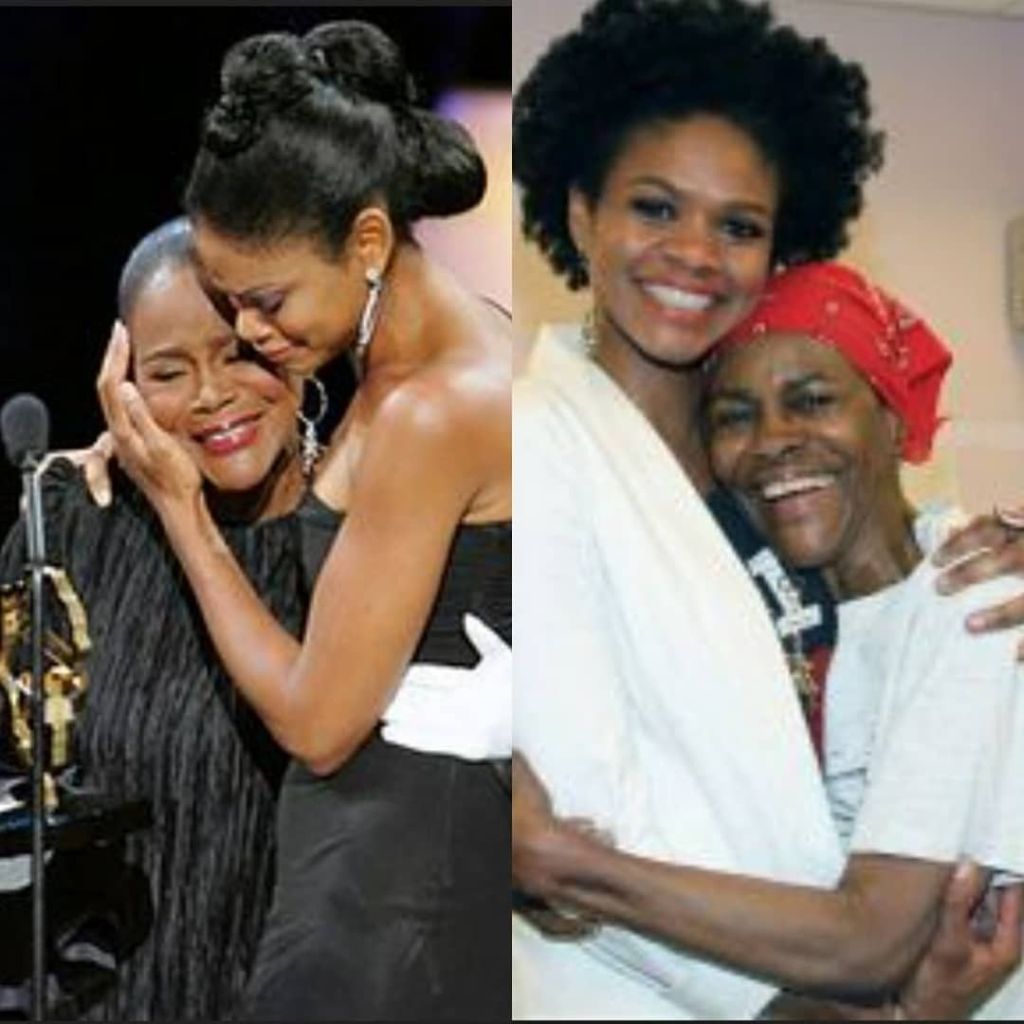
Piercing, expressive eyes and a commanding screen presence—Kimberly Elise blends beauty with depth, talent, and the rare quiet power of a young Cicely Tyson.

This photograph is the property of its respective owner.

Kimberly Elise Trammel was born on April 17, 1967, in Minneapolis, Minnesota, and raised with a deep love for performance and storytelling. She earned a B.A. in Communications from the University of Minnesota before pursuing her acting career in Los Angeles. Elise’s natural talent, intense presence, and distinctively expressive eyes quickly set her apart in dramatic roles. She made her feature‑film debut in the crime action classic Set It Off (1996), portraying Tisean “T.T.” Williams with emotional intensity and strength.

Elise’s career is marked by nuanced, layered performances in films that explore struggle, resilience, and redemption. She appeared in Beloved (1998), John Q (2002), The Manchurian Candidate (2004), Diary of a Mad Black Woman (2005), Woman Thou Art Loosed (2004), Pride (2007), The Great Debaters (2007), For Colored Girls (2010), Dope (2015), Almost Christmas (2016), Death Wish (2018), and Ad Astra (2019).

Her collaborations with Denzel Washington—John Q, The Manchurian Candidate, and The Great Debaters—are particularly notable. Elise has described working with Washington as a professional joy, emphasizing that he is intensely focused, generous in his preparation, and deeply committed to family and craft—qualities she shares as a performer. Elise’s repeated casting opposite him and the respect evident in industry discussions reflect a mutual professional regard and creative rapport.

These photographs are the property of their respective owners.

Elise’s expressive, piercing eyes are a hallmark of her acting style: they convey internal life, pain, strength, and transformation without a single line of dialogue. Her presence has drawn comparisons to a young Cicely Tyson, not only for her physical resemblance but for the depth and dignity she brings to every role.

In her personal life, Kimberly Elise was first married to Maurice Oldham (April 21, 1989 – September 29, 2005), with whom she has two daughters, AjaBleu Oldham and Butterfly Rose Oldham. She later married George E. McCrary on August 23, 2023.

Elise’s work has earned critical recognition and industry honors. Early in her career, she won Best Supporting Actress at the 19th Annual CableACE Awards for The Ditchdigger’s Daughters (1997). She also received Independent Spirit Award and NAACP Image Award nominations for Woman Thou Art Loosed (2004), won NAACP Image Awards for Diary of a Mad Black Woman and other projects, and has been celebrated for her powerful contributions to film and television that center Black women’s stories.

Kimberly Elise embodies the qualities of an “It Girl” through a blend of confidence, emotional intelligence, and acting prowess. Her beauty is not superficial but expressive and commanding, rooted in her ability to convey truth through subtle gestures and deep emotional resonance. Whether portraying everyday struggles or extraordinary resilience, Elise’s work resonates with authenticity, intelligence, and grace—making her one of Hollywood’s most compelling and enduring talents.

References:

  1. Kimberly Elise. (2024). IMDb. https://www.imdb.com/name/nm0253708/biography/
  2. Kimberly Elise Filmography. (2024). Fandango. https://www.fandango.com/people/kimberly-elise-197874/film-credits
  3. Kimberly Elise Movies & TV Shows. (2024). Rotten Tomatoes. https://www.rottentomatoes.com/celebrity/kimberly_elise
  4. Kimberly Elise: The Perfect Pairing. (2020). Essence. https://www.essence.com/news/kimberly-elise-the-perfect-pairing/
  5. Actress Kimberly Elise on Working with Denzel Washington. (2013). TheGrio. https://thegrio.com/2013/05/31/actress-kimberly-elise-talks-being-denzel-washingtons-work-wife
  6. Kimberly Elise: Giving Voice to Voiceless. (2018). Chicago Sun‑Times. https://chicago.suntimes.com/2018/4/13/18398979/kimberly-elise-giving-voice-to-voiceless-on-road-to-black-hollywood-royalty
  7. NAACP Image Awards: Past Winners. (2023). NAACP.org. https://naacpimageawards.net/past-winners/

Covenant Echoes in the Latin World

The Latin world represents one of the most complex intersections of empire, faith, language, and covenant memory in global history. Stretching from the Iberian Peninsula to the Americas, Latin identity emerged from Roman foundations, Catholic expansion, Indigenous civilizations, African diaspora currents, and layered migrations. To understand covenant echoes in this world is to examine how sacred narratives are intertwined with conquest, colonization, and cultural survival.

The term “Latin” derives from Latium, the region surrounding ancient Rome. The expansion of the Roman Empire institutionalized the Latin language, law, and governance across Europe. After Rome’s Christianization under Constantine the Great, Christianity fused with imperial administration, creating a theological-political framework that would later shape Iberian expansion.

Spain and Portugal, inheritors of Roman Catholic identity, carried this fusion into the Age of Exploration. Under monarchs such as Isabella I of Castile and Ferdinand II of Aragon, Spain unified religiously and politically. The 1492 expulsion of Jews and Muslims from Spain marked a turning point, intertwining covenant theology with national consolidation.

The same year witnessed the voyage of Christopher Columbus, which initiated sustained European contact with the Americas. Spanish and Portuguese explorers justified expansion through missionary zeal, often framing colonization as a divine mandate. Biblical imagery of covenant and chosen mission shaped rhetoric, though practice frequently contradicted Christian ethics.

Indigenous civilizations such as the Aztec, Maya, and Inca possessed complex spiritual systems prior to European arrival. Conquest imposed Catholic structures upon these societies, yet syncretism emerged. Indigenous cosmologies blended with biblical motifs, producing unique Latin Christian expressions that endure in festivals, iconography, and communal rituals.

African covenantal memory entered the Latin world through the transatlantic slave trade. Millions of Africans were forcibly transported to Brazil, the Caribbean, and Spanish America. They carried with them spiritual traditions that merged with Catholic symbolism, giving rise to syncretic faith expressions such as Candomblé and Santería.

Theological scholarship in colonial Latin America wrestled with moral questions about Indigenous humanity. Figures like Bartolomé de las Casas argued for Indigenous rights, challenging the brutality of encomienda systems. His advocacy demonstrates early covenantal debates about justice and dignity.

The Bible itself became a contested text in the Latin world. For centuries, Catholic authority restricted vernacular translations. With Protestant missions in the nineteenth century, Spanish and Portuguese Bibles became more widely accessible, reshaping lay engagement with scripture.

Liberation theology in the twentieth century reinterpreted covenant through the lens of the oppressed. Thinkers such as Gustavo Gutiérrez framed the Exodus narrative as paradigmatic for Latin American struggles against poverty and dictatorship. Covenant became a language of social justice rather than imperial mandate.

Migration reshaped covenant echoes once more. Latin Americans migrated northward in the twentieth and twenty-first centuries, carrying Marian devotion, Pentecostal fervor, and communal Catholic traditions into the United States. Spanish-language congregations transformed urban religious landscapes.

The concept of covenant also intersects with Sephardic Jewish memory in the Iberian diaspora. Following expulsion, conversos and crypto-Jews carried fragments of Hebrew tradition into the Americas. Recent genealogical research has revived awareness of these hidden lineages in regions of Mexico and the American Southwest.

Brazil, the largest Portuguese-speaking nation, embodies covenant complexity. Its colonial society intertwined Catholic orthodoxy, African resilience, and Indigenous survival. Afro-Brazilian religious traditions illustrate how covenant identity adapts under coercion yet persists symbolically.

Political upheavals in Latin America often invoked biblical language. Revolutionary leaders employed Exodus imagery, while authoritarian regimes sometimes claimed divine sanction. Covenant rhetoric thus oscillated between liberation and control.

Language itself carries covenant echoes. Spanish and Portuguese, Romance languages rooted in Latin, preserve ecclesiastical vocabulary shaped by centuries of theological discourse. Words like alianza (covenant) reflect deep scriptural inheritance.

The relationship between the Latin world and the United States adds another layer. Economic interdependence, migration policy, and cultural exchange create ongoing dialogue. Religious networks span borders, forming transnational faith communities.

Modern Latin America faces challenges of inequality, political instability, and violence. Yet churches often function as social anchors, providing education, healthcare, and communal solidarity. Covenant in this context signifies resilience amid systemic strain.

Pentecostal growth across Latin America represents one of the most significant religious shifts of the last century. Emphasis on personal covenant with God, spiritual gifts, and communal worship reshapes Catholic-majority landscapes.

Indigenous movements increasingly reclaim precolonial spiritual identities while engaging Christian frameworks. This dual negotiation reflects a broader pattern: covenant memory in the Latin world is neither static nor singular but layered and adaptive.

Diaspora communities in North America reinterpret Latin covenant identity within multicultural contexts. Faith becomes a bridge between heritage and assimilation, preserving language and communal bonds.

Ultimately, covenant echoes in the Latin world reveal a history marked by conquest and compassion, oppression and advocacy, syncretism and reform. From Iberian monarchies to liberation theologians, from Sephardic memory to Afro-Latin spirituality, the Latin world demonstrates how sacred narratives travel, fracture, and reform across continents. Covenant here is not merely theological—it is historical, cultural, and profoundly human.


References

Brading, D. A. (1991). The First America: The Spanish Monarchy, Creole Patriots, and the Liberal State. Cambridge University Press.

Gutiérrez, G. (1973). A Theology of Liberation. Orbis Books.

Las Casas, B. de. (1992). A Short Account of the Destruction of the Indies. Penguin Classics.

Noll, M. A. (2012). The New Shape of World Christianity. IVP Academic.

Pew Research Center. (2023). Religion in Latin America.

Betty Boop: The Hidden Black Roots Behind an American Icon.

Betty Boop is widely remembered as one of the most recognizable animated characters in American history—flirtatious, wide-eyed, baby-voiced, and emblematic of the Jazz Age. Created during the Great Depression, she became a cultural symbol of femininity, modernity, and rebellion. Yet beneath the animated glamour lies a layered and contested origin story that intersects with race, music, and the appropriation of Black artistry in early American entertainment.

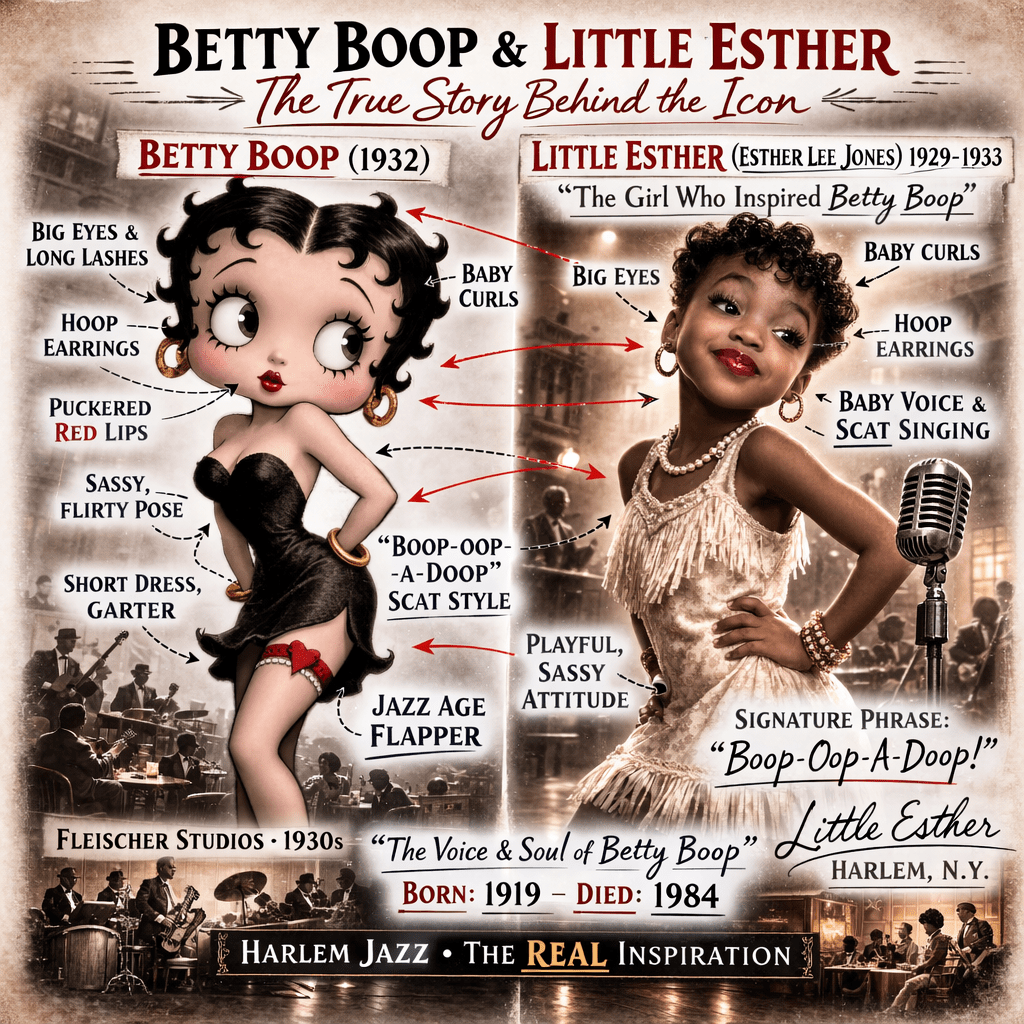
Betty Boop was created by animator Max Fleischer and introduced in 1930 through Fleischer Studios. Her first appearance was in the cartoon Dizzy Dishes, part of the Talkartoons series distributed by Paramount Pictures. Initially, Betty was not even human; she debuted as an anthropomorphic French poodle performing in a nightclub. Over time, her floppy ears were transformed into hoop earrings, and her canine features softened into the human flapper figure audiences recognize today.

The early 1930s were a time when jazz reigned supreme, and animated shorts often borrowed heavily from live musical performances. Fleischer Studios regularly featured jazz musicians and nightclub aesthetics. Betty’s exaggerated baby voice, rhythmic phrasing, and scat-style singing were not accidental inventions but reflections of popular Black musical traditions that had been captivating audiences nationwide.

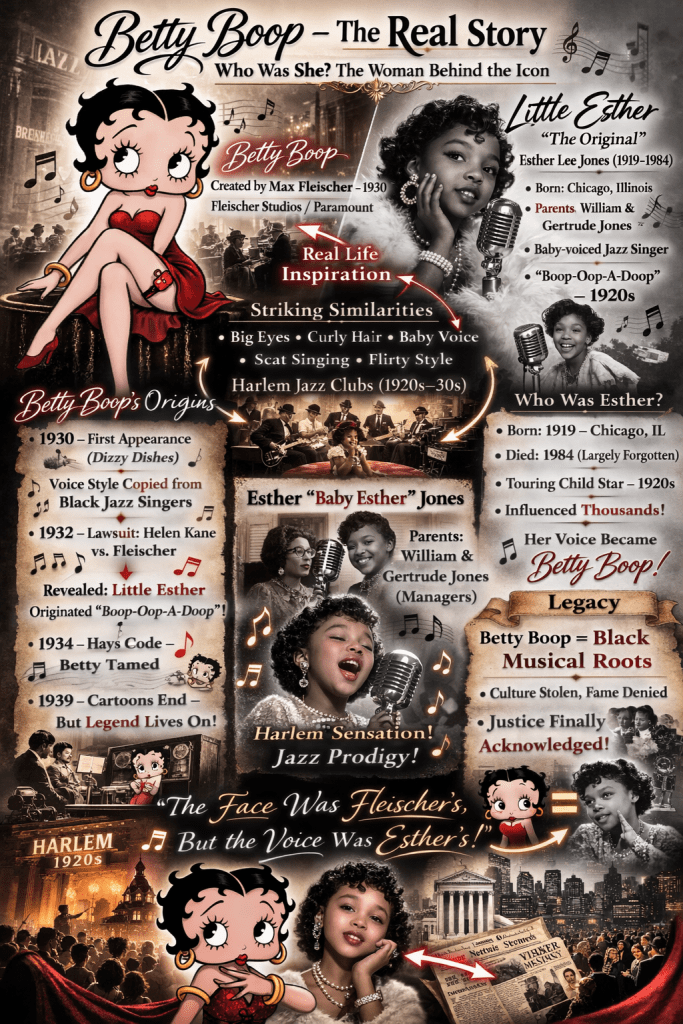
Central to Betty Boop’s origin story is the Black child performer known as Little Esther Phillips, born Esther Lee Jones in Chicago. Known professionally as “Baby Esther” or “Little Esther,” she rose to fame in the late 1920s. Managed by her parents, William and Gertrude Jones, she performed in Harlem nightclubs and toured nationally. Her act included a distinctive baby-voiced scat style filled with sounds like “Boop-oop-a-doop,” a phrase that would later become Betty Boop’s signature catchphrase.

Esther was a prodigy who captivated audiences in venues across New York City, particularly during the height of the Harlem Renaissance. Her performances were known for their playful vocal improvisations, expressive facial gestures, and rhythmic phrasing. Contemporary reports describe her as electrifying, charming, and musically advanced beyond her years.

In 1932, a lawsuit brought national attention to Esther’s connection to Betty Boop. Helen Kane, a white singer famous for her 1928 hit “I Wanna Be Loved by You,” sued Fleischer Studios for allegedly stealing her “boop-boop-a-doop” style for Betty Boop. Kane claimed the animated character was an unauthorized caricature of her persona.

During the trial, however, evidence was introduced showing that Helen Kane herself had borrowed the vocal style from Little Esther. Film footage was presented of Esther performing her baby-voiced scat years before Kane adopted the style. The court ultimately ruled against Kane, concluding that the baby-voice technique was not original to her and therefore could not be exclusively claimed.

This lawsuit, though unsuccessful for Kane, revealed a broader pattern of racial borrowing in American entertainment. Black performers often originated musical styles that were later popularized by white entertainers who received greater financial rewards and national recognition. Betty Boop’s voice and persona thus sit at the crossroads of Black innovation and white commercial adaptation.

Betty Boop herself evolved rapidly. By 1932, she became the first female animated character to star in her own cartoon series. She embodied the flapper archetype—short dress, garter, high heels, and a coquettish demeanor. In many ways, she reflected the liberated woman of the Roaring Twenties, challenging Victorian modesty with playful sensuality.

However, with the enforcement of the Hays Code in 1934, Betty’s overt sexuality was toned down. Her hemlines were lowered, her garter removed, and her storylines became more domestic. This shift marked not only a moral tightening in Hollywood but also a decline in Betty’s rebellious jazz-era spirit.

Meanwhile, Little Esther’s career faced its own challenges. As she matured, the novelty of her childlike voice faded in the eyes of mainstream promoters. Despite her talent, she did not receive the same long-term commercial success as the animated character inspired by her style. Her later life remains less documented than her early performances, reflecting the historical marginalization of many Black entertainers of that era.

The question “Was Esther Betty Boop?” is complex. Legally, Betty Boop was not officially based on Esther. The court did not credit her as the direct inspiration. Yet culturally and musically, the similarities are striking. Esther’s scat syllables, vocal tone, and rhythmic delivery predated both Helen Kane and Betty Boop’s animated persona.

Betty Boop was often compared to the flapper girls of the Jazz Age—bold, urban, and flirtatious. Yet her voice carried the imprint of Harlem’s jazz clubs. The aesthetics of early animation borrowed liberally from Black musical spaces while rarely acknowledging their origins.

Max Fleischer himself was an innovator in animation, pioneering techniques like rotoscoping. Yet like many creators of his time, he operated within an entertainment industry shaped by racial hierarchies. Whether consciously or not, Fleischer Studios benefited from cultural forms birthed in Black communities.

Betty Boop’s popularity soared throughout the 1930s. She appeared in more than 90 cartoons and became a merchandising phenomenon. Dolls, comic strips, and advertisements cemented her as a household name. She remains one of the most enduring animated icons in American pop culture.

Esther Lee Jones, by contrast, did not enjoy such immortality. Her contributions were largely overshadowed in mainstream history. Only in recent decades have scholars and cultural critics revisited the 1932 lawsuit to reconsider her influence on American animation and popular music.

Betty Boop as a character never “died” in the conventional sense; her cartoon series ended in 1939, but she was revived through syndication and nostalgic merchandising. She remains a symbol of retro Americana, appearing on clothing, collectibles, and themed events worldwide.

Little Esther’s death date is less clearly documented in popular historical sources, which itself reflects how incomplete archival records can be for Black performers of the early twentieth century. Her story survives primarily through court transcripts, jazz histories, and cultural scholarship examining appropriation in entertainment.

The legacy of Betty Boop is therefore dual-layered. On the surface, she represents animation history and the Jazz Age aesthetic. Beneath that surface lies a deeper narrative about artistic borrowing, race, and the erasure of Black innovators from mainstream credit.

Today, conversations about Betty Boop increasingly acknowledge Little Esther’s role in shaping the vocal style that defined the character. Scholars argue that recognizing Esther does not diminish Betty’s cultural impact but rather enriches the historical record by restoring context.

Betty Boop’s story reminds us that American pop culture is often a tapestry woven from multiple communities, even when only one thread receives the spotlight. To ask who Betty Boop really was is to uncover not just an animated flapper, but a reflection of jazz, Harlem nightlife, racial complexity, and the enduring influence of a gifted Black child performer whose voice echoed far beyond the stage.


References

Bogle, D. (2001). Toms, coons, mulattoes, mammies, and bucks: An interpretive history of Blacks in American films. Continuum.

Fleischer, R. (2005). Out of the inkwell: Max Fleischer and the animation revolution. University Press of Kentucky.

Maltin, L. (1987). Of mice and magic: A history of American animated cartoons. Plume.

Watkins, M. (1998). On the real side: Laughing, lying, and signifying—the underground tradition of African American humor that transformed American culture. Simon & Schuster.

Court decision: Kane v. Fleischer, 299 F. 533 (S.D.N.Y. 1934).

The History of the Black Cowboys and Cowgirls

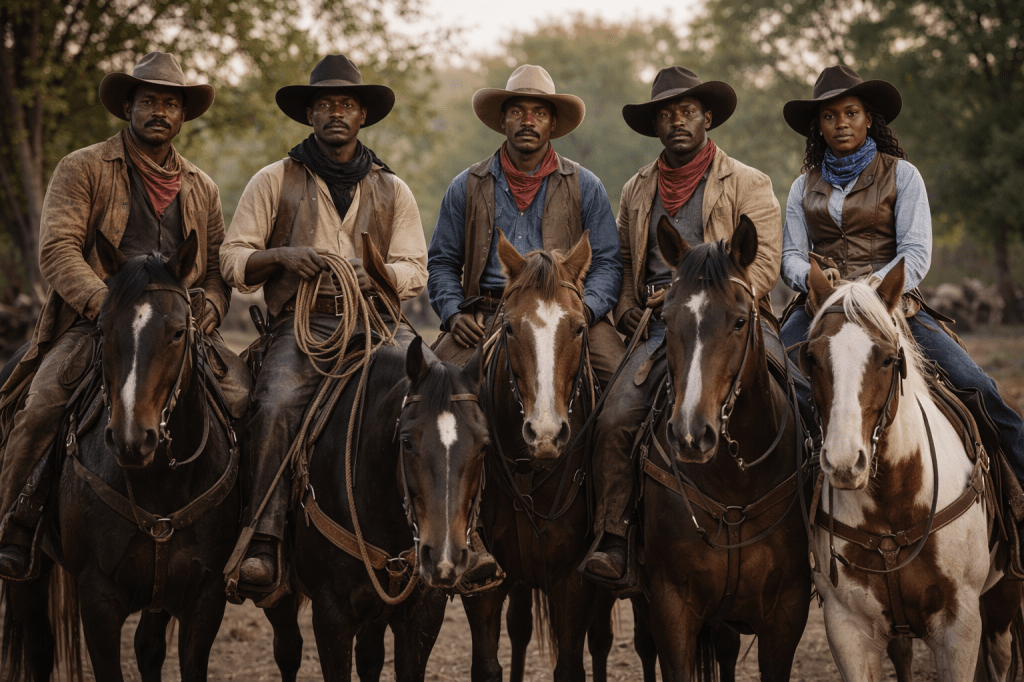
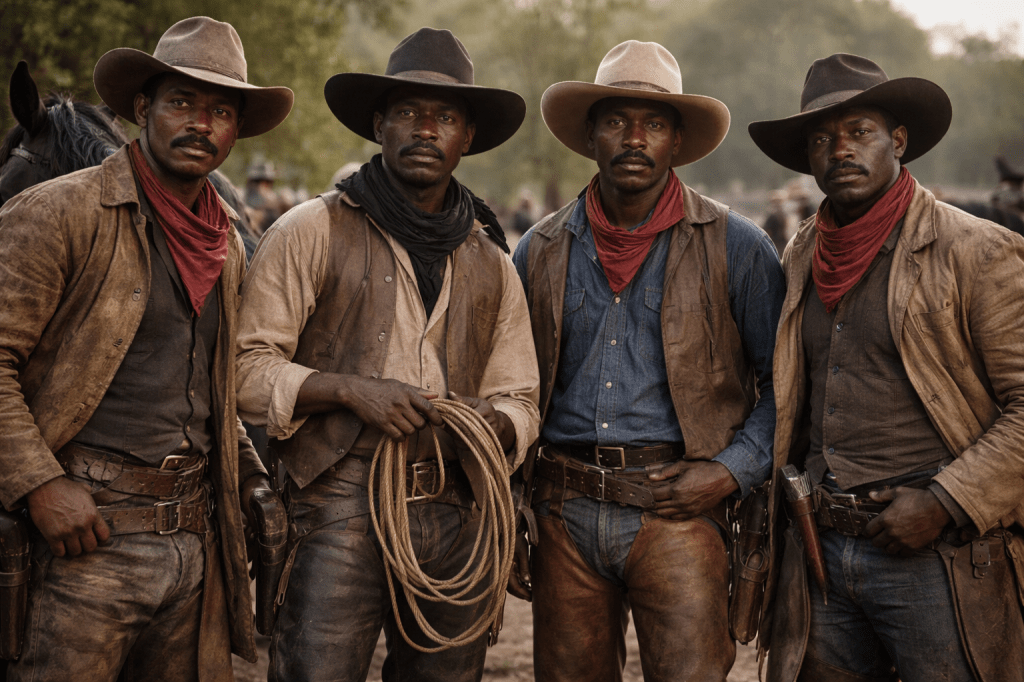
The history of Black cowboys and cowgirls is one of the most overlooked yet foundational narratives in American history. Although popular culture often portrays the cowboy as a white, rugged frontiersman, historical scholarship estimates that one in four cowboys in the American West was Black, alongside many Indigenous and Mexican vaqueros. Black cowboys emerged primarily in the post–Civil War era, when formerly enslaved Africans sought employment and freedom in the cattle industry, finding opportunities as ranch hands, wranglers, trail riders, and rodeo performers.

The roots of Black cowboys begin with slavery itself. Enslaved Africans in the southern United States were already skilled in animal husbandry, horseback riding, and land management. Many plantations relied on enslaved Black men to manage livestock, making them natural candidates for cowboy labor after emancipation. When slavery ended in 1865, thousands of freedmen entered the expanding cattle industry in Texas, Oklahoma, Kansas, and the Great Plains.

Black cowboys were often called “cowboys,” “trail riders,” “wranglers,” or “buffalo soldiers” (if they served in the military), while women were known as cowgirls or sometimes “rodeo queens.” Despite their central role, Black cowboys were rarely credited in mainstream narratives, largely due to systemic racism and the whitewashing of Western mythology through Hollywood films and dime novels.

One of the most famous Black cowboys was Nat Love, also known as Deadwood Dick. Born into slavery in Tennessee, Love became a legendary cattle driver and rodeo champion in the late 19th century. He won multiple roping and riding competitions and documented his life in his autobiography The Life and Adventures of Nat Love (1907), which remains one of the most important firsthand accounts of Black cowboy life.

Another major figure was Bill Pickett, a Black rodeo innovator credited with inventing bulldogging (steer wrestling)—a technique where the rider jumps from a horse onto a steer and wrestles it to the ground. Pickett became one of the most famous rodeo performers of the early 20th century and was posthumously inducted into the National Rodeo Hall of Fame and the Pro Rodeo Hall of Fame.

This photograph is the property of its respective owner. No copyright infringement intended.

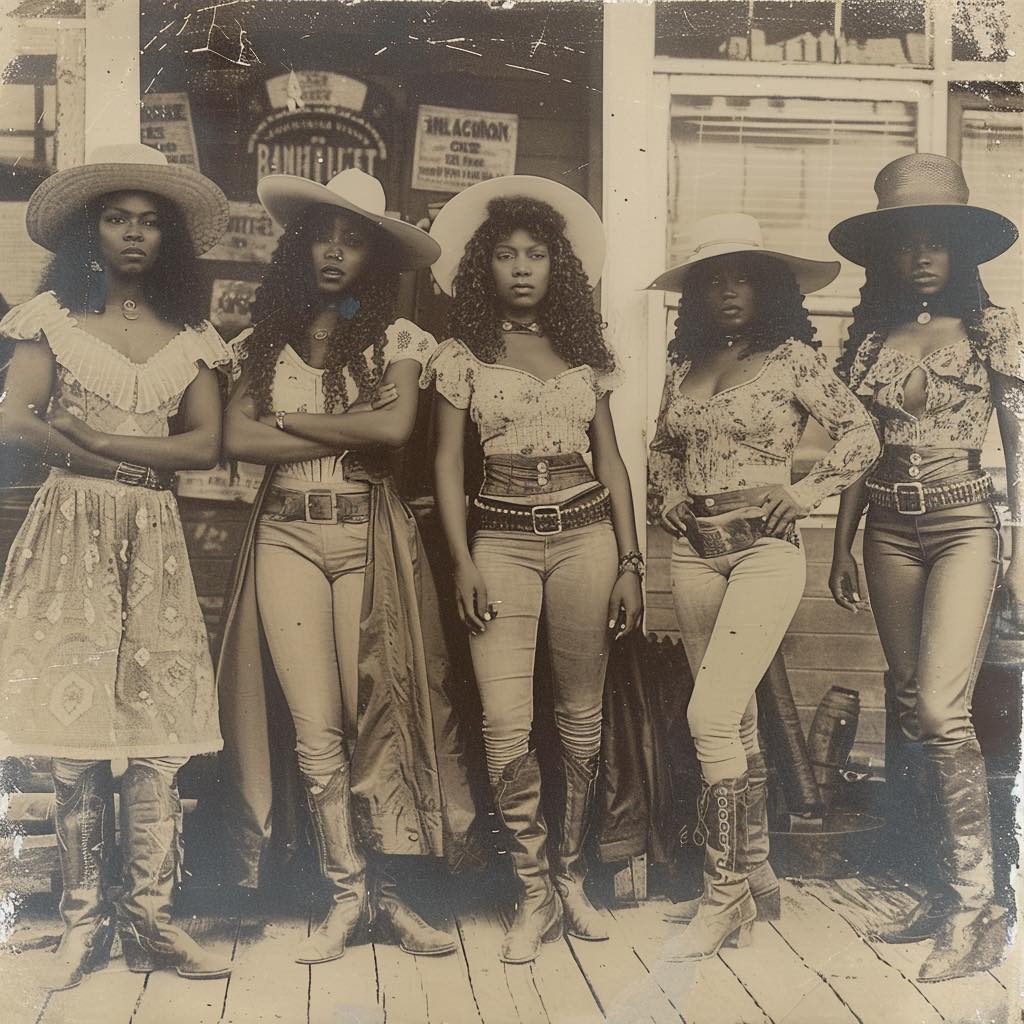
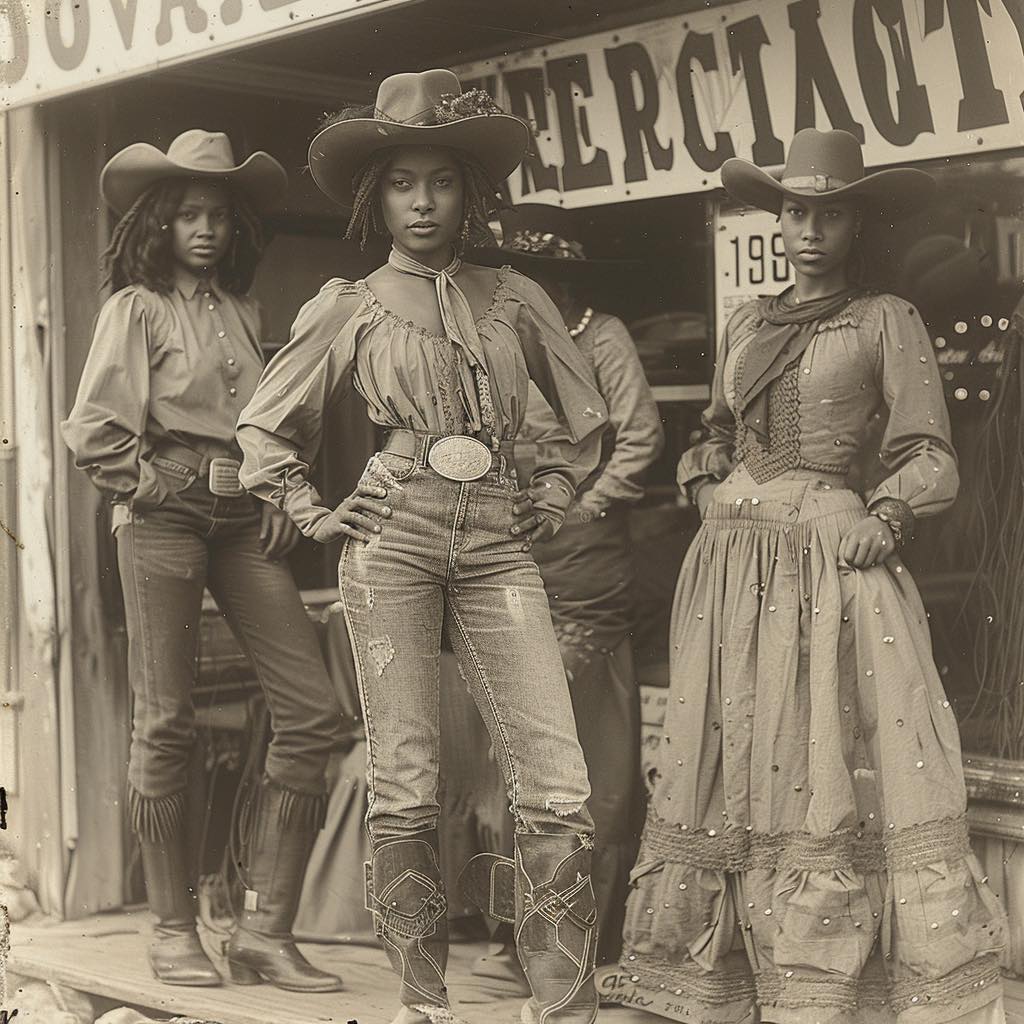
Black cowgirls also played a significant role, although their stories are even more marginalized. Mary Fields, also known as Stagecoach Mary, worked as a mail carrier and ranch hand in Montana and was known for her strength, independence, and marksmanship. Jesse Stahl, another notable Black cowgirl, was a world-renowned trick rider who performed across the United States in Wild West shows.

Racism shaped every aspect of Black cowboy life. Although Black cowboys often worked alongside white cowboys and performed the same labor, they were frequently paid less, denied leadership positions, and excluded from many professional rodeos. Segregation forced Black cowboys to create their own circuits, including the Bill Pickett Invitational Rodeo, which remains the longest-running African American rodeo in the United States.

Hollywood played a major role in erasing Black cowboys from public memory. Early Western films almost exclusively portrayed white cowboys, reinforcing the myth that the American frontier was racially homogenous. This cultural erasure contributed to the widespread belief that Black people had little involvement in shaping the West, despite overwhelming historical evidence to the contrary.

In reality, Black cowboys were instrumental in building the cattle economy that helped industrialize America. They drove cattle across thousands of miles, supplied beef to eastern cities, and helped establish rail-based commerce. Without their labor, the famous cattle drives from Texas to Kansas and Wyoming would not have been possible.

Black cowboys also contributed to American culture through music, language, and fashion. Many cowboy expressions, riding techniques, and musical traditions, such as early country blues and work songs, trace their roots to African American culture. The cowboy hat, boots, and rodeo rituals were influenced by Black, Indigenous, and Mexican practices long before they became national symbols.

In terms of awards and recognition, modern institutions have begun to honor Black cowboys more visibly. Bill Pickett’s induction into major rodeo halls marked a turning point, and figures like Fred Whitfield, a contemporary Black rodeo champion, have won multiple PRCA World Championships in calf roping. Whitfield is one of the highest-earning Black cowboys in modern rodeo history.

The term “Buffalo Soldier” is also closely linked to Black cowboy identity. These were Black U.S. Army regiments formed after the Civil War who protected settlers, built infrastructure, and managed frontier territories. Many buffalo soldiers later became ranchers and cowboys, blending military discipline with frontier survival skills.

This photograph is the property of its respective owner. No copyright infringement intended.

Black cowboys lived primarily during the late 1800s through the early 1900s, known as the Golden Age of the American West. However, Black cowboys continue to exist today, particularly in Texas, Oklahoma, California, and Georgia, where Black rodeo associations preserve the tradition and mentor younger generations.

In the present day, organizations such as the National Multicultural Western Heritage Museum and the Black Cowboy Museum in Texas work to document and preserve this history. Social media and documentary films have also helped revive interest in Black cowboy culture, challenging decades of historical erasure.

Black cowboys represent more than just a profession; they symbolize resistance, resilience, and self-determination. At a time when Black Americans were denied political rights, land ownership, and safety, the cowboy life offered a rare space for autonomy, skill recognition, and economic mobility.

Their legacy also challenges stereotypes about Black masculinity and femininity. Black cowboys and cowgirls embodied discipline, courage, leadership, and technical expertise—traits rarely associated with Black people in dominant American media narratives.

From a sociological perspective, the erasure of Black cowboys reflects what scholars call historical silencing, where dominant groups control national memory. The myth of the white cowboy served ideological purposes, reinforcing white supremacy and minimizing Black contributions to nation-building.

The revival of Black cowboy history also connects to broader movements of Afrofuturism, Afrocentric education, and cultural reclamation, where Black communities seek to restore forgotten legacies and reshape historical consciousness.

Spiritually and symbolically, Black cowboys reflect a biblical pattern of the marginalized becoming central to divine and historical narratives. Much like shepherds in the Bible—who were considered low-status yet chosen by God—Black cowboys were essential laborers whose stories were hidden despite their foundational role.

In conclusion, Black cowboys and cowgirls were not side characters in American history; they were architects of the West. Their contributions to agriculture, commerce, culture, and national identity remain undeniable. Recognizing their legacy is not merely about representation—it is about correcting historical truth and honoring a people whose labor helped build modern America.

Their story stands as a powerful reminder that Black history is not separate from American history—it is American history.


References

Love, N. (1907). The life and adventures of Nat Love, better known in the cattle country as “Deadwood Dick.” University of Nebraska Press.

Katz, W. L. (2012). The Black West: A documentary and pictorial history of the African American role in the Westward expansion of the United States. Simon & Schuster.

Pickett, B., & Smith, S. (2009). Bill Pickett: Bulldogger. University of Oklahoma Press.

Savage, W. S. (1997). Blacks in the West. Greenwood Press.

Taylor, Q. (2018). In search of the racial frontier: African Americans in the American West, 1528–1990. W. W. Norton & Company.

National Park Service. (2021). African American cowboys and the American West. U.S. Department of the Interior.

Smithsonian National Museum of African American History and Culture. (2020). The Black cowboy: Myth and reality. Smithsonian Institution.

Whitfield, F. (2015). Cowboy of color: Rodeo, race, and identity in modern America. Pro Rodeo Historical Society.

Bill Pickett Invitational Rodeo. (2023). History of African American rodeo culture. BPI Rodeo Archives.

Colorism in Asia

Colorism in Asia is a pervasive social phenomenon in which lighter skin is culturally valued over darker skin, creating systemic advantages for those perceived as fairer. Unlike racism, which often categorizes by ethnicity, colorism operates within racial and ethnic groups, privileging lighter tones as a symbol of wealth, status, and beauty. Its impact spans social, economic, and psychological domains, influencing marriage, employment, media representation, and daily interactions.

The roots of colorism in Asia are complex, intertwining pre-colonial class distinctions with European colonial influence. Historically, fair skin was associated with the elite or ruling classes who worked indoors, while darker skin indicated labor-intensive outdoor work. European colonialism reinforced and codified these associations, idealizing whiteness as superior and desirable.

In India, colorism is deeply entrenched. Fair skin has long been linked to beauty, marriageability, and social status. Advertisements promoting skin-lightening products are widespread, and matrimonial ads often specify preference for fair-skinned partners. Caste and colonial legacy amplify this preference, embedding it in social and cultural norms (Ludhianvi, 2020).

Pakistan similarly exhibits strong colorist tendencies. Lighter skin is associated with higher social class and greater marital prospects. The skin-lightening industry thrives, with consumers believing fairness equates to upward mobility, attractiveness, and professional credibility. Media, film, and advertising reinforce these ideals.

In Southeast Asia, countries like the Philippines, Thailand, and Indonesia exhibit pervasive colorism due to colonial history and media influence. In the Philippines, Spanish colonization and American media created ideals of beauty that favor lighter skin, influencing both professional opportunities and romantic desirability. Fair skin continues to be a marker of privilege and social mobility.

Thailand has a cultural preference for lighter skin, evident in beauty advertisements, television, and social expectations. The legacy of colonial trade and the association of light skin with urban elites amplify this hierarchy. Skin-whitening products dominate the market, signaling the perceived necessity of fair skin for social acceptance.

In China and East Asia, colorism is widespread, though nuanced. Lighter skin is historically associated with refinement, status, and scholarly pursuits, contrasting with rural laborers. Modern media, fashion, and entertainment reinforce these ideals, sustaining societal bias and shaping self-perception from a young age (Li & Min, 2014).

Japan and South Korea also reflect colorism influenced by historical class structures and Western beauty ideals. In South Korea, skin whitening and cosmetic surgery are widespread, with lighter skin seen as a standard of beauty and sophistication. In Japan, light skin is tied to elegance, status, and femininity, although contemporary media sometimes diversifies representation.

The worst-affected countries in Asia tend to be those with both colonial history and rigid social hierarchies. India, Pakistan, the Philippines, and Thailand experience intense societal pressure to conform to fair-skinned beauty ideals, reinforced through marriage markets, media, and professional spaces. The combination of historical caste or class divisions and globalized beauty standards intensifies the penalty for darker skin.

Colorism in Asia intersects with gender, disproportionately affecting women. Women are judged more harshly by skin tone, and their social, marital, and professional opportunities are more tightly linked to appearance. This leads to heightened use of skin-lightening products, cosmetic procedures, and restrictive beauty practices.

Economically, colorism affects career prospects. In India and Southeast Asia, lighter-skinned individuals are more likely to be hired for front-facing roles, leadership positions, and customer-oriented professions. Appearance is often equated with competence and professionalism, creating systemic advantage.

Marriage markets are heavily influenced by colorism. Matrimonial advertisements frequently specify preference for fair-skinned partners, reflecting the perception that lighter skin signals social status, family wealth, and desirability. Darker-skinned individuals are marginalized, even when other qualities are equal.

Media representation reinforces colorism by prioritizing lighter-skinned actors, models, and influencers. Television, film, and advertisements overwhelmingly feature fair-skinned individuals in roles of power, romance, and beauty, while darker-skinned people are underrepresented or typecast. This perpetuates bias in both perception and aspiration.

The skin-lightening industry is a multi-billion-dollar sector in Asia, indicating both the intensity of societal preference for fair skin and the psychological impact of colorism. Consumers internalize the message that lighter skin equates to opportunity, attractiveness, and social capital, sustaining demand and normalizing bias.

Colorism also has psychological consequences, contributing to low self-esteem, anxiety, and body image dissatisfaction. Individuals internalize societal preferences, leading to shame, identity conflict, and social comparison, particularly among women and youth.

Education is not immune. Teachers and peers may implicitly favor lighter-skinned students, assuming greater intelligence, discipline, or refinement. These biases influence expectations, opportunities, and social inclusion, reinforcing systemic inequality from early childhood.

Social mobility in Asia is intertwined with skin tone. Lighter skin is often equated with urbanity, cosmopolitanism, and modernity, while darker skin signals rural labor, poverty, or lower status. This creates a persistent cycle where appearance directly affects life trajectory.

Historically, colorism was reinforced by colonial hierarchies and caste systems. In India, fair skin was associated with higher castes, while darker skin correlated with servitude or laboring classes. European colonization globally reinforced these associations, elevating whiteness as aspirational and moralized.

To challenge colorism in Asia, cultural, institutional, and personal efforts are required. Media representation must diversify, educational systems must address bias, and beauty industries must be held accountable for perpetuating harmful standards. Individual awareness and advocacy play key roles in dismantling internalized preference.

Overcoming colorism involves redefining beauty, valuing diverse appearances, and affirming dignity independent of skin tone. Societies must confront historical roots, economic incentives, and cultural reinforcement to create equitable spaces where color does not determine opportunity, respect, or love.


References

Ludhianvi, R. (2020). Skin-deep bias: The politics of complexion in India. Journal of South Asian Studies, 43(2), 215–232.

Hunter, M. (2007). The persistent problem of colorism: Skin tone, status, and inequality. Sociology Compass, 1(1), 237–254.

Li, W., & Min, S. (2014). Cultural beauty standards in East Asia: Colorism and social perception. Asian Journal of Social Psychology, 17(3), 192–201.

Hamermesh, D. S., & Biddle, J. E. (1994). Beauty and the labor market. American Economic Review, 84(5), 1174–1194.

Hosoda, M., Stone-Romero, E. F., & Coats, G. (2003). The effects of physical attractiveness on job-related outcomes: A meta-analysis of experimental studies. Personnel Psychology, 56(2), 431–462.

Eagly, A. H., Ashmore, R. D., Makhijani, M. G., & Longo, L. C. (1991). What is beautiful is good, but…: A meta-analytic review of research on the physical attractiveness stereotype. Psychological Bulletin, 110(1), 109–128.

Frisby, C. M. (2004). Does race or gender matter? Effects of media images on self-perception. Journal of Broadcasting & Electronic Media, 48(2), 301–317.

The Dark Feminist Movement

A Critical Analysis of Ideology, Scripture, and Cultural Transformation

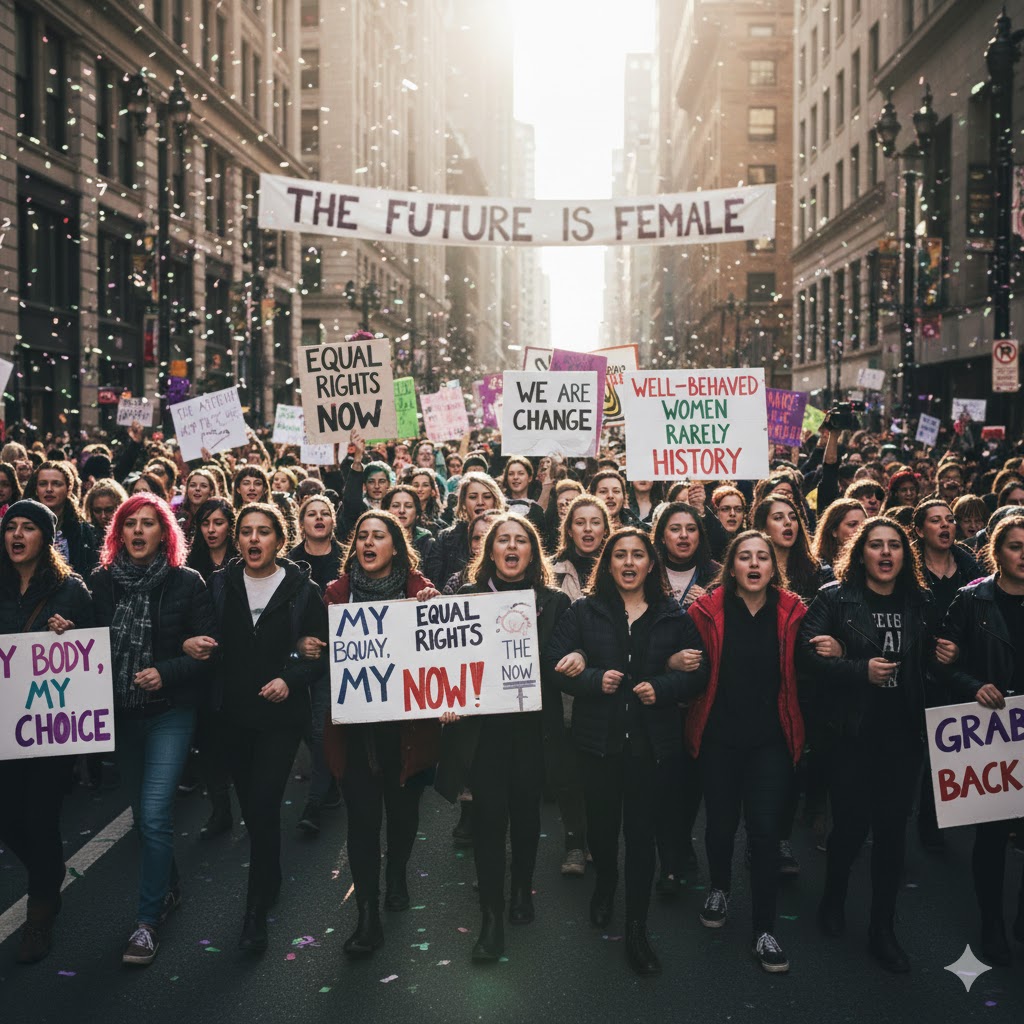
The modern feminist landscape is diverse, but a particular faction—often referred to as the Dark Feminist Movement—has emerged with sharper ideological stances that challenge traditional morality, biblical principles, and historical understandings of womanhood. This movement is characterized by its emphasis on radical autonomy, bodily sovereignty without ethical restriction, and the rejection of religious frameworks—particularly the Bible—as oppressive structures designed to limit female freedom. Yet Scripture affirms that “The fear of the Lord is the beginning of wisdom” (Proverbs 9:10), positioning God—not self—as the rightful source of authority.

At the heart of dark feminism is the belief that the Bible is fundamentally patriarchal. Proponents argue that Scripture reinforces male authority, female submission, and gender roles that they consider outdated. They view biblical instructions on marriage, sexuality, and family as relics of ancient societies rather than eternal moral truths. However, the Bible teaches that “All scripture is given by inspiration of God” (2 Timothy 3:16), asserting its timeless relevance.

One of the central pillars of the dark feminist worldview is abortion as ultimate bodily autonomy. This group sees reproductive freedom not merely as healthcare, but as a form of power—an assertion that a woman’s body, choices, and future must remain completely independent of religious moral codes. Scripture, however, affirms the sanctity of life: “Before I formed thee in the belly I knew thee” (Jeremiah 1:5), framing unborn life as God-ordained.

Dark feminists also critique the Bible’s teachings on sexual morality. They reject the biblical view that sexuality is sacred, covenantal, and bound by divine standards. Instead, they embrace a fluid, unrestricted sexual ethic where pleasure and personal fulfillment override spiritual or communal responsibility. Yet Scripture teaches that “Flee fornication” (1 Corinthians 6:18) and that the body is “the temple of the Holy Ghost” (1 Corinthians 6:19).

A significant component of this movement includes support for queer theory, which challenges the Bible’s teachings on gender and sexuality. Dark feminists argue that gender is socially constructed and fluid, whereas Scripture presents gender as intentionally designed and divinely ordered. Genesis 1:27 clearly states: “Male and female created he them,” anchoring gender in divine creation rather than cultural fluidity.

Dark feminism often critiques biblical womanhood as inherently repressive. Passages about submission, modesty, motherhood, and marital roles are interpreted as tools for maintaining male dominance. However, Scripture reveals submission as mutual and rooted in love, not control: “Submitting yourselves one to another in the fear of God” (Ephesians 5:21). Modesty is framed not as oppression but protection (1 Timothy 2:9–10).

The movement also resists biblical teachings on marriage. Instead of seeing marriage as covenantal and sacred, dark feminists frame it as a historical institution that restricted women’s economic and social power. Yet the Bible describes marriage as honorable (Hebrews 13:4) and rooted in sacrificial partnership: “Husbands, love your wives, even as Christ also loved the church” (Ephesians 5:25).

Another major theme is the rejection of male leadership—whether in the home, church, or society. Dark feminists argue that leadership roles historically given to men are products of patriarchal culture rather than divine order. However, Scripture presents leadership as responsibility, not dominance—“He that is greatest among you shall be your servant” (Matthew 23:11).

This movement also frequently critiques motherhood. While not universally anti-motherhood, dark feminism resists the idea that motherhood is a woman’s divine calling. Yet Scripture honors mothers with reverence: “Her children arise up, and call her blessed” (Proverbs 31:28). Motherhood is portrayed as ministry, not limitation.

Spiritually, dark feminists often embrace alternative belief systems—tarot, ancestor veneration, goddess worship, or metaphysical spirituality—as ways to reclaim feminine power outside the Bible. Scripture warns against such practices: “Regard not them that have familiar spirits” (Leviticus 19:31). Biblical spirituality places God—not self or mystical frameworks—at the center.

The movement is also rooted in social justice philosophies that sometimes conflict with biblical teachings. Issues like systemic oppression, reproductive justice, and queer liberation become moral priorities framed through a secular lens. The Bible teaches justice but ties it to righteousness: “To do justice and judgment is more acceptable to the Lord” (Proverbs 21:3).

Dark feminism promotes a worldview where self is supreme. Personal identity, desire, and self-definition hold more weight than external moral codes. This directly conflicts with biblical teaching that says: “Lean not unto thine own understanding” (Proverbs 3:5).

The movement also critiques biblical narratives such as Eve’s deception in Genesis. Dark feminists reinterpret Eve as a symbol of enlightenment. The Bible frames her as deceived (1 Timothy 2:14), not empowered, reminding believers that rebellion leads to brokenness, not liberation.

Another area of conflict involves forgiveness and reconciliation. The Bible emphasizes repentance, surrender, and restoration (Matthew 6:14–15), while dark feminism often promotes severing ties and prioritizing self-preservation. Scripture frames reconciliation as strength, not weakness.

Within the Dark Feminist Movement, masculinity is frequently depicted as inherently oppressive. The Bible differentiates between corrupt masculinity and godly masculinity, calling men to be protectors and providers (1 Corinthians 16:13–14).

Economically, dark feminists push for total financial independence from men. While empowerment is good, Scripture teaches interdependence within marriage: “Two are better than one” (Ecclesiastes 4:9).

The movement also influences media and cultural narratives. Films, music, and social platforms increasingly glorify self-worship, sexual liberation, and anti-marriage ideologies. Scripture warns: “Love not the world” (1 John 2:15–16), emphasizing holiness over cultural conformity.

Despite these tensions, it is important to acknowledge that dark feminism arises from real pain—historical oppression, gender inequality, domestic violence, and religious misuse. The Bible acknowledges these injustices and commands protection for women (Colossians 3:19; 1 Peter 3:7).

Ultimately, the conflict centers on authority: Who defines womanhood—God or the self? The Dark Feminist Movement elevates autonomy; the Bible elevates divine design. Joshua 24:15 declares, “Choose you this day whom ye will serve,” making the contrast clear.


The Biblical View of Womanhood

Biblical womanhood is not oppression—it is identity rooted in divine purpose, dignity, and sacred design.

  1. Women are created in God’s image (Genesis 1:27), carrying equal worth, value, and spiritual significance as men.
  2. Women possess divine strength modeled by Deborah (Judges 4), Esther (Esther 4), and the Proverbs 31 woman.
  3. Biblical womanhood honors wisdom, virtue, and inner beauty, as seen in 1 Peter 3:3–4.
  4. God honors the emotional depth of women, inviting them to cast their cares upon Him (1 Peter 5:7).
  5. Motherhood is divine, not mandatory, but honored as a godly calling (Psalm 127:3).
  6. Marriage is covenant partnership, not hierarchy, modeled after Christ’s sacrificial love (Ephesians 5:25).
  7. Women are called to spiritual strength, being “helpers” in the same sense that God is called our Helper (Psalm 46:1).
  8. Biblical womanhood encourages purpose, entrepreneurship, and productivity (Proverbs 31:16–24).
  9. Virtue is power, not weakness (Proverbs 31:10).
  10. God sees, honors, and defends women, especially the vulnerable (Psalm 68:5).

Biblical womanhood is not about silence, subservience, or suppression—it is about walking in God’s purpose, identity, grace, and strength with the dignity He designed.

Sugar Daddies & Sugar Babies

In contemporary society, the phenomenon of sugar daddies and sugar babies has become increasingly visible. A “sugar daddy” is typically an older man who provides financial support, gifts, or a lavish lifestyle to a younger woman, referred to as a “sugar baby,” in exchange for companionship, intimacy, or attention. At first glance, the arrangement can appear mutually beneficial: financial support for the young woman and company, admiration, or influence for the man. Scripture encourages wise stewardship and provision: “But if any provide not for his own, and specially for those of his own house, he hath denied the faith” (1 Timothy 5:8, KJV). In theory, this dynamic reflects a biblical principle—men providing for women—but it often departs from God’s design in practice.

One of the positive aspects is that sugar daddies can serve as providers, teaching younger women financial discipline and giving them resources to pursue education, business opportunities, or stability. When structured responsibly, some young women gain mentorship, career advice, and financial literacy. In a controlled context, this dynamic could be seen as an extension of biblical provision and mentorship principles, where older, experienced men assist younger women in establishing security. “The prudent see danger and take refuge, but the simple keep going and pay the penalty” (Proverbs 22:3, KJV).

However, the dangers far outweigh the potential benefits in most cases. Sugar arrangements often blur boundaries between genuine companionship and transactional relationships. A transactional approach can cultivate emotional dependency, skewed expectations, or exposure to abuse. Because the foundation is financial, many arrangements attract men with selfish motives, seeking control or indulgence rather than mutual respect and love.

Sugar babies must also consider personal safety. Numerous reports have documented abuse, assault, and even murder in these relationships. One notable case is that of a young woman who tragically lost her life due to a sugar daddy’s violent intentions—a stark reminder that appearances can be deceiving. While the media often romanticizes these arrangements, Scripture warns, “The prudent man foreseeth the evil, and hideth himself” (Proverbs 27:12, KJV). Discernment and caution are essential.

Another danger is emotional compromise. Sugar babies may become attached to men who do not have their spiritual or long-term interests at heart. Emotional entanglement can lead to heartbreak, manipulation, or spiritual disconnection. Women must weigh whether the relationship draws them closer to God or further into dependency. “For what shall it profit a man, if he shall gain the whole world, and lose his own soul?” (Mark 8:36, KJV).

Financial dependence can also limit personal growth. Some young women may postpone education, career goals, or independence because of reliance on a sugar daddy. While financial support is beneficial, long-term independence ensures safety, autonomy, and a God-honoring lifestyle. “Go to the ant, thou sluggard; consider her ways, and be wise” (Proverbs 6:6, KJV).

In some cases, sugar arrangements have led to love, respect, or marriage. A few couples have transitioned from financial mentorship into genuine, God-centered relationships. These instances are exceptions, often requiring spiritual alignment, mutual respect, and transparency. True love develops where God’s principles govern interactions, not where money dominates. “And above all these things put on charity, which is the bond of perfectness” (Colossians 3:14, KJV).

Setting clear boundaries is essential for sugar babies. They should establish non-negotiable standards around intimacy, time, and finances. Transparency with trusted mentors or family members provides oversight and guidance. Involving a community of accountability reduces the risk of abuse or isolation. “Where no counsel is, the people fall: but in the multitude of counsellors there is safety” (Proverbs 11:14, KJV).

Digital communication introduces additional risks. Sharing personal information, locations, or financial details with sugar daddies online can lead to stalking, blackmail, or exploitation. Modern wisdom encourages caution in online interactions. “Be ye wise as serpents, and harmless as doves” (Matthew 10:16, KJV).

Emotional detachment and discernment are crucial. Sugar babies must ask themselves whether their attachment is rooted in genuine respect or the illusion of security. A transactional relationship can feed insecurity rather than build character. Spiritual maturity helps identify whether a connection aligns with God’s purpose.

It is also important for sugar daddies to examine motives. Are they providing guidance and support out of genuine care, or merely seeking selfish gain? True provision reflects biblical principles—sacrificial, ethical, and God-centered. “Husbands, love your wives, even as Christ also loved the church” (Ephesians 5:25, KJV).

Mentorship within financial support should emphasize empowerment. The goal is to equip sugar babies to thrive independently, not create dependence. Financial guidance, educational support, and emotional mentorship transform the dynamic into something resembling godly provision rather than indulgence or exploitation.

Spiritual alignment is non-negotiable. Relationships that pull women away from the Most High or compromise their holiness are spiritually dangerous. A sugar daddy who pressures for sinful behavior is a hazard, not a mentor. “Flee also youthful lusts: but follow righteousness, faith, charity, peace, with them that call on the Lord out of a pure heart” (2 Timothy 2:22, KJV).

Regular prayer and discernment help clarify intentions. Before engaging in such arrangements, women should seek God’s guidance and confirm His will. Spiritual confirmation acts as a shield against deception and harm. “If any of you lack wisdom, let him ask of God, that giveth to all men liberally” (James 1:5, KJV).

Emotional resilience must be cultivated. Sugar babies should maintain personal goals, hobbies, friendships, and independence to prevent over-reliance on one person. Healthy boundaries preserve dignity, safety, and identity. “A wise woman buildeth her house: but the foolish plucketh it down with her hands” (Proverbs 14:1, KJV).

Physical safety is paramount. Meeting in public spaces, sharing plans with trusted friends, and maintaining privacy of personal assets reduces vulnerability. Abusive patterns often escalate when isolation occurs. “The prudent seeth the evil, and hideth himself” (Proverbs 27:12, KJV).

Transparency about expectations is critical. Sugar babies must define the nature of the relationship, limits of intimacy, and financial terms. Misunderstandings can lead to manipulation or danger. A well-defined arrangement reduces emotional and physical risk.

Spiritual accountability is also necessary. Confiding in mature mentors or spiritual leaders ensures the relationship does not compromise faith or values. God’s perspective serves as a moral compass and protective shield.

Lastly, recognizing when to exit is vital. If the relationship becomes unsafe, exploitative, or spiritually harmful, ending it is not failure—it is survival. Scripture encourages discernment: “Withdraw thy foot from thy neighbor’s house; lest he be weary of thee, and so hate thee” (Proverbs 25:17, KJV). Safety, peace, and God’s favor must never be compromised.

In conclusion, sugar arrangements can provide temporary financial support or mentorship, but they carry substantial risk. Love and godliness cannot be bought. Spiritual discernment, prayer, boundaries, and accountability protect the young women navigating these relationships. The Most High calls His daughters to relationships rooted in covenant, righteousness, and divine purpose—not in transactions or convenience. True provision aligns with God’s will, safeguards the heart, and builds a legacy that money alone cannot purchase.


References (KJV):
1 Timothy 5:8; Proverbs 22:3; Proverbs 27:12; Mark 8:36; Colossians 3:14; Proverbs 11:14; Matthew 10:16; Ephesians 5:25; 2 Timothy 2:22; James 1:5; Proverbs 14:1; Proverbs 25:17.

Indigenous People of America

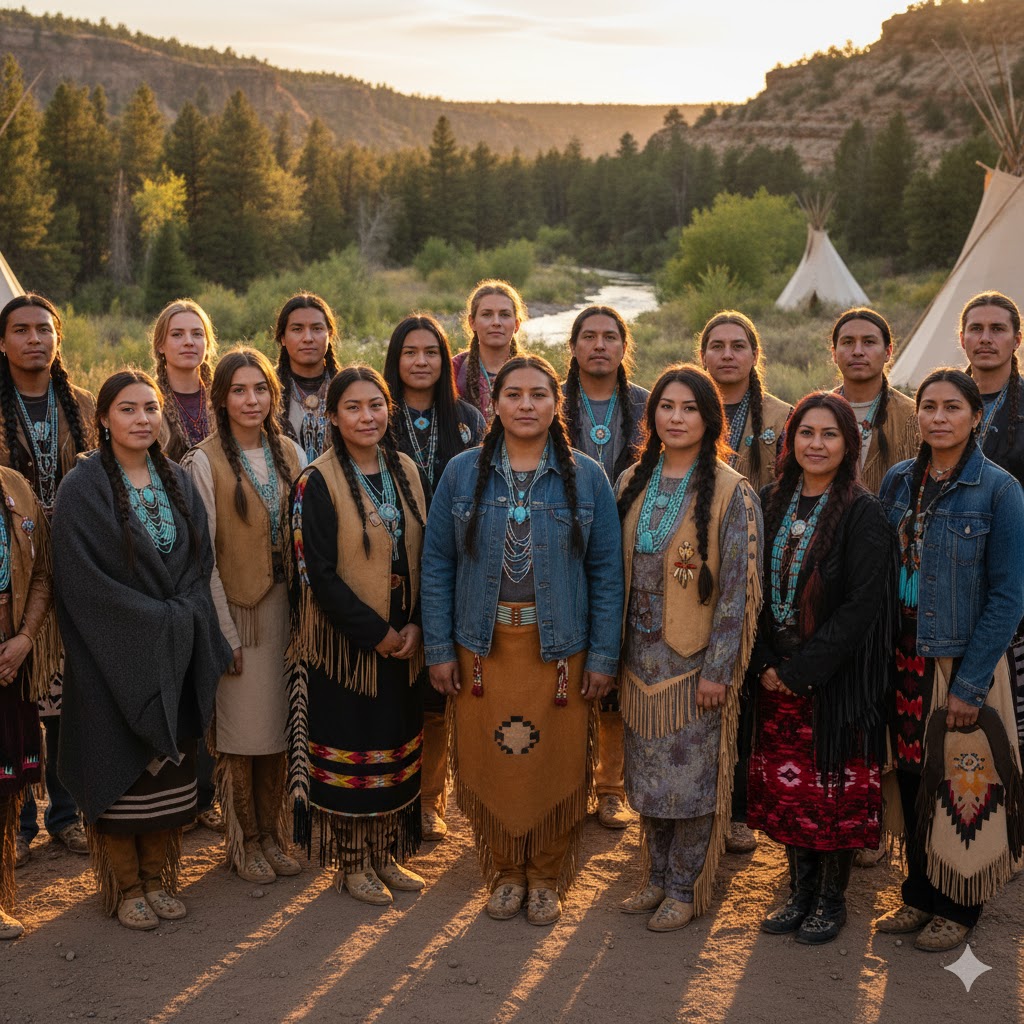
Native American people are the Indigenous peoples of the land now called the United States, and they are known by many names depending on the region and cultural group. The term “Native Americans” is commonly used today, but older names include “American Indians,” “Indigenous Americans,” “First Nations,” and “First Peoples.” Each tribe, however, has its own original name in its own language, often meaning “the people,” “the original ones,” or “human beings.” This diversity reflects the rich cultural and linguistic complexity of Indigenous civilizations long before European arrival.

Native Americans came in a wide range of skin tones, reflecting geographic diversity and ancient migrations. Historical accounts, genetic studies, and artwork created before European contact describe Indigenous peoples as brown-skinned, copper-toned, or deep reddish-brown. Some early explorers described them using terms like “tawny,” “brown,” or “dark.” A small group of historians and Afrocentric scholars argues that some Indigenous groups were Black or had African admixture prior to Columbus, but mainstream anthropology concludes that the first peoples of the Americas descended from ancient Asian populations.

Christopher Columbus’s arrival in 1492 dramatically altered the lives of Indigenous people. Columbus and his crew initially described the Indigenous people of the Caribbean as generous, peaceful, and welcoming. However, his treatment of them quickly turned violent. Columbus enslaved Native men, women, and children, forced them to mine gold, and imposed brutal punishments for failing to meet quotas. Many Indigenous people died from torture, forced labor, and diseases introduced by Europeans. These early actions set the stage for centuries of exploitation and colonization.

The history of Native Americans after Columbus is marked by war, displacement, forced assimilation, and systematic oppression. European settlers pushed Indigenous peoples off their ancestral lands through military force, broken treaties, and deliberate starvation campaigns. Entire communities were destroyed through massacres such as Wounded Knee, Sand Creek, and the Trail of Tears, which forced the Cherokee and other nations to relocate under deadly conditions. These events devastated populations, cultures, and social structures.

Many people ask what happened to the Native Americans, and the answer is complex. Disease brought by Europeans—smallpox, influenza, measles—caused massive population decline. Historians estimate that tens of millions of Indigenous people may have lived in the Americas before 1492, but up to 90% perished within the first century of contact. Survivors were pushed into reservations, stripped of cultural rights, and subjected to assimilation efforts, including boarding schools that prohibited Native languages and traditions.

Regarding reparations, the United States treated Native Americans differently from Black Americans. While Black Americans received no national reparations for slavery, Native Americans received limited forms of compensation in the form of treaties, land rights, and financial settlements—though these were often inadequate or unenforced. The Indian Claims Commission, established in 1946, offered monetary compensation for stolen land, but the payments were small compared to the value of what was taken. Many Indigenous activists note that no amount of money can compensate for genocide, cultural loss, and the destruction of entire nations.

Compared to Black people, Native Americans were treated through a system of removal and replacement, while Black people were subjected to chattel slavery and generational bondage. Both groups experienced racial violence, dehumanization, and systemic oppression, but the mechanisms differed. Enslaved Africans were forced into labor, while Indigenous people were pushed off their land or exterminated. Yet both suffered under white supremacy and colonial expansion.

The languages spoken by Native Americans before colonization were vast and varied. More than 300 Indigenous languages existed in North America, belonging to major language families such as Algonquian, Iroquoian, Siouan, Athabaskan, Uto-Aztecan, and Muskogean. Many tribes today work to preserve or revive these languages through immersion schools and cultural programs.

How Native Americans arrived in the Americas is a continuing subject of research. The most widely accepted theory holds that ancient peoples migrated from Siberia into Alaska across a land bridge called Beringia around 15,000–20,000 (not sure if this is true the amount of years)years ago. Alternative theories suggest coastal migration by boat or earlier arrivals, but these remain debated. Regardless of the exact method, Indigenous peoples developed sophisticated civilizations long before European contact.

The land now known as America had many Indigenous names before colonization. Different tribes had different names for regions, but the continent itself had no single unified name since there was no single unified nation. The English name “America” comes from Amerigo Vespucci, an Italian navigator whose writings incorrectly suggested he discovered a “New World.” European mapmakers later used his name to describe the continents.

Columbus Day has a complicated and painful history. First celebrated in the late 18th century, the holiday gained national recognition in 1937 as a celebration of Italian American heritage and Columbus’s voyages. However, for Native Americans, Columbus Day represents colonization, enslavement, massacres, and the beginning of genocide. This has led many states and cities to replace Columbus Day with Indigenous Peoples’ Day to honor Native resilience and history.

The treatment of Native Americans varied by region and time period, but their experiences consistently reflected displacement, violence, and cultural suppression. Treaties were broken, families were separated, and children were taken from their homes to be “Americanized.” Yet Indigenous peoples survived through resistance, resilience, and a commitment to preserving their identity.

The debate over whether some Indigenous peoples were Black adds another layer to the discussion. Some scholars point to early European reports describing “dark-skinned” or “Black” Native peoples, while others argue that these descriptions referred to natural variations in skin tone among Indigenous populations. Most anthropologists conclude that any similarity to African features developed independently.

Native Americans today continue to fight for sovereignty, land rights, cultural preservation, and justice. Their survival in spite of centuries of oppression is a testament to their strength. Across the United States, Indigenous nations maintain vibrant cultures, languages, and traditions, ensuring that the legacy of their ancestors endures.

The question of reparations remains ongoing. Many Indigenous communities seek not only financial compensation but also land restoration, legal recognition, and protection of sacred sites. Some progress has been made, but the historical wounds run deep.

Ultimately, Native American history is central to the story of America. Their experiences reveal the contradictions of a nation built on ideals of freedom while practicing colonization and racial hierarchy. By understanding this history, modern society can better honor Indigenous contributions and acknowledge the injustices committed against them.

The legacy of Columbus is deeply contested. While some view him as an explorer, others see him as the initiator of a brutal colonial system. His actions toward Indigenous peoples—including enslavement, torture, and exploitation—serve as a stark reminder of the destructive impact of European colonization.

Native American history is not just a story of suffering but also one of survival, identity, and endurance. Through cultural revival, language preservation, and political activism, Indigenous peoples continue to shape the future. Their presence and contributions remain foundational to the story of the Americas.


References

Calloway, C. G. (2012). First peoples: A documentary survey of American Indian history (4th ed.). Bedford/St. Martin’s.

Dunbar-Ortiz, R. (2014). An Indigenous peoples’ history of the United States. Beacon Press.

Loewen, J. W. (2007). Lies my teacher told me: Everything your American history textbook got wrong. The New Press.

Mann, C. C. (2005). 1491: New revelations of the Americas before Columbus. Vintage Books.

Stannard, D. E. (1992). American Holocaust: The conquest of the New World. Oxford University Press.

Thornton, R. (1987). American Indian Holocaust and survival. University of Oklahoma Press.