Tag Archives: the brown girl dilemma

Dilemma: White Supremacy

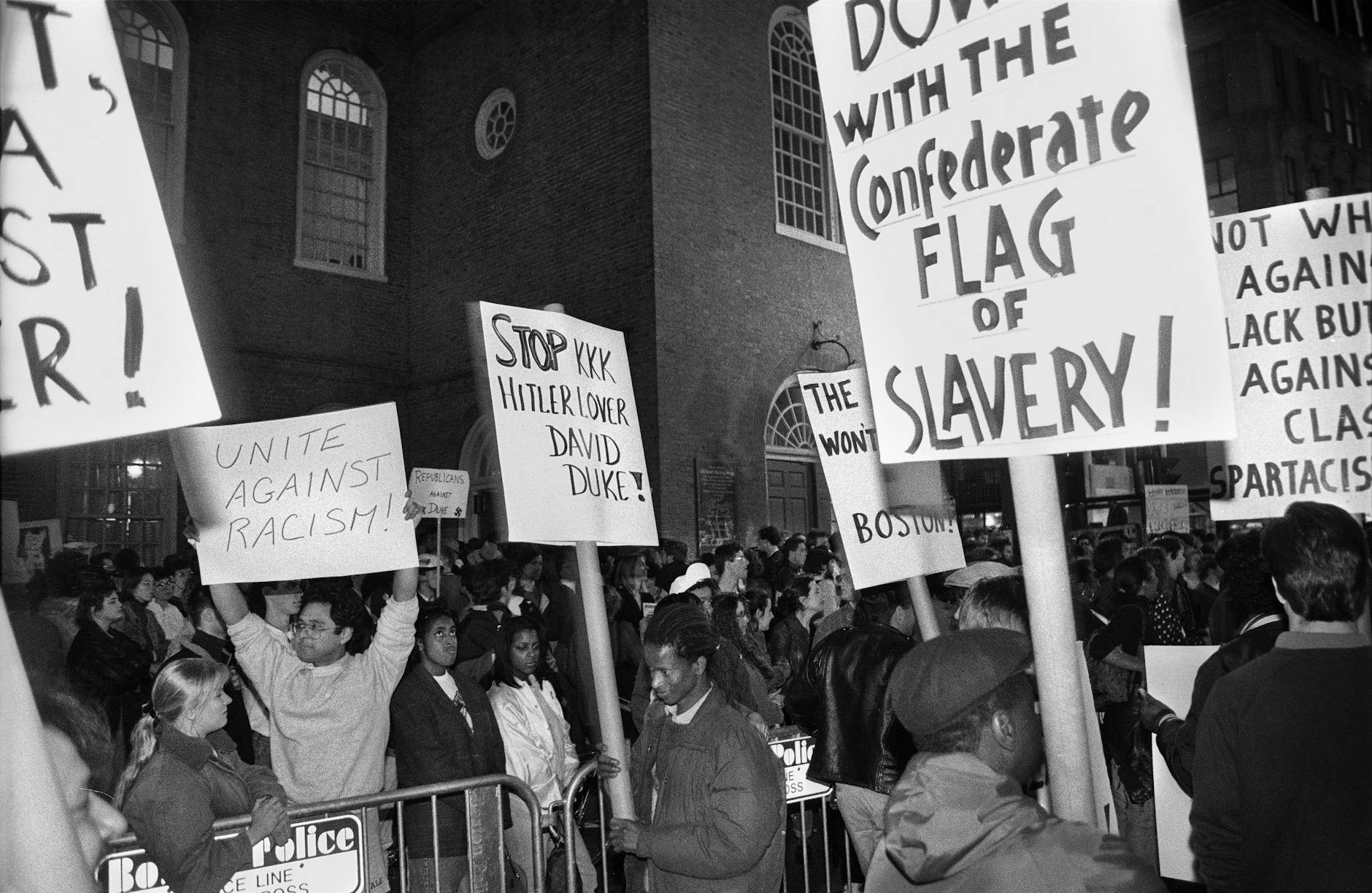
Photo by David Henry on Pexels.com

“The white race is the dominant race in America, and the black race is inferior.” — David Duke, former Grand Wizard of the Ku Klux Klan .Southern Poverty Law Center

White supremacy is a deeply ingrained ideology asserting the inherent superiority of white people over all other races. This belief system has been central to the social, political, and economic structures of many societies, particularly in the United States. Its origins can be traced back to the colonial era, where European powers justified the enslavement and subjugation of African peoples through pseudo-scientific and theological rationales.


Historical Origins and the Role of the Ku Klux Klan

The formalization of white supremacy in the United States was significantly influenced by the founding of the Ku Klux Klan (KKK) in 1865. Established by six Confederate veterans in Pulaski, Tennessee, the Klan aimed to restore white dominance in the post-Civil War South through terror and intimidation. The KKK’s activities included lynchings, arson, and other forms of violence directed at Black individuals and their allies.TIMEWikipedia+1

While the Klan was officially disbanded in the 1870s, its ideology persisted and resurfaced in various forms throughout American history, including during the Civil Rights Movement of the 1960s and in contemporary white nationalist groups.


The Premise of White Supremacy

At its core, white supremacy posits that white people are inherently superior to people of all other races and therefore should dominate society. This belief has been perpetuated through various means, including legislation, cultural norms, and institutional practices that privilege white individuals while marginalizing others.

The premise of white supremacy is often supported by distorted interpretations of religious texts and pseudo-scientific theories that dehumanize non-white populations. For instance, the “Curse of Ham” narrative was historically used to justify the enslavement of Black people by misinterpreting biblical passages .The Banner


Manifestations in Contemporary Society

In modern times, white supremacy manifests in various aspects of life, including employment, education, housing, and criminal justice. Black individuals often face systemic barriers such as discriminatory hiring practices, unequal educational opportunities, and over-policing, which hinder their ability to achieve economic stability and social mobility.

Psychologically, the pervasive nature of white supremacy can lead to internalized racism among Black individuals, affecting their self-esteem and mental health. Studies have shown that exposure to racial discrimination is associated with increased stress and adverse health outcomes .American Psychological Association


Biblical Perspectives and Misinterpretations

The Bible does not support the notion of racial superiority. In fact, passages such as Galatians 3:28 emphasize the equality of all people in Christ: “There is neither Jew nor Greek, slave nor free, male nor female, for you are all one in Christ Jesus.” However, throughout history, certain groups have misused scripture to justify racial hierarchies, citing misinterpretations like the “Curse of Ham” to rationalize the enslavement and oppression of Black people .GotQuestions.blogThe Banner


Psychological Impact on Black Americans

The psychological effects of white supremacy on Black Americans are profound and multifaceted. Chronic exposure to racism can lead to mental health issues such as anxiety, depression, and post-traumatic stress disorder (PTSD). Moreover, the constant need to navigate a society that devalues their existence can result in a diminished sense of self-worth and identity .


Global Perspectives on White Supremacy

While white supremacy is most prominently associated with the United States, it is not confined to its borders. Countries like Israel, Myanmar, and South Korea have faced criticism for racial discrimination and human rights violations against minority groups . These global instances highlight the pervasive nature of racial hierarchies and the need for international efforts to combat them.U.S. News & World Report


Steps of White Supremacy

White supremacy operates through several key mechanisms:

  1. Ideological Justification: Promoting beliefs and narratives that dehumanize non-white populations.
  2. Institutionalization: Embedding discriminatory practices within societal institutions such as schools, workplaces, and the legal system.
  3. Cultural Reinforcement: Perpetuating stereotypes and biases through media and cultural representations.
  4. Violence and Intimidation: Employing physical force and threats to maintain dominance and suppress resistance.

Accountability and Responsibility

Responsibility for perpetuating white supremacy lies not only with overt hate groups but also with institutions and individuals who uphold and benefit from systemic racism. This includes policymakers, educators, and media figures who perpetuate or fail to challenge discriminatory practices and narratives.


Personal Narratives and Experiences

Individuals who have experienced white supremacy often recount stories of exclusion, discrimination, and violence. For example, during the Civil Rights Movement, activists like Rosa Parks and Martin Luther King Jr. faced systemic oppression and personal threats as they challenged racial injustices. Their resilience underscores the profound impact of white supremacy on personal lives and the collective struggle for equality.


The Esteem of Whiteness

The elevation of whiteness can be attributed to historical power dynamics where white individuals established and maintained control over resources, institutions, and narratives. This dominance was reinforced through laws, social norms, and economic systems that privileged white people and marginalized others.


Global Impact and Worst Offenders

Globally, white supremacy manifests in various forms, including colonialism, apartheid, and neo-imperialism. Countries with histories of colonial exploitation, such as Belgium in the Congo and the United Kingdom in India, have legacies of racial hierarchies that continue to affect post-colonial societies.


Conclusion

White supremacy is a pervasive ideology with deep historical roots and widespread contemporary implications. Its impact on Black Americans is profound, affecting their psychological well-being, social mobility, and sense of identity. Addressing white supremacy requires a concerted effort to dismantle systemic racism, promote equity, and foster a culture of inclusion and respect for all individuals, regardless of race.

References

  • Southern Poverty Law Center. (n.d.). David Duke. Retrieved from
  • History.com Editors. (2020, June 25). Ku Klux Klan: Origin, Members & Facts. HISTORY. Retrieved from
  • American Psychological Association. (n.d.). Racism and Mental Health. Retrieved from
  • Bible Odyssey. (n.d.). The Legacy of the Bible in Justifying Slavery. Retrieved from
  • Boston Review. (2019, November 14). Toward a Global History of White Supremacy. Retrieved from
  • Southern Poverty Law Center. (2018, August 14). White Shadow: David Duke’s Lasting Influence on American White Supremacy. Retrieved from
  • Wikipedia contributors. (2023, December 24). Ku Klux Klan. In Wikipedia, The Free Encyclopedia. Retrieved from
  • Wikipedia contributors. (2023, December 24). White supremacy. In Wikipedia, The Free Encyclopedia. Retrieved from


Colorism and the Silent Wounds or Intra-Facial Discrimination.

Photo by Darina Belonogova on Pexels.com

Colorism, a term popularized by Alice Walker in 1983, refers to prejudice or discrimination against individuals with darker skin tones, often by members of their own racial or ethnic group. Unlike racism, which is an intergroup phenomenon, colorism is largely intra-racial and internalized, functioning as a byproduct of colonialism, slavery, and white supremacy. In the Black community, this hierarchy of skin tone—placing light skin above dark—has deep historical roots and persistent modern implications. The silent wounds of colorism often manifest as diminished self-esteem, fractured unity, and internalized oppression.


The Silent Wounds of Intra-Racial Discrimination

The wounds of colorism are “silent” because they are often normalized and rarely addressed openly. Psychologically, they appear as feelings of inadequacy, alienation, and resentment within the Black community. Children are often socialized into believing that lighter skin equates to beauty, intelligence, or higher status. Studies have shown that darker-skinned African Americans face harsher prison sentences, reduced job opportunities, and are less likely to be married than lighter-skinned peers with similar qualifications (Monk, 2014). The consequences are cumulative: lower self-worth, fractured identity, and intergenerational bias.


Historical Roots: The Light vs. Dark Divide

The light-skin/dark-skin divide began during slavery in the Americas, where lighter-skinned enslaved Africans—often the children of white slave owners and enslaved Black women—were sometimes given preferential treatment. They were more likely to work in the house rather than in the fields, receive basic education, or be considered for manumission. This hierarchy persisted into the Jim Crow era, reinforced by social organizations like the “Blue Vein Societies” that excluded darker-skinned Blacks. The ideology of white supremacy made whiteness the ultimate standard of beauty and worth, embedding these beliefs deep within Black cultural consciousness.


Colorism in the Black Community and Entertainment

Today, colorism manifests in how Black people perceive and treat one another. Light-skinned individuals are often assumed to be more attractive, educated, or approachable, while darker-skinned individuals may be stereotyped as aggressive or less refined. This bias is evident in the entertainment, modeling, and sports industries, where lighter-skinned women such as Zendaya, Amandla Stenberg, and Tessa Thompson often receive leading roles, while darker-skinned actresses like Lupita Nyong’o and Viola Davis have had to fight for representation. In music, rappers like Kodak Black have openly stated a preference for lighter-skinned women, reflecting deep-seated biases. Actor Taye Diggs once admitted in an interview that he was attracted to white women due to his upbringing in predominantly white spaces—a statement that sparked discussion about internalized preference and societal conditioning.

Examples of Celebrities by Skin Tone

  • Light-skinned celebrated celebrities: Zendaya, Tessa Thompson, Amandla Stenberg, Drake, Mariah Carey.
  • Dark-skinned celebrated celebrities: Lupita Nyong’o, Viola Davis, Idris Elba, Danai Gurira, Mahershala Ali.

Global and African Context

Colorism is not limited to the African diaspora in the West; it is prevalent in Africa itself. In nations like Nigeria, Ghana, and South Africa, skin-lightening products are widely sold, despite known health risks. The preference for lighter skin is tied to colonial history and reinforced by global media that promotes Eurocentric beauty ideals. Light-skinned women are often considered more “marriageable” or “professional,” while darker-skinned women face social and economic disadvantages.


Social and Economic Impacts

Colorism influences social mobility, dating, marriage prospects, and even income potential. Lighter-skinned Black Americans have been found to earn more, live in wealthier neighborhoods, and receive better educational opportunities than their darker-skinned counterparts (Keith & Herring, 1991). In modeling and advertising, lighter skin tones are disproportionately featured in beauty campaigns, perpetuating the cycle of bias.


Celebrity Commentary on Colorism

Several celebrities have spoken openly about colorism. Lupita Nyong’o has shared how she once prayed to God to lighten her skin, only to later embrace her beauty. Viola Davis has criticized Hollywood for sidelining darker-skinned women in romance and leading roles. Rapper Cardi B has acknowledged that her lighter complexion has given her certain advantages in the music industry compared to darker-skinned peers. These admissions highlight the need for systemic change within media representation.


Solutions and Path to Change

Addressing colorism requires both personal and systemic transformation. On a personal level, Black communities must unlearn internalized racism by affirming the beauty, intelligence, and value of all skin tones. On a systemic level, industries must commit to equal representation and opportunities for darker-skinned individuals. Education, media literacy, and cultural celebration of melanin-rich beauty can dismantle the hierarchy. As Proverbs 31:30 (KJV) reminds us, “Favour is deceitful, and beauty is vain: but a woman that feareth the Lord, she shall be praised.”


Conclusion

Colorism’s silent wounds are a legacy of colonialism and slavery, perpetuated by white supremacy and internalized bias. They impact social, economic, and psychological well-being within the Black community, both in the diaspora and on the African continent. Breaking this cycle demands intentional action, from challenging biased beauty standards to holding media accountable for diverse representation. Until the hierarchy of skin tone is dismantled, true unity in the Black community will remain incomplete.


References

  • Keith, V. M., & Herring, C. (1991). Skin tone and stratification in the Black community. American Journal of Sociology, 97(3), 760–778.
  • Monk, E. P. Jr. (2014). Skin tone stratification among Black Americans, 2001–2003. Social Forces, 92(4), 1313–1337.
  • Walker, A. (1983). In Search of Our Mothers’ Gardens. Harcourt Brace Jovanovich.
  • The Holy Bible, King James Version.

School-to-Prison Pipeline: How the System Fails Black Youth Before They Start.

Photo by RDNE Stock project on Pexels.com

Psychologist Amos Wilson once observed, “Until our children are taught how to be Black, they will fail in school, because the schools were not designed to educate them in the first place.” This profound statement captures the structural failure of the American education system to nurture Black children. Instead of affirming identity and fostering opportunity, schools often serve as the first station along a pathway that leads Black youth toward incarceration. This phenomenon, widely known as the school-to-prison pipeline, is not a new development but the product of a long history of systemic inequality and institutional neglect.

Historically, education for African Americans was deliberately restricted. During slavery, teaching the enslaved to read was illegal in many states, as literacy threatened the institution of bondage. Following emancipation, segregated schools under Jim Crow laws ensured that Black children received inferior resources, curricula, and facilities. Though Brown v. Board of Education (1954) legally ended segregation, the persistence of de facto segregation, underfunded schools in Black neighborhoods, and discriminatory practices maintained inequities. This historical backdrop set the stage for the school-to-prison pipeline, where structural racism in education and law enforcement converges.

One of the primary mechanisms of this pipeline is disproportionate discipline. Research shows that Black students are suspended and expelled at much higher rates than their white peers for the same behaviors (Skiba et al., 2011). Zero-tolerance policies, adopted widely in the 1990s, criminalized minor misbehaviors such as tardiness, classroom disruptions, or dress code violations. Instead of counseling and restorative practices, schools resorted to suspensions, expulsions, and referrals to law enforcement. This exclusionary discipline pushes students out of classrooms and into contact with the criminal justice system.

Psychologically, such punitive environments stigmatize Black children early. Labeling theory suggests that when children are repeatedly categorized as “troublemakers,” they internalize these labels, which shapes self-perception and behavior (Becker, 1963). This creates a cycle where Black students, already navigating racial bias, are further burdened with psychological scars from being treated as criminals-in-waiting. The Bible echoes this concern in Ephesians 6:4, warning fathers and authority figures not to provoke children to wrath, but to nurture them. Yet the school system often provokes, rather than nurtures, Black children.

The failure extends beyond discipline to curriculum and pedagogy. Schools frequently erase or marginalize Black history, culture, and contributions. This invisibility diminishes self-worth and alienates Black youth from academic engagement. Amos Wilson argued that education must be rooted in the cultural and psychological needs of Black children; otherwise, it serves as a mechanism of control rather than liberation. Proverbs 22:6 (KJV) instructs, “Train up a child in the way he should go: and when he is old, he will not depart from it.” Yet Black children are too often trained into alienation, criminalization, and failure rather than purpose and possibility.

Socioeconomic inequality compounds the problem. Underfunded schools in predominantly Black neighborhoods lack qualified teachers, extracurricular opportunities, and adequate resources. These structural disadvantages feed directly into the school-to-prison pipeline. Psychologist Urie Bronfenbrenner’s ecological systems theory underscores that a child’s development is deeply influenced by the surrounding environment. When the environment is impoverished and punitive, children’s outcomes are shaped accordingly, not by personal failure but by systemic design.

The courts and law enforcement deepen this cycle. School-based arrests disproportionately affect Black youth, often for nonviolent infractions. Once ensnared in the juvenile justice system, young people face barriers to reentry into schools and future employment, effectively criminalizing childhood. Lamentations 3:27 reminds us, “It is good for a man that he bear the yoke in his youth.” Yet the yoke that many Black children bear is one of systemic injustice, imposed before they even have the chance to reach adulthood.

Ultimately, the school-to-prison pipeline reflects a betrayal of society’s moral and civic responsibility to its children. To dismantle it, reforms must address disciplinary practices, resource allocation, and culturally relevant curricula. Schools must transform from punitive institutions into nurturing environments that uplift Black youth. Both biblical wisdom and psychological research affirm that the flourishing of children depends on systems that nurture identity, support growth, and embody justice. Until such transformation occurs, justice will remain deferred, and the future of Black youth will continue to be unjustly stolen.


References

Alexander, M. (2010). The new Jim Crow: Mass incarceration in the age of colorblindness. The New Press.

Becker, H. S. (1963). Outsiders: Studies in the sociology of deviance. Free Press.

Bronfenbrenner, U. (1979). The ecology of human development: Experiments by nature and design. Harvard University Press.

King James Bible. (1769/2017). The Holy Bible, King James Version. Cambridge University Press. (Original work published 1611).

Skiba, R. J., Horner, R. H., Chung, C. G., Rausch, M. K., May, S. L., & Tobin, T. (2011). Race is not neutral: A national investigation of African American and Latino disproportionality in school discipline. School Psychology Review, 40(1), 85–107.

Wilson, A. (1998). Blueprint for Black power: A moral, political, and economic imperative for the twenty-first century. Afrikan World InfoSystems.

Justice Deferred: The Double Standard in Law Enforcement and the Courts.

Photo by KATRIN BOLOVTSOVA on Pexels.com

The concept of justice is founded on the principle of fairness, impartiality, and equality before the law. Yet in practice, systemic inequalities reveal a troubling double standard within both law enforcement and the judicial system. Marginalized communities, particularly African Americans, often experience harsher policing, unequal access to legal resources, and disproportionate sentencing outcomes. This disparity undermines the legitimacy of the legal system and perpetuates cycles of distrust between citizens and institutions.

Law enforcement practices demonstrate these inequities in striking ways. Research consistently shows that Black and Latino individuals are disproportionately stopped, searched, and subjected to the use of force compared to white individuals (Gelman, Fagan, & Kiss, 2007). The doctrine of “probable cause” is often applied unevenly, with minority communities bearing the brunt of aggressive policing strategies such as stop-and-frisk. This creates a reality where the very institutions sworn to protect all citizens enforce surveillance and control selectively, reinforcing racial hierarchies.

In the courts, the disparities extend into sentencing and trial outcomes. Studies highlight that people of color frequently receive harsher sentences for the same crimes compared to white defendants, especially in drug-related and capital cases (Alexander, 2010). Mandatory minimum sentencing and “three strikes” laws have compounded these effects, disproportionately incarcerating minority men and contributing to mass incarceration in the United States. Such legal frameworks reveal a systemic bias that privileges some groups while criminalizing others, making equality before the law more of an ideal than a reality.

Moreover, socioeconomic status amplifies these disparities. Wealthy defendants can secure private counsel, expert witnesses, and robust defense strategies, while poorer individuals—disproportionately minorities—rely on underfunded public defenders. The result is a two-tiered system of justice where money, rather than truth, often determines outcomes (Stevenson, 2014). This reality reveals that the double standard in the courts is not only racial but also economic, stratifying access to justice by class as well as color.

The consequences of this double standard reverberate beyond individual cases. When communities see repeated patterns of unequal justice, collective mistrust emerges, eroding confidence in the rule of law itself. This distrust contributes to cycles of alienation, where marginalized groups disengage from civic life, perceiving the state as an adversary rather than a protector. In turn, such alienation perpetuates social unrest, reinforcing a cycle of tension between law enforcement and the communities they police.

Addressing this crisis requires systemic reforms rooted in accountability, transparency, and equity. Implicit bias training, sentencing reform, and increased investment in public defense are among the necessary interventions. Yet beyond policy, a cultural shift is required: one that reasserts the fundamental truth that justice cannot exist where double standards prevail. As Scripture cautions in Proverbs 17:15, “He that justifieth the wicked, and he that condemneth the just, even they both are abomination to the Lord.” Both biblical wisdom and contemporary scholarship affirm that justice deferred is indeed justice denied, and only by dismantling these inequities can society move toward true fairness.


References

Alexander, M. (2010). The new Jim Crow: Mass incarceration in the age of colorblindness. The New Press.

Gelman, A., Fagan, J., & Kiss, A. (2007). An analysis of the New York City Police Department’s “stop-and-frisk” policy in the context of claims of racial bias. Journal of the American Statistical Association, 102(479), 813–823. https://doi.org/10.1198/016214506000001040

King James Bible. (1769/2017). The Holy Bible, King James Version. Cambridge University Press. (Original work published 1611).

Stevenson, B. (2014). Just mercy: A story of justice and redemption. Spiegel & Grau.

How To Discern Fake People.

Photo by Leeloo The First on Pexels.com

In today’s world, the ability to discern character is essential. Many individuals project images of sincerity, loyalty, or friendship while harboring ulterior motives. The Bible provides timeless wisdom on identifying those who are deceptive, while psychology offers insights into behaviors that reveal duplicity. Together, these perspectives equip us to guard our hearts, relationships, and decisions from the harm of false people.

The King James Version (KJV) of the Bible warns against the dangers of deceit. Proverbs 26:24-25 declares, “He that hateth dissembleth with his lips, and layeth up deceit within him; When he speaketh fair, believe him not: for there are seven abominations in his heart.” Here, Scripture emphasizes that words of flattery may mask inner corruption. Fake people often use charm to disarm others, but their intentions are destructive. In psychology, this aligns with the study of impression management, where individuals consciously shape others’ perceptions of them for personal gain.

Another biblical marker of insincerity is hypocrisy. Matthew 7:15 warns, “Beware of false prophets, which come to you in sheep’s clothing, but inwardly they are ravening wolves.” This verse underscores the reality of individuals who conceal their harmful nature behind masks of goodness. In psychology, such behaviors are linked to traits of narcissism and Machiavellianism, components of the “Dark Triad,” where deceit and manipulation are tools for control. Fake people may appear caring, but their patterns of exploitation and lack of empathy eventually reveal their true selves.

From a psychological standpoint, duplicity often manifests in inconsistent behavior. Genuine people maintain congruence between words and actions, while fake people contradict themselves depending on who is watching. Cognitive dissonance theory highlights that such inconsistency creates inner tension, which eventually leaks into observable behavior. This is why one may notice subtle discrepancies—such as a smile that does not reach the eyes, or promises repeatedly broken. Proverbs 20:6 echoes this observation: “Most men will proclaim every one his own goodness: but a faithful man who can find?”

Another sign of falseness is exploitation. In relationships, fake individuals may attach themselves to others only when benefits are present. When difficulties arise, they disappear. The Bible warns in Proverbs 19:4, “Wealth maketh many friends; but the poor is separated from his neighbour.” Psychology supports this with the concept of transactional relationships, where interactions are based not on genuine care but on resource exchange. Such friendships dissolve once material or social benefits vanish.

Discernment also involves paying attention to gossip and backbiting. Scripture cautions in Proverbs 16:28, “A froward man soweth strife: and a whisperer separateth chief friends.” Fake people often thrive on sowing discord, using manipulation and half-truths to elevate themselves. Psychologically, this behavior aligns with traits of passive-aggression and projection. They deflect their insecurities onto others, destabilizing relationships to maintain control. Recognizing this pattern allows individuals to avoid unnecessary entanglement in toxic dynamics.

Moreover, discernment requires self-awareness. Fake people often prey on those who lack boundaries or long excessively for validation. In psychology, attachment theory notes that insecurely attached individuals are more likely to tolerate mistreatment for fear of abandonment. Biblically, believers are urged to establish spiritual grounding: “Keep thy heart with all diligence; for out of it are the issues of life” (Proverbs 4:23). When we are secure in God’s love and emotionally mature, we become less susceptible to counterfeit relationships.

Ultimately, the ability to discern fake people is not about suspicion but about wisdom. The Bible exhorts us to “try the spirits whether they are of God” (1 John 4:1). Psychology teaches us to observe patterns of behavior rather than isolated acts. Together, these disciplines encourage vigilance, humility, and reliance on both discernment and evidence. Protecting ourselves from deceit allows us to cultivate authentic relationships grounded in trust, mutual respect, and love.


References

American Psychological Association. (2013). Diagnostic and statistical manual of mental disorders (5th ed.). Arlington, VA: American Psychiatric Publishing.

Festinger, L. (1957). A theory of cognitive dissonance. Stanford University Press.

Furnham, A., Richards, S. C., & Paulhus, D. L. (2013). The Dark Triad of personality: A 10 year review. Social and Personality Psychology Compass, 7(3), 199–216. https://doi.org/10.1111/spc3.12018

King James Bible. (1769/2017). The Holy Bible, King James Version. Cambridge University Press. (Original work published 1611).

Mikulincer, M., & Shaver, P. R. (2016). Attachment in adulthood: Structure, dynamics, and change (2nd ed.). Guilford Press.

Dilemma: Friends or Foes

Faithful Companionship: Biblical, Psychological, and Practical Insights on True Friendship

Photo by Sadiq Hashim on Pexels.com

A friend is more than a casual acquaintance or a social media connection; a true friend is a confidant, ally, and companion whose loyalty endures through seasons of joy and trial. In its purest form, friendship is a relationship marked by mutual trust, selflessness, and emotional intimacy. While many relationships are transactional, a true friend remains steadfast without ulterior motives. Proverbs 17:17 (KJV) declares, “A friend loveth at all times, and a brother is born for adversity.” This enduring love distinguishes genuine friendship from mere association.

Biblical Foundations of Friendship

The King James Version and the Apocrypha offer profound wisdom regarding friendship:

  • Proverbs 18:24 (KJV): “A man that hath friends must shew himself friendly: and there is a friend that sticketh closer than a brother.”
  • Sirach (Ecclesiasticus) 6:14-17 (Apocrypha): “A faithful friend is a strong defence: and he that hath found such an one hath found a treasure… A faithful friend is the medicine of life; and they that fear the Lord shall find him.”
  • John 15:13 (KJV): “Greater love hath no man than this, that a man lay down his life for his friends.”
  • James 4:4 (KJV): “Know ye not that the friendship of the world is enmity with God?”

Scripture emphasizes that friendship is not merely about enjoyment but about covenantal loyalty rooted in righteousness. The warning against being “friends with the world” means avoiding alliances that compromise faith, values, and obedience to God. Worldly friendships often lead to moral compromise, whereas godly friendships build spiritual strength.

Enemies vs. Friends

An enemy actively or passively works against your well-being, whether through deceit, sabotage, or ill will. A friend, by contrast, seeks your good and stands with you in both adversity and triumph. Jesus Himself reminded His followers to “love your enemies” (Matthew 5:44 KJV), but love does not mean inviting harmful people into the place of intimate friendship.

Ten Traits of a True Friend

  1. Loyalty – Stands with you in success and struggle (Proverbs 17:17).
  2. Honesty – Speaks truth even when it’s uncomfortable (Proverbs 27:6).
  3. Reliability – Keeps promises and commitments.
  4. Mutual Respect – Values boundaries and differences.
  5. Selflessness – Acts in your best interest without seeking personal gain.
  6. Supportive Spirit – Encourages growth and faithfulness to God.
  7. Forgiveness – Extends grace when wronged.
  8. Confidentiality – Guards your secrets (Sirach 27:16).
  9. Shared Values – Aligns morally and spiritually.
  10. Consistency – Remains present through changing seasons.

Psychological Insights on Friendship

Psychology underscores the importance of friendship for emotional well-being, resilience, and personal growth. Research shows that true friendships reduce stress, improve self-esteem, and promote longer life spans (Holt-Lunstad et al., 2010). Psychologists note that authentic friendships involve reciprocal empathy—the ability to understand and share in each other’s emotional states—which fosters security and trust (Aron et al., 2005).

However, psychology also warns about toxic friendships, where manipulation, exploitation, or chronic negativity undermine well-being. This mirrors the biblical caution to discern between godly companionship and destructive associations (1 Corinthians 15:33).

Knowing Friend or Foe

To discern whether someone is a friend or foe, examine their fruit (Matthew 7:16). Friends nurture, uplift, and challenge you toward righteousness. Foes drain, discourage, and draw you away from your purpose. This discernment requires prayer, observation, and wisdom.

When Friendship Turns Poison: Recognizing and Removing Toxic Ties

While friendship is intended to be a source of support, encouragement, and mutual growth, not every relationship labeled as “friendship” is beneficial. A toxic friendship is one in which the dynamics consistently harm your mental, emotional, or spiritual well-being. These relationships can drain energy, distort self-worth, and hinder purpose.

Biblical Perspective on Toxic Friendships

Scripture warns about the company we keep. Proverbs 13:20 (KJV) declares: “He that walketh with wise men shall be wise: but a companion of fools shall be destroyed.” This means that the spiritual and moral quality of our companions influences our own path. Toxic friendships are often rooted in envy, deceit, or ungodliness, traits condemned in passages such as 1 Corinthians 15:33 (KJV): “Be not deceived: evil communications corrupt good manners.”

The Apocrypha echoes this caution. Sirach (Ecclesiasticus) 37:1-2 warns: “Every friend saith, I am his friend also: but there is a friend, which is only a friend in name. Is it not a grief unto death, when a companion and friend is turned to an enemy?” The Bible recognizes that some friendships are counterfeit—appearing loyal outwardly while harboring harmful intentions inwardly.

Psychological Understanding of Toxic Friendships

From a psychological standpoint, toxic friendships often exhibit patterns associated with emotional abuse, narcissism, or codependency (Coyne & Thompson, 2011). Common traits include:

  • Chronic negativity – They belittle your achievements or invalidate your feelings.
  • Excessive competition – They feel threatened by your success instead of celebrating it.
  • Manipulation – They guilt-trip, gaslight, or emotionally blackmail you.
  • One-sidedness – The relationship revolves around their needs and crises, with little reciprocity.
  • Boundary violations – They ignore or disrespect your emotional or personal limits.

Research in interpersonal psychology shows that such relationships can increase stress, depression, and even physical illness due to the prolonged activation of the body’s stress response (Umberson & Montez, 2010).

Steps to Handle Toxic Friendships

  1. Discern the Fruit – Matthew 7:16 (KJV) teaches: “Ye shall know them by their fruits.” Evaluate if the relationship produces peace, joy, and mutual support—or strife and confusion.
  2. Set Boundaries – Communicate limits clearly. A healthy friend will respect them; a toxic one will resist.
  3. Limit Access – Proverbs 22:24-25 warns against associating with those who foster anger or harm. Reducing contact can protect your emotional health.
  4. Seek Godly Counsel – Proverbs 11:14 emphasizes the value of wise advice in making difficult relational decisions.
  5. Release Without Bitterness – Ephesians 4:31-32 urges believers to put away malice and forgive, even when separation is necessary.

Enemies vs. Friends

A true friend supports your God-given purpose; an enemy seeks to undermine it. Toxic friends may blur this line because their harmful behavior is masked by occasional kindness. However, biblical discernment calls us to recognize the consistent pattern over isolated acts.

Conclusion
True friendship is a sacred covenant, not a casual convenience. The KJV Bible and the Apocrypha remind us that a faithful friend is “the medicine of life” (Sirach 6:16), yet also warn that some only remain until their benefit is exhausted (Sirach 6:8–9). Psychology echoes this truth, noting that healthy friendships are built on trust, reciprocity, and mutual respect, while toxic alliances erode self-worth and spiritual focus. Scripture teaches that “friendship of the world is enmity with God” (James 4:4), meaning our closest ties must align with righteousness, not worldly compromise. To discern friend from foe, we must measure actions, not just words; observe consistency, not just charm; and guard our hearts against those whose influence corrupts rather than uplifts (1 Corinthians 15:33). Enemies may oppose openly, but false friends betray silently — and such betrayal is more dangerous than declared hostility. In the end, choosing friends wisely is both a spiritual and psychological safeguard, for the people we allow into our inner circle shape the trajectory of our destiny.

References

  • Aron, A., et al. (2005). The self-expansion model of motivation and cognition in close relationships. In M. Mikulincer & G. S. Goodman (Eds.), Dynamics of romantic love. Guilford Press.
  • Holt-Lunstad, J., Smith, T. B., & Layton, J. B. (2010). Social relationships and mortality risk: A meta-analytic review. PLoS Medicine, 7(7), e1000316.
  • The Holy Bible, King James Version.
  • The Apocrypha (Ecclesiasticus/Sirach).

Brown Skin, Heavy Crown: The Weight of Expectations on Black Women

Photo by mahfuz visual on Pexels.com

“The most disrespected person in America is the Black woman. The most unprotected person in America is the Black woman. The most neglected person in America is the Black woman.” – Malcolm X, 1962

This piercing statement still resonates today, capturing the enduring reality that Black women carry a unique weight in society. The title Brown Skin, Heavy Crown: The Weight of Expectations on Black Women speaks to the duality of being both admired and burdened, resilient and weary. Their “crown” is both literal and symbolic—representing beauty, strength, responsibility, and the heavy expectations imposed upon them.


Day-to-Day Struggles of Black Women

The struggles of Black women are multifaceted and often invisible to those who do not share their experience. Day to day, many must navigate:

  • Workplace Bias: Stereotypes about competence, tone, and appearance force Black women to “prove themselves” beyond their peers.
  • Hair and Body Politics: Choices about hair, dress, and body image are scrutinized more harshly, often deemed “unprofessional” or “too much.”
  • Family and Community Expectations: Many are expected to be the “backbone” of families and communities, carrying immense emotional and financial burdens.
  • Healthcare Inequality: Black women face disproportionate maternal mortality rates and are often ignored or dismissed in medical settings.
  • Microaggressions and Racism: Subtle but constant reminders that their identity is undervalued, whether in classrooms, workplaces, or public spaces.

These struggles create a reality in which Black women are expected to endure more, speak less, and carry others—while often being denied rest, vulnerability, or protection.


The Weight of Expectations

The “heavy crown” symbolizes how society demands resilience from Black women, often at the cost of their well-being. The archetype of the “strong Black woman” can be both empowering and damaging. While it honors resilience, it also pressures Black women to suppress vulnerability and avoid asking for help. This results in what psychologists call the Superwoman Schema, a coping mechanism where Black women overperform in roles of strength while neglecting self-care, leading to stress, anxiety, and depression (Woods-Giscombé, 2010).

Society expects Black women to be endlessly strong, forgiving, nurturing, and graceful under pressure. Yet, when they resist these expectations, they risk being labeled “angry,” “difficult,” or “unfeminine.” The crown of strength becomes a weight rather than a jewel.


Biblical Reflections on Burden and Strength

The Bible acknowledges the weight of burdens but also offers encouragement:

  • “Cast thy burden upon the Lord, and he shall sustain thee: he shall never suffer the righteous to be moved” (Psalm 55:22, KJV).
  • “Come unto me, all ye that labour and are heavy laden, and I will give you rest” (Matthew 11:28, KJV).
  • “She girdeth her loins with strength, and strengtheneth her arms” (Proverbs 31:17, KJV).

These verses affirm both the strength and the humanity of women. While society demands that Black women carry impossible burdens, Scripture reminds them that strength is not found in perpetual suffering but in faith, rest, and divine sustenance. The Bible does not glorify exploitation—it calls for justice and care for the oppressed (Isaiah 1:17).


Psychological Insights

The expectations placed on Black women have measurable psychological impacts.

  • Superwoman Schema: Over-identification with strength creates barriers to seeking help and worsens stress-related health outcomes (Woods-Giscombé, 2010).
  • Stereotype Threat: Fear of confirming stereotypes about anger or incompetence forces Black women into emotional suppression (Rosenthal & Lobel, 2011).
  • Resilience and Coping: Despite these challenges, research shows that spiritual practices, community ties, and cultural affirmation are key coping strategies for Black women’s mental health (Watson & Hunter, 2015).

These insights reveal that the “heavy crown” is not only social but psychological—demanding constant balance between external expectations and inner well-being.


Conclusion

Brown Skin, Heavy Crown: The Weight of Expectations on Black Women reminds us that while Black women have been celebrated for their resilience, they are too often denied softness, rest, and protection. The crown they wear should symbolize dignity, beauty, and divine strength, not relentless exploitation. To break free, society must dismantle oppressive expectations and affirm Black women as whole human beings—vulnerable, valuable, and beloved.

As Scripture says, “For my yoke is easy, and my burden is light” (Matthew 11:30, KJV). The true crown is not the one society imposes but the one God gives—of honor, peace, and eternal worth.


References

  • Rosenthal, L., & Lobel, M. (2011). Explaining racial disparities in adverse birth outcomes: Unique sources of stress for Black American women. Social Science & Medicine, 72(6), 977–983.
  • Watson, N. N., & Hunter, C. D. (2015). Anxiety and depression among African American women: The costs of strength and negative attitudes toward psychological help-seeking. Cultural Diversity and Ethnic Minority Psychology, 21(4), 604–612.
  • Woods-Giscombé, C. L. (2010). Superwoman schema: African American women’s views on stress, strength, and health. Qualitative Health Research, 20(5), 668–683.
  • The Holy Bible, King James Version.

Dilemma: Misogynoir

The Unique Discrimination Against Black Women

Photo by Bave Pictures on Pexels.com

Misogynoir—a term coined by Moya Bailey (2010)—captures the specific intersection of racism and sexism that Black women face. Unlike generalized sexism or racism, misogynoir uniquely blends both to create social, cultural, and psychological burdens for Black women. It is manifested in harmful stereotypes that distort their humanity and confine them to demeaning roles. The “angry Black woman” trope frames Black women as hostile, aggressive, and perpetually dissatisfied, disregarding the legitimate roots of their frustration in systemic injustice. The hypersexualized “jezebel” stereotype objectifies Black women, reducing them to their bodies and marking them as sexually available. Meanwhile, the “mammy” archetype portrays Black women as self-sacrificing caretakers, expected to prioritize others’ needs at the expense of their own. These stereotypes have persisted from slavery into the present day, shaping workplace dynamics, media representation, and interpersonal relationships (Collins, 2000).

From a psychological standpoint, these stereotypes function as a form of “stereotype threat” (Steele, 1997), in which awareness of negative perceptions can hinder performance, increase stress, and damage self-concept. Black women often navigate “double consciousness” (Du Bois, 1903), a fractured identity where they see themselves through both their own cultural lens and the distorted gaze of a white, patriarchal society. This duality can lead to anxiety, depression, and diminished self-esteem (Watson-Singleton, 2017). Furthermore, the internalization of misogynoir reinforces cycles of silence, guilt, or perfectionism, where Black women feel compelled to “work twice as hard” to prove their worth. Psychology affirms that such sustained exposure to stress produces physical consequences, often termed “weathering” (Geronimus, 1992), leading to earlier onset of health disparities such as hypertension and heart disease.

The King James Bible reminds us that stereotypes and false witness are contrary to God’s commandments. Proverbs 31:10–31 exalts the virtuous woman, describing her as strong, wise, and industrious—not angry, oversexualized, or expendable. God calls women to be valued as His image-bearers (Genesis 1:27), not diminished by human prejudice. Ephesians 4:29 warns, “Let no corrupt communication proceed out of your mouth, but that which is good to the use of edifying.” Thus, speech and actions rooted in misogynoir are not only socially destructive but also spiritually sinful. The Bible underscores that all slander and demeaning words are falsehoods, and in God’s sight, women are honored creations with divine purpose.

Overcoming misogynoir requires both personal and collective strategies. Spiritually, Black women and communities are called to reclaim identity in God’s truth, remembering that liberation begins with obedience to His commandments and the refusal to internalize lies. As Romans 12:2 reminds, “Be not conformed to this world: but be ye transformed by the renewing of your mind.” Healing begins by rejecting false stereotypes and embracing God’s definition of worth. Psychologically, access to therapy, affirming spaces, and intergenerational support networks counter the damage of stereotype threat and provide avenues for resilience. Collective affirmation of beauty, intelligence, and dignity serves as a cultural shield against internalized oppression.

Socially, dismantling misogynoir means challenging media portrayals, workplace discrimination, and community dynamics that recycle harmful tropes. Black men in particular bear responsibility for rejecting narratives that demean Black women, while allies of all backgrounds must amplify voices that resist sexist-racist imagery. Policy reforms addressing wage gaps, healthcare disparities, and violence against Black women also play a crucial role in reducing the systemic roots of misogynoir. Building unity within the Black community, rooted in love and respect, strengthens collective resistance and ensures that oppressive frameworks are not perpetuated internally.

Ultimately, the dilemma of misogynoir is overcome by centering truth—biblical truth that affirms dignity, psychological truth that validates lived experiences, and social truth that reclaims narrative power. As Michelle Obama (2018) once said, “We need to do a better job of putting ourselves higher on our own ‘to-do list.’” Black women must be honored as full, complex beings, not limited by stereotypes. When society begins to see Black women through the lens of God’s truth and not historical lies, healing, restoration, and justice can emerge for future generations.


📚 References

  • Bailey, M. (2010). They aren’t talking about me… Misogynoir in hip-hop culture.
  • Collins, P. H. (2000). Black feminist thought. Routledge.
  • Du Bois, W. E. B. (1903). The Souls of Black Folk.
  • Geronimus, A. T. (1992). The weathering hypothesis. Ethnicity & Disease, 2(3), 207–221.
  • Steele, C. (1997). A threat in the air: How stereotypes shape intellectual identity. American Psychologist, 52(6), 613–629.
  • Watson-Singleton, N. (2017). Strong Black woman schema and mental health. Journal of Black Psychology, 43(8), 771–789.

Stereotypes and Survival: Breaking Free from Mammy, Jezebel, and Sapphire

Photo by Boko Shots on Pexels.com

For centuries, the image of Black women has been shaped less by their lived experiences and more by stereotypes designed to control, marginalize, and dehumanize them. Among the most pervasive are the Mammy, the Jezebel, and the Sapphire archetypes. These caricatures originated in slavery and Jim Crow culture, yet their influence persists in media, relationships, and social institutions. To survive and thrive, Black women have been forced to navigate, resist, and redefine themselves beyond these harmful tropes. The title Stereotypes and Survival: Breaking Free from Mammy, Jezebel, and Sapphire reflects both the historical weight of these labels and the ongoing struggle for liberation.

The Mammy: Caretaker Without Desire

The Mammy stereotype portrays Black women as nurturing, asexual, and devoted to serving white families. Popularized in literature and films like Gone with the Wind, the Mammy is imagined as overweight, dark-skinned, and self-sacrificing—valued only for her labor and loyalty. This image justified the exploitation of enslaved women as caretakers while denying them femininity, desirability, or independence. Even today, Black women in caretaking professions such as nursing or domestic work are often expected to “give more” emotionally and physically without recognition or reward (Collins, 2000). The Mammy myth erases Black women’s right to vulnerability, rest, and self-care. Mammy vs. Servanthood in Scripture: The Mammy stereotype portrays Black women as self-sacrificing caretakers without personal desire, existing only to serve others. The Bible affirms servanthood as a noble quality when it is voluntary and rooted in love (Mark 10:44–45), but it rejects exploitation and dehumanization. Enslavement and forced servitude are condemned as oppression (Exodus 3:7–9). Scripture also teaches that women are not defined solely by labor but by their worth as image-bearers of God (Genesis 1:27). The virtuous woman in Proverbs 31 is hardworking, but she is also a leader, entrepreneur, and respected member of her community—not reduced to servitude.

The Jezebel: Hypersexual Object

In contrast, the Jezebel stereotype casts Black women as sexually insatiable, manipulative, and morally corrupt. During slavery, this myth served to rationalize the sexual assault of enslaved women by white men, framing exploitation as “consensual.” Today, Jezebel imagery survives in media portrayals that sexualize Black women’s bodies disproportionately—whether through music videos, advertising, or reality television. The stereotype undermines Black women’s ability to control their sexual agency, branding them either as promiscuous or as unworthy of protection. This myth also affects legal outcomes, where Black women who are victims of sexual violence are less likely to be believed or granted justice (West, 2004). Jezebel vs. Sexual Purity and Agency: The stereotype of the Jezebel depicts Black women as hypersexualized and immoral. In the Bible, Jezebel is a real historical figure—a Phoenician queen married to King Ahab—who became synonymous with idolatry, manipulation, and immorality (1 Kings 21; 2 Kings 9:30–37). However, to equate her story with all women, especially Black women, is a distortion. Scripture does not label women by stereotype but calls for sexual integrity for both men and women (1 Corinthians 6:18–20). Moreover, women like Ruth and Esther show that God honors women not for sexualized caricatures but for faith, wisdom, and courage. The Bible condemns the exploitation of women’s bodies and instead uplifts their agency and dignity (Song of Solomon 4:7, Proverbs 31:30).

The Sapphire: Angry Black Woman

The Sapphire stereotype, also known as the “Angry Black Woman,” depicts Black women as loud, emasculating, and irrationally angry. Rooted in minstrel shows, Sapphire imagery has been recycled in sitcoms and films, where outspoken Black women are mocked as aggressive and domineering. This caricature discourages Black women from expressing legitimate anger about injustice, as their emotions are dismissed as hostility rather than humanity. It also places an unfair burden on Black women to appear “pleasant” or “non-threatening” in workplaces, relationships, and public spaces, suppressing their voices in order to avoid punishment or isolation. Sapphire vs. Righteous Anger: The Sapphire stereotype depicts Black women as angry, loud, and emasculating. Scripture acknowledges that anger is a real human emotion, but it distinguishes between sinful wrath and righteous anger. Ephesians 4:26 states, “Be ye angry, and sin not: let not the sun go down upon your wrath.” Jesus Himself displayed righteous anger when confronting injustice (John 2:13–16). For Black women, anger at injustice is not sinful—it can be holy when directed toward dismantling oppression. The danger lies not in having a strong voice but in allowing bitterness to consume the soul. The Bible affirms that women can speak truth boldly, like Deborah the judge (Judges 4:4–9) or Mary Magdalene, the first witness of the resurrection (John 20:16–18).

The Survival Strategies

To survive under these stereotypes, Black women have developed strategies of resilience. Many practice code-switching, adjusting speech, tone, and appearance to counteract negative assumptions in professional or social settings. Others have turned to cultural and artistic expression—poetry, music, film—to reclaim their narratives. The rise of movements like #BlackGirlMagic and natural hair campaigns signal a collective resistance, affirming that Black women’s beauty, intellect, and complexity cannot be reduced to harmful archetypes.

Breaking Free: Redefining Representation

Breaking free requires dismantling not only the stereotypes themselves but also the systems that sustain them. Media representation is critical: when Black women are shown as multidimensional—leaders, scholars, mothers, entrepreneurs—the grip of Mammy, Jezebel, and Sapphire weakens. Equally important is education, where curricula must unpack these archetypes as tools of oppression rather than cultural “norms.” Black women’s storytelling, from Audre Lorde to Chimamanda Ngozi Adichie, provides counter-narratives that highlight lived truth over caricature.

Psychological Costs of Stereotyping

Surviving under these stereotypes comes at a psychological cost. Research shows that stereotype threat—fear of confirming a negative stereotype—contributes to stress, anxiety, and identity conflict among Black women (Rosenthal & Lobel, 2011). Constantly navigating how one will be perceived, whether as too angry or too sexual, creates a burden that undermines well-being. Breaking free, therefore, is not only a cultural project but a mental health necessity.

Toward Liberation

Liberation means imagining a world where Black women are no longer filtered through distorted lenses but valued in the fullness of their humanity. It requires structural change in how media, law, and institutions portray and treat Black women. It also demands that Black women themselves—and their communities—continue affirming narratives of resilience, love, and joy. Mammy, Jezebel, and Sapphire may have been imposed as cages, but Black women have long been breaking the locks, redefining survival as thriving.

Conclusion

Stereotypes and Survival: Breaking Free from Mammy, Jezebel, and Sapphire is a call to recognize how these archetypes have shaped history and continue to influence society. Yet, it is also a testament to resilience—the ability of Black women to resist, survive, and ultimately transcend these distorted images. In the face of stereotypes meant to confine them, Black women continue to write new narratives of freedom, power, and truth. The Bible does not endorse Mammy, Jezebel, or Sapphire archetypes. Instead, it reveals that these stereotypes are tools of oppression, rooted in lies. God calls Black women—and all women—to freedom, dignity, and purpose. Breaking free means rejecting labels that demean and embracing the identity God gives: beloved, chosen, and powerful vessels of His truth.

Breaking Free Through Biblical Identity

Each of these stereotypes strips Black women of their God-given identity. The Bible, however, grounds identity not in cultural caricatures but in being children of God.

  • Mammy: You are more than your labor—your worth is intrinsic (Psalm 139:14).
  • Jezebel: You are not defined by lustful labels—your body is a temple of the Holy Spirit (1 Corinthians 6:19).
  • Sapphire: Your voice matters—like Esther, you are called “for such a time as this” (Esther 4:14).

The gospel dismantles these stereotypes by affirming that “there is neither Jew nor Greek, there is neither bond nor free, there is neither male nor female: for ye are all one in Christ Jesus” (Galatians 3:28).


References

  • Collins, P. H. (2000). Black feminist thought: Knowledge, consciousness, and the politics of empowerment. Routledge.
  • Rosenthal, L., & Lobel, M. (2011). Explaining racial disparities in adverse birth outcomes: Unique sources of stress for Black American women. Social Science & Medicine, 72(6), 977–983.
  • West, C. M. (2004). Black women and intimate partner violence: New directions for research. Journal of Interpersonal Violence, 19(12), 1487–1493.

Girl Talk Series: Talking Too Much

Photo by PICHA Stock on Pexels.com

Sister, let me speak directly to your heart. There is a weight in words that we often underestimate. Every sentence we release either builds bridges or burns them down. Have you noticed that when we talk too much, drama seems to find us? The Bible says, “In the multitude of words there wanteth not sin: but he that refraineth his lips is wise” (Proverbs 10:19, KJV). This means that the more freely we speak without restraint, the greater the chance we invite sin, offense, or unnecessary conflict. Holding your peace is not weakness—it is wisdom clothed in strength.

The Spiritual Dimension of Speech

Scripture repeatedly emphasizes the power of the tongue. “Death and life are in the power of the tongue” (Proverbs 18:21, KJV). Talking too much often leads to gossip, quarrels, or miscommunication, which are snares of the enemy. Silence, when led by the Spirit, protects us from spiritual warfare that thrives on careless words. This is not about suppressing your voice, but about aligning it with wisdom and discernment. Spirit-led silence is holy; manipulative silence—used to punish or control—is not.

Why You Should Never Tell All Your Business

One of the greatest dangers of over-talking is that people will use your own words against you. When you share too freely, you unknowingly place your weaknesses, struggles, and secrets into the hands of others. Some may seem friendly, but their hearts are not pure. The Bible warns us, “A fool uttereth all his mind: but a wise man keepeth it in till afterwards” (Proverbs 29:11, KJV). In other words, not everything that you feel or experience needs to be announced.

Psychologically, oversharing often leads to betrayal. Research shows that people who share personal details too quickly are often judged as less trustworthy or less competent (Wilmot & Hocker, 2018). Worse, toxic individuals—such as manipulators or narcissists—may store your words like ammunition, waiting for the right moment to turn them against you (Campbell & Miller, 2011). Protecting your privacy is not secrecy—it is wisdom.

The Psychology of Excessive Talking

From a psychological perspective, excessive talking may stem from anxiety, insecurity, or a subconscious desire for validation (McLeod, 2019). Over-talking is sometimes linked to nervous energy, attention-seeking behaviors, or even traits of narcissism where the individual dominates conversations (Raskin & Terry, 1988). Research also shows that people who overshare are more vulnerable to betrayal or judgment, since listeners may perceive them as lacking self-control or discretion (Wilmot & Hocker, 2018). Conversely, measured speech tends to attract respect and authority, making a person’s words more impactful.

Pros and Cons of Talking Too Much

Pros:

  • Can help build openness and trust when balanced.
  • Encourages social bonding and connection.
  • Provides emotional release and catharsis.
  • Helps clarify thoughts and process emotions.

Cons:

  • Increases risk of gossip, conflict, and misunderstandings.
  • May cause others to lose respect or see you as untrustworthy.
  • Can attract manipulators, narcissists, or those who exploit openness.
  • Leads to oversharing and regret.
  • Creates noise that drowns out opportunities to listen and discern.

The Power of Silence

Silence, when practiced wisely, is not emptiness—it is fullness. Studies in communication show that intentional pauses and silence can enhance the weight of one’s words, increase respect from others, and reduce interpersonal tension (Bruneau, 1973). Spirit-led silence allows space for the Holy Spirit to guide your response. As Ecclesiastes 3:7 (KJV) reminds us, there is “a time to keep silence, and a time to speak.” Knowing the difference is where wisdom resides.

Practical Application

Before speaking, ask yourself three questions: Is it true? Is it kind? Is it necessary? Filtering your words not only honors God but also protects your peace. Holding your tongue is not about silencing your identity; it is about strengthening your influence. A woman of wisdom is not loud in chaos—she is calm, discerning, and Spirit-led.


References

  • Bruneau, T. J. (1973). Communicative silences: Forms and functions. Journal of Communication, 23(1), 17–46.
  • McLeod, S. (2019). Maslow’s hierarchy of needs. Simply Psychology. https://www.simplypsychology.org/maslow.html
  • Raskin, R., & Terry, H. (1988). A principal-components analysis of the Narcissistic Personality Inventory and further evidence of its construct validity. Journal of Personality and Social Psychology, 54(5), 890–902.
  • Wilmot, W., & Hocker, J. (2018). Interpersonal conflict (10th ed.). McGraw-Hill Education.