
Tag Archives: the brown girl dilemma

Creoles of Louisiana: History, Identity, and Culture.

This photograph is the property of its respective owners. No infringement intended.

The Creoles of Louisiana are a unique cultural group whose roots go back to the French and Spanish colonial periods of the 18th century. The word “Creole” originally referred to people born in the colonies rather than in Europe, but over time, it came to describe a population of mixed European, African, and Native American ancestry that developed a distinct identity in Louisiana (Domínguez, 1994). The Creole community was shaped by colonial rule, the transatlantic slave trade, and the blending of cultures in the Gulf Coast region.

The racial and cultural mixture of Louisiana Creoles is complex. Many Creoles were of French and Spanish descent, intermarrying with Africans and Native Americans, which created a population with diverse skin tones, languages, and traditions (Hall, 1992). This blending produced a rich cultural heritage that included Catholicism, French or Creole French language, and a strong emphasis on music, cuisine, and family traditions. Creoles of color, in particular, played a unique role in Louisiana society, forming a class that was socially distinct from both enslaved Africans and white European settlers.

The origins of Louisiana Creoles can be traced to the early 1700s, when Louisiana was a French colony. By the mid-18th century, enslaved Africans from West Africa were brought into the colony, contributing not only labor but also culture, language, and traditions. Spanish rule, which lasted from 1763 to 1800, added another layer of influence. After the Louisiana Purchase in 1803, Creoles resisted assimilation into Anglo-American culture and worked to preserve their distinct identity (Hirsch & Logsdon, 1992).

An example of a well-known Creole is the famous writer and folklorist George Washington Cable, who documented Creole life in New Orleans, or more recently, singer Beyoncé Knowles, whose mother, Tina Knowles, is of Louisiana Creole heritage. Creoles can range widely in appearance, from very fair-skinned individuals with European features to darker-skinned individuals with African features, reflecting their mixed ancestry. This diversity in appearance often confounded simplistic racial categories in America’s history (Domínguez, 1994).

Historical Creoles of Louisiana

The historical Creoles of Louisiana were a culturally rich and socially complex community who emerged during the French and Spanish colonial periods in the 18th and 19th centuries. The word “Creole” originally meant “born in the colony” and applied to both Europeans and Africans born in Louisiana rather than in their ancestral homelands (Hall, 1992). Over time, it came to describe a distinctive class of people who were shaped by the blending of French, Spanish, African, and Native American influences.

One prominent group was the Creoles of color (gens de couleur libres), free people of mixed African and European ancestry who occupied a unique social position. They were neither enslaved nor fully accepted into white society, but they developed their own communities with strong traditions in music, art, education, and business (Hirsch & Logsdon, 1992). Many were educated in France, owned property, and even owned businesses or plantations.

Among the most famous historical Creoles was Marie Laveau (1801–1881), the legendary Voodoo priestess of New Orleans. She was a free woman of color who gained great influence in both the Black and white communities of the city. Her legacy blends religion, mysticism, and Creole culture, making her one of the most enduring symbols of Louisiana Creole identity (Long, 2006).

Another notable Creole figure was Homer Plessy (1862–1925), the plaintiff in the landmark Supreme Court case Plessy v. Ferguson (1896). Plessy, a Creole of color, challenged segregation laws by refusing to leave a whites-only train car, leading to the infamous “separate but equal” ruling. His activism reflects the long history of Creoles advocating for civil rights.

Creoles also made major contributions in the arts. Louis Moreau Gottschalk (1829–1869), a world-renowned pianist and composer, was of Creole descent. He brought Louisiana musical traditions to the international stage, blending European classical music with Afro-Caribbean and Creole rhythms (Saffle, 1995).

Visually, historical Creoles varied greatly in appearance. Some had light skin and European features, while others had darker complexions reflecting African ancestry. This diversity often blurred rigid racial categories in America’s history, making Creoles a community that challenged the black-and-white binary system of racial identity (Domínguez, 1994).

Socially, Creoles were also known for their traditions, such as Creole society balls, especially the “quadroon balls,” which introduced mixed-race women into elite circles. These gatherings reflected both the elegance and the racial complexities of Creole society in New Orleans.

By the late 19th and early 20th centuries, Creole identity began to shift due to segregation laws and Americanization after the Louisiana Purchase. Yet, historical Creoles left an enduring mark on Louisiana through music, food, religion, and resistance to cultural erasure. Their legacy is still celebrated today in New Orleans festivals, Creole cuisine, and the preservation of the Creole French language.

A key distinction exists between Creoles and Cajuns in Louisiana. Cajuns are descendants of French-speaking Acadians who were expelled from Canada (Nova Scotia) in the mid-1700s and settled in rural southern Louisiana. They developed their own culture, marked by Catholicism, French dialects, and rural traditions (Ancelet, 1991). In contrast, Creoles were often urban, tied to New Orleans and plantation life, and represented a broader racial and cultural mix. While both groups share French roots, their histories and identities are distinct.

Social life for Creoles in the 18th and 19th centuries included elaborate traditions such as Creole balls, which were formal gatherings that showcased music, fashion, and dance. These events often served as opportunities for members of the Creole community to preserve cultural identity and reinforce social ties. One particularly notable tradition was the “quadroon balls” in New Orleans, where women of mixed African and European ancestry were introduced into society, often leading to complex social arrangements within the racial caste system (Hirsch & Logsdon, 1992).

Creole culture is also deeply tied to music, food, and religion. Catholicism played a central role, influencing festivals such as Mardi Gras, which was celebrated with both sacred and secular dimensions. Creole cuisine, blending French, African, Spanish, and Caribbean flavors, produced iconic dishes like gumbo, jambalaya, and étouffée. Musically, Creoles contributed to jazz, zydeco, and other genres that are now central to Louisiana’s cultural identity.

Today, Louisiana Creoles continue to preserve their heritage while also navigating questions of racial and cultural identity in modern America. Their history of resilience, creativity, and adaptation has made them one of the most distinct cultural groups in the United States. Through language, food, music, and traditions, the Creoles of Louisiana embody the complexity of American history and the richness of cultural fusion.


References

  • Ancelet, B. J. (1991). Cajun Music and Zydeco. University Press of Mississippi.
  • Domínguez, V. R. (1994). White by Definition: Social Classification in Creole Louisiana. Rutgers University Press.
  • Hall, G. M. (1992). Africans in Colonial Louisiana: The Development of Afro-Creole Culture in the Eighteenth Century. LSU Press.
  • Hirsch, A. R., & Logsdon, J. (1992). Creole New Orleans: Race and Americanization. LSU Press.
  • Hirsch, A. R., & Logsdon, J. (1992). Creole New Orleans: Race and Americanization. LSU Press.
  • Long, C. (2006). A New Orleans Voudou Priestess: The Legend and Reality of Marie Laveau. University Press of Florida.
  • Saffle, M. (1995). Louis Moreau Gottschalk: Selected Studies in Nineteenth-Century American Music. Garland Publishing.
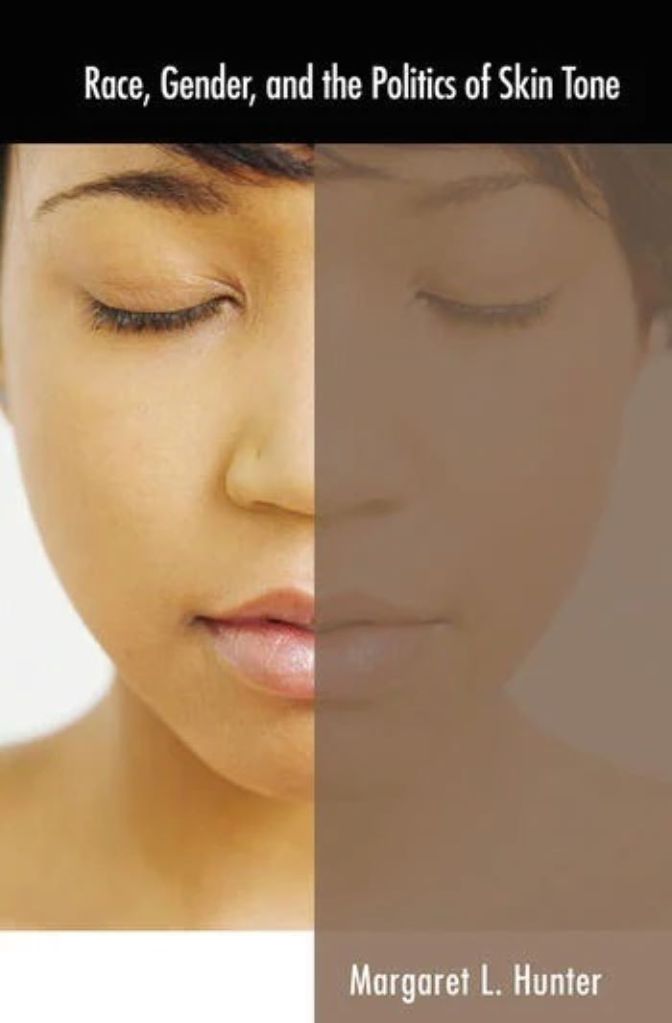

📖Book Review: Race, Gender, and the Politics of Skin Tone by Margaret L. Hunter.

⭐⭐⭐⭐⭐ 5/5 Stars

Race, Gender, and the Politics of Skin Tone

Published in 2005, this book examines how skin tone operates as a system of privilege and discrimination within African American and Mexican American communities. Drawing from in-depth interviews, historical records, and social analysis, Hunter demonstrates how lighter-skinned women often experience greater access to education, employment, and marriage opportunities, while darker-skinned women endure bias, invisibility, and stigmatization. The book situates colorism as both a legacy of colonialism and a persistent barrier to equality in modern society.

Key Points
Hunter highlights several key insights:

  • Historical Foundations: She situates colorism within slavery and colonization, exposing how whiteness and lightness were tied to power.
  • Socioeconomic Disparities: Lighter-skinned women are statistically more likely to access higher-paying jobs, higher levels of education, and “marry up.”
  • Beauty and Body Politics: The text addresses cosmetic pressures, including skin-lightening and surgery to alter facial features, showing how systemic bias reshapes physical identity.
  • Community Paradoxes: Dark-skinned women are often seen as “authentic,” while lighter-skinned women are more widely valued in mainstream society—a painful double standard.

Awards and Reception
Although not listed among mainstream literary award winners, Race, Gender, and the Politics of Skin Tone is regarded as a groundbreaking scholarly text and is widely adopted in college courses on race, gender, sociology, and African American studies. Scholars have praised it for being the first major sociological study to center on colorism across both African American and Mexican American contexts. Its academic influence is measured not in trophies but in citations, class adoptions, and the shaping of future research.

Groundbreaking and Life-Changing Appeal
The book is groundbreaking because it shifts the conversation from race alone to skin tone as an independent and powerful axis of inequality. For readers, it is often life-changing: it validates the lived experiences of women who have faced color-based bias, offering language and evidence where silence once reigned. By connecting personal testimony to systemic inequality, Hunter’s work affirms that the struggles surrounding beauty, identity, and skin tone are not individual failings but social constructions that must be dismantled.

Comparison with Other Works on Colorism
Hunter’s work stands alongside other landmark texts in the study of colorism. For example, Russell, Wilson, and Hall’s The Color Complex (1992, revised 2013) offered one of the earliest explorations of colorism in Black communities, focusing on the psychological effects of shade hierarchies. While The Color Complex is accessible and widely read, Hunter builds on this foundation with a more rigorous sociological methodology and a comparative lens that includes Mexican American experiences. Similarly, Melissa V. Harris-Perry’s Sister Citizen (2011) examines stereotypes and identity struggles of Black women in politics and culture; however, Hunter’s work is narrower in scope, diving deeply into skin tone stratification. Together, these books complement each other—The Color Complex exposing cultural wounds, Race, Gender, and the Politics of Skin Tone providing sociological depth, and Sister Citizen situating those struggles in broader systems of power.

Cultural and Media References
Though exact counts of media and blog citations are difficult to track, Hunter’s book is heavily referenced in academic articles, blogs on colorism, and grassroots discussions about skin tone politics. It frequently appears in bibliographies of colorism studies and has influenced cultural commentary from scholarly circles to online forums. Its resonance lies not only in academia but also in popular conversations about beauty, identity, and racial equity.

Author Bio
Margaret L. Hunter, a distinguished sociologist and professor, is widely recognized for her pioneering scholarship on race, gender, and inequality. Her academic career and cultural analyses have cemented her reputation as one of the leading voices on the study of colorism. As a faculty member at Loyola Marymount University and later at Mills College, Hunter has built her career on amplifying the voices of marginalized communities, specifically African American and Mexican American women.

Conclusion
Hunter’s Race, Gender, and the Politics of Skin Tone stands as one of the most significant works on colorism to date. Compared to The Color Complex and Sister Citizen, it represents the sociological anchor of colorism studies: data-driven, intersectional, and cross-cultural. It offers both a mirror—revealing the painful realities of shade bias—and a compass, pointing toward new ways of affirming beauty and worth beyond oppressive hierarchies. For scholars, activists, and readers seeking understanding, it remains a 5-star, essential text that is as relevant today as when it was first published.


References

Craig, M. L. (2002). Ain’t I a Beauty Queen?: Black Women, Beauty, and the Politics of Race. Oxford University Press.

Glenn, E. N. (2008). Yearning for lightness: Transnational circuits in the marketing and consumption of skin lighteners. Gender & Society, 22(3), 281–302.

Hunter, M. (2005). Race, Gender, and the Politics of Skin Tone. Routledge.

Keith, V. M., & Herring, C. (1991). Skin tone and stratification in the Black community. American Journal of Sociology, 97(3), 760–778.

Russell, K., Wilson, M., & Hall, R. (2013). The Color Complex: The Politics of Skin Color in a New Millennium. Anchor Books.

Harris-Perry, M. V. (2011). Sister Citizen: Shame, Stereotypes, and Black Women in America. Yale University Press.

🌿 Why Does God Isolate You Before a Blessing? 🌿

Photo by Ron Lach on Pexels.com

Seasons of isolation often feel uncomfortable, lonely, and confusing. Many people question why the Most High would pull them away from familiar people, places, and routines. Yet, when we look to Scripture, we see a pattern: before every great blessing or elevation, God separates His chosen ones. The purpose is not punishment, but preparation.

God isolates you so you can hear His voice without distraction. In 1 Kings 19:11-12 (KJV), Elijah discovered that the Lord was not in the wind, earthquake, or fire, but in a “still small voice.” It is in solitude that our ears become attuned to His whispers. Too much noise, too many opinions, and too many influences can drown out divine direction.

Isolation also builds intimacy with God. Jesus Himself often withdrew to pray alone. Luke 5:16 (KJV) says, “And he withdrew himself into the wilderness, and prayed.” Before major miracles and decisions, Christ retreated to secret places to commune with the Father. If the Son of God required moments of solitude, how much more do we?

Another reason for isolation is pruning. John 15:2 (KJV) declares, “Every branch that beareth fruit, he purgeth it, that it may bring forth more fruit.” God removes certain people and situations not because they are evil, but because they are hindrances to your growth. What feels like loss is often divine pruning, preparing you to bear greater fruit.

✨ 10 Biblical Reasons God Isolates You ✨

  • To help you hear His voice clearly
    “And after the fire a still small voice” (1 Kings 19:12, KJV).
  • To draw you closer in intimacy with Him
    “And he withdrew himself into the wilderness, and prayed” (Luke 5:16, KJV).
  • To prune and prepare you for greater fruitfulness
    “Every branch that beareth fruit, he purgeth it” (John 15:2, KJV).
  • To separate you from unhealthy attachments
    “Come out from among them, and be ye separate” (2 Corinthians 6:17, KJV).
  • To strengthen your faith
    Abraham was called away from his homeland to trust God (Genesis 12:1-2, KJV).
  • To prepare you for greater responsibility
    Moses was trained in the wilderness before leading Israel (Exodus 3:1-10, KJV).
  • To test your obedience
    “The Lord thy God led thee these forty years in the wilderness, to humble thee, and to prove thee” (Deuteronomy 8:2, KJV).
  • To protect and hide you
    “He that dwelleth in the secret place of the most High shall abide under the shadow of the Almighty” (Psalm 91:1, KJV).
  • To transform your character
    Paul was hidden in Arabia before stepping into ministry (Galatians 1:15-18, KJV).
  • To position and elevate you
    Joseph’s pit and prison prepared him for the palace (Genesis 41:41, KJV).

🌿 Takeaway: Isolation is not abandonment—it is preparation for elevation.

Isolation also breaks unhealthy attachments. Sometimes, relationships and environments shape us more than we realize. God must strip away influences that compete for your loyalty. In 2 Corinthians 6:17 (KJV), the Lord commands, “Wherefore come out from among them, and be ye separate.” Separation refines your identity so that your purpose is no longer entangled with those who cannot go where God is taking you.

In solitude, God strengthens your faith. Abraham was called away from his family and homeland before God made him the father of many nations (Genesis 12:1-2, KJV). Without the familiar voices of doubt, he had to rely completely on God’s promises. Faith matures in isolation because dependence shifts from people to the Almighty.

Another reason God isolates is to prepare you for greater responsibility. Moses spent forty years in the wilderness before leading Israel out of Egypt (Exodus 3:1-10, KJV). His isolation was training ground. What seems like delay is often God’s classroom, equipping you with wisdom and humility for the blessing ahead.

Psychology also supports this process. Research shows that solitude enhances self-reflection, focus, and emotional regulation. When distractions are removed, individuals gain clarity of thought and direction. Spiritually, this aligns with Lamentations 3:28 (KJV): “He sitteth alone and keepeth silence, because he hath borne it upon him.”

God isolates to test obedience. Israel wandered in the wilderness for forty years, not because God abandoned them, but to test their faithfulness (Deuteronomy 8:2, KJV). Isolation reveals what is truly in your heart—whether you will trust Him or complain, whether you will worship Him or chase idols.

Isolation also protects you. Sometimes God hides you to keep you from dangers you cannot see. Psalm 91:1 (KJV) promises, “He that dwelleth in the secret place of the most High shall abide under the shadow of the Almighty.” His shadow becomes your shield while He prepares your blessing in secret.

Another blessing of isolation is transformation. Paul spent years in obscurity after his conversion before stepping fully into ministry (Galatians 1:15-18, KJV). In solitude, he was transformed from persecutor to preacher. Likewise, isolation reshapes your character so that you are fit for the calling ahead.

The period of being set apart also teaches contentment. Philippians 4:11-12 (KJV) records Paul saying, “I have learned, in whatsoever state I am, therewith to be content.” Learning to find peace in God alone ensures that when the blessing comes, you worship the Giver and not the gift.

Isolation creates clarity of purpose. Without outside noise, you can discern what truly matters. Habakkuk 2:2 (KJV) instructs, “Write the vision, and make it plain upon tables.” Vision is sharpened in stillness. Blessings often require strategy, and God imparts that in the quiet place.

God isolates to humble you. Deuteronomy 8:3 (KJV) reminds us, “And he humbled thee, and suffered thee to hunger, and fed thee with manna.” Isolation strips away pride and self-sufficiency, replacing it with humility and dependence on God’s provision.

Finally, God isolates you to elevate you. Joseph was thrown into a pit and then imprisoned before being promoted to Pharaoh’s right hand (Genesis 41:41, KJV). What looked like abandonment was actually positioning. Your isolation may feel like a setback, but in God’s timing, it becomes the stage for your blessing.

In conclusion, isolation is not rejection—it is redirection. It is not God pushing you away, but pulling you closer. The next time you find yourself alone, remember that solitude is preparation for elevation. In that quiet place, you will hear His voice, grow in faith, and be made ready for the blessing that is on the way.


References

  • The Holy Bible, King James Version (KJV)
  • Foster, R. J. (2018). Celebration of Discipline: The Path to Spiritual Growth. HarperOne.
  • Cloud, H., & Townsend, J. (2017). Boundaries. Zondervan.
  • Lane, J. D., & McRae, K. (2011). “The Benefits of Solitude.” Psychological Science, 22(3), 219-223.
  • Willard, D. (1998). The Spirit of the Disciplines. HarperCollins.

Legacy of Light: Colonialism and the Brown Girl Dilemma. #thebrowngirldilemma

Photo by Kari Alfonso on Pexels.com

The Brown girl dilemma—the complex interplay of colorism, identity, and self-worth—cannot be understood without examining the historical legacy of colonialism. For centuries, European colonial powers imposed rigid hierarchies that privileged lighter skin, straight hair, and Eurocentric features, associating these traits with intelligence, civility, and social status. Darker-skinned individuals were often dehumanized, labor exploited, and culture denigrated. This systemic privileging of lightness laid the foundation for enduring colorist biases that continue to shape societal standards of beauty and opportunity for Brown girls today (Hunter, 2007).

Colonial narratives infiltrated cultural norms, education, and media, reinforcing the association between light skin and desirability. Literature, visual arts, and folklore frequently depicted lighter-skinned women as virtuous and aspirational, while darker-skinned women were cast as secondary or subservient. Within colonized societies, this created internalized hierarchies where lighter-skinned individuals received preferential treatment in employment, education, and social recognition. Brown girls inherited these dynamics, often navigating environments where their natural features and melanin-rich skin were undervalued (Byrd & Tharps, 2014).

Colorism, the preferential treatment of lighter skin within the same racial or ethnic group, is a direct product of these historical structures. In contemporary societies, Brown girls face pressures to conform to beauty standards rooted in colonial ideals. Skin-lightening products, straightening treatments for natural hair, and fashion trends designed to emulate Western norms exemplify the continued influence of colonial hierarchies. These pressures can produce psychological strain, erode self-esteem, and foster internalized bias among young girls struggling to reconcile their heritage with societal expectations (Hunter, 2007).

Media representation continues to amplify the dilemma. Hollywood, global advertising, and social media platforms historically elevate lighter-skinned actors, models, and influencers. Figures such as Yara Shahidi, Salli Richardson, and Mari Morrow exemplify this visibility. In contrast, dark-skinned women, despite possessing equally striking features and talent, are often marginalized, reinforcing the message that proximity to whiteness is synonymous with success, beauty, and power. The lack of authentic representation perpetuates the colonial hierarchy in contemporary cultural spaces (Fardouly et al., 2015).

However, resistance and reclamation are reshaping narratives. Dark-skinned icons such as Lupita Nyong’o, Kenya Moore, and Issa Rae challenge Eurocentric ideals by embracing their melanin-rich complexion, natural hair, and culturally rooted aesthetics. Their success demonstrates that beauty, talent, and influence are not confined to colonial constructs of desirability. By centering these figures, Brown girls receive affirming role models who validate their features, heritage, and potential, fostering resilience and pride in their identity (Banks, 2015).

Educational and community initiatives further counteract the colonial legacy. Mentorship programs, culturally responsive curricula, and leadership training equip Brown girls with the skills and confidence to navigate systemic bias. By teaching critical media literacy, celebrating heritage, and providing visibility to accomplished role models, these programs empower young women to challenge historical hierarchies while cultivating self-worth and agency (Hunter, 2007).

Spiritual and ethical grounding offers an enduring corrective lens. Proverbs 31:30 (KJV) teaches, “Favour is deceitful, and beauty is vain: but a woman that feareth the LORD, she shall be praised.” Faith affirms that worth transcends societal or media-driven hierarchies rooted in colonial constructs. By rooting identity in character and divine purpose, Brown girls can resist the pressure to conform to external standards while embracing their natural beauty and potential.

In conclusion, the Brown girl dilemma is a direct legacy of colonialism, manifesting as colorism, limited representation, and internalized bias. Yet through cultural affirmation, mentorship, education, media representation, and spiritual grounding, Brown girls can reclaim agency, redefine beauty, and navigate the world with pride and confidence. Recognizing the historical roots of these challenges is the first step in dismantling them and creating spaces where melanin-rich features, talent, and intellect are fully celebrated.


References

Banks, J. A. (2015). Cultural diversity and education: Foundations, curriculum, and teaching. Routledge.

Byrd, A. D., & Tharps, L. L. (2014). Hair Story: Untangling the Roots of Black Hair in America. St. Martin’s Press.

Fardouly, J., Diedrichs, P. C., Vartanian, L. R., & Halliwell, E. (2015). Social comparisons on social media: The impact of Facebook on young women’s body image concerns and mood. Body Image, 13, 38–45.

Hunter, M. (2007). The persistent problem of colorism: Skin tone, status, and inequality. Sociology Compass, 1(1), 237–254.

Black Beauty: A Curse or a Blessing?

Photo by Adedamola Adetoyi on Pexels.com

The question of whether Black beauty is a curse or a blessing has haunted generations. For centuries, it has been both revered and reviled, celebrated and scorned. To grapple with this paradox is to acknowledge the deep history of how the world perceives Black bodies and how those perceptions have shaped the lived experience of Black people. What society has too often treated as a curse, Scripture and science reveal as a profound blessing.

Historically, the beauty of Black people has been weaponized against them. During slavery, enslaved Black women were simultaneously sexualized and dehumanized. Their features — full lips, wide noses, dark skin, and coiled hair — were ridiculed as evidence of inferiority while being exploited for labor and reproduction (Collins, 2000). This duality created a legacy of shame, where traits of Black beauty were framed as a curse, even while secretly desired.

From a sociological standpoint, the dominance of Eurocentric beauty standards reinforced this distortion. Pale skin, straight hair, and narrow features were upheld as the “universal” ideal, marginalizing African aesthetics. Black people were pressured to straighten their hair, lighten their skin, or alter their features to fit in. This erasure implied that natural Black beauty was somehow less worthy. Yet, these same features, when adopted by non-Black women through tanning, lip fillers, or curly hair perms, were suddenly praised. This contradiction reveals that the problem was never Black beauty itself, but society’s biased lens.

Psychologically, this tension has left deep scars. Colorism, a byproduct of racism, continues to divide communities, privileging lighter skin over darker tones (Hunter, 2007). Dark-skinned women often face harsher discrimination in dating, work, and media representation, while lighter-skinned women are deemed more “acceptable.” Black men, too, experience a contradictory dynamic: their athletic bodies and masculine strength are admired in sports and entertainment, yet feared in daily life. These contradictions fuel the perception that Black beauty is a burden, something to carry rather than something to celebrate.

Yet, when we turn to Scripture, a different narrative emerges. God’s Word affirms the value of every feature He created. In Genesis 1:27, it says: “So God created man in his own image, in the image of God created he him; male and female created he them” (KJV). Black beauty, like all human beauty, reflects the divine image. Song of Solomon 1:5 offers an even more direct affirmation, where the Shulamite woman proclaims, “I am black, but comely, O ye daughters of Jerusalem” (KJV). Her words echo across centuries as a declaration that Blackness and beauty are inseparable, divinely designed.

Biologically, Black beauty is also a blessing. Melanin, often celebrated as “Black gold,” is more than skin deep. It provides protection against the sun’s harmful rays, slows aging, and contributes to unique variations in skin tone, eye color, and hair texture (Jablonski, 2014). Strong bone density, muscular builds, and symmetrical facial features — often found in African-descended populations — align with what science recognizes as markers of physical health and attractiveness (Little et al., 2011). These genetic gifts are not curses but blessings of adaptation and survival.

The cultural reclamation of Black beauty further affirms its blessing. The natural hair movement, the rise of melanin-positive campaigns, and the increasing global embrace of African aesthetics reflect a turning tide. Traits once despised are now celebrated as fashionable and aspirational. What was once shamed is now crowned. Black beauty has become a movement of self-love and resistance against centuries of erasure.

Still, the struggles remain. The media often continues to underrepresent darker-skinned women, and when represented, they are frequently portrayed through stereotypes. Black men’s physiques are admired in sports but criminalized in society. These double standards illustrate how the world continues to twist Black beauty into something threatening or undesirable. The real curse, then, is not in Black beauty itself, but in the systems that refuse to honor it.

Spiritually, the enemy has always sought to distort what God made good. The same way sin corrupted creation, racism and colorism distort beauty. But Romans 8:28 reminds us that God works all things for good for those who love Him. Even in the face of rejection, Black beauty has been a source of resilience, creativity, and community pride. From gospel music to fashion to visual art, Black aesthetics have shaped global culture, often without due credit. What the world tried to curse, God turned into blessing.

To answer the question — Black beauty is not a curse, though it has been treated as one. It is a blessing, intricately woven into God’s creation, carrying strength, resilience, and elegance. The so-called curse lies in society’s refusal to embrace diversity, in the oppressive systems that shame what they do not understand.

For women, Black beauty is a crown that does not need the approval of Western standards. For men, it is the strength of kings and warriors written into their DNA. For children, it is a heritage to be celebrated, not hidden. The more we reclaim and affirm it, the more the illusion of the curse fades, and the truth of the blessing shines.

Psychology affirms this too. Studies show that self-acceptance and positive racial identity are linked to higher self-esteem and resilience among Black individuals (Mandara & Murray, 2000). Choosing to embrace one’s beauty is both an act of healing and defiance. Where society once defined Black beauty as “less than,” psychology and faith remind us it is more than enough.

In closing, the question itself reveals the depth of the struggle: to see oneself through the eyes of God rather than the eyes of a broken world. Black beauty is not a curse — it is a divine blessing, radiant with purpose. As the psalmist declares, “I will praise thee; for I am fearfully and wonderfully made” (Psalm 139:14, KJV). Black beauty is living proof of this truth.


References

  • Collins, P. H. (2000). Black feminist thought: Knowledge, consciousness, and the politics of empowerment. Routledge.
  • Hunter, M. (2007). The persistent problem of colorism: Skin tone, status, and inequality. Sociology Compass, 1(1), 237–254.
  • Jablonski, N. G. (2014). Living color: The biological and social meaning of skin color. University of California Press.
  • Little, A. C., Jones, B. C., & DeBruine, L. M. (2011). Facial attractiveness: Evolutionary based research. Philosophical Transactions of the Royal Society B, 366(1571), 1638–1659.
  • Mandara, J., & Murray, C. B. (2000). Effects of parental marital status, income, and education on the self-esteem of African American adolescents. Journal of Family Psychology, 14(3), 475–490.

The Sin of Sex before Marriage.

Photo by Yaroslav Shuraev on Pexels.com

Purity kept, a treasure rare,
A heart unbroken, free from snare.
Love that waits, in covenant true,
A sacred bond for me and you.

I want to begin by speaking from personal experience. I chose to remain a virgin until marriage, and it was the best decision I ever made. It kept me bonded to my husband in a way that nothing else could. Waiting preserved not only my body but also my mind and spirit, giving me a sense of security, trust, and wholeness within my marriage. That bond is powerful, and it is something that sexual activity before marriage can easily destroy.

The sin of sex before marriage, also known biblically as fornication, is more than a private mistake; it is a moral issue with lasting consequences. Scripture makes this clear. In 1 Corinthians 6:18 (KJV), Paul exhorts believers: “Flee fornication. Every sin that a man doeth is without the body; but he that committeth fornication sinneth against his own body.” This means that sexual sin has a unique power to corrupt both body and soul, creating wounds that often follow individuals into their marriages.

Trust becomes one of the greatest casualties of sexual sin. When partners enter marriage after sexual relationships with others, comparisons and insecurities may arise. The memory of prior encounters may linger, creating distance rather than intimacy. Psychology affirms this reality, as studies have shown that individuals with multiple premarital sexual partners often experience lower levels of marital satisfaction and stability (Teachman, 2003). Trust, once fractured, is difficult to rebuild.

Morally, sex before marriage distorts God’s design. The marriage covenant was intended to be the safe, lifelong context for physical intimacy. Hebrews 13:4 (KJV) declares, “Marriage is honourable in all, and the bed undefiled: but whoremongers and adulterers God will judge.” Outside of marriage, sexual intimacy defiles rather than sanctifies. It is not just about breaking rules but about violating a holy order created for human flourishing.

Insecurity thrives in the soil of fornication. Sexual activity outside of marriage often creates doubt: Does this person love me for who I am, or only for what I give them physically? This insecurity can corrode emotional stability, leaving scars of rejection or abandonment if the relationship ends. Unlike covenant love, which promises permanence, fornication often leaves individuals feeling disposable.

Before marriage, many people fall into the trap of comparison. They “test out” partners, believing this exploration will prepare them for the right spouse. Yet this mindset is dangerous. Comparison outside of the covenant teaches the heart that love is conditional, always subject to change if something “better” comes along. Psychology calls this “choice overload,” where too many experiences can hinder commitment (Iyengar & Lepper, 2000).

Lust lies at the heart of fornication. Lust is self-centered; it seeks gratification without commitment. Love, by contrast, is self-giving; it seeks the other’s highest good. The apostle Paul distinguished love’s nature in 1 Corinthians 13:4–5 (KJV): “Charity suffereth long, and is kind… seeketh not her own.” Lust takes, while love gives. When people mistake lust for love, they enter relationships built on sand rather than rock.

Guarding purity requires intentional action. Scripture teaches that purity does not happen by accident; it must be pursued. Psalm 119:9 (KJV) asks, “Wherewithal shall a young man cleanse his way? by taking heed thereto according to thy word.” Guarding purity means feeding the soul with truth, surrounding oneself with godly influences, and setting boundaries that prevent temptation from growing.

Accountability is essential for those who desire to remain pure. Having mentors, pastors, or trusted friends to walk alongside can keep one strong in moments of weakness. James 5:16 (KJV) reminds believers to “confess your faults one to another, and pray one for another, that ye may be healed.” Accountability transforms purity from a private struggle into a shared pursuit of holiness.

The psychological effects of fornication are not easily dismissed. Guilt, shame, and regret often follow, leading to cycles of secrecy and self-condemnation. Cognitive dissonance theory (Festinger, 1957) explains how acting against one’s moral values creates inner tension, which can lead to anxiety or rationalization. Many who fall into fornication attempt to justify it, but deep down, the conscience remains unsettled.

God’s word not only warns against fornication but also provides a path of escape. In 1 Corinthians 10:13 (KJV), Paul reassures: “There hath no temptation taken you but such as is common to man: but God is faithful, who will not suffer you to be tempted above that ye are able; but will with the temptation also make a way to escape.” Choosing purity requires fleeing temptation, not flirting with it.

Lust may seem powerful in the moment, but its end is emptiness. Proverbs 6:32 (KJV) warns, “But whoso committeth adultery with a woman lacketh understanding: he that doeth it destroyeth his own soul.” The same principle applies to fornication. What begins as excitement often ends in brokenness, regret, and fractured trust.

Love, by contrast, flourishes within covenant. When a man and woman wait until marriage, intimacy becomes a sacred gift rather than a stolen pleasure. Waiting ensures that both partners know their love is rooted in commitment, not fleeting desire. This foundation produces security, trust, and joy that casual intimacy can never replicate.

Fornication also fuels comparison after marriage. A spouse who has experienced multiple partners may struggle with memories or unrealistic expectations. The enemy uses these comparisons to create division. But in a covenant where both waited, there is no past to haunt the marriage bed. Purity fosters contentment.

Sexual immorality creates an illusion of closeness while avoiding true vulnerability. Genuine intimacy requires trust, honesty, and permanence—qualities that only covenant provides. Without these, sexual union leaves individuals exposed yet unsatisfied, because the deepest human need is not physical gratification but unconditional love.

The Bible repeatedly instructs believers to flee from sexual immorality. 2 Timothy 2:22 (KJV) commands, “Flee also youthful lusts: but follow righteousness, faith, charity, peace, with them that call on the Lord out of a pure heart.” The instruction is not to resist sin in one’s own strength but to run from situations that invite compromise.

Waiting until marriage is an act of faith. It declares that God’s timing and design are better than momentary pleasure. It affirms trust in His promise that obedience leads to blessing. Couples who wait enter marriage with clean consciences, stronger bonds, and deeper gratitude for each other.

In the end, the sin of sex before marriage is not simply about breaking a command but about betraying trust—trust in God, trust in one’s future spouse, and trust in oneself. By choosing purity, individuals align themselves with God’s design, securing joy that lust cannot counterfeit.

Fleeing fornication is not merely about saying “no” to sin; it is about saying “yes” to something greater: the gift of covenant love, unmarred by comparison, insecurity, or regret. Those who guard their purity discover that the wait is worth it, because the reward is a marriage rooted in trust, secured in covenant, and blessed by God.


References

  • Festinger, L. (1957). A theory of cognitive dissonance. Stanford University Press.
  • Iyengar, S. S., & Lepper, M. R. (2000). When choice is demotivating: Can one desire too much of a good thing? Journal of Personality and Social Psychology, 79(6), 995–1006.
  • Teachman, J. (2003). Premarital sex, premarital cohabitation, and the risk of subsequent marital dissolution among women. Journal of Marriage and Family, 65(2), 444–455.
  • The Holy Bible, King James Version.

Refiner’s Gold: How We Go Through It 🔥

Photo by Franklin on Pexels.com

Gold is one of the most valuable metals on earth, but in its raw form, it is filled with impurities. Before it shines with brilliance, it must pass through the fire. The Bible often uses gold as a symbol of faith and purity, reminding us that trials are the refining fires that prepare us for God’s glory.

Malachi 3:3 (KJV) declares, “And he shall sit as a refiner and purifier of silver: and he shall purify the sons of Levi, and purge them as gold and silver, that they may offer unto the Lord an offering in righteousness.” Just as a refiner carefully watches gold in the fire, so God watches us during seasons of testing, ensuring that the heat does not destroy us but removes what is not like Him.

Going through the refiner’s fire means facing trials, disappointments, and challenges that strip away pride, sin, and dependency on worldly things. 1 Peter 1:7 (KJV) says, “That the trial of your faith, being much more precious than of gold that perisheth, though it be tried with fire, might be found unto praise and honour and glory at the appearing of Jesus Christ.” Trials prove the authenticity of our faith.

Job, a man of great suffering, understood this process. He declared in Job 23:10 (KJV), “But he knoweth the way that I take: when he hath tried me, I shall come forth as gold.” The refiner’s fire does not last forever; its purpose is transformation. Job’s endurance through suffering produced a testimony that still strengthens believers today.

The refining process also removes hidden sins and weaknesses. Zechariah 13:9 (KJV) says, “And I will bring the third part through the fire, and will refine them as silver is refined, and will try them as gold is tried: they shall call on my name, and I will hear them.” The fire teaches us dependence on God, humility, and obedience.

🔥 The Refiner’s Fire Process 🔥

1. Purging (Removal of Impurities)

God begins by stripping away sin, pride, and worldly attachments. Just as a refiner melts gold to separate impurities, the Lord allows trials to reveal what must be removed.

  • “And he shall sit as a refiner and purifier of silver: and he shall purify the sons of Levi, and purge them as gold and silver” (Malachi 3:3, KJV).
  • “Lay aside every weight, and the sin which doth so easily beset us” (Hebrews 12:1, KJV).

2. Testing (Faith Tried in Fire)

The heat intensifies to test the genuineness of your faith. This is not to destroy you, but to prove your strength and deepen your trust in God.

  • “That the trial of your faith, being much more precious than of gold that perisheth, though it be tried with fire” (1 Peter 1:7, KJV).
  • “My brethren, count it all joy when ye fall into divers temptations; knowing this, that the trying of your faith worketh patience” (James 1:2-3, KJV).

3. Shaping (Transformation in the Furnace of Affliction)

Trials shape your character, teaching humility, obedience, and dependence on God. This is where transformation happens, molding you into Christ’s image.

  • “Behold, I have refined thee, but not with silver; I have chosen thee in the furnace of affliction” (Isaiah 48:10, KJV).
  • “Tribulation worketh patience; and patience, experience; and experience, hope” (Romans 5:3-4, KJV).

4. Reflecting (Revealing God’s Image in You)

Refined gold shines when it reflects the face of the refiner. Likewise, when the process is complete, your life reflects Christ more clearly.

  • “But he knoweth the way that I take: when he hath tried me, I shall come forth as gold” (Job 23:10, KJV).
  • “But we all… are changed into the same image from glory to glory, even as by the Spirit of the Lord” (2 Corinthians 3:18, KJV).

Summary:

  • Purging – God removes what doesn’t belong.
  • Testing – God proves and strengthens your faith.
  • Shaping – God molds your character.
  • Reflecting – God’s image shines through you.

Isaiah 48:10 (KJV) reminds us, “Behold, I have refined thee, but not with silver; I have chosen thee in the furnace of affliction.” The furnace of affliction is not to destroy us but to build us. Affliction purges us of self-sufficiency and makes us vessels fit for the Master’s use.

Psychologically, trials act much like pressure and fire do in refining gold. Resilience researchers note that adversity, when endured with purpose, develops inner strength, wisdom, and perseverance. This aligns with Romans 5:3-4 (KJV), “Tribulation worketh patience; and patience, experience; and experience, hope.”

Through the refining fire, God produces endurance, character, and hope. Just as raw gold gains value after purification, believers gain spiritual maturity after trials. James 1:12 (KJV) promises, “Blessed is the man that endureth temptation: for when he is tried, he shall receive the crown of life, which the Lord hath promised to them that love him.”

In the end, refined gold reflects the image of the one who purified it. Likewise, when we come through God’s refining process, we reflect more of Christ. 2 Corinthians 3:18 (KJV) tells us, “But we all… are changed into the same image from glory to glory, even as by the Spirit of the Lord.”

The refining is painful, but it is purposeful. It is the Father’s way of preparing us for greater blessings, deeper intimacy with Him, and eternal glory. As pure gold cannot be destroyed by fire, so true faith cannot be destroyed by trials—it only shines brighter.


Takeaway: The Refiner’s fire is not meant to break you, but to make you. When the heat rises, remember: God is watching, the impurities are leaving, and you will come forth as gold.

📖 Biblical References (KJV)

  • Malachi 3:3 — “And he shall sit as a refiner and purifier of silver: and he shall purify the sons of Levi, and purge them as gold and silver, that they may offer unto the Lord an offering in righteousness.”
  • Job 23:10 — “But he knoweth the way that I take: when he hath tried me, I shall come forth as gold.”
  • 1 Peter 1:7 — “That the trial of your faith, being much more precious than of gold that perisheth, though it be tried with fire, might be found unto praise and honour and glory at the appearing of Jesus Christ.”
  • Isaiah 48:10 — “Behold, I have refined thee, but not with silver; I have chosen thee in the furnace of affliction.”
  • Zechariah 13:9 — “And I will bring the third part through the fire, and will refine them as silver is refined, and will try them as gold is tried: they shall call on my name, and I will hear them.”
  • Romans 5:3-4 — “Tribulation worketh patience; and patience, experience; and experience, hope.”
  • James 1:2-3 — “My brethren, count it all joy when ye fall into divers temptations; Knowing this, that the trying of your faith worketh patience.”
  • 2 Corinthians 3:18 — “But we all, with open face beholding as in a glass the glory of the Lord, are changed into the same image from glory to glory, even as by the Spirit of the Lord.”
  • Hebrews 12:1 — “Let us lay aside every weight, and the sin which doth so easily beset us, and let us run with patience the race that is set before us.”

🧠 Psychology & Scholarly References

  • Bonanno, G. A. (2004). Loss, trauma, and human resilience: Have we underestimated the human capacity to thrive after extremely aversive events? American Psychologist, 59(1), 20–28. https://doi.org/10.1037/0003-066X.59.1.20
  • Tedeschi, R. G., & Calhoun, L. G. (2004). Posttraumatic growth: Conceptual foundations and empirical evidence. Psychological Inquiry, 15(1), 1–18.
  • Southwick, S. M., & Charney, D. S. (2012). Resilience: The science of mastering life’s greatest challenges. Cambridge University Press.
  • Park, C. L. (2010). Making sense of the meaning literature: An integrative review of meaning making and its effects on adjustment to stressful life events. Psychological Bulletin, 136(2), 257–301.

Girl Talk Series: 👑 Choosing a King 👑

Photo by Oscar Rockr on Pexels.com

“Listen, ladies: first and foremost, the Word of God says, ‘Whoso findeth a wife findeth a good thing, and obtaineth favour of the Lord’ (Proverbs 18:22, KJV). That means a man is the one who finds you. Your responsibility is not to chase, but to choose wisely—with the guidance of the Most High.”

👑👑👑👑👑👑👑

Choosing a King (man) is one of the most important decisions you will ever make, because the man you join yourself to will not only shape your life but also your legacy. Too many women chase after men, ignoring the warning signs of their intuition, hoping that they can change him later. Yet the Word of God teaches us that it is better to wait on the Lord than to rush into the arms of the wrong man (Psalm 27:14, KJV). Purity, discernment, and patience are your strongest weapons. Never forget: you are the prize, and the right man will recognize your worth without you having to prove it.

👑 The Three Types of Men 👑

Type of ManTraitsPsychologyBiblical Lens (KJV)Result in a Relationship
Pimp / MisogynistLustful, controlling, manipulative, self-centeredNarcissistic, exploitative, uses women as objects“For all that is in the world, the lust of the flesh… is not of the Father” (1 John 2:16)Leaves you drained, broken, and dishonored
Simp / Weak ManPassive, insecure, lacks leadership, easily controlledCodependent, low self-esteem, avoids responsibility“A double minded man is unstable in all his ways” (James 1:8)Forces you to carry the weight he should bear, no covering
King / Godly ManFaithful, provider, protector, purposeful, pursues you with honorEmotionally intelligent, disciplined, secure, servant-leader“Husbands, love your wives, even as Christ also loved the church” (Ephesians 5:25)Brings peace, growth, and godly love — a true partner and covering

Takeaway: Only a King pursues with covenant, not conquest. Only a King provides covering that leads you closer to the Most High.

The Bible makes it clear that a woman should not chase a man but rather allow herself to be found. Proverbs 18:22 (KJV) declares, “Whoso findeth a wife findeth a good thing, and obtaineth favour of the Lord.” A godly man is the one who seeks, pursues, and wins you. He is not intimidated by the pursuit because he sees value in you. A woman lowering her standards to chase a man is settling for crumbs when the Lord desires to give her a banquet.

When considering what kind of man you should choose, remember that not all men are created equal in character. There are three types of men who will cross your path: the misogynist, the simp, and the king. Each reveals his nature through his actions, values, and treatment of women. Psychology teaches us that behavior speaks louder than words, and Scripture reminds us that “by their fruits ye shall know them” (Matthew 7:16, KJV).

The misogynist, or the pimp, is driven by lust, power, and control. He rules with his flesh, using women as objects for his pleasure rather than as partners to honor and cherish. This man thrives on conquest without covenant. He may charm you, but his heart is far from God. Psychology identifies such men as displaying narcissistic or exploitative tendencies—always taking, never giving. Choosing such a man will rob you of peace and dignity.

Then there is the simp, the weak man. This man may appear kind, but he lacks vision, leadership, and the ability to stand firm. He allows others to run over him, including women who use him, because he is desperate for acceptance. Though he is not abusive, he is not capable of being the covering God has called a husband to be (Ephesians 5:23, KJV). A woman yoked to a simp will end up carrying burdens that were meant for the man to shoulder.

Lastly, there is the king—the man after God’s own heart. This man is not perfect, but he seeks to please the Lord in his actions, words, and responsibilities. He is a provider, a protector, and a man who desires a wife, not a girlfriend. He does not want to be chased, because he understands that his role is to pursue. He values queens, not flings. Kings are not superficial; they look for substance, faith, and character. This is the man who will draw you closer to the Most High and love you as Christ loved the Church (Ephesians 5:25, KJV).

🌟 Top Qualities to Look for in a Man 🌟

Biblical Standards (KJV):

  • God-fearing – “The fear of the Lord is the beginning of wisdom” (Proverbs 9:10).
  • Provider – “If any provide not for his own… he hath denied the faith” (1 Timothy 5:8).
  • Protector – “Husbands, love your wives, even as Christ also loved the church” (Ephesians 5:25).
  • Faithful – “A faithful man shall abound with blessings” (Proverbs 28:20).
  • Self-controlled – “He that is slow to anger is better than the mighty” (Proverbs 16:32).
  • Truthful – “Lie not one to another, seeing that ye have put off the old man” (Colossians 3:9).
  • Leader – “For the husband is the head of the wife, even as Christ is the head of the church” (Ephesians 5:23).
  • Righteous in conduct – “By their fruits ye shall know them” (Matthew 7:16).

Psychological Standards:

  • Emotional intelligence – shows empathy, communicates effectively, and manages emotions well.
  • Consistency – reliable in words and actions; not hot and cold.
  • Integrity – honest and trustworthy; keeps commitments.
  • Discipline – able to delay gratification, make wise decisions.
  • Vision and purpose – has goals, direction, and plans for the future.
  • Respectful – honors boundaries, listens, and values your worth.
  • Secure masculinity – not intimidated by your strength, but confident in his role.
  • Supportive – encourages growth spiritually, emotionally, and mentally.

✨ In short: Choose a man after God’s own heart, who not only says he loves you, but proves it through protection, provision, and purpose.

Too often, women confuse attention with intention. Just because a man notices you does not mean he values you. Psychology calls this “confirmation bias”—when you only see what you hope to see, instead of the truth in front of you. Never confuse lust with love. Lust is temporary, but love is eternal, rooted in commitment and sacrifice.

Do not use sex as dating currency. The world teaches that intimacy can buy affection, but Scripture warns that fornication defiles both body and spirit (1 Corinthians 6:18-20, KJV). If a man’s interest depends on your willingness to give your body outside of covenant, he is not the one God has sent. A true king values purity and respects boundaries because he knows your worth.

Style should never outweigh substance. A man may look successful, handsome, and well-dressed, but appearances can deceive. Proverbs 31:30 (KJV) reminds us, “Favour is deceitful, and beauty is vain: but a woman that feareth the Lord, she shall be praised.” The same applies to men: what truly matters is not his style but his character, consistency, and his relationship with God.

The classical man—the faithful man who is husband material—does not want women to chase him. His masculinity is secure; he does not measure his worth by conquests but by covenant. Only pimps desire women to pursue them because they thrive on ego. A king, on the other hand, seeks to conquer not through seduction but through responsibility, love, and sacrifice.

When looking for a man, measure him by what Scripture and psychology affirm. A good man is disciplined, slow to anger, hardworking, and spiritually grounded (Proverbs 16:32; 1 Timothy 5:8, KJV). Psychologists highlight that good men demonstrate emotional intelligence, the ability to regulate emotions, communicate effectively, and show empathy. A man without these qualities may cause more harm than good.

Never ignore your intuition. The Holy Spirit gives discernment, and psychology confirms that gut feelings often stem from subconscious recognition of red flags. If something feels off, it probably is. Do not let loneliness silence the alarms within your spirit.

A godly man is also a provider. This does not mean you cannot work or contribute, but rather that he takes responsibility for the home. 1 Timothy 5:8 (KJV) says, “But if any provide not for his own… he hath denied the faith, and is worse than an infidel.” Provision is not only financial but emotional, spiritual, and physical.

Women must also guard against the temptation to compromise standards. Many women remain with men they know are pimps or simps because they fear being alone. But Scripture teaches that it is better to dwell alone with peace than in a house with strife (Proverbs 21:9, KJV). Waiting for a king requires patience and faith.

The top things you should look for in a man, both biblically and psychologically, include faith, consistency, integrity, discipline, leadership, empathy, and provision. A man with these traits will elevate you, not drain you. He will be your partner, not your project.

Choosing a man is ultimately choosing a covering. Who he is spiritually will directly affect your household, your children, and your destiny. You cannot afford to marry recklessly. Your choice should reflect your worth in God, not your fear of being overlooked.

A woman of God must remember that her value is not in her chase but in her presence. The right man will see your worth without you lowering yourself. He will pursue you with honor, not pressure you with lust. He will lead you closer to Christ, not further into sin.

Therefore, wait patiently for the king God has for you. Trust that the Lord is able to bring the right man in the right season. Until then, keep yourself pure, guard your heart, and never settle for less than God’s best.

Your destiny is too great, your calling too precious, and your soul too valuable to waste on a man who cannot cover, protect, and love you as Christ intended. You deserve a king, not a counterfeit. Let him win you, and never forget—you are the prize.


References

  • The Holy Bible, King James Version (KJV)
  • Gottman, J. M., & Silver, N. (2015). The Seven Principles for Making Marriage Work. Harmony Books.
  • Chapman, G. (2015). The Five Love Languages: The Secret to Love That Lasts. Northfield Publishing.
  • Cloud, H., & Townsend, J. (2017). Boundaries in Dating. Zondervan.
  • Goleman, D. (2006). Emotional Intelligence. Bantam.

💍💍 Warning: The Types of People You Should Not Marry 💍💍

Photo by Jasmine Carter on Pexels.com

Marriage is one of the most serious covenants a believer can enter, and the Word of God warns us to be discerning about who we bind ourselves to in this sacred union. Unlike the shifting trends of culture, biblical marriage is not a temporary arrangement, but a divine covenant designed to reflect Christ’s love for the Church (Ephesians 5:25–27, KJV). When two become one flesh, they are no longer individuals walking separately, but a union meant to endure until death (Genesis 2:24, KJV). For this reason, it is crucial to understand the types of people Scripture and wisdom warn us against marrying.

1. Marrying into Addiction
A spouse bound by addiction—whether drugs, alcohol, gambling, or other destructive habits—cannot fully devote themselves to God or to their partner. Addiction enslaves the body and spirit, clouding judgment and tearing families apart. Proverbs 20:1 (KJV) declares, “Wine is a mocker, strong drink is raging: and whosoever is deceived thereby is not wise.” Psychology also confirms that addiction erodes trust, financial stability, and intimacy in marriage, making it a weight too heavy for a covenant to thrive under.

2. Lover of Self (The Narcissist)
Paul warned in 2 Timothy 3:2 (KJV) that in the last days, men shall be “lovers of their own selves, covetous, boasters, proud, blasphemers.” A narcissistic spouse is consumed with self-worship, lacking the humility and empathy necessary for sacrificial love. Psychology identifies narcissism as destructive to marriage because it produces manipulation, lack of accountability, and emotional abuse. True love is selfless, not self-absorbed (1 Corinthians 13:4–5, KJV).

3. The Prideful Person
Pride is the root of rebellion against God. Proverbs 16:18 (KJV) warns, “Pride goeth before destruction, and an haughty spirit before a fall.” A prideful spouse refuses correction, dismisses godly counsel, and places themselves above God’s will. Such a marriage will be built on shaky ground, for pride leaves no room for the humility and submission that marriage requires (Ephesians 5:21, KJV).

4. The Lustful Person
A person who demands sexual intimacy before marriage reveals a heart not surrendered to God. 1 Corinthians 6:18 (KJV) instructs us to “flee fornication,” for sexual sin is a defilement against our own body. If someone cannot honor God and you in purity before marriage, they will likely dishonor the covenant after marriage as well. Psychology also affirms that couples who rush into sexual intimacy before building emotional and spiritual foundations often face higher divorce rates.

5. The Nonbeliever (Unequally Yoked)
Paul is explicit in 2 Corinthians 6:14 (KJV): “Be ye not unequally yoked together with unbelievers.” Marrying someone who does not share your faith will cause division in values, priorities, and spiritual growth. Marriage is difficult enough with unity, but when one spouse walks in light and the other in darkness, conflict is inevitable. The covenant is designed to walk together toward eternity, not to pull one another apart.

6. The Spiritually Lukewarm (Double-Minded)
Revelation 3:16 (KJV) warns that the lukewarm will be spewed out of God’s mouth. A spiritually stagnant or double-minded person lacks stability, leaving their spouse vulnerable to discouragement and compromise. James 1:8 (KJV) says, “A double minded man is unstable in all his ways.” Marrying such a person means living with inconsistency, spiritual apathy, and lack of growth.

7. Marriage is a Covenant, Not a Game
Marriage was never meant to be trial and error, nor a disposable arrangement. Malachi 2:16 (KJV) declares that God hates divorce. The modern world may treat relationships as temporary, but in God’s eyes, marriage is binding until death. It is a covenant not only between two individuals but before the Lord Himself.

8. Biblical Examples of Marriage
We see the beauty of covenant in Adam and Eve (Genesis 2:23–24), Isaac and Rebekah (Genesis 24), and Ruth and Boaz (Ruth 4). These unions were marked by divine appointment, faith, and mutual devotion. While not all biblical marriages were perfect, the pattern reveals that God orchestrates marriage for His glory, not for fleeting desires.

9. Two Becoming One Flesh
Genesis 2:24 (KJV) declares, “They shall be one flesh.” This one-flesh covenant is spiritual, physical, and emotional. To enter lightly is to risk not only your future but your eternal walk with God. Marriage binds two souls, joining destinies, families, and legacies.

10. The Warning of Marriage
The warning is clear: who you marry will either draw you closer to God or pull you away from Him. Marriage can be a path to eternal truth or a snare leading to destruction. The wrong spouse can lead to misery, infidelity, and even spiritual death. God is not playing with us when He commands us to be discerning.

Green Flags (Qualities of a Godly Spouse)

  • Loves God above all else (Matthew 22:37, KJV)
  • Walks in humility and is teachable (Philippians 2:3, KJV)
  • Practices self-control and purity (1 Thessalonians 4:3–4, KJV)
  • Consistent in prayer, Word, and worship (Joshua 1:8, KJV)
  • Shows fruit of the Spirit: love, joy, peace, patience, kindness (Galatians 5:22–23, KJV)
  • Willing to sacrifice and serve (Ephesians 5:25, KJV)
  • Listens and communicates with honesty and gentleness (Proverbs 15:1, KJV)
  • Values covenant, not convenience (Malachi 2:14, KJV)

Red Flags (Types You Should Not Marry)

  • Addicted to substances or destructive behaviors (Proverbs 23:20–21, KJV)
  • Self-absorbed, arrogant, or narcissistic (2 Timothy 3:2, KJV)
  • Prideful, refuses correction or accountability (Proverbs 16:18, KJV)
  • Pressures you into sexual sin (1 Corinthians 6:18, KJV)
  • Does not believe in Christ or rejects faith (2 Corinthians 6:14, KJV)
  • Spiritually stagnant, lukewarm, or double-minded (James 1:8, KJV)
  • Dishonest or manipulative (Proverbs 12:22, KJV)
  • Treats marriage as a casual contract instead of a covenant (Matthew 19:6, KJV)

Final Thought:
If the person you’re considering for marriage draws you closer to God, strengthens your walk, and exhibits the fruit of the Spirit, that is a green flag. If they pull you into sin, pride, or spiritual compromise, that is a red flag. Choose wisely, for marriage is a covenant that echoes into eternity.

11. Waiting on the Right One
Psalm 27:14 (KJV) urges us, “Wait on the Lord: be of good courage, and he shall strengthen thine heart: wait, I say, on the Lord.” Waiting does not mean idleness; it means preparation. God’s timing is perfect, and His chosen spouse will align with His will. Rushing ahead only leads to regret.

12. Preparing for Marriage Biblically
Preparation involves prayer, fasting, studying God’s Word, and developing the fruit of the Spirit (Galatians 5:22–23, KJV). A godly spouse is drawn to godly character, not superficial charm. Preparing also means financial stewardship, emotional maturity, and spiritual strength.

13. Psychology on Marriage
Psychological research confirms that stable marriages are built on trust, communication, shared values, and emotional regulation. Couples who invest in personal growth before marriage often experience healthier relationships. This aligns with Scripture, which calls believers to be “transformed by the renewing of your mind” (Romans 12:2, KJV).

14. Marriage as Walking Together Eternally
Marriage is a journey toward eternity with God. Amos 3:3 (KJV) asks, “Can two walk together, except they be agreed?” A spouse is not just a partner for this life but one who influences your eternal direction. Marriage should lead both toward Christ, not away from Him.

15. Walking Not Toward Eternal Hell
If marriage joins you with someone unfaithful to God, you risk walking together toward destruction. 1 Corinthians 15:33 (KJV) warns, “Be not deceived: evil communications corrupt good manners.” Choosing wrongly is not just about emotional pain; it is about eternal consequences.

16. God’s Covenant vs. Emotional Change
Unlike fleeting emotions, God’s covenant endures. Love may feel different in seasons, but covenant keeps the union strong. Emotions may waver, but the vow before God is unbreakable. This is why discernment before marriage is essential.

17. Guarding Your Heart in Courtship
Proverbs 4:23 (KJV) declares, “Keep thy heart with all diligence; for out of it are the issues of life.” Courtship must be intentional, prayerful, and chaste. Guarding your heart prevents premature intimacy, emotional entanglement, and regret.

18. The Role of Counsel
Proverbs 11:14 (KJV) says, “In the multitude of counsellors there is safety.” Seeking wise counsel from godly leaders and elders ensures discernment in marriage choices. Psychology also affirms that mentorship and premarital counseling improve marital success rates.

19. The Blessing of Godly Marriage
When aligned with God’s will, marriage becomes a wellspring of joy, companionship, and sanctification. Ecclesiastes 4:9–10 (KJV) declares, “Two are better than one; because they have a good reward for their labour. For if they fall, the one will lift up his fellow.” This blessing cannot be experienced with the wrong partner.

20. Final Warning
Marriage is not a playground for emotions but a holy covenant. Choose wisely, wait faithfully, and prepare diligently. God is not mocked, and entering marriage lightly can lead to ruin. But when two walk together in eternal truth, marriage becomes a reflection of Christ’s everlasting covenant with His people—a bond unbroken by time, trial, or temptation.

📚 References

American Psychological Association. (2020). Publication manual of the American Psychological Association (7th ed.). APA.

American Psychological Association. (n.d.). Addiction. In APA dictionary of psychology. Retrieved from https://dictionary.apa.org/addiction

American Psychological Association. (n.d.). Narcissistic personality disorder. In APA dictionary of psychology. Retrieved from https://dictionary.apa.org/narcissistic-personality-disorder

Balswick, J. O., & Balswick, J. K. (2014). The family: A Christian perspective on the contemporary home (4th ed.). Baker Academic.

Fowers, B. J., & Olson, D. H. (1992). Four types of premarital couples: An empirical typology based on PREPARE. Journal of Family Psychology, 6(1), 10–21. https://doi.org/10.1037/0893-3200.6.1.10

Stanley, S. M., Rhoades, G. K., & Markman, H. J. (2006). Sliding versus deciding: Inertia and the premarital cohabitation effect. Family Relations, 55(4), 499–509. https://doi.org/10.1111/j.1741-3729.2006.00418.x

Waite, L. J., & Gallagher, M. (2000). The case for marriage: Why married people are happier, healthier, and better off financially. Broadway Books.


📖 Biblical References (KJV)

  • Amos 3:3
  • Ecclesiastes 4:9–10
  • Ephesians 5:21–27
  • Galatians 5:22–23
  • Genesis 2:23–24
  • James 1:8
  • Malachi 2:14–16
  • Matthew 19:6
  • Proverbs 4:23; 11:14; 12:22; 15:1; 16:18; 20:1; 23:20–21
  • Psalm 27:14
  • Revelation 3:16
  • Romans 12:2
  • 1 Corinthians 6:18; 13:4–5; 15:33
  • 2 Corinthians 6:14
  • 2 Timothy 3:2
  • 1 Thessalonians 4:3–4

Girl Talk Series: IF HE CHOOSES ANOTHER WOMAN, LET HIM GO – You deserve better. Rejection is Redirection.

Photo by Gustavo Fring on Pexels.com

When a man chooses to walk away, it may feel like the end of your worth or the closing of your future, but sister, know this—your value is not determined by who stays or who leaves. You are fearfully and wonderfully made (Psalm 139:14, KJV), created with a beauty and strength that cannot be diminished by rejection. Sometimes, God removes people from our lives not as a punishment, but as protection, making room for someone who will see your true worth and cherish you fully. The pain you feel now is real, but it will not last forever, and in time, you will discover that love has not left you—it is being prepared for you in a better form.

Rejection is one of the deepest wounds to the heart, because it touches our longing for belonging and love. Psychology explains that rejection activates the same areas of the brain that physical pain does (Baumeister & Leary, 1995). But while rejection may hurt, it does not define you. God’s Word reminds us: “The stone which the builders refused is become the head stone of the corner” (Psalm 118:22, KJV). What others overlook, God elevates. The man who walked away did not decrease your worth—he simply revealed that he was not meant to carry the treasure of who you are.

The first step to healing is to allow yourself to grieve. It is natural to cry, to feel disappointed, and to wonder “why not me?” Suppressing your emotions only delays healing. Even Jesus wept (John 11:35, KJV), showing us that expressing pain is not weakness but humanity. Psychologists note that healthy emotional release is necessary to move forward, preventing long-term bitterness or low self-worth. Grieve, but do not stay in grief. God promises that “weeping may endure for a night, but joy cometh in the morning” (Psalm 30:5, KJV).

The second step is to affirm your identity apart from the relationship. Too often, women tie their worth to the love or validation of a man. But your identity is rooted in Christ, not in human approval. Isaiah 43:4 (KJV) declares, “Since thou wast precious in my sight, thou hast been honourable, and I have loved thee.” When you see yourself as God sees you—precious, loved, chosen—the rejection of man no longer feels like the end, but rather a redirection toward someone aligned with your destiny.

The third step is forgiveness. Forgiving does not mean forgetting or excusing wrong behavior, but releasing the bitterness that ties you to the past. Psychology describes forgiveness as an emotional coping strategy that reduces stress and increases resilience (Worthington & Scherer, 2004). The Bible says, “And be ye kind one to another, tenderhearted, forgiving one another, even as God for Christ’s sake hath forgiven you” (Ephesians 4:32, KJV). By forgiving him, you free yourself. Forgiveness is not for him—it is for your healing.

The fourth step is self-compassion. Instead of blaming yourself, practice speaking life into your soul. Dr. Kristin Neff (2003) teaches that self-compassion involves treating yourself with the same kindness you would give a friend. The Bible echoes this principle: “Death and life are in the power of the tongue” (Proverbs 18:21, KJV). Speak words of life over yourself: “I am worthy. I am loved. I am becoming stronger every day.” The more you affirm God’s truth about you, the quicker you rebuild your confidence.

The fifth step is renewal. Romans 12:2 (KJV) says, “Be ye transformed by the renewing of your mind.” Healing requires shifting your perspective from loss to opportunity. Instead of dwelling on why he left, begin asking: What lesson did this teach me? How can I grow wiser, stronger, and more discerning in love? Psychology calls this “post-traumatic growth”—emerging from pain with new wisdom and resilience. Every heartbreak is not the end of your story, but a stepping stone to a better chapter.

Finally, remember that love is not lost. The right man will see your value without hesitation, love you without condition, and commit to you without fear. Until then, let your heart rest in God’s promise: “For I know the thoughts that I think toward you, saith the Lord, thoughts of peace, and not of evil, to give you an expected end” (Jeremiah 29:11, KJV). Trust that rejection is not rejection from love itself—it is redirection to the love you deserve.


References

Baumeister, R. F., & Leary, M. R. (1995). The need to belong: Desire for interpersonal attachments as a fundamental human motivation. Psychological Bulletin, 117(3), 497–529. https://doi.org/10.1037/0033-2909.117.3.497

Neff, K. D. (2003). Self-compassion: An alternative conceptualization of a healthy attitude toward oneself. Self and Identity, 2(2), 85–101. https://doi.org/10.1080/15298860309032

Worthington, E. L., & Scherer, M. (2004). Forgiveness is an emotion-focused coping strategy that can reduce health risks and promote health resilience: Theory, review, and hypotheses. Psychology & Health, 19(3), 385–405. https://doi.org/10.1080/0887044042000196674

King James Version Bible