Tag Archives: the brown girl dilemma

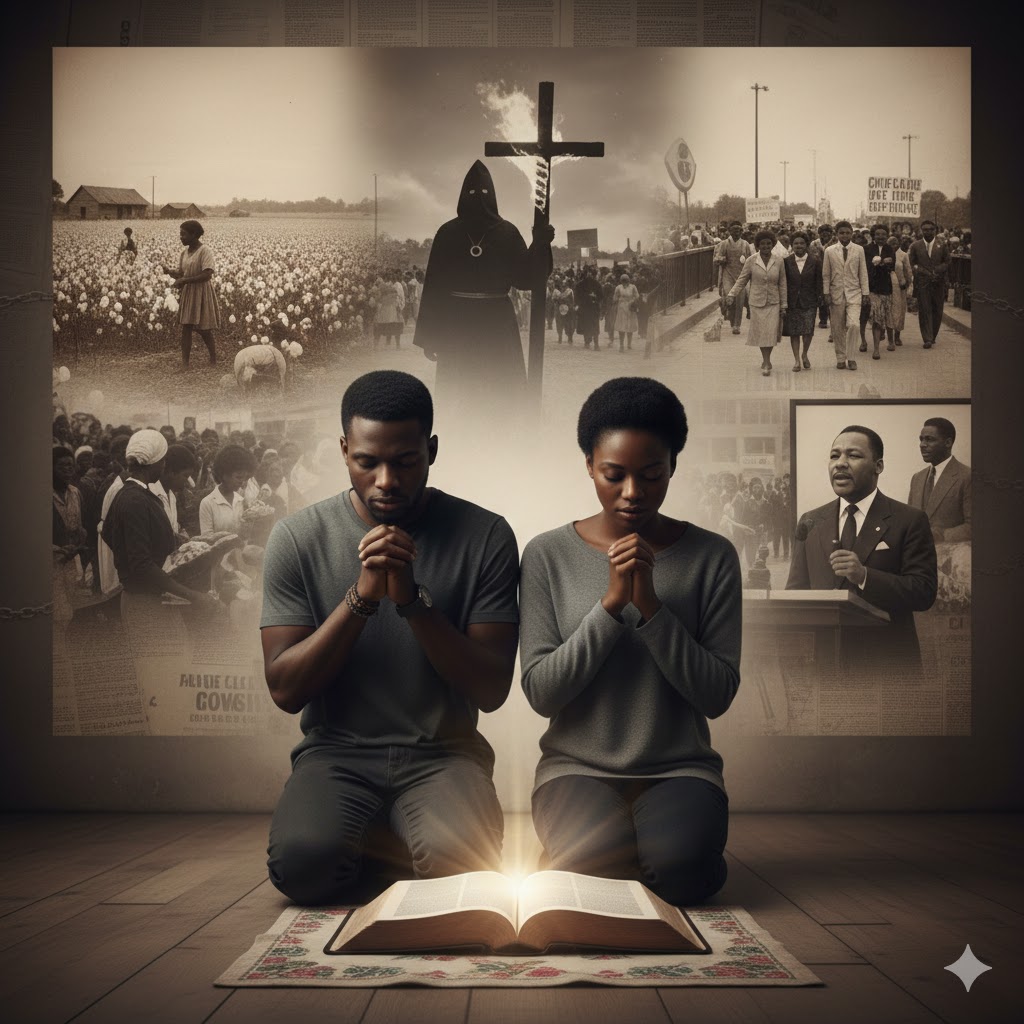
A Godly Marriage that will last.

This artwork is the property of its respective owner. No copyright infringement intended.

Marriage is one of the oldest and most sacred institutions, established by God Himself in the Garden of Eden. Unlike modern society, which often treats marriage as a contract subject to cancellation, Scripture presents marriage as a covenant—a holy and binding promise before God. A contract can be broken when terms are not met, but a covenant calls for faithfulness even when feelings change or circumstances shift. Malachi 2:14 (KJV) reminds us that God is a witness to the covenant between husband and wife, emphasizing that this union is spiritual as well as relational.

The first marriage was officiated by God in Eden. Genesis 2:22-24 (KJV) records that God made a woman from Adam’s rib, brought her to him, and declared that “a man shall leave his father and his mother, and shall cleave unto his wife: and they shall be one flesh.” This act not only created Eve but also instituted the divine blueprint for marriage: one man, one woman, under the authority of one God. This was a covenantal union meant to reflect God’s relationship with His people.

Marriage is not merely a social construct or legal agreement—it is a reflection of divine unity. Ephesians 5:31-32 (KJV) connects marriage to the mystery of Christ and the church, showing that the marital bond symbolizes the relationship between the Bridegroom (Christ) and His bride (the Church). This means that marriage is more than companionship or procreation; it is a living parable of redemption, forgiveness, and sacrificial love.

Psychologically, marriage plays a crucial role in human development and emotional stability. Research in family psychology demonstrates that healthy marriages contribute to better physical health, increased life satisfaction, and stronger mental well-being (Waite & Gallagher, 2000). When a couple is emotionally attuned, they create a secure attachment that lowers stress and fosters resilience. This echoes God’s intention for marriage to be a place of safety and mutual support.

Leaving father and mother is a vital step toward a successful marriage. This does not mean dishonoring parents, but rather reprioritizing one’s loyalty. When a husband and wife become one flesh, they form a new family unit. Failure to “leave and cleave” can create emotional dependency, boundary issues, and conflict. Psychology affirms this principle, teaching that individuation from one’s family of origin is necessary for mature intimacy (Bowen, 1978).

Marriage, then, can be defined as a covenantal union between a man and a woman, joined by God, to live in loving faithfulness and pursue His purposes together. It is a relationship based on commitment rather than convenience, requiring intentional effort to nurture trust, communication, and mutual respect. Unlike a contractual arrangement, marriage calls for grace and forgiveness when either spouse falls short.

One of the most inspiring biblical examples of love is the story of Jacob and Rachel. Genesis 29 reveals Jacob’s willingness to labor seven years for Rachel’s hand in marriage, a period which “seemed unto him but a few days, for the love he had to her” (Genesis 29:20, KJV). This narrative shows that true love is patient and sacrificial, willing to endure hardship for the sake of the beloved. A joyful marriage is built on such love—one that perseveres through trials.

Another important element in a lasting marriage is emotional intimacy. Psychological research shows that couples who regularly share their thoughts and feelings experience greater marital satisfaction (Gottman & Silver, 1999). Scripture encourages this type of open communication: “Be kindly affectioned one to another with brotherly love; in honour preferring one another” (Romans 12:10, KJV). Emotional intimacy fosters trust and prevents resentment from festering.

Mutual respect is the backbone of marital joy. Husbands are called to love their wives as Christ loved the church, and wives are instructed to respect their husbands (Ephesians 5:25, 33, KJV). This reciprocal honor creates a healthy cycle of love and respect that sustains emotional closeness. When either spouse fails to show respect, contempt and criticism can erode the marriage over time.

Conflict is inevitable, but how a couple handles conflict determines whether it will draw them closer or push them apart. Psychology teaches that constructive conflict resolution involves listening, empathy, and collaborative problem-solving rather than blame-shifting (Gottman, 2015). The Bible agrees, instructing us to be “swift to hear, slow to speak, slow to wrath” (James 1:19, KJV). Couples who master this principle grow stronger through disagreements.

Forgiveness is essential for marital longevity. No marriage can survive without grace, as both spouses are imperfect. Colossians 3:13 (KJV) commands believers to forgive “even as Christ forgave you.” Forgiveness releases bitterness and allows healing to take place. Couples who forgive one another quickly tend to have higher satisfaction and lower divorce rates (Fincham et al., 2002).

Spiritual intimacy is just as important as emotional and physical intimacy. Couples who pray together, worship together, and read Scripture together build a spiritual foundation that keeps them united even in adversity. Ecclesiastes 4:12 (KJV) teaches, “A threefold cord is not quickly broken.” God must remain at the center of the marriage to ensure lasting joy.

Trust is another pillar of a joyful marriage. Trust is built through honesty, faithfulness, and consistency over time. Betrayal of trust—through infidelity, deception, or broken promises—deeply wounds the relationship. Psychology teaches that rebuilding trust requires transparency and accountability (Glass, 2003). The Bible likewise commands integrity and truthfulness (Ephesians 4:25, KJV).

Physical intimacy is a God-given gift designed to strengthen the marital bond. 1 Corinthians 7:3-5 (KJV) encourages spouses not to withhold themselves from one another, as intimacy nurtures unity. A healthy sex life promotes emotional closeness and guards against temptation (Hebrews 13:4, KJV).

Shared purpose is another factor that contributes to lasting joy in marriage. Couples who pursue common goals—whether raising godly children, serving in ministry, or building a business—experience a sense of partnership that deepens their bond. Amos 3:3 (KJV) asks, “Can two walk together, except they be agreed?” Shared vision keeps couples moving in the same direction.

Financial stewardship is also critical. Money disputes are one of the top causes of divorce (Stanley et al., 2002). Couples who align their financial priorities and practice generosity experience less tension. The Bible provides guidance: “Owe no man any thing, but to love one another” (Romans 13:8, KJV). Wise financial management helps a marriage thrive.

Another secret to a joyful marriage is laughter and playfulness. Couples who share joy and humor build emotional resilience (Bachorowski & Owren, 2001). Proverbs 17:22 (KJV) says, “A merry heart doeth good like a medicine.” Playful moments keep a marriage light-hearted and protect against monotony.

Healthy boundaries are also essential. A couple must protect their marriage from outside interference—whether from toxic friends, meddling relatives, or workaholic tendencies. Genesis 2:24 reminds us to “leave and cleave.” Boundaries guard intimacy and prevent division.

Couples must also nurture friendship. Marriage is not just romance but companionship. Song of Solomon 5:16 (KJV) describes the beloved as both lover and friend. Friendship in marriage provides a solid foundation when passionate feelings fluctuate.

Serving one another sacrificially is a mark of Christlike love. Philippians 2:3-4 (KJV) exhorts believers to esteem others better than themselves. When both spouses adopt a servant-hearted attitude, selfishness diminishes, and unity grows.

Consistency in communication is vital. Couples should schedule regular check-ins to discuss their dreams, struggles, and gratitude. This intentional practice prevents emotional drift and deepens connection.

Another key is perseverance. Marriage is not always easy, but endurance produces maturity and blessing. James 1:4 (KJV) teaches that patience produces perfection and completeness. Couples who stay committed through trials often experience greater intimacy afterward.

Mentorship can also be valuable. Younger couples benefit from the wisdom of older, godly couples who can offer guidance, prayer, and accountability (Titus 2:3-5, KJV).

Lastly, gratitude transforms marriage. Couples who regularly express appreciation build a culture of honor and joy. 1 Thessalonians 5:18 (KJV) commands, “In every thing give thanks.” Gratitude turns the ordinary into the sacred.

In conclusion, a joyful marriage that lasts is not an accident but the result of covenant commitment, spiritual grounding, and intentional nurturing of love and respect. By following the biblical blueprint—leaving and cleaving, forgiving, praying, and persevering—couples can experience a marriage that reflects the beauty of Christ and His church.


Practical Tips for a Joyful, Lasting Marriage

  • Pray Together: Make prayer a daily habit to invite God into your union (Ecclesiastes 4:12).
  • Communicate Openly: Practice honest, compassionate dialogue to avoid resentment.
  • Forgive Quickly: Release grudges and extend grace as Christ forgives (Colossians 3:13).
  • Honor Each Other’s Roles: Respect and love according to Ephesians 5:25, 33.
  • Protect Your Marriage: Set healthy boundaries with family, work, and social media.
  • Keep the Romance Alive: Date regularly and invest in shared experiences.
  • Laugh Often: Create joyful memories that strengthen emotional bonds (Proverbs 17:22).
  • Agree on Finances: Budget together and steward resources wisely (Romans 13:8).
  • Build Friendship: Spend quality time simply enjoying one another’s company.
  • Pursue Shared Purpose: Serve God together and chase common dreams.

References

Bachorowski, J. A., & Owren, M. J. (2001). Not all laughs are alike: Voiced but not unvoiced laughter readily elicits positive affect. Psychological Science, 12(3), 252–257. https://doi.org/10.1111/1467-9280.00346

Bowen, M. (1978). Family therapy in clinical practice. New York: Jason Aronson.

Fincham, F. D., Beach, S. R. H., & Davila, J. (2002). Forgiveness and conflict resolution in marriage. Journal of Family Psychology, 16(1), 72–81. https://doi.org/10.1037/0893-3200.16.1.72

Glass, S. P. (2003). Not “Just Friends”: Rebuilding trust and recovering your sanity after infidelity. New York: Free Press.

Gottman, J. M., & Silver, N. (1999). The seven principles for making marriage work. New York: Crown.

Gottman, J. M. (2015). Principia Amoris: The new science of love. New York: Routledge.

Stanley, S. M., Markman, H. J., & Whitton, S. W. (2002). Communication, conflict, and commitment: Insights on the foundations of relationship success from a national survey. Family Process, 41(4), 659–675. https://doi.org/10.1111/j.1545-5300.2002.00659.x

Waite, L. J., & Gallagher, M. (2000). The case for marriage: Why married people are happier, healthier, and better off financially. New York: Broadway Books.

The Holy Bible, King James Version. (1769/2017). Cambridge University Press.
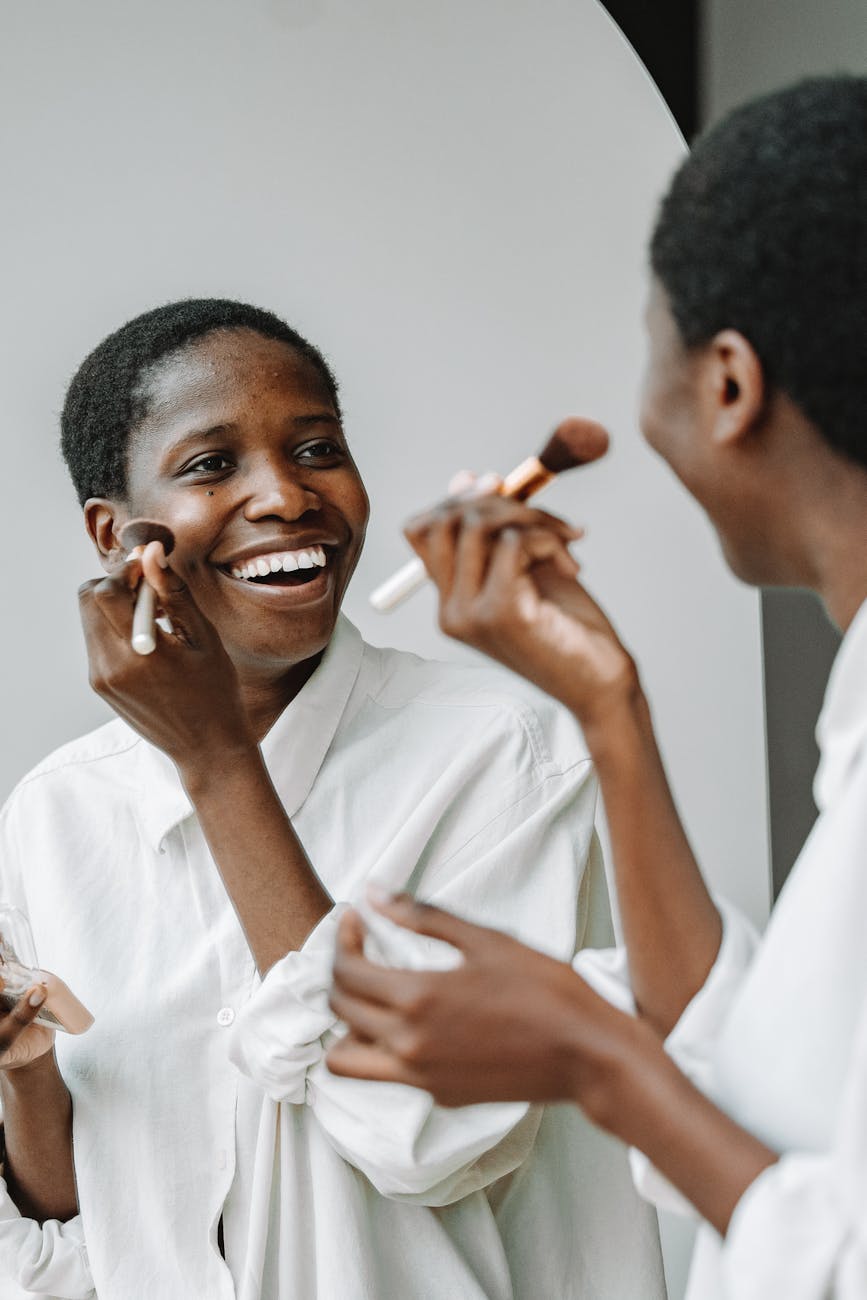
Artificial Allure: How Cosmetic Capitalism Redefines Self-Worth.

Photo by ROMAN ODINTSOV on Pexels.com

In the modern age, beauty has become an economy, a global enterprise built upon desire, insecurity, and illusion. What was once a natural attribute or divine gift has been rebranded into a commodity, carefully marketed and endlessly consumed. The rise of cosmetic capitalism—the fusion of aesthetic obsession and capitalist profit—has transformed self-worth into a purchasable product. Under its glossy surface lies a troubling truth: the more individuals strive for “perfection,” the further they drift from authenticity.

Cosmetic capitalism thrives on the manipulation of perception. It capitalizes on the human longing to be seen, valued, and loved, while subtly redefining beauty as something always just out of reach. Advertising industries employ psychological tactics to manufacture dissatisfaction, convincing consumers that flaws are problems only money can solve. As Naomi Wolf (1991) argues in The Beauty Myth, this perpetual cycle of insecurity sustains the economic engine of modern capitalism—especially at the expense of women’s peace and identity.

The proliferation of cosmetic procedures, filters, and beauty products reflects not empowerment but enslavement to constructed ideals. The body becomes a billboard for consumer aspiration, and the face a canvas for capitalist fantasy. From plastic surgery to skincare regimens costing thousands, the marketplace preys on human vulnerability. What was once a mirror of individuality has become a mask of conformity, polished and profitable.

Social media has accelerated this commodification of self-image. Platforms like Instagram, TikTok, and Snapchat offer digital mirrors that reflect filtered realities rather than authentic identities. The algorithm rewards those who adhere most closely to the aesthetic of perfection—symmetry, smoothness, and sexual appeal—creating an economy of validation driven by likes and shares. In this sense, self-worth is no longer self-defined; it is crowdsourced, monetized, and algorithmically managed.

The cosmetic industry’s power lies not merely in products, but in narratives. It sells more than lipstick or foundation—it sells belonging. Through subtle messaging, it implies that confidence, success, and even love can be bought in a bottle. This seductive illusion keeps billions of consumers tethered to beauty routines that promise transformation while ensuring perpetual dependence. The capitalist beauty system thus mirrors the spiritual condition of idolatry: worshiping the creation rather than the Creator.

Historically, beauty was rooted in nature and divine reflection. Ancient African civilizations viewed adornment as spiritual expression—a way to honor the gods or celebrate life’s passages. Today’s beauty culture, however, has severed this sacred link. It no longer celebrates identity; it commodifies it. The sacred has become synthetic. Skin lightening, cosmetic surgery, and digital alteration have replaced the natural artistry of self with manufactured sameness, particularly targeting communities of color with Eurocentric ideals.

Colorism and racial capitalism intersect deeply with cosmetic culture. The global skin-lightening industry, valued in the billions, preys on the psychological remnants of colonialism. Lighter skin remains marketed as “premium,” reinforcing hierarchies that stem from slavery and segregation. This systemic conditioning perpetuates a cycle of shame, where darker-skinned individuals internalize inferiority and seek salvation through consumption. As Yaba Blay (2017) notes, the market exploits not just vanity but centuries of racial trauma.

Black women, in particular, stand at the crossroads of beauty and exploitation. Once demonized for their natural features, they are now imitated and appropriated by the same systems that marginalize them. Fuller lips, curvier bodies, and natural hairstyles—once mocked—are now commodified as exotic trends when worn by others. This irony underscores the hypocrisy of cosmetic capitalism: it steals the aesthetics of Blackness while erasing the people behind them.

Men, too, are increasingly drawn into this cosmetic economy. The rise of “manscaping,” muscle-enhancing supplements, and grooming products reveals how capitalism evolves to exploit all demographics. The same insecurity once marketed exclusively to women now fuels a male beauty industry worth billions. Toxic masculinity and body dysmorphia merge under the pressure to maintain a chiseled, curated image of strength and desirability.

The psychological consequences of cosmetic capitalism are profound. Studies link excessive beauty consumption with increased anxiety, depression, and body dysmorphic disorder. The endless pursuit of flawlessness leaves individuals perpetually dissatisfied, unable to accept themselves as they are. In spiritual terms, this is the corruption of self-image—the very “mirror of God” distorted by man’s marketing. When identity is mediated by brands, authenticity becomes an act of rebellion.

Biblically, this crisis reflects a deeper spiritual decay. Scripture warns against the vanity of outward appearances: “Whose adorning let it not be that outward adorning… but let it be the hidden man of the heart” (1 Peter 3:3–4, KJV). Cosmetic capitalism inverts this truth, teaching that worth is earned through purchase, not character. It replaces grace with glamour, humility with hype. The result is a generation that confuses external beauty for inner value, and branding for being.

Theologically, beauty is meant to reveal God’s handiwork, not man’s manipulation. Every feature—whether symmetrical or not—is intentional, carrying divine fingerprint. When one alters themselves to meet worldly standards, they unconsciously declare that God’s design is insufficient. Cosmetic capitalism, therefore, functions as both economic and spiritual colonization—it profits from convincing creation that it needs re-creation.

Resistance to this system requires both awareness and faith. To reject cosmetic capitalism is not to reject adornment, but to reclaim it as self-expression rather than self-erasure. It means celebrating the authenticity of one’s God-given form while refusing to participate in industries that profit from insecurity. This spiritual resistance mirrors Christ’s call to live “in the world, but not of the world” (John 17:14–16, KJV).

Artists, scholars, and activists within the African diaspora are at the forefront of this reclamation. From natural hair movements to melanin-positive campaigns, the cultural shift toward authenticity reflects both political defiance and spiritual awakening. These movements remind the world that beauty, when stripped of capitalist influence, becomes liberation—a mirror of divine creativity rather than corporate design.

Yet, the allure of artificial beauty persists because it offers the illusion of control. In a world of chaos and uncertainty, cosmetic enhancement promises mastery over at least one aspect of life: the body. This illusion, however, exacts a cost. It traps the soul in an endless loop of dissatisfaction, where every “fix” exposes a new flaw. The pursuit of perfection becomes a pilgrimage to nowhere.

The challenge for modern believers and thinkers alike is to restore beauty to its rightful context: as a reflection of inner truth. True beauty radiates from wholeness, not from highlighter. It is found in empathy, resilience, and divine alignment. It does not fade with age or depend on filters; it deepens with wisdom. In this sense, beauty is not bought—it is revealed.

In the end, cosmetic capitalism cannot deliver what it promises because it feeds on emptiness. Its survival depends on perpetual insecurity. Liberation begins the moment one recognizes that self-worth is not a commodity but a covenant. Each person is fearfully and wonderfully made (Psalm 139:14, KJV)—a masterpiece that needs no retouching.

To reclaim beauty is to reclaim freedom. When we turn away from the altar of artificial allure and look instead into the mirror of divine truth, we rediscover our reflection as it was meant to be: whole, sacred, and radiant with the image of God.


References

Blay, Y. (2017). Pretty. Period.: The politics of being Black and beautiful. Blackprint Press.
Fanon, F. (1952). Black skin, white masks. Grove Press.
hooks, b. (1992). Black looks: Race and representation. South End Press.
Mills, C. W. (1997). The racial contract. Cornell University Press.
Nyong’o, L. (2014). Lupita Nyong’o’s speech on beauty and self-love [Video]. Essence Black Women in Hollywood.
Tate, S. (2016). Black beauty: Aesthetics, stylization, politics. Routledge.
Thomas, C. (2019). God, image, and identity: Reclaiming beauty from a biblical lens. Faith & Reason Press.
Walker, A. (1983). In search of our mothers’ gardens: Womanist prose. Harcourt Brace Jovanovich.
Wilkerson, I. (2020). Caste: The origins of our discontents. Random House.
Wolf, N. (1991). The beauty myth: How images of beauty are used against women. HarperCollins.
Wynter, S. (2003). Unsettling the coloniality of being/power/truth/freedom. The New Centennial Review, 3(3), 257–337.
West, C. (1993). Race matters. Beacon Press.
Davis, A. Y. (1981). Women, race, & class. Random House.
Johnson, K. (2021). Beauty in resistance: Black aesthetics and cultural power. Duke University Press.
Mercer, K. (1994). Welcome to the jungle: New positions in Black cultural studies. Routledge.
The Holy Bible, King James Version. (1611). Thomas Nelson.

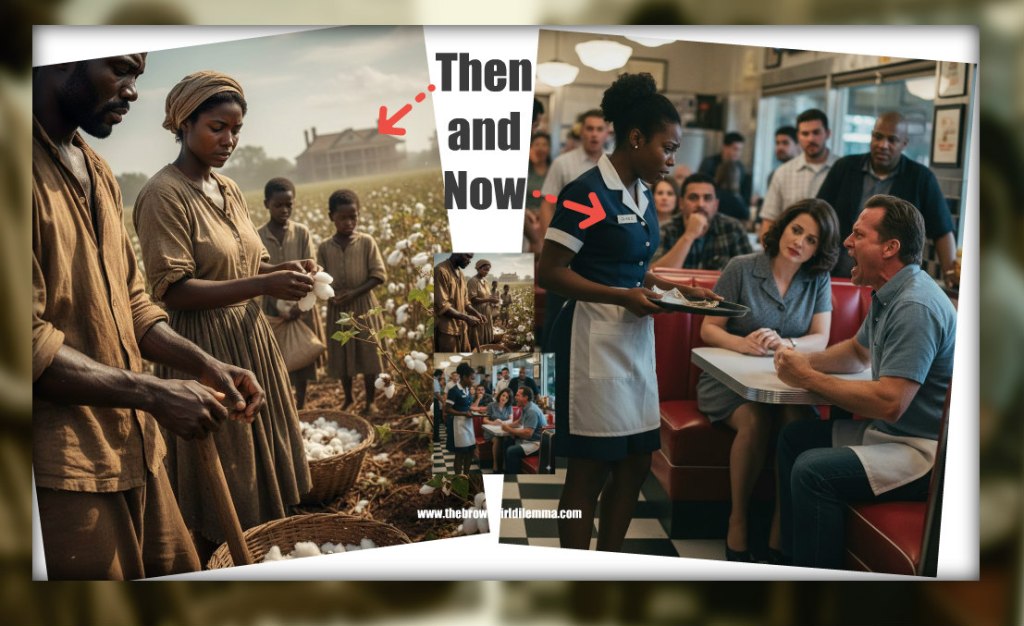
Dilemma: Jim Crow – The Legacy of Prejudice and Oppression

Jim Crow laws were a system of legalized racial segregation in the United States, primarily in the South, which lasted from the late 19th century until the mid-1960s. These laws enforced the notion that Black Americans were inferior to whites, systematically restricting their access to public spaces, education, voting rights, and economic opportunity. The name “Jim Crow” itself originated from a racist minstrel show character, highlighting the deeply dehumanizing cultural underpinnings of the system.

The origins of Jim Crow can be traced to the post-Reconstruction era, when Southern states sought to maintain white supremacy after the abolition of slavery. Despite the promises of freedom under the 13th, 14th, and 15th Amendments, white elites implemented laws and practices designed to limit Black advancement, ensuring that social, political, and economic power remained concentrated in white hands.

A “White Only” sign in a restaurant during the 1960s was a stark and visible symbol of Jim Crow segregation in the United States. Such signs were legally enforced in many Southern states, designating public spaces—restaurants, theaters, restrooms, water fountains, and more—where Black Americans were either denied entry entirely or relegated to inferior facilities.

These signs were not merely about seating; they reinforced a racial hierarchy, signaling that Black people were considered second-class citizens, unworthy of equal service or treatment. They were part of a broader system designed to maintain white supremacy socially, economically, and politically.

The presence of “White Only” signs had profound psychological and social effects. They dehumanized Black Americans, normalizing exclusion and instilling fear and shame. They also reinforced cultural prejudices in white communities, teaching white patrons that segregation was natural and morally acceptable.

Many Black Americans resisted these injustices through civil rights activism. Sit-ins at “White Only” lunch counters, such as the Greensboro sit-ins in 1960, challenged segregation directly, exposing the cruelty of the system and helping to galvanize national support for desegregation.

Legally, such signs were rendered unenforceable with the passage of the Civil Rights Act of 1964, which outlawed segregation in public accommodations. The removal of these signs symbolized the end of legal segregation, though the social and economic legacies of this discrimination persisted.

In short, a “White Only” sign in a 1960s restaurant was more than a notice—it was a tool of systemic oppression, a daily reminder of racial injustice, and a target for courageous activism in the fight for civil rights.

Under Jim Crow, public facilities were segregated, including schools, transportation, restrooms, restaurants, and theaters. Black citizens were forced into inferior accommodations, often with drastically fewer resources. This system reinforced the message that Black lives were less valuable and less deserving of dignity and opportunity.

Education for Black children under Jim Crow was deliberately underfunded. Schools were overcrowded, lacked textbooks and supplies, and were often housed in dilapidated buildings. This educational inequality limited social mobility, trapping generations of Black Americans in cycles of poverty and exclusion.

Voting rights were systematically restricted through measures such as literacy tests, poll taxes, and grandfather clauses. These tactics effectively disenfranchised most Black citizens in the South, silencing their political voices and denying them the ability to influence policies that affected their communities.

The economic effects of Jim Crow were devastating. Black workers were often relegated to low-paying, unstable jobs while being denied access to higher-paying, skilled labor opportunities. Sharecropping, tenant farming, and discriminatory hiring practices perpetuated economic dependency and vulnerability.

Segregation extended into healthcare, where Black patients faced limited access to hospitals, clinics, and trained physicians. Facilities for Black individuals were often under-resourced, and medical experimentation sometimes targeted Black communities without consent, reflecting the deeply embedded racial prejudice of the era.

Housing discrimination was another major consequence. Redlining and racially restrictive covenants prevented Black families from purchasing homes in certain neighborhoods. This not only limited wealth accumulation but also reinforced social segregation and concentrated poverty.

The legal system was complicit in maintaining Jim Crow. Black Americans were disproportionately targeted, arrested, and harshly sentenced, while white perpetrators often received lenient treatment. Courts upheld segregation and discriminatory laws, cementing structural racism in law and practice.

Social norms under Jim Crow reinforced the ideology of white superiority. Black individuals were subject to constant surveillance, harassment, and intimidation. Even minor perceived infractions of social etiquette could result in violent punishment, including lynching, which was often public and unpunished.

Lynching became a tool of terror used to enforce racial hierarchy. Thousands of Black men and women were murdered or brutally attacked for resisting oppression or simply existing outside the boundaries imposed by white supremacists. These acts were meant to instill fear and reinforce the perceived dominance of whites.

Jim Crow also affected the psychological well-being of Black communities. Continuous exposure to discrimination, exclusion, and violence created trauma that transcended generations. Black individuals internalized societal messages of inferiority, impacting self-esteem, mental health, and aspirations.

Resistance to Jim Crow took many forms. Organizations like the NAACP worked through legal challenges, advocacy, and education to dismantle segregation. Grassroots activism, boycotts, and acts of civil disobedience highlighted the courage and resilience of Black communities under oppression.

The Civil Rights Movement of the 1950s and 1960s directly confronted the injustices of Jim Crow. Landmark legislation, including the Civil Rights Act of 1964 and the Voting Rights Act of 1965, legally ended segregation and restored voting rights. However, the legacy of these laws persists in systemic inequalities and social attitudes.

Jim Crow fostered prejudice not only through law but also through cultural reinforcement. Media, literature, and everyday social interactions perpetuated stereotypes of Black inferiority, laziness, and criminality, creating a society that normalized racial hierarchy.

Racial prejudice under Jim Crow was enforced through both fear and ideology. Black Americans were taught to accept a subordinate status, while whites were socialized to view dominance as natural and justified. This dual reinforcement maintained systemic oppression for decades.

Family life was disrupted by Jim Crow. Economic constraints, restricted mobility, and threats of violence affected Black households, limiting opportunities for generational wealth and stability. Despite this, Black families often cultivated strong networks of support, faith, and community resilience.

Jim Crow shaped urban and rural landscapes. Segregated neighborhoods, schools, and institutions created spatial boundaries that reinforced inequality and restricted access to resources. These patterns of segregation continue to affect cities today.

The legacy of Jim Crow is evident in contemporary racial disparities. Disproportionate incarceration, educational inequities, and wealth gaps trace their roots to the structures and prejudices entrenched during this era. Understanding Jim Crow is essential to addressing these ongoing injustices.

Ultimately, Jim Crow represents the deliberate manipulation of law, culture, and social norms to maintain racial hierarchy. Its effects were profound, extending beyond the immediate physical restrictions to shape generational experiences of Black Americans. The struggle against Jim Crow is a testament to the resilience, courage, and enduring pursuit of justice by Black communities.

References

Woodward, C. V. (2002). The strange career of Jim Crow. Oxford University Press.

Litwack, L. F. (2009). Trouble in mind: Black southerners in the age of Jim Crow. Vintage.

Anderson, J. D. (1988). The education of Blacks in the South, 1860–1935. University of North Carolina Press.

Du Bois, W. E. B. (1935). Black reconstruction in America. Free Press.

Perman, M. (2001). Struggle for mastery: Disfranchisement in the South, 1888–1908. University of North Carolina Press.

Tolnay, S. E., & Beck, E. M. (1995). A festival of violence: An analysis of Southern lynchings, 1882–1930. University of Illinois Press.

Foner, E. (2011). Reconstruction: America’s unfinished revolution, 1863–1877. Harper Perennial.

👑 Girl Talk Series: Cover Me — Why God Gave Men Headship.

Photo by nappy on Pexels.com

Hello Ladies -in a world that screams independence, self-sufficiency, and “I don’t need a man,” many women have forgotten a sacred truth: headship is not oppression — it is God’s protection.

Headship was never designed to crush a woman, but to cover her.

When God gives a man headship, He gives him:

  • Responsibility, not privilege
  • Burden, not bragging rights
  • Duty, not domination
  • Servanthood, not superiority

A true man of God doesn’t lead to control —
he leads to cover, protect, love, and secure.

“For the husband is the head of the wife, even as Christ is the head of the church…”
Ephesians 5:23 (KJV)

Christ’s headship over the church is not tyrannical —
it is loving, sacrificial, and redemptive.

So is godly male leadership.

This is why headship frightens some women:
Not because of what God designed, but because of what the world has distorted.

Broken men abused authority.
So broken women fear leadership.
But God’s order is not the world’s chaos.


👑 Headship Means Covering

To be “covered” means:

  • Someone is praying when you’re tired
  • Someone carries weight you shouldn’t carry alone
  • Someone stands before danger and shields you
  • Someone leads spiritually so you don’t fight life alone
  • Someone provides, protects, and guides

Covering provides peace, safety, and spiritual shelter.

“And the man’s head is Christ”
1 Corinthians 11:3 (KJV)

If Christ covers man, and man covers woman,
that is not a hierarchy of worth
it is a flow of protection.

God → Christ → Husband → Wife → Children
A divine chain of covering and blessing.


🕊️ Headship Is Sacrificial, Not Selfish

A kingdom man leads like Christ:

“Husbands, love your wives, even as Christ also loved the church, and gave himself for it.”
Ephesians 5:25 (KJV)

Christ did not dominate — He died.
Christ did not lord power — He served.
Christ did not demand loyalty — He earned it through love.

A man who reflects Christ does not demand submission;
he creates an environment where a woman feels safe to offer it.


🌸 Submission Is Strength, Not Silence

Submission is not inferiority.
It is trust in God’s design, not a man’s ego.

You submit to his leadership because he submits to God.
You respect his role because God ordained it, not culture.

Submission is not being voiceless —
it is harmonizing, not competing.

A virtuous woman stands beside her husband —
but she stands under God’s order.

“A prudent wife is from the LORD.”
Proverbs 19:14 (KJV)


🌿 The Women Who Reject Covering…

When a woman rejects godly covering, she unknowingly chooses:

  • Spiritual vulnerability
  • Emotional burden alone
  • Warfare without a shield
  • Independence without protection
  • Strength with no rest

Many women today aren’t tired because they’re weak —
they’re tired because they are carrying a man’s role and their own.

God never intended you to be your own head.
He intended you to be treasured, covered, and cared for.


🌟 A Soft Reminder

Sis, headship is not about a man being “over” you —
it is about a man being for you.

A God-ordained head:

  • Prays over you
  • Speaks life into you
  • Guards your heart
  • Carries spiritual weight
  • Provides stability
  • Protects your peace
  • Leads you to God

Choosing a man without headship is choosing a life without covering.
And a house uncovered is vulnerable.


🙏🏽 Prayer

Lord,
Teach me to value Your order.
Prepare my heart to trust godly leadership.
Send a man — or strengthen the man I have —
to lead like Christ, love like Christ, and cover like Christ.

Make me wise, humble, and peaceful under divine covering.
And may my life reflect Your Kingdom design.
Amen.


Would you like the next in this series to be:

  1. “Soft Woman, Strong God: The Power of Femininity Under Covering”
  2. “Counterfeit Kings: How to Discern Men Unfit for Headship”
  3. “The Restful Wife: Finding Peace in Godly Order”

Tell me your choice and I’ll continue.

You said:

Discernment in Dating: Spirit Over Flesh

ChatGPT said:

Discernment in Dating: Spirit Over Flesh

In a culture that glorifies instant attraction, emotional highs, and surface-level chemistry, a woman of God must move differently. While the world teaches us to “follow your heart,” Scripture warns that “the heart is deceitful above all things, and desperately wicked” (Jeremiah 17:9, KJV). True discernment in dating is not about butterflies, jawlines, or the warmth of a good hug — it is about spiritual compatibility, covenant alignment, and kingdom purpose.

Flesh will choose fine.
Spirit will choose faithful.
Flesh will pursue excitement.
Spirit will pursue peace.
Flesh sees a man’s presence.
Spirit seeks a man’s covering.

When feelings become the compass, you risk romanticizing danger and calling it destiny. But when the Holy Spirit becomes your guide, you gain the wisdom to recognize a man’s fruit before you trust his future in your life. “You shall know them by their fruits” (Matthew 7:16, KJV). A man may say he loves God, but does he obey Him? He may attend church, but is he surrendered to Christ? He may pursue you, but can he lead you?

Discernment protects you from counterfeits — men who imitate godliness with intention but lack true transformation. God is not sending you a man who weakens your walk, silences your convictions, or draws you into sin. Attraction without anointing is a trap. Desire without discernment is dangerous. The flesh will always crave what looks appealing, but the spirit recognizes what is God-approved.

Sisters, guard your heart with scripture, not emotions. “Walk in the Spirit, and ye shall not fulfil the lust of the flesh” (Galatians 5:16, KJV). Pray over your desire for companionship. Seek community, wise counsel, and accountability. Evaluate a man’s character when his emotions are calm and his intentions are hidden — not when he is trying to impress you.

Dating for a daughter of the Most High is not recreational; it is preparation for a covenant. Set your standard by the Word, not the world. A righteous man will not be offended by your boundaries — he will honor them. The one God sent for you will pursue you with purity, speak with wisdom, lead with humility, and cover you with prayer.

You don’t need a man who excites your flesh but starves your spirit. You need a man who strengthens your walk, aligns with your calling, and helps you seek the Kingdom first (Matthew 6:33, KJV). Let discernment be your crown. Let the Holy Spirit be your guide. And trust that what God ordains will never require you to compromise your holiness to hold it.

Grace, wisdom, and covering — that is kingdom love.

Black History Is Holy Ground

Black history is not merely a sequence of dates or the retelling of oppression; it is sacred terrain. It is a landscape shaped by the footprints of a people who carried faith, culture, dignity, and divine resilience across centuries. To stand in the presence of Black history is to stand on holy ground, because the journey of African-descended people bears witness to a God who walked with them through fire, flood, chains, and liberation.

Black history is holy ground because it begins long before slavery. It stretches back to kingdoms and civilizations where Black people ruled, built, studied, invented, and worshiped. From Nubia to Kush, from Ghana to Songhai, from Kemet to Ethiopia, Africa cultivated intellectual and spiritual traditions that the world still draws from. This heritage elevates Black history beyond pain; it anchors it in glory.

The holiness of this history is also found in its endurance. A people torn from their homeland survived one of the greatest atrocities in human history. They survived not by accident, but by providence. Their survival testifies to a divine hand at work in the shadows of suffering, shaping a remnant that would rise again. Every preserved family line, every song sung in the cotton fields, every whispered prayer in the midnight hour speaks of sacred resilience.

Black history is holy ground because it contains a narrative of faith that never died. Enslaved Africans did not inherit Christianity from their oppressors; they discovered in Scripture a God who understood bondage, deliverance, and covenant. Through the stories of Israel, they recognized themselves. Through the Psalms, they voiced their heartbreak. Through the Gospels, they found a Messiah who stood with the broken. Their faith was not borrowed but reborn.

The holiness of this narrative deepens when we consider the spiritual resistance embedded in Black culture. Spirituals were not just songs; they were coded prayers, liberation messages, and theological declarations. The rhythmic moans of the fields became a liturgy of survival. These traditions laid the foundation for the Black church, a sacred institution that shaped activism, family, and identity for generations.

Black history is holy ground because of its prophets and pioneers. Figures like Harriet Tubman, Frederick Douglass, Sojourner Truth, and countless unnamed leaders operated with a calling that mirrored biblical deliverers. They challenged systems, freed the oppressed, and stood firmly on righteousness. Their bravery was not merely political; it was spiritual warfare.

The holiness of this story extends to the mothers of the movement. Women whose names never made textbooks carried families on their backs. They prayed children into safety, held together broken homes, and passed down wisdom that sustained the community. Their hands were altars, their kitchens sanctuaries, their lives sermons of endurance and love.

Black history is holy ground because it carries the scent of sacrifice. Countless lives were laid down—from the Middle Passage to Jim Crow, from lynching trees to segregated streets. Their blood cries out like Abel’s, reminding the world that injustice is seen by God. Their sacrifices fertilized the soil from which future generations would rise.

That rising continues through the dreamers, scholars, activists, and artists who broadened the path toward freedom. Each breakthrough was a step deeper into holy territory—a reminder that progress is not simply social, but spiritual. Civil rights victories were not just legal milestones; they were manifestations of divine justice.

Black history is holy ground because it illuminates a people who refused to be erased. Despite centuries of oppression, their culture, creativity, and identity could not be destroyed. Instead, they transformed suffering into song, brokenness into brilliance, and hardship into hope. This divine alchemy marks their journey as sacred.

Modern Black life continues this sacredness. Every achievement—from academia to art, from science to business, from ministry to music—is a continuation of a holy lineage. Each accomplishment is a chapter in a story that began thousands of years before American soil ever felt the presence of African feet.

Black history is holy ground because it challenges the world to see humanity through a divine lens. The struggle for justice reflects God’s heart for righteousness. The fight for dignity reflects God’s image within humanity. Every act of resistance is a declaration that Black life is sacred and cannot be diminished.

The sacredness of Black history is also found in its wounds. Healing requires honesty, and Black history invites the world to confront painful truths without running. Yet this truth-telling is not meant to reopen scars but to restore what was lost. There is holiness in remembering, because memory heals and honors.

Black history is holy ground because it holds prophetic power. It warns against repeating the sins of the past, calls nations to repent, and demands transformation. It speaks with the authority of a testimony shaped by centuries of struggle and triumph. It teaches that liberation is a divine mandate, not a political suggestion.

This holiness also lies in the future. Black children today inherit not just a history of suffering but a legacy of brilliance. They stand on the shoulders of kings, queens, scholars, inventors, freedom fighters, and saints. Their existence is a continuation of the sacred promise that a people once enslaved would rise beyond anything intended to destroy them.

Black history is holy ground because it reveals God’s faithfulness. In every generation, He preserved a remnant, raised leaders, empowered movements, and poured creativity into a people who refused to surrender. Their story is evidence of divine purpose. Nothing about their survival is accidental.

To walk through Black history is to walk through a sacred story—one that encompasses creation, covenant, oppression, deliverance, restoration, and glory. It is a story intertwined with Scripture, echoing the journeys of ancient Israel and the hope of future redemption. It is a holy narrative wrapped in melanin and majesty.

Ultimately, Black history is holy ground because it embodies the miracle of endurance. It reveals that no chain is stronger than the human spirit, no system stronger than divine justice, and no hatred stronger than the love planted deep within a people chosen to carry light through centuries of darkness. Black history is not just remembered; it is revered.

And for those who study it, teach it, write it, or live it—it calls them to remove their shoes. For the place where they stand is sacred.

References:
Genesis 15:13–14 (KJV); Exodus 3:5; Psalm 68:31; Isaiah 61:1–4; Luke 4:18; Revelation 7:9; Curtin, P. The Atlantic Slave Trade; Gates, H. L. Africa in World History; Raboteau, A. Slave Religion; Franklin, J. H. From Slavery to Freedom.

Black History Month Exclusive: From the Transatlantic Slave Trade to Modern-Day Slavery.

The history of Black people is deeply intertwined with the global forces of oppression, beginning with the transatlantic slave trade. This system not only uprooted millions from Africa but laid the foundations for systemic racism, economic disparity, and social exclusion that persist to this day (Eltis & Richardson, 2015). Understanding this continuum is critical for confronting modern forms of slavery and exploitation.

Historical Context of the Transatlantic Slave Trade
The transatlantic slave trade, beginning in the 16th century, forcibly transported over 12 million Africans to the Americas (Lovejoy, 2012). African kingdoms were disrupted, familial structures destroyed, and cultural practices suppressed as enslaved people were commodified and dehumanized (Smallwood, 2007).

Black History Timeline: Transatlantic Slave Trade to Modern-Day Slavery

16th–19th Century – Transatlantic Slave Trade

  • Over 12 million Africans were forcibly transported to the Americas.
  • African societies were disrupted; enslaved people were commodified for labor in plantations.

17th–19th Century – Enslavement on Plantations

  • Brutal labor in sugar, cotton, and tobacco fields.
  • Resistance through rebellions, escapes, and spiritual preservation.

Late 18th–Early 19th Century – Abolition Movements

  • Activists like Frederick Douglass, Olaudah Equiano, and William Wilberforce fought to end slavery.
  • Slavery challenged morally, economically, and politically.

1865 – Emancipation (U.S.)

  • Slavery was legally abolished with the 13th Amendment.
  • The Reconstruction era begins; systemic oppression continues through Black Codes.

Late 19th–Early 20th Century – Jim Crow and Lynching

  • Segregation laws institutionalized racial inequality.
  • Ida B. Wells documents lynching and campaigns for justice.

1916–1970s – The Great Migration

  • Millions of Black Americans move from the rural South to northern urban centers.
  • Encounter economic opportunities, yet face housing discrimination and segregation.

1950s–1960s – Civil Rights Movement

  • Landmark legal victories: Brown v. Board of Education, Civil Rights Act.
  • Leaders like Martin Luther King Jr., Rosa Parks, and Medgar Evers advance equality.

Post-1960s – Structural Inequalities

  • Economic disparities persist: redlining, wage gaps, and limited access to quality education.
  • Mass incarceration disproportionately impacts Black communities.

21st Century – Modern-Day Slavery

  • Exploitation continues through human trafficking, forced labor, and systemic oppression.
  • Vulnerable populations, especially women and children, are disproportionately affected.

Contemporary Resistance and Advocacy

  • Organizations combat slavery and exploitation: Polaris Project, Anti-Slavery International, UN initiatives.
  • Education, activism, and policy reform empower communities and promote justice.

Economic Motivations and Colonial Powers
European colonial powers profited immensely from enslaved labor, fueling the growth of plantation economies in the Americas (Inikori, 2002). Sugar, cotton, and tobacco industries relied heavily on Black labor, creating wealth for Europe while entrenching racial hierarchies and economic inequalities.

Resistance and Revolts During Slavery
Despite brutal conditions, enslaved Africans resisted through rebellion, escape, and cultural preservation. Notable revolts such as the Haitian Revolution (1791–1804) demonstrated resilience and challenged notions of racial inferiority (Geggus, 2001).

The Role of Religion and Spirituality
Religion, particularly Christianity, adapted within African traditions, became a tool for both control and resistance. Spirituals, coded messages, and the church provided emotional sustenance and a framework for community solidarity (Raboteau, 2004).

Abolition Movements
Abolitionists, both Black and White, fought to end the transatlantic slave trade. Figures such as Frederick Douglass, Olaudah Equiano, and William Wilberforce highlighted the moral and economic arguments against slavery (Drescher, 2009).

Emancipation and Its Limitations
Even after emancipation in the 19th century, former enslaved people faced systemic discrimination through Black Codes, Jim Crow laws, and sharecropping systems, which perpetuated economic and social marginalization (Litwack, 2009).

The Great Migration and Urban Struggles
The Great Migration of the early 20th century reshaped Black America as millions moved from the rural South to urban centers, seeking opportunity yet encountering new forms of racial segregation and economic exploitation (Wilkerson, 2010).

Racial Violence and Lynching
Lynching and racial terror were pervasive tools of oppression. Ida B. Wells’ investigative journalism exposed the scale of violence, advocating for legal reform and civil rights (Wells-Barnett, 1895/1999).

Civil Rights and Legal Progress
The mid-20th century Civil Rights Movement achieved landmark legal victories, including Brown v. Board of Education and the Civil Rights Act, challenging systemic barriers and inspiring global movements for racial justice (Branch, 1988).

Economic Inequalities Post-Civil Rights
Despite legal progress, Black communities continue to face structural economic disparities. Redlining, discriminatory lending, and wage gaps reflect persistent inequality rooted in historical oppression (Rothstein, 2017).

Modern-Day Slavery Defined
Contemporary slavery includes human trafficking, forced labor, and exploitation in both domestic and global contexts. The International Labour Organization estimates over 40 million people are affected worldwide, with women and children disproportionately impacted (ILO, 2017).

Human Trafficking and Exploitation
Human trafficking networks prey on vulnerability. Migrants, impoverished communities, and marginalized groups are often coerced into labor or sexual exploitation (Bales, 2012). Black communities remain disproportionately affected due to historical legacies of marginalization.

Systemic Racism and Modern Oppression
Modern slavery is intertwined with systemic racism. Structural inequalities, over-policing, and mass incarceration continue patterns reminiscent of historical exploitation (Alexander, 2010).

Global Supply Chains and Labor Exploitation
Modern industries, including agriculture, textiles, and technology, often rely on exploitative labor practices. Ethical consumerism and corporate accountability are critical for addressing contemporary forms of slavery (Crane, 2013).

Intersection of Gender and Race
Black women face compounded vulnerabilities in modern slavery contexts. Gender-based violence, limited access to education, and economic precarity exacerbate exploitation (Amnesty International, 2017).

Education and Empowerment as Resistance
Education remains a crucial tool against exploitation. Historical and contemporary movements emphasize literacy, advocacy, and economic empowerment as pathways to resilience (Gates, 2019).

Global Movements Against Modern Slavery
Organizations like Anti-Slavery International, Polaris Project, and UN initiatives mobilize resources and awareness to combat trafficking and forced labor worldwide (Bales & Soodalter, 2009).

Continuity of Historical Struggles
The legacy of the transatlantic slave trade is not confined to the past. Modern slavery and systemic oppression reflect a continuum of exploitation, demanding sustained advocacy, education, and structural change (Smallwood, 2007).

Conclusion
Black history is a testament to resilience and resistance. From the horrors of the transatlantic slave trade to the challenges of modern-day slavery, understanding this history is essential for dismantling systemic oppression and fostering justice for future generations.


References

Alexander, M. (2010). The new Jim Crow: Mass incarceration in the age of colorblindness. New Press.
Amnesty International. (2017). Women and modern slavery: Understanding vulnerability. Amnesty International Publications.
Bales, K. (2012). Disposable people: New slavery in the global economy (3rd ed.). University of California Press.
Bales, K., & Soodalter, R. (2009). The slave next door: Human trafficking and slavery in America today. University of California Press.
Branch, T. (1988). Parting the waters: America in the King years 1954-63. Simon & Schuster.
Crane, A. (2013). Modern slavery as a management practice: Exploring the conditions and strategies. Journal of Business Ethics, 114(3), 505–518.
Drescher, S. (2009). Abolition: A history of slavery and antislavery. Cambridge University Press.
Eltis, D., & Richardson, D. (2015). Atlas of the transatlantic slave trade. Yale University Press.
Gates, H. L. (2019). Stony the road: Reconstruction, white supremacy, and the rise of Jim Crow. Penguin Press.
Geggus, D. P. (2001). Haitian revolutionary studies. Indiana University Press.
Inikori, J. E. (2002). Africans and the industrial revolution in England: A study in international trade and economic development. Cambridge University Press.
International Labour Organization (ILO). (2017). Global estimates of modern slavery: Forced labour and forced marriage. ILO Publications.
Litwack, L. F. (2009). Trouble in mind: Black southerners in the age of Jim Crow. Knopf.
Lovejoy, P. E. (2012). Transformations in slavery: A history of slavery in Africa (2nd ed.). Cambridge University Press.
Raboteau, A. J. (2004). Slave religion: The “invisible institution” in the antebellum South (20th anniversary ed.). Oxford University Press.
Rothstein, R. (2017). The color of law: A forgotten history of how our government segregated America. Liveright.
Smallwood, S. E. (2007). Saltwater slavery: A middle passage from Africa to American diaspora. Harvard University Press.
Wells-Barnett, I. B. (1999). The Red Record: Tabulated statistics and case histories of lynching in the United States. Dover Publications. (Original work published 1895)
Wilkerson, I. (2010). The warmth of other suns: The epic story of America’s Great Migration. Random House.

Crowned Before the World Touched Her

She was crowned before the world touched her, before language named her skin, before systems decided her worth. Her existence was intentional, authored by God and formed in divine wisdom, not accident or afterthought. Long before society imposed hierarchies, she bore dignity by design (Psalm 139:14, KJV).

The crown she carried was not fashioned of gold, but of purpose. It rested quietly in her spirit, unseen yet immovable. The world would later try to convince her that crowns are earned through suffering, but Scripture reveals that she was crowned at creation (Genesis 1:27, KJV).

Before the gaze of empire found her, she belonged wholly to God. Her identity was not a reaction to oppression but a reflection of divine image. This truth disrupts narratives that define Black womanhood through pain alone.

The world touched her with names that were never hers. It called her excessive, aggressive, invisible, or unworthy, projecting fear and desire onto her body. Yet none of these labels altered the crown she was given before words were weaponized (Isaiah 62:3, KJV).

Colonial beauty standards attempted to dethrone her by redefining beauty through whiteness. Hair, skin, and features became sites of contestation. But Scripture never outsourced beauty to empire; God declared His work “very good” before colonizers existed (Genesis 1:31, KJV).

She learned early that the world polices what it cannot control. Her body became public property in narrative, law, and image. Still, her crown remained untouched, because it was not placed by human hands.

The Bible is filled with women who were crowned before circumstances hardened them. Hagar was seen in the wilderness before society erased her (Genesis 16:13, KJV). Her encounter affirms that divine recognition precedes social rejection.

Like Esther, she was prepared in secret before being revealed in public. Her season of refinement was not punishment, but positioning. The crown comes before the calling, not after the trial (Esther 2:17, KJV).

The world taught her to armor herself, mistaking hardness for strength. Yet God honors softness guarded by wisdom. Meekness, in Scripture, is not weakness but disciplined power (Matthew 5:5, KJV).

She was told survival was her highest calling. But God called her to dominion, stewardship, and rest. Her worth was never dependent on endurance alone (Genesis 1:28, KJV).

The crown signifies authority over self before authority over circumstance. It is a reminder that she governs her mind, body, and spirit under God’s sovereignty. No system can rule what God has already crowned.

Her crown also represents inheritance. She did not begin in lack but in legacy. What was stolen historically does not erase what was granted eternally (Joel 2:25–26, KJV).

The world touched her through trauma, but trauma did not author her. Scripture makes clear that suffering is an experience, not an identity (Romans 8:18, KJV).

Spiritual warfare often targets crowned heads first. When identity is attacked, it is because destiny is present. The enemy never assaults what has no value (Ephesians 6:12, KJV).

To be crowned before the world touched her means she does not need validation from structures that were designed to exploit her. Her worth is pre-social and pre-political.

Her restoration is not about becoming something new, but remembering what she was before distortion. Repentance, healing, and self-love are acts of remembrance.

God crowns not to decorate, but to commission. The crown signals responsibility, vision, and alignment with heaven. She carries not ego, but assignment (Psalm 8:5, KJV).

In reclaiming her crown, she disrupts narratives of deficiency. She stands as evidence that Black womanhood is not an exception to divine favor, but an expression of it.

She is not crowned because she survived. She survived because she was crowned. That order matters.

Crowned before the world touched her, she walks not in apology, but in authority—restored, rooted, and radiant in the knowledge that God finished His work before the world began its lies.


References (KJV)

Genesis 1:27, 28, 31
Genesis 16:13
Esther 2:17
Psalm 8:5
Psalm 139:14
Isaiah 62:3
Matthew 5:5
Joel 2:25–26
Romans 8:18
Ephesians 6:12

Galaxies of Gold Presents: The World’s Most Beautiful Woman, a visual phenomenon – A Black Woman’s Story.

A memoir written by © Scientist Arieyah Naseek

She makes beauty envious, and perfection wants to commit suicide.

Golden Café Au Lait is the color of her skin. “Beauty” is her name, christened by an African king who once declared that her birth name simply would not do. To him, she was the embodiment of perfection and beauty, the woman who defines what divine beauty could look like in human form. From that day forward, she was known only as Beauty, the woman whose very presence seemed regal yet ethereal, human yet divine. From the time she was a child, the world seemed to pause when she entered a room. Beauty’s aura filled every room, commanding attention without uttering a word. Her light golden skin shimmered like polished bronze infused with honeyed sunlight, and her presence drew admiration as naturally as flowers turn toward the sun.

By adolescence, photographers and artists vied for the chance to capture her likeness. They said her skin tone was “liquid light caramel,” a hue that defied description and reflected every ray of light. She was only sixteen when she appeared in her first major advertising campaign in Germany. The image—a portrait of her smiling softly against a gold backdrop—was sold around the world, inspiring a generation of young Black girls to see beauty reflected in their own skin for the first time.

Everywhere she went, people stared. In college, professors remembered her face before her name. Boys competed for her attention as if her affection were a trophy. Even when she spoke with depth and intelligence, the conversation always circled back to her looks. “You could be a model,” they’d say—never realizing she already was. Her image had graced global billboards, her likeness immortalized in ad campaigns that declared her “the most beautiful woman on earth.”

Her face became both a blessing and a burden. When she entered a room, all eyes gravitated toward her. Teachers remembered her beauty before her brilliance. Classmates praised her appearance but never asked about her dreams. Men admired her, women studied her, and somewhere in between, Beauty lost the comfort of simply being herself.

Her family, especially her grandmother and aunt, adored her beauty and never hesitated to remind her of it. “You’re our precious jewel,” her grandmother would say, smoothing Beauty’s hair. “God must’ve taken His time with you.” Beauty would smile but quietly wonder if being admired meant being understood. Her aunt always stated that she had that kind of beauty that could knock a man to his knees.

There was a time when she became almost protective of her appearance—guarded about who touched her, half-jokingly insisting she didn’t want anyone’s skin to “rub off” on her. It wasn’t arrogance but armor. She had learned how beauty could invite both praise and envy, love and projection. People either worshipped her or resented her—few ever simply saw her.

The men around her had placed her on pedestals and showered her with gifts. Jewelry, flowers, promises—affection often disguised as possession. Later in life came the grander gestures: extravagant marriage proposals and gifts.

Beauty became an international model. Her image adorned billboards around the world. She became the face of the Black Diamond. Yet, even as the world praised her, she remained deeply grounded. When reporters asked what made her beautiful, she often smiled and said, “I am simply who my Creator designed me to be—nothing more, nothing less.”

Even as her modeling career soared—her likeness becoming known to the world—Beauty carried that ache. She could pose for hours, mastering every angle, yet behind the lens, she wondered if anyone cared who she was when the camera stopped clicking. People spoke about her beauty as though it existed separately from her soul.

Behind the flawless photos and radiant smiles was a woman quietly questioning: Is this all they see?

Yet the more people praised her beauty, the more Beauty learned to shrink herself. She noticed how other women tensed around her, how conversations would shift, laughter turn brittle, and compliments become comparisons. So she began to downplay her glow—wearing looser clothes, softening her speech, dimming her confidence—just to make others feel comfortable in her presence. What the world called a blessing often felt like a burden she had to manage carefully.

Beauty’s beauty was not only admired—it was studied. Photographers, sculptors, and scientists alike sought to capture her essence, though many admitted that no lens could ever fully translate the magnitude of her allure. Her face appeared on billboards across continents, representing extraordinary beauty, grace, luxury, and timeless splendor. She was not simply a model; she was a symbol—a vision of Black femininity both celebrated and contested.

For her, beauty was both a crown and a cage. She loved God, studied His Word, and lived by faith, yet the world continued to measure her by her reflection instead of her revelation. No matter how much she achieved—degrees, philanthropy, ministry work—people always returned to her modeling days as though they defined her entirely. It was as if her face spoke louder than her voice.

Her complexion, a rare golden café au lait tone, became her signature, along with her large, mesmerizing eyes, which have a mirror effect to them, small nose, and full lips. Some described it as sunlight kissing caramel; others said it was a color that could only exist in dreams. A male friend said that her beauty is like a sunset. But beyond the admiration lay whispers—jealousy, envy, and critique. Beauty’s rise to the public eye became a mirror reflecting society’s long, complicated relationship with color and beauty within the Black diaspora.

Women were envious of Beauty. She often felt the weight of her own appearance, learning early that her beauty, though praised, was also isolating. “I had to learn to downplay myself,” she once confided in an interview. “Sometimes I’d hide behind plain clothes, no makeup, just to make others feel comfortable.” Her light skin was both her blessing and her burden.

People often said that her success came easily because of her skin tone. “She got this or that because she’s light,” they whispered, reducing her years of effort to the shade of her skin. Yet, even under such scrutiny, Beauty carried herself with humility. She made it her mission to celebrate darker-skinned women, reminding them that their melanin was not a disadvantage but a divine hue in its own right.

In one of her most iconic speeches after being crowned Miss Ultimate Beauty, she addressed the audience directly: “Beauty does not belong to a single shade. Every complexion comes from God.” The crowd erupted in applause, not because of her ethereal face, but because of her truth.

Her reign as Miss Ultimate Beauty made global headlines. Everyone clamored to work with her, seeing in Beauty a living canvas of light and depth. Yet amid the attention, she remained grounded—returning often to her roots in the United States, where she visited schools to mentor young girls about confidence and inner worth.

A group of Scientists and a famous film director, captivated by her ethereal features, began production on a documentary series titled Beauty about her and The Science of Beauty. They described her beauty as “so spectacular she looks unreal—a genetic masterpiece, a visual phenomenon.” The documentary, already in development, aimed to explore not just her life but also the science, art, and sociology behind human attraction. The Documentary Series set to be released in 2028 or 2029.

Beauty’s face became synonymous with the title of “the most beautiful woman in the world” and “Genetic Masterpiece.” She has the kind of beauty that transcends time, evoking comparisons to the great black beauties of this world, yet distinctly her own—look, extraordinary, astonishing, rare, unique, unparalleled, regal, and radiant. Her dark coal curls danced in the wind like liquid fire while cascading down her back like sheets of molasses, and her eyes—large, expressive, hypnotic, piercing, and filled with quiet wisdom—invited the world to see beyond the surface.

Her gold gown, worn at a world foundation gala, became legendary. The fabric rippled like sunlight on water, modest yet magnetic. No skin was exposed, yet all eyes were on her. The designer later confessed, “It wasn’t the dress that shone—it was Beauty herself.”

But Beauty knew beauty was never enough. She wrestled with loneliness, aware that admiration often lacked understanding. “People love what they see,” she said, “but they rarely ask who I am beneath the gold.” Her journals, later published in a book, revealed her deepest dilemmas and her wish to be valued for her soul as much as her beauty or skin.

In private moments, Beauty admitted she sometimes wished to be ordinary—to walk into a room without the echo of awe or envy following her. Yet destiny would not allow her anonymity; she was born to be seen.

Her story became the heart of global conversations about colorism and representation. Scholars cited her as a living paradox—a woman praised for beauty that both challenged and reinforced societal bias. Her beauty sparked debates in articles, classrooms, and beauty forums worldwide.

When asked about her thoughts on colorism, Beauty said, “Lightness does not make me better, darkness does not make you lesser. We are all tones of God’s imagination.” Her words inspired campaigns that began redefining beauty standards across Africa and the diaspora.

Her influence extended beyond modeling. Beauty launched a foundation supporting young women of all complexions in creative industries. She funded scholarships for photographers and artists to challenge color bias through their work.

Years later, at a major art exhibition in Africa, her portrait was unveiled—a depiction of her draped in gold and crowned with sunlight. The Gold Standard of Beauty. Critics called it “The Eighth Wonder of the Modern World.” It wasn’t vanity; it was legacy.

In interviews, she reflected, “If I’m to be remembered, let it not be for my face, but for the love I inspired in those who once doubted their reflection and my love and devotion to the Most High God of Israel.”

Beauty’s name became immortalized, not as an object of beauty, but as a force of healing in the ongoing dialogue of identity and self-worth. Her beauty—golden, astonishing, glowing, godlike—became less about appearance and more about awakening.

In every photo, in every glimmer of light touching her light cafe au lait skin, Beauty’s message remains—beauty is not what you see; this is temporal. True beauty comes from within, and only the things you do for Christ will last.

As her faith deepened, Beauty began to see her reflection differently. The same face that once burdened her became a vessel of purpose. She no longer viewed her features as random genetics but as a deliberate brushstroke from a divine Artist. Genesis 1:27 reminded her: “So God created man in his own image.” That meant her beauty was not hers to idolize or to fear—it was His signature on her soul.

She began to use her platform to speak about inner worth, teaching young women that outward beauty without spiritual grounding is like perfume on an empty bottle—sweet for a moment, but fading fast. Her favorite verse, Proverbs 31:30, became her mantra: “Favour is deceitful, and beauty is vain: but a woman that feareth the Lord, she shall be praised.”

Through faith, Beauty learned to laugh at the irony of her journey—that the woman called “The 8th Wonder of the World” was never truly seeking wonder at all. She was seeking wisdom. And she found it in Christ, who taught her that beauty is not what the world sees, but what Heaven recognizes.

Now, as she walks in purpose, her glow feels different. Her presence unsettles the superficial and awakens the meaningful. It’s not the shimmer of camera lights but the radiance of peace. She is still breathtaking, but not because of her symmetry—because of her spirit. Her beauty no longer introduces her; her light does.

In Beauty’s story, we see that beauty is neither a curse nor a crown—it is temporal. When surrendered to God, even the most admired woman learns that the truest form of grace is not in being seen, but in being sanctified.

Written by © Scientist Arieyah Naseek

What Are You Mixed With? – And Other Microaggressions of Erasure.

A man said to me, “You are the most beautiful woman I have seen. What are you mixed with? You can’t be all Black.” His words were meant to be a compliment, but they struck me like a backhanded slap. In that moment, my identity was reduced to a puzzle he wanted to solve, as though my beauty could not possibly exist within the fullness of Blackness. This is a story many Black women know too well — where admiration becomes interrogation, and affirmation becomes erasure.

“What are you mixed with?” may sound like a harmless question, but it carries a heavy undertone that many Black people instantly recognize. It suggests that their beauty, intellect, or talent must have come from something other than being fully Black. It is rarely asked of white individuals, nor of those whose racial identity matches a dominant group. For Black people, it becomes a subtle interrogation, implying that their very existence must be explained, categorized, or justified.

This question is one of many racial microaggressions — brief and commonplace verbal, behavioral, or environmental slights that communicate hostile, derogatory, or negative racial messages (Sue et al., 2007). Microaggressions are often delivered without malicious intent, yet their cumulative effect on mental health and identity can be significant. Questions about “mixed heritage” often leave the recipient feeling exoticized, tokenized, or “othered,” as if they are a curiosity to be solved.

Historically, this curiosity is rooted in colonial thinking. During slavery, white slaveholders meticulously catalogued the racial percentages of enslaved people — mulatto, quadroon, octoroon — to determine their value and social status (Williamson, 1980). This obsession with blood quantum was less about ancestry and more about control, categorizing Black people in order to decide who would remain enslaved and who might pass into freedom. The modern fascination with “mixedness” is a residue of that system, where proximity to whiteness was privileged and fetishized.

Colorism — the preference for lighter skin within and outside the Black community — is closely tied to this microaggression. Light skin has historically been associated with privilege, beauty, and desirability, while darker skin was demonized (Hunter, 2007). Asking “What are you mixed with?” when someone is light-skinned reinforces the idea that beauty or acceptability is tied to whiteness or foreign ancestry.

Celebrities often face this question publicly. Meghan Markle, the Duchess of Sussex, has shared that her biracial identity was constantly questioned, with people asking, “What are you?” as if they needed to categorize her before interacting (Winfrey, 2021). Zendaya has spoken openly about colorism, acknowledging that her lighter skin tone gives her access and opportunity denied to darker-skinned actresses, and she intentionally uses her platform to amplify those voices (Robinson, 2018).

This constant questioning can have psychological effects. Repeated microaggressions are linked to racial battle fatigue — a state of mental, emotional, and physical exhaustion caused by navigating racism daily (Smith et al., 2011). Being asked about one’s racial makeup forces a person to confront how others perceive them, which can trigger feelings of alienation or anxiety.

Spiritually, these questions can also conflict with the truth of God’s creation. Psalm 139:14 (KJV) affirms, “I will praise thee; for I am fearfully and wonderfully made: marvellous are thy works.” The implication that Blackness must be “mixed with something” to be beautiful denies the inherent dignity God has placed in every person, including those with deep melanin-rich skin and African features.

Microaggressions of erasure go beyond just “What are you mixed with?” They include statements like “You’re pretty for a dark-skinned girl,” “You talk white,” or “I don’t see color.” While they may be meant as compliments, they actually diminish identity. They praise the individual for fitting into a standard that denies their full cultural and racial reality.

The phrase “I don’t see color” is another common erasure tactic. It attempts to signal equality but ultimately refuses to acknowledge the existence of systemic racism and the lived experiences of Black people. As Neville et al. (2013) argue, colorblindness allows racial inequalities to persist because it discourages the recognition of injustice.

“What are you mixed with?” can also sexualize and exoticize. In some cases, it is asked not out of genuine curiosity but as a way to turn identity into a fantasy or a fetish. This is particularly true for women of color, whose bodies and features have been hypersexualized throughout history (Collins, 2004). This type of questioning reduces a person to their perceived racial “ingredients” rather than honoring them as a whole being.

W.E.B. Du Bois (1903) described the phenomenon of double-consciousness — the sense of always looking at oneself through the eyes of others. For many Black people, being constantly asked about their racial makeup deepens this double-consciousness, forcing them to perform or explain their identity to make others comfortable.

Some who ask “What are you mixed with?” may genuinely mean no harm. For them, it is a way to make conversation or express admiration. But intent does not erase impact. Microaggressions accumulate over time, becoming heavy burdens that affect how Black people move through the world — whether they feel accepted, whether they feel seen, whether they feel safe.

Biblically, diversity is not something to erase or explain away. Revelation 7:9 (KJV) describes a heavenly vision where “all nations, and kindreds, and people, and tongues” stand together before God. This suggests that ethnicity and identity are preserved and celebrated in eternity. To erase Blackness or reduce it to a mixture is to work against divine design.

Representation in media has begun to challenge these erasures. Campaigns like #BlackGirlMagic, #MelaninPoppin, and the natural hair movement have helped normalize the beauty of African features and dark skin. Seeing darker-skinned models, actors, and influencers celebrated for their beauty disrupts the idea that only “mixed” or “exotic” Black people are worthy of admiration.

Healing from the harm of these microaggressions requires education. Non-Black individuals must learn the history of racial classification, colorism, and why these questions are not benign. They must understand that curiosity should never come at the cost of someone else’s dignity.

Black individuals, meanwhile, can reclaim their narrative by affirming their identity openly and unapologetically. This may include correcting someone who asks “What are you mixed with?” by simply saying, “I’m Black — and that’s enough.” Such responses help shift the cultural expectation that Blackness must be explained or justified.

The Erasure Complex and Other Microaggressions of Erasure

The Erasure Complex is the cumulative psychological, social, and spiritual effect of living in a world where Blackness is constantly questioned, redefined, and made to prove its legitimacy. It is not merely about blatant racism but about the small, repeated messages that suggest Black identity is insufficient, unattractive, or incomplete unless modified by proximity to whiteness.

One of the most common forms of erasure is the question, “What are you mixed with?” It might sound curious or flattering, but for Black people, it can feel like an accusation — as though beauty, intelligence, or grace cannot come from African roots alone. These moments communicate that being fully Black is something to be doubted, pitied, or corrected.

Microaggressions like this have deep historical roots. In slavery and Jim Crow America, racial classification was an obsession. Words like mulatto, quadroon, and octoroon were invented to measure bloodlines and determine status, privileges, and restrictions (Williamson, 1980). Even freedom could hinge on whether a person could pass for white. That system created a generational wound — a belief that lighter skin or “mixed blood” was better, safer, more desirable.

The Erasure Complex is not limited to questions of ancestry. It also shows up in phrases like, “You talk white,” “You’re pretty for a dark-skinned girl,” or “I don’t see color.” Each of these statements subtly removes part of a Black person’s identity. They praise the individual for being an exception to a negative stereotype while reinforcing the stereotype itself.

Celebrities often experience these erasures publicly. Lupita Nyong’o, for example, has spoken about being told as a child that dark skin was not beautiful and how she longed to be lighter (Nyong’o, 2014). Zendaya, who is biracial, has acknowledged that her lighter skin gives her privilege and access that darker-skinned actresses are denied (Robinson, 2018). Both testimonies expose how deeply embedded these beauty hierarchies remain.

Psychologically, constant microaggressions accumulate to create racial battle fatigue — mental and emotional exhaustion caused by having to navigate these slights daily (Smith et al., 2011). They can lead to anxiety, hypervigilance, and internalized racism, where Black individuals begin to question their own worth and beauty.

Spiritually, the Erasure Complex challenges the truth of creation. Genesis 1:27 (KJV) reminds us, “So God created man in his own image.” To imply that Blackness is insufficient is to deny the fullness of God’s artistry. Psalm 139:14 (KJV) further affirms, “I will praise thee; for I am fearfully and wonderfully made.” There is no divine error in deep melanin, broad noses, full lips, or coiled hair — they are reflections of God’s intentional design.

Colorblind rhetoric, though often well-meaning, also contributes to erasure. When someone says, “I don’t see color,” they deny a person’s racial reality and the systemic oppression tied to it. As Neville et al. (2013) argue, this type of “colorblindness” allows racism to persist because it refuses to name or confront it.

The Erasure Complex also intersects with the policing of Black hair. When Black women wear natural hair, braids, or locs, they may face questions like, “When are you going to do something with your hair?” — implying that the way it naturally grows is wrong. The Crown Act (2022) was passed in several U.S. states precisely to stop discrimination based on natural hairstyles, which reveals just how institutionalized this erasure can be.

Even in religious spaces, erasure can be present. Some churches have historically promoted Eurocentric aesthetics as “holy” or “presentable,” leaving little room for African expression in hair, dress, or worship styles. This creates an unspoken pressure to assimilate rather than to celebrate the diversity that Revelation 7:9 describes, where “all nations, and kindreds, and people, and tongues” are represented before God’s throne.

Media representation is slowly challenging the Erasure Complex. Campaigns like #BlackGirlMagic, #MelaninPoppin, and films like Black Panther have shifted cultural narratives by celebrating the beauty, brilliance, and power of Blackness without dilution. These moments are important not just as entertainment but as acts of cultural restoration.

However, healing is not just about seeing representation. It is also about internal work — rejecting internalized racism and embracing the full spectrum of Black identity. This may mean responding to “What are you mixed with?” by saying unapologetically, “I’m Black — fully, beautifully Black.” Such responses resist the subtle suggestion that Blackness must be explained away.

Education is essential for those outside the community as well. Non-Black individuals must understand why these questions and statements are harmful, even if they are said with good intentions. Learning the history of racial classification, colorism, and microaggressions can equip people to affirm Black identity rather than interrogate it.

The Erasure Complex also thrives in silence. When microaggressions occur, those who witness them have an opportunity to speak up. Being an ally means interrupting erasure when it happens — affirming the dignity of Blackness in public and private spaces.

W.E.B. Du Bois’ concept of double-consciousness remains relevant here. Many Black people navigate the tension of how they see themselves versus how the world sees them (Du Bois, 1903). Erasure compounds that tension, forcing them to constantly explain, defend, and validate their identity. Healing this wound requires both cultural change and self-acceptance.

The ultimate goal is not just to stop erasure but to replace it with affirmation. Isaiah 61:3 (KJV) speaks of God giving His people “beauty for ashes.” For a people whose identity has been systematically erased and distorted, reclaiming Blackness as beautiful, holy, and worthy is a divine act of restoration.

In conclusion, the Erasure Complex is a powerful framework for understanding the subtle but deeply wounding ways that Black identity is questioned and diminished. Microaggressions like “What are you mixed with?” are not simply curiosities — they are echoes of a racial caste system designed to value proximity to whiteness. By naming this dynamic, addressing its historical roots, and affirming the fullness of Blackness, we can dismantle the systems of erasure and move toward wholeness and liberation.


Our communities also have a role to play. Too often, respectability politics within religious spaces have privileged lighter-skinned or Eurocentric beauty standards. By teaching that all skin tones reflect God’s image, churches can help dismantle internalized racism and affirm the beauty of Black identity.

In conclusion, “What are you mixed with?” is not just a casual question — it is a microaggression that reflects centuries of racial hierarchy and erasure. By recognizing its historical roots, addressing its psychological impact, and responding with pride and education, we can move toward a world where Blackness does not need an asterisk, an apology, or an explanation.


References

  • Collins, P. H. (2004). Black sexual politics: African Americans, gender, and the new racism. Routledge.
  • Du Bois, W. E. B. (1903). The souls of Black folk. A.C. McClurg & Co.
  • Hunter, M. (2007). The persistent problem of colorism: Skin tone, status, and inequality. Sociology Compass, 1(1), 237–254.
  • Neville, H. A., Awad, G. H., Brooks, J. E., Flores, M. P., & Bluemel, J. (2013). Color-blind racial ideology: Theory, training, and measurement implications in psychology. American Psychologist, 68(6), 455–466.
  • Robinson, J. (2018, September 4). Zendaya talks about colorism, privilege, and responsibility. Marie Claire.
  • Smith, W. A., Allen, W. R., & Danley, L. L. (2011). “Assume the position… you fit the description”: Psychosocial experiences and racial battle fatigue among African American male college students. American Behavioral Scientist, 51(4), 551–578.
  • Sue, D. W., Capodilupo, C. M., Torino, G. C., Bucceri, J. M., Holder, A. M. B., Nadal, K. L., & Esquilin, M. (2007). Racial microaggressions in everyday life: Implications for clinical practice. American Psychologist, 62(4), 271–286.
  • Williamson, J. (1980). New people: Miscegenation and mulattoes in the United States. Free Press.
  • Winfrey, O. (2021, March 7). Oprah with Meghan and Harry: A CBS primetime special. CBS.

The Male Files: A Needle in A Haystack.

In loving memory of my late husband, who was indeed – a needle in a haystack.

In today’s world, finding a good man/Godly man — a man of character, integrity, and divine order — can feel like searching for a needle in a haystack. The term “good man” has become blurred by societal confusion, shifting gender norms, and the rise of self-centered ideologies. Yet, biblically and psychologically, the essence of a good man remains anchored in his role as a protector, provider, and priest of his household. He is not perfect, but principled; not flawless, but faithful. His strength lies not in domination but in devotion — to God, to purpose, and to those he loves.

The foundation of a Godly man begins with his relationship with God. Before Adam was given Eve, he was given responsibility — to work, to guard, and to obey (Genesis 2:15, KJV). This divine order reveals that a true man is defined not by what he possesses, but by what he stewards. His identity is grounded in purpose, not pleasure. The psychology of a good man, therefore, flows from internal alignment — he knows who he is because he knows Who created him.

In psychological terms, the good man exhibits high emotional intelligence and self-regulation. He is not ruled by impulse or ego but guided by wisdom and empathy. The apostle Paul describes such a man in Galatians 5:22–23 (KJV): “But the fruit of the Spirit is love, joy, peace, longsuffering, gentleness, goodness, faith, meekness, temperance.” These traits are not signs of weakness; they are evidence of divine strength under control — the hallmark of godly masculinity.

A good man is rare because his value is not measured by superficial metrics. Society often glorifies wealth, status, and charisma, but Scripture exalts virtue, diligence, and faithfulness. Proverbs 20:6 (KJV) observes, “Most men will proclaim every one his own goodness: but a faithful man who can find?” The good man does not seek applause; he seeks purpose. He is consistent even when unseen, honorable even when unpraised.

The psychology of a provider extends beyond financial security. A good man provides emotionally, spiritually, and mentally. He builds an atmosphere of peace within his home, offering stability in chaos and clarity in confusion. He listens before he reacts, prays before he speaks, and leads by example. His provision is holistic — he feeds the soul as much as the body, recognizing that leadership without love is tyranny.

Scripture commands men to provide because provision is a form of love. 1 Timothy 5:8 (KJV) declares, “But if any provide not for his own, and specially for those of his own house, he hath denied the faith.” Provision, therefore, is not optional — it is a divine duty. The good man understands that to provide is to mirror the heart of God, who daily supplies the needs of His people (Philippians 4:19, KJV).

Psychologically, providing gives a man purpose and identity. Men who are unable to fulfill this role often experience anxiety, shame, or feelings of inadequacy. Yet, true provision is not limited to financial ability — it extends to presence, protection, and prayer. The good man knows that his presence itself is a covering. His voice calms, his actions secure, and his prayers preserve.

In relationships, the good man operates with integrity and transparency. He does not manipulate affection or exploit emotions. Instead, he nurtures love through honor and commitment. Ephesians 5:25 (KJV) instructs, “Husbands, love your wives, even as Christ also loved the church, and gave himself for it.” His love is sacrificial — not possessive. He does not seek to control but to cultivate.

The psychology of a good man is marked by humility and growth. He is teachable, accountable, and self-aware. He acknowledges his flaws without being defined by them. Such humility reflects Proverbs 27:17 (KJV): “Iron sharpeneth iron; so a man sharpeneth the countenance of his friend.” The good man surrounds himself with wise counsel, understanding that maturity is not a destination but a journey.

One of the greatest attributes of a good man is emotional strength — not stoicism, but steadiness. He feels deeply yet manages wisely. He is the calm in the storm, a grounding presence that anchors those around him. Psychologically, this emotional balance stems from secure attachment and spiritual discipline. His peace flows from his connection to the Prince of Peace.

The scarcity of good men in modern times is not due to divine absence but to societal misalignment. Men are often taught to chase success over substance, validation over virtue. Yet, the Word of God offers an antidote: “Seek ye first the kingdom of God, and his righteousness; and all these things shall be added unto you” (Matthew 6:33, KJV). The good man understands that success without spiritual grounding is emptiness disguised as achievement.

A good man’s character is revealed in adversity. Pressure exposes the foundation upon which a man is built. While others crumble under trials, he stands firm, echoing the psalmist’s declaration, “He shall be like a tree planted by the rivers of water” (Psalm 1:3, KJV). His roots go deep, nourished by faith and endurance. He is stable because his source is divine, not circumstantial.

Psychologically, this resilience is linked to purpose and self-discipline. The good man sees challenges not as threats but as opportunities for growth. He processes pain through prayer and transforms disappointment into determination. His mindset reflects Romans 5:3–4 (KJV): “We glory in tribulations also: knowing that tribulation worketh patience; and patience, experience; and experience, hope.”

In his role as a husband and father, the good man reflects the heart of the Heavenly Father. He disciplines with love, leads with fairness, and covers his family with prayer. His presence brings peace; his consistency builds trust. He understands that his role is not to dominate but to demonstrate — to model godliness in action. His family finds safety in his strength because his strength comes from God.

The psychology of a good man also includes stewardship over his emotions, resources, and relationships. He practices restraint and discernment, refusing to squander what God has entrusted to him. This self-control, as described in Proverbs 16:32 (KJV), is a mark of true power: “He that is slow to anger is better than the mighty; and he that ruleth his spirit than he that taketh a city.”

A good man’s vision is generational. He thinks beyond the moment, planting seeds for the future. He leaves a legacy not of possessions but of principles. His life becomes a testimony of faithfulness that his children can follow. Proverbs 13:22 (KJV) affirms this, saying, “A good man leaveth an inheritance to his children’s children.” His impact transcends time because it is rooted in righteousness.

Spiritually, the good man walks in alignment with divine authority. He understands headship not as superiority but as service. Christ modeled leadership through humility, and the good man mirrors that same posture. He bends his knee before God so he can stand upright before men. His authority is effective because it is submitted.

In today’s culture, where broken masculinity is often celebrated, the good man stands out. He does not conform to chaos but embodies order. His silence carries wisdom, and his decisions reflect discernment. He is firm yet gentle, powerful yet peaceful. The world may not easily recognize him, but heaven does. He is the “needle in the haystack” — the remnant of righteous men who walk uprightly before the Lord.

Ultimately, the psychology of a good man is a blend of divine design and disciplined development. He is who he is because of grace, growth, and godly guidance. He is not self-made but Spirit-shaped. His life, though imperfect, points to perfection found only in Christ. He lives not for applause but for purpose, embodying Micah 6:8 (KJV): “He hath shewed thee, O man, what is good; and what doth the LORD require of thee, but to do justly, and to love mercy, and to walk humbly with thy God?”

A needle in the haystack — that’s what he is. Rare, refined, and righteous. The good man is not extinct; he is simply hidden — often overlooked by a world too distracted to value depth. But to the woman of wisdom, the family of faith, and the kingdom of God, he is priceless. For when you find a good man, you have found not luck, but divine favor.

References (KJV):

  • Genesis 2:15
  • Proverbs 20:6
  • Galatians 5:22–23
  • 1 Timothy 5:8
  • Philippians 4:19
  • Ephesians 5:25
  • Proverbs 27:17
  • Psalm 1:3
  • Romans 5:3–4
  • Micah 6:8
  • Proverbs 13:22
  • Matthew 6:33
  • Proverbs 16:32
  • Psalm 37:23
  • 1 Corinthians 16:13
  • Joshua 24:15
  • 1 Peter 3:7
  • Proverbs 12:4
  • Colossians 3:19
  • Psalm 112:1–2