Tag Archives: the brown boy dilemma

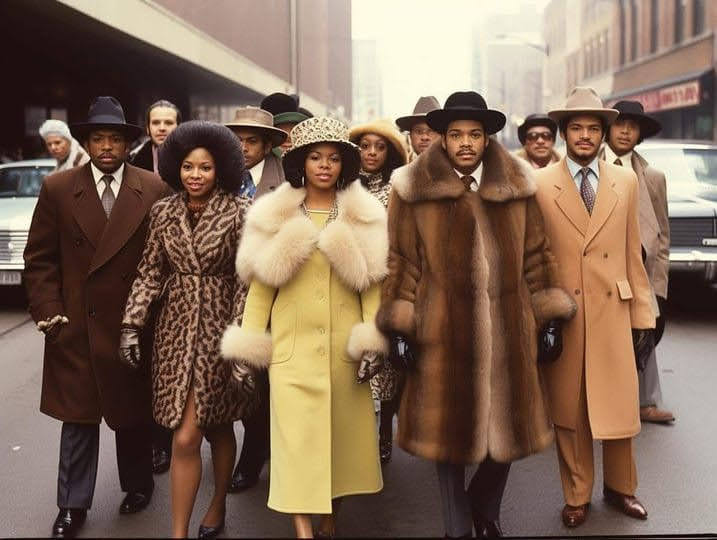
The Disturbing Truth Behind the Blue Vein Society and Gilded Age Colorism.

This photograph is the property of its respective owner. No copyright infringement intended.

During the late 19th and early 20th centuries, a shadow of division quietly crept into the African American community. While the chains of slavery had been legally broken, psychological and social hierarchies still persisted. One of the most insidious manifestations of this post-slavery prejudice was the emergence of the “Blue Vein Society”—a secretive social circle that privileged lighter-skinned African Americans whose veins were visible through their pale complexion (Williamson, 1980). This phenomenon mirrored the racial stratification of white America and revealed the deep scars of internalized racism within Black society.

The Blue Vein Societies were born during the Gilded Age—a period characterized by industrial growth, wealth disparity, and rampant racial segregation (Painter, 2010). African Americans who had achieved education and modest prosperity sought to establish social institutions mirroring those of the white elite. Yet, these institutions often excluded darker-skinned Blacks, reinforcing a caste system based not on merit or morality, but on melanin. The societies became symbols of self-preservation and self-hatred, embodying the psychological damage of colonial color hierarchies.

Membership in the Blue Vein Society was said to require that one’s veins be visible through the skin—a euphemism for having very light or near-white skin (Gatewood, 1990). In an era when proximity to whiteness determined access to privilege, these societies became a means for some African Americans to distance themselves from the stigma of “blackness.” This reflected how deeply colonial standards of beauty and worth had been internalized, even among the descendants of the enslaved.

The root of such divisions can be traced back to plantation hierarchies. During slavery, lighter-skinned individuals—often the mixed-race children of white masters and enslaved women—were given preferential treatment, often working indoors or receiving limited education (Hunter, 2005). This created a generational mindset that associated lightness with refinement and darkness with inferiority. After Emancipation, this mentality did not vanish; it evolved into social clubs, fraternities, sororities, and churches that subtly practiced “paper bag tests.”

The Blue Vein Societies were not unique but were part of a broader pattern of colorist exclusion. These groups, primarily found in northern cities like Philadelphia, Boston, and Chicago, sought to maintain a certain “respectability” that aligned with white middle-class norms (Higginbotham, 1993). Members prided themselves on “proper” speech, education, and decorum, but often at the expense of racial solidarity.

This internalized hierarchy represented what Frantz Fanon (1952) later described as “epidermalization”—the process by which colonized people internalize the oppressor’s value system, judging themselves and others through the lens of white supremacy. The Blue Vein Society was, in essence, a tragic manifestation of Fanon’s theory—a social structure that perpetuated colonial poison under the guise of Black advancement.

The Gilded Age, with its illusions of progress, masked deep racial inequities. While white elites flaunted wealth and luxury, Black Americans continued to battle economic and social exclusion. Within this struggle, colorism became both a weapon and a wound. For lighter-skinned African Americans, aligning with whiteness offered a semblance of protection, while for darker-skinned individuals, it deepened a sense of marginalization.

The existence of such societies also reveals how European standards of beauty became entrenched across the African diaspora. Straight hair, narrow noses, and fair skin were viewed as desirable attributes. These features were valorized not because they had intrinsic worth, but because they signified proximity to whiteness (Russell, Wilson, & Hall, 1992).

As a result, these beauty ideals infiltrated every sphere of life—from marriage prospects to employment opportunities. The Blue Vein Society not only dictated social status but also influenced the reproduction of colorism across generations. Parents encouraged their children to “marry light,” believing that each union could “improve the race.”

Such ideologies were devastating to racial unity. They fractured communities, creating an invisible caste system among a people already suffering under white supremacy. The irony was cruel: African Americans, who should have been bound by shared struggle and history, found themselves divided by shades of brown.

The Black elite of the Gilded Age—doctors, teachers, preachers, and business owners—often viewed lighter skin as a sign of civilization and intelligence. This belief was not simply vanity; it was a survival mechanism in a society that systematically devalued Blackness (Du Bois, 1903). However, this “double consciousness” produced a spiritual conflict—a yearning for white acceptance while simultaneously grappling with Black identity.

The Blue Vein Society became a metaphor for the fractured soul of post-slavery America. It represented the desperate attempt of a traumatized people to navigate a racist society while unknowingly perpetuating its ideologies. In this sense, colorism was both a symptom and a strategy—a misguided attempt to survive within a system designed to dehumanize.

By the early 20th century, these societies began to wane as new waves of Black consciousness arose. The Harlem Renaissance (1920s) celebrated Black beauty, art, and intellect in all shades. Writers like Langston Hughes and Zora Neale Hurston rejected colorist standards and affirmed the richness of dark skin as a symbol of resilience and creativity.

However, the legacy of the Blue Vein Society lingers. Even today, lighter-skinned privilege continues to shape opportunities in media, beauty, and relationships (Hall, 2010). The colonial poison that once divided plantation slaves now manifests in modern colorist bias within global Black communities.

Understanding the Blue Vein Society requires confronting the painful reality that oppression often breeds mimicry. In the words of Paulo Freire (1970), “The oppressed, instead of striving for liberation, tend to become oppressors of the oppressed.” Within this tragic paradox, we see how systemic racism reproduces itself internally.

It also reveals the long-term psychological toll of slavery and colonization. Generations of African Americans inherited a fractured sense of self—torn between pride in their Blackness and shame imposed by Eurocentric norms.

The Gilded Age’s obsession with refinement and class offered no true liberation. It merely repackaged racism within a Black context. The Blue Vein Society, with all its exclusivity, was not progress—it was assimilation.

Today, scholars and activists call for a reclaiming of identity that honors all shades of African heritage. True empowerment lies not in conforming to colonial aesthetics, but in dismantling them.

In reclaiming “Mama Africa’s legacy,” we must reject the toxic residues of colorism and remember that the measure of worth is not skin tone but spirit, integrity, and faith. The disturbing truth of the Blue Vein Society serves as both a warning and a lesson: healing begins when we confront the mirror of our history without denial.

Ultimately, the story of the Blue Vein Society is a cautionary tale—a reminder that colonialism’s greatest victory was not physical enslavement, but mental division. Only through truth, unity, and cultural reclamation can that legacy finally be undone.


References

Du Bois, W. E. B. (1903). The Souls of Black Folk. Chicago: A.C. McClurg.
Fanon, F. (1952). Black Skin, White Masks. Grove Press.
Freire, P. (1970). Pedagogy of the Oppressed. Herder and Herder.
Gatewood, W. B. (1990). Aristocrats of Color: The Black Elite, 1880–1920. University of Arkansas Press.
Hall, R. E. (2010). The Melanin Millennium: Skin Color as 21st Century International Discourse. Springer.
Higginbotham, E. B. (1993). Righteous Discontent: The Women’s Movement in the Black Baptist Church, 1880–1920. Harvard University Press.
Hunter, M. (2005). Race, Gender, and the Politics of Skin Tone. Routledge.
Painter, N. I. (2010). The History of White People. W. W. Norton.
Russell, K., Wilson, M., & Hall, R. (1992). The Color Complex: The Politics of Skin Color among African Americans. Harcourt Brace.
Williamson, J. (1980). New People: Miscegenation and Mulattoes in the United States. Louisiana State University Press.

From Pharaohs to Fathers: Rediscovering the Royal Bloodline of Black Men

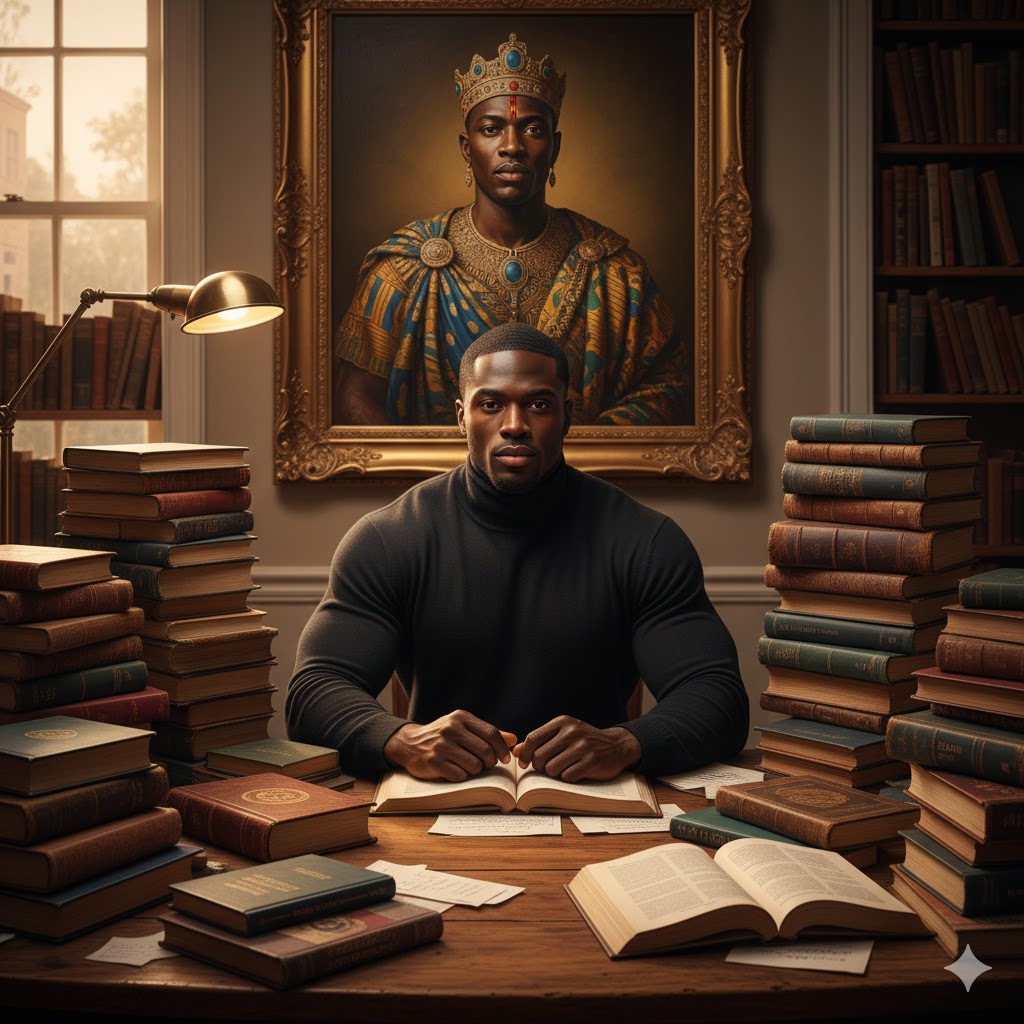
he history of Black men has often been obscured by narratives that diminish their dignity, leadership, and legacy. From the pharaohs of ancient Egypt to the contemporary challenges of fatherhood in the Black community, the journey of Black men reflects both a royal heritage and the struggles of displacement, oppression, and identity loss. Rediscovering this royal bloodline is essential for understanding self-worth, responsibility, and the sacred duty of leadership within the family and society.

The pharaohs of Egypt, many of whom were Black, exemplified the pinnacle of leadership, wisdom, and governance. Men like Pharaoh Thutmose III and Ramses II displayed strategic prowess, cultural sophistication, and spiritual devotion. Ancient texts and archeological evidence highlight their role not merely as rulers but as protectors of societal order and justice, echoing the biblical mandate for leaders to act as shepherds over their people (Exodus 18:21 KJV).

Beyond Egypt, the African continent bore kingdoms rich in culture, commerce, and governance. The Kingdom of Kush, Mali, and Songhai all boasted leaders who wielded influence, amassed wealth, and ensured the spiritual and physical welfare of their people. Mansa Musa of Mali, renowned for his pilgrimage to Mecca and his wealth, serves as a reminder of the grandeur and intellectual capacity of African leadership. These men were embodiments of divine appointment, carrying the responsibility of preserving their lineage and cultural legacy.

The spiritual dimension of Black manhood is highlighted throughout the Scriptures. In Genesis 15:5, God tells Abraham, “Look now toward heaven, and tell the stars, if thou be able to number them: and he said unto him, So shall thy seed be.” This promise underscores the importance of lineage and legacy. Black men, as descendants of the ancient Israelites (Deuteronomy 28), bear the weight of historical continuity, not merely as biological fathers but as spiritual stewards.

Fatherhood, historically, has been a sacred role—one that demands presence, guidance, and protection. The neglect or distortion of this role in modern society has had profound consequences on families and communities. Proverbs 22:6 (KJV) instructs, “Train up a child in the way he should go: and when he is old, he will not depart from it.” Black men, reclaiming their royal heritage, are called to embody this principle, ensuring that their children inherit not only biological life but wisdom, faith, and identity.

The erosion of Black male authority began during the transatlantic slave trade, when men were forcibly separated from families, stripped of agency, and dehumanized. This systematic assault disrupted generational knowledge transfer, creating cycles of trauma that persist today. Yet, understanding one’s history and royal lineage can catalyze restoration, turning pain into purpose.

Modern society often presents Black men with distorted images of masculinity—hyper-aggression, absenteeism, or materialism—as substitutes for the authentic power once held by pharaohs and kings. These portrayals ignore the spiritual and intellectual dimension of Black manhood. Romans 12:2 (KJV) counsels believers to “be not conformed to this world: but be ye transformed by the renewing of your mind,” highlighting the necessity of reclaiming identity through spiritual renewal rather than societal mimicry.

Education and cultural awareness are critical tools in this reclamation. By studying African history, biblical genealogies, and the narratives of ancient leaders, Black men can reconnect with their ancestral wisdom. Knowledge of one’s past is a pathway to empowerment; it transforms self-perception from one of victimhood to one of inherent value and purpose.

The role of community and mentorship is equally vital. Just as ancient kings surrounded themselves with advisors, scribes, and spiritual guides, contemporary Black men benefit from cultivating relationships that reinforce responsibility, moral integrity, and leadership. Proverbs 27:17 (KJV) states, “Iron sharpeneth iron; so a man sharpeneth the countenance of his friend,” illustrating the necessity of accountability and communal growth.

Spiritual discipline anchors the royal bloodline in divine purpose. Prayer, meditation, and adherence to God’s Word provide guidance for personal conduct and familial leadership. Psalm 112:1-2 (KJV) notes, “Blessed is the man that feareth the LORD, that delighteth greatly in his commandments. His seed shall be mighty upon earth: the generation of the upright shall be blessed,” connecting reverence for God with generational influence.

Reclaiming the identity of Black men as heirs to a royal lineage also necessitates confronting societal obstacles. Racism, systemic oppression, and cultural misrepresentation challenge the restoration of dignity. Nevertheless, as 2 Corinthians 4:8-9 (KJV) reminds, “We are troubled on every side, yet not distressed; we are perplexed, but not in despair; Persecuted, but not forsaken; cast down, but not destroyed,” emphasizing resilience amid adversity.

Economic empowerment, civic engagement, and cultural preservation complement spiritual and familial responsibilities. Pharaohs and African kings secured wealth not for selfish indulgence but for community stability and legacy preservation. Similarly, modern Black men are called to steward resources in ways that benefit families and communities, reinforcing the principle that leadership is inseparable from responsibility.

The restoration of the Black male identity also involves healing from historical trauma. Therapy, counseling, and intergenerational dialogue allow men to process inherited wounds and reclaim self-worth. Healing strengthens the capacity to lead effectively and maintain the integrity of the royal bloodline through future generations.

Media representation plays a significant role in shaping perception. By celebrating Black excellence in leadership, scholarship, arts, and family life, society can counteract narratives of deficiency. Highlighting positive examples reinforces the truth that Black men are heirs of kings and pharaohs, capable of guiding their families and communities with honor.

Faith communities provide critical support in this restoration. Churches, synagogues, and spiritual networks offer a space for mentorship, teaching, and the reinforcement of values aligned with divine purpose. Hebrews 13:7 (KJV) encourages reflection on past leaders: “Remember them which have the rule over you, who have spoken unto you the word of God: whose faith follow, considering the end of their conversation,” promoting continuity of moral and spiritual guidance.

Art, literature, and music serve as vehicles for affirming royal heritage. African-centered narratives, hip-hop with conscious messages, and literary works by Black authors transmit culture, history, and identity. These mediums counteract erasure and celebrate lineage, providing inspiration for the next generation of fathers and leaders.

Black fatherhood, when approached as a sacred duty, extends beyond provision. It encompasses emotional presence, moral instruction, spiritual mentorship, and legacy cultivation. By reclaiming their royal bloodline, men can model integrity, resilience, and wisdom, counteracting centuries of marginalization.

Education of the young is both a privilege and a responsibility. Teaching children about ancestral achievements, biblical promises, and the value of lineage fosters self-respect and ambition. Deuteronomy 6:6-7 (KJV) instructs, “And these words, which I command thee this day, shall be in thine heart: And thou shalt teach them diligently unto thy children,” reinforcing the importance of active participation in shaping future generations.

Ultimately, rediscovering the royal bloodline of Black men is a holistic endeavor. It integrates historical awareness, spiritual discipline, familial responsibility, community leadership, and personal integrity. This reclamation restores dignity, instills purpose, and honors God’s design for manhood and family.

By embracing the legacy of pharaohs and kings, Black men can navigate the modern world with confidence and authority. From Pharaohs to Fathers, the journey is one of transformation—reclaiming identity, fostering generational prosperity, and embodying the divine blueprint of leadership, protection, and legacy.


References

Exodus 18:21, KJV.
Genesis 15:5, KJV.
Deuteronomy 6:6-7, KJV.
Deuteronomy 28, KJV.
Proverbs 22:6, KJV.
Proverbs 27:17, KJV.
Psalm 112:1-2, KJV.
Romans 12:2, KJV.
2 Corinthians 4:8-9, KJV.
Hebrews 13:7, KJV.
Martin, M. (2019). The Royal Legacy of African Kings: Leadership and Lineage. New York: Academic Press.
Hilliard, A. G. (2000). The Maroons of Suriname: African Legacy in the Americas. London: Routledge.
Manning, P. (2007). Slavery and African Culture in the Americas: Restoring the Connection. Chapel Hill: University of North Carolina Press.

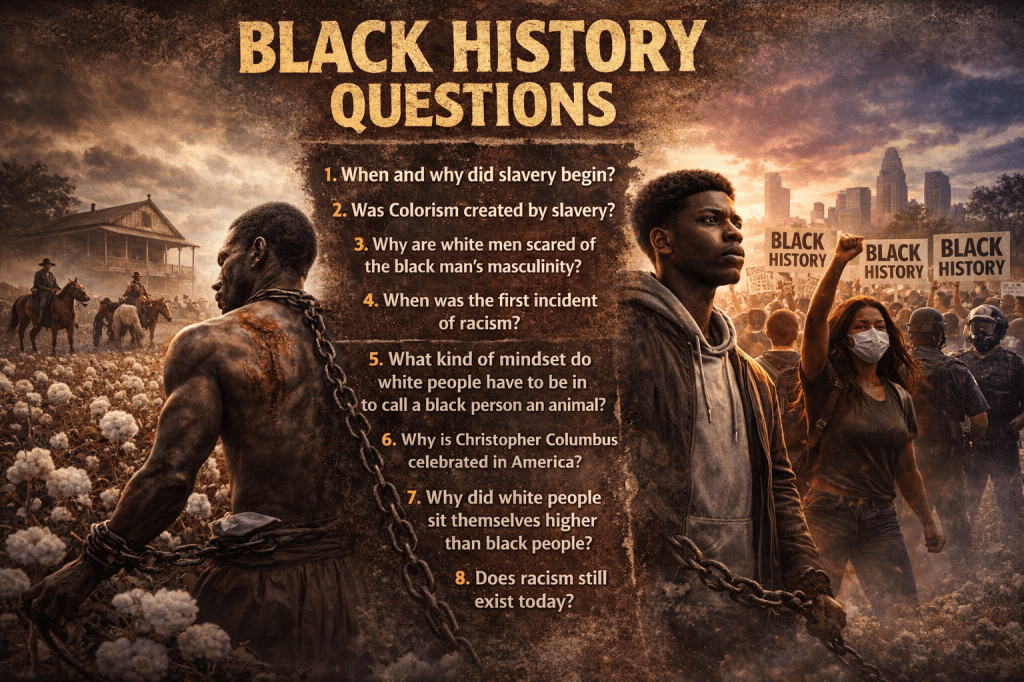
Black History Questions

Black history is the story of a people who were enslaved, resisted, survived, built civilizations, transformed nations, preserved faith, and continue to struggle for full human dignity in a world shaped by their forced labor and spiritual resilience.

Black history is not merely a record of past suffering, but a critical lens through which modern systems of power, identity, race, and inequality can be understood. To ask questions about Black history is to interrogate the foundations of Western civilization, colonial expansion, capitalism, and the psychological construction of race. These questions do not only concern Black people; they expose how the modern world was built and at whose expense.

One of the most fundamental questions is: When and why did slavery begin? While systems of servitude existed in ancient societies, racialized chattel slavery as practiced in the Americas began in the 15th century with European colonial expansion. This form of slavery was unique because it permanently dehumanized Africans based on race and transformed human beings into inheritable property for economic profit (Williams, 1944).

Slavery expanded primarily to meet the labor demands of European empires. The rise of sugar, cotton, and tobacco plantations required massive labor forces, and Africans were targeted because they were perceived as physically resilient, culturally unfamiliar, and politically vulnerable due to Africa’s lack of unified global military power at the time (Rodney, 1972).

Another important question is: Was colorism created by slavery? While color hierarchies existed in some societies before European contact, modern global colorism was systematized through slavery. Lighter-skinned enslaved people were often favored, given domestic roles, and granted marginal privileges, creating internal racial stratification that persists today (Hunter, 2007).

Colorism functioned as a psychological extension of white supremacy. It trained Black people to associate proximity to whiteness with value, safety, and humanity, while equating darker skin with inferiority and criminality. This internalized hierarchy continues to shape beauty standards, dating preferences, employment outcomes, and media representation.

A more controversial but critical question is: Why are white men historically threatened by Black male masculinity? Sociologically, Black masculinity has been framed as dangerous because it challenges white male dominance in systems built on racial and patriarchal hierarchy (hooks, 2004). The myth of the hypersexual, aggressive Black man was constructed to justify control, surveillance, and violence.

This fear was not biological but political. The Black male body symbolized physical strength, reproductive power, and resistance to domination. During slavery, lynching, and segregation, Black men were portrayed as sexual predators to justify their castration, imprisonment, and execution (Alexander, 2010).

Another core question is: When was the first incident of racism? Racism as a structured ideology emerged during European colonialism in the 15th and 16th centuries. Before this, societies practiced tribalism and ethnocentrism, but not race-based biological hierarchy (Smedley & Smedley, 2005).

Modern racism required pseudoscience. European thinkers classified humans into racial categories and assigned moral and intellectual traits to physical features. This gave slavery a “scientific” justification and made inequality appear natural rather than political.

This leads to the disturbing question: What kind of mindset allows someone to call a Black person an animal? Psychologically, this requires dehumanization. Dehumanization occurs when one group denies the full humanity of another, allowing cruelty without guilt (Fanon, 1967).

Colonial ideology trained Europeans to see Africans as subhuman, primitive, and savage. This worldview was necessary to resolve the moral contradiction of Christian societies committing mass enslavement, rape, and murder while claiming moral superiority.

Another major question is: Why is Christopher Columbus celebrated in America? Columbus represents the myth of “discovery,” which erases Indigenous genocide and African enslavement. He is celebrated not because of moral achievement, but because he symbolizes European expansion and empire (Zinn, 2003).

Columbus initiated systems of conquest, forced labor, sexual violence, and mass death across the Americas. His celebration reflects how dominant societies preserve heroic narratives while suppressing historical trauma.

This raises another question: Why did white people place themselves above Black people? The answer lies in power. Whiteness was invented as a social category to unify Europeans across class lines and justify colonial domination (Allen, 1994).

Race became a political tool. By creating a racial hierarchy, elites ensured that poor whites identified with their race rather than their economic exploitation, preserving systems of inequality through psychological allegiance.

A central modern question is: Does racism still exist today? Racism absolutely exists, but it has evolved. Instead of explicit segregation, it now operates through institutions such as housing, education, policing, healthcare, and the criminal justice system (Bonilla-Silva, 2018).

Racism is now coded into algorithms, zoning laws, school funding, and media narratives. It functions less through open hatred and more through structural inequality and systemic bias.

Another question is: Is racism individual or systemic? While individuals can be racist, racism is primarily systemic. It is embedded in laws, policies, and historical patterns that continue to produce unequal outcomes regardless of personal intent (Feagin, 2013).

Systemic racism means one does not need to “hate” Black people to benefit from racial privilege. The system itself distributes resources and opportunities unevenly.

A related question is: How did slavery shape capitalism? Capitalism was built on enslaved labor. The wealth of Europe and America emerged directly from plantation economies and global trade networks fueled by African exploitation (Beckert, 2014).

Banks, insurance companies, universities, and corporations all profited from slavery. Modern wealth inequality cannot be understood without this historical foundation.

Another question is: What role did religion play in slavery? Christianity was used to justify enslavement through distorted interpretations of scripture. Enslavers taught obedience, submission, and divine hierarchy to maintain control.

However, Black people reinterpreted Christianity as liberation theology. Biblical stories like Exodus became metaphors for escape, resistance, and divine justice (Cone, 1997).

This leads to: Why is Black faith so central to survival? The Black church provided psychological refuge, political organization, cultural continuity, and communal identity during centuries of oppression.

Faith became a tool not of submission, but of resistance. It allowed Black people to envision dignity beyond the material conditions imposed upon them.

Another key question is: How did Jim Crow replace slavery? After emancipation, systems like sharecropping, convict leasing, and segregation maintained economic control over Black labor (Blackmon, 2008).

Slavery did not end; it transformed. Control shifted from plantations to prisons, courts, and labor markets.

This raises: How does mass incarceration relate to slavery? The U.S. prison system disproportionately targets Black men, continuing patterns of forced labor and social control through criminalization (Alexander, 2010).

The 13th Amendment abolished slavery “except as punishment for a crime,” legally preserving coerced labor under incarceration.

Another question is: What is historical trauma? Historical trauma refers to psychological wounds passed across generations through collective memory, stress, and social conditions (Brave Heart, 2003).

Trauma is transmitted not only culturally, but biologically through epigenetics, shaping stress responses and health outcomes.

This leads to: Why do disparities persist in education and health? Black communities face underfunded schools, medical neglect, environmental racism, and economic exclusion rooted in historical policy decisions.

These disparities are not accidental; they are the predictable outcomes of centuries of structural inequality.

Another question is: What is the racial wealth gap? The average white family holds nearly ten times more wealth than the average Black family, primarily due to inheritance, home ownership, and historical exclusion from economic opportunity (Oliver & Shapiro, 2006).

Wealth is intergenerational. Slavery prevented Black people from accumulating capital for over 250 years.

This brings up: Are reparations justified? Reparations are not charity but restitution. They address stolen labor, land, and life through economic, educational, and institutional repair (Coates, 2014).

Reparations acknowledge that historical injustice created present inequality.

Another question is: How has the media shaped Black identity? The media often portrays Black people as criminals, athletes, entertainers, or victims, limiting the public imagination of Black humanity.

Representation affects self-esteem, opportunity, and public policy.

This leads to: What is internalized racism? Internalized racism occurs when marginalized people absorb negative stereotypes about themselves and their group.

It manifests through self-hatred, colorism, assimilation, and cultural erasure.

Another question is: What is Black excellence? Black excellence is not wealth or celebrity alone; it is resilience, creativity, spiritual depth, community building, and survival against impossible odds.

Black excellence exists in families, churches, classrooms, and neighborhoods, not just in elite spaces.

What is Black History Month, and why was it created?
Black History Month was created to recognize the historical contributions of Black people who were excluded from mainstream history. It began as “Negro History Week” in 1926 and became a month in 1976.

Who was Carter G. Woodson?
Carter G. Woodson was a historian who founded Black History Month. He believed Black people must know their history to understand their identity, power, and humanity.

What were the goals of the Civil Rights Movement?
To end legal segregation, secure voting rights, dismantle racial discrimination, and achieve full citizenship and equality under the law.

What was the Emancipation Proclamation?
An 1863 executive order by Abraham Lincoln declared enslaved people free in Confederate states. It weakened slavery but did not fully end it.

How did the transatlantic slave trade shape the modern world?
It built Western wealth, capitalism, and global racial hierarchies through forced African labor.


Major African empires?
Ghana, Mali, Songhai, Egypt, Kush, Axum—highly advanced in trade, education, architecture, and governance.

Who was Mansa Musa?The
Emperor of Mali, the wealthiest person in recorded history, whose empire controlled the global gold trade.

How did Africans govern themselves?
Through complex political systems: kingdoms, councils of elders, city-states, and federations.

African contributions to science?
Mathematics, astronomy, medicine, metallurgy, architecture, and writing systems.

African spirituality’s influence?
It shaped diasporic religions like Vodun, Santería, Candomblé, and Black Christianity.


Conditions of slavery?
Forced labor, family separation, sexual violence, no legal rights, and psychological terror.

Forms of resistance?
Revolts, escapes, sabotage, spirituals, maroon communities, and education.

Who were Turner, Tubman, and Vesey?
Leaders of armed rebellion, underground resistance, and liberation.

Religion’s role?
Provided hope, coded messages, and survival theology.

Impact on families?
Destroyed kinship structures but created resilient communal bonds.


What was Reconstruction?
Post-slavery rebuilding period, where Black people gained rights briefly.

Why did it fail?
White supremacist violence, political betrayal, economic sabotage.

Jim Crow laws?
Legal racial segregation and disenfranchisement.

Plessy v. Ferguson?
Legalized segregation under “separate but equal.”

Great Migration?
Mass Black movement from South to North for safety and jobs.

Lynching?
Racial terror to enforce white dominance.


MLK vs Malcolm X?
MLK: nonviolence and integration.
Malcolm: self-defense and Black nationalism.

Role of women?
Core organizers, strategists, fundraisers, and leaders.

Black Panther Party?
Revolutionary group focused on self-defense, food programs, and education.

COINTELPRO?
FBI program to destroy Black leadership.

Voting Rights Act?
Outlawed voter suppression.


Colorism?
Preference for lighter skin due to colonial beauty standards.

Double consciousness?
Living with both Black identity and white societal gaze.

Media representation?
Shapes self-worth and public perception.

Internalized racism?
Absorbing negative beliefs about one’s own race.

Hip-hop?
Political voice of marginalized youth.


Racial wealth gap?
Result of slavery, segregation, and housing discrimination.

Redlining?
Banks denied loans to Black neighborhoods.

Black Wall Street?
Prosperous Black business district destroyed by racial massacre.

Mass incarceration?
Modern extension of racial control.

School-to-prison pipeline?
Criminalization of Black youth through education system.


Black women’s role?
Foundational leaders in all justice movements.

Key figures?
Sojourner Truth, Ida B. Wells, Angela Davis, Fannie Lou Hamer.

Intersectionality?
Overlapping racism and sexism.

Black motherhood?
Historically exploited, now culturally politicized.

Church role?
Spiritual backbone and organizers.


U.S. vs global?
Different histories, same racial hierarchy.

Pan-Africanism?
Global Black unity.

Garvey and Nkrumah?
Leaders of Black nationalism and African independence.

Colonialism’s impact?
Economic extraction, political instability.

Haitian Revolution?
First successful slave revolution in history.


Christianity as oppression and liberation?
Used to justify slavery but also inspire resistance.

Black church’s role?
Political center and liberation hub.

Deuteronomy 28?
Parallels of exile, curses, and survival.

Spirituals?
Encoded escape routes and hope.

Liberation theology?
God sides with the oppressed.


Is racism individual or systemic?
Systemic—embedded in laws and institutions.

Reparations?
Moral and economic response to historical theft.

National identity?
America cannot face the truth without rewriting itself.

Historical trauma?
Passed through culture, biology, and psychology.

Post-Civil Rights freedom?
Legal rights without economic justice.


What would enslaved Africans say?
Remember us. Finish the fight.

Black excellence beyond wealth?
Spiritual integrity, family, and knowledge.

True liberation?
Mental, economic, and spiritual freedom.

Silenced history?
African civilizations, resistance leaders, and global revolutions.

Future generations?
Must know history to avoid repeating bondage.

Finally, the most profound question is: What does true liberation mean? Liberation is not simply legal equality, but psychological freedom, economic justice, spiritual healing, and cultural self-definition.

True freedom requires dismantling the systems that created racial hierarchy, not merely integrating into them.

Black history, therefore, is not a side narrative. It is the central story of modern civilization. To study Black history is to confront the moral foundations of the world itself.


References

Alexander, M. (2010). The New Jim Crow: Mass Incarceration in the Age of Colorblindness. New Press.

Allen, T. W. (1994). The Invention of the White Race. Verso.

Beckert, S. (2014). Empire of Cotton: A Global History. Knopf.

Blackmon, D. A. (2008). Slavery by Another Name. Anchor.

Bonilla-Silva, E. (2018). Racism Without Racists. Rowman & Littlefield.

Brave Heart, M. Y. H. (2003). The historical trauma response. Journal of Psychoactive Drugs, 35(1), 7–13.

Coates, T. (2014). The case for reparations. The Atlantic.

Cone, J. H. (1997). God of the Oppressed. Orbis Books.

Fanon, F. (1967). Black Skin, White Masks. Grove Press.

Feagin, J. (2013). Systemic Racism. Routledge.

hooks, b. (2004). We Real Cool: Black Men and Masculinity. Routledge.

Hunter, M. (2007). The persistent problem of colorism. Sociology Compass, 1(1), 237–254.

Oliver, M. L., & Shapiro, T. M. (2006). Black Wealth/White Wealth. Routledge.

Rodney, W. (1972). How Europe Underdeveloped Africa. Bogle-L’Ouverture.

Smedley, A., & Smedley, B. D. (2005). Race as biology is fiction. American Psychologist, 60(1), 16–26.

Williams, E. (1944). Capitalism and Slavery. University of North Carolina Press.

Zinn, H. (2003). A People’s History of the United States. HarperCollins.

Dilemma: Blackness

Photo by Wavy_ revolution on Pexels.com

The concept of Blackness embodies both divine purpose and societal marginalization. This paper explores the paradoxical experience of Black people: exalted by God yet diminished by the world. Drawing from Scripture, African historical scholarship, and sociocultural studies, the paper examines how Black identity has been misrepresented, appropriated, and simultaneously celebrated. The discussion addresses historical, psychological, and spiritual dimensions of Blackness, highlighting resilience, chosenness, and divine destiny.


Blackness represents more than a physical characteristic; it is a spiritual, cultural, and historical identity that has shaped civilizations, contributed to global progress, and faced systemic oppression. Historically, African civilizations such as Kemet, Mali, and Ethiopia exemplified innovation, scholarship, and governance, demonstrating Black excellence prior to European colonial interventions (Diop, 1974). Yet, contemporary social structures often fail to acknowledge this legacy, producing tension between inherent value and societal perception. This tension can be conceptualized as the “dilemma of Blackness”: exalted by God, yet diminished by human systems.


Divine Identity and Chosenness

Scripture affirms the divine purpose inherent in Black identity. “Ye are a chosen generation, a royal priesthood” (1 Peter 2:9, KJV). The Bible situates African peoples as integral to God’s plan, as evidenced in references to Cush, Ethiopia, and Egypt (Psalm 68:31, KJV; Acts 8:27, KJV). This divine chosenness establishes a spiritual framework for resilience, dignity, and legacy.


Historical Context of Oppression

Despite divine design, Black people have endured centuries of systemic oppression. Enslavement, colonialism, and institutionalized racism sought to erase cultural memory, distort identity, and suppress potential (Muhammad, 2010; Du Bois, 1903). Enslaved Africans were denied literacy, property, and familial autonomy, yet preserved spiritual practices and communal solidarity, demonstrating both resistance and divine fidelity (Fanon, 1967).


Cultural Appropriation and Misrepresentation

A critical facet of the dilemma is the simultaneous appropriation and marginalization of Black culture. Music, fashion, language, and spirituality have been widely adopted by global societies while the creators remain undervalued (Asante, 1988; hooks, 1995). This contradiction reinforces the paradoxical experience of Black identity: celebrated superficially but denied authentic acknowledgment.


Psychological Dimensions

The internalization of societal bias has produced psychological tension, as theorized by Du Bois (1903) in the concept of double consciousness. Black individuals navigate dual realities: embracing inherent worth while confronting misperceptions and prejudice. Psychological resilience emerges through community, faith, and cultural continuity, facilitating coping mechanisms in the face of persistent marginalization.


The Role of Faith

Faith has historically anchored Black identity. Spirituality and religion provided a lens for understanding suffering and endurance. The enslaved relied on faith-based songs, prayers, and scripture to sustain hope (“Let my people go”, Exodus 5:1, KJV). Contemporary Black communities continue to rely on biblical principles to navigate systemic inequities, affirming God as the ultimate arbiter of worth (Isaiah 54:17, KJV).


Resistance and Resilience

Blackness embodies resilience. Resistance has manifested through education, civil rights activism, entrepreneurship, and cultural preservation (Bell, 1992; Woodson, 1933). This resilience aligns with prophetic scripture: “No weapon that is formed against thee shall prosper” (Isaiah 54:17, KJV). Through trials, Black communities have transformed oppression into cultural, intellectual, and spiritual advancement.


Identity and Modern Society

In contemporary contexts, Black identity is often commodified. Social media, entertainment, and consumer culture showcase Black excellence aesthetically while minimizing structural support or historical context (Karenga, 2002). This commodification reflects a persistent societal discomfort with authentic Black power, echoing historical patterns of marginalization.


The Dilemma of Recognition

The tension between visibility and invisibility characterizes the dilemma. Black contributions are integral to global progress, yet Black people remain underrepresented in leadership, academia, and economic control (Muhammad, 2010; Asante, 1988). Recognition is partial, conditional, and often superficial, reinforcing the ongoing paradox.


The Spiritual Imperative

Spirituality provides a counter-narrative to worldly diminishment. By centering God as the source of identity, Black people navigate societal misunderstanding with divine perspective. “The steps of a good man are ordered by the Lord” (Psalm 37:23, KJV). Blackness is reframed not as a social liability but as a divine blessing and instrument of purpose.


Conclusion

Blackness represents both a historical challenge and a divine calling. The dilemma lies not in identity but in the world’s inability to reconcile with it. Black people embody resilience, creativity, and divinely ordained worth. The reconciliation of societal misperception with spiritual truth is ongoing. As the world struggles to comprehend Black excellence, faith and historical awareness provide the foundation for self-definition, legacy, and empowerment.


References

Asante, M. K. (1988). Afrocentricity: The theory of social change. African American Images.

Bell, D. (1992). Faces at the bottom of the well: The permanence of racism. Basic Books.

Diop, C. A. (1974). The African origin of civilization: Myth or reality. Lawrence Hill Books.

Du Bois, W. E. B. (1903). The souls of Black folk. A. C. McClurg & Co.

Fanon, F. (1967). Black skin, white masks. Grove Press.

hooks, b. (1995). Killing rage: Ending racism. Henry Holt and Co.

Karenga, M. (2002). Introduction to Black studies (3rd ed.). University of Sankore Press.

Muhammad, K. G. (2010). The condemnation of Blackness: Race, crime, and the making of modern urban America. Harvard University Press.

Woodson, C. G. (1933). The mis-education of the Negro. Associated Publishers.

Holy Bible, King James Version (KJV).

Dilemma: The Pros and Cons of Being Black in Society.

The experience of being Black in modern society is multifaceted, complex, and deeply influenced by historical, social, and systemic factors. While there are many sources of pride, cultural richness, and resilience within Black communities, these are often juxtaposed with enduring structural inequalities, societal prejudices, and personal dilemmas that affect daily life. Understanding this duality requires both historical context and contemporary analysis.

Historically, the Black experience has been marked by the transatlantic slave trade, colonization, and systemic oppression. These historical realities have shaped social structures, economic opportunities, and cultural perceptions in ways that continue to affect Black individuals today. Deuteronomy 28:43-44 (KJV) warns that disobedience leads to subjugation, which resonates metaphorically in discussions of generational oppression and societal marginalization.

One prominent challenge is systemic racism, which manifests in employment, housing, healthcare, and education. Despite decades of civil rights advancements, Black individuals frequently encounter barriers that limit social mobility. Studies show that Black applicants are less likely to be called for job interviews compared to White applicants with identical resumes (Bertrand & Mullainathan, 2004). Such disparities illustrate that merit alone does not eliminate discrimination.

Another societal challenge is criminal justice bias. Black communities are disproportionately targeted by law enforcement, resulting in higher arrest and incarceration rates. According to the NAACP, Black Americans are incarcerated at more than five times the rate of White Americans. This over-policing contributes to cycles of poverty, familial disruption, and community distrust, creating profound social dilemmas for Black families.

Education represents both a challenge and a source of opportunity. Historically underfunded schools in Black neighborhoods often provide fewer resources, which perpetuates educational inequities. Yet, Black students who overcome these obstacles demonstrate remarkable resilience and achievement, often excelling academically and culturally despite systemic disadvantages. Proverbs 22:6 (KJV) emphasizes the importance of early training and guidance, highlighting the potential power of nurturing and support.

Cultural pride and identity are undeniable pros of being Black. From music and art to fashion and language, Black culture has enriched global society. The spread of hip-hop, Afrobeat, and literature by Black authors showcases creativity and influence that transcends racial boundaries. This cultural visibility fosters empowerment and serves as a reminder of a rich ancestral heritage.

Community solidarity is another significant advantage. Black communities often demonstrate strong family bonds, church networks, and mutual support systems. Churches, historically central to Black life, provide spiritual guidance, social activism, and a sense of belonging. Psalm 133:1 (KJV) celebrates unity, which resonates with the communal cohesion often observed in Black societies.

Yet, colorism within the Black community itself presents internal dilemmas. Preference for lighter skin tones often mirrors societal biases inherited from colonialism and slavery. This internalized prejudice can affect self-esteem, social perception, and personal relationships, creating tension within communities that otherwise share cultural pride.

Representation in media is a double-edged sword. While more Black faces appear in entertainment, sports, and politics, the industry often emphasizes stereotypical roles, beauty standards, and tokenism. While visibility can inspire, it can also impose limiting expectations. The struggle for authentic portrayal remains ongoing, reflecting broader societal dilemmas.

Economic disparities remain a persistent challenge. The racial wealth gap shows that Black households typically hold a fraction of the assets of White households. This gap affects homeownership, business investment, and generational wealth accumulation. Proverbs 21:20 (KJV) highlights the wisdom of prudent resource management, a principle made more challenging under systemic economic disadvantage.

Health disparities compound these challenges. Black communities face higher rates of chronic illnesses, limited access to quality healthcare, and environmental health hazards. COVID-19, for example, disproportionately affected Black populations due to preexisting health inequities and socioeconomic vulnerabilities. These disparities illustrate the tangible consequences of systemic neglect.

Despite these challenges, Black excellence is increasingly recognized globally. Figures in politics, science, business, and the arts exemplify achievement that counters negative stereotypes. Celebrating such accomplishments fosters pride, aspiration, and resilience, reinforcing the potential for success even amid adversity.

Spiritual resilience is another advantage. Many Black individuals find strength and guidance through faith. Biblical teachings, such as Isaiah 40:31 (KJV), provide hope and endurance: “They that wait upon the Lord shall renew their strength.” Faith often serves as a stabilizing force amid societal challenges, offering both solace and motivation.

Black identity often fosters creativity, adaptability, and problem-solving skills. Navigating systemic obstacles requires ingenuity and resourcefulness, traits that are highly valuable in both personal and professional contexts. These adaptive skills can empower individuals to excel even in restrictive environments.

Interpersonal relationships are shaped by societal perceptions. While some Black individuals experience bias or exclusion, strong mentorship, networking, and cultural affinity can counteract isolation. These relationships foster opportunity, guidance, and resilience, highlighting the importance of social capital in overcoming systemic barriers.

Experiences of discrimination often instill a heightened awareness of social justice issues. Black individuals frequently become advocates for equity, education, and reform, contributing to broader societal change. This activist orientation demonstrates both the burden and the empowerment that can arise from lived experience.

However, microaggressions—subtle, often unintentional slights—permeate daily life. These can erode mental health, self-esteem, and overall well-being. Black individuals often must navigate these invisible challenges while maintaining composure, a psychological burden that underscores the complexity of societal interaction.

Cultural legacy provides a profound source of pride. Knowledge of African ancestry, historical resilience, and contributions to civilization empowers Black individuals to claim identity and dignity. Works by historians such as Cheikh Anta Diop and Molefi Kete Asante illuminate the rich heritage often overlooked by mainstream narratives.

The intersectionality of identity adds layers to the dilemma. Gender, sexuality, socioeconomic status, and nationality intersect with race to shape individual experiences. Black women, for instance, navigate compounded biases in both racial and gendered contexts, highlighting the multifaceted nature of oppression and resilience.

Finally, being Black in society is both a challenge and an opportunity. While systemic inequities, bias, and historical trauma present undeniable obstacles, the cultural richness, resilience, and global influence of Black communities demonstrate profound strength. Navigating this duality requires awareness, advocacy, and faith.

In conclusion, the dilemma of being Black in society reflects a tension between oppression and empowerment, struggle and resilience, exclusion and recognition. Understanding both the pros and cons encourages empathy, informed action, and a celebration of Black identity while confronting persistent inequities. As Psalm 34:18 (KJV) reminds, “The Lord is nigh unto them that are of a broken heart,” offering hope and justice amid societal challenges.

References

  • Bertrand, M., & Mullainathan, S. (2004). Are Emily and Greg more employable than Lakisha and Jamal? A field experiment on labor market discrimination. American Economic Review, 94(4), 991–1013.
  • NAACP. (2020). Criminal justice fact sheet.
  • Diop, C. A. (1974). The African origin of civilization: Myth or reality. Lawrence Hill & Company.
  • Asante, M. K. (1991). The Afrocentric idea. Temple University Press.
  • Holy Bible, King James Version.

Dilemma: Black Hair Discrimination

The Politics of Policing Black Identity

Angela Davis

“I had been looking at pictures of women who were free, and they were wearing their hair the way it grows out of their heads.”
(Davis, A. Y., Women, Race & Class, 1981)

Chimamanda Ngozi Adichie

“Hair is political. Hair is personal. Hair is identity.”
(Adichie, C. N., Americanah, 2013)

Bell Hooks

“Straightening our hair is one of the many ways we try to erase the reality of our Blackness.”
(Hooks, b., Black Looks: Race and Representation, 1992)

Lupita Nyong’o

“What I learned is that when the world tells you you’re not enough, you don’t have to believe it.”
(Nyong’o, L., Sulwe, 2019)

“Black hair is not a trend, a problem, or a phase—it is a living archive of survival, resistance, and ancestral memory.”

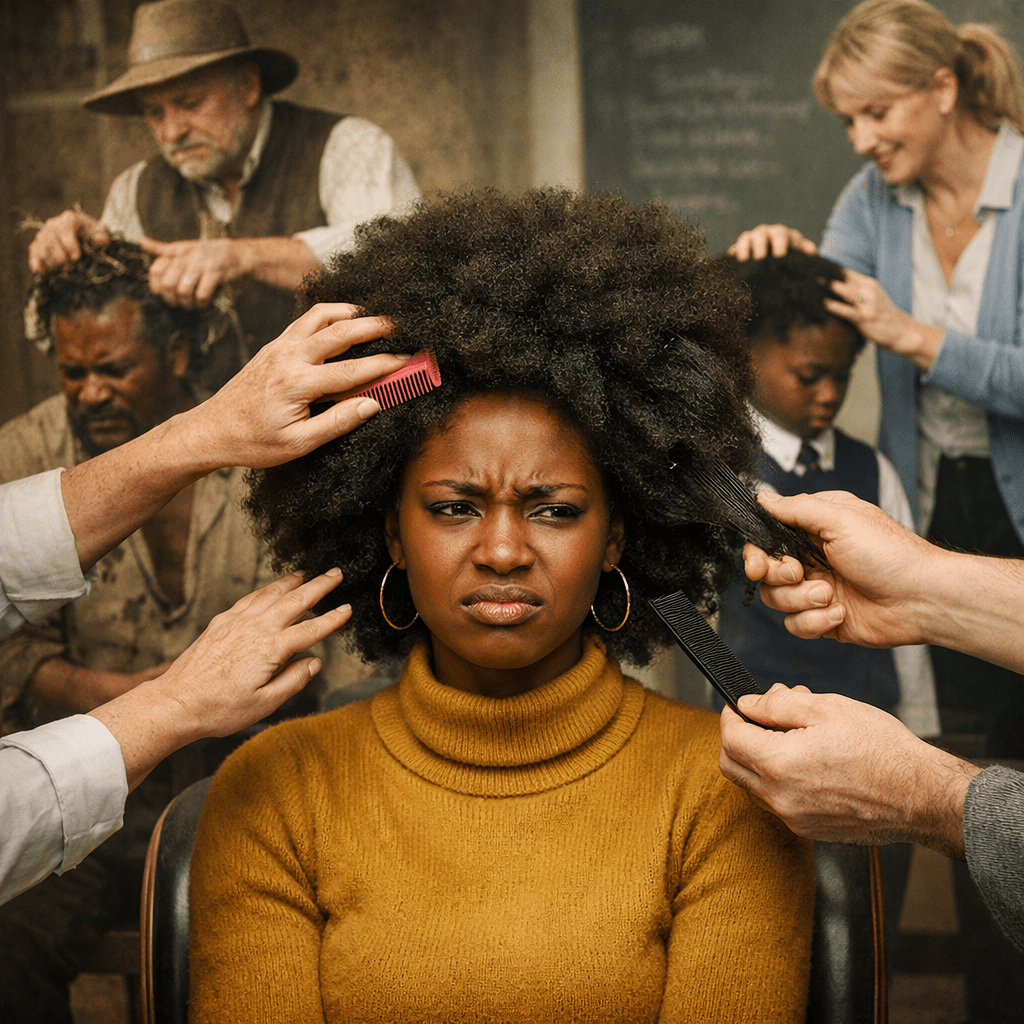
Black hair discrimination remains one of the most visible and normalized forms of racial bias in modern society. From classrooms to corporate offices, Black hair is disproportionately scrutinized, regulated, and punished under the guise of “professionalism,” “neatness,” or “dress code policies.” These standards are not neutral; they are rooted in Eurocentric ideals that define straight, loose, and non-textured hair as the default measure of beauty and respectability. As a result, Black people are often forced to alter their natural hair to gain acceptance, employment, or basic dignity.

In schools, Black children are suspended, sent home, or humiliated for wearing braids, locs, Afros, twists, or even natural curls. These disciplinary practices communicate a dangerous message: that Black identity itself is disruptive and unacceptable. When a child’s natural hair becomes grounds for punishment, the educational system participates in psychological harm that can shape self-esteem and identity formation for life. The classroom becomes not a place of learning, but a site of racial conditioning.

In the workplace, similar patterns persist. Black professionals are routinely told their hair is “unprofessional,” “distracting,” or “unkept,” even when it is clean, styled, and culturally appropriate. This forces many to chemically straighten their hair, wear wigs, or suppress their natural texture in order to be perceived as competent. Such pressures reveal how deeply white norms are embedded in institutional culture, where assimilation is often required for survival.

The hatred toward Black hair did not originate in modern offices or schools—it was cultivated during slavery. Enslaved Africans were stripped of their cultural grooming practices and taught to associate straight hair with proximity to whiteness and social advantage. Field laborers, who often had tightly coiled hair, were deemed inferior, while those with looser textures were privileged within the plantation hierarchy. Hair became a racial marker used to rank human worth.

This legacy did not disappear after emancipation. It evolved into colorism and texture discrimination, where straighter hair is still associated with beauty, intelligence, and professionalism, while kinky or coiled hair is labeled “nappy,” “bad,” or “ugly.” These terms, passed down through generations, reflect internalized racism—a psychological inheritance from white supremacy that continues to shape how Black people see themselves.

One of the most painful aspects of Black hair discrimination is that it is often reinforced within Black families themselves. Many Black parents, conditioned by their own experiences of rejection and survival, teach their children that their natural hair is something to be fixed, relaxed, or hidden. Phrases like “your hair is too nappy” or “you need a perm” are not harmless—they transmit shame and self-rejection at the most formative stages of identity.

This internalization is not accidental; it is a direct result of systemic oppression. When society consistently rewards whiteness and penalizes Blackness, marginalized communities may adopt those standards as coping mechanisms. However, survival strategies should not become permanent ideologies. Black parents must wake up to the reality that teaching children to hate their natural features only perpetuates the same system that devalues them.

White supremacy plays a central role in Black hair discrimination because it establishes whiteness as the universal standard of normality. Under this system, anything outside of European phenotypes is constructed as deviant, exotic, or inferior. Hair texture becomes political, not because Black people made it so, but because racism made Black bodies sites of control.

The concept of “professionalism” itself is racially coded. There is no scientific or moral basis for associating straight hair with competence or intelligence. These associations are cultural myths that developed within colonial and capitalist systems that centered white identity as the model citizen. Black hair challenges these myths simply by existing in its natural state.

Black hair has also been criminalized. From police stops to courtroom bias, Afro-textured hair has been associated with deviance and threat. Studies show that Black people with natural hairstyles are more likely to be perceived as aggressive, untrustworthy, or less intelligent, even when all other factors are controlled. This demonstrates how aesthetic bias becomes a mechanism of social exclusion.

The rise of movements like the Natural Hair Movement and the passing of the CROWN Act represent resistance against these injustices. These efforts aim to legally protect individuals from discrimination based on hair texture and style. However, legal reform alone cannot dismantle deeply ingrained psychological and cultural beliefs. Laws can change policies, but they cannot instantly heal internalized self-hatred.

True liberation requires a cultural shift in how Black beauty is defined and taught. Black hair must be reframed not as a problem to manage, but as a sacred inheritance—genetically rich, biologically diverse, and historically powerful. The same coils once mocked were used to map escape routes during slavery, braid seeds for survival, and encode communal identity.

Education plays a crucial role in this transformation. Schools must incorporate Black history and African aesthetics into curricula, not as side notes, but as central narratives. When children learn that their features have historical meaning and cultural value, they are less likely to internalize racist hierarchies imposed by society.

Media representation is equally important. For decades, Black beauty was only celebrated when it approximated whiteness—light skin, straight hair, narrow features. Today, although representation has expanded, Eurocentric beauty standards still dominate advertising, film, and fashion industries. The normalization of natural Black hair must move beyond trends and become structural.

The policing of Black hair is ultimately about control. It is about who gets to define beauty, respectability, and humanity. When institutions regulate how Black people wear their hair, they are not managing aesthetics—they are managing identity. Hair becomes a battlefield where cultural memory confronts colonial ideology.

Psychologically, hair discrimination contributes to identity fragmentation. Black individuals are often forced to perform different versions of themselves depending on context—natural at home, altered at work, cautious in public. This constant self-monitoring produces emotional fatigue and reinforces the idea that authenticity is unsafe.

Black parents, educators, and leaders have a responsibility to disrupt this cycle. Teaching children that their hair is “good” exactly as it grows is not a trivial affirmation—it is a radical act of resistance. It challenges centuries of propaganda designed to disconnect Black people from their bodies and ancestry.

Healing from hair discrimination requires both structural and spiritual work. Structurally, institutions must dismantle biased policies. Spiritually and psychologically, Black communities must unlearn the lie that proximity to whiteness equals worth. The reclamation of Black hair is inseparable from the reclamation of Black identity.

Black hair is not unprofessional, unclean, or undesirable. It is African. It is genetic. It is historical. It is political because oppression made it so. And until society confronts the racial logic behind its beauty standards, Black hair will continue to be policed—not because it is wrong, but because it refuses to conform to a system built on white supremacy.

Ultimately, the hatred of Black hair reflects a deeper hatred of Black existence. To love Black hair fully is to reject the entire hierarchy that ranks human value by proximity to Europe. In that sense, every Afro worn freely, every loc grown proudly, and every child taught to love their coils is an act of cultural revolution.


References

Banks, I. (2000). Hair matters: Beauty, power, and Black women’s consciousness. New York, NY: New York University Press.

Byrd, A. D., & Tharps, L. L. (2014). Hair story: Untangling the roots of Black hair in America. New York, NY: St. Martin’s Press.

Collins, P. H. (2004). Black sexual politics: African Americans, gender, and the new racism. New York, NY: Routledge.

Crenshaw, K. (1991). Mapping the margins: Intersectionality, identity politics, and violence against women of color. Stanford Law Review, 43(6), 1241–1299.

Johnson, T. R., & Bankhead, T. (2014). Hair it is: Examining the experiences of Black women with natural hair. Open Journal of Social Sciences, 2(1), 86–100.

Rooks, N. (1996). Hair raising: Beauty, culture, and African American women. New Brunswick, NJ: Rutgers University Press.

Rosette, A. S., & Dumas, T. L. (2007). The hair dilemma: Conformity versus authenticity. Journal of Applied Psychology, 92(6), 1601–1616.

Tate, S. A. (2009). Black beauty: Aesthetics, stylization, politics. Farnham, UK: Ashgate.

The CROWN Act. (2019). Creating a Respectful and Open World for Natural Hair. U.S. legislation on hair discrimination.

The Male Files: The Mind of Modern Man

The modern man exists within a complex psychological landscape shaped by rapid technological change, economic uncertainty, shifting gender norms, and persistent cultural expectations. From a psychological perspective, masculinity is no longer anchored solely in traditional roles such as provider, protector, and patriarch, but is increasingly negotiated through identity performance, emotional labor, and social perception. The mind of modern man is therefore characterized by tension between inherited masculine ideals and emerging models of selfhood that emphasize vulnerability, emotional intelligence, and relational competence (Levant & Pollack, 1995).

Historically, Western masculinity has been constructed through what psychologists term normative male alexithymia—the social conditioning of men to suppress emotional expression and equate vulnerability with weakness (Levant, 2001). This emotional restriction has produced long-term psychological consequences, including elevated rates of depression, anxiety, substance abuse, and suicide among men, particularly within marginalized communities (APA, 2018). For Black men, this psychological burden is compounded by racialized stressors such as discrimination, surveillance, and economic precarity, resulting in what scholars describe as racial battle fatigue (Smith et al., 2007).

Cognitively, modern men are increasingly shaped by digital environments. Social media, pornography, gaming culture, and algorithmic content have restructured male desire, attention, and self-concept. The constant exposure to hyper-idealized bodies, wealth displays, and sexualized imagery fosters comparative identity formation, often leading to body dysmorphia, performance anxiety, and distorted relational expectations (Twenge, 2017). The male psyche becomes fragmented between the authentic self and the curated digital persona—a phenomenon aligned with Goffman’s (1959) theory of social performance.

From a sociological standpoint, masculinity operates as a social script rather than a biological destiny. Connell’s (2005) theory of hegemonic masculinity explains how dominant cultural ideals of manhood—strength, stoicism, dominance, and sexual success—are maintained through institutions such as media, education, and the labor market. Men who fail to meet these ideals often experience identity dissonance, shame, and internalized inadequacy. This psychological strain is intensified in a late-capitalist society where worth is measured by productivity, status, and economic power.

Biblically, however, the mind of man is framed through a radically different epistemology. Scripture teaches that the human mind is shaped not merely by culture, but by spiritual orientation: “Be not conformed to this world: but be ye transformed by the renewing of your mind” (Romans 12:2, KJV). In this view, modern male anxiety is not only psychological but spiritual—rooted in disconnection from divine purpose and moral identity. The biblical man is called to cultivate wisdom, self-control, humility, and emotional discipline rather than ego, domination, or performance (Proverbs 4:23; Galatians 5:22–23).

Christ represents the ultimate cognitive and moral model of masculinity. Unlike the world’s archetype of man as conqueror, Christ embodies man as servant, healer, and sacrificial leader (Mark 10:45). His emotional expressiveness—grief, compassion, vulnerability—challenges modern masculinity’s emotional repression and offers a therapeutic vision of male psychology grounded in spiritual wholeness rather than social performance. Biblically, the healed male mind is not one that dominates others, but one that governs the self (Proverbs 16:32).

In synthesis, The Mind of Modern Man reveals that contemporary masculinity is in a state of psychological and spiritual transition. While the world conditions men to pursue power, validation, and status, both psychology and theology converge in affirming that true mental health arises from identity coherence, emotional integration, moral grounding, and purposeful living. The modern man’s greatest crisis is not the loss of authority, but the loss of meaning. His greatest restoration lies not in external success, but in internal alignment—between mind, soul, and divine intention.


References

American Psychological Association. (2018). Guidelines for psychological practice with boys and men. APA.

Connell, R. W. (2005). Masculinities (2nd ed.). University of California Press.

Goffman, E. (1959). The presentation of self in everyday life. Anchor Books.

Levant, R. F. (2001). Desperately seeking language: Understanding, assessing, and treating normative male alexithymia. Professional Psychology: Research and Practice, 32(2), 190–195. https://doi.org/10.1037/0735-7028.32.2.190

Levant, R. F., & Pollack, W. S. (1995). A new psychology of men. Basic Books.

Smith, W. A., Hung, M., & Franklin, J. D. (2007). Racial battle fatigue and the miseducation of Black men. Journal of Black Studies, 37(4), 551–578. https://doi.org/10.1177/0021934705281811

Twenge, J. M. (2017). iGen: Why today’s super-connected kids are growing up less rebellious, more tolerant, less happy—and completely unprepared for adulthood. Atria Books.

The Holy Bible, King James Version. (1611/2017). Cambridge University Press.

Black History Month: Trayvon Martin – A Life Stolen, A Nation Awakened.

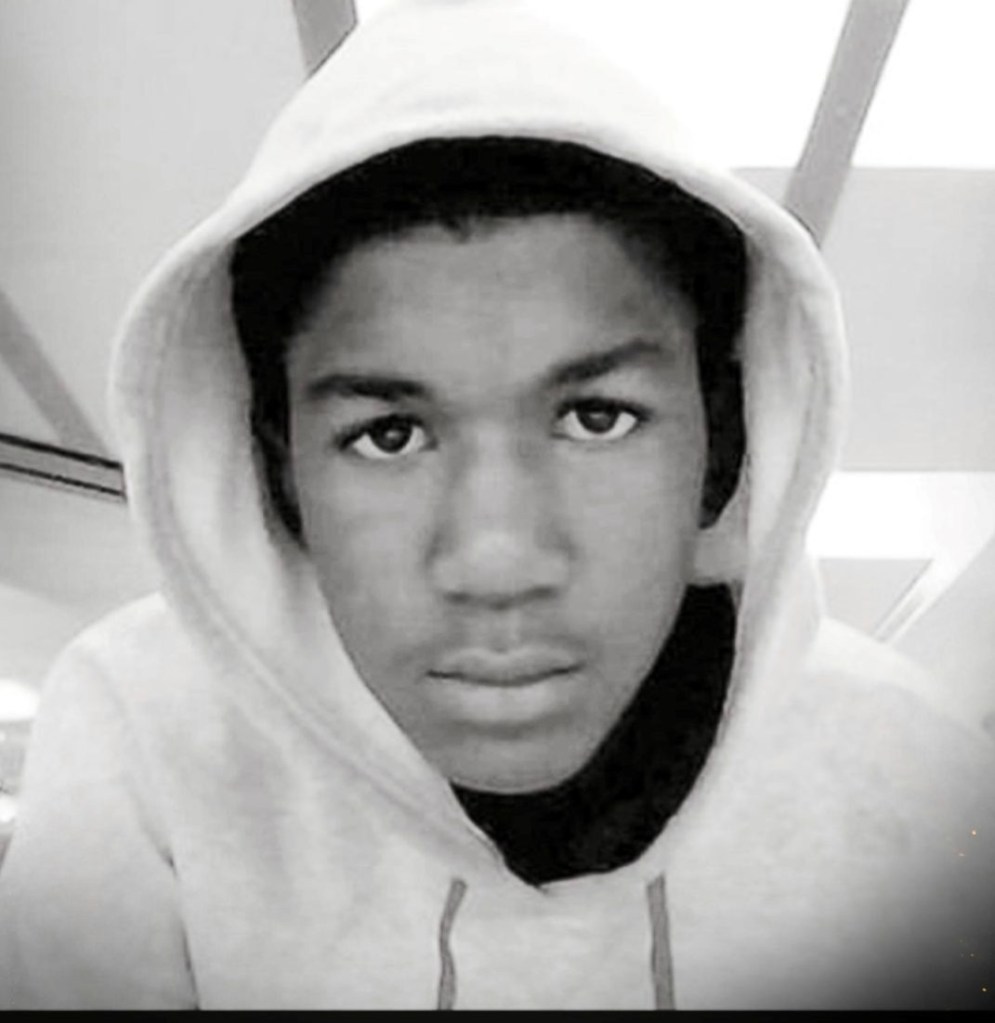
Trayvon Benjamin Martin was born on February 5, 1995, in Miami, Florida. He was a young African American teenager known by his family and friends as kind-hearted, playful, and full of potential. Trayvon enjoyed sports, especially football and basketball, and aspired to become an aviation mechanic. Like many young Black boys in America, his life reflected both ordinary youthful dreams and the inherited weight of navigating a society shaped by racial stereotypes and systemic inequality.


What Happened to Trayvon Martin

On the evening of February 26, 2012, Trayvon Martin was walking back to his father’s fiancée’s home in Sanford, Florida, after purchasing snacks from a convenience store. He was unarmed, wearing a hoodie, and talking on the phone with a friend. George Zimmerman, a neighborhood watch volunteer, reported Trayvon as “suspicious” to police, followed him despite being advised not to, and ultimately shot and killed him.

Zimmerman claimed self-defense and was later acquitted of all charges in 2013. The verdict sparked national and international outrage, as many saw the case as a reflection of how Black bodies are often criminalized, feared, and devalued within American society.


His Impact on the World

Though his life was tragically cut short at just 17 years old, Trayvon Martin’s death became a historical turning point. His name became a symbol of racial injustice and the dangerous consequences of racial profiling. The case helped ignite the modern civil rights movement known as Black Lives Matter, founded in 2013 by Alicia Garza, Patrisse Cullors, and Opal Tometi in response to Trayvon’s killing and Zimmerman’s acquittal.

Trayvon’s story forced America to confront uncomfortable truths about race, surveillance, fear, and the unequal application of justice. His hoodie became a global symbol of protest, representing how something as simple as clothing could become a perceived threat when worn by a Black male.


He Would Have Been 31 This Year

In 2026, Trayvon Martin would have been 31 years old. He could have been a husband, a father, a professional, or a leader in his community. Instead, his life exists in collective memory as a reminder of stolen futures and unrealized potential. His age now represents not just time passed, but the depth of loss — a life that never had the chance to fully begin.


Racism in America: A Broader Context

Trayvon Martin’s death cannot be understood in isolation. It exists within a long historical continuum of racial violence in America, from slavery and lynching to mass incarceration and police brutality. Sociologists describe this phenomenon as systemic racism — a structure in which laws, institutions, and cultural narratives disproportionately harm Black people.

The fear that led to Trayvon’s death reflects what scholars call implicit racial bias, where Black males are often subconsciously associated with danger, criminality, and threat. These biases influence everything from policing and surveillance to legal outcomes and media portrayals.

Trayvon’s case exposed how even in the absence of a crime, Black existence itself can be treated as suspicious. His death became a mirror held up to American society, forcing the nation to ask: Who is allowed to be innocent? Who is allowed to be safe? And whose life is presumed valuable?


Legacy

Trayvon Martin’s legacy is not defined by his death, but by the global movement that arose because of it. His name is spoken alongside others — Michael Brown, Tamir Rice, Sandra Bland, Breonna Taylor, George Floyd — as part of a growing historical archive of racial injustice.

Yet Trayvon remains unique: he was not arrested, not resisting, not committing a crime. He was simply walking home.

His life and death continue to educate, mobilize, and challenge the world to build a society where Black children can exist without fear, where justice is not selective, and where no family must bury a child for simply being seen as “out of place.”


References

Alexander, M. (2012). The new Jim Crow: Mass incarceration in the age of colorblindness. The New Press.

Bonilla-Silva, E. (2018). Racism without racists: Color-blind racism and the persistence of racial inequality in America (5th ed.). Rowman & Littlefield.

CBS News. (2013). George Zimmerman acquitted in Trayvon Martin case.

Garza, A. (2014). A herstory of the #BlackLivesMatter movement. The Feminist Wire.

Newman, K. S., & Cohen, A. (2014). Race, place, and building a youth movement: The case of Trayvon Martin. American Sociological Review, 79(3), 449–476.

Pew Research Center. (2016). On views of race and inequality, Blacks and Whites are worlds apart.

U.S. Department of Justice. (2013). Investigation of the Sanford Police Department’s handling of the Trayvon Martin shooting.

The Male Files: From Enslavement to Empowerment.

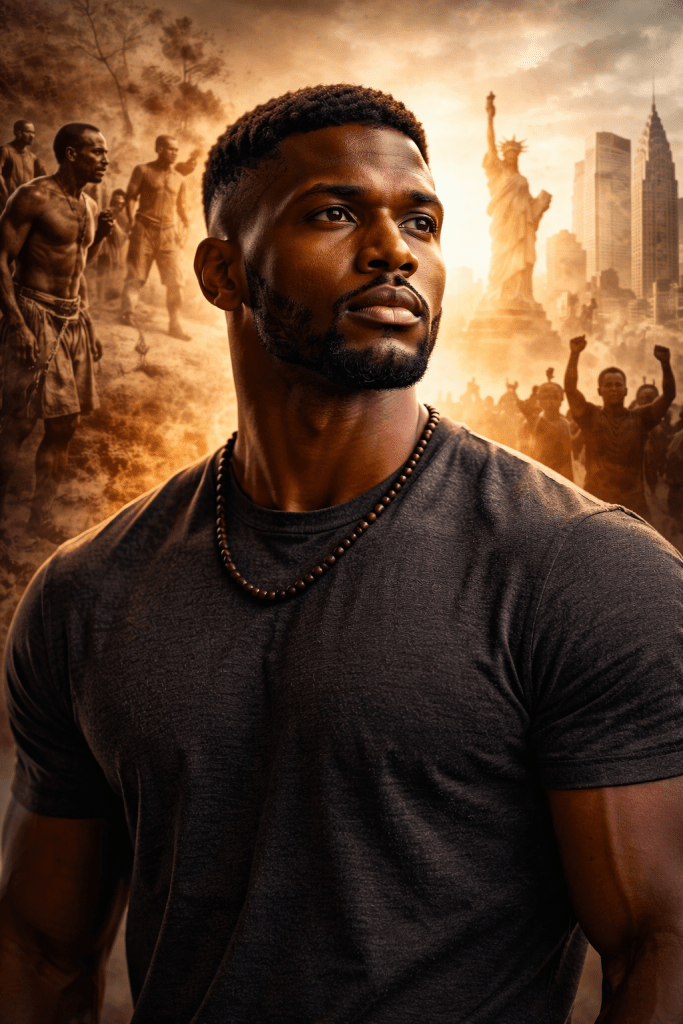
The psychological and spiritual formation of Black masculinity cannot be understood apart from the historical reality of enslavement and its ongoing consequences in modern society. Chattel slavery in the Americas was not merely an economic institution, but a comprehensive system of psychological domination designed to dismantle identity, authority, and manhood itself. Black men were systematically stripped of autonomy, kinship power, literacy, and bodily sovereignty, reducing their existence to labor and control rather than personhood created in the image of God (Patterson, 1982).

Biblically, this condition mirrors the logic of bondage found throughout Scripture. The enslavement of the Israelites in Egypt reveals how oppression functions to erase memory, dignity, and covenant identity (Exodus 1). Pharaoh’s strategy—forced labor, family disruption, and the targeting of male offspring—parallels the transatlantic slave system and its destruction of Black male lineage. Yet the biblical narrative affirms that bondage is never God’s final word: “I have surely seen the affliction of my people… and I am come down to deliver them” (Exodus 3:7–8, KJV).

Psychologically, slavery produced what sociologists describe as social death—the erasure of ancestry, honor, and recognized humanity (Patterson, 1982). For Black men, this resulted in intergenerational trauma expressed through emotional suppression, hypervigilance, fractured fatherhood, and conflicted identity formation. Contemporary trauma research confirms that the psychological effects of historical violence persist through epigenetic stress responses and inherited survival behaviors (DeGruy, 2005; Yehuda et al., 2016). These conditions continue to shape the mind of the modern Black man.

Post-emancipation systems such as Jim Crow, racial terror lynching, convict leasing, and mass incarceration functioned as re-enslavement mechanisms. As Alexander (2010) argues, the modern prison system operates as a racialized structure of social control, disproportionately criminalizing Black male existence. Sociologically, Black masculinity has been constructed as threatening, hypersexual, and deviant—narratives engineered to justify surveillance, economic exclusion, and institutional neglect. These scripts shape how Black men see themselves and how society perceives them.

At the same time, the modern man faces a broader psychological crisis. Western masculinity is increasingly defined by emotional suppression, performative strength, sexual conquest, and economic dominance—what Connell (2005) terms hegemonic masculinity. Psychological studies show that these norms contribute to high rates of depression, anxiety, substance abuse, and suicide among men (APA, 2018). For Black men, these struggles are intensified by racial stress, identity fragmentation, and what scholars call racial battle fatigue (Smith et al., 2007).

Digitally, the modern male psyche is further shaped by social media, pornography, and hyper-visual culture. Men are conditioned to measure self-worth through appearance, sexual access, and economic performance. This creates a fragmented identity between the authentic self and the performed self—a phenomenon aligned with Goffman’s (1959) theory of social performance. The mind becomes overstimulated but undernourished, informed by algorithms rather than wisdom.

Biblically, however, the mind of man is framed through spiritual orientation rather than cultural conditioning. Scripture teaches that psychological transformation is inseparable from spiritual renewal: “Be not conformed to this world: but be ye transformed by the renewing of your mind” (Romans 12:2, KJV). The biblical man is called to cultivate wisdom, emotional discipline, humility, and moral clarity rather than dominance or ego (Proverbs 4:23; Galatians 5:22–23).

Christ offers the ultimate model of liberated masculinity. He rejects the world’s archetype of man as conqueror and instead embodies man as servant, healer, and sacrificial leader (Mark 10:45). His emotional expressiveness—grief, compassion, vulnerability—directly challenges modern masculinity’s emotional repression. In Christ, power is redefined as self-mastery, and leadership as moral responsibility: “He that ruleth his spirit is better than he that taketh a city” (Proverbs 16:32).

Empowerment, therefore, must be understood as both psychological and spiritual restoration. Psychologically, it involves reclaiming agency, emotional literacy, and coherent identity beyond imposed stereotypes (hooks, 2004). Spiritually, it requires deliverance from internalized oppression and alignment with divine purpose: “The righteous are bold as a lion” (Proverbs 28:1). Empowerment is not domination over others, but governance of the self.

Ultimately, From Enslavement to Empowerment – The Mind of Modern Man argues that Black male liberation is an unfinished sacred project. It requires historical truth, trauma healing, spiritual renewal, and structural justice. The journey from chains to consciousness, from captivity to clarity, is not merely political—it is theological and psychological. The modern Black man’s crisis is not a lack of strength, but a loss of meaning. His restoration lies not in external validation, but in internal alignment—between history, mind, soul, and God.


References

Alexander, M. (2010). The new Jim Crow: Mass incarceration in the age of colorblindness. The New Press.

American Psychological Association. (2018). Guidelines for psychological practice with boys and men. APA.

Connell, R. W. (2005). Masculinities (2nd ed.). University of California Press.

DeGruy, J. (2005). Post traumatic slave syndrome: America’s legacy of enduring injury and healing. Uptone Press.

Goffman, E. (1959). The presentation of self in everyday life. Anchor Books.

hooks, b. (2004). We real cool: Black men and masculinity. Routledge.

Patterson, O. (1982). Slavery and social death: A comparative study. Harvard University Press.

Smith, W. A., Hung, M., & Franklin, J. D. (2007). Racial battle fatigue and the miseducation of Black men. Journal of Black Studies, 37(4), 551–578.

Yehuda, R., Daskalakis, N. P., Bierer, L. M., Bader, H. N., Klengel, T., Holsboer, F., & Binder, E. B. (2016). Holocaust exposure induced intergenerational effects on FKBP5 methylation. Biological Psychiatry, 80(5), 372–380.

The Holy Bible, King James Version. (1611/2017). Cambridge University Press.

We Are the Story America Cannot Edit

Black history in America has always been more than a chapter—it is the spine of the national narrative. Yet for centuries, this story has been edited, erased, softened, or rewritten to soothe the conscience of a nation deeply shaped by the labor, blood, and brilliance of a people it tried to silence. Still, despite redactions and revisions, the truth endures: we are the story America cannot edit.

This story begins long before ships touched the Atlantic coast. It begins in African kingdoms where art, astronomy, architecture, and theology flourished. The brilliance of the ancestors did not begin in bondage; it began in royalty, innovation, and legacy. No revisionist textbook can erase the origins of a people whose civilizations helped advance global knowledge.

When the Middle Passage shattered families and scattered bodies across the ocean, America inherited a people it tried to dehumanize but could not destroy. The nation wrote laws to silence Black voices, but those voices survived. They survived in spirituals, in whispered prayers, in maroon communities, in the coded footsteps of escape routes carved in the night. The ink of this story was not blacklisted—it was carved in courage.

America tried to enslave people into subservience, but instead they became prophets, builders, warriors, and liberators. Harriet Tubman turned the Underground Railroad into a living testament of freedom. Frederick Douglass transformed literacy into a revolution. Sojourner Truth took the podium and shook the conscience of a country pretending not to hear her. These names refuse erasure.

The Civil War and Reconstruction wrote a brief chapter of possibility—Black senators, congressmen, teachers, and landowners rose swiftly. But America attempted another revision: Jim Crow. Segregation, lynching, and systemic disenfranchisement were designed to rewrite the Black story into one of subjugation. Yet the people refused the edits. Every protest, every church meeting, every organizing circle was a declaration that the pen of oppression could not overrule the pen of destiny.

The Civil Rights Movement authored a new wave of transformation. Martin Luther King Jr.’s dream, Malcolm X’s fire, Rosa Parks’ quiet firmness, and Fannie Lou Hamer’s thunderous truth-telling exposed the nation’s moral contradictions. Their lives demonstrate that Black people did not just endure history—they shaped it. They re-inked the American narrative with justice.

America has long tried to reduce Black identity to struggle, but Black culture refuses to be footnoted. Jazz, gospel, blues, soul, hip-hop, theatre, literature, and film—all are chapters written in brilliance, not brokenness. These art forms do not ask permission; they testify. They preserve memory. They uplift. They correct the historical record by embodying the power and creativity of a people the nation tried to underestimate.

Black resilience has always been inconvenient for America’s preferred storyline. It challenges myths of meritocracy, exposes the violence of past and present systems, and proves that progress was never given—only won. This is why so many attempts have been made to censor, dilute, or distort Black history. Yet truth has a way of resurfacing, even through the cracks of suppression.

The story America cannot edit also includes everyday heroes—grandmothers who kept families together, fathers who worked two and three jobs, children who dared to learn in schools that did not want them, freedom fighters whose names never made headlines, teachers who planted dreams in young minds, and church mothers who prayed communities through storms. These lives are sacred scripture for a people who built resilience into their DNA.

Even today, as political forces attempt to ban books, restrict curriculum, or sanitize the past, the story resists. Black scholars, artists, pastors, activists, and youth are documenting the truth in new ways—through digital archives, spoken word, classrooms, podcasts, and movements for justice. The story is not just preserved; it is expanding.

We are the story America cannot edit because our existence defies the narrative of inferiority that once dominated the national imagination. Every achievement in science, politics, sports, education, business, and ministry disproves the lies that once served as historical “facts.” Black excellence is not an anomaly—it is a continuation of ancestral greatness.

We are the story America cannot edit because the evidence is everywhere. It is in the economic foundation Black labor built. It is in the culture Black creativity shaped. It is in the democracy Black activism strengthened. It is in the global influence Black innovation commands. America has benefitted too deeply from Black genius to pretend it did not exist.

Our story remains uneditable because it is woven into Scripture as well as history. From Cush to Ethiopia, from the Queen of Sheba to the early church, the Bible itself records the presence, power, and purpose of African-descended people. The sacred text affirms what oppression tried to deny: that Blackness has always been part of God’s design and destiny.

We are the story America cannot edit because the truth is living, breathing, and continually unfolding. It shows up in every generation—Black children with brilliance in their eyes, Black elders carrying the wisdom of survivors, Black communities redefining strength, joy, and possibility.

Ultimately, America cannot edit what God Himself has preserved. The story of Black people is marked by divine protection, ancestral strength, and spiritual authority. It is a story of survival, transformation, and triumph. It is a story that exposes injustice but also reveals hope. It is a story bigger than slavery, bigger than segregation, bigger than racism.

We are the story America cannot edit because the truth is too powerful, too resilient, too sacred to be silenced. And as long as we continue to speak it, write it, live it, and teach it—the story will remain unaltered, unstoppable, and unforgettable.

References:
Exodus 1–3 (KJV); Psalm 68:31; Acts 8:27–39; Franklin, J. H. From Slavery to Freedom; Gates, H. L. The African Americans: Many Rivers to Cross; Hannah-Jones, N. The 1619 Project; Litwack, L. Trouble in Mind; Stevenson, B. Just Mercy; Anderson, C. White Rage; Raboteau, A. Slave Religion.