Not for boyfriends. Not for situationships. Not for potential. For the covenant.
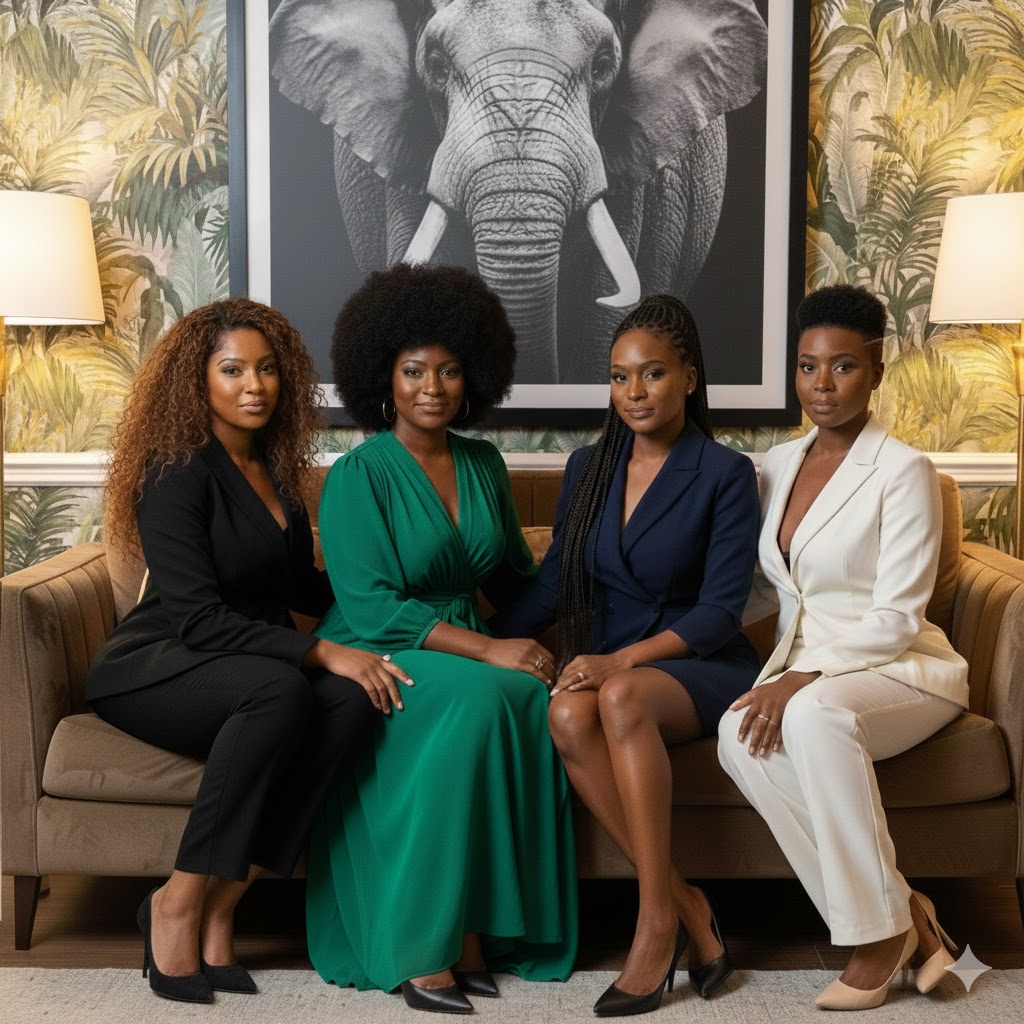
🌸 Ladies, Before We Begin… 🌸
Beloved sisters, this conversation is not about being loyal to any man who smiles at you, texts you good morning, or gives you a little attention. The world has romanticized being a “ride or die” for situationships, unproven men, and temporary connections — but Kingdom women do not give wife devotion to boyfriend energy.
This lesson is for covenant, not confusion. For wives, and for women preparing for the man God has proven, not the man you’re hoping will change.
We are speaking to the woman who understands that loyalty belongs where there is leadership, vision, and God’s covering. To the woman who knows that her heart, her strength, and her devotion are worthy of a man who honors God, honors her, and chooses her publicly and spiritually.
“Every wise woman buildeth her house…” — Proverbs 14:1 (KJV)
We do not build for men still living like boys. We do not sacrifice for men who do not submit to God. We do not pour into a vessel that refuses to be filled by the Lord.
Your loyalty is royal. Your devotion is divine. Your heart is holy ground.
And the one who receives that kind of love must be a man who has shown consistent character, spiritual maturity, and covenant intention.
This is not about being gullible — it is about being God-led. Not desperate — but discerning. Not a placeholder — but a wife in purpose and preparation.
So as we enter this conversation, remember:
You are not proving yourself to a man. You are preparing yourself for God’s promise.
Let’s talk about what it truly means to stand by a King, and to walk in the grace, wisdom, and strength of a help meet designed by Heaven.
There is a narrative in today’s culture that glorifies being a “ride or die” for any man who shows a little attention. Social media tells women to hold down men who have not proven character, commitment, or covenant. But beloved, God never called daughters of Zion to pour out loyalty, sacrifice, and devotion on untested vessels or unsubmitted men.
This lesson is not for girlfriend status. This is for wives and women preparing for God-ordained marriage, not for anyone entertaining random relationships or men who do not carry the spirit of leadership, responsibility, and faithfulness.
Before you ride, he must have vision. Before you die to self, he must have died to flesh. Before you support, he must be submitted to God.
A “ride or die” spirit is righteous when it is covenant-based — when a man has proven himself trustworthy, God-fearing, and aligned with Kingdom purpose. This kind of loyalty belongs inside marriage, not the wilderness of modern dating.
“Whoso findeth a wife findeth a good thing, and obtaineth favour of the LORD.” — Proverbs 18:22 (KJV)
A wife is not “auditioned,” “tested,” or “trial-run.” She is chosen, covered, and covenanted.
💕 A True “Ride or Die” Wife in the Kingdom
She is not desperate — she is discerning. She does not chase — she is chosen. She does not break herself — she builds her home.
She stands by her husband because he stands by God.
“Two are better than one… For if they fall, the one will lift up his fellow.” — Ecclesiastes 4:9-10 (KJV)
A Kingdom “ride or die” woman is:
✨ His help meet (Genesis 2:18) ✨ His peace, not his battle (Proverbs 31:26) ✨ His rest, not his restlessness (Proverbs 12:4) ✨ His comfort, not his chaos (Titus 2:4-5) ✨ His support, not his stress (1 Peter 3:1-2)
When she rides, she rides in wisdom, faith, and loyalty. When she sacrifices, it is for covenant, not confusion. When she submits, she does so under God’s structure, not man’s ego.
“Wives, submit yourselves unto your own husbands, as unto the Lord.” — Ephesians 5:22 (KJV)
Submission is safe when he submits to God first.
👑 Kingdom “Ride or Die” Looks Like:
Praying for him
Protecting his name
Building him up, not breaking him down
Standing with him in spiritual battles
Loving him with patience and wisdom
Being his rest, warmth, and covering
This is not slavery — it is strength in submission and honor. This is not weakness — it is divine womanhood.
Remember beloved — loyalty is holy when it is covenant, not chaos.
“The heart of her husband doth safely trust in her…” — Proverbs 31:11 (KJV)
A true “ride or die” woman is not reckless. She is rooted in God, grounded in peace, and crowned with grace.
🌺 Reflection Questions
Am I preparing to be a wife or performing for a boyfriend?
Do I give loyalty to men who have not earned leadership?
Does the man I envision supporting submit to Christ?
Am I building for covenant or clinging to potential?
Understanding men is a complex endeavor, but it is essential for building healthy relationships. Men’s thoughts, desires, and fears are often guided by both biological instincts and emotional experiences. By studying these patterns, women can better navigate relationships and understand why men behave the way they do.
One of the first things to understand is why many men are attracted to physical beauty. Scripture acknowledges the human tendency to notice outward appearances, but it also warns against valuing it above the heart. “Favor is deceitful, and beauty is vain: but a woman that feareth the Lord, she shall be praised” (Proverbs 31:30, KJV). Men are naturally visual beings, but God calls them to pursue character as well as appearance.
Biologically, men are wired to respond to visual stimuli. Evolutionary psychology suggests that physical attraction signals fertility and health, which historically increased the chances of reproduction. This does not excuse superficiality, but it explains why initial attraction is often visual.
Although men should be providers, men often seek 50/50 relationships, desiring balance in effort, respect, and contribution. They want partners who will not only love them but also complement them spiritually, emotionally, and practically. “Two are better than one; because they have a good reward for their labour” (Ecclesiastes 4:9, KJV). Men value equality in partnership because it allows shared growth and stability.
The secrets of men often revolve around unspoken needs. Many struggle with expressing vulnerability, fearing judgment or rejection. Proverbs 20:5 (KJV) says, “Counsel in the heart of man is like deep water; but a man of understanding will draw it out.” Men often hide fears, hurts, and insecurities deep inside, and it takes patience and wisdom to uncover them.
Money is another sensitive subject for men. Many feel pressure to provide and fear failure if they cannot meet financial expectations. 1 Timothy 5:8 (KJV) reminds us, “But if any provide not for his own, and specially for those of his own house, he hath denied the faith, and is worse than an infidel.” This responsibility can create anxiety and affect relational dynamics.
Sex is also central in male psychology. Men often struggle with strong sexual desires, and societal pressures have conditioned them to expect instant gratification. While waiting for marriage is biblically encouraged, “Flee fornication. Every sin that a man doeth is without the body; but he that committeth fornication sinneth against his own body” (1 Corinthians 6:18, KJV), many men wrestle with self-control due to both hormones and cultural influences.
Many men fear vulnerability in love. Opening up about emotions, past trauma, or fears of inadequacy can feel risky. Yet, Proverbs 27:6 (KJV) teaches, “Faithful are the wounds of a friend; but the kisses of an enemy are deceitful.” True intimacy requires honesty, even when it is uncomfortable or risky.
Insecurities about appearance are also common. Men are often silent about their struggles with weight, hair loss, or other physical concerns. This silence can be misinterpreted as confidence, but beneath it may lie fear of rejection or inadequacy. Psalm 139:14 (KJV) affirms, “I will praise thee; for I am fearfully and wonderfully made.” God reminds men and women alike of inherent worth.
Fear influences male behavior in relationships. Some men fear emotional dependency, others fear betrayal, and some fear failure. These fears can cause withdrawal, defensiveness, or even aggression. “The heart is deceitful above all things, and desperately wicked: who can know it?” (Jeremiah 17:9, KJV). Men, like women, must confront these fears to love fully.
Men’s past hurts often shape present interactions. Childhood trauma, broken relationships, or rejection can create defensive patterns. Ephesians 4:31–32 (KJV) instructs, “Let all bitterness, and wrath, and anger, and clamor, and evil speaking, be put away from you, with all malice: And be ye kind one to another, tenderhearted, forgiving one another, even as God for Christ’s sake hath forgiven you.” Healing past wounds is critical for relational success.
Commitment can feel risky because vulnerability exposes men to emotional pain. Proverbs 22:3 (KJV) says, “A prudent man foreseeth the evil, and hideth himself; but the simple pass on, and are punished.” Men may hesitate to commit fully until trust is established.
Men’s desire for beauty often intersects with societal expectations. Media, peers, and culture emphasize physical perfection, which reinforces surface-level attraction. Yet, Song of Solomon 4:7 (KJV) highlights spiritual and emotional beauty: “Thou art all fair, my love; there is no spot in thee.” This reminds men that true beauty encompasses more than the exterior.
Financial concerns impact male decision-making in relationships. Men may delay commitment or engagement until they feel capable of providing, even if their partner is ready. Proverbs 13:11 (KJV) teaches, “Wealth gotten by vanity shall be diminished: but he that gathereth by labour shall increase.” Men often equate financial stability with relational readiness.
Sexual desire can conflict with spiritual principles. Men may struggle with patience in waiting for marital intimacy. 1 Thessalonians 4:3–5 (KJV) emphasizes, “This is the will of God, even your sanctification, that ye should abstain from fornication; That every one of you should know how to possess his vessel in sanctification and honour; Not in the lust of concupiscence, even as the Gentiles which know not God.” Spiritual discipline is essential for navigating this tension.
Men often compartmentalize their emotions due to fear of appearing weak. This behavior may be misunderstood by partners as disinterest or detachment. Ecclesiastes 7:10 (KJV) advises, “Say not thou, What is the cause that the former days were better than these? for thou dost not enquire wisely concerning this.” Understanding requires patience and empathy.
Trust is a central concern for men. Betrayal or dishonesty in prior relationships can create internal walls. Proverbs 3:5–6 (KJV) encourages reliance on God: “Trust in the LORD with all thine heart; and lean not unto thine own understanding. In all thy ways acknowledge him, and he shall direct thy paths.” Men must reconcile faith with relational trust to overcome fears.
Fear of inadequacy also drives secrecy about desires, weaknesses, and vulnerabilities. Men may hide insecurities about appearance, finances, or emotional depth to maintain social status or protect their ego. Romans 12:2 (KJV) reminds believers, “And be not conformed to this world: but be ye transformed by the renewing of your mind, that ye may prove what is that good, and acceptable, and perfect, will of God.” Transformation begins with honesty before God and self.
Some men equate control with masculinity, fearing that vulnerability signals weakness. Yet, true strength lies in transparency and courage. Joshua 1:9 (KJV) says, “Have not I commanded thee? Be strong and of a good courage; be not afraid, neither be thou dismayed: for the LORD thy God is with thee whithersoever thou goest.” God’s presence empowers men to embrace vulnerability confidently.
Emotional withdrawal is often misunderstood. Silence may not indicate indifference but an internal struggle to process feelings. Ecclesiastes 3:1, 7 (KJV) teaches, “To every thing there is a season, and a time to every purpose under the heaven… a time to keep silence, and a time to speak.” Timing matters in male emotional expression.
Insecurity about appearance can affect relationship initiation. Men may fear rejection or judgment based on body image, height, or other physical attributes. 1 Samuel 16:7 (KJV) states, “But the LORD said unto Samuel, Look not on his countenance, or on the height of his stature; because I have refused him: for the LORD seeth not as man seeth; for man looketh on the outward appearance, but the LORD looketh on the heart.” God values character above external traits.
Men’s past experiences with women shape expectations and fears. Trauma, unfaithfulness, or dishonesty in prior partners can make trust and commitment challenging. Colossians 3:13 (KJV) reminds believers to “forgive one another, if any man have a quarrel against any: even as Christ forgave you, so also do ye.” Forgiveness is a step toward relational healing.
Finally, understanding men requires compassion and discernment. Unlocking his mind involves patience, empathy, and acknowledgment of both his strengths and vulnerabilities. Proverbs 20:5 (KJV) reiterates, “Counsel in the heart of man is like deep water; but a man of understanding will draw it out.” A wise partner guides and supports without judgment.
Men want love that honors their needs, respects their fears, and challenges them to grow spiritually, emotionally, and morally. True intimacy is built on trust, patience, and mutual respect. 1 Corinthians 13:4–7 (KJV) defines this love: “Charity suffereth long, and is kind; charity envieth not; charity vaunteth not itself, is not puffed up… beareth all things, believeth all things, hopeth all things, endureth all things.”
In conclusion, men’s secrets are not mysteries to be feared but truths to be understood. Their desires for beauty, equality, and intimacy are natural, but fears, insecurities, and past hurts complicate them. By applying biblical wisdom, patience, and empathy, women can navigate relationships with discernment and grace, unlocking the heart and mind of the men they love.
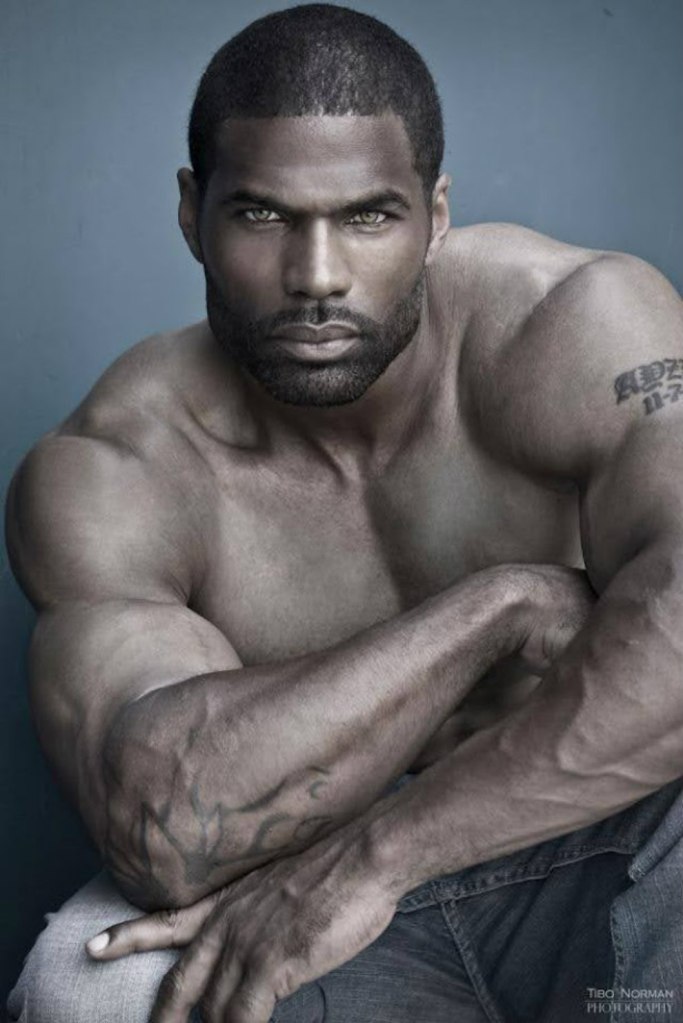
Black male beauty has historically existed in a complex intersection of admiration and marginalization. In Western culture, ideals of masculinity and attractiveness have often been racially coded, favoring Eurocentric features such as light skin, straight hair, and narrow noses, leaving Black men to negotiate a beauty standard that often excludes them (Hunter, 2007). Despite these systemic barriers, Black men have consistently exemplified a wide range of physical beauty that challenges monolithic societal expectations.
The aesthetic evaluation of Black men is heavily influenced by historical and social contexts. During slavery and colonial periods, Black male bodies were subjected to objectification and dehumanization, yet their physicality was simultaneously fetishized as symbols of raw strength and virility (hooks, 1992). This duality created a paradoxical space where Black male attractiveness was both feared and desired.
Skin tone continues to play a significant role in how Black male beauty is perceived. Colorism, an intra-racial bias favoring lighter-skinned individuals, disproportionately affects Black men, impacting their representation in media and the dating market (Keith & Herring, 1991). Darker-skinned men often confront stereotypes associating them with aggression or hyper-masculinity, while lighter-skinned men are more frequently idealized in romantic or social contexts.
Facial features are another critical component in perceptions of beauty. Broad noses, full lips, and strong jawlines, which are characteristic of many Black men, are alternately fetishized and stigmatized in popular culture (Hall, 1997). Media representations often distort these features to fit palatable norms, leading to both admiration in certain subcultures and marginalization in mainstream society.
Hair texture and style also heavily influence social reception. Natural hair, afros, dreadlocks, and braids have long been sites of both cultural pride and discrimination. The policing of Black male hair in professional and social settings reflects broader societal discomfort with expressions of Black identity and beauty (Byrd & Tharps, 2014).
Athleticism is frequently conflated with attractiveness in Black men, reinforcing narrow definitions of beauty tied to physical performance rather than aesthetic nuance. This overemphasis perpetuates the stereotype that Black men’s value lies predominantly in their bodies’ functional capacity, rather than their individuality or style (Sailes, 1998).
The concept of “handsome burden” emerges from the paradox that Black male beauty, while celebrated in certain spaces, carries additional social costs. Attractive Black men are often hyper-visible, subjected to scrutiny, and stereotyped in ways that can impede social mobility and personal relationships (Griffin, 2012). The very features that draw admiration can also elicit bias.
Media representation is central to shaping societal views. Historically, Black men were either absent from mainstream portrayals of romantic leads or depicted in hypersexualized or villainized roles (Bogle, 2016). The lack of nuanced representation has contributed to a skewed understanding of Black male attractiveness, privileging exoticism over authenticity.
Black male celebrities frequently navigate the tension between societal fascination and personal agency over their image. Figures like Idris Elba, Michael B. Jordan, and Denzel Washington have gained recognition for their appearance, yet their visibility often subjects them to reductive discussions centered on looks rather than accomplishments (Russell, 2008).
Society’s obsession with physique and style creates pressures unique to Black men. Fashion, grooming, and fitness become mechanisms through which Black men negotiate social acceptance and desirability, amplifying the burden of external expectations (Banks, 2000).
Intersecting identities—such as socioeconomic status, sexuality, and regional background—further complicate the reception of Black male beauty. For example, a wealthy Black man may gain admiration that is denied to a working-class counterpart, illustrating how social capital intersects with racialized beauty standards (Patton, 2006).
Racialized beauty ideals also affect intimate relationships. Studies show that Black men often face exclusion in dating markets due to stereotypes about their masculinity or desirability (Felmlee, 2001). This phenomenon highlights how social perceptions of Black male beauty can influence both personal and emotional wellbeing.
The global circulation of Black male aesthetics offers a counter-narrative to Eurocentric beauty norms. Across Africa, the Caribbean, and the diaspora, Black men are celebrated for features that are undervalued in Western contexts, creating a multiplicity of beauty frameworks that resist homogenization (Ekine & Abbas, 2013).
Social media has amplified both the pressures and opportunities for Black men to curate their appearance. Platforms like Instagram provide spaces for self-representation and affirmation, yet they also expose individuals to heightened scrutiny and comparison, reinforcing anxieties about desirability (Tynes et al., 2016).
The commodification of Black male beauty through advertising and branding further complicates its social reception. Black men are often marketed as symbols of sexual allure or physical prowess, reducing complex identities to consumable aesthetic traits (Cole, 2015).
Historical trauma and generational narratives contribute to contemporary experiences of beauty for Black men. The lingering effects of slavery, segregation, and systemic oppression influence internalized self-perception and the valuation of physical traits, creating a psychological dimension to the “handsome burden” (Anderson, 2010).
Mental health implications are significant. Hypervisibility and the pressure to perform attractiveness can lead to stress, anxiety, and identity conflicts, revealing how aesthetic ideals intersect with emotional wellbeing (Wyatt et al., 2015).
Resistance movements have emerged, celebrating Black male beauty on its own terms. Cultural expressions such as hip hop, Afrofuturism, and Black fashion activism challenge normative aesthetics and create spaces where diverse Black male appearances are celebrated (Morgan & Bennett, 2011).
Education and scholarship play essential roles in redefining beauty narratives. By analyzing and challenging historical biases, researchers and cultural critics help to broaden society’s understanding of Black male attractiveness beyond reductive stereotypes (hooks, 1992).
Ultimately, Black male beauty exists as both a gift and a burden. The societal gaze can elevate and constrain, praise and stereotype, celebrate and marginalize. Understanding the intricate dynamics of this perception is critical to fostering cultural equity and dismantling limiting beauty paradigms.
References
Anderson, C. (2010). The psychology of African American male identity: Understanding the impact of historical trauma. Journal of Black Psychology, 36(4), 357–381.
Banks, I. (2000). Hair matters: Beauty, power, and Black men’s culture. New York University Press.
Bogle, D. (2016). Toms, coons, mulattoes, mammies, and bucks: An interpretive history of Blacks in American films (4th ed.). Bloomsbury Academic.
Byrd, A., & Tharps, L. (2014). Hair story: Untangling the roots of Black hair in America. St. Martin’s Press.
Cole, D. (2015). Advertising Blackness: Representation and racialization in marketing. Media, Culture & Society, 37(8), 1238–1254.
Ekine, S., & Abbas, H. (2013). African men and masculinities: Gendered transformations. Palgrave Macmillan.
Felmlee, D. (2001). No couple is an island: Social networks and mate selection. Social Forces, 79(4), 1259–1283.
Griffin, R. (2012). Beauty and the burden: Racialized perceptions of African American men. Journal of African American Studies, 16(3), 345–360.
Hall, R. (1997). The standard of beauty: A critical review of racialized aesthetics. Race & Society, 1(2), 123–138.
hooks, b. (1992). Black looks: Race and representation. South End Press.
Hunter, M. (2007). The persistent problem of colorism: Skin tone, status, and inequality. Sociology Compass, 1(1), 237–254.
Keith, V., & Herring, C. (1991). Skin tone and stratification in the Black community. American Journal of Sociology, 97(3), 760–778.
Morgan, M., & Bennett, D. (2011). Hip hop & the global imagination: Black male beauty and cultural resistance. Cultural Studies, 25(5), 643–664.
Patton, T. (2006). In the house of hip hop: Black masculinity and cultural capital. Gender & Society, 20(5), 599–617.
Russell, R. (2008). Image and identity: Black male celebrity culture. Media, Culture & Society, 30(5), 675–693.
Sailes, G. (1998). African American male athletes: Phenomenalism and stereotypes. Journal of Sport & Social Issues, 22(4), 390–402.
Tynes, B., Giang, M., Williams, D., & Thompson, G. (2016). Online racial discrimination and psychological adjustment among adolescents. Journal of Adolescent Health, 58(1), 30–36.
Wyatt, S., Gilbert, R., & Rivers, R. (2015). The impact of societal beauty standards on Black male mental health. Journal of Black Psychology, 41(2), 123–147.
American exceptionalism is the belief that the United States occupies a unique moral, political, and historical position among nations. Rooted in Puritan theology, Enlightenment ideals, and revolutionary mythology, it has long framed the nation as chosen, exemplary, and destined for leadership. This belief has functioned as both a guiding philosophy and a civic religion, shaping national identity and public policy across generations.
At its best, American exceptionalism has inspired aspirational ideals. The language of liberty, equality, and self-governance provided a moral vocabulary that fueled abolitionism, civil rights movements, and democratic reforms. By holding itself to a proclaimed higher standard, the nation created a framework through which citizens could critique injustice and demand alignment between principle and practice.
The Declaration of Independence stands as a canonical text of exceptionalist thought, asserting universal rights while situating the American experiment as historically unprecedented. This rhetoric energized oppressed groups who invoked its promises to expose hypocrisy. Frederick Douglass’s famous question—what to the slave is the Fourth of July—demonstrates how exceptionalist ideals could be turned inward as a moral indictment rather than an excuse for complacency.
Yet American exceptionalism has also functioned as an altar upon which truth is sacrificed. When national myth hardens into unquestionable dogma, it suppresses historical accountability. Slavery, Indigenous dispossession, segregation, and imperial expansion were often justified or minimized under the assumption that America’s intentions were inherently benevolent, regardless of outcomes.
The doctrine has repeatedly blurred the line between patriotism and moral exemption. Foreign interventions, from Manifest Destiny to twentieth-century wars, were frequently framed as civilizing missions rather than power pursuits. Exceptionalism provided the moral cover for empire, allowing violence to be narrated as virtue and domination as destiny.
Domestically, exceptionalism has obscured structural inequality. The insistence that America is uniquely free and just has been used to delegitimize claims of systemic racism, economic exploitation, and gender inequality. If the nation is already exceptional, then disparities are framed as personal failures rather than institutional designs.
This mindset has been particularly damaging to Black Americans. The contradiction between exceptionalist rhetoric and lived reality produced what W.E.B. Du Bois called “double consciousness,” a constant negotiation between national belonging and exclusion. Black resistance movements have historically navigated the tension between appealing to American ideals and rejecting America’s false innocence.
American exceptionalism also reshaped capitalism into a moral narrative. Wealth accumulation became equated with virtue, and poverty with moral deficiency. The “American Dream” promised upward mobility while masking the racialized and class-based barriers that structured opportunity. Exceptionalism thus sanctified inequality under the guise of meritocracy.
In education, exceptionalist narratives often sanitize history. Textbooks emphasize triumph while minimizing atrocity, creating citizens who inherit pride without responsibility. This selective memory weakens democratic capacity, as honest self-critique is replaced with defensive nationalism.
Religiously, exceptionalism has fused with Christian nationalism, transforming the state into a quasi-divine instrument. Biblical language of chosenness has been selectively applied to America, displacing its original covenantal context. This theological distortion elevates the nation above moral law rather than subjecting it to prophetic judgment.
The psychological effects of exceptionalism are equally profound. It fosters cognitive dissonance when reality contradicts belief, leading to denial rather than reform. Citizens may experience identity threat when confronted with injustice, responding with hostility instead of empathy.
Globally, exceptionalism damages credibility. When the United States preaches democracy while tolerating human rights abuses at home and abroad, its moral authority erodes. Allies perceive hypocrisy, while adversaries exploit inconsistency, weakening international trust.
However, rejecting blind exceptionalism does not require abandoning national aspiration. A critical patriotism can preserve ethical commitment without mythological arrogance. Nations, like individuals, mature through accountability rather than denial.
Some scholars argue for a post-exceptionalist identity grounded in democratic humility. This approach views the United States not as above history but within it—capable of learning from other nations and from its own marginalized voices. Such humility strengthens rather than weakens democratic life.
The civil rights movement offers a model of reformed exceptionalism. Leaders like Martin Luther King Jr. appealed to America’s professed ideals while exposing its moral bankruptcy. Their vision did not worship the nation; it called it to repentance.
In this sense, American exceptionalism becomes most ethical when desacralized. When stripped of infallibility, it can function as an aspirational ethic rather than a shield against critique. The danger lies not in national ideals, but in their absolutization.
The future of American democracy depends on whether exceptionalism remains an altar or becomes a mirror. A mirror reflects both beauty and blemish, demanding growth. An altar demands worship and excuses failure.
Ultimately, the question is not whether America is exceptional, but how it understands exceptionality. If exceptionalism justifies power without justice, it corrodes the nation’s soul. If it compels responsibility proportional to power, it may yet serve a moral purpose.
The effects of American exceptionalism are therefore paradoxical. It has empowered liberation and legitimated oppression, inspired reform and excused violence. Its legacy demands discernment rather than devotion.
A transformed national consciousness would replace myth with memory, arrogance with accountability, and supremacy with service. Only then can the United States pursue greatness without sacrificing truth upon the altar of its own exceptionalism.
References
Appleby, J. (2018). The virtues of liberalism. Oxford University Press.
Bellah, R. N. (1967). Civil religion in America. Daedalus, 96(1), 1–21.
Du Bois, W. E. B. (1903). The souls of Black folk. A.C. McClurg & Co.
King, M. L., Jr. (1963). Why we can’t wait. Harper & Row.
Lipset, S. M. (1996). American exceptionalism: A double-edged sword. W.W. Norton.
Mills, C. W. (1997). The racial contract. Cornell University Press.
Zinn, H. (2003). A people’s history of the United States. HarperCollins.
Light skin privilege refers to the systemic advantages afforded to lighter-skinned individuals within communities of color, particularly among Black people, due to proximity to whiteness. Unlike individual bias, light skin privilege is structural, psychological, and generational. It operates quietly, often denied by those who benefit from it, yet its effects are measurable across beauty standards, economic outcomes, social treatment, and intimate relationships.
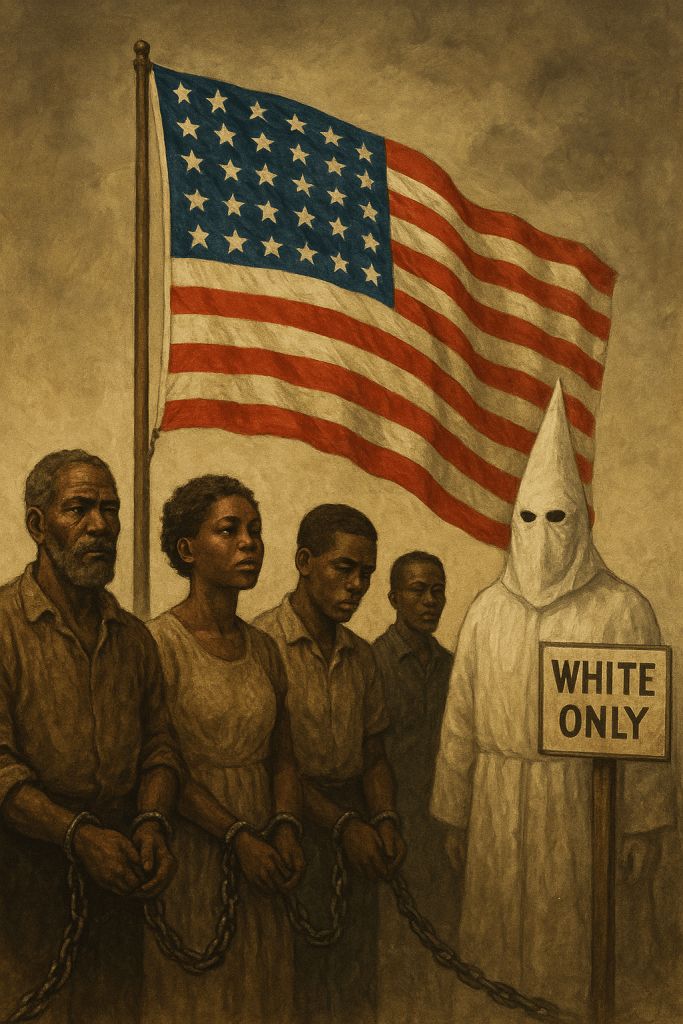
This privilege did not emerge naturally within Black communities. It was manufactured during European colonization and chattel slavery, where whiteness was constructed as superior and Blackness as inferior. Lighter skin, often produced through rape and coercion, was weaponized as a marker of status, creating a hierarchy that mirrored white supremacy itself.
During slavery, lighter-skinned enslaved people were more frequently assigned to domestic labor, received marginally better treatment, and were sometimes granted access to education. These differences were intentional strategies designed to fracture unity and cultivate internal division. Privilege was used as control, not compassion.
After emancipation, these hierarchies were absorbed into Black social life. Light skin became associated with refinement, femininity, intelligence, and safety. Dark skin, by contrast, was framed as aggressive, excessive, or undesirable. These associations were reinforced through religion, pseudoscience, and Eurocentric aesthetics.
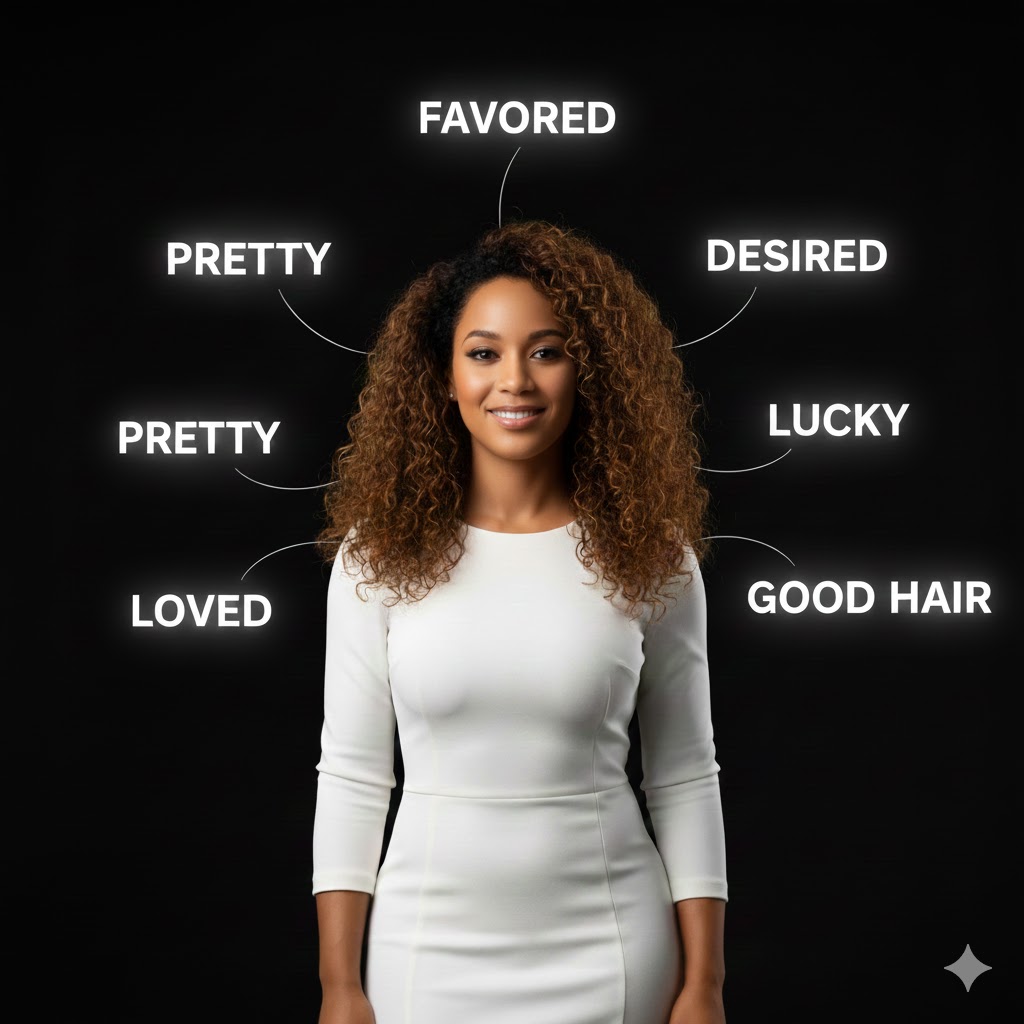
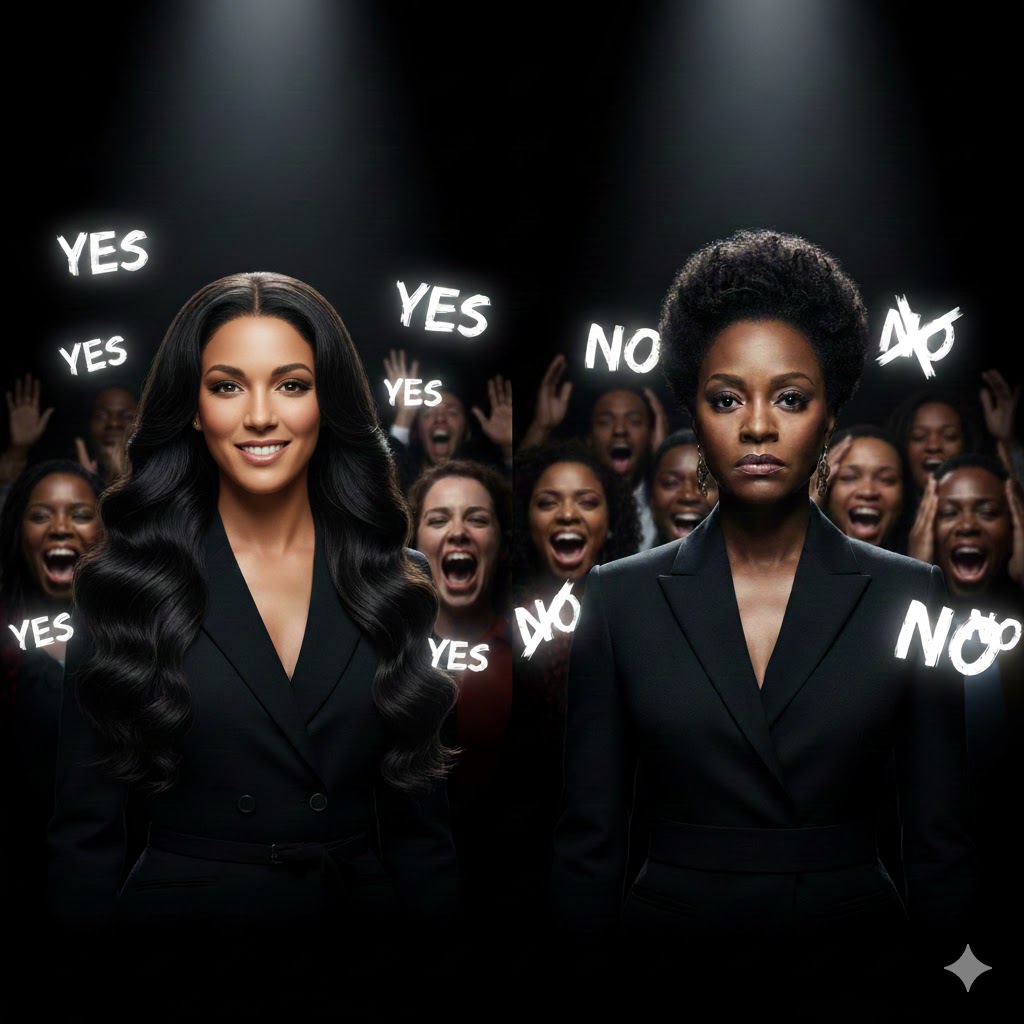
Beauty culture remains one of the most visible sites of light skin privilege. Lighter-skinned women are consistently perceived as prettier, softer, and more desirable, regardless of facial symmetry or physical features. Research confirms that skin tone alone significantly affects perceived attractiveness (Hunter, 2007).
This bias extends into romantic relationships and marriage markets. Lighter-skinned women receive more marriage proposals and are more frequently viewed as suitable long-term partners, while darker-skinned women are often fetishized, overlooked, or relegated to temporary desire (Russell et al., 1992).
Light skin privilege also shapes assumptions about personality. Lighter-skinned individuals are more likely to be described as kind, trustworthy, and pleasant. This reflects the psychological “halo effect,” where physical appearance influences moral judgment (Eagly et al., 1991).
These perceptions produce material benefits. Lighter-skinned people are more likely to receive gifts, favors, leniency, and informal mentorship. Their mistakes are forgiven more readily, while darker-skinned individuals are punished more harshly for similar behavior.
In the job market, light skin privilege is well-documented. Lighter-skinned Black employees earn higher wages, receive more promotions, and are perceived as more professional and competent than darker-skinned peers with identical credentials (Monk, 2014).
Light-skinned men benefit from a different expression of privilege. They are more often seen as intelligent, articulate, and leadership-oriented. Dark-skinned men, by contrast, are stereotyped as threatening, criminal, or volatile, regardless of behavior.
Dark skin penalty refers to the systematic disadvantages imposed on darker-skinned individuals across social, economic, and relational domains. It is the inverse of light skin privilege and functions as punishment for visible distance from whiteness. This penalty affects employment, education, marriage, policing, and mental health, often beginning in childhood and compounding across a lifetime.
Colorism functions as an internal caste system that ranks people within the same racial group. Like caste, it is inherited, normalized, enforced socially, and resistant to challenge. By replicating colonial hierarchy internally, colorism ensures oppression continues even without direct white enforcement.
These stereotypes have deadly consequences. Dark-skinned men experience harsher policing, longer prison sentences, and greater surveillance. Skin tone has been shown to influence sentencing outcomes even within the same racial category (Monk, 2019).
Within families, light skin privilege is often introduced early. Lighter-skinned children may be praised more, protected more, and spoken of as “the pretty one” or “the smart one,” while darker-skinned siblings are disciplined more harshly or emotionally neglected.
Relatives may invest more resources and expectations into lighter-skinned children, assuming greater future success. Darker-skinned children internalize these messages, shaping self-esteem, ambition, and emotional health well into adulthood (Cross, 1991).
Church spaces are not exempt. Lighter skin is often overrepresented in leadership, visibility, and marriageability narratives. Yet Scripture explicitly condemns partiality based on appearance (James 2:1–9, KJV).
Biblically, light skin privilege violates God’s law. “The Lord is no respecter of persons” (Acts 10:34, KJV). Favoritism rooted in skin tone is sin, regardless of cultural normalization.
Psychologically, light skin privilege fractures Black unity. It redirects rage inward, turning community members against one another rather than confronting the system that created the hierarchy. Fanon identified this as internalized colonialism (Fanon, 1952).
Healing requires naming privilege without defensiveness. Acknowledging benefit does not equal guilt, but denial perpetuates harm. Scripture calls for truth as the first step toward freedom (John 8:32, KJV).
Families, institutions, and communities must intentionally dismantle these hierarchies. Silence sustains injustice. Preference is not neutral when it aligns consistently with oppression.
The dilemma of light skin privilege is not about reversing hierarchy but abolishing it. Liberation requires rejecting shade-based worth entirely and restoring divine valuation rooted in humanity, righteousness, and character.
Until light skin privilege is confronted spiritually, psychologically, and structurally, inequality will persist within communities already burdened by racism. God’s justice demands better.
References
The Holy Bible, King James Version. (1611). Various passages.
Russell, K., Wilson, M., & Hall, R. (1992). The color complex: The politics of skin color among African Americans. Anchor Books.
Hunter, M. (2007). “The persistent problem of colorism: Skin tone, status, and inequality.” Sociology Compass, 1(1), 237–254.
Monk, E. P. (2014). “Skin tone stratification among Black Americans.” Social Forces, 92(4), 1317–1337.
Monk, E. P. (2019). “The color of punishment: African Americans, skin tone, and the criminal justice system.” Ethnic and Racial Studies, 42(10), 1593–1612.
Cross, W. E. (1991). Shades of Black: Diversity in African-American identity. Temple University Press.
Eagly, A. H., et al. (1991). “What is beautiful is good, but…” Psychological Bulletin, 110(1), 109–128.
Fanon, F. (1952). Black skin, white masks. Grove Press.
Wilkerson, I. (2020). Caste: The origins of our discontents. Random House.
The dark skin penalty refers to the systematic disadvantages imposed on individuals with darker complexions within societies shaped by white supremacy and colonial hierarchy. Unlike overt racism, this penalty operates subtly, often normalized as preference or coincidence, yet its consequences are profound and measurable. It represents the inverse of light skin privilege and functions as a social tax placed on visible Blackness.
Historically, the dark skin penalty was engineered during slavery and colonialism, where darkness was equated with inferiority, savagery, and danger. European racial ideology constructed Blackness as a problem to be controlled, while lighter skin was positioned as closer to civility and trustworthiness. These ideas were enforced through law, theology, and violence.
Within slavery, darker-skinned enslaved people were disproportionately assigned to the most brutal labor, exposed to harsher punishment, and denied even marginal privileges afforded to lighter-skinned individuals. Darkness became associated with disposability, while lighter skin functioned as a buffer within the racial caste system.
After emancipation, these hierarchies did not dissolve. They were absorbed into Black communities as internalized beliefs. Dark skin came to symbolize struggle, unattractiveness, and threat, while lightness symbolized opportunity. This psychological inheritance transformed external oppression into internal policing.
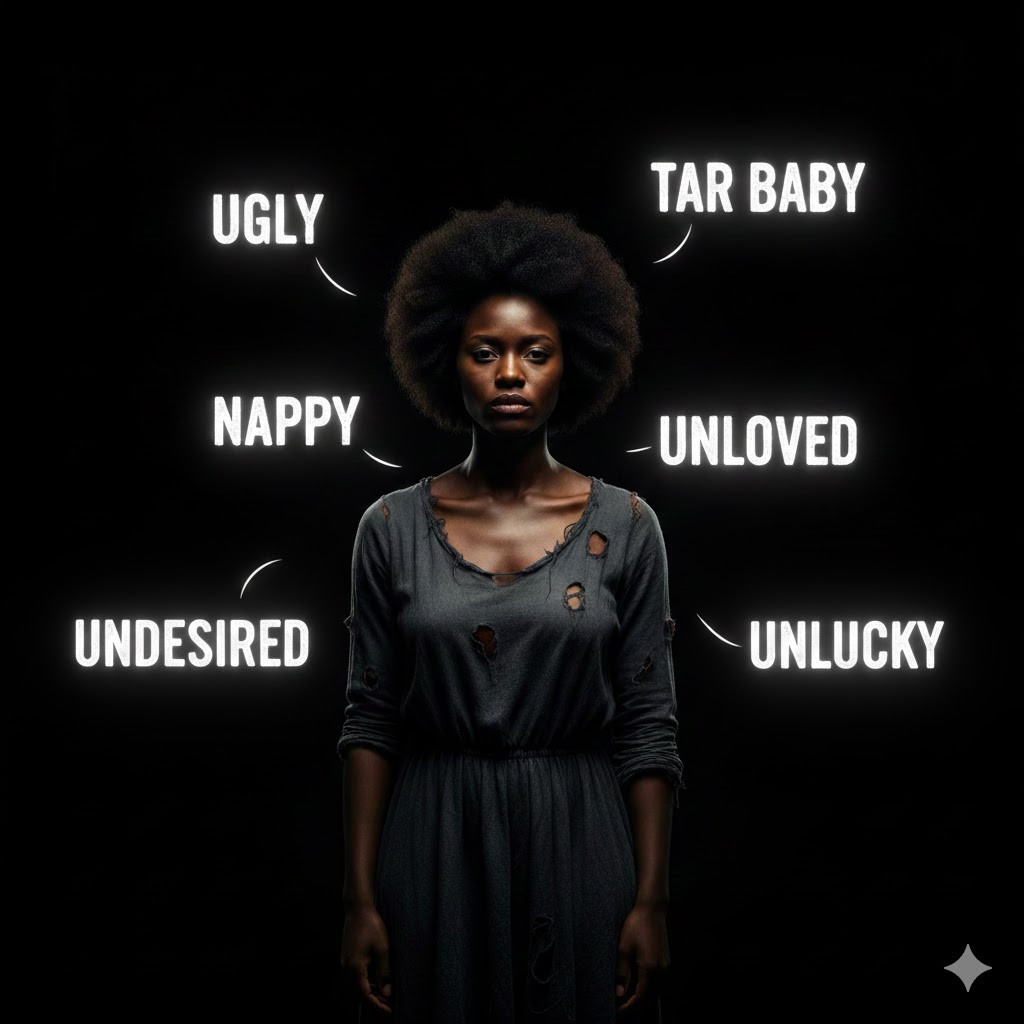
Beauty standards remain one of the most visible expressions of the dark skin penalty. Darker-skinned women are frequently excluded from dominant beauty narratives, described as less feminine, less soft, or less desirable. Empirical research confirms that darker skin is rated as less attractive due to entrenched Eurocentric aesthetics (Hunter, 2007).
In romantic and marital contexts, darker-skinned women experience higher rates of rejection and lower likelihood of marriage offers. They are often sexualized without being valued for long-term partnership, reflecting a dehumanizing pattern rooted in colonial hypersexualization (Russell et al., 1992).
Darker-skinned men also bear a severe penalty. They are more likely to be perceived as aggressive, criminal, or intellectually inferior. These stereotypes follow them into schools, workplaces, and public spaces, shaping expectations and treatment regardless of behavior.
The criminal justice system magnifies this penalty. Studies demonstrate that darker-skinned Black men receive longer sentences and harsher punishment than lighter-skinned Black men for similar crimes, revealing that skin tone itself influences legal outcomes (Monk, 2019).
In the job market, darker skin correlates with lower wages, fewer promotions, and higher unemployment rates. Employers often unconsciously associate darker skin with incompetence or danger, despite identical credentials (Monk, 2014). Professionalism becomes racially coded.
Educational environments also reflect this bias. Darker-skinned children are disciplined more harshly, perceived as less capable, and tracked into lower academic pathways. Early exposure to penalty shapes confidence and long-term achievement.
Within families, the dark skin penalty is often reinforced through differential treatment. Darker-skinned children may receive less praise, harsher discipline, or fewer resources, while lighter-skinned siblings are protected and celebrated. These dynamics communicate worth long before language can articulate it.
The psychological consequences are severe. Dark-skinned individuals face higher risks of depression, anxiety, and diminished self-esteem due to chronic devaluation. Fanon described this as epidermalization of inferiority, where the body itself becomes a site of shame (Fanon, 1952).
Media representation compounds the penalty. Darker-skinned people are underrepresented or typecast as villains, aggressors, or side characters, while lighter-skinned individuals dominate narratives of love, success, and heroism. Repetition normalizes hierarchy.
Spiritually, the dark skin penalty contradicts biblical truth. Scripture affirms that God is no respecter of persons and judges by the heart rather than appearance (1 Samuel 16:7; Acts 10:34, KJV). Color-based judgment is therefore a moral failure.
The Bible explicitly condemns partiality. James warns that favoring one person over another based on external markers makes one guilty of sin (James 2:1–9, KJV). Colorism violates divine law as surely as overt injustice.
The dark skin penalty fractures communal solidarity. It redirects pain inward, encouraging comparison and resentment rather than collective resistance. This fragmentation benefits oppressive systems by weakening unity.
Healing requires intentional confrontation of these biases. Naming the penalty dismantles denial. Silence allows harm to masquerade as normalcy. Scripture teaches that truth precedes freedom (John 8:32, KJV).
Cultural restoration demands redefining beauty, intelligence, and worth outside colonial frameworks. African history and theology affirm darkness as original, powerful, and divine in its own right (Diop, 1974).
Psychological healing must accompany social reform. Therapeutic approaches that address racial trauma align with Scripture’s call for renewal of the mind (Romans 12:2, KJV). Without healing, internalized penalty persists even in success.
The abolition of the dark skin penalty requires both structural change and spiritual repentance. Institutions must address bias, and individuals must unlearn inherited hierarchies. Liberation is incomplete without both.
Ultimately, the dark skin penalty is not a reflection of deficiency but of distortion. It reveals the depth of colonial damage, not the worth of those who bear it. Divine justice demands its dismantling.
Until dark skin is affirmed as fully human, fully beautiful, and fully worthy, inequality will continue to reproduce itself within oppressed communities. God’s standard remains unchanged: all flesh stands equal before Him.
References
The Holy Bible, King James Version. (1611). Various passages.
Russell, K., Wilson, M., & Hall, R. (1992). The color complex: The politics of skin color among African Americans. Anchor Books.
Hunter, M. (2007). “The persistent problem of colorism.” Sociology Compass, 1(1), 237–254.
Monk, E. P. (2014). “Skin tone stratification among Black Americans.” Social Forces, 92(4), 1317–1337.
Monk, E. P. (2019). “The color of punishment.” Ethnic and Racial Studies, 42(10), 1593–1612.
Fanon, F. (1952). Black skin, white masks. Grove Press.
Cross, W. E. (1991). Shades of Black: Diversity in African-American identity. Temple University Press.
Diop, C. A. (1974). The African origin of civilization: Myth or reality. Lawrence Hill Books.
Wilkerson, I. (2020). Caste: The origins of our discontents. Random House.
Racism remains the elephant in the room—visible, disruptive, and damaging—yet persistently denied or minimized in public discourse. It is not merely a collection of individual prejudices but a system of power that organizes opportunity, value, and belonging along racial lines. Its endurance lies not only in overt hostility but in silence, deflection, and the refusal to name it plainly.
Historically, racism was constructed to justify conquest, enslavement, and exploitation. European colonial expansion required an ideology that could reconcile Christian morality with economic brutality. Race became that justification, transforming human difference into a hierarchy of worth and rationalizing domination as destiny.
In the United States, racism was institutionalized through slavery, segregation, and discriminatory law. Even after formal barriers fell, the architecture of inequality remained intact. Housing policy, education funding, labor markets, and policing continued to reproduce racial disparity without explicit racial language.
One of racism’s most effective strategies is normalization. When inequality is framed as natural or cultural, responsibility disappears. Outcomes are blamed on behavior rather than barriers, allowing systemic harm to persist without accountability.
Psychologically, racism operates by shaping perception. Implicit bias research shows that people absorb racial stereotypes regardless of intent. These unconscious associations influence decisions in hiring, discipline, medical care, and sentencing, often without the decision-maker recognizing the bias at work.
Racism also fractures identity. W. E. B. Du Bois described this as double consciousness—the internal conflict of seeing oneself through the eyes of a society that devalues you. This fracture exacts a psychological toll that compounds across generations.
Colorism functions as racism’s internal extension. By privileging proximity to whiteness within communities of color, it reproduces hierarchy without external enforcement. This internalization demonstrates how deeply racism penetrates social life and self-concept.
Economically, racism concentrates disadvantage. Racial wealth gaps are not the result of spending habits but of historic exclusion from asset-building opportunities such as homeownership, education access, and fair wages. These gaps persist because policy choices continue to protect accumulated advantage.
In the criminal justice system, racism manifests through surveillance, sentencing disparities, and differential use of force. Black and Brown communities experience policing not as protection but as occupation, a reality documented across decades of empirical research.
Education systems mirror these inequalities. Schools serving marginalized communities are underfunded, overpoliced, and underestimated. Expectations shape outcomes, and racism lowers the ceiling long before potential can be demonstrated.
Healthcare outcomes reveal another dimension. Racial bias contributes to higher maternal mortality, undertreatment of pain, and reduced access to quality care. These disparities are not biological but structural, rooted in unequal treatment and mistrust born of history.
Media representation reinforces racial narratives. Whiteness is normalized as universal, while Blackness is often framed through pathology or exception. Repetition turns stereotype into common sense, shaping public opinion and policy priorities.
Faith communities are not exempt. Scripture condemns partiality, yet churches have often mirrored racial segregation and silence. James warns that favoritism is sin, not culture (James 2:1–9, KJV), calling believers to repentance rather than rationalization.
The Bible confronts racism at its root by affirming shared humanity. “And hath made of one blood all nations of men” (Acts 17:26, KJV) dismantles every racial hierarchy. Racism is therefore not only social injustice but theological error.
Resistance to naming racism often masquerades as calls for unity or civility. Yet unity without truth is denial. Healing requires confession, and confession requires naming harm without euphemism.
Psychologically, confronting racism provokes discomfort, particularly for those who benefit from the status quo. Defensiveness protects identity but stalls progress. Growth demands the humility to listen without centering oneself.
Structural change is essential. Individual goodwill cannot substitute for policy reform. Fair housing, equitable education funding, healthcare access, and accountable policing are necessary to dismantle systemic harm.
Education that tells the full truth is also critical. Sanitized history sustains ignorance, while honest history equips societies to avoid repetition. Memory is a moral responsibility.
Hope lies not in denial but in courage. Communities that confront racism directly build stronger solidarity and more durable justice. Silence fractures trust; truth repairs it.
Ultimately, racism persists because it is tolerated. What is unchallenged becomes tradition. Scripture teaches that justice is not optional but required: “What doth the Lord require of thee, but to do justly, and to love mercy, and to walk humbly” (Micah 6:8, KJV).
The elephant in the room will not leave on its own. It must be named, confronted, and removed. Only then can societies move from performative concern to transformative justice, grounded in truth, accountability, and shared humanity.
References
The Holy Bible, King James Version. (1611). Various passages.
Du Bois, W. E. B. (1903). The souls of Black folk. A. C. McClurg & Co.
Fanon, F. (1952). Black skin, white masks. Grove Press.
Alexander, M. (2010). The new Jim Crow: Mass incarceration in the age of colorblindness. The New Press.
Wilkerson, I. (2020). Caste: The origins of our discontents. Random House.
Bonilla-Silva, E. (2017). Racism without racists. Rowman & Littlefield.
Pager, D., & Shepherd, H. (2008). “The sociology of discrimination.” Annual Review of Sociology, 34, 181–209.
Williams, D. R., & Mohammed, S. A. (2013). “Racism and health I.” Behavioral Medicine, 39(2), 47–56.
European biblical interpretation largely developed within imperial, Greco-Roman, and later Enlightenment frameworks, emphasizing hierarchy, legalism, and institutional authority. African and Black biblical interpretation, by contrast, has historically been experiential, communal, oral, and survival-centered, reading Scripture through lived oppression rather than abstract theology.
The Bible as Empire vs. the Bible as Survival
For Europe, the Bible often functioned as a tool of empire—used to justify monarchy, colonialism, and racial hierarchy. For African and African-descended peoples, the Bible became a text of endurance, liberation, and divine justice amid enslavement, exile, and sufferingEuropean Emphasis on Control and Order
European theology prioritized:
Church authority
Doctrinal uniformity
Obedience to rulers (Romans 13 emphasized)
Salvation abstracted from material conditions
This lens often muted or reinterpreted passages about oppression, captivity, and divine judgment against empires.
African/Black Emphasis on Exodus and Justice
African and Black readers gravitated toward:
Exodus
Deuteronomy 28
The prophets
Psalms of lament
Revelation’s overthrow of empire
Scripture was read as God siding with the oppressed, not legitimizing oppression.
Historical Memory vs. Abstract Theology
African biblical interpretation preserved historical consciousness—genealogy, land, lineage, and curses/blessings—while European theology increasingly spiritualized Scripture, detaching it from concrete history.
Deuteronomy 28 as a Point of Divergence
Europe largely framed Deuteronomy 28 as ancient Israelite history only. Many African-descended interpreters see it as a prophetic template, mapping captivity, forced labor, ships, loss of identity, and global dispersion onto the transatlantic slave trade.
The Role of the Enlightenment
The European Enlightenment desacralized Scripture, elevating reason over revelation, which later influenced canon criticism, textual skepticism, and selective theology that privileged Western norms.
What Books Were Removed from the Bible?
The Apocrypha / Deuterocanonical Books
Several books were removed or relegated to “non-canonical” status, particularly in Protestant Bibles after the 16th century.
Removed or excluded books include:
1 Esdras
2 Esdras (4 Ezra)
Tobit
Judith
Wisdom of Solomon
Sirach (Ecclesiasticus)
Baruch
Letter of Jeremiah
Additions to Esther
Prayer of Azariah
Susanna
Bel and the Dragon
1 Maccabees
2 Maccabees
These books were never “lost” to Africa—only excluded by Europe.
Why Were These Books Removed?
Key reasons include:
They challenged centralized church power
They emphasized divine justice against oppressors
They reinforced covenantal law and judgment
They complicated European theological control
Martin Luther and later Protestant reformers removed them from standard Bibles, labeling them “useful but not inspired.”
Political Theology at Work
Books like the Wisdom of Solomon condemn unjust rulers. Maccabees celebrate resistance to the empire. Baruch emphasizes exile and repentance. These themes conflicted with colonial and imperial agendas.
Suppression of Apocalyptic Knowledge
Books like Enoch and 2 Esdras contain cosmology, angelology, and judgment narratives that undermine human supremacy and racial hierarchy.
Race and Canon Formation
Europeans controlling the canon during colonial expansion ensured Scripture could be used to:
Enforce obedience
Justify slavery
Silence rebellion
Promote passive salvation
African-descended readers later reclaimed Scripture against these distortions.
African Christianity Predates Europe
Africa Is Not a Late Convert
Christianity flourished in Ethiopia, Egypt, Nubia, and North Africa centuries before Europe institutionalized the Church.
Biblical Geography Is African-Centered
Scripture references:
Cush
Mizraim (Egypt)
Ethiopia
Libya
African peoples are not marginal to the Bible—they are foundational.
Oral Tradition vs. Written Control
African biblical engagement preserved oral memory, song, lament, and testimony, while Europe emphasized written codices controlled by elite institutions.
Theological Consequences of Removal
Loss of Justice-Centered Theology
Removing books narrowed theology away from historical accountability, exile, and covenant justice.
Spiritualization of Suffering
European theology often reframed suffering as divinely ordained rather than divinely condemned—an interpretation enslaved people instinctively rejected.
Black Biblical Hermeneutics
Black theology reads Scripture from the bottom up, centering God’s response to suffering bodies, not abstract doctrine.
Scripture as Resistance
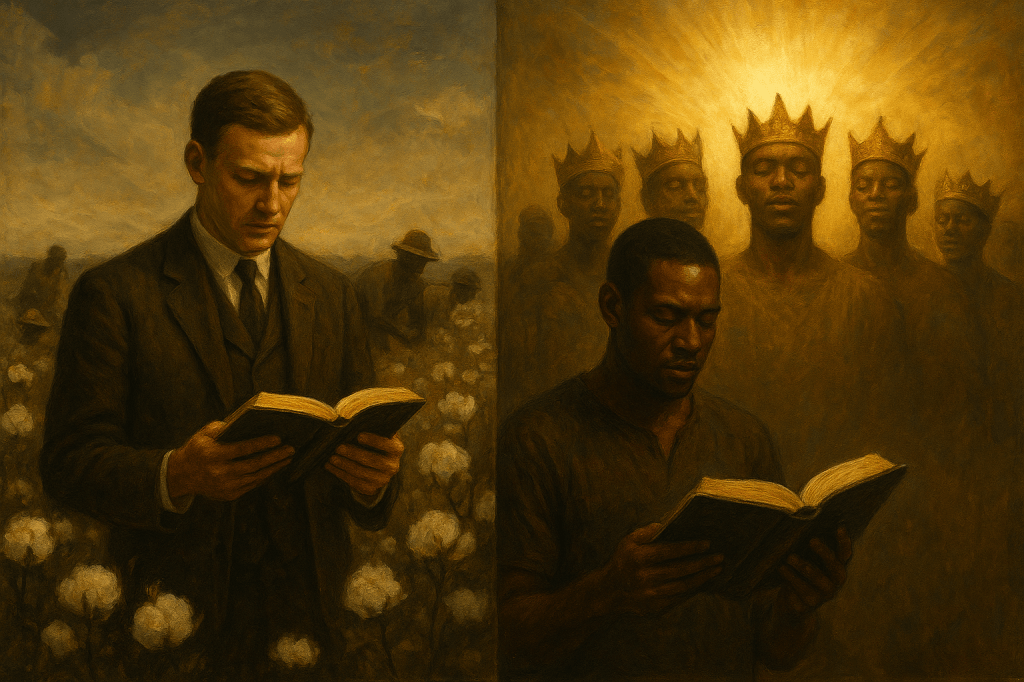
For African-descended peoples, the Bible became a counter-text, exposing the hypocrisy of Christian slaveholders and affirming divine judgment.
Conclusion: Two Bibles, Two Lenses
European Christianity often used the Bible to rule. African and Black Christianity used the Bible to survive.
The difference is not the text itself, but who controls interpretation, which books are included, and whose suffering is acknowledged. Reclaiming the removed books and reading Scripture through historical truth restores the Bible’s original moral power.
References
The Holy Bible, King James Version. (1611/1769).
The Ethiopian Orthodox Tewahedo Church Canon.
Cone, J. H. (1997). God of the oppressed. Orbis Books.
Heschel, A. J. (2001). The prophets. Harper Perennial.
Pagels, E. (1979). The gnostic gospels. Random House.
Charlesworth, J. H. (Ed.). (1983). The Old Testament pseudepigrapha. Yale University Press.
The phrase “the moral arc of the universe bends toward justice” has become a modern axiom for hope amid oppression, yet its roots reach far deeper than contemporary rhetoric. Embedded within sacred texts, prophetic traditions, and moral philosophy is the conviction that justice is not accidental but woven into the structure of reality itself.
Divine justice, unlike human justice, is not limited by courts, time, or political power. Scripture presents justice as an attribute of God’s very nature, inseparable from righteousness, truth, and mercy. This justice unfolds across generations, often slowly yet inevitably.
In the Hebrew Bible, justice is portrayed as a covenantal concept. Blessings and consequences are tied to moral obedience, emphasizing that societies reap what they sow. The God of Israel is repeatedly described as one who “loveth judgment” and refuses to overlook oppression.
The suffering of the oppressed occupies a central place in biblical theology. From the cries of the Hebrews in Egypt to the laments of the prophets, divine justice is activated by injustice, violence, and exploitation of the vulnerable.
Justice in Scripture is not merely punitive but restorative. The aim is not destruction for its own sake but correction, repentance, and the reordering of moral life. Judgment clears space for renewal.
Throughout history, empires have mistaken dominance for permanence. Biblical narratives consistently challenge this illusion, portraying the downfall of powerful nations as the natural consequence of arrogance and cruelty.
The prophets functioned as moral witnesses, confronting kings, priests, and systems that exploited the poor. Their warnings reveal that injustice carries an expiration date, even when it appears entrenched.
Divine justice operates on a timeline that frustrates human impatience. Generations may suffer before justice manifests, yet Scripture insists that delay is not denial. Time itself becomes an instrument of reckoning.
The transatlantic slave trade represents one of history’s most profound moral violations. Millions were reduced to property, families were destroyed, and human dignity was systematically denied. Such injustice stands in direct opposition to divine order.
Though slavery was legally abolished, its moral consequences continue through economic inequality, social stratification, and psychological trauma. Divine justice addresses not only the original sin but its lingering effects.
In biblical thought, God hears blood crying from the ground. This imagery conveys that suffering leaves a moral residue in the earth itself, demanding response beyond human tribunals.
Justice also requires remembrance. Forgetting injustice enables repetition, while memory honors the victims and resists moral amnesia. Scripture repeatedly commands remembrance as an ethical duty.
The arc of justice is often revealed through reversal. The humbled are lifted, and the exalted are brought low. This pattern disrupts linear narratives of power and success.
Human participation in divine justice is not optional. Prophets, apostles, and reformers are called to act as agents of righteousness, aligning their lives with God’s moral will.
Faith without justice is portrayed as hollow. Ritual, prayer, and worship lose meaning when divorced from ethical action, particularly toward the marginalized.
Divine justice affirms the worth of those deemed disposable by society. In this sense, justice is inseparable from dignity, restoring value where it has been denied.
The moral arc bends not because humanity wills it so, but because justice is embedded in creation by divine decree. History bends under moral weight.
Hope in divine justice does not excuse passivity. Rather, it empowers perseverance, anchoring resistance in the assurance that oppression is temporary.
Justice, in biblical vision, culminates not only in judgment but in peace. Shalom represents restored relationships between God, humanity, and creation.
The moral arc of the universe ultimately testifies that injustice is unsustainable. Divine justice, though patient, is inexorable, affirming that truth, accountability, and restoration will prevail.
References
The Holy Bible, King James Version. (1611/1769).
Cone, J. H. (1997). God of the oppressed. Orbis Books.
Heschel, A. J. (2001). The prophets. Harper Perennial Modern Classics.
King, M. L., Jr. (1968). Where do we go from here: Chaos or community? Beacon Press.
Niebuhr, R. (1932). Moral man and immoral society. Charles Scribner’s Sons.
Colorism operates as an unspoken caste system within racialized communities, privileging proximity to whiteness while punishing darker skin. Unlike racism, which is imposed externally, colorism thrives internally, making it both more difficult to confront and more psychologically destructive. It functions quietly, shaping social outcomes while masquerading as “preference” or “aesthetic.”
Historically, colorism was engineered during slavery, where lighter-skinned enslaved people were granted marginal advantages such as indoor labor or literacy access. These privileges were not benevolence but strategy—designed to fracture solidarity and create internal hierarchies that mirrored white supremacy. Over generations, these imposed distinctions calcified into social norms.
The Bible warns against such partiality, stating, “But if ye have respect to persons, ye commit sin” (James 2:9, KJV). Colorism is precisely this sin—assigning value based on appearance rather than character or righteousness. When communities internalize this hierarchy, they replicate the logic of their oppressors.
Psychologically, colorism distorts self-concept. Darker-skinned individuals often internalize shame, while lighter-skinned individuals may experience conditional acceptance tied to appearance rather than identity. This dynamic reinforces anxiety, comparison, and alienation, aligning with Fanon’s analysis of racialized inferiority complexes (Fanon, 1952).
Sociologically, colorism influences hiring, sentencing, marriage markets, and media representation. Studies consistently show that lighter skin correlates with higher income and social mobility within Black populations (Hunter, 2007). These outcomes expose colorism as structural, not merely personal bias.
Spiritually, colorism contradicts the doctrine of creation. Scripture affirms that humanity is made in God’s image, not graded by shade (Genesis 1:27, KJV). Any hierarchy of skin tone is therefore a theological error, not a cultural quirk.
Until colorism is named as a system—rather than an attitude—it will continue to operate invisibly. Liberation requires dismantling not only white supremacy, but its internalized offspring.
References
The Holy Bible, King James Version. Fanon, F. (1952). Black skin, white masks. Hunter, M. (2007). “The persistent problem of colorism.” Sociology Compass.
Where faith, history, and truth illuminate the Black experience.



 THE BROWN GIRL DILEMMA