Tag Archives: the brown boy dilemma

Algorithms of Black Manhood

This photograph is the property of its respective owner. No copyright infringement is intended.

Black manhood has never been formed in isolation; it has always been shaped, surveilled, and disciplined by external systems of power. In the digital age, algorithms now join history, media, and law as invisible architects of how Black men are seen, sorted, rewarded, and punished. These systems do not merely reflect society—they reproduce its biases at scale.

Algorithms are often framed as neutral tools driven by data, yet data itself is historical. Because Black men have been disproportionately criminalized, excluded, and stereotyped, the datasets used to train algorithms inherit these distortions. As a result, digital systems frequently encode old racial myths into new technological forms.

One of the most enduring myths shaping Black manhood is criminality. Predictive policing algorithms, facial recognition software, and risk assessment tools consistently flag Black men as higher risk, not because of inherent behavior, but because past policing practices over-targeted Black communities. The algorithm learns the bias and calls it probability.

These systems extend surveillance beyond the street and into everyday life. Credit scoring, hiring software, insurance assessments, and social media moderation all participate in ranking Black men’s trustworthiness, competence, and value. Manhood becomes something quantified, filtered, and judged by machines that cannot understand context, humanity, or history.

Media algorithms further distort Black masculinity. Platforms reward content that reinforces familiar tropes—hypermasculinity, aggression, emotional detachment—because such content drives engagement. Nuanced representations of Black fatherhood, vulnerability, or intellectual depth are less likely to be amplified, not because they lack value, but because they disrupt profitable narratives.

This creates a feedback loop. Black men who wish to be seen or heard online may feel pressure to perform algorithm-approved versions of masculinity. Authenticity is punished, while caricature is rewarded. Over time, performance replaces self-definition.

The workplace is not exempt from algorithmic shaping. Automated résumé screeners trained on historically white, male corporate profiles may downgrade Black male candidates based on names, schools, or speech patterns. Leadership potential is filtered through coded assumptions about what authority is supposed to look and sound like.

Education systems increasingly rely on algorithmic assessment as well. Disciplinary prediction tools and behavioral analytics disproportionately flag Black boys as future problems, reinforcing a school-to-prison pipeline under the guise of efficiency. Manhood is framed early as deviance rather than potential.

Dating apps and social platforms also reveal algorithmic hierarchies of desire. Studies show that Black men are often ranked lower or fetishized based on racialized assumptions about dominance, danger, or athleticism. Even intimacy is shaped by code that translates bias into preference.

The emotional cost of this constant evaluation is significant. When manhood is continuously questioned, monitored, or misread, it produces hypervigilance, stress, and alienation. Black men must navigate not only social expectations, but automated judgments they cannot see or contest.

Historically, Black manhood has been policed through law, violence, and propaganda. Algorithms represent a quieter continuation of this control—less visible, more technical, and therefore harder to challenge. Power becomes abstracted behind dashboards and models.

Yet algorithms are created by people, not destiny. Their values, priorities, and blind spots reflect the cultures that build them. When diversity, ethics, and historical literacy are absent from tech development, bias becomes automated rather than eliminated.

Resistance begins with literacy. Understanding how algorithms work, where data comes from, and who benefits from these systems empowers communities to question their authority. Transparency is not a technical luxury; it is a civil rights necessity.

Scholars and activists have begun calling for algorithmic accountability, demanding audits, bias testing, and inclusive design. These efforts recognize that justice in the digital age requires more than representation—it requires structural intervention.

Redefining Black manhood outside algorithmic constraints is also essential. Manhood cannot be reduced to data points, threat scores, or engagement metrics. It must be reclaimed as relational, ethical, spiritual, and communal.

Faith traditions, cultural memory, and intergenerational knowledge offer counter-algorithms—value systems that affirm dignity beyond performance or prediction. These frameworks resist reduction and insist on humanity over efficiency.

The danger of algorithmic manhood is not only misrepresentation, but inevitability. When systems are treated as objective, their outcomes feel unchangeable. Challenging this myth reopens space for agency and reform.

A future that honors Black manhood must confront the technologies shaping it. This includes diversifying tech leadership, regulating high-stakes algorithms, and centering those most harmed by automated decision-making.

Ultimately, algorithms do not define Black manhood—power does. And power can be challenged. By exposing how digital systems encode old hierarchies, society can begin to imagine technologies that serve justice rather than reproduce inequality.

Black manhood has survived centuries of distortion. It will also survive algorithms. But survival is not the goal. Liberation requires that technology be reshaped to recognize Black men not as risks to be managed, but as full human beings worthy of complexity, care, and self-definition.

References

Benjamin, R. (2019). Race after technology: Abolitionist tools for the new Jim Code. Polity Press.

Browne, S. (2015). Dark matters: On the surveillance of Blackness. Duke University Press.

Buolamwini, J., & Gebru, T. (2018). Gender shades: Intersectional accuracy disparities in commercial gender classification. Proceedings of Machine Learning Research, 81, 1–15.

Eubanks, V. (2018). Automating inequality: How high-tech tools profile, police, and punish the poor. St. Martin’s Press.

Noble, S. U. (2018). Algorithms of oppression: How search engines reinforce racism. NYU Press.

O’Neil, C. (2016). Weapons of math destruction: How big data increases inequality and threatens democracy. Crown.

Rios, V. M. (2011). Punished: Policing the lives of Black and Latino boys. NYU Press.

A Study of Modern Masculinity and Digital Culture.

The study of modern masculinity cannot be divorced from the influence of digital culture. Over the past two decades, technology has transformed how men understand themselves, perform gender, and engage with the world. Online platforms, social media, and digital communities create both opportunities for expression and constraints that reinforce traditional and often harmful norms.

Masculinity is socially constructed and historically contingent, varying across culture, time, and context (Connell, 2005). Digital culture adds a new layer of construction, providing spaces where men are simultaneously visible, surveilled, and judged, amplifying the pressure to conform to normative ideals.

Social media platforms, from Instagram to TikTok, act as performative arenas where masculinity is codified. Men curate images of strength, attractiveness, and dominance, seeking social validation through likes, shares, and comments. This performativity fosters a feedback loop in which men internalize algorithmically reinforced norms.

Hypermasculinity is particularly prevalent online. Research demonstrates that digital spaces often valorize aggression, sexual conquest, and emotional stoicism while discouraging vulnerability, empathy, or relational depth (Kimmel, 2013). Such reinforcement intensifies traditional masculine pressures.

Gaming communities provide another site for digital masculine performance. Masculine identities in these spaces are frequently coded around competitiveness, skill, and dominance, while gendered harassment reinforces exclusionary norms. Virtual interaction thus mirrors and magnifies offline hierarchies.

The “manosphere,” a set of online forums focused on male self-identity and grievances, reflects digital masculinity’s contested terrain. While offering community, these spaces often promote anti-feminist ideologies, entitlement, and toxic forms of masculinity, demonstrating the potential for digital culture to exacerbate social problems (Marwick, 2017).

Digital culture also affects emotional expression. While men historically faced pressures to suppress vulnerability, online anonymity provides a paradoxical space where some men articulate feelings, seek support, or challenge gender norms. Yet, such expression is often constrained by peer enforcement of traditional ideals.

Media representation plays a mediating role in digital culture. Men consume content that idealizes certain body types, lifestyles, and behaviors, reinforcing beauty standards and socio-economic aspirational norms. These representations shape identity, self-esteem, and relational expectations.

The commodification of masculinity online is significant. Fitness influencers, lifestyle coaches, and digital celebrities monetize performance of gender norms, creating aspirational models that conflate consumption with manhood. The algorithm rewards performative adherence to dominant ideals rather than authenticity.

Algorithmic bias further shapes masculinity in digital spaces. Studies show that AI-driven recommendation systems often reinforce stereotypical portrayals of men, privileging content aligned with traditional or hegemonic masculinity while marginalizing alternative expressions (Buolamwini & Gebru, 2018).

Digital culture impacts romantic and sexual norms as well. Dating apps commodify masculinity, with men judged according to attractiveness, status, and perceived virility. These platforms both reflect and enforce societal hierarchies of desirability, linking self-worth to algorithmic validation.

Masculinity in digital subcultures demonstrates the tension between community and control. Online groups can provide support and mentorship, yet peer policing often enforces narrow definitions of what constitutes “real manhood,” limiting experimentation or deviation from norms.

Mental health consequences are profound. The pressure to perform masculinity online contributes to stress, anxiety, and depression. Men often feel compelled to project confidence and emotional control, masking internal struggles and reducing the likelihood of seeking support (Levant & Pollack, 1995).

Education and digital literacy offer pathways for intervention. Teaching men to critically engage with online content, recognize algorithmic bias, and understand performative pressures can mitigate harmful impacts while promoting healthier identity formation.

Digital culture also enables activism and resistance. Men can use online platforms to challenge toxic norms, share alternative models of masculinity, and engage in dialogues about vulnerability, caregiving, and social responsibility, demonstrating digital culture’s potential for positive identity work.

The relationship between masculinity and technology is reciprocal. Not only does digital culture shape masculine norms, but men also shape platforms through content creation, engagement, and community-building. Understanding this interaction requires attention to social, economic, and technological structures.

Policy implications are evident. Platform design, algorithmic transparency, and content moderation influence the representation and performance of masculinity. Stakeholders must recognize that digital infrastructures are not neutral but participate in shaping gender norms.

Future research should integrate interdisciplinary perspectives, including sociology, media studies, psychology, and gender studies, to capture the complexity of masculinity in digital culture. Longitudinal studies can illuminate how online engagement influences identity development over time.

Ultimately, modern masculinity is neither fixed nor singular. Digital culture amplifies pressures, presents opportunities for self-definition, and mediates both risk and empowerment. Scholars, policymakers, and community leaders must engage with these dynamics to foster healthier, more inclusive models of manhood.

References

Buolamwini, J., & Gebru, T. (2018). Gender shades: Intersectional accuracy disparities in commercial gender classification. Proceedings of Machine Learning Research, 81, 1–15.

Connell, R. W. (2005). Masculinities (2nd ed.). University of California Press.

Kimmel, M. (2013). Angry white men: American masculinity at the end of an era. Nation Books.

Levant, R. F., & Pollack, W. S. (1995). A new psychology of men. Basic Books.

Marwick, A. (2017). Status update: Celebrity, publicity, and branding in the social media age. Yale University Press.

Noble, S. U. (2018). Algorithms of oppression: How search engines reinforce racism. NYU Press.

Courtenay, W. H. (2000). Constructions of masculinity and their influence on men’s well-being: A theory of gender and health. Social Science & Medicine, 50(10), 1385–1401.

Pretty Privilege Series: Brothers at the Frontline — Black Men’s Role in Dismantling Colorism.

Photo by Mika Borgia on Pexels.com

Colorism is not just a women’s issue — it is a community issue. Black men, in particular, play a critical role in shaping beauty standards, especially through dating choices, music, and cultural influence. To dismantle colorism, Black men must become allies and active participants in affirming dark-skinned women’s dignity and worth.

Historically, colorism was reinforced by systems that divided enslaved Black people based on skin tone. Lighter-skinned Black men and women were given preferential treatment, creating hierarchies that still influence dating and marriage patterns today (Hunter, 2007). Black men must examine how much of their preferences are rooted in this colonial history.

Many Black men have admitted to being told from a young age that lighter-skinned girls were more desirable. This conditioning is not merely personal taste but cultural programming that associates lightness with refinement and status (Wilder, 2010).

Rap lyrics and hip-hop culture have often glorified “redbones” or “yellow bones,” reinforcing the idea that lighter-skinned women are the ultimate prize. When influential Black men elevate only one type of beauty, it reinforces harmful hierarchies for the entire community (Neal, 2013).

The first step for Black men is introspection. Asking “Why do I find this skin tone more attractive?” can uncover unconscious biases. Recognizing that preferences can be shaped by media, colonialism, and white supremacy is essential to choosing love freely and without inherited prejudice.

Public affirmation matters. When Black men openly celebrate their dark-skinned wives, daughters, and partners, they send a powerful message to younger boys and the community at large. NBA player LeBron James, for example, often praises his dark-skinned wife Savannah publicly, providing representation that counters stereotypes.

Music artists can also be powerful agents of change. Kendrick Lamar famously rapped, “I want a real woman, not a Barbie doll” and has celebrated darker-skinned women in his videos. More male artists following suit would normalize seeing dark-skinned women as desirable and worthy of love songs.

Black fathers hold special influence. The way a father talks to his daughter about her beauty can shape her self-esteem for life. Fathers must affirm their daughters’ skin as beautiful, compliment them without comparing them to lighter peers, and teach them to embrace their natural hair and features (Harris, 2015).

Mentorship is another key area. Young Black boys must be taught early that beauty is not determined by proximity to whiteness. When mentors and role models praise women of all shades — especially darker-skinned women — they help undo cycles of internalized bias.

In barbershops and male-dominated spaces, colorist jokes and comments must be challenged. Black men can change the tone of conversation by refusing to laugh at insults aimed at dark-skinned women and calling out backhanded compliments like “She’s pretty for a dark-skinned girl.”

In families, brothers and male cousins can be protective allies. Instead of teasing their sisters or female relatives for being “too dark,” they can encourage them, compliment them, and shut down colorist remarks from others.

Spiritual leadership from Black men can be transformative. When pastors and male church leaders preach against favoritism (James 2:1-4) and affirm that every shade of Black skin reflects God’s image, they restore dignity to the women in their congregations.

Economically, Black male entrepreneurs, photographers, and designers can hire, feature, and celebrate dark-skinned women in their projects. This provides both representation and opportunity, counteracting decades of exclusion in business and media.

Black male directors, writers, and filmmakers must also tell stories that feature dark-skinned women as love interests and heroines. Barry Jenkins’ If Beale Street Could Talk and Ryan Coogler’s Black Panther are examples of films that present darker-skinned women with elegance and depth.

Men must also hold one another accountable in dating spaces. If a friend refuses to date dark-skinned women because they are “too ghetto” or “too masculine,” brothers must challenge those stereotypes and ask where those ideas originated.

Educating sons is critical. Parents can show their boys positive images of dark-skinned women in books, movies, and history lessons. When boys grow up seeing dark-skinned beauty celebrated, they are less likely to perpetuate colorism in adulthood.

Social media is another battleground. Black men with platforms should use them to uplift women of all shades, rather than fueling comparison or tearing down darker-skinned women. Positive representation online can reach millions of people and shift public perception.

Breaking cycles of colorism also means embracing healthy masculinity. When men heal from their own traumas, they stop projecting insecurities onto women by trying to control or police their appearance based on Eurocentric ideals.

Ultimately, Black men’s voices carry weight. When they reject colorism publicly, privately, and in relationships, they help dismantle a system that has harmed Black women for centuries. They become co-builders of a community where every shade is celebrated.

The fight against colorism is not just about aesthetics — it is about restoring unity, love, and respect between Black men and women. When Black men lead with intention, they can help rewrite beauty standards and leave a healthier legacy for generations to come.


References

  • Harris, A. (2015). The Influence of Fathers on the Self-Esteem of African American Daughters. Journal of Black Psychology, 41(3), 257–276.
  • Hunter, M. (2007). The Persistent Problem of Colorism: Skin Tone, Status, and Inequality. Sociology Compass, 1(1), 237–254.
  • Neal, M. A. (2013). What the Music Said: Black Popular Music and Black Public Culture. Routledge.
  • Wilder, J. (2010). Revisiting “Color Names and Color Notions”: A Contemporary Examination of the Language and Attitudes of Skin Color among Young Black Women. Journal of Black Studies, 41(1), 184–206.

Biblical Exegesis and Racialized Aesthetics: Deuteronomy 28, the Apocrypha, and the Theology of Appearance

Biblical exegesis demands disciplined attention to text, context, and theology. Yet interpretation is never neutral. Throughout history, Scripture has been filtered through cultural assumptions about the body, beauty, and belonging. One of the most persistent distortions is racialized aesthetics—the assignment of moral, spiritual, and intellectual value to physical appearance along racial lines. When this aesthetic hierarchy enters biblical interpretation, it produces theological error, ethical harm, and spiritual injustice.

Racialized aesthetics did not originate in Scripture; they were imposed upon it. The biblical text consistently resists appearance-based judgment, yet Christian interpretation—especially within Western traditions—has often elevated visual traits aligned with power while diminishing those associated with the oppressed. This article argues that faithful exegesis requires dismantling aesthetic hierarchies and recovering Scripture’s rejection of visual virtue.

The Hebrew Bible establishes early that appearance is an unreliable indicator of divine favor. In 1 Samuel 16:7, God explicitly rejects physical stature as a criterion for leadership, declaring that divine judgment penetrates beyond what the eye can see. This moment is not incidental; it is theological. It exposes the human tendency to confuse visibility with worth and confronts it directly.

Deuteronomy 28 further complicates the relationship between embodiment and judgment. The chapter details blessings for covenant obedience and curses for disobedience, many of which are experienced visibly—on bodies, families, and communities. These curses include displacement, enslavement, public humiliation, and generational suffering. Importantly, the text does not frame these visible afflictions as evidence of moral inferiority, but as the result of covenantal violation within a specific historical framework.

However, later interpreters racialized these visible conditions, detaching them from covenant theology and reassigning them to biological destiny. Enslaved African peoples, whose suffering mirrored Deuteronomy 28’s curses, were not read as participants in biblical history but as objects of divine rejection. This inversion transformed Scripture from a witness against oppression into a weapon of justification.

The Apocrypha reinforces Scripture’s critique of appearance-based judgment. Sirach warns against pride rooted in external beauty and cautions that honor does not arise from outward display but from wisdom and righteousness. Wisdom of Solomon condemns rulers who mistake power and splendor for moral authority, reminding readers that God judges motives rather than monuments.

These texts reveal a consistent biblical anthropology: the body is meaningful but not determinative of virtue. Beauty is acknowledged but relativized. Power is visible but accountable. Racialized aesthetics violates this framework by treating physical traits as theological evidence.

The New Testament intensifies this critique. Jesus repeatedly confronts religious leaders who rely on external markers of holiness. His condemnation of “whited sepulchres” exposes aesthetic righteousness as a form of deception—clean surfaces concealing ethical decay. The warning is unmistakable: visual holiness can coexist with moral corruption.

Paul’s epistles further dismantle embodied hierarchy. In Galatians, Paul rejects ethnic, social, and gender distinctions as determinants of spiritual status. This declaration is not abstract theology; it is a direct challenge to systems that rank bodies according to worth. Any theology that reintroduces visual hierarchy contradicts apostolic teaching.

Despite these textual correctives, Christian theology absorbed racialized aesthetics through colonial expansion, Enlightenment racial theory, and artistic representation. Christ was rendered through Eurocentric imagery, saints were depicted as pale and symmetrical, and holiness became visually coded. Over time, whiteness was unconsciously equated with godliness, while Blackness was associated with curse, carnality, or distance from God.

This aesthetic theology shaped ecclesial life. Leadership, credibility, and spiritual authority were disproportionately granted to those whose appearance aligned with dominant norms. Even today, churches often reward visual respectability while overlooking ethical substance.

Psychologically, this mirrors the halo effect—the cognitive bias in which attractiveness produces assumed virtue. When baptized into theology, the halo effect becomes a doctrinal error. It replaces discernment with impression and confuses presentation with obedience.

Biblical wisdom literature directly challenges this confusion. Proverbs warns that beauty without discretion is dangerous, while Ecclesiastes insists that external advantage is fleeting. These texts call believers to value fear of God over visual appeal and righteousness over reputation.

A faithful exegetical method must therefore interrogate not only Scripture but the interpreter. What bodies do we trust instinctively? Whose suffering do we spiritualize or dismiss? Without confronting these questions, interpretation risks perpetuating injustice under the guise of orthodoxy.

Theologically, racialized aesthetics constitutes idolatry. It elevates created form over divine command and assigns salvific meaning to appearance. Scripture consistently condemns such distortions, not because beauty is evil, but because it is insufficient as a moral measure.

Recovering biblical exegesis requires hermeneutical repentance—a willingness to unlearn aesthetic hierarchies and re-center Scripture’s ethical vision. This includes recognizing that divine election does not follow visual logic and that suffering bodies are not theological failures.

In a digital age dominated by image curation and performative holiness, this recovery is urgent. Faith is increasingly evaluated through visibility rather than fruit, branding rather than obedience. Scripture stands in opposition to this trend, insisting that righteousness is revealed through action, justice, and covenantal faithfulness.

Ultimately, biblical exegesis and racialized aesthetics are incompatible. One seeks truth through disciplined reading; the other imposes hierarchy through visual bias. To read Scripture faithfully is to reject the lie that appearance reveals virtue and to affirm that God’s judgment rests beyond the reach of the eye.


References

Banks, P. (2021). Black aesthetics and the Bible: Reading scripture through embodied experience. Fortress Press.

Cone, J. H. (1997). God of the oppressed (Rev. ed.). Orbis Books.

Felder, C. H. (Ed.). (1991). Stony the road we trod: African American biblical interpretation. Fortress Press.

Gafney, W. (2017). Womanist midrash: A reintroduction to the women of the Torah and the Throne. Westminster John Knox Press.

Jennings, W. J. (2010). The Christian imagination: Theology and the origins of race. Yale University Press.

Kidd, T. S. (2006). The forging of races: Race and scripture in the Protestant Atlantic world. Cambridge University Press.

Sugirtharajah, R. S. (2012). Exploring postcolonial biblical criticism: History, method, practice. Wiley-Blackwell.

Taylor, P. C. (2016). Black is beautiful: A philosophy of Black aesthetics. Wiley-Blackwell.

Wimbush, V. L. (2014). White men wrote the Bible: Theological racism and the politics of interpretation. Continuum.

The Holy Bible, King James Version. (1611/2017).

The Apocrypha. (Sirach; Wisdom of Solomon).

The Brown Boy Dilemma: Healing the Wounds of Colorism and Masculine Invisibility.

Photo by Gallus Valdes on Pexels.com

The struggle of the brown boy is one of silent endurance—an existence shaped by both hypervisibility and erasure. While society often sees him as a symbol of strength, rebellion, or danger, it rarely sees his tenderness, intellect, or emotional depth. His dilemma is not only that he is misunderstood but that he is unseen for who he truly is. The brown boy bears the wounds of colorism and the scars of masculine invisibility, navigating a world that both fears and fetishizes his image while neglecting his humanity.

Colorism has long been a hidden but potent force dividing communities of color. Within the Black diaspora, skin tone has operated as an unspoken hierarchy, privileging lightness and marginalizing deeper hues. This hierarchy, born from colonialism and slavery, continues to affect the lives of brown-skinned boys from childhood. Research shows that darker-skinned children often receive harsher discipline, fewer compliments, and less affirmation than their lighter peers (Ferguson, 2001). These early experiences fracture their self-image, making them question their worth before they can even articulate why.

As the brown boy matures, he learns that his complexion carries social meaning. His skin becomes a canvas upon which others project stereotypes—aggression, defiance, or hypermasculinity. The media reinforces these perceptions, portraying darker-skinned men as criminals or athletes rather than scholars, fathers, or dreamers (Russell, Wilson, & Hall, 1992). Such one-dimensional depictions condition society to fear his presence and dismiss his pain. His masculinity becomes weaponized, while his vulnerability remains unseen.

The concept of masculine invisibility arises when men of color are denied full emotional range. They are told that real men do not cry, feel fear, or express tenderness. For the brown boy, this message becomes even more constraining, as his worth is already questioned through the lens of color. bell hooks (2004) observed that patriarchal society teaches men to equate love with weakness, creating emotional suppression that eventually becomes self-destruction. The brown boy internalizes this falsehood, learning to survive through silence.

Healing begins with truth-telling. To acknowledge colorism’s impact is not to divide but to confront an inherited wound. Colorism is a symptom of white supremacy—a system that devalued melanin to uphold racial hierarchies. Within this system, the brown boy’s very skin becomes a battleground for acceptance. True healing requires him to reject this imposed narrative and reclaim the sacredness of his color as a divine inheritance rather than a social curse. His melanin is not a mark of inferiority but a testament to endurance.

Spiritually, the brown boy’s healing journey mirrors the biblical concept of restoration. Psalm 147:3 (KJV) declares, “He healeth the broken in heart, and bindeth up their wounds.” This verse reflects not only physical healing but also emotional redemption. The brown boy’s restoration begins when he understands that God sees beyond his scars, affirming his worth in a world that questions it. The Lord’s gaze is not tainted by colonial conditioning but filled with divine truth: he is fearfully and wonderfully made (Psalm 139:14).

To be invisible is a form of psychological violence. When society refuses to acknowledge a person’s full humanity, it erases part of their soul. For brown boys, invisibility occurs in classrooms, workplaces, and even families. They are often told to be “strong” while no one asks how they feel. Over time, emotional numbness becomes a coping mechanism. Yet, as Frantz Fanon (1952) argued in Black Skin, White Masks, this suppression creates a fractured identity—a man performing the expectations of others while disconnected from his authentic self.

Healing these wounds requires community validation. Representation matters not just in media but within households, churches, and educational spaces. When brown boys see mentors, fathers, and leaders who reflect their shade, it restores a sense of belonging. Positive role models dismantle the falsehood that darkness equals deficiency. It is through mentorship and cultural affirmation that emotional visibility is restored.

The brown boy must also be allowed to redefine masculinity on his own terms. True manhood is not dominance or aggression but accountability, compassion, and faith. Christ himself modeled this form of masculinity—strong yet gentle, powerful yet humble. In John 11:35, Jesus wept, revealing that divine strength does not fear vulnerability. The brown boy who learns to cry, to feel, and to love freely reclaims the humanity denied to him by both racism and patriarchy.

Education plays a vital role in this transformation. Schools must implement curricula that challenge color bias and affirm diverse beauty standards. Lessons in history, art, and psychology should explore the origins of colorism and its ongoing effects. Such awareness nurtures empathy among students of all backgrounds and helps brown boys develop pride in their identity rather than shame. Knowledge becomes a form of healing.

Media, too, holds responsibility in reshaping narratives. When film and television portray brown men as complex, loving, and multifaceted individuals, they combat centuries of distortion. Actors like Mahershala Ali, Idris Elba, and John David Washington embody this shift—showing that darkness is not something to escape but something to embrace with dignity. Each portrayal becomes a mirror of possibility for boys who rarely see themselves celebrated.

Economically, colorism’s impact persists in hiring and wage disparities. Research reveals that darker-skinned men earn less than their lighter counterparts, even within the same racial group (Hersch, 2006). This inequity fosters frustration and disillusionment, reinforcing feelings of invisibility. Healing in this context means advocating for fairness and equity—structural transformation that mirrors the spiritual work of self-acceptance.

Social healing also requires confronting intra-community prejudice. Families and faith institutions must challenge color-based favoritism that privileges lightness. Whether through jokes, preferences, or compliments, these subtle behaviors perpetuate generational trauma. Restoring unity within the Black community begins with dismantling these internalized hierarchies. The brown boy’s pain cannot be healed in silence—it must be met with empathy and repentance.

The psychological dimension of this healing process involves self-acceptance and vulnerability. Therapy and faith-based counseling can help brown men unpack internalized colorism, shame, and masculine rigidity. Mental health care should affirm cultural identity rather than pathologize it. Healing, in this sense, is both an act of resistance and self-preservation.

Theologically, God’s justice offers the ultimate affirmation. Isaiah 61:3 speaks of giving “beauty for ashes,” a poetic reminder that what the world rejects, God restores. The brown boy’s story is one of resurrection—rising from invisibility into divine visibility. His existence challenges the false standards of beauty and worth that once enslaved his ancestors. In him, the image of God shines forth, dark and radiant.

In reclaiming his identity, the brown boy also liberates others. His healing invites the world to see the divine in melanin, the beauty in resilience, and the truth in vulnerability. He becomes a living sermon of redemption, proving that manhood is not measured by the gaze of others but by the integrity of one’s soul.

The journey toward healing is long but sacred. Each step—self-reflection, forgiveness, community, and faith—draws the brown boy closer to wholeness. His wounds become wisdom, his scars become testimony. As he learns to love himself, he dismantles centuries of lies that equated his skin with sin.

In conclusion, The Brown Boy Dilemma is more than a social critique—it is a spiritual awakening. Healing from colorism and masculine invisibility requires courage, truth, and divine grace. When the brown boy embraces his reflection as holy, he transcends every label imposed upon him. His story becomes a light for all who have been unseen, declaring that in God’s eyes, every shade is sacred and every soul is worthy.


References

Fanon, F. (1952). Black Skin, White Masks. Grove Press.
Ferguson, A. A. (2001). Bad Boys: Public Schools in the Making of Black Masculinity. University of Michigan Press.
Hall, R. E. (1992). Bias among African Americans regarding skin color: Implications for social work practice. Research on Social Work Practice, 2(4), 479–486.
Hersch, J. (2006). Skin tone effects among African Americans: Perceptions and reality. American Economic Review, 96(2), 251–255.
hooks, b. (2004). The Will to Change: Men, Masculinity, and Love. Atria Books.
Hunter, M. (2007). The persistent problem of colorism: Skin tone, status, and inequality. Sociology Compass, 1(1), 237–254.
Russell, K., Wilson, M., & Hall, R. (1992). The Color Complex: The Politics of Skin Color among African Americans. Harcourt Brace Jovanovich.

The Rebirth of Brown: From Marginalized to Magnificent.

This photo is the property of its respective owners. No copyright infringement intended.

Throughout history, the concept of beauty has been manipulated, racialized, and hierarchized, leaving brown-skinned women in a liminal space between admiration and exclusion. The “rebirth of brown” signifies a profound cultural awakening—an emergence from centuries of internalized inferiority toward unapologetic self-celebration. This renaissance is not just aesthetic; it is spiritual, intellectual, and political. It represents the reclamation of a divine identity once diminished by colonial narratives and white supremacist beauty standards.

Colorism, the preferential treatment of lighter skin tones within communities of color, is one of the most insidious remnants of slavery and colonial rule. For generations, brown and dark-skinned women have been marginalized in favor of those with Eurocentric features. This marginalization extended into media, religion, and economics, shaping how entire populations viewed themselves (Hunter, 2007). Yet today, there is a growing movement of resistance, one that elevates the brown complexion as a symbol of resilience, heritage, and power.

The rebirth of brown begins with unlearning. For centuries, Black and brown girls were taught to see their features as flaws. They were told their skin was “too dark,” their hair “too coarse,” and their lips “too full.” Such language was not mere critique—it was psychological warfare designed to sever people of African descent from their sense of divine creation. The process of rebirth, therefore, is an act of healing—a spiritual resurrection of self-worth that challenges centuries of lies.

Representation has played a pivotal role in this transformation. When actresses like Lupita Nyong’o and Viola Davis graced magazine covers and red carpets, they did more than represent diversity; they shattered barriers that had long confined Black beauty to narrow ideals. Their success redefined global perceptions of elegance, creating space for brown girls worldwide to see themselves as inherently valuable.

The spiritual aspect of this rebirth cannot be ignored. In the Bible, the Song of Solomon declares, “I am black, but comely” (Song of Solomon 1:5, KJV). This verse has long been misinterpreted, yet in its true form, it celebrates melanin-rich beauty as divine. The reclamation of this scriptural affirmation reconnects brown women to their God-given identity—one that is not defined by colonial impositions but by divine design.

Historically, systems of oppression weaponized beauty as a means of control. During slavery and segregation, lighter skin often meant better treatment, education, or social mobility (Russell, Wilson, & Hall, 1992). This created divisions within the Black community that persist today. However, the rebirth movement dismantles this internalized oppression, asserting that beauty cannot be ranked or quantified—it is a reflection of culture, ancestry, and divine creativity.

The global reach of colorism—from Africa to Asia to Latin America—reveals how deeply colonial beauty ideals have been ingrained. Yet across the diaspora, brown women are reclaiming their narratives through art, film, fashion, and scholarship. Social media campaigns like #MelaninMagic and #UnfairAndLovely highlight this revolution of self-acceptance and solidarity. These movements remind the world that brown is not a compromise—it is completeness.

Education and visibility are key to sustaining this transformation. When school curriculums include diverse histories and celebrate African civilizations such as Kush, Nubia, and Mali, young brown students learn to associate their skin tone with greatness, not shame. The rebirth of brown, therefore, begins in the mind and blossoms through awareness and pride.

Media portrayal also plays a major role. For decades, films and advertisements favored fair-skinned women as love interests or symbols of sophistication. The “brown girl” was often cast as the friend, the sidekick, or the struggle narrative. Today, this trend is shifting. Black-owned media outlets and independent creators are producing content that centers brown-skinned women as protagonists—complex, desirable, and multidimensional.

The psychological effects of colorism run deep. Studies show that skin tone can influence self-esteem, social mobility, and even mental health (Hall, 2010). Overcoming this requires intentional affirmations of worth and systemic change in industries that profit from insecurity. The beauty industry, for example, must diversify its marketing and stop equating fairness with flawlessness.

Fashion has also become a battlefield of representation. Designers now celebrate brown hues as luxury tones, naming them “mocha,” “espresso,” and “caramel.” While this may seem commercial, it subtly repositions brownness as aspirational. The same tones once mocked are now coveted—a cultural reversal that illustrates the power of visibility.

Yet, this rebirth is not without tension. Some accuse movements of “melanin pride” of reversing discrimination or fostering exclusion. However, self-love among the historically oppressed is not supremacy—it is survival. As theologian Howard Thurman (1949) emphasized, affirming one’s dignity in a dehumanizing world is an act of divine resistance.

The economic implications of this renaissance are equally significant. Black-owned beauty and fashion brands—such as Fenty Beauty and The Lip Bar—have revolutionized inclusivity, proving that authenticity and diversity are profitable. The rebirth of brown extends beyond empowerment; it is also about reclaiming financial power in industries that once excluded us.

In literature, authors like Toni Morrison and Alice Walker have long chronicled the pain and power of brown womanhood. Their works remind readers that the journey toward self-acceptance is both personal and political. Morrison’s The Bluest Eye remains a haunting portrayal of how colorism can destroy the psyche, yet its continued relevance shows how necessary rebirth remains.

Religious imagery has also shifted. The traditional portrayal of a white Jesus, for instance, contributed to subconscious color bias in spiritual spaces. Reclaiming Afrocentric biblical imagery aligns theology with truth, reinforcing the sacredness of brownness. When faith affirms melanin, healing becomes holistic.

Social activism continues to be a driving force. Brown women at the forefront of movements like #BlackLivesMatter and #SayHerName demonstrate that visibility is not vanity—it is liberation. Their courage transforms pain into purpose, proving that brown women are not passive victims but powerful change-makers.

Healing generational trauma requires both community and consciousness. Support groups, cultural programs, and mentorship initiatives create safe spaces for brown girls to discuss self-image and identity without judgment. Collective affirmation rebuilds what centuries of oppression tried to destroy.

The rebirth of brown is not merely about complexion—it symbolizes the resurrection of truth. It is about remembering that brown women carry the DNA of queens, warriors, and scholars. Their existence defies erasure and reclaims glory. This awakening represents the intersection of beauty, history, and divine purpose.

In the future, the rebirth of brown will inspire a new cultural standard—one rooted in authenticity and pride. The next generation of brown girls will grow up seeing reflections of themselves in every field, from politics to entertainment, knowing they are magnificent by design.

From marginalized to magnificent, the brown woman’s story is one of redemption. She is no longer the shadow, but the light—radiant, regal, and reborn.


References

  • Hall, R. E. (2010). An Historical Analysis of Skin Color Discrimination in America: Victimism in the Color Complex. Springer.
  • Hunter, M. (2007). The Persistent Problem of Colorism: Skin Tone, Status, and Inequality. Sociology Compass, 1(1), 237–254.
  • Russell, K., Wilson, M., & Hall, R. (1992). The Color Complex: The Politics of Skin Color Among African Americans. Anchor Books.
  • Thurman, H. (1949). Jesus and the Disinherited. Beacon Press.
  • The Holy Bible, King James Version (KJV).

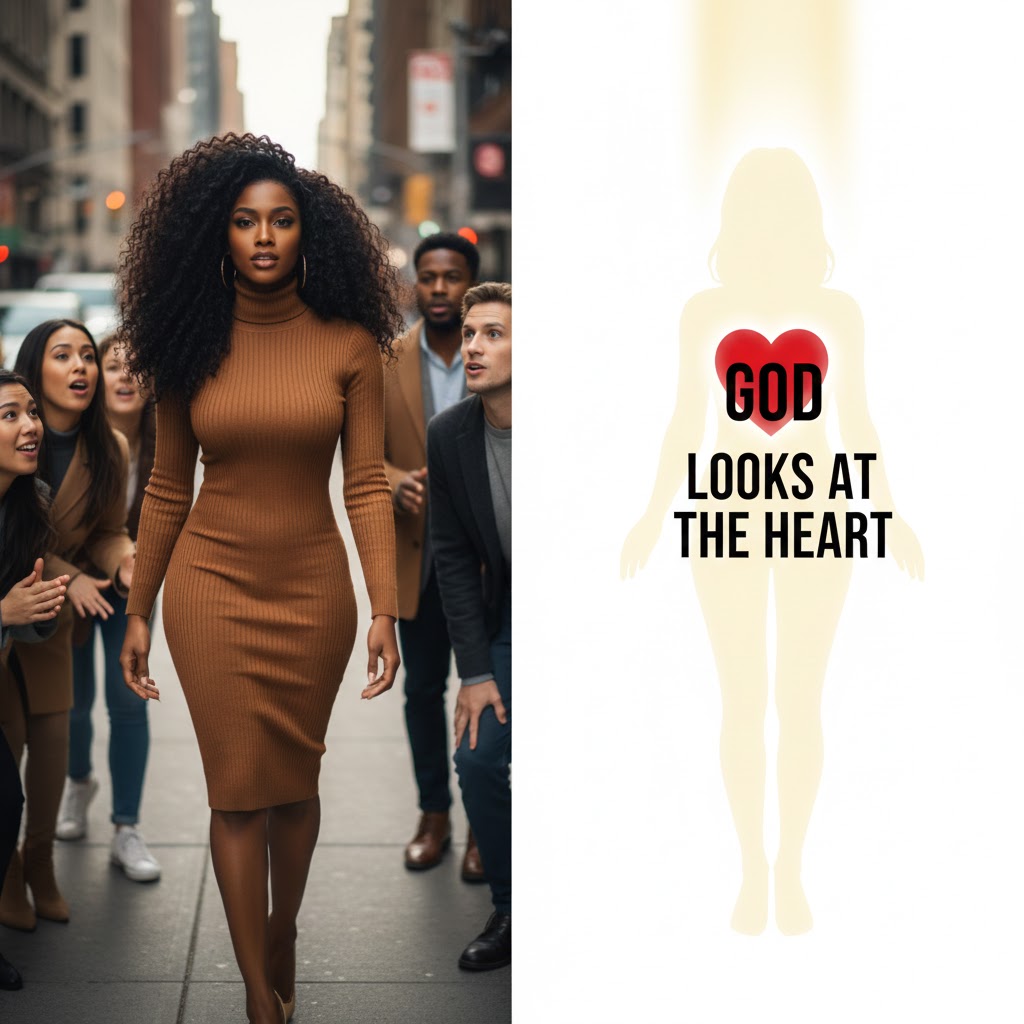
The Gospel of Beauty: For man looketh on the outward appearance, but the Lord looketh on the heart.

In a society increasingly obsessed with physical appearance, the tension between outward beauty and inner virtue has never been more pressing. Scripture repeatedly underscores that while humans are prone to judge based on external features, God evaluates the character and intentions of the heart. The Apostle Samuel’s words in 1 Samuel 16:7 (KJV) illustrate this: “But the Lord said unto Samuel, Look not on his countenance, or on the height of his stature; because I have refused him: for the Lord seeth not as man seeth; for man looketh on the outward appearance, but the Lord looketh on the heart.”

Physical beauty, while celebrated culturally, is transient. Societal standards continually shift, creating pressure to conform to ideals that are both fleeting and often unattainable. This emphasis on outward appearance fosters vanity, envy, and superficial judgment, diverting attention from moral, spiritual, and relational substance.

The Bible consistently contrasts external allure with internal virtue. Proverbs 31:30 (KJV) asserts: “Favor is deceitful, and beauty is vain: but a woman that feareth the Lord, she shall be praised.” Here, the text emphasizes reverence, wisdom, and moral integrity as enduring qualities far surpassing aesthetic appeal.

Men, too, are subject to this cultural fixation. In 1 Peter 3:3-4 (KJV), spiritual instruction guides believers: “Whose adorning let it not be that outward adorning of plaiting the hair, and of wearing of gold, or of putting on of apparel; But let it be the hidden man of the heart, in that which is not corruptible, even the ornament of a meek and quiet spirit, which is in the sight of God of great price.” True beauty emanates from humility, meekness, and spiritual devotion rather than fashion or cosmetics.

Social psychology mirrors this biblical principle. Studies on the “halo effect” show that attractive individuals are often assumed to possess positive traits; however, research also suggests that outward beauty does not predict ethical behavior, compassion, or integrity (Eagly et al., 1991). The wisdom of Scripture anticipates this insight, teaching discernment beyond superficial appearances.

Vanity and obsession with outward appearance can disrupt relationships and spiritual growth. When individuals prioritize beauty over character, they risk fostering pride, insecurity, and shallow social connections. Conversely, cultivating inner virtue promotes resilience, meaningful relationships, and spiritual fulfillment.

The Psalms reinforce the primacy of the heart over appearance. Psalm 51:10 (KJV) pleads: “Create in me a clean heart, O God; and renew a right spirit within me.” God’s concern is not outward perfection but purity of intent, ethical integrity, and contrition, qualities invisible to human eyes yet central to divine evaluation.

Biblical narratives illustrate that God often chooses those overlooked by society. Moses, a reluctant leader with apparent deficiencies in confidence; David, the youngest son of Jesse, overlooked for physical stature; and Esther, a woman of quiet virtue elevated to influence, exemplify God’s attention to character over appearance (Exodus 3, 1 Samuel 16, Esther 2).

Beauty, therefore, is not condemned but reframed. 1 Timothy 2:9-10 (KJV) instructs: “In like manner also, that women adorn themselves in modest apparel, with shamefacedness and sobriety; not with broided hair, or gold, or pearls, or costly array; But (which becometh women professing godliness) with good works.” True adornment lies in righteous actions and godly conduct.

Cultural and technological influences exacerbate the human tendency to equate beauty with value. Social media, advertising, and entertainment industries often perpetuate narrow ideals, while Scripture provides an enduring corrective: God measures worth by moral, relational, and spiritual integrity.

The New Testament further emphasizes the enduring nature of inner qualities. Galatians 5:22-23 (KJV) describes the fruit of the Spirit—love, joy, peace, longsuffering, gentleness, goodness, faith, meekness, temperance—which constitute lasting beauty far beyond physical allure.

Discerning God’s perspective requires intentional cultivation of the heart. Prayer, study of Scripture, and acts of service shift focus from external validation to divine affirmation, reinforcing humility, integrity, and spiritual maturity.

Parents and mentors have a responsibility to teach this principle. Encouraging children to value kindness, diligence, and godly character over appearance fosters resilience against societal pressures and nurtures lifelong spiritual and relational flourishing.

The dangers of valuing appearance above character are also illustrated in narrative warnings. Proverbs 31:25-26 (KJV) praises the virtuous woman: “Strength and honour are her clothing; and she shall rejoice in time to come. She openeth her mouth with wisdom; and in her tongue is the law of kindness.” Strength, honor, wisdom, and kindness surpass transient beauty in both societal and divine evaluation.

In communal life, the prioritization of inner virtue cultivates trust, empathy, and ethical behavior. A society that mirrors God’s evaluation—honoring the heart over the outward appearance—promotes justice, relational depth, and enduring value.

Christian leaders and teachers can model this principle, valuing and affirming individuals for character, service, and spiritual devotion rather than attractiveness or charm, thereby reinforcing a culture that reflects divine priorities.

Ultimately, the Gospel of Beauty calls for a reversal of conventional judgment. Human eyes may favor external traits, but God’s perspective emphasizes eternal qualities. Aligning personal and communal evaluation with this principle fosters moral clarity and spiritual depth.

Believers are reminded to cultivate discernment and humility. 1 Samuel 16:7 (KJV) serves as a perpetual guide: resist superficial judgment, prioritize inner virtue, and honor God’s assessment over societal perception.

In conclusion, while the world celebrates outward beauty, Scripture consistently teaches that God looks at the heart. True beauty is measured in character, integrity, service, and devotion. Aligning life with these principles ensures enduring worth, divine favor, and relational richness beyond the fleeting admiration of human eyes.

References

Eagly, A. H., Ashmore, R. D., Makhijani, M. G., & Longo, L. C. (1991). What is beautiful is good, but…: A meta-analytic review of research on the physical attractiveness stereotype. Psychological Bulletin, 110(1), 109–128.

Holy Bible, King James Version (KJV). 1 Samuel 16:7; Proverbs 31:30; 1 Peter 3:3-4; Psalm 51:10; 1 Timothy 2:9-10; Galatians 5:22-23; Proverbs 31:25-26.

Wolf, N. (1991). The beauty myth: How images of beauty are used against women. HarperCollins.

Langlois, J. H., Kalakanis, L., Rubenstein, A. J., Larson, A., Hallam, M., & Smoot, M. (2000). Maxims or myths of beauty? A meta-analytic and theoretical review. Psychological Bulletin, 126(3), 390–423.

The Color of Success: Melanin, Skin Tone, and Social Perception in Black Communities.

This photograph is the property of its respective owner. No copyright infringement intended.

Skin tone has long been a significant factor in shaping social dynamics within Black communities. The phenomenon of colorism—discrimination based on skin tone—has profound implications for individuals’ experiences and opportunities. This paper explores how melanin levels influence social perceptions, opportunities, and interpersonal relationships among Black individuals.Verywell Mind


Historical Context of Colorism

Colorism has roots in colonial and slavery-era ideologies that privileged lighter skin as a marker of European ancestry and higher social status. Practices like the “brown paper bag test” in Black social institutions exemplify how these biases were institutionalized within the community. Such historical precedents have perpetuated a hierarchy of skin tones, influencing societal perceptions and interactions.Verywell Mind+1Wikipedia


Skin Tone and Social Perception

Research indicates that lighter-skinned Black individuals often receive preferential treatment in various social contexts. For instance, studies have shown that lighter-skinned Black women tend to have advantages in employment and educational settings. Conversely, darker-skinned individuals may face biases that affect their social mobility and access to resources.


Psychosocial Impact of Colorism

The internalization of colorist ideals can lead to significant psychological effects. Darker-skinned individuals may experience lower self-esteem and increased susceptibility to mental health issues due to societal devaluation. Conversely, lighter-skinned individuals might grapple with identity conflicts and the pressure to conform to Eurocentric beauty standards.


Colorism in Media and Representation

Media portrayals often reinforce colorist biases by favoring lighter-skinned actors and models, thereby marginalizing darker-skinned individuals. This lack of representation can perpetuate stereotypes and limit opportunities for darker-skinned Black individuals in the entertainment industry.


Case Studies:

Colorism, the preferential treatment of lighter skin within Black communities, impacts both public figures and everyday individuals, shaping perceptions, opportunities, and self-esteem. A powerful example is Academy Award-winning actress Lupita Nyong’o, who has openly discussed her experiences growing up in Kenya with dark skin. From a young age, Nyong’o internalized societal and community biases, praying for lighter skin and believing that it would make her more beautiful and accepted. Her perspective began to shift when she encountered role models such as supermodel Alek Wek, whose prominence in the fashion industry challenged Eurocentric beauty standards. Nyong’o’s rise to global acclaim through films like 12 Years a Slave (2013) and Black Panther (2018) not only validated her personal worth but also sent a powerful message to dark-skinned individuals worldwide. She further leveraged her platform to advocate against skin bleaching and promote self-acceptance through her children’s book Sulwe (2019), providing younger generations with tools to resist internalized colorism and embrace their natural beauty.

Similarly, colorism deeply affects the daily lives of non-celebrities, as illustrated by the experiences of Maya Thompson, a 27-year-old African American woman from Atlanta. Growing up in a predominantly Black neighborhood, Thompson observed that lighter-skinned peers often received praise and attention from teachers and community members, while darker-skinned students, including herself, faced stereotypes associating their complexion with negative traits. These early experiences contributed to self-consciousness and internalized bias. As an adult, Thompson encountered subtle forms of colorism in professional settings, noticing that lighter-skinned colleagues were more likely to be promoted and treated favorably by clients. The psychological toll of these biases led her to pursue therapy and participate in mentorship and community programs designed to combat colorism and build self-esteem. By engaging in cultural initiatives celebrating darker skin tones and advocating for inclusive representation, Thompson gradually reclaimed her sense of identity and confidence.

Together, the experiences of Nyong’o and Thompson demonstrate the pervasive and multifaceted nature of colorism. While Nyong’o’s celebrity status provides visibility that can inspire broad societal change, Thompson’s story highlights the everyday psychological, social, and professional challenges faced by countless dark-skinned individuals. Both narratives underscore the importance of representation, mentorship, community support, and self-acceptance in confronting colorist attitudes and fostering resilience within Black communities.

Economic Implications of Skin Tone

Skin tone can influence economic opportunities and outcomes. Lighter-skinned individuals may have better job prospects and higher salaries, while darker-skinned individuals might face discrimination that hinders their economic advancement. These disparities contribute to the broader socioeconomic inequalities within Black communities.


Combating Colorism: Strategies and Initiatives

Efforts to address colorism include promoting diverse representation in media, implementing anti-discrimination policies, and fostering community dialogues about the impact of skin tone biases. Educational programs that challenge colorist attitudes and celebrate all shades of Blackness are essential in dismantling these ingrained prejudices.Verywell Mind


Conclusion

Colorism remains a pervasive issue within Black communities, affecting various aspects of life, from personal relationships to professional opportunities. Addressing colorism requires a multifaceted approach that includes education, representation, and systemic change. By confronting these biases, society can move towards greater equity and inclusivity for all Black individuals, regardless of skin tone.


References

  1. Assari, S., & Caldwell, C. H. (2022). How Skin Tone Influences Relationships Between Discrimination and Health: A Study of Black Adolescents. PMC. Retrieved from https://pmc.ncbi.nlm.nih.gov/articles/PMC9683503/
  2. Maddox, K. B., & Gray, S. A. (2002). Cognitive Representations of Black Americans: Re-examining the Role of Skin Tone. Personality and Social Psychology Bulletin, 28(2), 250-259.
  3. Hall, R. E. (2010). An Historical Analysis of Skin Color Discrimination. Journal of Black Studies, 40(1), 5-24.
  4. Dixon, T. L. (2017). Racism in the United States: Implications for Media Representation. Journal of Social Issues, 73(1), 1-17.
  5. Hall, R. E. (1995). Dark Skin and the Cultural Ideal of Masculinity. Journal of African American Studies, 1(3), 37-62.
  6. Hall, R. E. (1992). Bias Among African Americans Regarding Skin Color: Implications for Social Work Practice. Research on Social Work Practice, 2(4), 479-486.
  7. Hall, R. E. (2010). An Historical Analysis of Skin Color Discrimination. Journal of Black Studies, 40(1), 5-24.
  8. Hall, R. E. (1995). Dark Skin and the Cultural Ideal of Masculinity. Journal of African American Studies, 1(3), 37-62.
  9. Hall, R. E. (1992). Bias Among African Americans Regarding Skin Color: Implications for Social Work Practice. Research on Social Work Practice, 2(4), 479-486.
  10. Hall, R. E. (2010). An Historical Analysis of Skin Color Discrimination. Journal of Black Studies, 40(1), 5-24.

Essence. (2014, March 4). Lupita Nyong’o’s inspiring speech on beauty that everyone should hear. Retrieved from https://www.essence.com

Nyong’o, L. (2019). Sulwe. New York: Simon & Schuster Books for Young Readers.

Hall, R. E. (2010). An historical analysis of skin color discrimination. Journal of Black Studies, 40(1), 5–24.

Hunter, M. (2007). The persistent problem of colorism: Skin tone, status, and inequality. Sociology Compass, 1(1), 237–254.

  • Essence. (2014, March 4). Lupita Nyong’o’s inspiring speech on beauty that everyone should hear. Retrieved from https://www.essence.com
  • Nyong’o, L. (2019). Sulwe. New York: Simon & Schuster Books for Young Readers.
  • Keith, V., & Herring, C. (1991). Skin tone and stratification in the Black community. American Journal of Sociology, 97(3), 760–778.
  • Glenn, E. N. (2009). Yearning for lightness: Transnational circuits in the marketing and consumption of skin lighteners. Gender & Society, 23(3), 281–302.

The Afrocentric Reclamation

The Afrocentric Reclamation represents a global awakening among people of African descent—an intentional return to ancestral identity, cultural memory, spiritual heritage, and historical truth. It is a movement born from centuries of erasure, distortion, and colonial narratives that sought to diminish the contributions of African civilizations. Yet in the twenty-first century, this reclamation signals a collective turning of the tide: a restoring of dignity, a rewriting of narratives, and a reconnection to the intellectual, artistic, and spiritual genius of Africa’s past. At its core, Afrocentric reclamation is not merely about remembering history; it is about repositioning Africa at the center of its own story.

This reclamation emerged as a corrective to Eurocentric frameworks that portrayed Africa as primitive or culturally inferior. Scholars, activists, and artists recognized that the continent’s civilizations—Kemet, Nubia, Mali, Songhai, Axum, Benin, and countless others—were pillars of human development. By reinserting Africa into global historical narratives, Afrocentric thinkers challenged stereotypes and offered a fuller, more truthful account of African ingenuity. This reclamation affirms that African identity is not a legacy of slavery but a legacy of civilization.

The Afrocentric perspective emphasizes agency—the understanding that African people shaped their own destinies rather than being passive subjects of history. This shift in thinking allows descendants of the African diaspora to see themselves as inheritors of wisdom, strength, and resilience. Through Afrocentric reclamation, the Black world finds empowerment in continuity rather than rupture, seeing diaspora identity as spiritually and culturally connected to the continent despite forced displacement.

A crucial part of this reclamation involves reexamining the psychological effects of colonization, enslavement, and racial narratives. Scholars such as Frantz Fanon and Carter G. Woodson exposed how systems of domination created internalized oppression, teaching Black people to undervalue their culture and identity. Afrocentric reclamation disrupts these psychological chains by cultivating a renewed pride in African languages, fashions, traditions, and worldviews.

Language itself becomes a radical act of reclamation. From the restoration of Swahili and Yoruba in the diaspora to the resurgence of Kemetian linguistic studies, language reacquaints African-descended people with the philosophies embedded in ancient words. Language offers access to African concepts of community, spirituality, and cosmology—ideas that are often absent in Western discourse but foundational in African thought.

Spiritual reclamation is another crucial dimension. Many reconnect with African spirituality, whether through traditional religions, Ethiopian Christianity, Hebraic identity frameworks, or African interpretations of the Christian faith. This spiritual renaissance asserts that African people have always possessed deep relationships with the divine—relationships that predate colonial missionary efforts. Afrocentric spirituality highlights harmony, ancestry, communal ethics, and the sacredness of life.

The arts—music, literature, dance, and visual expression—play a powerful role in this cultural resurgence. From Afrobeat to Afrofuturism, from Pan-African literature to contemporary African film, the creative world reflects a growing pride in African aesthetics. The arts become a gateway for younger generations who may not have direct access to historical scholarship but feel the reclamation in rhythm, style, and imagery.

Education is a key battleground for Afrocentric reclamation. Afrocentric curriculum movements challenge the absence or misrepresentation of Africa in textbooks. Instead of centering Europeans as global discoverers or innovators, Afrocentric education highlights African contributions in mathematics, architecture, metallurgy, astronomy, medicine, and governance. This educational shift is vital for reshaping how Black children see themselves and how the world sees Africa’s genius.

Diaspora communities—from the Caribbean to the Americas to Europe—participate in this reclamation by reconnecting with African roots through genealogical research, DNA testing, and travel. DNA analysis, despite limitations, has helped millions rediscover ancestral regions, validating intuitions of identity that survived slavery and dislocation. This reconnection strengthens the spiritual and emotional ties between Africa and its global descendants.

Afrocentric reclamation also challenges global power structures that maintain racial inequality. By reclaiming African historical centrality, the movement exposes how colonialism, capitalism, and racism collaborated to strip Africa of power and resources. Reclamation becomes a political act, pushing the world to confront ongoing injustices in economics, land theft, global trade, and media representation.

Furthermore, Afrocentric reclamation empowers Black women, whose contributions have often been doubly erased—both by racism and patriarchy. Reclaiming African matriarchal traditions, warrior queens, philosophers, and leaders restores balance to narratives that once sidelined them. This reclamation allows Black women to step into ancestral identities that affirm their strength, wisdom, and divinity.

The movement also reshapes concepts of beauty. Instead of Western beauty standards that devalued African features, the Afrocentric perspective celebrates melanin, coils, braids, full lips, and ancestral aesthetics. Beauty becomes political, spiritual, and historical—an affirmation of the sacredness of African bodies.

Economically, Afrocentric reclamation encourages Pan-African cooperation. Black-owned businesses, global trade networks, and cross-continental partnerships reflect a renewed commitment to economic self-sufficiency. This economic revival echoes earlier movements such as Garveyism but adapts to modern digital and global realities.

Politically, Afrocentric reclamation supports unity across national borders. Pan-Africanism urges African-descended people to collaborate in addressing issues such as police violence, neocolonialism, environmental injustice, and educational barriers. This unity strengthens global activism and amplifies the voices of African people worldwide.

Afrocentric reclamation redefines the African diaspora not as a scattered people but as a global community connected by history, struggle, and destiny. It fosters a shared consciousness that transcends nationality, tribe, or language. This collective identity resists fragmentation and builds strength through shared purpose and memory.

The movement also challenges academia to reconsider long-held assumptions. Archaeologists, geneticists, historians, and theologians are increasingly interrogating Eurocentric biases and expanding their frameworks to include African perspectives. Afrocentric inquiry elevates indigenous knowledge systems and reevaluates the origins of civilization.

At its core, Afrocentric reclamation is a healing process. It addresses historical trauma by giving African descendants the tools to name their pain, reclaim their dignity, and restore their cultural inheritance. Healing occurs when people reconnect with roots that were forcibly severed, discovering that ancestral pride is stronger than oppression.

Finally, the Afrocentric Reclamation is a vision for the future. It imagines a world where Africa is recognized not for its suffering but for its contributions, leadership, and promise. It envisions a global Black community grounded in unity, consciousness, and empowerment—standing tall in the knowledge that Africa is not a footnote to history but a foundation of humanity.


References

Asante, M. K. (2007). An Afrocentric manifesto: Toward an African renaissance. Polity Press.

Asante, M. K. (1998). The Afrocentric idea (2nd ed.). Temple University Press.

Diop, C. A. (1989). The African origin of civilization: Myth or reality. Lawrence Hill Books.

Fanon, F. (2004). Black skin, white masks (R. Philcox, Trans.). Grove Press. (Original work published 1952)

Karenga, M. (2010). Introduction to Black studies (4th ed.). University of Sankore Press.

Woodson, C. G. (2006). The mis-education of the Negro. Classic House Books. (Original work published 1933)

Wright, J. (2018). The transatlantic slave trade: A history in documents. Hackett Publishing.

Mazama, A. (Ed.). (2003). The Afrocentric paradigm. Africa World Press.

Obenga, T. (2004). African philosophy: The Pharaonic period: 2780–330 BC. Per Ankh.

Thornton, J. K. (1998). Africa and Africans in the making of the Atlantic world, 1400–1800 (2nd ed.). Cambridge University Press.

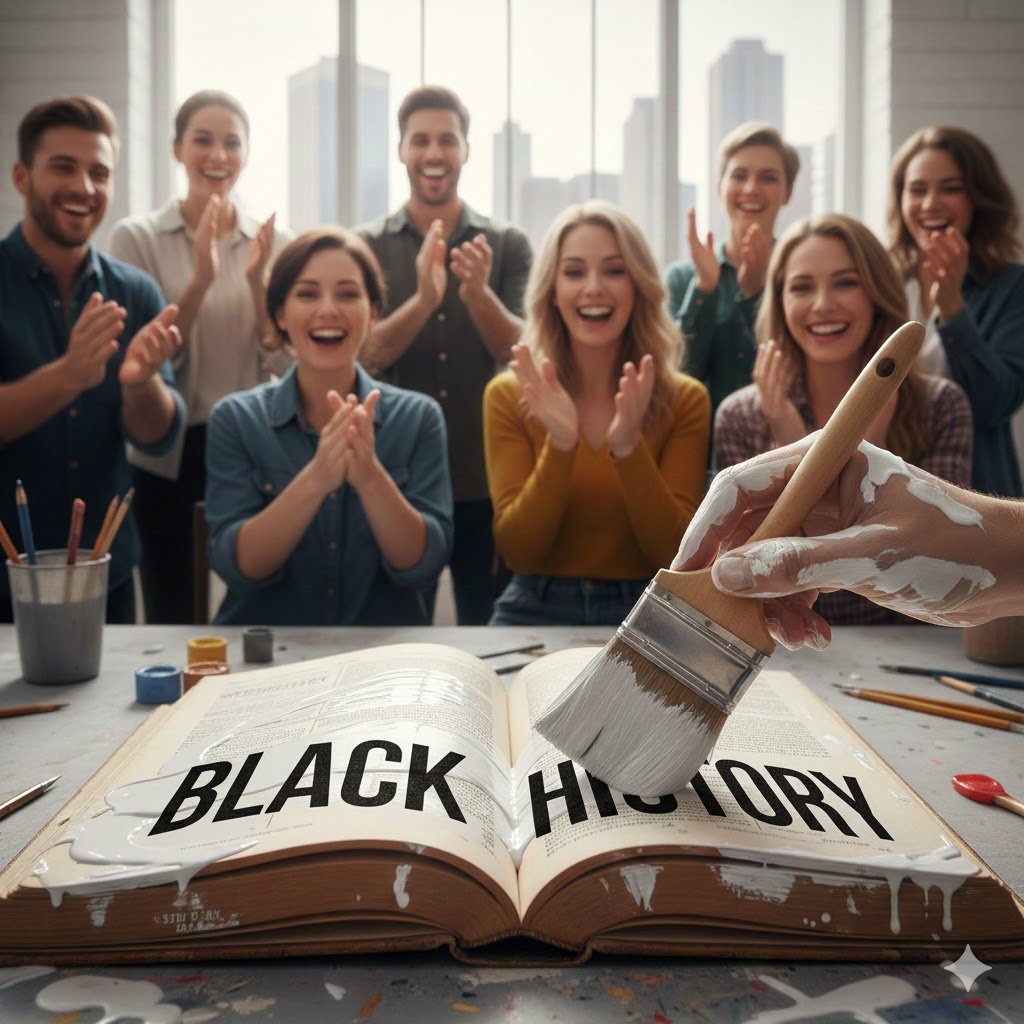
Who Benefits When the Curriculum is Sanitized, and the History is Whitewashed?

When education omits uncomfortable truths or sanitizes history, it does more than distort knowledge—it shapes identities and values in ways that serve the powerful. A whitewashed curriculum often conceals oppression, marginalization, and systemic injustice, leaving students with a skewed perception of reality.

Sanitizing history benefits those who wish to maintain societal dominance. By minimizing the moral failures of the powerful and glorifying selective narratives, the truth about injustice is obscured. Proverbs 18:13 warns, “He that answereth a matter before he heareth it, it is folly and shame unto him.” Without hearing the full account, society cannot respond with justice.

Whitewashing history perpetuates ignorance. Students grow up unaware of the struggles and resilience of oppressed peoples, creating a populace less likely to recognize injustice in the present. Knowledge of history is a form of power, and withholding it sustains inequity.

This sanitized narrative also undermines moral development. Encountering the realities of human sin is essential for cultivating discernment. Romans 1:18–20 states, “For the wrath of God is revealed from heaven against all ungodliness and unrighteousness of men, who hold the truth in unrighteousness.” Suppressing truth allows unrighteousness to flourish.

Those most harmed by whitewashing are communities whose histories are erased or distorted. Cultural and spiritual identity are shaped by knowledge of one’s past. Deuteronomy 32:7 teaches, “Remember the days of old, consider the years of many generations: ask thy father, and he will shew thee; thy elders, and they will tell thee.” History forms the backbone of identity, and its erasure impoverishes future generations.

Sanitized curricula also obscure the mechanisms of systemic oppression. Understanding slavery, colonization, segregation, and exploitation is essential to preventing their recurrence. Ignorance of these realities benefits the descendants of oppressors, who inherit both unexamined privilege and historical myths.

Economic and social power is often maintained through control of narratives. Ecclesiastes 8:11 reminds us, “Because sentence against an evil work is not executed speedily, therefore the heart of the sons of men is fully set in them to do evil.” Delay or denial of historical accountability allows injustices to continue unnoticed.

Whitewashing history also influences psychological and social development. When young people are taught incomplete or sanitized histories, they may internalize inferiority or fail to appreciate their heritage. Understanding one’s ancestry builds resilience and pride.

Sanitized education can manipulate national or cultural identity. By presenting selective histories, institutions foster loyalty to ideologies that serve dominant groups, rather than encouraging critical thinking or moral responsibility. Proverbs 23:23 states, “Buy the truth, and sell it not; also wisdom, and instruction, and understanding.” Truth must be sought and taught, even when uncomfortable.

In contrast, confronting history honestly fosters justice. Awareness of past wrongs equips society to correct present inequities and cultivate empathy. Psalm 82:3–4 exhorts, “Defend the poor and fatherless: do justice to the afflicted and needy. Deliver the poor and needy: rid them out of the hand of the wicked.” Education that recognizes oppression is a tool for justice.

Those in power benefit materially and socially from sanitized curricula. Wealth and influence are preserved, and social hierarchies remain unchallenged. Historical truths that might provoke moral or political reform are hidden.

Religious texts emphasize the importance of remembering and teaching truth. Proverbs 4:7 teaches, “Wisdom is the principal thing; therefore get wisdom: and with all thy getting get understanding.” Knowledge of history is part of this wisdom.

The erasure of marginalized histories also diminishes collective memory. When atrocities or injustices are minimized, lessons from the past are lost, and societies are more likely to repeat mistakes.

Furthermore, sanitized curricula often valorize the oppressor’s narrative, embedding it as a universal truth. This skews morality and erodes empathy, teaching young people to admire figures or institutions without critical evaluation.

A society that ignores historical suffering undermines the spiritual imperative to pursue justice. Isaiah 1:17 instructs, “Learn to do well; seek judgment, relieve the oppressed, judge the fatherless, plead for the widow.” Ignorance of oppression prevents action aligned with divine justice.

The consequences of whitewashed education are multi-generational. When children grow up unaware of historical realities, social inequalities persist, and systemic injustices are perpetuated silently.

Reclaiming historical truth empowers oppressed communities. Knowledge of ancestral struggles and victories fosters resilience, identity, and social cohesion. Deuteronomy 4:9 emphasizes the importance of remembering and teaching what one has learned: “Take ye therefore good heed unto yourselves; for ye saw no manner of similitude on the day that the LORD spake unto you in Horeb out of the midst of the fire.” Awareness preserves wisdom across generations.

In conclusion, sanitized curricula and whitewashed history benefit the powerful by preserving privilege and suppressing accountability. Yet, God commands the pursuit of truth, justice, and understanding, calling societies to confront their past and act rightly.

True education must confront reality fully. Only through honesty in teaching history can justice, empathy, and spiritual discernment flourish. Societies that conceal history cheat themselves of moral and spiritual growth, while those who face it with courage honor God and humanity alike.


References (KJV Bible):

  • Proverbs 18:13
  • Romans 1:18–20
  • Psalm 82:3–4
  • Deuteronomy 32:7
  • Ecclesiastes 8:11
  • Proverbs 23:23
  • Proverbs 4:7
  • Isaiah 1:17
  • Deuteronomy 4:9