Tag Archives: the bible

Dilemma : The Beast Nation

The term Beast Nation is not merely rhetorical; it is biblical, symbolic, and historical. In Scripture, beasts represent empires built on domination, violence, deception, and exploitation (Daniel 7; Revelation 13). America, when examined through its treatment of Black and Indigenous peoples, mirrors the characteristics of a prophetic beast—powerful, wealthy, religious in language, yet ruthless in practice.

Colonialism marks the first stage of the Beast Nation. European powers arrived under the banner of “discovery,” yet what followed was invasion, land theft, and cultural annihilation. Indigenous nations were displaced, murdered, and erased to establish settler dominance, fulfilling the biblical pattern of conquest through bloodshed (Habakkuk 2:12, KJV).

Colonial theology weaponized Christianity to justify conquest. Scripture was distorted to portray Europeans as divinely ordained rulers while Africans and Indigenous peoples were cast as subhuman. This manipulation of God’s Word mirrors the beast that speaks “great things and blasphemies” (Revelation 13:5, KJV).

Chattel slavery institutionalized this evil into law. Unlike other forms of servitude, chattel slavery reduced Africans to lifelong, inheritable property. Black bodies became commodities—bought, sold, bred, insured, and punished—stripped of humanity and covenantal identity.

The Bible condemns manstealing explicitly: “He that stealeth a man, and selleth him…shall surely be put to death” (Exodus 21:16, KJV). Yet America built its wealth in direct violation of this command, revealing the moral contradiction at its core.

Reconstruction briefly exposed the Beast Nation’s fear of Black autonomy. Promises of “40 acres and a mule” symbolized restitution and independence, yet these promises were rescinded. Land was returned to former enslavers, while Black families were thrust into sharecropping and debt peonage.

This betrayal echoed Proverbs 20:10: “Divers weights, and divers measures, both of them are alike abomination to the LORD” (KJV). America promised justice publicly while practicing theft privately.

Jim Crow followed as a system of racial terror disguised as law. Segregation, lynching, and voter suppression enforced white supremacy through fear. Black progress was criminalized, and racial hierarchy was violently preserved.

Lynching functioned as public ritual—Black bodies displayed as warnings. Crosses burned beside corpses while churches remained silent or complicit. This hypocrisy fulfilled Isaiah 1:15: “Your hands are full of blood” (KJV).

Surveillance evolved as a modern method of control. Slave patrols became police departments; plantation ledgers became data systems. Black neighborhoods were watched, tracked, and criminalized long before digital technology made surveillance ubiquitous.

The civil rights movement revealed the Beast Nation’s resistance to righteousness. Peaceful protestors were beaten, jailed, assassinated, and vilified. America condemned foreign tyranny while unleashing state violence on its own citizens.

Dr. King’s assassination symbolized the cost of prophetic truth. Like the prophets before him, he confronted power—and paid with his life (Matthew 23:37, KJV).

The War on Drugs marked a new era of legalized oppression. Though drug use was statistically similar across races, Black communities were targeted disproportionately. Mandatory minimums, three-strikes laws, and police militarization fueled mass incarceration.

Scripture warns of unjust laws: “Woe unto them that decree unrighteous decrees” (Isaiah 10:1, KJV). The prison system became a modern plantation, extracting labor and removing generations of Black men and women from their communities.

America proclaims itself the “Land of the Free,” yet millions of Black people lived and died in bondage on that very soil. Freedom was declared selectively, revealing liberty as conditional rather than universal.

It calls itself the “Home of the Brave,” while Indigenous nations were slaughtered, displaced, and confined to reservations. Courage was claimed by conquerors, while resistance was labeled savagery.

“In God We Trust” is stamped on currency that once financed human trafficking, slave ships, and plantations. Mammon was worshiped while God’s commandments were violated (Matthew 6:24, KJV).

“One Nation Under God” rang hollow as Black bodies swung from trees and crosses burned in terror campaigns. God’s name was invoked while His image-bearers were desecrated.

“Liberty and justice for all” existed only for white citizens. Black Americans were excluded from the social contract, taxed without representation, and punished without protection.

Education systems sanitized this history, presenting America as a flawed but noble experiment rather than a predatory empire. Truth was buried beneath patriotism.

Media reinforced the beast’s image, portraying Black resistance as threat and Black suffering as deserved. Narrative control became psychological warfare.

Churches often chose comfort over conviction. Many preached obedience to the state while ignoring God’s demand for justice (Micah 6:8, KJV).

The Beast Nation thrives on amnesia. Forgetting allows repetition; silence permits continuation.

Biblically, beasts fall when truth is revealed and judgment arrives (Daniel 7:26). Empires collapse not from external enemies alone, but from internal corruption.

For Black America, survival has always required spiritual discernment—recognizing systems not merely as flawed, but as adversarial.

The Exodus narrative reminds us that God hears the cries of the oppressed (Exodus 3:7, KJV). Liberation is divine, not granted by empires.

The Beast Nation fears awakening. Knowledge of history, identity, and covenant threatens its legitimacy.

Judgment begins with truth. Repentance demands restitution, not rhetoric.

Until justice flows “like waters, and righteousness like a mighty stream” (Amos 5:24, KJV), America remains a beast clothed in religious language and democratic symbols.


References

Alexander, M. (2012). The new Jim Crow: Mass incarceration in the age of colorblindness. The New Press.

Baptist, E. E. (2014). The half has never been told: Slavery and the making of American capitalism. Basic Books.

Du Bois, W. E. B. (1935). Black reconstruction in America. Free Press.

Horsman, R. (1981). Race and manifest destiny. Harvard University Press.

KJV Bible. (1769/2017). Authorized King James Version.

Wilkerson, I. (2020). Caste: The origins of our discontents. Random House.

Holy Relationship Goals

Holy relationship goals are not rooted in trends, aesthetics, or social media admiration, but in divine order and obedience to God. A relationship that honors the Most High is intentional, disciplined, and purpose-driven. Scripture reminds us that unless the Lord builds the house, all labor is in vain (Psalm 127:1, KJV). Marriage begins long before the wedding day—it begins in spiritual preparation.

The foundation of a holy relationship is a shared commitment to God. Two individuals must first be submitted to Christ before they can walk in unity with one another. Spiritual alignment is not optional; it is essential. “Be ye not unequally yoked together with unbelievers” (2 Corinthians 6:14, KJV). Agreement in faith produces stability in love.

Purity is a central goal in any God-honoring relationship. Sexual discipline before marriage reflects reverence for God and respect for one another. Scripture commands believers to flee fornication, recognizing that the body is the temple of the Holy Ghost (1 Corinthians 6:18–19, KJV). Purity is not merely abstinence; it is holiness in thought, intention, and action.

Marriage in God’s design is a covenant, not a contract. It is a lifelong union established by God Himself. “What therefore God hath joined together, let not man put asunder” (Matthew 19:6, KJV). Holy relationship goals emphasize permanence, faithfulness, and accountability rather than convenience or emotional escape.

Preparation for marriage requires personal maturity. Each individual must develop character, self-control, and responsibility before seeking a partnership. Proverbs teaches that wisdom builds a house, while understanding establishes it (Proverbs 24:3, KJV). A strong marriage is built by whole individuals, not broken expectations.

Financial stewardship is a critical component of holy relationship goals. God expects couples to manage resources wisely, avoiding debt, greed, and financial secrecy. “The borrower is servant to the lender” (Proverbs 22:7, KJV). Financial unity requires honesty, planning, and shared values regarding money.

Men are called to be providers, in income and leadership, protection, and provision of stability. Scripture declares that a man who does not provide for his household has denied the faith (1 Timothy 5:8, KJV). Biblical provision includes spiritual leadership, emotional covering, and responsible decision-making.

A woman’s role as a helpmeet is not inferior but a divine assignment. God created the woman as a suitable helper, corresponding in strength and wisdom (Genesis 2:18, KJV). A godly woman supports, encourages, and partners with her husband in fulfilling God’s purpose for the family.

Mutual respect is essential in holy relationship goals. Husbands are commanded to love their wives sacrificially, as Christ loved the church (Ephesians 5:25, KJV). Wives are instructed to respect their husbands, recognizing God’s order within marriage (Ephesians 5:33, KJV). Love and respect work together to create harmony.

Prayer must be central in a holy relationship. Couples who pray together invite God into their decisions, struggles, and future plans. “If two of you shall agree on earth as touching any thing that they shall ask, it shall be done” (Matthew 18:19, KJV). Prayer aligns hearts with heaven.

Communication rooted in truth and grace strengthens relationships. Scripture warns that careless words bring destruction, while wise speech brings healing (Proverbs 12:18, KJV). Holy relationship goals include learning to speak with patience, humility, and love, even during conflict.

Forgiveness is another essential goal. No marriage thrives without grace. The Bible commands believers to forgive as Christ forgave them (Colossians 3:13, KJV). Forgiveness prevents bitterness from taking root and allows love to endure trials.

A holy relationship is also disciplined in boundaries. Emotional, physical, and relational boundaries protect the covenant from compromise. “Abstain from all appearance of evil” (1 Thessalonians 5:22, KJV). Boundaries honor God and preserve trust.

Purpose-driven marriage looks beyond romance to legacy. Godly couples consider how their union will glorify God, raise righteous children, and impact generations. “But as for me and my house, we will serve the LORD” (Joshua 24:15, KJV). Marriage is a ministry within the home.

Patience is necessary when pursuing God’s design. Rushing ahead of God often leads to regret. Scripture teaches that waiting on the Lord renews strength and clarity (Isaiah 40:31, KJV). Holy relationship goals include trusting God’s timing rather than forcing outcomes.

Commitment to growth is vital. Marriage requires continual learning, humility, and self-examination. “Iron sharpeneth iron; so a man sharpeneth the countenance of his friend” (Proverbs 27:17, KJV). Growth-minded couples mature together rather than apart.

Faithfulness guards the heart and honors the covenant. Adultery, whether physical or emotional, destroys trust and invites judgment. “Thou shalt not commit adultery” (Exodus 20:14, KJV). Holy relationships are marked by loyalty in action and thought.

Joy is a byproduct of obedience, not indulgence. God desires marriage to be joyful, peaceful, and fulfilling when done His way. “Whoso findeth a wife findeth a good thing, and obtaineth favour of the LORD” (Proverbs 18:22, KJV). Joy flows from righteousness.

A holy relationship reflects Christ to the world. Marriage becomes a testimony of God’s love, order, and redemption. “Let your light so shine before men” (Matthew 5:16, KJV). Godly unions preach without words.

Holy relationship goals ultimately lead to a marriage that honors God above all else. Through purity, preparation, provision, partnership, and prayer, couples align themselves with divine purpose. What God establishes in righteousness, He sustains in power—and such a relationship becomes both a blessing and a legacy.


References (KJV Bible)
The Holy Bible, King James Version. Scriptures cited from Genesis, Exodus, Psalms, Proverbs, Isaiah, Matthew, Corinthians, Ephesians, Colossians, Thessalonians, Timothy, Joshua, and related passages.

The Bible Series: The Story of Hosea

The story of Hosea is one of profound prophecy, divine love, and enduring mercy. Hosea, a prophet in the northern kingdom of Israel, was called by God to deliver a message of judgment and restoration. His life became a living parable, demonstrating God’s steadfast love for a wayward people.

Hosea’s ministry took place during a time of moral decay, idolatry, and political instability in Israel. The people had turned from God, worshiping Baal and following sinful practices. God chose Hosea to confront this rebellion and call Israel back to repentance.

The Lord commanded Hosea to marry Gomer, a woman described as being of harlotry (Hosea 1:2, KJV). This marriage symbolized Israel’s unfaithfulness to God. Just as Gomer would betray Hosea, Israel had forsaken the Lord despite His covenantal love.

Hosea’s relationship with Gomer served as a living message. Each betrayal and reconciliation mirrored the spiritual adultery of Israel and God’s unwavering desire to restore His people. “And the Lord said unto him, Go again, love a woman beloved of her friend, yet an adulteress” (Hosea 3:1, KJV).

The children of Hosea were named with prophetic significance. His first son, Jezreel, symbolized coming judgment on the house of Jehu (Hosea 1:4, KJV). His daughter, Lo-Ruhamah, represented God’s temporary withdrawal of mercy (Hosea 1:6, KJV). His second son, Lo-Ammi, signified that Israel was not His people (Hosea 1:9, KJV).

Despite Israel’s infidelity, God’s heart was filled with compassion. Hosea’s life illustrated that God’s love persists even when His people stray. “How shall I give thee up, Ephraim? how shall I deliver thee, Israel?” (Hosea 11:8, KJV). God’s patience and desire for repentance shine through Hosea’s narrative.

Hosea’s prophecies were both warnings and invitations. He admonished the Israelites to return to God and forsake idolatry. “O Israel, return unto the Lord thy God; for thou hast fallen by thine iniquity” (Hosea 14:1, KJV). Repentance was central to restoration.

Idolatry was depicted as spiritual adultery. The people’s worship of other gods mirrored unfaithfulness in a covenant relationship. Hosea’s symbolic marriage underscored the seriousness of covenant breaking and the pain it caused the heart of God.

Hosea’s life teaches the power of forgiveness. Gomer’s repeated infidelity did not sever the covenantal bond. Similarly, God’s forgiveness remains available to Israel and to believers who return to Him in sincere repentance.

Hosea’s message emphasizes the depth of God’s mercy. Though judgment was inevitable, restoration was promised. “I will heal their backsliding, I will love them freely: for mine anger is turned away from him” (Hosea 14:4, KJV). Restoration follows true repentance.

The story of Hosea highlights divine patience. God waits for His people to return, demonstrating a love that transcends human failure. “He hath not dealt with us after our sins; nor rewarded us according to our iniquities” (Psalm 103:10, KJV).

God’s love is active, not passive. Hosea was called to enact a tangible example of God’s compassion. Through marriage, family life, and prophecy, Hosea displayed the tension between judgment and mercy.

Hosea also addresses communal responsibility. The nation’s leaders and people were accountable for perpetuating sin. Prophets like Hosea reminded them that leadership entails righteousness and moral guidance.

The book of Hosea encourages self-reflection. Believers today are called to examine personal fidelity to God, turning from idolatry—whether literal or metaphorical—and embracing covenant faithfulness.

Faithfulness is central. Hosea’s life illustrates that God desires not merely obedience, but loyalty of heart. Spiritual devotion requires commitment, consistency, and integrity.

The story also conveys hope. Even when consequences are severe, God promises renewal for those who seek Him. Restoration is not earned, but freely given to repentant hearts.

Hosea demonstrates that love often requires sacrifice. The prophet’s obedience came at personal cost, yet his fidelity modeled God’s own willingness to redeem and restore humanity.

God’s justice and mercy coexist. Hosea portrays a God who judges sin yet extends grace, showing that divine love is both righteous and redemptive.

Ultimately, the story of Hosea is a call to return, to love, and to remain faithful. It reminds believers that God’s heart is always inclined toward reconciliation, teaching lessons of patience, forgiveness, and covenant loyalty.

Hosea’s life and prophecies continue to inspire believers to pursue holiness, love God wholeheartedly, and reflect His mercy in relationships and communities.


References

The Holy Bible, King James Version. (1769/2017). Cambridge University Press.

Oswalt, J. N. (1998). The Book of Hosea: An exegetical and theological commentary. Eerdmans.

Motyer, J. A. (2005). The Message of Hosea: God’s unfailing love. Inter-Varsity Press.

Allen, L. C. (2008). Hosea: A commentary. Westminster John Knox Press.

The Bible Series: “”Joseph”” The Faithful Dreamer and His Eternal Legacy.

This photograph is the property of its respective owner. No copyright infringement intended.

Joseph, the eleventh son of Jacob, was born to Rachel, Jacob’s beloved wife, and immediately marked as a child of promise (Genesis 30:22–24, KJV). From his earliest years, he demonstrated a spirit favored by God and recognized by his father, who bestowed upon him the coat of many colors, a garment symbolizing both love and divine favor (Genesis 37:3, KJV). Yet this symbol of distinction also stirred deep envy among his brothers, planting seeds of rivalry that would shape Joseph’s early trials.

Each of the twelve sons of Jacob, founders of Israel’s tribes, had a corresponding precious stone on the High Priest’s breastplate, representing God’s covenant with them. Joseph’s stone was onyx, described in Exodus 28:20: “And the fourth row a beryl, and an onyx, and a jasper: they shall be set in gold in their inclosings” (KJV). Onyx symbolizes resilience, layered strength, and divine protection, foreshadowing Joseph’s ability to endure hardship while preserving his faith and integrity. The stone’s complex beauty reflects his life: layered with trials yet polished by God’s providence.

Joseph’s early life was defined by extraordinary dreams, foretelling that he would rise above his family: “Behold, I have dreamed a dream more; and, behold, the sun and the moon and the eleven stars made obeisance to me” (Genesis 37:9, KJV). These dreams fueled his brothers’ jealousy, motivating them to betray him. They initially plotted to kill him, but ultimately sold him into slavery to Midianite traders, demonstrating the destructive power of envy (Genesis 37:18–28, KJV).

Sold to Potiphar, an officer of Pharaoh, Joseph’s character quickly distinguished him. Despite being a foreigner and a slave, he found favor in Potiphar’s sight, “and the Lord was with Joseph, and he was a prosperous man” (Genesis 39:2, KJV). Joseph’s diligence and faithfulness exemplify how God’s presence can elevate and sustain His servants even in adversity.

Potiphar’s wife tested Joseph’s moral integrity, attempting to seduce him. Joseph resisted, declaring, “How then can I do this great wickedness, and sin against God?” (Genesis 39:9, KJV). His refusal highlights the principle that consecration is not only about obedience but also about protecting the sanctity of the body and the soul from defilement.

False accusations led to Joseph’s imprisonment, yet even there God’s favor remained. “But the Lord was with Joseph, and shewed him mercy, and gave him favour in the sight of the keeper of the prison” (Genesis 39:21–23, KJV). Joseph’s life demonstrates that God’s providence can operate through trials, shaping character, wisdom, and resilience.

Joseph’s God-given gift of dream interpretation became central to his rise. He accurately interpreted the dreams of Pharaoh’s servants in prison (Genesis 40:8, KJV), and later Pharaoh’s troubling dreams of seven years of plenty followed by seven years of famine (Genesis 41:15–32, KJV). This prophetic insight elevated him to second-in-command over Egypt, entrusted with the nation’s resources during a time of impending crisis.

His administration during the famine revealed extraordinary wisdom, foresight, and humility. “Thou shalt be over my house, and according unto thy word shall all my people be ruled” (Genesis 41:40, KJV). Joseph’s leadership saved Egypt and positioned him to fulfill God’s covenant promises to his family, demonstrating that consecrated service benefits both the individual and God’s broader plan.

The famine brought Joseph’s brothers to Egypt seeking sustenance. Initially unrecognized, Joseph tested their hearts to discern repentance (Genesis 42–44, KJV). His careful discernment, mercy, and wisdom underscore the spiritual maturity cultivated through suffering.

Ultimately, Joseph revealed his identity, saying, “I am Joseph; doth my father yet live?” (Genesis 45:3, KJV). His forgiveness reconciled his family, turning their envy and betrayal into instruments of divine providence. Joseph exemplified how God can transform human malice into salvation and blessing.

Joseph’s personal gifts—wisdom, discernment, humility, and prophetic insight—were manifestations of God’s Spirit (Genesis 41:16, KJV). These gifts allowed him to preserve nations, restore his family, and serve as a model of faithfulness. His consecrated life demonstrates that spiritual gifts function best when aligned with obedience and trust in God.

His marriage to Asenath and the birth of Ephraim and Manasseh ensured his lineage and the continuation of God’s covenant through his descendants (Genesis 41:45; 41:50–52, KJV). The tribes of Ephraim and Manasseh inherited prominence in Israel, reflecting the enduring blessing of Joseph’s faithfulness and the symbolic double portion often associated with the firstborn.

Joseph’s onyx stone reflects his layered resilience. Like the stone, his life endured pressures of betrayal, slavery, and false accusation, emerging strengthened and polished. Onyx symbolizes moral fortitude, protection, and divine favor, qualities that Joseph embodied throughout his trials.

The tribes of Ephraim and Manasseh illustrate Joseph’s enduring legacy. Ephraim, often a leading tribe, and Manasseh, settled east of the Jordan, both carried forward Joseph’s influence, demonstrating how God multiplies the faithfulness of one servant into blessings for generations.

Spiritually, Joseph’s life reveals the principle of refinement through adversity. God used suffering to cultivate patience, wisdom, and discernment in him. His faithfulness in small matters, like serving in Potiphar’s house and prison, prepared him for enormous responsibilities, showing that consecration is a process shaped by trials.

Forgiveness and reconciliation were central to Joseph’s legacy. By forgiving his brothers, he preserved covenantal unity, demonstrating that divine leadership is rooted not only in authority but in mercy and relational wisdom (Genesis 50:17, KJV).

Joseph’s prophetic dreams, from youth through adulthood, symbolized God’s sovereign plan. While initially misunderstood and resented, these dreams guided him toward his destiny, revealing that God’s guidance often unfolds gradually and through trials (Genesis 37:5–11, KJV).

The onyx stone, embedded in the High Priest’s breastplate, represents the visible presence of God’s covenant, mirrored in Joseph’s life as a conduit of divine providence. Just as the stone endures layers of pressure and emerges brilliant, Joseph’s integrity and faithfulness shone through adversity, blessing nations and securing his family’s survival.

Joseph’s trials and triumphs exemplify God’s providential care. Romans 8:28 parallels his story: “And we know that all things work together for good to them that love God, to them who are the called according to his purpose” (KJV). Every betrayal and hardship in Joseph’s life served a higher purpose, demonstrating God’s sovereignty.

In conclusion, Joseph’s life, marked by divine favor, prophetic insight, moral integrity, and leadership, serves as a model of faithfulness and consecration. His onyx stone symbolizes resilience, divine protection, and layered beauty revealed through trials. Through his sons, Ephraim and Manasseh, his legacy endured, blessing Israel for generations. Joseph exemplifies how God transforms adversity into purpose, and how consecrated obedience produces enduring spiritual fruit.

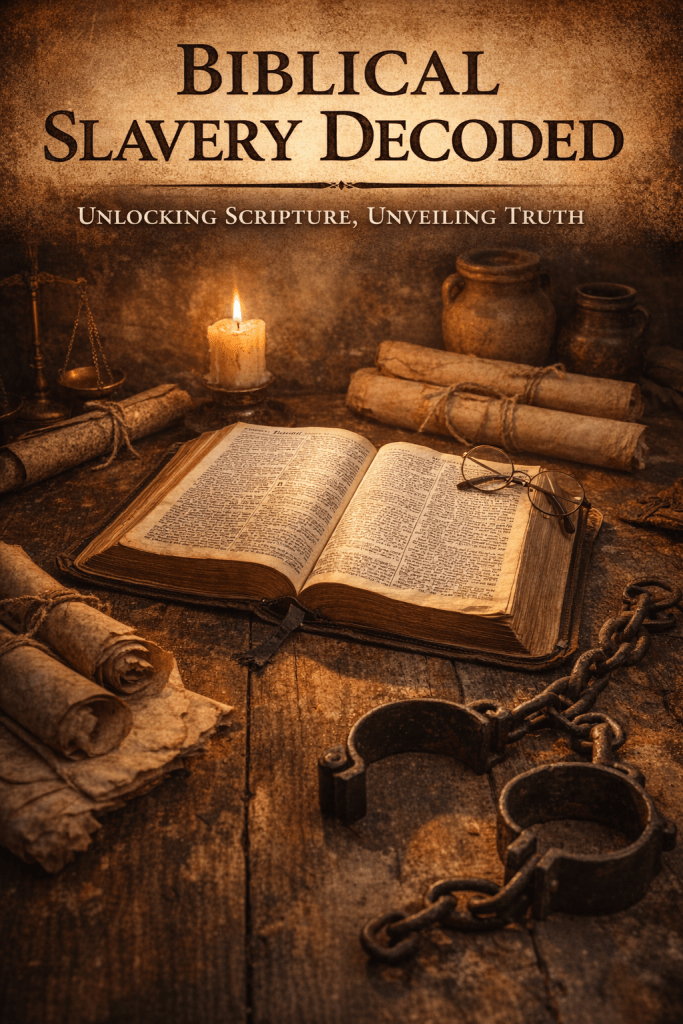
Biblical Slavery Decoded

Biblical slavery is one of the most misunderstood and misused subjects in religious history, often weaponized to justify chattel slavery while stripping Scripture of its historical, linguistic, and moral context. A careful reading of the King James Version (KJV), alongside ancient Near Eastern customs, reveals that biblical servitude was fundamentally different from the race-based, perpetual, dehumanizing system imposed on Africans in the transatlantic slave trade.

In Scripture, the English word slave often translates from the Hebrew word ʿeḇeḏ, which broadly means servant, laborer, or bondman. This term encompassed a wide range of social arrangements, including hired workers, indentured servants, royal officials, and covenantal servants of God. Context, not modern assumptions, determines its meaning.

Biblical servitude was primarily economic, not racial. Israelites could enter servitude to repay debts, survive famine, or restore family stability. This system functioned as a form of social welfare in an agrarian society without modern banking or safety nets (Leviticus 25:35–39, KJV).

Unlike chattel slavery, biblical servants retained personhood and legal protections. Exodus 21 outlines clear limits on treatment, including punishment for abuse. If a servant was permanently injured, they were to be released free as compensation (Exodus 21:26–27, KJV).

Time limits are central to understanding biblical servitude. Hebrew servants could not be held indefinitely. They were released in the seventh year, known as the Sabbath year, without payment or penalty (Exodus 21:2, KJV; Deuteronomy 15:12).

The Jubilee year further reinforced freedom. Every fiftieth year, all Israelite servants were released, debts forgiven, and land restored to ancestral families. This system prevented generational poverty and perpetual bondage (Leviticus 25:10, KJV).

The Bible explicitly forbids manstealing, the very foundation of transatlantic slavery. Kidnapping a human being to sell or enslave them was a capital offense under biblical law (Exodus 21:16, KJV; Deuteronomy 24:7).

This prohibition directly condemns the capture, transport, sale, and hereditary enslavement of Africans. Any attempt to justify race-based slavery using the Bible ignores this clear and uncompromising command.

Foreign servants in Israel were also protected under divine law. While non-Israelites could enter long-term servitude, they were still bound by covenantal ethics, Sabbath rest, and humane treatment (Exodus 20:10, KJV).

The Bible commands empathy toward servants by reminding Israel of their own history of oppression in Egypt. God repeatedly anchors social justice in remembrance of slavery and divine deliverance (Deuteronomy 5:15, KJV).

Servants were entitled to rest on the Sabbath, placing them on equal footing with their masters before God. This alone dismantles the notion of absolute ownership (Exodus 23:12, KJV).

Biblical slavery also included voluntary lifelong service. If a servant chose to remain with a master out of love and security, it was a consensual covenant—not coercion (Exodus 21:5–6, KJV).

In the New Testament, the Greek word doulos is often translated servant or bondservant. It is used metaphorically to describe believers’ relationship to Christ, emphasizing devotion, not degradation (Romans 1:1, KJV).

Jesus never endorsed oppression. Instead, He confronted systems of exploitation and emphasized mercy, justice, and love of neighbor (Matthew 23:23, KJV).

Christ’s mission was liberation at every level—spiritual, social, and moral. He declared freedom for the captives and release for the oppressed (Luke 4:18, KJV).

Paul’s epistles address servants and masters within the Roman system, not as approval of slavery, but as guidance for ethical conduct within existing structures. He undermined slavery by affirming spiritual equality (Galatians 3:28, KJV).

Paul explicitly condemns enslavers in his list of lawless sinners, using language that echoes the Old Testament ban on manstealing (1 Timothy 1:9–10, KJV).

The letter to Philemon reveals the heart of biblical ethics. Paul urges Philemon to receive Onesimus not as a servant, but as a beloved brother—an appeal that dismantles hierarchical bondage (Philemon 1:15–16, KJV).

Biblical law consistently places God as the ultimate owner of all people. Humans are stewards, not masters of souls (Leviticus 25:55, KJV).

This divine ownership nullifies the idea that one human can permanently own another. All authority is subordinate to God’s righteousness.

The prophets fiercely rebuked oppression, exploitation, and abuse of the vulnerable. Slavery that crushed dignity was treated as a sin that provoked divine judgment (Isaiah 58:6, KJV).

Biblical justice demanded fair wages, humane conditions, and accountability. The exploitation of labor was never portrayed as righteous (Jeremiah 22:13, KJV).

The misuse of Scripture to justify American slavery represents a theological betrayal, not biblical fidelity. Selective reading severed verses from context to sanctify greed and racial domination.

Chattel slavery violated every biblical principle: it was racial, perpetual, violent, hereditary, and rooted in kidnapping. It mocked Sabbath rest, denied Jubilee, and erased personhood.

The curse of Ham narrative was never about Black people and was distorted centuries later to rationalize European colonialism. Scripture does not assign racial destiny through curses (Genesis 9:25–27, KJV).

Biblical slavery must be understood within covenantal law, not colonial ideology. God’s statutes consistently aimed at restoration, not destruction.

Freedom is central to God’s character. From the Exodus to the Cross, liberation defines His intervention in human history.

When Scripture is read honestly, it condemns systems that thrive on cruelty and profit from suffering. God sides with the oppressed, not the oppressor (Psalm 103:6, KJV).

The Bible does not sanitize suffering, but it never sanctifies it either. Justice, mercy, and humility remain the standard (Micah 6:8, KJV).

Understanding biblical slavery correctly dismantles false theology and restores truth. It exposes how Scripture was manipulated to uphold racism rather than righteousness.

Biblical slavery, decoded properly, reveals a God who regulates human brokenness while pointing relentlessly toward freedom. Any theology that excuses dehumanization stands in opposition to the God of the Bible.


References (KJV)

Exodus 20:10; Exodus 21:2, 16, 26–27; Exodus 23:12
Leviticus 25:10, 35–39, 55
Deuteronomy 5:15; Deuteronomy 15:12; Deuteronomy 24:7
Psalm 103:6
Isaiah 58:6
Jeremiah 22:13
Matthew 23:23
Luke 4:18
Romans 1:1
Galatians 3:28
1 Timothy 1:9–10
Philemon 1:15–16
Micah 6:8

Who Benefits When the Curriculum is Sanitized, and the History is Whitewashed?

When education omits uncomfortable truths or sanitizes history, it does more than distort knowledge—it shapes identities and values in ways that serve the powerful. A whitewashed curriculum often conceals oppression, marginalization, and systemic injustice, leaving students with a skewed perception of reality.

Sanitizing history benefits those who wish to maintain societal dominance. By minimizing the moral failures of the powerful and glorifying selective narratives, the truth about injustice is obscured. Proverbs 18:13 warns, “He that answereth a matter before he heareth it, it is folly and shame unto him.” Without hearing the full account, society cannot respond with justice.

Whitewashing history perpetuates ignorance. Students grow up unaware of the struggles and resilience of oppressed peoples, creating a populace less likely to recognize injustice in the present. Knowledge of history is a form of power, and withholding it sustains inequity.

This sanitized narrative also undermines moral development. Encountering the realities of human sin is essential for cultivating discernment. Romans 1:18–20 states, “For the wrath of God is revealed from heaven against all ungodliness and unrighteousness of men, who hold the truth in unrighteousness.” Suppressing truth allows unrighteousness to flourish.

Those most harmed by whitewashing are communities whose histories are erased or distorted. Cultural and spiritual identity are shaped by knowledge of one’s past. Deuteronomy 32:7 teaches, “Remember the days of old, consider the years of many generations: ask thy father, and he will shew thee; thy elders, and they will tell thee.” History forms the backbone of identity, and its erasure impoverishes future generations.

Sanitized curricula also obscure the mechanisms of systemic oppression. Understanding slavery, colonization, segregation, and exploitation is essential to preventing their recurrence. Ignorance of these realities benefits the descendants of oppressors, who inherit both unexamined privilege and historical myths.

Economic and social power is often maintained through control of narratives. Ecclesiastes 8:11 reminds us, “Because sentence against an evil work is not executed speedily, therefore the heart of the sons of men is fully set in them to do evil.” Delay or denial of historical accountability allows injustices to continue unnoticed.

Whitewashing history also influences psychological and social development. When young people are taught incomplete or sanitized histories, they may internalize inferiority or fail to appreciate their heritage. Understanding one’s ancestry builds resilience and pride.

Sanitized education can manipulate national or cultural identity. By presenting selective histories, institutions foster loyalty to ideologies that serve dominant groups, rather than encouraging critical thinking or moral responsibility. Proverbs 23:23 states, “Buy the truth, and sell it not; also wisdom, and instruction, and understanding.” Truth must be sought and taught, even when uncomfortable.

In contrast, confronting history honestly fosters justice. Awareness of past wrongs equips society to correct present inequities and cultivate empathy. Psalm 82:3–4 exhorts, “Defend the poor and fatherless: do justice to the afflicted and needy. Deliver the poor and needy: rid them out of the hand of the wicked.” Education that recognizes oppression is a tool for justice.

Those in power benefit materially and socially from sanitized curricula. Wealth and influence are preserved, and social hierarchies remain unchallenged. Historical truths that might provoke moral or political reform are hidden.

Religious texts emphasize the importance of remembering and teaching truth. Proverbs 4:7 teaches, “Wisdom is the principal thing; therefore get wisdom: and with all thy getting get understanding.” Knowledge of history is part of this wisdom.

The erasure of marginalized histories also diminishes collective memory. When atrocities or injustices are minimized, lessons from the past are lost, and societies are more likely to repeat mistakes.

Furthermore, sanitized curricula often valorize the oppressor’s narrative, embedding it as a universal truth. This skews morality and erodes empathy, teaching young people to admire figures or institutions without critical evaluation.

A society that ignores historical suffering undermines the spiritual imperative to pursue justice. Isaiah 1:17 instructs, “Learn to do well; seek judgment, relieve the oppressed, judge the fatherless, plead for the widow.” Ignorance of oppression prevents action aligned with divine justice.

The consequences of whitewashed education are multi-generational. When children grow up unaware of historical realities, social inequalities persist, and systemic injustices are perpetuated silently.

Reclaiming historical truth empowers oppressed communities. Knowledge of ancestral struggles and victories fosters resilience, identity, and social cohesion. Deuteronomy 4:9 emphasizes the importance of remembering and teaching what one has learned: “Take ye therefore good heed unto yourselves; for ye saw no manner of similitude on the day that the LORD spake unto you in Horeb out of the midst of the fire.” Awareness preserves wisdom across generations.

In conclusion, sanitized curricula and whitewashed history benefit the powerful by preserving privilege and suppressing accountability. Yet, God commands the pursuit of truth, justice, and understanding, calling societies to confront their past and act rightly.

True education must confront reality fully. Only through honesty in teaching history can justice, empathy, and spiritual discernment flourish. Societies that conceal history cheat themselves of moral and spiritual growth, while those who face it with courage honor God and humanity alike.


References (KJV Bible):

  • Proverbs 18:13
  • Romans 1:18–20
  • Psalm 82:3–4
  • Deuteronomy 32:7
  • Ecclesiastes 8:11
  • Proverbs 23:23
  • Proverbs 4:7
  • Isaiah 1:17
  • Deuteronomy 4:9

Truth & Ink

Body art, particularly tattoos, has become a powerful medium for self-expression, identity formation, and cultural commentary. Across communities, tattoos function as markers of personal narrative, aesthetic preference, and social affiliation. They communicate individuality, heritage, and values, allowing the body to serve as a living canvas. Yet, while tattoos can signify empowerment and creativity, there is a spiritual and ethical dimension to consider: the Most High commands respect for the body as His temple and explicitly discourages permanent markings on it.

Historically, tattoos have held diverse meanings. In many Indigenous and African cultures, body markings were symbolic of status, lineage, spiritual protection, or rites of passage (DeMello, 2000; Sanders, 1989). Each symbol and placement carried intentionality, reflecting communal values as much as personal identity. In contemporary contexts, tattoos often serve similar functions: they preserve memory, communicate affiliation, or declare personal beliefs. They can also serve as aesthetic statements, reflecting the wearer’s taste, artistic sensibility, and engagement with cultural trends.

Psychologically, tattoos contribute to self-concept and personal empowerment. Koch, Roberts, Armstrong, and Owen (2010) found that individuals use body art to externalize internal identity, bolster self-esteem, and assert autonomy over social presentation. Tattoos can signal resilience, commemorate life experiences, and foster a sense of belonging within subcultures or communities. From a social perspective, tattooed individuals navigate both admiration and stigma; perceptions are influenced by cultural context, aesthetics, and social norms (Irwin, 2001; Fischer & Gullage, 2020).

In Black communities, tattooing intersects with racialized aesthetics and identity. Young (2011) observes that tattoos are a medium for negotiating authenticity, heritage, and self-presentation. They provide visibility and narrative control in a society that often marginalizes Black bodies. Tattoos can honor ancestral lineage, spiritual beliefs, or cultural symbolism, allowing individuals to claim and display their stories visually.

Despite the expressive potential of tattoos, the Bible addresses the spiritual and ethical considerations of marking the body. Leviticus 19:28 instructs, “Ye shall not make any cuttings in your flesh for the dead, nor print any marks upon you: I am the LORD.” This directive emphasizes that the body is sacred, created by God as a temple for the spirit (1 Corinthians 6:19–20). Altering it permanently through inked symbols may violate the intention to preserve the sanctity and integrity of the physical vessel entrusted to humanity by the Most High.

The tension between aesthetic freedom and spiritual obedience is central to “Truth & Ink.” While tattoos can empower and express individuality, they may simultaneously obscure the principle that the body belongs to God and should remain unmarked. Cultural admiration for body art must be weighed against spiritual directives and the understanding that true honor arises not from external embellishment but from character, obedience, and righteous living.

Sociologically, tattoos continue to navigate complex social perceptions. They can confer identity, group affiliation, and social visibility, yet they are often associated with deviance or nonconformity in mainstream contexts (Sweetman, 1999; Velliquette, Murray, & Creyer, 1998). The aesthetic value of tattoos is frequently mediated by societal norms, race, gender, and cultural capital, demonstrating that even seemingly personal choices are deeply entangled with collective perception.

Media and popular culture amplify tattoo visibility, shaping norms and desirability. Films, music, and social media present body art as markers of creativity, rebellion, or prestige. While this fosters cultural acceptance and artistic innovation, it can inadvertently downplay spiritual and ethical concerns, encouraging the perception that physical adornment is equivalent to personal or moral expression.

The Most High’s guidance offers a counter-narrative: while outward adornment may appeal to human aesthetics, the ultimate value lies in holiness, integrity, and stewardship of the body. Tattoos, while culturally and personally meaningful, risk drawing attention away from spiritual devotion and the acknowledgment that the human form is a sacred vessel.

Educational efforts and spiritual reflection can help individuals navigate the tension between cultural trends and divine instruction. Understanding the historical significance of tattoos, the social implications of aesthetic choices, and the biblical guidance on bodily sanctity fosters a holistic perspective on self-expression. Communities and families can teach younger generations about the spiritual importance of respecting the body while honoring cultural heritage through non-permanent or symbolic forms of expression.

In conclusion, “Truth & Ink” explores the duality of tattoo culture: its capacity to empower, memorialize, and express identity, and its potential conflict with divine instruction regarding the body. Tattoos are more than decorative symbols; they are cultural, psychological, and social statements that carry meaning for both the wearer and the community. Yet, the Most High reminds humanity that the ultimate expression of honor and beauty lies in stewardship of the body, moral integrity, and obedience to His commands. True adornment flows not from ink upon the skin but from a life marked by righteousness, wisdom, and spiritual devotion.


References

Atkinson, M. (2003). Tattooed: The sociogenesis of a body art. University of Toronto Press.

DeMello, M. (2000). Bodies of inscription: A cultural history of the modern tattoo community. Duke University Press.

Fischer, A. R., & Gullage, A. (2020). The social meaning of tattoos: Identity, deviance, and personal expression. Journal of Social Psychology, 160(4), 450–463. https://doi.org/10.1080/00224545.2019.1640432

Irwin, K. (2001). Legitimacy and the tattoo: Resistance, self-expression, and social negotiation. Sociological Review, 49(3), 495–514. https://doi.org/10.1111/1467-954X.00386

Koch, J. R., Roberts, A., Armstrong, M. L., & Owen, D. C. (2010). Tattooing as a window into the self: Personality, self-esteem, and the motivation for body art. Psychology of Aesthetics, Creativity, and the Arts, 4(2), 129–138. https://doi.org/10.1037/a0018622

Pitts, V. (2003). In the flesh: The cultural politics of body modification. Palgrave Macmillan.

Sanders, C. R. (1989). Customizing the body: The art and culture of tattooing. Philadelphia: Temple University Press.

Sweetman, P. (1999). Anchoring the (postmodern) self? Body modification, fashion and identity. Body & Society, 5(2–3), 51–76. https://doi.org/10.1177/1357034X99005002003

Velliquette, A., Murray, J. B., & Creyer, E. H. (1998). The tattoo renaissance: An ethnographic exploration. Advances in Consumer Research, 25, 357–362.

Young, J. L. (2011). Tattoos and identity in Black communities: Negotiating aesthetics, authenticity, and social meaning. Journal of Black Studies, 42(8), 1223–1244. https://doi.org/10.1177/0021934711411246

Narcissism Series: Biblical Perspectives on Narcissistic Abuse.

Narcissistic abuse is a form of psychological, emotional, spiritual, and sometimes physical harm rooted in pride, control, manipulation, and a lack of empathy. From a biblical perspective, narcissism reflects the fallen nature of humanity after sin entered the world, distorting God’s design for love, humility, and relational covenant. Scripture repeatedly warns against self-exaltation and domination over others, identifying these traits as contrary to the character of God.

Biblical Perspectives on Narcissistic Abuse:
A Theological and Psychological Analysis of Power, Pride, and Trauma

Narcissistic abuse is a complex and pervasive form of psychological and relational harm characterized by manipulation, domination, emotional exploitation, and a profound lack of empathy. While contemporary psychology has increasingly examined narcissistic personality traits and abusive dynamics, theological engagement with narcissistic abuse remains underdeveloped in academic literature. This article explores narcissistic abuse through a biblical lens, integrating Scripture with modern psychological research. It argues that narcissistic abuse is fundamentally rooted in pride, deception, and power misuse—patterns consistently condemned in biblical texts. By examining biblical theology alongside trauma psychology, this study affirms that abuse is a moral violation rather than a relational misunderstanding and that Scripture provides a framework for justice, boundaries, healing, and restoration for survivors.

Keywords: narcissistic abuse, theology, trauma psychology, pride, spiritual abuse, biblical ethics


Narcissistic abuse represents a pattern of sustained interpersonal harm rather than isolated conflict. It is marked by gaslighting, coercive control, emotional invalidation, entitlement, and identity erosion (Stark, 2007; Herman, 2015). Victims often experience long-term psychological trauma, including complex post-traumatic stress disorder, depression, anxiety, and diminished self-concept (Courtois & Ford, 2013).

Biblical theology has historically addressed oppression, pride, and misuse of power, yet modern applications to narcissistic abuse are often obscured by misinterpretations of submission, forgiveness, and suffering. This article contends that Scripture not only acknowledges abusive dynamics but actively condemns them, while offering survivors a framework for discernment, protection, and healing.


Defining Narcissistic Abuse in Psychological Literature

Narcissistic abuse is most commonly associated with individuals exhibiting traits of narcissistic personality disorder or subclinical narcissism, including grandiosity, lack of empathy, entitlement, and exploitative behavior (American Psychiatric Association, 2022). Abuse manifests through cycles of idealization, devaluation, and discard, reinforcing trauma bonds and dependency (Carnes, 2019).

Psychological research emphasizes that narcissistic abuse is relationally asymmetrical. The abuser seeks dominance and validation, while the victim is systematically destabilized through emotional manipulation (Linehan, 2018). This imbalance parallels biblical warnings against oppressive power structures.


Pride as the Biblical Root of Narcissistic Abuse

Scripture consistently identifies pride as a foundational sin. Proverbs declares that pride precedes destruction, establishing a moral link between self-exaltation and relational harm (Proverbs 16:18, KJV). Narcissistic abuse reflects this pattern, as the abuser elevates self at the expense of others.

Augustinian theology frames pride as disordered love—loving self above God and neighbor (Augustine, trans. 1998). This theological understanding aligns with psychological models that describe narcissism as a deficit in relational empathy and mutuality (Kernberg, 2016).


Deception, Gaslighting, and the Theology of Truth

Gaslighting—the systematic distortion of reality to undermine a victim’s perception—is a core feature of narcissistic abuse (Sweet, 2019). Biblically, deception is not morally neutral. Jesus identifies Satan as the “father of lies” (John 8:44, KJV), establishing deception as antithetical to God’s nature.

Scripture emphasizes truth as liberative rather than oppressive (John 8:32). The confusion experienced by abuse survivors reflects spiritual dissonance rather than personal weakness, reinforcing the biblical mandate for clarity and truth-telling.


Narcissistic Abuse and Spiritual Exploitation

Spiritual abuse occurs when religious authority or Scripture is weaponized to control or silence victims (Oakley & Humphreys, 2019). Narcissistic abusers often misuse biblical language—submission, forgiveness, endurance—to justify harmful behavior.

Jesus explicitly condemned religious leaders who exploited others while seeking admiration (Matthew 23). This condemnation reveals that spiritualized narcissism is not righteousness but hypocrisy, and it carries heightened moral accountability.


Power, Control, and Coercive Dynamics

Psychological literature identifies coercive control as a defining feature of abuse, involving isolation, surveillance, and domination (Stark, 2007). Scripture likewise condemns those who “lord over” others rather than serve them (Matthew 20:25–26).

Biblical leadership is framed as sacrificial and protective, not authoritarian. Narcissistic control violates this ethic by prioritizing self-preservation over communal well-being.


Marriage, Family, and Covenant Violation

Within marital contexts, narcissistic abuse is often misinterpreted as relational conflict or poor communication. Biblically, however, covenant relationships are governed by self-giving love (Ephesians 5:25). Abuse constitutes covenant violation rather than marital imperfection.

Psychological research confirms that prolonged emotional abuse erodes attachment security and identity formation (Bowlby, 1988; Van der Kolk, 2014). Scripture affirms that marriage was never intended as a site of terror or domination.


The Bible’s Defense of the Oppressed

Throughout Scripture, God identifies Himself as a defender of the oppressed (Psalm 72:4). This theological stance affirms that victims of narcissistic abuse are not spiritually deficient but morally wronged.

The prophetic tradition consistently condemns leaders who exploit the vulnerable (Ezekiel 34). These texts align with trauma-informed ethics that prioritize victim safety and accountability over image preservation.


Forgiveness, Repentance, and Accountability

Forgiveness is frequently misapplied in abusive contexts. Biblically, forgiveness does not eliminate the requirement for repentance (Luke 17:3). Psychological research supports this distinction, noting that premature reconciliation increases harm and retraumatization (Herman, 2015).

Scripture upholds justice alongside mercy, reinforcing that boundaries are compatible with righteousness.


Trauma, Identity Erosion, and Biblical Restoration

Narcissistic abuse dismantles identity through chronic invalidation and blame-shifting (Courtois & Ford, 2013). Survivors often internalize false narratives imposed by the abuser.

Biblical anthropology counters this erosion by affirming intrinsic worth rooted in divine image-bearing (Genesis 1:27). Renewal of the mind (Romans 12:2) parallels cognitive restructuring in trauma recovery.


Boundaries as a Biblical and Psychological Necessity

Boundaries are essential for trauma recovery (Cloud & Townsend, 2017). Jesus modeled boundary-setting by withdrawing from hostile environments and refusing manipulation (John 2:24).

Contrary to popular belief, biblical love does not require unlimited access or endurance of harm. Boundaries protect dignity and prevent further injustice.


Community, Witness, and Healing

Isolation intensifies abuse, while community mitigates trauma (Herman, 2015). Scripture emphasizes communal responsibility to protect the vulnerable rather than side with charismatic abusers.

The church’s ethical mandate includes discernment, advocacy, and truth-telling, not neutrality in the face of harm.


Hope, Justice, and Eschatological Assurance

Scripture offers hope not through denial of suffering but through divine justice. God promises judgment for unrepentant oppressors and restoration for the wounded (Isaiah 61).

Psychological healing is often gradual, yet biblical eschatology assures survivors that abuse does not have the final word.


Narcissistic abuse represents a convergence of psychological pathology and moral failure. Biblical theology provides a robust framework for identifying abuse, rejecting spiritualized harm, and affirming survivor dignity. When integrated with trauma psychology, Scripture offers clarity, validation, and hope—declaring that oppression is sin, truth is healing, and God stands with the oppressed.


The Bible teaches that love is the foundation of all righteous relationships. First Corinthians describes love as patient, kind, humble, and not self-seeking. Narcissistic abuse directly violates this standard, as it thrives on self-centeredness, entitlement, and the exploitation of others for personal validation or control. Where biblical love seeks mutual edification, narcissistic abuse seeks superiority.

At the heart of narcissistic abuse is pride, which Scripture identifies as a chief sin. Proverbs declares that pride precedes destruction, emphasizing that unchecked self-exaltation leads to relational and moral collapse. Narcissistic individuals often elevate themselves as infallible, demanding admiration while refusing accountability, mirroring the arrogance condemned throughout Scripture.

The Bible also addresses manipulation and deceit, hallmarks of narcissistic abuse. Jesus rebuked religious leaders who burdened others while exalting themselves, calling them hypocrites who loved public admiration more than righteousness. This spiritual narcissism reveals how abuse can hide behind religiosity, using Scripture not to heal but to control.

Narcissistic abuse frequently involves gaslighting, where truth is distorted to confuse and destabilize the victim. Scripture identifies Satan as the father of lies, linking deception to spiritual warfare rather than godly authority. God, by contrast, is a God of truth and clarity, never confusion or coercion.

The Psalms provide insight into the experience of those harmed by oppressive and deceitful individuals. David often cried out against those who spoke flattering words while harboring malice in their hearts. These passages affirm that God sees hidden abuse and validates the pain of the oppressed.

Biblical wisdom literature warns against associating closely with angry, violent, or prideful individuals. Proverbs advises believers to avoid those given to wrath or arrogance, acknowledging that such relationships bring harm. This counsel affirms that separation from abusive individuals can be an act of wisdom rather than rebellion.

Jesus’ teachings on leadership sharply contrast with narcissistic domination. He taught that true authority is demonstrated through servanthood, not control. Narcissistic abuse, which demands submission without care, directly opposes Christ’s model of humility and sacrificial love.

In marriage and family contexts, narcissistic abuse distorts God’s design for covenantal partnership. Scripture commands husbands to love their wives as Christ loved the church, giving Himself rather than exploiting. Abuse violates this command, revealing that domination is not biblical headship but sin.

The Bible consistently defends the vulnerable. God identifies Himself as a refuge for the oppressed, the brokenhearted, and those crushed in spirit. This divine posture affirms that victims of narcissistic abuse are not weak but are seen, valued, and protected by God.

Narcissistic abuse often involves isolation, cutting victims off from community and support. Scripture emphasizes the importance of godly counsel and fellowship, warning that isolation makes one vulnerable to deception. God’s design for community serves as a safeguard against abusive control.

Forgiveness is often weaponized by abusers to silence victims. Biblically, forgiveness does not mean reconciliation without repentance. Jesus taught that repentance precedes restoration, affirming that accountability is necessary for relational healing.

The Bible draws a clear distinction between humility and false humility. Narcissistic individuals may feign repentance to regain control, yet Scripture warns against those who honor God with their lips while their hearts are far from Him. Discernment is essential in identifying genuine fruit.

Spiritual abuse is a particularly damaging form of narcissistic abuse. When Scripture is twisted to justify control or silence suffering, it mirrors the temptation of Christ, where Satan misused Scripture for manipulation. God’s Word is meant to liberate, not enslave.

The prophetic books frequently condemn oppressive leaders who devour God’s people. Ezekiel describes shepherds who feed themselves instead of the flock, a powerful metaphor for narcissistic leadership. God promises judgment against such figures and restoration for the wounded.

Jesus consistently centered the dignity of the marginalized. He rebuked those who exploited others under the guise of righteousness, showing compassion to those dismissed by society. This affirms God’s heart for survivors of abuse, especially those disbelieved or blamed.

Healing from narcissistic abuse is portrayed in Scripture as a process of restoration. God binds up wounds, renews the mind, and restores identity. Survivors are reminded that their worth is rooted in being made in God’s image, not in the distorted narratives imposed by abusers.

The renewal of the mind, as taught by Paul, is essential for recovery. Narcissistic abuse damages self-perception, often leading to shame and self-doubt. Scripture counters these lies with truth, affirming that believers are chosen, loved, and valued by God.

Boundaries are biblically supported, though often misunderstood. Jesus Himself withdrew from harmful crowds and refused to entrust Himself to those with impure motives. This demonstrates that protecting one’s well-being is not unspiritual but wise.

The Bible also addresses justice. God is not indifferent to abuse, and Scripture assures that wrongdoing will be judged. This truth provides comfort to victims who may never receive accountability in this life, reminding them that God sees all.

Prayer plays a crucial role in healing and discernment. The Psalms model honest lament, giving language to pain without spiritual denial. God invites the wounded to pour out their hearts, promising peace beyond understanding.

Community support is emphasized throughout Scripture. Healing often occurs in the presence of safe, godly relationships that reflect God’s love. The church is called to protect the vulnerable, not side with power or charisma.

Jesus’ resurrection power symbolizes hope after devastation. Survivors of narcissistic abuse may feel emotionally deadened, yet Scripture proclaims that God brings life from death and beauty from ashes. Restoration is possible.

The Bible warns believers not to confuse suffering with sanctification. Enduring abuse is not a spiritual virtue. God refines His people through trials, but abuse inflicted by others is never portrayed as God’s will.

Deliverance in Scripture often involves separation from oppressors. Israel’s exodus from Egypt demonstrates that God’s salvation includes escape from tyranny, not perpetual endurance of it. Freedom is a recurring biblical theme.

God’s justice is paired with mercy, yet mercy does not negate truth. Narcissistic abusers who refuse repentance place themselves outside relational trust. Scripture prioritizes truth, safety, and righteousness.

The Holy Spirit is described as a Comforter and Guide into truth. For survivors, the Spirit brings clarity after confusion and affirms reality after gaslighting. This divine guidance is essential in reclaiming one’s voice.

Biblical identity counters the dehumanization caused by abuse. Believers are called God’s workmanship, created with intention and value. Narcissistic abuse attempts to erase identity, but God restores it.

Hope in Scripture is not denial of pain but confidence in God’s faithfulness. Survivors are reminded that their suffering is not the end of their story. God redeems brokenness for His glory and their good.

Ultimately, the biblical response to narcissistic abuse centers on truth, justice, compassion, and restoration. God stands firmly against pride, oppression, and deceit, while offering refuge, healing, and renewal to those harmed. Scripture affirms that abuse is sin, survivors are not to blame, and God is near to the brokenhearted.


References

American Psychiatric Association. (2022). DSM-5-TR: Diagnostic and statistical manual of mental disorders (5th ed., text rev.). APA Publishing.

Cloud, H., & Townsend, J. (2017). Boundaries: When to say yes, how to say no to take control of your life. Zondervan.

McGee, R. S. (2015). The search for significance. Thomas Nelson.

Payson, M. (2019). When narcissism comes to church. InterVarsity Press.

The Holy Bible, King James Version. (1769/2017). Cambridge University Press.

Vaknin, S. (2015). Malignant self-love: Narcissism revisited. Narcissus Publications.

Walker, L. E. (2016). The battered woman syndrome (4th ed.). Springer Publishing.

Wright, N. T. (2010). After you believe: Why Christian character matters. HarperOne.

Augustine. (1998). The city of God (H. Bettenson, Trans.). Penguin Classics. (Original work published c. 426)

Bowlby, J. (1988). A secure base: Parent-child attachment and healthy human development. Basic Books.

Carnes, P. (2019). The betrayal bond: Breaking free of exploitive relationships (2nd ed.). Health Communications.

Cloud, H., & Townsend, J. (2017). Boundaries. Zondervan.

Courtois, C. A., & Ford, J. D. (2013). Treatment of complex trauma. Guilford Press.

Herman, J. L. (2015). Trauma and recovery (2nd ed.). Basic Books.

Kernberg, O. F. (2016). Narcissistic personality disorder. American Psychiatric Publishing.

Oakley, L., & Humphreys, J. (2019). Escaping the maze of spiritual abuse. SPCK.

Stark, E. (2007). Coercive control. Oxford University Press.

Sweet, P. L. (2019). The sociology of gaslighting. American Sociological Review, 84(5), 851–875.

The Holy Bible, King James Version. (1769/2017). Cambridge University Press.

Van der Kolk, B. (2014). The body keeps the score. Viking.

She Is Shulamite in Brown: Loved, Not Compared.

The Shulamite is a central figure in the Song of Solomon (Song of Songs) in the King James Version of the Bible, celebrated for her beauty, sensuality, and beloved status. She represents the ideal of feminine virtue, desire, and intimacy, yet her character is often misunderstood or misappropriated. She is a Black or brown-skinned woman in the biblical narrative, often interpreted as a representation of a woman fully embraced in her own skin, proud of her heritage, and cherished for her intrinsic worth (Song of Solomon 1:5–6, KJV).

The Shulamite’s brownness is highlighted in the text: “I am black, but comely, O ye daughters of Jerusalem” (Song of Solomon 1:5, KJV). This acknowledgment of her dark skin is not a limitation but a declaration of beauty and dignity. She stands as a model for self-acceptance, unapologetic in her appearance, and fully loved for who she is. Her character challenges societies that equate fairness with favor, asserting that worth is inherent, not comparative.

The Shulamite lived in Shulam (or Shunem), a region in ancient Israel, giving her the name “Shulamite.” She embodies the ideal beloved woman, both physically appealing and morally grounded, whose beauty is holistic—spiritual, emotional, and physical. Her brownness, celebrated in scripture, is integral to her identity and her desirability.

Biblically, the Shulamite’s love story is with King Solomon, the wisest man of Israel, though she is not defined solely by this relationship. The text emphasizes mutual love, respect, and admiration. Unlike many narratives where women are objects of comparison, the Shulamite is loved uniquely, for herself, not measured against other women (Song of Solomon 2:16, KJV).

Her narrative teaches that beauty is multifaceted. While society often emphasizes physical appearance alone, the Shulamite’s appeal encompasses confidence, poise, character, and spirituality. Her brown skin is a source of pride, not shame, highlighting a biblical affirmation of melanin-rich beauty.

The Shulamite is also a symbol of agency and voice. She speaks openly about desire, fear, and longing. She is not passive but actively expresses love and commands attention through both words and presence. This autonomy challenges the reduction of women to mere physicality or comparison.

In Black and brown communities today, the Shulamite serves as a powerful archetype. She represents self-love, resisting societal hierarchies that favor lighter skin. Her example validates darker skin tones, encouraging pride, confidence, and recognition of divine favor despite external prejudice.

The Shulamite’s brownness is frequently misinterpreted by Eurocentric translations or artwork, which often depict her with lighter skin. Recognizing her true skin tone restores cultural and spiritual integrity, affirming that God delights in her appearance as He created it.

Her story also emphasizes relational equality. Solomon’s love for her is personal, tender, and unwavering. He values her character alongside her appearance, demonstrating that true affection is holistic and not conditional upon conformity to societal beauty standards.

In the Song of Solomon, she is contrasted with others only to highlight her uniqueness, not to diminish her worth. The text teaches that comparison is unnecessary when one is fully embraced and valued by God and by those who truly love them (Song of Solomon 1:8–10, KJV).

The Shulamite’s wisdom extends beyond romance. She navigates societal pressures and male attention with discernment. She balances desire with dignity, modeling how women can assert themselves in relationships while maintaining self-respect.

Her narrative also underscores the divine intention behind diverse beauty. Scripture repeatedly affirms that God is no respecter of persons (Acts 10:34, KJV). The Shulamite’s brown skin and unique traits are celebrated, not subordinated, demonstrating that true beauty is in God’s creation, not human comparison.

The Shulamite inspires contemporary discussions around colorism. She embodies resistance to the idea that darker-skinned women must conform to Eurocentric ideals to be desirable, proving that divine approval and human admiration are independent of societal bias.

Spiritually, the Shulamite reflects the intimacy between God and His people. Her self-assuredness and acceptance mirror the believer’s call to embrace God’s design fully, including one’s physical attributes. Her narrative is an invitation to celebrate God’s image in diverse forms.

Her brown skin is a source of identity, pride, and relational power. By acknowledging her melanin, she asserts that value is intrinsic, not assigned by external standards. This principle challenges centuries of social prejudice favoring lighter tones.

The Shulamite’s love is mutual and affirming. She is not defined by comparison to other women but by the depth of connection with her beloved, exemplifying the principle that worth is relationally and spiritually grounded rather than competitively measured.

Her voice, confidence, and presence teach that women should speak, act, and love without seeking validation through societal benchmarks. Her beauty is self-contained and self-affirmed, a model for self-love and divine recognition.

In literary and theological studies, the Shulamite is increasingly understood as a symbol of marginalized beauty and voice. Scholars highlight her role in demonstrating that God honors diversity, contrasts human standards, and delights in those whom society may overlook.

The Shulamite remains a powerful icon for women of color, especially Black and brown women. She affirms that their beauty, dignity, and worth are not contingent upon comparison, but are fully loved by God and those who embrace true affection.

Her legacy is timeless: to be Shulamite in brown is to embody confidence, dignity, and divine love. She teaches that self-worth is intrinsic, beauty is multifaceted, and comparison is unnecessary when one is fully embraced and valued.


References

The Holy Bible, King James Version. (1611). Song of Solomon 1:5–6, 2:16, 1:8–10.

West, M. L. (2007). The Songs of Solomon: A study of poetic love and symbolism. Oxford University Press.

Alter, R. (2010). The Art of Biblical Poetry. Basic Books.

Knight, F. (1995). Song of Songs: A Black woman’s reflection. Journal of Biblical Literature, 114(2), 215–230.

Hobbs, J. (2018). Melanin and the Bible: Reclaiming brown and Black beauty in scripture. Faith & Culture Review, 12(1), 45–62.

Hunter, M. (2007). The persistent problem of colorism: Skin tone, status, and inequality. Sociology Compass, 1(1), 237–254.

The Bible Series: Footsteps of Faith

Theme Scripture: 2 Corinthians 5:7 – “For we walk by faith, not by sight.”

Photo by Askar Abayev on Pexels.com

Introduction

Faith is not passive—it is active movement in the direction God calls us, even when the path is uncertain. Every step taken in obedience to His Word, guided by prayer and trust, becomes a testimony of His faithfulness.


1. Faith is the Foundation of Every Step

Walking with God begins with trusting Him fully, believing His promises, and surrendering personal understanding.

  • Hebrews 11:1 – “Now faith is the substance of things hoped for, the evidence of things not seen.”
  • Faith requires stepping forward, even when the destination is not visible.

2. Trust Over Circumstance

Life often presents obstacles that challenge our trust. Footsteps of faith are not dictated by fear but by confidence in God’s plan.

  • Proverbs 3:5-6 – Trust in the LORD with all thine heart; lean not unto thine own understanding…

3. Guided by the Word

The Bible serves as our map and compass, providing direction for every step.

  • Psalm 119:105 – “Thy word is a lamp unto my feet, and a light unto my path.”

4. Courage in the Unknown

Faith involves moving forward where you cannot see, knowing God sees the full journey.

  • Joshua 1:9 – “Be strong and of a good courage; be not afraid, neither be thou dismayed…”

5. Daily Commitment

Faithful footsteps are built daily through prayer, worship, obedience, and meditation on God’s promises.

  • Lamentations 3:22-23 – “His mercies are new every morning; great is thy faithfulness.”

6. The Power of Small Steps

Even incremental acts of faith matter. Every step aligned with God produces spiritual growth and strengthens character.

  • Zechariah 4:10 – “For who hath despised the day of small things?”

7. Overcoming Fear and Doubt

Fear may tempt us to stop walking, but faith presses forward with trust in God’s provision.

  • Isaiah 41:10 – “Fear thou not; for I am with thee…”

8. Community Encouragement

Walking in faith is often strengthened through fellowship, mentorship, and shared testimony.

  • Hebrews 10:24-25 – “And let us consider one another to provoke unto love and to good works…”

9. Faith in Action

Faith is proven by action. Walking by faith means making choices, helping others, and living in obedience even when it costs us.

  • James 2:17 – “Faith, if it hath not works, is dead, being alone.”

10. Eternal Perspective

Footsteps of faith look beyond temporary trials to the eternal reward God promises.

  • 2 Corinthians 4:18 – “While we look not at the things which are seen, but at the things which are not seen…”

Conclusion

To walk in the footsteps of faith is to trust, obey, and move forward with courage, knowing that God goes before you. Each step is a declaration that His promises are true, His love is steadfast, and His plan is perfect.