Tag Archives: the bible

Hebrewism

Hebrewism is a multifaceted concept that encompasses the language, culture, spiritual worldview, and identity associated with the ancient Hebrews, often identified biblically as the children of Israel. Rooted in antiquity, Hebrewism extends beyond mere ethnicity; it embodies a covenantal relationship with God, a structured moral law, and a distinctive way of life preserved through sacred texts such as the Torah and the broader canon of Scripture.

At its linguistic core, Hebrewism refers to the Hebrew language, one of the oldest Semitic languages, which carries unique idioms, poetic structures, and symbolic expressions. Biblical Hebrew is rich in imagery and layered meanings, often conveying spiritual truths through metaphor and repetition. Understanding Hebrew linguistically allows deeper interpretation of scripture, as many meanings are lost in translation.

Culturally, Hebrewism reflects a communal and covenant-based society governed by divine law. Practices such as dietary restrictions, Sabbath observance, and ceremonial rituals defined the daily life of ancient Israelites. These customs were not arbitrary but were intended to set the people apart as holy and distinct among the nations.

Theologically, Hebrewism is grounded in monotheism—the belief in one God—and a covenantal framework established with key patriarchs such as Abraham, Isaac, and Jacob. This covenant outlined blessings for obedience and consequences for disobedience, forming the foundation of Israelite identity and destiny.

Historically, the Hebrews are traced through biblical narratives that span from Mesopotamia to Egypt and eventually to the land of Canaan. Key events such as the Exodus and the establishment of the kingdom of Israel shaped their national consciousness and spiritual identity. These events are central to understanding Hebrewism as both a faith and a historical experience.

The destruction of the First and Second Temples and subsequent dispersions contributed to what is often referred to as the Diaspora. This scattering led to the spread of Hebrew culture and religious practice across different regions, while also introducing challenges of maintaining identity in foreign lands.

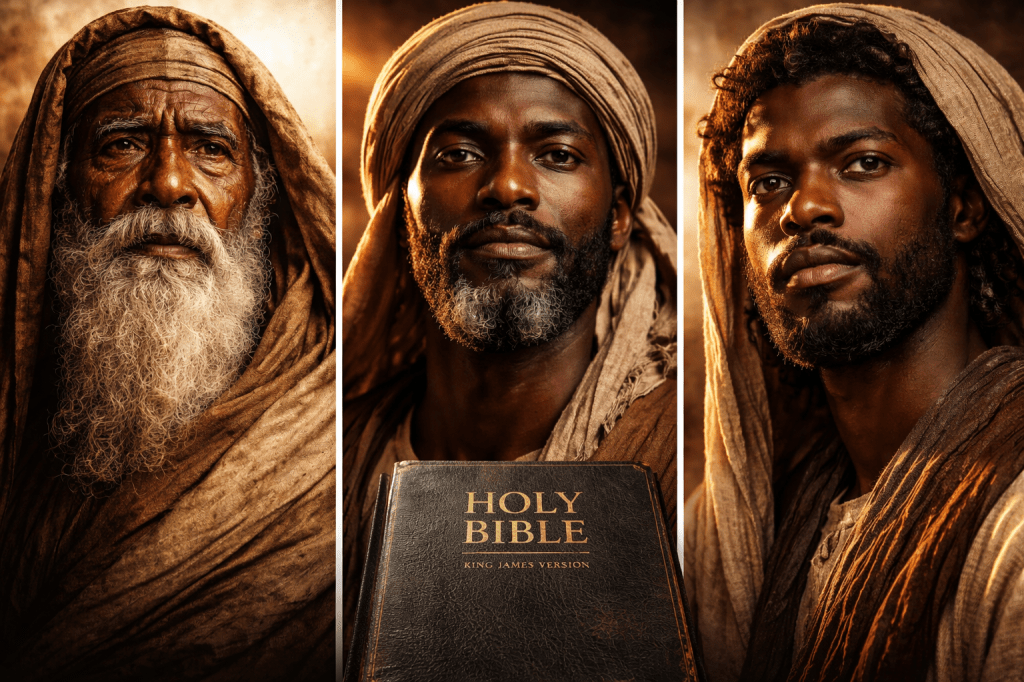
In examining how Black people fit into Hebrewism, one encounters a range of perspectives, some of which are theological, historical, and cultural. Certain groups assert that people of African descent are descendants of the ancient Israelites, drawing connections between biblical prophecies and the historical experiences of Black populations, particularly in the Americas.

Loss of identity refers to a state in which an individual or group becomes disconnected from their true sense of self—culturally, spiritually, psychologically, or historically. It is the erosion or displacement of one’s original identity, often replaced by imposed beliefs, values, or labels.

At the individual level, loss of identity can occur through trauma, social pressure, or prolonged exposure to environments that discourage authenticity. A person may begin to question who they are, adopting behaviors or perspectives that do not align with their core self in order to survive or be accepted.

At the collective level—especially in the context of Black history—the loss of identity is deeply tied to historical processes such as slavery, colonisation, and systemic oppression. During the Transatlantic Slave Trade, Africans were stripped of their names, languages, spiritual systems, and cultural practices. This was not accidental—it was a deliberate attempt to erase identity and replace it with one that served the interests of a dominant सत्ता.

This erasure created generations disconnected from their ancestral roots. Cultural memory was fragmented, and in its place emerged imposed identities shaped by racial hierarchies. Over time, this led to internal conflicts about self-worth, belonging, and purpose—closely tied to what W. E. B. Du Bois described it as double consciousness.

Loss of identity can also manifest through assimilation, where individuals feel pressure to conform to dominant cultural norms at the expense of their own heritage. This often results in code-switching, self-censorship, and the suppression of cultural expression.

Psychologically, it may lead to confusion, low self-esteem, or a fractured sense of self. Spiritually, it can create a disconnection from purpose, heritage, and belief systems that once grounded a people. Socially, it may appear as a division within communities, where shared identity becomes unclear or contested.

Yet, loss of identity is not always permanent. It can also be the beginning of a reclamation process—a journey of rediscovery, where individuals and communities seek to reconnect with their history, culture, and truth.

Simple definition

Loss of identity = the disconnection from one’s true self, roots, or heritage—often caused by external forces like oppression, assimilation, or cultural erasure.

One frequently cited framework in this discussion is found in Deuteronomy 28, which outlines blessings and curses tied to covenantal obedience. Some interpret the curses—such as enslavement, oppression, and displacement—as paralleling the experiences of Africans during the Transatlantic Slave Trade.

This interpretive approach is often associated with movements collectively referred to as Hebrew Israelite traditions. These groups seek to reclaim a perceived lost identity by aligning their history with that of the biblical Israelites, emphasizing restoration, repentance, and adherence to biblical law.

The concept of identity loss is central to these interpretations. The stripping of names, languages, and spiritual systems during slavery is viewed as a severing of original identity, which Hebrewism seeks to restore. This aligns with broader discussions of cultural erasure and reclamation within the African diaspora.

Scholars such as W. E. B. Du Bois have explored the psychological impact of such disconnection, particularly through the lens of double consciousness. While not explicitly tied to Hebrewism, this framework helps explain the internal conflict experienced by those navigating multiple identities.

It is important to note that mainstream academic scholarship generally distinguishes between ancient Israelites of the Near East and modern populations, including those of African descent. Genetic, archaeological, and historical evidence is often used to trace these distinctions, though debates and alternative interpretations persist.

At the same time, Africa has long been connected to biblical narratives. Regions such as Cush (often associated with parts of modern-day Sudan and Ethiopia) and figures like the Ethiopian eunuch in the New Testament highlight the presence of African peoples within the biblical world. This demonstrates that African identity is not foreign to scripture.

Religious identity, particularly within Christianity, has also shaped how Black communities engage with Hebrewism. The Bible has served as both a tool of oppression and a source of liberation, with enslaved Africans drawing strength from stories of deliverance and divine justice.

Modern expressions of Hebrewism among Black communities often emphasise a return to biblical laws, names, and practices. This can include observing dietary laws, celebrating biblical feasts, and adopting Hebrew names as a means of reclaiming identity and spiritual heritage.

Critics of these movements argue that some interpretations lack historical and textual support, cautioning against conflating spiritual identity with ethnic lineage. Nonetheless, the emotional and cultural resonance of these beliefs underscores a deeper desire for belonging and historical continuity.

Hebrewism, therefore, operates on multiple levels: as an ancient tradition, a religious framework, and, for some, a pathway to identity restoration. Its meanings shift depending on context, reflecting both historical realities and contemporary interpretations.

The intersection of Hebrewism and Black identity highlights broader themes of displacement, resilience, and the search for truth. Whether viewed through a scholarly or faith-based lens, the conversation reveals the enduring impact of history on present identity.

Ultimately, Hebrewism invites a deeper exploration of who a people are, where they come from, and how they understand their place in the world. For many, it is not merely about the past but about shaping a future grounded in perceived truth and restored dignity.

As discussions continue, it is essential to approach the topic with both intellectual rigor and cultural sensitivity. The narratives surrounding Hebrewism and Black identity are complex, deeply personal, and often contested, requiring careful study and respectful dialogue.

References

The Holy Bible, King James Version. (1611).

Du Bois, W. E. B. (1903). The Souls of Black Folk. Chicago, IL: A. C. McClurg & Co.

Sanders, E. P. (1992). Judaism: Practice and Belief, 63 BCE–66 CE. London, UK: SCM Press.

Finkelstein, I., & Silberman, N. A. (2001). The Bible Unearthed: Archaeology’s New Vision of Ancient Israel and the Origin of Its Sacred Texts. New York, NY: Free Press.

Goldenberg, D. M. (2003). The Curse of Ham: Race and Slavery in Early Judaism, Christianity, and Islam. Princeton, NJ: Princeton University Press.


Bible Study Series: Closer Walk with God

A closer walk with God is the lifelong pursuit of intimacy, obedience, and spiritual maturity. It is not defined merely by religious attendance or verbal confession but by consistent communion and transformation of the heart. Scripture reveals that relationship with God is both covenantal and experiential—rooted in faith yet expressed through daily living. To walk closely with God requires intentionality, humility, and surrender.

From the beginning, Scripture portrays God as desiring fellowship with humanity. In Genesis 3:8 (KJV), God walked in the garden in the cool of the day, illustrating relational proximity. Though sin disrupted that communion, the biblical narrative reveals God’s redemptive plan to restore intimate fellowship. A closer walk with God, therefore, begins with reconciliation through faith and continues through sanctification.

Faith is the foundation of spiritual closeness. Hebrews 11:6 (KJV) declares, “But without faith it is impossible to please him: for he that cometh to God must believe that he is, and that he is a rewarder of them that diligently seek him.” Faith requires trust beyond circumstances, anchoring the believer in confidence that God is both present and responsive.

Prayer is central to cultivating intimacy with God. 1 Thessalonians 5:17 (KJV) instructs believers to “Pray without ceasing.” Continuous prayer does not imply constant verbalization but rather a posture of awareness and dependence. Prayer fosters alignment, gratitude, confession, and intercession, deepening relational connection.

Equally essential is meditation on Scripture. Psalm 1:2 (KJV) describes the blessed individual whose “delight is in the law of the Lord; and in his law doth he meditate day and night.” Engaging Scripture daily renews the mind, clarifies values, and strengthens discernment. It is through the Word that believers learn God’s character, promises, and expectations.

Obedience reflects genuine closeness. John 14:15 (KJV) records Christ’s words: “If ye love me, keep my commandments.” Obedience is not legalism but evidence of devotion. A closer walk with God is demonstrated through ethical decisions, compassion toward others, and integrity in private and public life.

Repentance also sustains intimacy. 1 John 1:9 (KJV) assures believers, “If we confess our sins, he is faithful and just to forgive us our sins, and to cleanse us from all unrighteousness.” Confession restores fellowship when missteps occur. It reflects humility and acknowledgment of human imperfection.

Humility itself is foundational. James 4:8 (KJV) urges, “Draw nigh to God, and he will draw nigh to you.” Drawing near requires submission and the relinquishing of pride. God responds to those who approach Him with reverence and sincerity.

Worship strengthens spiritual connection. Psalm 95:6 (KJV) invites believers to “O come, let us worship and bow down: let us kneel before the Lord our maker.” Worship shifts focus from self to God, magnifying His sovereignty and goodness. It nurtures gratitude and awe, essential components of closeness.

Trust in adversity deepens faith. Proverbs 3:5–6 (KJV) instructs, “Trust in the Lord with all thine heart; and lean not unto thine own understanding. In all thy ways acknowledge him, and he shall direct thy paths.” Trusting God amid uncertainty fosters reliance on divine wisdom rather than human reasoning.

Patience is another dimension of a closer walk. Psalm 27:14 (KJV) counsels believers to “Wait on the Lord.” Waiting refines character and strengthens perseverance. Spiritual growth often unfolds gradually, requiring endurance and hope.

Community plays a role in spiritual maturity. Hebrews 10:25 (KJV) emphasizes not forsaking assembling together. Fellowship with other believers provides encouragement, accountability, and shared worship, reinforcing individual growth.

Love is the supreme evidence of intimacy with God. 1 John 4:8 (KJV) states, “He that loveth not knoweth not God; for God is love.” A closer walk manifests in compassion, forgiveness, and service to others, reflecting God’s character.

The Holy Spirit empowers this journey. Galatians 5:22–23 (KJV) lists the fruit of the Spirit: “love, joy, peace, longsuffering, gentleness, goodness, faith, meekness, temperance.” These qualities signify spiritual maturity and indicate divine influence in daily life.

Discipline and spiritual habits contribute to growth. Paul writes in 1 Corinthians 9:27 (KJV), “But I keep under my body, and bring it into subjection.” Spiritual disciplines such as fasting, study, and prayer cultivate self-control and attentiveness to God’s voice.

Forgiveness fosters freedom and relational harmony. Ephesians 4:32 (KJV) encourages believers to be “kind one to another, tenderhearted, forgiving one another.” Harboring resentment hinders closeness, while forgiveness aligns the heart with divine mercy.

Gratitude strengthens awareness of God’s presence. 1 Thessalonians 5:18 (KJV) instructs believers to give thanks in all circumstances. Gratitude reshapes perspective, focusing attention on divine provision rather than perceived lack.

Bible Study Companion Guide: Closer Walk with God

Week 1: Drawing Near Through Prayer and Faith

Focus Scriptures: Hebrews 11:6; Philippians 4:6–7; James 4:8
Reflection Questions:

  1. What does it mean to “diligently seek” God in your daily life?
  2. How do you currently handle moments when God seems silent?
  3. In what areas do you struggle to maintain faith and trust?

Journaling Prompts:

  • Write about a time when you felt closest to God. What circumstances allowed that closeness?
  • Identify areas in your life where faith could grow. How can you intentionally seek God there this week?

Action Steps:

  • Commit to at least 10 minutes of uninterrupted prayer daily.
  • Practice gratitude by listing three blessings each day.
  • Journal any impressions, scripture verses, or thoughts that arise during prayer.

Week 2: The Word as Your Guide

Focus Scriptures: Psalm 1:2; Romans 12:2; Colossians 3:16
Reflection Questions:

  1. How do you currently engage with God’s Word? Is it routine or sporadic?
  2. What scriptures have brought peace or clarity in past struggles?
  3. How does meditating on God’s Word affect your decisions?

Journaling Prompts:

  • Choose one verse to memorize and meditate on daily. Record how it influences your thoughts or choices.
  • Write about an area of life where God’s Word challenges you to grow.

Action Steps:

  • Dedicate a set time each day for Bible reading.
  • Reflect on the passages and write 1–2 insights per day.
  • Apply one insight from scripture in a practical way (e.g., patience, kindness, self-control).

Week 3: Obedience, Humility, and Love

Focus Scriptures: John 14:15; 1 John 4:8; Micah 6:8
Reflection Questions:

  1. How do you define obedience in your life?
  2. Are there areas where pride prevents you from drawing closer to God?
  3. How is your love for others an extension of your love for God?

Journaling Prompts:

  • List one way you can show obedience to God this week in your actions or choices.
  • Reflect on someone you find difficult to love or forgive. How can God guide your heart toward compassion?

Action Steps:

  • Practice humility in conversations—listen more than speak.
  • Show intentional acts of love, kindness, or service to at least one person daily.
  • Write a short prayer asking God to help you grow in obedience and love.

Week 4: Perseverance, Peace, and Spiritual Maturity

Focus Scriptures: Galatians 6:9; Psalm 27:14; Proverbs 3:5–6
Reflection Questions:

  1. How do you maintain spiritual peace during trials or uncertainty?
  2. Where have you experienced spiritual growth through perseverance?
  3. What areas require patience and trust in God’s timing?

Journaling Prompts:

  • Write about a challenge you are currently facing. How can patience and faith change your response?
  • Record moments where God’s peace guided your decisions.

Action Steps:

  • Identify one stressful situation and consciously follow God’s peace before acting.
  • Continue daily prayer, scripture reading, and journaling to reinforce spiritual habits.
  • Reflect weekly on growth in character, confidence, and closeness with God.

Additional Tips for Your Bible Study

  • Use a prayer journal to track daily communion with God and insights from scripture.
  • Pair reflection with small group discussions to gain perspective and encouragement.
  • Incorporate worship and praise into your daily routine to strengthen spiritual connection.
  • Evaluate progress each week and adjust practices as needed to maintain intentional spiritual growth.

Service embodies devotion. Micah 6:8 (KJV) summarizes God’s requirement: “to do justly, and to love mercy, and to walk humbly with thy God.” Serving others with integrity and compassion reflects a genuine commitment to God’s purposes.

Spiritual perseverance ensures continuity. Galatians 6:9 (KJV) reminds believers not to grow weary in well doing. Consistent effort, even when enthusiasm wanes, sustains spiritual vitality and deepens reliance on God.

Ultimately, a closer walk with God is both relational and transformative. It involves faith, obedience, humility, worship, community, love, and perseverance. As believers draw near, they experience the fulfillment of James 4:8: God draws near in return. This reciprocal relationship shapes identity, character, and purpose, guiding the believer toward spiritual maturity and eternal hope.


References

Bible. (1769/2017). King James Version. (Original work published 1611).

Scriptural references: Genesis 3:8; Psalm 1:2; 27:14; 95:6; Proverbs 3:5–6; Micah 6:8; John 14:15; Romans 12:2; 1 Corinthians 9:27; Galatians 5:22–23; 6:9; Hebrews 10:25; 11:6; James 4:8; 1 John 1:9; 4:8; 1 Thessalonians 5:17–18; Ephesians 4:32.

Is Your Relationship Poisoning You?

Understanding Toxic Patterns and How to Overcome Them

Relationships are meant to bring joy, growth, and mutual support. Yet, not every relationship fulfills these promises. Sometimes, subtle or overt toxicity can seep in, eroding emotional, mental, and even physical well-being. Recognizing the warning signs and understanding the ways to heal are essential steps in safeguarding your health and reclaiming your sense of self.

Toxic relationships often involve repeated patterns of emotional harm, manipulation, or neglect. These patterns can manifest in many forms, including criticism, jealousy, controlling behavior, dishonesty, or constant conflict. Over time, the person on the receiving end may feel diminished, anxious, or trapped.

One of the first indicators of a toxic relationship is a consistent feeling of unease or anxiety around your partner. If interactions leave you drained, fearful, or emotionally depleted rather than energized and supported, this may signal toxicity. Emotional imbalance is a core hallmark of relationships that poison rather than nourish.

Another warning sign is control and manipulation. This can range from overt demands about how you spend your time to subtle attempts to isolate you from friends and family. Abusers may use guilt, intimidation, or passive-aggressive tactics to maintain dominance. Recognizing these behaviors is critical to reclaiming autonomy.

Communication patterns are also telling. Healthy relationships encourage open dialogue, active listening, and mutual respect. Toxic dynamics, in contrast, often involve gaslighting, dismissiveness, or constant criticism. Over time, these behaviors can distort your perception of reality and self-worth.

Some relationships are toxic due to persistent negativity or pessimism. Constant complaining, blaming, or cynicism can create an environment where hope and joy are stifled. Being exposed to relentless negativity can affect mental health, increasing stress and risk of depression or anxiety.

Physical and verbal abuse are clear markers of toxicity. Threats, insults, and harmful physical contact are never acceptable. Beyond immediate danger, exposure to abuse can leave long-lasting emotional scars. Recognizing abuse early is crucial for safety and intervention.

Substance abuse or addiction within a relationship can exacerbate toxicity. Partners struggling with addiction may engage in manipulative, unpredictable, or harmful behaviors that affect both their own well-being and that of their partner. Supporting recovery while maintaining boundaries is a delicate but necessary task.

Self-esteem erosion is another sign. If your partner frequently belittles, undermines, or dismisses your achievements and feelings, your self-confidence can suffer. Low self-esteem in turn makes it harder to set boundaries, creating a cycle that perpetuates the toxicity.

Jealousy and possessiveness are common toxic traits. A partner who monitors your movements, criticizes friendships, or discourages outside interests often seeks control rather than companionship. Healthy love fosters independence alongside intimacy.

To overcome a toxic relationship, the first step is awareness. Journaling, therapy, or confiding in trusted friends can help you identify harmful patterns and distinguish between occasional conflict and systemic toxicity. Awareness empowers you to make conscious decisions rather than react instinctively.

Setting boundaries is essential. Clearly communicate what behaviors are unacceptable and enforce consequences if boundaries are crossed. Boundaries are not punitive—they are protective, fostering respect and personal safety.

Seeking professional help is often necessary. Licensed therapists or counselors can provide guidance, coping strategies, and validation for feelings often dismissed within toxic dynamics. Couples therapy may help in some cases, but individual therapy is critical if safety or emotional well-being is compromised.

Creating a support network outside the relationship is vital. Friends, family, faith communities, or support groups provide perspective, encouragement, and reinforcement of self-worth. Isolation is a common tool of toxicity; counteracting it strengthens resilience.

Self-care is another pillar of recovery. Prioritizing mental, emotional, and physical health—through exercise, meditation, hobbies, and spiritual practices—helps rebuild confidence and clarity. Self-care is not selfish; it is essential to restoring balance and perspective. Flee Fornication.

In some cases, ending the relationship is necessary. Leaving can be emotionally complex, especially when attachment or shared responsibilities exist. Planning safety, logistics, and emotional support in advance can ease the transition. Exiting does not signify failure—it is an act of self-preservation.

After leaving a toxic relationship, processing emotions is essential. Grief, anger, and relief may coexist. Journaling, therapy, and reflective practices help integrate lessons learned and prevent the repetition of harmful patterns in future relationships.

Forgiveness—both of oneself and sometimes of the other—can facilitate healing. Forgiveness does not imply condoning abuse; rather, it allows release of emotional burdens that can impede growth. Holding on to resentment may perpetuate pain and prevent emotional freedom.

Learning to recognize healthy relationship traits is part of recovery. Mutual respect, trust, honesty, support, and effective communication are markers of a nourishing partnership. Observing these qualities in friends, family, and future partners reinforces positive relational models.

Rebuilding self-esteem and personal identity is crucial. Toxic relationships often blur individuality. Pursuing personal goals, cultivating talents, and reaffirming values restores autonomy and confidence. This self-empowerment lays the foundation for healthier future relationships.

Ultimately, overcoming a poisonous relationship is a process of awareness, boundary-setting, support-seeking, self-care, and personal growth. Recognizing the patterns, valuing your worth, and taking proactive steps can transform past pain into wisdom and resilience.


References

Cloud, H. (2007). Boundaries in Marriage: Understanding the Choices That Make or Break Loving Relationships. Zondervan.

Forward, S. (2011). Toxic Parents: Overcoming Their Hurtful Legacy and Reclaiming Your Life. Bantam Books.

Lutgen-Sandvik, P., Tracy, S. J., & Alberts, J. K. (2007). Burned by Bullying in the Workplace: Cognitive, Emotional, and Behavioral Responses. Management Communication Quarterly, 21(3), 356–381.

Jackson, T. (2015). Emotional Abuse in Intimate Relationships: A Practical Guide to Identification and Recovery. Routledge.

Psychology Today. (n.d.). Signs of a Toxic Relationship. Retrieved from https://www.psychologytoday.com/us/blog/communication-success/201905/10-signs-toxic-relationship

American Psychological Association. (2020). Healthy Relationships: Tips for Couples and Individuals. APA.

Forgiveness & Wisdom

Photo by Anna Shvets on Pexels.com

Forgiveness is one of the most powerful acts a believer can choose, yet it is often misunderstood. Many people equate forgiveness with reconciliation, assuming that to forgive means to resume the same relationship or trust level as before. Scripture teaches otherwise. Forgiveness is a command, but reconciliation is conditional. You can release someone from your anger without giving them the same access to your heart.

Jesus modeled this distinction throughout His ministry. While He forgave freely, He also withdrew from people and situations that were harmful or draining. Luke 5:16 tells us that Jesus “withdrew himself into the wilderness, and prayed.” This was not rejection but wisdom — a way of protecting His assignment and maintaining spiritual clarity. Sometimes walking away is necessary for healing and protection.

Forgiveness begins with a decision of the will, not an emotion. Many wait to “feel” forgiving, but Scripture calls us to act in faith. Colossians 3:13 instructs believers to forgive as Christ forgave us. Forgiveness is not minimizing the offense but releasing the offender from the debt they owe you. It frees your heart from bitterness and allows God to be the ultimate Judge (Romans 12:19).

Wisdom, however, requires discernment. Forgiveness does not mean reentering a toxic situation or allowing abuse to continue. Proverbs 22:3 advises, “A prudent man foreseeth the evil, and hideth himself.” Boundaries are not unforgiveness — they are tools for protecting the progress you have made and honoring your own worth in Christ.

One practical tip for forgiveness is journaling prayers of release. Writing down the names of those who hurt you and then surrendering them to God in prayer can be deeply therapeutic. This act mirrors Psalm 55:22: “Cast thy burden upon the Lord, and he shall sustain thee.” Journaling gives form to pain and helps you track your healing journey.

Refusing bitterness is another crucial step. Hebrews 12:15 warns against allowing “any root of bitterness” to grow, as it can defile many. Bitterness poisons not just your emotions but your physical health and relationships. Choosing forgiveness uproots bitterness before it takes hold.

Renewing the mind is central to forgiveness and emotional healing. Romans 12:2 calls believers to be transformed by renewing their minds. When hurtful memories arise, counter them with Scripture: “I am free from anger. I choose peace. I am not a prisoner of the past.” Speaking these truths aloud helps reset your thinking.

Cognitive-behavioral therapy (CBT) aligns well with biblical principles in this area. CBT teaches you to identify distorted thinking (“I’ll never trust anyone again,” “I must get revenge”) and challenge it with healthier alternatives. This is similar to the biblical practice of taking every thought captive (2 Corinthians 10:5).

Spiritual disciplines like fasting, prayer, and meditation on Scripture restore mental clarity and soften the heart. Fasting helps you let go of pride and vengeance, while prayer invites God’s perspective into the situation. Philippians 4:6–7 promises that when we bring our requests to God with thanksgiving, His peace will guard our hearts and minds.

Another helpful tool is practicing empathy — not to excuse the offense, but to see the humanity of the offender. Jesus prayed for those who crucified Him, saying, “Father, forgive them; for they know not what they do” (Luke 23:34). Empathy reframes the hurt and helps you see beyond your pain, opening the door to grace.

It is also wise to seek counsel from spiritually mature believers. Proverbs 11:14 reminds us that “in the multitude of counsellors there is safety.” Trusted mentors, pastors, or therapists can help you navigate the process of forgiveness and make wise decisions about reconciliation.

Choosing forgiveness does not erase consequences. Sometimes relationships end, trust must be rebuilt slowly, or legal actions are necessary for protection. Forgiveness means surrendering the outcome to God and releasing the need to control how justice is carried out.

A key part of healing is gratitude. Thanking God for what you have learned through the trial reframes the pain into growth. James 1:2–4 encourages believers to “count it all joy” when facing trials, because they produce endurance and maturity. Gratitude helps you see the redemptive purpose in suffering.

Over time, forgiveness leads to freedom. The memories may remain, but they lose their power to control you. Your emotional energy is restored, and you become more resilient. Forgiveness transforms pain into testimony, allowing you to comfort others who are walking the same road (2 Corinthians 1:4).

Ultimately, forgiveness is an act of worship. It reflects the heart of Christ, who forgave us when we did not deserve it. When you forgive, you mirror God’s mercy and participate in His redemptive work. Wisdom ensures that you walk in peace without sacrificing safety or dignity. Together, forgiveness and wisdom create a path to wholeness.


References

  • Holy Bible, King James Version (KJV).
  • Beck, J. S. (2021). Cognitive Behavior Therapy: Basics and Beyond. Guilford Press.
  • Cloud, H., & Townsend, J. (2017). Boundaries: When to Say Yes, How to Say No to Take Control of Your Life. Zondervan.
  • Enright, R. D. (2015). Forgiveness Therapy: An Empirical Guide for Resolving Anger and Restoring Hope. American Psychological Association.

The Kingdoms of This World

The phrase “the kingdoms of this world” evokes both a theological and historical imagination, referring not only to political empires but to systems of power, culture, and identity that shape human civilization. In biblical literature, kingdoms are not merely geographic territories; they are moral, spiritual, and ideological orders that reflect humanity’s relationship to God, authority, and justice. Within this framework, Black kingdoms—both biblical and African—occupy a significant but often marginalized place in world history and sacred narrative.

The Bible presents Africa and African-descended peoples as foundational to early civilization. From the genealogies in Genesis to the empires that shaped the ancient Near East, Black kingdoms appear repeatedly as centers of power, wisdom, and divine interaction. Yet Eurocentric interpretations have historically minimized or obscured these realities, reframing biblical history through a Western racial lens.

One of the earliest Black kingdoms mentioned in the Bible is Cush, identified with Nubia and ancient Sudan. In Genesis 10, Cush is named as the son of Ham and the father of Nimrod, described as the first mighty ruler on earth. Cush is associated with military strength, wealth, and early state formation, positioning Africa at the very origin of post-Flood civilization.

Ethiopia, often synonymous with Cush in biblical texts, appears frequently in the Old Testament as a respected and powerful nation. Psalm 68:31 famously declares, “Ethiopia shall soon stretch out her hands unto God,” symbolizing divine recognition and spiritual significance. Ethiopia was not portrayed as peripheral but as a kingdom with diplomatic relations, armies, and religious authority.

Another major Black biblical kingdom is Egypt, arguably the most influential ancient civilization in human history. Egypt dominates the biblical narrative from Genesis through Exodus, serving as both refuge and oppressor. Abraham sojourned in Egypt, Joseph ruled in Egypt, and Moses was educated in the royal court of Egypt. Egypt is depicted as technologically advanced, philosophically complex, and politically dominant.

The Exodus story itself situates Egypt as the archetype of imperial power. Pharaoh represents not merely a political ruler but a symbolic embodiment of worldly authority opposing divine liberation. Yet Egypt’s greatness is never denied; it is portrayed as the supreme empire of its time, ruling through knowledge, architecture, engineering, and spiritual institutions.

Another significant biblical kingdom is Sheba, commonly associated with regions of Ethiopia, Yemen, and the Horn of Africa. The Queen of Sheba’s visit to King Solomon demonstrates Africa’s role as a source of wealth, wisdom, and international diplomacy. She is described as arriving with gold, spices, and intellectual curiosity, challenging and affirming Solomon’s wisdom.

Sheba’s appearance disrupts Western assumptions about ancient power. The Queen is not subordinate but sovereign, not exotic but intellectual, not marginal but central to the global political network of the ancient world. Her kingdom represents Africa as an epistemic authority, a producer of knowledge and culture.

Libya, known in biblical texts as Put, is another African kingdom involved in ancient warfare and alliances. Put appears in the prophetic books as a military power aligned with Egypt, indicating Africa’s geopolitical influence in the ancient Mediterranean world. These kingdoms were not isolated but deeply integrated into global history.

Beyond the Bible, African history reveals vast civilizations that rivaled and surpassed European empires in wealth, organization, and intellectual development. One of the most famous is the Mali Empire, which flourished in West Africa between the 13th and 16th centuries. Mali controlled trans-Saharan trade routes and became one of the richest empires in human history.

Mansa Musa, the most renowned ruler of Mali, is widely considered the wealthiest individual who ever lived. His pilgrimage to Mecca in 1324 reshaped global economies, distributing so much gold that it caused inflation across North Africa and the Middle East. Mali was not only wealthy but intellectually dominant, with universities in Timbuktu that rivaled medieval European institutions.

The Mali Empire also functioned as a center of Islamic scholarship, law, astronomy, and medicine. Libraries housed thousands of manuscripts, and scholars from across the Islamic world traveled to study there. This directly contradicts colonial narratives that portray Africa as intellectually barren before European contact.

Another major African kingdom was Great Zimbabwe, which flourished between the 11th and 15th centuries in Southern Africa. Its massive stone architecture, complex urban planning, and extensive trade networks demonstrate advanced engineering and political organization. European colonizers initially refused to believe Africans built it, attributing it falsely to Phoenicians or Arabs.

Great Zimbabwe controlled trade routes linking Africa to China, Persia, and India, exporting gold, ivory, and copper. Its very existence undermines the myth that Africa lacked civilization, revealing instead a long tradition of architectural mastery and global economic participation.

These African kingdoms parallel biblical themes of rise and fall. Like Egypt, Cush, and Sheba, Mali and Zimbabwe illustrate how kingdoms operate within divine cycles of power, wealth, justice, and decline. Scripture repeatedly teaches that no empire is permanent and that human authority is ultimately limited.

In the New Testament, Jesus declares, “My kingdom is not of this world,” distinguishing divine sovereignty from worldly empires. Yet Revelation speaks of “the kingdoms of this world” becoming the kingdoms of God, implying that all political systems are subject to spiritual judgment and transformation.

This theological framework invites a reinterpretation of Black history. Black kingdoms were not accidents of geography but expressions of divine order within human civilization. Their suppression through slavery and colonialism represents not natural decline but violent interruption of historical trajectories.

Colonialism functioned as a global reconfiguration of kingdoms, replacing African and Indigenous sovereignty with European imperial systems. These new “kingdoms of this world” restructured knowledge, race, labor, and power, redefining humanity itself through hierarchies of domination.

The erasure of Black kingdoms from mainstream history is therefore epistemological, not accidental. It reflects what scholars call “colonial knowledge production,” where history is written to legitimize conquest. Reclaiming Black kingdoms becomes an act of intellectual and spiritual restoration.

The Bible itself offers a counter-narrative. It consistently situates Africa within sacred history, not as an afterthought but as a foundational space of civilization, prophecy, and divine interaction. Black kingdoms are not footnotes; they are pillars.

Ultimately, “the kingdoms of this world” reveal that power is cyclical, meaning is political, and history is contested. Black kingdoms—biblical and African—demonstrate that Africa has always been central to global civilization, not marginal to it.

To study these kingdoms is not merely to recover lost history but to challenge the philosophical foundations of modernity itself. Black kingdoms remind the world that civilization did not begin in Europe, and that the future of humanity cannot be understood without Africa at its center.


References

Bible. (2011). King James Version. Hendrickson Publishers.

Diop, C. A. (1974). The African origin of civilization: Myth or reality. Lawrence Hill Books.

Fanon, F. (1967). Black skin, white masks. Grove Press.

Gordon, L. R. (2008). An introduction to Africana philosophy. Cambridge University Press.

Ki-Zerbo, J. (1997). General history of Africa, Vol. I: Methodology and African prehistory. UNESCO.

Levtzion, N., & Hopkins, J. F. P. (2000). Corpus of early Arabic sources for West African history. Markus Wiener.

Mudimbe, V. Y. (1988). The invention of Africa: Gnosis, philosophy, and the order of knowledge. Indiana University Press.

Shillington, K. (2018). History of Africa (4th ed.). Palgrave Macmillan.

Toby Green, T. (2019). A fistful of shells: West Africa from the rise of the slave trade to the age of revolution. University of Chicago Press.

Wynter, S. (2003). Unsettling the coloniality of being/power/truth/freedom. The New Centennial Review, 3(3), 257–337.

A Long Way Home (Walk with God)

This photograph is the property of its respective owner. No copyright infringement intended.

There is something sacred about the word home. It does not merely describe a physical dwelling, but a spiritual destination—a place of rest, belonging, and divine intimacy. From a biblical perspective, humanity has always been on a journey, wandering between what was lost in Eden and what will be restored in the Kingdom of God. Our entire existence on earth can be understood as a pilgrimage, a long way home.

Scripture presents life as a temporary lodging. “For here have we no continuing city, but we seek one to come” (Hebrews 13:14, KJV). Earth is not our final address; it is a passageway. We are travelers passing through time, culture, trauma, and temptation, all while being called back to the presence of God, from whom the soul originated.

Sin is what made the journey long. In Genesis, Adam and Eve were exiled from divine intimacy, not just from a garden but from unbroken fellowship with the Most High. Every generation since has inherited that spiritual distance. To live in sin is to live in exile—breathing, yet displaced from one’s true home.

Yet God, in His mercy, never abandoned humanity to wander without direction. The entire biblical narrative—from Abraham’s call, to Israel’s wilderness journey, to Christ’s incarnation—is about God providing a path back. Redemption is not merely forgiveness; it is relocation of the soul.

Treasures from our past often shape how we travel. Memories, ancestral wisdom, cultural identity, and lived experiences become spiritual luggage. Some of these treasures refine us, while others weigh us down. God does not ask us to forget our past, but to redeem it—transforming pain into purpose.

Jesus taught that not all treasures belong in our suitcase. “Lay not up for yourselves treasures upon earth… but lay up for yourselves treasures in heaven” (Matthew 6:19–20, KJV). Earthly status, beauty, wealth, and validation cannot accompany us home. Only spiritual capital endures.

Our walk with God is not a sprint but a lifelong pilgrimage. Faith matures through trials, losses, unanswered prayers, and seasons of waiting. Like Israel in the wilderness, we often complain about the journey, forgetting that the delay itself is shaping our character.

Earth becomes a testing ground for the heart. God is less interested in what we accumulate and more concerned with what we become. Pride, bitterness, lust, and fear are burdens that slow the soul’s return. Repentance is the act of unpacking what God never told us to carry.

Home is not heaven as a place; it is God as a presence. Heaven is simply where God fully dwells without obstruction. To return home is to return to intimacy, obedience, humility, and truth. It is not about escaping the world, but being transformed within it.

The Apostle Paul described believers as ambassadors. An ambassador lives in a foreign land but remains loyal to their true country. Likewise, the faithful live in this world but do not belong to its systems, values, or idols.

The greatest deception of modern culture is convincing people that fulfillment is found in external things. Social media, consumerism, and self-worship teach us to build homes in places God never promised to dwell. But anything built without God becomes a temporary shelter.

God desires the heart more than performance. “My son, give me thine heart” (Proverbs 23:26, KJV). The true offering is not religious activity, but inner surrender. The heart is the only possession God explicitly asks us to bring home.

Salvation is not merely about avoiding hell, but about returning to a relationship. Christ did not come to make bad people good; He came to bring lost children back to their Father. The cross is the bridge, not the destination.

Many people reach material success yet feel spiritually homeless. This is because the soul remembers Eden, even if the mind does not. There is a divine homesickness embedded in human consciousness—a longing no relationship, achievement, or pleasure can satisfy.

The longer we stay attached to sin, the longer the journey feels. Sin delays arrival. It fragments identity, distorts purpose, and confuses direction. Every act of obedience shortens the distance between where we are and where we belong.

God’s concept of “packing light” is radical. He calls us to release ego, reputation, unforgiveness, and false identity. What He wants us to carry is faith, love, humility, and truth—items that increase in value the closer we get to Him.

Even suffering becomes a form of spiritual navigation. Trials expose what we truly trust. They teach us that comfort is not home, and pleasure is not peace. Sometimes God allows storms because we have mistaken the boat for the destination.

Death, in biblical theology, is not the end of life but the end of exile. For the righteous, it is not loss but return. It is the final border crossing from temporary residence into eternal citizenship.

To go a long way home is to awaken to who we truly are: souls created by God, separated by sin, restored by grace, and called back by love. Every prayer, every repentance, every act of faith is a step closer to that reunion.

In the end, the only thing God truly wants from us is alignment—our hearts facing the same direction as His. Not perfection, not fame, not success, but surrender. Home is not a place we find; it is a relationship we return to.


What to Pack for the Journey with God

Not physical items, but spiritual essentials:

A surrendered heart
A heart willing to be corrected, softened, and transformed.

A consistent prayer life
Not performance prayers, but honest conversation with God.

The Word of God
Scripture as daily bread, not occasional inspiration.

Repentance and humility
The ability to admit when we are wrong and turn back.

Faith and trust
Believing God even when the path is unclear.

Love and forgiveness
Releasing resentment so the soul can travel light.

Obedience
Choosing God’s will over personal comfort.

Gratitude
Recognizing God’s presence in every season.

Discernment
Knowing what to release and what to carry forward.

Hope
Confidence that the destination is real, even when unseen.


References

The Holy Bible, King James Version. (2017). Hendrickson Publishers.

Augustine of Hippo. (1991). Confessions (H. Chadwick, Trans.). Oxford University Press.

Bonhoeffer, D. (1959). The Cost of Discipleship. SCM Press.

Lewis, C. S. (2001). Mere Christianity. HarperOne.

Nouwen, H. J. M. (1992). The Return of the Prodigal Son: A Story of Homecoming. Doubleday.

Wright, N. T. (2012). After You Believe: Why Christian Character Matters. HarperOne.

Dilemma: The Slave Bible

The history of the Slave Bible reveals one of the most calculated spiritual manipulations in modern history—an intentional distortion of sacred scripture used to justify racial domination and suppress liberation. Far from promoting Christian faith in its fullness, the Slave Bible was engineered as a tool of control, ensuring that enslaved Africans would encounter a theology of obedience rather than a gospel of freedom.

Christianity was introduced to enslaved Africans under coercive conditions. European slaveholders claimed religious benevolence while simultaneously denying enslaved people access to the full biblical text. Literacy itself was criminalized; laws across the American South forbade enslaved Africans from learning to read, as literacy was directly linked to resistance, organization, and revolt (Williams, 2005).

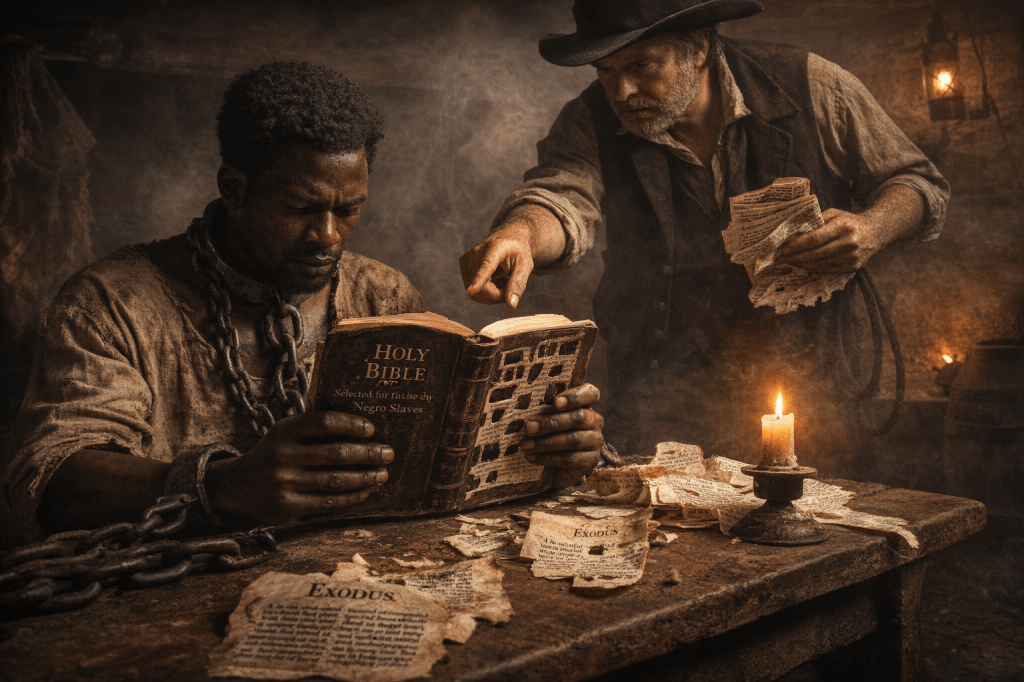
The Slave Bible, formally titled Parts of the Holy Bible, Selected for the Use of the Negro Slaves, in the British West-India Islands (1807), was produced by Anglican missionaries affiliated with the Society for the Conversion of Negro Slaves. This was not a complete Bible but a heavily redacted version designed to serve plantation interests rather than spiritual truth (Thompson, 1998).

Of the 1,189 chapters in the Protestant Bible, approximately 90 percent of the Old Testament was removed, along with nearly half of the New Testament. Entire books central to liberation theology—Exodus, Deuteronomy, Joshua, Judges, and large portions of the prophets—were omitted because they emphasized deliverance from bondage and divine justice against oppressors.

Exodus was especially dangerous to slaveholders. The story of Israel’s deliverance from Egypt offered enslaved Africans a clear theological parallel: a God who hears the cries of the oppressed, confronts empire, and breaks chains. By removing Exodus 1–20 almost entirely, slaveholders eliminated the most explicit biblical narrative of emancipation (Raboteau, 2004).

Passages affirming equality before God were likewise excised. Galatians 3:28—“There is neither Jew nor Greek, bond nor free”—was absent. So too were scriptures condemning manstealing, such as Exodus 21:16 and 1 Timothy 1:10, which explicitly define kidnapping humans as a crime punishable by death under Mosaic law.

What remained were verses emphasizing submission, obedience, and silence. Ephesians 6:5—“Servants, be obedient to them that are your masters”—was retained without its broader theological context. Colossians and 1 Peter were selectively edited to reinforce a one-sided doctrine of servitude stripped of moral accountability for masters.

This selective theology created a distorted Christ—one who demanded submission but never confronted injustice. The radical Jesus who overturned tables, rebuked elites, and proclaimed freedom to the captives (Luke 4:18) was minimized or erased entirely.

The suppression of biblical literacy extended beyond redaction. Enslaved Africans caught with books or attempting to read scripture independently faced brutal punishment. Slaveholders understood that the Bible, when read holistically, posed a direct threat to the institution of slavery (Douglass, 1845/2003).

Despite these restrictions, enslaved Africans developed clandestine religious practices. “Hush harbors” and secret prayer meetings allowed them to reinterpret scripture orally, often preserving the liberation themes that slaveholders sought to erase. Oral theology became a form of resistance and survival (Raboteau, 2004).

Enslaved preachers often re-centered Exodus, Revelation, and prophetic justice through song, spirituals, and coded language. Songs like Go Down, Moses were not merely hymns but theological declarations of impending freedom and divine judgment against Pharaoh-like systems.

The Slave Bible also reveals the racialization of God. White supremacy reimagined Christianity as inherently European, positioning whiteness as godly and Blackness as cursed—often through misinterpretations of the so-called “Curse of Ham,” a doctrine now widely rejected by scholars (Haynes, 2002).

This theological distortion had lasting psychological consequences. By weaponizing scripture, slaveholders attempted to sever enslaved Africans from a God of justice and reframe oppression as divine order. This contributed to generational trauma and religious confusion within Black communities.

Yet, history shows that the strategy ultimately failed. Enslaved Africans did not abandon God; they reclaimed Him. Black Christianity emerged as a counter-theology—one rooted in liberation, survival, and divine reversal of power structures.

The legacy of the Slave Bible demands critical reflection today. It exposes how scripture can be manipulated when removed from historical, linguistic, and ethical context. It also warns against any theology that aligns God with the empire rather than the oppressed.

Modern scholarship recognizes the Slave Bible as evidence not of Christian faithfulness, but of moral corruption. It stands as a testament to how religion can be weaponized when truth threatens power.

Importantly, the Slave Bible also affirms why unrestricted access to scripture matters. When people read the Bible for themselves, they encounter a God who repeatedly sides with the marginalized, condemns exploitation, and demands justice.

The full biblical canon—especially the prophets, the law, and the teachings of Christ—cannot coexist with chattel slavery without contradiction. This is precisely why it had to be edited.

Today, the Slave Bible is preserved in museums not as a sacred text, but as a warning. It reminds us that oppression often fears education more than rebellion and that truth, once uncovered, cannot remain chained.

Ultimately, the story of the Slave Bible is not just about what was removed, but about what endured. Faith survived censorship. Hope survived mutilation. And the God of the oppressed could not be erased—even when His words were.


References

Douglass, F. (2003). Narrative of the life of Frederick Douglass, an American slave (Original work published 1845). Penguin Classics.

Haynes, S. R. (2002). Noah’s curse: The biblical justification of American slavery. Oxford University Press.

Raboteau, A. J. (2004). Slave religion: The “invisible institution” in the antebellum South (Updated ed.). Oxford University Press.

Thompson, V. B. (1998). The making of the African diaspora in the Americas, 1441–1900. Longman.

Williams, J. E. (2005). Religion and violence in early American slavery. Routledge.

Society for the Conversion of Negro Slaves. (1807). Parts of the Holy Bible, selected for the use of the Negro slaves, in the British West-India Islands. London: Law and Gilbert.

The Holy Bible, King James Version. (1611/1769). Cambridge University Press.

A Watchman in the Shadows

A watchman in the shadows is a rare figure, often unnoticed by the crowd yet deeply known by God. He is the needle in the haystack, not because he seeks distinction, but because his character is forged in obedience, restraint, and reverence for the Most High. In a world drawn to noise and spectacle, his strength is quiet, disciplined, and immovable.

Scripture presents the watchman as one appointed by God to observe, discern, and warn, not for personal glory, but for communal preservation. “Son of man, I have made thee a watchman unto the house of Israel” (Ezekiel 33:7, KJV). This role demands spiritual alertness, moral clarity, and a willingness to stand firm even when few are listening.

This man is a leader not by title but by example. His authority flows from integrity rather than charisma. Like David before his anointing, he learns governance in obscurity, tending what God has already placed in his hands while awaiting divine timing (1 Samuel 16:11–13).

He is a provider in the fullest biblical sense, understanding that provision extends beyond finances into protection, guidance, and spiritual covering. Scripture teaches that a man who fails to care for his household has “denied the faith” (1 Timothy 5:8, KJV). The watchman takes this charge seriously, preparing himself mentally, emotionally, spiritually, and economically.

As a man of God, his private life aligns with his public confession. He fears the Lord, not with terror, but with awe, reverence, and submission. “The fear of the Lord is the beginning of wisdom” (Proverbs 9:10, KJV), and wisdom shapes his decisions, relationships, and priorities.

He teaches the Bible not as performance, but as stewardship. Whether from a pulpit, a living room, or quiet conversation, he rightly divides the Word of truth (2 Timothy 2:15). His teaching is rooted in context, humility, and a desire to see lives transformed rather than applauded.

This watchman understands spiritual warfare. He knows that leadership attracts resistance, and obedience provokes opposition. Therefore, he remains vigilant in prayer, armored in righteousness, and grounded in truth (Ephesians 6:11–18). His strength is sustained by communion with God rather than public validation.

He is a needle in the haystack because he resists cultural distortions of masculinity. He does not confuse dominance with strength or silence with apathy. Instead, he embodies biblical manhood marked by accountability, discipline, compassion, and courage (Micah 6:8).

Like the sons of Issachar, he understands the times and knows what must be done (1 Chronicles 12:32). He discerns seasons, recognizes patterns, and responds with wisdom rather than impulse. His insight makes him valuable, even when misunderstood.

The watchman walks with restraint in matters of desire and pleasure. He guards his eyes, his thoughts, and his heart, recognizing that purity is power, not deprivation. “Keep thy heart with all diligence; for out of it are the issues of life” (Proverbs 4:23, KJV).

He is often hidden because God develops leaders in isolation before elevation. Jesus Himself spent thirty years in relative obscurity before three years of ministry that changed the world. Preparation precedes manifestation (Luke 2:52).

This man is after God’s own heart, not because he is flawless, but because he is repentant, teachable, and aligned with God’s will (Acts 13:22). When corrected, he submits. When humbled, he learns. When called, he responds.

He understands covenant responsibility. If married, he loves his wife as Christ loved the church, sacrificially and intentionally (Ephesians 5:25). If single, he honors God with patience and discipline, refusing to compromise purpose for convenience.

The watchman carries the burden of intercession. He prays not only for himself, but for his family, his community, and future generations. Like Job, he stands in the gap, offering prayers of protection and alignment (Job 1:5).

He does not chase platforms, but he is prepared for them. When opportunity comes, he is rooted enough to withstand scrutiny and pressure. His foundation has been laid in truth, not image.

Though he dwells in the shadows, heaven knows his name. Angels are dispatched at the prayers he whispers. God weighs his obedience and records his faithfulness (Malachi 3:16).

The watchman is misunderstood because he refuses shortcuts. He chooses longevity over popularity, holiness over hype, and obedience over applause. His path is narrow, but it is secure (Matthew 7:13–14).

He recognizes that leadership begins with self-governance. He disciplines his body, renews his mind, and submits his spirit to God daily (1 Corinthians 9:27; Romans 12:2).

When crisis arises, he is steady. When confusion spreads, he brings clarity. When fear grips others, he remains anchored. His confidence is not in circumstance, but in God’s sovereignty (Psalm 46:1).

A watchman in the shadows may not trend, but he transforms. His impact is generational, his influence eternal. Long after noise fades, his obedience echoes in lives changed and destinies aligned.

Such a man is rare, refined by God, hidden until appointed. He stands alert on the wall, faithful at his post, watching not for recognition, but for the glory of the Most High.


References

Carson, D. A. (1996). Exegetical fallacies (2nd ed.). Grand Rapids, MI: Baker Academic.

Holy Bible, King James Version. (1769/2017). Cambridge Edition.

Piper, J. (2013). Desiring God: Meditations of a Christian hedonist. Colorado Springs, CO: Multnomah.

Tozer, A. W. (1948). The pursuit of God. Harrisburg, PA: Christian Publications.

Wright, N. T. (2012). How God became king. New York, NY: HarperOne.

The Bible Series: The Narrow Path – (Matthew 7:14)

Key Scripture: Matthew 7:14 – “Because strait is the gate, and narrow is the way, which leadeth unto life, and few there be that find it.”


The journey of a believer is not meant to follow the broad, easy roads of the world. God calls us to walk the narrow path, a life of obedience, faith, and discipline that leads to eternal life. Though it may be difficult and sometimes lonely, the reward is eternal.


1. Understanding the Narrow Path

The narrow path represents a life dedicated to Christ, aligned with His Word, and obedient to His commands. It is countercultural and requires discernment to stay on course.


2. The Gate is Strait

Entry into this path requires intentional commitment. Jesus calls for repentance, surrender, and faith.

  • Luke 13:24 – “Strive to enter in at the strait gate: for many, I say unto you, will seek to enter in, and shall not be able.”

3. Few Will Find It

The narrow path is exclusive not because God is selective, but because few are willing to embrace sacrifice, discipline, and holiness.


4. The Broad Road vs. The Narrow Path

The world offers an easy, wide path that caters to fleshly desires, comfort, and instant gratification. The narrow path challenges these impulses and calls for faith-driven choices.

  • Matthew 7:13 – “Enter ye in at the strait gate: for wide is the gate, and broad is the way, that leadeth to destruction…”

5. Faith Over Convenience

Walking the narrow path requires trusting God over worldly wisdom, convenience, or peer pressure.


6. Discipline and Holiness

This path demands a daily commitment to prayer, scripture, and righteous living. It is narrow because it rejects compromise and sin.


7. Overcoming Obstacles

Trials, opposition, and temptations are inevitable. The narrow path tests perseverance, character, and dependence on God.

  • James 1:12 – “Blessed is the man that endureth temptation: for when he is tried, he shall receive the crown of life…”

8. Guidance from the Spirit

The Holy Spirit illuminates the path, strengthens the believer, and provides discernment in choices.


9. Community of Believers

Though few, the fellow travelers on the narrow path offer encouragement, accountability, and fellowship.

  • Hebrews 10:24-25 – “And let us consider one another to provoke unto love and to good works…”

10. Eternal Perspective

The narrow path is not about worldly success but eternal reward. Every sacrifice, act of obedience, and step of faith has lasting significance.


Conclusion

Walking the narrow path is challenging, but it leads to life abundant and eternal. Choosing this path reflects faith, obedience, and love for God. It requires courage to walk differently from the crowd, but in doing so, we experience God’s promise, protection, and everlasting reward.

Weaponizing Scripture: How the Bible Was Used to Justify Enslavement

This photograph is the property of its respective owner. No copyright infringement intended

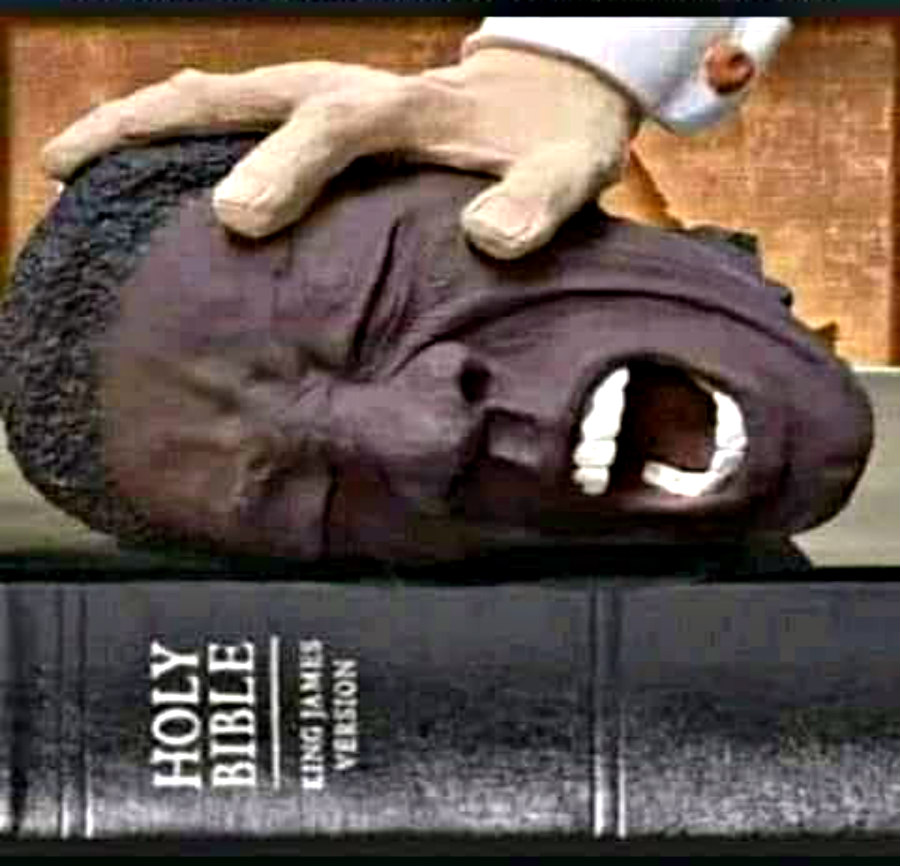
Weaponizing Scripture was one of the most devastating tools used to sustain the transatlantic slave system. The Bible, a text meant to proclaim liberation, justice, and the dignity of humanity, was distorted into an instrument of control. Enslavers did not merely use chains and whips; they used theology, selectively interpreted and strategically taught, to shape belief, obedience, and identity.

European slaveholders understood that physical domination alone was insufficient. To maintain long-term control, they needed mental and spiritual submission. Christianity, when stripped of its liberatory core, became a mechanism for conditioning enslaved Africans to accept suffering as divinely ordained rather than violently imposed.

One of the most common tactics was the selective reading of Scripture. Enslavers emphasized verses that appeared to support servitude while suppressing passages that spoke of freedom, justice, and God’s judgment against oppression. This manipulation created a counterfeit Christianity that served the empire rather than God.

A frequently cited passage was Ephesians 6:5, “Servants, be obedient to them that are your masters” (KJV). This verse was taught without context, stripped of its historical setting, and severed from the broader biblical narrative. Enslavers ignored that the same chapter commands masters to act justly and warns that God shows no partiality.

Similarly, Colossians 3:22 and 1 Peter 2:18 were weaponized to portray submission to abuse as holy obedience. These verses were never intended to endorse racialized, chattel slavery, yet they were recast to sanctify lifelong bondage based on skin color, a concept entirely foreign to the biblical world.

At the same time, enslavers deliberately removed or discouraged engagement with texts that threatened their power. The book of Exodus, which narrates God’s deliverance of an enslaved people, was often censored or reframed. Moses was rarely preached as a liberator, and Pharaoh’s defeat was downplayed or spiritualized to avoid political implications.

In many plantations, enslaved Africans were given a heavily edited text known as the “Slave Bible.” This version removed large portions of the Old Testament and New Testament passages that emphasized freedom, equality, or divine justice. What remained was a hollowed-out gospel engineered for compliance.

This theological distortion extended beyond omission into outright deception. Enslavers taught that Black people were cursed by God, often invoking a twisted interpretation of the so-called “Curse of Ham” in Genesis 9. This lie ignores the text itself, which never condemns Ham’s descendants to perpetual slavery and never mentions race.

By redefining God as a white authoritarian figure aligned with European power, enslavers reshaped spiritual imagination. Blackness became associated with sin, inferiority, and divine disfavor, while whiteness was falsely aligned with righteousness and authority. This inversion was not biblical; it was ideological.

Such misuse of Scripture produced mental slavery, a condition where the enslaved internalized the oppressor’s theology. Over time, some came to believe their suffering was God’s will, that resistance was rebellion against heaven, and that liberation was spiritually dangerous.

Yet even under these conditions, enslaved Africans demonstrated remarkable theological resistance. Through spirituals, coded language, and communal worship, they reclaimed biblical themes of deliverance, judgment, and hope. Songs about crossing Jordan, escaping Egypt, and seeing the promised land were not metaphorical escapism; they were theological protest.

The Bible itself consistently condemns man-stealing, the foundation of chattel slavery. Exodus 21:16 declares that kidnapping a human being and selling them is a capital crime. This verse alone dismantles the moral legitimacy of the slave trade, yet it was systematically ignored.

The prophets repeatedly denounce exploitation of the poor and vulnerable. Isaiah, Jeremiah, and Amos all portray God as hostile toward nations that enrich themselves through oppression. These texts reveal that the God of Scripture sides with the crushed, not the conqueror.

Jesus’ ministry further exposes the lie of slaveholding theology. Christ announced His mission as one to “preach deliverance to the captives” and to set the oppressed free (Luke 4:18). Any theology that sanctifies captivity directly contradicts the words of Christ Himself.

The apostolic message affirms spiritual equality among believers. Galatians 3:28 declares that there is neither slave nor free in Christ, undermining any doctrine that elevates one group over another. While early Christians lived within existing social systems, the gospel planted seeds that inevitably challenged them.

Weaponized Scripture also served to fracture Black identity. African spiritual systems were demonized, ancestral memory was erased, and biblical literacy was restricted. This was not evangelism; it was cultural warfare masquerading as salvation.

The long-term consequences of this distortion persist today. Many descendants of the enslaved wrestle with inherited religious trauma, mistrust of Christianity, or internalized inferiority rooted in centuries of theological abuse. This is one of slavery’s most enduring scars.

Yet the Bible itself is not the enemy. The problem has never been Scripture, but who interprets it, how it is taught, and whose interests it serves. When read holistically, the Bible exposes slavery as sin and oppression as rebellion against God.

Reclaiming Scripture requires restoring context, history, and truth. It demands confronting how Christianity was used as a colonial tool while also recognizing how Black faith communities preserved the liberating heart of the gospel against all odds.

Weaponized Scripture enslaved bodies for centuries, but redeemed Scripture continues to awaken minds. When the Bible is freed from manipulation, it testifies not to chains, but to justice, dignity, and divine judgment against every system built on human suffering.


References

Cone, J. H. (1975). God of the oppressed. New York, NY: Seabury Press.

Douglas, K. B. (1994). The black Christ. Maryknoll, NY: Orbis Books.

Haynes, S. R. (2002). Noah’s curse: The biblical justification of American slavery. Oxford, UK: Oxford University Press.

Raboteau, A. J. (2004). Slave religion: The “invisible institution” in the antebellum South. New York, NY: Oxford University Press.

The Holy Bible, King James Version. (1769/2017). Cambridge Edition.

Wilmore, G. S. (1998). Black religion and Black radicalism (3rd ed.). Maryknoll, NY: Orbis Books.