Tag Archives: slavery

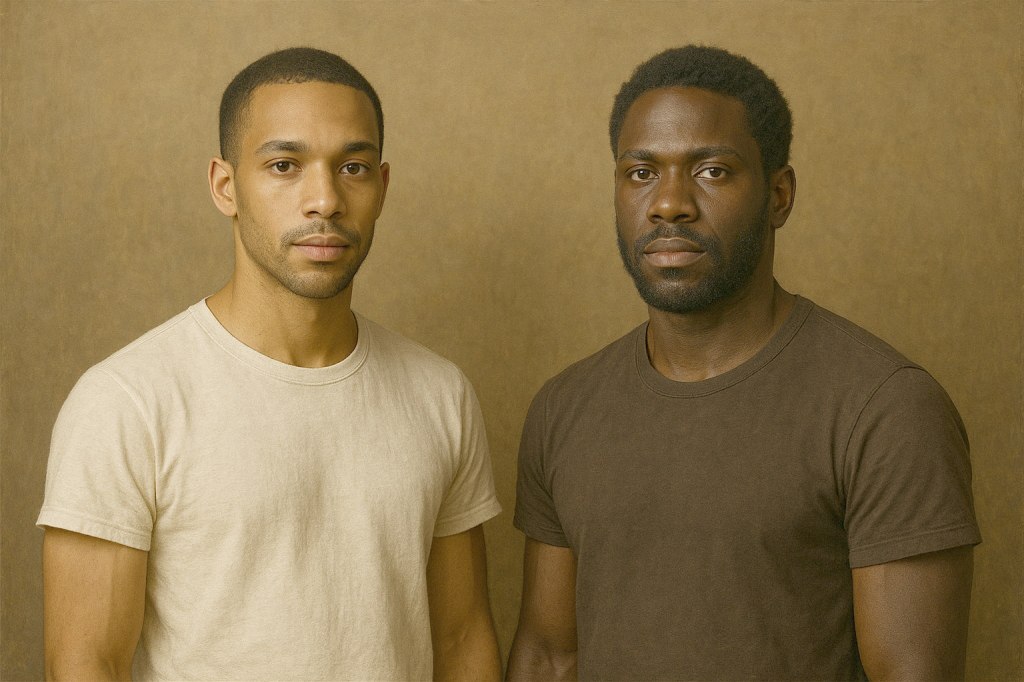
Black Men and Colorism: The Hidden Wounds of Shade and Identity.

Colorism, the preferential treatment of lighter skin within a racial group, remains one of the most insidious and unspoken wounds in the Black community. For Black men, its effects stretch across centuries—from the brutal days of slavery to the modern workplace and the realm of romantic relationships. This silent divider, rooted in white supremacy, has shaped self-perception, opportunity, and the psychology of manhood itself.

During slavery, color determined labor and proximity to power. Lighter-skinned Black men, often the offspring of white slave owners, were more likely to work inside the plantation homes, serving as butlers, drivers, or craftsmen. In contrast, darker-skinned men endured the harshest field labor, under the blazing sun, viewed as stronger but less intelligent. This early stratification sowed seeds of division that still bear fruit in today’s society.

The color hierarchy in slavery was not only a social construct—it was a method of control. By favoring lighter slaves and pitting them against darker ones, slave masters ensured that unity among Black men remained fractured. Scripture warns of such division, “Every kingdom divided against itself is brought to desolation” (Matthew 12:25, KJV). Colorism became one of the most effective psychological chains ever forged.

After emancipation, many lighter-skinned Black men found greater access to education and economic advancement through institutions that valued European features. Some were even able to “pass” as white to escape racial discrimination entirely. Meanwhile, darker men were left to face the full brutality of Jim Crow laws, systemic oppression, and exclusion from economic resources. This dual reality bred resentment, confusion, and a longing for acceptance that persists through generations.

In modern times, colorism still influences the way Black men are perceived in the workforce. Studies reveal that lighter-skinned Black men often receive more job offers, higher salaries, and better treatment than their darker counterparts (Keith & Herring, 1991). This reality echoes James 2:9, “But if ye have respect to persons, ye commit sin, and are convinced of the law as transgressors” (KJV). Society’s preference for lightness continues to sin against God’s creation by judging men based on melanin rather than merit.

In love and relationships, colorism manifests in subtle but damaging ways. Dark-skinned men are often stereotyped as hypermasculine, aggressive, or intimidating, while lighter-skinned men are portrayed as more desirable or approachable. Media representation reinforces these narratives, making it difficult for Black men to escape the psychological confines of stereotype.

Many Black women, themselves victims of colorism, have internalized similar biases. Preference for lighter-skinned men can mirror a subconscious belief that proximity to whiteness offers safety or beauty. Yet, as Proverbs 31:30 reminds us, “Favour is deceitful, and beauty is vain: but a woman that feareth the Lord, she shall be praised” (KJV). God’s measure of manhood is not complexion but character.

The entertainment industry has historically perpetuated color-based casting. From old Hollywood to hip-hop videos, lighter-skinned men were often depicted as romantic leads or cultural icons, while darker men were relegated to roles of brute strength or villainy. This not only limited opportunities but distorted self-image for young Black boys growing up without balanced representation.

Within the Black community, these divisions create invisible walls. Darker-skinned men may feel alienated or undervalued, developing insecurities masked as arrogance or emotional detachment. Conversely, lighter-skinned men sometimes face accusations of not being “Black enough,” leading to confusion about belonging and cultural authenticity.

This internal conflict is a remnant of colonial thinking that sought to rank human worth by appearance. The Apostle Paul’s teaching in Acts 17:26, “And hath made of one blood all nations of men for to dwell on all the face of the earth,” (KJV) directly dismantles this lie. God’s word affirms equality where man’s systems deny it.

The psychological damage of colorism among Black men is also seen in competition and mistrust. Brotherhood weakens when one man’s skin tone becomes another’s burden. The enemy exploits these differences to divide families, churches, and communities. Unity, which should be their strength, becomes fractured by suspicion and jealousy.

Historically, colorism also influenced leadership and politics within the Black race. During the early 20th century, the “Blue Vein Societies” and elite circles favored light-skinned men, granting them influence in civil and educational institutions. This bias hindered collective liberation, as some leaders subconsciously sought validation through proximity to whiteness rather than solidarity with their darker brethren.

Spiritually, colorism contradicts divine creation. Genesis 1:27 declares, “So God created man in his own image.” To despise one’s brother for the shade of his skin is to insult the very image of God. Black men, whether light or dark, embody divine beauty and strength born of survival and grace.

Colorism also shapes dating dynamics in the age of social media. Online algorithms often amplify Eurocentric features, pushing lighter-skinned Black men to the forefront of visibility. This artificial hierarchy damages self-esteem and perpetuates false notions of worthiness. The result is an identity crisis masked by aesthetics and status.

In workplaces, darker-skinned Black men report more incidents of racial profiling, microaggressions, and stereotyping. Their assertiveness is often mistaken for aggression, while their confidence is labeled as arrogance. Meanwhile, lighter men may be tokenized or expected to conform to white comfort. Both experiences rob Black men of full authenticity.

Even in brotherhood, sports, and ministry, shade bias can subtly influence trust and leadership preference. The healing of this generational trauma requires spiritual renewal, honesty, and repentance. “Be kindly affectioned one to another with brotherly love; in honour preferring one another” (Romans 12:10, KJV).

Healing from colorism begins when Black men learn to see each other as divine reflections rather than societal projections. The rebuilding of unity must be intentional—celebrating every shade as a manifestation of God’s artistry. Only then can they reclaim identity beyond colonial lies.

In the end, colorism is not merely a social problem—it is a spiritual sickness born of racism. It thrives where ignorance reigns and where self-hate is disguised as preference. Through faith, education, and love, the Black man can rediscover his worth not in complexion, but in divine purpose.

For centuries, Black men have been divided by hue yet united by struggle. The path to healing requires collective repentance and re-education. When Black men recognize that their worth is not in tone but in testimony, they reclaim what slavery and colonization tried to destroy: brotherhood, dignity, and divine identity.

References

Holy Bible, King James Version. (1611).

Keith, V. M., & Herring, C. (1991). Skin tone and stratification in the Black community. American Journal of Sociology, 97(3), 760–778.

Russell, K., Wilson, M., & Hall, R. (2013). The Color Complex (Revised): The Politics of Skin Color Among African Americans. Anchor Books.

Hunter, M. (2007). The persistent problem of colorism: Skin tone, status, and inequality. Sociology Compass, 1(1), 237–254.
The Mulatto: The Complex Legacy of Mixed-Race Identity in Slavery.

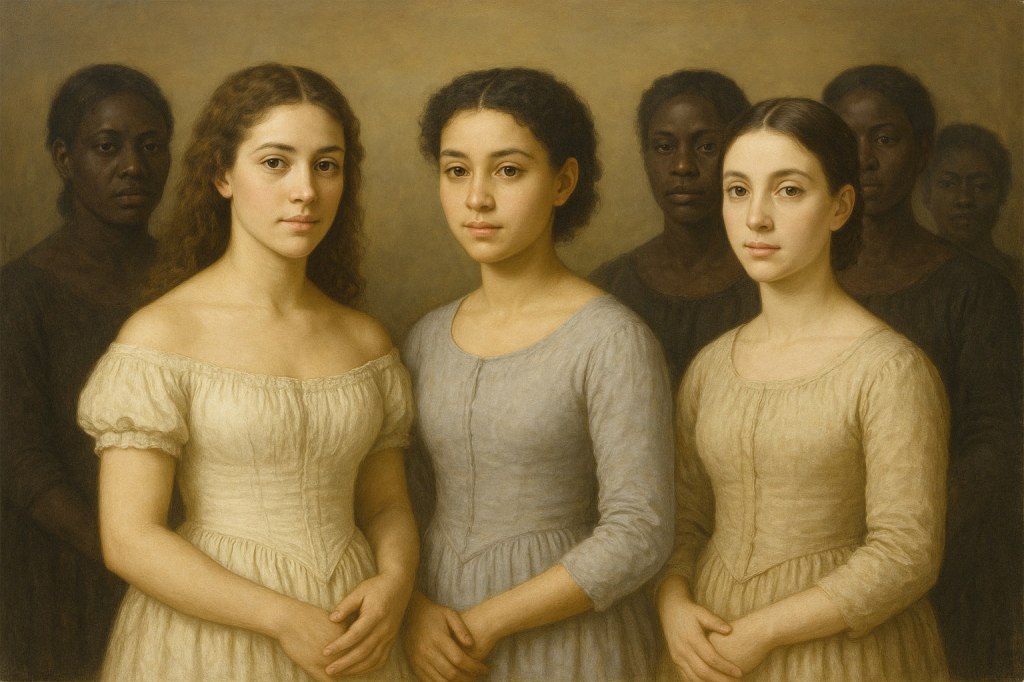
During the transatlantic slave trade and the centuries of chattel slavery that followed in the Americas, a tragic and complex racial hierarchy emerged. At its center was the “Mulatto”—a person of mixed African and European ancestry. The term itself, derived from the Spanish and Portuguese mulato, meaning “young mule,” was intended to signify something unnatural—a mix between species. This offensive origin reveals the dehumanizing way in which enslaved people were viewed, even those who bore the blood of their enslavers.

Mulattoes often came into existence through non-consensual sexual relationships between white male slave owners and enslaved African women. These unions were rarely romantic or voluntary; they were products of exploitation, coercion, and the unchecked power of white patriarchy. The children of these unions occupied an ambiguous social status. They were visibly lighter and sometimes given privileges over darker-skinned Africans, yet they were still enslaved and denied full humanity.

Economically, lighter-skinned slaves were often valued more highly in the slave markets. Auction records from New Orleans, Charleston, and the Caribbean show that Mulattoes, Quadroons, and Octoroons—terms denoting fractions of African ancestry—were sold for higher prices due to their perceived proximity to whiteness. In some cases, a beautiful light-skinned woman could fetch thousands of dollars—sometimes twice the price of a strong field laborer (Berry, 2007).

The hierarchy extended as follows: a Mulatto was half African, half European; a Quadroon was one-quarter African; and an Octoroon was one-eighth African. Each degree of whiteness supposedly brought refinement, beauty, and docility, qualities European buyers associated with superiority. This false racial science was a cornerstone of both slavery and early American eugenics.

Quadroon and Octoroon women, especially in New Orleans and parts of Louisiana, were sometimes groomed for what was known as the “plaçage” system. Under this arrangement, wealthy white men entered into unofficial unions with mixed-race women who were often educated, well-dressed, and trained in European manners. These relationships were not legal marriages but resembled concubinage. In exchange for companionship, these women received homes, money, and privileges denied to field slaves (Clark, 2013).

Plantation wives often felt deep resentment and humiliation over their husbands’ relationships with these women. The presence of mixed-race children—who sometimes lived in close proximity to the white household—served as constant reminders of betrayal. Historical letters and diaries reveal the rage, jealousy, and psychological torment many white women endured as they silently tolerated this hypocrisy (White, 1999).

Mulattoes, Quadroons, and Octoroons often worked inside the master’s home as cooks, maids, and nurses rather than in the fields. Their lighter complexion was falsely associated with higher intelligence and beauty. They became symbols of white men’s domination over both Black bodies and the institution of the family. This system reinforced colorism—a social order that persists even today.

Despite their elevated positions, these individuals lived under the same oppressive laws as all enslaved Africans. The “one-drop rule” in America classified anyone with African ancestry as Black, ensuring that even the lightest Octoroon remained enslaved if born to an enslaved mother. This legal principle ensured that slavery perpetuated itself across generations, regardless of physical appearance.

Mulattoes also faced rejection from both sides of society. They were often too “Black” to be accepted by whites, and too “white” to be fully trusted by darker-skinned slaves. This liminal identity created a painful dual consciousness—one that mirrored W.E.B. Du Bois’s later description of the “two-ness” of being both Black and American.

The valuation of mixed-race people as commodities is evident in slave ledgers and advertisements. For example, in the 1850s, a young Octoroon woman could sell for up to $3,000—a staggering sum when a skilled field hand might sell for $1,000 (Johnson, 1999). The intersection of race, beauty, and sex created a disturbing marketplace of human trafficking.

In urban centers like New Orleans, Charleston, and Havana, mixed-race women became central to elite social scenes. Some even gained temporary freedoms or wealth, though their status was always precarious. Freedom papers could be revoked, and any sign of rebellion risked severe punishment.

The plantation economy used these women as both workers and instruments of control. Their presence created divisions among enslaved people—divisions based on skin tone that mirrored European racial ideologies. This psychological warfare weakened unity among the enslaved, reinforcing white supremacy.

Christianity was also manipulated to justify this system. Slaveholders preached obedience while violating every moral tenet of the Bible. Yet enslaved people, including Mulattoes, found in Scripture the promise of deliverance. The story of Moses, the Exodus, and Deuteronomy 28 became powerful symbols of hope and identity.

After emancipation, colorism continued to shape Black communities. Some mixed-race families gained social advantages through education, passing, or wealth. Others were caught between worlds—accepted by neither the white elite nor the broader Black population.

The legacy of the Mulatto is thus deeply ambivalent. It reveals both the violence of racial oppression and the resilience of identity. The beauty, intelligence, and strength of mixed-race descendants are testimonies not to European “refinement” but to African endurance and divine grace.

The language of “Quadroon” and “Octoroon” has since been rejected as racist pseudoscience. Yet the scars of this history remain visible in modern discussions of beauty standards, social hierarchy, and representation in media.

For plantation wives, the mixed-race presence was a symbol of both moral failure and racial anxiety. For white men, it represented unchecked power. For the enslaved, it was a daily reminder of a world built on sexual exploitation and systemic cruelty.

Ultimately, the story of the Mulatto is not about privilege but pain—a reflection of how slavery corrupted family, faith, and love. It reveals the perverse intersection of race and desire that shaped America’s social fabric.

Today, scholars revisit these histories not merely to recount suffering, but to reclaim truth. The bloodlines of the enslaved, the Mulatto, the Quadroon, and the Octoroon tell a story of survival—one written not by choice, but by resilience and faith in freedom’s promise.

References

Berry, D. R. (2007). The Price for Their Pound of Flesh: The Value of the Enslaved from Womb to Grave, in the Building of a Nation. Beacon Press.

Clark, E. (2013). The Strange History of the American Quadroon: Free Women of Color in the Revolutionary Atlantic World. University of North Carolina Press.

Johnson, W. (1999). Soul by Soul: Life Inside the Antebellum Slave Market. Harvard University Press.

White, D. G. (1999). Ar’n’t I a Woman?: Female Slaves in the Plantation South. W.W. Norton & Company.

The Unbroken: Chronicles of Enslaved Souls.

Photo by Safari Consoler on Pexels.com

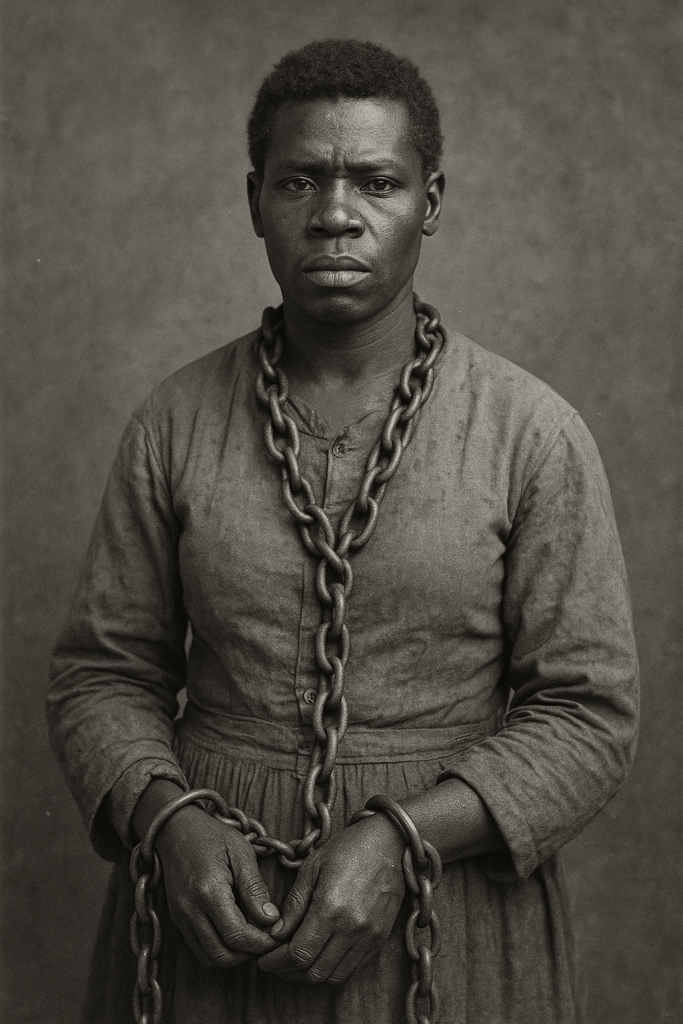
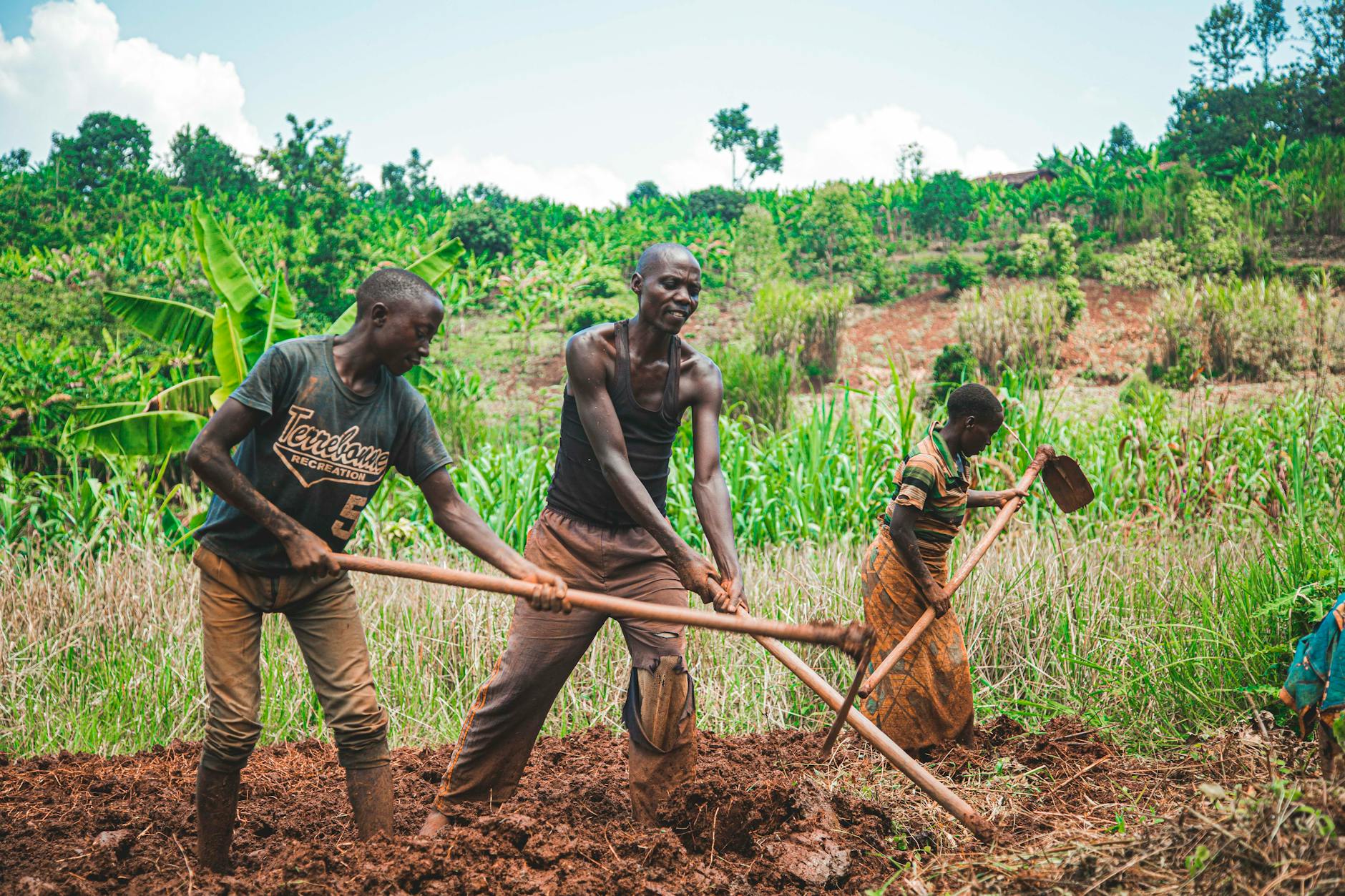
The story of enslavement in the Americas is not solely a tale of brutality and dehumanization—it is also one of divine endurance, sacred strength, and the unyielding spirit of a people determined to survive. The enslaved African was stripped of name, language, and homeland, yet something eternal within remained unbroken. This resilience, forged in the furnace of oppression, became the cornerstone of Black identity and collective survival across generations.

In the belly of slave ships, chained in darkness and surrounded by death, the captives still prayed, sang, and remembered. The Middle Passage was intended to break their spirits, but it instead birthed a new kind of defiant endurance. These men and women carried not only physical strength but also the ancestral memory of kingdoms, kinship, and sacred traditions. Their songs—spirituals whispered between sobs and storms—were coded messages of hope and liberation (Gates & Curran, 2019).

On the plantations, survival was both a physical and spiritual act. Each day, enslaved people found ways to resist erasure—through language, through song, through secret gatherings where they worshipped a God who delivered Israel and would one day deliver them. The slave masters wielded whips, but they could not conquer faith. In fields where blood soaked the soil, the enslaved sowed seeds of freedom.

The resilience of enslaved women was particularly remarkable. They endured sexual violence, the theft of their children, and the weight of double oppression—both racial and gendered. Yet, they nurtured their families and passed down wisdom, oral history, and the will to survive. Their lullabies were both prayers and promises, ensuring that even in bondage, their children knew they were born from strength (Collins, 2000).

Resistance was not always open rebellion—it was often subtle, subversive, and strategic. Every moment of survival was an act of defiance. Running away, breaking tools, feigning ignorance, or refusing to reproduce were forms of rebellion that disrupted the machinery of slavery. Harriet Tubman, Nat Turner, and countless unnamed heroes transformed defiance into destiny, turning resistance into a moral revolution (Franklin & Schweninger, 1999).

Spiritual resilience emerged as a weapon of hope. The biblical story of Exodus became the foundation of the enslaved theology. The enslaved identified with the Israelites in Egypt, awaiting deliverance from their Pharaohs. Christianity, though distorted by oppressors, was reinterpreted as a promise of divine justice. Faith became the language of resistance, and hope became the instrument of liberation (Raboteau, 2004).

The communal bonds among the enslaved were vital for survival. Families, though often separated by sale, maintained spiritual connections across distances. Kinship was reimagined; any elder could be “Mama” or “Papa.” Community became the sanctuary when no physical refuge existed. Through shared grief, laughter, and labor, they built a sacred fellowship of the unbroken.

Music was both solace and strategy. The spirituals, field hollers, and ring shouts carried messages of escape, coded directions, and sacred affirmation. These songs bridged the gap between Africa and America, between despair and hope. The rhythms preserved memory; the harmonies echoed the soul’s refusal to be silenced. Each note was a heartbeat of survival.

The enslaved also resisted intellectually and artistically. Many secretly learned to read, defying laws that criminalized literacy. The ability to read the Bible became a spiritual victory. From these forbidden words grew the seeds of abolition, as literacy birthed leaders, preachers, and reformers who articulated the moral and human rights argument against slavery (Douglass, 1845).

In the quiet corners of their quarters, the enslaved crafted tools, quilts, and art that encoded messages of liberation. Every stitch, carving, or pattern was an assertion of agency. Creativity became both a cultural inheritance and a subtle rebellion, proving that beauty and meaning could be made even in the darkest captivity.

Resistance also took the form of flight. The Underground Railroad symbolized not just escape but the collective courage of those who risked their lives for others. It was an act of radical love—each conductor and traveler embodying the unbroken bond between freedom and faith. The northward journey was both a physical and spiritual pilgrimage (Hagedorn, 2010).

For those who could not flee, inner freedom became their sanctuary. Enslaved preachers proclaimed a higher law than that of man. They spoke of a kingdom not of this world, where the last would be first and the captors would answer to divine justice. Such preaching was a radical act, for it gave the enslaved people spiritual dignity in a world determined to deny it.

Children born in bondage inherited both trauma and triumph. They learned survival as a language, faith as a shield, and resilience as inheritance. Their elders’ stories became oral scripture—a record of human endurance written not on paper, but on hearts.

Even after emancipation, the unbroken spirit continued. Freedom brought new struggles—poverty, segregation, and systemic racism—but also renewed determination. The resilience that carried them through slavery now fueled education, enterprise, and the building of churches, schools, and communities that would shape the Black experience in America.

The artistry, faith, and family traditions that originated during slavery laid the foundation for African American culture. Jazz, blues, and gospel music carry echoes of the field songs and ring shouts. The resilience born in bondage became the creative force behind some of the world’s most profound cultural expressions.

The legacy of the unbroken lives in every generation that refuses to surrender to despair. From the Harlem Renaissance to the Civil Rights Movement, the descendants of the enslaved have transformed pain into purpose and memory into movement. Their very existence is testimony to divine perseverance and the unextinguished flame of dignity.

The chronicles of enslaved souls remind the world that oppression cannot conquer the human spirit. History records the suffering, but the descendants carry the victory. In every hymn sung, every march walked, and every child educated, the unbroken rise again.

The story of survival within slavery is not simply historical—it is theological, cultural, and psychological. It is the manifestation of a collective covenant with God, who preserves His people even in captivity. Their resilience was not accidental; it was providential. It was faith lived under fire, hope breathing through horror.

Ultimately, the unbroken spirit of the enslaved is a mirror reflecting humanity’s highest capacity for endurance and love. Their story calls the world to remember, to honor, and to emulate their strength. For though their bodies were chained, their souls remained forever free.


References

Collins, P. H. (2000). Black feminist thought: Knowledge, consciousness, and the politics of empowerment (2nd ed.). Routledge.

Douglass, F. (1845). Narrative of the life of Frederick Douglass, an American slave. Anti-Slavery Office.

Franklin, J. H., & Schweninger, L. (1999). Runaway slaves: Rebels on the plantation. Oxford University Press.

Gates, H. L., Jr., & Curran, A. S. (2019). Who’s Black and why? A hidden chapter from the eighteenth-century invention of race. Harvard University Press.

Hagedorn, K. J. (2010). Beyond the slave narrative: Politics, sex, and manuscripts in the Haitian Revolution. Duke University Press.

Raboteau, A. J. (2004). Slave religion: The “invisible institution” in the antebellum South. Oxford University Press.

Wheatley, P. (1773). Poems on various subjects, religious and moral. A. Bell.

Wilmore, G. S. (1983). Black religion and Black radicalism: An interpretation of the religious history of African Americans. Orbis Books.

Walker, D. (1829). David Walker’s appeal to the colored citizens of the world. Boston: David Walker.

Wood, P. H. (1974). Black majority: Negroes in colonial South Carolina from 1670 through the Stono Rebellion. W. W. Norton.

Behind the Cotton Fields: Hidden Lives of Slavery.

Photo by Karen Lau00e5rk Boshoff on Pexels.com

Behind the romanticized myths of southern plantations lay a hidden reality—a world of suffering, endurance, and humanity often obscured by the economic narrative of cotton. Slavery in the American South was not a static institution; it was a geographical and cultural system that shaped landscapes, identities, and lives. From the rich deltas of Mississippi to the rice swamps of South Carolina and the sugarcane fields of Louisiana, the geography of slavery dictated not only labor but the very rhythm of existence for millions of enslaved Africans.

Cotton was king, but it ruled through chains. The geography of the Deep South—its humid climate and fertile soil—made it ideal for cotton cultivation, turning human lives into instruments of production. Enslaved laborers worked from dawn to dusk, their hands blistered by the very fiber that fueled global capitalism. Every cotton boll carried both economic profit and human pain (Baptist, 2014).

In coastal regions, such as the Sea Islands of Georgia and South Carolina, the Gullah-Geechee people developed unique cultural patterns. Because of their isolation and African majority, they preserved much of their ancestral heritage—language, cuisine, and spirituality. This community represented a living bridge between Africa and America, maintaining traditions that defied cultural erasure (Joyner, 1984).

The plantation system was a complete world unto itself, governed by rigid hierarchies and surveillance. Overseers, driven by quotas and cruelty, maintained order through fear. The daily routine began before sunrise and often ended only when the last light faded. Enslaved people labored under the watchful eye of white dominance, yet within these confines, they built an internal world of faith, kinship, and quiet resistance.

Housing reflected the social order. While the master’s mansion stood as a symbol of wealth and power, the slave quarters told another story. Built of wood or mud, with dirt floors and minimal furnishing, these cabins were cramped but alive with community. Within their walls, families prayed, sang, and strategized survival. It was here, behind the cotton fields, that the enslaved recreated a sense of belonging in a world that sought to strip it away.

Foodways also reveal the ingenuity of enslaved Africans. Given meager rations—cornmeal, lard, and scraps—they transformed survival into art, creating culinary traditions that remain central to African American identity. Dishes such as gumbo, hoppin’ john, and rice stews were cultural testaments to memory and adaptation. Through food, they maintained ancestral ties and expressed creative resilience (Opie, 2008).

Religion was the spiritual heart of plantation life. The “invisible church” thrived in secrecy, where enslaved men and women gathered in hush harbors to worship under moonlight. These gatherings were both spiritual and political acts—spaces of liberation where they reinterpreted Christianity through an African lens. The God of the enslaved was not the master’s God of submission, but the deliverer who freed the oppressed (Raboteau, 2004).

Music was omnipresent. The fields echoed with spirituals and work songs that expressed pain, coded hope, and communal strength. The rhythm of hoe and song was a form of communication that transcended language barriers. “Steal Away,” “Go Down, Moses,” and “Swing Low, Sweet Chariot” were not merely songs but sacred messages of endurance and escape.

Gender dynamics shaped experiences differently. Enslaved women carried the dual burden of labor and sexual exploitation. Their bodies became sites of violence and survival. Yet, they also held the community together through care, storytelling, and midwifery. Enslaved mothers resisted psychological destruction by nurturing identity and strength in their children (White, 1999).

Children, born into bondage, learned early the rules of survival. Play was limited; innocence was fleeting. Many were separated from their parents, sold to other plantations before adolescence. Yet, even in these fragmented spaces, children were taught songs, proverbs, and prayers—spiritual inheritances that preserved humanity across generations.

The hidden economy of slavery extended beyond the fields. Skilled artisans—blacksmiths, carpenters, seamstresses—labored in silence, often earning small wages or privileges. Their expertise built the infrastructure of the South, though their names remain lost to history. Labor, in every form, was both a curse and a source of dignity for the enslaved (Berlin, 2003).

Cultural expression flourished in the margins. Folktales, particularly the Br’er Rabbit stories, functioned as allegories of resistance. The cunning trickster who outwitted stronger adversaries symbolized the enslaved spirit—resourceful, patient, and subversive. Oral tradition became a psychological refuge, turning oppression into wisdom (Levine, 1977).

Geography also shaped rebellion. In the swamps of Florida and Louisiana, maroon communities—runaway slaves who formed free settlements—thrived beyond the reach of slave catchers. These hidden enclaves were testaments to defiance, combining African survival skills with the American wilderness. The landscape itself became a partner in resistance (Weaver, 2006).

Daily life was marked by constant negotiation between subservience and selfhood. The enslaved learned to navigate the master’s world with coded behavior—outward compliance masking inner freedom. They practiced what scholar James C. Scott (1990) called “the hidden transcript,” a secret resistance carried in whispers, gestures, and double meanings.

Festivals and dances provided rare spaces of release. On Sundays and holidays, enslaved people gathered to dance the juba, stomp rhythms, and share stories. These cultural gatherings were acts of joy and identity reclamation, affirming their collective humanity despite systematic dehumanization.

The physical geography of slavery also dictated mortality. The rice plantations of the Carolinas were death traps, breeding malaria and disease. The Louisiana sugar fields were even harsher—workers were literally worked to death during harvest. Geography was not just landscape; it was a silent accomplice to suffering (Morgan, 1998).

Despite unimaginable conditions, enslaved people forged emotional worlds of love and loyalty. Marriages, though unrecognized by law, were sacred vows in the eyes of God. Couples risked punishment to see one another across plantations. Love itself became an act of rebellion—a declaration that they were still human, still capable of tenderness.

The hidden lives behind the cotton fields were not defined by despair but by determination. Within every prayer, song, and whispered story was a prophecy of freedom. The enslaved refused to be reduced to property; they were people of vision, artistry, and faith, whose daily resistance laid the foundation for future generations.

When emancipation finally came, it was not granted—it was earned through centuries of survival. The legacy of those hidden lives continues to shape the cultural, spiritual, and moral identity of African Americans today. Behind the cotton fields, there existed a civilization of strength—a people unbroken, unseen, yet unforgettable.


References

Baptist, E. E. (2014). The half has never been told: Slavery and the making of American capitalism. Basic Books.

Berlin, I. (2003). Generations of captivity: A history of African-American slaves. Harvard University Press.

Joyner, C. (1984). Down by the riverside: A South Carolina slave community. University of Illinois Press.

Levine, L. W. (1977). Black culture and Black consciousness: Afro-American folk thought from slavery to freedom. Oxford University Press.

Morgan, P. D. (1998). Slave counterpoint: Black culture in the eighteenth-century Chesapeake and Lowcountry. University of North Carolina Press.

Opie, F. D. (2008). Hog and hominy: Soul food from Africa to America. Columbia University Press.

Raboteau, A. J. (2004). Slave religion: The “invisible institution” in the antebellum South. Oxford University Press.

Scott, J. C. (1990). Domination and the arts of resistance: Hidden transcripts. Yale University Press.

Weaver, J. C. (2006). The red Atlantic: American indigenes and the making of the modern world, 1000–1927. Cambridge University Press.

White, D. G. (1999). Ar’n’t I a woman? Female slaves in the plantation South. W. W. Norton.

Dilemma: Hate Crimes

A Scholarly Examination of Systemic Violence and Racial Terror

These photographs are the property of their respective owners. No copyright infringement intended.

The history of Black people in America is tragically punctuated by acts of racial terror, lynching, and systemic injustice. Hate crimes against African Americans have not only taken individual lives but also reinforced centuries of inequality and fear. This essay highlights ten of the most significant hate crimes in American history, revealing a consistent pattern of racialized violence that continues to reverberate in the present day.

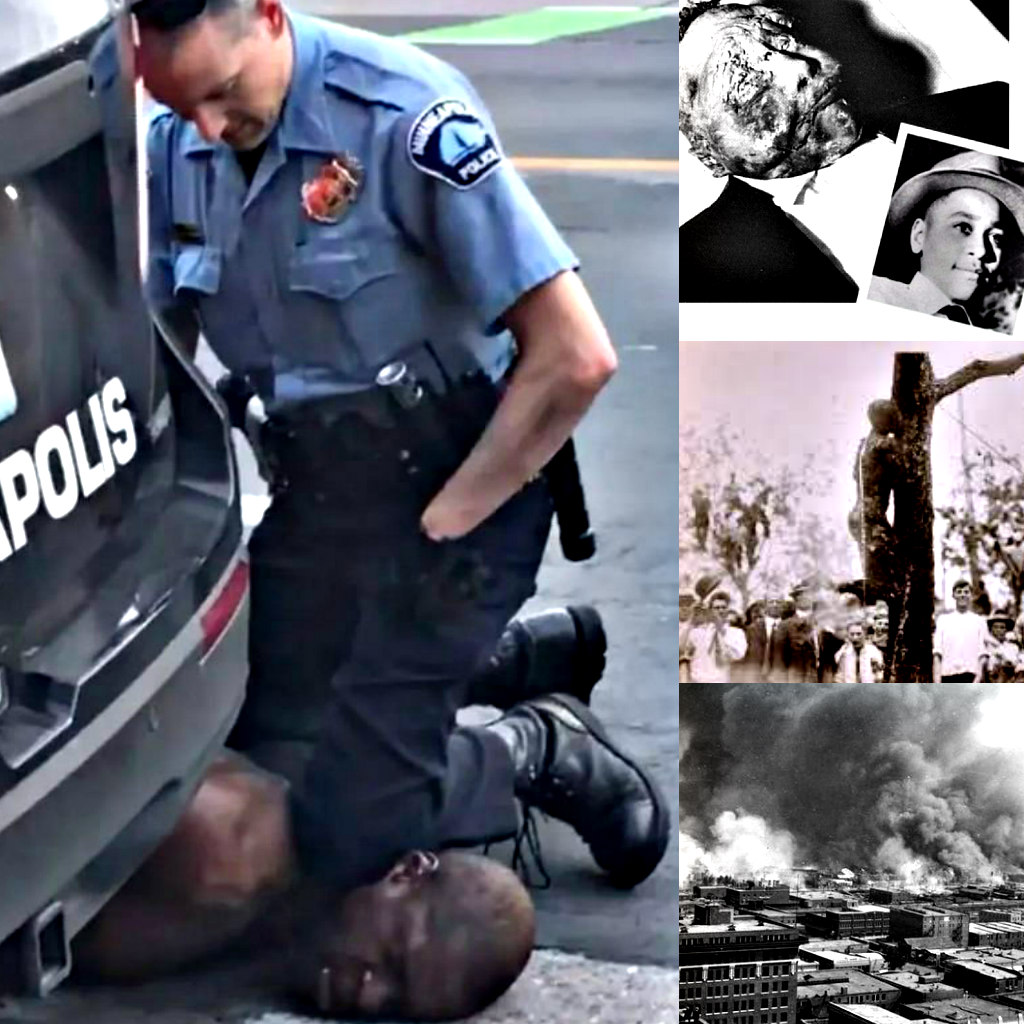
The lynching of Emmett Till in 1955 stands as one of the most notorious hate crimes in U.S. history. At only fourteen years old, Till was brutally murdered in Mississippi for allegedly whistling at a white woman. His mutilated body, displayed publicly by his mother, Mamie Till-Mobley, exposed the horror of racial hatred to the world. The acquittal of his murderers by an all-white jury demonstrated the deep complicity of the justice system in racial violence (Whitfield, 1988).

The 1921 Tulsa Race Massacre remains one of the most devastating racial attacks on Black prosperity. White mobs destroyed the prosperous Greenwood District, known as “Black Wall Street,” killing an estimated 300 people and displacing thousands. The massacre wiped out decades of economic progress and reinforced the racial hierarchy that dominated early 20th-century America (Ellsworth, 1992).

Another brutal episode occurred during the Rosewood Massacre of 1923 in Florida, where a false accusation against a Black man led to the burning of an entire Black town. Dozens were killed, and survivors fled into swamps to escape white mobs. The incident was later recognized by the state of Florida, which awarded reparations to survivors decades later (D’Orso, 1996).

The Birmingham Church Bombing of 1963, which killed four young girls—Addie Mae Collins, Denise McNair, Carole Robertson, and Cynthia Wesley—shocked the conscience of the nation. The bombing, carried out by Ku Klux Klan members, occurred during the height of the civil rights movement and symbolized white resistance to desegregation and Black empowerment (McWhorter, 2001).

The murder of Medgar Evers in 1963, a civil rights leader and NAACP field secretary in Mississippi, represented another targeted act of racial terrorism. Evers was assassinated in his driveway for his efforts to secure voting rights and challenge segregation. His death galvanized the civil rights movement and intensified national awareness of southern racism (Marable, 1984).

The lynching of Jesse Washington in 1916 in Waco, Texas, was one of the most barbaric acts of mob violence ever recorded. A crowd of thousands gathered to watch as Washington was tortured and burned alive. The atrocity highlighted the normalization of public lynching as entertainment and a tool of white supremacy (Dray, 2002).

The Central Park Five case (1989) exposed how systemic racism can manifest within the criminal justice system without physical lynching. Five Black and Latino teenagers were wrongfully convicted of raping a white woman in Central Park. Media bias, coerced confessions, and racial profiling led to years of imprisonment before their exoneration. The case illustrated how racial fear could replace evidence in shaping narratives (Burns, 2011).

The Charleston Church Massacre in 2015 further proved that racial hatred still thrives in modern America. Dylann Roof entered the historic Emanuel AME Church and murdered nine Black worshipers during Bible study. This act of terror targeted a sacred space and echoed the domestic terrorism once carried out by the Ku Klux Klan (Thompson, 2016).

The murder of James Byrd Jr. in 1998 in Jasper, Texas, was a gruesome reminder that lynching never truly ended. Byrd was chained to the back of a truck and dragged for miles by three white supremacists. His death prompted national outrage and led to the 2009 Matthew Shepard and James Byrd Jr. Hate Crimes Prevention Act, expanding federal hate crime laws (Coleman, 2010).

The killing of George Floyd in 2020 reignited the global fight against racial injustice. Floyd’s death, captured on video as a white police officer knelt on his neck for over nine minutes, symbolized centuries of institutionalized violence against Black bodies. His dying words, “I can’t breathe,” became a rallying cry for the Black Lives Matter movement, leading to one of the largest civil rights protests in modern history (Clayton, 2020).

Each of these incidents illustrates how racism in America transcends time, geography, and form—manifesting in lynchings, massacres, police brutality, and judicial bias. The persistence of hate crimes underscores that racial violence is not an aberration but a fundamental feature of the American racial order.

Historically, these acts were often justified or ignored by law enforcement and political institutions, revealing systemic complicity. The failure to hold perpetrators accountable reinforced cycles of violence and mistrust within the Black community (Alexander, 2010).

Modern hate crimes, including the murders of Trayvon Martin, Ahmaud Arbery, and Breonna Taylor, continue this legacy. Each incident reflects a continuum of racialized fear and control rooted in America’s original sin—slavery and white supremacy (Taylor, 2016).

Sociologists argue that hate crimes against Black Americans are not merely individual acts but collective expressions of dominance intended to maintain racial hierarchy (Feagin, 2013). The violence communicates that Black progress and autonomy are met with punishment.

Media framing has often contributed to victim-blaming and the criminalization of Black identity. From Emmett Till to George Floyd, victims are frequently portrayed as threatening or non-compliant, a tactic that subtly absolves perpetrators (Entman & Rojecki, 2000).

Education about these events remains essential for dismantling ignorance and denial. Erasing or minimizing racial atrocities fosters a dangerous cultural amnesia that perpetuates prejudice (Loewen, 1995).

The psychological impact on Black Americans—manifested in generational trauma, mistrust of institutions, and internalized fear—continues to affect community health and cohesion (Comas-Díaz et al., 2019).

Despite this painful history, Black resilience endures. The collective response to racial violence has birthed justice movements, from civil rights to Black Lives Matter, reaffirming the enduring spirit of a people determined to live free and equal.

Ultimately, these ten hate crimes are not isolated tragedies but interconnected chapters in the story of America’s racial conscience. Understanding them demands not only remembrance but transformation—a collective moral reckoning that ensures such hatred never again defines the nation’s soul.


References

Alexander, M. (2010). The New Jim Crow: Mass Incarceration in the Age of Colorblindness. New Press.
Burns, S. (2011). The Central Park Five: The Untold Story Behind One of New York City’s Most Infamous Crimes. Knopf.
Clayton, J. (2020). George Floyd and the Rebirth of the Movement for Black Lives. Journal of Race and Social Justice, 5(2), 45–58.
Coleman, W. (2010). Hate Crimes in America: James Byrd Jr. and Beyond. Oxford University Press.
Comas-Díaz, L., Hall, G. N., & Neville, H. A. (2019). Racial trauma: Theory, research, and healing. American Psychologist, 74(1), 1–12.
D’Orso, M. (1996). Like Judgment Day: The Ruin and Redemption of a Town Called Rosewood. Perennial.
Dray, P. (2002). At the Hands of Persons Unknown: The Lynching of Black America. Random House.
Ellsworth, S. (1992). Death in a Promised Land: The Tulsa Race Riot of 1921. LSU Press.
Entman, R. M., & Rojecki, A. (2000). The Black Image in the White Mind: Media and Race in America. University of Chicago Press.
Feagin, J. R. (2013). Racist America: Roots, Current Realities, and Future Reparations. Routledge.
Loewen, J. W. (1995). Lies My Teacher Told Me: Everything Your American History Textbook Got Wrong. New Press.
Marable, M. (1984). Race, Reform, and Rebellion: The Second Reconstruction in Black America. University Press of Mississippi.
McWhorter, D. (2001). Carry Me Home: Birmingham, Alabama, the Climactic Battle of the Civil Rights Revolution. Simon & Schuster.
Taylor, K.-Y. (2016). From #BlackLivesMatter to Black Liberation. Haymarket Books.
Thompson, E. (2016). Charleston shooting: White supremacy, religion, and the politics of forgiveness. Journal of American Culture, 39(4), 385–392.
Whitfield, S. J. (1988). A Death in the Delta: The Story of Emmett Till. Johns Hopkins University Press.

ChatGPT can make mistakes. Check important info.

The Male Files: Black Men of the Past, History, and Values.

The legacy of Black men throughout history is a chronicle of courage, intellect, and moral strength. Too often, mainstream narratives reduce their contributions to fragments—overlooking the deep values that guided their endurance and brilliance. From the kingdoms of Africa to the modern struggles of identity in America, the Black man has been a central figure in the construction of civilization and the preservation of humanity’s conscience. His story is not just one of survival but of purpose, rooted in ancestral wisdom and spiritual discipline.

The image of the Black man before colonialism was one of leadership and sacred duty. In empires such as Mali, Songhai, and Kemet (Egypt), men were not only warriors and rulers but also philosophers, astronomers, and spiritual guides. Their sense of manhood was inseparable from service to community and reverence for the divine. Mansa Musa of Mali, for instance, exemplified how wealth and faith could coexist under moral responsibility, making him one of history’s most revered kings (Gomez, 1998).

Colonialism, however, disrupted this equilibrium. European imperialists imposed false hierarchies that redefined the African man as primitive, stripping him of dignity and rewriting his identity through the lens of conquest. The transatlantic slave trade transformed men once viewed as protectors and visionaries into property. Yet, even in bondage, the enslaved man retained an inner compass of values—courage, faith, and brotherhood—that sustained his humanity against systematic dehumanization (Franklin & Moss, 2000).

Black men of the antebellum era carried an unspoken theology of resistance. Their faith was both shield and sword, as seen in the spirituals sung under the stars and the coded messages of liberation woven into song. The story of men like Denmark Vesey and Nat Turner reflects the moral paradox of faith and rebellion—where violence was not a lust for power but a cry for freedom born from divine conviction (Aptheker, 1943).

With emancipation came new challenges. The Reconstruction period presented opportunities for leadership and literacy, yet the rise of Jim Crow laws swiftly sought to crush these gains. Black men responded not by despair but by constructing values-based institutions—churches, schools, and fraternal orders—that instilled discipline and dignity. Leaders like Booker T. Washington and W. E. B. Du Bois embodied contrasting yet complementary visions of manhood: one rooted in practical labor and self-reliance, the other in intellectual excellence and cultural pride (Harlan, 1983).

Throughout the 20th century, the Black man became both the conscience and catalyst of social change. The Civil Rights era revealed men whose moral fortitude transcended fear. Martin Luther King Jr. wielded nonviolence as a weapon of divine justice, while Malcolm X called for self-defense and cultural awakening. Despite their differences, both shared the same masculine integrity—the conviction that manhood is not about dominance but discipline, not ego but service (Marable, 2011).

The strength of these men was not limited to their activism; it extended to their private lives as fathers, mentors, and builders. The Black father figure, though often attacked by policy and stereotype, has remained a vital symbol of stability and love. The presence of a guiding father or mentor—whether biological or spiritual—represents a foundational value in the Black male experience: accountability through legacy.

Black artistry has also served as a mirror of male evolution. Jazz, blues, and hip-hop became outlets for emotional expression in a world that often silenced the Black man’s voice. From Louis Armstrong’s trumpet to Kendrick Lamar’s lyrical introspection, these men have embodied vulnerability as strength, challenging toxic models of masculinity. Their art carries ethical messages of perseverance, faith, and cultural self-knowledge (Dyson, 2001).

The value system of the Black man has always been rooted in communal consciousness. In African and diasporic traditions, the concept of “Ubuntu”—I am because we are—captures the essence of his worldview. Manhood is measured not by isolation but by contribution. Even in the face of racism, this communal ethos has survived, inspiring social movements and mentorship programs that uphold integrity, responsibility, and respect as cornerstones of Black male identity.

In academia and philosophy, the Black man has reclaimed intellectual space once denied to him. Thinkers like Cornel West and Molefi Kete Asante have redefined masculinity through Afrocentric and moral frameworks, asserting that to be a man is to be morally awake. This intellectual tradition resists Western individualism by grounding value in collective elevation rather than competition (Asante, 2007).

Spiritually, the Black man’s faith remains one of his most defining values. The pulpit has long been his platform of leadership, where preachers like Richard Allen and T. D. Jakes have spoken truth to power. Even outside the church, his spiritual strength manifests in prayer, meditation, and ancestral reverence. The KJV Bible’s portrayal of righteous men—David, Joseph, Moses—resonates deeply within his cultural narrative, reinforcing the belief that godly character is the highest expression of manhood (Proverbs 20:7, KJV).

The challenges of modernity have not erased these values but tested them. Systemic racism, mass incarceration, and economic disenfranchisement continue to threaten the moral fabric of Black manhood. Yet, new generations of men are reclaiming purpose through mentorship, entrepreneurship, and fatherhood. The rebirth of the “modern griot”—the storyteller who teaches through wisdom—is proof that the value of knowledge endures.

Masculine values within the Black community emphasize balance—strength tempered with humility, courage coupled with compassion. The ideal man is both protector and nurturer, reflecting divine duality. His power is not to control but to sustain, his authority not to dominate but to serve. This ethical framework echoes the ancient African principle of Ma’at, representing truth, justice, and harmony (Karenga, 2004).

In examining historical figures like Frederick Douglass, we see a prototype of moral masculinity—an intellect sharpened by suffering, a leader shaped by conviction. His life embodies a recurring theme: that the Black man’s greatness lies not in what he possesses, but in what he perseveres through. The same can be said for countless unnamed men who labored, prayed, and built legacies under the weight of oppression.

Values such as loyalty, integrity, and faith are not abstract ideals for the Black man—they are survival mechanisms. To navigate a world that questions his humanity, he must cultivate inner peace and moral consistency. In every era, from slavery to the digital age, these values have anchored him, ensuring that his reflection in history’s mirror is not defined by pain alone, but by principle.

The psychological and emotional wellness of the Black man has become a vital modern conversation. Healing from generational trauma requires returning to ancestral values—brotherhood, spiritual grounding, and emotional intelligence. These are not signs of weakness but pathways to restoration. As Proverbs 27:17 teaches, “Iron sharpeneth iron; so a man sharpeneth the countenance of his friend.” Brotherhood remains a sacred practice of renewal.

Education has always been both shield and sword for the Black man. The pursuit of knowledge represents not assimilation but liberation—a means to reclaim narrative and redefine identity. The value of education, both formal and spiritual, transforms oppression into opportunity and silence into strategy.

As history continues to unfold, the story of Black men remains unfinished but unbroken. From ancient kings to modern visionaries, they are the living embodiment of endurance shaped by ethics. The “Male Files” of history reveal not just a pattern of survival, but a symphony of values—faith, resilience, honor, and love—that continue to define their collective soul.

In the mirror of time, the Black man sees more than scars—he sees structure. His reflection is not one of victimhood but vision, not despair but determination. The values that were carried his ancestors now sustain his sons. The beauty of his story is not only in his strength, but in the moral code that gives that strength purpose.


References

Aptheker, H. (1943). American Negro slave revolts. Columbia University Press.
Asante, M. K. (2007). Afrocentricity: The theory of social change. African American Images.
Dyson, M. E. (2001). Holler if you hear me: Searching for Tupac Shakur. Basic Civitas Books.
Franklin, J. H., & Moss, A. A. (2000). From slavery to freedom: A history of African Americans. McGraw-Hill.
Gomez, M. A. (1998). Exchanging our country marks: The transformation of African identities in the colonial and antebellum South. University of North Carolina Press.
Harlan, L. R. (1983). Booker T. Washington: The wizard of Tuskegee, 1901–1915. Oxford University Press.
Karenga, M. (2004). Maat, the moral ideal in ancient Egypt: A study in classical African ethics. Routledge.
Marable, M. (2011). Malcolm X: A life of reinvention. Viking.
The Holy Bible, King James Version. (1611/2017). King James Bible Online. https://www.kingjamesbibleonline.org/

Bound by History: Stories of Enslavement and Resistance – emphasizes both the bondage and resilience of the enslaved.

The history of enslavement in the Americas is not solely a chronicle of oppression; it is also a story of profound endurance, cultural preservation, and resistance. Enslaved Africans and their descendants, bound in chains yet spiritually unbroken, forged new identities and forms of resistance that shaped the very foundations of modern society. This narrative of duality—bondage and resilience—reveals the complexity of human survival under the most dehumanizing conditions.

The transatlantic slave trade, which forcibly displaced over twelve million Africans between the sixteenth and nineteenth centuries, created one of the largest forced migrations in human history (Eltis & Richardson, 2008). Those captured were often torn from diverse kingdoms and ethnic groups, such as the Yoruba, Igbo, Mandinka, and Akan. Despite this fragmentation, enslaved Africans carried with them spiritual, linguistic, and cultural frameworks that would influence the Americas in lasting ways.

In the United States, slavery was institutionalized through laws that defined Africans and their descendants as property rather than people. The legal codes of the colonies and early republic—such as the Virginia Slave Codes of 1705—reinforced racial hierarchies and legitimized brutal systems of control (Morgan, 1975). Yet within this system, enslaved individuals constructed subtle and overt forms of resistance that defied their oppressors.

The plantation system depended on both physical labor and psychological domination. Slaveholders employed violence, religious manipulation, and family separation to maintain control (Douglass, 1845). However, enslaved people continually subverted these systems by forming kinship networks, maintaining oral traditions, and practicing spiritual resistance through African-derived religions such as Hoodoo and Yoruba-based worship (Raboteau, 2004).

Women bore the unique burden of both racial and gendered oppression. Enslaved women were subject to forced breeding, sexual assault, and domestic servitude. Yet they also played central roles in community preservation and acts of resistance. Harriet Tubman’s life exemplifies this defiance—her daring rescues through the Underground Railroad earned her the title “Moses” among her people (Clinton, 2004).

Resistance took many forms beyond escape. Work slowdowns, sabotage, secret education, and coded communication in spirituals all functioned as acts of rebellion. Songs like “Follow the Drinking Gourd” carried dual meanings, blending Christian faith with directions for liberation (Levine, 1977). Through these acts, enslaved Africans reclaimed a sense of power within an oppressive system.

Revolts were the most visible expressions of resistance. The Stono Rebellion of 1739 in South Carolina, led by a group of Angolan slaves, marked one of the earliest large-scale uprisings in the British colonies (Wood, 1974). Later, the Haitian Revolution (1791–1804) became the most successful slave revolt in world history, resulting in the first Black republic. It demonstrated that the enslaved were not passive victims but active agents of freedom (James, 1963).

In the antebellum United States, figures such as Nat Turner (1831) and Gabriel Prosser (1800) led insurrections that challenged the myth of slave docility. Though brutally suppressed, these rebellions instilled fear among slaveholders and inspired subsequent generations to envision liberation (Greenberg, 2003). The courage displayed in these movements reflected the enduring belief that freedom was a divine right, not a privilege granted by man.

Intellectual resistance also played a key role. Enslaved individuals who learned to read and write used literacy as a weapon. Frederick Douglass, once an enslaved man, used the written word to dismantle pro-slavery ideology, declaring that “knowledge makes a man unfit to be a slave” (Douglass, 1845). His narrative remains a seminal text in both American literature and abolitionist history.

The preservation of African traditions within slavery reflected a deeper form of psychological survival. Despite attempts by slaveholders to erase their identities, enslaved Africans maintained rituals, music, and kinship practices that evolved into African American culture. Spirituals, call-and-response singing, and ring shouts became not only acts of worship but of cultural resistance (Herskovits, 1941).

Religion provided both solace and subversion. While some enslaved people adopted the Christianity of their oppressors, they reinterpreted biblical stories through the lens of liberation. The story of Exodus, in which God delivers Israel from Egyptian bondage, became a cornerstone of enslaved spirituality and an enduring metaphor for freedom (Raboteau, 2004).

The abolitionist movement was fueled by both white and Black activists, but the testimony of formerly enslaved individuals proved especially powerful. Sojourner Truth, Harriet Jacobs, and Olaudah Equiano used personal narrative to humanize the enslaved and expose the cruelty of the institution (Jacobs, 1861; Equiano, 1789). Their voices reframed public morality and influenced global anti-slavery campaigns.

During the Civil War, the Emancipation Proclamation of 1863 symbolized a legal end to slavery in rebelling states, yet true freedom remained elusive. Many freedpeople continued to labor under exploitative sharecropping systems and faced racial terror through groups like the Ku Klux Klan (Foner, 1988). Resistance, however, persisted through education, political organization, and migration.

The Reconstruction era represented a moment of both hope and betrayal. Freedmen’s schools, Black churches, and civic organizations emerged as symbols of autonomy. Leaders such as Frederick Douglass and Hiram Revels advocated for equality and political participation. Yet the rise of Jim Crow laws soon reimposed racial subjugation, demonstrating the ongoing struggle for true emancipation (Du Bois, 1935).

Throughout the African diaspora, the legacy of slavery fostered movements for self-determination and cultural revival. In the Caribbean and South America, Afro-descendant populations maintained African spiritual systems such as Santería, Candomblé, and Vodou—each a testament to cultural survival against assimilation (Mintz & Price, 1992).

Archaeological and genealogical research continues to recover the names and stories of the enslaved. Sites such as the African Burial Ground in New York City reveal the humanity of those once reduced to property. Their skeletal remains bear witness to both the brutality of slavery and the resilience of African identity (LaRoche & Blakey, 1997).

Enslaved artisans, musicians, and healers also contributed to the cultural and economic life of the Americas. From the rice fields of South Carolina to the architecture of New Orleans, African labor and creativity shaped entire societies. These contributions challenge the narrative of enslaved passivity and highlight the intellectual and cultural agency of the oppressed (Gomez, 1998).

Education became both a symbol and instrument of resistance. Even under threat of death, enslaved people taught one another to read using the Bible, scraps of newspapers, or memory. Literacy symbolized mental emancipation, anticipating the later struggles for civil rights and access to education (Cornelius, 1991).

The trauma of enslavement did not end with abolition. Generations of African Americans have inherited both the scars and the strength of their ancestors. The collective memory of slavery informs ongoing struggles against systemic racism, economic inequality, and cultural erasure (Alexander, 2010).

Artistic expression continues to be a powerful medium of remembrance and resistance. From the sorrow songs of the nineteenth century to the blues, jazz, and hip-hop of today, African-descended people have turned pain into power, creating new languages of identity and protest (Ellison, 1952).

Modern descendants of enslaved people are reclaiming narratives through genealogy, art, and scholarship. Projects such as The 1619 Project and the Slave Voyages Database have reframed global understandings of how slavery shaped modern economies, politics, and social hierarchies (Hannah-Jones, 2019; Eltis et al., 2008).

Monuments and memorials increasingly honor those who resisted slavery rather than those who upheld it. Statues of Harriet Tubman and Nat Turner now stand where once only Confederate icons were displayed. These transformations reflect a shift from glorifying domination to celebrating endurance and justice (Savage, 1997).

The rediscovery of figures like Anarcha Westcott—an enslaved woman subjected to medical experimentation—reveals the hidden dimensions of slavery’s legacy in science and ethics. Her story, and those like hers, illuminate how enslaved bodies were exploited even in the pursuit of “progress” (Washington, 2006).

African spirituality, family structure, and oral history became weapons of survival. Even in bondage, enslaved people found ways to name their children with ancestral meanings, preserving identity in the face of dehumanization (Holloway, 1990). Their cultural endurance represents a quiet revolution that reshaped the spiritual landscape of the Americas.

Resistance was not limited to grand revolts or famous figures—it was embedded in everyday acts: a whispered prayer, a hidden song, or a stolen moment of rest. Each small act of defiance represented a declaration of humanity within a system designed to erase it (White, 1999).

Today, the legacies of bondage and resilience coexist in the collective consciousness of the African diaspora. To remember the enslaved is to remember both suffering and victory—to acknowledge the strength that transcended captivity. Their stories remind us that freedom was not given; it was wrestled from the grip of history.

In the final analysis, the history of enslavement is not simply a story of chains, but of transcendence. Enslaved Africans turned oppression into endurance, silence into song, and despair into defiance. Bound by history yet unbroken in spirit, they transformed the meaning of freedom itself, leaving a legacy that continues to shape the modern world.


References

Alexander, M. (2010). The new Jim Crow: Mass incarceration in the age of colorblindness. The New Press.
Clinton, C. (2004). Harriet Tubman: The road to freedom. Little, Brown.
Cornelius, J. D. (1991). “When I can read my title clear”: Literacy, slavery, and religion in the antebellum South. University of South Carolina Press.
Douglass, F. (1845). Narrative of the life of Frederick Douglass, an American slave. Anti-Slavery Office.
Du Bois, W. E. B. (1935). Black Reconstruction in America, 1860–1880. Harcourt, Brace.
Eltis, D., & Richardson, D. (2008). Atlas of the transatlantic slave trade. Yale University Press.
Equiano, O. (1789). The interesting narrative of the life of Olaudah Equiano. London.
Foner, E. (1988). Reconstruction: America’s unfinished revolution, 1863–1877. Harper & Row.
Gomez, M. A. (1998). Exchanging our country marks: The transformation of African identities in the colonial and antebellum South. University of North Carolina Press.
Greenberg, K. S. (2003). Nat Turner: A slave rebellion in history and memory. Oxford University Press.
Hannah-Jones, N. (2019). The 1619 Project. The New York Times Magazine.
Herskovits, M. J. (1941). The myth of the Negro past. Harper & Brothers.
Holloway, J. E. (1990). Africanisms in American culture. Indiana University Press.
Jacobs, H. (1861). Incidents in the life of a slave girl. Thayer & Eldridge.
James, C. L. R. (1963). The Black Jacobins: Toussaint L’Ouverture and the San Domingo Revolution. Vintage.
LaRoche, C. J., & Blakey, M. L. (1997). Seizing intellectual power: The dialogue at the New York African Burial Ground. Historical Archaeology, 31(3), 84–106.
Levine, L. (1977). Black culture and Black consciousness: Afro-American folk thought from slavery to freedom. Oxford University Press.
Mintz, S. W., & Price, R. (1992). The birth of African-American culture: An anthropological perspective. Beacon Press.
Morgan, E. S. (1975). American slavery, American freedom: The ordeal of colonial Virginia. W.W. Norton.
Raboteau, A. J. (2004). Slave religion: The “invisible institution” in the antebellum South. Oxford University Press.
Savage, K. (1997). Standing soldiers, kneeling slaves: Race, war, and monument in nineteenth-century America. Princeton University Press.
Washington, H. A. (2006). Medical apartheid: The dark history of medical experimentation on Black Americans from colonial times to the present. Doubleday.
White, D. G. (1999). Ar’n’t I a woman? Female slaves in the plantation South. W.W. Norton.
Wood, P. H. (1974). Black majority: Negroes in colonial South Carolina from 1670 through the Stono Rebellion. W.W. Norton.

Post-Slavery Beauty: The Evolution of the Brown Woman’s Image.

Photo by Fotoboy on Pexels.com

The legacy of slavery in the Americas left an indelible mark not only on the socio-economic status of Black people but also on the perception of beauty within Black communities. For the brown-skinned woman, this history produced a complex interplay of identity, aesthetics, and social hierarchies that continues to influence modern conceptions of attractiveness, desirability, and self-worth. The post-slavery era, spanning Reconstruction, the Jim Crow period, and the civil rights movement, marked a profound shift in how brown women were represented and how they navigated the legacy of European beauty standards imposed during enslavement.

Historical Context and Color Hierarchies

During slavery, enslaved women were often valued primarily for labor or reproductive potential, yet even within these oppressive systems, colorism emerged as a potent force. Lighter-skinned women, often the offspring of European men and enslaved African women, were afforded relative privileges, such as domestic work instead of field labor, access to education, or social proximity to white families. This intra-community stratification created early foundations for a hierarchy of beauty based on skin tone and European features (Hunter, 2007).

The Post-Emancipation Image

After emancipation, brown women began asserting new forms of identity and beauty, yet they were constrained by persistent Eurocentric ideals in media, fashion, and literature. Images in magazines, film, and advertisements rarely celebrated the natural features of brown-skinned women. Instead, the cultural imagination valorized whiteness, straight hair, lighter eyes, and delicate features, leaving brown women in a liminal space of desirability—a spectrum neither fully embraced by white standards nor entirely centered within Black communities (Russell, 2012).

Colorism and Social Mobility

Post-slavery America saw colorism intensify as a social determinant. Brown women were often perceived as more “marketable” in professional and social arenas due to their proximity to whiteness, creating a duality of privilege and pressure. The “paper bag test,” prevalent in Black social institutions, reinforced the preference for lighter skin within African American society itself (Thompson, 2009). Consequently, beauty became both a site of opportunity and of internalized oppression, shaping the brown woman’s self-perception and her social navigation strategies.

Media Representations and the Entertainment Industry

The 20th century brought more public visibility to brown women, particularly in film, television, and music. Stars such as Dorothy Dandridge, Lena Horne, and later Vanessa Williams and Halle Berry, exemplified a brown beauty that was palatable to mainstream audiences. These women negotiated a delicate balance: embracing their Black identity while often conforming to Eurocentric standards of hair, makeup, and body shape (Coleman, 2014). The entertainment industry, though providing representation, also cemented narrow ideals of brown beauty—slender noses, smooth skin, and straightened hair—further complicating the evolution of self-image among brown women.

The Brown Woman and Resistance

Despite systemic pressures, brown women resisted marginalization by reclaiming their aesthetics. From the Harlem Renaissance to contemporary movements such as natural hair advocacy and the celebration of melanin-rich beauty, brown women have asserted agency over their representation. Artistic, literary, and political spaces became platforms to challenge stereotypes, celebrate diversity within the spectrum of brown skin, and redefine standards of beauty on their own terms (Banks, 2000).

Intersectionality and Modern Implications

Modern scholarship on the brown woman’s image underscores the intersectionality of race, gender, and class. Brown women continue to navigate a world that valorizes whiteness and lightness, yet the increasing visibility of diverse Black aesthetics in social media, fashion, and film challenges historical hierarchies. Movements such as #MelaninMagic and campaigns highlighting dark-skinned models broaden the public imagination of beauty and invite brown women to embrace the totality of their heritage and features (Patton, 2010).

Conclusion

The post-slavery evolution of the brown woman’s image reflects a narrative of resilience, adaptation, and reclamation. From the imposed hierarchies of slavery and colorism to the contemporary celebration of melanin and Afrocentric aesthetics, brown women have negotiated identity and beauty in ways that resist historical oppression while asserting pride and individuality. The journey of the brown woman is not merely about surviving imposed standards but transforming them—creating a legacy of empowerment and redefining what beauty means within and beyond the Black community.

References

  • Banks, I. (2000). Hair Matters: Beauty, Power, and Black Women’s Consciousness. New York: NYU Press.
  • Coleman, R. (2014). Fashioning Blackness: Clothing, Race, and Identity in American Culture. Routledge.
  • Hunter, M. (2007). The persistent problem of colorism: Skin tone, status, and inequality. Sociology Compass, 1(1), 237–254.

  • Patton, T. O. (2010). Beauty and Black Identity: African American Women’s Experiences and Aesthetics. Praeger.
  • Russell, K. (2012). Color Me Beautiful: African American Women and the Politics of Skin Color. University of North Carolina Press.
  • Thompson, M. (2009). Shades of Privilege: The Social Construction of Color and Identity in Black America. University of Illinois Press.

The Slave Files: Anarcha Westcott

The Forgotten Mother of Modern Gynecology

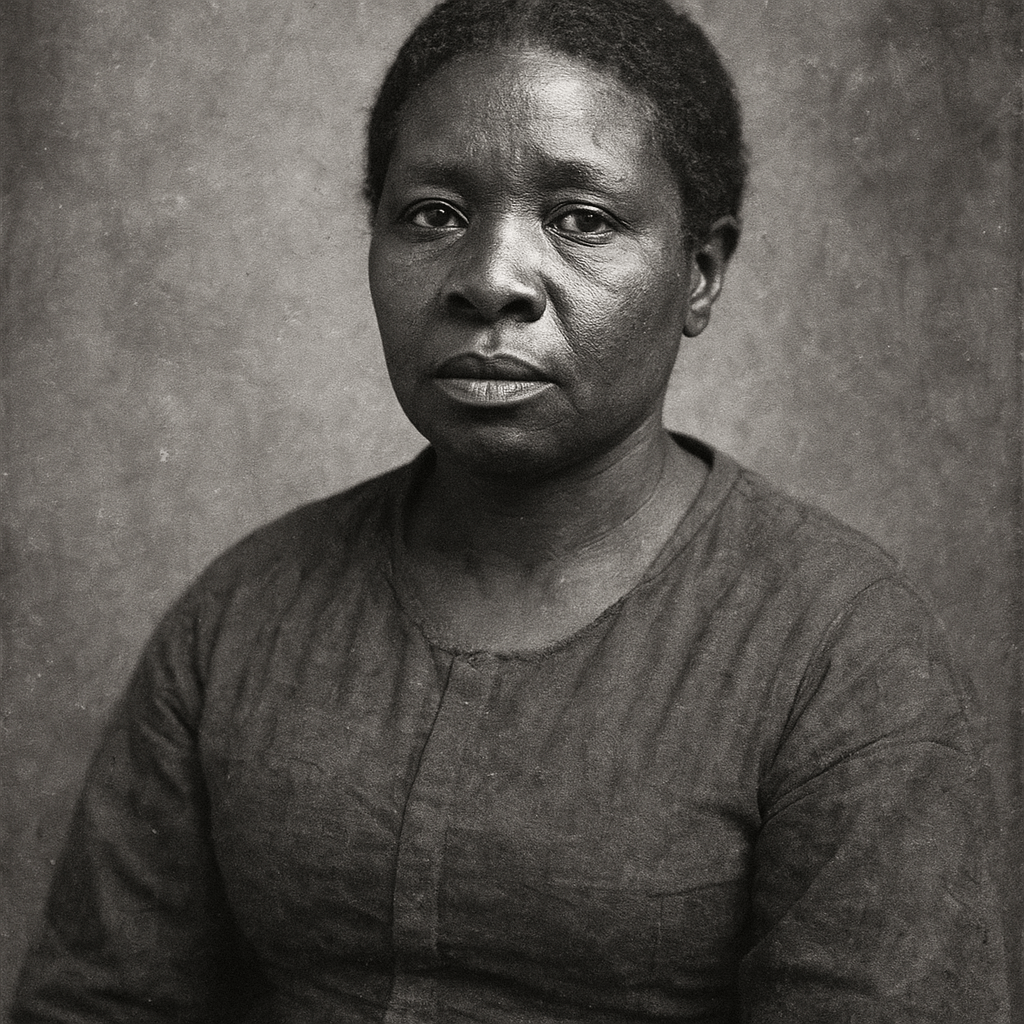
Anarcha Westcott was an enslaved African American woman who became one of the most historically significant yet long-overlooked figures in the history of medicine. Born around 1828 in Alabama, Anarcha was enslaved on a plantation and subjected to one of the most infamous episodes of unethical medical experimentation in the nineteenth century. Her story is deeply intertwined with that of Dr. J. Marion Sims, a physician often referred to as “the father of modern gynecology,” whose surgical breakthroughs came at the cost of the suffering and exploitation of enslaved Black women.

During her teenage years, Anarcha suffered from a vesicovaginal fistula, a devastating childbirth injury that caused incontinence and severe pain. At the time, there were no effective surgical treatments for this condition. Her owner, seeking medical help, sent her to Dr. Sims, who was experimenting with ways to repair the injury. Between 1845 and 1849, Sims performed at least thirty experimental surgeries on Anarcha without anesthesia, as the procedure was extremely painful and invasive (Washington, 2006).

Anarcha was not alone in her ordeal. Sims also experimented on other enslaved women, including Lucy and Betsey. Together, they were forced to endure repeated procedures, often under brutal conditions, while being denied consent and bodily autonomy. Their pain and endurance became the foundation for the advancement of gynecological surgery, yet for more than a century, their names were erased from mainstream medical narratives (Owens & Fett, 2019).

Anarcha’s body became a site of scientific curiosity and racial exploitation. In an era when Black women were viewed as biologically inferior and more tolerant of pain—a racist myth perpetuated to justify medical abuse—Anarcha’s humanity was denied (Hoberman, 2012). Sims justified his actions by claiming that the women consented, but historians have made clear that true consent was impossible within the system of slavery (Gamble, 1997).

After enduring years of painful experimentation, Sims eventually claimed to have perfected the surgical technique for repairing fistulas—an advancement that would transform women’s health worldwide. Once his method succeeded, Sims shifted to performing surgeries on white women, this time using anesthesia. This contrast underscores the racial double standard embedded in nineteenth-century medicine (Washington, 2006).

Little is known about Anarcha’s later life. Historical records indicate that she may have been returned to her owner after Sims deemed his experiments successful. Some accounts suggest that she lived into adulthood and may have later been emancipated, but her ultimate fate remains undocumented (Spettel & White, 2011). The erasure of her life’s details speaks to the broader historical silencing of enslaved Black women whose bodies were exploited in the name of science.

Anarcha’s story resurfaced in the late twentieth and early twenty-first centuries as scholars began to reevaluate the ethical legacy of J. Marion Sims. Feminist and Black historians, such as Harriet A. Washington and Deirdre Cooper Owens, reframed Sims’s “pioneering work” as an example of racial and gendered medical violence rather than mere innovation. Their research has brought Anarcha, Lucy, and Betsey into the light as the true, unacknowledged mothers of modern gynecology.

In recent years, there has been a push to honor Anarcha’s legacy and to confront the medical racism embedded in her story. In 2018, the statue of J. Marion Sims that once stood in Central Park, New York, was removed following public outcry. Activists and historians argued that memorializing Sims without acknowledging his victims perpetuated racial injustice (New York City Public Design Commission, 2018).

In the place of glorifying Sims, memorial projects now seek to center the women who endured his experiments. The Mothers of Gynecology Monument in Montgomery, Alabama, unveiled in 2021, features statues of Anarcha, Lucy, and Betsey. Created by artist Michelle Browder, the monument serves as a visual reclamation of their dignity and humanity. It acknowledges their suffering but also celebrates their resilience and historical significance (Browder, 2021).

Anarcha Westcott’s life represents both a tragedy and a triumph of historical recovery. Her name, once buried under medical myth and racial bias, has become a symbol of resistance against systemic exploitation in medicine. She stands as a testament to the countless unnamed enslaved women whose suffering contributed to medical progress from which they themselves were excluded.

Her legacy compels the medical community to confront its past and to build an ethical framework grounded in consent, respect, and equity. Anarcha’s story also calls for the inclusion of marginalized voices in the telling of medical history, ensuring that the contributions and sacrifices of Black women are never again silenced.

Though Anarcha did not choose her role, her involuntary participation reshaped the landscape of women’s health. Today, her story inspires new generations of Black women in medicine to reclaim agency, visibility, and justice. Anarcha Westcott’s name, once a footnote in Sims’s biography, now rightfully stands as an emblem of both suffering and scientific inheritance—a reminder that progress built on exploitation must be critically examined.

Her rediscovery marks a broader movement within history and medicine toward truth-telling and moral accountability. Anarcha Westcott’s life reveals not only the cruelty of slavery’s medical dimensions but also the enduring strength of the human spirit when subjected to dehumanization. Her pain became the foundation for healing; her silence now speaks volumes in the call for medical justice and remembrance.

In remembering Anarcha, we also acknowledge the humanity of those who were reduced to subjects in the name of progress. Her story embodies both the horror of enslavement and the ongoing struggle to reconcile medicine with morality. She is no longer just a victim of experimentation—she is a historical witness whose endurance reshaped the course of women’s healthcare.

Anarcha Westcott’s history demands not only remembrance but reform. Her life urges medical practitioners and scholars to examine the ethics of research, power, and representation. To honor her is to commit to a medicine that heals rather than exploits, that listens rather than silences, and that restores dignity to those history sought to erase.


References

Browder, M. (2021). The Mothers of Gynecology Monument. Montgomery, AL: More Up Campus.
Gamble, V. N. (1997). Under the shadow of Tuskegee: African Americans and health care. American Journal of Public Health, 87(11), 1773–1778.
Hoberman, J. (2012). Black and blue: The origins and consequences of medical racism. University of California Press.
New York City Public Design Commission. (2018). Statement on the removal of the J. Marion Sims statue. New York, NY.
Owens, D. C., & Fett, S. M. (2019). Black maternal and infant health: Historical legacies of slavery. American Journal of Public Health, 109(10), 1342–1345.
Spettel, S., & White, M. D. (2011). The portrayal of J. Marion Sims’ controversial surgical legacy. Journal of Urology, 185(6), 2424–2427.
Washington, H. A. (2006). Medical apartheid: The dark history of medical experimentation on Black Americans from colonial times to the present. Doubleday.

Black History, Has It Been Whitewashed?

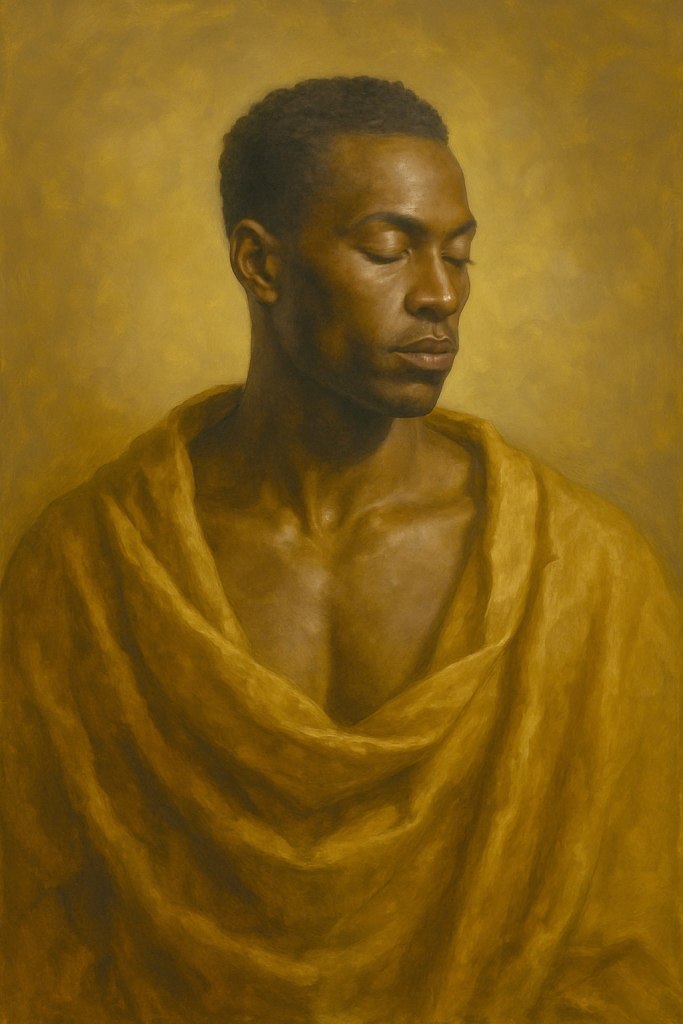
This artwork is the property of its respective owner. No copyright infringement intended.

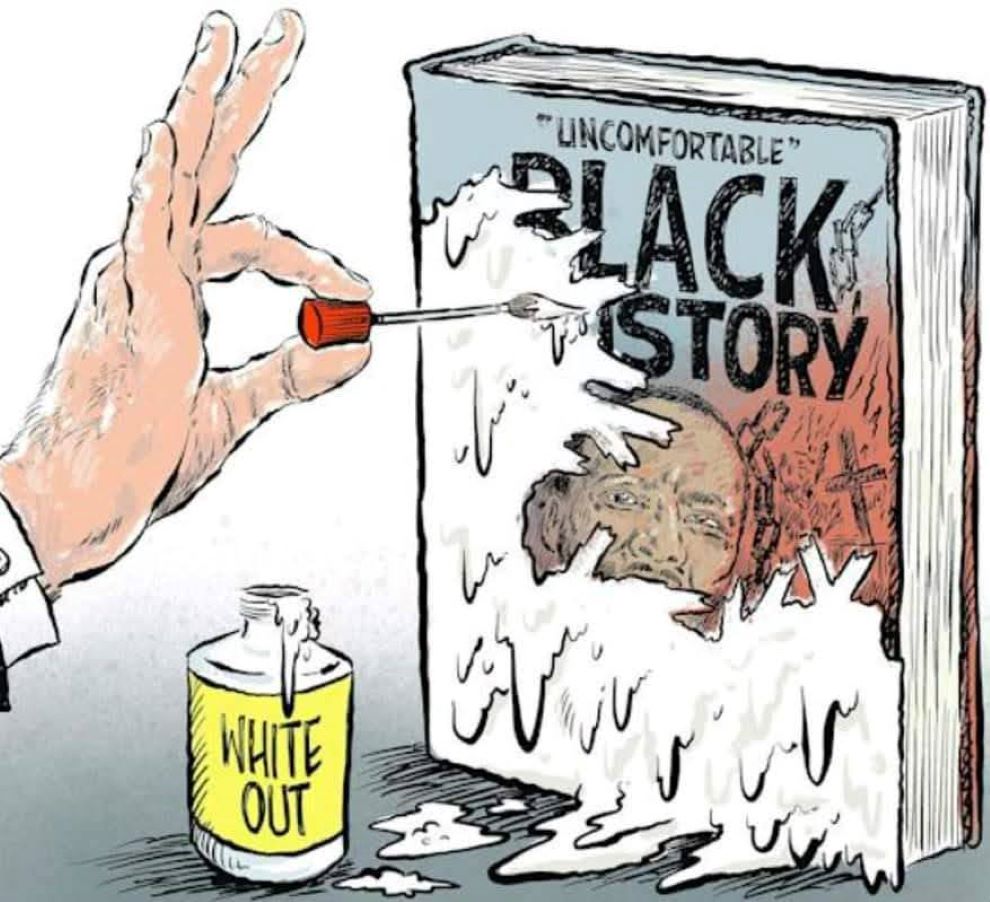
Black history is more than a subject taught in February; it is the story of humanity itself, tracing the contributions, struggles, and triumphs of people of African descent from antiquity to the present. Yet for centuries, much of this history has been systematically erased, misrepresented, or “whitewashed.” Whitewashing refers to the deliberate alteration of historical narratives to favor Eurocentric perspectives, minimizing or excluding Black presence, contributions, and identity. This erasure is not merely academic—it shapes the psychology of Black people and the collective consciousness of society.

Hollywood has played a major role in this process. Biblical movies, for instance, have often depicted Hebrews, Egyptians, and early Christians as European in appearance, despite the geographical and anthropological evidence pointing to their African and Semitic roots. Films like The Ten Commandments (1956) portrayed Pharaoh and Moses as white men, subtly reinforcing the idea that leadership, divinity, and chosenness are synonymous with whiteness. This not only distorts biblical truth but also conditions audiences to associate Blackness with servitude rather than divine purpose.

The Bible itself points to a different narrative. Many key figures—Moses, Joseph, and even Christ—spent time in Africa. Christ was hidden in Egypt as a child (Matthew 2:13-15, KJV), which would not have been a safe hiding place if He were a pale-skinned foreigner who stood out among the population. The Song of Solomon 1:5 (KJV) proclaims, “I am black, but comely,” affirming that dark skin was celebrated in ancient texts. The erasure of this truth diminishes the representation of Black identity in the biblical narrative.

Black history, in its truest sense, includes the kingdoms of Mali, Ghana, and Songhai; the libraries of Timbuktu; the inventions, music, and philosophies of African civilizations. It also includes the Middle Passage, slavery, and systemic oppression that followed. To study Black history is to study resilience, creativity, and faith. It is the acknowledgment of a people who survived one of the greatest crimes in human history and still found ways to bless the nations with culture, innovation, and spiritual depth.

The whitewashing of slavery is one of the most dangerous forms of historical erasure. Some school systems now refer to enslaved people as “workers” or claim that slavery was “beneficial” because it taught Africans “skills.” This revisionist narrative strips away the brutality of chattel slavery—the whippings, the family separations, the psychological warfare. Exodus 1:13-14 (KJV) describes how the Egyptians “made the children of Israel to serve with rigour,” which mirrors the forced labor and oppression endured by Africans in the Americas.

From a psychological standpoint, erasing or minimizing slavery has generational effects. Theories of intergenerational trauma suggest that the pain of slavery has been passed down genetically and emotionally (DeGruy, 2005). When history is hidden, Black communities are denied the opportunity to heal, grieve, and demand justice. It is psychologically disorienting to live in a world that denies the truth of your ancestors’ suffering while expecting you to “move on.”

The question arises: why would white society want to keep slavery hidden? The answer is multifaceted. To confront slavery honestly would require acknowledging that the wealth of nations like the United States, Britain, and France was built on Black suffering. It would also raise moral questions about reparations, justice, and restitution. Psychologically, some white individuals experience “white guilt” and prefer to avoid discomfort by sanitizing history (Spanierman & Cabrera, 2015).

The color of Black people has also been a point of erasure. In many educational and media portrayals, African Americans are depicted as a monolith, ignoring the diversity of skin tones, cultures, and histories. Colorism, which privileges lighter skin, has further complicated the narrative. Media representation often favors light-skinned actors to portray Black historical figures, which subtly communicates that lighter Blackness is more palatable to mainstream audiences.

Social media, while a tool for education, has also perpetuated whitewashing. Algorithms tend to amplify Eurocentric beauty standards and reward creators who fit into those ideals, often sidelining darker-skinned voices. Memes, viral trends, and TikTok dances created by Black users are frequently appropriated by non-Black influencers who gain more recognition and profit, leaving the originators invisible.

Whitewashing in education is particularly concerning. In some states, curriculum reforms have sought to limit or remove discussions of systemic racism and slavery from classrooms. This deprives young students—both Black and white—of a truthful understanding of history. Hosea 4:6 (KJV) warns, “My people are destroyed for lack of knowledge.” When history is withheld, it becomes easier to repeat cycles of oppression.

Psychologically, representation matters because it shapes identity. Social identity theory suggests that people derive part of their self-esteem from the groups to which they belong (Tajfel & Turner, 1986). When Black people see their history erased or distorted, it sends a message that they are insignificant or inferior. This can create internalized racism, self-hate, and low collective esteem.

The whitewashing of Black biblical history also has spiritual consequences. If Black people are taught that they have no place in sacred history, they may view Christianity as a “white man’s religion,” leading to spiritual disillusionment. Yet Acts 8:27-39 recounts the Ethiopian eunuch’s conversion and baptism, showing that Africans were among the first Christians. Reclaiming this narrative restores dignity and belonging.

The Bible takes place in Africa and the Middle East — regions where people historically had darker skin tones. The Hebrews, Egyptians, Ethiopians, and early Christians were not Northern Europeans. Yet, for centuries, European artists, church leaders, and later Hollywood filmmakers deliberately depicted them as white. This was not an accident — it was part of a larger project to make Christianity look “Western” and to align holiness, divinity, and authority with whiteness.

Here are a few key points you might find powerful:

  • Geography matters: The Bible’s events took place in regions like Egypt, Canaan, Babylon, and Jerusalem — all hot, sun-drenched places where people would have been brown-skinned or Black. Even Jesus’ family fled to Egypt (Matthew 2:13–15, KJV), a place where He would not have stood out if He were pale.
  • Biblical descriptions: Song of Solomon 1:5 (KJV) says, “I am black, but comely.” Lamentations 5:10 describes skin “black like an oven” from famine. Jeremiah 8:21 says, “I am black; astonishment hath taken hold on me.” These passages suggest that many biblical people were visibly dark-skinned.
  • Historical evidence: Ancient Israelite art, Egyptian tomb paintings, and archaeological records show people with brown to black skin tones, curly or woolly hair, and features common in African and Afro-Asiatic populations.
  • Whitewashing as control: When Europeans colonized Africa and enslaved Africans, they spread images of a white Jesus and white saints to justify slavery and teach that salvation came through European culture. This psychological tactic convinced many enslaved people that whiteness was divine and blackness was cursed — a lie that still shapes perceptions today.
  • Psychological effects: Seeing only white biblical figures can make Black and Brown believers feel disconnected from Scripture or think that God does not look like them. This is why representation matters — it shapes self-esteem, spiritual confidence, and cultural pride.

Slavery itself was justified using twisted theology, with slaveholders quoting Ephesians 6:5 (“Servants, be obedient to them that are your masters”) out of context, while ignoring the liberating themes of Scripture. This manipulation of the Word was an early form of whitewashing, reframing oppression as divine will rather than sin.

In popular culture, the whitewashing of Black music, dance, and language continues. Jazz, blues, and hip-hop—all birthed in Black communities—have been monetized by corporations while excluding the originators from full benefit. This economic exploitation mirrors historical patterns of taking from Black bodies and minds without acknowledgment.

The erasure of Black heroes is another tactic of whitewashing. Figures like Crispus Attucks, Ida B. Wells, and Garrett Morgan are rarely celebrated alongside Washington or Lincoln, despite their crucial roles in shaping American history. When they are mentioned, their Blackness is often downplayed, making them “race-neutral” heroes rather than distinctly Black ones.

This whitewashing creates a false sense of racial harmony by pretending racism never existed. It allows society to maintain systemic inequities while claiming progress. Proverbs 17:15 (KJV) warns against justifying the wicked, stating, “He that justifieth the wicked, and he that condemneth the just, even they both are abomination to the Lord.” To whitewash history is to justify wickedness and silence the righteous.

Psychologists argue that confronting historical injustice is essential for collective healing. Truth-telling initiatives, such as truth and reconciliation commissions, have been used in countries like South Africa to address systemic oppression. The United States has yet to fully reckon with its history of slavery, which is why racial tensions remain unresolved.

Social media activism has become one of the most powerful tools in combating whitewashing. Hashtags like #BlackLivesMatter and #BlackHistory365 have brought hidden stories to light, challenging mainstream narratives. This democratization of information gives Black people a voice that was long suppressed.

In conclusion, Black history has been whitewashed through media, education, religion, and social systems, but the truth continues to resurface. The erasure of slavery, Black biblical history, and cultural contributions has psychological and spiritual consequences that affect generations. Reclaiming Black history is not just an academic exercise but an act of resistance, healing, and restoration. To know Black history is to know the full story of humanity—and to resist the forces that seek to erase God’s image in Black bodies.


References

  • DeGruy, J. (2005). Post Traumatic Slave Syndrome: America’s Legacy of Enduring Injury and Healing. Joy DeGruy Publications.
  • Spanierman, L. B., & Cabrera, N. L. (2015). The emotions of White racism. Educational Psychologist, 50(3), 187–203.
  • Tajfel, H., & Turner, J. C. (1986). The social identity theory of intergroup behavior. In S. Worchel & W. Austin (Eds.), Psychology of intergroup relations (pp. 7–24). Nelson-Hall.

Key KJV Scriptures: Matthew 2:13-15; Song of Solomon 1:5; Exodus 1:13-14; Hosea 4:6; Acts 8:27-39; Proverbs 17:15; 1 Samuel 16:7; Proverbs 29:25.