Tag Archives: skincare

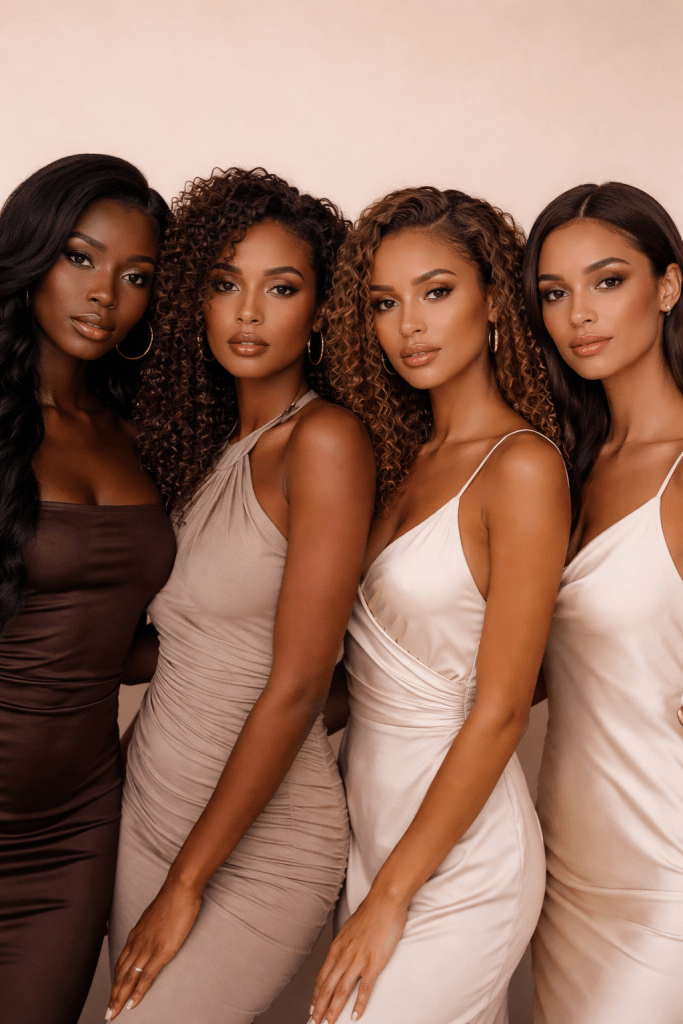
Ode to the shades of Brown

Oh, the shades of brown, rich as the earth,
From the deepest mahogany to the honeyed warmth of birth.
You tell stories of ancestry, of kings and queens,
Of rivers crossed and lands unseen.

Your skin, a tapestry woven by God’s own hand,
A palette divine, too vast to understand.
Every tone a hymn, every hue a song,
A testament of resilience, proud and strong.

In sunlight, you shimmer like burnished gold,
A brilliance no lens nor mirror can hold.
In shadow, you speak of depth and grace,
Of sacred histories, time cannot erase.

Oh, chestnut, cocoa, and espresso hues,
Each a reflection of ancient truths.
Each freckle, each mole, a jewel to behold,
A story of courage, of valor untold.

Caramel whispers of warmth and light,
Mocha radiates quiet power in sight.
Amber gleams with a gentle fire,
Chestnut glows with ancestral desire.

The shades of brown, both subtle and bold,
Carry legacies neither bought nor sold.
From slave cabins to palaces, from fields to streets,
Your beauty defies oppression, never retreats.

KJV Truth sings in your radiant skin:
Psalm 139:14 – “I am fearfully and wonderfully made.”
Every shade, every tone, every nuance,
A reflection of God’s artistry, perfect and true.

Celebrate your brown, in all its delight,
From dawn’s soft glow to the velvet of night.
No pigment dictates your worth or your place,
Your brown is divine, imbued with God’s grace.

Oh, the shades of brown, a spectrum so vast,
From subtle taupe to the boldest cast.
You are power, beauty, endurance, and art,
A masterpiece woven straight from God’s heart.

So rise, brown daughters, with pride in your skin,
Let no world’s bias define what’s within.
Your shade is a crown, your hue is a song,
In the orchestra of creation, you alone belong.

The phrase “shades of brown” reflects more than just physical variation in skin tone—it represents a complex social reality shaped by history, power, and perception. Across the African diaspora and other communities of color, differences in skin tone have been given meaning within systems that rank and assign value to people based on how light or dark they appear. This phenomenon, known as Colorism, continues to influence identity, opportunity, and self-perception.

Colorism has deep roots in the history of slavery and colonialism. During the transatlantic slave trade, lighter-skinned enslaved individuals—many of whom were of mixed ancestry—were sometimes given preferential treatment, such as working in the house rather than in the fields. These divisions were not accidental; they reinforced a hierarchy that placed whiteness, and proximity to it, at the top. Over time, these patterns became internalized within communities, creating lasting divisions based on complexion.

The legacy of these practices can still be seen today. Lighter skin is often associated with beauty, success, and desirability, while darker skin is unfairly stigmatized. This bias is reinforced through media representation, where lighter-skinned individuals are frequently overrepresented in leading roles, advertisements, and positions of influence. As a result, societal standards of beauty often reflect a narrow range of features tied to Eurocentric ideals.

From a sociological perspective, colorism operates as a learned norm within Sociology, passed down through generations and reinforced by institutions such as media, education, and family structures. Individuals absorb these messages early in life, shaping how they view themselves and others. Children, for example, may begin to associate lighter skin with positive traits and darker skin with negative ones, even without explicit instruction.

The psychological impact of colorism is significant. Studies have shown that individuals with darker skin tones may experience lower self-esteem, higher levels of discrimination, and reduced access to opportunities in areas such as employment and education. This aligns with Social Identity Theory, which explains how people derive part of their self-worth from how their group is perceived in society. When darker skin is devalued, it can negatively affect individual identity and confidence.

In addition to its psychological effects, colorism also has economic consequences. Research suggests that lighter-skinned individuals, on average, earn higher incomes and are more likely to be perceived as professional or trustworthy. These disparities highlight how deeply embedded color bias is within social and institutional structures.

The concept of “shades of brown” also intersects with ideas of mixed race and racial ambiguity. Individuals with lighter or racially ambiguous features are often treated differently, sometimes receiving privileges not afforded to darker-skinned individuals. However, this can also come with its own challenges, including questions about identity and belonging.

The Media continues to play a central role in reinforcing color hierarchies. Through film, television, and social media, certain looks are elevated while others are marginalized. The lack of diverse representation contributes to a limited understanding of beauty and perpetuates harmful stereotypes.

At the same time, there has been a growing movement to challenge colorism and celebrate darker skin tones. Campaigns promoting inclusivity and representation have begun to shift public perception, encouraging a broader and more authentic definition of beauty. Social media, while part of the problem, has also become a platform for advocacy and empowerment.

Education and awareness are key to addressing colorism. By understanding its historical roots and recognizing its modern impact, individuals and communities can begin to dismantle these biases. Conversations about colorism help to bring attention to an issue that is often overlooked but deeply felt.

Ultimately, the “shades of brown” are a testament to human diversity, not a hierarchy of value. Skin tone variation is a natural result of genetic adaptation and ancestry, not a measure of worth. Challenging colorism requires both individual reflection and collective action to redefine standards and promote equity.

The journey toward dismantling colorism is ongoing, but it begins with recognizing that all shades carry equal beauty, dignity, and significance. By confronting these biases, society can move closer to a more inclusive and just understanding of identity.


References

Hunter, M. (2007). The persistent problem of colorism: Skin tone, status, and inequality. Sociology Compass, 1(1), 237–254.

Keith, V. M., & Herring, C. (1991). Skin tone and stratification in the Black community. American Journal of Sociology, 97(3), 760–778.

Monk, E. P. (2015). The cost of color: Skin color, discrimination, and health among African Americans. American Journal of Sociology, 121(2), 396–444.

Dixon, T. L., & Telles, E. E. (2017). Skin color and colorism: Global research, concepts, and measurement. Annual Review of Sociology, 43, 405–424.

Hall, R. E. (2018). The Bleaching Syndrome: African Americans’ Response to Cultural Domination. Springer.
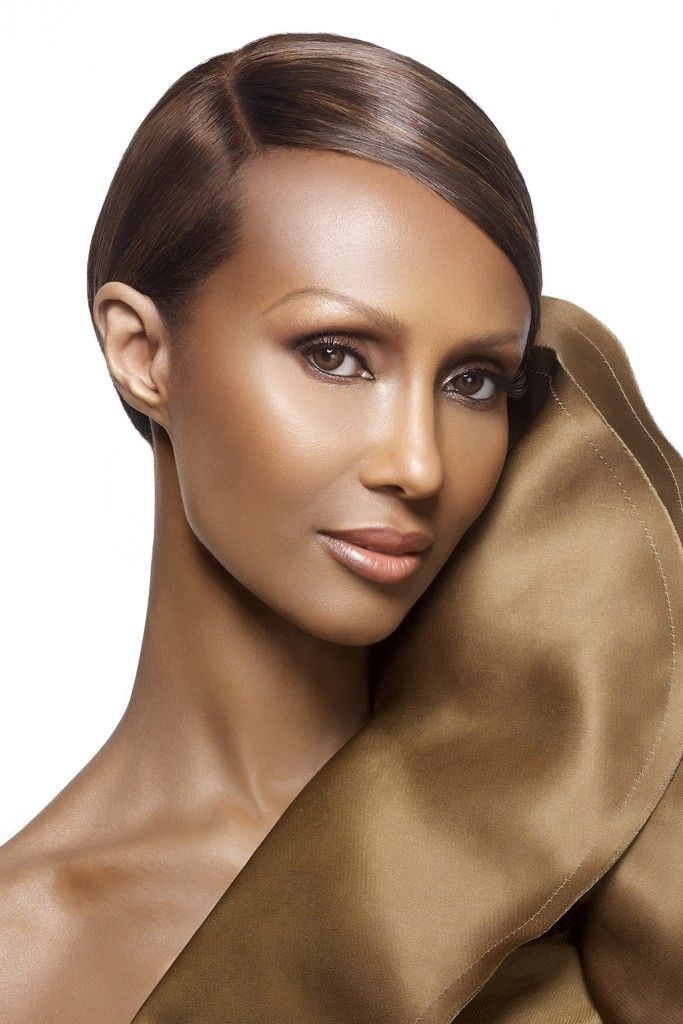
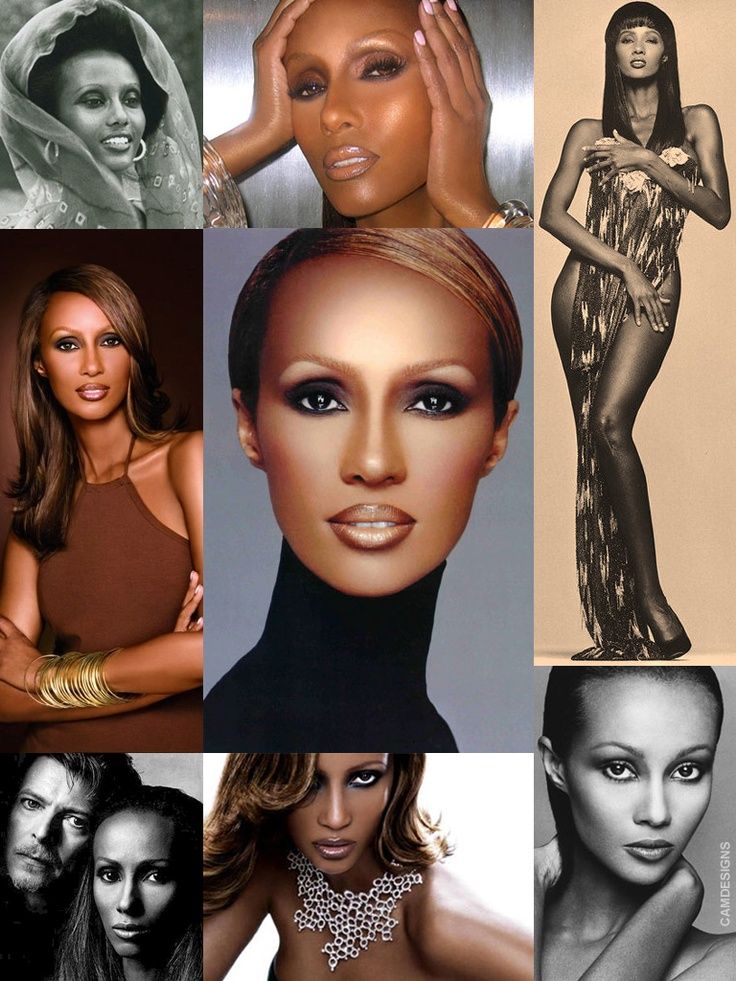
The Ebony Dolls: Iman

Somali Queen of Fashion and Global Beauty Icon

This photograph is the property of its respective owner. No copyright infringement intended.

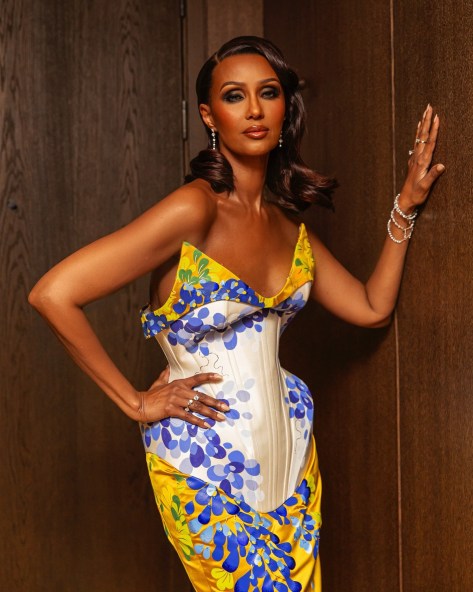
Iman Abdulmajid is a Somali supermodel, entrepreneur, and humanitarian whose career fundamentally reshaped global standards of beauty, race, and representation. Born on July 25, 1955, in Mogadishu, Somalia, Iman emerged as one of the first African supermodels to achieve worldwide fame, becoming the embodiment of high fashion elegance and later the architect of one of the most influential Black-owned beauty empires in history.

Iman’s early life was intellectually and culturally rich. Her father was a diplomat and former Somali ambassador, and her mother was a gynecologist. She was educated in Somalia, Egypt, and Kenya, and spoke several languages fluently before ever entering the fashion world. Contrary to common myth, Iman did not aspire to be a model; she was studying political science at the University of Nairobi when she was discovered.

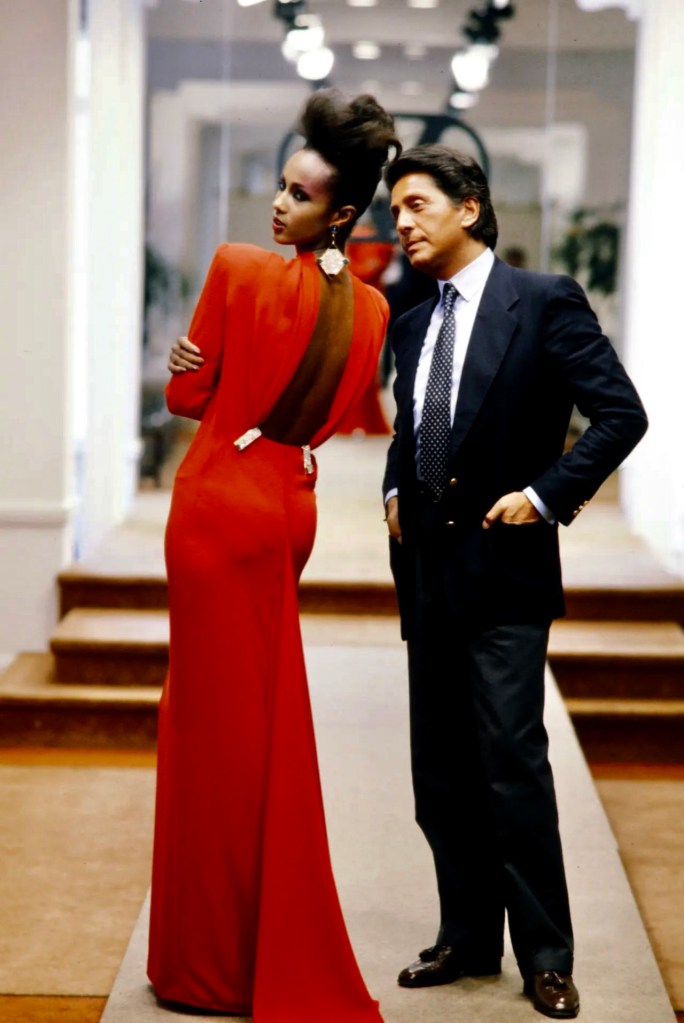
She was discovered in 1975 by legendary American photographer Peter Beard, who encountered her while she was walking in Nairobi. Beard photographed her and presented her as an exotic African muse to the fashion world, launching her career internationally. Within months, Iman appeared on the cover of Vogue, marking one of the first times a dark-skinned African woman graced the magazine.

This photograph is the property of its respective owner. No copyright infringement intended.

Iman’s rise was meteoric. She quickly became the muse of fashion icons such as Yves Saint Laurent, Gianni Versace, Calvin Klein, Halston, Issey Miyake, and Thierry Mugler. Yves Saint Laurent famously stated that he could not have designed his iconic “African Collection” without Iman, declaring that she represented his ideal woman.

Her runway and editorial career spanned two decades, during which she became one of the most in-demand models in the world. She appeared on the covers of Vogue, Harper’s Bazaar, Elle, Allure, and Time, and worked with elite photographers such as Richard Avedon, Helmut Newton, Irving Penn, and Steven Meisel.

This photograph is the property of its respective owner. No copyright infringement intended.

Iman’s beauty became legendary. She is celebrated for her luminous, deep brown skin, regal height, sculpted cheekbones, elongated neck, almond-shaped eyes, and symmetrical facial structure. Her Somali features reflect classical East African Nilotic aesthetics, often compared to ancient Nubian and Pharaonic beauty ideals.

In fashion theory, Iman is often described as the epitome of “model beauty” because her appearance combines proportion, bone structure, posture, and presence. She possesses what scholars call architectural beauty—features that translate powerfully across photography, film, and live runway.

Iman did not simply succeed within Eurocentric systems—she redefined them. At a time when Black models were rare and often marginalized, she became the standard rather than the exception. She normalized African beauty within luxury spaces that had historically excluded it.

In her personal life, Iman married iconic musician David Bowie in 1992. Their marriage became one of the most admired interracial celebrity unions in modern history, lasting until Bowie died in 2016. Together, they had one daughter, Alexandria Zahra Jones, born in 2000. Iman also has a daughter, Zulekha Haywood, from her previous marriage to basketball player Spencer Haywood.

Beyond modeling, Iman made history as a beauty entrepreneur. In 1994, she founded IMAN Cosmetics, one of the first global beauty brands created specifically for women of color. The brand addressed a massive gap in the cosmetics industry, which had long ignored deeper skin tones.

IMAN Cosmetics became a revolutionary force, offering foundation, skincare, and makeup products for a wide range of melanin-rich complexions. Iman famously stated that she created the brand because “women of color were invisible in beauty.” Her company is now regarded as a blueprint for inclusive beauty, preceding brands like Fenty by decades.

This photograph is the property of its respective owner. No copyright infringement intended.

Her entrepreneurial success transformed her from model to mogul. Iman became one of the wealthiest self-made Black women in fashion, proving that Black beauty could generate not only cultural value but economic sovereignty.

Iman’s impact extends into humanitarian and political advocacy. She has worked extensively with organizations such as CARE, Keep a Child Alive, and the UN Refugee Agency, focusing on African development, famine relief, and global health.

She has received numerous honors, including the Fashion Icon Award from the Council of Fashion Designers of America (CFDA), TIME Magazine Icon Award, BET Lifetime Achievement Award, and multiple humanitarian recognitions.

As an “Ebony Doll,” Iman represents the highest archetype of Black feminine beauty—regal, dignified, and timeless. The term here signifies symbolic elevation: she is not decorative, but iconic; not consumable, but monumental.

Her Somali beauty challenged colonial narratives that framed African features as primitive or undesirable. Instead, she presented African aesthetics as classical, royal, and divine—comparable to ancient queens, goddesses, and empresses.

Unlike hypersexualized representations of Black women, Iman’s beauty has always been associated with intellect, grace, and power. She embodies what cultural theorists describe as sovereign femininity—beauty aligned with authority rather than submission.

In sociological terms, Iman converted beauty into symbolic, cultural, and economic capital. She did not merely model luxury—she became luxury itself, reshaping global visual culture.

Iman’s legacy paved the way for generations of Black models, including Naomi Campbell, Alek Wek, Liya Kebede, Jourdan Dunn, Adut Akech, and Anok Yai. Without Iman, the contemporary presence of African beauty in fashion would be unimaginable.

Ultimately, Iman is not simply a model—she is a civilizational figure. She represents the re-entry of African beauty into global consciousness after centuries of erasure.

She is the Ebony Doll, not as fantasy, but as truth: the living standard by which model beauty itself is measured.


References

Iman. (2001). I Am Iman. HarperCollins.

Iman Cosmetics. (2020). Brand history and founder biography. IMAN Global.

Council of Fashion Designers of America. (2010). Fashion Icon Award: Iman.

Beard, P. (1975). Discovery of Iman photographic series.

TIME Magazine. (2018). Iman: Global fashion icon and entrepreneur.

Entwistle, J. (2009). The aesthetic economy of fashion: Models and symbolic capital. Berg.

Hunter, M. (2011). Buying racial capital: Skin bleaching and cosmetic surgery in a globalized world. The Journal of Pan African Studies, 4(4), 142–164.

Bourdieu, P. (1986). The forms of capital. In J. Richardson (Ed.), Handbook of theory and research for the sociology of education (pp. 241–258). Greenwood.

Banks, I. (2015). Black bodies in fashion: Representation and resistance. Fashion Theory, 19(3), 267–289.

Crenshaw, K. (1991). Mapping the margins: Intersectionality and identity politics. Stanford Law Review, 43(6), 1241–1299.

Black Beauty Through the Decades

Black beauty is not a trend, a season, or a reaction to outside validation. It is an inheritance—carried through ancestry, memory, and survival. From the earliest days of displacement and resistance, Black women have expressed beauty as a language of identity, dignity, and self-definition. Even when dominant societies attempted to erase, ridicule, or redefine Black features, Black women preserved their beauty through ritual, care, adornment, and community knowledge passed from generation to generation.

To speak of Black beauty is to speak of resilience made visible. Hair, skin, body, and style have long served as sites of both oppression and power, shaped by historical forces yet continuously reclaimed. In times when Eurocentric standards were enforced as the measure of worth, Black women transformed beauty into an act of resistance—refusing invisibility and asserting presence. Each braid, curl, wrap, and adornment carried meaning beyond aesthetics, reflecting survival, creativity, and cultural memory.

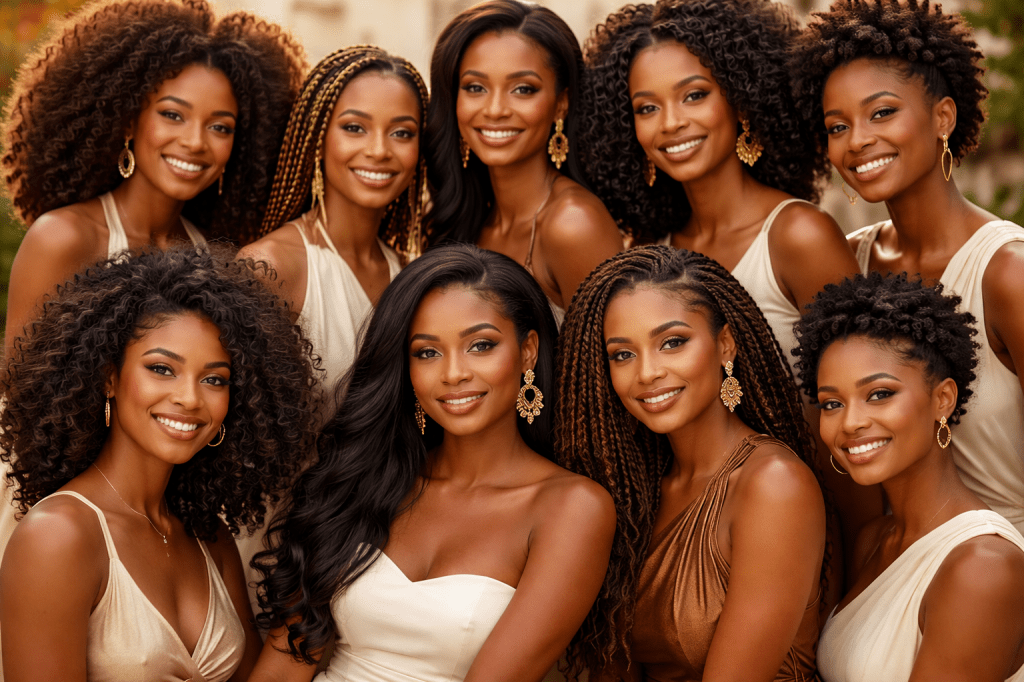
Black beauty has never been singular. It exists across a spectrum of skin tones, textures, facial features, and expressions that defy narrow definitions. It evolves across time while remaining rooted in African heritage and diasporic experience. Whether expressed through restraint or boldness, tradition or innovation, Black beauty has always reflected autonomy—the right to define oneself without permission.

In the modern era, the reclamation of Black beauty marks a profound cultural shift. What was once marginalized is now celebrated, studied, and emulated, yet its deepest meaning remains internal rather than performative. Black beauty is not merely what is seen, but what is carried—confidence forged through history, grace born of endurance, and a self-love that persists despite centuries of contradiction. It is both personal and collective, timeless and ever-renewing.

Ultimately, Black beauty is a testament. It testifies to the ability of Black women to remain radiant in the face of erasure, to create elegance from limitation, and to transform survival into art. It is not defined by approval, but by continuity—a living expression of identity that honors the past, affirms the present, and shapes the future.

All photographs are the property of their respective owners. No copyright infringement intended.

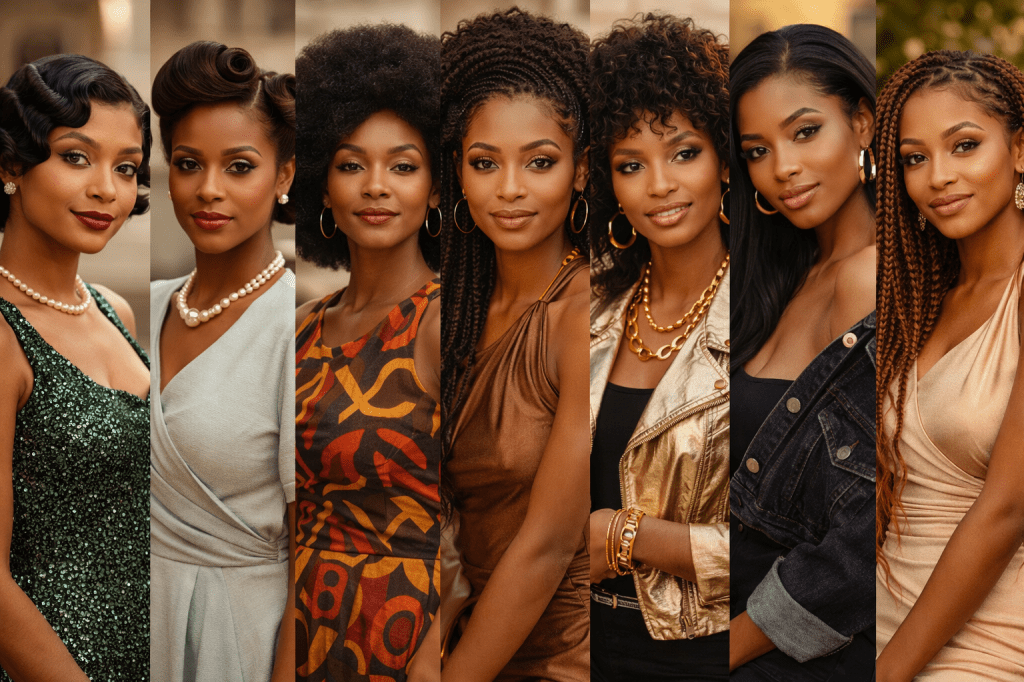
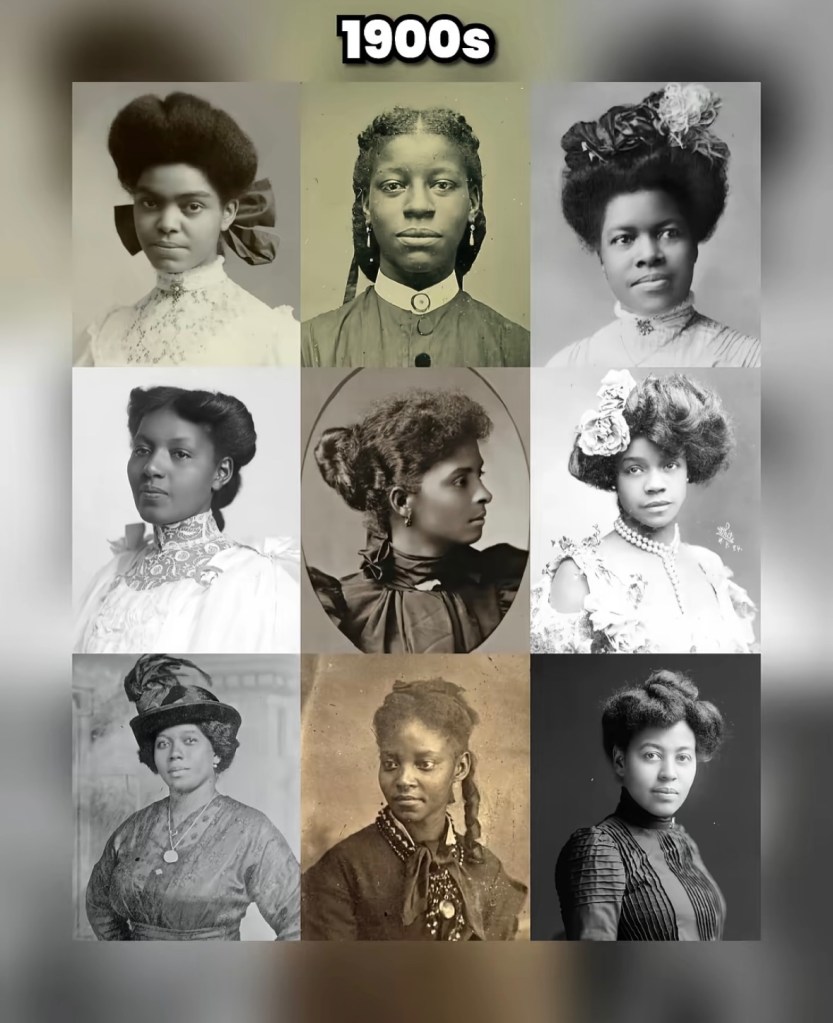
1900s1910s
At the turn of the twentieth century, Black women’s beauty was deeply shaped by resilience, modesty, and self-definition within a racially hostile society. Hairstyles were often practical and protective, including wraps, headscarves, and neatly pressed styles influenced by African traditions and Victorian norms. Despite social limitations, Black women maintained dignity through careful grooming, skin care using natural oils, and adornment that reflected pride and self-respect rather than excess.
During the 1910s, migration from rural Southern communities to urban centers began reshaping Black aesthetics. Hair was frequently styled in soft waves, buns, and pompadours, often achieved through hot combing—a controversial yet common tool of the era. Beauty culture expanded through Black-owned businesses, notably Madam C. J. Walker, who emphasized cleanliness, confidence, and economic independence rather than Eurocentric imitation.

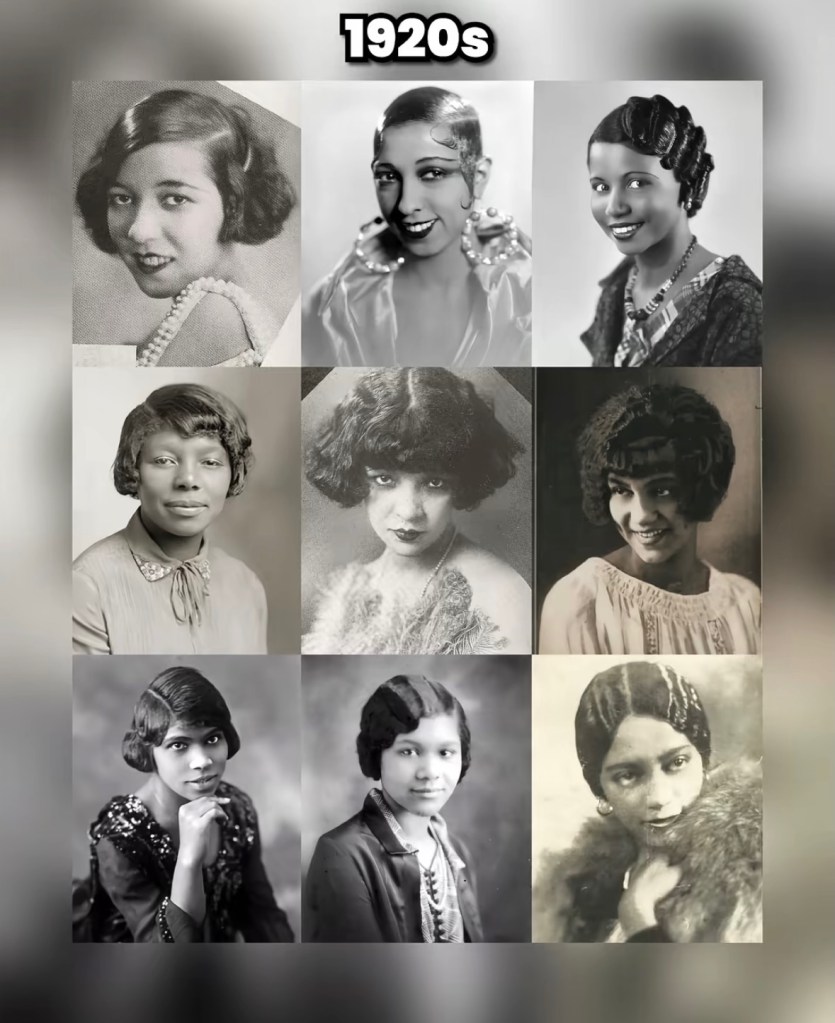
1920s
The Harlem Renaissance of the 1920s marked a cultural awakening in which Black beauty became visible, expressive, and artistic. Shorter hairstyles, finger waves, and sleek bobs emerged, paired with bold lipstick and refined fashion. Black women embodied modernity and glamour, asserting intellectual and aesthetic authority through music, literature, and visual style that celebrated sophistication and cultural pride.

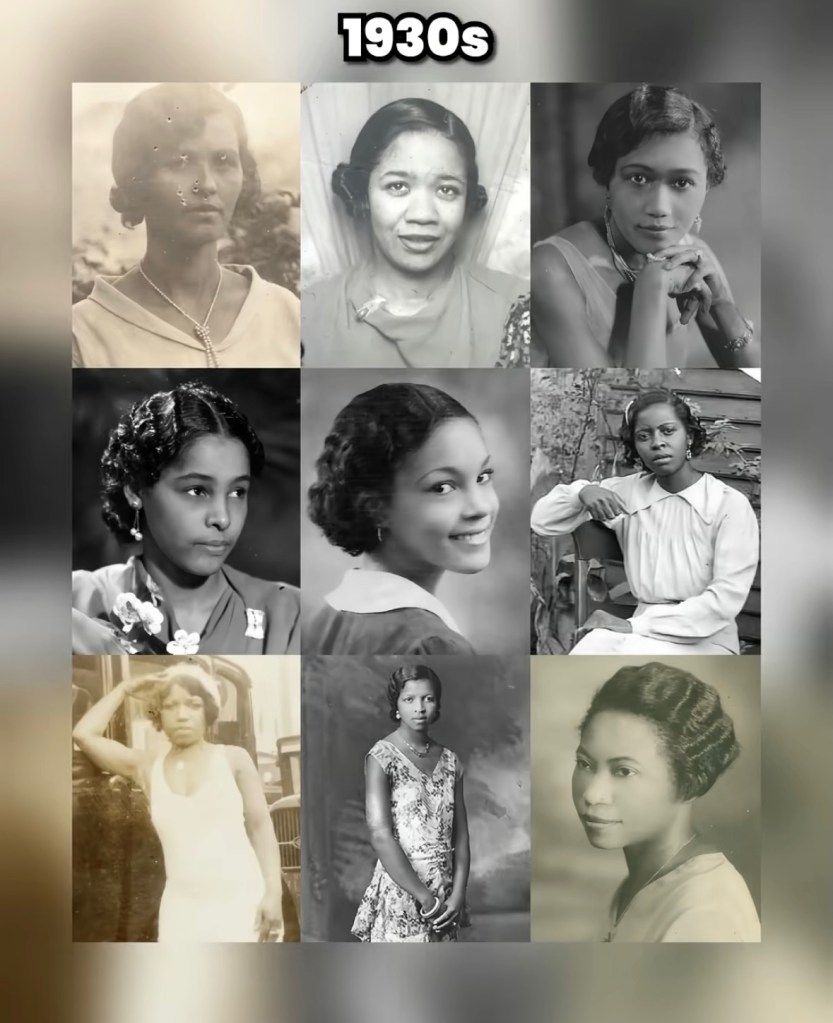
1930s
In the 1930s, amid the Great Depression, Black beauty reflected elegance under constraint. Hairstyles favored sculpted waves, rolls, and pinned curls, while makeup remained polished but understated. Beauty became an act of resistance—maintaining poise, femininity, and grace despite economic hardship. Hollywood films influenced aesthetics, though Black women adapted these styles to their own textures and features.

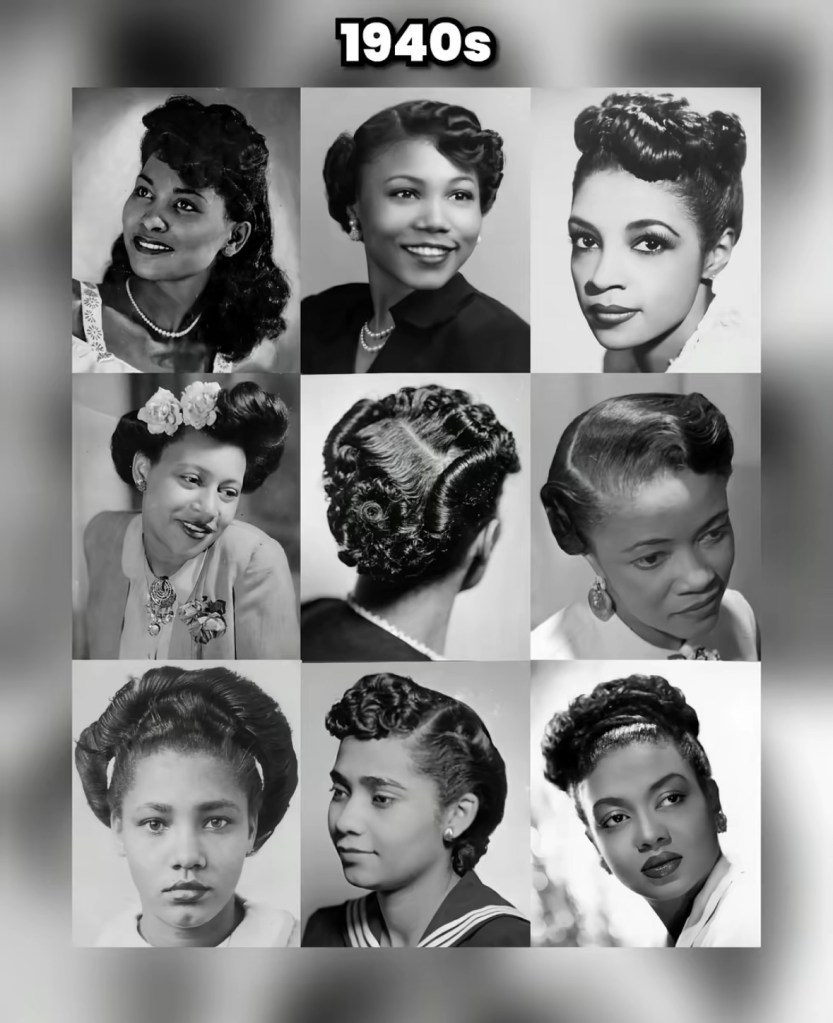
1940s
World War II reshaped Black womanhood and beauty in the 1940s as women entered industrial labor and military support roles. Hairstyles were practical yet stylish, including victory rolls, headscarves, and neatly set curls. Beauty symbolized strength and patriotism, with emphasis on clean lines, red lips, and confident posture reflecting both femininity and fortitude.

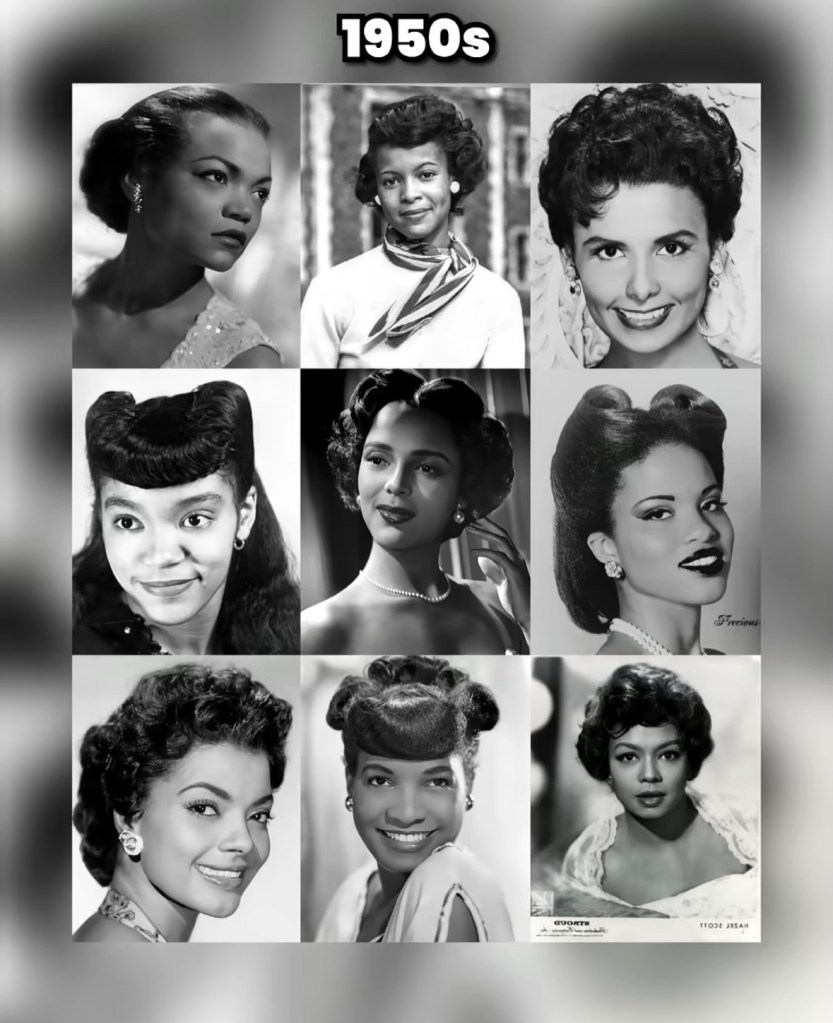
1950s
The 1950s emphasized polish, domestic elegance, and hyper-femininity. Black women wore structured dresses, gloves, and coiffed hairstyles, often straightened or softly curled. Beauty standards leaned toward refinement and respectability, particularly within Black middle-class communities, as appearance was closely tied to social mobility, morality, and dignity in a segregated society.

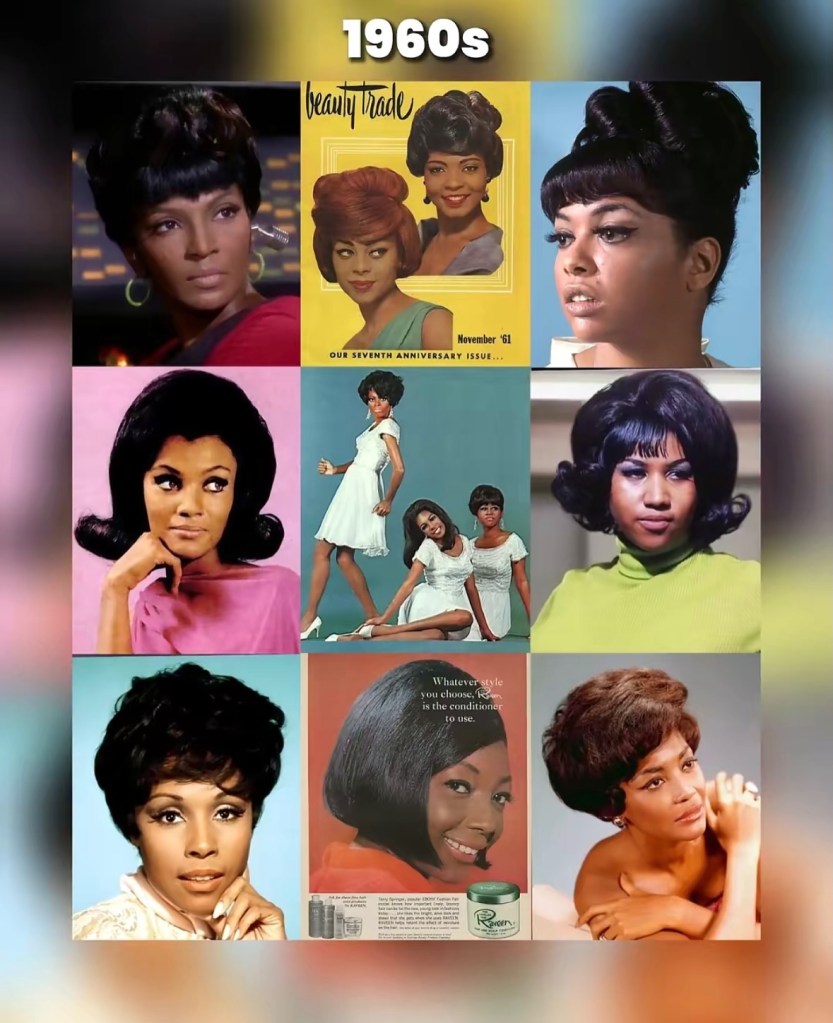
1960s
The 1960s ushered in a radical transformation as the Civil Rights and Black Power movements reframed beauty as political identity. The Afro emerged as a powerful symbol of self-acceptance and resistance, rejecting assimilationist standards. Natural hair, dark skin, and African-inspired clothing were embraced as declarations of pride, autonomy, and cultural truth.

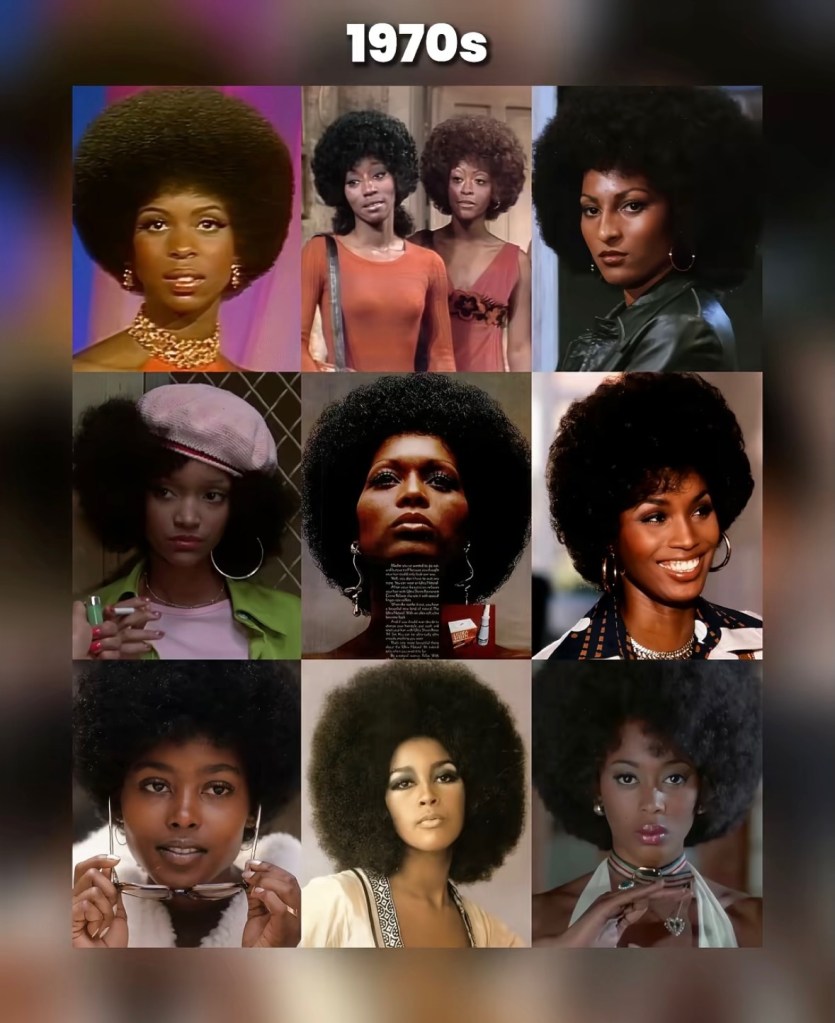
1970s
In the 1970s, Black beauty flourished in boldness, freedom, and Afrocentric expression. Large Afros, braids, cornrows, and natural textures dominated, paired with vibrant makeup and fashion. Icons like Pam Grier and Cicely Tyson embodied a confident sensuality rooted in authenticity rather than approval. Beauty became expansive, expressive, and unapologetically Black.

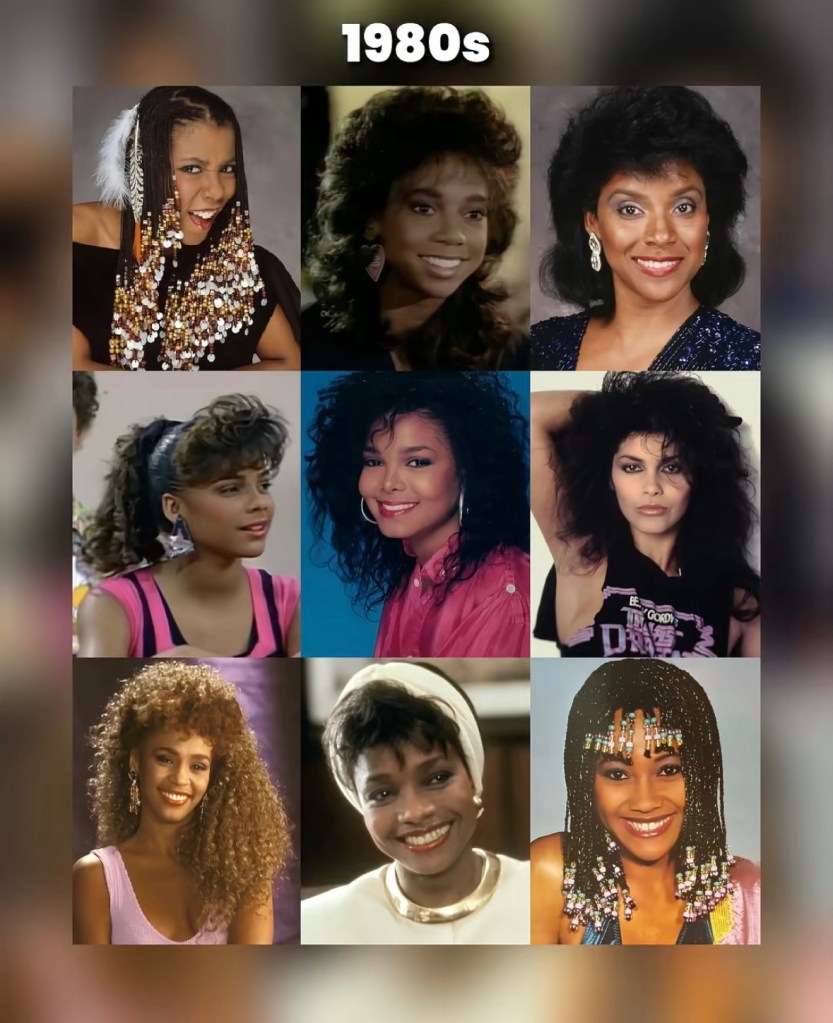
1980s
The 1980s brought excess, experimentation, and glamour. Black women embraced voluminous hairstyles, including jheri curls, blowouts, and elaborate braids. Makeup was bold, featuring strong eyes and glossy lips. Beauty aligned with success, visibility, and power, reflecting growing representation in music, television, and corporate spaces.

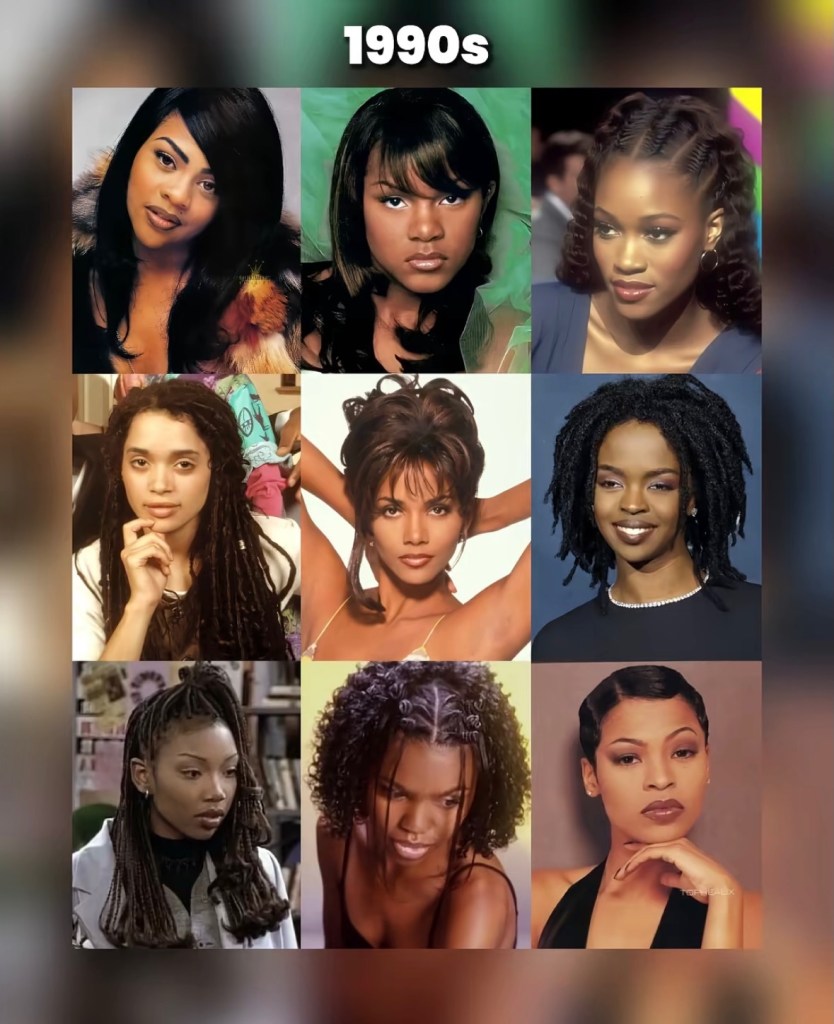
1990s
The 1990s balanced minimalism with cultural edge. Box braids, microbraids, finger waves, and sleek bobs coexisted alongside understated makeup and fashion. Black beauty icons such as Naomi Campbell and Angela Bassett represented strength, athleticism, and global elegance. Authenticity and individuality increasingly defined attractiveness.

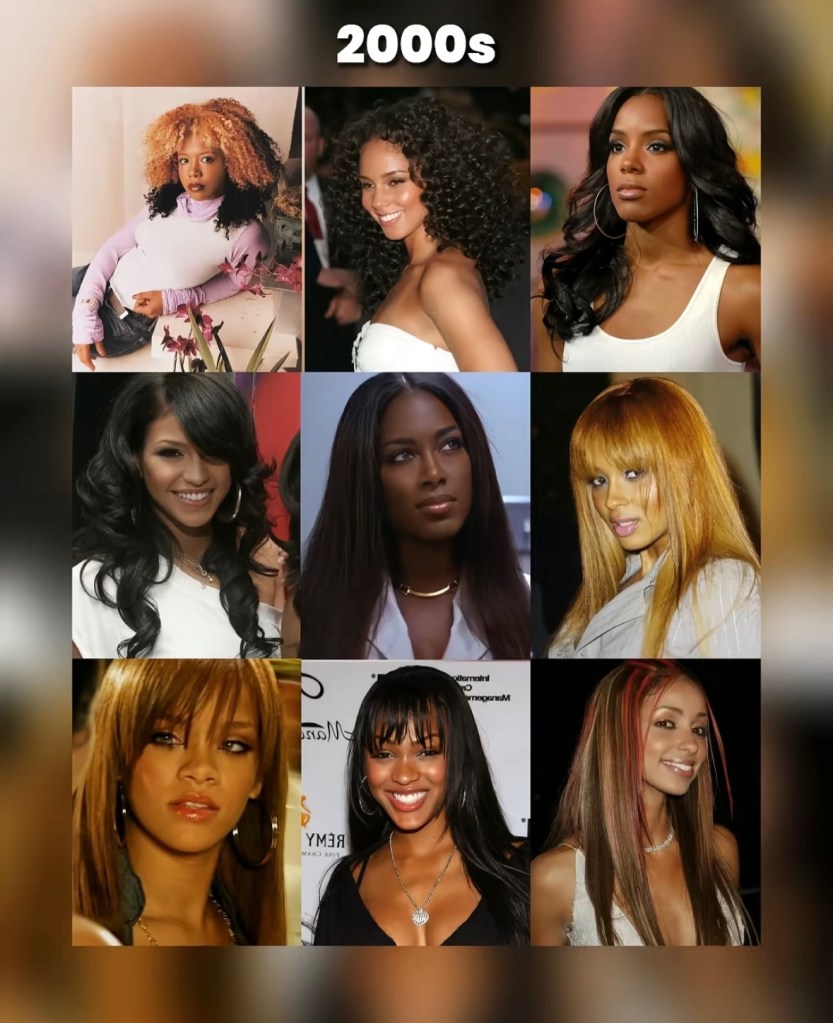
2000s
In the 2000s, Black beauty diversified across mainstream and niche aesthetics. Lace fronts, silk presses, locs, and protective styles gained popularity, alongside experimental makeup and fashion. Media visibility expanded through music videos, magazines, and early digital platforms, allowing Black women to define beauty on their own terms across multiple expressions.

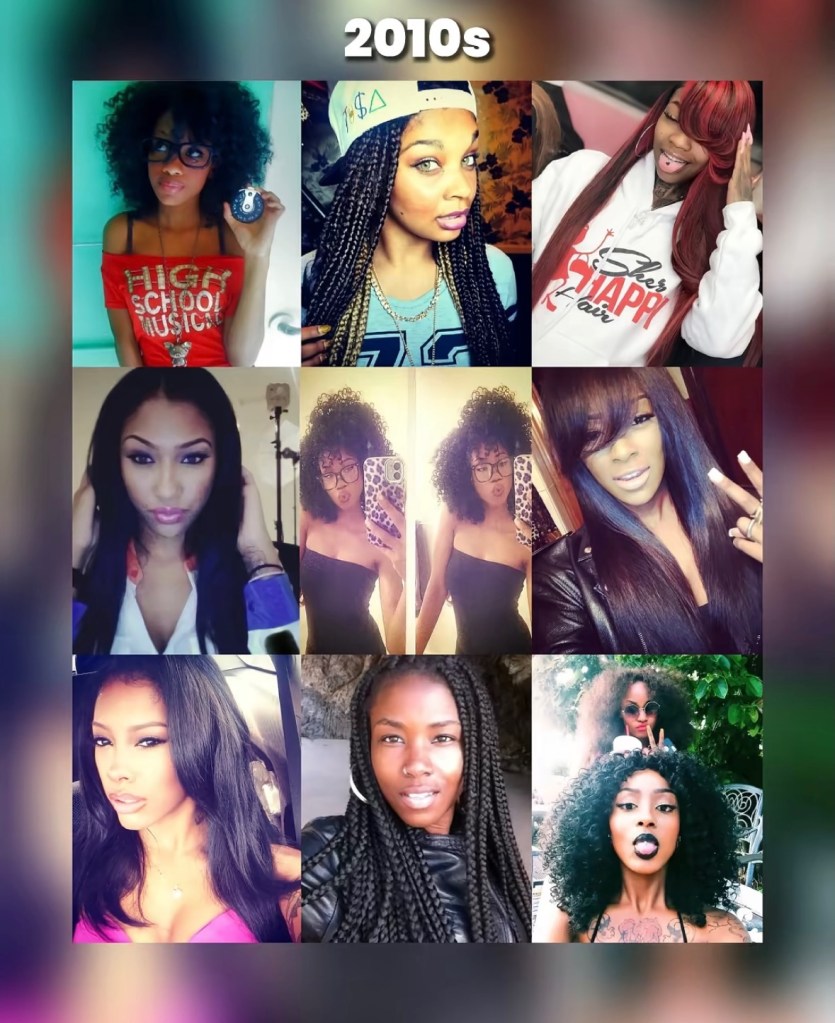
2010s
The 2010s marked a renaissance of natural hair and digital empowerment. Social media amplified Black women’s voices, celebrating coils, curls, dark skin, and wide features once marginalized. Beauty became inclusive, instructional, and affirming, with natural hair movements and makeup brands explicitly centering Black women’s needs and aesthetics.

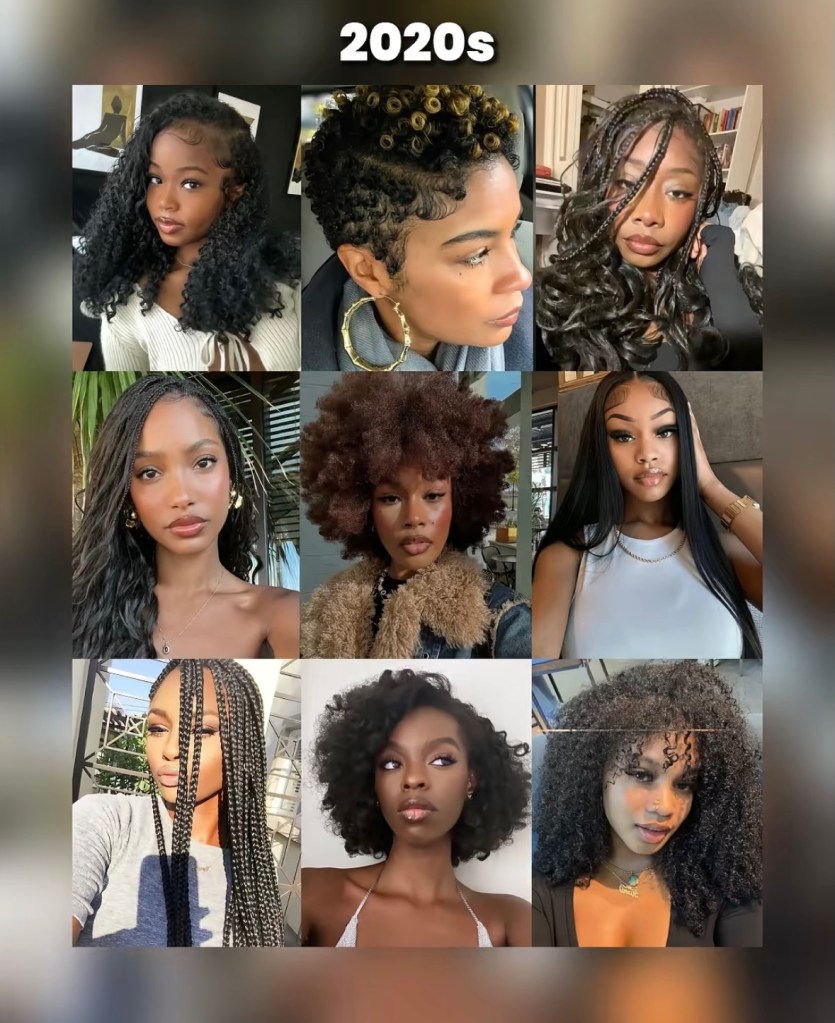
2020s
In the 2020s, Black beauty stands fully autonomous, expansive, and global. There is no single standard—locs, Afros, braids, shaved heads, bold colors, and minimalist looks coexist without hierarchy. Beauty is now framed as wellness, self-definition, and cultural inheritance. Black women lead beauty innovation, redefine luxury, and affirm that Blackness itself is timelessly beautiful.


Black beauty endures because it is rooted in truth rather than approval. It is not borrowed, diluted, or dependent on trends—it is ancestral, self-defined, and ever-evolving. Across centuries of challenge and transformation, Black beauty has remained a quiet force and a bold declaration, reflecting dignity, creativity, and spiritual strength. It is the beauty of survival refined into grace, of history carried with pride, and of identity claimed without apology. In every generation, Black beauty stands as living evidence that what was once denied has always been divine, whole, and worthy.

References

Byrd, A. D., & Tharps, L. L. (2014). Hair story: Untangling the roots of Black hair in America (2nd ed.). St. Martin’s Press.

Craig, M. L. (2002). Ain’t I a beauty queen? Black women, beauty, and the politics of race. Oxford University Press.

Hobson, J. (2005). Venus in the dark: Blackness and beauty in popular culture. Routledge.

Peiss, K. (2011). Hope in a jar: The making of America’s beauty culture. University of Pennsylvania Press.

Walker, S. B. (2007). Style and status: Selling beauty to African American women, 1920–1975. University Press of Kentucky.

Wilson, J. (2016). Black beauty: Aesthetic politics in modern African American culture. University of Illinois Press.

💄 The Power of Pretty 💄

Beauty, Influence, and Societal Dynamics

Beauty has always been more than skin deep. It functions as a subtle yet pervasive form of influence, shaping social dynamics, opportunities, and perceptions. What society labels as “pretty” carries weight, affecting lives in ways often unnoticed. From history to modern media, the influence of attractiveness impacts interpersonal relationships, professional advancement, and cultural status.

Historically, beauty standards have been codified and politicized. In Renaissance Europe, fair skin, delicate features, and symmetry were not simply aesthetic preferences but symbols of class, virtue, and morality. Across cultures, similar patterns emerge, showing that beauty consistently intersects with social capital.

Psychologically, humans respond instinctively to facial symmetry, clear skin, and proportional features, interpreting these cues as indicators of health and vitality. Pretty individuals often trigger positive biases, influencing how others perceive competence, trustworthiness, and likability.

Gender plays a significant role in how beauty is leveraged. Women, in particular, face societal pressures to maintain appearance, and attractiveness can function as social and economic currency. The “beauty premium” demonstrates that societal preference for attractive individuals can lead to higher likelihood of hiring, promotions, and social favor, yet it also subjects them to heightened scrutiny and objectification.

Appearance operates as a form of social signaling. Being conventionally attractive often conveys competence and social dominance, regardless of actual ability. This “halo effect” means pretty individuals are frequently treated more favorably, consciously or unconsciously.

Colorism adds another layer of complexity. Within communities, lighter skin and Eurocentric features are often favored, creating systemic hierarchies that reward certain appearances while marginalizing others. Beauty becomes both subjective and systemic, influencing social mobility and self-perception.

Modern media further amplifies narrow beauty ideals, presenting often unattainable standards through advertising, film, and social platforms. These images shape cultural perception, influence self-esteem, and dictate interpersonal dynamics, creating an environment where appearance is closely tied to societal validation.

Pretty individuals can consciously wield beauty as leverage. In politics, business, and entertainment, attractiveness can persuade, negotiate, and shape public opinion. Physical appearance can become an asset in both personal and professional spheres.

However, beauty also carries costs. Objectification, jealousy, and the pressure to maintain standards can create psychological and social burdens. The labor, expense, and attention required to maintain societal ideals illustrate that prettiness is as demanding as it is powerful.

Research shows that attractive individuals experience measurable advantages across professional, educational, and social contexts. In workplaces, appearance influences evaluations, promotions, and compensation. In education, students deemed attractive receive more attention and encouragement, demonstrating that beauty can affect trajectories from an early age.

In social networks, attractiveness functions as a form of social navigation. Pretty individuals often gain trust, allies, and influence more readily, using charm and appearance strategically. Digital platforms have quantified these dynamics, with likes, follows, and algorithmic visibility creating a new economy of beauty.

The psychological impact of beauty extends to both those deemed attractive and those outside dominant standards. Attractive individuals may internalize their social power, while others may experience marginalization or heightened self-awareness regarding appearance.

Leadership perception is also influenced by physical attractiveness. Attractive leaders are often judged as more competent, persuasive, and authoritative, showing a direct link between appearance and social influence. Gendered double standards exacerbate these dynamics, as women face greater scrutiny over age and deviations from beauty norms.

Contemporary movements challenging narrow Eurocentric beauty ideals empower individuals to reclaim the influence of appearance. By celebrating diverse skin tones, hair textures, body shapes, and facial features, society can begin to decouple prettiness from oppression and objectification.

Ultimately, beauty represents a form of social, psychological, and economic capital. Recognizing its influence allows individuals and communities to navigate the power of appearance with awareness, balancing advantages with responsibility and ethical consideration.

The power of pretty is undeniable, yet true liberation comes when influence is coupled with integrity, self-knowledge, and the dismantling of oppressive standards. Prettiness can empower, but its greatest expression arises when it aligns with wisdom, justice, and cultural consciousness.


References

Chou, H. T. G., & Edge, N. (2012). “They are happier and having better lives than I am”: The impact of using Facebook on perceptions of others’ lives. Cyberpsychology, Behavior, and Social Networking, 15(2), 117–121.

Dion, K., Berscheid, E., & Walster, E. (1972). What is beautiful is good. Journal of Personality and Social Psychology, 24(3), 285–290.

Elder, T., Goddeeris, J., & Williams, R. (2016). Beauty, bias, and student outcomes. Economics of Education Review, 51, 1–14.

Fredrickson, B. L., & Roberts, T. A. (1997). Objectification theory. Psychology of Women Quarterly, 21(2), 173–206.

Friedan, B. (1991). The Feminine Mystique. Norton.

Hamermesh, D. S., & Biddle, J. E. (1994). Beauty and the labor market. American Economic Review, 84(5), 1174–1194.

Hunter, M. (2007). The persistent problem of colorism: Skin tone, status, and inequality. Sociology Compass, 1(1), 237–254.

Langlois, J. H., et al. (2000). Maxims or myths of beauty? A meta-analytic and theoretical review. Psychological Bulletin, 126(3), 390–423.

Little, A. C., et al. (2007). Facial attractiveness and leadership perception. British Journal of Psychology, 98(1), 91–103.

Rhodes, G. (2006). The evolutionary psychology of facial beauty. Annual Review of Psychology, 57, 199–226.

Tiggemann, M. (2011). The impact of media on body image. In Body image: A handbook of science, practice, and prevention (pp. 169–175). Guilford Press.

Tiggemann, M., & Slater, A. (2013). NetGirls: The Internet, Facebook, and body image concern in adolescent girls. International Journal of Eating Disorders, 46(6), 630–643.

Verhulst, J., Lodge, M., & Lavine, H. (2010). The attractiveness halo: Why some candidates are more persuasive than others. Political Psychology, 31(1), 1–26.

Wolf, N. (1991). The Beauty Myth. HarperCollins.

Glow in the Dark: Loving My Shade in a Pale World. #thebrowngirldilemma

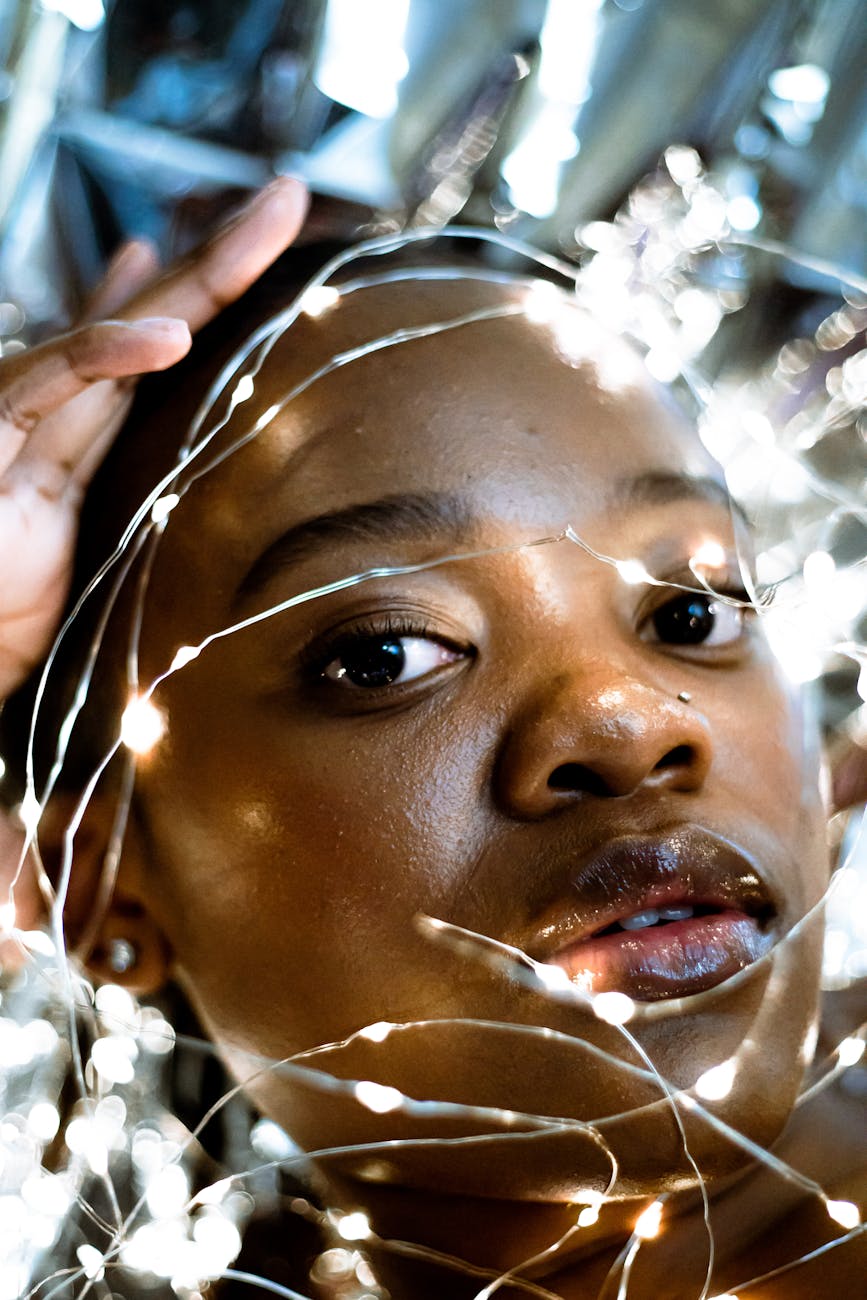
Photo by Sean Nkomo on Pexels.com

For individuals with dark skin, navigating a world that idealizes lightness is an enduring challenge. Society often elevates pale skin as the standard of beauty, success, and desirability, marginalizing darker complexions. Glow in the Dark is a celebration of dark-skinned identity, affirming beauty, resilience, and self-love in the face of systemic bias and colorism.

Historically, colonialism and slavery entrenched a hierarchy of skin tones. Lighter-skinned individuals were often granted privileges, while darker-skinned people were dehumanized, undervalued, and stigmatized (Hunter, 2007). These legacies persist today, influencing media representation, social perceptions, and self-image.

Colorism, the preferential treatment of lighter skin within racialized communities, compounds challenges for dark-skinned individuals. It can manifest subtly through microaggressions or overtly through exclusion from social, professional, and romantic opportunities. Understanding these dynamics is crucial to fostering resilience and self-acceptance (Russell, Wilson, & Hall, 1992).

Psychologically, living in a “pale world” can lead to internalized oppression. Many dark-skinned individuals are conditioned to view their complexion as less desirable, creating struggles with self-esteem, identity, and belonging. Reclaiming one’s narrative is an essential step toward healing and empowerment.

Media representation plays a powerful role in shaping perceptions. Historically, darker-skinned individuals were underrepresented or portrayed negatively in television, film, and advertising. When they were visible, they were often caricatured, reinforcing stereotypes. Today, increasing visibility of dark-skinned role models challenges these norms, affirming that beauty exists in all shades.

Beauty standards in fashion and advertising have long centered around lighter tones. Foundation shades, skincare marketing, and magazine covers have historically excluded dark skin, signaling to consumers that their complexion is less worthy. Expanding inclusivity is critical to affirming the worth of dark-skinned people (Glenn, 2008).

Dark-skinned women face a “double bind” of gendered and colorist biases. Their beauty is often undervalued compared to lighter peers, yet they are simultaneously hypersexualized in media narratives. Self-love becomes an act of resistance against a society that seeks to define their value through restrictive and prejudiced lenses.

Hair, an essential component of identity, intersects with skin tone. Natural hairstyles like afros, locs, and braids are often stigmatized in mainstream culture, yet they are powerful symbols of pride and self-expression. Embracing natural hair affirms cultural heritage and reinforces self-love.

Education is key to dismantling internalized biases. Learning about the historical and cultural significance of melanin-rich skin fosters appreciation and pride. Curricula that integrate Black history, cultural contributions, and positive representation help students develop resilience against pervasive societal prejudice.

Family and community support profoundly impact self-perception. Children who receive affirmation about their skin tone, hair, and heritage are more likely to embrace their identity confidently. Community initiatives that celebrate dark-skinned beauty reinforce belonging and self-worth.

Social media amplifies both challenges and opportunities. Platforms can perpetuate colorism through beauty filters and preference hierarchies, but they also provide spaces for empowerment. Campaigns like #DarkSkinIsBeautiful and #MelaninPoppin cultivate pride, representation, and collective affirmation.

Spiritual perspectives validate the inherent worth of dark-skinned individuals. Song of Solomon 1:5 celebrates dark skin: “I am black, but comely, O ye daughters of Jerusalem” (KJV). Such affirmations provide a framework for understanding beauty as divinely ordained rather than socially constructed.

Economic empowerment intersects with skin tone. Supporting Black-owned businesses and inclusive brands strengthens community wealth while reinforcing pride in identity. Economic agency becomes a form of self-affirmation and resistance against systems that marginalize dark-skinned individuals.

Art, literature, and film provide avenues for cultural expression and validation. Creators highlighting dark-skinned beauty, resilience, and achievement challenge dominant narratives, offering inspiration and affirmation to communities historically overlooked or misrepresented.

Interpersonal relationships also reflect colorism’s influence. Studies indicate that dark-skinned individuals often face bias in dating, friendships, and professional networks. Affirming self-worth requires both personal confidence and supportive social environments that counteract prejudice (Hill, 2002).

Mental health is profoundly affected by colorism. Therapy, mentorship, and community support help dark-skinned individuals process internalized biases, cope with societal pressures, and cultivate resilience. Prioritizing emotional well-being is essential to sustaining self-love in a pale-dominated culture.

Cultural pride strengthens identity and resilience. Celebrating heritage, learning ancestral histories, and participating in cultural practices provide a foundation of self-respect and belonging. These practices counteract societal narratives that devalue dark skin and marginalized communities.

Global movements for racial justice underscore the importance of self-love. Dark-skinned individuals who assert pride in their appearance and identity participate in broader efforts to dismantle systemic bias, affirming that visibility, representation, and advocacy are intertwined with personal empowerment.

Ultimately, glowing in a pale world is an act of defiance and affirmation. Loving one’s shade transcends aesthetics; it is a reclamation of dignity, a celebration of heritage, and a declaration of worth. Each individual who embraces their complexion challenges societal hierarchies and models resilience for future generations.

In conclusion, Glow in the Dark is both personal and revolutionary. Dark-skinned individuals who affirm their beauty resist systemic prejudice, nurture self-love, and inspire collective empowerment. Loving one’s shade in a pale world is a commitment to authenticity, pride, and the celebration of melanin as a source of strength, history, and beauty.


References

Glenn, E. N. (2008). Yearning for lightness: Transnational circuits in the marketing and consumption of skin lighteners. Gender & Society, 22(3), 281–302. https://doi.org/10.1177/0891243208316089

Hill, M. E. (2002). Skin color and the perception of attractiveness among African Americans: Does gender make a difference? Social Psychology Quarterly, 65(1), 77–91.

Hunter, M. (2007). The persistent problem of colorism: Skin tone, status, and inequality. Sociology Compass, 1(1), 237–254. https://doi.org/10.1111/j.1751-9020.2007.00014.x

Russell, K., Wilson, M., & Hall, R. (1992). The color complex: The politics of skin color among African Americans. Anchor Books.

The Holy Bible, King James Version. (n.d.). Song of Solomon 1:5. King James Bible Online. https://www.kingjamesbibleonline.org

Beauty Is in the Eyes of the Beholder

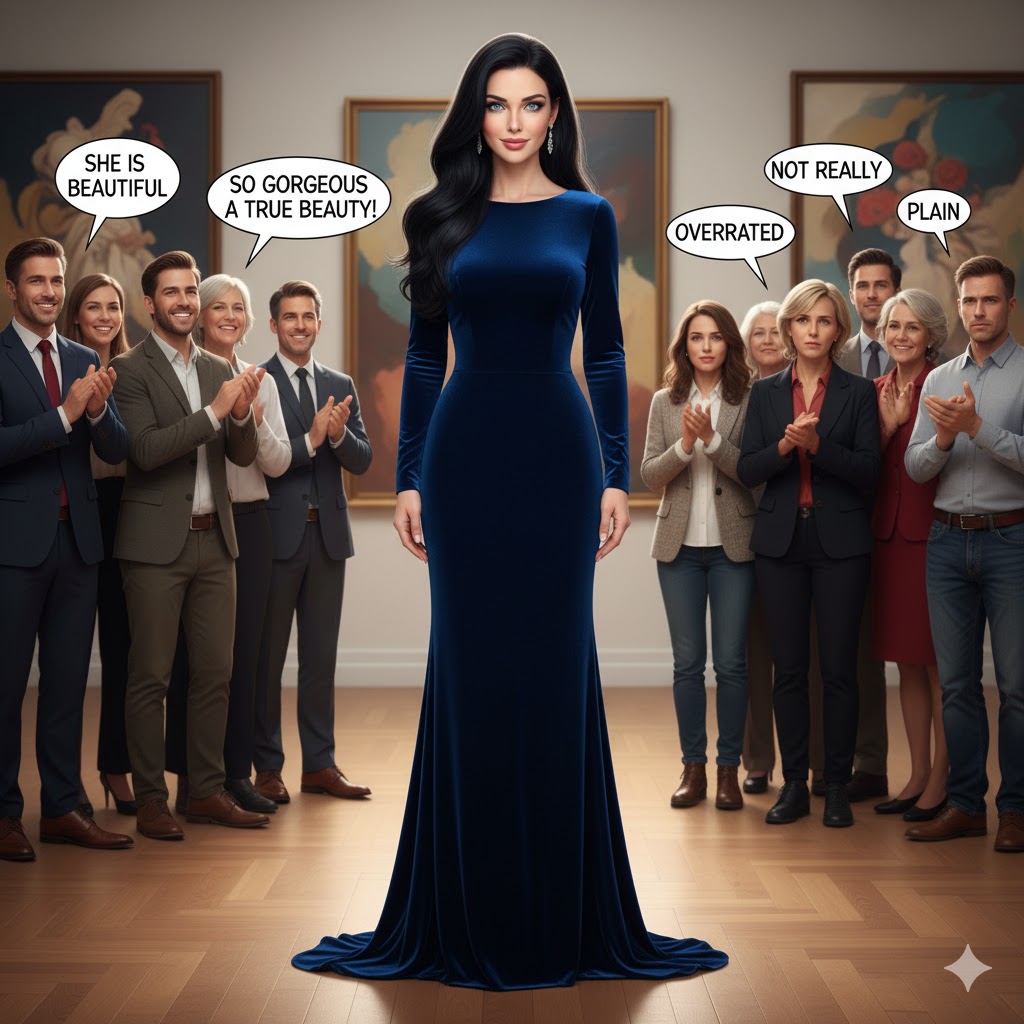
Beauty has fascinated philosophers, scientists, and artists for centuries, yet it remains one of the most complex and debated concepts in human experience. When someone says, “Beauty is in the eyes of the beholder,” they acknowledge that what we find attractive is not universal. Two people can look at the same face—Brad Pitt, Denzel Washington, Aishwarya Rai Bachchan, or Kim Kardashian—and have completely different reactions. Some may see perfection, while others feel no attraction at all. This divergence raises a profound question: how can one object or person produce such opposite interpretations?

Human perception of beauty emerges from the interplay between biology, culture, psychology, and personal experience. While some elements of attractiveness are rooted in genetic preferences for health, symmetry, or fertility, these biological cues do not act alone. They are filtered through upbringing, environment, history, and learned values. Thus, beauty can be both subjective and objective at the same time—anchored in natural instincts yet shaped by social forces.

Beauty becomes subjective because each person’s mind interprets stimuli differently. The brain does not merely record what the eyes see; it interprets, edits, analyzes, and assigns meaning. Experiences from childhood, cultural exposure, family influences, societal ideals, and even personal insecurities shape how we judge attractiveness. Two people standing side-by-side may share the same visual input but generate entirely different emotional responses.

Opposing views arise because people possess individual histories that influence how they categorize beauty. Someone raised in a family that praises lighter skin may grow up prioritizing those features, while another who grows up surrounded by deep-toned beauty may find richness in melanin to be the ultimate ideal. In this sense, environment acts like a lens that shapes the raw genetic instincts built into us.

While some individuals find global icons like Brad Pitt or Aishwarya Rai incredibly attractive, others may not respond emotionally to their features. This does not diminish the beauty of the individual; it highlights the complexity of perception. Attraction depends not only on the features themselves but also on how a person’s brain interprets those features in relation to memories, associations, and internal biases.

Childhood plays a powerful role in shaping what we find attractive. Children absorb subtle messages from parents, television, social media, and peers. They observe which faces receive praise, who is considered desirable, and how beauty is talked about. These early impressions become mental templates—what psychologists call “imprinting”—that influence adult preferences. A child repeatedly exposed to a certain beauty ideal is more likely to absorb that ideal subconsciously.

Genetics contributes to attraction by shaping innate preferences. Humans across cultures tend to favor certain biological cues such as facial symmetry, clear skin, proportional features, and expressions of health. These cues signal good genes, fertility, and survival advantages. For example, symmetry suggests developmental stability, while clear skin signals health. However, genetics does not dictate which specific faces each person finds beautiful; it merely provides a blueprint for general tendencies.

Beauty is subjective because perception relies on neural pathways formed over time. The brain creates shortcuts known as heuristics to interpret attractiveness quickly. These heuristics depend heavily on exposure, conditioning, and familiarity. What one person recognizes as beautiful, another may interpret differently based on the mental filters they’ve developed. In other words, beauty is partly a reflection of the beholder’s inner world.

It is true that everyone who looks at you views you differently. Each observer applies their own criteria, experiences, social conditioning, and emotional states to the image before them. You do not appear the same to all people because people do not possess identical mental frameworks. Every face becomes a personal puzzle that each mind solves in its own way.

Opinions of beauty are formed through a mixture of biological impulses and cognitive associations. The brain’s reward pathway, especially the release of dopamine, influences how strongly we react to certain features. If a particular face or feature activates positive associations—perhaps it resembles a loved one or cultural icon—the viewer experiences attraction. If it triggers negative or unfamiliar associations, attraction diminishes.

Many of our thoughts about beauty originate from early exposure. Family shapes our initial ideals when we are young. Culture adds another layer by reinforcing images, standards, and expectations through media and tradition. Religion and community can shift perceptions by emphasizing modesty, purity, strength, or specific gender roles. These influences blend into a personal algorithm that defines what each person considers beautiful.

The subjectivity of beauty is amplified by social comparison. People learn to categorize faces through repeated exposure, and these categories evolve with societal values. When society celebrates a certain celebrity, body type, hairstyle, or skin tone, our understanding of beauty shifts along with it. Over time, these societal shifts influence how individuals form preferences.

In addition, personal experiences shape perception. A person who associates a specific facial type with a negative memory may feel aversion, even if that facial type is widely considered attractive. Conversely, someone who has positive emotional experiences associated with certain features may find those features beautiful regardless of societal standards.

Cultural diversity plays a tremendous role in shaping beauty standards. What is ideal in one society may be average or even unappealing in another. For example, some cultures prize fuller figures, while others emphasize slimness. Some value high cheekbones, while others prioritize softer features. Beauty does not exist in a vacuum—it is embedded in cultural narratives.

Genetics also influences how we perceive beauty through evolutionary psychology. Humans are drawn to cues that historically increased the likelihood of survival and reproduction. For example, certain facial ratios—like the distance between the eyes and mouth—are universally preferred because they signal youthfulness and health. Yet these universal preferences do not override cultural and personal variation.

Beauty appears subjective because the brain reacts not only to physical features but also to emotional meaning. A face can become more attractive to someone they love, admire, or trust, while it can become less attractive if associated with negative experiences. Attraction is not static; it evolves depending on emotional context.

Our reactions to beauty also stem from cognitive biases. Familiarity bias makes us favor what we already know. Similarity bias makes us find people more attractive if they resemble us or our loved ones. Novelty bias can make unfamiliar beauty thrilling or intimidating, depending on a person’s personality and past experiences.

Beauty can shift over time because the mind is adaptable. As people experience different cultures, travel, relationships, and life changes, their perceptions of beauty expand. What one considered unattractive years earlier may become appealing as they mature or as societal standards evolve.

Psychology suggests that beauty perception is linked to identity. People often gravitate toward beauty that validates their sense of self—culturally, racially, spiritually, or emotionally. Thus, beauty becomes a mirror reflecting not only the object being viewed but also the inner state of the viewer.

Opposing views on beauty are also influenced by environment and exposure. Someone raised in an environment where natural hair, melanated skin, or certain facial features were celebrated will grow up with different ideals than someone surrounded by Eurocentric standards. Beauty is a reflection of cultural conditioning.

Subjectivity in beauty is further shaped by emotional connection. A person may find someone more attractive after learning about their personality, kindness, or intelligence. Conversely, someone physically beautiful may become unattractive if their behavior is cruel. The emotional dimension modifies the visual perception.

Another contributor to beauty’s subjectivity is personal insecurity. People often project their desires, fears, or self-judgments onto their perception of others. A person insecure about their own appearance may judge beauty more harshly, while someone confident or emotionally balanced may find beauty in a wider range of faces.

Opinions about beauty also depend on social trends. Celebrities, influencers, and media continually reshape what is considered desirable. As trends evolve—from voluptuous bodies to slim waists, from tanned skin to porcelain tones—public preferences shift with them. Beauty becomes a moving target.

The neurological basis of attraction reveals that the brain rewards patterns it finds aesthetically pleasing. These patterns may include facial symmetry, proportionality, and the golden ratio. Yet the brain’s reward center can be trained to find new patterns beautiful with enough exposure.

Beauty remains subjective because no two people share identical life experiences. The emotional, genetic, cultural, and psychological ingredients that form a person’s preferences are unique. Thus, beauty varies as widely as personalities, languages, and worldviews.

The idea that everyone sees you differently is grounded in neuroscience. Each person’s brain processes visual stimuli through unique connections formed over the years. Thus, you exist in many forms—thirty people see thirty different versions of you, shaped by their internal narratives.

Ultimately, the subjectivity of beauty emphasizes the diversity of human experience. What one person finds breathtaking, another may overlook. This diversity enriches the human story, preventing beauty from becoming a rigid or uniform standard.

Beauty is both personal and universal. It is rooted in biology but refined by culture, shaped by childhood, altered by experience, and influenced by personality. This interplay ensures that no definition of beauty is final or absolute.

Our thoughts about beauty arise from a combination of instinct and experience. While evolutionary biology gives us a framework, the mind colors perception through memory, emotion, and environment. Therefore, beauty remains one of the most personal judgments a human can make.

In the end, beauty’s subjectivity is what makes it powerful. It reminds us that attraction is not a science to be perfected but a reflection of the beholder’s inner world. Beauty lives in perception, memory, culture, genetics, and soul. It is as varied and precious as the people who define it.

References

Bzdok, D., Langner, R., Schilbach, L., Jakobs, O., Roski, C., Caspers, S., … Eickhoff, S. B. (2011). Neural correlates of emotional valence judgments: A functional MRI meta-analysis. NeuroImage, 54(3), 2233–2244.

Darwin, C. (1871). The descent of man, and selection in relation to sex. London: John Murray.

DeBruine, L. M., & Jones, B. C. (2017). Face preferences. In Encyclopedia of evolutionary psychological science (pp. 1–12). Springer.

Etcoff, N. (1999). Survival of the prettiest: The science of beauty. Anchor Books.

Grammer, K., Fink, B, Møller, A. P., & Thornhill, R. (2003). Darwinian aesthetics: Sexual selection and the biology of beauty. Biological Reviews, 78(3), 385–407.

Jones, B. C., DeBruine, L. M., Little, A. C., & Feinberg, D. R. (2007). Social transmission of face preferences among humans. Proceedings of the Royal Society B, 274(1611), 899–903.

Langlois, J. H., Kalakanis, L., Rubenstein, A. J., Larson, A., Hallam, M., & Smoot, M. (2000). Maxims or myths of beauty? A meta-analytic and theoretical review. Psychological Bulletin, 126(3), 390–423.

Little, A. C., Jones, B. C., & DeBruine, L. M. (2011). Facial attractiveness: evolutionary based research. Philosophical Transactions of the Royal Society B, 366(1571), 1638–1659.

Rhodes, G. (2006). The evolutionary psychology of facial beauty. Annual Review of Psychology, 57, 199–226.

Said, C. P., & Todorov, A. (2011). A statistical model of facial attractiveness. Psychological Science, 22(9), 1183–1190.

Thornhill, R., & Gangestad, S. W. (1999). Facial attractiveness. Trends in Cognitive Sciences, 3(12), 452–460.

Zebrowitz, L. A. (1997). Reading faces: Window to the soul? Westview Press.

Beyond the Mirror: Confronting Society’s Obsession with Beauty

Society has long equated beauty with worth. From magazines to social media, advertising, and entertainment, physical appearance is amplified as a marker of success, desirability, and social acceptance. This fixation creates pressure to conform to often unattainable standards.

Beauty standards are culturally constructed. They vary across regions and eras, yet a consistent theme emerges: idealized symmetry, clear skin, and youthful features dominate the narrative. These ideals are reinforced by media, celebrity culture, and commercial industries (Wolf, 1991).

The psychology of beauty highlights the “halo effect,” where attractive individuals are perceived as more competent, intelligent, and trustworthy. This cognitive bias reinforces the societal obsession with physical appearance (Dion, Berscheid, & Walster, 1972).

Social media has intensified beauty fixation. Platforms like Instagram and TikTok promote curated images, filters, and cosmetic enhancements. Users internalize these images as normative, often comparing themselves unfavorably to digitally enhanced representations (Fardouly et al., 2015).

Advertising and marketing exploit insecurities. Skincare, cosmetics, and fashion industries profit by suggesting that happiness and social success are contingent on appearance. This commercial manipulation deepens the fixation on outward aesthetics (Etcoff, 1999).

Gender norms exacerbate the pressure. Women are often judged more harshly on appearance, while men are increasingly expected to conform to muscular or chiseled ideals. The result is a pervasive culture of scrutiny across genders (Cash & Pruzinsky, 2002).

Beauty fixation impacts mental health. Anxiety, depression, and low self-esteem correlate with internalization of societal beauty standards. Individuals often experience dissatisfaction with their natural appearance, seeking validation through external approval (Grabe, Ward, & Hyde, 2008).

The cosmetic surgery industry reflects society’s preoccupation with perfection. Millions pursue procedures to align their features with perceived ideals. While transformative for some, it underscores the belief that appearance is paramount to self-worth (Sarwer & Crerand, 2004).

Youthfulness is valorized, leading to ageism. Anti-aging products and cosmetic interventions perpetuate the notion that beauty diminishes with age. Older individuals may feel pressured to maintain a youthful appearance, reflecting society’s conflation of beauty and vitality (Hurd Clarke, 2010).

Colorism reinforces beauty hierarchy. Lighter skin tones are often idealized in media and popular culture, marginalizing darker complexions and perpetuating systemic discrimination within communities (Hunter, 2007).

The fashion industry dictates trends that shape beauty standards. Runway models, influencer endorsements, and magazine covers present a narrow spectrum of body types, creating unrealistic expectations for consumers (Tiggemann & Zaccardo, 2018).

Digital filters and AI-generated images distort perceptions of natural beauty. Augmented realities promote flawless skin, perfect symmetry, and exaggerated features, normalizing unrealistic ideals and complicating self-acceptance (Chae, 2017).

Celebrity culture amplifies the obsession. Public figures serve as aspirational benchmarks, with media coverage emphasizing appearance over achievement. Fans often emulate looks and lifestyle choices, reinforcing a cycle of comparison (Cash et al., 2004).

Beauty fixation intersects with race, gender, and class. Marginalized groups face compounded pressures, navigating ideals not reflective of their natural features or cultural identity (Hunter, 2007). Societal preference for Eurocentric features marginalizes diverse forms of beauty.

Education and media literacy can mitigate harmful effects. Critical awareness of marketing, filters, and digitally altered images helps individuals contextualize beauty messages and resist internalizing unattainable standards (Fardouly et al., 2015).

Empowerment movements challenge conventional beauty norms. Campaigns promoting body positivity, self-love, and diversity redefine standards, emphasizing confidence, health, and authenticity over superficial ideals (Tylka & Wood-Barcalow, 2015).

Psychological research suggests self-compassion buffers the negative impact of beauty pressure. Individuals cultivating acceptance of their natural appearance exhibit higher resilience and self-esteem (Neff, 2003).

Cultural shifts are visible in media representation. Inclusive campaigns, diverse casting, and promotion of natural beauty signal a slow transformation, expanding the definition of attractiveness beyond narrow conventions (Hall & Fields, 2013).

The fixation on beauty also intersects with consumerism. Industries profit from insecurities, from skincare routines to fitness regimens, perpetuating a cycle where self-worth is measured through appearance (Etcoff, 1999).

Ultimately, confronting society’s obsession with beauty requires awareness, education, and cultural reform. By valuing authenticity, diversity, and inner qualities, individuals and communities can move beyond the mirror, embracing a holistic understanding of self-worth (Wolf, 1991).


References

  • Cash, T. F., & Pruzinsky, T. (Eds.). (2002). Body image: A handbook of theory, research, and clinical practice. Guilford Press.
  • Cash, T. F., Melnyk, S. E., & Hrabosky, J. I. (2004). The assessment of body image investment: An extensive revision of the Appearance Schemas Inventory. International Journal of Eating Disorders, 35(3), 305–316.
  • Chae, J. (2017). Virtual makeover: The impact of digitally altered images on self-perception. Cyberpsychology, Behavior, and Social Networking, 20(5), 295–301.
  • Dion, K., Berscheid, E., & Walster, E. (1972). What is beautiful is good. Journal of Personality and Social Psychology, 24(3), 285–290.
  • Etcoff, N. (1999). Survival of the prettiest: The science of beauty. Anchor Books.
  • Fardouly, J., Diedrichs, P. C., Vartanian, L. R., & Halliwell, E. (2015). Social comparisons on social media: The impact of Facebook on young women’s body image concerns and mood. Body Image, 13, 38–45.
  • Grabe, S., Ward, L. M., & Hyde, J. S. (2008). The role of the media in body image concerns among women: A meta-analysis of experimental and correlational studies. Psychological Bulletin, 134(3), 460–476.
  • Hall, R. J., & Fields, B. (2013). Modeling the media’s influence on racial and gendered beauty standards. Sociology Compass, 7(11), 918–931.
  • Hunter, M. L. (2007). The persistent problem of colorism: Skin tone, status, and inequality. Sociology Compass, 1(1), 237–254.
  • Hurd Clarke, L. (2010). Aging and everyday life: The social construction of identity and age. Canadian Journal on Aging, 29(1), 39–49.
  • Neff, K. D. (2003). Self-compassion: An alternative conceptualization of a healthy attitude toward oneself. Self and Identity, 2(2), 85–101.
  • Sarwer, D. B., & Crerand, C. E. (2004). Body image and cosmetic medical treatments. Body Image, 1(1), 99–111.
  • Tiggemann, M., & Zaccardo, M. (2018). “Exercise to be fit, not skinny”: The effect of fitspiration imagery on women’s body image. Body Image, 26, 90–97.
  • Tylka, T. L., & Wood-Barcalow, N. L. (2015). The Body Appreciation Scale-2: Item refinement and psychometric evaluation. Body Image, 12, 53–67.
  • Wolf, N. (1991). The beauty myth: How images of beauty are used against women. HarperCollins.

The Glow Up

A “glow up” is more than a change in appearance—it is a holistic transformation of mind, body, style, and spirit. It represents intentional growth, self-discovery, and refinement. While society often equates glowing up with external beauty, the most profound transformations begin internally. True glow-ups combine emotional maturity, spiritual grounding, physical wellness, and stylistic expression, creating an authentic radiance that shines from within.

At the heart of a glow-up is self-awareness. Understanding who you are, your values, and your goals provides clarity for how to present yourself to the world. Self-awareness informs choices about personal style, grooming, wellness routines, and even relationships. Without it, attempts to “upgrade” are superficial and temporary. Psychology shows that reflective self-awareness improves decision-making, resilience, and emotional regulation (Brown, 2012).

A spiritual foundation amplifies a glow-up. Many find that confidence, peace, and purpose are rooted in a relationship with God. Scripture teaches, “But the fruit of the Spirit is love, joy, peace, longsuffering, gentleness, goodness, faith” (Galatians 5:22, KJV). Spiritual growth brings clarity, patience, and balance, which naturally enhance beauty, poise, and overall presence.

Physical health is another pillar. Glow-ups are reflected in skin, hair, posture, and energy. Proper nutrition, hydration, exercise, and rest not only improve physical appearance but also elevate mental and emotional well-being. Studies show that self-care routines increase confidence and life satisfaction (Snyder et al., 2012). The body becomes a visible testament to care and discipline.

Skin care is central to modern glow-ups. Healthy skin communicates vitality, youthfulness, and self-respect. A consistent skincare regimen tailored to one’s skin type reflects discipline and investment in oneself. Beyond aesthetics, skin care routines encourage mindfulness and self-love.

Hair care also contributes to transformation. Hair is often a key aspect of identity, especially for Black women whose natural hair textures are culturally significant. Styling, protection, and regular maintenance create confidence and visibility. Hair becomes both a fashion statement and a symbol of heritage and pride.

Style and wardrobe transformation is another visible component. Fashion-forward choices, tailored fits, and curated color palettes reflect personal identity and creativity. Minimalist, bold, or trend-conscious aesthetics can all be part of a glow-up, provided they align with the individual’s values and self-expression. The wardrobe becomes a canvas for intentional communication.

Confidence is the glue that unites inner and outer transformation. Psychology research emphasizes that posture, eye contact, and body language impact how others perceive us and how we perceive ourselves (Carney et al., 2010). A confident person carries a glow that transcends material changes. Confidence rooted in competence and self-respect produces authentic magnetism.

A glow-up also involves emotional intelligence. The ability to regulate emotions, communicate effectively, and form healthy relationships adds depth to outer beauty. Emotional maturity enables graceful navigation of challenges and enhances interactions, which further contributes to a radiant presence.

Mindset plays a crucial role. Individuals who embrace growth, resilience, and gratitude often experience deeper glow-ups. A positive mindset fosters persistence through setbacks, encourages self-improvement, and nurtures humility alongside ambition. Joy, patience, and gratitude enhance radiance more than cosmetics alone ever could.

Goal setting is an actionable aspect of glow-ups. Intentional planning for personal, professional, and spiritual growth ensures consistent progress. Small, deliberate steps—like learning a new skill, adopting healthier habits, or refining a wardrobe—compound over time, leading to transformative results.

Glow-ups are not purely external. Inner beauty, character, and integrity matter greatly. Scripture instructs, “Whose adorning let it not be that outward adorning of plaiting the hair, and of wearing of gold, or of putting on of apparel; But let it be the hidden man of the heart” (1 Peter 3:3–4, KJV). Inner refinement complements outward aesthetics, creating holistic radiance.

Social influence and mentorship can accelerate transformation. Surrounding oneself with supportive, inspiring, and like-minded individuals encourages growth. Peer influence, when positive, reinforces discipline, style choices, and spiritual or emotional development.

Self-expression through creativity also contributes. Art, music, writing, and other forms of personal expression allow individuals to explore identity, values, and emotions. Creativity not only enhances mental well-being but also communicates personality, enhancing one’s public presence.

Balance is essential in a glow-up. Overemphasis on appearance without internal growth leads to superficiality. Conversely, focusing solely on character without attending to health, style, and presentation may limit opportunities and visibility. A well-rounded glow-up harmonizes inner and outer cultivation.

Resilience strengthens the glow-up journey. Setbacks, failures, and criticism are inevitable, but perseverance deepens transformation. Learning from challenges and adjusting strategies ensures sustainable improvement in personal, spiritual, and aesthetic domains.

Reflection is a key practice. Periodically evaluating progress helps refine goals, adjust strategies, and celebrate achievements. Journaling, meditation, and spiritual practices encourage continuous self-assessment and growth.

Gratitude enhances the glow-up experience. Appreciating one’s journey, accomplishments, and blessings reinforces confidence, humility, and joy. Gratitude nurtures a positive internal state that radiates externally, enriching all aspects of personal transformation.

Finally, a glow-up is ongoing. It is not a single event but a continual process of refinement, learning, and self-expression. Each season of life provides new opportunities for growth, whether in character, style, spiritual depth, or personal achievements. The glow evolves as the individual evolves, reflecting intentional living.

Ultimately, the glow-up reflects harmony between the internal and external, the spiritual and physical, and the timeless and contemporary. A woman who invests in herself, honors her body, nurtures her spirit, and expresses her creativity becomes a living testament to transformation and empowerment.


References

Brown, B. (2012). Daring greatly: How the courage to be vulnerable transforms the way we live, love, parent, and lead. Gotham Books.

Carney, D. R., Cuddy, A. J. C., & Yap, A. J. (2010). Power posing: Brief nonverbal displays affect neuroendocrine levels and risk tolerance. Psychological Science, 21(10), 1363–1368.

Galatians 5:22, KJV. Holy Bible, King James Version. (2017). Thomas Nelson. (Original work published 1611)

Snyder, C. R., Lopez, S. J., & Pedrotti, J. T. (2012). Positive psychology: The scientific and practical explorations of human strengths (3rd ed.). SAGE Publications.

1 Peter 3:3–4, KJV. Holy Bible, King James Version. (2017). Thomas Nelson. (Original work published 1611)

Acts 16:25, KJV. Holy Bible, King James Version. (2017). Thomas Nelson. (Original work published 1611)

Csikszentmihalyi, M. (1990). Flow: The psychology of optimal experience. Harper & Row.

Fredrickson, B. L. (2001). The role of positive emotions in positive psychology: The broaden-and-build theory of positive emotions. American Psychologist, 56(3), 218–226.

Davis, K., & Shuster, S. (2019). The science of glow: How lifestyle and mindset influence appearance. Routledge.

Watts, R. (2014). Joy as a theological category: An exploration of joy in Christian life. Journal of Christian Studies, 12(1), 45–62.

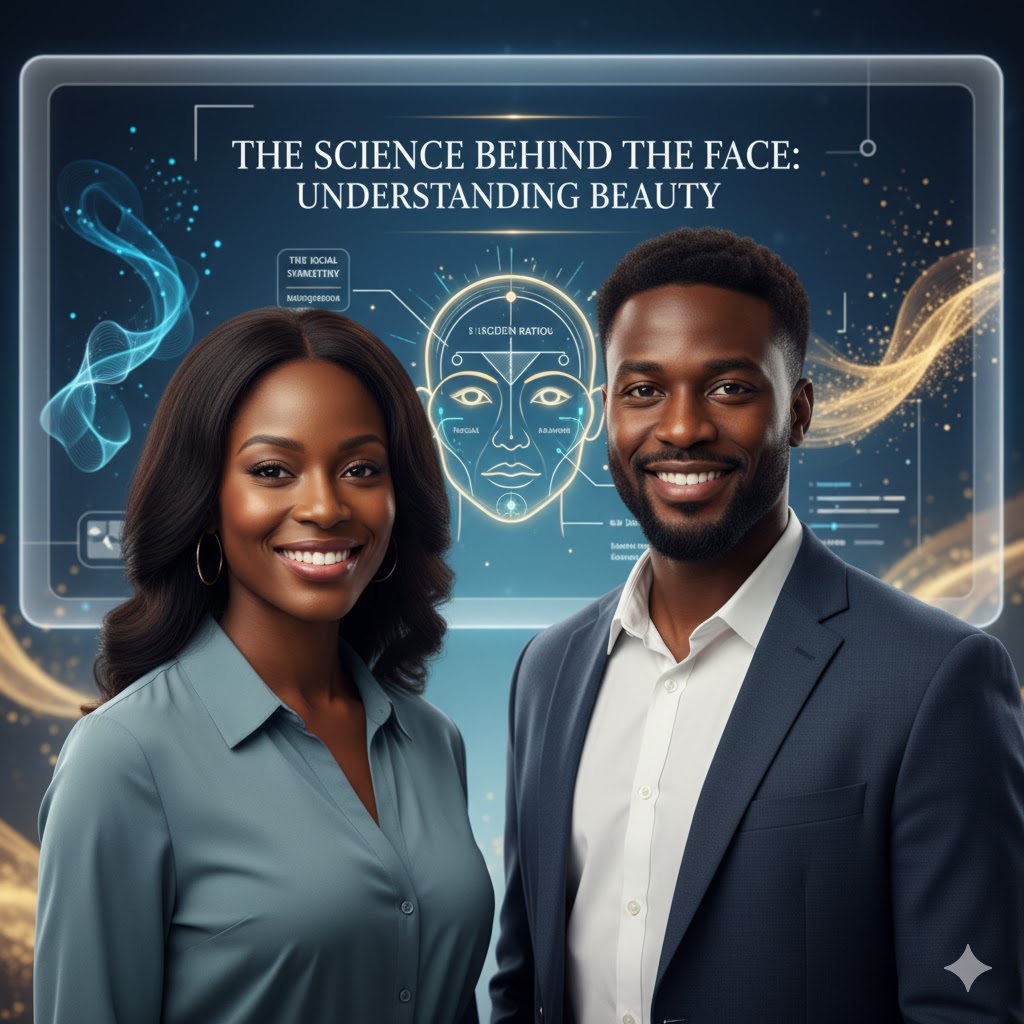
The Science Behind the Face: Understanding Beauty

Human fascination with beauty is universal, transcending cultures and centuries. The human face, as the most expressive and recognizable feature, has been the subject of both scientific study and artistic admiration. While societal standards influence perceptions of attractiveness, research in psychology, anatomy, and genetics reveals measurable factors that shape our judgments of beauty. Faith reminds us, however, that every face reflects God’s divine design.

1. Symmetry and Attraction

Facial symmetry is one of the most robust predictors of perceived attractiveness. Symmetrical faces are often rated as healthier, more balanced, and more appealing. Evolutionary psychology suggests that symmetry signals genetic fitness and developmental stability (Rhodes, 2006).

2. The Golden Ratio

The “golden ratio” (Phi, approximately 1.618) defines proportional relationships considered aesthetically pleasing. Applied to facial features, the distance between the eyes, the width of the nose, and the placement of the lips often reflect this ratio. Cultures unconsciously prefer faces that approximate these proportions.

3. Skin Tone and Texture

Even, clear skin signals health and youth, which are universally attractive traits. Cultural perceptions of skin tone are shaped by historical and social factors, often resulting in colorism. While lighter or more uniform skin may be preferred in some societies, all skin tones reflect the divine image of God (Psalm 139:14).

4. Hormonal Influences

Facial features often reflect hormonal markers of fertility and vitality. High cheekbones, a defined jawline, and full lips may indicate estrogen levels in women, while strong jawlines and brow ridges suggest testosterone in men. These cues are subconsciously interpreted as indicators of reproductive health.

5. Age and Youthfulness

Youthful features—smooth skin, full lips, and bright eyes—are often rated as more attractive. Research suggests this preference is linked to evolutionary drives, but spiritually, youthfulness is not the only measure of beauty. Wisdom and grace, as cultivated over time, reflect God’s design.

6. Facial Expression and Microexpressions

Beauty extends beyond physical features. Emotional expression, such as smiling or engaging eyes, enhances attractiveness. Microexpressions convey kindness, warmth, and empathy, making a face appear more appealing. Faith affirms that inner beauty radiates outward (1 Peter 3:3-4).

7. Cultural Influences

Beauty standards vary widely across cultures and epochs. Media and fashion often amplify narrow ideals, frequently favoring Eurocentric features. However, cultural diversity demonstrates that beauty is multifaceted, and global studies highlight varying preferences in facial features and expressions.

8. Colorism and Social Bias

Skin tone preferences can influence social outcomes, including dating, employment, and representation in media. Colorism, a form of bias privileging lighter skin within the same ethnic group, perpetuates inequality. Scientific understanding can help dismantle these prejudices while affirming the divine worth of all skin tones.

9. Facial Proportions and Cognitive Perception

The human brain evaluates faces holistically, integrating symmetry, proportion, and feature spacing. Neuroscience shows that certain facial ratios trigger reward pathways in the brain, creating a sense of visual pleasure.

10. Genetics and Heredity

Genetic inheritance plays a significant role in facial structure and features. Traits such as eye shape, nose width, and cheekbone prominence are influenced by ancestry. Recognizing this highlights the diversity of beauty and its roots in God’s creation.

11. The Role of Health Indicators

Perceived beauty often correlates with visible health markers: skin clarity, hair quality, and eye brightness. These indicators are evolutionarily significant but also remind us that self-care reflects stewardship of God’s gift of the body.

12. Symmetry vs. Individuality

While symmetry is appealing, perfectly symmetrical faces are rare. Unique features—freckles, dimples, and small asymmetries—often contribute to perceived attractiveness, demonstrating that God’s creativity celebrates individuality.

13. Psychological Effects of Beauty

Physical attractiveness influences social perception, confidence, and interpersonal outcomes. People often associate beauty with positive traits such as intelligence and kindness, though these assumptions are not always accurate. Awareness of these biases allows for more equitable social interactions.

14. Media, Technology, and Altered Perceptions

Social media, photography, and filters can distort beauty standards, creating unrealistic expectations. While science studies human perception, faith reminds us that true beauty is not defined by comparison but by alignment with God’s image.

15. Inner Beauty and Spirituality

Psychological research confirms that inner qualities—kindness, empathy, and integrity—significantly enhance perceived attractiveness. Scripture emphasizes that God values the heart over outward appearance (1 Samuel 16:7).

16. Cross-Cultural Variation

Studies across continents show differing preferences for features such as nose width, eye shape, and lip fullness. These variations underscore that beauty is not absolute but interpreted through cultural, social, and psychological lenses.

17. Beauty Across the Lifespan

While youth is often idealized, beauty in maturity reflects wisdom, experience, and grace. Aging gracefully embodies a different form of aesthetic appeal, aligned with spiritual depth.

18. Overcoming Bias Through Awareness

Understanding the science of beauty empowers individuals to challenge stereotypes, reduce lookism, and appreciate diversity. Faith-based perspectives reinforce that all people are made in God’s image, deserving honor and respect.

19. Integrating Science and Faith

Scientific insights explain perception, symmetry, and preference, but faith affirms intrinsic value. Beauty is not merely external; it integrates moral character, spiritual integrity, and divine design.

20. Conclusion

The science behind the face reveals measurable aspects of beauty: symmetry, proportion, skin quality, and expression. Yet, true beauty transcends these factors, rooted in the divine blueprint and reflected in the soul. Recognizing both the scientific and spiritual dimensions of beauty allows us to appreciate God’s creation fully. Every face—unique, fearfully, and wonderfully made—is a testament to His glory (Psalm 139:14).


References

  • Hunter, M. L. (2007). The persistent problem of colorism: Skin tone, status, and inequality. Sociology Compass, 1(1), 237–254. https://doi.org/10.1111/j.1751-9020.2007.00006.x
  • Rhodes, G. (2006). The evolutionary psychology of facial beauty. Annual Review of Psychology, 57(1), 199–226. https://doi.org/10.1146/annurev.psych.57.102904.190208
  • Russell-Cole, K., Wilson, M., & Hall, R. E. (2013). The color complex: The politics of skin color among African Americans. Anchor Books.
  • Psalm 139:14 (KJV).
  • 1 Peter 3:3-4 (KJV).
  • 1 Samuel 16:7 (KJV).

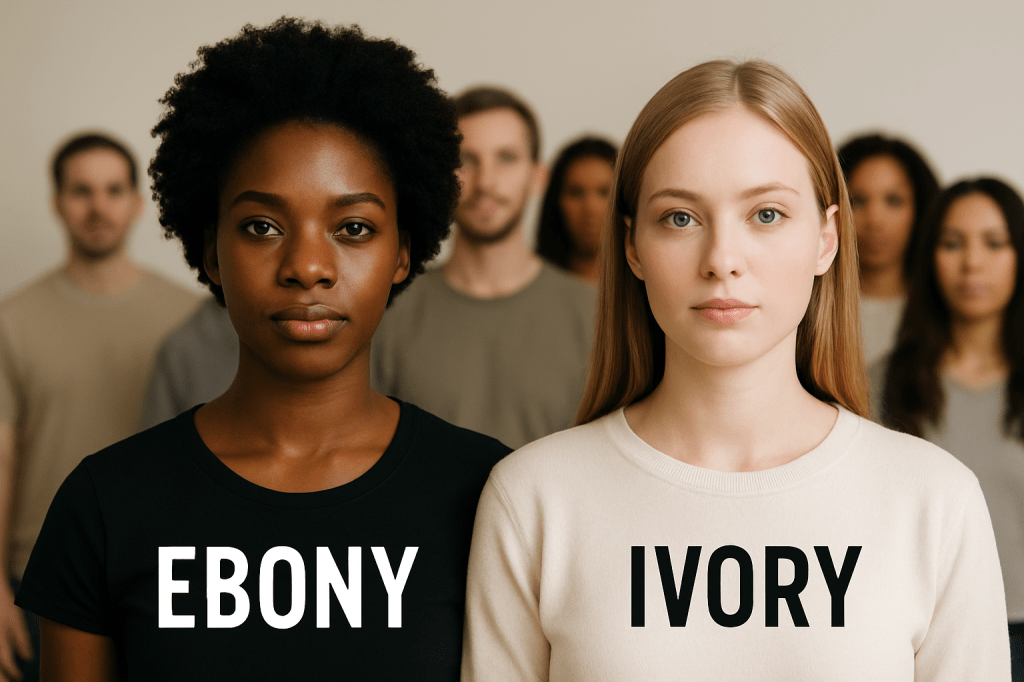
Ebony and Ivory: Two Shades, One Standard of Beauty.

From the dawn of civilization, beauty has been both a mirror and a weapon—reflecting ideals shaped by power and privilege, and wielded to define worth within social hierarchies. Within the globalized gaze of modernity, the politics of skin color continue to influence how femininity and desirability are perceived, especially among women of African descent. The notion of “Ebony and Ivory” evokes more than just color; it symbolizes the ongoing dialogue between light and dark, between acceptance and exclusion, and between the internalized and externalized standards of beauty that shape identity (hooks, 1992).

The idea of “two shades, one standard” captures the paradox of colorism: the simultaneous elevation and devaluation of Blackness within the same racial group. While “ivory” tones have historically been exalted as closer to Western ideals, “ebony” skin has often been marginalized, caricatured, or fetishized. Both ends of the spectrum, however, are measured against the same Eurocentric barometer that privileges whiteness as the ultimate aesthetic reference (Hunter, 2005).

This phenomenon, deeply rooted in colonialism, reveals how beauty became a tool of control. During the transatlantic slave trade, lighter-skinned enslaved individuals were often granted domestic positions and social proximity to white power structures, breeding intra-racial hierarchies that persist today. These legacies still echo in media representation, where lighter skin is frequently coded as “refined,” while darker tones are portrayed as “exotic” or “primitive” (Craig, 2006).

For many women of color, navigating these coded perceptions can be exhausting. The “brown girl dilemma” emerges when one feels too dark to be celebrated and too light to be considered authentically Black. This liminal existence is both a burden and a revelation—proof that beauty, as defined by Western constructs, remains an unattainable illusion that fractures rather than unites.

Beauty standards, much like colonial borders, were imposed rather than chosen. From the powdered faces of the Victorian era to the filtered glow of Instagram, the valuation of lightness has remained a constant aesthetic undercurrent. Yet, even within African and Afro-diasporic communities, this colonial inheritance continues to dictate preferences in partners, media icons, and even professional opportunities (Glenn, 2008).

In popular culture, colorism is often masked by phrases like “preference” or “type.” However, these preferences are rarely organic—they are sociologically constructed through centuries of imagery that equate lightness with purity and success, and darkness with defiance and struggle. The entertainment industry’s casting choices often reinforce these biases, rewarding lighter skin with visibility while relegating darker complexions to supporting or stereotypical roles (Russell, Wilson, & Hall, 2013).

This bias extends beyond film and television. In the global beauty market, skin-lightening creams generate billions annually, a grim testament to the internalization of Eurocentric ideals (Glenn, 2008). The psychological effects of such products are profound, suggesting that beauty is not only skin-deep but soul-deep, affecting one’s perception of self-worth and belonging.

For Black women, beauty is an act of survival. To adorn oneself becomes an assertion of existence in a world that often demands invisibility. From the regal hairstyles of precolonial Africa to the natural hair movement, Black women have continuously redefined and reclaimed their beauty on their own terms (Byrd & Tharps, 2014).

Yet, this reclamation is not without struggle. Within the Black community itself, hierarchies persist. The glorification of lighter women as more “marriageable” or “acceptable” continues to fracture solidarity. It is an unspoken inheritance of slavery’s psychological residue, perpetuated by both men and women who unconsciously valorize proximity to whiteness.

The darker-skinned woman often bears the weight of invisibility and hypervisibility simultaneously—ignored in spaces of admiration, yet scrutinized as the embodiment of resistance or rebellion. This double-bind mirrors W.E.B. Du Bois’ concept of “double consciousness,” wherein one is forced to see oneself through the lens of a world that refuses full recognition (Du Bois, 1903).

Light-skinned women, conversely, navigate their own complexities. While society may privilege them aesthetically, they are often accused of benefiting from colorism or being “not Black enough.” Thus, both ebony and ivory tones bear distinct forms of cultural alienation, tied together by an oppressive standard neither created (Monk, 2014).

In this context, beauty becomes not celebration but negotiation. Every compliment, every criticism, every casting call, and every social media post reinforces the invisible hierarchy of shade. The struggle is not between dark and light, but against the system that pits them against each other.

Media representation plays a critical role in dismantling or reinforcing these divides. When dark-skinned actresses like Lupita Nyong’o or Viola Davis are celebrated, it signals progress—but also exposes how rare such representation remains. Likewise, the inclusion of mixed-race models in campaigns may appear inclusive, yet often centers features still aligned with Eurocentric beauty (Tate, 2009).

To heal from this color divide, we must first acknowledge that beauty is not a monolith. It is plural, diverse, and spiritually rooted. In the biblical sense, humanity was created “in the image of God” (Genesis 1:27, KJV), meaning all shades reflect divine artistry. The rejection of any hue is, therefore, a rejection of the Creator’s design.

Moreover, Proverbs 31:30 reminds us that “favor is deceitful, and beauty is vain: but a woman that feareth the Lord, she shall be praised.” This verse redirects the gaze from the external to the eternal, urging women to seek validation not from comparison but from divine purpose.

Ebony and ivory are not opposites but complements, each contributing to the symphony of creation. Just as piano keys of contrasting colors produce harmony, so too can diverse complexions coexist in mutual admiration and respect. The beauty of one does not diminish the beauty of the other; together, they reveal the fullness of God’s palette.

True beauty transcends complexion—it emanates from character, compassion, and conviction. In a world obsessed with appearances, spiritual and cultural consciousness must redefine the standard. Beauty should not divide but dignify, not exclude but exalt.

To love one’s shade is to reclaim agency over identity. When Black women, in all their hues, embrace their reflection without apology, they dismantle centuries of aesthetic oppression. “Ebony and Ivory” then becomes more than a contrast—it becomes a covenant of self-acceptance and collective healing.

As we move forward, let beauty be measured not by shade but by soul. For when light and dark come together, they create balance, harmony, and wholeness—the true reflection of divine beauty.


References

Byrd, A. D., & Tharps, L. L. (2014). Hair Story: Untangling the Roots of Black Hair in America. St. Martin’s Press.
Craig, M. L. (2006). Race, beauty, and the tangled knot of a guilty pleasure. Feminist Theory, 7(2), 159–177.
Du Bois, W. E. B. (1903). The Souls of Black Folk. Chicago: A.C. McClurg.
Glenn, E. N. (2008). Yearning for lightness: Transnational circuits in the marketing and consumption of skin lighteners. Gender & Society, 22(3), 281–302.
hooks, b. (1992). Black Looks: Race and Representation. South End Press.
Hunter, M. L. (2005). Race, gender, and the politics of skin tone. Routledge.
Monk, E. P. (2014). Skin tone stratification among Black Americans, 2001–2003. Social Psychology Quarterly, 77(4), 360–379.
Russell, K., Wilson, M., & Hall, R. (2013). The Color Complex (Revised): The Politics of Skin Color Among African Americans. Anchor.
Tate, S. A. (2009). Black Beauty: Aesthetics, Stylization, Politics. Ashgate Publishing.
The Holy Bible, King James Version (KJV). (1611).