Tag Archives: Relationships

👑 Girl Talk Series: Crowns, Confidence & Calling

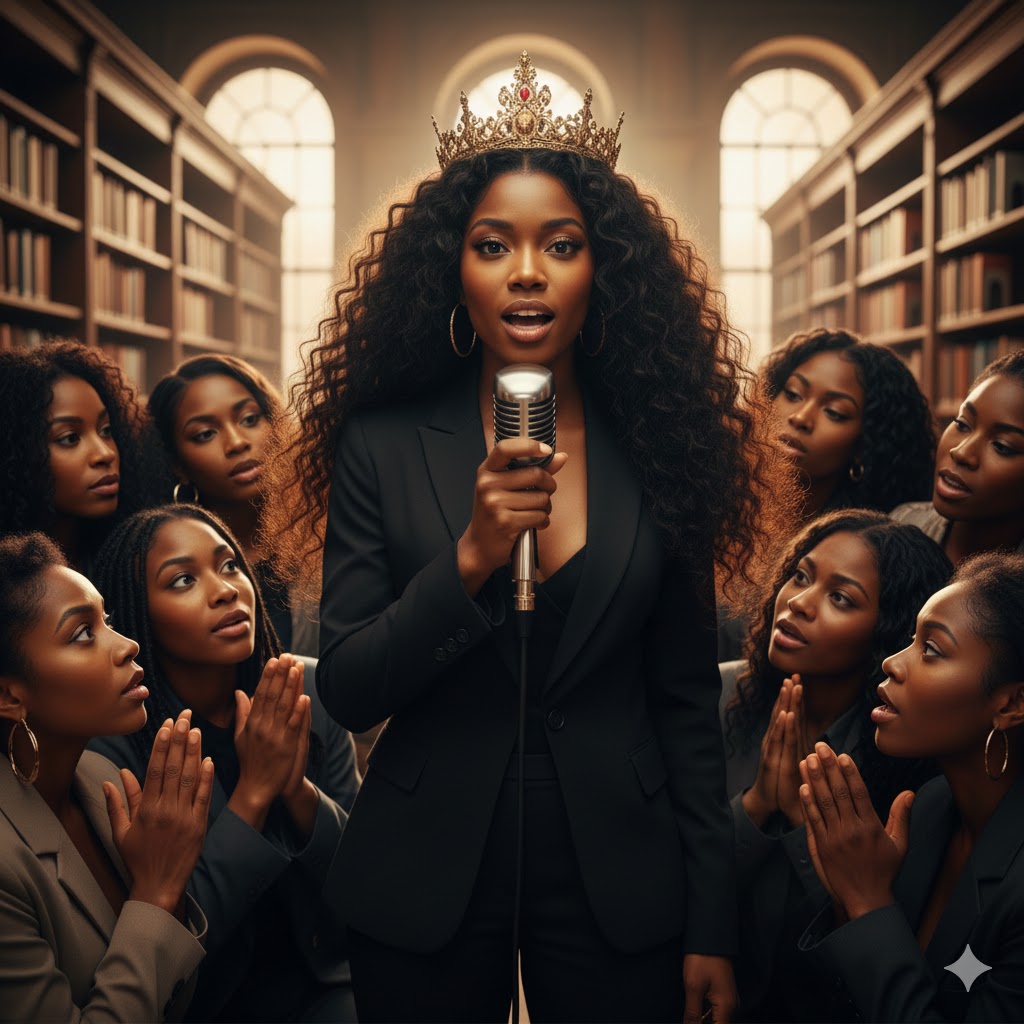
Hello Ladies – a crown is more than decoration—it is a declaration. When a woman places a crown on her head, even symbolically, she asserts royalty, identity, and worth. Scripture affirms a woman crowned in dignity: “Strength and honour are her clothing; and she shall rejoice in time to come” (Prov. 31:25, KJV). Ladies, before the world ever defined beauty or worth, God already crowned you in His purpose.

Many women admire crowns without recognizing that they already wear one inwardly. A woman aligned with God carries a spiritual diadem, not a borrowed vanity. “Thou shalt also be a crown of glory in the hand of the Lord” (Isa. 62:3, KJV). The crown is His, but the purpose is yours.

Confidence today is often manufactured through trends, influencers, or aesthetics, yet biblical confidence is nurtured through God’s voice, not echo chambers. “The Lord is my light and my salvation; whom shall I fear?” (Psa. 27:1, KJV). Real confidence begins without fear, not without opposition.

Many women struggle with insecurity because their identity was placed in mirrors instead of meaning. But scripture secures femininity deeper than reflection: “For we are his workmanship, created in Christ Jesus unto good works” (Eph. 2:10, KJV). A woman is crafted, not accidental.

Covenantal confidence does not walk loudly—it walks anchored. Social confidence boasts, but spiritual confidence bows. “Humble yourselves in the sight of the Lord, and he shall lift you up” (James 4:10, KJV). Lift comes after posture, not performance.

Calling is not something chased, but something uncovered through obedience. Many women run after purpose while running from submission. Yet scripture explains alignment brings assignment: “Commit thy works unto the Lord, and thy thoughts shall be established” (Prov. 16:3, KJV).

God’s calling for women includes mentorship, nurture, emotional articulation, and spiritual inheritance transmission. But not every voice online stewards identity correctly. “Take heed what ye hear” (Mark 4:24, KJV). Listening determines shaping.

A woman who walks without calling will eventually walk toward validation markets—likes, praise, trends, competition. But calling frees a woman from comparison prison. “The Lord is the portion of mine inheritance” (Psa. 16:5, KJV). Purpose comes pre-inherited under God.

Many ladies were taught to seek crowns socially—beauty crowns, success crowns, marriage crowns—but not to seek the God who crowns covenantally. Yet scripture promises the most important crowning: “He crowneth thee with lovingkindness and tender mercies” (Psa. 103:4, KJV). Mercy is the first crown, not reward.

The world celebrates outspoken women, but often mocks obedient women. Yet scripture centers quiet strength as divine feminine power: “A meek and quiet spirit… is in the sight of God of great price” (1 Pet. 3:4, KJV).

Many ladies seek confidence through economic or romantic elevation, not realizing divine positioning precedes earthly inheritance. God uplifts womanhood through righteousness, not rivalry. Christ uplifts through covenant, not conquest.

A crowned woman must still carry accountability. Crowns do not remove correction. “Whom the Lord loveth he correcteth” (Prov. 3:12, KJV). If He corrects you, you are not lost, you are loved.

Confidence without covenant becomes vanity, but confidence under covenant becomes testimony. God makes women glorious by spiritual alignment, not social applause. “The Lord shall establish thee an holy people unto himself” (Deut. 28:9, KJV). Purpose stays holy when covenant stays intact.

Many ladies carry a diagnosis of insecurity, father-wounds, fractured religious history, and relational trust ruptures, and bring those unmet needs online to influencers who monetize what God should have fathered. Scripture warns against replacing the shepherd with sectors. “Woe unto the shepherds that destroy and scatter the sheep” (Ezek. 34:2, KJV).

A woman healed under God does not deny femininity; she redefines it through scripture, not trends. She carries faith’s original blueprint, not digital doctrine. Identity was God-instated before platform-marketed.

Girls must stop believing that confidence is the absence of tears, softness, or uncertainty. Strength is not emotional burial; it is emotional clarity surrendered to God. God welcomes the tears that influencers shame. “The Lord is nigh unto them that are of a broken heart” (Psa. 34:18, KJV).

The voices online divide men into alpha/beta ranks, yet scripture reverses the ranking system entirely. “The Lord looketh on the heart” (1 Sam. 16:7, KJV). Purpose is internal rulership, not external hierarchy.

The crisis in modern feminine purpose is that many want crowns without process, confidence without covenant, influence without instruction. Yet scripture confirms true feminine inheritance flows only through divine ordering.

A crowned woman must eventually step into a calling that endures longer than applause. Influence is seasonal, calling is eternal. God began a purpose in you intentionally, and scripture promises the follow-through: “He which hath begun a good work in you will perform it” (Phil. 1:6, KJV).

Covenantal womanhood disciples nurture, guidance, humility, covenant, assignment, and inheritance—not opinion gladiatorship or grievance markets. The internet has microphones; God has mantles.

The real power of a crowned woman is not dominating rooms—but discerning them. “Give not that which is holy unto the dogs” (Matt. 7:6, KJV). Discernment is feminine spiritual rulership.

Purpose-seeking ends only when noise bows to knowledge, grievances bow to God, insecurity bows to identity, trends bow to scripture, and womanhood bows to a covenant that does not scatter under social duress. Godliness is not a trend; it is an eternal feminine inheritance installed by the spirit over the stage.

Therefore, ladies, wear your crowns spiritually first. Walk in God’s confidence before social confidence. Uncover calling through obedience rather than ideological markets. Your crown is not your burden—lack of covenant is. But once covenant returns, crowns become testimonies, confidence becomes inheritance, and calling becomes performed destiny.


📚 References

The Holy Bible, King James Version. (1611). Cambridge University Press.

hooks, b. (2004). The Will to Change: Men, Masculinity, and Love. Washington Square Press.

Tatum, B. D. (1997). Why Are All the Black Kids Sitting Together in the Cafeteria? Basic Books.

Just Leave: Exodus from Babylon to the Holy Scriptures

Just leave. That’s the command our spirits whisper when the world grows too loud, too heavy, and too hostile for our survival. But even that command requires clarity, because no man can touch us when we choose truth over bondage, identity over illusion, and liberation over fear. Yet we often respond with the question, “Leave and go where?” It is a valid question, a necessary question, but it is the wrong first question. Before we ask where, we must ask what we are leaving behind.

Leave the mythology. The mythology that insists your worth is measured by proximity to whiteness, by respectability, by silence, or by a palatable softness that does not disturb the empire. Leave the mythology that you must shrink to survive, that your power is dangerous, that your heritage is a burden instead of a blessing.

Leave the lie that you are three-fifths human. That wicked arithmetic still circulates in institutions, in policies, in economic systems, and in subtle social cues that undervalue your intellect, your labor, and your life. Leave the lie that your blood is inherently rebellious, your mind inherently inferior, or your dreams too large for the box they try to confine you in.

Leave the shame they taught you about your hair. The shame that made you hide your curls, your coils, your kinks. Leave the shame they taught you about your skin—its richness, its radiance, its history written in melanin and memory. Leave the shame they placed on your body, treating it as a commodity, a spectacle, or a threat instead of a temple.

Leave the history they curated for you. The watered-down version that sanitizes oppression and glorifies the oppressor. Leave the edited pages, the missing chapters, the erased kingdoms, the silenced voices. Leave the lies that tell you your people began in chains instead of civilizations.

Leave the doctrine that suffering is noble. Especially the doctrine that teaches patience as a virtue only when your suffering benefits those in power. Leave the sermons that glorify endurance when liberation is possible, necessary, and divine.

Leave the celebrity pastors who preach prosperity while their people drown. Leave those who sell visions of wealth without demanding justice, who offer emotional sugar but no spiritual nourishment, who build kingdoms for themselves instead of communities for their people.

Leave the political parties that arrive every four years with promises as temporary as campaign posters. Leave the illusion of loyalty to institutions that invest in your vote but not your well-being. Leave the cycles of hope and disappointment that steal generations of possibility.

Leave the schools that teach your children to dislike their reflection. The schools that discipline their curiosity, punish their brilliance, and withhold their history. Leave the educators who mistake cultural difference for deficiency and who lower expectations instead of raising understanding.

Leave the media that shapes your imagination into narrow roles. The media that scripts you as a sidekick, victim, or clown instead of a leader, builder, and originator. Leave the narratives that deny you complexity, nuance, and humanity.

Leave the debt cycles that suffocate your future. The predatory systems disguised as opportunity, the loans that become chains, the credit traps that mimic freedom but deliver bondage. Leave the financial mythology that praises hustle but hides exploitation.

Leave every system that extracts your labor but denies your dignity. Systems that benefit from your creativity, resilience, and intellect while rewarding you with crumbs. Leave the corporate cultures that want your ideas but not your leadership.

Leave the trauma industries that profit from your pain. The news cycles that sensationalize Black suffering, the social platforms that amplify outrage but not solutions, the institutions that study your wounds but ignore their origins.

Leave the relationships that drain your energy. The people who demand emotional labor without reciprocity, who expect your loyalty without offering love, who take your light but panic when you shine too brightly.

Leave the internal oppressor you inherited. The voice that tells you to dim your brilliance, to fear your own greatness, to distrust your intuition. Leave the self-doubt planted by centuries of psychological warfare.

Leave the silence. The silence that protects those who harm you and imprisons those who carry the truth. Leave the silence that keeps wounds unhealed, stories untold, and futures unbuilt.

Leave the smallness you did not choose. The smallness projected onto you by systems, people, and histories that could not comprehend your magnitude. Leave the places that cannot hold the weight of your calling.

Leave the fear that you must choose between survival and authenticity. Liberation does not ask you to abandon yourself; it invites you to return to yourself. Leave the assumption that freedom is elsewhere—it is first within.

Leave the question “Leave and go where?” behind long enough to ask the deeper question: “Leave what?” Because the departure begins long before the destination is revealed. Leaving is a mental exodus, a spiritual shedding, a reclamation of identity that precedes any physical move.

Just leave—leave the lies, the limitations, the labels. Leave until you rediscover the truth: that you are untouchable, unbreakable, immeasurable, and destined for more than survival. Leave until you walk fully into the power that was always yours.

References
Alexander, M. (2010). The new Jim Crow: Mass incarceration in the age of colorblindness. The New Press.
hooks, b. (1994). Teaching to transgress: Education as the practice of freedom. Routledge.
Kendi, I. X. (2019). How to be an antiracist. One World.
Taylor, K.-Y. (2016). From #BlackLivesMatter to Black liberation. Haymarket Books.
West, C. (1993). Race matters. Beacon Press.

Psychology Series: Biblical Masculinity & Femininity in Love 👑💍🌹

Divine Order, Sacred Roles, and Spiritual Chemistry

In a world that increasingly blurs divine distinctions, Scripture reminds us that love thrives when men and women operate within God’s design—not culture’s confusion. Biblical masculinity and femininity are not chains, but sacred structures meant to cultivate honor, harmony, and covenant strength. True love is kingdom architecture, not emotional improvisation.

God created male and female intentionally (Genesis 1:27, KJV). Masculinity reflects leadership, protection, and sacrifice. Femininity reflects nurturing, wisdom, and influence. Together, they mirror Christ and the Church (Ephesians 5:25–32, KJV). When roles align, love becomes worship; when distorted, relationships collapse into power struggles.

Psychology affirms God’s structure. Masculine energy is associated with provision, direction, and grounded strength; feminine energy with emotional intelligence, intuition, and relational bonding (Gilligan, 1982). These are not limitations but complementary strengths. What the world calls “old-fashioned,” Heaven calls order.

Biblical masculinity begins with spiritual leadership. “The head of the woman is the man” (1 Corinthians 11:3, KJV). But headship is not domination—it is responsibility. Leadership means covering, guiding, praying, and sacrificing. A man leads like Christ: with humility, love, and servant authority (Mark 10:45, KJV).

A masculine heart provides safety. “Husbands, love your wives, even as Christ also loved the church” (Ephesians 5:25, KJV). This love is not passive or selfish—it is brave, protective, and generous. A real man fights for his household spiritually and physically, not for ego but for covenant and legacy.

Biblical masculinity also means self-discipline. The strong man rules his spirit (Proverbs 16:32, KJV). Emotional maturity, not emotional suppression, reflects strength. Psychology confirms this: emotional regulation predicts relational stability (Gottman, 2014). Stoicism without tenderness is not strength—it is brokenness pretending to be order.

A godly man does not fear intimacy; he cultivates it. He initiates clarity, commitment, and connection. He does not manipulate, abandon, or remain lukewarm. His yes is yes, his no is no (Matthew 5:37, KJV).

Biblical femininity is not subservience; it is divine influence and noble strength. The virtuous woman is wise, industrious, nurturing, and strong (Proverbs 31:10–31, KJV). She builds her home with wisdom (Proverbs 14:1, KJV). She does not compete with her man—she crowns him, multiplies his vision, and brings peace.

Submission in Scripture is reverence and honor, not oppression (Ephesians 5:22, KJV). Submission is the power to yield strength in love, not surrender identity. A feminine spirit invites leadership instead of challenging it for dominance. Psychology affirms mutual respect fosters relational harmony (Fincham & Stanley, 2019).

Femininity is emotional intelligence and spiritual influence. It softens, nurtures, and inspires. Yet it is strong enough to say no to chaos and sin. A godly woman is not silent—she is wise. She speaks with grace and truth (Proverbs 31:26, KJV). Her strength is quiet thunder wrapped in peace.

Together, biblical masculine and feminine roles create sacred equilibrium. Man leads with love; woman responds with respect (Ephesians 5:33, KJV). Both submit first to God. Neither is superior; both are essential. When both walk in order, heaven touches earth in their union.

Sin distorted roles. Adam failed to protect; Eve acted independently (Genesis 3:6, KJV). Since then, men have drifted toward passivity or domination, women toward control or rebellion. Culture idolizes independence, but scripture exalts interdependence—“two are better than one” (Ecclesiastes 4:9, KJV).

Modern culture mocks biblical order as control and weakness. But rebellion against divine design produces loneliness, mistrust, and relational warfare. Psychological research now confirms the emotional decline tied to hookup culture, role confusion, and relational instability (Finkel et al., 2014). God’s Word stands unchanged.

Biblical masculinity does not crush femininity; it cultivates it. Biblical femininity does not diminish masculinity; it amplifies it. Love becomes a dance—not a duel. Masculinity gives direction; femininity gives purpose. Masculinity builds the house; femininity turns it into a home.

Kingdom love thrives on honor and humility. Men sacrifice pride; women surrender fear. Men lead with tenderness; women submit with confidence. Both forgive, serve, and grow. Christ is the center; covenant is the glue; holiness is the foundation.

In true biblical love, the man protects her heart, and the woman protects his purpose. He gives identity and covering; she gives peace and multiplication. He pours; she fills. He builds; she beautifies. She is his crown, not his competitor (Proverbs 12:4, KJV).

Submission and headship are not power struggles—they are love languages. Spiritual masculinity says, “I’ll go first—I’ll protect, pray, and lead.” Spiritual femininity says, “I will honor, nurture, and uplift.” Together they say, “We will serve the Lord” (Joshua 24:15, KJV).

When men become Christ-like kings and women become Spirit-filled queens, love becomes supernatural strength, not emotional fragility. Godly couples build legacy, raise warriors, and reflect Christ’s love on earth. Their union becomes ministry.

Biblical masculinity and femininity in love is not outdated; it is eternal. It is God’s blueprint for flourishing. When we return to divine order, we find peace, passion, and purpose restored. Love becomes what it was always meant to be—holy, purposeful, and victorious.


References

  • American Psychiatric Association. (2013). DSM-5.
  • Eccles, J. S., & Harold, R. (1991). Gender role socialization in the family.
  • Finkel, E. et al. (2014). The suffocation of marriage.
  • Fincham, F., & Stanley, S. (2019). Sacred Marriage and Relationship Commitment.
  • Gilligan, C. (1982). In a Different Voice.
  • Gottman, J. (2014). What Makes Love Last.
  • Holy Bible, King James Version.

❤️ Are You in His Heart?❤️

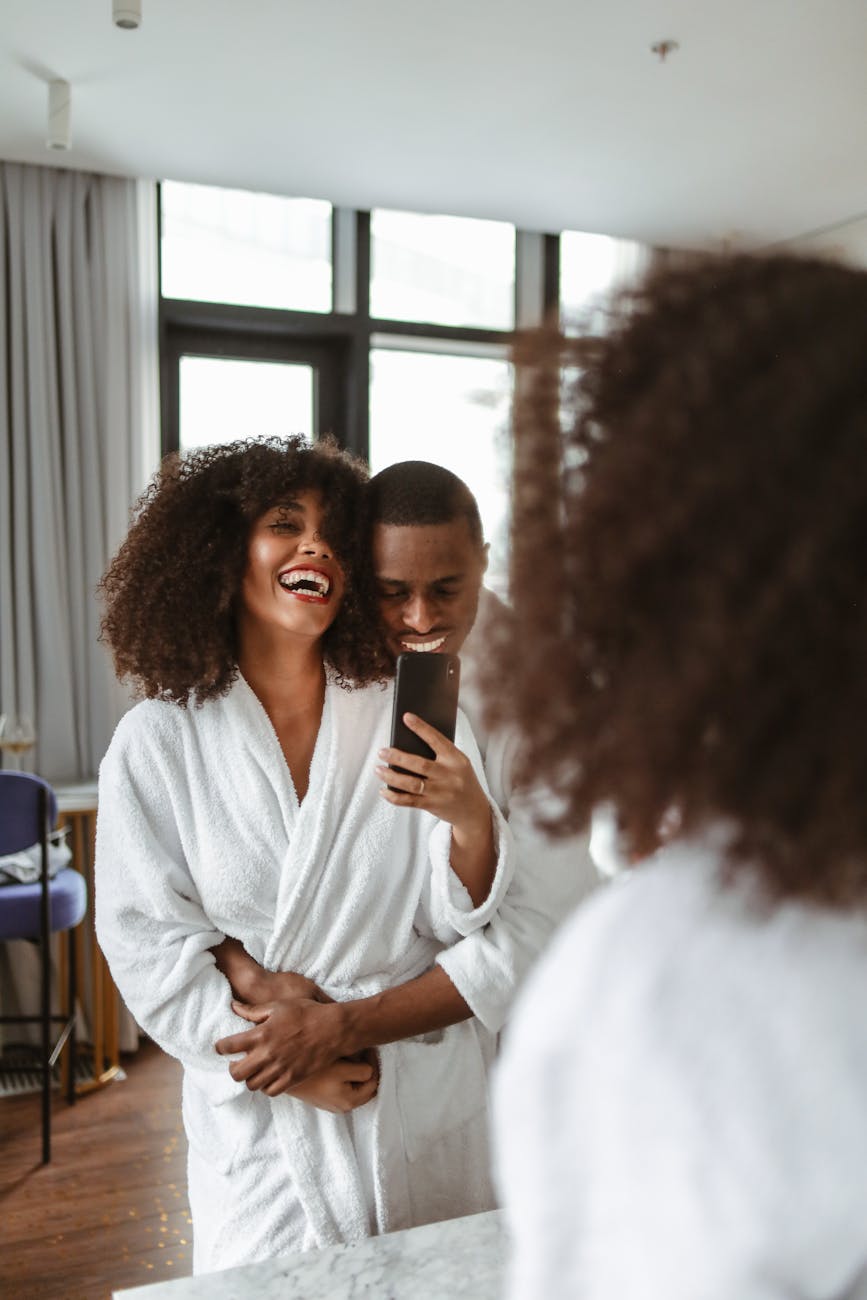
This photograph is the property of its respective owner. No copyright infringement intended.

Every woman deserves to be loved with intention, clarity, and sincerity. Yet too many remain unsure, asking silently, “Am I in his heart—or just in his phone?” This question isn’t rooted in insecurity; it’s rooted in discernment. God created women with intuition, spiritual sensitivity, and emotional depth. When something feels off, it usually is. And when something is real, peace confirms it.

To know whether you are in a man’s heart, you must first understand what the heart truly is. In Scripture, the heart isn’t just emotions—it is the center of thought, decision, character, and purpose. Proverbs 4:23 declares, “Keep thy heart with all diligence; for out of it are the issues of life.” If a man places you in that sacred place, he places you in his future, his priorities, and his inner world.

Love is not a feeling alone; love is a behavior. It is shown through consistency, protection, sacrifice, and truth. Feelings can shift with circumstances, but love abides. 1 Corinthians 13 teaches that love is patient, kind, honest, and enduring. If his “love” is unpredictable, unstable, or self-serving, it is attraction—not commitment.

You are in his heart when your well-being matters to him. He cares about how you feel, how you sleep, what worries you, and what brings you joy. You are not an afterthought—you are an emotional priority. He includes you in decisions, values your perspective, and considers how his actions impact your peace.

But perhaps one of the greatest signs that you are in his heart is this: he is willing to wait until marriage to have sex. A man’s discipline reveals his devotion. When a man truly loves you, he protects your body, your dignity, and your relationship with God. He does not pressure you into intimacy; he stewards you with reverence. Hebrews 13:4 reminds us that the marriage bed is honorable, but sex outside of marriage brings consequences.

Waiting requires maturity, self-control, and respect. A man who waits is a man who envisions you as his wife—not his temporary pleasure. He values covenant more than convenience. He chooses holiness over hormones. He understands that time reveals truth and that rushing intimacy only clouds judgment. But waiting builds clarity, strengthens trust, and honors God.

When a man is willing to wait, he shows that he sees you as a treasure, not a tool. He wants a foundation strong enough to support a future—not a relationship built on lust. Lust takes; love protects. Lust consumes; love preserves. Lust rushes; love endures. His ability to wait reveals the depth of his character and the sincerity of his intentions.

You are in his heart when he protects your purity—not just his own image. He sets boundaries, not temptations. He leads the relationship spiritually, not carnally. He encourages prayer, not pressure. He wants a relationship that God can bless, not one that guilt constantly follows.

Another sign is emotional availability. A man who truly loves you lets you into his internal world. He opens up about struggles, dreams, fears, and goals. He trusts you with his truth and doesn’t hide behind emotional walls. Vulnerability is a pathway to intimacy—deeper than physical connection.

You will also know you are in his heart by the atmosphere he brings. Real love brings peace, not anxiety. A man who loves you will never keep you confused about where you stand with him. He communicates clearly, consistently, and intentionally. Confusion is not the fruit of love; confusion is the fruit of mixed motives.

Being in his heart means he honors your purpose. He does not distract you from your calling or belittle your growth. Instead, he supports your dreams, prays for your elevation, and celebrates who you are spiritually, mentally, and emotionally. He sees you as a partner, not competition.

You are in his heart when he protects your name. He doesn’t speak against you behind your back. He doesn’t entertain disrespect. He covers you with integrity. A man who loves you will guard your reputation as though it were his own.

You will know you’re in his heart when he makes room for you in his life. Not just in his free time, but in his priorities, his future plans, and his daily choices. If you’re always on standby, you’re not in his heart—you’re in his convenience.

He shows you you’re in his heart by choosing you consistently. Not sometimes. Not when he’s bored. Not when he wants attention. But daily—intentionally, willingly, and lovingly. Real love doesn’t disappear when things get difficult; it becomes stronger.

A man who truly carries you in his heart will also correct himself for you. He will grow, adjust, communicate, and evolve because he values the relationship more than his pride. Love makes a man humble and teachable.

Spiritual alignment is another sign. If he prays for you, prays with you, and seeks God concerning you, he is investing in the relationship at the deepest level. Any love not rooted in God will eventually break under pressure. But love rooted in Christ will endure.

Finally, understand this truth: a man’s heart always leans toward what he wants to keep. If he sees you as a wife, his love will be honorable, intentional, and pure. If he sees you as temporary, his actions will reveal it through inconsistency, avoidance, and compromise.

You deserve the kind of love that reflects God’s heart—stable, patient, protective, and pure. When you are in a man’s heart, he will love you like Christ loved the church—with sacrifice, honor, and commitment. And when that love is genuine, you won’t have to ask if you’re in his heart—his life will show it.


KJV Scripture References

  • Proverbs 4:23
  • 1 Corinthians 13:4–7
  • Hebrews 13:4
  • Matthew 7:16
  • Ephesians 5:25
  • 1 John 3:18
  • Song of Solomon 8:7
  • Proverbs 18:22

Healing Our Love: Confronting Trauma in Black Relationships.

Photo by Polina Tankilevitch on Pexels.com

The legacy of slavery, segregation, and systemic oppression has left enduring scars on Black communities, particularly affecting relational dynamics within intimate partnerships. Historical trauma, compounded by ongoing structural inequities, has shaped patterns of trust, attachment, and communication in Black relationships, requiring deliberate examination and healing.

Intergenerational trauma, passed down through family narratives, profoundly influences perceptions of love and intimacy. Children who grow up witnessing or experiencing violence, neglect, or emotional suppression may internalize maladaptive relational scripts that manifest in adulthood (Danieli, 1998). This inheritance complicates the development of secure, emotionally healthy partnerships.

Colorism and Eurocentric beauty standards have also affected relational dynamics. Lighter-skinned individuals have historically been afforded preferential treatment in society, sometimes influencing partner selection, self-esteem, and internalized hierarchies within Black relationships (Hunter, 2005). These biases create additional stressors that must be addressed in the pursuit of authentic connection.

Psychologically, many Black individuals contend with hypervigilance and mistrust shaped by societal oppression. Constant exposure to systemic injustice can induce heightened sensitivity to relational slights, fostering conflict and defensive communication patterns (Williams, 2019). Recognizing these patterns is the first step toward relational repair.

Socioeconomic pressures exacerbate relational strain. Financial instability, limited access to quality education, and disproportionate encounters with the criminal justice system can create stress that directly impacts intimacy and partnership stability (Staples, 2013). Healing relational trauma requires acknowledging these structural realities rather than pathologizing individual behavior.

Historical dislocation, particularly the destruction of the Black family under slavery, continues to echo in modern relational structures. Enslaved Black families were often separated, creating long-term disruptions in attachment, trust, and intergenerational guidance about healthy relationships (Davis, 2006). This context illuminates the structural roots of relational dysfunction.

Attachment theory provides a useful framework for understanding relational trauma in Black communities. Many individuals exhibit insecure attachment styles—anxious, avoidant, or disorganized—stemming from early experiences of instability, neglect, or mistrust (Bowlby, 1988). Addressing these patterns requires intentional therapy, self-reflection, and relational accountability.

Emotional literacy is critical in healing Black relationships. Generational norms often discourage the open expression of vulnerability, particularly among Black men, due to hypermasculinity and societal expectations (Hooks, 2004). Encouraging safe spaces for emotional expression allows partners to develop empathy, intimacy, and authentic connection.

Mental health stigma within Black communities further complicates healing. Reluctance to seek therapy or counseling can perpetuate cycles of unresolved trauma, conflict, and relational dysfunction (Ward & Brown, 2015). Culturally competent therapeutic interventions are essential to dismantle barriers to mental wellness.

Communication patterns in Black relationships are often influenced by trauma responses. Hyperreactivity, withdrawal, or conflict avoidance can impede mutual understanding and trust. Couples must learn to identify triggers, engage in reflective listening, and cultivate conflict resolution strategies that honor both partners’ experiences.

Relational trauma also intersects with gender dynamics. Black women and men navigate societal expectations shaped by intersecting oppressions, including racism, sexism, and classism. These pressures can distort relational power dynamics, influence emotional labor, and affect mutual respect (Collins, 2000). Healing requires equitable negotiation of roles and responsibilities.

Community and cultural support networks play a vital role in relational repair. Extended family, faith-based institutions, and peer mentorship can provide models of healthy relationships, emotional support, and guidance in conflict resolution (Chatters et al., 2008). Integrating these networks enhances resilience and relational stability.

Spirituality often functions as both a coping mechanism and a source of relational guidance. Biblical teachings, ancestral wisdom, and faith traditions encourage forgiveness, empathy, and selflessness, offering a framework for confronting trauma and cultivating enduring love (Johnson, 2012).

Self-awareness is foundational to relational healing. Individuals must confront their own wounds, biases, and internalized oppression before expecting sustainable change within partnerships. Practices such as journaling, therapy, meditation, and mentorship foster clarity and emotional growth.

Healthy boundary-setting is critical. Trauma survivors often struggle with enmeshment or over-accommodation, compromising relational integrity. Establishing and maintaining boundaries reinforces trust, respect, and mutual empowerment in Black relationships (Miller & Stiver, 1997).

Conflict is inevitable, but the response to conflict determines relational resilience. Couples can utilize trauma-informed approaches, including de-escalation techniques, reflective dialogue, and restorative practices, to transform disagreements into opportunities for growth (van der Kolk, 2014).

Forgiveness is a nuanced but essential component of healing. Forgiveness in Black relationships does not imply excusing harmful behavior but rather releasing the hold of trauma to enable relational restoration and personal freedom. It requires accountability, empathy, and conscious reflection.

Intergenerational healing involves disrupting cycles of trauma by modeling healthy relational behaviors for younger generations. By demonstrating vulnerability, respect, and effective communication, Black couples can cultivate relational legacies that prioritize emotional intelligence and mutual care (Bryant-Davis, 2005).

Finally, confronting trauma in Black relationships is both a personal and communal endeavor. Healing requires intentionality, cultural competence, spiritual guidance, and a commitment to dismantling internalized oppression. Through these processes, Black couples can redefine love not as inherited dysfunction but as an empowered, restorative, and transformative force.


References

  • Bowlby, J. (1988). A secure base: Parent-child attachment and healthy human development. Basic Books.
  • Bryant-Davis, T. (2005). Thriving in the wake of trauma: A multicultural guide. Praeger.
  • Chatters, L. M., Taylor, R. J., Woodward, A. T., & Nicklett, E. J. (2008). Social support from church and family members and depressive symptoms among older African Americans. American Journal of Geriatric Psychiatry, 16(8), 635–642.
  • Collins, P. H. (2000). Black feminist thought: Knowledge, consciousness, and the politics of empowerment (2nd ed.). Routledge.
  • Danieli, Y. (1998). International handbook of multigenerational legacies of trauma. Plenum Press.
  • Davis, A. (2006). Women, race & class. Vintage.
  • Hooks, B. (2004). The will to change: Men, masculinity, and love. Washington Square Press.
  • Hunter, M. L. (2005). Race, gender, and the politics of skin tone. Routledge.
  • Johnson, A. (2012). Sacred love: Spirituality and intimate relationships in African American communities. Fortress Press.
  • Miller, J. B., & Stiver, I. P. (1997). The healing connection: How women form relationships in therapy and in life. Beacon Press.
  • Staples, R. (2013). Black male-female relationships: How to create and sustain healthy love. Praeger.
  • van der Kolk, B. (2014). The body keeps the score: Brain, mind, and body in the healing of trauma. Viking.
  • Ward, E., & Brown, R. L. (2015). Mental health stigma and African Americans. Journal of African American Studies, 19(2), 137–152.
  • Williams, M. (2019). Trauma and Black relationships: Understanding emotional dysregulation and trust. Routledge.

✨ The Power of Becoming: How to Break Generational Boxes and Step Into Your True Identity ✨

There comes a moment in life when a person quietly realizes that they have outgrown the version of themselves others created. The labels placed on them no longer fit. The expectations others had for them feel too small. The box they were born into becomes suffocating, and the spirit begins to whisper that it is time to evolve. This awakening is the beginning of becoming.

Every person is shaped by their upbringing, their environment, their culture, and their wounds. Identity is often inherited long before it is ever chosen. Families pass down not just traditions, but fears. Communities pass down not just values, but limitations. And society passes down not just opportunities, but stereotypes. For many, the journey of adulthood becomes the slow unraveling of everything that tried to define them.

The process of becoming requires courage. It demands that a person confront the voices that told them who they could not be. It calls them to look in the mirror and see possibility instead of restriction. Scripture teaches, “Be ye transformed by the renewing of your mind…” (Romans 12:2, KJV). Transformation begins internally long before it ever becomes visible externally.

Generational boxes often feel comfortable because they are familiar. People learn to play the roles they were assigned: the strong one, the quiet one, the responsible one, the overlooked one, the helper, the fixer, the dreamer with dreams too big for the room they were placed in. But God never intended for these temporary roles to become permanent identities. When God calls someone to destiny, He breaks the boxes of yesterday to make room for tomorrow.

Becoming requires healing. Many people carry the weight of childhood labels—“too sensitive,” “too loud,” “not smart enough,” “not pretty enough,” “not favored enough,” “not chosen enough.” These lies shape self-perception. They create internal ceilings. But healing dismantles every lie. Healing reminds the soul that it is worthy of taking up space. It whispers what God said all along: “Ye are fearfully and wonderfully made…” (Psalm 139:14, KJV).

As people evolve, they often fear outgrowing those they love. They worry that stepping into a new identity will create distance. But the truth is simple: outgrowing people is not betrayal—it is transformation. When a seed becomes a tree, it doesn’t apologize to the soil. Growth is not an offense; it is a necessity. God calls His children upward, not backward.

Becoming also means releasing old versions of the self that were built on survival. Many people learned to shrink themselves to stay safe, quiet themselves to stay accepted, or dim their brilliance to stay unnoticed. But when God begins a new work in someone’s life, shrinking becomes impossible. “Enlarge the place of thy tent…” (Isaiah 54:2, KJV) is not a suggestion; it is a command to expand.

Stepping into true identity requires embracing divine purpose. Every gift, every talent, every instinct, and every passion is evidence that God intentionally crafted each life. Nothing is random. Nothing is accidental. The calling on a person’s life is written in their spirit, and becoming is the process of aligning with that calling. When God declares, “Behold, I will do a new thing…” (Isaiah 43:19, KJV), it means the old version of self is no longer sufficient for the assignment ahead.

Becoming does not mean perfection. It means movement. It means choosing growth over fear. It means walking with God through the unknown. Like clay in the hands of the potter, identity is shaped, reshaped, stretched, and refined. What emerges is stronger, wiser, and more aligned with truth.

When a person begins to break generational boxes, they also break generational curses. They give the next generation permission to live boldly. They model what it means to step into purpose. They become the first in their family to heal, to dream, to rise, to thrive. The courage of one becomes the blueprint for many.

Becoming also invites a new relationship with God. When people stop defining themselves by their wounds and start defining themselves by His Word, they step into spiritual maturity. The journey becomes less about who they were and more about who He is. Identity becomes rooted in His promises rather than personal history.

The fullness of becoming is found in surrender. It is releasing the old storylines and embracing God’s narrative. It is letting go of fear to walk in faith. It is shedding insecurity to walk in confidence. It is trading comfort for calling. God makes all things new—including identity. “If any man be in Christ, he is a new creature…” (2 Corinthians 5:17, KJV).

Every person has a moment when destiny calls their name. Some whisper. Some roar. Some come through heartbreak. Others arrive through revelation. But the call is always the same: become the version of yourself that God designed, not the version the world demanded.

This is the beauty of becoming. It is freedom. It is a rebirth. It is spiritual elevation. It is stepping boldly into purpose with fire in the heart and God at the center. And once a person begins to walk in their true identity, they never again fit inside the boxes they were once placed in.


References

Biblical (KJV)

2 Corinthians 5:17
Isaiah 43:19
Isaiah 54:2
Psalm 139:14
Romans 12:2Erikson, E. H. (1993). Childhood and society. W.W. Norton.
Hooks, B. (2000). All about love: New visions. William Morrow.
Myers, D. G. (2014). Psychology (11th ed.). Worth Publishers.
Tolle, E. (2004). The power of now: A guide to spiritual enlightenment. New World Library.
Wilson, S. (2021). The psychology of self-worth in women. Oxford Press.

How Colorism Influences Attraction and Marriage Patterns.

Photo by cottonbro studio on Pexels.com

Colorism, the system of discrimination that privileges lighter skin tones over darker ones within the same racial or ethnic group, has deep and lasting effects on personal relationships, particularly in the realms of attraction and marriage. Rooted in slavery, colonialism, and Eurocentric beauty ideals, colorism continues to shape how individuals perceive desirability, compatibility, and social status in romantic relationships. These biases not only affect who people date and marry but also reinforce systemic inequities across generations.

Historically, the origins of colorism in America can be traced back to slavery, when lighter-skinned enslaved people—often the offspring of white slave owners and Black women—were given preferential treatment, including less physically demanding work and occasional access to education (Hunter, 2007). This distinction laid the foundation for associating lighter skin with privilege, desirability, and higher social standing. These values, rooted in white supremacy, carried over into post-slavery society and became embedded in ideas of beauty and mate selection.

Attraction, often seen as a deeply personal and subjective experience, is not immune to these social hierarchies. Numerous studies have shown that lighter-skinned individuals are frequently perceived as more attractive, feminine, or masculine in socially acceptable ways (Hill, 2002). In media and popular culture, lighter-skinned Black women are often cast in roles of love interests or wives, while darker-skinned women are more likely to be portrayed as aggressive, hypersexual, or undesirable. These portrayals reinforce biases that influence dating preferences across racial and cultural lines.

For men, colorism influences partner selection by shaping perceptions of status and desirability. Men who select lighter-skinned partners may be viewed as having achieved higher social standing, as these choices align with Eurocentric standards of beauty and social capital (Monk, 2014). Conversely, women with darker skin tones often report being overlooked, rejected, or fetishized in the dating market, facing unique struggles in establishing romantic relationships that validate their worth.

The Influence of Skin Tone on Attraction and Marriage Patterns

Section 1: Dating Preferences by Skin Tone

Skin TonePerceived AttractivenessDating Market OpportunitiesNotes
LightHighMore options, higher social mobilityOften favored in media and social circles (Hunter, 2002)
MediumModerateModerate optionsMay face mixed perceptions in social and professional settings
DarkLower (due to societal bias)Fewer options, often fetishized or overlookedPsychological effects include lower self-esteem, feelings of invisibility (Keith & Herring, 1991)

Section 2: Marriage Patterns by Skin Tone

Skin ToneLikelihood to MarrySpouse Socioeconomic StatusNotes
LightHigherOften higher SES partners“Marriage market capital” based on social perceptions (Goldsmith et al., 2007)
MediumModerateMixed SES partnersVaries by social circle and geographic location
DarkLowerOften lower SES partnersColorism influences social and economic outcomes; may experience delayed marriage or less partner choice

Section 3: Psychological & Spiritual Impacts

  • Dark-skinned women: Increased risk of low self-esteem, body image dissatisfaction, internalized colorism, and rejection in dating.
  • Light-skinned women: Higher social capital but may experience imposter syndrome or pressure to maintain image.
  • Spiritual perspective: KJV Bible emphasizes God looks at the heart, not outward appearance (1 Samuel 16:7).
  • Community impact: Need for affirmations, media representation, and celebration of all skin tones (#MelaninMagic, #BlackGirlMagic).

Section 4: Key Takeaways

  • Colorism is a systemic influence shaping dating and marriage patterns.
  • Light skin often provides social advantages, while dark skin faces bias even in elite or professional circles.
  • Internalized biases affect self-esteem, relationships, and life choices.
  • Spiritual and community affirmation are essential tools to counteract colorism.

Marriage patterns reflect the cumulative impact of these biases. Studies have found that lighter-skinned women are more likely to marry, and they tend to marry partners with higher socioeconomic status compared to their darker-skinned counterparts (Goldsmith, Hamilton, & Darity, 2007). These trends suggest that skin tone operates as a form of “marriage market capital,” where lighter-skinned individuals are afforded more opportunities for upward mobility through marriage. For darker-skinned individuals, limited marriage prospects can exacerbate social and economic inequality.

Colorism also affects interracial marriages. Black women with lighter skin tones are statistically more likely to marry outside their race compared to darker-skinned Black women, in part because lighter skin is perceived as more aligned with mainstream beauty ideals (Hunter, 2002). This trend reflects how racialized beauty hierarchies shape romantic choices not only within the Black community but also in broader society.

Case Study 1: Beyoncé and Jay-Z

Beyoncé, often cited as one of the most powerful and admired Black women in the world, is light-skinned with a caramel complexion. Her marriage to Jay-Z, who himself comes from a slightly lighter-skinned African American background, reflects a dynamic where skin tone and status intersect. While their union is also grounded in shared values and artistic collaboration, some scholars note that lighter skin and societal beauty standards likely amplified Beyoncé’s social capital, increasing her visibility, desirability, and access to elite circles (Hunter, 2007).

Case Study 2: Lupita Nyong’o and Relationships

Lupita Nyong’o, a darker-skinned actress who gained international acclaim for her role in 12 Years a Slave, has spoken about facing colorism within Hollywood and dating circles. Her experience highlights how darker-skinned Black women often encounter fetishization or erasure in romantic contexts. Despite her global recognition, societal biases still shape the perception of desirability, illustrating that colorism is not limited to casual dating but extends into perceptions of high-status partners.

Case Study 3: Michael B. Jordan and Dating Preferences

Actor Michael B. Jordan, who is lighter-skinned compared to some of his peers, has often been paired romantically with women in Hollywood who are either lighter-skinned or mixed-race. Media narratives around these pairings frequently emphasize their beauty and perceived “marketability,” underscoring how skin tone remains a silent influencer in high-profile relationships. Such pairings demonstrate colorism’s subtle but persistent influence on attraction even among successful Black individuals.

Psychologically, these patterns create damaging effects on self-esteem and self-worth. Dark-skinned women often internalize rejection as a reflection of their inherent value, leading to feelings of invisibility, unworthiness, or bitterness toward the dating process. Conversely, lighter-skinned women may grapple with imposter syndrome, questioning whether their desirability is based on genuine love or simply their proximity to whiteness. Both experiences reflect the way colorism undermines authentic human connection in relationships.

Spiritually, colorism directly contradicts biblical teachings on love and marriage. Scripture emphasizes that love is not based on outward appearances but on the heart and character: “But the Lord said unto Samuel, Look not on his countenance, or on the height of his stature; because I have refused him: for the Lord seeth not as man seeth; for man looketh on the outward appearance, but the Lord looketh on the heart” (1 Samuel 16:7, KJV). Likewise, Proverbs 31 highlights the value of a virtuous woman over fleeting physical attributes. These verses affirm that God’s standard for attraction and marriage is rooted in righteousness and inner beauty, not skin tone or social status.

To break free from colorism’s hold on attraction and marriage patterns, both individuals and communities must confront their internalized biases. Media must continue diversifying portrayals of love and beauty, ensuring that darker-skinned individuals are celebrated as desirable, worthy partners. Within Black communities, fostering affirmations that embrace the full spectrum of melanin can help dismantle generational hierarchies. Spiritually, returning to God’s standard of love and marriage can provide healing, as couples root their unions not in skin tone but in faith, commitment, and character.

In conclusion, colorism continues to shape attraction and marriage patterns in profound ways, reinforcing inequities and damaging self-perceptions. By acknowledging these influences, embracing self-worth, and prioritizing character and faith, individuals can create relationships that reflect true love, equality, and divine worth.


References

  • Goldsmith, A. H., Hamilton, D., & Darity, W. (2007). From dark to light: Skin color and wages among African-Americans. Journal of Human Resources, 42(4), 701–738.
  • Hill, M. E. (2002). Skin color and the perception of attractiveness among African Americans: Does gender make a difference? Social Psychology Quarterly, 65(1), 77–91.
  • Hunter, M. (2002). If you’re light you’re alright: Light skin color as social capital for women of color. Gender & Society, 16(2), 175–193.
  • Hunter, M. (2007). The persistent problem of colorism: Skin tone, status, and inequality. Sociology Compass, 1(1), 237–254.
  • Monk, E. P. (2014). Skin tone stratification among Black Americans, 2001–2003. Social Forces, 92(4), 1313–1337.
  • The Holy Bible, King James Version.

The Dating Series: The Other Woman

Dating is often portrayed as exciting, romantic, and full of possibilities, but it also comes with dangers. Among the most common pitfalls is encountering a man who is unfaithful, deceptive, or emotionally unavailable. The “other woman” scenario is more than a cliché; it is a reality that can devastate hearts, self-esteem, and spiritual peace. Understanding the signs of a man who is not fully committed, guarding your heart, and adhering to God’s standards can protect you from pain and disappointment.

One of the first signs that a man may not be fully committed is wandering eyes. If his attention constantly drifts toward other women, online interactions, or flirtations, it is a warning. Matthew 5:28 (KJV) says, “But I say unto you, That whosoever looketh on a woman to lust after her hath committed adultery with her already in his heart.” A man with wandering eyes is sowing seeds of unfaithfulness.

Another red flag is secretive behavior. When he hides his phone, avoids sharing plans, or seems evasive about his whereabouts, it may indicate dishonesty. Transparency is essential in relationships, and a lack of it often points to hidden attachments or deceit. Proverbs 12:22 (KJV) teaches that “Lying lips are abomination to the LORD: but they that deal truly are his delight.”

Consistent inconsistency in communication is a warning sign. If he disappears for days without explanation, cancels plans often, or only reaches out when convenient for him, it may indicate a lack of investment. A committed man values your time and communicates openly.

Emotional unavailability is another indicator. Men who are involved with “the other woman” often keep a distance emotionally to avoid attachment or accountability. 2 Timothy 3:2–4 (KJV) describes people as lovers of pleasure more than lovers of God, selfish and unfaithful—qualities that may manifest in dating.

A man who is a liar or manipulator will distort the truth to maintain his image or keep you engaged. Repeated dishonesty is not a sign of weakness but of character. Proverbs 6:16–19 (KJV) lists lying and deceit among things the Lord hates. Avoiding such men protects your spiritual and emotional well-being.

Sometimes the other woman exists because the man refuses commitment. He may make vague promises, delay introductions, or avoid discussions about marriage. A godly relationship moves toward clarity, purpose, and covenant, not confusion. Hebrews 13:4 (KJV) says, “Marriage is honourable in all, and the bed undefiled: but whoremongers and adulterers God will judge.”

Pay attention to repeated patterns of flirtation or infidelity in his past. History often predicts behavior, and men who have a track record of betrayal may continue it. Observing patterns helps you make informed decisions.

Physical boundaries are crucial. Sleeping with a man before marriage can entangle your heart and spirit with someone who is unfaithful. 1 Corinthians 6:18 (KJV) instructs believers to “Flee fornication,” emphasizing that sexual sin harms the body and soul. Respecting your body and boundaries protects your future.

The way he speaks about other women can reveal intentions. Constantly complimenting other women or comparing you to them is a sign that his affection is divided. A man committed to you will honor and respect you above all others.

A lack of accountability is a red flag. Unfaithful men often avoid situations where they can be held accountable, whether with family, friends, or spiritual mentors. A man willing to submit to counsel demonstrates integrity and character.

Be cautious if he avoids public acknowledgment of your relationship. Men involved with other women often keep you hidden to protect their secrets. Song of Solomon 2:16 (KJV) celebrates love that is open, mutual, and exclusive: “My beloved is mine, and I am his.”

Guarding your heart is essential. Proverbs 4:23 (KJV) reminds, “Keep thy heart with all diligence; for out of it are the issues of life.” Avoid rushing into emotional or physical intimacy until trust and commitment are evident.

Recognize the subtle manipulations of men who juggle multiple interests. Guilt-tripping, emotional blackmail, or charm to excuse infidelity are signs of control, not love. 2 Timothy 3:13 (KJV) warns that evil men will wax worse and deceive, which is why discernment is necessary.

Stay free by establishing boundaries early. Boundaries in communication, physical touch, and emotional investment prevent entanglement. Ephesians 5:3 (KJV) commands believers to avoid even the appearance of evil, which includes entangling relationships.

Do not ignore gut instincts. The Holy Spirit often warns you when something is wrong. Proverbs 3:5–6 (KJV) teaches to trust in the Lord with all your heart and lean not on your own understanding. Spirit-led discernment protects you from heartbreak.

Seek counsel from godly mentors or friends. Those with wisdom and experience can provide insight that you may overlook. Proverbs 15:22 (KJV) emphasizes, “Without counsel purposes are disappointed: but in the multitude of counsellors they are established.”

Pray for clarity, patience, and strength. God promises guidance in relationships. James 1:5 (KJV) says, “If any of you lack wisdom, let him ask of God, that giveth to all men liberally, and upbraideth not; and it shall be given him.” Divine wisdom is essential for navigating dating pitfalls.

Do not compromise your standards for temporary companionship. Stay true to the principle of purity, waiting for the man who is committed, honest, and ready to honor you as your husband. 1 Thessalonians 4:3–4 (KJV) instructs believers to “abstain from fornication; That every one of you should know how to possess his vessel in sanctification and honour.”

Focus on building yourself spiritually, emotionally, and mentally while dating. A woman confident in her identity and purpose is less likely to be drawn into a relationship that is divided or deceitful. Romans 12:2 (KJV) reminds believers to be transformed by the renewing of the mind, not conformed to worldly patterns.

Ultimately, the woman who avoids entanglement with a cheater, liar, or wandering man protects her heart, her faith, and her future. She seeks God first, honors her body, and waits for a man whose eyes, heart, and intentions are devoted to her alone. Psalm 37:4 (KJV) assures that “Delight thyself also in the LORD; and he shall give thee the desires of thine heart.”

Loved in Brown

To be loved in Brown is to exist inside a psychology where identity is not earned through proximity but is bestowed through divine and relational election (Cross, 1991).

Brown skin carries a biological testimony of adaptation and protection, yet it also carries a psychological battleground where meaning is often contested before it is understood (Jablonski, 2012).

Historically, complexion classification systems have manufactured emotional hierarchies that assign value by shade, fragmenting self-concept among melanated people (Hunter, 2007).

The psychological scars of colorist cognition mirror intragroup trauma more intimate than racism alone, because colorism harms inside the family, the community, and the internal self-schema (Byrd & Tharps, 2014).

Yet Scripture declares that love originates in God, who anoints individuals not by appearance but by divine choice, meaning brownness never disqualified the beloved (1 Samuel 16:7, KJV).

Humanity’s origin begins in dust animated by divine breath, grounding creation in earth-tones rather than colorless ideals (Genesis 2:7, KJV).

God declared His created image-bearer “very good” before societal gaze formed its hierarchies (Genesis 1:31, KJV).

Attachment psychology later confirmed what Scripture modeled: identity becomes securely integrated when love is stable, yielding confidence rather than shame (Bowlby, 1969/1982; 1 John 4:18, KJV).

Song of Solomon offers a divine aesthetic interruption, recording that brown skin—darkened by exposure—is still considered lovely, chosen, and adored (Song of Solomon 1:5–6, KJV).

Representation research affirms that visibility of brown beauty reconstructs internalized belonging (Tynes et al., 2019).

This aligns spiritually with God calling His chosen even when others call them common (John 15:16, KJV).

Outgrowing the old self requires identity renewal. Scripture commands cognitive renovation, not shade alteration, emphasizing a change of person, not pigment (Romans 12:2, KJV).

To be loved in Brown requires replacing old internal narratives with divine speech, because death and life are governed first by the tongue, then by the heart that believes it (Proverbs 18:21, KJV).

Paul models identity egress by counting former identities as loss so the higher self in Christ could emerge (Philippians 3:7–8, KJV).

The greatest transformations in Scripture occur in hidden, formative margins—browning seasons of isolation, processing, and divine appointment (Genesis 41, KJV; Masten, 2014).

Love becomes healing when it is covenantal, not comparative; Scripture defines love as divine origin rather than emotional consumerism (1 John 4:7–8, KJV).

The theology of love refuses colorist opposition, affirming that love is sparked by God, sustained by God, and defined as God Himself (1 John 4:8, KJV).

To be loved in Brown is not to be loved despite color, but loved in it, as ink holds no shame for the page it colors.

Brownness becomes a crown when loved rightly, not weaponized socially (Ruth 1:16–17, KJV).

Thus, Loved in Brown stands as a divine psychological correction—God-chosen, spiritually secure, communally resilient, visually brilliant, and eternally authored (Genesis 1:31; Philippians 1:6, KJV).


References

Bowlby, J. (1982). Attachment and Loss: Vol. 1. Attachment (2nd ed.). Basic Books. (Original work published 1969).

Byrd, A. D., & Tharps, L. L. (2014). Hair Story: Untangling the Roots of Black Hair in America. St. Martin’s Press.

Cross, W. E. (1991). Shades of Black: Diversity in African American Identity. Temple University Press.

Hunter, M. (2007). The persistent problem of colorism: Skin tone, status, and inequality. Sociology Compass, 1(1), 237–254.

Jablonski, N. G. (2012). Living Color: The Biological and Social Meaning of Skin Color. University of California Press.

Tynes, B. M., Stewart, A. M., & Hamilton, M. W. (2019). Race-related traumatic events online and mental health among adolescents. Developmental Psychology, 55(4), 737–751.

The Holy Bible, King James Version (Authorized 1611/1769). Genesis 1:31; 2:7; 1 Samuel 16:7; Song of Solomon 1:5–6; Proverbs 18:21; Philippians 3:7–8; Philippians 1:6; John 15:16; John 15:16; 1 John 4:7–8; 1 John 4:18; 1 John 4:18.

Shadows of Preference: Navigating Male Gaze and Colorism. #thebrowngirldilemma

Photo by Craig Adderley on Pexels.com

When preference becomes shadow, Brown girls shine their own light.

Beauty and desirability have always been mediated through the male gaze, but for Brown girls, the gaze is not neutral. It is filtered through colorism, a hierarchy of skin tone preference that privileges lighter complexions and Eurocentric features while marginalizing darker ones. Within this system, Brown beauty often becomes invisible, reduced to stereotypes or subject to conditional acceptance. The politics of attraction reveal that desirability is not simply a matter of individual taste but is shaped by historical legacies, media representation, and cultural bias (Hunter, 2007).

Desirability and Disparity: The Psychology of Attraction in Color

Psychologically, colorism affects how beauty is perceived and valued. Research on implicit bias reveals that individuals often associate lighter skin with attributes like femininity, softness, and sophistication, while darker skin is unfairly linked to aggression, masculinity, or undesirability (Maddox & Gray, 2002). These biases operate beneath conscious awareness, shaping the subconscious foundations of attraction and reinforcing a hierarchy that leaves Brown girls fighting for visibility and validation.

Attraction, in this context, becomes less about personal chemistry and more about navigating social scripts. Social comparison theory demonstrates that when Brown girls consistently encounter cultural messages that devalue their features, they may internalize these standards, resulting in diminished self-esteem and struggles with self-image (Festinger, 1954). The disparity in desirability is thus not a reflection of actual beauty but of distorted cultural conditioning that dictates what is celebrated and what is dismissed.

At the same time, many men who uphold colorist preferences are unaware of the psychological roots of their attraction. They may describe their choices as “just a preference,” but preferences are not created in a vacuum. They are shaped by exposure, cultural conditioning, and the historical privileging of whiteness and lightness. This creates a disparity where Brown girls are simultaneously admired for their strength, style, and resilience but overlooked in romantic desirability.

When Love Meets Color: Dating, Bias, and the Brown Girl Experience

The dating world is often where colorism is most starkly revealed. Studies on partner selection show that lighter-skinned women are more likely to be perceived as suitable for marriage, while darker-skinned women are often relegated to roles of casual relationships or fetishized encounters (Robinson & Ward, 1995). For Brown girls, this translates into painful experiences of rejection, where bias masquerades as taste, and love becomes entangled with structural inequity.

Brown girls often share testimonies of being overlooked in favor of lighter-skinned counterparts, not because of incompatibility but because of ingrained notions of prestige and desirability attached to skin tone. This bias fractures the experience of dating, making it not only about personal compatibility but also about negotiating one’s place within a racially stratified beauty economy. The sting of rejection becomes heavier when it is tied not to personality or values but to features that reflect ancestry and identity.

Yet, despite these barriers, many Brown women redefine love and attraction on their own terms. By rejecting narrow definitions of beauty, they cultivate self-confidence, embrace cultural pride, and seek partners who see beyond colonial legacies of preference. Campaigns such as #UnapologeticallyBrown and #MelaninPoppin amplify this resistance, creating communities where Brown women affirm each other’s worth, beauty, and desirability. Love, when rooted in authenticity rather than bias, becomes both possible and revolutionary.

Toward a New Standard

Ultimately, navigating the male gaze and colorism requires both societal change and personal reclamation. As long as colorist standards define desirability, Brown girls will continue to wrestle with invisibility and inequity. However, when beauty hierarchies are exposed, challenged, and dismantled, attraction can be reimagined as a space of inclusivity and truth. Love that honors the full spectrum of skin tones and features is not only more just but also more deeply human.


References

Festinger, L. (1954). A theory of social comparison processes. Human Relations, 7(2), 117–140.

Hunter, M. (2007). The persistent problem of colorism: Skin tone, status, and inequality. Sociology Compass, 1(1), 237–254.

Maddox, K. B., & Gray, S. A. (2002). Cognitive representations of Black Americans: Reexploring the role of skin tone. Personality and Social Psychology Bulletin, 28(2), 250–259.

Robinson, T. N., & Ward, J. V. (1995). African American adolescents and skin color. Journal of Black Psychology, 21(3), 256–274.