Tag Archives: race

Dilemma: Denial of Racism and the Racist Mascots.

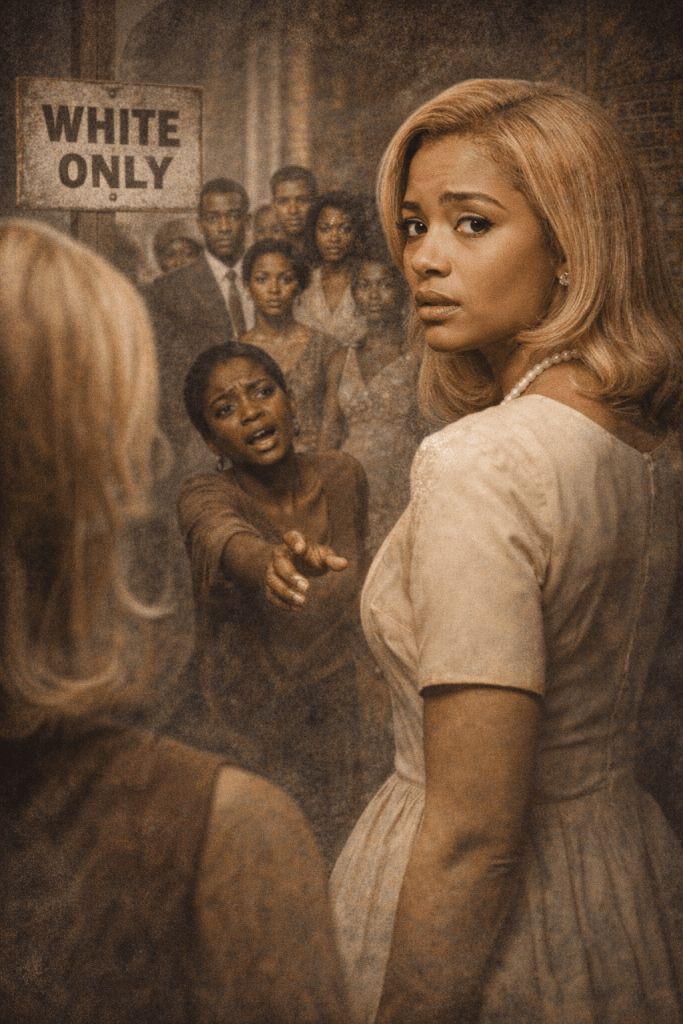
Racism is more than individual prejudice—it is a system of power, privilege, and oppression that shapes every level of society. It is the belief, whether conscious or unconscious, that one race is superior to another, and this ideology has fueled centuries of injustice toward Black people and other nonwhite groups. Denial of racism, therefore, is a form of complicity. It allows prejudice to persist unchecked, normalizing discrimination under the illusion of equality. In modern America, this denial manifests not only in speech and policy but also in symbols—especially racist mascots that trivialize entire cultures for entertainment and profit (Tatum, 2017).

Racist mascots are public symbols, images, or characters that depict racial or ethnic groups through stereotypes. They include sports team names, cartoon logos, and advertising imagery that caricature people of color, particularly Indigenous, Asian, and Black individuals. The purpose of such mascots has historically been to create a sense of fun or team spirit, but beneath the surface lies the dehumanization of real people. These mascots perpetuate racism by turning living identities into costumes or cartoons, mocking heritage and reinforcing white dominance (King, Davis-Delano, Staurowsky, & Baca, 2006).

Examples of racist mascots include the Washington Redskins (now Commanders), Cleveland Indians (now Guardians), and the use of Native caricatures like “Chief Wahoo.” In addition, Black caricatures such as “Aunt Jemima,” “Uncle Ben,” and the “Sambo” figures have long stood as consumer symbols rooted in slavery and Jim Crow imagery. These depictions present people of color as servile, ignorant, or primitive—images designed to comfort white audiences while reminding Black people of their social “place” (Pilgrim, 2012).

The denial of racism allows these symbols to persist under the justification of “tradition” or “harmless fun.” Yet such arguments ignore the historical and emotional damage caused by these portrayals. To deny racism is to silence the voices of those who endure its consequences. White individuals who resist the removal of racist mascots often do so because acknowledging their harm would mean confronting uncomfortable truths about privilege and the legacies of colonization (Sue et al., 2019).

For Black people, racism manifests not only through overt hatred but also through the cultural symbols that reinforce inferiority. Racist mascots, jokes, and media portrayals perpetuate the myth of white superiority, making it harder for Black individuals to assert pride and dignity. These representations influence how others perceive them—affecting hiring decisions, media representation, and even internalized self-worth. When a culture is continually mocked or minimized, it becomes a psychological burden that echoes across generations (Williams & Mohammed, 2009).

The psychological effect of racist imagery cannot be overstated. Studies show that exposure to racial caricatures can reinforce stereotypes, reduce empathy toward minority groups, and diminish the sense of belonging among young people of color. For Black children, seeing racist imagery in public life communicates a painful message: that their identity is a joke, their culture a costume, and their history unworthy of respect. The harm of these images is cumulative and intergenerational (Clark, 2019).

White supremacy, the ideology that whiteness is inherently superior, underpins both the denial of racism and the creation of racist mascots. It is the invisible hand guiding policies, media narratives, and cultural norms that prioritize white comfort over Black liberation. White supremacy thrives in denial—it insists that racism is a relic of the past while continuing to shape the present. It operates through coded language like “heritage” and “pride,” which often mask bigotry behind nostalgia (Kendi, 2019).

The most blatant expression of white supremacy in American history is the Ku Klux Klan (KKK). Founded after the Civil War, the KKK terrorized Black communities through violence, lynchings, and intimidation. Its mission was to maintain white dominance in political, social, and economic spheres. Members of the Klan saw themselves as defenders of a “pure” America, using fear and brutality to suppress Black advancement. Their robes, burning crosses, and public parades became symbols of white terror and racial hatred (Alexander, 2010).

The impact of the KKK on Black people was devastating. Generations were traumatized by violence and systemic exclusion. Families were torn apart, homes burned, and entire towns destroyed under the pretext of racial purity. Even today, the Klan’s legacy persists in modern hate groups, racial profiling, and police violence. The ideology never died—it evolved into new forms of systemic control such as mass incarceration and economic disenfranchisement.

White supremacy continues to hurt Black people by limiting access to wealth, education, and justice. Redlining, discriminatory hiring, and unequal school funding are structural extensions of the same mindset that birthed the KKK and racist mascots. These systems rely on the same falsehood—that Black people are less deserving of opportunity. By denying racism’s existence, society allows these injustices to flourish behind the facade of fairness (Bonilla-Silva, 2018).

Denial of racism often appears as “colorblindness.” When white individuals claim they “don’t see race,” they erase the lived experiences of Black people who face racism daily. Colorblindness is not equality—it is avoidance. It refuses to confront historical trauma or acknowledge current inequalities. This denial maintains white innocence and blocks progress toward reconciliation and justice (Wise, 2010).

Racist mascots are powerful tools of denial because they hide oppression behind art and entertainment. They turn centuries of suffering into amusement, trivializing racism itself. By normalizing these caricatures, society teaches future generations to see racism as exaggerated or irrelevant. The mascot becomes a smiling mask covering a violent history of enslavement and dehumanization (Fryberg et al., 2008).

To overcome this, institutions must replace symbols of oppression with those of truth and empowerment. Education is key—students should learn the origins of these images and why they are harmful. Removing racist mascots and replacing them with culturally respectful symbols is not “erasing history,” but correcting it. True history must expose oppression, not celebrate it.

Community conversations about race and symbolism are also essential. Many white Americans cling to racist mascots because they lack understanding of their impact. Honest dialogue, paired with empathy and accountability, can transform ignorance into awareness. This process requires humility—the willingness to listen rather than defend.

Faith-based and moral frameworks remind us that racism is a sin of pride. The Bible teaches that all people are created in the image of God (Genesis 1:27, KJV). To deny racism or perpetuate racist symbols is to deny God’s design for equality and justice. The work of dismantling white supremacy is therefore both a social and spiritual responsibility.

For Black people, confronting racist mascots is an act of liberation. It is a declaration that identity will no longer be mocked or commodified. Cultural restoration begins with reclaiming representation—telling stories from within rather than allowing others to define Blackness from without. Every statue removed, logo retired, and stereotype challenged marks a step toward collective healing.

The denial of racism also prevents national unity. A country that refuses to face its truth cannot heal from it. Reconciliation requires repentance—an acknowledgment of harm and a commitment to change. Only when the truth of racism is faced with courage can justice begin to take root.

Ultimately, racist mascots are symptoms of a deeper disease: the refusal to see Black humanity. The denial of racism enables the disease to spread unchecked, poisoning institutions and relationships. Challenging these symbols is not about political correctness—it is about moral clarity. Racism cannot die where denial lives.

The path forward requires truth-telling, accountability, and love rooted in justice. Dismantling racist mascots, confronting white supremacy, and rejecting the lies of the KKK are not acts of division—they are acts of restoration. The goal is not revenge but righteousness. As James Baldwin wrote, “Not everything that is faced can be changed, but nothing can be changed until it is faced.”

References
Alexander, M. (2010). The new Jim Crow: Mass incarceration in the age of colorblindness. The New Press.
Bonilla-Silva, E. (2018). Racism without racists: Color-blind racism and the persistence of racial inequality in America. Rowman & Littlefield.
Clark, C. R. (2019). Psychological impact of racial imagery on youth. Journal of Black Psychology, 45(2), 105–122.
Fryberg, S. A., Markus, H. R., Oyserman, D., & Stone, J. M. (2008). Of warrior chiefs and Indian princesses: The psychological consequences of American Indian mascots. Basic and Applied Social Psychology, 30(3), 208–218.
Kendi, I. X. (2019). How to be an antiracist. One World.
King, C. R., Davis-Delano, L. R., Staurowsky, E. J., & Baca, L. (2006). The Native American mascot controversy: A handbook. Scarecrow Press.
Pilgrim, D. (2012). Understanding Jim Crow: Using racist memorabilia to teach tolerance and promote social justice. Ferris State University.
Sue, D. W., Alsaidi, S., Awad, M. N., Calle, C. Z., & Mendez, N. (2019). Disarming racial microaggressions: Microintervention strategies for targets, White allies, and bystanders. American Psychologist, 74(1), 128–142.
Tatum, B. D. (2017). Why are all the Black kids sitting together in the cafeteria? Basic Books.
Wise, T. (2010). Colorblind: The rise of post-racial politics and the retreat from racial equity. City Lights Books.
Williams, D. R., & Mohammed, S. A. (2009). Discrimination and racial disparities in health: Evidence and needed research. Journal of Behavioral Medicine, 32(1), 20–47.


The Weight of Two Worlds: Racism, Sexism, and the Burden Carried by Black Women.

Black women in the United States have historically navigated a complex social landscape shaped by the intersecting forces of racism and sexism. These overlapping systems of inequality have produced a unique set of challenges that influence the economic, social, and psychological realities of Black womanhood. Scholars across sociology, gender studies, and African American studies emphasize that the experiences of Black women cannot be fully understood through the lens of race alone or gender alone, but through the interaction of both.

One of the most influential frameworks for understanding this dynamic is intersectionality, a term developed by legal scholar Kimberlé Crenshaw. Intersectionality describes how different systems of oppression overlap and compound one another. For Black women, discrimination may occur simultaneously along racial and gender lines, creating experiences that differ significantly from those faced by Black men or white women.

Historically, Black women have faced social stereotypes that shape how they are perceived and treated within American society. Images such as the “mammy,” the “jezebel,” and the “angry Black woman” have long circulated within media and cultural narratives. These stereotypes not only distort public perceptions but also influence workplace dynamics, healthcare interactions, and broader social relationships.

The historical roots of these stereotypes can be traced back to the era of slavery in the United States. During slavery, Black women were often forced into labor roles while simultaneously being subjected to sexual exploitation and dehumanization. These experiences contributed to long-standing myths about Black women’s strength, sexuality, and emotional resilience that persist in modern society.

Economic inequality represents another significant challenge. Black women participate in the labor force at high rates, yet they often encounter wage disparities and occupational segregation. According to data from the U.S. Bureau of Labor Statistics, Black women on average earn less than white men, white women, and in many cases Black men, highlighting the intersection of racial and gender pay gaps.

These economic disparities have broader implications for household wealth and financial stability. Because income inequality accumulates over time, Black women frequently face greater barriers to building generational wealth through homeownership, investment, and retirement savings.

In the realm of healthcare, Black women experience notable disparities in medical outcomes. Studies from the Centers for Disease Control and Prevention indicate that Black women face significantly higher rates of maternal mortality compared with women from other racial groups in the United States. Researchers attribute these disparities to factors including unequal healthcare access, systemic bias within medical institutions, and chronic stress associated with discrimination.

Mental health is also shaped by these pressures. Many scholars discuss the cultural expectation that Black women must embody resilience and emotional strength, often referred to as the “Strong Black Woman” archetype. While strength is widely celebrated, this expectation can discourage individuals from expressing vulnerability or seeking mental health support.

Black feminist scholars have long examined these social pressures. Thinkers such as Patricia Hill Collins and bell hooks have explored how Black women develop intellectual traditions and cultural strategies to resist systems of domination while affirming their identities and experiences.

Education represents both a challenge and a space of remarkable achievement for Black women. In recent decades, Black women have become one of the fastest-growing groups earning college and graduate degrees in the United States. Despite these accomplishments, barriers to leadership positions and career advancement remain present in many professional fields.

Media representation plays a powerful role in shaping public perception. Historically, film and television have portrayed Black women through narrow character types. While representation has improved in recent decades, scholars continue to argue that media portrayals influence broader social attitudes and expectations.

Another dimension of inequality involves the criminal justice system. Black women are disproportionately affected by policing, incarceration, and legal inequities compared with women of other racial groups. These patterns reflect broader systemic disparities within the justice system.

Housing inequality also affects many Black women and their families. Historical policies such as housing discrimination and segregation contributed to patterns of residential inequality that continue to shape access to resources such as schools, healthcare facilities, and employment opportunities.

Despite these structural barriers, Black women have historically served as leaders in social justice movements. Figures such as Harriet Tubman, Ida B. Wells, and Fannie Lou Hamer played transformative roles in abolitionism, anti-lynching campaigns, and the civil rights movement.

In politics, Black women have continued to break barriers and influence national conversations about equity and representation. Their leadership has expanded discussions around voting rights, criminal justice reform, healthcare access, and economic opportunity.

Culturally, Black women have shaped American music, literature, art, and fashion. Their contributions have influenced global culture while also serving as forms of creative resistance and self-expression.

Community networks and faith institutions have also historically provided support systems for Black women navigating systemic challenges. Churches, civic organizations, and grassroots movements have played central roles in fostering solidarity and empowerment.

Scholars emphasize that understanding the experiences of Black women requires acknowledging both struggle and resilience. While structural inequalities persist, Black women have continuously demonstrated leadership, creativity, and perseverance in confronting social barriers.

Addressing the challenges facing Black women requires systemic change. Policies aimed at reducing wage inequality, improving healthcare access, strengthening educational opportunity, and addressing discrimination are essential components of achieving social equity.

Ultimately, the experiences of Black women illustrate the broader consequences of intersecting forms of inequality within society. Recognizing and addressing these complexities is crucial for building a more just and inclusive future.


References

Collins, P. H. (2000). Black feminist thought: Knowledge, consciousness, and the politics of empowerment. Routledge.

Crenshaw, K. (1989). Demarginalizing the intersection of race and sex. University of Chicago Legal Forum.

hooks, b. (1981). Ain’t I a woman: Black women and feminism. South End Press.

Jones, C. P. (2000). Levels of racism: A theoretical framework. American Journal of Public Health.

Centers for Disease Control and Prevention. (2023). Maternal health disparities in the United States.

U.S. Bureau of Labor Statistics. (2023). Labor force statistics by race and gender.

Chromatic Hierarchy: The Social Order of Skin Tone.

Chromatic hierarchy refers to a system of social stratification in which individuals are ranked or valued based on variations in skin tone. Within this framework, lighter complexions are often privileged while darker complexions are marginalized. Although the concept is closely related to colorism, chromatic hierarchy emphasizes the broader structural and historical patterns that create and sustain these inequalities. This hierarchy can exist both between racial groups and within them, shaping perceptions of beauty, intelligence, social status, and economic opportunity.

The roots of chromatic hierarchy can be traced to the historical processes of colonialism, slavery, and racial classification. European colonial powers constructed racial hierarchies that placed whiteness at the top as a symbol of civilization and superiority. These ideas were reinforced through pseudoscientific racial theories that attempted to rank human populations according to physical characteristics such as skin color, facial features, and hair texture. Over time, these ideologies became embedded in social institutions and cultural norms.

In the context of the transatlantic slave trade, chromatic hierarchy became particularly pronounced. Enslaved Africans were often categorized and treated differently depending on their complexion. Lighter-skinned individuals, many of whom were the mixed-race children of enslavers, were sometimes given different labor assignments or allowed limited privileges within plantation systems. While these distinctions did not erase the brutality of slavery, they created internal divisions that would influence later social dynamics within Black communities.

Following emancipation in the United States, chromatic hierarchy continued to shape social life. During the late nineteenth and early twentieth centuries, lighter-skinned African Americans were sometimes perceived as having greater access to education, employment, and social mobility. Elite organizations and social clubs occasionally used informal complexion tests—such as the infamous “paper bag test”—to determine who could participate in certain institutions. These practices reinforced the idea that proximity to whiteness conferred social advantage.

Chromatic hierarchy also intersected with economic opportunity. Research has shown that lighter-skinned individuals in many societies have historically received higher wages, more favorable treatment in hiring, and increased representation in leadership roles. These patterns illustrate how color-based stratification operates not only at the interpersonal level but also within broader economic systems.

The concept is deeply tied to the legacy of racial ideology in Western societies. In the United States, racial categories were constructed during slavery and codified through laws that reinforced segregation and discrimination. The association of lightness with privilege and darkness with marginalization became embedded in cultural narratives, influencing how people interpret identity and status.

Within Black communities, chromatic hierarchy has often produced complex social dynamics. While the shared experience of racial discrimination fosters solidarity, differences in complexion can still shape perceptions of beauty, desirability, and social standing. Media representation, historical social structures, and colonial legacies have contributed to these internal hierarchies.

Beauty standards provide one of the most visible examples of chromatic hierarchy. For decades, mainstream media and fashion industries have often favored lighter skin tones and Eurocentric features. This preference has influenced advertising, film casting, and beauty industries, shaping cultural perceptions of attractiveness and worth. As a result, darker-skinned individuals—particularly women—have frequently been underrepresented or stereotyped in media portrayals.

These patterns can have psychological consequences. Studies in social psychology suggest that exposure to hierarchical beauty standards can affect self-esteem, identity formation, and perceptions of belonging. When individuals repeatedly encounter messages that privilege certain physical characteristics, those messages can shape internal beliefs about value and desirability.

Education and socialization also play important roles in maintaining or challenging chromatic hierarchy. Children often learn cultural preferences regarding complexion through family conversations, media exposure, and peer interactions. These early experiences can influence how individuals perceive themselves and others throughout their lives.

The relationship between chromatic hierarchy and socioeconomic mobility has been widely studied. Sociologists have found correlations between skin tone and outcomes such as educational attainment, income, and occupational status in certain contexts. These findings suggest that the legacy of color-based stratification continues to influence opportunities in contemporary society.

At the same time, many scholars emphasize that chromatic hierarchy is not a universal or static phenomenon. Its effects vary across regions, cultures, and historical periods. In some societies, different forms of color-based stratification exist that are not directly tied to racial categories but instead relate to class or colonial history.

Within the African diaspora, discussions about chromatic hierarchy often intersect with broader conversations about identity, representation, and empowerment. Activists, artists, and scholars have increasingly called attention to the ways in which skin tone bias affects social experiences. These discussions aim to promote awareness and encourage more inclusive representations of beauty and identity.

The media has begun to reflect these conversations. In recent years, film, television, and fashion industries have made efforts to showcase a broader range of complexions and features. While progress remains uneven, these shifts illustrate how cultural institutions can influence public perceptions and challenge long-standing hierarchies.

Scholars often emphasize that dismantling chromatic hierarchy requires both cultural and structural change. Addressing bias involves examining historical narratives, expanding representation, and promoting equitable opportunities across institutions. Education and critical discussion play crucial roles in helping individuals recognize how historical systems continue to shape present realities.

Within Black communities, confronting chromatic hierarchy also involves fostering dialogue about shared history and internal diversity. Recognizing the influence of historical color-based divisions allows communities to address them with honesty and compassion, promoting solidarity rather than division.

Theological and ethical perspectives have also contributed to critiques of chromatic hierarchy. Many religious traditions emphasize the intrinsic value and dignity of every human being. From this perspective, hierarchies based on skin tone contradict moral teachings that affirm equality and justice.

Ultimately, chromatic hierarchy reflects the enduring influence of historical racial ideologies. Although societies have made progress toward greater equality, the legacy of color-based stratification continues to shape social interactions and institutional outcomes. Understanding this history is essential for recognizing how past structures influence present conditions.

By examining the origins and consequences of chromatic hierarchy, scholars and communities can better understand the complexities of identity and inequality. Awareness of these dynamics encourages a broader commitment to justice, representation, and respect for the full diversity of human experience.


References

Hunter, M. L. (2007). The persistent problem of colorism: Skin tone, status, and inequality. Sociology Compass, 1(1), 237–254.

Keith, V. M., & Herring, C. (1991). Skin tone and stratification in the Black community. American Journal of Sociology, 97(3), 760–778.

Hall, R. E. (2010). The bleaching syndrome: African Americans’ response to cultural domination vis-à-vis skin color. Journal of Black Studies, 26(2), 172–184.

Glenn, E. N. (2009). Shades of difference: Why skin color matters. Stanford University Press.

Wilder, J. (2015). Color stories: Black women and colorism in the 21st century. Temple University Press.

Russell, K., Wilson, M., & Hall, R. (1992). The color complex: The politics of skin color among African Americans. Harcourt Brace Jovanovich.

Constructed Identities: The Politics, Genetics, and Legacy of Mixed Race.

The story of mixed race is not merely a matter of biology, but a deeply layered narrative shaped by power, conquest, identity, and survival. What we call “mixed race” today emerged from historical systems that sought to divide humanity into categories, assigning value and status based on appearance. These divisions were not natural; they were constructed.

The modern conception of race was developed during the rise of European colonialism. Scholars in anthropology widely agree that race has no fixed biological basis. Instead, it was created as a social hierarchy to justify slavery, land theft, and domination over non-European peoples.

In contrast, ethnicity refers to cultural identity—shared language, customs, ancestry, and traditions. While race is often imposed externally, ethnicity is more closely tied to how people understand themselves and their heritage. The confusion between these two concepts has contributed to centuries of misunderstanding about identity.

The transatlantic slave trade marked a turning point in how race was defined and enforced. During this period, millions of Africans were forcibly transported to the Americas, where rigid racial systems were established. Within this system, people of mixed ancestry were given special classifications that both elevated and restricted them.

Many mixed-race individuals were born from deeply unequal relationships, often involving coercion or outright violence. European enslavers frequently fathered children with enslaved African women, creating a population that did not fit neatly into the binary racial categories of the time. These individuals became central to the development of complex racial hierarchies.

One of the most common terms used during slavery was Mulatto, referring to someone with one African and one European parent. The term itself reflects the dehumanizing logic of the era, as it is derived from a word historically associated with animal breeding.

Other classifications attempted to quantify ancestry with disturbing precision. A Quadroon referred to someone with one Black grandparent, while an Octoroon described someone even further removed. These labels were not casual descriptors—they determined a person’s legal rights, social status, and opportunities.

In Spanish and Portuguese colonies, an elaborate system known as the Casta System categorized individuals based on detailed mixtures of African, Indigenous, and European ancestry. Paintings from this era visually depicted these categories, reinforcing the idea that identity could be measured and ranked.

Terms like Mestizo and Zambo further illustrate how colonial societies attempted to map human diversity into rigid frameworks. Each category carried different social implications, often tied to proximity to whiteness.

In the United States, racial classification took on a particularly rigid form through the development of the One-Drop Rule. This principle erased the complexity of mixed identities by categorizing anyone with African ancestry as Black, reinforcing white supremacy and limiting social mobility.

Within plantation life, mixed-race individuals were often assigned roles that reflected their perceived proximity to whiteness. Some worked as house servants, while others labored in the fields. This distinction contributed to the development of colorism—a system that privileges lighter skin within communities of color.

Colorism has had long-lasting psychological and social effects. Lighter-skinned individuals were sometimes granted limited privileges, such as access to education or less physically demanding labor, while darker-skinned individuals faced harsher conditions. These divisions created internal hierarchies that persist today.

From a scientific perspective, however, the idea of distinct races collapses under scrutiny. Advances in Genetics reveal that all humans share approximately 99.9% of their DNA. The differences that do exist are gradual and do not align with traditional racial categories.

Mixed-race individuals are simply expressions of genetic diversity, resulting from the blending of ancestral populations over time. This process, known as admixture, is a natural part of human history. Migration, trade, and interaction have always led to the mixing of populations.

There is no single genetic marker that defines race. Traits like skin color are influenced by a small number of genes and can vary widely even within the same family. This explains why mixed-race individuals can have a broad range of appearances.

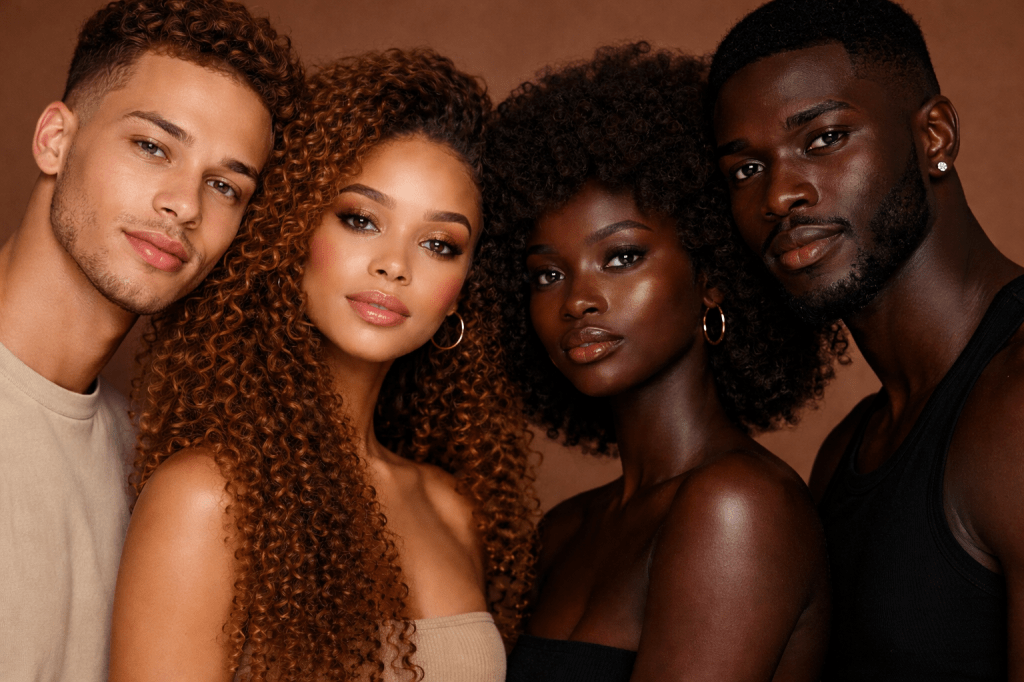
Physically, mixed-race individuals may exhibit a combination of features associated with different ancestral groups. These can include variations in skin tone, hair texture, facial structure, and eye color. However, these traits are not predictable and do not follow simple patterns.

The perception of a “mixed-race look” is largely shaped by societal expectations rather than biological reality. People often project assumptions onto individuals based on their appearance, reinforcing stereotypes about what mixed race should look like.

The psychological experience of being mixed race has often been marked by tension and contradiction. Many individuals have historically been forced to navigate multiple identities, sometimes feeling that they do not fully belong to any one group.

This sense of in-betweenness has been described as both a burden and a unique perspective. While some experience alienation, others embrace their mixed heritage as a source of strength and cultural richness.

A powerful case study can be found in the history of Creole communities in Louisiana. These communities, often composed of individuals with African, European, and sometimes Indigenous ancestry, developed distinct cultural identities that blended language, religion, and tradition.

Creoles occupied a unique social position, sometimes enjoying more rights than enslaved Africans but still facing discrimination. Their existence challenged rigid racial categories and demonstrated the fluidity of identity.

Another important case study is the Melungeon population of Appalachia. These communities, with mixed African, European, and Indigenous roots, lived on the margins of society and were often subjected to suspicion and discrimination due to their ambiguous appearance.

In the Caribbean, particularly in places like Haiti and the Dominican Republic, mixed-race populations became central to national identity. However, color hierarchies persisted, often privileging lighter skin and European features.

The legacy of mixed race is also visible in modern celebrity culture. Public figures of mixed ancestry are often celebrated for their appearance while simultaneously being subjected to scrutiny about their identity and authenticity.

Historically, mixed-race individuals have also been used symbolically in media and literature, sometimes portrayed as tragic figures caught between worlds. These narratives reflect broader societal anxieties about race and belonging.

A Construct Born of Power, Not Biology

The concept of “mixed race” cannot be understood apart from the historical invention of race itself. Race is not a biological reality but a social construct, developed largely during European colonial expansion to justify hierarchy, slavery, and domination . In contrast, ethnicity refers to shared culture, language, ancestry, and heritage—not physical traits alone.

Thus, “mixed race” is less about genetics and more about how societies have historically categorized, controlled, and stratified human beings.


The Origins of Race and Ethnicity

  • Race: A classification system based primarily on physical traits (skin color, hair texture, facial features), developed during colonialism to rank human populations.
  • Ethnicity: A cultural identity tied to shared traditions, language, ancestry, and historical experience.

The modern racial system emerged between the 16th–18th centuries alongside the transatlantic slave trade. Europeans created rigid categories (White, Black, Indigenous) and then constructed intermediate labels to classify people of mixed ancestry.


Slavery and the Creation of Mixed-Race Classes

During slavery in the Americas, mixed-race individuals were often the result of coercive relationships between European enslavers and African women . These children occupied a complex and often contradictory social position:

  • Sometimes granted limited privileges (education, lighter labor)
  • Often still enslaved and denied full humanity
  • Used as a buffer class between enslaved Africans and White elites

House Slaves vs Field Slaves

  • House slaves: Often lighter-skinned or mixed ancestry; worked inside homes; perceived as “closer” to whiteness
  • Field slaves: Typically darker-skinned; subjected to harsher labor conditions

This division reinforced colorism, a system privileging lighter skin within Black communities—a legacy that persists today.


Historical Terms for Mixed Race (and Their Meanings)

Colonial societies created dozens of terms to classify people by fractions of ancestry. These were not neutral—they were tools of control.

African + European Ancestry

  • Mulatto: One Black parent, one White parent
  • Quadroon: 1/4 African ancestry
  • Octoroon: 1/8 African ancestry
  • Griffe: 3/4 African, 1/4 European

African + Indigenous

  • Zambo: African + Indigenous ancestry

European + Indigenous

  • Mestizo: European + Indigenous ancestry

Tri-Racial or Complex Mixtures

  • Pardo: Mixed African, European, and Indigenous ancestry
  • Marabou: Haitian term for mixed African, European, and Indigenous lineage

Colonial System

  • Casta System: A hierarchical classification system in Spanish colonies assigning social status based on racial mixture

These labels were tied to legal rights, social status, and even freedom.


The “One-Drop Rule” and Racial Policing

In the United States, racial identity became even more rigid under laws like the one-drop rule, where any African ancestry classified a person as Black. This erased the complexity of mixed identity and reinforced white supremacy.


Genetics of Mixed Race: What Science Actually Says

From a biological standpoint:

  • All humans share 99.9% of their DNA
  • Genetic variation exists gradually across populations (not in rigid racial boxes)
  • Mixed-race individuals simply reflect genetic admixture—the blending of ancestral populations over time

Key points:

  • There is no gene for race
  • Traits like skin color are influenced by a small number of genes
  • Mixed ancestry often increases genetic diversity, which can be beneficial for health

Physical Features of Mixed-Race Individuals

There is no single “mixed-race look,” but some commonly observed features (depending on ancestry) include:

  • Varying skin tones (light brown to deep brown)
  • Curly, wavy, or loosely coiled hair textures
  • Facial feature blending (nose shape, lip fullness, eye shape)
  • Lighter eye colors (in some African-European mixes)

However, phenotype (appearance) is unpredictable due to genetic recombination.


The Psychological and Social “Tragedy”

The “tragedy” of mixed race is not biological—it is social and historical:

1. Identity Fragmentation

Mixed individuals have often been forced to “choose” one identity over another.

2. Rejection from Both Sides

Historically:

  • Not fully accepted by White society
  • Sometimes viewed with suspicion in Black communities

3. Colorism and Privilege

Mixed individuals have sometimes been:

  • Privileged due to proximity to whiteness
  • Simultaneously marginalized and fetishized

4. Historical Trauma

Many mixed-race lineages originate from violence, coercion, and exploitation during slavery.


Modern Language: Moving Away from Colonial Labels

Today, terms like:

  • Biracial
  • Multiracial
  • Mixed

are preferred over colonial classifications like “mulatto,” which is widely considered outdated or offensive in the United States.


Beyond Labels

Mixed race is not a biological anomaly—it is a human reality shaped by migration, empire, and survival. The tragedy lies not in the mixture, but in the systems that:

  • Created hierarchies of human value
  • Weaponized identity
  • Divided people by appearance

In truth, mixed-race people expose a deeper reality: the artificial nature of racial boundaries themselves.

The so-called “tragedy” of mixed race is not inherent to the individuals themselves but arises from the systems that have sought to define and limit them. It is a tragedy rooted in exclusion, not in identity.

In contemporary society, language around mixed race has evolved. Terms like “biracial” and “multiracial” are now commonly used, reflecting a shift toward more inclusive and self-defined identities.

Despite this progress, challenges remain. Mixed-race individuals still navigate complex social dynamics, including questions of authenticity, representation, and belonging.

At the same time, the growing visibility of multiracial identities is reshaping how society understands race. Increasingly, people are recognizing that racial categories are fluid, overlapping, and deeply interconnected.

Ultimately, the history of mixed race reveals a fundamental truth: the boundaries we draw between people are neither natural nor fixed. They are the product of human decisions, shaped by history and power.

In this sense, mixed-race individuals do not complicate the idea of race—they expose its limitations. Their existence challenges us to rethink how we define identity and to move beyond the divisions of the past.

The future of racial identity may lie not in rigid categories but in a more nuanced understanding of human diversity—one that acknowledges both our shared humanity and the richness of our differences.


References

Encyclopaedia Britannica. (2026). Mulatto.
Encyclopaedia Britannica. (2026). Race (human classification).
Pew Research Center. (2015). Multiracial in America: Proud, diverse, and growing in numbers.
Omi, M., & Winant, H. (2015). Racial Formation in the United States. Routledge.
Smedley, A., & Smedley, B. D. (2005). Race as biology is fiction, racism as a social problem is real. American Psychologist, 60(1), 16–26.
Marks, J. (2010). Ten Facts about Human Variation. In Biological Anthropology.
Nash, G. B. (1992). Forbidden Love: The Secret History of Mixed-Race America.
Davis, F. J. (2001). Who Is Black? One Nation’s Definition. Penn State Press.
Hollinger, D. A. (2003). Amalgamation and hypodescent. Journal of American History, 89(4), 1363–1390.

PASSING as White

Passing as White is one of the most psychologically complex survival strategies produced by racism in America. It refers to the act of a Black person presenting themselves as white to escape racial oppression, gain social mobility, or avoid discrimination. While often discussed as a historical phenomenon, passing is fundamentally a psychological condition rooted in fear, internalized racism, and the desire for safety in a white supremacist society.

Psychologically, passing is not merely about skin tone or physical appearance; it is about identity suppression. It requires the individual to constantly perform whiteness—altering speech, behavior, social circles, family history, and even emotional expression. The person must erase their Blackness not only from public view, but from their own self-concept to survive the performance.

Looking white becomes a form of social camouflage. Lighter skin, straighter hair, ambiguous features, and European phenotypes allow some Black people to “blend in” within white spaces. However, this blending comes at a profound cost: the continuous denial of one’s ancestry, culture, and lived reality.

Passing emerges from racial terror. In societies where Blackness is punished economically, socially, and physically, passing becomes a method of protection. It is an adaptation to violence. Instead of confronting racism directly, the individual attempts to escape it by exiting Blackness altogether.

This phenomenon was powerfully dramatized in the film Imitation of Life, which tells the story of a light-skinned Black woman who rejects her Black mother to live as white. The film exposes the emotional devastation of passing: the shame, the secrecy, the grief, and the permanent sense of unbelonging.

What happens psychologically when white people discover that someone who has been passing is actually Black is often catastrophic. The individual is typically met with betrayal, hostility, disgust, or expulsion. White acceptance is conditional, and once racial truth is revealed, the person is stripped of the social privileges they had gained.

This moment of “discovery” often triggers identity collapse. The passer is rejected by the white world they tried to assimilate into, while also feeling disconnected from the Black world they abandoned. They become socially homeless—belonging fully to neither group.

Self-hatred is at the core of passing. It is not simply strategic; it is an internalized ideology. The person has absorbed the belief that Blackness is inferior, dangerous, or shameful, and that proximity to whiteness equals safety, value, and humanity.

Passing also produces chronic psychological stress. The individual lives in constant fear of exposure. Every conversation, family detail, photograph, or social interaction becomes a potential threat. This creates a life of hypervigilance, anxiety, and emotional isolation.

One of the most famous real-life examples of passing is Anatole Broyard, a highly respected literary critic and writer who lived as a white man for most of his life. Broyard concealed his Black identity even from his own children and wife, believing that revealing his ancestry would destroy his career and social standing.

After his death, his children discovered the truth, leading to deep emotional consequences. Broyard’s life became a symbol of the tragic cost of passing—success built on erasure, achievement built on denial, and legacy built on silence.

Passing not only distorts how others see one; it also distorts how one experiences love, intimacy, and belonging. Romantic relationships become performances. Friendships become guarded. Family becomes a threat to exposure. The passer must constantly choose between truth and survival.

This creates what psychologists call identity fragmentation. The person splits themselves into parts: the public self and the hidden self. Over time, the hidden self becomes increasingly suppressed, producing depression, dissociation, and internal conflict.

Passing also reinforces white supremacy at a structural level. It validates the idea that whiteness is the ultimate form of social legitimacy, while Blackness is something to escape. Each individual act of passing becomes a silent confirmation of racial hierarchy.

Historically, passing was most common during Jim Crow, when Black people faced segregation, lynching, housing discrimination, and legal exclusion. For some, passing was the only way to access education, employment, or physical safety. It was not always about shame; sometimes it was about survival.

However, survival strategies can become psychological prisons. What begins as protection can evolve into permanent self-rejection. Over time, the person may forget how to exist authentically, even in private.

The modern version of passing still exists, but in more subtle forms. It appears in aesthetic assimilation, name changes, cultural distancing, anti-Black rhetoric, and identity ambiguity. Some people no longer pass racially, but culturally and ideologically.

At its deepest level, passing is a spiritual crisis. It represents a rupture between the self and its origins. The person disconnects from ancestral memory, collective identity, and historical truth in exchange for conditional acceptance.

Many who once passed later experience a psychological awakening. As they age, they begin to feel the emptiness of erasure. They realize that no amount of assimilation can replace the loss of authentic identity. What was gained socially is lost existentially.

Reclaiming Black identity after passing often involves grief. Grief for the years spent hiding, for the relationships built on falsehood, and for the self that was denied. It is not simply a return—it is a reconstruction.

The desire to now “be who you are” represents a form of psychological decolonization. It is the rejection of internalized racism and the re-embrace of ancestral truth. It is a recognition that safety without authenticity is not freedom.

True healing from passing requires confronting the ideology that made it necessary. It requires dismantling the belief that whiteness equals humanity and Blackness equals limitation. Until that belief is destroyed, passing will continue to exist.

Passing as White is not just a historical curiosity. It is a mirror held up to a society that made Black identity something people felt they had to escape in order to live.

The tragedy is not that some people passed.
The tragedy is that a world existed where passing felt necessary.


References

Fanon, F. (1967). Black skin, white masks. Grove Press.

Gates, H. L. Jr. (1996). Thirteen ways of looking at a Black man. Random House.

Hobbs, A. (2014). A chosen exile: A history of racial passing in American life. Harvard University Press.

Larsen, N. (1929). Passing. Alfred A. Knopf.

Rockquemore, K. A., & Brunsma, D. L. (2002). Beyond Black: Biracial identity in America. Rowman & Littlefield.

Smith, S. M. (2006). The performance of race: Passing and the aesthetics of identity. Cultural Critique, 63, 1–27.

Sollors, W. (1997). Neither Black nor white yet both: Thematic explorations of interracial literature. Oxford University Press.

Broyard, B. (2007). One drop: My father’s hidden life—A story of race and family secrets. Little, Brown and Company.

Wilkerson, I. (2020). Caste: The origins of our discontents. Random House.

Du Bois, W. E. B. (1903). The souls of Black folk. A.C. McClurg & Co.

Dilemma: Power Struggles in America

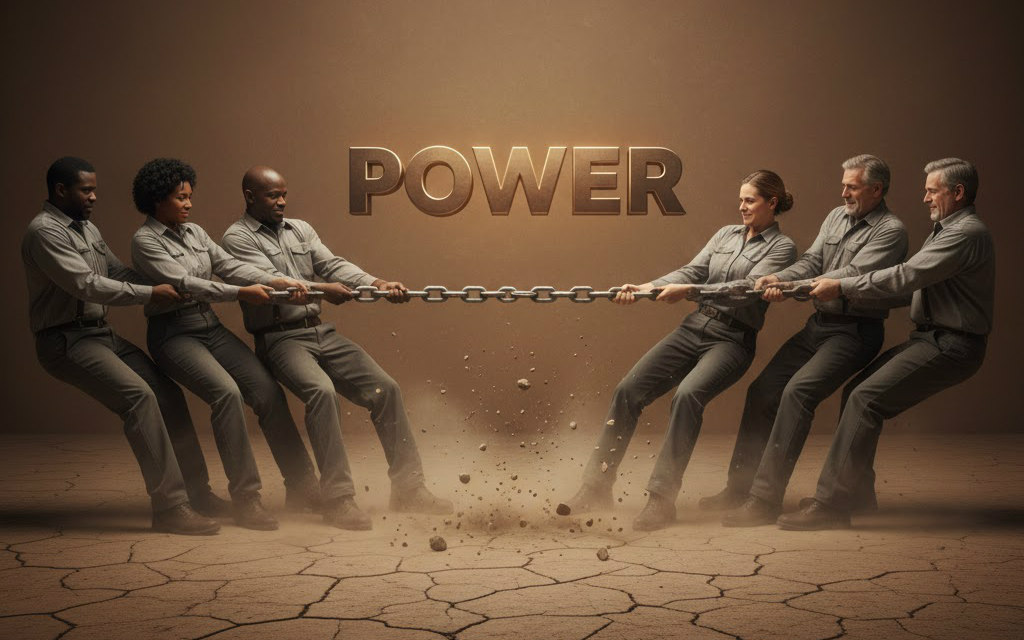
Power in America has never been neutral. From its inception, the nation’s economic, political, and cultural systems were constructed alongside chattel slavery, colonial extraction, and racial hierarchy. For Black America, modern inequality is not accidental or cultural—it is structural, historical, and systemic. The dilemma lies in navigating institutions that were never designed for Black flourishing, yet demand Black participation for survival.

Wall Street, often celebrated as the engine of American prosperity, traces its origins directly to slavery. The original Wall Street was a literal wall built by the Dutch in New Amsterdam, adjacent to a slave market where Africans were bought, sold, and traded. Early American capital accumulation relied heavily on enslaved labor, plantation profits, and transatlantic trade, making slavery foundational—not peripheral—to American finance.

Beyond geography, Wall Street institutionalized slavery through financial instruments. Bonds, mortgages, and commodities markets treated enslaved Africans as collateral and capital. Enslaved people were insured, leveraged, and securitized, embedding Black bodies into the architecture of global capitalism. This legacy persists in wealth inequality, where Black Americans hold a fraction of the wealth accumulated through centuries of racialized exploitation.

The insurance industry followed a similar trajectory. Early insurers such as Lloyd’s of London and American firms underwrote slave ships, plantations, and enslaved people themselves. Policies protected slave owners against rebellion, death, or loss of “property,” transforming human suffering into actuarial risk. This normalized the monetization of Black death and trauma.

Today, the insurance industry still reflects racial bias through redlining, discriminatory premiums, and unequal access to coverage. Black communities are more likely to be underinsured or denied protection, perpetuating vulnerability while insulating wealthier, whiter populations from risk.

Banking institutions also grew by financing slavery. Banks issued loans to purchase enslaved people, expand plantations, and sustain the plantation economy. Enslaved Africans were listed on balance sheets as assets. When slavery ended, no reparative restructuring followed—banks retained the wealth while Black people were released into poverty.

Modern banking continues this pattern through predatory lending, subprime mortgages, and unequal access to credit. These practices drain wealth from Black communities while reinforcing cycles of debt and dependency, echoing earlier forms of economic bondage.

Silicon Valley now represents a new form of power—control over technology, data, and the future. Algorithms determine employment, creditworthiness, policing, and visibility. Yet these systems are trained on biased data shaped by historical racism, reproducing discrimination under the guise of neutrality.

For Black America, technological control often means surveillance rather than empowerment. Facial recognition misidentifies Black faces, predictive policing targets Black neighborhoods, and digital platforms exploit Black culture without equitable compensation or ownership.

The pharmaceutical and medical industries wield immense power over health and survival. Historically, Black bodies were subjected to medical experimentation, from slavery-era surgeries without anesthesia to the Tuskegee Syphilis Study. These abuses created generational distrust.

Today, Black Americans experience higher mortality rates, inadequate care, and medical neglect. Pharmaceutical profit models prioritize treatment over prevention, while systemic racism ensures unequal access to quality healthcare, reinforcing the biological consequences of social inequality.

The prison-industrial complex represents one of the most direct continuations of slavery. The 13th Amendment abolished slavery “except as punishment for crime,” creating a legal pathway for forced labor. Prisons became sites where Black bodies were again exploited for economic gain.

Mass incarceration disproportionately targets Black men and women, extracting labor, destabilizing families, and generating profit for private corporations. This system functions as racial control, not public safety, maintaining a captive population for economic and political purposes.

The military-industrial complex controls violence and war, both abroad and at home. Black Americans have historically fought in wars for freedoms they were denied domestically. Military spending diverts resources from education, housing, and health needs that disproportionately affect Black communities.

Media power shapes perception, truth, and narrative. From minstrel imagery to modern news cycles, Black people are often portrayed as criminals, victims, or anomalies. Media framing influences public policy, jury decisions, and social attitudes.

This narrative control dehumanizes Black life while obscuring systemic causes of inequality. When the media defines reality, it also defines whose suffering matters and whose humanity is negotiable.

Religious institutions wield spiritual authority, yet American Christianity was deeply complicit in slavery. Churches provided theological justification for bondage, segregation, and racial hierarchy, often quoting scripture selectively to sanctify oppression.

Even today, many churches avoid confronting racial injustice, emphasizing personal salvation over structural sin. This spiritual deflection can pacify resistance and discourage critical engagement with power.

Government power enforces laws that have historically criminalized Black existence—from slave codes to Jim Crow to modern voter suppression. Legal frameworks often present themselves as neutral while producing racially unequal outcomes.

The education system controls knowledge and historical memory. Textbooks frequently sanitize slavery, omit Black resistance, and marginalize African contributions. This intellectual erasure shapes national identity and limits Black self-understanding.

Police power represents the most visible arm of state control. Originating from slave patrols, American policing has long functioned to protect property and enforce racial order. Black communities experience policing as occupation rather than protection.

The cumulative effect of these power structures is not coincidence but coordination. Each system reinforces the other—economic control supports political dominance, narrative control legitimizes violence, and spiritual control discourages rebellion.

For Black America, the dilemma is survival within systems that extract value while denying dignity. Resistance requires not only individual success but collective consciousness, historical literacy, and structural transformation.

Understanding these power struggles is the first step toward liberation. Without truth, there can be no justice—and without justice, America remains trapped in a moral contradiction of its own making.


References

Baptist, E. E. (2014). The half has never been told: Slavery and the making of American capitalism. Basic Books.

Du Bois, W. E. B. (1935). Black reconstruction in America. Free Press.

Hannah-Jones, N. (2019). The 1619 Project. The New York Times Magazine.

Kendi, I. X. (2016). Stamped from the beginning: The definitive history of racist ideas in America. Nation Books.

Rothstein, R. (2017). The color of law: A forgotten history of how our government segregated America. Liveright.

Alexander, M. (2012). The new Jim Crow: Mass incarceration in the age of colorblindness. The New Press.

The Dark History of Being Light-Skinned and Dark-Skinned Black Person Around the World.

The history of light-skinned Black people in the Atlantic world is inseparable from the violence of slavery, colonialism, and racial domination. Lighter complexions did not emerge as a neutral genetic variation but, in many cases, as the direct result of coercion, sexual violence, and unequal power relations between enslaved African women and European men. To discuss light skin in Black history honestly requires confronting this brutal origin story and the enduring psychological and social consequences that followed.

During chattel slavery, rape was not an aberration but a systemic feature of the institution. Enslaved women had no legal right to consent, and white slaveholders exercised near-absolute power over their bodies. The children born from these assaults often inherited lighter skin, straighter hair textures, or other Eurocentric features, marking their very existence as living evidence of sexual violence and domination.

These mixed-ancestry children were frequently labeled “mulatto,” a term rooted in dehumanization and animalization. The classification was not simply descriptive; it functioned as a legal and social category that helped slave societies manage hierarchy within Blackness. Skin tone became a tool of division, reinforcing white supremacy while fracturing solidarity among the enslaved.

Light-skinned enslaved people were often assigned domestic labor rather than field work. This distinction produced the infamous dichotomy between the “house negro” and the field slave, a hierarchy that was imposed, not chosen. Domestic labor sometimes spared individuals from the harshest physical toil, but it exposed them to constant surveillance, sexual exploitation, and proximity to white power.

Being inside the slaveholder’s home did not equate to safety or privilege in any meaningful sense. House servants were more accessible targets for abuse, especially young girls and women. The home was often the site of repeated assaults, emotional manipulation, and forced compliance masquerading as favor.

Incest further complicates this history. Because slavery followed the legal principle of partus sequitur ventrem, children inherited the status of the enslaved mother regardless of the father’s identity. This meant white men could rape their own enslaved daughters and grandchildren without legal consequence, creating generational cycles of abuse that literally lightened the complexion of the enslaved population over time.

Light-skinned children were sometimes recognized as the biological offspring of white men, yet this recognition rarely translated into protection or freedom. More often, it produced resentment, secrecy, or further exploitation. These children occupied a liminal space—never white, yet treated differently within Black communities because of their appearance.

Colorism did not end with emancipation. After slavery, lighter skin continued to carry social currency within Black communities, a legacy of plantation hierarchies and white aesthetic standards. Access to education, employment, social clubs, and marriage prospects was often influenced by complexion, reinforcing divisions rooted in trauma rather than choice.

The psychological burden placed on light-skinned Black people is rarely discussed with nuance. Many carried the stigma of being perceived as products of rape or favoritism, while simultaneously being resented for “privileges” they neither requested nor controlled. This double bind created identity conflicts that reverberate across generations.

At the same time, darker-skinned Black people bore the brunt of systemic violence and exclusion, creating a false narrative that light skin equaled safety or advantage. This obscured the reality that all Black people, regardless of shade, remained subject to racial terror, disenfranchisement, and economic exploitation.

White supremacy strategically used color hierarchies to weaken collective resistance. By elevating lighter skin as closer to whiteness, slave societies encouraged internalized racism and competition. This divide-and-conquer strategy proved effective, leaving lasting scars in Black social relations long after formal slavery ended.

The myth of the “favored” light-skinned enslaved person ignores the constant precarity of their position. Favor could be revoked at any moment, and proximity to power often meant proximity to punishment. Psychological violence—humiliation, erasure, and forced loyalty—was as real as physical brutality.

In religious and moral discourse, enslaved women were blamed for their own assaults, reinforcing misogynoir and sexual shame. Light-skinned children became symbols onto which communities projected unresolved grief, anger, and confusion about sexual violence that was never acknowledged or healed.

Post-slavery societies institutionalized colorism through laws, media, and social norms. Paper bag tests, “blue vein” societies, and caste-like systems in the Caribbean and Americas continued to privilege lighter skin while stigmatizing darker tones. These practices reflected colonial logic rather than African worldviews.

Light skin thus became a paradoxical inheritance: a marker of survival through violence, yet also a source of alienation. Many light-skinned Black people struggled with belonging, questioned their legitimacy within Blackness, or felt compelled to overperform loyalty to counter suspicions of superiority.

Modern conversations about colorism often flatten this history, framing light skin solely as advantage without acknowledging its traumatic origins. This simplification risks reproducing harm by ignoring how sexual violence, incest, and coercion shaped Black bodies and identities.

Healing requires truth-telling. Acknowledging that many light-skinned Black people exist because of rape does not indict them; it indicts the system that produced them. It reframes colorism as a legacy of white supremacy rather than a natural preference within Black communities.

Reclaiming Black unity demands rejecting plantation hierarchies in all forms. Skin tone must be understood as a consequence of history, not a measure of worth, purity, or authenticity. Both light- and dark-skinned Black people inherit trauma from the same system, expressed differently but rooted in the same violence.

To confront the dark history of being light-skinned is to confront slavery honestly. It requires resisting romanticized narratives of privilege and instead centering the realities of rape, incest, coercion, and psychological harm. Only then can colorism be dismantled at its root.

True liberation lies in dismantling the myths that slavery created about skin, beauty, and value. When Black people collectively reject these imposed hierarchies, they reclaim the dignity that was denied to their ancestors—regardless of shade.

The history of dark-skinned Black people is inseparable from the foundations of global white supremacy and the transatlantic slave system. Darkness of skin was deliberately constructed as a marker of inferiority, danger, and disposability, used to justify enslavement, colonization, and dehumanization on a massive scale. From the earliest encounters between Africa and Europe, dark skin became a visual shorthand for domination.

During chattel slavery, darker skin was closely associated with field labor, brutality, and physical exhaustion. Enslaved Africans with the darkest complexions were often assigned the harshest work under the most violent conditions, reinforcing an imposed hierarchy where darkness equaled expendability. This association was not natural but engineered to align Blackness with suffering.

Slaveholders and overseers frequently treated darker-skinned enslaved people with heightened cruelty. Punishments were more public and severe, intended to terrorize others into submission. Darkness of skin was read as strength and resistance, which paradoxically made dark-skinned bodies targets for extreme violence meant to break both body and spirit.

European racial ideology framed dark skin as evidence of savagery, hypersexuality, and moral inferiority. Pseudoscientific racism used skin color to rank humanity, placing the darkest Africans at the bottom of fabricated racial hierarchies. These ideas were embedded in law, religion, and education, ensuring their persistence beyond slavery.

Dark-skinned women endured a unique intersection of racial and gendered violence. They were depicted as unfeminine, animalistic, and unrapeable, narratives that excused sexual assault while denying their victimhood. Their pain was minimized, and their bodies were exploited without acknowledgment or protection.

Unlike their lighter-skinned counterparts, dark-skinned enslaved women were less likely to be brought into the slaveholder’s home. Instead, they were forced into grueling labor while remaining vulnerable to sexual violence without the contradictory myths of “favor” or proximity to power. Their suffering was both hypervisible and ignored.

After emancipation, the devaluation of dark skin did not disappear. Reconstruction and Jim Crow regimes continued to associate darkness with criminality, poverty, and intellectual inferiority. Dark-skinned Black people were more likely to face harsher sentencing, economic exclusion, and social ostracism.

Within Black communities, colorism took root as an internalized inheritance of slavery. Dark-skinned individuals were often subjected to ridicule, diminished marriage prospects, and limited social mobility. These biases reflected plantation hierarchies rather than African cultural values, yet they became normalized through repetition.

Dark-skinned children frequently absorbed messages that their appearance was something to overcome rather than celebrate. Insults, teasing, and media representation taught them early that beauty, intelligence, and desirability were linked to lighter skin. This psychological conditioning produced long-term effects on self-worth and identity.

In education and employment, studies have shown that darker-skinned Black people often face greater discrimination than lighter-skinned peers. Teachers, employers, and institutions unconsciously reproduce racial hierarchies by associating darkness with incompetence or threat, reinforcing inequality under the guise of neutrality.

The criminal justice system has disproportionately punished dark-skinned Black people, who are more likely to be perceived as dangerous or aggressive. Skin tone bias affects policing, sentencing, and jury decisions, revealing how deeply colorism is embedded in modern systems of control.

Media representations have historically erased or caricatured dark-skinned people. When present, they were cast as villains, servants, or comic relief, rarely afforded complexity or humanity. This absence of dignified representation reinforced societal disdain for dark skin.

Dark-skinned men have often been portrayed as inherently violent or hypermasculine, narratives used to justify surveillance, incarceration, and extrajudicial violence. These stereotypes trace directly back to slavery-era fears of rebellion and resistance.

Despite these conditions, dark-skinned Black people have consistently embodied resilience and leadership. Many of the most vocal resisters, abolitionists, and freedom fighters bore the brunt of racial hatred precisely because their appearance symbolized unapologetic Blackness.

The global preference for lighter skin, seen in bleaching practices and beauty standards, reflects unresolved trauma rather than truth. Dark skin became a site of shame not because it lacked value, but because white supremacy taught the world to fear and reject it.

Healing requires confronting how darkness was weaponized against Black people. It demands rejecting the lie that proximity to whiteness equals humanity and acknowledging that the most violently oppressed bodies were often the darkest.

Reclaiming dark skin as beautiful and sacred is an act of resistance. It challenges centuries of conditioning that equated darkness with evil and lightness with virtue. This reclamation restores dignity stolen by slavery and colonialism.

True racial justice cannot exist without addressing colorism. Ignoring skin tone hierarchies allows slavery’s legacy to persist under new names. Justice requires naming how dark-skinned people have been uniquely targeted and harmed.

The dark history of being dark-skinned is not merely a story of suffering but of survival. Against overwhelming forces designed to erase them, dark-skinned Black people endured, resisted, and shaped the world.

Honoring this history means dismantling the systems that still punish darkness today. Only by confronting the truth of how dark skin was treated can society move toward genuine liberation, healing, and collective Black unity.

The histories of being light-skinned and dark-skinned are not opposing narratives, but parallel wounds carved by the same violent system. Color hierarchies were never born within Black communities; they were engineered by slavery and colonialism to rank, divide, and control. Whether through the sexual violence that produced lighter complexions or the intensified brutality directed at darker bodies, skin tone became a tool of domination rather than a reflection of worth.

Both histories reveal how white supremacy manipulated Black bodies into symbols—of proximity or distance, favor or punishment—while denying all Black people full humanity. These imposed distinctions fractured families, distorted identity, and seeded internalized bias that continues to echo across generations. The pain attached to skin tone is not accidental; it is historical, intentional, and unresolved.

True healing requires rejecting plantation logic in every form. It demands that Black communities confront colorism honestly, without competition or denial, and recognize it as inherited trauma rather than personal failure. Light skin and dark skin alike carry the memory of survival under oppression, not moral ranking or superiority.

Liberation begins when Black people refuse to measure themselves by standards forged in violence. When the false hierarchy of shade is dismantled, space is created for collective dignity, restoration, and unity. In reclaiming the fullness of Blackness—across every tone—we reject the lies of the past and affirm a future rooted in truth, justice, and wholeness.

References

Berlin, I. (1998). Many thousands gone: The first two centuries of slavery in North America. Harvard University Press.

Davis, A. Y. (1981). Women, race, & class. Random House.

Douglass, F. (1845). Narrative of the life of Frederick Douglass, an American slave. Anti-Slavery Office.

hooks, b. (1992). Black looks: Race and representation. South End Press.

Hunter, M. (2007). The persistent problem of colorism: Skin tone, status, and inequality. Sociology Compass, 1(1), 237–254. https://doi.org/10.1111/j.1751-9020.2007.00006.x

Morgan, J. L. (2004). Laboring women: Reproduction and gender in New World slavery. University of Pennsylvania Press.

Painter, N. I. (2010). The history of white people. W. W. Norton & Company.

Smallwood, S. (2007). Saltwater slavery: A middle passage from Africa to American diaspora. Harvard University Press.

Spillers, H. J. (1987). Mama’s baby, papa’s maybe: An American grammar book. Diacritics, 17(2), 65–81.

Wood, B. (2003). Women’s work, men’s work: The informal slave economies of lowcountry Georgia. University of Georgia Press.

Davis, A. Y. (1981). Women, race, & class. Random House.

Du Bois, W. E. B. (1903). The souls of Black folk. A. C. McClurg & Co.

Fanon, F. (1952). Black skin, white masks. Éditions du Seuil.

Hall, R. E. (1995). The bleaching syndrome: African Americans’ response to cultural domination vis-à-vis skin color. Journal of Black Studies, 26(2), 172–184.

Hunter, M. (2007). The persistent problem of colorism: Skin tone, status, and inequality. Sociology Compass, 1(1), 237–254. https://doi.org/10.1111/j.1751-9020.2007.00006.x

Jordan, W. D. (1968). White over Black: American attitudes toward the Negro, 1550–1812. University of North Carolina Press.

Spillers, H. J. (1987). Mama’s baby, papa’s maybe: An American grammar book. Diacritics, 17(2), 65–81.

Thompson, C. (2009). Black women, beauty, and hair as a matter of being. Women’s Studies, 38(8), 831–856.

Wilson, M., Hugenberg, K., & Rule, N. O. (2017). Racial bias in judgments of physical size and formidability. Psychological Science, 28(8), 1136–1144.

Wood, B. (2003). Women’s work, men’s work: The informal slave economies of lowcountry Georgia. University of Georgia Press.

The Isms of Black People: Racism, Colorism, and Beyond.

Photo by Kindel Media on Pexels.com

The history of Black people across the diaspora is marked by survival under systems of oppression, division, and erasure. To understand this history, one must examine the many “isms” that have shaped both external conditions and internal realities. Racism, colorism, classism, sexism, and materialism each stand as forces that distort identity, fracture unity, and reproduce inequality. Yet through these trials, Black people have also demonstrated resilience, faith, and creativity that transcend systemic barriers.

Racism stands at the foundation of oppression against Black people. Rooted in slavery, colonialism, and segregation, racism created a system of economic exploitation and social dehumanization. Enslavement reduced people to property, and post-slavery policies institutionalized inequality through Jim Crow laws, redlining, and mass incarceration. Racism is more than individual prejudice; it is structural, shaping opportunity, wealth, and health. Scripture reminds us of the cruelty of oppression: “They afflict the just, they take a bribe, and they turn aside the poor in the gate from their right” (Amos 5:12, KJV).

Colorism, though a product of racism, operates as a unique internal “ism.” Defined as prejudice or discrimination based on skin shade within the same racial or ethnic group, colorism privileges lightness and stigmatizes darkness. This hierarchy dates back to slavery, when lighter-skinned enslaved people were sometimes granted household work, while darker-skinned people labored in the fields. Today, this legacy persists in beauty standards, employment opportunities, and social perceptions. As Hunter (2007) notes, skin tone continues to influence social mobility within Black communities.

The psychological impact of colorism is profound. Dark-skinned individuals often face diminished self-esteem, while lighter-skinned individuals may struggle with authenticity and belonging. The Bible warns against valuing outward appearance: “For the Lord seeth not as man seeth; for man looketh on the outward appearance, but the Lord looketh on the heart” (1 Samuel 16:7, KJV). True worth is not measured by complexion, but by the character shaped by God.

Classism is another “ism” that plagues Black people. Historically, systemic barriers restricted access to land ownership, wealth accumulation, and higher education. Today, the racial wealth gap continues to mirror these inequalities, with Black households on average holding significantly less wealth than White households (Oliver & Shapiro, 2006). Within Black communities, however, class divisions can also produce elitism, where those who attain success may distance themselves from those still struggling.

This elitism can erode solidarity, creating divisions where unity is most needed. The talented tenth, the Black elite, and the upwardly mobile sometimes face accusations of abandoning their communities. Others are judged as “not doing enough” for collective uplift. These tensions demonstrate how classism operates both externally through systemic exclusion and internally through fractured relationships.

Sexism also shapes the Black experience. Black women, in particular, navigate the intersection of race and gender oppression, often referred to as “double jeopardy.” They face barriers in employment, healthcare, and representation, while simultaneously carrying cultural expectations of strength and endurance. Yet, Black women have been the backbone of movements for freedom, justice, and faith. Proverbs 31 honors such women: “Strength and honour are her clothing; and she shall rejoice in time to come” (Proverbs 31:25, KJV).

Internalized sexism within Black communities can also manifest in the devaluing of women’s voices or the pressure placed upon men to dominate rather than partner. These attitudes reflect both the legacy of patriarchal systems and the scars of slavery that disrupted family structures. Healing requires both men and women reclaiming biblical partnership and honoring the dignity of one another.

Materialism is another challenge—one that often emerges as a response to systemic poverty. In societies where consumerism defines worth, material possessions become a way to prove success and resist historical narratives of lack. Yet, materialism also traps people in cycles of debt and emptiness. Jesus warned, “Take heed, and beware of covetousness: for a man’s life consisteth not in the abundance of the things which he possesseth” (Luke 12:15, KJV).

This pursuit of material validation is compounded by media representations. From music videos to advertisements, Black culture is often associated with displays of wealth, fashion, and consumption. While cultural expression should not be dismissed, it is important to question whether such portrayals empower communities or reinforce destructive values.

Nationalism and ethnocentrism can also be considered part of the “isms” Black people navigate. Movements such as Pan-Africanism have provided pride and unity across the diaspora, but they can sometimes exclude or create tensions among different groups. For example, tensions between continental Africans and African Americans have occasionally emerged due to differing historical experiences. While these divisions are understandable, they must be overcome in the pursuit of global solidarity.

Religious elitism has also impacted Black communities. Denominationalism, doctrinal disputes, and church hierarchies sometimes divide believers rather than unify them. This contradicts Christ’s prayer for unity: “That they all may be one; as thou, Father, art in me, and I in thee” (John 17:21, KJV). Faith must function not as a divider, but as a healer of fractures caused by oppression.

Psychologically, these “isms” contribute to identity struggles, self-hatred, and internalized oppression. Frantz Fanon (1967) argued that colonialism implanted inferiority in the minds of the colonized, creating cycles of self-doubt and division. For Black people, this has meant carrying not only the weight of external racism but also the burden of internalized narratives of inadequacy.

Yet resilience remains central to the Black story. Despite racism, colorism, classism, sexism, and materialism, Black communities have birthed cultural movements, spiritual awakenings, and liberation struggles that inspire the world. From gospel music to civil rights activism, from African spirituality to biblical faith, Black people have consistently transformed oppression into creativity and survival.

Theologically, the “isms” faced by Black people mirror biblical exile and restoration. Just as Israel endured scattering, captivity, and oppression, so too have Black communities faced displacement and systemic bondage. Yet the Bible promises hope: “I will gather you out of all countries, and will bring you into your own land” (Ezekiel 36:24, KJV). For many, this speaks not only to spiritual restoration but to cultural reclamation.

Unity is the ultimate antidote to these “isms.” The divisions imposed by racism, colorism, classism, and other forces cannot be healed without collective solidarity. As Paul wrote, “There is neither Jew nor Greek, there is neither bond nor free, there is neither male nor female: for ye are all one in Christ Jesus” (Galatians 3:28, KJV). Unity does not erase difference, but it transforms difference into strength.

Education is also a key weapon against the “isms.” By teaching history, exposing systemic inequities, and reclaiming cultural heritage, communities can break cycles of ignorance and division. Knowledge allows people to recognize oppression not as personal failure but as structural injustice, while also equipping them to resist and rebuild.

Healing from these “isms” also requires spiritual renewal. Faith provides a framework for forgiveness, restoration, and hope. Prayer, scripture, and community worship serve as antidotes to despair and division, empowering individuals to rise above the weight of systemic oppression.

Ultimately, the “isms” of Black people must be confronted both within and without. Externally, systems of racism and inequality must be dismantled. Internally, the psychological scars of colorism, classism, and sexism must be healed. This dual work requires both social activism and spiritual transformation.

In conclusion, the “isms” of Black people reveal a history of wounds, but also a story of resilience. Each “ism” highlights the complexity of oppression, yet within each struggle lies the possibility of renewal. By grounding identity in faith, reclaiming cultural pride, and pursuing unity, Black people can move beyond the chains of “isms” and embody the freedom promised by God.


📖 References

  • Holy Bible, King James Version.
  • Hunter, M. (2007). The persistent problem of colorism: Skin tone, status, and inequality. Sociology Compass, 1(1), 237–254.
  • Oliver, M. L., & Shapiro, T. M. (2006). Black wealth/white wealth: A new perspective on racial inequality. Taylor & Francis.
  • Fanon, F. (1967). Black skin, white masks. Grove Press.

Between Worlds: Understanding Biracial Identity, History, and Humanity

Biracial identity exists at the intersection of history, power, love, and survival. To be biracial is not merely to possess ancestry from two racial groups; it is to navigate a world that has long been obsessed with classification, hierarchy, and visual difference. The biracial experience exposes the artificiality of race while simultaneously revealing how deeply race structures social life.

Historically, biracial people did not emerge from a vacuum of harmony. In many societies—particularly in the Americas—biracial populations grew out of colonialism, enslavement, sexual violence, coercion, and unequal power relations. European colonization of Africa and the Americas produced racial mixing under conditions that were often violent and asymmetrical, leaving biracial descendants to inherit complex legacies rather than simple origin stories.

In the United States, the “one-drop rule” legally and socially erased biracial identity for centuries. Anyone with African ancestry was classified as Black, regardless of appearance or cultural upbringing. This rigid racial binary denied biracial people the right to self-definition and reinforced white supremacy by preserving racial purity narratives (Davis, 2001). Biracial identity, therefore, has always been political.

Modern biracial individuals often face a paradox: being hyper-visible and invisible at the same time. They may be exoticized for ambiguous features while simultaneously pressured to “choose a side.” This demand reflects society’s discomfort with complexity. Biracial people challenge the illusion that race is biological rather than social, revealing it instead as a constructed system maintained through perception and power.

Psychologically, biracial identity development can involve unique challenges. Research shows that biracial individuals often experience identity invalidation, social exclusion, and questioning of authenticity from both racial groups (Rockquemore & Brunsma, 2002). These experiences can lead to internal conflict, but they can also foster adaptability, cultural fluency, and critical awareness.

Media representation has played a significant role in shaping public perceptions of biracial people. Often portrayed as symbols of progress or “post-racial” society, biracial individuals are burdened with unrealistic expectations to reconcile racial divisions they did not create. This narrative obscures ongoing racism and places emotional labor on those already navigating complex identities.

Within the Black community, conversations around biracial identity are especially layered. Colorism, proximity to whiteness, and historical trauma influence how biracial people are perceived and received. While some biracial individuals benefit from lighter skin privilege, others are fully racialized as Black regardless of mixed ancestry. These dynamics reveal that privilege is not evenly distributed among biracial populations.

Culturally, biracial identity is not a monolith. A biracial person raised in a Black household may experience identity differently from someone raised in a white or multicultural environment. Language, neighborhood, religion, and socialization often matter more than genetics alone. Identity, therefore, is lived—not simply inherited.

Genetically, science confirms what sociology has long suggested: race has no biological foundation. Human genetic variation exists on a continuum, with more diversity within so-called racial groups than between them (Lewontin, 1972; Templeton, 2013). Biracial individuals embody this truth, challenging rigid racial thinking through their very existence.

Spiritually and ethically, biracial identity raises questions about belonging, unity, and human dignity. Many faith traditions affirm that humanity shares a common origin, contradicting ideologies that divide people by phenotype. From this perspective, biracial people are not anomalies but reminders of shared humanity.

In contemporary society, biracial individuals are increasingly claiming the right to self-definition. Rather than being boxed into externally imposed categories, many embrace fluid, contextual, and intersectional identities. This shift reflects a broader cultural reckoning with race, power, and history.

Ultimately, the biracial experience exposes both the cruelty and the creativity of human societies. It reveals how deeply people cling to racial boundaries—and how easily those boundaries are crossed. To understand biracial identity is to confront uncomfortable truths about history while imagining more honest, inclusive futures.

Biracial people do not exist to resolve racial tension or symbolize harmony. They exist because people did—and do—love, exploit, resist, survive, and endure. Their stories deserve complexity, respect, and truth.


References

Davis, F. J. (2001). Who is Black? One nation’s definition. Pennsylvania State University Press.

Lewontin, R. C. (1972). The apportionment of human diversity. Evolutionary Biology, 6, 381–398.

Rockquemore, K. A., & Brunsma, D. L. (2002). Beyond Black: Biracial identity in America. Sage Publications.

Templeton, A. R. (2013). Biological races in humans. Studies in History and Philosophy of Science Part C: Studies in History and Philosophy of Biological and Biomedical Sciences, 44(3), 262–271.

The Elephant in the Room: Racism

Racism remains the elephant in the room—visible, disruptive, and damaging—yet persistently denied or minimized in public discourse. It is not merely a collection of individual prejudices but a system of power that organizes opportunity, value, and belonging along racial lines. Its endurance lies not only in overt hostility but in silence, deflection, and the refusal to name it plainly.

Historically, racism was constructed to justify conquest, enslavement, and exploitation. European colonial expansion required an ideology that could reconcile Christian morality with economic brutality. Race became that justification, transforming human difference into a hierarchy of worth and rationalizing domination as destiny.

In the United States, racism was institutionalized through slavery, segregation, and discriminatory law. Even after formal barriers fell, the architecture of inequality remained intact. Housing policy, education funding, labor markets, and policing continued to reproduce racial disparity without explicit racial language.

One of racism’s most effective strategies is normalization. When inequality is framed as natural or cultural, responsibility disappears. Outcomes are blamed on behavior rather than barriers, allowing systemic harm to persist without accountability.

Psychologically, racism operates by shaping perception. Implicit bias research shows that people absorb racial stereotypes regardless of intent. These unconscious associations influence decisions in hiring, discipline, medical care, and sentencing, often without the decision-maker recognizing the bias at work.

Racism also fractures identity. W. E. B. Du Bois described this as double consciousness—the internal conflict of seeing oneself through the eyes of a society that devalues you. This fracture exacts a psychological toll that compounds across generations.

Colorism functions as racism’s internal extension. By privileging proximity to whiteness within communities of color, it reproduces hierarchy without external enforcement. This internalization demonstrates how deeply racism penetrates social life and self-concept.

Economically, racism concentrates disadvantage. Racial wealth gaps are not the result of spending habits but of historic exclusion from asset-building opportunities such as homeownership, education access, and fair wages. These gaps persist because policy choices continue to protect accumulated advantage.

In the criminal justice system, racism manifests through surveillance, sentencing disparities, and differential use of force. Black and Brown communities experience policing not as protection but as occupation, a reality documented across decades of empirical research.

Education systems mirror these inequalities. Schools serving marginalized communities are underfunded, overpoliced, and underestimated. Expectations shape outcomes, and racism lowers the ceiling long before potential can be demonstrated.

Healthcare outcomes reveal another dimension. Racial bias contributes to higher maternal mortality, undertreatment of pain, and reduced access to quality care. These disparities are not biological but structural, rooted in unequal treatment and mistrust born of history.

Media representation reinforces racial narratives. Whiteness is normalized as universal, while Blackness is often framed through pathology or exception. Repetition turns stereotype into common sense, shaping public opinion and policy priorities.

Faith communities are not exempt. Scripture condemns partiality, yet churches have often mirrored racial segregation and silence. James warns that favoritism is sin, not culture (James 2:1–9, KJV), calling believers to repentance rather than rationalization.

The Bible confronts racism at its root by affirming shared humanity. “And hath made of one blood all nations of men” (Acts 17:26, KJV) dismantles every racial hierarchy. Racism is therefore not only social injustice but theological error.

Resistance to naming racism often masquerades as calls for unity or civility. Yet unity without truth is denial. Healing requires confession, and confession requires naming harm without euphemism.

Psychologically, confronting racism provokes discomfort, particularly for those who benefit from the status quo. Defensiveness protects identity but stalls progress. Growth demands the humility to listen without centering oneself.

Structural change is essential. Individual goodwill cannot substitute for policy reform. Fair housing, equitable education funding, healthcare access, and accountable policing are necessary to dismantle systemic harm.

Education that tells the full truth is also critical. Sanitized history sustains ignorance, while honest history equips societies to avoid repetition. Memory is a moral responsibility.

Hope lies not in denial but in courage. Communities that confront racism directly build stronger solidarity and more durable justice. Silence fractures trust; truth repairs it.

Ultimately, racism persists because it is tolerated. What is unchallenged becomes tradition. Scripture teaches that justice is not optional but required: “What doth the Lord require of thee, but to do justly, and to love mercy, and to walk humbly” (Micah 6:8, KJV).

The elephant in the room will not leave on its own. It must be named, confronted, and removed. Only then can societies move from performative concern to transformative justice, grounded in truth, accountability, and shared humanity.


References

The Holy Bible, King James Version. (1611). Various passages.

Du Bois, W. E. B. (1903). The souls of Black folk. A. C. McClurg & Co.

Fanon, F. (1952). Black skin, white masks. Grove Press.

Alexander, M. (2010). The new Jim Crow: Mass incarceration in the age of colorblindness. The New Press.

Wilkerson, I. (2020). Caste: The origins of our discontents. Random House.

Bonilla-Silva, E. (2017). Racism without racists. Rowman & Littlefield.

Pager, D., & Shepherd, H. (2008). “The sociology of discrimination.” Annual Review of Sociology, 34, 181–209.

Williams, D. R., & Mohammed, S. A. (2013). “Racism and health I.” Behavioral Medicine, 39(2), 47–56.