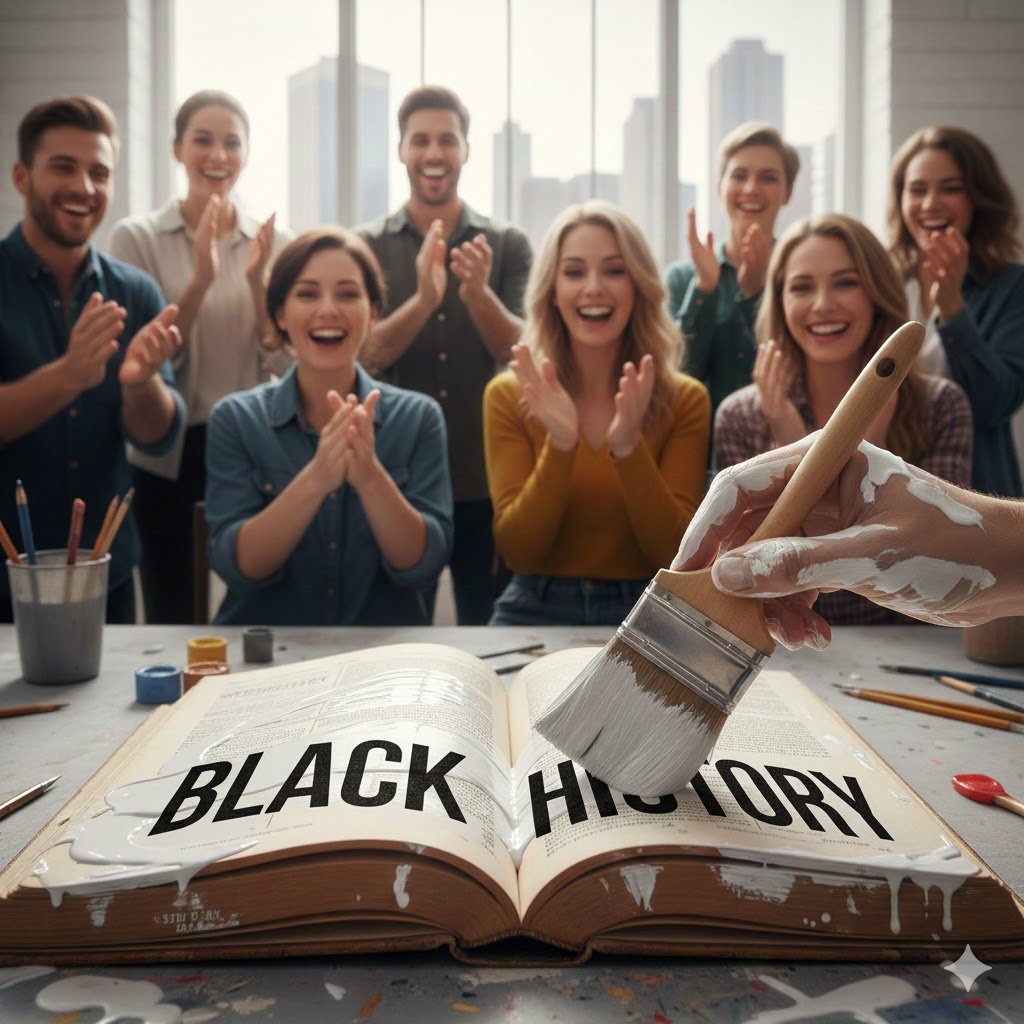
Tag Archives: politics

Is There Wealth in the Black Community?

The question of whether there is wealth in the Black community requires both historical and contemporary analysis. On one hand, there are visible examples of affluent Black individuals—entrepreneurs, entertainers, athletes, professionals, and political leaders—who have accumulated substantial financial resources. On the other hand, aggregate data consistently show that Black Americans, as a group, possess significantly less wealth than their White counterparts. This gap is not merely about income, but about intergenerational wealth, assets, ownership, and long-term financial security.

Wealth is fundamentally different from income. Income refers to money earned through wages or salaries, while wealth includes accumulated assets such as property, investments, businesses, savings, and inheritances. A household may earn a decent income yet remain wealth-poor if it lacks assets and savings. Studies show that even middle-class Black families often have far less wealth than White families with similar incomes, indicating structural rather than individual causes (Oliver & Shapiro, 2006).

Statistically, the racial wealth gap in the United States is stark. According to the Federal Reserve’s Survey of Consumer Finances, the median White household holds nearly ten times the wealth of the median Black household. In 2022, the median net worth of White households was approximately $285,000, compared to about $44,900 for Black households (Federal Reserve, 2023). This means that at the midpoint, a typical Black family has access to less than one-sixth of the financial resources of a typical White family.

Only a small percentage of Black Americans fall into the top wealth brackets. Roughly 10% of Black households hold the majority of Black wealth, mirroring the general pattern of wealth concentration in America, but starting from a far lower baseline (Pew Research Center, 2020). This creates the perception that “some” Black people are doing extremely well while the majority remain economically vulnerable.

Historically, the lack of wealth in the Black community is rooted in slavery and its aftermath. For over 250 years, enslaved Africans were denied wages, property, and legal personhood. After emancipation, formerly enslaved people were promised “40 acres and a mule,” but this never materialized. Instead, land and capital were redistributed back to former slaveholders, not the enslaved (Darity & Mullen, 2020).

The Jim Crow era further prevented Black wealth accumulation through legal segregation, exclusion from labor unions, and denial of access to quality education and housing. One of the most damaging policies was redlining, in which Black neighborhoods were systematically denied mortgages and investment. This meant Black families were locked out of the primary wealth-building tool in America: homeownership (Rothstein, 2017).

Homeownership remains one of the strongest predictors of wealth. Yet Black homeownership rates are still significantly lower than White rates. As of 2023, about 44% of Black households owned homes compared to over 73% of White households (U.S. Census Bureau, 2023). Since homes appreciate over time and can be passed down, this gap compounds across generations.

Education is often promoted as the great equalizer, but even here disparities remain. Black Americans are more likely to carry student loan debt and less likely to receive financial assistance from family. This means that Black graduates often begin their professional lives in debt, while White graduates are more likely to begin with inherited financial support (Hamilton et al., 2015).

Racism in the labor market also plays a role. Numerous studies show that Black job applicants are less likely to receive callbacks than equally qualified White applicants with identical resumes (Bertrand & Mullainathan, 2004). Wage gaps persist even when controlling for education and experience, limiting long-term earning and saving potential.

Additionally, Black entrepreneurs face greater barriers to capital. Black-owned businesses are more likely to be denied loans and receive smaller amounts at higher interest rates. Without access to startup capital, business growth is constrained, reducing one of the key pathways to wealth creation (Fairlie & Robb, 2008).

The idea that “a Black person can only get so far in America” reflects not a lack of talent or effort, but systemic ceilings embedded in institutions. Structural racism functions through policies, markets, and norms that disproportionately advantage White Americans while disadvantaging Black Americans, even without overt racial intent (Bonilla-Silva, 2018).

Another major issue is intergenerational wealth transfer. White families are far more likely to inherit money, property, or businesses. Inheritance accounts for a large portion of wealth inequality. Black families, having been historically excluded from asset ownership, simply have less to pass down (Piketty, 2014).

The lack of institutional “help” for Black people is also tied to political economy. Social programs that once benefited working-class Americans—such as the New Deal and GI Bill—were either explicitly or implicitly designed to exclude Black Americans. This produced a racialized welfare state that subsidized White mobility while limiting Black advancement (Katznelson, 2005).

Despite these realities, there is wealth within the Black community, but it is fragile, concentrated, and constantly threatened by systemic forces. Black wealth exists in professional classes, faith institutions, Black-owned media, real estate investors, and growing entrepreneurial networks. However, it lacks the generational depth and institutional protection found in White wealth.

To change this, structural solutions are required. Individual financial literacy is helpful but insufficient on its own. Policy interventions such as baby bonds, student debt cancellation, housing reparations, fair lending enforcement, and reparations for slavery are increasingly discussed as necessary to close the wealth gap (Darity et al., 2018).

At the individual level, strategies for Black wealth-building include prioritizing asset ownership, investing early, reducing consumer debt, building businesses, purchasing property in appreciating areas, and collective economics through cooperatives and community investment models. While these cannot fix systemic inequality, they can mitigate vulnerability.

Cultural shifts are also important. Consumerism, status spending, and symbolic wealth often replace long-term asset accumulation in marginalized communities. Reorienting values toward ownership, savings, and investment is crucial for sustainable economic empowerment (Hamilton & Darity, 2017).

Ultimately, the racial wealth gap is not a personal failure of Black Americans, but a predictable outcome of historical and institutional exclusion. Wealth in America has always been racialized. The question is not whether Black people work hard enough, but whether the economic system was ever designed to allow them to accumulate and retain wealth at scale.

In conclusion, there is wealth in the Black community, but it is limited, unequal, and structurally constrained. The idea that only 10% “make it” reflects a system that concentrates opportunity at the top while leaving the majority economically precarious. Without structural reform, the racial wealth gap will persist for generations.

True Black economic liberation requires both personal financial strategies and collective political action. Until racism in housing, education, finance, and labor is dismantled, wealth in the Black community will remain the exception rather than the norm.


References

Bertrand, M., & Mullainathan, S. (2004). Are Emily and Greg more employable than Lakisha and Jamal? American Economic Review, 94(4), 991–1013.
https://doi.org/10.1257/0002828042002561

Bonilla-Silva, E. (2018). Racism without racists: Color-blind racism and the persistence of racial inequality in America (5th ed.). Rowman & Littlefield.

Darity, W., Hamilton, D., Paul, M., Aja, A., Price, A., Moore, A., & Chiopris, C. (2018). What we get wrong about closing the racial wealth gap. Samuel DuBois Cook Center on Social Equity.

Darity, W., & Mullen, A. (2020). From here to equality: Reparations for Black Americans in the twenty-first century. University of North Carolina Press.

Fairlie, R. W., & Robb, A. (2008). Race and entrepreneurial success: Black-, Asian-, and White-owned businesses in the United States. MIT Press.

Federal Reserve. (2023). Survey of Consumer Finances. Board of Governors of the Federal Reserve System.

Hamilton, D., & Darity, W. (2017). The political economy of education, financial literacy, and the racial wealth gap. Federal Reserve Bank of St. Louis Review, 99(1), 59–76.

Hamilton, D., Darity, W., Price, A., Sridharan, V., & Tippett, R. (2015). Umbrellas don’t make it rain: Why studying and working hard isn’t enough for Black Americans. New School, Duke University.

Katznelson, I. (2005). When affirmative action was White: An untold history of racial inequality in twentieth-century America. W.W. Norton.

Oliver, M. L., & Shapiro, T. M. (2006). Black wealth/White wealth: A new perspective on racial inequality (2nd ed.). Routledge.

Pew Research Center. (2020). Trends in income and wealth inequality.

Piketty, T. (2014). Capital in the twenty-first century. Harvard University Press.

Rothstein, R. (2017). The color of law: A forgotten history of how our government segregated America. Liveright.

U.S. Census Bureau. (2023). Housing Vacancies and Homeownership (CPS/HVS).
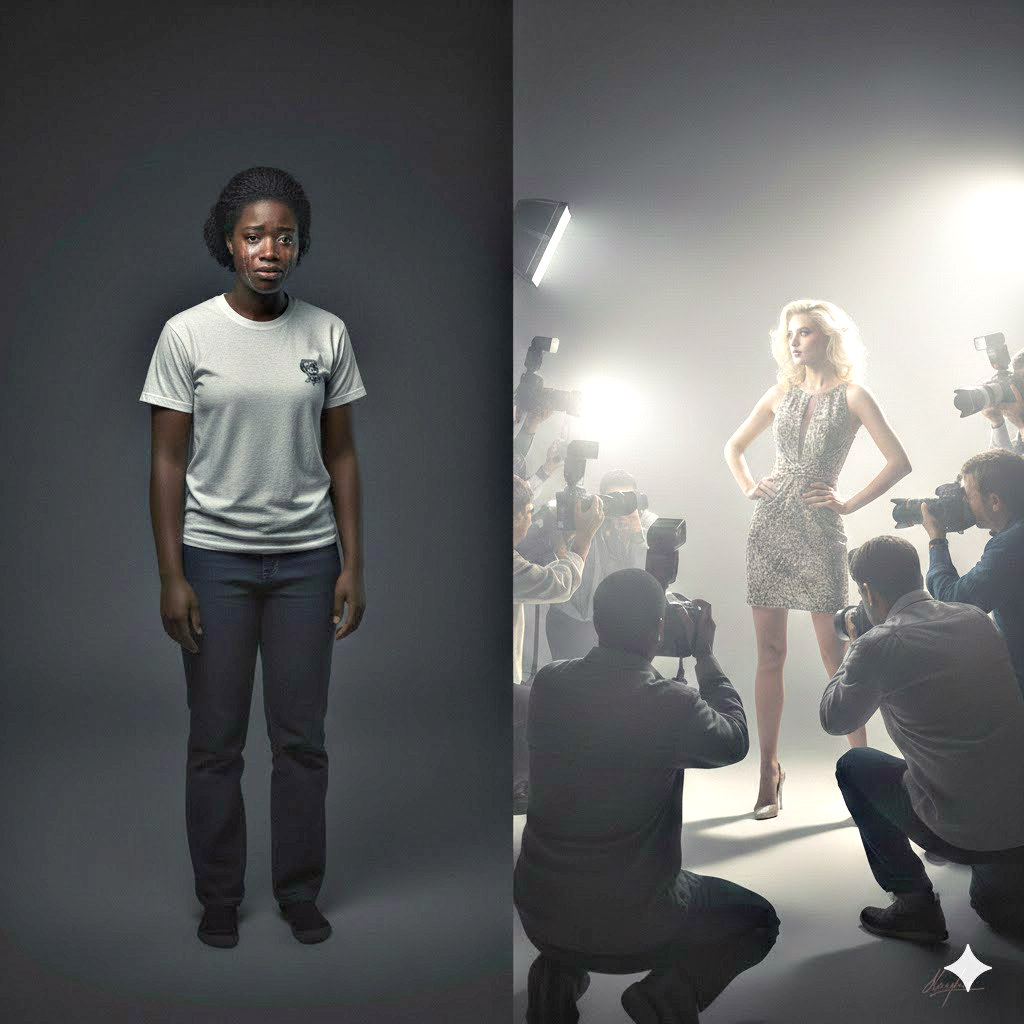
Aesthetics, Access, and Anti-Blackness

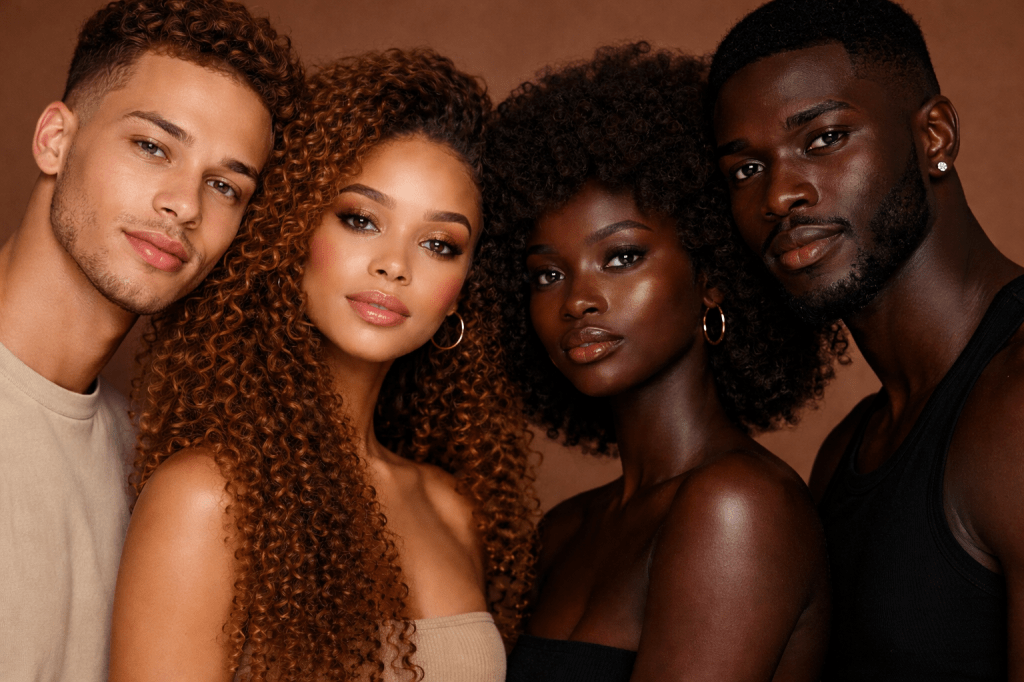
Aesthetics have never been neutral. From art and architecture to beauty standards and branding, what a society deems “beautiful” often reflects who holds power. In the Western world, aesthetic norms were constructed alongside colonialism, elevating Eurocentric features while devaluing African phenotypes, cultures, and expressions. This hierarchy of beauty became a quiet but powerful mechanism of anti-Blackness.

Anti-Black aesthetics operate by rendering Blackness undesirable, excessive, or threatening. Dark skin, broad noses, full lips, coily hair, and African body types were historically caricatured and pathologized. These representations did not arise organically; they were crafted to justify enslavement, segregation, and social exclusion.

Colonial visual culture played a central role in this process. European art and early scientific illustrations depicted Africans as primitive or animalistic, contrasting sharply with idealized white bodies portrayed as rational and refined. These images circulated widely, shaping public perception and reinforcing racial hierarchies.

Access became the material consequence of aesthetic hierarchy. Beauty standards dictated who could enter certain spaces, industries, and opportunities. From employment and housing to education and media visibility, proximity to whiteness often determined access to social mobility.

The beauty industry institutionalized this bias. For decades, cosmetic products, hair care lines, and advertising excluded darker skin tones and natural hair textures. Black consumers were forced to assimilate or self-alter in order to be seen as professional or acceptable.

Colorism emerged as a byproduct of anti-Black aesthetics. Within Black communities themselves, lighter skin and looser curls were rewarded, while darker skin was stigmatized. This internalized hierarchy reflects the psychological residue of colonial domination.

Media representation continues to shape aesthetic access. Black characters are often relegated to stereotypes, while darker-skinned women and men are underrepresented in leading or romantic roles. Visibility becomes conditional upon conformity to palatable forms of Blackness.

Fashion and luxury spaces also function as aesthetic gatekeepers. Black bodies are celebrated as inspiration yet policed as consumers. Cultural appropriation allows Black style to be commodified while Black people themselves face exclusion from elite spaces.

Educational institutions reinforce aesthetic norms through Eurocentric curricula that privilege Western art, philosophy, and standards of excellence. African aesthetics are often treated as supplemental or folkloric rather than foundational.

In the workplace, aesthetics dictate professionalism. Natural Black hair has been labeled unkempt, braids deemed unprofessional, and dark skin subtly associated with incompetence. These judgments translate into hiring bias, wage gaps, and limited advancement.

The criminalization of Black aesthetics further exposes anti-Blackness. Hoodies, sagging pants, and Afros have been used to justify surveillance, harassment, and lethal force. Black style becomes evidence of threat rather than expression.

Social media has intensified aesthetic policing while offering new avenues of resistance. Algorithms often favor Eurocentric beauty, yet digital platforms also allow Black creators to reclaim narrative control and redefine beauty on their own terms.

Historically, Black resistance has always included aesthetic rebellion. From African textiles and hairstyles to the Black Arts Movement, aesthetic expression has functioned as cultural preservation and political defiance.

Access to health and wellness is also shaped by aesthetics. Studies show that darker-skinned individuals receive less attentive medical care, as pain tolerance and credibility are racially biased. Appearance influences who is believed and who is neglected.

Aesthetics intersect with capitalism by determining market value. Black beauty generates billions in revenue, yet ownership and profit remain largely outside Black communities. Extraction persists even in celebration.

The psychological toll of aesthetic exclusion is profound. Anti-Black beauty standards contribute to low self-esteem, body dysmorphia, and identity fragmentation, particularly among Black youth.

Policy interventions such as the CROWN Act reveal how deeply aesthetics are tied to civil rights. Laws protecting natural hair underscore that beauty norms are not merely cultural preferences but mechanisms of discrimination.

Challenging anti-Black aesthetics requires structural change, not just representation. It demands redistribution of access, ownership, and authority over cultural production.

Reclaiming Black aesthetics is an act of liberation. When Black people define beauty on their own terms, they disrupt systems that profit from their erasure while consuming their culture.

Ultimately, aesthetics are about power—who is seen, who is valued, and who belongs. Until Blackness is no longer a barrier to beauty, access, and dignity, anti-Blackness will remain embedded in the visual and social fabric of society.


References

Bourdieu, P. (1984). Distinction: A social critique of the judgement of taste. Harvard University Press.

Collins, P. H. (2000). Black feminist thought: Knowledge, consciousness, and the politics of empowerment. Routledge.

Craig, M. L. (2002). Ain’t I a beauty queen? Black women, beauty, and the politics of race. Oxford University Press.

Fanon, F. (1952/2008). Black skin, white masks. Grove Press.

Hunter, M. (2007). The persistent problem of colorism. Sociology Compass, 1(1), 237–254.

Tate, S. A. (2015). Skin bleaching in black Atlantic zones. Palgrave Macmillan.

Wilkerson, I. (2020). Caste: The origins of our discontents. Random House.

Dilemma: Power Struggles in America

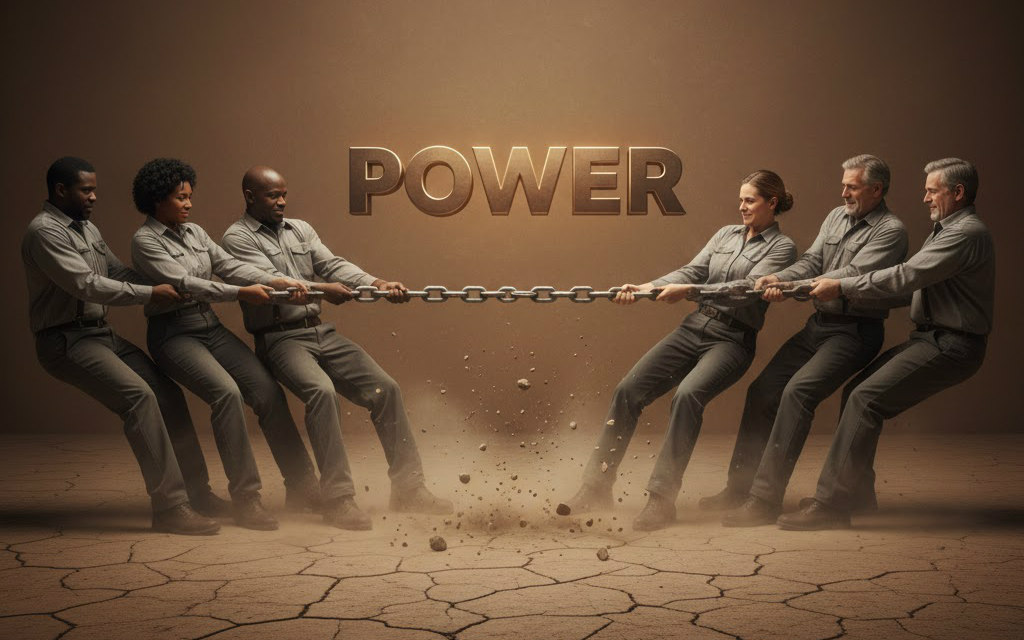
Power in America has never been neutral. From its inception, the nation’s economic, political, and cultural systems were constructed alongside chattel slavery, colonial extraction, and racial hierarchy. For Black America, modern inequality is not accidental or cultural—it is structural, historical, and systemic. The dilemma lies in navigating institutions that were never designed for Black flourishing, yet demand Black participation for survival.

Wall Street, often celebrated as the engine of American prosperity, traces its origins directly to slavery. The original Wall Street was a literal wall built by the Dutch in New Amsterdam, adjacent to a slave market where Africans were bought, sold, and traded. Early American capital accumulation relied heavily on enslaved labor, plantation profits, and transatlantic trade, making slavery foundational—not peripheral—to American finance.

Beyond geography, Wall Street institutionalized slavery through financial instruments. Bonds, mortgages, and commodities markets treated enslaved Africans as collateral and capital. Enslaved people were insured, leveraged, and securitized, embedding Black bodies into the architecture of global capitalism. This legacy persists in wealth inequality, where Black Americans hold a fraction of the wealth accumulated through centuries of racialized exploitation.

The insurance industry followed a similar trajectory. Early insurers such as Lloyd’s of London and American firms underwrote slave ships, plantations, and enslaved people themselves. Policies protected slave owners against rebellion, death, or loss of “property,” transforming human suffering into actuarial risk. This normalized the monetization of Black death and trauma.

Today, the insurance industry still reflects racial bias through redlining, discriminatory premiums, and unequal access to coverage. Black communities are more likely to be underinsured or denied protection, perpetuating vulnerability while insulating wealthier, whiter populations from risk.

Banking institutions also grew by financing slavery. Banks issued loans to purchase enslaved people, expand plantations, and sustain the plantation economy. Enslaved Africans were listed on balance sheets as assets. When slavery ended, no reparative restructuring followed—banks retained the wealth while Black people were released into poverty.

Modern banking continues this pattern through predatory lending, subprime mortgages, and unequal access to credit. These practices drain wealth from Black communities while reinforcing cycles of debt and dependency, echoing earlier forms of economic bondage.

Silicon Valley now represents a new form of power—control over technology, data, and the future. Algorithms determine employment, creditworthiness, policing, and visibility. Yet these systems are trained on biased data shaped by historical racism, reproducing discrimination under the guise of neutrality.

For Black America, technological control often means surveillance rather than empowerment. Facial recognition misidentifies Black faces, predictive policing targets Black neighborhoods, and digital platforms exploit Black culture without equitable compensation or ownership.

The pharmaceutical and medical industries wield immense power over health and survival. Historically, Black bodies were subjected to medical experimentation, from slavery-era surgeries without anesthesia to the Tuskegee Syphilis Study. These abuses created generational distrust.

Today, Black Americans experience higher mortality rates, inadequate care, and medical neglect. Pharmaceutical profit models prioritize treatment over prevention, while systemic racism ensures unequal access to quality healthcare, reinforcing the biological consequences of social inequality.

The prison-industrial complex represents one of the most direct continuations of slavery. The 13th Amendment abolished slavery “except as punishment for crime,” creating a legal pathway for forced labor. Prisons became sites where Black bodies were again exploited for economic gain.

Mass incarceration disproportionately targets Black men and women, extracting labor, destabilizing families, and generating profit for private corporations. This system functions as racial control, not public safety, maintaining a captive population for economic and political purposes.

The military-industrial complex controls violence and war, both abroad and at home. Black Americans have historically fought in wars for freedoms they were denied domestically. Military spending diverts resources from education, housing, and health needs that disproportionately affect Black communities.

Media power shapes perception, truth, and narrative. From minstrel imagery to modern news cycles, Black people are often portrayed as criminals, victims, or anomalies. Media framing influences public policy, jury decisions, and social attitudes.

This narrative control dehumanizes Black life while obscuring systemic causes of inequality. When the media defines reality, it also defines whose suffering matters and whose humanity is negotiable.

Religious institutions wield spiritual authority, yet American Christianity was deeply complicit in slavery. Churches provided theological justification for bondage, segregation, and racial hierarchy, often quoting scripture selectively to sanctify oppression.

Even today, many churches avoid confronting racial injustice, emphasizing personal salvation over structural sin. This spiritual deflection can pacify resistance and discourage critical engagement with power.

Government power enforces laws that have historically criminalized Black existence—from slave codes to Jim Crow to modern voter suppression. Legal frameworks often present themselves as neutral while producing racially unequal outcomes.

The education system controls knowledge and historical memory. Textbooks frequently sanitize slavery, omit Black resistance, and marginalize African contributions. This intellectual erasure shapes national identity and limits Black self-understanding.

Police power represents the most visible arm of state control. Originating from slave patrols, American policing has long functioned to protect property and enforce racial order. Black communities experience policing as occupation rather than protection.

The cumulative effect of these power structures is not coincidence but coordination. Each system reinforces the other—economic control supports political dominance, narrative control legitimizes violence, and spiritual control discourages rebellion.

For Black America, the dilemma is survival within systems that extract value while denying dignity. Resistance requires not only individual success but collective consciousness, historical literacy, and structural transformation.

Understanding these power struggles is the first step toward liberation. Without truth, there can be no justice—and without justice, America remains trapped in a moral contradiction of its own making.


References

Baptist, E. E. (2014). The half has never been told: Slavery and the making of American capitalism. Basic Books.

Du Bois, W. E. B. (1935). Black reconstruction in America. Free Press.

Hannah-Jones, N. (2019). The 1619 Project. The New York Times Magazine.

Kendi, I. X. (2016). Stamped from the beginning: The definitive history of racist ideas in America. Nation Books.

Rothstein, R. (2017). The color of law: A forgotten history of how our government segregated America. Liveright.

Alexander, M. (2012). The new Jim Crow: Mass incarceration in the age of colorblindness. The New Press.

The Dark History of Being Light-Skinned and Dark-Skinned Black Person Around the World.

The history of light-skinned Black people in the Atlantic world is inseparable from the violence of slavery, colonialism, and racial domination. Lighter complexions did not emerge as a neutral genetic variation but, in many cases, as the direct result of coercion, sexual violence, and unequal power relations between enslaved African women and European men. To discuss light skin in Black history honestly requires confronting this brutal origin story and the enduring psychological and social consequences that followed.

During chattel slavery, rape was not an aberration but a systemic feature of the institution. Enslaved women had no legal right to consent, and white slaveholders exercised near-absolute power over their bodies. The children born from these assaults often inherited lighter skin, straighter hair textures, or other Eurocentric features, marking their very existence as living evidence of sexual violence and domination.

These mixed-ancestry children were frequently labeled “mulatto,” a term rooted in dehumanization and animalization. The classification was not simply descriptive; it functioned as a legal and social category that helped slave societies manage hierarchy within Blackness. Skin tone became a tool of division, reinforcing white supremacy while fracturing solidarity among the enslaved.

Light-skinned enslaved people were often assigned domestic labor rather than field work. This distinction produced the infamous dichotomy between the “house negro” and the field slave, a hierarchy that was imposed, not chosen. Domestic labor sometimes spared individuals from the harshest physical toil, but it exposed them to constant surveillance, sexual exploitation, and proximity to white power.

Being inside the slaveholder’s home did not equate to safety or privilege in any meaningful sense. House servants were more accessible targets for abuse, especially young girls and women. The home was often the site of repeated assaults, emotional manipulation, and forced compliance masquerading as favor.

Incest further complicates this history. Because slavery followed the legal principle of partus sequitur ventrem, children inherited the status of the enslaved mother regardless of the father’s identity. This meant white men could rape their own enslaved daughters and grandchildren without legal consequence, creating generational cycles of abuse that literally lightened the complexion of the enslaved population over time.

Light-skinned children were sometimes recognized as the biological offspring of white men, yet this recognition rarely translated into protection or freedom. More often, it produced resentment, secrecy, or further exploitation. These children occupied a liminal space—never white, yet treated differently within Black communities because of their appearance.

Colorism did not end with emancipation. After slavery, lighter skin continued to carry social currency within Black communities, a legacy of plantation hierarchies and white aesthetic standards. Access to education, employment, social clubs, and marriage prospects was often influenced by complexion, reinforcing divisions rooted in trauma rather than choice.

The psychological burden placed on light-skinned Black people is rarely discussed with nuance. Many carried the stigma of being perceived as products of rape or favoritism, while simultaneously being resented for “privileges” they neither requested nor controlled. This double bind created identity conflicts that reverberate across generations.

At the same time, darker-skinned Black people bore the brunt of systemic violence and exclusion, creating a false narrative that light skin equaled safety or advantage. This obscured the reality that all Black people, regardless of shade, remained subject to racial terror, disenfranchisement, and economic exploitation.

White supremacy strategically used color hierarchies to weaken collective resistance. By elevating lighter skin as closer to whiteness, slave societies encouraged internalized racism and competition. This divide-and-conquer strategy proved effective, leaving lasting scars in Black social relations long after formal slavery ended.

The myth of the “favored” light-skinned enslaved person ignores the constant precarity of their position. Favor could be revoked at any moment, and proximity to power often meant proximity to punishment. Psychological violence—humiliation, erasure, and forced loyalty—was as real as physical brutality.

In religious and moral discourse, enslaved women were blamed for their own assaults, reinforcing misogynoir and sexual shame. Light-skinned children became symbols onto which communities projected unresolved grief, anger, and confusion about sexual violence that was never acknowledged or healed.

Post-slavery societies institutionalized colorism through laws, media, and social norms. Paper bag tests, “blue vein” societies, and caste-like systems in the Caribbean and Americas continued to privilege lighter skin while stigmatizing darker tones. These practices reflected colonial logic rather than African worldviews.

Light skin thus became a paradoxical inheritance: a marker of survival through violence, yet also a source of alienation. Many light-skinned Black people struggled with belonging, questioned their legitimacy within Blackness, or felt compelled to overperform loyalty to counter suspicions of superiority.

Modern conversations about colorism often flatten this history, framing light skin solely as advantage without acknowledging its traumatic origins. This simplification risks reproducing harm by ignoring how sexual violence, incest, and coercion shaped Black bodies and identities.

Healing requires truth-telling. Acknowledging that many light-skinned Black people exist because of rape does not indict them; it indicts the system that produced them. It reframes colorism as a legacy of white supremacy rather than a natural preference within Black communities.

Reclaiming Black unity demands rejecting plantation hierarchies in all forms. Skin tone must be understood as a consequence of history, not a measure of worth, purity, or authenticity. Both light- and dark-skinned Black people inherit trauma from the same system, expressed differently but rooted in the same violence.

To confront the dark history of being light-skinned is to confront slavery honestly. It requires resisting romanticized narratives of privilege and instead centering the realities of rape, incest, coercion, and psychological harm. Only then can colorism be dismantled at its root.

True liberation lies in dismantling the myths that slavery created about skin, beauty, and value. When Black people collectively reject these imposed hierarchies, they reclaim the dignity that was denied to their ancestors—regardless of shade.

The history of dark-skinned Black people is inseparable from the foundations of global white supremacy and the transatlantic slave system. Darkness of skin was deliberately constructed as a marker of inferiority, danger, and disposability, used to justify enslavement, colonization, and dehumanization on a massive scale. From the earliest encounters between Africa and Europe, dark skin became a visual shorthand for domination.

During chattel slavery, darker skin was closely associated with field labor, brutality, and physical exhaustion. Enslaved Africans with the darkest complexions were often assigned the harshest work under the most violent conditions, reinforcing an imposed hierarchy where darkness equaled expendability. This association was not natural but engineered to align Blackness with suffering.

Slaveholders and overseers frequently treated darker-skinned enslaved people with heightened cruelty. Punishments were more public and severe, intended to terrorize others into submission. Darkness of skin was read as strength and resistance, which paradoxically made dark-skinned bodies targets for extreme violence meant to break both body and spirit.

European racial ideology framed dark skin as evidence of savagery, hypersexuality, and moral inferiority. Pseudoscientific racism used skin color to rank humanity, placing the darkest Africans at the bottom of fabricated racial hierarchies. These ideas were embedded in law, religion, and education, ensuring their persistence beyond slavery.

Dark-skinned women endured a unique intersection of racial and gendered violence. They were depicted as unfeminine, animalistic, and unrapeable, narratives that excused sexual assault while denying their victimhood. Their pain was minimized, and their bodies were exploited without acknowledgment or protection.

Unlike their lighter-skinned counterparts, dark-skinned enslaved women were less likely to be brought into the slaveholder’s home. Instead, they were forced into grueling labor while remaining vulnerable to sexual violence without the contradictory myths of “favor” or proximity to power. Their suffering was both hypervisible and ignored.

After emancipation, the devaluation of dark skin did not disappear. Reconstruction and Jim Crow regimes continued to associate darkness with criminality, poverty, and intellectual inferiority. Dark-skinned Black people were more likely to face harsher sentencing, economic exclusion, and social ostracism.

Within Black communities, colorism took root as an internalized inheritance of slavery. Dark-skinned individuals were often subjected to ridicule, diminished marriage prospects, and limited social mobility. These biases reflected plantation hierarchies rather than African cultural values, yet they became normalized through repetition.

Dark-skinned children frequently absorbed messages that their appearance was something to overcome rather than celebrate. Insults, teasing, and media representation taught them early that beauty, intelligence, and desirability were linked to lighter skin. This psychological conditioning produced long-term effects on self-worth and identity.

In education and employment, studies have shown that darker-skinned Black people often face greater discrimination than lighter-skinned peers. Teachers, employers, and institutions unconsciously reproduce racial hierarchies by associating darkness with incompetence or threat, reinforcing inequality under the guise of neutrality.

The criminal justice system has disproportionately punished dark-skinned Black people, who are more likely to be perceived as dangerous or aggressive. Skin tone bias affects policing, sentencing, and jury decisions, revealing how deeply colorism is embedded in modern systems of control.

Media representations have historically erased or caricatured dark-skinned people. When present, they were cast as villains, servants, or comic relief, rarely afforded complexity or humanity. This absence of dignified representation reinforced societal disdain for dark skin.

Dark-skinned men have often been portrayed as inherently violent or hypermasculine, narratives used to justify surveillance, incarceration, and extrajudicial violence. These stereotypes trace directly back to slavery-era fears of rebellion and resistance.

Despite these conditions, dark-skinned Black people have consistently embodied resilience and leadership. Many of the most vocal resisters, abolitionists, and freedom fighters bore the brunt of racial hatred precisely because their appearance symbolized unapologetic Blackness.

The global preference for lighter skin, seen in bleaching practices and beauty standards, reflects unresolved trauma rather than truth. Dark skin became a site of shame not because it lacked value, but because white supremacy taught the world to fear and reject it.

Healing requires confronting how darkness was weaponized against Black people. It demands rejecting the lie that proximity to whiteness equals humanity and acknowledging that the most violently oppressed bodies were often the darkest.

Reclaiming dark skin as beautiful and sacred is an act of resistance. It challenges centuries of conditioning that equated darkness with evil and lightness with virtue. This reclamation restores dignity stolen by slavery and colonialism.

True racial justice cannot exist without addressing colorism. Ignoring skin tone hierarchies allows slavery’s legacy to persist under new names. Justice requires naming how dark-skinned people have been uniquely targeted and harmed.

The dark history of being dark-skinned is not merely a story of suffering but of survival. Against overwhelming forces designed to erase them, dark-skinned Black people endured, resisted, and shaped the world.

Honoring this history means dismantling the systems that still punish darkness today. Only by confronting the truth of how dark skin was treated can society move toward genuine liberation, healing, and collective Black unity.

The histories of being light-skinned and dark-skinned are not opposing narratives, but parallel wounds carved by the same violent system. Color hierarchies were never born within Black communities; they were engineered by slavery and colonialism to rank, divide, and control. Whether through the sexual violence that produced lighter complexions or the intensified brutality directed at darker bodies, skin tone became a tool of domination rather than a reflection of worth.

Both histories reveal how white supremacy manipulated Black bodies into symbols—of proximity or distance, favor or punishment—while denying all Black people full humanity. These imposed distinctions fractured families, distorted identity, and seeded internalized bias that continues to echo across generations. The pain attached to skin tone is not accidental; it is historical, intentional, and unresolved.

True healing requires rejecting plantation logic in every form. It demands that Black communities confront colorism honestly, without competition or denial, and recognize it as inherited trauma rather than personal failure. Light skin and dark skin alike carry the memory of survival under oppression, not moral ranking or superiority.

Liberation begins when Black people refuse to measure themselves by standards forged in violence. When the false hierarchy of shade is dismantled, space is created for collective dignity, restoration, and unity. In reclaiming the fullness of Blackness—across every tone—we reject the lies of the past and affirm a future rooted in truth, justice, and wholeness.

References

Berlin, I. (1998). Many thousands gone: The first two centuries of slavery in North America. Harvard University Press.

Davis, A. Y. (1981). Women, race, & class. Random House.

Douglass, F. (1845). Narrative of the life of Frederick Douglass, an American slave. Anti-Slavery Office.

hooks, b. (1992). Black looks: Race and representation. South End Press.

Hunter, M. (2007). The persistent problem of colorism: Skin tone, status, and inequality. Sociology Compass, 1(1), 237–254. https://doi.org/10.1111/j.1751-9020.2007.00006.x

Morgan, J. L. (2004). Laboring women: Reproduction and gender in New World slavery. University of Pennsylvania Press.

Painter, N. I. (2010). The history of white people. W. W. Norton & Company.

Smallwood, S. (2007). Saltwater slavery: A middle passage from Africa to American diaspora. Harvard University Press.

Spillers, H. J. (1987). Mama’s baby, papa’s maybe: An American grammar book. Diacritics, 17(2), 65–81.

Wood, B. (2003). Women’s work, men’s work: The informal slave economies of lowcountry Georgia. University of Georgia Press.

Davis, A. Y. (1981). Women, race, & class. Random House.

Du Bois, W. E. B. (1903). The souls of Black folk. A. C. McClurg & Co.

Fanon, F. (1952). Black skin, white masks. Éditions du Seuil.

Hall, R. E. (1995). The bleaching syndrome: African Americans’ response to cultural domination vis-à-vis skin color. Journal of Black Studies, 26(2), 172–184.

Hunter, M. (2007). The persistent problem of colorism: Skin tone, status, and inequality. Sociology Compass, 1(1), 237–254. https://doi.org/10.1111/j.1751-9020.2007.00006.x

Jordan, W. D. (1968). White over Black: American attitudes toward the Negro, 1550–1812. University of North Carolina Press.

Spillers, H. J. (1987). Mama’s baby, papa’s maybe: An American grammar book. Diacritics, 17(2), 65–81.

Thompson, C. (2009). Black women, beauty, and hair as a matter of being. Women’s Studies, 38(8), 831–856.

Wilson, M., Hugenberg, K., & Rule, N. O. (2017). Racial bias in judgments of physical size and formidability. Psychological Science, 28(8), 1136–1144.

Wood, B. (2003). Women’s work, men’s work: The informal slave economies of lowcountry Georgia. University of Georgia Press.

The Isms of Black People: Racism, Colorism, and Beyond.

Photo by Kindel Media on Pexels.com

The history of Black people across the diaspora is marked by survival under systems of oppression, division, and erasure. To understand this history, one must examine the many “isms” that have shaped both external conditions and internal realities. Racism, colorism, classism, sexism, and materialism each stand as forces that distort identity, fracture unity, and reproduce inequality. Yet through these trials, Black people have also demonstrated resilience, faith, and creativity that transcend systemic barriers.

Racism stands at the foundation of oppression against Black people. Rooted in slavery, colonialism, and segregation, racism created a system of economic exploitation and social dehumanization. Enslavement reduced people to property, and post-slavery policies institutionalized inequality through Jim Crow laws, redlining, and mass incarceration. Racism is more than individual prejudice; it is structural, shaping opportunity, wealth, and health. Scripture reminds us of the cruelty of oppression: “They afflict the just, they take a bribe, and they turn aside the poor in the gate from their right” (Amos 5:12, KJV).

Colorism, though a product of racism, operates as a unique internal “ism.” Defined as prejudice or discrimination based on skin shade within the same racial or ethnic group, colorism privileges lightness and stigmatizes darkness. This hierarchy dates back to slavery, when lighter-skinned enslaved people were sometimes granted household work, while darker-skinned people labored in the fields. Today, this legacy persists in beauty standards, employment opportunities, and social perceptions. As Hunter (2007) notes, skin tone continues to influence social mobility within Black communities.

The psychological impact of colorism is profound. Dark-skinned individuals often face diminished self-esteem, while lighter-skinned individuals may struggle with authenticity and belonging. The Bible warns against valuing outward appearance: “For the Lord seeth not as man seeth; for man looketh on the outward appearance, but the Lord looketh on the heart” (1 Samuel 16:7, KJV). True worth is not measured by complexion, but by the character shaped by God.

Classism is another “ism” that plagues Black people. Historically, systemic barriers restricted access to land ownership, wealth accumulation, and higher education. Today, the racial wealth gap continues to mirror these inequalities, with Black households on average holding significantly less wealth than White households (Oliver & Shapiro, 2006). Within Black communities, however, class divisions can also produce elitism, where those who attain success may distance themselves from those still struggling.

This elitism can erode solidarity, creating divisions where unity is most needed. The talented tenth, the Black elite, and the upwardly mobile sometimes face accusations of abandoning their communities. Others are judged as “not doing enough” for collective uplift. These tensions demonstrate how classism operates both externally through systemic exclusion and internally through fractured relationships.

Sexism also shapes the Black experience. Black women, in particular, navigate the intersection of race and gender oppression, often referred to as “double jeopardy.” They face barriers in employment, healthcare, and representation, while simultaneously carrying cultural expectations of strength and endurance. Yet, Black women have been the backbone of movements for freedom, justice, and faith. Proverbs 31 honors such women: “Strength and honour are her clothing; and she shall rejoice in time to come” (Proverbs 31:25, KJV).

Internalized sexism within Black communities can also manifest in the devaluing of women’s voices or the pressure placed upon men to dominate rather than partner. These attitudes reflect both the legacy of patriarchal systems and the scars of slavery that disrupted family structures. Healing requires both men and women reclaiming biblical partnership and honoring the dignity of one another.

Materialism is another challenge—one that often emerges as a response to systemic poverty. In societies where consumerism defines worth, material possessions become a way to prove success and resist historical narratives of lack. Yet, materialism also traps people in cycles of debt and emptiness. Jesus warned, “Take heed, and beware of covetousness: for a man’s life consisteth not in the abundance of the things which he possesseth” (Luke 12:15, KJV).

This pursuit of material validation is compounded by media representations. From music videos to advertisements, Black culture is often associated with displays of wealth, fashion, and consumption. While cultural expression should not be dismissed, it is important to question whether such portrayals empower communities or reinforce destructive values.

Nationalism and ethnocentrism can also be considered part of the “isms” Black people navigate. Movements such as Pan-Africanism have provided pride and unity across the diaspora, but they can sometimes exclude or create tensions among different groups. For example, tensions between continental Africans and African Americans have occasionally emerged due to differing historical experiences. While these divisions are understandable, they must be overcome in the pursuit of global solidarity.

Religious elitism has also impacted Black communities. Denominationalism, doctrinal disputes, and church hierarchies sometimes divide believers rather than unify them. This contradicts Christ’s prayer for unity: “That they all may be one; as thou, Father, art in me, and I in thee” (John 17:21, KJV). Faith must function not as a divider, but as a healer of fractures caused by oppression.

Psychologically, these “isms” contribute to identity struggles, self-hatred, and internalized oppression. Frantz Fanon (1967) argued that colonialism implanted inferiority in the minds of the colonized, creating cycles of self-doubt and division. For Black people, this has meant carrying not only the weight of external racism but also the burden of internalized narratives of inadequacy.

Yet resilience remains central to the Black story. Despite racism, colorism, classism, sexism, and materialism, Black communities have birthed cultural movements, spiritual awakenings, and liberation struggles that inspire the world. From gospel music to civil rights activism, from African spirituality to biblical faith, Black people have consistently transformed oppression into creativity and survival.

Theologically, the “isms” faced by Black people mirror biblical exile and restoration. Just as Israel endured scattering, captivity, and oppression, so too have Black communities faced displacement and systemic bondage. Yet the Bible promises hope: “I will gather you out of all countries, and will bring you into your own land” (Ezekiel 36:24, KJV). For many, this speaks not only to spiritual restoration but to cultural reclamation.

Unity is the ultimate antidote to these “isms.” The divisions imposed by racism, colorism, classism, and other forces cannot be healed without collective solidarity. As Paul wrote, “There is neither Jew nor Greek, there is neither bond nor free, there is neither male nor female: for ye are all one in Christ Jesus” (Galatians 3:28, KJV). Unity does not erase difference, but it transforms difference into strength.

Education is also a key weapon against the “isms.” By teaching history, exposing systemic inequities, and reclaiming cultural heritage, communities can break cycles of ignorance and division. Knowledge allows people to recognize oppression not as personal failure but as structural injustice, while also equipping them to resist and rebuild.

Healing from these “isms” also requires spiritual renewal. Faith provides a framework for forgiveness, restoration, and hope. Prayer, scripture, and community worship serve as antidotes to despair and division, empowering individuals to rise above the weight of systemic oppression.

Ultimately, the “isms” of Black people must be confronted both within and without. Externally, systems of racism and inequality must be dismantled. Internally, the psychological scars of colorism, classism, and sexism must be healed. This dual work requires both social activism and spiritual transformation.

In conclusion, the “isms” of Black people reveal a history of wounds, but also a story of resilience. Each “ism” highlights the complexity of oppression, yet within each struggle lies the possibility of renewal. By grounding identity in faith, reclaiming cultural pride, and pursuing unity, Black people can move beyond the chains of “isms” and embody the freedom promised by God.


📖 References

  • Holy Bible, King James Version.
  • Hunter, M. (2007). The persistent problem of colorism: Skin tone, status, and inequality. Sociology Compass, 1(1), 237–254.
  • Oliver, M. L., & Shapiro, T. M. (2006). Black wealth/white wealth: A new perspective on racial inequality. Taylor & Francis.
  • Fanon, F. (1967). Black skin, white masks. Grove Press.

Beyond Bias: Education, Culture, and the Future of Brown Girl Empowerment. #thebrowngirldilemma

Photo by Polina Tankilevitch on Pexels.com

Brown girls navigate a complex social landscape where bias, colorism, and cultural stereotypes intersect, shaping self-perception, opportunity, and empowerment. From childhood through adulthood, societal norms often privilege lighter skin, Eurocentric features, and conformity to dominant cultural ideals, placing additional pressure on Brown girls to assert their identity and worth. Overcoming these challenges requires a multi-faceted approach that combines education, cultural affirmation, and personal resilience.

Education plays a pivotal role in empowering Brown girls to rise above systemic bias. Academic achievement equips them with critical thinking skills, confidence, and the ability to advocate for themselves in both professional and social settings. Schools and mentorship programs that emphasize representation, diversity, and culturally responsive pedagogy can counteract stereotypes, reinforcing the idea that intelligence, talent, and leadership are independent of skin tone or appearance (Banks, 2015). Knowledge becomes both armor and empowerment, allowing Brown girls to challenge narratives that seek to diminish their potential.

Cultural affirmation is equally crucial. Celebrating Black and Brown heritage, hair textures, skin tones, and historical achievements fosters pride and resilience. Exposure to role models like Lupita Nyong’o, Issa Rae, and Yara Shahidi demonstrates that success, beauty, and influence are not determined by proximity to whiteness but by authenticity, talent, and perseverance. Cultural initiatives, festivals, and media representation highlight the diversity and richness of Brown girl identity, providing alternative narratives that counteract colorism and societal marginalization.

Psychological resilience is intertwined with education and cultural affirmation. Brown girls often experience internalized bias, which can erode self-esteem and hinder personal growth. Social comparison theory explains how constant exposure to societal standards favoring lighter skin or Eurocentric features can produce dissatisfaction and self-doubt (Festinger, 1954). By cultivating self-awareness, mindfulness, and confidence-building practices, Brown girls can navigate these pressures while maintaining pride in their heritage and features.

Media literacy also empowers Brown girls to critique and navigate content that perpetuates bias. Social media, film, and advertising frequently amplify colorism and unrealistic beauty standards. Teaching Brown girls to deconstruct media messages, recognize algorithmic biases, and value authentic representation fosters critical engagement rather than passive acceptance. This awareness reinforces the understanding that beauty, worth, and influence are not dictated by societal trends but by personal integrity and talent (Fardouly et al., 2015).

Mentorship and community support amplify empowerment. Programs that connect Brown girls with successful role models provide guidance, encouragement, and proof that overcoming bias is possible. Mentors not only teach skills but also model resilience, confidence, and leadership. Supportive networks reinforce the notion that challenges related to skin tone, culture, or societal expectation can be met with knowledge, self-worth, and collective solidarity.

Spiritual grounding offers a lasting framework for empowerment. Proverbs 31:30 (KJV) declares, “Favour is deceitful, and beauty is vain: but a woman that feareth the LORD, she shall be praised.” Faith provides Brown girls with a lens to measure their value beyond societal metrics of beauty or achievement. Spiritual conviction nurtures confidence, perseverance, and ethical decision-making, ensuring that empowerment is holistic, anchored in character as well as capability.

Looking to the future, the empowerment of Brown girls depends on dismantling systemic bias while celebrating identity. Education, cultural affirmation, mentorship, and spiritual grounding collectively create pathways for Brown girls to thrive academically, socially, and personally. Visibility in media, leadership roles, and public discourse further normalizes diverse representation, ensuring that future generations inherit a world where beauty, intelligence, and influence are inclusive and celebrated.

Empowerment in Action: Tools and Programs Uplifting Brown Girls

Empowering Brown girls requires intentional initiatives that address both systemic barriers and personal development. Across education, media, and leadership, programs are emerging to provide resources, mentorship, and representation, equipping young women to navigate societal bias while embracing their identity with pride.

Educational Programs and Mentorship
Programs like Girls Who Code and Black Girls CODE offer access to STEM education, mentorship, and skill-building opportunities for young Black and Brown girls. By fostering technical proficiency and problem-solving skills, these programs counteract stereotypes about intellectual capacity while promoting confidence in academic achievement. Local initiatives, such as culturally responsive school curricula and after-school enrichment programs, ensure that Brown girls see themselves reflected in their learning and are encouraged to pursue higher education and leadership roles (Banks, 2015).

Media Representation and Literacy
Representation in media shapes self-perception and societal expectations. Initiatives like #BlackGirlMagic, #UnapologeticallyBlack, and campaigns led by organizations such as The Representation Project highlight dark-skinned beauty, natural hair textures, and culturally diverse achievements. Media literacy programs teach Brown girls to critically engage with content, identify bias, and challenge unrealistic beauty standards, fostering resilience against harmful social comparisons (Fardouly et al., 2015).

Leadership and Entrepreneurship Programs
Leadership programs like Black Girls Rock! and The National Coalition of 100 Black Women, Inc. empower young women to take active roles in their communities, promoting civic engagement, public speaking, and entrepreneurship. These platforms provide visibility, mentorship, and resources to cultivate both confidence and competence. Brown girls participating in these programs learn to leverage their talents, articulate their perspectives, and claim space in sectors where representation has been historically limited.

Cultural Affirmation and Community Spaces
Cultural centers, youth groups, and online communities dedicated to celebrating Black and Brown heritage create safe spaces for identity exploration and affirmation. Events, workshops, and storytelling sessions allow Brown girls to explore ancestry, art, and personal style while learning from role models who reflect their experiences. These spaces cultivate pride in cultural heritage and counteract internalized colorism, reinforcing the value of authentic self-expression (Hunter, 2007).

Mental Health and Wellness Initiatives
Programs like Therapy for Black Girls address mental health challenges, including anxiety, depression, and self-esteem issues arising from colorism and societal bias. Providing access to culturally competent counselors and peer support, these initiatives normalize emotional care and teach coping strategies for navigating discrimination, social pressures, and media-induced comparison. Mental wellness becomes an essential pillar of empowerment, ensuring that Brown girls develop both confidence and resilience.

Faith and Spiritual Development
Faith-based programs and mentorship integrate spiritual grounding with personal growth. By emphasizing values such as integrity, discipline, and purpose, these initiatives complement secular programs, reinforcing that self-worth extends beyond societal standards of beauty or achievement. Proverbs 31:30 (KJV) serves as a guiding principle: “Favour is deceitful, and beauty is vain: but a woman that feareth the LORD, she shall be praised.” Spiritual empowerment supports holistic development, nurturing both character and confidence.

Digital Platforms and Social Media Advocacy
Social media, when used intentionally, becomes a tool for empowerment. Platforms like Instagram, YouTube, and TikTok allow Brown girls to showcase talent, share personal narratives, and build supportive networks. Influencers and content creators who celebrate natural hair, melanin-rich skin, and cultural heritage provide relatable role models, amplifying messages of self-love and pride. Digital advocacy challenges traditional gatekeepers of beauty and success, democratizing influence and visibility.

Policy and Institutional Support
Sustainable empowerment also requires systemic change. Advocating for policies that address colorism, discrimination, and unequal educational resources ensures that empowerment extends beyond individual programs. Scholarships, equitable representation in curricula, and funding for culturally focused initiatives create structural support that allows Brown girls to thrive academically, socially, and professionally.

Empowering Brown girls demands a multi-dimensional approach that integrates education, mentorship, media representation, mental wellness, cultural affirmation, and spiritual grounding. Programs such as Black Girls CODE, Black Girls Rock!, Therapy for Black Girls, and media campaigns like #BlackGirlMagic illustrate practical pathways for fostering confidence, resilience, and leadership. By combining personal development with systemic advocacy, communities can ensure that the next generation of Brown girls steps into spaces of power, influence, and self-assured identity with pride and unshakable confidence.

In conclusion, moving beyond bias requires intentional strategies that affirm identity, cultivate knowledge, and promote resilience. Brown girls, equipped with education, cultural pride, mentorship, and spiritual grounding, are positioned to redefine societal standards, challenge prejudice, and embrace empowerment in its fullest sense. By fostering these conditions, communities can ensure that the future of Brown girl identity is one of confidence, dignity, and unassailable self-worth.


References

Banks, J. A. (2015). Cultural diversity and education: Foundations, curriculum, and teaching. Routledge.

Festinger, L. (1954). A theory of social comparison processes. Human Relations, 7(2), 117–140.

Fardouly, J., Diedrichs, P. C., Vartanian, L. R., & Halliwell, E. (2015). Social comparisons on social media: The impact of Facebook on young women’s body image concerns and mood. Body Image, 13, 38–45.

Hunter, M. (2007). The persistent problem of colorism: Skin tone, status, and inequality. Sociology Compass, 1(1), 237–254.

Byrd, A. D., & Tharps, L. L. (2014). Hair Story: Untangling the Roots of Black Hair in America. St. Martin’s Press.

Between Worlds: Understanding Biracial Identity, History, and Humanity

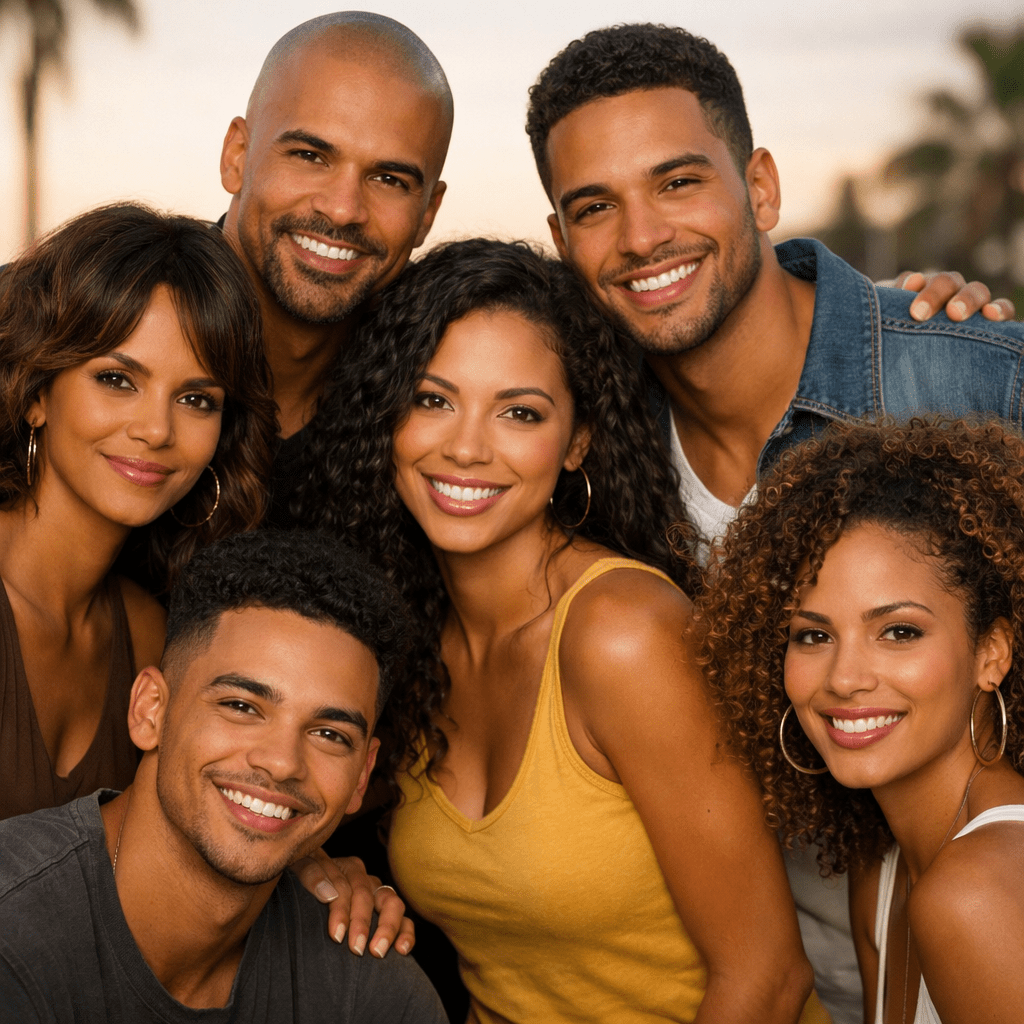
Biracial identity exists at the intersection of history, power, love, and survival. To be biracial is not merely to possess ancestry from two racial groups; it is to navigate a world that has long been obsessed with classification, hierarchy, and visual difference. The biracial experience exposes the artificiality of race while simultaneously revealing how deeply race structures social life.

Historically, biracial people did not emerge from a vacuum of harmony. In many societies—particularly in the Americas—biracial populations grew out of colonialism, enslavement, sexual violence, coercion, and unequal power relations. European colonization of Africa and the Americas produced racial mixing under conditions that were often violent and asymmetrical, leaving biracial descendants to inherit complex legacies rather than simple origin stories.

In the United States, the “one-drop rule” legally and socially erased biracial identity for centuries. Anyone with African ancestry was classified as Black, regardless of appearance or cultural upbringing. This rigid racial binary denied biracial people the right to self-definition and reinforced white supremacy by preserving racial purity narratives (Davis, 2001). Biracial identity, therefore, has always been political.

Modern biracial individuals often face a paradox: being hyper-visible and invisible at the same time. They may be exoticized for ambiguous features while simultaneously pressured to “choose a side.” This demand reflects society’s discomfort with complexity. Biracial people challenge the illusion that race is biological rather than social, revealing it instead as a constructed system maintained through perception and power.

Psychologically, biracial identity development can involve unique challenges. Research shows that biracial individuals often experience identity invalidation, social exclusion, and questioning of authenticity from both racial groups (Rockquemore & Brunsma, 2002). These experiences can lead to internal conflict, but they can also foster adaptability, cultural fluency, and critical awareness.

Media representation has played a significant role in shaping public perceptions of biracial people. Often portrayed as symbols of progress or “post-racial” society, biracial individuals are burdened with unrealistic expectations to reconcile racial divisions they did not create. This narrative obscures ongoing racism and places emotional labor on those already navigating complex identities.

Within the Black community, conversations around biracial identity are especially layered. Colorism, proximity to whiteness, and historical trauma influence how biracial people are perceived and received. While some biracial individuals benefit from lighter skin privilege, others are fully racialized as Black regardless of mixed ancestry. These dynamics reveal that privilege is not evenly distributed among biracial populations.

Culturally, biracial identity is not a monolith. A biracial person raised in a Black household may experience identity differently from someone raised in a white or multicultural environment. Language, neighborhood, religion, and socialization often matter more than genetics alone. Identity, therefore, is lived—not simply inherited.

Genetically, science confirms what sociology has long suggested: race has no biological foundation. Human genetic variation exists on a continuum, with more diversity within so-called racial groups than between them (Lewontin, 1972; Templeton, 2013). Biracial individuals embody this truth, challenging rigid racial thinking through their very existence.

Spiritually and ethically, biracial identity raises questions about belonging, unity, and human dignity. Many faith traditions affirm that humanity shares a common origin, contradicting ideologies that divide people by phenotype. From this perspective, biracial people are not anomalies but reminders of shared humanity.

In contemporary society, biracial individuals are increasingly claiming the right to self-definition. Rather than being boxed into externally imposed categories, many embrace fluid, contextual, and intersectional identities. This shift reflects a broader cultural reckoning with race, power, and history.

Ultimately, the biracial experience exposes both the cruelty and the creativity of human societies. It reveals how deeply people cling to racial boundaries—and how easily those boundaries are crossed. To understand biracial identity is to confront uncomfortable truths about history while imagining more honest, inclusive futures.

Biracial people do not exist to resolve racial tension or symbolize harmony. They exist because people did—and do—love, exploit, resist, survive, and endure. Their stories deserve complexity, respect, and truth.


References

Davis, F. J. (2001). Who is Black? One nation’s definition. Pennsylvania State University Press.

Lewontin, R. C. (1972). The apportionment of human diversity. Evolutionary Biology, 6, 381–398.

Rockquemore, K. A., & Brunsma, D. L. (2002). Beyond Black: Biracial identity in America. Sage Publications.

Templeton, A. R. (2013). Biological races in humans. Studies in History and Philosophy of Science Part C: Studies in History and Philosophy of Biological and Biomedical Sciences, 44(3), 262–271.

Who Benefits When the Curriculum is Sanitized, and the History is Whitewashed?

When education omits uncomfortable truths or sanitizes history, it does more than distort knowledge—it shapes identities and values in ways that serve the powerful. A whitewashed curriculum often conceals oppression, marginalization, and systemic injustice, leaving students with a skewed perception of reality.

Sanitizing history benefits those who wish to maintain societal dominance. By minimizing the moral failures of the powerful and glorifying selective narratives, the truth about injustice is obscured. Proverbs 18:13 warns, “He that answereth a matter before he heareth it, it is folly and shame unto him.” Without hearing the full account, society cannot respond with justice.

Whitewashing history perpetuates ignorance. Students grow up unaware of the struggles and resilience of oppressed peoples, creating a populace less likely to recognize injustice in the present. Knowledge of history is a form of power, and withholding it sustains inequity.

This sanitized narrative also undermines moral development. Encountering the realities of human sin is essential for cultivating discernment. Romans 1:18–20 states, “For the wrath of God is revealed from heaven against all ungodliness and unrighteousness of men, who hold the truth in unrighteousness.” Suppressing truth allows unrighteousness to flourish.

Those most harmed by whitewashing are communities whose histories are erased or distorted. Cultural and spiritual identity are shaped by knowledge of one’s past. Deuteronomy 32:7 teaches, “Remember the days of old, consider the years of many generations: ask thy father, and he will shew thee; thy elders, and they will tell thee.” History forms the backbone of identity, and its erasure impoverishes future generations.

Sanitized curricula also obscure the mechanisms of systemic oppression. Understanding slavery, colonization, segregation, and exploitation is essential to preventing their recurrence. Ignorance of these realities benefits the descendants of oppressors, who inherit both unexamined privilege and historical myths.

Economic and social power is often maintained through control of narratives. Ecclesiastes 8:11 reminds us, “Because sentence against an evil work is not executed speedily, therefore the heart of the sons of men is fully set in them to do evil.” Delay or denial of historical accountability allows injustices to continue unnoticed.

Whitewashing history also influences psychological and social development. When young people are taught incomplete or sanitized histories, they may internalize inferiority or fail to appreciate their heritage. Understanding one’s ancestry builds resilience and pride.

Sanitized education can manipulate national or cultural identity. By presenting selective histories, institutions foster loyalty to ideologies that serve dominant groups, rather than encouraging critical thinking or moral responsibility. Proverbs 23:23 states, “Buy the truth, and sell it not; also wisdom, and instruction, and understanding.” Truth must be sought and taught, even when uncomfortable.

In contrast, confronting history honestly fosters justice. Awareness of past wrongs equips society to correct present inequities and cultivate empathy. Psalm 82:3–4 exhorts, “Defend the poor and fatherless: do justice to the afflicted and needy. Deliver the poor and needy: rid them out of the hand of the wicked.” Education that recognizes oppression is a tool for justice.

Those in power benefit materially and socially from sanitized curricula. Wealth and influence are preserved, and social hierarchies remain unchallenged. Historical truths that might provoke moral or political reform are hidden.

Religious texts emphasize the importance of remembering and teaching truth. Proverbs 4:7 teaches, “Wisdom is the principal thing; therefore get wisdom: and with all thy getting get understanding.” Knowledge of history is part of this wisdom.

The erasure of marginalized histories also diminishes collective memory. When atrocities or injustices are minimized, lessons from the past are lost, and societies are more likely to repeat mistakes.

Furthermore, sanitized curricula often valorize the oppressor’s narrative, embedding it as a universal truth. This skews morality and erodes empathy, teaching young people to admire figures or institutions without critical evaluation.

A society that ignores historical suffering undermines the spiritual imperative to pursue justice. Isaiah 1:17 instructs, “Learn to do well; seek judgment, relieve the oppressed, judge the fatherless, plead for the widow.” Ignorance of oppression prevents action aligned with divine justice.

The consequences of whitewashed education are multi-generational. When children grow up unaware of historical realities, social inequalities persist, and systemic injustices are perpetuated silently.

Reclaiming historical truth empowers oppressed communities. Knowledge of ancestral struggles and victories fosters resilience, identity, and social cohesion. Deuteronomy 4:9 emphasizes the importance of remembering and teaching what one has learned: “Take ye therefore good heed unto yourselves; for ye saw no manner of similitude on the day that the LORD spake unto you in Horeb out of the midst of the fire.” Awareness preserves wisdom across generations.

In conclusion, sanitized curricula and whitewashed history benefit the powerful by preserving privilege and suppressing accountability. Yet, God commands the pursuit of truth, justice, and understanding, calling societies to confront their past and act rightly.

True education must confront reality fully. Only through honesty in teaching history can justice, empathy, and spiritual discernment flourish. Societies that conceal history cheat themselves of moral and spiritual growth, while those who face it with courage honor God and humanity alike.


References (KJV Bible):

  • Proverbs 18:13
  • Romans 1:18–20
  • Psalm 82:3–4
  • Deuteronomy 32:7
  • Ecclesiastes 8:11
  • Proverbs 23:23
  • Proverbs 4:7
  • Isaiah 1:17
  • Deuteronomy 4:9

How Beauty Distorts Justice, Desire, and Morality.

Beauty is often treated as a harmless preference, yet research across psychology, sociology, and law demonstrates that attractiveness functions as a powerful social bias. Rather than merely shaping taste, beauty actively distorts how people assign innocence and guilt, whom they desire and protect, and how they define moral worth. What is perceived as “natural attraction” frequently operates as an unexamined system of advantage.

In matters of justice, beauty bias is among the most consistently documented distortions. Attractive individuals are more likely to be perceived as trustworthy, intelligent, and less culpable, a phenomenon known as the “halo effect.” Studies show that jurors tend to assign lighter sentences to attractive defendants and harsher penalties to those deemed unattractive, even when the evidence is identical. Justice, ideally blind, often sees clearly when beauty is present.

This distortion extends beyond courtrooms into everyday moral judgment. Attractive people are more readily forgiven for transgressions, while unattractive individuals are assumed to possess negative character traits. Moral failure, when paired with beauty, is reframed as a mistake; when paired with unattractiveness, it is treated as proof of inherent flaw.

Beauty also shapes what suffering is believed. Victims who align with dominant beauty standards receive more sympathy, media attention, and institutional support. Those outside these standards—particularly darker-skinned women, disabled individuals, and the poor—are more likely to be doubted, ignored, or blamed for their own harm. In this way, beauty acts as a moral amplifier, determining whose pain matters.

Desire, often defended as purely personal, is deeply socialized through beauty hierarchies. From early childhood, people are taught—through media, advertising, and peer reinforcement—who is desirable and who is not. These lessons harden into preferences that feel instinctive but are in fact learned. Desire becomes less about genuine connection and more about proximity to social approval.

This conditioning shapes romantic and sexual markets in unequal ways. Individuals deemed beautiful are granted an abundance of choice, patience, and generosity. Those deemed unattractive are expected to accept less, endure disrespect, or compensate through labor, humor, or submission. Beauty thus regulates intimacy, deciding who is pursued and who must perform for attention.

Morality becomes entangled with appearance when beauty is mistaken for virtue. Cultural narratives frequently depict good characters as beautiful and evil characters as physically undesirable. Over time, these associations seep into moral reasoning, reinforcing the false belief that appearance reflects ethical substance.

Colorism intensifies these distortions within racialized communities. Lighter skin, looser hair textures, and Eurocentric features are often rewarded with moral credibility and social protection, while darker skin is associated with threat, aggression, or moral deficiency. These biases are not individual failures but legacies of colonial and slave-based hierarchies.

Economic outcomes further expose beauty’s moral distortion. Attractive individuals earn higher wages, receive better evaluations, and are more likely to be hired or promoted. Success is then retroactively framed as merit, masking how beauty quietly tilted the scale. Inequality appears deserved when beauty is mistaken for virtue.

Social media has amplified these effects by monetizing appearance. Algorithms reward faces that align with dominant beauty norms, translating attractiveness into visibility, income, and influence. Moral authority increasingly follows aesthetic appeal, allowing beauty to masquerade as credibility and truth.

The greatest danger of beauty bias is its invisibility. Because beauty is celebrated rather than scrutinized, its influence escapes ethical accountability. People resist naming beauty privilege because it threatens comforting myths about fairness, love, and meritocracy.

Undoing beauty’s distortion requires conscious resistance. Justice must be trained to recognize bias, desire must be interrogated rather than defended, and morality must be separated from appearance. Only when beauty is stripped of moral authority can fairness, love, and truth operate without illusion.

References

Eagly, A. H., Ashmore, R. D., Makhijani, M. G., & Longo, L. C. (1991). What is beautiful is good, but… A meta-analytic review of research on the physical attractiveness stereotype. Psychological Bulletin, 110(1), 109–128.

Hamermesh, D. S. (2011). Beauty pays: Why attractive people are more successful. Princeton University Press.

Hunter, M. (2007). The persistent problem of colorism: Skin tone, status, and inequality. Sociology Compass, 1(1), 237–254.

Langlois, J. H., Kalakanis, L., Rubenstein, A. J., Larson, A., Hallam, M., & Smoot, M. (2000). Maxims or myths of beauty? A meta-analytic and theoretical review. Psychological Bulletin, 126(3), 390–423.

Stewart, J. E. (1980). Defendant’s attractiveness as a factor in the outcome of criminal trials: An observational study. Journal of Applied Social Psychology, 10(4), 348–361.

Wilson, T. D., & Brekke, N. (1994). Mental contamination and mental correction: Unwanted influences on judgments and evaluations. Psychological Bulletin, 116(1), 117–142.

Zebrowitz, L. A. (2017). First impressions from faces. Oxford University Press.

Beautyism and the Inheritance of Colonial Aesthetics.

Beauty, often perceived as an individual trait, is deeply social, political, and historically constructed. “Beautyism” refers to the systemic privileging of individuals who conform to dominant aesthetic standards, and the inheritance of colonial aesthetics highlights how these standards are racialized, gendered, and embedded in structures of power. For communities of color, particularly Black and brown populations, these standards are not neutral; they are a legacy of colonialism, slavery, and European dominance, which continue to shape perceptions of worth, social mobility, and cultural acceptance.

Colonial powers imposed Eurocentric standards of beauty on colonized populations, privileging light skin, straight hair, narrow noses, and European facial features. As Fanon (1967) argues, these imposed ideals created internalized hierarchies of appearance, teaching oppressed populations to equate proximity to European aesthetics with social value, intelligence, and morality. Over generations, these beauty norms became cultural inheritance, producing what is now widely referred to as colorism—a preference for lighter skin and Eurocentric features within communities of color (Hunter, 2007).

Colorism manifests in multiple ways: social visibility, economic opportunity, media representation, and interpersonal desirability. Light-skinned individuals frequently receive more favorable treatment in employment, education, and romantic contexts, reflecting the lingering impact of colonial aesthetics (Anderson, Grunert, Katz, & Lovascio, 2010; Hamermesh, 2011). Conversely, darker-skinned individuals, despite possessing features celebrated in ancestral or cultural contexts, often face marginalization, invisibility, and devaluation, highlighting how colonial beauty norms persist as systemic bias.

Hair has been one of the most conspicuous battlegrounds of colonial influence. European standards historically stigmatized curly, coily, or wooly hair textures, pressuring Black women and men to straighten or chemically alter their hair to fit “acceptable” ideals (Banks, 2000). Such practices extend beyond aesthetics—they reinforce internalized notions of inferiority and perpetuate the belief that natural features are undesirable. Resistance to these pressures, such as embracing natural hair and protective styling, has become an act of cultural reclamation and defiance against inherited colonial aesthetics.

Facial features and skin tone remain central to the perpetuation of beautyism. Big eyes, full lips, broad noses, and melanin-rich skin, historically undervalued under colonial influence, are increasingly celebrated in movements reclaiming Black and brown beauty (Craig, 2002). These movements challenge the internalized notion that beauty is synonymous with European features, insisting that aesthetic value is culturally situated and historically contingent.

Media representation plays a crucial role in reinforcing or challenging beautyism. For decades, Eurocentric standards dominated television, film, and advertising, marginalizing Black and brown bodies. Contemporary efforts to highlight diverse skin tones, natural hair textures, and a variety of facial features counteract these historical biases, providing visibility and affirming that inherited colonial aesthetics are neither universal nor inherently desirable (Rhode, 2010).

Psychologically, the inheritance of colonial aesthetics contributes to internalized bias and self-perception challenges. Individuals who deviate from Eurocentric ideals may experience diminished self-esteem, feelings of inadequacy, and a constant pressure to conform (Eagly, Ashmore, Makhijani, & Longo, 1991). Conversely, embracing features that align with ancestral or culturally grounded standards fosters self-confidence, pride, and cultural continuity.

Beautyism also intersects with gender. Women, particularly in Black and brown communities, are disproportionately affected by the pressure to conform to colonial aesthetics. Their features, hair textures, and skin tones are policed in professional, social, and romantic contexts. Men, though often less scrutinized in terms of aesthetics, are still influenced by preferences for lighter skin and Eurocentric traits, reflecting broader societal biases (Langlois et al., 2000).

Colorism and beautyism are not merely personal issues; they are structural. The inheritance of colonial aesthetics influences hiring practices, media representation, and social networking opportunities, reinforcing systems of inequality. Recognition of this legacy is essential to dismantling discriminatory practices and cultivating inclusive standards of beauty that honor diversity, ancestry, and cultural heritage (Hunter & Davis, 1992).

Resistance and reclamation are central to the contemporary response to beautyism. Movements such as natural hair advocacy, Afrocentric beauty campaigns, and media platforms centering melanin-rich aesthetics demonstrate that beauty is culturally constructed and that inherited colonial standards can be challenged. By embracing diverse features—full lips, broad noses, textured hair, and rich skin tones—communities affirm identity, resilience, and historical continuity.

The spiritual dimension of beauty further contextualizes resistance. Biblical principles remind us that worth is not measured by external appearance but by character, virtue, and alignment with divine purpose (1 Samuel 16:7). Celebrating ancestral aesthetics aligns with this principle, affirming that beauty, when rooted in heritage and authenticity, reflects God’s design rather than imposed societal preference.

Education is pivotal in addressing beautyism. Teaching the historical origins of Eurocentric aesthetics, colorism, and colonial beauty standards empowers individuals to recognize internalized biases and make informed choices regarding self-perception, presentation, and cultural alignment. Cultural literacy fosters pride in ancestral features and counters centuries of devaluation.

Economically, beautyism affects access to opportunities. Hamermesh (2011) notes that perceptions of attractiveness influence hiring, wages, and promotion. Since colonial aesthetics continue to inform societal standards, individuals whose appearance aligns with Eurocentric norms often enjoy systemic advantages, while those embracing ancestral features may face barriers. Recognizing and challenging this inequity is a critical step toward social justice.

The inheritance of colonial aesthetics also impacts interpersonal relationships. Preferences for lighter skin and European features shape dating dynamics, friendship hierarchies, and social inclusion, often privileging proximity to Eurocentric ideals. Such dynamics reflect broader societal biases rather than objective measures of attractiveness or compatibility.

By redefining beauty standards to honor ancestral traits, communities challenge entrenched hierarchies. Features once devalued under colonial influence—full lips, broad noses, textured hair, and melanin-rich skin—are now celebrated, affirming identity, pride, and historical continuity. This reclamation disrupts beautyism and repositions cultural aesthetics as a source of empowerment rather than limitation.

Media, fashion, and entertainment industries play a transformative role by presenting diverse representations of Black and brown beauty. Featuring a range of skin tones, natural hair textures, and varied facial features shifts public perception, challenges internalized biases, and promotes equitable valuation of appearance.

Ultimately, beautyism and the inheritance of colonial aesthetics illustrate how historical oppression continues to shape contemporary standards of appearance. Recognizing this legacy is crucial for personal empowerment, cultural reclamation, and societal equity. By embracing diverse features and ancestral aesthetics, communities resist Eurocentric dominance and affirm the dignity, worth, and beauty inherent in melanin-rich bodies.

In conclusion, understanding beautyism requires acknowledging the colonial origins of aesthetic hierarchies and their ongoing impact on perception, opportunity, and self-worth. Reclaiming ancestral beauty—through features, hair, and skin tone—resists the internalization of colonial standards, celebrates diversity, and affirms cultural pride. True beauty emerges not from conformity to inherited Eurocentric ideals but from embracing the richness, history, and authenticity of Black and brown aesthetics.


References

Anderson, T. L., Grunert, C., Katz, A., & Lovascio, S. (2010). Aesthetic capital: A research review on beauty perks and penalties. Sociology Compass, 4(8), 564–575. https://doi.org/10.1111/j.1751-9020.2010.00312.x

Banks, I. (2000). Hair matters: Beauty, power, and Black women’s consciousness. New York University Press.

Bourdieu, P. (1986). The forms of capital. In J. Richardson (Ed.), Handbook of theory and research for the sociology of education (pp. 241–258). Greenwood Press.

Craig, M. L. (2002). Ain’t I a beauty queen? Black women, beauty, and the politics of race. Oxford University Press.

Eagly, A. H., Ashmore, R. D., Makhijani, M. G., & Longo, L. C. (1991). What is beautiful is good, but… A meta-analytic review. Psychological Bulletin, 110(1), 109–128.

Fanon, F. (1967). Black skin, white masks. Grove Press.

Feingold, A. (1992). Good-looking people are not what we think. Psychological Bulletin, 111(2), 304–341.

Hamermesh, D. S. (2011). Beauty pays: Why attractive people are more successful. Princeton University Press.

Hunter, M. (2007). The persistent problem of colorism: Skin tone, status, and inequality. Sociology Compass, 1(1), 237–254. https://doi.org/10.1111/j.1751-9020.2007.00006.x

Hunter, M., & Davis, A. (1992). Colorism: A new perspective. Cultural Diversity and Mental Health, 4(2), 25–35.

Langlois, J. H., et al. (2000). Maxims or myths of beauty? Psychological Bulletin, 126(3), 390–423.

Rhode, D. L. (2010). The beauty bias: The injustice of appearance in life and law. Oxford University Press.

Wilson, T. D. (2002). Strangers to ourselves: Discovering the adaptive unconscious. Harvard University Press.

Gafney, W. (2017). Womanist midrash: A reintroduction to the women of the Torah and the Throne. Westminster John Knox Press.