Tag Archives: politics

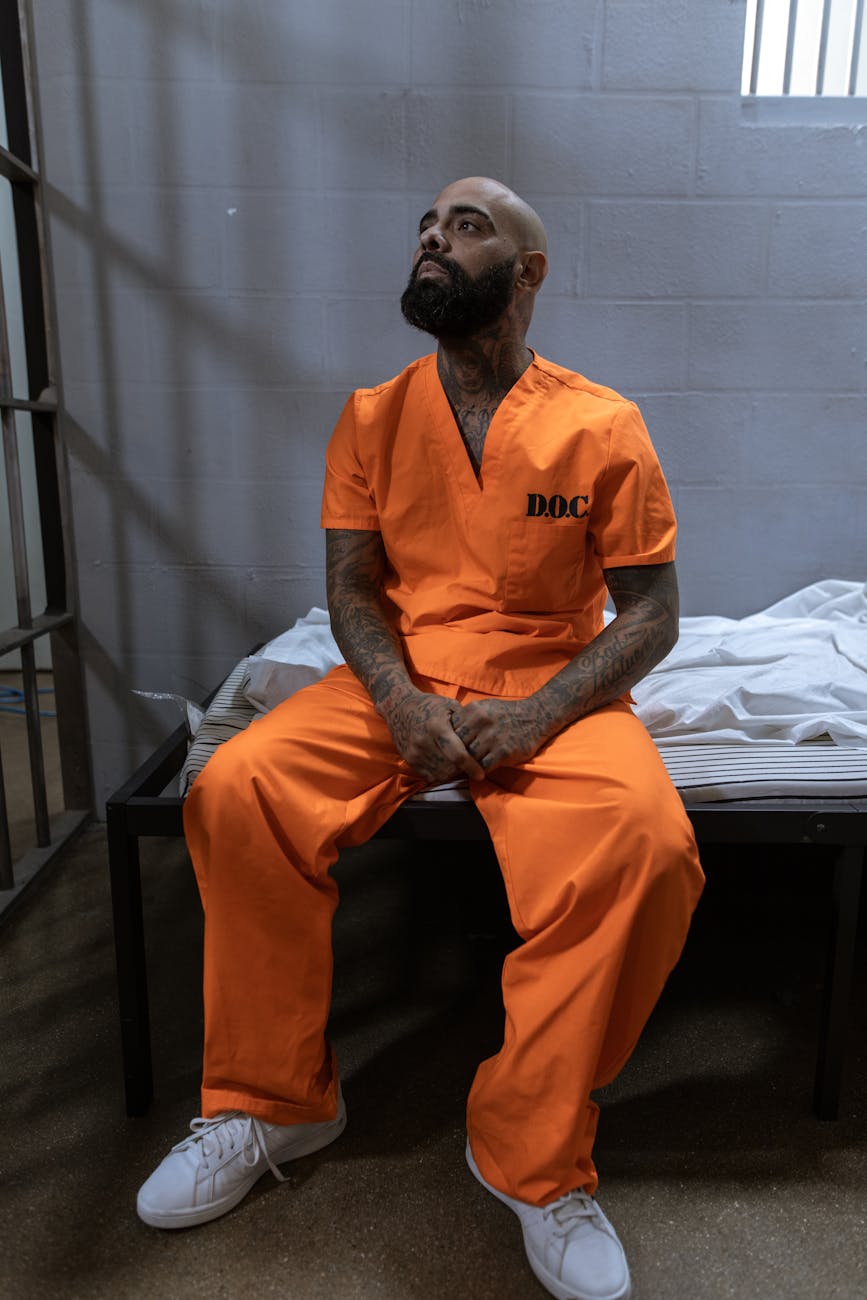
Colorism in the Black Male Experience.

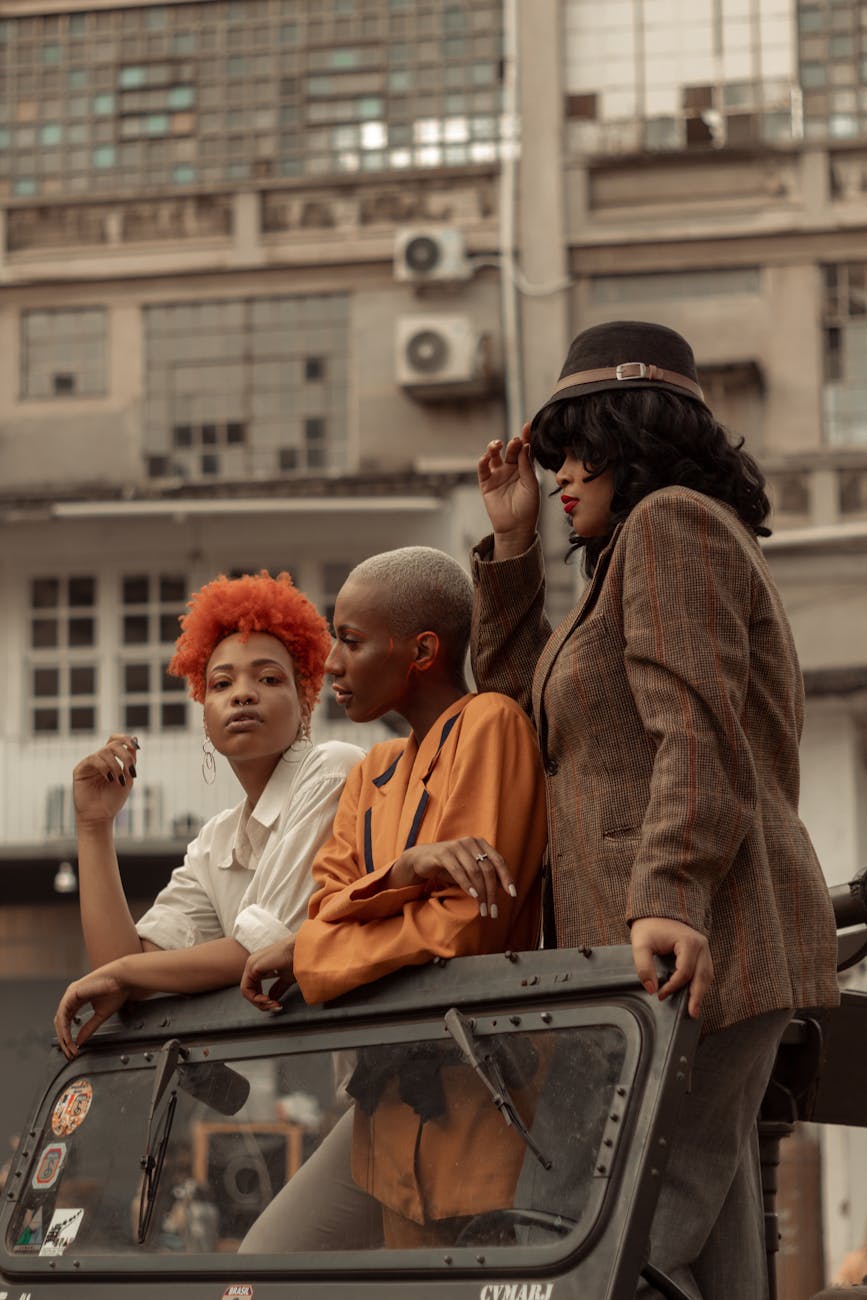
Photo by Ivan Samkov on Pexels.com

Cultural and Societal Expectations

  • Black Women: Colorism often ties directly to beauty standards, desirability, and marriage prospects. Lighter-skinned women are often idealized in media and society, which can affect self-esteem, social mobility, and romantic relationships. Darker-skinned women may face social marginalization and pressure to alter their appearance.
  • Black Men: Colorism is less about beauty in the traditional sense and more tied to perceptions of masculinity, competence, and threat. Lighter-skinned Black men are sometimes perceived as more intelligent, professional, or “safe,” while darker-skinned men may be stereotyped as aggressive, criminal, or hyper-masculine.

2. Stereotypes and Biases

  • Women: Dark skin is often linked to negative beauty stereotypes (“unattractive,” “too ethnic”), while lighter skin is associated with success, refinement, and desirability.
  • Men: Dark skin often amplifies negative societal stereotypes about violence or criminality. Light skin can be an advantage in professional or social contexts, but less connected to romantic desirability compared to women.

3. Psychological Impact

  • Women: Colorism can deeply affect self-esteem, body image, and social inclusion. It can also drive internalized biases against darker-skinned women within Black communities.
  • Men: Colorism influences self-perception, career advancement, and social treatment. Darker-skinned men may experience stress, hyper-vigilance, or feelings of marginalization due to persistent stereotyping.

4. Media Representation

  • Women: Light-skinned actresses, models, and influencers dominate mainstream beauty representation, reinforcing a preference for lighter skin.
  • Men: Media often depicts darker-skinned men in roles associated with aggression or criminality, while lighter-skinned men are more likely to appear as professionals, romantic leads, or “safe” characters.

5. Community Dynamics

  • Women: Colorism can create divisions within families and communities around marriage, social acceptance, or status.
  • Men: It can influence professional networking, mentorship opportunities, and perceptions of leadership or credibility.

In short, colorism is gendered: for Black women, it centers more on beauty and social desirability; for Black men, it centers more on perceived competence, threat, and social legitimacy. The psychological and social consequences differ, but both experiences stem from the same racialized hierarchy that elevates proximity to whiteness.

Historical-Political Lens

Colorism among Black males has roots in colonialism and slavery. European slaveholders often favored lighter-skinned enslaved people, sometimes assigning them less physically demanding work or placing them in supervisory roles. This created a hierarchy based on skin tone, privileging proximity to whiteness even within oppressed populations (Hunter, 2007).

The privileging of lighter skin reinforced systemic oppression. Lighter-skinned men could access slightly better opportunities, while darker-skinned men were subjected to the harshest labor, social marginalization, and heightened surveillance. These historical conditions cemented color-based hierarchies within Black communities, influencing perceptions of competence, value, and masculinity.

Stereotypes of dark-skinned Black men as aggressive or criminal were reinforced through legal and social structures, from the criminalization of African men during slavery to discriminatory policing in the Jim Crow and post-Civil Rights era. These biases persist in contemporary law enforcement and criminal justice systems.

The political and social consequences of these hierarchies continue to shape the experiences of Black men today. From employment discrimination to media representation, historical colorism has become institutionalized, producing lasting psychological and economic disparities.


Psychological-Social Lens

Colorism affects Black men’s self-concept and social interactions. Darker-skinned men often experience internalized stigma, leading to reduced self-esteem, hypervigilance, and stress (Pyke, 2010). Lighter-skinned men, by contrast, may receive social or professional advantages, sometimes creating tension or rivalry within the community.

Stereotypes linking dark skin with aggression or criminality amplify these psychological burdens. Black males may feel pressure to overcompensate through displays of toughness, financial success, or physical presence, influencing behavior and emotional health.

Colorism also impacts relationships and dating. Social preferences often favor lighter-skinned men for perceived attractiveness, status, or “safety,” which can strain intimacy, self-worth, and community cohesion. These biases are internalized across generations, shaping cultural perceptions of masculinity and value.

Peer, family, and community feedback further reinforce color-based hierarchies. Praise for lighter-skinned males and criticism of darker-skinned males perpetuate internalized bias, creating cycles of comparison, resentment, or self-doubt.


Faith-Based Lens

Faith and spirituality offer a counter-narrative to colorism. Scripture affirms that God values all individuals equally, regardless of skin tone: “So God created man in his own image… male and female created he them” (Genesis 1:27, KJV). Skin tone is never a measure of worth, character, or divine favor.

Churches and religious communities have historically played a role in reinforcing dignity among Black men, offering mentorship, moral guidance, and communal support. Faith-based teachings provide a psychological anchor, encouraging self-worth beyond societal perceptions or superficial hierarchies.

Colorism can also be addressed through spiritual principles such as unity, love, and service. Scripture emphasizes that true leadership and respect arise from character, integrity, and obedience to God rather than appearance or social privilege (1 Samuel 16:7, KJV).

Faith encourages reconciliation with self and community. By grounding identity in divine truth rather than social hierarchies, Black men can resist internalized biases, affirm their intrinsic worth, and cultivate resilience against culturally imposed standards of value.


Contemporary Lens

Today, colorism manifests in media representation, employment, and social interactions. Darker-skinned Black men are more likely to be portrayed in films, TV, and news as threatening, criminal, or hypermasculine, while lighter-skinned men are more often cast as professionals, leaders, or romantic interests.

Social media amplifies colorism by highlighting beauty, status, and perceived desirability. Influencers and public figures with lighter skin may receive disproportionate attention or engagement, reinforcing implicit hierarchies. This shapes self-perception and social aspirations within Black male communities.

Economic opportunities are also influenced by colorism. Studies show that lighter-skinned individuals often receive higher wages, more promotions, and better professional opportunities, while darker-skinned men experience bias in hiring and workplace treatment (Herring et al., 2004).

Even within Black communities, colorism persists. Light-skinned men may be afforded greater social mobility, leadership opportunities, or romantic desirability. Darker-skinned men face stereotypes, microaggressions, and implicit social penalties, perpetuating cycles of inequity.


Restorative Lens

Healing from colorism involves addressing both personal and systemic dimensions. Education about historical roots helps Black men understand that color-based hierarchies were imposed and are socially constructed, not reflections of inherent worth.

Community-based mentorship and dialogue are crucial for reducing internalized bias. By celebrating diverse skin tones, modeling positive behaviors, and affirming value beyond appearance, communities can counteract the psychological effects of colorism.

Faith and spiritual grounding support restoration. Emphasizing identity in God’s image and rejecting societal hierarchies provides resilience against internalized and externalized oppression. Churches and faith-based programs can nurture pride, self-respect, and communal solidarity.

Policy reform and representation also matter. Advocating for equitable hiring, media inclusivity, and leadership opportunities reduces systemic reinforcement of color-based hierarchies. Social structures must be reshaped to affirm that worth and competence are unrelated to skin tone.

Ultimately, addressing colorism among Black males requires a holistic approach. Combining historical awareness, psychological support, spiritual affirmation, community solidarity, and systemic reform empowers Black men to resist imposed hierarchies, reclaim identity, and foster self-respect.


📖 References

  • Hunter, M. (2007). The persistent problem of colorism: Skin tone, status, and inequality. Sociology Compass, 1(1), 237–254.
  • Herring, C., Keith, V., & Horton, C. (2004). Skin deep: How race and complexion matter in the “color-blind” era. Politics & Society, 32(1), 111–146.
  • Pyke, K. D. (2010). What is internalized racial oppression and why don’t we study it? Sociological Perspectives, 53(4), 551–572.
  • Holy Bible, King James Version.
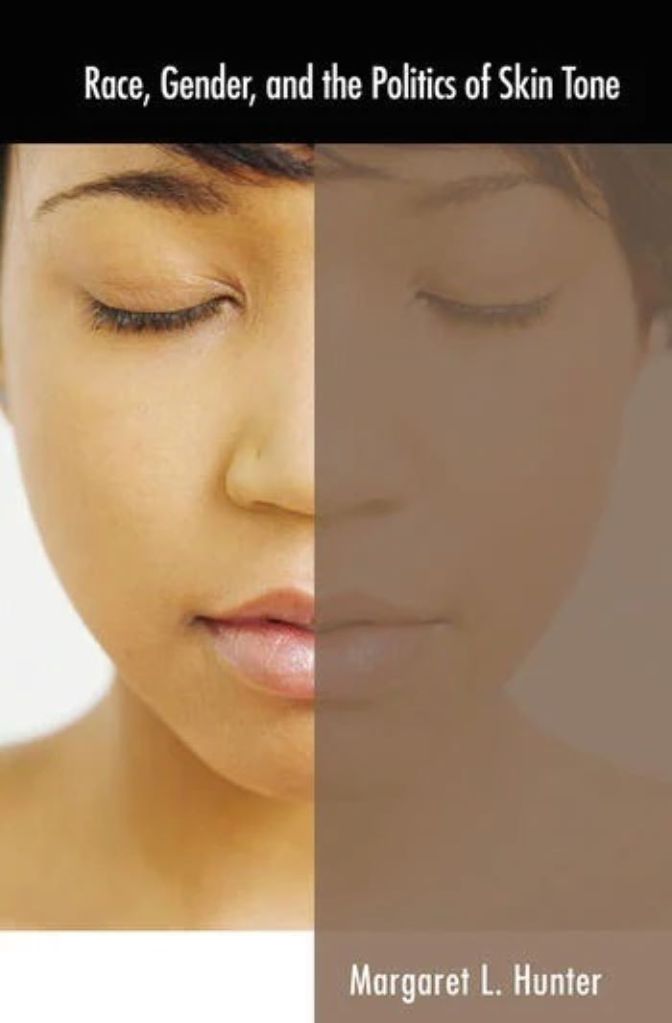
📖Book Review: Race, Gender, and the Politics of Skin Tone by Margaret L. Hunter.

⭐⭐⭐⭐⭐ 5/5 Stars

Race, Gender, and the Politics of Skin Tone

Published in 2005, this book examines how skin tone operates as a system of privilege and discrimination within African American and Mexican American communities. Drawing from in-depth interviews, historical records, and social analysis, Hunter demonstrates how lighter-skinned women often experience greater access to education, employment, and marriage opportunities, while darker-skinned women endure bias, invisibility, and stigmatization. The book situates colorism as both a legacy of colonialism and a persistent barrier to equality in modern society.

Key Points
Hunter highlights several key insights:

  • Historical Foundations: She situates colorism within slavery and colonization, exposing how whiteness and lightness were tied to power.
  • Socioeconomic Disparities: Lighter-skinned women are statistically more likely to access higher-paying jobs, higher levels of education, and “marry up.”
  • Beauty and Body Politics: The text addresses cosmetic pressures, including skin-lightening and surgery to alter facial features, showing how systemic bias reshapes physical identity.
  • Community Paradoxes: Dark-skinned women are often seen as “authentic,” while lighter-skinned women are more widely valued in mainstream society—a painful double standard.

Awards and Reception
Although not listed among mainstream literary award winners, Race, Gender, and the Politics of Skin Tone is regarded as a groundbreaking scholarly text and is widely adopted in college courses on race, gender, sociology, and African American studies. Scholars have praised it for being the first major sociological study to center on colorism across both African American and Mexican American contexts. Its academic influence is measured not in trophies but in citations, class adoptions, and the shaping of future research.

Groundbreaking and Life-Changing Appeal
The book is groundbreaking because it shifts the conversation from race alone to skin tone as an independent and powerful axis of inequality. For readers, it is often life-changing: it validates the lived experiences of women who have faced color-based bias, offering language and evidence where silence once reigned. By connecting personal testimony to systemic inequality, Hunter’s work affirms that the struggles surrounding beauty, identity, and skin tone are not individual failings but social constructions that must be dismantled.

Comparison with Other Works on Colorism
Hunter’s work stands alongside other landmark texts in the study of colorism. For example, Russell, Wilson, and Hall’s The Color Complex (1992, revised 2013) offered one of the earliest explorations of colorism in Black communities, focusing on the psychological effects of shade hierarchies. While The Color Complex is accessible and widely read, Hunter builds on this foundation with a more rigorous sociological methodology and a comparative lens that includes Mexican American experiences. Similarly, Melissa V. Harris-Perry’s Sister Citizen (2011) examines stereotypes and identity struggles of Black women in politics and culture; however, Hunter’s work is narrower in scope, diving deeply into skin tone stratification. Together, these books complement each other—The Color Complex exposing cultural wounds, Race, Gender, and the Politics of Skin Tone providing sociological depth, and Sister Citizen situating those struggles in broader systems of power.

Cultural and Media References
Though exact counts of media and blog citations are difficult to track, Hunter’s book is heavily referenced in academic articles, blogs on colorism, and grassroots discussions about skin tone politics. It frequently appears in bibliographies of colorism studies and has influenced cultural commentary from scholarly circles to online forums. Its resonance lies not only in academia but also in popular conversations about beauty, identity, and racial equity.

Author Bio
Margaret L. Hunter, a distinguished sociologist and professor, is widely recognized for her pioneering scholarship on race, gender, and inequality. Her academic career and cultural analyses have cemented her reputation as one of the leading voices on the study of colorism. As a faculty member at Loyola Marymount University and later at Mills College, Hunter has built her career on amplifying the voices of marginalized communities, specifically African American and Mexican American women.

Conclusion
Hunter’s Race, Gender, and the Politics of Skin Tone stands as one of the most significant works on colorism to date. Compared to The Color Complex and Sister Citizen, it represents the sociological anchor of colorism studies: data-driven, intersectional, and cross-cultural. It offers both a mirror—revealing the painful realities of shade bias—and a compass, pointing toward new ways of affirming beauty and worth beyond oppressive hierarchies. For scholars, activists, and readers seeking understanding, it remains a 5-star, essential text that is as relevant today as when it was first published.


References

Craig, M. L. (2002). Ain’t I a Beauty Queen?: Black Women, Beauty, and the Politics of Race. Oxford University Press.

Glenn, E. N. (2008). Yearning for lightness: Transnational circuits in the marketing and consumption of skin lighteners. Gender & Society, 22(3), 281–302.

Hunter, M. (2005). Race, Gender, and the Politics of Skin Tone. Routledge.

Keith, V. M., & Herring, C. (1991). Skin tone and stratification in the Black community. American Journal of Sociology, 97(3), 760–778.

Russell, K., Wilson, M., & Hall, R. (2013). The Color Complex: The Politics of Skin Color in a New Millennium. Anchor Books.

Harris-Perry, M. V. (2011). Sister Citizen: Shame, Stereotypes, and Black Women in America. Yale University Press.

From Ancestors to Algorithms: The Historical Roots of Colorism

Photo by Vitu00f3ria Santos on Pexels.com

Colorism, the preferential treatment of lighter-skinned individuals within the same racial or ethnic group, has deep historical roots that stretch from slavery and colonialism to modern-day digital culture. Unlike racism, which enforces hierarchies between racial groups, colorism operates within communities, producing internalized standards of beauty, privilege, and social status. Understanding the historical evolution of colorism reveals how social, economic, and technological forces continue to perpetuate biases based on skin tone.

During the transatlantic slave trade, lighter-skinned enslaved Africans often received preferential treatment because of partial European ancestry or proximity to white slaveholders. These individuals were frequently assigned domestic work instead of grueling field labor, gaining slightly better living conditions and social positioning within the enslaved community (Hunter, 2007). Over generations, lighter skin became associated with privilege, status, and survival, embedding hierarchies that extended beyond slavery into post-emancipation society.

Colonialism further entrenched colorism across the African diaspora. European colonizers promoted ideals of light skin, straight hair, and Eurocentric features as markers of civilization, morality, and sophistication. These standards infiltrated education, employment, and cultural norms, reinforcing the notion that proximity to whiteness equated with social and economic advantage (Byrd & Tharps, 2014). As a result, communities of color internalized these hierarchies, valuing lighter skin and devaluing darker complexions even within their own populations.

Media representation amplified these preferences during the 20th century. Hollywood films, fashion magazines, and advertising frequently highlighted lighter-skinned actors and models as ideals of beauty and success. Even within Black communities, light-skinned women and men received disproportionate visibility and admiration, while darker-skinned individuals were marginalized or stereotyped (Hunter, 2007). These cultural narratives solidified the association between complexion, desirability, and opportunity, perpetuating bias across generations.

With the rise of digital technology and social media, colorism has entered the realm of algorithms. Platforms like Instagram, TikTok, and Facebook often amplify content that aligns with dominant beauty ideals, including lighter skin tones, through engagement-driven algorithms. Likes, shares, and viral visibility create feedback loops that validate and reward lighter-skinned features, while darker-skinned users may experience relative invisibility or reduced exposure (Fardouly et al., 2015). In this way, historical hierarchies are reinforced and scaled by modern technology, linking ancestral bias to contemporary social media dynamics.

Psychologically, these persistent patterns of colorism affect self-esteem, confidence, and social identity. Individuals with darker complexions may internalize negative perceptions, experience body dissatisfaction, or feel excluded from cultural ideals of beauty (Festinger, 1954). Conversely, lighter-skinned individuals often benefit from societal affirmation, creating disparities in perceived social and aesthetic value. Recognizing these effects is essential for addressing both historical and modern manifestations of colorism.

Spiritual and ethical guidance provides a corrective lens for navigating the enduring impact of colorism. Proverbs 31:30 (KJV) declares, “Favour is deceitful, and beauty is vain: but a woman that feareth the LORD, she shall be praised.” True worth and dignity transcend social validation or algorithmic reinforcement, emphasizing character, faith, and virtue over skin tone. By grounding identity in spiritual and moral values, individuals can resist internalized bias and reclaim pride in authentic appearance.

In conclusion, colorism is a historical and contemporary phenomenon shaped by slavery, colonialism, media, and modern algorithms. From ancestral hierarchies to digital amplification, lighter skin has been privileged while darker complexions were marginalized. Understanding this evolution illuminates how systemic and cultural forces influence perception, self-worth, and social opportunity. Combating colorism requires both cultural representation and spiritual grounding, affirming that true value rests in character, faith, and the divine artistry inherent in every individual.


References

Byrd, A. D., & Tharps, L. L. (2014). Hair Story: Untangling the Roots of Black Hair in America. New York, NY: St. Martin’s Press.

Fardouly, J., Diedrichs, P. C., Vartanian, L. R., & Halliwell, E. (2015). Social comparisons on social media: The impact of Facebook on young women’s body image concerns and mood. Body Image, 13, 38–45.

Festinger, L. (1954). A theory of social comparison processes. Human Relations, 7(2), 117–140.

Hunter, M. (2007). The persistent problem of colorism: Skin tone, status, and inequality. Sociology Compass, 1(1), 237–254.

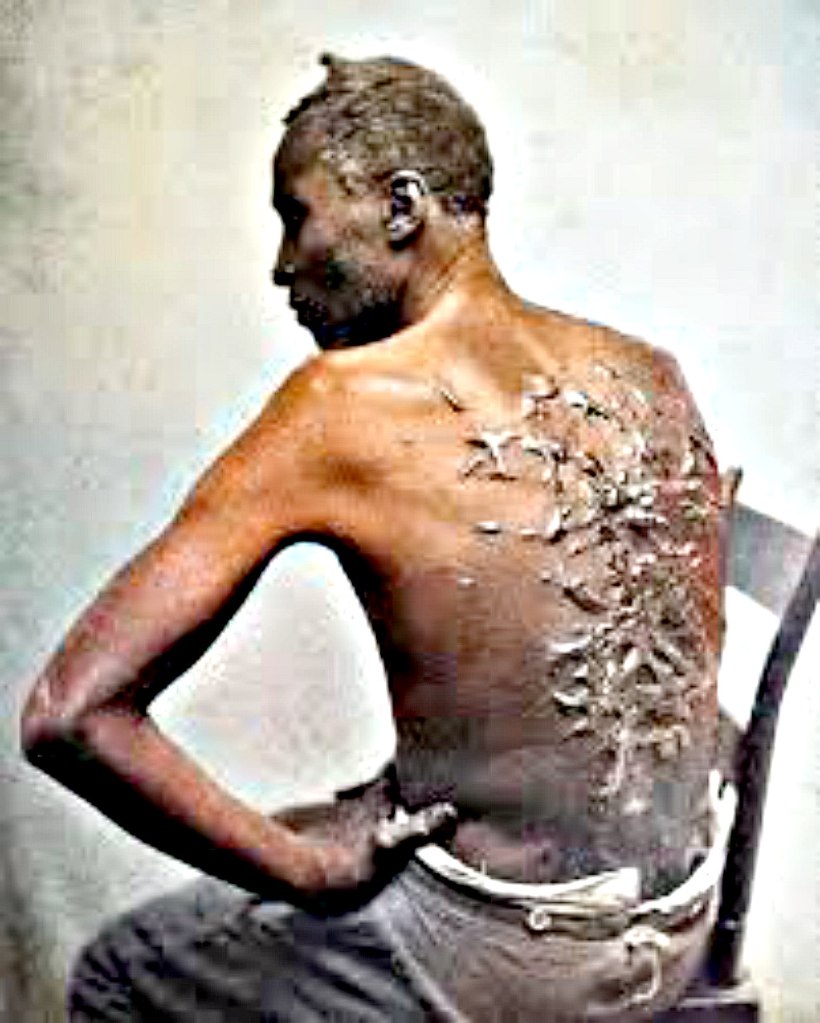
The Slave Files: Whipped Peter (Gordon)

The Scourged Back

Chains that bound, yet could not break
A spirit strong, though flesh did ache.
Scarred and beaten, marked by pain,
He rose to freedom, hope his gain.

Whipped by cruelty, yet never bent,
A testament to courage, resilient.
From fields of sorrow to Union’s call,
Peter’s courage outshines it all.

Photo Credit: McPherson & Oliver. This photograph is the property of its respective owner.

Peter, also known as “Whipped Peter” or “Gordon,” was an enslaved African American man born around 1820–1825; some accounts report his birth around 1850 in Georgia. He was sold to a 3,000-acre plantation in Louisiana owned by Captain John Lyons. In late October 1862, after an altercation with his overseer, Peter was subjected to a brutal whipping that left deep, permanent scars across his back. The overseer reportedly applied salt to the wounds, a common and excruciating practice known as “salting,” intended to inflict maximum pain and humiliation.

Despite this horrific treatment, Peter survived and, in March 1863, escaped the plantation. Using onions to mask his scent from bloodhounds, he reached Union lines near Baton Rouge, Louisiana. There, photographers McPherson & Oliver captured his scarred back, producing the image known as “The Scourged Back.” This photograph circulated widely in abolitionist publications and became a poignant testament to the brutality of slavery, galvanizing public opinion against the institution.

In March 1863, Peter escaped from the plantation, covering his scent with onions to evade bloodhounds. After a perilous journey, he reached Union lines near Baton Rouge, Louisiana, where he was photographed by McPherson & Oliver, revealing the extent of his injuries. The resulting image, known as “The Scourged Back,” was widely circulated and became a poignant testament to the brutality of slavery . Following his escape, Peter enlisted in the Union Army and served in the U.S. Colored Troops, where he continued to contribute to the fight for freedom and justice. While his exact service details remain unclear, his story galvanized anti-slavery sentiments and highlighted the resilience and humanity of enslaved individuals. His story endures as a symbol of resilience, courage, and the unbreakable human spirit, reminding future generations of both the horrors of slavery and the strength required to survive and claim one’s freedom.


References for Further Reading

Dilemma: White Supremacy

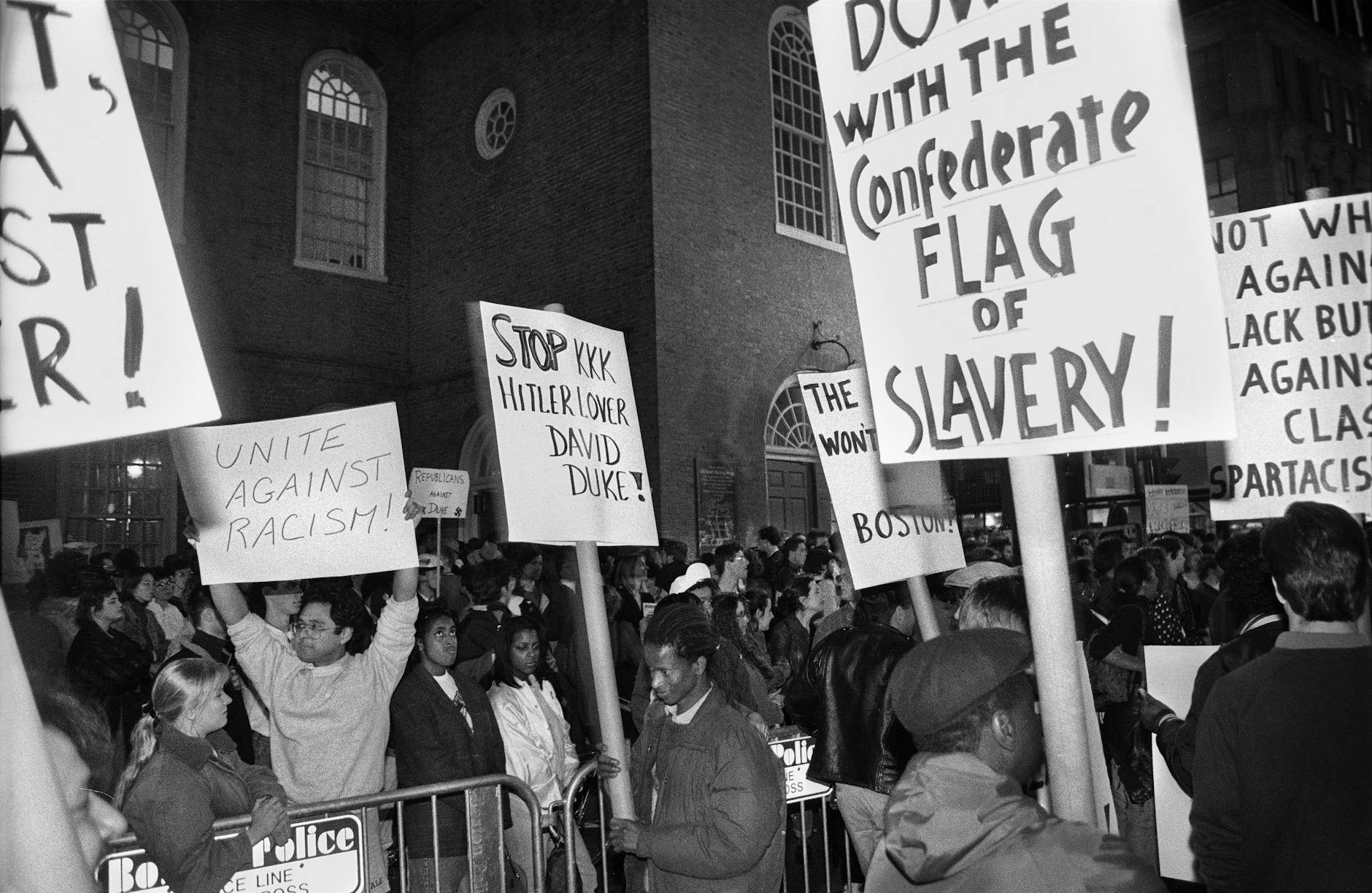
Photo by David Henry on Pexels.com

“The white race is the dominant race in America, and the black race is inferior.” — David Duke, former Grand Wizard of the Ku Klux Klan .Southern Poverty Law Center

White supremacy is a deeply ingrained ideology asserting the inherent superiority of white people over all other races. This belief system has been central to the social, political, and economic structures of many societies, particularly in the United States. Its origins can be traced back to the colonial era, where European powers justified the enslavement and subjugation of African peoples through pseudo-scientific and theological rationales.


Historical Origins and the Role of the Ku Klux Klan

The formalization of white supremacy in the United States was significantly influenced by the founding of the Ku Klux Klan (KKK) in 1865. Established by six Confederate veterans in Pulaski, Tennessee, the Klan aimed to restore white dominance in the post-Civil War South through terror and intimidation. The KKK’s activities included lynchings, arson, and other forms of violence directed at Black individuals and their allies.TIMEWikipedia+1

While the Klan was officially disbanded in the 1870s, its ideology persisted and resurfaced in various forms throughout American history, including during the Civil Rights Movement of the 1960s and in contemporary white nationalist groups.


The Premise of White Supremacy

At its core, white supremacy posits that white people are inherently superior to people of all other races and therefore should dominate society. This belief has been perpetuated through various means, including legislation, cultural norms, and institutional practices that privilege white individuals while marginalizing others.

The premise of white supremacy is often supported by distorted interpretations of religious texts and pseudo-scientific theories that dehumanize non-white populations. For instance, the “Curse of Ham” narrative was historically used to justify the enslavement of Black people by misinterpreting biblical passages .The Banner


Manifestations in Contemporary Society

In modern times, white supremacy manifests in various aspects of life, including employment, education, housing, and criminal justice. Black individuals often face systemic barriers such as discriminatory hiring practices, unequal educational opportunities, and over-policing, which hinder their ability to achieve economic stability and social mobility.

Psychologically, the pervasive nature of white supremacy can lead to internalized racism among Black individuals, affecting their self-esteem and mental health. Studies have shown that exposure to racial discrimination is associated with increased stress and adverse health outcomes .American Psychological Association


Biblical Perspectives and Misinterpretations

The Bible does not support the notion of racial superiority. In fact, passages such as Galatians 3:28 emphasize the equality of all people in Christ: “There is neither Jew nor Greek, slave nor free, male nor female, for you are all one in Christ Jesus.” However, throughout history, certain groups have misused scripture to justify racial hierarchies, citing misinterpretations like the “Curse of Ham” to rationalize the enslavement and oppression of Black people .GotQuestions.blogThe Banner


Psychological Impact on Black Americans

The psychological effects of white supremacy on Black Americans are profound and multifaceted. Chronic exposure to racism can lead to mental health issues such as anxiety, depression, and post-traumatic stress disorder (PTSD). Moreover, the constant need to navigate a society that devalues their existence can result in a diminished sense of self-worth and identity .


Global Perspectives on White Supremacy

While white supremacy is most prominently associated with the United States, it is not confined to its borders. Countries like Israel, Myanmar, and South Korea have faced criticism for racial discrimination and human rights violations against minority groups . These global instances highlight the pervasive nature of racial hierarchies and the need for international efforts to combat them.U.S. News & World Report


Steps of White Supremacy

White supremacy operates through several key mechanisms:

  1. Ideological Justification: Promoting beliefs and narratives that dehumanize non-white populations.
  2. Institutionalization: Embedding discriminatory practices within societal institutions such as schools, workplaces, and the legal system.
  3. Cultural Reinforcement: Perpetuating stereotypes and biases through media and cultural representations.
  4. Violence and Intimidation: Employing physical force and threats to maintain dominance and suppress resistance.

Accountability and Responsibility

Responsibility for perpetuating white supremacy lies not only with overt hate groups but also with institutions and individuals who uphold and benefit from systemic racism. This includes policymakers, educators, and media figures who perpetuate or fail to challenge discriminatory practices and narratives.


Personal Narratives and Experiences

Individuals who have experienced white supremacy often recount stories of exclusion, discrimination, and violence. For example, during the Civil Rights Movement, activists like Rosa Parks and Martin Luther King Jr. faced systemic oppression and personal threats as they challenged racial injustices. Their resilience underscores the profound impact of white supremacy on personal lives and the collective struggle for equality.


The Esteem of Whiteness

The elevation of whiteness can be attributed to historical power dynamics where white individuals established and maintained control over resources, institutions, and narratives. This dominance was reinforced through laws, social norms, and economic systems that privileged white people and marginalized others.


Global Impact and Worst Offenders

Globally, white supremacy manifests in various forms, including colonialism, apartheid, and neo-imperialism. Countries with histories of colonial exploitation, such as Belgium in the Congo and the United Kingdom in India, have legacies of racial hierarchies that continue to affect post-colonial societies.


Conclusion

White supremacy is a pervasive ideology with deep historical roots and widespread contemporary implications. Its impact on Black Americans is profound, affecting their psychological well-being, social mobility, and sense of identity. Addressing white supremacy requires a concerted effort to dismantle systemic racism, promote equity, and foster a culture of inclusion and respect for all individuals, regardless of race.

References

  • Southern Poverty Law Center. (n.d.). David Duke. Retrieved from
  • History.com Editors. (2020, June 25). Ku Klux Klan: Origin, Members & Facts. HISTORY. Retrieved from
  • American Psychological Association. (n.d.). Racism and Mental Health. Retrieved from
  • Bible Odyssey. (n.d.). The Legacy of the Bible in Justifying Slavery. Retrieved from
  • Boston Review. (2019, November 14). Toward a Global History of White Supremacy. Retrieved from
  • Southern Poverty Law Center. (2018, August 14). White Shadow: David Duke’s Lasting Influence on American White Supremacy. Retrieved from
  • Wikipedia contributors. (2023, December 24). Ku Klux Klan. In Wikipedia, The Free Encyclopedia. Retrieved from
  • Wikipedia contributors. (2023, December 24). White supremacy. In Wikipedia, The Free Encyclopedia. Retrieved from

School-to-Prison Pipeline: How the System Fails Black Youth Before They Start.

Photo by RDNE Stock project on Pexels.com

Psychologist Amos Wilson once observed, “Until our children are taught how to be Black, they will fail in school, because the schools were not designed to educate them in the first place.” This profound statement captures the structural failure of the American education system to nurture Black children. Instead of affirming identity and fostering opportunity, schools often serve as the first station along a pathway that leads Black youth toward incarceration. This phenomenon, widely known as the school-to-prison pipeline, is not a new development but the product of a long history of systemic inequality and institutional neglect.

Historically, education for African Americans was deliberately restricted. During slavery, teaching the enslaved to read was illegal in many states, as literacy threatened the institution of bondage. Following emancipation, segregated schools under Jim Crow laws ensured that Black children received inferior resources, curricula, and facilities. Though Brown v. Board of Education (1954) legally ended segregation, the persistence of de facto segregation, underfunded schools in Black neighborhoods, and discriminatory practices maintained inequities. This historical backdrop set the stage for the school-to-prison pipeline, where structural racism in education and law enforcement converges.

One of the primary mechanisms of this pipeline is disproportionate discipline. Research shows that Black students are suspended and expelled at much higher rates than their white peers for the same behaviors (Skiba et al., 2011). Zero-tolerance policies, adopted widely in the 1990s, criminalized minor misbehaviors such as tardiness, classroom disruptions, or dress code violations. Instead of counseling and restorative practices, schools resorted to suspensions, expulsions, and referrals to law enforcement. This exclusionary discipline pushes students out of classrooms and into contact with the criminal justice system.

Psychologically, such punitive environments stigmatize Black children early. Labeling theory suggests that when children are repeatedly categorized as “troublemakers,” they internalize these labels, which shapes self-perception and behavior (Becker, 1963). This creates a cycle where Black students, already navigating racial bias, are further burdened with psychological scars from being treated as criminals-in-waiting. The Bible echoes this concern in Ephesians 6:4, warning fathers and authority figures not to provoke children to wrath, but to nurture them. Yet the school system often provokes, rather than nurtures, Black children.

The failure extends beyond discipline to curriculum and pedagogy. Schools frequently erase or marginalize Black history, culture, and contributions. This invisibility diminishes self-worth and alienates Black youth from academic engagement. Amos Wilson argued that education must be rooted in the cultural and psychological needs of Black children; otherwise, it serves as a mechanism of control rather than liberation. Proverbs 22:6 (KJV) instructs, “Train up a child in the way he should go: and when he is old, he will not depart from it.” Yet Black children are too often trained into alienation, criminalization, and failure rather than purpose and possibility.

Socioeconomic inequality compounds the problem. Underfunded schools in predominantly Black neighborhoods lack qualified teachers, extracurricular opportunities, and adequate resources. These structural disadvantages feed directly into the school-to-prison pipeline. Psychologist Urie Bronfenbrenner’s ecological systems theory underscores that a child’s development is deeply influenced by the surrounding environment. When the environment is impoverished and punitive, children’s outcomes are shaped accordingly, not by personal failure but by systemic design.

The courts and law enforcement deepen this cycle. School-based arrests disproportionately affect Black youth, often for nonviolent infractions. Once ensnared in the juvenile justice system, young people face barriers to reentry into schools and future employment, effectively criminalizing childhood. Lamentations 3:27 reminds us, “It is good for a man that he bear the yoke in his youth.” Yet the yoke that many Black children bear is one of systemic injustice, imposed before they even have the chance to reach adulthood.

Ultimately, the school-to-prison pipeline reflects a betrayal of society’s moral and civic responsibility to its children. To dismantle it, reforms must address disciplinary practices, resource allocation, and culturally relevant curricula. Schools must transform from punitive institutions into nurturing environments that uplift Black youth. Both biblical wisdom and psychological research affirm that the flourishing of children depends on systems that nurture identity, support growth, and embody justice. Until such transformation occurs, justice will remain deferred, and the future of Black youth will continue to be unjustly stolen.


References

Alexander, M. (2010). The new Jim Crow: Mass incarceration in the age of colorblindness. The New Press.

Becker, H. S. (1963). Outsiders: Studies in the sociology of deviance. Free Press.

Bronfenbrenner, U. (1979). The ecology of human development: Experiments by nature and design. Harvard University Press.

King James Bible. (1769/2017). The Holy Bible, King James Version. Cambridge University Press. (Original work published 1611).

Skiba, R. J., Horner, R. H., Chung, C. G., Rausch, M. K., May, S. L., & Tobin, T. (2011). Race is not neutral: A national investigation of African American and Latino disproportionality in school discipline. School Psychology Review, 40(1), 85–107.

Wilson, A. (1998). Blueprint for Black power: A moral, political, and economic imperative for the twenty-first century. Afrikan World InfoSystems.

Justice Deferred: The Double Standard in Law Enforcement and the Courts.

Photo by KATRIN BOLOVTSOVA on Pexels.com

The concept of justice is founded on the principle of fairness, impartiality, and equality before the law. Yet in practice, systemic inequalities reveal a troubling double standard within both law enforcement and the judicial system. Marginalized communities, particularly African Americans, often experience harsher policing, unequal access to legal resources, and disproportionate sentencing outcomes. This disparity undermines the legitimacy of the legal system and perpetuates cycles of distrust between citizens and institutions.

Law enforcement practices demonstrate these inequities in striking ways. Research consistently shows that Black and Latino individuals are disproportionately stopped, searched, and subjected to the use of force compared to white individuals (Gelman, Fagan, & Kiss, 2007). The doctrine of “probable cause” is often applied unevenly, with minority communities bearing the brunt of aggressive policing strategies such as stop-and-frisk. This creates a reality where the very institutions sworn to protect all citizens enforce surveillance and control selectively, reinforcing racial hierarchies.

In the courts, the disparities extend into sentencing and trial outcomes. Studies highlight that people of color frequently receive harsher sentences for the same crimes compared to white defendants, especially in drug-related and capital cases (Alexander, 2010). Mandatory minimum sentencing and “three strikes” laws have compounded these effects, disproportionately incarcerating minority men and contributing to mass incarceration in the United States. Such legal frameworks reveal a systemic bias that privileges some groups while criminalizing others, making equality before the law more of an ideal than a reality.

Moreover, socioeconomic status amplifies these disparities. Wealthy defendants can secure private counsel, expert witnesses, and robust defense strategies, while poorer individuals—disproportionately minorities—rely on underfunded public defenders. The result is a two-tiered system of justice where money, rather than truth, often determines outcomes (Stevenson, 2014). This reality reveals that the double standard in the courts is not only racial but also economic, stratifying access to justice by class as well as color.

The consequences of this double standard reverberate beyond individual cases. When communities see repeated patterns of unequal justice, collective mistrust emerges, eroding confidence in the rule of law itself. This distrust contributes to cycles of alienation, where marginalized groups disengage from civic life, perceiving the state as an adversary rather than a protector. In turn, such alienation perpetuates social unrest, reinforcing a cycle of tension between law enforcement and the communities they police.

Addressing this crisis requires systemic reforms rooted in accountability, transparency, and equity. Implicit bias training, sentencing reform, and increased investment in public defense are among the necessary interventions. Yet beyond policy, a cultural shift is required: one that reasserts the fundamental truth that justice cannot exist where double standards prevail. As Scripture cautions in Proverbs 17:15, “He that justifieth the wicked, and he that condemneth the just, even they both are abomination to the Lord.” Both biblical wisdom and contemporary scholarship affirm that justice deferred is indeed justice denied, and only by dismantling these inequities can society move toward true fairness.


References

Alexander, M. (2010). The new Jim Crow: Mass incarceration in the age of colorblindness. The New Press.

Gelman, A., Fagan, J., & Kiss, A. (2007). An analysis of the New York City Police Department’s “stop-and-frisk” policy in the context of claims of racial bias. Journal of the American Statistical Association, 102(479), 813–823. https://doi.org/10.1198/016214506000001040

King James Bible. (1769/2017). The Holy Bible, King James Version. Cambridge University Press. (Original work published 1611).

Stevenson, B. (2014). Just mercy: A story of justice and redemption. Spiegel & Grau.

Dilemma: Misogynoir

The Unique Discrimination Against Black Women

Photo by Bave Pictures on Pexels.com

Misogynoir—a term coined by Moya Bailey (2010)—captures the specific intersection of racism and sexism that Black women face. Unlike generalized sexism or racism, misogynoir uniquely blends both to create social, cultural, and psychological burdens for Black women. It is manifested in harmful stereotypes that distort their humanity and confine them to demeaning roles. The “angry Black woman” trope frames Black women as hostile, aggressive, and perpetually dissatisfied, disregarding the legitimate roots of their frustration in systemic injustice. The hypersexualized “jezebel” stereotype objectifies Black women, reducing them to their bodies and marking them as sexually available. Meanwhile, the “mammy” archetype portrays Black women as self-sacrificing caretakers, expected to prioritize others’ needs at the expense of their own. These stereotypes have persisted from slavery into the present day, shaping workplace dynamics, media representation, and interpersonal relationships (Collins, 2000).

From a psychological standpoint, these stereotypes function as a form of “stereotype threat” (Steele, 1997), in which awareness of negative perceptions can hinder performance, increase stress, and damage self-concept. Black women often navigate “double consciousness” (Du Bois, 1903), a fractured identity where they see themselves through both their own cultural lens and the distorted gaze of a white, patriarchal society. This duality can lead to anxiety, depression, and diminished self-esteem (Watson-Singleton, 2017). Furthermore, the internalization of misogynoir reinforces cycles of silence, guilt, or perfectionism, where Black women feel compelled to “work twice as hard” to prove their worth. Psychology affirms that such sustained exposure to stress produces physical consequences, often termed “weathering” (Geronimus, 1992), leading to earlier onset of health disparities such as hypertension and heart disease.

The King James Bible reminds us that stereotypes and false witness are contrary to God’s commandments. Proverbs 31:10–31 exalts the virtuous woman, describing her as strong, wise, and industrious—not angry, oversexualized, or expendable. God calls women to be valued as His image-bearers (Genesis 1:27), not diminished by human prejudice. Ephesians 4:29 warns, “Let no corrupt communication proceed out of your mouth, but that which is good to the use of edifying.” Thus, speech and actions rooted in misogynoir are not only socially destructive but also spiritually sinful. The Bible underscores that all slander and demeaning words are falsehoods, and in God’s sight, women are honored creations with divine purpose.

Overcoming misogynoir requires both personal and collective strategies. Spiritually, Black women and communities are called to reclaim identity in God’s truth, remembering that liberation begins with obedience to His commandments and the refusal to internalize lies. As Romans 12:2 reminds, “Be not conformed to this world: but be ye transformed by the renewing of your mind.” Healing begins by rejecting false stereotypes and embracing God’s definition of worth. Psychologically, access to therapy, affirming spaces, and intergenerational support networks counter the damage of stereotype threat and provide avenues for resilience. Collective affirmation of beauty, intelligence, and dignity serves as a cultural shield against internalized oppression.

Socially, dismantling misogynoir means challenging media portrayals, workplace discrimination, and community dynamics that recycle harmful tropes. Black men in particular bear responsibility for rejecting narratives that demean Black women, while allies of all backgrounds must amplify voices that resist sexist-racist imagery. Policy reforms addressing wage gaps, healthcare disparities, and violence against Black women also play a crucial role in reducing the systemic roots of misogynoir. Building unity within the Black community, rooted in love and respect, strengthens collective resistance and ensures that oppressive frameworks are not perpetuated internally.

Ultimately, the dilemma of misogynoir is overcome by centering truth—biblical truth that affirms dignity, psychological truth that validates lived experiences, and social truth that reclaims narrative power. As Michelle Obama (2018) once said, “We need to do a better job of putting ourselves higher on our own ‘to-do list.’” Black women must be honored as full, complex beings, not limited by stereotypes. When society begins to see Black women through the lens of God’s truth and not historical lies, healing, restoration, and justice can emerge for future generations.


📚 References

  • Bailey, M. (2010). They aren’t talking about me… Misogynoir in hip-hop culture.
  • Collins, P. H. (2000). Black feminist thought. Routledge.
  • Du Bois, W. E. B. (1903). The Souls of Black Folk.
  • Geronimus, A. T. (1992). The weathering hypothesis. Ethnicity & Disease, 2(3), 207–221.
  • Steele, C. (1997). A threat in the air: How stereotypes shape intellectual identity. American Psychologist, 52(6), 613–629.
  • Watson-Singleton, N. (2017). Strong Black woman schema and mental health. Journal of Black Psychology, 43(8), 771–789.

Dilemma: By-Words

The History, Psychology, and Biblical Prophecy of Names Forced Upon Black People

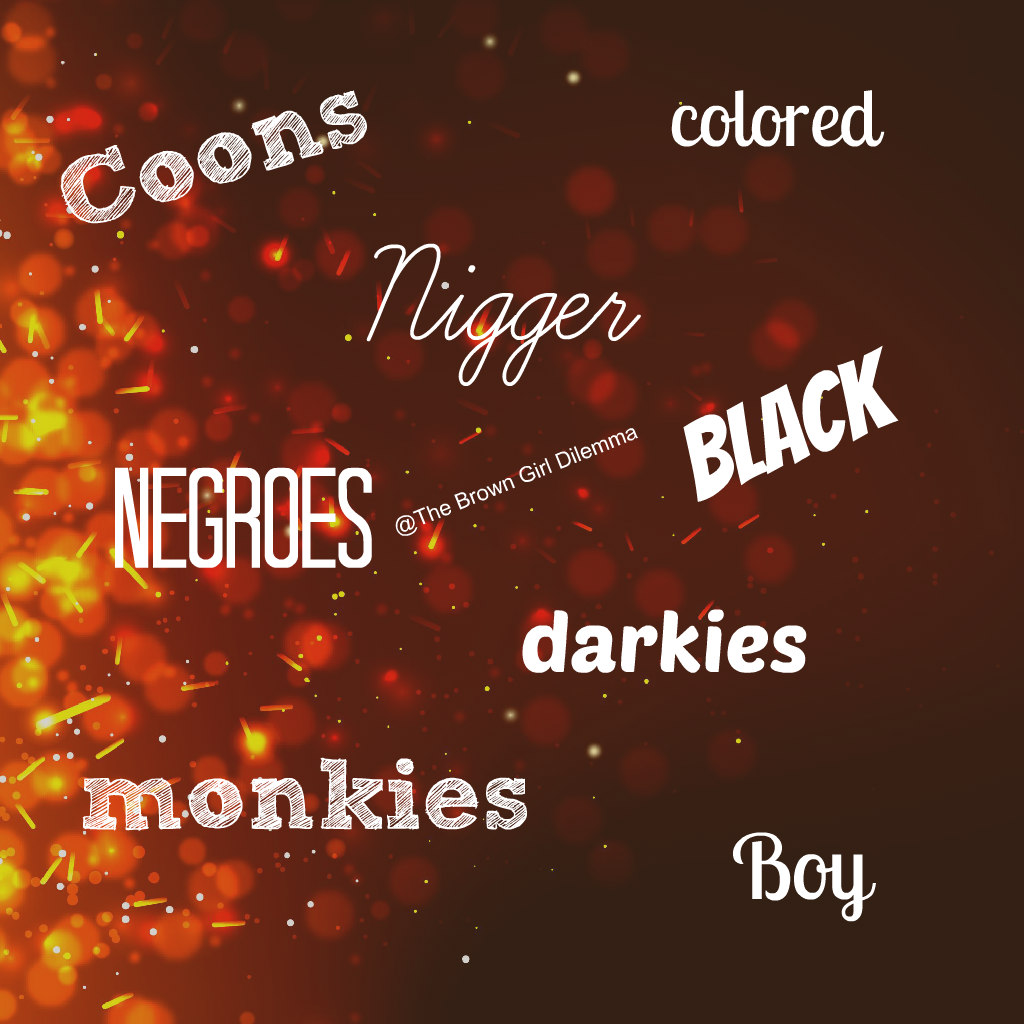
Words carry power. They shape identity, influence perception, and preserve history. Yet words can also wound, distort, and dehumanize. Throughout history, Black people across the diaspora have been branded with derogatory labels—negro, n****, coon, black, colored,* and many more—terms that did not emerge from neutrality but from systems of slavery, colonization, and racial subjugation. The Bible calls these humiliating labels “by-words”—a prophetic sign of oppression and displacement (Deuteronomy 28:37, KJV). To understand the psychology and history of by-words, one must look at the intersection of language, power, slavery, and identity.


What Are By-Words?

The term by-word is defined as a word or phrase used to mock, ridicule, or demean a people or individual. In Scripture, by-words are linked with curses upon nations or peoples who fall under oppression.

  • Deuteronomy 28:37 (KJV): “And thou shalt become an astonishment, a proverb, and a byword, among all nations whither the Lord shall lead thee.”
  • 1 Kings 9:7 (KJV): “Then will I cut off Israel out of the land which I have given them… and Israel shall be a proverb and a byword among all people.”

Biblically, being reduced to a by-word is more than an insult—it signifies loss of sovereignty, dignity, and divine identity.

he Meaning and History of the Word “Nigger”

Origin of the Word

The word nigger is one of the most notorious racial slurs in history. It traces back to the Latin word niger (meaning “black”), which passed into Spanish and Portuguese as negro. When Europeans began enslaving Africans during the transatlantic slave trade (1500s–1800s), the term negro became a racial descriptor.

Over time, particularly in English-speaking countries, negro was corrupted in spelling and pronunciation into n**r—a derogatory term. By the 1700s, it was entrenched in slave societies like the United States as the ultimate label of dehumanization.


Purpose of the Word

The purpose of calling Black people “n****r” was not just insult but domination. It functioned as a psychological weapon in several ways:

  1. Dehumanization:
    • Reduced Black people to something less than human, justifying slavery and racism.
    • Equated Africans with animals, objects, or commodities.
  2. Control and Social Order:
    • Whites used the word to constantly remind enslaved people of their “place” in society.
    • It reinforced racial hierarchy: white = superior, Black = inferior.
  3. Cultural Shaming:
    • Denied African names and identities, replacing them with a word rooted in contempt.
    • Made Blackness itself synonymous with worthlessness or evil.

In short, the word was never neutral. It was created and weaponized to wound, degrade, and keep Black people submissive.


Historical Use in America

  • Slavery Era (1600s–1865): The word was common in plantation speech, laws, and slave advertisements. It was how enslavers referred to Africans as property.
  • Jim Crow (1877–1950s): White people used it as a daily insult to enforce segregation and white supremacy. It became paired with violence—lynching, beatings, and systemic humiliation.
  • Civil Rights Movement (1950s–1970s): The slur was hurled at marchers, students, and leaders fighting for justice. Signs like “Go home n****rs” were common.
  • Modern Era (1980s–Present): The word remains a lightning rod. It is still used by racists as hate speech but also controversially re-appropriated within some Black communities (e.g., in hip-hop, as a term of brotherhood).

How Black People Feel About It

Reactions vary, but the word remains one of the deepest wounds in the Black collective memory:

  1. Pain and Trauma:
    • Many associate it with slavery, Jim Crow, lynching, and racist violence. Hearing it can trigger anger, shame, or grief.
  2. Rage and Resistance:
    • Black leaders like Malcolm X, James Baldwin, and Maya Angelou condemned the word as an instrument of oppression. Baldwin once said: “What you say about somebody else reveals you.”
  3. Division Over Re-appropriation:
    • Some Black people reject the word entirely, seeing it as irredeemable.
    • Others, especially in music and street culture, have attempted to strip it of its power by reclaiming it (e.g., turning it into “n***a” as a casual or friendly address).
    • This re-use, however, is controversial—many feel that no amount of “reclaiming” erases its bloody history.

Biblical & Psychological Perspective

From a biblical standpoint, being called a by-word (Deuteronomy 28:37) is part of a curse—a stripping of honor and identity. Psychologically, constant exposure to the slur can lead to internalized racism: self-doubt, reduced self-worth, and generational trauma.


The word n**r is not just an insult—it is a historical weapon of white supremacy. Born from slavery, cemented during Jim Crow, and still alive today, it carries centuries of blood, pain, and oppression. While some attempt to neutralize it, for most Black people it remains a raw reminder of what their ancestors endured. It is a word heavy with history, one that symbolizes not only racism but also the resilience of a people who refuse to be defined by it.

Timeline: The Evolution of By-Words

1. African Names Before Slavery (Pre-1500s)

Before European colonization, Africans bore names tied to ancestry, geography, spirituality, and meaning: Kwame (born on Saturday, Akan), Makeda (Ethiopian queen), Oluwaseun (God has done this, Yoruba). Names carried memory, culture, and lineage.


2. The Transatlantic Slave Trade (1500s–1800s)

  • Africans kidnapped into slavery were renamed with European surnames (Smith, Johnson, Williams, Brown).
  • By-words such as Negro (from Portuguese/Spanish for “black”) became a racial classification.
  • Slurs like n****,* sambo, and coon emerged on plantations to dehumanize enslaved Africans, comparing them to animals or buffoons.

This was the era of identity erasure: Africans became “property,” marked not by heritage but by by-words.


3. Reconstruction & Jim Crow (1865–1950s)

  • After emancipation, Black people were still denied full humanity. Terms like Negro and Colored became official in laws, schools, and public signs.
  • The Jim Crow system used language to reinforce racial hierarchy: calling Black men “boy” denied manhood, while calling women “mammies” denied femininity.
  • Racist caricatures—coon songs, minstrel shows, Zip Coon, Uncle Tom—spread by-words into mass culture.

By-words became institutionalized, shaping how whites saw Black people and how Black people sometimes internalized those labels.


4. Civil Rights Era (1950s–1970s)

  • The term Negro was challenged, as leaders like Malcolm X urged African Americans to reclaim Black as a badge of pride.
  • The phrase Black is Beautiful emerged as resistance to centuries of being told “black” meant evil or shameful.
  • The name shift to African-American in the late 1980s (championed by Jesse Jackson) reflected a demand for heritage, identity, and cultural recognition.

By-words in this era were confronted with counter-language: affirmations of dignity and identity.


5. Modern Times (1980s–Present)

  • Slurs like n****,* coon, and monkey still circulate, especially online and in extremist circles.
  • The N-word has been re-appropriated in some Black communities as a term of endearment or solidarity—though its use remains deeply divisive.
  • The term Black has been embraced as an ethnic identity marker, while African-American underscores historical and diasporic roots.
  • Psychological studies show that derogatory labeling still impacts self-esteem, racial perception, and systemic bias.

By-words have not disappeared; they have shifted, adapted, and remain central to ongoing struggles over language and identity.


Racism and the Weaponization of By-Words

Racism explains why by-words persisted. These terms justified inequality by painting Black people as inferior, dangerous, or less civilized. By-words reinforced stereotypes in:

  • Law: segregation signs labeled “Colored” vs. “White.”
  • Media: cartoons and films normalized caricatures (Amos ‘n’ Andy, minstrel shows).
  • Society: casual insults reduced Black people to slurs even outside slavery.

By-words were not simply products of ignorance; they were deliberate strategies of domination.


The Psychology of By-Words

From a psychological perspective, by-words operate as verbal shackles.

  1. Identity Erasure: Replacing African names with slave surnames broke ancestral continuity.
  2. Internalized Racism: Constant exposure to insults produced self-doubt and sometimes self-hatred.
  3. Generational Trauma: By-words passed down through history embedded racial inferiority into the subconscious.
  4. Resistance & Reclamation: Language also became a battlefield—turning Black from insult to empowerment, or challenging derogatory names with affirmations.

As psychologist Na’im Akbar (1996) argues, the greatest chains of slavery are not physical but mental—reinforced through language.


Biblical Parallels

The use of by-words against Black people echoes Israel’s fate in exile. Losing names, mocked by nations, and scattered across the earth, they became living fulfillments of Deuteronomy 28. Just as Israel became “a byword among nations,” the descendants of Africa in the diaspora bear the marks of a name-stripping oppression.


Historical Roots of By-Words in Slavery

The transatlantic slave trade, spanning the 16th to 19th centuries, uprooted millions of Africans from their homelands. In the process, enslavers deliberately stripped them of their ethnic names, languages, and tribal lineages. African names like Kwame, Amina, Oluwaseun, Kofi, or Makeda were replaced with European surnames—Smith, Johnson, Williams, Washington—marking forced assimilation into a white supremacist order.

Enslaved Africans were not merely chained physically; they were renamed into invisibility. The imposition of white surnames erased genealogical connections, making it nearly impossible for descendants to trace their ancestral lineage back to their original African nations. This renaming process was a tool of control: to own someone’s name is to own their identity.

At the same time, enslaved Africans became subjects of derogatory by-words. Slave masters, traders, and colonial authorities popularized racial slurs that defined Blackness not by heritage but by supposed inferiority. Terms such as n****,* coon, boy, and Negro reduced a diverse people into a caricature of servitude and subjugation.


The Catalog of By-Words Used Against Black People

Over centuries, Black people have been labeled with words that belittled, animalized, and mocked them:

  • Negro – Derived from the Spanish/Portuguese word for “black,” it became a racial classification imposed by European colonizers.
  • N*** – A perversion of Negro, weaponized as one of the most dehumanizing insults in modern history.
  • Coon – A derogatory word portraying Black people as lazy and buffoonish, rooted in racist minstrel shows of the 19th century.
  • Boy – Used particularly in the Jim Crow South to deny Black men adult dignity and manhood.
  • Colored – Institutionalized through organizations like the NAACP (“National Association for the Advancement of Colored People”), reflecting segregationist terminology.
  • Black – Once synonymous with evil, dirt, or shame in European etymology, rebranded as an identity marker but originally imposed as a contrast to “white purity.”

Each of these terms is a linguistic scar, born of systems that sought to strip away humanity and replace it with inferiority.


Was Racism to Blame?

Yes. The proliferation of by-words was not incidental but systemic, tied directly to racism. By-words allowed dominant groups to control narratives, reinforcing hierarchies of superiority. Racism justified slavery, segregation, colonization, and social exclusion by codifying these by-words into cultural, legal, and political systems.

  • Social Control: Language ensured that Black people were seen not as equals but as perpetual outsiders.
  • Psychological Warfare: By-words internalized shame, often producing generational trauma and fractured self-esteem.
  • Legal Segregation: In the U.S., terms like “colored” and “Negro” were legally inscribed in Jim Crow laws, embedding racism into governance.

The Psychology of By-Words

Psychologists argue that repeated exposure to derogatory labels can produce internalized racism and identity conflict. When a people are constantly described as inferior or less than, the message penetrates deep into the collective psyche.

  • Internalized Oppression: Some Black people began to reject African heritage, aspiring toward whiteness as a form of survival.
  • Group Identity Crisis: By-words created confusion over racial identity—was one “Negro,” “Colored,” “Black,” or “African-American”? This constant renaming fragmented collective identity.
  • Reclamation and Resistance: Over time, Black communities also resisted by re-appropriating terms like “Black” and “N*****” as symbols of empowerment—though still contested.

Biblical Parallels: Israel as a By-Word

The plight of Black people in slavery and colonization parallels biblical Israel’s experience. Just as the Israelites were scattered and mocked with by-words, enslaved Africans endured a loss of name, land, and identity. Deuteronomy 28 not only describes economic curses and enslavement but the stripping away of cultural dignity.

Thus, many Black theologians and scholars interpret the condition of the African diaspora as prophetic: a people renamed, scorned, and marginalized, fulfilling the biblical imagery of becoming “a by-word among nations.”


Conclusion

By-words are more than insults; they are historical markers of oppression. They tell the story of a people kidnapped, enslaved, renamed, and linguistically reshaped to fit the mold of subjugation. From biblical prophecy to the auction blocks of slavery, from Jim Crow to today, the history of by-words reveals how language has been wielded as a weapon against Black identity.

Yet, history also shows resistance. Just as names were stripped, they were reclaimed. Just as by-words mocked, voices rose to redefine them. Understanding the psychology and history of by-words helps restore dignity, while the biblical lens reminds us that identity is ultimately God-given, not man-imposed.

By-words are more than words; they are historical monuments of oppression. They trace a journey from stolen African names to the plantation, from Jim Crow insults to modern re-appropriation. They demonstrate how racism weaponizes language, reshaping identity and memory.

Yet, within that history lies resilience. Every reclaiming of Black as beautiful, every embrace of African names, every refusal to be defined by slurs is a declaration of freedom. In the end, names carry divine weight: not what the oppressor calls us, but what God calls us.


📖 Key Scripture References:

  • Deuteronomy 28:37
  • 1 Kings 9:7
  • Jeremiah 24:9
  • Psalm 44:14

📚 References for Further Reading:

  • Du Bois, W. E. B. (1903). The Souls of Black Folk.
  • Akbar, N. (1996). Breaking the Chains of Psychological Slavery.
  • Davis, A. (1981). Women, Race, and Class.
  • Patterson, O. (1982). Slavery and Social Death.

Kennedy, R. (2002). Nigger: The Strange Career of a Troublesome Word.

Baldwin, J. (1963). The Fire Next Time.

Neely Fuller Jr: The Architect of Counter-Racist Logic and Black Empowerment.

Neely Fuller Jr. is a highly influential yet often underrecognized figure in the realm of African American thought, particularly known for his work on racism, white supremacy, and Black empowerment. Born in the United States during the era of Jim Crow segregation, Fuller developed a worldview deeply shaped by systemic racial oppression. Though many of the personal details of his life—including his date of birth, marital status, and family life—remain private, what stands out is his lifelong dedication to analyzing and dismantling the global system of white supremacy through logic, language, and behavioral code.


Who Is Neely Fuller Jr.?

Neely Fuller Jr. is best known as a theorist and author who introduced a unique, structured framework for understanding and addressing racism in America and worldwide. His life’s work revolves around his central thesis: “If you do not understand white supremacy—what it is and how it works—everything else that you think you understand will only confuse you.” This statement has become a foundational mantra for many in the modern Black liberation and Afrocentric consciousness movements.

Fuller served in the U.S. military and worked as a government employee, experiences that contributed to his understanding of institutionalized racism. Despite lacking the mainstream visibility of figures like Malcolm X or Dr. Martin Luther King Jr., Fuller’s teachings have profoundly impacted generations of Black thinkers, including Dr. Frances Cress Welsing, who credited Fuller’s framework as the intellectual foundation for her own work, The Isis Papers.


His Major Work: A Compensatory Counter-Racist Code

Neely Fuller Jr.’s most well-known book is titled The United Independent Compensatory Code/System/Concept: A Compensatory Counter-Racist Code (first published in 1984 and revised in later editions). The book is not a traditional narrative or academic text; rather, it is a manual—a code of conduct designed to guide non-white people in navigating and countering racism in everyday life.

The book is grounded in logic, clarity, and a precise use of language. Fuller argues that white supremacy is a global system that dominates all areas of people activity: economics, education, entertainment, labor, law, politics, religion, sex, and war. His book offers a “code” of behaviors and linguistic patterns that help non-white people avoid conflict, think critically, and engage in constructive activity rather than reacting emotionally or violently to racism.


Highlights of the Code

  1. Definition of White Supremacy: Fuller defines racism and white supremacy as the same thing, a unified system with the primary goal of maintaining power over all non-white people.
  2. Logic-Based Living: He urges Black people to think, speak, and act in ways that produce justice and eliminate confusion.
  3. Constructive Speech: Fuller teaches the use of precise language—coining the term “codification”—to avoid being manipulated by racist ideology hidden in words.
  4. Sexual Politics: He outlines how sex and relationships are also controlled by the system of white supremacy, emphasizing self-discipline and mutual respect in Black relationships.
  5. Compensatory Code: Non-white people must act independently but in a unified and compensatory way—that is, in a manner that “makes up for” the imbalance caused by racism without engaging in emotional retaliation or disorder.
  6. Universal Man and Universal Woman: Fuller envisions a future where justice is the norm and individuals function without needing the system of racism for identity or value.

Reception and Legacy in the Black Community

While Neely Fuller Jr. has never been a household name, his influence in the conscious Black community is immeasurable. He is widely respected by scholars, activists, and critical thinkers who study race and systems of power. Podcasts, YouTube channels, and online forums continue to analyze and promote his teachings, often referring to him as “the master of logic.”

Figures like Dr. Frances Cress Welsing have publicly praised him, and his concepts are foundational in Afrocentric educational spaces, particularly those focused on mental liberation, cultural sovereignty, and counter-colonial thought. Many regard him as a philosophical giant, especially for his emphasis on the psychological dimensions of racial control.

However, his work has also been critiqued by some as overly methodical or lacking in revolutionary emotion. Yet Fuller deliberately avoided traditional activism or protest methods, believing that emotion-driven movements were easier for white supremacy to manipulate or destroy.


What He Is Known For

  • Creating the Counter-Racist Codification System
  • Influencing critical race theorists like Frances Cress Welsing
  • Highlighting the totalizing nature of white supremacy across all domains of human activity
  • Promoting logic, calmness, and consistency in Black liberation thought
  • Developing a philosophy of “maximum thought, speech, and action to produce justice”

Conclusion

Neely Fuller Jr. is a towering intellectual in the struggle for Black liberation and truth. Through his logical, disciplined framework, he provided tools for African Americans and all non-white people to analyze and dismantle the deceptive and destructive power of white supremacy. While his personal life remains largely hidden from public view, his public legacy—one of clarity, code, and consciousness—continues to shape the minds and strategies of freedom fighters around the globe.


Recommended Reading

  • Fuller, N. (2016). The United Independent Compensatory Code/System/Concept: A Compensatory Counter-Racist Code (Revised Edition). Neely Fuller Publications.
  • Welsing, F. C. (1991). The Isis Papers: The Keys to the Colors. Third World Press.
  • Black Dot, T. (2005). Hip Hop Decoded. Momi Publishing.