Tag Archives: philosophy

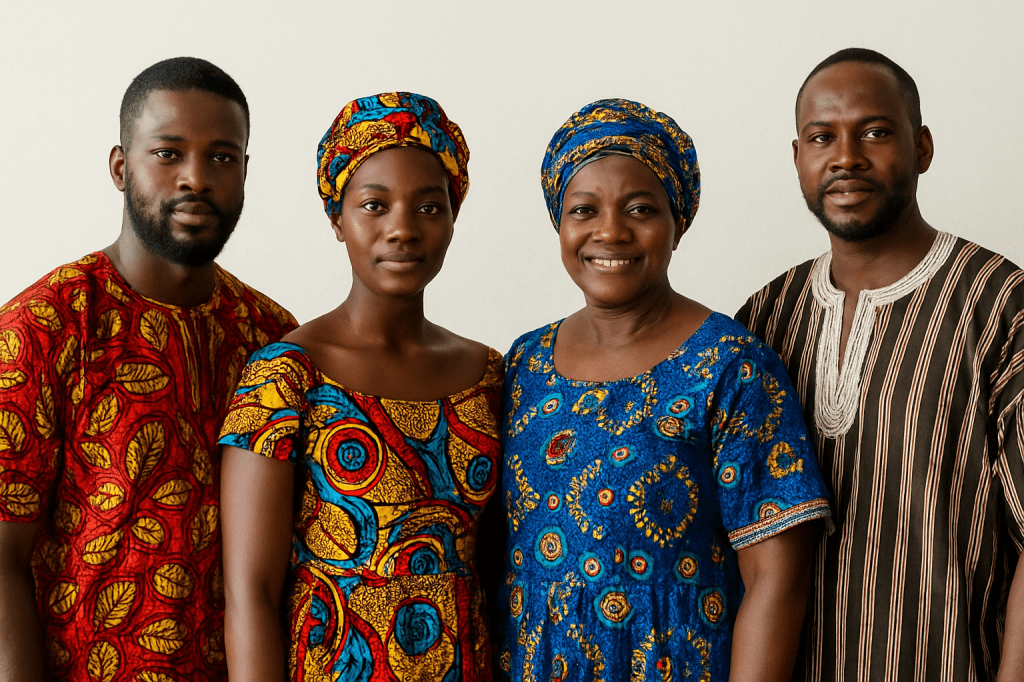
Psychology Series: West African Psychology – Tradition, Identity, and Spiritual Consciousness

West African psychology represents an intricate synthesis of ancestral wisdom, communal identity, and spiritual consciousness. Unlike Western psychology, which centers on individualism and cognitive analysis, West African psychology is relational, holistic, and rooted in spirituality. It explores not only the human mind but the collective spirit that binds the community together. This essay examines the philosophical foundations, cultural paradigms, and contemporary applications of psychological thought within the West African context.

Long before the formal discipline of psychology emerged in Europe, African civilizations practiced advanced forms of psychological inquiry through philosophy, oral tradition, and spiritual systems. Ancient centers of learning such as Timbuktu, Ife, and Kumasi trained scholars in moral behavior, emotional balance, and communal ethics. African psychology was not divorced from spirituality but saw the psyche (ori, kra, chi) as a divine essence connected to both ancestors and the Creator.

In West African societies, the individual is never isolated from the group. The psychological self is defined through relationships with family, ancestors, and the spirit world. The Yoruba term Ori (inner head or spiritual consciousness) illustrates this beautifully: it is both destiny and divine intelligence guiding one’s path. The Akan concept of Sunsum and Kra parallels this, viewing the soul as the link between the human and divine.

Oral literature—proverbs, folktales, and songs—serves as the vehicle of West African psychology. Proverbs function as moral diagnostics, addressing behavioral correction, emotional intelligence, and cognitive awareness. A proverb such as the Akan saying, “Wisdom is like a baobab tree; no one individual can embrace it,” reflects collective problem-solving and humility, core psychological values in traditional African societies (Gyekye, 1997).

The griot, or traditional storyteller, functions as historian, counselor, and psychologist. By preserving genealogies and moral histories, the griot reinforces identity and belonging—two pillars of mental health in African thought. Elders act as interpreters of social behavior and mediators of conflict, employing narrative therapy long before Western models of psychoanalysis emerged.

West African psychology holds that the ancestors continue to influence the living. This belief shapes an understanding of generational trauma and healing that predates contemporary Western psychology. Ceremonies such as libations or ancestral veneration serve therapeutic purposes, reconnecting individuals with their lineage, thus restoring balance to the mind and soul (Mbiti, 1969).

Rituals in West African societies—such as initiation, drumming, and dance—function as methods of psychological transformation. These activities are designed to harmonize the spiritual, emotional, and physical aspects of the individual. The psychological emphasis lies not on pathology but on restoring harmony between the person, community, and cosmos.

The Yoruba and Igbo philosophical systems provide profound theories of consciousness. The Yoruba Ori-Inu (inner head) aligns with self-awareness and purpose, while the Igbo Chi signifies one’s personal spirit and destiny. These models parallel modern psychological ideas of self-concept and existential meaning but integrate divine intentionality, reflecting a sacred understanding of consciousness.

Though the term Ubuntu originates in Southern Africa, its underlying principle—“I am because we are”—resonates throughout West Africa. Communal interdependence defines identity formation, moral development, and emotional regulation. In contrast to Western individualism, African psychology sees personal well-being as inseparable from community well-being (Nwoye, 2015).

Gender identity in West African psychology is guided by roles within the family and community rather than purely biological distinctions. Women often hold spiritual and emotional authority as nurturers and healers, while men serve as protectors and moral exemplars. Psychological maturity is tied to fulfilling these social roles with integrity, balance, and humility.

Music and rhythm play a crucial role in the regulation of emotion and social bonding. Drumming is not merely artistic but therapeutic—a language of the unconscious. Psychologists studying African traditions note that rhythmic entrainment (synchronized movement) lowers stress and enhances group cohesion, illustrating an indigenous model of group therapy.

The transatlantic slave trade severed ancestral and spiritual connections, leading to psychological dislocation among African descendants. This trauma continues to echo in diasporic communities as collective grief and identity fragmentation. Healing this wound requires a return to African-centered psychological frameworks that restore memory and connection to heritage (Akbar, 1984).

Afrocentric psychologists such as Na’im Akbar and Wade Nobles have emphasized the importance of African consciousness in mental health. They argue that the disconnection from African cosmology has produced spiritual amnesia. Reclaiming African identity restores balance, purpose, and wholeness—key components of psychological healing for African-descended peoples worldwide.

Today, West African psychologists integrate indigenous practices with Western methodologies. In Ghana and Nigeria, traditional healers often work alongside clinical professionals to treat mental illness. This hybrid approach recognizes that emotional distress cannot be separated from spiritual imbalance, an insight often overlooked in Western psychiatry.

Colonial education systems disrupted indigenous epistemologies, promoting cognitive models alien to African spirituality. West African psychology calls for decolonized education that validates African knowledge systems. Restoring indigenous philosophy in schools promotes not only intellectual freedom but psychological liberation (Hountondji, 1997).

Islam, Christianity, and traditional belief systems coexist across West Africa, shaping the spiritual psyche. Prayer, fasting, and communal worship offer cognitive and emotional structure. Even among Christians and Muslims, ancestral values of respect, community, and reverence for life remain embedded in daily psychology.

Urban migration and globalization have introduced new psychological challenges: alienation, unemployment, and cultural dislocation. Yet, traditional coping mechanisms—family networks, spirituality, and storytelling—remain powerful buffers against stress. Modern African psychology continues to adapt these age-old resources to contemporary social contexts.

African-centered therapy emphasizes identity restoration, spiritual alignment, and community reconnection. Therapists working within this framework prioritize cultural affirmation and spiritual guidance over purely clinical methods. Healing becomes a collective process rather than an individual one (Nobles, 2013).

West African psychology offers the world a model of balance—mind, body, and spirit unified in purpose. It challenges the reductionism of Western science by affirming the sacredness of human consciousness. Its wisdom calls for a redefinition of psychology not as a discipline of the mind alone but as the science of soul and society.

West African psychology is not a relic of the past but a living framework of resilience, harmony, and divine connection. It invites humanity to remember that healing begins with remembering who we are. The ancestral mind of West Africa continues to speak—through its proverbs, music, and spirituality—reminding the world that the psyche is sacred and the soul communal.

Remember God is Guide!


References

Akbar, N. (1984). Chains and images of psychological slavery. Mind Productions.
Diop, C. A. (1974). The African origin of civilization: Myth or reality. Lawrence Hill Books.
Gyekye, K. (1997). Tradition and modernity: Philosophical reflections on the African experience. Oxford University Press.
Hountondji, P. J. (1997). Endogenous knowledge: Research trails. African Books Collective.
Mbiti, J. S. (1969). African religions and philosophy. Heinemann.
Nobles, W. W. (2013). African psychology: Toward its reclamation, revitalization, and advancement. Institute for the Advanced Study of Black Family Life and Culture.
Nwoye, A. (2015). What is African psychology the psychology of? Theory & Psychology, 25(1), 96–116.
Sarpong, P. (2002). People differ: An approach to cultural anthropology. Sub-Saharan Publishers.
Wiredu, K. (2004). African philosophy: An introduction. Routledge.
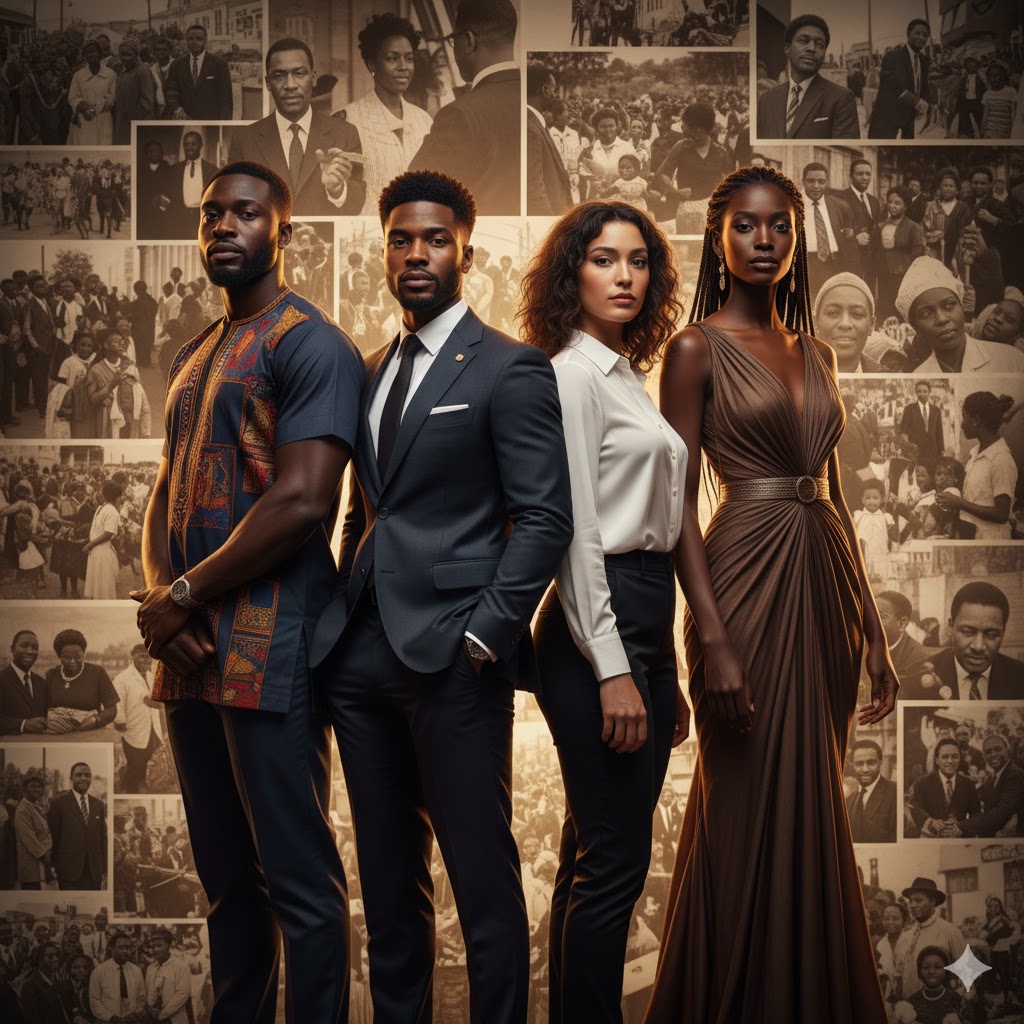

The Beauty and Complexity of Black Identity

Black identity is a tapestry woven from centuries of history, culture, and resilience. It is not reducible to skin color; it is a multidimensional phenomenon encompassing heritage, creativity, spirituality, and self-definition.

The beauty of Black identity lies in its endurance. Despite centuries of enslavement, colonization, and systemic oppression, Black people preserved cultural knowledge, language, and traditions that continue to thrive today.

Historically, African kingdoms cultivated rich civilizations marked by art, scholarship, and governance. Figures such as Mansa Musa of Mali exemplify the wealth, intellect, and sophistication that were the foundation of Black cultural identity long before European interference.

The transatlantic slave trade attempted to erase identity, but Black people transformed oppression into cultural preservation. Spirituals, folktales, and oral histories became vessels for memory and hope, connecting generations across oceans and centuries.

Black identity expresses itself through art. From the Harlem Renaissance to contemporary visual arts, Black creativity reflects both struggle and triumph. Pain and resilience coexist in these works, creating a unique aesthetic language.

Music has been a cornerstone of Black identity. Jazz, blues, gospel, hip-hop, and R&B articulate joy, sorrow, and social critique. Each genre serves as a historical record and a tool of spiritual survival.

Language is a powerful marker of identity. African American Vernacular English (AAVE), Creole languages, and preserved African languages carry cultural meaning, community solidarity, and resistance to assimilation.

Fashion and style are also expressions of Black identity. From Kente cloth and African-inspired garments to modern streetwear, Black people assert individuality, creativity, and pride through dress and adornment.

Black identity is spiritual as well as cultural. Enslaved Africans integrated Christianity with African traditions, creating vibrant spiritual practices. Churches became spaces of education, community organizing, and cultural preservation.

Physical beauty is an integral part of Black identity. Hair, skin, and features have historically been politicized, yet Black people have reclaimed and celebrated these traits as symbols of pride and self-love.

Black identity is intellectual. Thinkers, scientists, and writers such as W.E.B. Du Bois, Zora Neale Hurston, and Katherine Johnson illustrate the intellectual legacy of Black communities that has challenged stereotypes and contributed globally.

Colorism complicates Black identity. The preference for lighter skin in certain societies stems from colonial hierarchies, but Black communities continue to resist these constructs, emphasizing that identity is spiritual, cultural, and personal, not merely visual.

Black identity is resilient in the face of systemic oppression. Black communities have developed institutions, businesses, and networks that sustain culture, foster economic empowerment, and create spaces for artistic and intellectual flourishing.

Family and community are central to Black identity. Extended families, churches, and community networks provide support, mentoring, and intergenerational transmission of cultural knowledge and values.

Black identity is global. The African diaspora connects Black communities across the Americas, Europe, and Africa. Shared histories of struggle and triumph create solidarity that transcends borders.

Black identity is expressed in literature. Writers like James Baldwin, Toni Morrison, and Chimamanda Ngozi Adichie explore the nuances of race, culture, and personal identity, revealing the complexity and richness of Black experience.

The intersection of Blackness and spirituality adds depth to identity. Faith traditions provide frameworks for ethics, social justice, and personal resilience, shaping both individual character and communal life.

Black identity is dynamic. Migration, globalization, and digital communication continue to expand its forms of expression, allowing younger generations to engage with heritage while innovating culturally and socially.

The beauty of Black identity also lies in joy. Music, dance, storytelling, and celebrations manifest resilience, hope, and communal connection, showing that Blackness encompasses both survival and flourishing.

Ultimately, Black identity is complex, multifaceted, and sacred. It embodies history, art, spirituality, intellect, and resilience. To honor Black identity is to recognize the profound contributions, enduring struggles, and eternal beauty of a people who have persevered against every attempt at erasure.


References

Diop, C. A. (1989). The African origin of civilization: Myth or reality. Lawrence Hill Books.

Gates, H. L. (2011). In search of our roots: How 19 extraordinary African Americans reclaimed their past. Crown.

Graves, J. L. (2017). The emperor’s new clothes: Biological theories of race at the millennium. Rutgers University Press.

Hine, D. C., McCluskey, A. T., & McDaniel, A. (2012). The African American odyssey. Pearson.

Woodson, C. G. (2021). The mis-education of the Negro. Dover.

Tutu, D., & Tutu, M. (2014). The book of forgiving: The fourfold path for healing ourselves and our world. HarperOne.

Psychology Series: Understanding Psychology – The Science of Mind and Behavior

Psychology is the scientific study of the mind and behavior. It seeks to understand how individuals think, feel, and act in various situations, blending science with practical insight into human experience. At its core, psychology explores the mechanisms that shape perception, emotion, cognition, and social interaction.

The roots of psychology date back to ancient civilizations, where philosophers like Plato and Aristotle speculated about the mind, behavior, and human nature. However, modern psychology emerged in the late 19th century with Wilhelm Wundt, who established the first experimental laboratory, emphasizing systematic observation and measurement of mental processes.

Psychology is a diverse field that encompasses multiple subdisciplines. Clinical psychology focuses on diagnosing and treating mental illness, whereas cognitive psychology explores processes like memory, attention, and problem-solving. Developmental psychology studies how people grow and change across the lifespan, and social psychology examines how individuals’ thoughts and behaviors are influenced by others.

One critical area of psychology is behavioral study, pioneered by figures like John B. Watson and B.F. Skinner. Behaviorists emphasize that behavior is learned from the environment through conditioning, reinforcement, and punishment, offering insight into habits, addiction, and learning.

Cognitive psychology, by contrast, emphasizes internal mental processes. Researchers study how people perceive, store, and retrieve information, revealing mechanisms behind memory, decision-making, and problem-solving. Cognitive-behavioral therapy (CBT) applies these insights to help individuals change harmful thought patterns and behaviors.

Biological psychology explores the relationship between the brain, nervous system, and behavior. Neuroscience has uncovered how brain structures, neurotransmitters, and hormones influence mood, cognition, and behavior, deepening our understanding of mental health conditions such as depression, anxiety, and schizophrenia.

Humanistic psychology, led by Carl Rogers and Abraham Maslow, emphasizes individual potential, personal growth, and self-actualization. It promotes the idea that humans have an innate drive to achieve fulfillment, creativity, and purpose, focusing on strengths rather than pathology.

Social psychology examines the effects of social interactions on behavior. It investigates phenomena like conformity, obedience, group dynamics, prejudice, and relationships. Classic studies, including Milgram’s obedience experiment and Asch’s conformity study, illustrate the powerful influence of social contexts on individual actions.

Developmental psychology highlights how cognition, emotion, and behavior evolve from infancy to adulthood. Piaget’s theory of cognitive development and Erikson’s psychosocial stages provide frameworks for understanding learning, moral development, and identity formation across the lifespan.

Psychology also informs education, helping teachers and parents understand learning styles, motivation, and behavioral challenges. Educational psychologists apply cognitive and behavioral principles to enhance classroom environments and improve student outcomes.

In mental health, psychologists use various therapeutic approaches, including talk therapy, CBT, psychoanalysis, and mindfulness-based therapies. These interventions aim to reduce symptoms, improve coping strategies, and foster emotional well-being.

Positive psychology is a modern subfield focusing on strengths, resilience, happiness, and human flourishing. Researchers study factors like gratitude, optimism, and purpose to help individuals live meaningful, fulfilling lives rather than merely treating illness.

Industrial-organizational psychology applies psychological principles to workplaces. It explores employee motivation, leadership, productivity, and organizational culture, helping companies optimize performance and well-being.

Forensic psychology bridges psychology and law, aiding in criminal profiling, jury selection, and understanding criminal behavior. It demonstrates how psychological insight can support justice and legal decision-making.

Cross-cultural psychology examines how culture shapes behavior, cognition, and emotion. By comparing societies, researchers reveal universal human tendencies and culturally specific patterns, emphasizing the interplay between biology, society, and culture.

Personality psychology studies the traits, patterns, and characteristics that define individual differences. The Big Five personality traits—openness, conscientiousness, extraversion, agreeableness, and neuroticism—help predict behavior, relationships, and occupational success.

Emotion psychology explores how feelings influence thought, behavior, and decision-making. Emotions affect social interactions, health, and motivation, highlighting the interconnection between mind and body.

Clinical research demonstrates that early intervention, therapy, and support systems improve mental health outcomes. Psychology emphasizes prevention, resilience-building, and coping strategies to mitigate stress, trauma, and chronic mental health conditions.

Finally, psychology continues to evolve as neuroscience, genetics, artificial intelligence, and technology expand our understanding of human behavior. Its applications extend from mental health treatment to education, workplace productivity, public policy, and personal growth.

Psychology is ultimately the bridge between scientific inquiry and human experience. By understanding the mind and behavior, individuals and communities can promote well-being, empathy, and social harmony, fostering lives of purpose and resilience.


References

  • Myers, D. G. (2020). Psychology (12th ed.). Worth Publishers.
  • Passer, M. W., & Smith, R. E. (2019). Psychology: The Science of Mind and Behaviour (6th ed.). McGraw-Hill Education.
  • American Psychological Association (APA). (2023). About Psychology. https://www.apa.org
  • Carlson, N. R. (2017). Physiology of Behavior (12th ed.). Pearson.
  • Cherry, K. (2023). What Is Psychology?. Verywell Mind. https://www.verywellmind.com/what-is-psychology-2794963

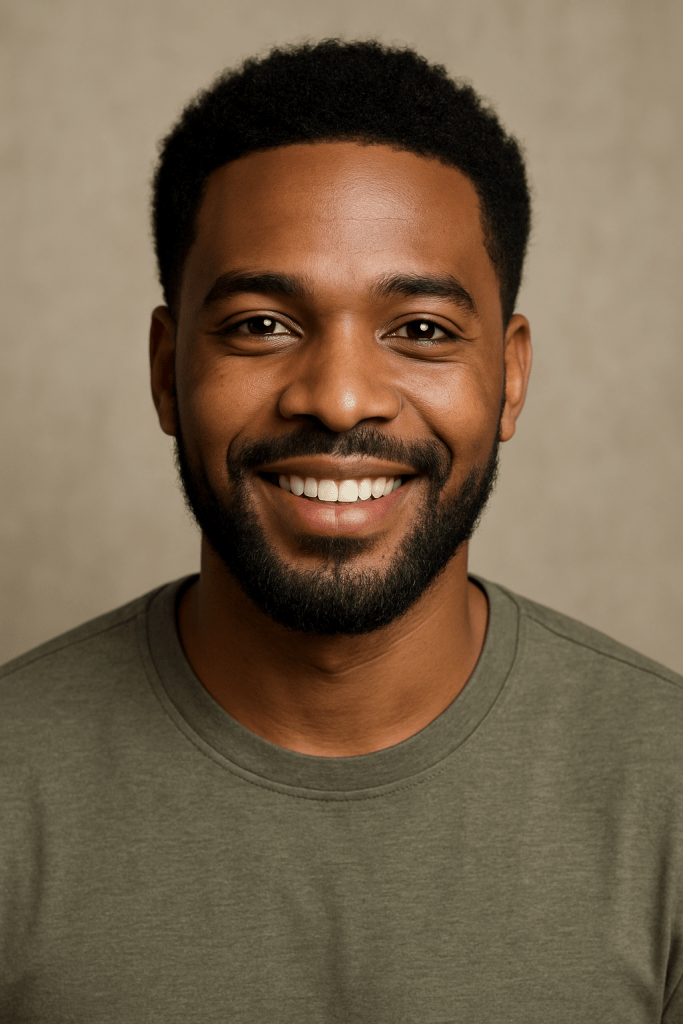
Psychology Series: What is behind a Smile?

A smile is one of the most universal expressions of human emotion, yet it is also one of the most complicated. Psychologists consider the smile a powerful form of nonverbal communication that can reveal truth, conceal truth, or express emotions that words cannot accurately capture. While people often assume a smile means happiness, the psychology behind a smile is far deeper, shaped by biology, culture, personality, and emotional survival.

A genuine smile—often called the Duchenne smile—involves the mouth and the eyes. It reflects real joy, connection, or contentment, activating the brain’s reward centers and releasing dopamine, endorphins, and serotonin. These natural chemicals help reduce stress, elevate mood, and create a sense of emotional bonding. A real smile happens almost effortlessly, rooted in positive emotion or human connection. When someone smiles with sincerity, their entire face participates, and their body language becomes open and unguarded.

However, psychology shows that not all smiles express happiness. People frequently use smiles as emotional masks to hide pain, fear, anxiety, or exhaustion. These are known as “social smiles” or “surface smiles.” A person may smile to avoid conflict, to appear strong, or to protect themselves from vulnerability. Children learn early that smiling makes adults more comfortable, which is why many grow into adults who hide their discomfort or trauma behind a practiced expression of warmth.

Some smiles are strategic—used to navigate social environments, ease tension, or gain acceptance. In professional settings, people often smile to appear approachable, confident, or competent, even when they feel overwhelmed. Psychology calls this “emotional labor”—managing one’s visible emotions to meet social expectations. Over time, emotional labor can create fatigue, burnout, or a sense of disconnection from one’s authentic self.

There are also submissive smiles, often used when someone feels unsafe, threatened, or unsure of their social power. These smiles function as protective gestures meant to defuse hostile situations or prevent confrontation. In communities facing systemic discrimination, such smiles can become ingrained survival tools—expressions shaped less by joy and more by caution.

Cultural psychology reveals that the meaning of a smile also depends on cultural norms. Some cultures view smiling as a sign of politeness, warmth, or trustworthiness; others see excessive smiling as a sign of weakness or social uncertainty. Thus, what one culture views as friendliness, another might interpret as discomfort or insincerity.

A smile can also be a sign of internal conflict. People dealing with depression or trauma often smile to avoid burdening others or to convince themselves that they are okay. This is known as “smiling depression,” a state in which outward expressions of joy conceal inner battles. While the world sees brightness, the individual feels heaviness they are afraid to voice.

Yet smiles can also heal. Research shows that even a forced smile can trick the brain into releasing mood-enhancing chemicals. Smiling increases social connection, builds trust, and strengthens relationships. It can soften hostility, create a sense of belonging, and communicate empathy. In therapy, smiles often emerge as signs of emotional breakthrough or the beginning of healing.

Behind every smile lies a story—sometimes joyful, sometimes painful, sometimes deeply complex. A smile can be a shield, a greeting, a plea for help, or a testament to resilience. It can express sincerity or mask sorrow. It can reveal love or hide grief. Understanding the psychology behind a smile reminds us that human emotion is layered, and what we see on the surface does not always mirror what is happening within.

To truly understand someone, we must look beyond the upward curve of their lips and listen to the subtle cues of their eyes, voice, posture, and silence. A smile may be the most recognizable expression in the world, but it is also one of the most misunderstood.

References

Ambadar, Z., Cohn, J. F., & Reed, L. I. (2009). All smiles are not created equal: Morphology and timing of smiles perceived as amused, polite, and embarrassed. Journal of Nonverbal Behavior, 33(1), 17–34.

Ekman, P. (2003). Emotions revealed: Recognizing faces and feelings to improve communication and emotional life. Henry Holt.

Ekman, P., & Friesen, W. V. (1982). Felt, false, and miserable smiles. Journal of Nonverbal Behavior, 6(4), 238–252.

Fernandez-Dols, J. M., & Crivelli, C. (2013). Emotional expressions: The world through a face. Cambridge University Press.

Grandey, A. A. (2000). Emotion regulation in the workplace: A new way to conceptualize emotional labor. Journal of Occupational Health Psychology, 5(1), 95–110.

Keltner, D., & Lerner, J. S. (2010). Emotion. In S. T. Fiske, D. T. Gilbert, & G. Lindzey (Eds.), Handbook of social psychology (5th ed., pp. 317–352). Wiley.

Krumhuber, E. G., & Manstead, A. S. (2009). Are you joking? The elaboration likelihood model and smiling behavior. Journal of Experimental Social Psychology, 45(1), 219–224.

Matsumoto, D., Yoo, S. H., & Nakagawa, S. (2008). Culture, emotion regulation, and adjustment. Journal of Personality and Social Psychology, 94(6), 925–937.

Niedenthal, P. M. (2007). Embodying emotion. Science, 316(5827), 1002–1005.

Soussignan, R. (2002). Duchenne smile, emotional experience, and physiological responses: A test of the facial feedback hypothesis. Emotion, 2(1), 52–74.

The Olmec Civilization: The Mother Culture of Mesoamerica

The Olmec civilization, often hailed as the “mother culture” of Mesoamerica, represents one of humanity’s earliest high cultures in the Americas. Flourishing between 1500 BCE and 400 BCE along the Gulf Coast of present-day Veracruz and Tabasco, Mexico, the Olmecs laid the foundation for later civilizations such as the Maya and Aztec. Renowned for their monumental artistry, religious symbolism, and complex social organization, the Olmecs embody the ingenuity, spirituality, and resilience of early American civilization (Diehl, 2004).

The term Olmec, derived from the Nahuatl word Olmeca meaning “rubber people,” refers to both the civilization and the region known for its rubber production (Coe, 2011). The Olmec heartland’s fertile river valleys and humid lowlands allowed for advanced agriculture and sustained population centers like San Lorenzo, La Venta, and Tres Zapotes. The Olmecs cultivated maize, cacao, beans, and squash—crops that later became staples of Mesoamerican culture.


Artistic and Architectural Achievements

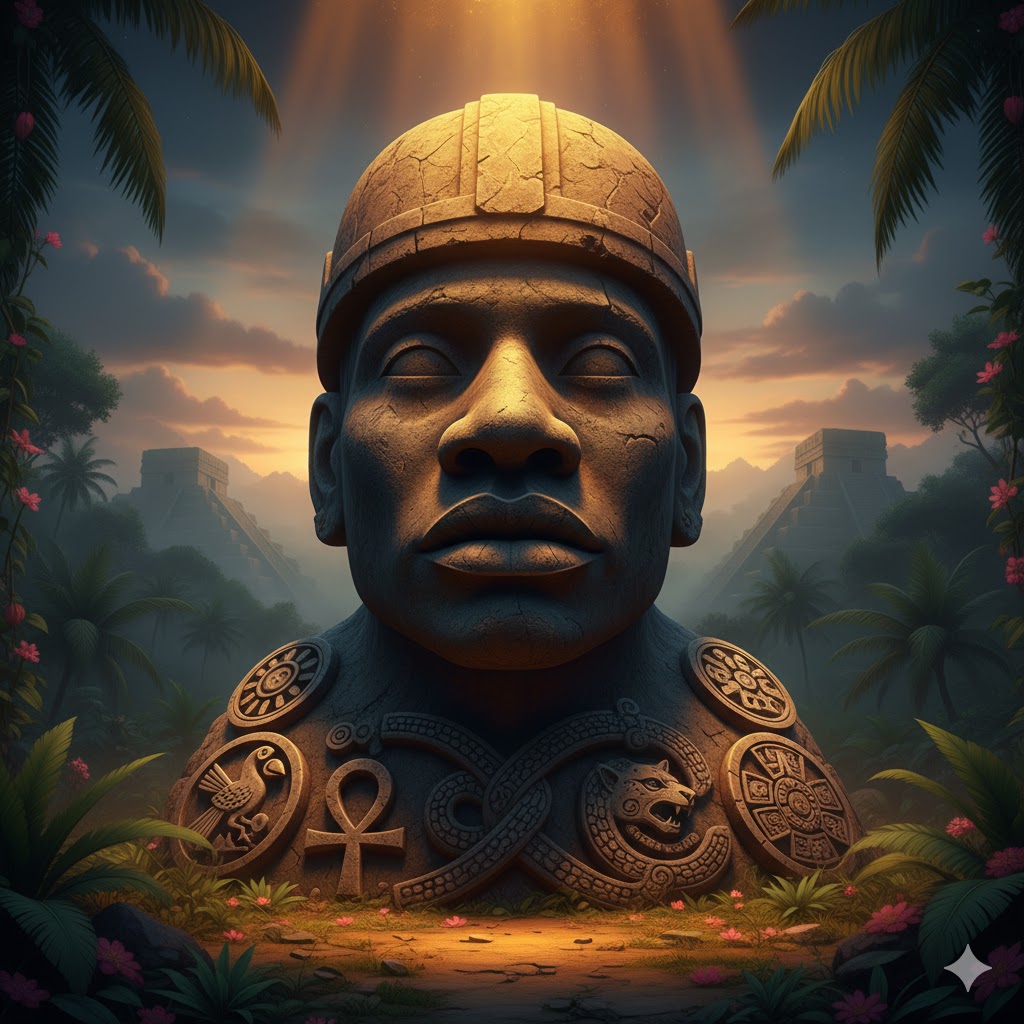
The colossal stone heads—some weighing up to 50 tons—remain the most enduring symbols of Olmec artistry. These sculptures, carved from basalt transported over long distances, are believed to represent rulers or ballplayers. Each head bears unique facial features, suggesting individualized portrayals rather than idealized forms (Pool, 2007). The sheer craftsmanship demonstrates centralized governance, skilled artisans, and an aesthetic philosophy linking power to sacred representation.

In addition to colossal heads, the Olmecs mastered jade and greenstone carvings, producing figurines, masks, and ritual objects that reveal their refined sense of symmetry and spiritual symbolism. The preference for greenstone—associated with fertility and life—reflects a worldview in which art, agriculture, and divinity were inseparable.


Religion and Cosmology

Olmec religion revolved around deities representing natural forces—rain, maize, and fertility—and often took zoomorphic forms. The “Were-jaguar” figure, half-human and half-jaguar, is among the most pervasive motifs, symbolizing divine transformation or shamanic power (Reilly, 1995). Temples and pyramidal mounds were often aligned with celestial phenomena, emphasizing the Olmecs’ advanced understanding of astronomy.

Ritual bloodletting, offerings, and early forms of the Mesoamerican ballgame appear to have originated among the Olmecs. These rituals reflected the eternal cycles of life, death, and rebirth—core spiritual beliefs that later civilizations inherited.


Society and Governance

Archaeological and linguistic evidence suggests a hierarchical society led by priest-kings who fused political authority with religious power. Trade networks extended from Central America to the Valley of Mexico, spreading Olmec influence and artistic motifs across vast territories. Obsidian, jade, pottery, and feathers were among the traded materials, fostering economic and cultural exchange (Blomster, 2012).

Proto-writing and calendrical systems—evidenced in the Cascajal Block—suggest that the Olmecs developed one of the earliest written languages in the Americas (Rodríguez & Ortiz, 2006). This linguistic sophistication indicates a society of intellectual and ritual complexity rivaling early civilizations in Africa and Asia.


The African Connection: Theories and Debates

The colossal heads’ distinct features—broad noses, full lips, and strong jawlines—have long sparked debate among historians, archaeologists, and Afrocentric scholars. Proponents of the African connection argue that these sculptures bear striking resemblances to West African physiognomy, particularly to the features common among ancient Nubians and West Africans (Van Sertima, 1976). In his seminal work They Came Before Columbus, Ivan Van Sertima argued that African explorers may have reached the Americas centuries before Columbus, influencing early Mesoamerican culture. He pointed to the Olmec heads’ Negroid features, the presence of botanical similarities (such as the African cotton species Gossypium herbaceum), and shared pyramid-building traditions as potential evidence of pre-Columbian transatlantic contact.

Similarly, Black historian Clyde A. Winters (2013) has proposed that African migrants—possibly of the Mande or Nubian cultures—may have contributed to Olmec civilization’s rise through maritime exploration across Atlantic currents. These Afrocentric theories emphasize the historical agency of ancient African peoples and challenge Eurocentric narratives that minimize Africa’s global impact.

However, mainstream archaeologists interpret the facial features differently. Many argue that the Olmec heads reflect the indigenous physiognomy of the native populations of the Gulf Coast, whose features—broad noses and full lips—are naturally diverse and regionally adapted. Modern DNA studies and cranial analyses have not conclusively linked Olmec remains to African populations, instead situating them within the broader indigenous Mesoamerican genetic spectrum (Pool, 2007; Coe, 2011).

While definitive proof of transatlantic contact before Columbus remains elusive, the discussion itself highlights deeper questions of representation, racial bias, and the politics of archaeology. As Asante (2007) notes, Afrocentric inquiry seeks not to impose African origins on every civilization but to restore African humanity to the global historical narrative from which it has often been erased.


Legacy and Cultural Influence

Regardless of the debate, the Olmec legacy in Mesoamerican civilization is indisputable. Their iconography, ritual practices, and urban planning profoundly shaped later societies such as the Maya and Aztec. The concept of divine kingship, the calendar system, and pyramid architecture all bear traces of Olmec origin.

Culturally, the Olmecs symbolize the dawn of intellectual and spiritual consciousness in the Americas. Their art bridges heaven and earth, the visible and invisible worlds, offering timeless testimony to the human desire for divine connection and order.


Conclusion

The Olmec civilization stands as a foundational pillar in world history—a society of builders, artists, priests, and visionaries who defined Mesoamerican identity for millennia. Whether viewed through the lens of indigenous ingenuity or possible African contact, their story underscores the interconnectedness of human cultures. The colossal heads, staring silently through centuries, remind the world of a people whose beauty, intellect, and craftsmanship transcended their time.

As global discourse continues to evolve, revisiting the Olmec question through both scientific and Afrocentric frameworks enriches—not diminishes—our understanding of ancient history. For in every sculpted face of basalt lies not only a ruler of old but the universal face of humanity—diverse, divine, and eternally creative.


References

  • Asante, M. K. (2007). An Afrocentric Manifesto: Toward an African Renaissance. Polity Press.
  • Blomster, J. P. (2012). The Origins of Olmec Civilization: Theories of Formative Mesoamerican Development. Annual Review of Anthropology, 41(1), 223–239.
  • Coe, M. D. (2011). Mexico: From the Olmecs to the Aztecs (6th ed.). Thames & Hudson.
  • Diehl, R. A. (2004). The Olmecs: America’s First Civilization. Thames & Hudson.
  • Pool, C. A. (2007). Olmec Archaeology and Early Mesoamerica. Cambridge University Press.
  • Reilly, F. K. (1995). Art, Ritual, and Rulership in the Olmec World. Dumbarton Oaks.
  • Rodríguez, M. C., & Ortiz, P. (2006). New Evidence for Early Olmec Writing: The Cascajal Block. Science, 313(5793), 1610–1614.
  • Van Sertima, I. (1976). They Came Before Columbus: The African Presence in Ancient America. Random House.
  • Winters, C. A. (2013). African Empires in Ancient America: The Olmecs, the Mande, and the Transatlantic Legacy. African Diaspora Press.

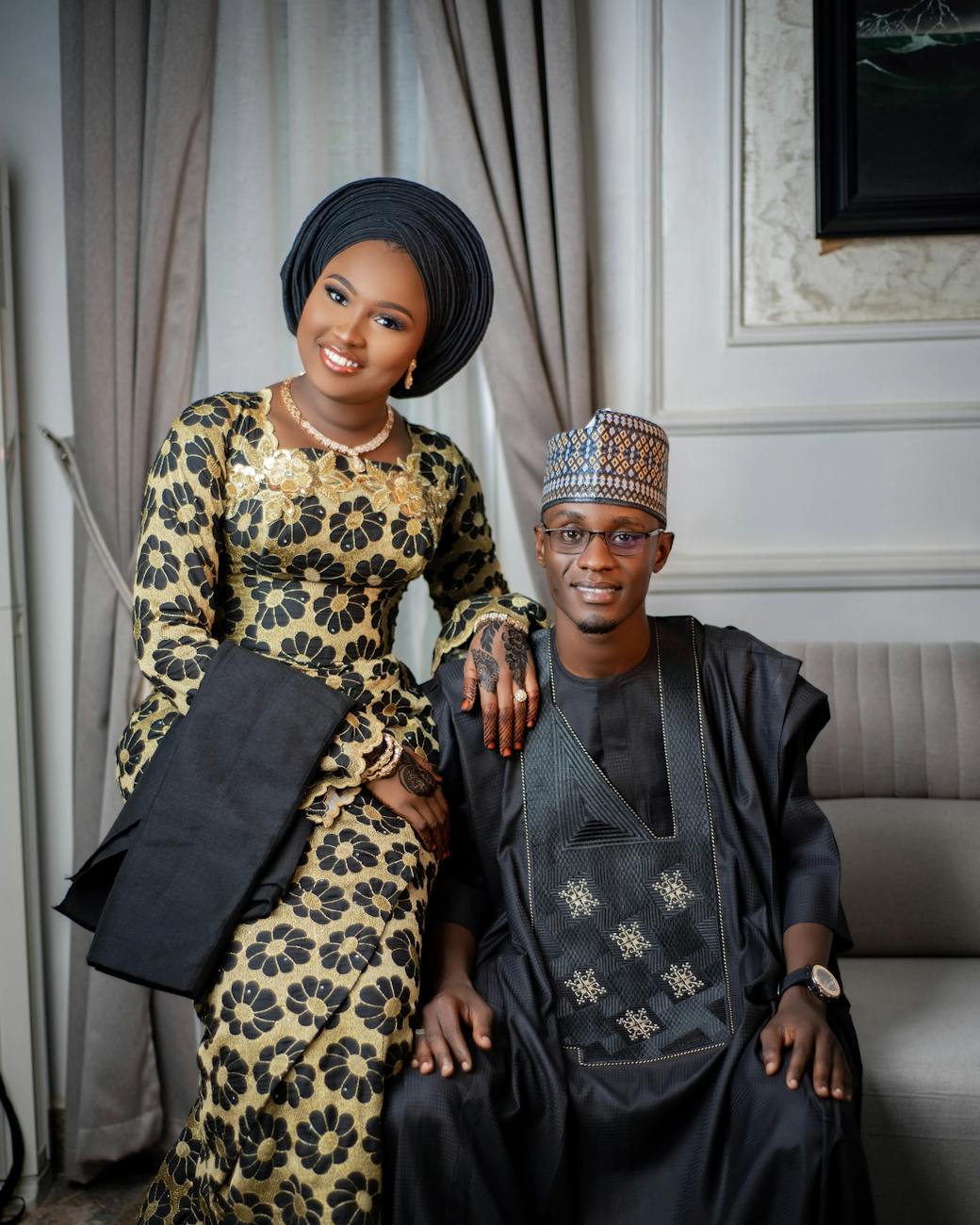
Reclaiming Truth: A Scholarly Rebuttal to Eurocentric History.

Photo by Deesarkee photos on Pexels.com

Eurocentric history has dominated the narrative of global civilization for centuries, portraying Europe as the cradle of culture, innovation, and morality while minimizing or erasing Africa’s role. This approach not only distorts facts but also perpetuates psychological oppression by marginalizing Black contributions. A careful examination of archaeology, genetics, theology, and anthropology reveals the truth of African primacy and the falsity of Eurocentric supremacy.

1. The Origins of Humanity Are African

Eurocentric historiography often frames humanity as a European achievement. In reality, the oldest Homo sapiens fossils — including Omo Kibish and Herto in Ethiopia — date back over 200,000 years (White et al., 2009). Genetic studies corroborate this: mitochondrial DNA diversity is greatest in African populations, confirming their position as the root of humanity (Tishkoff et al., 2009).

The Eurocentric myth of a “white Adam” contradicts both science and scripture. Genesis 2:7 (KJV) affirms that God formed man from the dust of the earth — the rich soils of Africa, where humanity first emerged.


2. Africa: Cradle of Civilization

Europe often claims credit for early civilization, yet empirical evidence shows that:

  • Ancient Egypt (Kemet) developed writing, mathematics, and monumental architecture over 5,000 years ago (Diop, 1974; Ehret, 2021).
  • Nubia, Axum, Mali, and Songhai established complex urban centers, international trade, metallurgy, and governance before European feudalism (Hunwick, 2003).
  • Timbuktu’s libraries and universities predated European Enlightenment, containing texts on medicine, astronomy, and philosophy (Diagne, 2016).

These facts demonstrate that technological and intellectual foundations attributed to Europe were built upon African precedent.


3. The Erasure of Black Agency in History

European colonial powers systematically erased Black achievements:

  • African scholars, inventors, and leaders were excluded from textbooks.
  • African knowledge of astronomy, navigation, and mathematics was appropriated and reframed as European “discovery.”
  • Artistic and literary contributions were minimized or exoticized.

For example, Greek civilization borrowed heavily from Egypt and other African sources, yet Eurocentric history positions Greece as the originator of philosophy, politics, and art.


4. Slavery and the Myth of Black Inferiority

Slavery is often narrated as punishment for alleged inferiority. In truth, Europeans enslaved educated, skilled, and politically organized Africans, precisely because they were a threat to European economic expansion. This inverted morality reinforced the false narrative of Black incapacity and subservience (Gates, 2014).


5. Biblical Evidence for African Centrality

Scripture repeatedly situates African peoples in positions of significance:

  • Cush, Mizraim, and Put are progenitors in Genesis 10, connecting Africa to the Abrahamic narrative.
  • Moses’ Ethiopian wife (Numbers 12:1–10) and Christ’s sojourn in Egypt (Matthew 2:13–15) affirm Black presence in sacred history.
  • Prophecies in Deuteronomy 28 and Isaiah 11 reflect both the hardships and the eventual restoration of the African diaspora.

6. Genetic Evidence Challenges Racial Hierarchies

Modern genetics contradicts European notions of superiority:

  • Africans harbor the most diverse alleles, indicating evolutionary sophistication and adaptability (Tishkoff et al., 2009).
  • Melanin provides UV protection, free radical scavenging, and neuromelanin in the brain supports cognitive resilience (Zecca et al., 2017).

Biology, therefore, refutes Eurocentric claims that Black people were biologically “less advanced.”


7. Cultural Continuity Across Diaspora

African cultural systems survived the Atlantic slave trade, demonstrating resilience and ingenuity:

  • Music, rhythm, and oral tradition preserved memory and identity.
  • Religion and communal structures adapted while maintaining theological and ethical continuity.
  • These cultural legacies challenge Eurocentric narratives that depict enslaved Africans as passive, cultureless victims.

8. European “Discovery” Is Misnomer

The Eurocentric narrative glorifies Columbus as “discoverer,” ignoring African and Phoenician maritime activity along the Atlantic and Caribbean coasts. African navigators had sophisticated seafaring knowledge long before European expansion (Diop, 1974).


9. Intellectual Resistance

Figures such as Anton Wilhelm Amo, Olaudah Equiano, and Phillis Wheatley challenge Eurocentric intellectual hegemony. Their writings and scholarship demonstrate that African-descended peoples were literate, philosophical, and politically astute despite systemic oppression.


10. The Psychological Weapon of Eurocentric History

By suppressing Black achievement, Europe imposed internalized inferiority, echoing Fanon’s “colonized mind” (Fanon, 1952). The narrative creates generations of people doubting their own worth, perpetuating racial hierarchy.


11. Reclaiming Historical Truth Is Liberation

Education rooted in accurate historiography restores agency. Black people, learning their ancestral contributions, regain cognitive, spiritual, and cultural sovereignty.


12. Melanin as Evidence of Divine Design

Melanin’s biochemical and neuroprotective functions demonstrate intentionality in creation (Hoogduijn, 2021; Solano, 2020). Its presence in skin, hair, and brain aligns with biblical affirmations of sacred human design (Psalm 139:14, KJV).


13. Misconceptions About Blackness in Scripture

Some Eurocentric interpretations attempted to “whiten” biblical figures. Critical scholarship and anthropological evidence reveal that ancient Israelites, Cushites, and Egyptians were likely dark-skinned Afro-Asiatic peoples, challenging European depictions.


14. African Empires Preceded European Expansion

West African kingdoms minted gold coins, established trade routes, and developed governance centuries before the European Renaissance. Mansa Musa’s pilgrimage (1324 CE) displayed wealth, knowledge, and diplomacy unmatched in Europe at the time.


15. Artistic and Scientific Appropriation

From pyramids to Greek philosophy to algebraic systems, Europe frequently appropriated African knowledge. Eurocentric historiography ignores or reassigns these contributions to white actors.


16. Modern Implications

The Eurocentric historical lens still shapes education, policy, and social perception. Reclaiming African-centered history empowers Black communities to rebuild identity, mental health, and socio-political agency.


17. Black Destiny and Restoration

Biblical prophecy supports eventual restoration:

“I will bring again the captivity of my people of Israel… and they shall build the waste cities, and inhabit them.” (Isaiah 49:22, KJV)

This aligns with diasporic resurgence in culture, technology, and global influence.


18. Integrating Science, Scripture, and History

Genetic evidence, archaeological data, and biblical scripture converge to affirm Black centrality in human history. Eurocentric distortion cannot withstand interdisciplinary scrutiny.


19. Conclusion: Rewriting the Narrative

A scholarly rebuttal demands that we:

  1. Recognize Africa as the cradle of humanity.
  2. Acknowledge African civilizations’ intellectual and spiritual achievements.
  3. Correct centuries of historical misrepresentation.
  4. Integrate science, scripture, and culture to reconstruct identity.

20. Call to Action

Black education must center ancestral knowledge, scripture-informed history, and scientific evidence. The liberation of the mind precedes liberation of society. Eurocentric myths are dismantled not through rhetoric alone but through evidence, pride, and scholarly rigor.


References

  • Diop, C. A. (1974). The African origin of civilization: Myth or reality. Lawrence Hill Books.
  • Ehret, C. (2021). Ancient Africa: A global history, to 300 CE. Princeton University Press.
  • Fanon, F. (1952). Black Skin, White Masks. Grove Press.
  • Gates, H. L. (2014). The African Americans: Many rivers to cross. SmileyBooks.
  • Hoogduijn, M. J. (2021). Melanin and its role in skin physiology. International Journal of Molecular Sciences, 22(9), 4352.
  • Hunwick, J. O. (2003). Timbuktu and the Songhay Empire. Brill.
  • Solano, F. (2020). Melanin and melanogenesis: Recent advances in melanocyte biology and function. International Journal of Molecular Sciences, 21(20), 7584.
  • Tishkoff, S. A., et al. (2009). The genetic structure and history of Africans and African Americans. Science, 324(5930), 1035–1044.
  • White, T. D., et al. (2009). Ardipithecus ramidus and early human evolution. Science, 326(5949), 64–86.
  • Zecca, L., et al. (2017). The role of neuromelanin in neurodegenerative diseases. Frontiers in Aging Neuroscience, 9, 1–12.

The Mirror Between Two Worlds

Between the physical and the spiritual, between what is seen and what is felt, there exists a mirror — a reflection that reveals not merely the face, but the soul. The Mirror Between Two Worlds represents the threshold where identity, morality, and divinity converge. It is the space where humanity confronts both its beauty and its brokenness, where truth and illusion battle for dominion over the heart.

Every individual lives in two realms: the material world of flesh and ambition, and the spiritual world of conscience and eternity. The mirror between them does not merely show what we appear to be, but who we have become. In this reflection, one must ask: Am I living for this world or for the one beyond?

The physical world teaches us to chase visibility — to be admired, accepted, and envied. It prizes appearance over authenticity. The spiritual world, by contrast, measures not how we look but how we love, not how high we rise but how deeply we serve. The mirror between these two worlds exposes the tension of modern existence — the war between ego and essence.

In Scripture, mirrors often symbolize revelation and reflection. The Apostle Paul wrote, “For now we see through a glass, darkly; but then face to face” (1 Corinthians 13:12, KJV). Humanity’s understanding of truth is partial, obscured by sin and self-deception. Yet as we draw nearer to God, the reflection clarifies, revealing our true image — one made in His likeness.

This mirror is not a passive object; it is alive with moral consequence. It shows both the masks we wear and the wounds we hide. Many are afraid to look too long, for the reflection exposes compromise, vanity, and spiritual neglect. But transformation begins with honest confrontation. We cannot heal what we refuse to see.

In the age of social media and self-curation, the mirror has multiplied. We are surrounded by digital reflections — selfies, filters, and public personas — each crafted to project perfection. Yet the soul, neglected and unfiltered, remains restless. The world teaches us to polish the image but ignore the spirit, to upgrade the mirror but forget the reflection.

The “two worlds” also represent time and eternity. In this life, we chase possessions, pleasure, and recognition; in the next, only righteousness will endure. The mirror between them reminds us that what is temporary often disguises itself as eternal, and what is unseen carries the greatest value. “While we look not at the things which are seen, but at the things which are not seen…” (2 Corinthians 4:18, KJV).

Every choice we make tilts the reflection toward one world or the other. When we choose truth over convenience, compassion over cruelty, faith over fear — we align with the divine reflection. But when we yield to pride, envy, or greed, the mirror darkens. It becomes clouded by self-interest, unable to reflect the light of God’s image.

For centuries, mystics and theologians have described life as a mirror of the soul. The more one polishes it through repentance and humility, the more clearly it reflects the Creator. Sin, however, scratches the glass, distorting the divine resemblance. The process of sanctification is, in essence, the cleaning of the mirror — the restoration of spiritual clarity.

In psychological terms, the mirror represents self-awareness — the courage to observe one’s own motives, biases, and brokenness. It demands vulnerability, for the truth is rarely flattering. Yet through this inner reflection, spiritual maturity is born. The unexamined soul remains divided, trapped between the two worlds.

The mirror also symbolizes duality — light and shadow, heaven and earth, the sacred and the profane. It reminds us that humans are not merely bodies seeking pleasure, but spirits seeking purpose. When the material dominates, the reflection becomes superficial; when the spiritual leads, beauty flows from within.

The tragedy of modern humanity is that many have mistaken the reflection for the reality. They worship the image — fame, status, self — and forget the source. This idolatry of the self is the ancient sin reborn in digital form. The mirror becomes an altar where the ego reigns supreme, yet leaves the soul starving.

Yet, hope endures. The mirror between worlds is not meant to condemn but to awaken. When one gazes into it with humility, the illusion fades and truth emerges. One begins to see that divine beauty is not external adornment but internal alignment — the harmony of heart, mind, and spirit under God’s light.

In every generation, prophets, poets, and philosophers have urged humanity to look inward. “Know thyself,” inscribed on the Temple of Delphi, echoes the same wisdom Christ imparted: “The kingdom of God is within you” (Luke 17:21, KJV). The mirror between two worlds, then, is not found in glass but in the heart.

The reflection we see in others often reveals what remains unresolved within us. Judgment, envy, and resentment are projections of our own unrest. Thus, relationships become mirrors too — sacred tools of revelation meant to refine rather than condemn. Each encounter is an invitation to greater understanding.

The moment we surrender vanity and face our truest reflection, transformation begins. The mirror ceases to divide the worlds and instead unites them. Heaven and earth meet within the redeemed heart — a space where spiritual truth animates physical existence.

The goal, then, is not to shatter the mirror but to see clearly through it. To live with integrity between both worlds — fully human yet divinely guided. To reflect the Creator while walking through creation.

In the end, every soul must stand before the ultimate mirror — the presence of God — where no filters, excuses, or disguises remain. There, reflection becomes revelation. And in that sacred unveiling, we will finally see ourselves as He always saw us — not divided, but whole.

References

Foster, R. (1998). Celebration of discipline: The path to spiritual growth. HarperCollins.
Lewis, C. S. (1942). The Screwtape letters. HarperOne.
Nouwen, H. (1981). The wounded healer: Ministry in contemporary society. Doubleday.
Tozer, A. W. (1991). The pursuit of God. Christian Publications.
The Holy Bible, King James Version. (1611). London: Oxford University Press.

The Origins of White Skin

The study of human pigmentation, particularly the origins of white skin, intertwines anthropology, genetics, and evolutionary biology. Understanding how and why skin color diversified requires an exploration of migration patterns, environmental adaptation, and genetic mutations that shaped the physical diversity among humankind. This essay will explore the scientific, historical, and sociocultural dimensions of white skin evolution through an integrative scholarly lens.

The terms “white” and “black” are social and symbolic designations, not literal reflections of human pigmentation. Scientifically and anthropologically, all humans fall along a spectrum of brown skin tones determined by melanin concentration, hemoglobin visibility, and other pigmentary factors.

In biological terms, skin color arises from three main pigments: melanin, carotene, and hemoglobin. Melanin, produced by melanocytes, gives skin its brown to dark brown shades. Carotene adds yellow or golden undertones, while hemoglobin contributes pink to red hues visible through lighter skin. Therefore, so-called “white” people actually possess light beige or pinkish skin tones, influenced by low melanin levels and higher visibility of underlying blood vessels (Jablonski, 2021).

Similarly, “black” skin is not black in the literal sense but represents varying concentrations of eumelanin that create rich brown tones ranging from bronze to deep espresso. Under sunlight, darker skin often reveals golden, red, or blue undertones rather than pure blackness. This continuous gradation underscores that human pigmentation exists along a chromatic continuum, not binary categories.

The labels white and black originated during European colonial expansion to reinforce social hierarchies, not biological realities. In the 17th and 18th centuries, racial theorists used color as a metaphor for moral and intellectual worth—“white” symbolizing purity and civilization, and “black” denoting savagery and sin (Smedley & Smedley, 2011). These associations, rooted in ideology rather than anatomy, shaped enduring racial constructs that persist today.

Modern genetics and anthropology confirm that all humans share over 99.9% identical DNA, and differences in skin color are governed by a handful of genes (Norton et al., 2007). Thus, color terminology reflects cultural identity and historical power dynamics more than any genuine biological division.

In truth, all people are various shades of brown—from the lightest ivory to the deepest mahogany—demonstrating our shared origin and diversity within unity. As the biblical verse reminds, “And hath made of one blood all nations of men” (Acts 17:26, KJV). Science and scripture converge here: humanity’s distinctions are aesthetic and adaptive, not hierarchical.

Early human populations originated in sub-Saharan Africa, where high ultraviolet radiation levels favored dark skin pigmentation rich in melanin. Melanin serves as a natural barrier protecting the skin from UV-induced damage and degradation of folate, an essential nutrient for reproductive success (Jablonski & Chaplin, 2010). Thus, the earliest Homo sapiens possessed dark skin as a biological adaptation to equatorial sunlight.

As human groups migrated northward out of Africa roughly 60,000 years ago, they encountered regions with lower UV exposure. In these environments, dark pigmentation became less advantageous. To maintain adequate vitamin D synthesis—a process reliant on UV-B radiation—lighter skin gradually evolved through natural selection (Norton et al., 2007).

One of the most significant genetic factors in light skin evolution is the SLC24A5 gene. A single nucleotide change in this gene (Ala111Thr) is strongly associated with light pigmentation among Europeans (Lamason et al., 2005). This mutation, which likely arose around 8,000 years ago, spread rapidly due to selective pressures in northern latitudes where sunlight was weaker.

Another key gene, SLC45A2, also contributes to depigmentation in European populations (Stokowski et al., 2007). Together with TYR and OCA2 genes, these variants represent a cluster of evolutionary adaptations that reshaped melanin production, producing the light skin phenotypes common in Europe.

The emergence of white skin was not instantaneous but gradual. Genetic modeling suggests multiple independent depigmentation events occurred among non-African populations. East Asians, for example, developed lighter skin through different genetic pathways (notably the DCT and MFSD12 genes), demonstrating convergent evolution (Yamaguchi et al., 2018).

Archaeogenetic evidence indicates that early Europeans, such as the Mesolithic hunter-gatherers of Western Europe, still had dark skin and blue eyes (Olalde et al., 2014). It was only during the Neolithic agricultural revolution—when farming spread from the Near East—that genes for lighter skin became dominant in Europe.

This agricultural transition likely accelerated depigmentation. Diets deficient in vitamin D due to reduced consumption of animal products made lighter skin advantageous for efficient synthesis of the vitamin from limited sunlight (Hofmanová et al., 2016). Thus, whiteness as a phenotype arose through both environmental and dietary adaptation.

Cultural evolution soon intersected with biological change. As populations developed hierarchies, skin color became symbolically charged—first as a marker of regional origin, later as a social construct of superiority and purity (Smedley & Smedley, 2011). The scientific origins of white skin were therefore overlaid by ideological meanings during the rise of European colonialism.

European societies, beginning in the Renaissance and Enlightenment periods, reinterpreted physical difference through racial taxonomy. Thinkers like Linnaeus and Blumenbach used skin color to classify humanity, cementing whiteness as the “norm” of civilization (Eze, 1997). These frameworks distorted evolutionary diversity into hierarchical racial structures.

The biological reality, however, undermines these racialized assumptions. Modern genomic data reveal that skin color variation represents a small portion of overall genetic diversity among humans—roughly 0.1% of total DNA difference (Lewontin, 1972). Thus, “race” is more a sociopolitical invention than a biologically discrete category.

The theological narrative also influenced perceptions of white skin. In medieval Europe, depictions of Adam and Eve as white reinforced Eurocentric conceptions of divine image-bearing, contrasting with African and Semitic biblical origins (Goldenberg, 2003). This ideological whiteness would later justify slavery, colonialism, and systemic inequality.

Anthropologically, lighter skin in Eurasia should be seen not as superiority but as regional adaptation. It parallels the Inuit’s dietary vitamin D compensation or the dark skin retention of equatorial peoples despite varying UV exposure—each reflecting environmental equilibrium rather than hierarchy (Jablonski, 2021).

The adaptation process reveals the remarkable plasticity of the human genome. Mutations in pigmentation genes often occurred within a few thousand years—a rapid pace in evolutionary terms—demonstrating the strong influence of climate and diet on phenotype (Liu et al., 2015).

Moreover, studies of ancient DNA reveal that pigmentation genes continued evolving even in historical times. For example, the allele for light eyes and skin (HERC2/OCA2) rose in frequency in Europe during the Bronze Age (Mathieson et al., 2015). This continuous selection underscores skin color as a dynamic trait rather than a fixed racial essence.

Socially, the valorization of whiteness became a cultural invention with far-reaching consequences. Colonial narratives equated light skin with intelligence, civility, and divine favor—distortions that persist in global colorism today (Hunter, 2013). The origin of white skin, therefore, cannot be divorced from the ideologies it later inspired.

Biomedically, understanding the genetics of pigmentation informs research into health disparities. Lighter skin correlates with higher risks of UV-related cancers and folate deficiency, while darker skin populations in northern latitudes face vitamin D deficiencies (Nina et al., 2019). Both extremes highlight the adaptive trade-offs of human evolution.

The story of white skin also illustrates humanity’s shared ancestry. Despite visible differences, all modern humans trace their lineage to a common African origin roughly 200,000 years ago (Stringer, 2016). Skin color differences merely represent evolutionary responses along a continuum of adaptation.

From a spiritual-humanistic perspective, these findings reaffirm the unity of mankind. As the Apostle Paul declared, “And hath made of one blood all nations of men” (Acts 17:26, KJV). Scientific inquiry thus harmonizes with scriptural truth: diversity is divine design, not division.

Contemporary discussions on race and identity must therefore distinguish between biological pigmentation and sociocultural constructs. Whiteness as an identity emerged not from genetics but from power, empire, and ideology—constructed upon natural adaptation but weaponized through social stratification.

Ultimately, the origins of white skin testify to human resilience and adaptability. Our ancestors’ capacity to evolve physically, migrate globally, and adapt spiritually underscores the interconnectedness of all humanity under one Creator.

Science continues to demystify color, revealing that beneath the epidermis lies a shared human essence. In understanding how white skin evolved, we come closer to transcending the myths it inspired and embracing the unity embedded in our DNA.

References

Eze, E. C. (1997). Race and the Enlightenment: A reader. Blackwell.
Goldenberg, D. M. (2003). The curse of Ham: Race and slavery in early Judaism, Christianity, and Islam. Princeton University Press.
Hofmanová, Z., et al. (2016). Early farmers from across Europe directly descended from Neolithic Aegeans. Proceedings of the National Academy of Sciences, 113(25), 6886–6891.
Hunter, M. (2013). Race, gender, and the politics of skin tone. Routledge.
Jablonski, N. G., & Chaplin, G. (2010). Human skin pigmentation as an adaptation to UV radiation. Proceedings of the National Academy of Sciences, 107(Suppl 2), 8962–8968.
Jablonski, N. G. (2021). Living color: The biological and social meaning of skin color. University of California Press.
Lamason, R. L., et al. (2005). SLC24A5, a putative cation exchanger, affects pigmentation in zebrafish and humans. Science, 310(5755), 1782–1786.
Lewontin, R. C. (1972). The apportionment of human diversity. Evolutionary Biology, 6, 381–398.
Liu, F., et al. (2015). Genetics of skin color variation. Annual Review of Genomics and Human Genetics, 16, 99–120.
Mathieson, I., et al. (2015). Genome-wide patterns of selection in ancient Eurasians. Nature, 528(7583), 499–503.
Nina, G., et al. (2019). Pigmentation and health: The evolutionary legacy of skin color adaptation. Nature Reviews Genetics, 20(10), 705–718.
Norton, H. L., et al. (2007). Genetic evidence for the convergent evolution of light skin in Europeans and East Asians. Molecular Biology and Evolution, 24(3), 710–722.
Olalde, I., et al. (2014). Derived immune and ancestral pigmentation alleles in a 7,000-year-old Mesolithic European. Nature, 507(7491), 225–228.
Smedley, A., & Smedley, B. D. (2011). Race in North America: Origin and evolution of a worldview. Westview Press.
Stokowski, R. P., et al. (2007). A genomewide association study of skin pigmentation in a South Asian population. American Journal of Human Genetics, 81(6), 1119–1132.
Stringer, C. (2016). The origin and evolution of Homo sapiens. Philosophical Transactions of the Royal Society B, 371(1698), 20150237.
Yamaguchi, Y., et al. (2018). Diverse pathways to depigmentation: Evolution of light skin in different human populations. Pigment Cell & Melanoma Research, 31(3), 338–350.

The Art of the Male Form: Power, Presence, and Perception.

Photo by ROCKETMANN TEAM on Pexels.com

The human male form has long been a subject of fascination in art, science, and culture, reflecting not only physicality but also social hierarchies, cultural ideals, and psychological projections. Across centuries, the representation of the male body has evolved, embodying changing conceptions of masculinity, strength, and beauty. From classical sculptures of Greece and Rome to contemporary photography and film, the male form has been interpreted as a canvas of power and presence.

Historically, the Greek ideal celebrated the male body as a perfect balance of symmetry, proportion, and athleticism. Sculptures such as Polykleitos’ Doryphoros exemplified mathematical precision, with the canon of proportions establishing standards for physical perfection that would influence Western art for millennia. This idealized vision of masculinity combined both aesthetic beauty and moral virtue, suggesting that bodily perfection mirrored inner excellence.

The Renaissance reintroduced classical principles while emphasizing dynamic motion and individual expression. Artists such as Michelangelo in David portrayed not only physical strength but also psychological tension and heroic presence. The male form became an emblem of intellectual and spiritual power, reflecting a holistic understanding of human potential. Renaissance art thus bridged the external and internal, situating the male body as both a physical marvel and a symbolic vessel of identity.

In non-Western contexts, the male form has been depicted through varied cultural lenses. In African art, the male figure often embodies communal roles, leadership, and spiritual vitality rather than purely aesthetic ideals. Carvings, masks, and statues depict muscularity and posture as markers of social and ceremonial significance. Similarly, in East Asian traditions, male figures have symbolized wisdom, martial skill, and filial duty, emphasizing presence over purely sculptural beauty.

Contemporary representations of the male body have expanded to encompass a spectrum of forms, challenging classical notions of beauty and strength. Media, fashion, and advertising frequently spotlight muscular, lean physiques, reinforcing cultural ideals tied to health, athleticism, and desirability. These portrayals, however, often obscure the diversity of natural male forms, creating pressures that intersect with gender norms and body image concerns.

The perception of male strength and virility is deeply intertwined with visual cues. Broad shoulders, defined musculature, and upright posture convey dominance and confidence, signaling both physical capability and social authority. Yet these traits are culturally mediated; in some societies, intellectual presence, sartorial elegance, or artistic skill may supersede raw physicality as markers of masculine power.

Psychologically, the male form operates as a site of projection for both men and women. Men may internalize societal ideals as standards for self-worth, while women may perceive these traits through lenses of attraction, protection, or social status. The interaction of biology, culture, and psychology produces a complex matrix in which physicality, behavior, and charisma intersect.

Artistic depiction often emphasizes narrative alongside form. Paintings, photographs, and sculptures do not merely replicate anatomy but evoke story, emotion, and character. The male form thus becomes a storytelling tool, capable of conveying vulnerability, aggression, heroism, or intimacy depending on context. Such portrayals can redefine social perceptions of masculinity beyond mere physical prowess.

The study of anatomy underpins much of the artistic representation of the male body. Knowledge of skeletal structure, muscle distribution, and movement enables artists to render the body convincingly and expressively. Anatomical studies by Leonardo da Vinci and modern biomechanics research illustrate how understanding physiology enhances both aesthetic and functional interpretation of form.

In cinema and performance, the male body functions as a medium of narrative embodiment. Action films, dance, and theater utilize posture, gesture, and musculature to communicate character, intent, and emotion. Actors’ physical training is integral to credibility, reinforcing cultural associations between physical form and personal agency.

Clothing and adornment further influence perception. Tailored suits, armor, traditional garments, or casual attire interact with the body’s contours to project authority, elegance, or approachability. Fashion, therefore, becomes a form of embodied rhetoric, shaping how presence is interpreted socially and aesthetically.

The intersection of race and the male form reveals additional layers of perception. Societal biases often exaggerate or stereotype certain physiques, influencing both admiration and marginalization. Scholarly research highlights how media representation of Black, Asian, and Indigenous men can reinforce prejudicial narratives while simultaneously offering opportunities for celebration and redefinition of power.

Athleticism, historically celebrated in art and society, continues to reinforce ideals of the male form. Sports icons, Olympians, and bodybuilders exemplify disciplined cultivation of the body, symbolizing perseverance, control, and societal admiration. These figures operate at the nexus of corporeal excellence and symbolic authority.

The sexualization of the male form has also evolved, reflecting shifting cultural mores. Where once nudity implied heroism, divinity, or philosophical ideal, contemporary eroticized representations carry complex implications regarding consent, objectification, and agency. The male body thus navigates multiple discourses simultaneously: aesthetic, athletic, sexual, and symbolic.

Media proliferation intensifies scrutiny of the male form. Social platforms, advertising, and global cinema perpetuate standards of muscularity, height, and symmetry, creating feedback loops that influence self-perception and social judgment. These pressures can foster both aspiration and anxiety, highlighting the psychosocial dimensions of bodily representation.

Philosophically, the male form invites reflection on mortality, temporality, and embodiment. Aging, injury, and transformation challenge ideals of constancy and perfection, offering opportunities for more nuanced understandings of masculinity. Imperfection, once marginalized in classical aesthetics, now contributes to narratives of resilience, authenticity, and wisdom.

Cross-disciplinary studies, incorporating anthropology, psychology, and art history, illuminate the interplay between biology and culture in shaping perceptions of the male form. Evolutionary theory, for example, considers sexual selection, strength signaling, and social hierarchy as factors influencing both appearance and societal valuation. Cultural studies, in turn, examine media representation, ritual, and mythology as determinants of perception.

Digital technology and virtual spaces are redefining the male form in contemporary imagination. CGI, motion capture, and social media avatars allow manipulation of physique, posture, and expression beyond natural limits, raising questions about authenticity, aspiration, and identity. Such developments extend the discourse of perception into immersive and interactive arenas.

Ultimately, the art of the male form transcends mere anatomy. It is a dialogue among power, presence, and perception, reflecting the interdependence of physicality, culture, and cognition. The male body is both observed and experienced, a site of aesthetic contemplation, social negotiation, and personal embodiment.

Contemporary discourse urges inclusivity, diversity, and critical reflection, challenging narrow definitions of strength and beauty. Recognizing variation, vulnerability, and agency broadens appreciation of the male form beyond traditional paradigms. In this light, art, science, and lived experience converge to create a dynamic understanding of masculinity as both human and culturally mediated.

In conclusion, the male form remains a compelling locus of study and representation. Its power lies not solely in muscle or height but in the interplay of physicality, presence, and perception, shaped by history, culture, and psychology. From the classical canon to modern media, the male body continues to articulate ideals, challenge assumptions, and inspire contemplation, affirming its enduring significance in human imagination and social life.

References

Frontiers in Psychology. (2023). Body image dissatisfaction in men: Causes and consequences. https://www.frontiersin.org/journals/psychology/articles/10.3389/fpsyg.2023.1116686/full

Metropolitan Museum of Art. (n.d.). Anatomy in the Renaissance. https://www.metmuseum.org/essays/anatomy-in-the-renaissance

PubMed. (2002). Impact of media images on male body image. https://pubmed.ncbi.nlm.nih.gov/11920996/

Smarthistory. (n.d.). Polykleitos, Doryphoros (Spear Bearer). https://smarthistory.org/polykleitos-doryphoros-spear-bearer/

Smarthistory. (n.d.). Depictions of the human figure and animals in African art. https://smarthistory.org/depictions-of-the-human-figure-and-animals/

Italian Renaissance. (n.d.). Michelangelo’s David: Analysis and history. https://www.italianrenaissance.org/michelangelos-david/

Science Museum, UK. (n.d.). Anatomy, art, and science. https://www.sciencemuseum.org.uk/objects-and-stories/medicine/anatomy-art-and-science

The Boar. (2020, June). Male bodies in film: Representations of masculinity. https://theboar.org/2020/06/male-bodies-film/

Vogue Business. (2021). Sizing is stopping consumers from shopping: Here’s what brands need to know. https://www.voguebusiness.com/story/fashion/sizing-is-stopping-consumers-from-shopping-heres-what-brands-need-to-know

The Times. (n.d.). Unhealthy skinny models: Fashion week report. https://www.thetimes.co.uk/article/vogue-report-unhealthy-skinny-models-fashion-week-jj3qwhf9w

Smithsonian Asian Art Museum. (n.d.). Facing East: Portraits from Asia. https://asia.si.edu/whats-on/exhibitions/facing-east-portraits-from-asia/

Narcissism Series: Narcissistic Pseudo-Spirituality.

Photo by yugdas manandhar on Pexels.com

In an age where self-love, manifestation, and “energy alignment” dominate digital discourse, spirituality has increasingly become intertwined with narcissistic ideology. Narcissistic pseudo-spirituality refers to the performative and self-centered use of spiritual language and practices to elevate one’s ego rather than foster humility, compassion, or divine connection. The modern self-help movement, influenced by individualism and consumerism, often distorts sacred wisdom into tools for self-aggrandizement. This phenomenon reflects what psychologists term spiritual bypassing—using spirituality to avoid confronting one’s ego, wounds, or moral responsibility (Masters, 2010).

At its core, pseudo-spiritual narcissism masks itself as enlightenment. It cloaks self-worship in affirmations of “self-awareness” and “divine energy.” Rather than true humility before the Creator, it promotes the self as god-like—an ultimate authority of truth and morality. This distortion is not new; scriptural warnings against “false prophets” and “wolves in sheep’s clothing” (Matthew 7:15, KJV) reveal that even in ancient times, spiritual manipulation was a tool for self-exaltation. The contemporary expression of this deception has found a fertile home in social media, where attention functions as a modern currency of divinity.

Psychologically, narcissistic pseudo-spirituality fulfills the ego’s craving for validation under the guise of enlightenment. The narcissist’s grandiose self-concept seeks constant affirmation, and spirituality becomes another arena for self-display. Phrases like “I’m vibrating too high for you” or “You’re just not on my frequency” reveal how spiritual elitism replaces empathy and accountability with superiority. According to Campbell and Miller (2011), narcissistic individuals reinterpret interpersonal and moral experiences to maintain self-importance and avoid vulnerability. Spiritual language simply provides a convenient justification.

This phenomenon is particularly visible in influencer culture, where “gurus” market spiritual products, courses, or rituals as pathways to transcendence. Instead of emphasizing surrender or repentance, they promise success, beauty, and abundance. Thus, pseudo-spirituality commodifies transcendence into lifestyle aesthetics. As Fromm (1976) argued, modern capitalism transforms even spiritual pursuits into commodities to be consumed rather than internalized. The narcissist thrives in this context, where self-promotion masquerades as sacred wisdom.

In contrast, authentic spirituality centers on humility, service, and alignment with transcendent truth. The narcissistic counterfeit reverses this order—making the self the center of worship. The biblical model of humility, demonstrated by Christ washing the feet of His disciples (John 13:5, KJV), is antithetical to the performative spirituality that seeks followers, likes, or fame. The narcissistic spiritualist cannot grasp true surrender, for surrender implies the dissolution of the false self that narcissism depends upon.

Social media platforms like Instagram and TikTok have amplified the visibility of spiritual narcissism. Through polished aesthetics and poetic affirmations, influencers project an image of “divine perfection” that often belies inner emptiness. Lasch (1979) foresaw this cultural shift, describing the “culture of narcissism” as one in which individuals perform their identities for validation. In the digital temple of self-image, spirituality becomes another brand—curated, commodified, and devoid of accountability.

Spiritually, this pseudo-enlightenment represents a counterfeit awakening. It borrows sacred language—“light,” “vibration,” “manifestation,” “awakening”—but severs them from moral and divine context. The self becomes both priest and god. Such distortions align with ancient warnings: “professing themselves to be wise, they became fools” (Romans 1:22, KJV). The narcissist’s enlightenment is intellectual but not transformative; it lacks repentance and reverence.

Pseudo-spiritual narcissism also exploits vulnerability. Many seekers, disillusioned by organized religion, turn to spirituality for healing and identity. Narcissistic leaders prey on this hunger, offering emotional intimacy while subtly cultivating dependency. Studies on spiritual abuse reveal patterns of manipulation, gaslighting, and exploitation under the guise of divine authority (Ward, 2011). The narcissist thrives where boundaries blur between spiritual guidance and personal control.

At a societal level, this trend reflects the merging of secular individualism and spiritual relativism. Postmodern thought dismantled absolute truth, making every belief a matter of personal perspective. While this allows for diversity of thought, it also opens the door for narcissistic self-deification. When truth becomes subjective, the narcissist’s self-perception faces no challenge. As McAdams and Pals (2006) note, narcissists construct grand narratives to sustain coherence in their inflated identities. Spiritual language becomes one such narrative framework.

In gender dynamics, narcissistic pseudo-spirituality often manifests differently. Male spiritual narcissists may present as prophetic or visionary figures, commanding loyalty through charisma and authority. Female counterparts often embody the “divine feminine” archetype, using sensuality and self-worship to symbolize empowerment. While empowerment itself is not problematic, its distortion into self-idolatry echoes Isaiah’s lament: “For thou hast said in thine heart, I will ascend into heaven… I will be like the Most High” (Isaiah 14:13–14, KJV).

The emotional tone of pseudo-spiritual narcissism is often one of detachment masked as peace. It claims transcendence while avoiding emotional intimacy. True spiritual maturity, however, embraces both love and accountability. Narcissistic spirituality lacks empathy; it recycles spiritual jargon without genuine compassion. According to Pargament (1997), authentic spirituality promotes connection—to others, to the divine, and to moral purpose. Narcissism severs these connections, isolating the self in its own illusion of divinity.

There is also a racial and cultural dimension to consider. In Black and diasporic communities, where spirituality has long been tied to resistance and healing, pseudo-spiritual narcissism can distort ancestral practices into self-serving spectacle. The ancestral altar becomes a fashion accessory; traditional rituals are repackaged for clout. This commodification dilutes sacred heritage, replacing communal faith with performative identity. True spirituality in these contexts historically aimed toward liberation and collective empowerment, not self-promotion.

Biblically, narcissistic pseudo-spirituality is a form of idolatry—the worship of self as god. This mirrors the sin of Lucifer, who sought glory that belonged to the Creator alone. Paul’s warning to Timothy captures the essence of this age: “For men shall be lovers of their own selves… having a form of godliness, but denying the power thereof” (2 Timothy 3:2, 5, KJV). The form of godliness is maintained through language, crystals, and candles, yet the power of transformation—repentance, humility, obedience—is absent.

Psychologically, narcissistic pseudo-spirituality can lead to cognitive dissonance and spiritual burnout. Because the individual’s sense of enlightenment is externally validated, any criticism or doubt threatens their fragile identity. This leads to defensiveness, projection, or spiritual gaslighting (“you’re just not awakened enough to understand”). As Ellis (2020) observes, this cycle creates a feedback loop where narcissists reinterpret failure or conflict as proof of their higher consciousness.

Healing from this distortion requires confronting the ego’s shadow. Jung (1959) taught that individuation—the integration of the shadow self—is essential for authentic spiritual growth. The narcissist resists this process, as it demands vulnerability and humility. Only through confronting one’s flaws can the spirit evolve beyond illusion. The pseudo-spiritual narcissist, however, denies imperfection, mistaking image for essence.

True spirituality involves death of the ego—a concept echoed in multiple traditions. In Christianity, it is the call to “die daily” (1 Corinthians 15:31, KJV). In psychology, it is the transcendence of the false self. The narcissistic counterfeit, however, glorifies the ego while pretending to transcend it. This paradox creates an illusion of progress without transformation. Spiritual symbols become costumes, and enlightenment becomes performance.

In communities of faith, discernment is critical. Believers are urged to “test the spirits” (1 John 4:1, KJV), discerning authenticity from deception. Not all who speak of love, light, or awakening are aligned with truth. The mark of true spirituality is humility, service, and fruitfulness. As Christ taught, “Ye shall know them by their fruits” (Matthew 7:16, KJV). The fruits of narcissistic pseudo-spirituality are division, pride, and confusion.

Educators, counselors, and clergy must recognize this dynamic in spiritual communities and therapeutic spaces. Integrating psychology and theology allows for holistic discernment of authentic growth versus narcissistic inflation. Interventions must balance empathy with accountability, guiding individuals from illusion toward self-awareness and moral responsibility (Miller & Campbell, 2008).

Ultimately, the antidote to narcissistic pseudo-spirituality is surrender—an act the narcissistic self fears most. Surrender acknowledges that enlightenment does not originate from the self but from divine grace. The path of humility restores balance to the spirit, dismantling the illusion of self-deification. Only by emptying oneself of pride can true spiritual fullness emerge. As Christ declared, “He that humbleth himself shall be exalted” (Luke 14:11, KJV).

In the end, pseudo-spiritual narcissism reveals both the hunger and the distortion of the modern soul. It seeks transcendence but fears submission. The journey back to truth begins with the simple act of remembering that spirituality is not about becoming gods but becoming whole through God. The mirror of narcissism must shatter for the spirit to see clearly.


References

Campbell, W. K., & Miller, J. D. (2011). The handbook of narcissism and narcissistic personality disorder: Theoretical approaches, empirical findings, and treatments. Wiley.
Ellis, A. (2020). Ego and enlightenment: The paradox of spiritual narcissism. Journal of Transpersonal Psychology, 52(1), 45–59.
Fromm, E. (1976). To have or to be? Harper & Row.
Jung, C. G. (1959). Aion: Researches into the phenomenology of the self. Princeton University Press.
Lasch, C. (1979). The culture of narcissism: American life in an age of diminishing expectations. Norton.
Masters, R. A. (2010). Spiritual bypassing: When spirituality disconnects us from what really matters. North Atlantic Books.
McAdams, D. P., & Pals, J. L. (2006). A new Big Five: Fundamental principles for an integrative science of personality. American Psychologist, 61(3), 204–217.
Miller, J. D., & Campbell, W. K. (2008). Comparing clinical and social-personality conceptualizations of narcissism. Journal of Personality, 76(3), 449–476.
Pargament, K. I. (1997). The psychology of religion and coping: Theory, research, practice. Guilford Press.
Ward, T. (2011). The subtle power of spiritual abuse. Bethany House.