Tag Archives: news

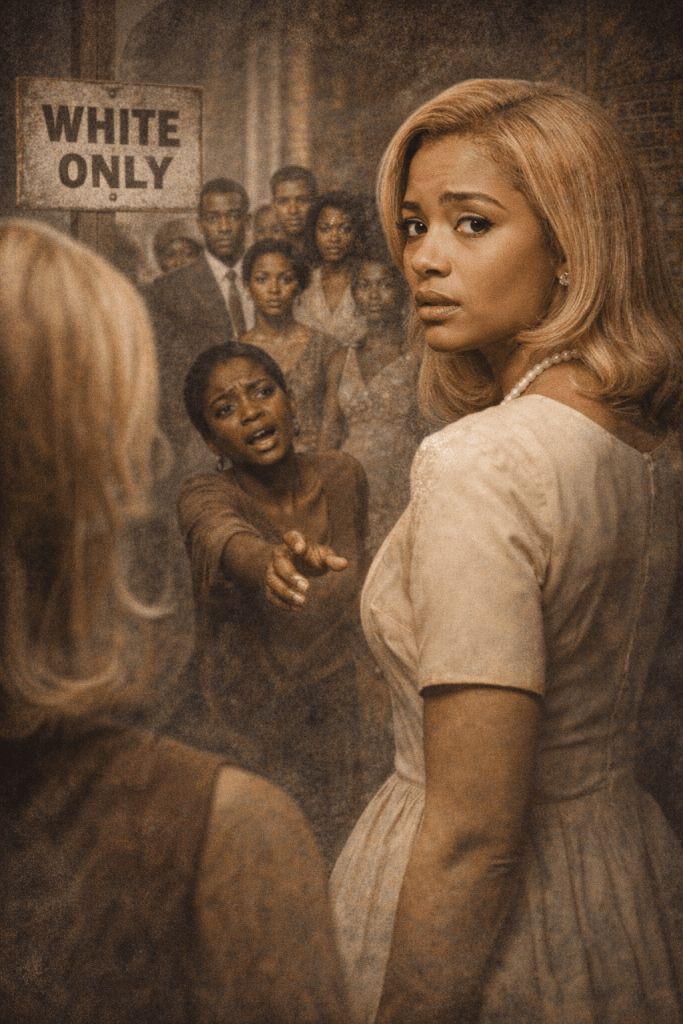
PASSING as White

Passing as White is one of the most psychologically complex survival strategies produced by racism in America. It refers to the act of a Black person presenting themselves as white to escape racial oppression, gain social mobility, or avoid discrimination. While often discussed as a historical phenomenon, passing is fundamentally a psychological condition rooted in fear, internalized racism, and the desire for safety in a white supremacist society.

Psychologically, passing is not merely about skin tone or physical appearance; it is about identity suppression. It requires the individual to constantly perform whiteness—altering speech, behavior, social circles, family history, and even emotional expression. The person must erase their Blackness not only from public view, but from their own self-concept to survive the performance.

Looking white becomes a form of social camouflage. Lighter skin, straighter hair, ambiguous features, and European phenotypes allow some Black people to “blend in” within white spaces. However, this blending comes at a profound cost: the continuous denial of one’s ancestry, culture, and lived reality.

Passing emerges from racial terror. In societies where Blackness is punished economically, socially, and physically, passing becomes a method of protection. It is an adaptation to violence. Instead of confronting racism directly, the individual attempts to escape it by exiting Blackness altogether.

This phenomenon was powerfully dramatized in the film Imitation of Life, which tells the story of a light-skinned Black woman who rejects her Black mother to live as white. The film exposes the emotional devastation of passing: the shame, the secrecy, the grief, and the permanent sense of unbelonging.

What happens psychologically when white people discover that someone who has been passing is actually Black is often catastrophic. The individual is typically met with betrayal, hostility, disgust, or expulsion. White acceptance is conditional, and once racial truth is revealed, the person is stripped of the social privileges they had gained.

This moment of “discovery” often triggers identity collapse. The passer is rejected by the white world they tried to assimilate into, while also feeling disconnected from the Black world they abandoned. They become socially homeless—belonging fully to neither group.

Self-hatred is at the core of passing. It is not simply strategic; it is an internalized ideology. The person has absorbed the belief that Blackness is inferior, dangerous, or shameful, and that proximity to whiteness equals safety, value, and humanity.

Passing also produces chronic psychological stress. The individual lives in constant fear of exposure. Every conversation, family detail, photograph, or social interaction becomes a potential threat. This creates a life of hypervigilance, anxiety, and emotional isolation.

One of the most famous real-life examples of passing is Anatole Broyard, a highly respected literary critic and writer who lived as a white man for most of his life. Broyard concealed his Black identity even from his own children and wife, believing that revealing his ancestry would destroy his career and social standing.

After his death, his children discovered the truth, leading to deep emotional consequences. Broyard’s life became a symbol of the tragic cost of passing—success built on erasure, achievement built on denial, and legacy built on silence.

Passing not only distorts how others see one; it also distorts how one experiences love, intimacy, and belonging. Romantic relationships become performances. Friendships become guarded. Family becomes a threat to exposure. The passer must constantly choose between truth and survival.

This creates what psychologists call identity fragmentation. The person splits themselves into parts: the public self and the hidden self. Over time, the hidden self becomes increasingly suppressed, producing depression, dissociation, and internal conflict.

Passing also reinforces white supremacy at a structural level. It validates the idea that whiteness is the ultimate form of social legitimacy, while Blackness is something to escape. Each individual act of passing becomes a silent confirmation of racial hierarchy.

Historically, passing was most common during Jim Crow, when Black people faced segregation, lynching, housing discrimination, and legal exclusion. For some, passing was the only way to access education, employment, or physical safety. It was not always about shame; sometimes it was about survival.

However, survival strategies can become psychological prisons. What begins as protection can evolve into permanent self-rejection. Over time, the person may forget how to exist authentically, even in private.

The modern version of passing still exists, but in more subtle forms. It appears in aesthetic assimilation, name changes, cultural distancing, anti-Black rhetoric, and identity ambiguity. Some people no longer pass racially, but culturally and ideologically.

At its deepest level, passing is a spiritual crisis. It represents a rupture between the self and its origins. The person disconnects from ancestral memory, collective identity, and historical truth in exchange for conditional acceptance.

Many who once passed later experience a psychological awakening. As they age, they begin to feel the emptiness of erasure. They realize that no amount of assimilation can replace the loss of authentic identity. What was gained socially is lost existentially.

Reclaiming Black identity after passing often involves grief. Grief for the years spent hiding, for the relationships built on falsehood, and for the self that was denied. It is not simply a return—it is a reconstruction.

The desire to now “be who you are” represents a form of psychological decolonization. It is the rejection of internalized racism and the re-embrace of ancestral truth. It is a recognition that safety without authenticity is not freedom.

True healing from passing requires confronting the ideology that made it necessary. It requires dismantling the belief that whiteness equals humanity and Blackness equals limitation. Until that belief is destroyed, passing will continue to exist.

Passing as White is not just a historical curiosity. It is a mirror held up to a society that made Black identity something people felt they had to escape in order to live.

The tragedy is not that some people passed.
The tragedy is that a world existed where passing felt necessary.


References

Fanon, F. (1967). Black skin, white masks. Grove Press.

Gates, H. L. Jr. (1996). Thirteen ways of looking at a Black man. Random House.

Hobbs, A. (2014). A chosen exile: A history of racial passing in American life. Harvard University Press.

Larsen, N. (1929). Passing. Alfred A. Knopf.

Rockquemore, K. A., & Brunsma, D. L. (2002). Beyond Black: Biracial identity in America. Rowman & Littlefield.

Smith, S. M. (2006). The performance of race: Passing and the aesthetics of identity. Cultural Critique, 63, 1–27.

Sollors, W. (1997). Neither Black nor white yet both: Thematic explorations of interracial literature. Oxford University Press.

Broyard, B. (2007). One drop: My father’s hidden life—A story of race and family secrets. Little, Brown and Company.

Wilkerson, I. (2020). Caste: The origins of our discontents. Random House.

Du Bois, W. E. B. (1903). The souls of Black folk. A.C. McClurg & Co.
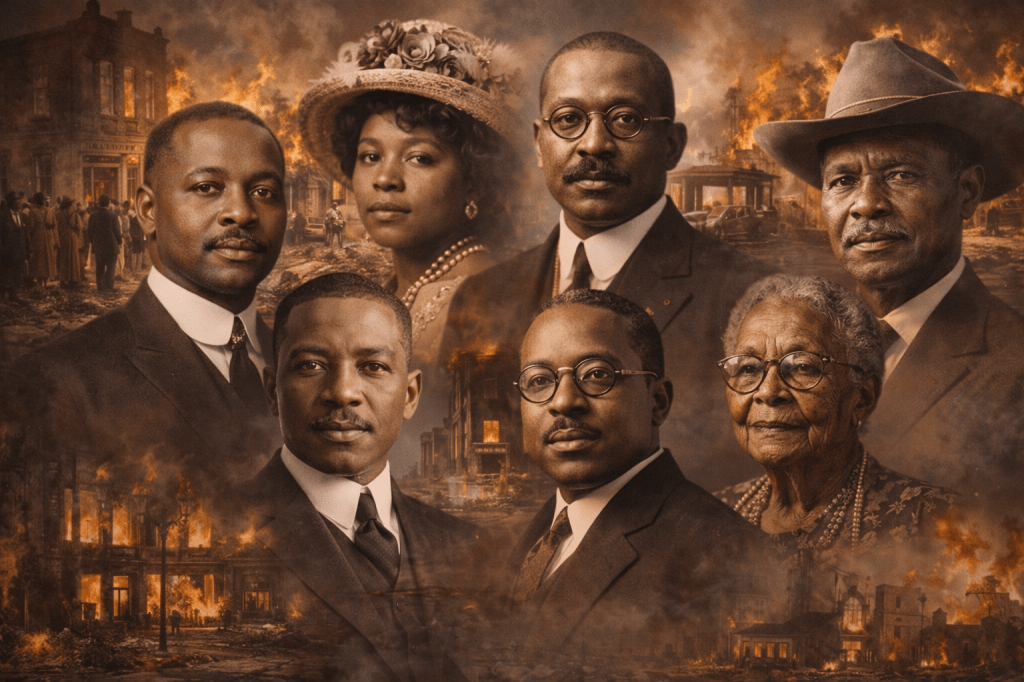
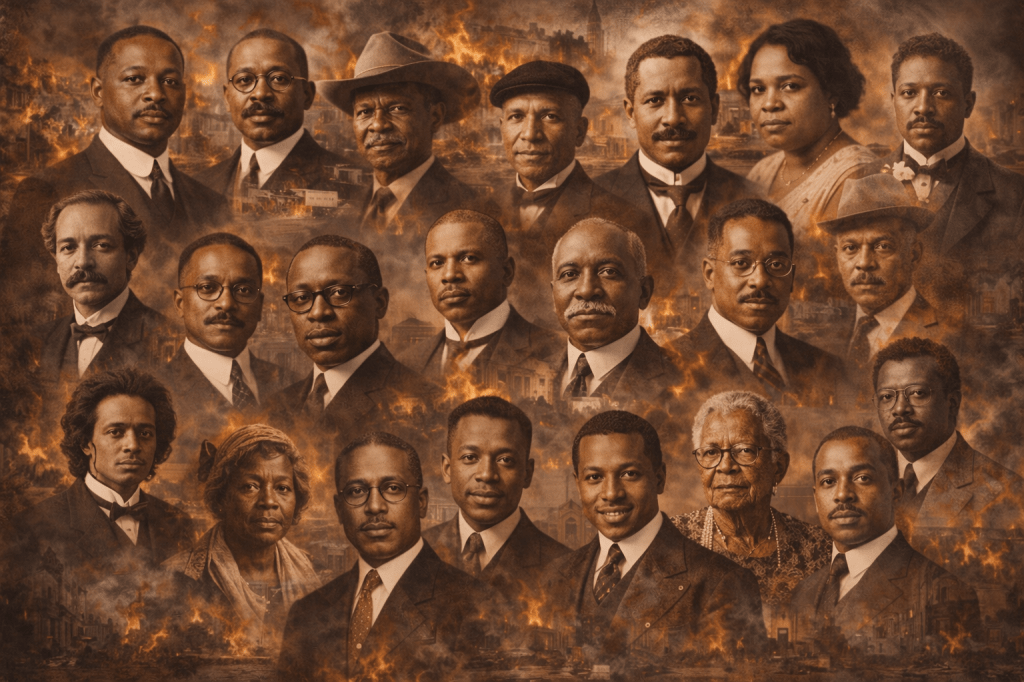
Black History: Black Millionaires They Tried to Erase from History.

In early 20th‑century America, Black entrepreneurs in segregated communities defied racism by generating unprecedented wealth. These men and women built thriving businesses, owned property, and created entire economic ecosystems — only to have their legacies diminished, erased, or violently destroyed by systemic racism and white supremacist violence.

In Tulsa, Oklahoma, the Greenwood district — known as “Black Wall Street” — was one of the most remarkable examples of Black prosperity in American history. Founded by visionary Black businessmen and professionals, Greenwood became a symbol of independence, economic self‑sufficiency, and community resilience.

Among Greenwood’s earliest millionaires was O.W. Gurley, a real‑estate developer and entrepreneur. Born to formerly enslaved parents in Alabama, Gurley moved to Tulsa and purchased land designated for Black ownership. He built hotels, apartment buildings, a grocery store, and sponsored other local businesses, accumulating an estimated net worth that translated into the millions in today’s dollars.

Gurley’s success helped inspire others to invest in Greenwood. J.B. Stradford, another eminent figure, was the son of an emancipated slave who became a lawyer, real‑estate magnate, and hotelier. His crowning achievement was the Stradford Hotel, the largest Black‑owned hotel in the United States at the time. It offered luxury services equal to those in white Tulsa and hosted a thriving social life, attracting wealthy travelers and local elites.

John and Loula Williams were another Black power couple in Greenwood. They owned multiple businesses — including the Dreamland Theatre, a confectionary, and a rooming house — and became among the wealthiest Black residents. Loula was a partner in these ventures, showing how women also played central roles in building Black wealth.

Greenwood was far more than a collection of storefronts: it had its own bank, schools, hospital, newspaper, and even private transportation networks, all built and operated by Black entrepreneurs. The Tulsa Star, founded by A.J. Smitherman, became a prominent voice advocating civil rights, economic empowerment, and community solidarity.

Despite this economic miracle, Greenwood was targeted by white supremacists fearful of Black success. From May 31 to June 1, 1921, a white mob attacked the district in what is now known as the Tulsa Race Massacre, burning businesses, homes, and churches to the ground. Up to 300 Black residents were killed and roughly 1,200 homes destroyed. This coordinated assault erased generational wealth in a matter of hours.

The destruction of Greenwood exemplifies how racial violence was used to prevent Black Americans from maintaining wealth and influence. Millionaires like Gurley and Stradford lost everything; there was no restitution for survivors or descendants for decades. Their stories, once widely known locally, faded from mainstream historical memory.

Beyond Tulsa, there were other Black millionaires whose achievements were overshadowed or forgotten due to systemic racism. Jake Simmons Jr., an oilman from Oklahoma, became one of the most successful Black oil entrepreneurs in the mid‑20th century, partnering with major petroleum companies and opening opportunities in Africa’s energy sector. His rise showcased Black leadership in the global industry, yet his legacy remains underrecognized.

Black businesspeople in areas outside Tulsa also built considerable wealth during Jim Crow. In many segregated towns and cities, Black physicians, lawyers, educators, and merchants created thriving practices serving Black customers, generating stable incomes and propelling local economies. However, many were omitted from national business histories, minimized by the dominant narrative.

Black Millionaires Who Were Erased or Forgotten

  1. O.W. Gurley – Real estate developer and founder of Greenwood, Tulsa (“Black Wall Street”). Built hotels, grocery stores, and a thriving Black community before the Tulsa Race Massacre destroyed his fortune.
  2. J.B. Stradford – Lawyer and entrepreneur; owner of the Stradford Hotel, the largest Black-owned hotel in the U.S. before 1921. Lost property in the Tulsa Race Massacre.
  3. John and Loula Williams – Business power couple in Greenwood, owning multiple enterprises including theaters, confectionaries, and rooming houses.
  4. A.J. Smitherman – Publisher of the Tulsa Star, the influential newspaper in Greenwood that advocated Black economic empowerment and civil rights.
  5. Jake Simmons Jr. – Oklahoma oil tycoon and international businessman; instrumental in opening opportunities in Africa’s oil sector.
  6. Moses Austin – Early 19th-century businessman who invested in land and local enterprises; lesser-known due to records focusing on white counterparts.
  7. Paul Cuffe – African American entrepreneur and shipowner in the late 18th and early 19th centuries; financed Black migration to Sierra Leone and traded globally.
  8. Madam C.J. Walker – First female self-made millionaire in America through haircare and beauty products; her story was overshadowed for decades despite her philanthropy.
  9. Robert Reed Church – Memphis real estate mogul; accumulated wealth through investments and urban development in the post-Civil War South.
  10. Anthony Overton – Entrepreneur and publisher; owned the Overton Hygienic Company and the Chicago Bee newspaper.
  11. Alonzo Herndon – Founder of Atlanta Life Insurance Company; born enslaved and became one of the wealthiest Black men in the U.S.
  12. Norbert Rillieux – Inventor and businessman; revolutionized sugar refining and built wealth that was largely unrecognized in mainstream history.
  13. John H. Johnson – Founder of Johnson Publishing Company (Ebony, Jet); a 20th-century millionaire whose financial influence in media is often underappreciated.
  14. Viola Fletcher – Survivor and symbolic figure of Tulsa’s Greenwood, representing families who had generational wealth destroyed in the massacre.
  15. Samuel Coleridge-Taylor (U.S. connections) – Composer and businessman in music ventures; recognized in Europe but often omitted from U.S. economic history discussions.
  16. Mary Ellen Pleasant – Wealthy Black entrepreneur and philanthropist in San Francisco during the 19th century; aided civil rights causes but was historically obscured.
  17. Madison Jones – Oil and landowner in the early 20th century; wealth erased through discriminatory policies and lack of historical recognition.
  18. John Merrick – Founder of North Carolina Mutual Life Insurance Company; amassed wealth but is often only recognized regionally.
  19. Robert W. Johnson – Entrepreneur in early 1900s Chicago; built wealth in real estate and business before being written out of mainstream histories.
  20. Frederick McGhee – Lawyer and businessman; helped build economic infrastructure for Black communities in Minneapolis but largely forgotten in national narratives.

The erasure of these figures was not accidental. Throughout U.S. history, Black success has been met with legislative discrimination, economic exclusion, violence, and historical suppression. After the massacre, Greenwood’s rebuilt community prospered again for decades — only to be dismantled a second time in the mid‑20th century through “urban renewal” projects and highway construction that obliterated much of the neighborhood.

The consequences of this erasure persist. Without preservation and education about these Black millionaires, their contributions are excluded from textbooks, newspapers, and national consciousness. This has furthered false narratives that Black communities did not achieve economic success prior to the Civil Rights Movement.

Historians and activists today work to recover these stories, ensuring that Gurley, Stradford, the Williamses, Simmons, and many more are acknowledged as pioneers of Black wealth in America. Their legacy demonstrates profound resilience and innovation under adversity.

Black Wall Street’s destruction also disrupted generational wealth transfer; properties and businesses never regained their pre‑1921 value, and families were denied inheritance opportunities that could have sustained future prosperity.

In recent years, Tulsa has taken steps to confront its history. Reparations efforts, educational initiatives, and public memorialization aim to restore recognition for Greenwood’s lost entrepreneurs and honor survivors like Viola Fletcher, who testified about the massacre’s enduring impact.

The story of these Black millionaires is a reminder that racial oppression targeted not only individual lives but collective economic power. Their erasure from history reflects broader social resistance to acknowledging Black achievement.

Engaging with these histories allows for a more accurate understanding of American capitalism, one that includes both Black contributions and the violence used to undermine them.

Recognizing Black millionaires lost to history also challenges contemporary narratives about wealth, race, and opportunity, showing clearly that Black success was possible — and existed — long before today’s conversations about equity and inclusion.

These narratives also inspire modern generations of Black entrepreneurs, emphasizing the importance of legacy, community investment, and perseverance despite systemic barriers.

Understanding the erased histories of Black millionaires is vital not only for historical accuracy but for framing present discussions about wealth inequality, reparations, and racial justice in the United States.


References

National Geographic Society. (n.d.). Before the Tulsa Race Massacre, Black business was booming in Greenwood. National Geographic. https://www.nationalgeographic.com/history/history-magazine/article/before-tulsa-race-massacre-black-business-booming-greenwood

History.com Editors. (n.d.). 9 Entrepreneurs Who Helped Build Tulsa’s “Black Wall Street”. HISTORY. https://www.history.com/articles/black-wall-street-tulsa-visionaries

CNBC. (2020). What Is “Black Wall Street”? History of the community and its massacre. CNBC. https://www.cnbc.com/2020/07/04/what-is-black-wall-street-history-of-the-community-and-its-massacre.html

ABC7 New York. (n.d.). Tulsa Race Massacre: Story behind Black Wall Street destroyed by racist mob. https://abc7ny.com/tulsa-race-massacre-1921-black-wall-street-greenwood/10707747

Wikipedia contributors. (n.d.). Greenwood District, Tulsa. Wikipedia. https://en.wikipedia.org/wiki/Greenwood_District%2C_Tulsa

Wikipedia contributors. (n.d.). Jake Simmons. Wikipedia. https://en.wikipedia.org/wiki/Jake_Simmons

Wikipedia contributors. (n.d.). Viola Fletcher. Wikipedia. https://en.wikipedia.org/wiki/Viola_Fletcher

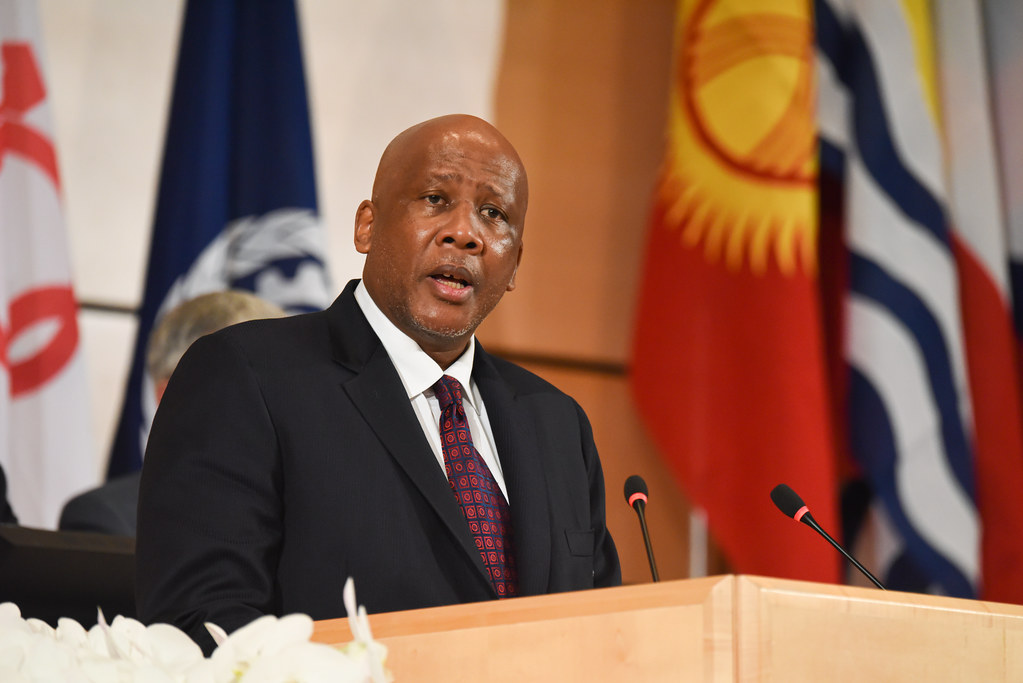
Black Royalty Series: King Letsie III of Lesotho – Monarch, Diplomat, and National Figure

This photograph is the property of its respective owner. No copyright infringement intended.

King Letsie III is the current monarch of the Kingdom of Lesotho, a small, landlocked nation completely surrounded by South Africa. Born on July 17, 1963, as David Mohato Bereng Seeiso, he became a central figure in Lesotho’s constitutional monarchy, balancing ceremonial duties with political influence and international diplomacy.

Lesotho, historically known as Basutoland under colonial rule, gained independence from Britain in 1966. The nation is largely mountainous, with a population that maintains strong cultural traditions centered around the Basotho ethnic group. The monarchy in Lesotho plays a symbolic and unifying role, representing national identity while functioning within the framework of a constitutional democracy.

King Letsie III is the eldest son of King Moshoeshoe II and Queen ‘Mamohato Bereng Seeiso. His father, Moshoeshoe II, was a founding figure of Lesotho’s monarchy and a symbol of continuity during periods of political instability. King Letsie received his education in Lesotho, South Africa, and the United Kingdom, including legal and political studies that prepared him for both ceremonial and practical leadership roles.

He first ascended the throne on November 12, 1990, after King Moshoeshoe II was exiled amid political conflict. Letsie’s early reign coincided with a period of tension between the monarchy and elected governments, reflecting Lesotho’s struggle to balance traditional authority with democratic institutions. His father was later reinstated in 1995, after which Letsie abdicated, only to resume kingship following his father’s death in 1996.

As King, Letsie III serves primarily as a ceremonial head of state but also wields influence through moral authority and as a symbol of unity for the Basotho people. He participates in state functions, diplomatic engagements, and national ceremonies, promoting cultural heritage and national cohesion.

King Letsie III has been involved in various initiatives aimed at development and social welfare in Lesotho. He is particularly committed to public health, education, and HIV/AIDS awareness, aligning with organizations such as Sentebale, co-founded by his brother, Prince Seeiso, and Prince Harry, to support children affected by HIV/AIDS in southern Africa.

His monarchy emphasizes the integration of traditional leadership into modern governance. Lesotho’s chiefs and royal family members play a mediating role between communities and the state, supporting conflict resolution, land management, and cultural preservation. King Letsie is central to these efforts, leveraging his authority to stabilize governance and foster national dialogue.

The king is married to Queen ‘Masenate Mohato Seeiso, and together they have children, including Prince Lerotholi, who is in line for the throne. His family life remains largely private but is respected as a model of royal duty and cultural stewardship within Lesotho.

Internationally, King Letsie has cultivated diplomatic relationships with neighboring South Africa and other global partners. He participates in Commonwealth events, African Union engagements, and international forums where Lesotho’s development challenges and opportunities are highlighted.

This photograph is the property of its respective owner. No copyright infringement intended.

King Letsie III has received several honors and awards recognizing his service and leadership. These include appointments within the Orders of Lesotho, Commonwealth honors, and recognition for his contributions to HIV/AIDS advocacy and humanitarian initiatives across southern Africa.

Under his reign, Lesotho has maintained relative political stability compared to earlier decades marked by coups, civil unrest, and tensions between military and civilian governments. The king’s presence as a symbolic authority has often contributed to negotiation and conflict mediation, reinforcing social cohesion.

He actively promotes Lesotho’s culture and heritage, from traditional Basotho dress to local customs, music, and festivals. By elevating cultural identity, King Letsie strengthens national pride and counters cultural erasure in the region dominated by South Africa.

King Letsie III also serves as a patron for environmental initiatives and sustainable development in Lesotho, emphasizing protection of the highland ecosystem, water resources, and agriculture. His advocacy supports both ecological preservation and local livelihoods in rural communities.

His leadership is characterized by a blend of ceremonial duty, cultural representation, and modern engagement, highlighting the evolving role of African monarchs in the 21st century. King Letsie III represents continuity, diplomacy, and moral authority for Lesotho while fostering the international visibility of his nation.


References

Royal Household of Lesotho. (n.d.). His Majesty King Letsie III. Government of Lesotho. Retrieved from https://www.gov.ls/royal-family

BBC News. (2016). King Letsie III: Lesotho’s Constitutional Monarch. BBC. Retrieved from https://www.bbc.com/news/world-africa-37391177

Sentebale. (2023). Prince Seeiso and the Royal Family of Lesotho. Sentebale. Retrieved from https://www.sentebale.org

Peters, J. (2020). Modern African Monarchies: Tradition and Transformation. Cambridge University Press.

Mokoena, T. (2018). African Royals in the 21st Century: Leadership and Philanthropy. Johannesburg: South African Historical Press.

Harris, M. (2019). Royal Leadership in Southern Africa: Authority, Culture, and Social Impact. African Affairs, 118(473), 112–131.

Is There Wealth in the Black Community?

The question of whether there is wealth in the Black community requires both historical and contemporary analysis. On one hand, there are visible examples of affluent Black individuals—entrepreneurs, entertainers, athletes, professionals, and political leaders—who have accumulated substantial financial resources. On the other hand, aggregate data consistently show that Black Americans, as a group, possess significantly less wealth than their White counterparts. This gap is not merely about income, but about intergenerational wealth, assets, ownership, and long-term financial security.

Wealth is fundamentally different from income. Income refers to money earned through wages or salaries, while wealth includes accumulated assets such as property, investments, businesses, savings, and inheritances. A household may earn a decent income yet remain wealth-poor if it lacks assets and savings. Studies show that even middle-class Black families often have far less wealth than White families with similar incomes, indicating structural rather than individual causes (Oliver & Shapiro, 2006).

Statistically, the racial wealth gap in the United States is stark. According to the Federal Reserve’s Survey of Consumer Finances, the median White household holds nearly ten times the wealth of the median Black household. In 2022, the median net worth of White households was approximately $285,000, compared to about $44,900 for Black households (Federal Reserve, 2023). This means that at the midpoint, a typical Black family has access to less than one-sixth of the financial resources of a typical White family.

Only a small percentage of Black Americans fall into the top wealth brackets. Roughly 10% of Black households hold the majority of Black wealth, mirroring the general pattern of wealth concentration in America, but starting from a far lower baseline (Pew Research Center, 2020). This creates the perception that “some” Black people are doing extremely well while the majority remain economically vulnerable.

Historically, the lack of wealth in the Black community is rooted in slavery and its aftermath. For over 250 years, enslaved Africans were denied wages, property, and legal personhood. After emancipation, formerly enslaved people were promised “40 acres and a mule,” but this never materialized. Instead, land and capital were redistributed back to former slaveholders, not the enslaved (Darity & Mullen, 2020).

The Jim Crow era further prevented Black wealth accumulation through legal segregation, exclusion from labor unions, and denial of access to quality education and housing. One of the most damaging policies was redlining, in which Black neighborhoods were systematically denied mortgages and investment. This meant Black families were locked out of the primary wealth-building tool in America: homeownership (Rothstein, 2017).

Homeownership remains one of the strongest predictors of wealth. Yet Black homeownership rates are still significantly lower than White rates. As of 2023, about 44% of Black households owned homes compared to over 73% of White households (U.S. Census Bureau, 2023). Since homes appreciate over time and can be passed down, this gap compounds across generations.

Education is often promoted as the great equalizer, but even here disparities remain. Black Americans are more likely to carry student loan debt and less likely to receive financial assistance from family. This means that Black graduates often begin their professional lives in debt, while White graduates are more likely to begin with inherited financial support (Hamilton et al., 2015).

Racism in the labor market also plays a role. Numerous studies show that Black job applicants are less likely to receive callbacks than equally qualified White applicants with identical resumes (Bertrand & Mullainathan, 2004). Wage gaps persist even when controlling for education and experience, limiting long-term earning and saving potential.

Additionally, Black entrepreneurs face greater barriers to capital. Black-owned businesses are more likely to be denied loans and receive smaller amounts at higher interest rates. Without access to startup capital, business growth is constrained, reducing one of the key pathways to wealth creation (Fairlie & Robb, 2008).

The idea that “a Black person can only get so far in America” reflects not a lack of talent or effort, but systemic ceilings embedded in institutions. Structural racism functions through policies, markets, and norms that disproportionately advantage White Americans while disadvantaging Black Americans, even without overt racial intent (Bonilla-Silva, 2018).

Another major issue is intergenerational wealth transfer. White families are far more likely to inherit money, property, or businesses. Inheritance accounts for a large portion of wealth inequality. Black families, having been historically excluded from asset ownership, simply have less to pass down (Piketty, 2014).

The lack of institutional “help” for Black people is also tied to political economy. Social programs that once benefited working-class Americans—such as the New Deal and GI Bill—were either explicitly or implicitly designed to exclude Black Americans. This produced a racialized welfare state that subsidized White mobility while limiting Black advancement (Katznelson, 2005).

Despite these realities, there is wealth within the Black community, but it is fragile, concentrated, and constantly threatened by systemic forces. Black wealth exists in professional classes, faith institutions, Black-owned media, real estate investors, and growing entrepreneurial networks. However, it lacks the generational depth and institutional protection found in White wealth.

To change this, structural solutions are required. Individual financial literacy is helpful but insufficient on its own. Policy interventions such as baby bonds, student debt cancellation, housing reparations, fair lending enforcement, and reparations for slavery are increasingly discussed as necessary to close the wealth gap (Darity et al., 2018).

At the individual level, strategies for Black wealth-building include prioritizing asset ownership, investing early, reducing consumer debt, building businesses, purchasing property in appreciating areas, and collective economics through cooperatives and community investment models. While these cannot fix systemic inequality, they can mitigate vulnerability.

Cultural shifts are also important. Consumerism, status spending, and symbolic wealth often replace long-term asset accumulation in marginalized communities. Reorienting values toward ownership, savings, and investment is crucial for sustainable economic empowerment (Hamilton & Darity, 2017).

Ultimately, the racial wealth gap is not a personal failure of Black Americans, but a predictable outcome of historical and institutional exclusion. Wealth in America has always been racialized. The question is not whether Black people work hard enough, but whether the economic system was ever designed to allow them to accumulate and retain wealth at scale.

In conclusion, there is wealth in the Black community, but it is limited, unequal, and structurally constrained. The idea that only 10% “make it” reflects a system that concentrates opportunity at the top while leaving the majority economically precarious. Without structural reform, the racial wealth gap will persist for generations.

True Black economic liberation requires both personal financial strategies and collective political action. Until racism in housing, education, finance, and labor is dismantled, wealth in the Black community will remain the exception rather than the norm.


References

Bertrand, M., & Mullainathan, S. (2004). Are Emily and Greg more employable than Lakisha and Jamal? American Economic Review, 94(4), 991–1013.
https://doi.org/10.1257/0002828042002561

Bonilla-Silva, E. (2018). Racism without racists: Color-blind racism and the persistence of racial inequality in America (5th ed.). Rowman & Littlefield.

Darity, W., Hamilton, D., Paul, M., Aja, A., Price, A., Moore, A., & Chiopris, C. (2018). What we get wrong about closing the racial wealth gap. Samuel DuBois Cook Center on Social Equity.

Darity, W., & Mullen, A. (2020). From here to equality: Reparations for Black Americans in the twenty-first century. University of North Carolina Press.

Fairlie, R. W., & Robb, A. (2008). Race and entrepreneurial success: Black-, Asian-, and White-owned businesses in the United States. MIT Press.

Federal Reserve. (2023). Survey of Consumer Finances. Board of Governors of the Federal Reserve System.

Hamilton, D., & Darity, W. (2017). The political economy of education, financial literacy, and the racial wealth gap. Federal Reserve Bank of St. Louis Review, 99(1), 59–76.

Hamilton, D., Darity, W., Price, A., Sridharan, V., & Tippett, R. (2015). Umbrellas don’t make it rain: Why studying and working hard isn’t enough for Black Americans. New School, Duke University.

Katznelson, I. (2005). When affirmative action was White: An untold history of racial inequality in twentieth-century America. W.W. Norton.

Oliver, M. L., & Shapiro, T. M. (2006). Black wealth/White wealth: A new perspective on racial inequality (2nd ed.). Routledge.

Pew Research Center. (2020). Trends in income and wealth inequality.

Piketty, T. (2014). Capital in the twenty-first century. Harvard University Press.

Rothstein, R. (2017). The color of law: A forgotten history of how our government segregated America. Liveright.

U.S. Census Bureau. (2023). Housing Vacancies and Homeownership (CPS/HVS).

The Isms of Black People: Racism, Colorism, and Beyond.

Photo by Kindel Media on Pexels.com

The history of Black people across the diaspora is marked by survival under systems of oppression, division, and erasure. To understand this history, one must examine the many “isms” that have shaped both external conditions and internal realities. Racism, colorism, classism, sexism, and materialism each stand as forces that distort identity, fracture unity, and reproduce inequality. Yet through these trials, Black people have also demonstrated resilience, faith, and creativity that transcend systemic barriers.

Racism stands at the foundation of oppression against Black people. Rooted in slavery, colonialism, and segregation, racism created a system of economic exploitation and social dehumanization. Enslavement reduced people to property, and post-slavery policies institutionalized inequality through Jim Crow laws, redlining, and mass incarceration. Racism is more than individual prejudice; it is structural, shaping opportunity, wealth, and health. Scripture reminds us of the cruelty of oppression: “They afflict the just, they take a bribe, and they turn aside the poor in the gate from their right” (Amos 5:12, KJV).

Colorism, though a product of racism, operates as a unique internal “ism.” Defined as prejudice or discrimination based on skin shade within the same racial or ethnic group, colorism privileges lightness and stigmatizes darkness. This hierarchy dates back to slavery, when lighter-skinned enslaved people were sometimes granted household work, while darker-skinned people labored in the fields. Today, this legacy persists in beauty standards, employment opportunities, and social perceptions. As Hunter (2007) notes, skin tone continues to influence social mobility within Black communities.

The psychological impact of colorism is profound. Dark-skinned individuals often face diminished self-esteem, while lighter-skinned individuals may struggle with authenticity and belonging. The Bible warns against valuing outward appearance: “For the Lord seeth not as man seeth; for man looketh on the outward appearance, but the Lord looketh on the heart” (1 Samuel 16:7, KJV). True worth is not measured by complexion, but by the character shaped by God.

Classism is another “ism” that plagues Black people. Historically, systemic barriers restricted access to land ownership, wealth accumulation, and higher education. Today, the racial wealth gap continues to mirror these inequalities, with Black households on average holding significantly less wealth than White households (Oliver & Shapiro, 2006). Within Black communities, however, class divisions can also produce elitism, where those who attain success may distance themselves from those still struggling.

This elitism can erode solidarity, creating divisions where unity is most needed. The talented tenth, the Black elite, and the upwardly mobile sometimes face accusations of abandoning their communities. Others are judged as “not doing enough” for collective uplift. These tensions demonstrate how classism operates both externally through systemic exclusion and internally through fractured relationships.

Sexism also shapes the Black experience. Black women, in particular, navigate the intersection of race and gender oppression, often referred to as “double jeopardy.” They face barriers in employment, healthcare, and representation, while simultaneously carrying cultural expectations of strength and endurance. Yet, Black women have been the backbone of movements for freedom, justice, and faith. Proverbs 31 honors such women: “Strength and honour are her clothing; and she shall rejoice in time to come” (Proverbs 31:25, KJV).

Internalized sexism within Black communities can also manifest in the devaluing of women’s voices or the pressure placed upon men to dominate rather than partner. These attitudes reflect both the legacy of patriarchal systems and the scars of slavery that disrupted family structures. Healing requires both men and women reclaiming biblical partnership and honoring the dignity of one another.

Materialism is another challenge—one that often emerges as a response to systemic poverty. In societies where consumerism defines worth, material possessions become a way to prove success and resist historical narratives of lack. Yet, materialism also traps people in cycles of debt and emptiness. Jesus warned, “Take heed, and beware of covetousness: for a man’s life consisteth not in the abundance of the things which he possesseth” (Luke 12:15, KJV).

This pursuit of material validation is compounded by media representations. From music videos to advertisements, Black culture is often associated with displays of wealth, fashion, and consumption. While cultural expression should not be dismissed, it is important to question whether such portrayals empower communities or reinforce destructive values.

Nationalism and ethnocentrism can also be considered part of the “isms” Black people navigate. Movements such as Pan-Africanism have provided pride and unity across the diaspora, but they can sometimes exclude or create tensions among different groups. For example, tensions between continental Africans and African Americans have occasionally emerged due to differing historical experiences. While these divisions are understandable, they must be overcome in the pursuit of global solidarity.

Religious elitism has also impacted Black communities. Denominationalism, doctrinal disputes, and church hierarchies sometimes divide believers rather than unify them. This contradicts Christ’s prayer for unity: “That they all may be one; as thou, Father, art in me, and I in thee” (John 17:21, KJV). Faith must function not as a divider, but as a healer of fractures caused by oppression.

Psychologically, these “isms” contribute to identity struggles, self-hatred, and internalized oppression. Frantz Fanon (1967) argued that colonialism implanted inferiority in the minds of the colonized, creating cycles of self-doubt and division. For Black people, this has meant carrying not only the weight of external racism but also the burden of internalized narratives of inadequacy.

Yet resilience remains central to the Black story. Despite racism, colorism, classism, sexism, and materialism, Black communities have birthed cultural movements, spiritual awakenings, and liberation struggles that inspire the world. From gospel music to civil rights activism, from African spirituality to biblical faith, Black people have consistently transformed oppression into creativity and survival.

Theologically, the “isms” faced by Black people mirror biblical exile and restoration. Just as Israel endured scattering, captivity, and oppression, so too have Black communities faced displacement and systemic bondage. Yet the Bible promises hope: “I will gather you out of all countries, and will bring you into your own land” (Ezekiel 36:24, KJV). For many, this speaks not only to spiritual restoration but to cultural reclamation.

Unity is the ultimate antidote to these “isms.” The divisions imposed by racism, colorism, classism, and other forces cannot be healed without collective solidarity. As Paul wrote, “There is neither Jew nor Greek, there is neither bond nor free, there is neither male nor female: for ye are all one in Christ Jesus” (Galatians 3:28, KJV). Unity does not erase difference, but it transforms difference into strength.

Education is also a key weapon against the “isms.” By teaching history, exposing systemic inequities, and reclaiming cultural heritage, communities can break cycles of ignorance and division. Knowledge allows people to recognize oppression not as personal failure but as structural injustice, while also equipping them to resist and rebuild.

Healing from these “isms” also requires spiritual renewal. Faith provides a framework for forgiveness, restoration, and hope. Prayer, scripture, and community worship serve as antidotes to despair and division, empowering individuals to rise above the weight of systemic oppression.

Ultimately, the “isms” of Black people must be confronted both within and without. Externally, systems of racism and inequality must be dismantled. Internally, the psychological scars of colorism, classism, and sexism must be healed. This dual work requires both social activism and spiritual transformation.

In conclusion, the “isms” of Black people reveal a history of wounds, but also a story of resilience. Each “ism” highlights the complexity of oppression, yet within each struggle lies the possibility of renewal. By grounding identity in faith, reclaiming cultural pride, and pursuing unity, Black people can move beyond the chains of “isms” and embody the freedom promised by God.


📖 References

  • Holy Bible, King James Version.
  • Hunter, M. (2007). The persistent problem of colorism: Skin tone, status, and inequality. Sociology Compass, 1(1), 237–254.
  • Oliver, M. L., & Shapiro, T. M. (2006). Black wealth/white wealth: A new perspective on racial inequality. Taylor & Francis.
  • Fanon, F. (1967). Black skin, white masks. Grove Press.

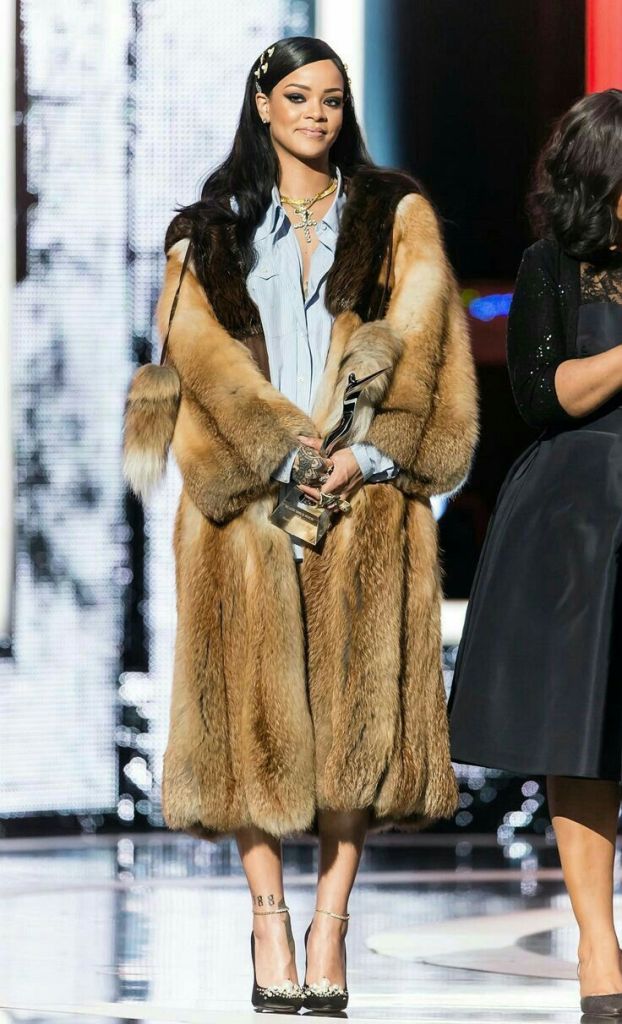
The “It Girl” Series: Rihanna

With mesmerizing hazel eyes, statuesque elegance, and an empire built on creativity and resilience, Rihanna embodies the modern “It Girl”—a global icon whose beauty, talent, and business acumen have reshaped music, fashion, and philanthropy.

This photograph is the property of its respective owner.

Robyn Rihanna Fenty—known globally as Rihanna—stands as one of the most influential cultural figures of the twenty-first century. Celebrated for her distinctive beauty, entrepreneurial brilliance, and musical innovation, Rihanna has evolved from a teenage pop singer into a billionaire mogul whose impact extends far beyond entertainment. Her captivating hazel eyes, radiant complexion, and statuesque presence have made her one of the most recognizable women in the world, while her ambition and vision have transformed her into a pioneer of modern celebrity entrepreneurship.

Rihanna was born on February 20, 1988, in Saint Michael, Barbados, and raised in the Barbadian capital of Bridgetown. Her father, Ronald Fenty, worked as a warehouse supervisor, while her mother, Monica Braithwaite, was an accountant. Growing up in a modest household, Rihanna’s childhood was shaped by both the vibrant culture of Barbados and the challenges of family struggles. Despite these obstacles, she demonstrated remarkable confidence and talent at a young age, particularly in music and performance.

Rihanna’s life changed dramatically in 2003 when she formed a girl group with two classmates and auditioned for American music producer Evan Rogers, who was visiting Barbados. Impressed by her distinctive voice and magnetic presence, Rogers invited Rihanna to record demo tapes in the United States. These recordings eventually reached rapper and entrepreneur Jay-Z, then president of Def Jam Recordings. After auditioning for Jay-Z, Rihanna was offered a recording contract that launched her career into the global spotlight.

This photograph is the property of its respective owner.

Her debut album, Music of the Sun (2005), introduced Rihanna’s Caribbean-infused pop sound and produced the hit single Pon de Replay. She quickly followed with A Girl Like Me (2006), which included chart-topping hits such as SOS and established her as a rising pop star. However, it was her third studio album, Good Girl Gone Bad (2007), that catapulted her into superstardom. The album featured the global smash hit Umbrella, which earned Rihanna her first Grammy Award and solidified her status as one of the defining artists of her generation.

Throughout the late 2000s and 2010s, Rihanna continued to dominate the music industry with critically acclaimed albums such as Rated R, Loud, Talk That Talk, Unapologetic, and Anti. Her musical versatility allowed her to blend pop, R&B, reggae, dancehall, and electronic influences, creating a sound that resonated across cultures and continents. Over time, Rihanna accumulated more than a dozen number-one singles on the Billboard Hot 100 chart, making her one of the best-selling music artists in history.

This photograph is the property of its respective owner.

Beyond music, Rihanna revolutionized the beauty industry with the launch of Fenty Beauty in 2017 in partnership with the luxury conglomerate LVMH. The brand was celebrated for its groundbreaking inclusivity, debuting with 40 foundation shades designed to accommodate a wide range of skin tones. This bold move challenged long-standing industry norms and sparked what many analysts called the “Fenty Effect,” prompting other cosmetics companies to expand their shade ranges and embrace diversity in beauty marketing.

Rihanna’s entrepreneurial ambitions did not stop with cosmetics. She later launched Savage X Fenty, a lingerie company celebrated for its inclusive sizing and diverse representation of women. She also created Fenty Skin and other fashion ventures, solidifying her reputation as a business visionary. By 2021, financial analysts estimated Rihanna’s net worth at over $1 billion, making her the wealthiest female musician in the world and one of the few entertainers to achieve billionaire status through business innovation.

Her physical beauty has also played a role in her iconic status. Rihanna’s luminous hazel eyes, symmetrical facial structure, and statuesque figure have made her a muse for fashion designers and photographers alike. She has graced the covers of leading fashion magazines, including Vogue and Harper’s Bazaar, and has become known for her fearless experimentation with style. Whether walking red carpets or appearing in editorial spreads, Rihanna’s presence exudes confidence, individuality, and elegance.

Rihanna’s influence extends deeply into philanthropy. In 2012, she founded the Clara Lionel Foundation, named after her grandparents. The foundation focuses on global education, emergency response, and climate resilience initiatives, particularly in underserved communities. Through scholarships, disaster relief efforts, and global partnerships, Rihanna has demonstrated a commitment to using her wealth and platform to uplift others.

This photograph is the property of its respective owner.

Her humanitarian efforts have been widely recognized. In 2017, she was named Harvard University’s Humanitarian of the Year for her philanthropic contributions and global advocacy. Rihanna has also supported initiatives related to healthcare, disaster recovery, and educational access, particularly in Caribbean nations and developing regions.

In her personal life, Rihanna shares a long-term relationship with rapper and entrepreneur A$AP Rocky. The couple welcomed their first son in 2022 and their second son in 2023, embracing parenthood while maintaining their influential careers in music and fashion. Their partnership has been widely admired as a union of two creative visionaries shaping contemporary culture.

Rihanna’s list of accolades is extensive. Over the course of her career, she has won nine Grammy Awards, numerous American Music Awards, Billboard Music Awards, and MTV Video Music Awards. Her achievements span music, fashion, beauty, and philanthropy—making her one of the most decorated entertainers of the modern era.

Perhaps Rihanna’s greatest legacy lies in how she has reshaped the concept of the “It Girl.” Traditionally associated with fleeting fame or fashionable allure, Rihanna transformed the archetype into something far more powerful. She represents a new generation of celebrity—one that blends artistry, entrepreneurship, activism, and cultural leadership.

From the sunlit streets of Barbados to the boardrooms of global fashion houses, Rihanna’s journey is a testament to ambition, resilience, and self-definition. Her beauty may first capture the world’s attention, but it is her vision, generosity, and fearless independence that truly define her legacy.

In every sense, Rihanna is not merely an “It Girl”—she is a phenomenon whose influence will shape music, fashion, and philanthropy for generations to come.


References

Forbes. (2021). Rihanna is now officially a billionaire thanks to Fenty Beauty.

IFPI. (2022). Global music report: Recording industry revenues and artists.

Billboard. (2023). Rihanna’s chart history and Billboard Hot 100 achievements.

Clara Lionel Foundation. (2023). Mission and philanthropic initiatives.

Britannica, T. Editors of Encyclopaedia. (2024). Rihanna: Barbadian singer, actress, and entrepreneur.

LVMH. (2017). Fenty Beauty brand launch and partnership announcement.

The Elephant in the Room: Racism

Racism remains the elephant in the room—visible, disruptive, and damaging—yet persistently denied or minimized in public discourse. It is not merely a collection of individual prejudices but a system of power that organizes opportunity, value, and belonging along racial lines. Its endurance lies not only in overt hostility but in silence, deflection, and the refusal to name it plainly.

Historically, racism was constructed to justify conquest, enslavement, and exploitation. European colonial expansion required an ideology that could reconcile Christian morality with economic brutality. Race became that justification, transforming human difference into a hierarchy of worth and rationalizing domination as destiny.

In the United States, racism was institutionalized through slavery, segregation, and discriminatory law. Even after formal barriers fell, the architecture of inequality remained intact. Housing policy, education funding, labor markets, and policing continued to reproduce racial disparity without explicit racial language.

One of racism’s most effective strategies is normalization. When inequality is framed as natural or cultural, responsibility disappears. Outcomes are blamed on behavior rather than barriers, allowing systemic harm to persist without accountability.

Psychologically, racism operates by shaping perception. Implicit bias research shows that people absorb racial stereotypes regardless of intent. These unconscious associations influence decisions in hiring, discipline, medical care, and sentencing, often without the decision-maker recognizing the bias at work.

Racism also fractures identity. W. E. B. Du Bois described this as double consciousness—the internal conflict of seeing oneself through the eyes of a society that devalues you. This fracture exacts a psychological toll that compounds across generations.

Colorism functions as racism’s internal extension. By privileging proximity to whiteness within communities of color, it reproduces hierarchy without external enforcement. This internalization demonstrates how deeply racism penetrates social life and self-concept.

Economically, racism concentrates disadvantage. Racial wealth gaps are not the result of spending habits but of historic exclusion from asset-building opportunities such as homeownership, education access, and fair wages. These gaps persist because policy choices continue to protect accumulated advantage.

In the criminal justice system, racism manifests through surveillance, sentencing disparities, and differential use of force. Black and Brown communities experience policing not as protection but as occupation, a reality documented across decades of empirical research.

Education systems mirror these inequalities. Schools serving marginalized communities are underfunded, overpoliced, and underestimated. Expectations shape outcomes, and racism lowers the ceiling long before potential can be demonstrated.

Healthcare outcomes reveal another dimension. Racial bias contributes to higher maternal mortality, undertreatment of pain, and reduced access to quality care. These disparities are not biological but structural, rooted in unequal treatment and mistrust born of history.

Media representation reinforces racial narratives. Whiteness is normalized as universal, while Blackness is often framed through pathology or exception. Repetition turns stereotype into common sense, shaping public opinion and policy priorities.

Faith communities are not exempt. Scripture condemns partiality, yet churches have often mirrored racial segregation and silence. James warns that favoritism is sin, not culture (James 2:1–9, KJV), calling believers to repentance rather than rationalization.

The Bible confronts racism at its root by affirming shared humanity. “And hath made of one blood all nations of men” (Acts 17:26, KJV) dismantles every racial hierarchy. Racism is therefore not only social injustice but theological error.

Resistance to naming racism often masquerades as calls for unity or civility. Yet unity without truth is denial. Healing requires confession, and confession requires naming harm without euphemism.

Psychologically, confronting racism provokes discomfort, particularly for those who benefit from the status quo. Defensiveness protects identity but stalls progress. Growth demands the humility to listen without centering oneself.

Structural change is essential. Individual goodwill cannot substitute for policy reform. Fair housing, equitable education funding, healthcare access, and accountable policing are necessary to dismantle systemic harm.

Education that tells the full truth is also critical. Sanitized history sustains ignorance, while honest history equips societies to avoid repetition. Memory is a moral responsibility.

Hope lies not in denial but in courage. Communities that confront racism directly build stronger solidarity and more durable justice. Silence fractures trust; truth repairs it.

Ultimately, racism persists because it is tolerated. What is unchallenged becomes tradition. Scripture teaches that justice is not optional but required: “What doth the Lord require of thee, but to do justly, and to love mercy, and to walk humbly” (Micah 6:8, KJV).

The elephant in the room will not leave on its own. It must be named, confronted, and removed. Only then can societies move from performative concern to transformative justice, grounded in truth, accountability, and shared humanity.


References

The Holy Bible, King James Version. (1611). Various passages.

Du Bois, W. E. B. (1903). The souls of Black folk. A. C. McClurg & Co.

Fanon, F. (1952). Black skin, white masks. Grove Press.

Alexander, M. (2010). The new Jim Crow: Mass incarceration in the age of colorblindness. The New Press.

Wilkerson, I. (2020). Caste: The origins of our discontents. Random House.

Bonilla-Silva, E. (2017). Racism without racists. Rowman & Littlefield.

Pager, D., & Shepherd, H. (2008). “The sociology of discrimination.” Annual Review of Sociology, 34, 181–209.

Williams, D. R., & Mohammed, S. A. (2013). “Racism and health I.” Behavioral Medicine, 39(2), 47–56.

Youth in Revolt: Gen Z’s Battle for Identity, Justice, and a New World

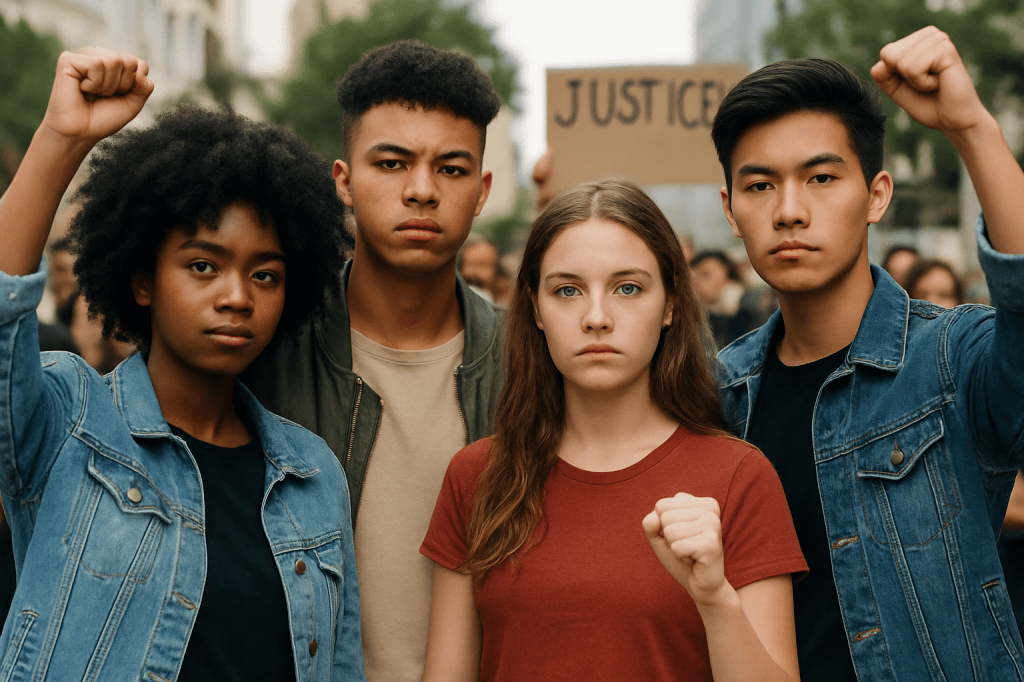
Gen Z has emerged as a generation marked by urgency, upheaval, and unfiltered honesty. Born into a world already trembling with economic uncertainty, political polarization, and spiritual confusion, their revolt is not one of senseless destruction but of fierce introspection. They challenge norms because the norms have failed them. They question authority because authority has historically ignored their voices. Their rebellion is, in many ways, a righteous outcry for meaning in an age of contradiction.

This generation grew up online, absorbing information at a pace no previous generation could imagine. The internet exposed them to global injustice early—police brutality, climate catastrophe, racism, and corruption were not distant stories but daily realities scrolling across their screens. This constant exposure created a generation hyper-aware of the world’s brokenness, yet determined to push for something better.

Gen Z’s revolt is also deeply tied to identity. They reject strict labels and refuse to let society force them into predefined boxes. Whether discussing race, gender, religion, or individuality, they assert autonomy over the narratives that once silenced young people. Their self-expression—through fashion, art, music, activism, and digital culture—is a statement of defiance against conformity.

Economically, Gen Z has witnessed the crumbling of the so-called “American Dream.” They saw their parents lose homes during the recession, watched millennials drown in student debt, and now face rising prices, unstable job markets, and inflation that threatens their future. Their revolt is a refusal to enter systems that seem rigged from the start.

Spiritually, this generation is both lost and searching. Many reject organized religion but still yearn for purpose, connection, and truth. Their skepticism is not rebellion against God but against institutions that have too often failed to reflect divine love, justice, and compassion. Their spiritual revolt is an effort to reclaim authenticity over tradition.

Socially, Gen Z is bold. They speak openly about mental health, trauma, and emotional intelligence. They refuse to romanticize suffering or accept silence where healing is needed. Their vulnerability is revolutionary because it breaks generational curses of suppression and secrecy.

Gen Z is also a generation of creators. They build businesses from their phones, produce art from their bedrooms, and influence culture with every post. Their creativity is a weapon—one that challenges outdated systems and empowers them to rewrite the rules.

Politically, they are fierce. They protest, vote, organize, and demand change. They have no patience for hypocrisy or empty promises. Their revolt is grounded in a desire for accountability, transparency, and justice within institutions that have long functioned on exclusivity.

Culturally, Gen Z elevates voices once ignored. They celebrate Blackness, queerness, womanhood, and multicultural identity with a richness that previous generations often suppressed. Their revolt is a collective embrace of the marginalized.

Gen Z challenges capitalism’s excesses. They reject blind consumerism while still navigating a world saturated with ads, influencers, and brands. Their relationship with materialism is complex—they are both shaped by it and rebelling against it.

Technology is both their battlefield and their sanctuary. They use it to connect, mobilize, and create movements. Yet they also struggle under the weight of social comparison, digital burnout, and algorithmic manipulation. Their revolt is a fight for digital freedom and mental peace.

Education for Gen Z is less about degrees and more about skills, understanding, and relevance. They challenge outdated curricula and advocate for learning that reflects real-world issues—social justice, financial literacy, mental wellness, and global awareness.

In relationships, Gen Z seeks emotional honesty. They reject performative love, toxic cycles, and misogynistic norms. Their revolt is a refusal to repeat generational patterns of broken homes, silent suffering, and unspoken wounds.

Gen Z is redefining family structures. They build communities outside of bloodlines and choose people who uplift them. Their revolt challenges the notion that family must tolerate abuse, neglect, or dysfunction.

They are also unafraid to critique the systems that harm them—schools, governments, corporations, and even older generations. Their criticism is often dismissed as entitlement, yet it is rooted in observant clarity. They see the world for what it is and refuse to pretend otherwise.

Despite their boldness, Gen Z carries heavy burdens: anxiety, depression, isolation, and the constant pressure to succeed. Their revolt includes learning boundaries, rest, and self-preservation. They fight for their mental health as fiercely as they fight for justice.

Their relationship with truth is complex. Raised in an age of misinformation, they are skeptical but deeply curious. Their revolt is a search for authenticity in a world overflowing with illusions.

Gen Z’s creativity extends into activism—art as protest, fashion as statement, social media as megaphone. They transform pain into power, struggle into strategy, and outrage into organized resistance. Their revolt is as artistic as it is political.

Yet beneath their resistance lies a deep desire: to build a world where dignity is not negotiable. Their rebellion is rooted in hope, even when expressed through frustration. They are not destroying the world—they are demanding that it finally become livable.

Ultimately, Gen Z’s revolt is a prophetic call for transformation. They are not the problem. They are the warning, the mirror, and the spark. They are the youth in revolt—not against order, but against injustice; not against tradition, but against oppression; not against elders, but against silence. And in their rising, they force the world to reckon with truth, change, and possibility.

References

Anderson, M., & Jiang, J. (2018). Teens, social media & technology. Pew Research Center. https://www.pewresearch.org

Baron, D. (2020). Identity formation in the digital age: How online environments shape youth development. Journal of Adolescent Research, 35(4), 451–470.

Carter, R. T. (2007). Racism and psychological well-being of young people of color. The Counseling Psychologist, 35(1), 13–16.

Dimock, M. (2019). Defining generations: Where Millennials end and Generation Z begins. Pew Research Center. https://www.pewresearch.org

Friedman, U. (2018). The changing politics of American youth. The Atlantic. https://www.theatlantic.com

Haidt, J., & Twenge, J. (2021). Social media and adolescent mental health: A review. The Journal of Child Psychology and Psychiatry, 62(5), 545–554.

Jenkins, H. (2006). Convergence culture: Where old and new media collide. NYU Press.

Kellner, D. (2020). Youth resistance, social movements, and digital activism. American Journal of Cultural Sociology, 8(3), 325–352.

Parker, K., Graf, N., & Igielnik, R. (2019). Generation Z looks a lot like Millennials on key social and political issues. Pew Research Center. https://www.pewresearch.org

Putnam, R. D. (2015). Our kids: The American dream in crisis. Simon & Schuster.

Sawyer, S. M., Azzopardi, P. S., Wickremarathne, D., & Patton, G. C. (2018). The age of adolescence. The Lancet Child & Adolescent Health, 2(3), 223–228.

Seemiller, C., & Grace, M. (2016). Generation Z goes to college. Jossey-Bass.

Shanafelt, A. (2020). Economic instability and youth labor experiences in post-recession America. Sociology Compass, 14(10), e12837.

Smith, A. (2015). Technology, smartphones & the digital generation. Pew Research Center.

Strauss, W., & Howe, N. (1997). The fourth turning: An American prophecy. Broadway Books.

Twenge, J. M. (2017). iGen: Why today’s super-connected kids are growing up less rebellious, more tolerant—and completely unprepared for adulthood. Atria Books.

Wang, H., & Wellman, B. (2010). Social connectivity in the digital era: Youth and online networks. Information, Communication & Society, 13(3), 373–396.

Watts, R. J., Griffith, D. M., & Abdul-Adil, J. (1999). Sociopolitical development in urban youth. Journal of Community Psychology, 27(2), 157–171.

Williams, J. (2020). Rebels with a cause: Youth activism in the 21st century. Oxford University Press.

Zuboff, S. (2019). The age of surveillance capitalism. PublicAffairs.

The Dilemmas that Black People Face Today #blackpeopleproblems

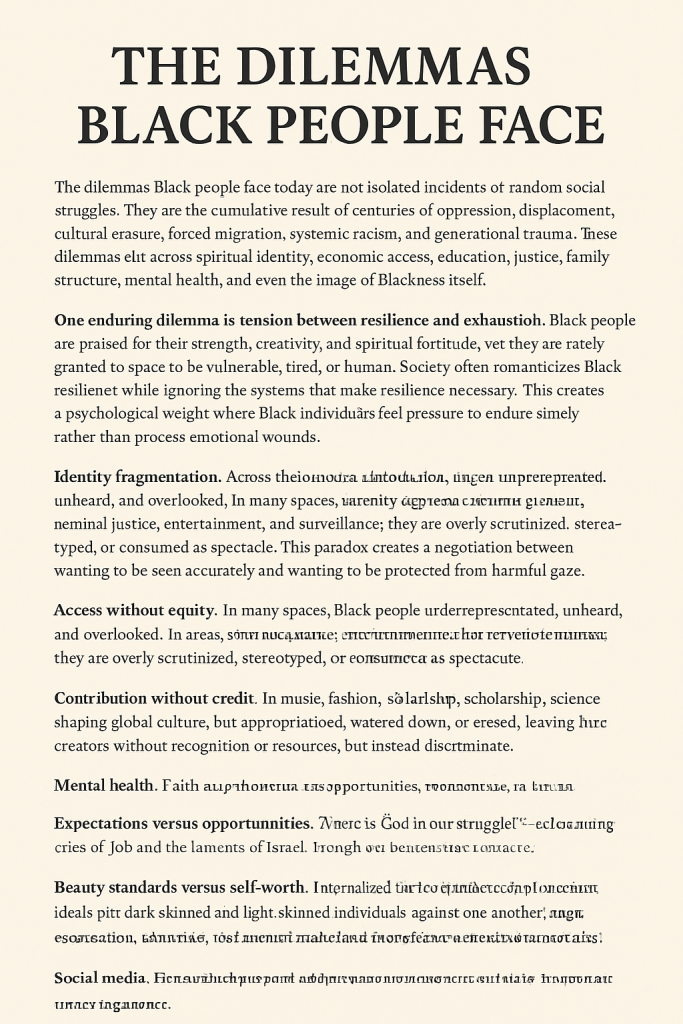
The dilemmas Black people face today are not isolated incidents or random social struggles. They are the cumulative result of centuries of oppression, displacement, cultural erasure, forced migration, systemic racism, and generational trauma. These dilemmas cut across spiritual identity, economic access, education, justice, family structure, mental health, and even the image of Blackness itself. They form a complex landscape that Black people must navigate daily while still fighting to build dignity, community, and hope.

One enduring dilemma is the tension between resilience and exhaustion. Black people are praised for their strength, creativity, and spiritual fortitude, yet they are rarely granted the space to be vulnerable, tired, or human. Society often romanticizes Black resilience while ignoring the systems that make resilience necessary. This creates a psychological weight where Black individuals feel pressure to endure silently rather than process emotional wounds.

Another dilemma lies in the legacy of identity fragmentation. Across the diaspora, Black people wrestle with questions of origin, belonging, and cultural continuity. The transatlantic slave trade severed language, history, names, and lineage—leaving many African Americans searching for spiritual and ancestral clarity. This leads to an internal conflict between who society has labeled them to be and who they truly are in God, history, and heritage.

Black people also face the dilemma of visibility versus hypervisibility. In many spaces, they are underrepresented, unheard, and overlooked. In other areas—such as criminal justice, entertainment, and surveillance—they are overly scrutinized, stereotyped, or consumed as spectacle. This paradox creates a constant negotiation between wanting to be seen accurately and wanting to be protected from harmful gaze.

Economically, the dilemma of access without equity remains a major barrier. While Black people may have access to schools, jobs, loans, and housing on paper, systemic practices—such as redlining, wage gaps, discriminatory hiring, and unequal school funding—undermine true equality. The presence of opportunity does not guarantee fairness, and this gap breeds frustration, fatigue, and generational stagnation.

Culturally, Black people face the dilemma of contribution without credit. From music to fashion, science scholarship, the Black world has shaped global culture. Yet those contributions are often appropriated, watered down, or erased, leaving Black creators without recognition or resources. Even in faith spaces, Black biblical history is minimized despite its foundational importance.

Within families, Black communities often face dilemmas created by historical disruption, including mass incarceration, economic instability, and systemic attacks on the Black home. These pressures can create strain in marriages, parenting, and generational continuity, forcing Black families to build structure while battling forces that aim to dismantle it.

Spiritually, there is a dilemma between faith and suffering. Black people often ask, “Where is God in our struggle?”—echoing the cries of Job and the laments of Israel. Yet faith has also been a source of resistance, identity, and liberation throughout Black history. The struggle lies in reconciling divine purpose with earthly injustice.

Colorism creates another dilemma: beauty standards versus self-worth. Internalized Eurocentric ideals can pit dark-skinned and light-skinned individuals against one another, producing wounds that trace back to slavery’s hierarchy. This dilemma shapes relationships, confidence, employment, desirability, and mental health.

In the area of justice, Black people face the dilemma of legal rights versus lived reality. Though laws promise equality, the outcomes—from traffic stops to sentencing—tell a different story. This dissonance reinforces a mistrust in systems meant to protect but instead discriminate.

Mental health remains a growing dilemma, as Black people contend with trauma, stress, discrimination, financial pressure, and societal expectations, all while lacking equitable access to culturally relevant care. Silence around therapy and emotional vulnerability can hinder healing.

Educationally, Black students face the dilemma of expectations versus opportunities. While excellence is often demanded, support is not always given. This leads to underfunded schools, biased assessments, and unequal advancement.

Social media has introduced new dilemmas—hyperexposure, comparison culture, cyberbullying, and the performative nature of modern identity. Though it allows Black voices to rise, it also magnifies criticism, competition, and unrealistic ideals.

And at the heart of all dilemmas lies a deeper spiritual one: the ongoing struggle for self-definition. Black people are constantly reclaiming a narrative that the world has tried to rewrite. This dilemma fuels movements, art, scholarship, and faith-based awakenings that reconnect Black people to origin, dignity, and divine purpose.

Despite these challenges, Black people continue to rise, resist, create, and believe. The dilemmas are real, but so is the power, brilliance, and spiritual calling placed upon the descendants of survival.


References

Alexander, M. (2010). The new Jim Crow: Mass incarceration in the age of colorblindness. The New Press.
Branch, T. (1988). Parting the waters: America in the King years, 1954–1963. Simon & Schuster.
Du Bois, W. E. B. (1903). The souls of Black folk. A. C. McClurg & Co.
hooks, b. (1995). Killing rage: Ending racism. Henry Holt.
Painter, N. I. (2006). Creating Black Americans: African-American history and its meanings. Oxford University Press.
Wilkerson, I. (2020). Caste: The origins of our discontents. Random House.
Woodson, C. G. (1933). The mis-education of the Negro. Associated Publishers.

🌍⭐🎬 NOLLYWOOD 🌍⭐🎬

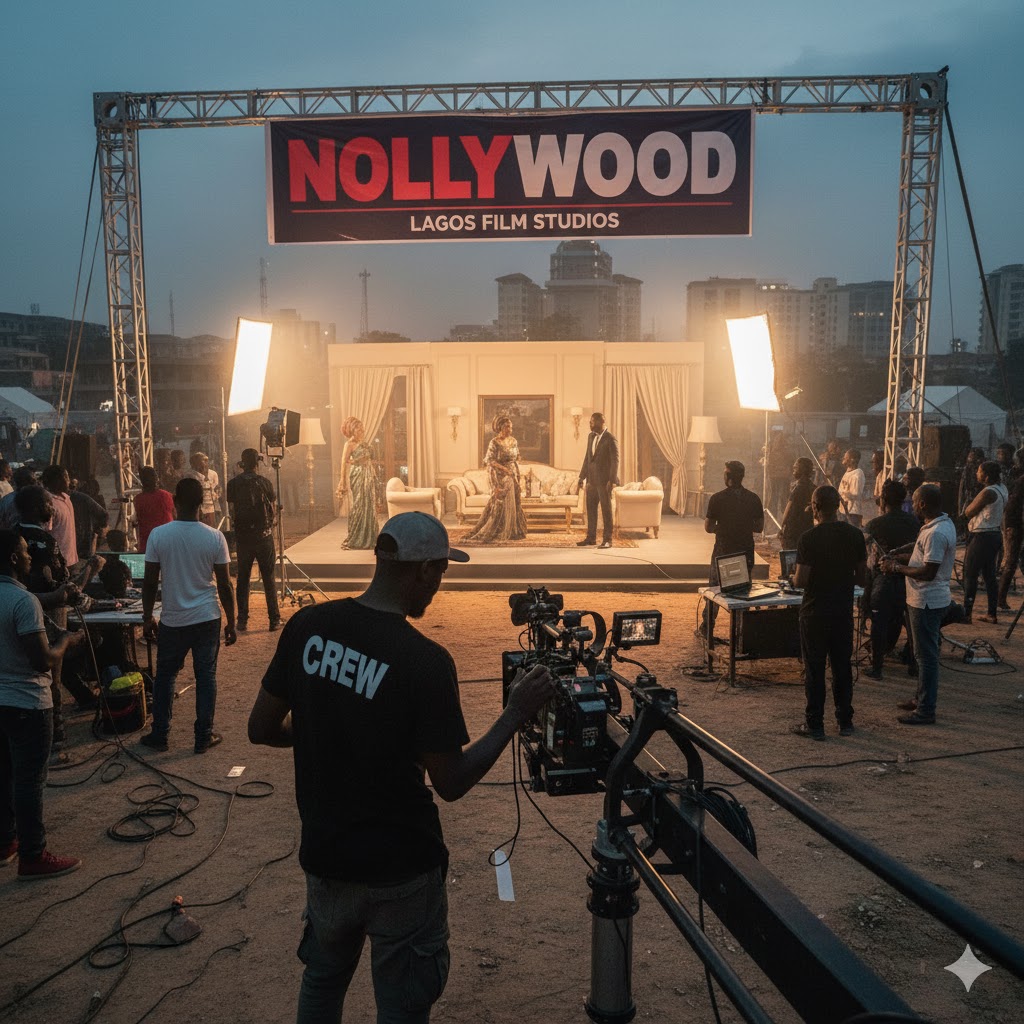
Nollywood is the term used to describe Nigeria’s film industry, a cinematic powerhouse that has grown into one of the most prolific film ecosystems in the world. Emerging in the early 1990s from low-budget home-video productions, it has transformed into a cultural phenomenon recognized globally. The industry developed organically, driven not by massive studios or government investment, but by the creativity, urgency, and determination of everyday Nigerian storytellers.

Nollywood began as a response to the absence of a formal filmmaking infrastructure in Nigeria. With limited access to cinemas and expensive equipment, early filmmakers turned to VHS and later DVD formats to distribute stories directly to the public. This democratization of filmmaking allowed people outside elite circles to participate in an art form that had historically been restricted to the well-financed.

Each year, Nollywood produces thousands of films, often with rapid production timelines and modest budgets. Estimates vary, but it consistently ranks among the world’s top three filmmaking centers in terms of annual film output. This massive volume reflects both the demand for Nigerian stories and the necessity of quick turnarounds in a largely informal film economy.

When compared to other global industries, Nollywood stands out for its intense productivity. Bollywood in India remains the world’s largest film industry by the number of films released yearly, while Hollywood leads in global box office revenue and production budgets. Nollywood, however, occupies a unique middle ground—second or third in volume but operating with far fewer resources.

Purpose, Outcome, and Legacy of Nollywood
The purpose of Nollywood has been multifaceted: to tell Nigerian stories, provide entertainment for local audiences, create economic opportunity, and assert cultural identity. The outcome has been the world’s second-largest film industry (by volume) that has reshaped African popular culture, created celebrity economies, and entered the streaming era. The legacy includes a vibrant film ecosystem, diasporic audiences, and increased global awareness of African cinema. Challenges remain (distribution, piracy, production quality, funding), but Nollywood has established a model of low-budget high-volume filmmaking that has inspired creative industries across Africa.

For many Nigerians, Nollywood is not just entertainment but a mirror of social realities. The films often portray family dynamics, religion, corruption, romance, and supernatural beliefs deeply rooted in Nigerian culture. As a result, audiences feel intimately connected to the characters and stories.

Cultural Significance within Africa and the Diaspora
Nollywood’s cultural resonance extends beyond Nigeria. Its films are widely viewed across Africa and among the African diaspora; they carry Nigerian English, local dialects, cultural references, and social dynamics familiar to many Africans. In this sense, Nollywood serves as a cultural ambassador exporting African narratives rather than importing foreign ones. By giving voice to local experiences, the industry contributes to continental self-representation in film.

The Nigerian public has a complex but affectionate relationship with the industry. Many celebrate it as a symbol of African creativity and cultural independence. Others criticize it for repetitive themes, low production quality in earlier eras, or exaggerated moral stories. Yet overall, Nollywood remains a source of national pride, representing a shift from foreign-dominated media to African-owned narratives.

Nollywood has changed countless lives by creating jobs in acting, directing, set design, costume creation, scriptwriting, and technical production. Beyond film workers, the industry stimulates the economy for caterers, drivers, rental companies, and local communities where filming takes place. For many Nigerians, Nollywood has become a pathway out of poverty.

The industry has its own set of celebrities who have become household names. Actors such as Omotola Jalade Ekeinde, Genevieve Nnaji, Ramsey Nouah, and Pete Edochie have achieved fame not only in Nigeria but across Africa and in diaspora communities worldwide. Their rise to prominence demonstrates Nollywood’s ability to shape global perceptions of African talent.

Actresses like Genevieve Nnaji and Omotola Jalade Ekeinde have become cultural icons, admired for both their screen presence and their influence in fashion, politics, and philanthropy. Their careers reflect the evolution of Nollywood from a local video market to an international industry with global recognition.

Some of the most well-known Nollywood films include Living in Bondage, Osuofia in London, Last Flight to Abuja, The Wedding Party, and Weekend Getaway. These films illustrate the industry’s versatility—from comedy to romance, from thriller to traditional folklore—and show how Nigerian filmmakers adapt genres to local contexts.

The purpose of Nollywood has always been rooted in storytelling. It offers narratives that resonate deeply with Nigerian viewers while also giving global audiences insight into African traditions, conflicts, humor, and spirituality. Through this lens, Nollywood becomes not only a form of entertainment but a cultural archive.

The outcome of this massive storytelling tradition is the creation of a distinct Nigerian cinematic identity. Today, Nollywood is recognized internationally for its characteristic fast pacing, emotional storytelling, and cultural authenticity. Its films travel across Africa and beyond, shaping regional entertainment trends.

The legacy of Nollywood is profound. It has inspired filmmakers across Africa, influenced television production, and shifted the global conversation about who gets to make films and whose stories deserve to be told. For many Africans in the diaspora, Nollywood movies serve as a connection to home and heritage.

Despite its success, Nollywood still faces several challenges. Piracy remains one of the industry’s biggest problems, costing producers significant revenue. Limited funding and inadequate filmmaking infrastructure also restrict the industry’s growth potential. However, these obstacles have not dampened its resilience.

The arrival of digital streaming platforms such as Netflix, Amazon Prime, and local services has been transformative. These platforms have expanded Nollywood’s global audience and encouraged higher production values. Filmmakers now have access to better equipment and more refined storytelling methods.

Streaming has also allowed Nollywood films to reach viewers who may never have encountered African cinema otherwise. As a result, the industry is now more visible on the world stage, attracting international collaborations, investments, and film-festival recognition.

Culturally, Nollywood has become a tool for shaping identity and reinforcing values. Families bond over films, communities debate moral lessons, and social themes shown on screen often reflect real societal issues. In this sense, Nollywood shapes not only entertainment but national consciousness.

The influence of Nollywood extends into fashion, music, and lifestyle. Many of its actors set fashion trends, promote Nigerian clothing designers, and inspire young people to dream beyond their circumstances. The industry contributes to cultural pride and the celebration of African beauty and creativity.

Nollywood also functions as a soft-power instrument for Nigeria, exporting culture in a way that fosters understanding and connection. Films featuring Nigerian languages, traditions, and comedic styles have become beloved across the continent.

In terms of social impact, Nollywood has helped normalize African perspectives in mainstream media. Instead of relying on Hollywood portrayals, many African youth now see themselves reflected onscreen with authenticity and dignity.

In conclusion, Nollywood is far more than a film industry—it is a movement, an economic engine, and a cultural storyteller. It stands as a testament to Nigerian creativity, resilience, and the power of African narratives. With continued growth, streaming expansion, and increasing global collaboration, Nollywood is poised to play an even greater role in shaping world cinema in the decades to come. Nollywood stands as a remarkable cinematic phenomenon: it is Nigeria’s cultural powerhouse, a global film-production leader by volume, and a creative engine that has challenged the dominance of Hollywood and Bollywood on the metrics of output. Yet its true significance lies in the way it creates stories, jobs, and identity for Nigerians—not only as spectators but as producers and participants. While structural challenges remain, its life-changing potential for individuals, its cultural affirmation, and its economic contribution ensure that Nollywood is far more than a mere film industry—it is a societal movement.

References

Andrews, D. (2009, April 28). What is Nollywood? Yale Insights. https://insights.som.yale.edu/insights/what-is-nollywood

Demand Africa. (2019, January 28). Top Nollywood film stars — Who is Genevieve Nnaji? https://demandafrica.com/entertainment/celebrities/top-nollywood-film-stars-genevieve-nnaji/

Encyclopedia Britannica. (n.d.). Nollywood. https://www.britannica.com/topic/Nollywood

Giwa, E. T. (2012). Nollywood: A case study of the rising Nigerian film industry (Master’s thesis, Southern Illinois University). https://opensiuc.lib.siu.edu/gs_rp/667

Northwestern University Libraries. (2025). Nollywood and beyond: Research guide. https://libguides.northwestern.edu/nollywood

StudioBinder. (2019, December 5). What is Nollywood and how did it become the 2nd largest film industry in the entire world? https://www.studiobinder.com/blog/what-is-nollywood/

TechCulture Africa. (2025, February 26). Nigeria’s Nollywood is Africa’s largest cinema hub; here’s why. https://techcultureafrica.com/nollywood

Time Magazine. (2014). Hooray for Nollywood! https://time.com/3153912/hooray-for-nollywood

Wikipedia. (n.d.). Omotola Jalade Ekeinde. https://en.wikipedia.org/wiki/Omotola_Jalade_Ekeinde

Wikipedia. (n.d.). Last Flight to Abuja. https://en.wikipedia.org/wiki/Last_Flight_to_Abuja

Wikipedia. (n.d.). Weekend Getaway. https://en.wikipedia.org/wiki/Weekend_Getaway