Tag Archives: melanin

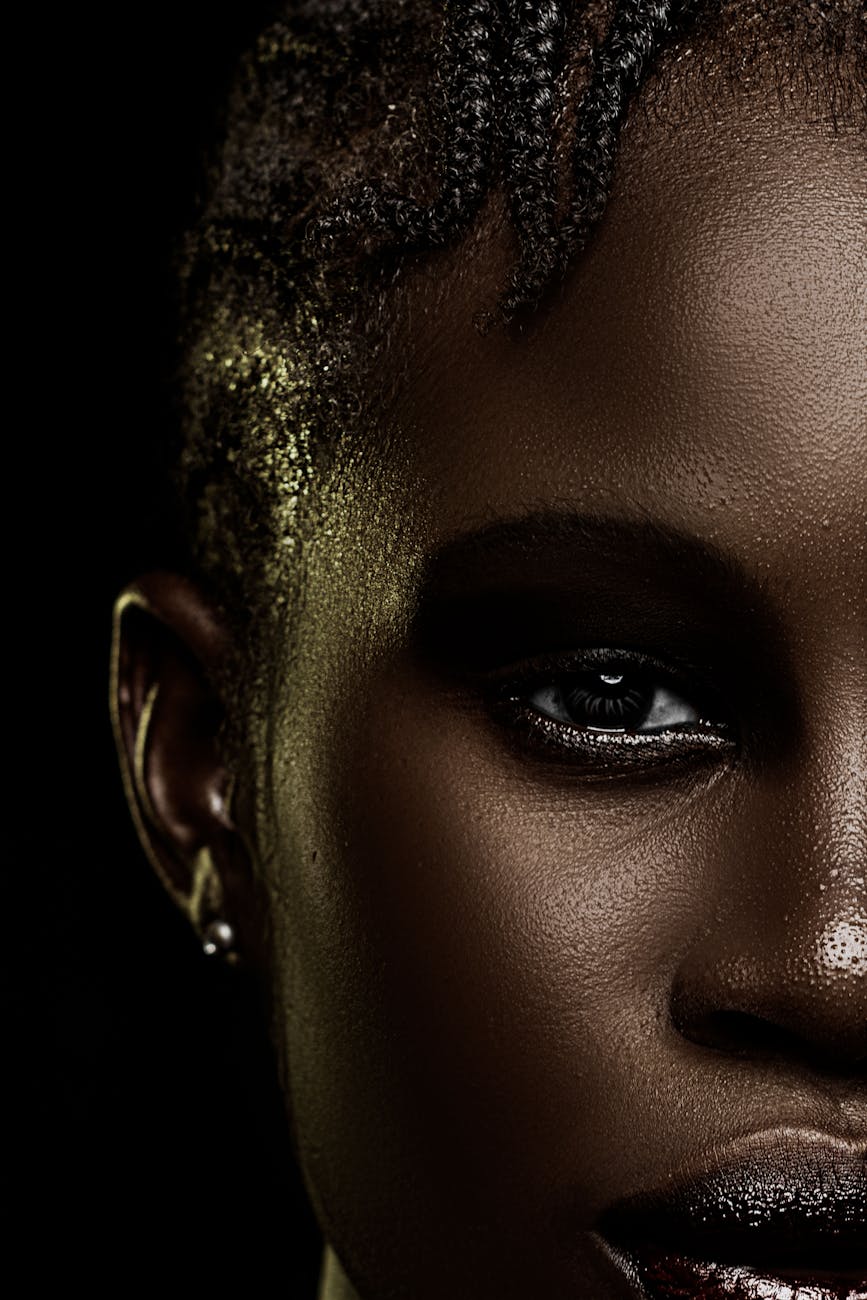
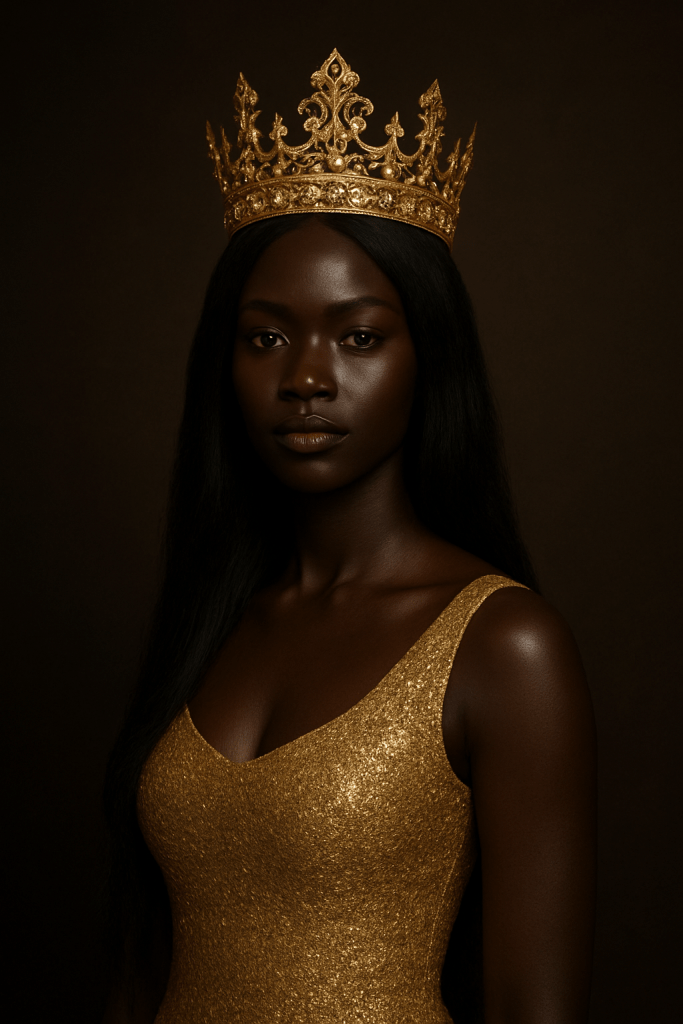
The Dark-Skinned Queens: Restoring the Crown to Melanin’s Deep Majesty.

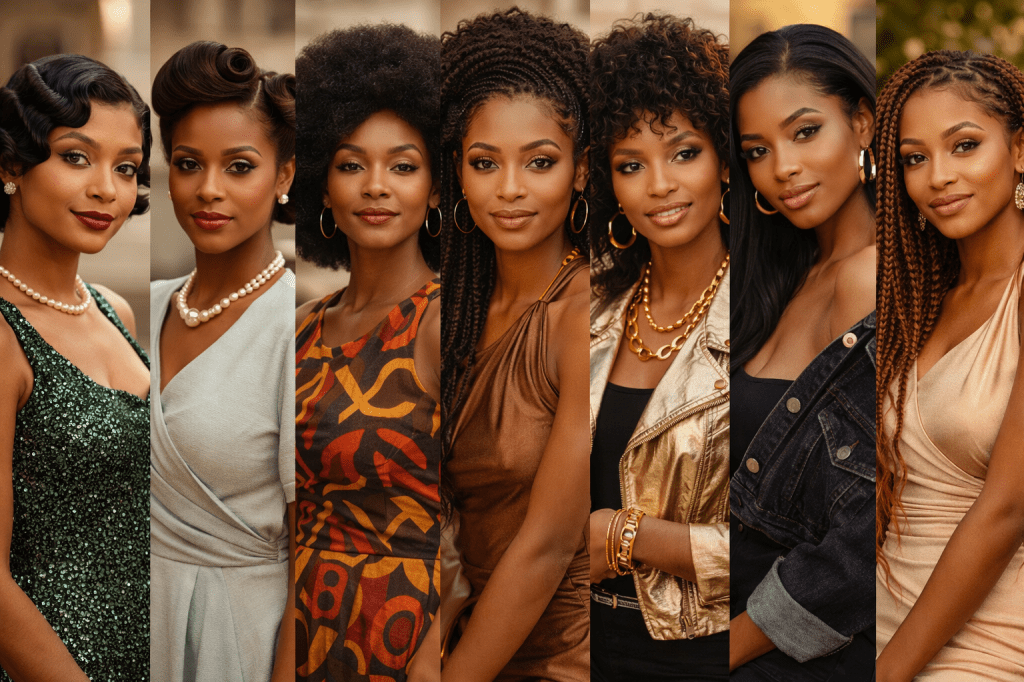
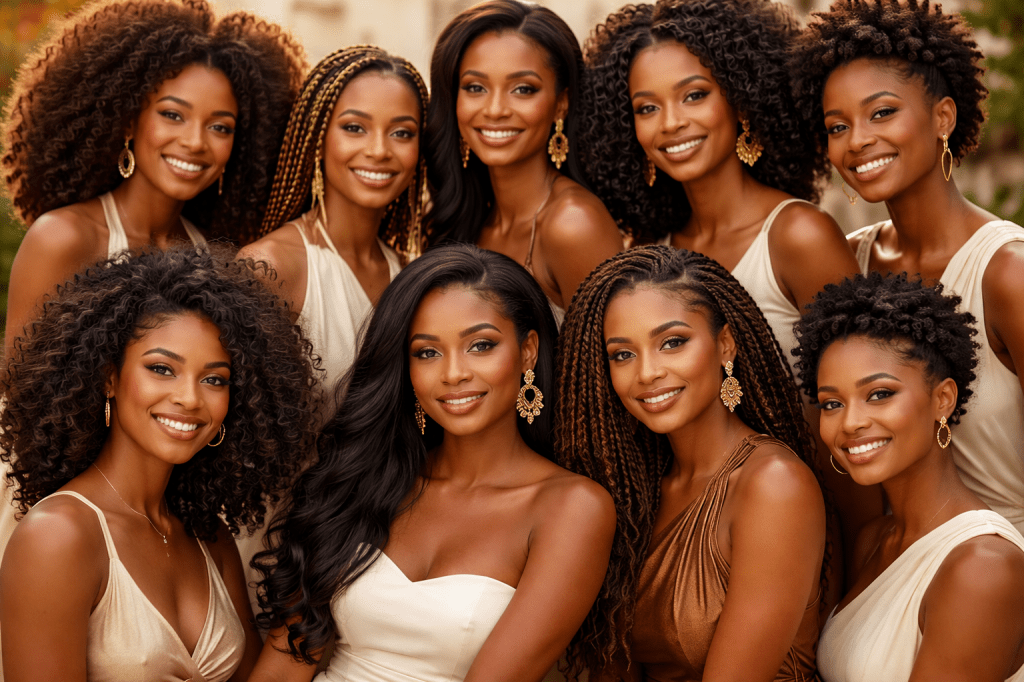
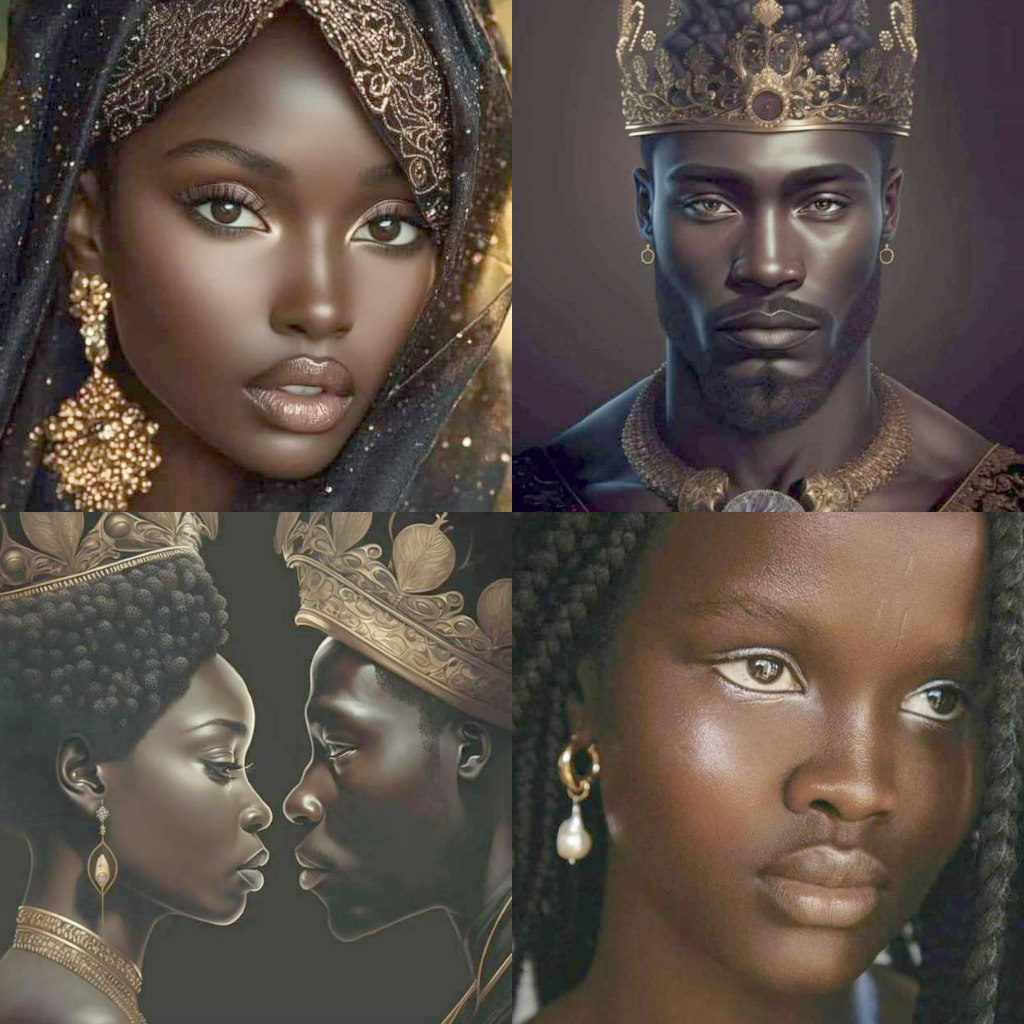
The Dark-Skinned Queen stands as a living monument to ancestral glory—her skin a sacred archive of history, divinity, and resilience. Yet the world has not always treated her as such. For centuries, she has been positioned at the bottom of a racialized beauty hierarchy, burdened by the shadows of colonialism, anti-Blackness, and internal color prejudice. But the truth remains unshaken: her beauty is ancient, sovereign, and cosmic. She is not emerging—she has always been, and the world is finally remembering what was never lost.

Historically, deep melanin was revered across civilizations. In ancient Kemet, Nubia, and Kush, dark-skinned queens were worshipped as embodiments of divinity, fertility, royalty, and cosmic order. Stone carvings and temple art bear witness—deep brown skin was not merely beautiful; it was sacred. Civilization began in melanin-rich lands, and thus, the Dark-Skinned Goddess represents origin and power, not deviation or rarity.

Colonialism sought to rewrite this truth, weaponizing beauty to fracture identity. European expansion brought a violent inversion of values, casting darker skin as undesirable, uncivilized, or inferior. These lies were institutionalized through enslavement, missionary propaganda, and global media. The goal was psychological domination: if the world could be convinced that the darkest skin was the least valuable, then the original people could be controlled. Beauty became a battlefield.

Through history, dark-skinned women bore double violence—racism and colorism. Their labor was exploited, their beauty ignored or mocked, and their femininity questioned. Those wounds still echo today when darker-skinned girls struggle with visibility, self-esteem, and belonging. Yet even in oppression, the Dark-Skinned Goddess remained unbroken. Her existence is resistance. Her radiance survived the lie.

In modern media, her representation remains limited, though rising. When women like Lupita Nyong’o, Viola Davis, Khoudia Diop, and Nia Long appear, they disrupt centuries of curated beauty narratives. Their presence is not simply aesthetic—it is political. Their faces tell new stories and correct historical distortions. Their visibility is cultural restoration, not a trend.

Socially, the Dark-Skinned Goddess is often underestimated before she is known. People assume toughness, attitude, or aggression before recognizing grace, intelligence, softness, or elegance. Stereotypes cling to her not because she lacks depth, but because the world fears her power. Mischaracterization is the weapon of the intimidated.

Romantically, she has faced long-standing biases shaped by colonial beauty scripts. Some men once sought lighter-skinned partners to access false proximity to privilege. Others fetishized her body while disregarding her heart. Yet her value never depended on preference—it exists independent of perception. She is not validated by desire; she is complete by design.

Spiritually, melanin symbolizes divine creation. Scripture reminds: “I am black, but comely” (Song of Solomon 1:5, KJV). This verse is not an apology—it is a declaration. Darkness in biblical text is associated with mystery, depth, and holiness. God formed humanity from rich, fertile earth, not pale, dry dust. Melanin is not an accident—it is intentional artistry.

Psychologically, reclamation requires healing. Dark-skinned women have internal battles shaped by external rejection. They learn to love themselves in societies slow to love them back. But healing blooms when she sees the truth of her reflection—not through distortion, but revelation. Confidence, when rooted in reality rather than validation, becomes unshakable.

Within the community, colorism has damaged sisterhood. Dark-skinned girls were often teased, underestimated, or overlooked. Some developed armor; others developed silence. Yet the new era demands empathy, not competition. When beauty becomes communal instead of comparative, we rise together. No shade of Blackness needs apology—only acknowledgement.

Culturally, she carries the memory of her ancestors in her skin. Each melanin cell is a testament to sun-kissed lands and royal lineage. She does not darken in inferiority—she glows in origin. Melanin is cosmic technology—absorbing light, storing warmth, preserving youth. It is biological excellence, not burden.

Economically, she often had to work twice as hard to be seen as equal to lighter peers. Her competence was tested more; her mistakes judged harsher. Yet she consistently excelled, not because she had privilege, but because she possessed perseverance. Strength became her inheritance, not her choice. And yet, she still seeks the right to softness.

Emotionally, she navigates constant contrast—admired aesthetically in one breath, overlooked socially in another. She is celebrated on runways but ignored in workplaces. Praised in songs yet harmed in systems. This paradox teaches her discernment, depth, and inner worth. She learns that true beauty transcends environment and expectation.

The world imitates her body yet denies her humanity. Full lips, curvaceous hips, rich skin, coily hair—once mocked, now monetized. Her features trend on those without her struggle. But imitation will never equal essence. She is the blueprint, not the beneficiary of borrowed beauty.

Yet a renaissance rises. She is reclaiming beauty narratives, rewriting cultural scripts, and building new worlds where she doesn’t have to prove anything. She stands not in reaction to bias, but in revelation of identity. Her presence demands reverence, not permission.

Her beauty is not merely visual—it is metaphysical. It radiates history, intellect, intuition, empathy, and fire. Beauty is not her burden—it is her birthright. Society once tried to dim her glow; now the world adjusts its eyes to her brilliance. She is not emerging—she is unveiling.

The Dark-Skinned Queen does not seek comparison. She is not the opposite of light—she is the embodiment of depth. She is the eternal night sky, ancient soil, divine mystery, royal lineage. Her beauty is not subtractive; it is sovereign.

For she is fearfully and wonderfully made (Psalm 139:14, KJV). Not despite her shade, but because of it. Melanin is crown. Darkness is splendor. She is not defined by struggle—she is defined by glory.

And now, she does not rise alone. She rises with every shade beside her. Her divinity does not eclipse others; it illuminates the truth: Black beauty is infinite. But among its many expressions, the Dark-Skinned Goddess remains the beginning, the memory, and the majesty.

May she walk not with apology, but authority. Not seeking validation, but embodying revelation. For she is not reclaiming beauty—she is beauty, rediscovered.


References

Hunter, M. (2007). The persistent problem of colorism: Skin tone, status, and inequality. Sociology Compass, 1(1), 237–254.

Russell, K., Wilson, M., & Hall, R. (2013). The color complex: The politics of skin color in a new millennium. Anchor Books.

Wade, P. (2020). Race, nature and culture: An anthropological perspective. Pluto Press.

Song of Solomon 1:5 (KJV); Psalm 139:14 (KJV).
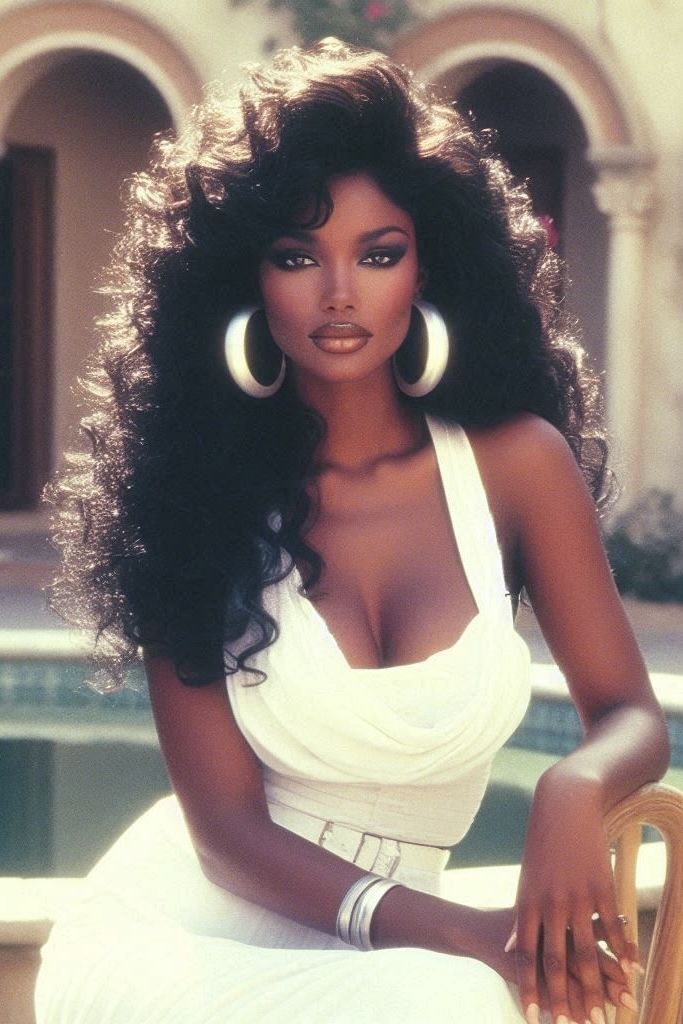
Shades of Power: Celebrating the Beauty of Brown Skin. #Shadesofglory

This photograph is the property of its respective owner.

Brown skin has long been a symbol of resilience, beauty, and cultural heritage. Across the African diaspora, it embodies a spectrum of history, identity, and pride, reflecting both ancestral lineage and lived experiences. From deep mahogany to honey tones, brown skin carries with it a narrative of survival, creativity, and empowerment. Its beauty is not merely aesthetic; it is political, cultural, and psychological—a declaration of self-worth in a world that has often devalued it.

The Science and Psychology of Melanin

Melanin, the pigment responsible for brown skin, offers more than visual appeal. Scientifically, it provides protection against ultraviolet rays, reducing risks of certain skin cancers while preserving youthful skin. Psychologically, research shows that people with higher melanin levels may experience a unique sense of identity formation, pride, and cultural belonging (Hunter, 2007). Yet, this very characteristic has been historically targeted through colorism, slavery, and systemic oppression, positioning brown skin at the intersection of beauty and societal prejudice.

Historical Reverence and Cultural Representation

Globally, brown skin has inspired admiration and reverence. In ancient African civilizations such as Nubia and Mali, darker skin was celebrated as a symbol of divine ancestry and nobility (Diop, 1974). Today, figures like Naomi Campbell, Adut Akech, and Morris Chestnut exemplify the global recognition of melanated beauty, blending talent, poise, and representation. Across art, literature, and media, brown skin has become both a canvas and a statement—asserting the legitimacy of Black excellence and aesthetic power.

Shades and Diversity

Brown skin is not monolithic. The spectrum includes deep espresso, warm caramel, golden bronze, and light almond tones. Each shade reflects complex genetic histories, from Sub-Saharan Africa to the Caribbean and Latin America. This diversity is a reminder of the richness within Black communities and challenges narrow standards of beauty that have historically marginalized darker tones. Embracing these variations strengthens cultural identity and encourages a more inclusive understanding of beauty.

The Biblical Perspective

Scripturally, beauty is celebrated in the context of God’s creation. The Bible emphasizes the intrinsic value of human beings, often referencing the beauty of skin and complexion as part of divine craftsmanship (Song of Solomon 1:5 KJV: “I am black, but comely, O ye daughters of Jerusalem”). Such affirmations counter societal devaluation, reminding communities of the inherent dignity and power embedded in melanin-rich skin.

Colorism and Societal Challenges

Despite its beauty, brown skin faces societal bias and systemic discrimination. Colorism, rooted in colonialism and slavery, perpetuates hierarchies within communities and cultures. Darker shades are often unjustly associated with negative stereotypes, affecting self-esteem, opportunities, and social perception. Addressing these challenges requires education, representation, and the celebration of all shades as inherently valuable.

Empowerment Through Representation

Representation matters. The rise of Black influencers, entrepreneurs, and creatives has shifted narratives around brown skin. By showcasing the diversity of melanated beauty in fashion, media, and leadership, these figures challenge entrenched biases and inspire younger generations. They redefine beauty not as a narrow, Eurocentric standard but as an expansive, inclusive celebration of identity.

The Spectrum of Power: Celebrating the Shades of Brown Skin

Brown skin comes in a stunning variety of hues, each with its own story, beauty, and cultural significance. By exploring these shades, we celebrate both the science of melanin and the lived experiences of those who wear it with pride.

1. Deep Espresso
Deep espresso skin embodies richness and resilience. It often carries historical significance, reflecting ancestry rooted in Sub-Saharan Africa.
Notable Figures: Lupita Nyong’o, Viola Davis, Idris Elba
Why it’s powerful: Deep tones challenge societal biases, offering a bold declaration of beauty that defies Eurocentric standards.

2. Rich Chocolate
Warm and velvety, chocolate tones are both elegant and versatile, often celebrated in media and fashion.
Notable Figures: Naomi Campbell, Morris Chestnut, Gabrielle Union
Why it’s powerful: These shades are often associated with sophistication and strength, embodying a balance of natural beauty and global recognition.

3. Caramel Glow
Caramel skin carries a golden warmth that radiates vibrancy and energy. Its luminous undertones are often highlighted in photography and fashion.
Notable Figures: Beyoncé, Zendaya, Kerry Washington
Why it’s powerful: Caramel skin bridges communities across the diaspora, symbolizing adaptability, visibility, and modern beauty.

4. Honey Bronze
Honey bronze represents a lighter, sun-kissed hue that glows with health and vitality. It reflects diversity within Black communities and mixed heritage.
Notable Figures: Rihanna, Janelle Monáe, Adut Akech
Why it’s powerful: This shade exemplifies versatility and creativity, highlighting the wide spectrum of melanin-rich skin tones.

5. Almond Radiance
Soft almond tones are subtle yet captivating, often perceived as delicate but deeply rooted in cultural pride.
Notable Figures: Tracee Ellis Ross, Lupita Tsimba, Issa Rae
Why it’s powerful: Almond skin celebrates understated beauty and reminds us that every tone deserves recognition and admiration.

Why Celebrating All Shades Matters

Every shade of brown tells a story of ancestry, survival, and empowerment. In a world that often favors lighter skin, showcasing the full spectrum combats colorism and affirms self-worth. It reminds communities that melanin is a crown, not a limitation.

Science and Spirituality

Melanin provides physical protection, while brown skin embodies spiritual and cultural significance. Biblically, dark and brown skin has been celebrated as comely and honorable (Song of Solomon 1:5 KJV). By embracing these hues, people of the diaspora reclaim pride, confidence, and legacy.

Conclusion

“Shades of Power” is more than a celebration—it is a reclamation. Brown skin embodies resilience, legacy, and excellence. Its diverse hues reflect history, science, and culture, affirming that beauty transcends societal limitations. By embracing, representing, and celebrating the richness of brown skin, communities empower themselves and reshape the world’s understanding of aesthetic, cultural, and spiritual worth. From deep espresso to almond radiance, brown skin is more than a shade—it’s a statement. Each tone is a testament to heritage, resilience, and beauty. Celebrating the spectrum empowers individuals, strengthens communities, and reshapes the global narrative about Black excellence and aesthetics..


References

  • Diop, C. A. (1974). The African Origin of Civilization: Myth or Reality. Chicago: Lawrence Hill Books.
  • Hunter, M. (2007). The Persistent Problem of Colorism: Skin Tone, Status, and Inequality. Sociology Compass, 1(1), 237–254.
  • The Holy Bible, King James Version. (1611). Song of Solomon 1:5.

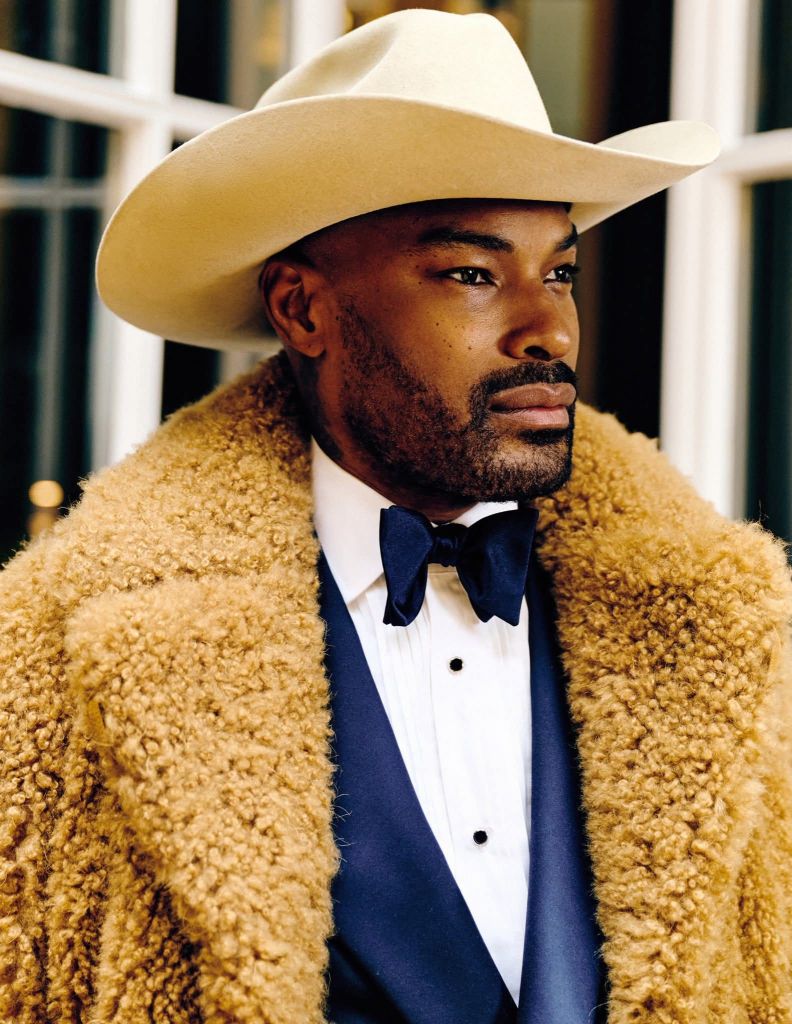
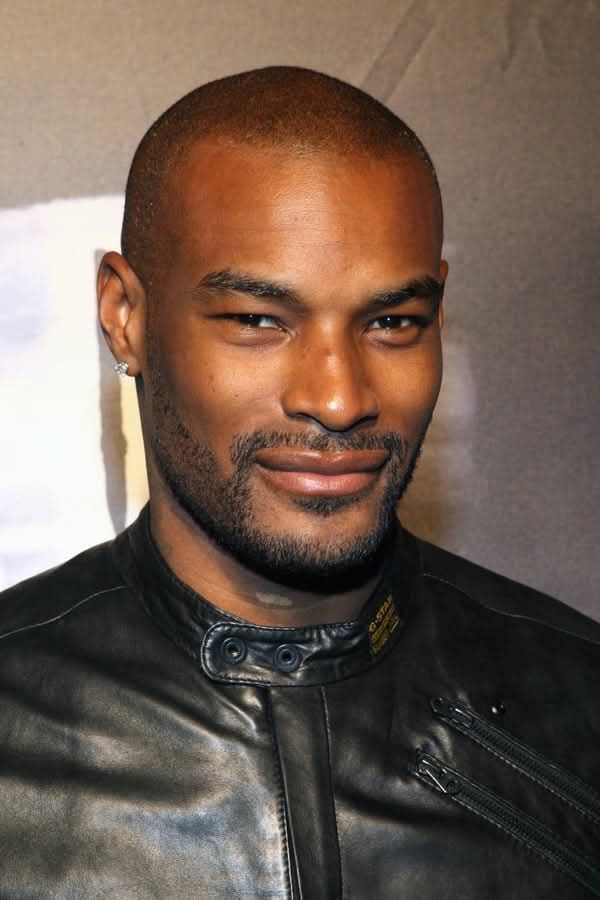
Celebrity Spotlight: Tyson Beckford

Tyson Beckford: The Face That Redefined Male Beauty and Broke Fashion’s Color Line

Photo Credit: Ralph Lauren.

In the world of fashion, where beauty is often dictated by narrow Eurocentric standards, Tyson Beckford emerged as a seismic shift — a face that did not merely model clothes, but redefined what male beauty could look like on a global stage. With his luminous skin, symmetrical features, and effortless masculine presence, Beckford embodied a rare fusion of classical handsomeness and cultural distinction. His beauty was not manufactured; it was ancestral, carrying the genetic poetry of Afro-Caribbean and Chinese-Jamaican heritage, rendered through bone structure, gaze, and physical poise.

What made Beckford extraordinary was not simply that he was handsome, but that his beauty was disruptive. At a time when Black male models were largely marginalized or confined to niche markets, Beckford’s image entered the highest temples of fashion — Polo Ralph Lauren, Vogue, GQ, and global billboards — without dilution or apology. He was not presented as an exception to Black beauty, but as its embodiment: regal, sensual, and universally aspirational. In doing so, Tyson Beckford did not just become a supermodel; he became a cultural symbol of aesthetic liberation.

Tyson Craig Beckford (born December 19, 1970) is a Jamaican-Panamanian American model, actor, and television personality best known for his iconic work as a Ralph Lauren Polo model. He is widely regarded as one of the most successful male supermodels in fashion history and is often credited as being the first Black male supermodel to achieve global prominence in a field historically dominated by white models.

Beckford was born in the Bronx, New York City, to a Jamaican mother, Hillary Dixon Hall, and a Panamanian father, Lloyd Beckford, who himself was of Jamaican and Chinese-Jamaican descent. His mixed Afro-Asian heritage contributes to his distinctive and striking features, which helped set him apart in the modeling world.

Shortly after his birth, his family moved back to Jamaica, where Beckford spent the first seven years of his life before returning to the United States and eventually settling in Rochester, New York. He attended and graduated from Pittsford Mendon High School, where classmates sometimes teased him about his looks before his later success.

Beckford’s entry into modeling was not planned. In 1992, he was approached in Manhattan’s Washington Square Park by editor Erik Lauren Counsel from The Source magazine, who invited him to pose for a style piece — a moment that launched his modeling career.

In 1993, his big break came when Ralph Lauren signed him to front its Polo line of men’s sportswear. The campaign quickly drew international attention and made Beckford a recognizable face in fashion, effectively breaking racial barriers in the industry by placing a Black male model at the center of a major luxury brand campaign.

Beckford’s looks — a blend of Jamaican, Panamanian and Chinese ancestry — were seen as exotic and striking in the early 1990s modeling scene. His features, symmetry, and presence helped him stand out among peers, leading to extensive editorial and advertising work.

Early in his career, Beckford worked with top photographers such as Herb Ritts and Bruce Weber, and appeared on the covers and in the pages of leading fashion magazines including Vogue, GQ, Essence, and Details.

This photograph is the property of its respective owner. No copyright infringement intended.

His success with Ralph Lauren and the broader fashion world was rapid. In 1995, VH1 named Beckford “Model of the Year,” and People magazine listed him as one of the “50 Most Beautiful People in the World.” He was also ranked number 38 on VH1’s “40 Hottest Hotties of the ’90s.”

Beyond fashion campaigns and editorials, Beckford expanded into television. He hosted both seasons of Bravo’s Make Me a Supermodel and appeared on reality and entertainment programs. He also judged and mentored models in international versions of the show.

Beckford has spoken openly about the challenges he faced in the industry, including instances of racism and limited diversity. In interviews, he has described fashion as “very racist” at times, critiquing runway casting that excluded Black, Latino, and Asian models and calling for broader inclusivity.

In addition to modeling, Beckford has acted in films including Into the Blue and appeared in music videos such as Britney Spears’ “Toxic,” further cementing his place in pop culture.

On the personal side, Beckford has a son, Jordan Beckford, born in 1998 from a relationship with stylist April Roomet.

He was briefly married to Berniece Julien in 2009, though the marriage ended the same year.

Beckford’s journey from a young man with humble beginnings — including brushes with street life — to one of fashion’s most recognizable male figures illustrates both personal resilience and transformational opportunity. According to Beckford, his late brother Patrick played a crucial role in encouraging him to pursue a legitimate path rather than the dangerous lifestyle that surrounded him in youth.

Despite his success, Beckford has acknowledged that the fashion industry still has room to grow in terms of diversity and representation, emphasizing the importance of including models from a wide range of racial and ethnic backgrounds.

Over three decades after his Polo breakthrough, Beckford continues to influence fashion and representation. In 2025, he honored his legacy with a custom Ralph Lauren ensemble at the Met Gala, celebrating the brand and his role in breaking boundaries in modeling.

Today, Beckford is not only remembered as a face of ’90s fashion but also as a pioneer who helped broaden the visibility of Black and multiracial models in high fashion.


References

Beckford, T. (n.d.). Tyson Beckford biography. Wikipedia. Retrieved from
https://en.wikipedia.org/wiki/Tyson_Beckford

BET Staff. (2016). Tyson Beckford says fashion is the most racist industry. BET. Retrieved from
https://www.bet.com/article/9pem2t/tyson-beckford-says-fashion-is-most-racist-business

Bellazon. (n.d.). Tyson Beckford modeling career profile. Bellazon Model Database. Retrieved from
https://www.bellazon.com/main/topic/5426-tyson-beckford/

People Magazine. (2024). Tyson Beckford explains how he almost avenged his brother’s murder. People. Retrieved from
https://people.com/tyson-beckford-explains-how-he-almost-avenged-his-brothers-murder-8716980

People Magazine. (2025). Tyson Beckford honors his 90s Ralph Lauren Polo campaign at the Met Gala. People. Retrieved from
https://people.com/met-gala-2025-tyson-beckford-honors-his-90s-ralph-lauren-polo-campaign-sharp-tuxedo-exclusive-details-11727831

IMDb. (n.d.). Tyson Beckford – trivia and personal life. Internet Movie Database. Retrieved from
https://www.imdb.com/name/nm0004734/

Arogundade, B. (n.d.). Tyson Beckford: ethnicity, heritage and background. Arogundade Fashion Archive. Retrieved from
https://www.arogundade.com/tyson-beckford-model-his-chinese-asian-ethnicity-nationality-his-mother-parents-family-biography-bio.html

VH1. (1995). Model of the Year Awards Archive. VH1 Networks. Retrieved from
https://www.vh1.com

Ralph Lauren. (n.d.). Polo Ralph Lauren advertising campaigns archive. Ralph Lauren Corporate. Retrieved from
https://corporate.ralphlauren.com

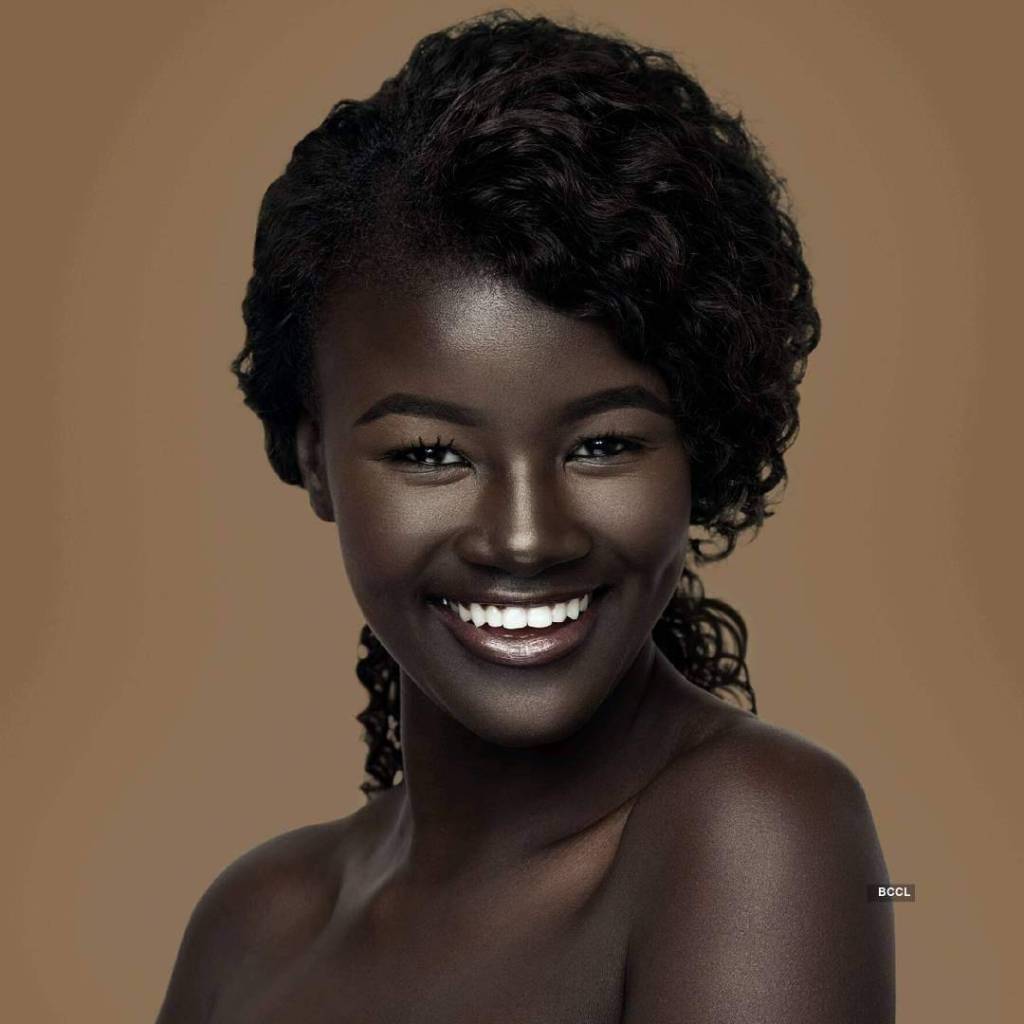
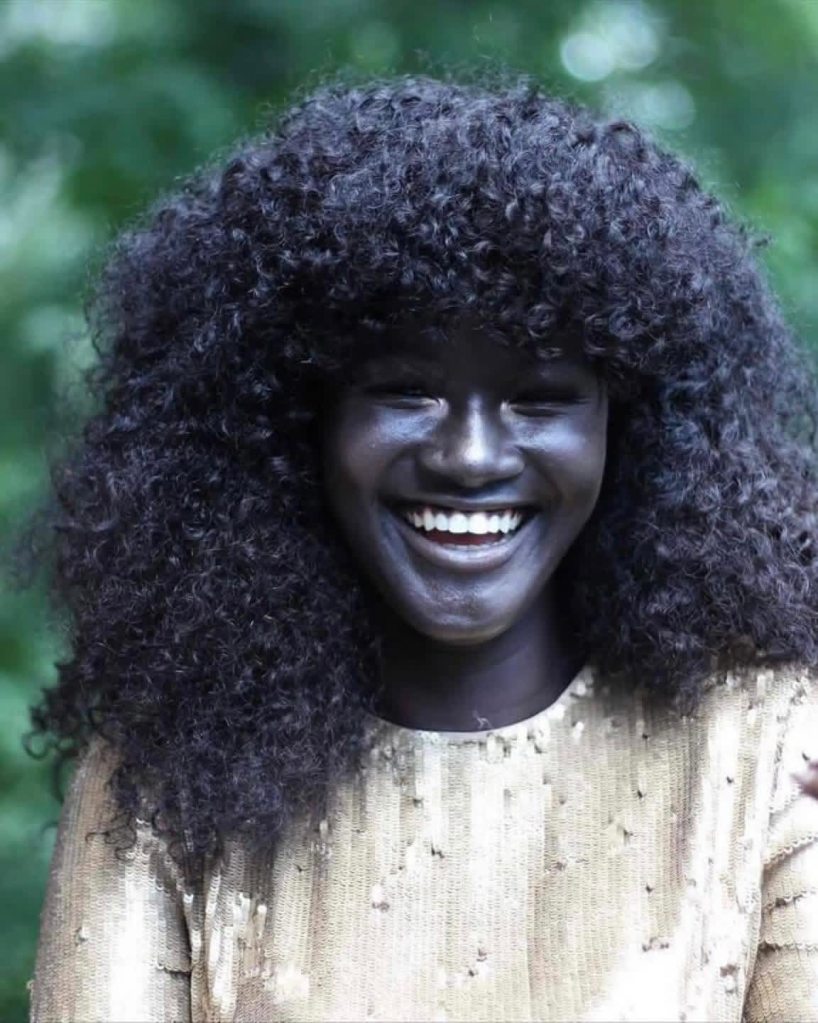
The Ebony Dolls: Khoudia Diop

Khoudia Diop, globally known as the “Melanin Goddess,” is a Senegalese model, entrepreneur, and cultural icon celebrated for her extraordinarily deep ebony complexion and her fearless celebration of Black beauty. She has become a living symbol of power, pride, and unapologetic self-love, inspiring millions around the world to embrace dark skin in a society that has historically marginalized it.

Born and raised in Senegal, Khoudia grew up in a culture where colorism was deeply ingrained, and from a young age she faced teasing and ridicule for her dark complexion. Instead of internalizing shame, she gradually transformed those experiences into strength, choosing to view her skin as a source of identity and beauty rather than something to hide. Her journey reflects the emotional reality of many dark-skinned women across the African diaspora.

Khoudia’s entry into modeling did not come through traditional fashion pathways. She began by posting self-portraits on social media, where her striking appearance quickly went viral. Her images stood out in a digital space dominated by Eurocentric beauty standards, and soon she attracted attention from photographers, brands, and global media outlets who recognized her unique presence.

Her modeling career took off as she began working with international photographers and fashion campaigns that centered on diversity and representation. Unlike conventional models, Khoudia built her brand organically, without an agency at first, proving that authenticity and confidence could compete with industry gatekeeping. She became known not just for her looks, but for her message.

Khoudia is widely recognized for her velvety midnight complexion, high cheekbones, piercing eyes, and serene yet commanding aura. Her beauty is often described as celestial and ancestral, evoking African royalty and divine femininity. She does not conform to beauty standards—she redefines them.

Throughout her career, Khoudia has used her platform to speak openly about colorism, self-worth, and mental health, especially among young Black girls. She has stated that her mission is to normalize dark skin and to ensure that future generations grow up seeing themselves reflected positively in media and fashion.

Beyond modeling, Khoudia is also an entrepreneur. She founded a fashion and lifestyle brand focused on empowerment and inclusivity, using her business ventures to extend her message beyond imagery into tangible social impact. Her work blends beauty with activism, positioning her as a cultural leader rather than just a visual icon.

Khoudia is a wife and mother, and she has spoken about how motherhood deepened her understanding of self-love and responsibility. She often shares reflections on raising children in a world shaped by racial bias, emphasizing the importance of teaching pride, confidence, and identity from an early age.

Her milestones include global media features, international fashion campaigns, public speaking engagements, and recognition as one of the most influential dark-skinned models of the modern era. While she may not collect traditional fashion awards, her true recognition lies in her cultural impact and the millions of people who credit her for changing how they see themselves.

Khoudia Diop is an Ebony Doll because she represents the highest expression of melanated beauty—unfiltered, radiant, and spiritually powerful. She is not simply admired; she is symbolic. Her life stands as proof that Blackness does not need validation from external systems—it is already divine, complete, and worthy of reverence.

References

Khoudia Diop. Wikipedia. https://en.wikipedia.org/wiki/Khoudia_Diop

BBC News. “Meet Khoudia Diop, the ‘Melanin Goddess’.” https://www.bbc.com/news/world-africa-

Vogue Arabia. “Khoudia Diop on Colorism and Redefining Beauty.” https://en.vogue.me

CNN Style. “How Khoudia Diop Became the Face of Dark Skin Pride.” https://www.cnn.com/style

The Guardian. “Khoudia Diop: From Online Trolls to Global Model.” https://www.theguardian.com

Elle Magazine. “The Melanin Goddess Speaks: Khoudia Diop on Self-Love.” https://www.elle.com

Forbes Africa. “How Khoudia Diop Built a Global Brand.” https://www.forbesafrica.com

HuffPost. “Khoudia Diop and the Power of Dark Skin Representation.” https://www.huffpost.com

The Brown Girl #thebrowngirldilemma

Photo by Jonatan Galvis on Pexels.com

A Journey Through Struggle, Faith, and Resilience

Photo by Godisable Jacob on Pexels.com

The Weight and Wonder of Brownness

Photo by nappy on Pexels.com

To be a brown girl in a world that has long worshiped whiteness is to live within a paradox. She is both invisible and hyper-visible, overlooked yet over-scrutinized, diminished and yet desired. Her skin tells a story before she even speaks, a story marked by colonial history, racial hierarchies, and cultural misrepresentation. But her melanin also tells another story—one of divine design, resilience, and sacred inheritance.

This manuscript, The Brown Girl Dilemma, seeks to unpack the layered experiences of brown girls across eight lenses: beauty, faith, psychology, representation, and resilience. Each essay acts as both a mirror and a window—reflecting the inner struggles of brown girls while revealing their undeniable strength to the world.


Beyond the Mirror: Unpacking the Brown Girl Dilemma

Photo by Bigshow Lamar Campton on Pexels.com

The mirror often becomes a battleground for the brown girl. Staring back at her is not only her reflection but centuries of imposed ideals that privilege lighter skin and Eurocentric beauty standards. In this space, the question of worth arises: Is she beautiful enough? Desirable enough? Human enough?

Yet, beyond the mirror lies truth: she is not defined by imposed ideals but by divine design. Psalm 139:14 reminds her that she is “fearfully and wonderfully made.” The brown girl dilemma, then, is not truly about her inadequacy but about the world’s blindness. Beyond the mirror, she rediscovers herself—not as broken, but as whole, chosen, and radiant.


Beauty, Bias, and the Brown Girl Battle

Photo by Marcelo Dias on Pexels.com

The brown girl’s beauty is often weaponized against her. Colorism, both outside and within her community, creates hierarchies that distort identity. Lighter skin is praised, darker shades are devalued, and the cycle perpetuates insecurity. This bias is reinforced by media, where brown girls are either erased or cast into stereotypical roles.

But this battle is not fought in vain. Brown girls resist by embracing natural hair, celebrating melanin, and refusing to shrink. They redefine beauty on their own terms, proving that their worth is not determined by bias but by boldness. Like the Shulamite woman who declared, “I am black, but comely” (Song of Solomon 1:5, KJV), the brown girl learns to affirm her own beauty in the face of cultural denial.


Sacred Shades: A Theological Look at the Brown Girl Dilemma

Photo by Monstera Production on Pexels.com

Faith offers the brown girl an anchor. Theology, when read through her lens, reveals the beauty of her creation and the dignity of her calling. The Bible affirms her worth: she is God’s workmanship, a vessel of divine glory. Too often, theology has been weaponized to justify slavery, segregation, and sexism. But a liberating theology restores her identity as a daughter of Zion, beloved and chosen.

In reclaiming sacred shades, the brown girl learns that her melanin is not a curse but a crown. Her skin is not incidental but intentional—woven into her being by the Creator Himself. Theological reflection allows her to shift from shame to sacredness, from seeing her brownness as a burden to embracing it as a blessing.


Brown Skin, Heavy Crown: The Weight of Representation

Photo by Guilherme Almeida on Pexels.com

Representation is both privilege and pressure. For the brown girl who “makes it” into spaces of visibility—whether Hollywood, academia, politics, or business—her presence carries the weight of her entire community. She is expected to perform flawlessly, lest her mistakes be generalized onto all who look like her.

This heavy crown is both exhausting and empowering. It exhausts because it demands perfection, but it empowers because it signals that she is breaking barriers. The brown girl bears this weight with grace, reminding the world that she does not merely represent her community—she represents excellence, resilience, and possibility.


Invisible Yet Hyper-Visible: The Brown Girl Paradox

Photo by Mikhail Nilov on Pexels.com

One of the most painful dilemmas is the paradox of invisibility and hyper-visibility. In professional and social settings, brown girls are often overlooked—passed over for promotions, excluded from conversations, their voices minimized. Yet, in other contexts, their bodies are over-scrutinized, hyper-sexualized, or exotified.

This paradox creates a psychological tug-of-war. But the brown girl learns to navigate it with strategic resilience—raising her voice where silence is imposed, reclaiming her body where objectification occurs. She refuses invisibility and rejects hyper-visibility, instead demanding authentic visibility—to be seen for who she truly is.


The Skin They Can’t Ignore: Brown Girls in a World of Whiteness

Photo by Godisable Jacob on Pexels.com

In societies where whiteness is normalized as the standard, the brown girl cannot fade into the background. Her skin announces her difference before she speaks. This difference has historically made her a target of exclusion, discrimination, and violence. Yet, paradoxically, this same difference becomes her power.

Her skin, the one thing the world cannot ignore, becomes her testimony. It is the evidence of survival, the shade of heritage, and the hue of strength. What was once used to marginalize her now becomes a mark of distinction. She stands unapologetically brown in a world that demands assimilation, embodying both resistance and pride.


From Colorism to Confidence: Redefining the Brown Girl Dilemma

Photo by Yury Oliveira on Pexels.com

The journey from struggle to strength is never linear. For the brown girl, healing requires confronting colorism—the internalized wounds of comparison, rejection, and exclusion. It also requires unlearning the false narratives whispered by society.

Confidence is cultivated through affirmation, community, and faith. As she grows, the brown girl redefines her dilemma: it is no longer about whether she fits into society’s mold, but about how she chooses to shatter it. Her confidence is not arrogance but liberation—the freedom to exist without apology, to celebrate her skin without shame.


Shades of Struggle, Shades of Strength: The Brown Girl Experience

Photo by Ante Emmanuel on Pexels.com

The brown girl experience is a tapestry of both burden and blessing. She carries the struggle of systemic racism, sexism, and colorism, yet she transforms these struggles into sources of strength. Her resilience is not accidental but ancestral, inherited from women who endured and overcame.

Her shades of struggle are inseparable from her shades of strength. They coexist, shaping her into a woman of wisdom, compassion, and courage. She is not merely surviving the brown girl dilemma—she is rewriting it, turning wounds into wisdom, battles into breakthroughs, and silence into song.


Conclusion: From Dilemma to Destiny

The brown girl dilemma is not the end of the story—it is the beginning of transformation. Each essay in this collection testifies that the brown girl is not defined by her struggles but refined by them. She is both the question and the answer, both the wound and the healing.

In a world that often misunderstands her, she emerges as a living paradox of power: invisible yet undeniable, burdened yet unbreakable, questioned yet chosen. She carries within her the reflection of divine creativity and the legacy of unyielding resilience.

The brown girl dilemma, then, is not her curse. It is her canvas. And on it, she is painting a masterpiece of survival, beauty, and destiny.

References

Collins, P. H. (2000). Black feminist thought: Knowledge, consciousness, and the politics of empowerment. Routledge.

Cone, J. H. (2010). A Black theology of liberation. Orbis Books.

Craig, M. L. (2006). Race, beauty, and the tangled knot of a guilty pleasure. Feminist Theory, 7(2), 159–177. https://doi.org/10.1177/1464700106064415

Glenn, E. N. (2008). Yearning for lightness: Transnational circuits in the marketing and consumption of skin lighteners. Gender & Society, 22(3), 281–302. https://doi.org/10.1177/0891243208316089

Harris, A., & Khanna, N. (2010). Black is, Black ain’t: Biracials, middle-class Blacks, and the social construction of Blackness. Sociological Spectrum, 30(1), 99–120. https://doi.org/10.1080/02732170903495892

hooks, b. (1992). Black looks: Race and representation. South End Press.

Hunter, M. (2016). Colorism in the classroom: How skin tone stratifies African American and Latina/o students. Theory Into Practice, 55(1), 54–61. https://doi.org/10.1080/00405841.2016.1119019

King, D. K. (2005). Multiple jeopardy, multiple consciousness: The context of a Black feminist ideology. Signs: Journal of Women in Culture and Society, 14(1), 42–72. https://doi.org/10.1086/494491

Russell, K., Wilson, M., & Hall, R. (2013). The color complex: The politics of skin color in a new millennium. Anchor Books.

Williams, D. S. (2013). Sisters in the wilderness: The challenge of womanist God-talk. Orbis Books.

Wingfield, A. H. (2019). Flatlining: Race, work, and health care in the new economy. University of California Press.

The Brown Girl Speaks: Truths Behind the Tone. #thebrowngirldilemma

Photo by Turaki Photography on Pexels.com

There is a power that comes from living in brown skin—a power the world often misunderstands, mislabels, or diminishes. To be a brown girl is to walk through life both seen and unseen, celebrated and silenced, loved and judged through the lens of color. Every shade tells a story, and every story carries the weight of survival, beauty, and truth. This is the testimony of tone—the unspoken language of melanin that has shaped our identity and the way the world perceives us.

Being brown is not a uniform experience; it is a spectrum of existence. Between light and dark lies an entire geography of complexion, each shade bearing its own burden and blessing. Brown girls stand at the crossroads of colorism, where acceptance can depend on just how much light the skin reflects. Our tone becomes both mirror and battleground, measuring us against ideals we never created but were born to challenge.

From an early age, many brown girls are taught to navigate the politics of appearance. Family members may speak in coded language: “She’s a nice color,” “Don’t stay in the sun too long,” or “You’re getting darker.” These comments, wrapped in love, are heavy with internalized fear—a fear passed down from generations marked by colonial rule and racial stratification. They echo a past where lighter skin meant proximity to privilege and darker skin meant proximity to pain.

Colorism, a child of racism, thrives quietly within communities of color. It separates sisters, ranking beauty on a scale rooted in European aesthetics. In classrooms, in workplaces, and in dating choices, the tone of a woman’s skin can shape how she is valued. Studies continue to show that lighter-skinned women are perceived as more competent, approachable, and desirable (Hunter, 2007). These unspoken hierarchies leave brown and dark-skinned women fighting for validation in a world that still equates fairness with worth.

The brown girl grows up learning the art of adaptation—how to smile softly enough not to seem intimidating, how to lighten foundation, straighten hair, or use filters to “blend in.” Society calls it beauty; psychology calls it survival. Behind every curated image lies a quiet fatigue from performing palatability for a gaze that refuses to see the fullness of her humanity.

But beneath that fatigue is fire. When the brown girl speaks, she does not whisper. She speaks the truth that beauty was never meant to be confined to a color chart. She declares that her tone is not a limitation but a lineage, a living record of ancestry written in pigment. Every shade of brown is a monument to those who endured, created, and thrived despite the violence of erasure.

The truth behind the tone is that brownness holds memory. It remembers the sun of Africa, the soil of the Caribbean, the warmth of Latin America, and the mysticism of South Asia. It is global, sacred, and connected. Colonialism tried to fragment that unity by teaching the colonized to despise their reflection, to compete rather than commune. Yet the brown girl’s skin remains a testament—it absorbs light and transforms it, just as her spirit absorbs pain and turns it into art, activism, and faith.

Media representation has often failed to capture the depth of brownness. When it does, it frequently sanitizes or fetishizes it. Lighter tones dominate screens, while darker ones are typecast or ignored. The result is psychological distortion—a message that beauty and desirability exist on a gradient tilted toward whiteness. For many brown girls, representation becomes a hunger, a longing to see oneself reflected with dignity rather than diluted for consumption.

But the modern brown girl is rewriting that narrative. Through film, music, literature, and social media, she tells her own story—raw, unfiltered, and unapologetic. Movements like #MelaninPoppin and #UnfairAndLovely have become digital revolutions, pushing back against centuries of exclusion. Visibility becomes liberation. Speaking becomes healing.

Emotionally, the journey toward self-acceptance is layered. It requires peeling back the lies taught by both society and family, confronting the ways we’ve internalized comparison. It means forgiving ourselves for believing that lighter was better, for chasing a reflection that was never truly ours. Healing begins when we stop asking for permission to be beautiful and start defining beauty through our own lens.

The tone of brown skin is not just visual—it is spiritual. It carries the energy of endurance, creativity, and divine craftsmanship. In biblical symbolism, the earth is brown, the first human was formed from dust, and creation itself was birthed from color. To be brown is to resemble the ground that sustains all life. Our tones are sacred, kissed by creation, and ordained with purpose.

Yet the world still measures women through lenses of desirability rather than dignity. The brown girl challenges that measurement. She demands to be seen not just as beautiful but as brilliant, complex, and whole. Her tone does not beg for approval; it commands respect. She is the embodiment of contrast and harmony, light and shadow coexisting in one divine design.

The truth behind the tone is also historical. Colonization redefined color as currency, turning complexion into a social passport. Post-slavery societies upheld these hierarchies through institutions that rewarded “fairness” and punished “darkness.” From the paper bag tests of the early 20th century to the casting biases of today, colorism has remained a subtle weapon of division. The brown girl carries that legacy but refuses to be bound by it.

Psychologically, this rebellion is revolutionary. To love one’s brown skin in a world that profits from bleaching creams and filters is to defy centuries of conditioning. It is to reclaim the body as sacred ground, not a site of shame. It is to rewire the mind from scarcity to abundance, from comparison to celebration.

The brown girl’s tone also speaks of resilience. It tells of women who raised children, led revolutions, built nations, and healed communities while being overlooked. It speaks of grandmothers who wore their darkness like armor, mothers who protected their children from the sting of prejudice, and daughters who now demand to be seen in full light.

Culturally, brown women have always shaped the world’s rhythm—through language, art, food, and faith. Their influence transcends borders, yet their contributions are often minimized. To reclaim the truth behind the tone is to center those voices, to remind the world that the global South, the brown nations, have always been the heartbeat of civilization.

Still, confession remains part of the journey. Many brown girls admit that even as they preach self-love, they are still learning it. Healing is not linear; it is layered like our tones. It is saying, “I love my skin,” even on days when the world does not. It is wearing brown not as burden but as blessing.

When the brown girl speaks, she speaks for generations. Her voice carries the hush of grandmothers, the hymns of mothers, and the hope of daughters yet to come. She speaks for every shade of brown silenced by shame and every hue still fighting for visibility. Her tone is truth, and her truth is freedom.

The tone of brown is not just color—it is culture, consciousness, and calling. It reflects the light of every sun that has ever kissed this earth. It is the hue of legacy, of life, of love that endures. The brown girl no longer asks to be seen; she commands to be remembered. And when she speaks, her words paint the world in truth.

References

Fanon, F. (1952). Black skin, white masks. Grove Press.

hooks, b. (1992). Black looks: Race and representation. South End Press.

Hunter, M. (2007). The persistent problem of colorism: Skin tone, status, and inequality. Sociology Compass, 1(1), 237–254.

Russell, K., Wilson, M., & Hall, R. (1992). The color complex: The politics of skin color among African Americans. Anchor Books.

Tate, S. A. (2016). Black beauty: Aesthetics, stylization, politics. Routledge.

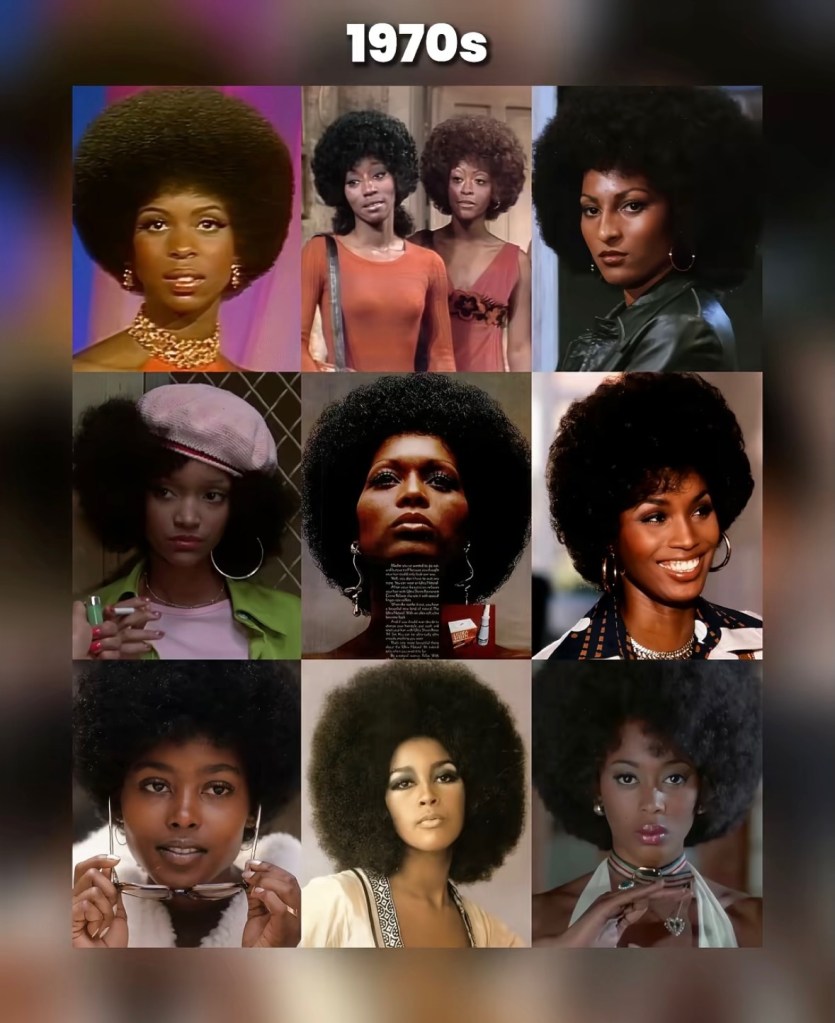
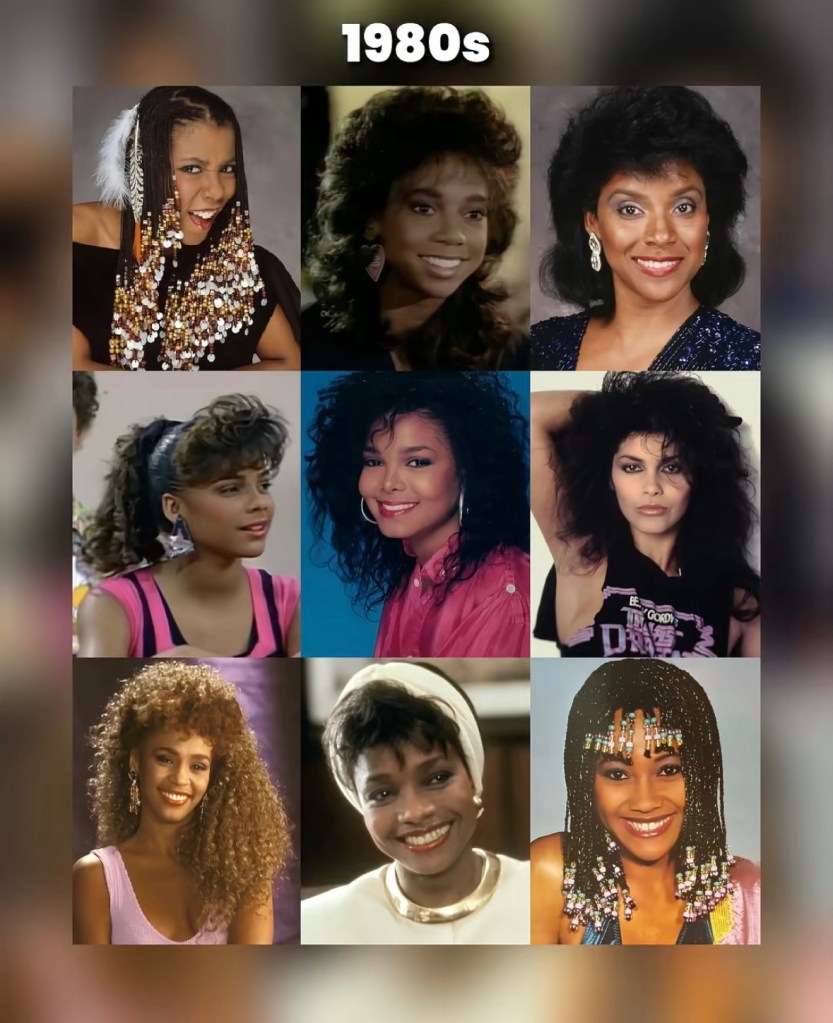
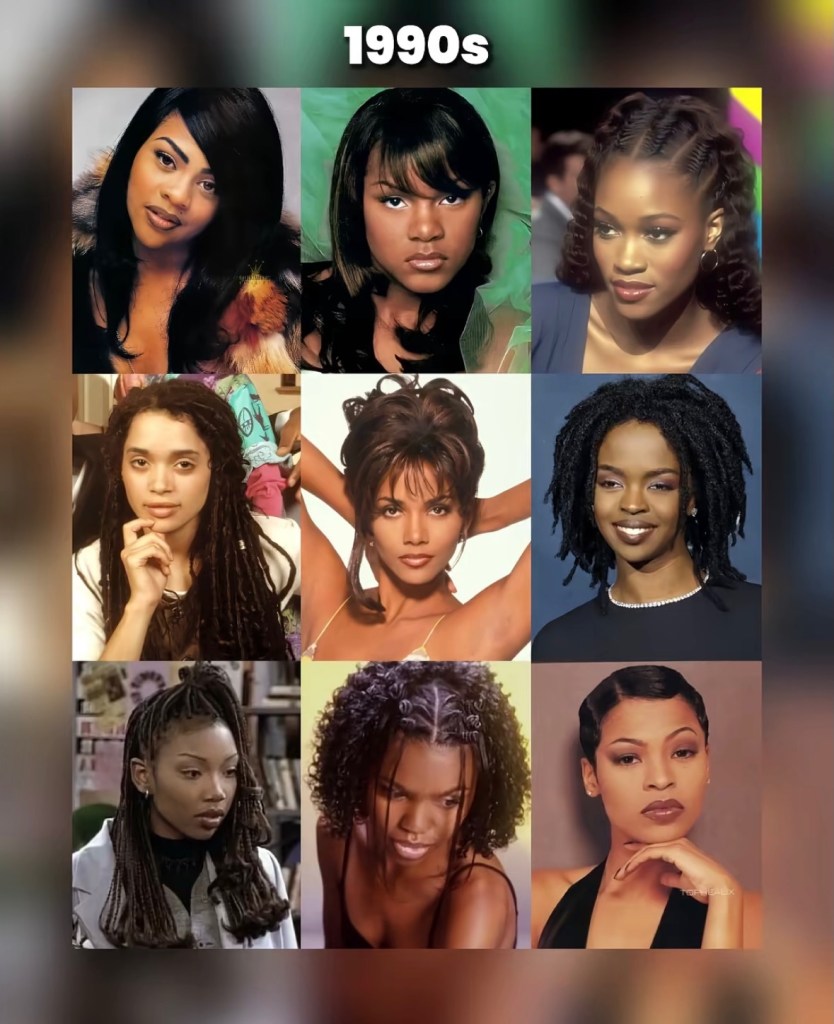
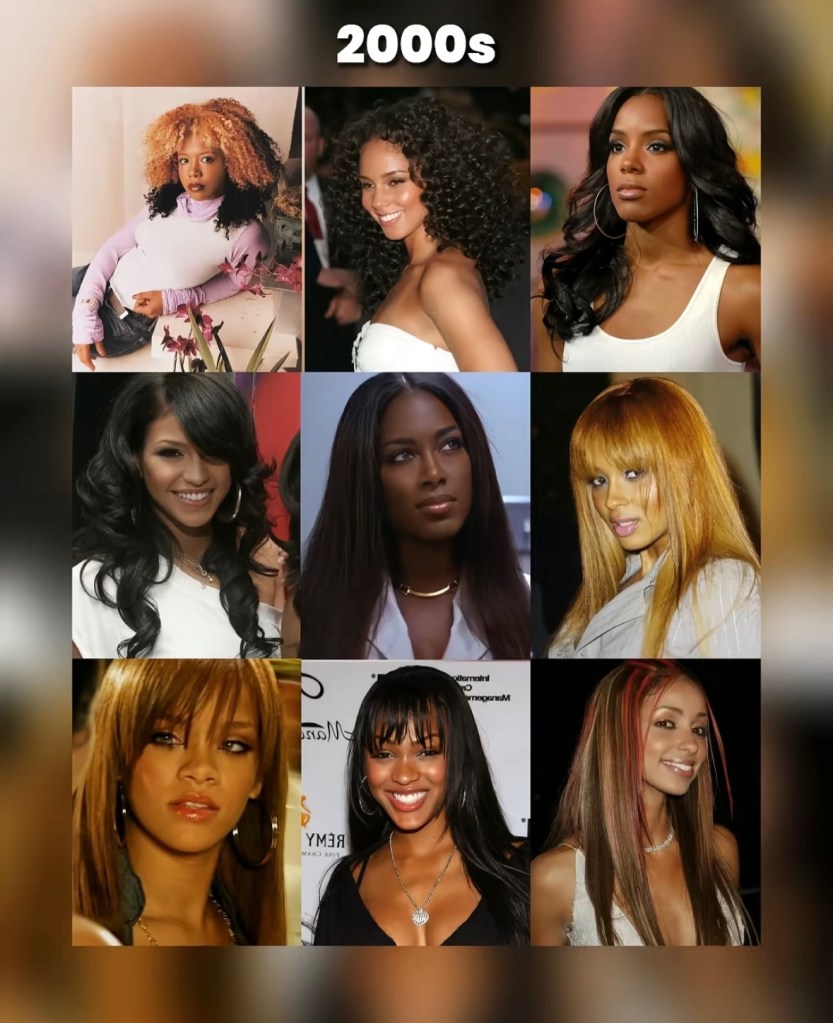
Black Beauty Through the Decades

Black beauty is not a trend, a season, or a reaction to outside validation. It is an inheritance—carried through ancestry, memory, and survival. From the earliest days of displacement and resistance, Black women have expressed beauty as a language of identity, dignity, and self-definition. Even when dominant societies attempted to erase, ridicule, or redefine Black features, Black women preserved their beauty through ritual, care, adornment, and community knowledge passed from generation to generation.

To speak of Black beauty is to speak of resilience made visible. Hair, skin, body, and style have long served as sites of both oppression and power, shaped by historical forces yet continuously reclaimed. In times when Eurocentric standards were enforced as the measure of worth, Black women transformed beauty into an act of resistance—refusing invisibility and asserting presence. Each braid, curl, wrap, and adornment carried meaning beyond aesthetics, reflecting survival, creativity, and cultural memory.

Black beauty has never been singular. It exists across a spectrum of skin tones, textures, facial features, and expressions that defy narrow definitions. It evolves across time while remaining rooted in African heritage and diasporic experience. Whether expressed through restraint or boldness, tradition or innovation, Black beauty has always reflected autonomy—the right to define oneself without permission.

In the modern era, the reclamation of Black beauty marks a profound cultural shift. What was once marginalized is now celebrated, studied, and emulated, yet its deepest meaning remains internal rather than performative. Black beauty is not merely what is seen, but what is carried—confidence forged through history, grace born of endurance, and a self-love that persists despite centuries of contradiction. It is both personal and collective, timeless and ever-renewing.

Ultimately, Black beauty is a testament. It testifies to the ability of Black women to remain radiant in the face of erasure, to create elegance from limitation, and to transform survival into art. It is not defined by approval, but by continuity—a living expression of identity that honors the past, affirms the present, and shapes the future.

All photographs are the property of their respective owners. No copyright infringement intended.

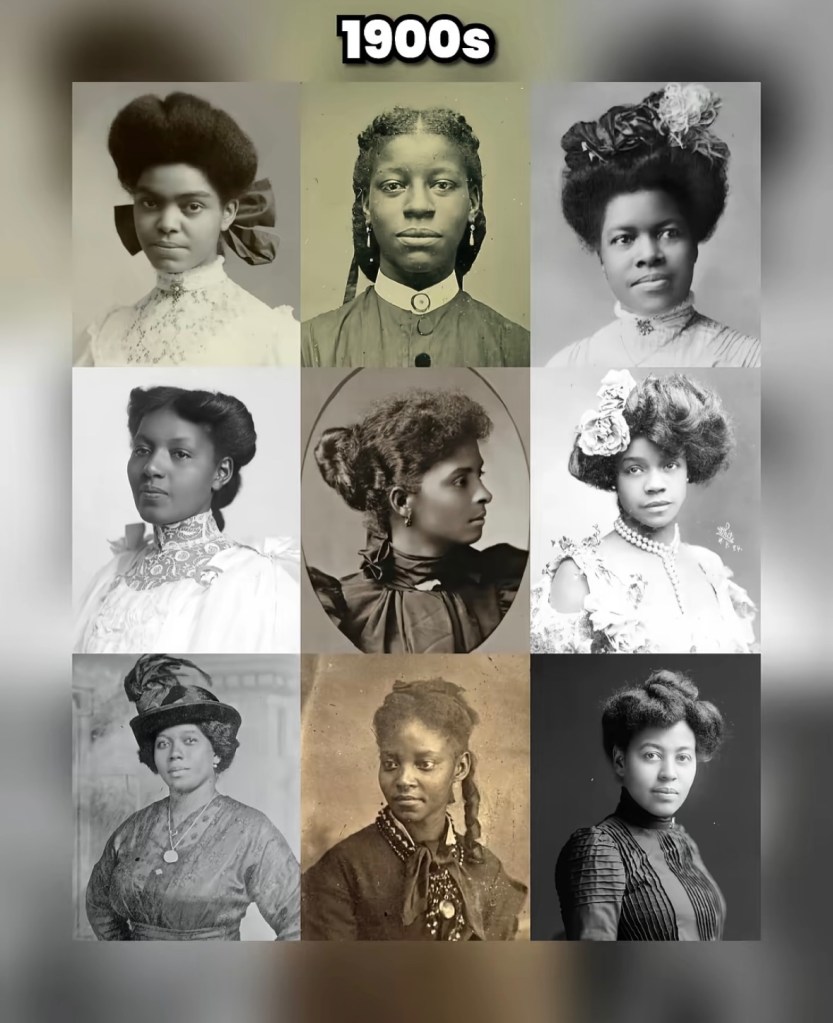
1900s1910s
At the turn of the twentieth century, Black women’s beauty was deeply shaped by resilience, modesty, and self-definition within a racially hostile society. Hairstyles were often practical and protective, including wraps, headscarves, and neatly pressed styles influenced by African traditions and Victorian norms. Despite social limitations, Black women maintained dignity through careful grooming, skin care using natural oils, and adornment that reflected pride and self-respect rather than excess.
During the 1910s, migration from rural Southern communities to urban centers began reshaping Black aesthetics. Hair was frequently styled in soft waves, buns, and pompadours, often achieved through hot combing—a controversial yet common tool of the era. Beauty culture expanded through Black-owned businesses, notably Madam C. J. Walker, who emphasized cleanliness, confidence, and economic independence rather than Eurocentric imitation.

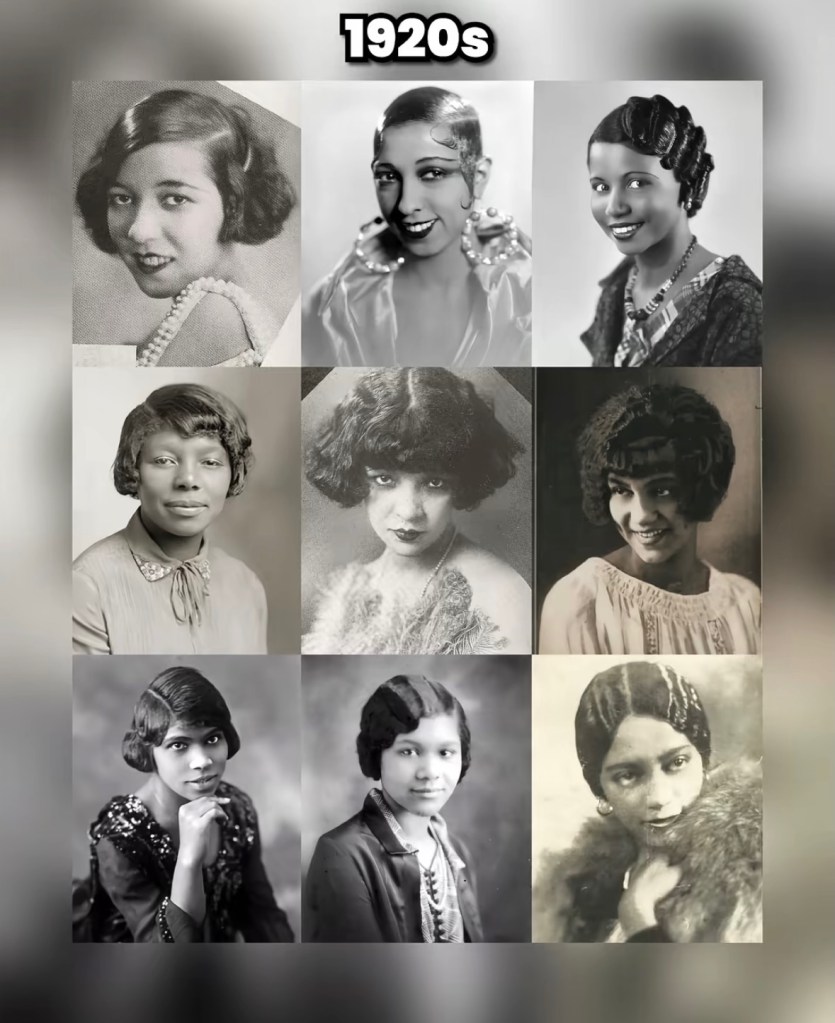
1920s
The Harlem Renaissance of the 1920s marked a cultural awakening in which Black beauty became visible, expressive, and artistic. Shorter hairstyles, finger waves, and sleek bobs emerged, paired with bold lipstick and refined fashion. Black women embodied modernity and glamour, asserting intellectual and aesthetic authority through music, literature, and visual style that celebrated sophistication and cultural pride.

1930s
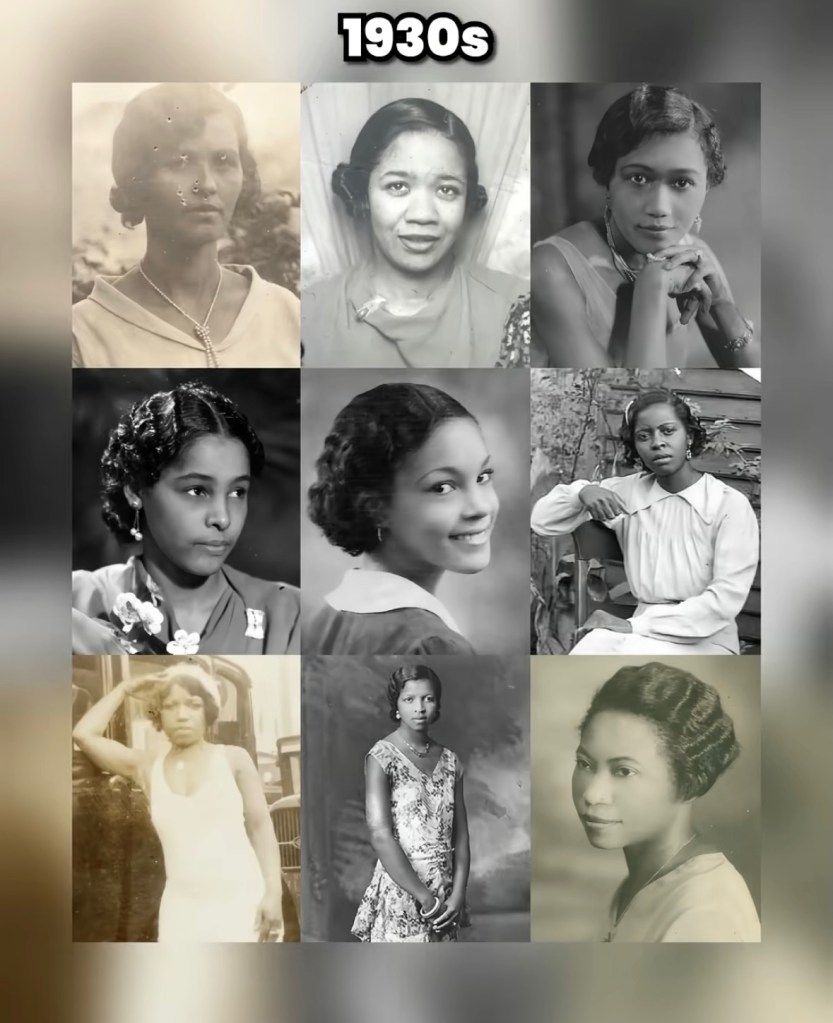
In the 1930s, amid the Great Depression, Black beauty reflected elegance under constraint. Hairstyles favored sculpted waves, rolls, and pinned curls, while makeup remained polished but understated. Beauty became an act of resistance—maintaining poise, femininity, and grace despite economic hardship. Hollywood films influenced aesthetics, though Black women adapted these styles to their own textures and features.

1940s
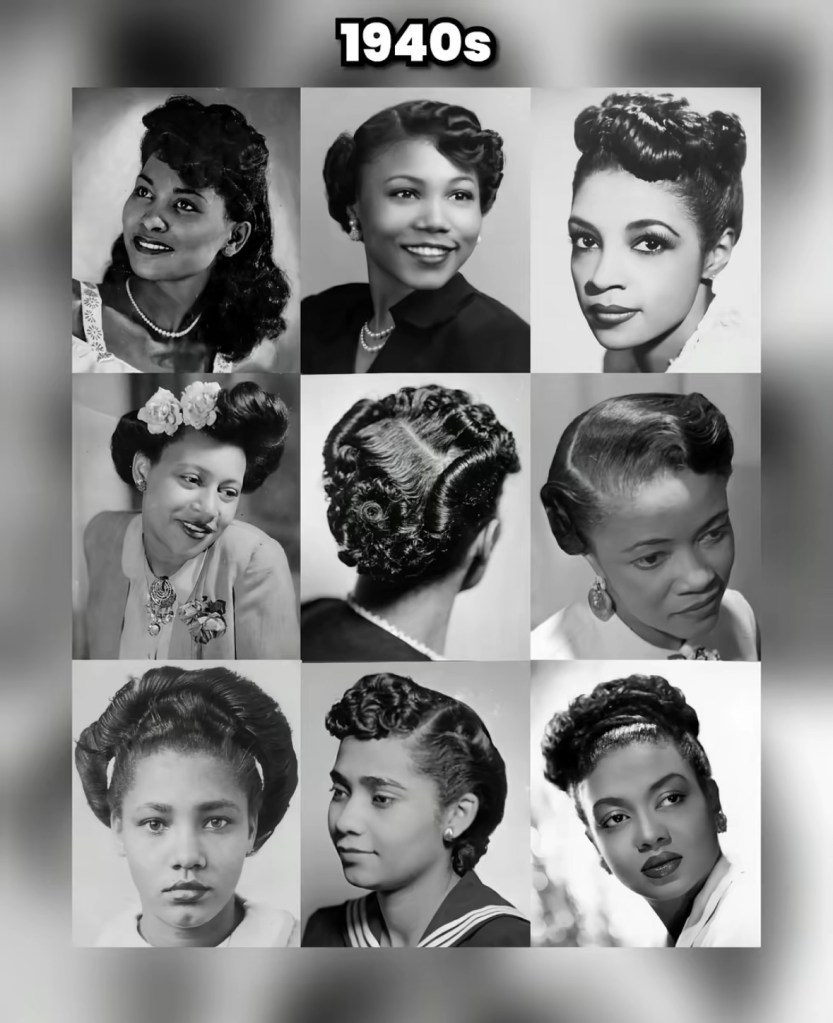
World War II reshaped Black womanhood and beauty in the 1940s as women entered industrial labor and military support roles. Hairstyles were practical yet stylish, including victory rolls, headscarves, and neatly set curls. Beauty symbolized strength and patriotism, with emphasis on clean lines, red lips, and confident posture reflecting both femininity and fortitude.

1950s
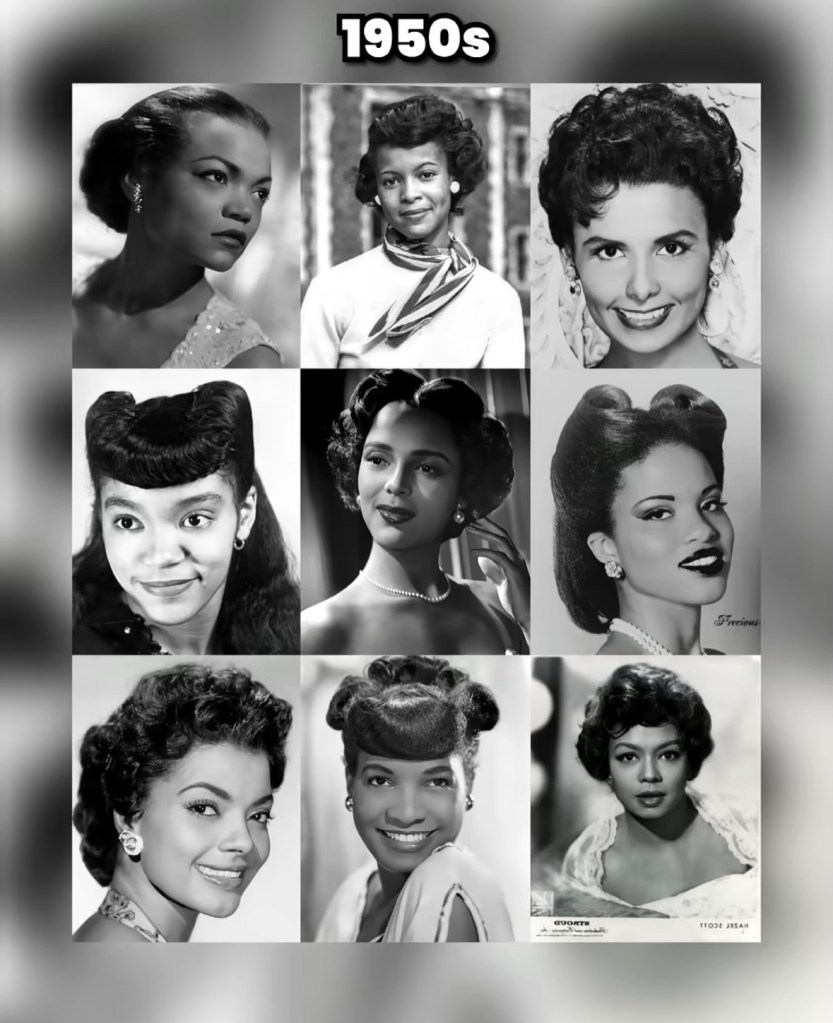
The 1950s emphasized polish, domestic elegance, and hyper-femininity. Black women wore structured dresses, gloves, and coiffed hairstyles, often straightened or softly curled. Beauty standards leaned toward refinement and respectability, particularly within Black middle-class communities, as appearance was closely tied to social mobility, morality, and dignity in a segregated society.

1960s
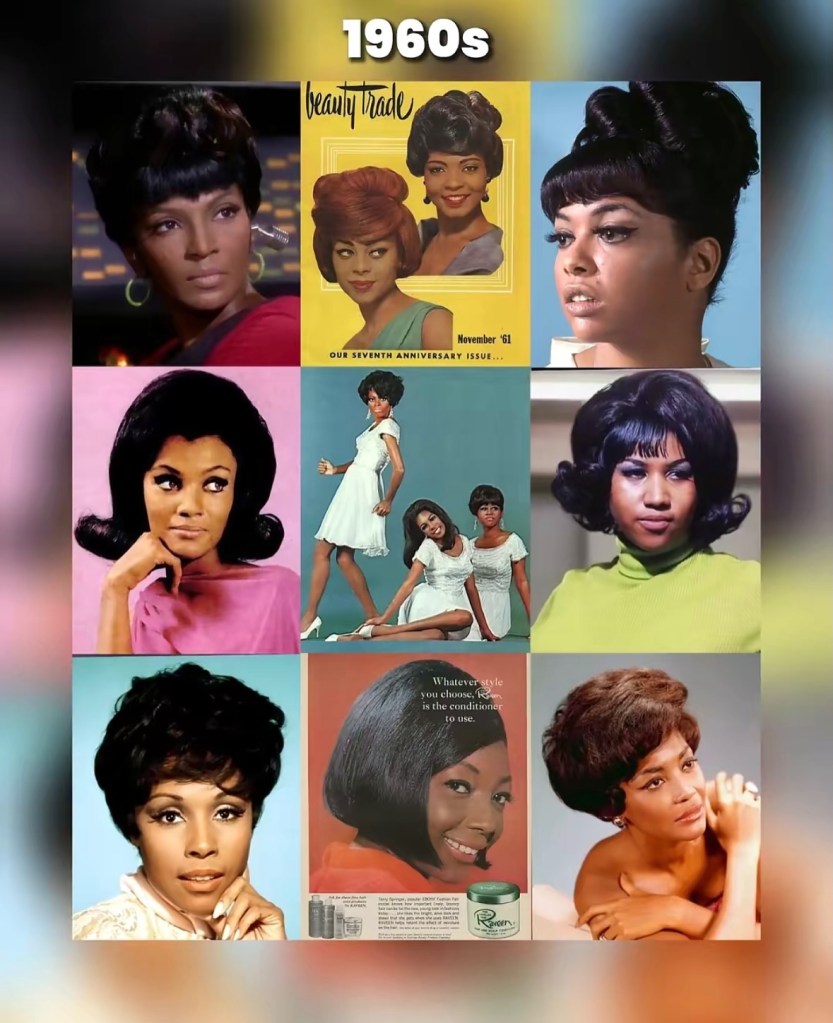
The 1960s ushered in a radical transformation as the Civil Rights and Black Power movements reframed beauty as political identity. The Afro emerged as a powerful symbol of self-acceptance and resistance, rejecting assimilationist standards. Natural hair, dark skin, and African-inspired clothing were embraced as declarations of pride, autonomy, and cultural truth.

1970s
In the 1970s, Black beauty flourished in boldness, freedom, and Afrocentric expression. Large Afros, braids, cornrows, and natural textures dominated, paired with vibrant makeup and fashion. Icons like Pam Grier and Cicely Tyson embodied a confident sensuality rooted in authenticity rather than approval. Beauty became expansive, expressive, and unapologetically Black.

1980s
The 1980s brought excess, experimentation, and glamour. Black women embraced voluminous hairstyles, including jheri curls, blowouts, and elaborate braids. Makeup was bold, featuring strong eyes and glossy lips. Beauty aligned with success, visibility, and power, reflecting growing representation in music, television, and corporate spaces.

1990s
The 1990s balanced minimalism with cultural edge. Box braids, microbraids, finger waves, and sleek bobs coexisted alongside understated makeup and fashion. Black beauty icons such as Naomi Campbell and Angela Bassett represented strength, athleticism, and global elegance. Authenticity and individuality increasingly defined attractiveness.

2000s
In the 2000s, Black beauty diversified across mainstream and niche aesthetics. Lace fronts, silk presses, locs, and protective styles gained popularity, alongside experimental makeup and fashion. Media visibility expanded through music videos, magazines, and early digital platforms, allowing Black women to define beauty on their own terms across multiple expressions.

2010s
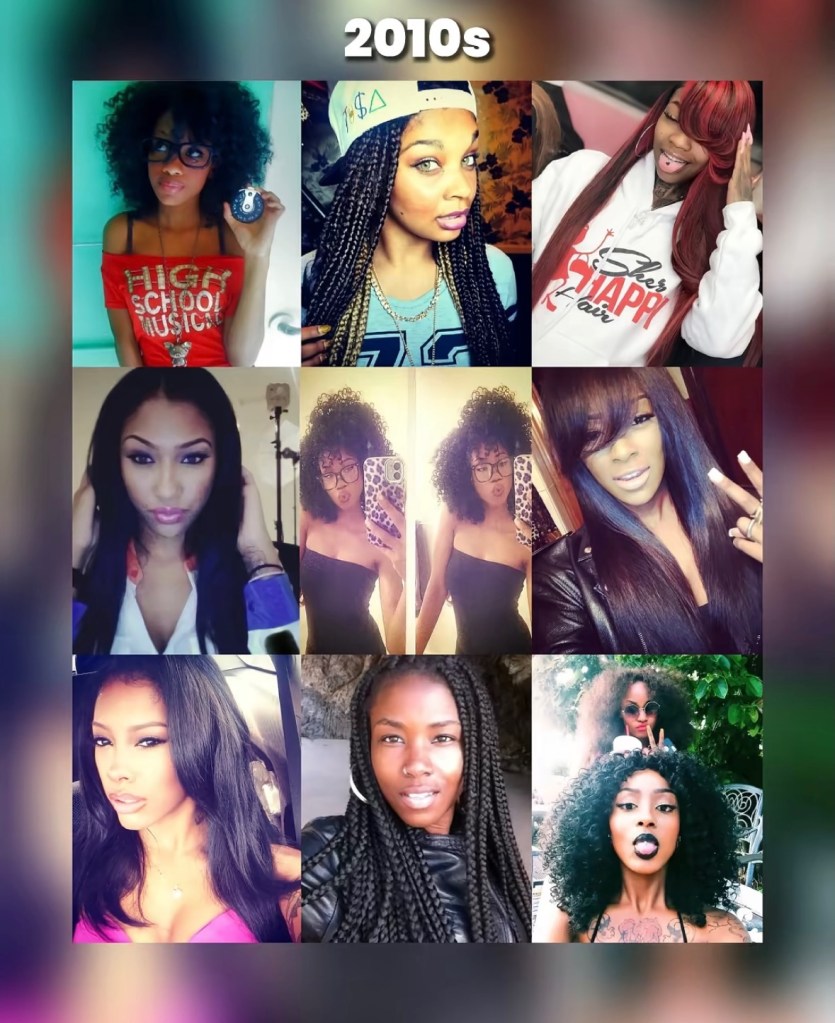
The 2010s marked a renaissance of natural hair and digital empowerment. Social media amplified Black women’s voices, celebrating coils, curls, dark skin, and wide features once marginalized. Beauty became inclusive, instructional, and affirming, with natural hair movements and makeup brands explicitly centering Black women’s needs and aesthetics.

2020s
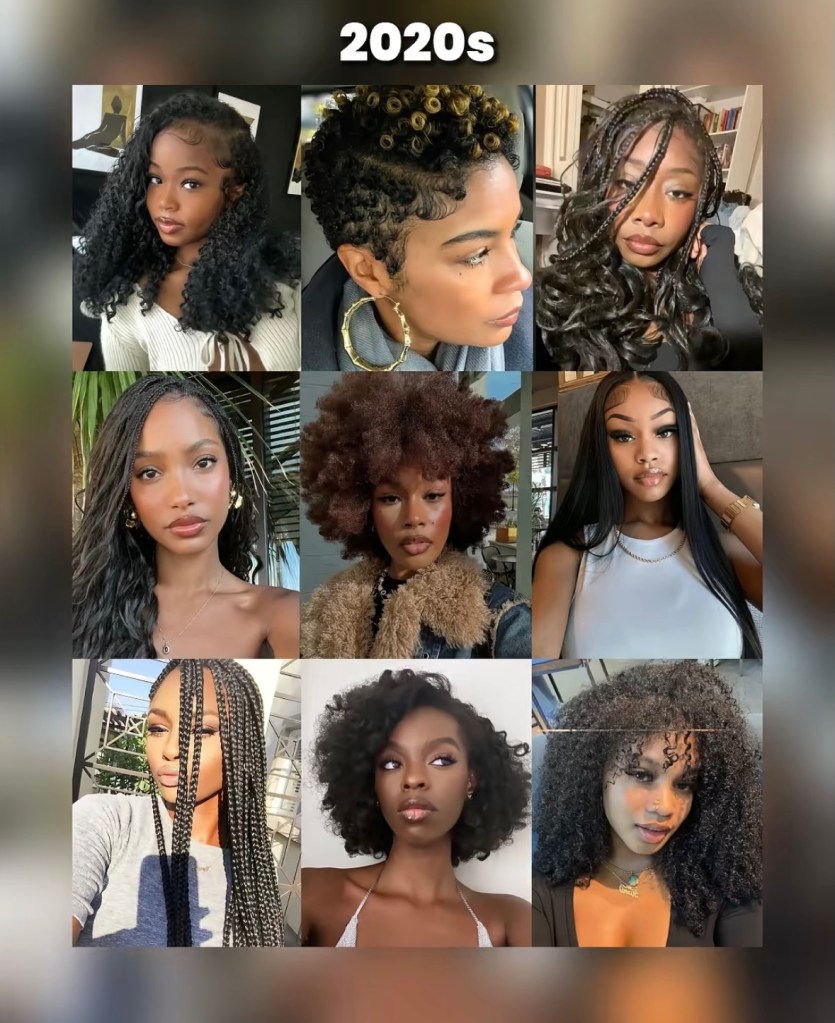
In the 2020s, Black beauty stands fully autonomous, expansive, and global. There is no single standard—locs, Afros, braids, shaved heads, bold colors, and minimalist looks coexist without hierarchy. Beauty is now framed as wellness, self-definition, and cultural inheritance. Black women lead beauty innovation, redefine luxury, and affirm that Blackness itself is timelessly beautiful.


Black beauty endures because it is rooted in truth rather than approval. It is not borrowed, diluted, or dependent on trends—it is ancestral, self-defined, and ever-evolving. Across centuries of challenge and transformation, Black beauty has remained a quiet force and a bold declaration, reflecting dignity, creativity, and spiritual strength. It is the beauty of survival refined into grace, of history carried with pride, and of identity claimed without apology. In every generation, Black beauty stands as living evidence that what was once denied has always been divine, whole, and worthy.

References

Byrd, A. D., & Tharps, L. L. (2014). Hair story: Untangling the roots of Black hair in America (2nd ed.). St. Martin’s Press.

Craig, M. L. (2002). Ain’t I a beauty queen? Black women, beauty, and the politics of race. Oxford University Press.

Hobson, J. (2005). Venus in the dark: Blackness and beauty in popular culture. Routledge.

Peiss, K. (2011). Hope in a jar: The making of America’s beauty culture. University of Pennsylvania Press.

Walker, S. B. (2007). Style and status: Selling beauty to African American women, 1920–1975. University Press of Kentucky.

Wilson, J. (2016). Black beauty: Aesthetic politics in modern African American culture. University of Illinois Press.

The Aesthetic of Black Beauty: Genetics, Psychology, and Divine Design.

Black beauty is not a single expression but a spectrum of genetic diversity that manifests in facial features, body composition, skin tone, hair texture, and overall presence. From African roots to diasporic populations across the globe, these features convey strength, resilience, and divine artistry. Understanding this beauty requires an exploration of genetics, psychology, history, and spirituality.

Melanin-rich skin is one of the most defining features of Black beauty. High melanin content provides natural protection against ultraviolet radiation, contributes to a radiant glow, and displays a spectrum of shades from deep ebony to golden brown. The Bible celebrates skin as a divine creation: “Thou art all fair, my love; there is no spot in thee” (Song of Solomon 4:7, KJV). This scripture underscores the inherent perfection of pigmentation.

Facial structure in Black populations varies widely but often includes high cheekbones, broad noses, and full lips, reflecting African and Egyptian ancestry. These features have evolved over millennia to adapt to environmental factors, providing functional benefits such as enhanced oxygenation and protection from the sun. Anthropologists note that these structures also contribute to facial symmetry, a key element of perceived beauty (Rhodes, 2006).

The eyes, often large and expressive, are framed by naturally arched brows and long eyelashes. Psychologically, eye contact conveys dominance, confidence, and emotional depth. “The eyes of the LORD are in every place, beholding the evil and the good” (Proverbs 15:3, KJV) reminds us that vision, both literal and figurative, carries spiritual significance.

Nose shapes within the Black diaspora range from wide and rounded to straight and sculpted, reflecting genetic variation and admixture. Broad noses historically helped with humid climates and enhanced nasal airflow. Full lips, often prominent, serve not only as markers of identity but are aesthetically celebrated in global beauty paradigms.

Hair is one of the most versatile and culturally significant features. Excessively curly or coiled hair, typical in many African-descended populations, reflects high genetic diversity in hair follicle shape (Powell et al., 2012). Hair texture has symbolic importance: it represents ancestry, resilience, and adaptability. In the Bible, hair often signifies strength and identity, as in Samson’s story (Judges 16:17, KJV).

The jawline and chin provide structural strength and character. Strong jawlines in Black populations are often linked to evolutionary pressures for durability and facial symmetry. This contributes to psychological perceptions of leadership, power, and assertiveness (Little et al., 2011).

Skin elasticity and body composition vary, with many Black populations exhibiting mesomorphic or athletic builds. Muscle density, bone strength, and proportionality have both functional and aesthetic implications, highlighting physical resilience and adaptability. Scripture recognizes the body as God’s creation: “I praise thee; for I am fearfully and wonderfully made” (Psalm 139:14, KJV).

Neck and shoulder structures contribute to posture and perceived presence. Broad shoulders and muscular necks convey strength and authority, signaling both evolutionary fitness and cultural ideals of masculinity.

Hand and finger morphology, often graceful yet strong, plays roles in artistry, physical labor, and nonverbal communication. In African cultures, hands are celebrated for their expressive and functional capacities, bridging work and identity.

Torso structure varies across African and diasporic populations. A well-proportioned torso, often associated with endurance and physical capability, is both aesthetically admired and functionally advantageous. The body becomes a living testament to evolutionary adaptation and divine engineering.

Legs and lower body features display powerful musculature and athleticism, reflective of both lifestyle and genetic adaptation. Longer limbs relative to the torso, common in certain African populations, facilitate agility and endurance. Psychologically, these features contribute to perceptions of vitality and grace.

Visual “Feature Map” of Black Beauty

1. Skin Tone (Melanin Spectrum)

  • Deep ebony
  • Brown
  • Golden caramel
  • Tan/olive
    (Illustrates melanin diversity and natural protection)

2. Hair Texture

  • Coily / kinky (Type 4)
  • Curly (Type 3)
  • Wavy (Type 2)
    (Shows versatility and genetic variation across African and diasporic populations)

3. Facial Features

  • High cheekbones
  • Broad to medium noses
  • Full lips
  • Almond-shaped or rounded eyes
  • Defined jawline and chin
    (Highlights evolutionary adaptation, aesthetic symmetry, and Egyptian influence)

4. Body Proportions

  • Mesomorphic build (muscular, athletic)
  • Broad shoulders, strong neck
  • Proportional torso
  • Long, strong legs
    (Represents strength, endurance, and functional beauty)

5. Cultural and Historical Notes

  • Egyptian elongation of faces and noses
  • African sculpted features
  • Diaspora adaptations across Caribbean, Americas, and Europe

6. Psychological & Spiritual Layer

  • Confidence and presence linked to symmetry
  • Expressive eyes signaling emotional depth
  • Biblical affirmation: Psalm 139:13-14 (KJV)

Genetic diversity across the African continent explains the variation in features globally. From the Nilotic peoples of East Africa to West African populations and Egyptian descendants, phenotypes differ due to historical migration, environmental adaptation, and admixture. Melanin-rich skin, hair texture, and facial structure are markers of evolutionary resilience and aesthetic value.

Egyptian features, often admired historically and across cultures, include elongated faces, almond-shaped eyes, and slender noses. Art and sculpture from ancient Egypt preserve these features, which influenced Mediterranean and African aesthetics. The spread of Egyptian traits across Africa reflects both migration and intermixing of populations.

Beyond physiology, the psychology of Black beauty is tied to self-perception and societal validation. Internalized biases from colonialism and slavery have historically devalued African features, creating psychological stress and colorism. Embracing ancestral aesthetics restores dignity and affirms identity (Hunter, 2007).

Cultural adornments, including hair styling, body art, and jewelry, enhance perceived beauty while preserving heritage. Hairstyles such as braids, locs, and twists are both aesthetic expressions and cultural statements, linking identity to ancestry.

The symmetry of facial features plays a key role in attractiveness. Across populations, symmetrical faces are psychologically associated with health, genetic fitness, and beauty. African-descended populations often display facial symmetry enhanced by pronounced features, which contributes to aesthetic appeal (Rhodes, 2006).

Height and overall proportions vary widely, yet commonality lies in the harmony of features. Balanced proportions, combined with melanin-rich skin and expressive facial characteristics, create a sense of visual coherence and presence.

Eyes and facial expression are central to perceived beauty. Expressiveness conveys emotion, intelligence, and social engagement. Psychological studies show that expressive eyes increase interpersonal attraction and perceived trustworthiness.

Ultimately, Black beauty reflects a combination of genetics, evolutionary adaptation, cultural heritage, and divine design. As the Bible reminds us, each individual is crafted with intentionality and wonder: “Thou hast possessed my reins: thou hast covered me in my mother’s womb. I will praise thee; for I am fearfully and wonderfully made” (Psalm 139:13-14, KJV). Recognizing, celebrating, and understanding these features fosters pride, identity, and self-worth across the diaspora.


References

Clark, K., & Clark, M. (1947). Racial identification and preference in Negro children. Journal of Negro Education, 16(3), 169–175.

Hunter, M. (2007). The persistent problem of colorism: Skin tone, status, and inequality. Sociology Compass, 1(1), 237–254. https://doi.org/10.1111/j.1751-9020.2007.00006.x

Little, A. C., Jones, B. C., & DeBruine, L. M. (2011). Facial attractiveness: Evolutionary based research. Philosophical Transactions of the Royal Society B: Biological Sciences, 366(1571), 1638–1659. https://doi.org/10.1098/rstb.2010.0404

Powell, B., Shriver, M. D., & Parra, E. J. (2012). Genetic variation and the evolution of African hair texture. American Journal of Physical Anthropology, 149(1), 1–14. https://doi.org/10.1002/ajpa.22195

Rhodes, G. (2006). The evolutionary psychology of facial beauty. Annual Review of Psychology, 57, 199–226. https://doi.org/10.1146/annurev.psych.57.102904.190208

The Holy Bible, King James Version. (1611). Thomas Nelson.

The Brown Girl Dilemma: Navigating Identity, the Weight of Melanin, Colorism, and Worth. #thebrowngirldilemma

Photo by Bave Pictures on Pexels.com

The Brown Girl Dilemma is a silent struggle faced by many young women whose skin tone does not conform to society’s often Eurocentric beauty ideals. From childhood, brown-skinned girls are confronted with implicit messages that lighter skin is more desirable, more loved, and more successful. This constant messaging can create internal conflict, where identity and self-worth are measured not by character or ability, but by melanin content. The Bible reminds us that God values the heart above appearance: “Man looketh on the outward appearance, but the Lord looketh on the heart” (1 Samuel 16:7, KJV).

Colorism, or bias based on skin tone within the same racial or ethnic group, has significant psychological impacts. Research shows that darker-skinned women experience higher levels of anxiety, depression, and low self-esteem compared to their lighter-skinned counterparts (Hunter, 2007). This “shade-based bias” creates a hierarchy that marginalizes brown girls, affecting their confidence, social interactions, and even opportunities in education and career. Over time, internalizing these societal preferences can lead to self-doubt and identity confusion.

The weight of melanin is often felt more acutely when media, fashion, and popular culture idolize lighter skin tones. Children absorb these cultural standards early, forming implicit biases about what is beautiful or desirable. Psychological theory suggests that repeated exposure to such biased imagery can reinforce negative self-concepts (Bandura, 2001). For brown girls, this can manifest in attempts to change natural hair, skin tone, or other features in order to gain acceptance, highlighting the intersection of cultural, psychological, and emotional pressures.

Spiritual guidance offers a powerful antidote to these pressures. Scripture teaches, “I will praise thee; for I am fearfully and wonderfully made” (Psalm 139:14, KJV). Embracing this truth allows brown girls to affirm their value independent of societal approval. When identity is anchored in God’s perspective rather than in shifting cultural standards, young women can cultivate self-worth, resilience, and confidence, seeing themselves as complete and beloved in God’s eyes.

Psychologically, interventions such as mindfulness, journaling, and counseling can help brown girls challenge internalized colorist beliefs. Cognitive Behavioral Therapy (CBT) techniques, for example, teach individuals to identify and restructure negative thought patterns about appearance, worth, and social acceptance. Therapy and spiritual reflection together promote holistic healing, allowing young women to reconcile identity, heritage, and personal worth.

Relationships are also influenced by colorism. Brown girls may experience bias in romantic, social, or professional contexts, where lighter skin is unconsciously preferred. This can impact self-esteem and relational choices. James 1:19 (KJV) encourages us to be “swift to hear, slow to speak, slow to wrath,” emphasizing discernment and patience. Recognizing bias, setting healthy boundaries, and surrounding oneself with affirming relationships help counteract the negative relational effects of colorism.

In educational and workplace settings, colorism can influence perceptions of competence, leadership potential, and opportunity. Studies indicate that lighter-skinned individuals often receive preferential treatment in hiring and promotions (Maddox & Perry, 2017). However, persistence, skill, and faithfulness remain powerful tools for overcoming systemic bias. Proverbs 16:3 (KJV) teaches, “Commit thy works unto the Lord, and thy thoughts shall be established,” reminding brown girls that dedication and integrity are ultimately recognized and rewarded by God.

Action Guide: Overcoming the Brown Girl Dilemma

Affirm Your Worth Daily
Start each day by speaking or meditating on Scriptures that affirm your value. Verses like Psalm 139:14 (“I am fearfully and wonderfully made”) and 1 Samuel 16:7 (“The Lord looketh on the heart”) remind you that God measures your worth by your character, not your skin tone.

Surround Yourself with Affirming Community
Build friendships, mentorships, and support networks that celebrate brown-skinned beauty and achievement. Social support increases self-esteem and buffers against internalized colorism (Cohen & Wills, 1985). Choose relationships that encourage, uplift, and reflect God’s love.

Engage in Self-Reflection and Healing
Practice journaling, prayer, or mindfulness to process negative experiences related to colorism. Cognitive Behavioral Therapy (CBT) can help identify and reframe harmful thoughts about appearance and self-worth. Combining psychological and spiritual reflection fosters emotional resilience.

Celebrate Your Natural Beauty
Embrace your natural hair, skin tone, and cultural features. Wearing your authentic appearance reinforces self-love and counters societal pressures to conform. Recognize that your unique beauty is a reflection of God’s creative design.

Educate Yourself and Others
Learn about the history of colorism and its effects on communities of color. Open conversations about bias, representation, and identity can dismantle harmful narratives and empower younger brown girls to embrace their identity.

Focus on Purpose Over Approval
Invest in your talents, education, and spiritual gifts rather than seeking validation from others. Proverbs 31:30 reminds us, “Favour is deceitful, and beauty is vain: but a woman that feareth the Lord, she shall be praised.” True worth is measured by faithfulness and integrity, not societal admiration.

Set Healthy Boundaries
In social, romantic, or professional contexts, learn to recognize microaggressions or biased treatment and protect your mental and emotional health. James 1:19 advises being “swift to hear, slow to speak, slow to wrath,” guiding thoughtful and respectful boundary-setting.

Seek Professional and Spiritual Guidance
If colorism impacts your mental health, consult qualified counselors or therapists, preferably those familiar with racial identity issues. Pair this with prayer, meditation, and fellowship to address both emotional and spiritual needs for holistic healing.

Ultimately, the Brown Girl Dilemma requires both personal resilience and societal awareness. Healing involves embracing one’s natural beauty, cultivating self-worth through spiritual and psychological support, and challenging systemic and cultural biases wherever possible. By anchoring identity in God’s truth and fostering pride in one’s heritage, brown girls can navigate a color-conscious world with strength, dignity, and confidence, turning what was once a silent battle into a testimony of courage and self-acceptance.


References

  • Holy Bible, King James Version
  • Bandura, A. (2001). Social cognitive theory: An agentic perspective. Annual Review of Psychology, 52(1), 1–26.
  • Hunter, M. (2007). The persistent problem of colorism: Skin tone, status, and inequality. Sociology Compass, 1(1), 237–254.
  • Maddox, K. B., & Perry, J. L. (2017). Skin tone, race, and the psychology of colorism. American Psychologist, 72(9), 996–1006.
  • Williams, M. T., & Lewis, J. A. (2019). Microaggressions and discrimination: The experience of people of color. American Psychologist, 74(1), 77–89.
  • Cohen, S., & Wills, T. A. (1985). Stress, social support, and the buffering hypothesis. Psychological Bulletin, 98(2), 310–357.

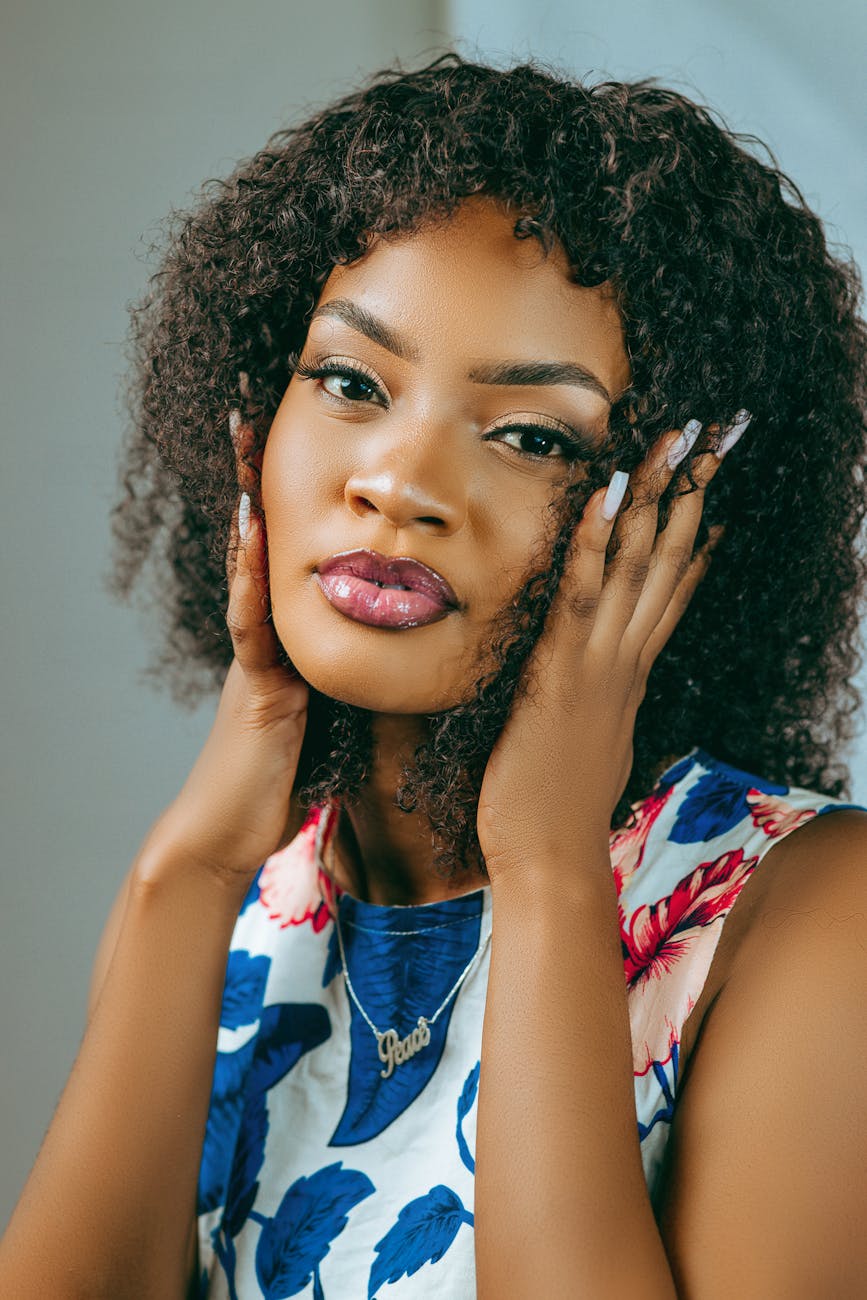
Your Dark Skin is Powerful. Your Natural Beauty is Divine. Your Worth is Eternal.

Photo by Chidimma peace on Pexels.com

Your dark skin tells a story of resilience, ancestry, and divine creation. It is not a flaw, a problem to fix, or a limitation to overcome. God Himself painted you in rich, deep hues, crafting a masterpiece that reflects His glory.

Society has long attempted to define beauty by Eurocentric standards, often erasing the brilliance of melanin-rich skin. Yet, those standards are man-made and temporal, while God’s design is eternal and perfect.

Dark-skinned women have historically been undervalued, both in our communities and in the world at large. But your worth is not dictated by society’s approval; it is written by the Creator Himself.

KJV Reference: Genesis 1:27 – “So God created man in his own image… male and female created he them.” God sees you as His image-bearer, worthy of love, honor, and reverence.

Your skin, your features, and your natural beauty are not mistakes. Every curve of your lips, the depth of your eyes, and the richness of your complexion are intentional works of art.

Colorism and beautyism may try to make you feel less than, but the truth is that your melanin is a crown. It carries the legacy of your ancestors who survived slavery, oppression, and marginalization with dignity.

Dark skin is powerful because it reflects endurance. It has withstood societal rejection, systemic racism, and cultural erasure, yet it remains radiant, resilient, and unbroken.

Your natural beauty is divine because it is a reflection of God’s creativity. No filter, no cosmetic, and no societal standard can replicate the perfection of His design.

KJV Reference: Psalm 139:14 – “I will praise thee; for I am fearfully and wonderfully made…” Your dark skin is a testament to His wondrous works.

Your worth is eternal because it is anchored in God’s love, not in fleeting trends or worldly definitions of beauty. Even when ignored or undervalued, your value does not diminish.

The world may try to pit shades against each other, but remember that beauty is not a competition—it is a divine gift for all skin tones. You are fully complete in your God-given hue.

To those who say lighter is better, your response is simple: God’s vision is perfect. He made you exactly as you should be, for His purpose, and for His glory.

Your dark skin invites confidence, pride, and empowerment. It is a shield against societal pressures that try to convince you to change. Stand firm, knowing your beauty is original, authentic, and sacred.

Celebrate yourself daily. Let your presence, your walk, and your voice reflect the power and divine beauty God placed within you.

Your worth is not measured by media, magazines, or social media likes. It is measured by obedience to God, faithfulness to His Word, and the love you extend to others.

KJV Reference: 1 Samuel 16:7 – “Man looketh on the outward appearance, but the LORD looketh on the heart.” Your beauty is multidimensional—heart, mind, spirit, and skin all shining together.

Every time you embrace your dark skin, you honor generations who were not allowed to see themselves as beautiful. You break cycles of internalized colorism and teach future generations that melanin is a gift, not a barrier.

Let your beauty be a testimony. Let it speak to young girls, dark-skinned women, and even men, that divinely designed beauty transcends societal definitions.

Do not apologize for the shade you were born with. Do not compromise for acceptance. Do not dim your glow for the comfort of those who cannot see true beauty.

Your dark skin is powerful. Your natural beauty is divine. Your worth is eternal. And when you walk in that truth, you walk in freedom, joy, and God’s perfect vision for your life.