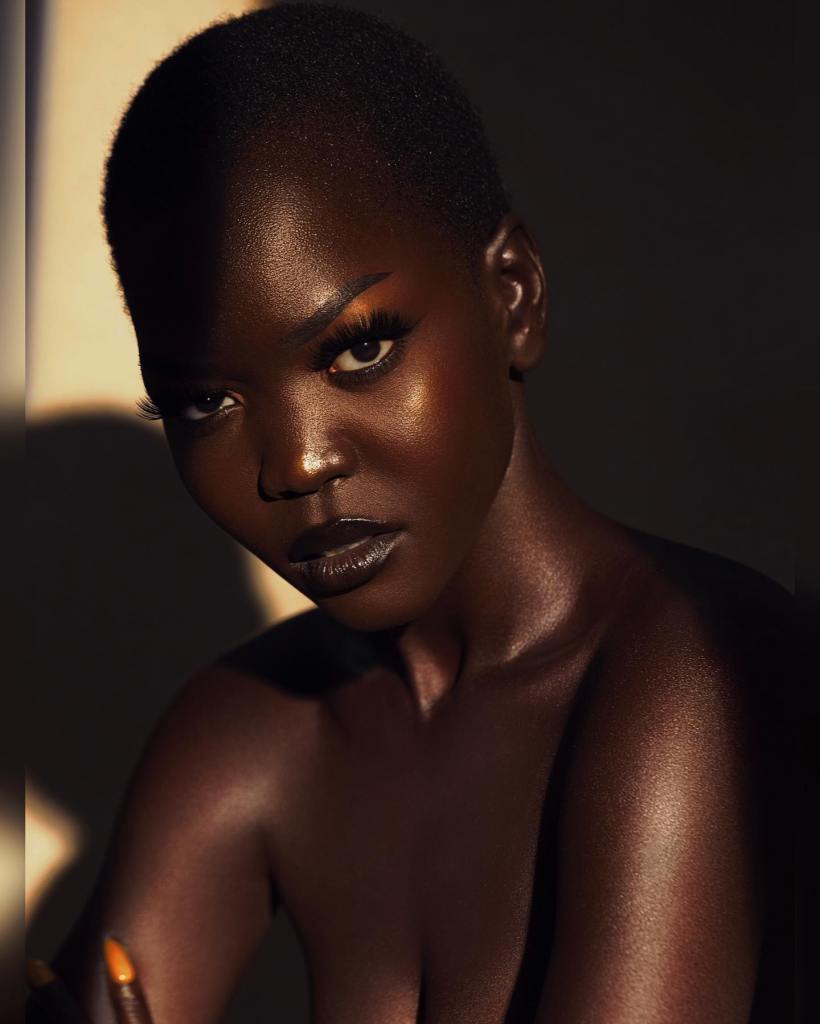
Known as the “Queen of the Dark,” celebrated for extreme melanated skin
This photograph is the property of its respective owner. No copyright infringement intended.
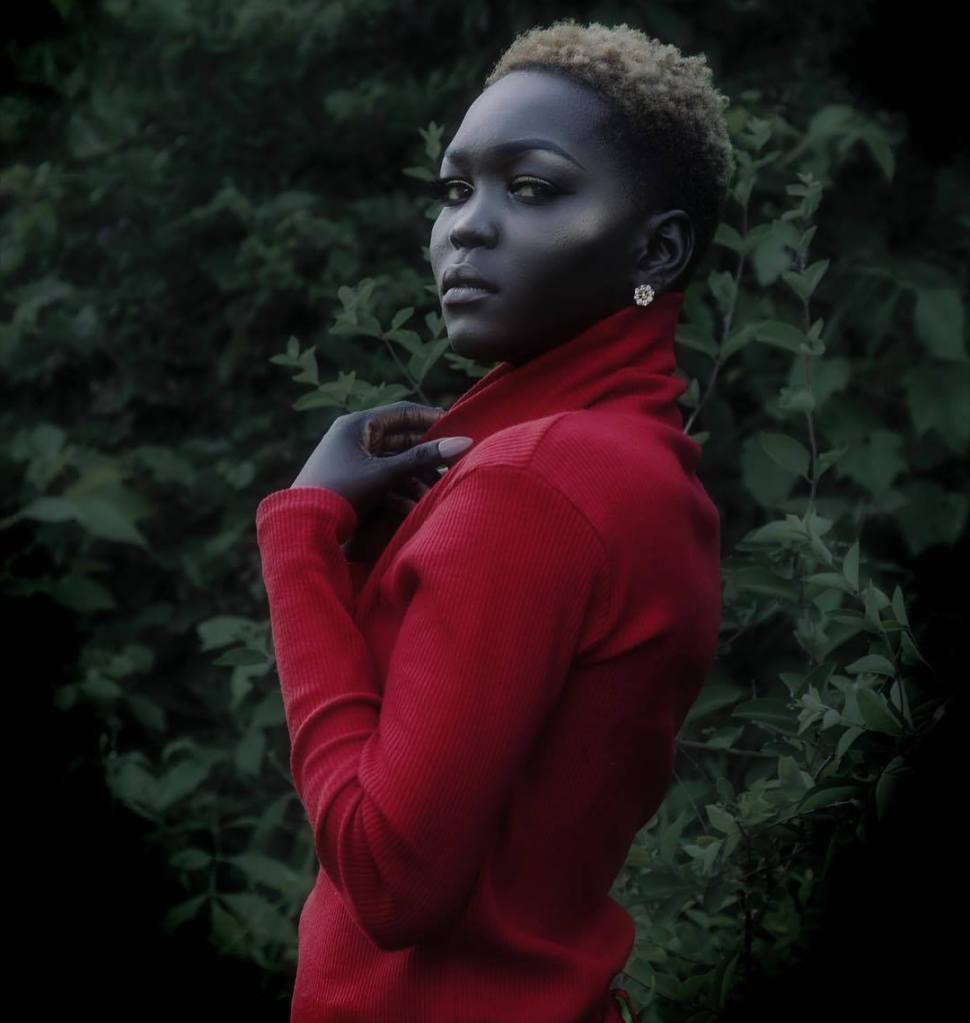
Gatwech’s skin tone isn’t just a physical attribute — it’s central to her identity and public ethos. She is affectionately known as the “Queen of the Dark,” a nickname bestowed upon her by her growing global fan base in admiration of her unapologetic self-love and radiant complexion. Despite encountering colorism and ignorant comments — including being asked if she would bleach her skin for money — she has consistently embraced and celebrated her dark beauty, turning potential humiliation into empowerment for others with similar skin tones.
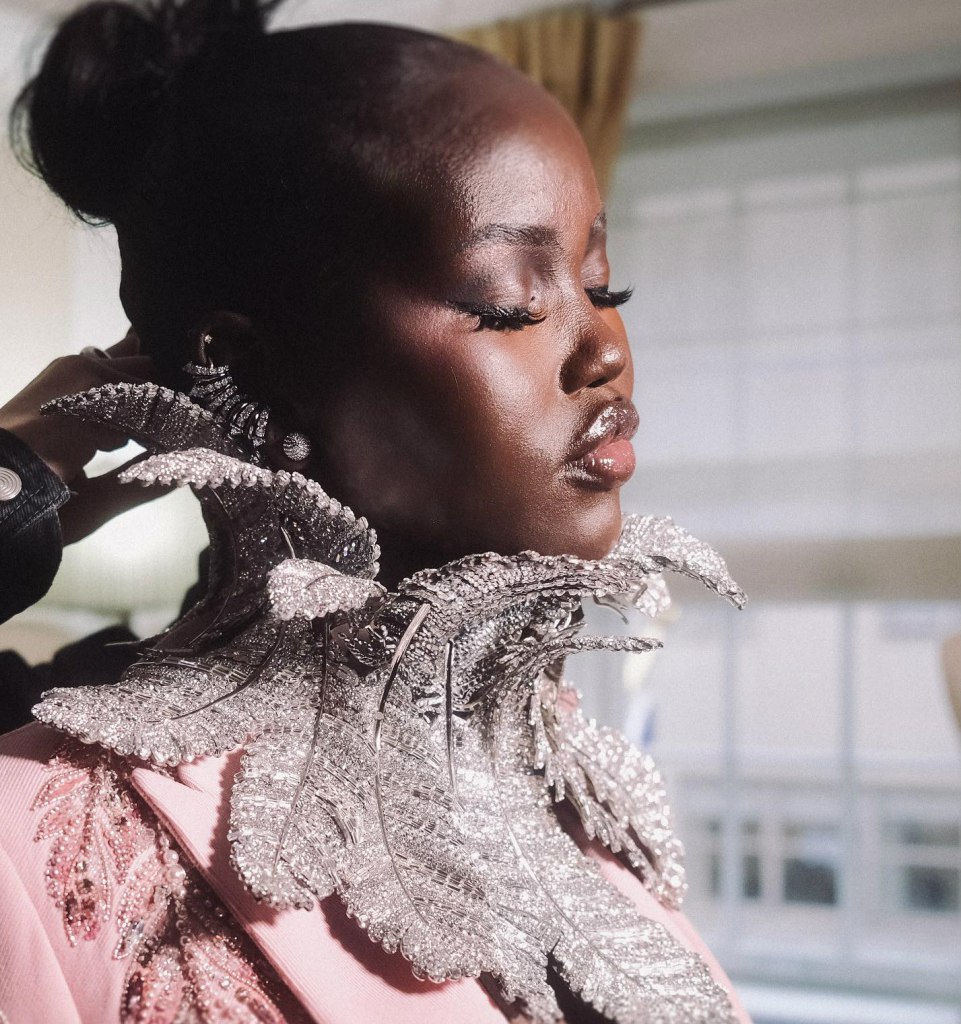
Nyakim Gatwech is an Ethiopian-born American fashion model of South Sudanese descent whose strikingly deep, radiant dark complexion has positioned her as one of the most visually and culturally significant faces in modern modeling. Widely known as the “Queen of the Dark,” Nyakim represents a powerful redefinition of beauty in an industry historically dominated by Eurocentric standards and color hierarchies. Her skin tone, rich in melanin and visually luminous, is not merely aesthetic but symbolic — a living challenge to global colorism and internalized anti-Black beauty norms. Nyakim’s beauty lies in the contrast she embodies: jet-black skin against high fashion, regal African features within Western luxury spaces, and unapologetic self-love in a world that often pressures Black women to diminish themselves.
Born on January 27, 1993, in Gambela, Ethiopia, to South Sudanese parents who fled civil war, Nyakim spent her early childhood in refugee camps across Ethiopia and Kenya. Her family later immigrated to the United States, settling in Minnesota when she was a teenager. It was in the U.S. that she first encountered intense colorism, particularly in school, where classmates mocked her skin tone, leading to early insecurity and emotional distress. Ironically, the very feature she was taught to feel ashamed of would later become the foundation of her global identity and success.
Nyakim’s entry into modeling occurred organically. While studying in Minnesota, she was invited to walk in a college fashion show, which sparked her interest in the fashion world. Without agency representation or industry connections, she began building her portfolio independently, collaborating with local photographers and using Instagram as her primary platform. Social media became her runway, gallery, and voice — a space where she could present herself without filters, whitening, or apology.
Her breakthrough came when she shared a now-viral story about an Uber driver who asked if she would bleach her skin for money. Her response — rejecting the offer and affirming her love for her natural complexion — resonated globally. The post turned her into a symbol of resistance against skin bleaching culture and a spokesperson for radical self-acceptance. From that moment, Nyakim’s following grew exponentially, and she began receiving international modeling opportunities.
She later became the face of Annabelle Cosmetics’ EDGE campaign, which celebrated unconventional beauty and diversity. Her presence in fashion editorials, beauty campaigns, and cultural platforms marked a shift in representation — not just inclusion of Black women, but elevation of the darkest shades of Blackness as luxurious, desirable, and elite.
This photograph is the property of its respective owner. No copyright infringement intended.
Nyakim’s special significance lies not only in how she looks, but in what she represents. She is part of a new generation of Black models who do not seek proximity to whiteness, but instead reclaim African features, melanin, and cultural identity as high status. Her image disrupts centuries of colonial aesthetics where lightness was equated with beauty, purity, and value. In contrast, Nyakim’s work affirms that darkness itself is divine, regal, and worthy of admiration.
Her skin has become a visual metaphor — a mirror for millions of dark-skinned women and girls who were taught that their complexion was something to “fix.” Through her modeling and public statements, Nyakim reframes melanin as a blessing rather than a burden. She speaks openly about loving her reflection, embracing contrast, and rejecting any narrative that associates darkness with inferiority.
Regarding her personal life, Nyakim is known to be private. There is no publicly verified information confirming that she is married or has children. She has spoken primarily about her parents, siblings, and her journey as a refugee and immigrant, choosing to keep romantic relationships outside of the public spotlight. Her narrative focuses more on identity, culture, and empowerment than celebrity exposure.
This photograph is the property of its respective owner. No copyright infringement intended.
In terms of awards and recognition, Nyakim has not received mainstream fashion industry prizes like Vogue or CFDA awards, but she has been widely honored in cultural and empowerment spaces. She has been recognized by African and diaspora organizations, featured at international beauty and women’s empowerment events, and celebrated across global media as one of the most influential dark-skinned models in the world. While some social media outlets claim Guinness recognition for her skin tone, this remains unverified through official Guinness records.
Nyakim Gatwech is considered an Ebony Doll because she embodies the very essence of what the term signifies: a woman whose Blackness is not diluted, modified, or assimilated, but fully embraced, elevated, and aestheticized. She represents melanin as luxury, African features as elite, and dark skin as high fashion. Her beauty is not rooted in proximity to whiteness, but in proximity to ancestry, identity, and unapologetic self-love.
She stands as both muse and message — proof that the darkest skin can sit at the center of beauty culture, not its margins. Nyakim Gatwech is not simply a model; she is a visual revolution.
References
Cosmopolitan. (2017). Nyakim Gatwech on embracing her dark skin and redefining beauty.
Fashion Magazine. (2018). Nyakim Gatwech: The model changing beauty standards.
Gatwech, N. (2017). Instagram post on skin bleaching and self-love.
Oddity Central. (2017). The Queen of Dark: The model embracing her gorgeous dark skin.
Royal Tee Magazine. (2020). Empowering quotes about self-love from Nyakim Gatwech.
Teen Vogue. (2017). Model Nyakim Gatwech challenges beauty standards on Instagram.
Yahoo Lifestyle. (2017). Dark-skinned model gives Uber driver reality check.
Wikipedia. (2025). Nyakim Gatwech.
Pulse Nigeria. (2023). Nyakim Gatwech and the global celebration of dark skin.
The dilemma of Black skin is not biological—it is psychological, historical, and inherited through trauma. A pigment that should signify life, lineage, and divine creativity was weaponized into a mark of subjugation and dehumanization, though scripture never framed hue as inferiority. “I am black, but comely” (Song of Sol. 1:5, KJV).
Slavery altered more than labor systems; it attempted to rewrite identity itself. Black skin became a symbol falsely associated with divine rejection, though the Bible affirms that God formed all mankind intentionally. “The Lord hath made all things for himself” (Prov. 16:4, KJV).
The transatlantic slave trade kidnapped the body, but racism imprisoned the mind. Europeans repainted the theology of beauty with whiteness centered at the altar, planting a spiritual lie that melanated bodies were errors, not divine authorship. Yet God is the original designer. “Thine eyes did see my substance, yet being unperfect” (Psa. 139:16, KJV).
Negativity surrounding Black skin was not seeded in scripture but in propaganda. Colonizers inverted Ham’s lineage in Genesis into a false theology of skin-based curses, though the Bible speaks no such thing. The curse in Genesis was upon Canaan’s servitude, not complexion (Gen. 9:25, KJV).
Africa was the first cradle of human expansion. Ham’s sons—Cush, Mizraim, Put—are founders of African nations (Gen. 10:6, KJV). This means Black presence was at creation, migration, and worship’s dawn, not its aftermath.
Racism engineered theology into hierarchy. Whiteness monopolized the image of God, angels, and salvation, even though scripture gives cosmic freedom in who God calls by name. “Princes shall come out of Egypt; Ethiopia shall soon stretch out her hands unto God” (Psa. 68:31, KJV).
Colorism is racism’s domestic offspring. When a system wounds a nation long enough, the wounded begin competing in hue rather than healing in humanity. But God’s salvation is soul-deep, not skin-deep. “For man looketh on the outward appearance, but the Lord looketh on the heart” (1 Sam. 16:7, KJV).
Dark skin was mislabeled as labor-grade, not beauty-laced. The marketplace economy of slavery placed price tags on phenotype: lighter brought economic advantage, darker brought harsher labor assignment. This distortion still echoes in modern Black cultural psychology.
Black children grew up watching the world praise fairness while punishing richness. This interior conflict creates a dilemma: loving the color you wear while living in a society that still worships the opposite.
Racism convinces Black women that beauty requires editing Blackness itself. From skin bleaching to hair humiliation, the world teaches Black women to apologize for melanin instead of honoring it. Yet scripture reverses the shame of appearance. “He hath made every thing beautiful in his time” (Eccl. 3:11, KJV).
Black men carry the burden of being feared because of their shade and frame. Their complexion was interpreted socially as aggression rather than image-bearer dignity, though the Bible describes strength without equating it to moral corruption. “Be strong and of a good courage” (Josh. 1:9, KJV).
Negativity surrounding Black skin created a spiritual orphaning. Many Blacks converted into religions that used the Bible to comfort them but never used theology to defend their identity’s sacred legitimacy.
Melanin became a theological insecurity rather than a cultural crown. Black skin was reinterpreted into a social problem instead of a sacred narrative of ancestral resilience, divine endurance, and survival.
Scripture affirms that God stands with the suffering and oppressed, not the complexion they are suffering in. “He shall judge the poor of the people, he shall save the children of the needy” (Psa. 72:4, KJV) makes it clear that injustice draws God’s advocacy, not His agreement.
Christianity as preached on plantations tried to pacify revolt while ignoring identity theft. But scripture tells another story: God delivers the oppressed into restored dignity, not silent submission. “Let my people go” (Exo. 5:1, KJV).
Black skin was the canvas on which oppression attempted to permanently paint shame. But the Bible shows that suffering does not rewrite chosenness. “If ye endure chastening, God dealeth with you as sons” (Heb. 12:7, KJV).
Colorism wounded Black women into ranks of attractiveness based on gradients. The dilemma of pigmentation hierarchy taught Black mothers to desire lighter children, reflecting trauma rather than preference.
Racism built entire institutions to oppose Black elevation. Still, scripture promises divine reversal in seasons of suffering. “And the Lord thy God will turn thy captivity… and have compassion upon thee” (Deut. 30:3, KJV).
Black skin is now undergoing reclamation. The dilemma remains, but so does restoration theology. “Be renewed in the spirit of your mind” (Eph. 4:23, KJV) suggests transformation is mental liberation first.
The world tried to make Blackness symbolic of sin, foolishness, servitude, and ugliness. But scripture gives voice to beauty where culture denied it. “I will make mention of Rahab and Babylon to them that know me: behold Philistia, and Tyre, with Ethiopia; this man was born there” (Psa. 87:4, KJV).
The dilemma of Black skin is therefore a theological confrontation: rejecting the doctrine of racial inferiority, dismantling internalized oppression, calling melanin beautiful without apology, and reclaiming skin not as dilemma but testimony.
Black identity was not born in chains, curse, or erasure—it was born under heaven’s architecture, exiled through suffering, yet promised redemption. “For I know the thoughts that I think toward you, saith the Lord, thoughts of peace, and not of evil” (Jer. 29:11, KJV).
The final transformation is from shame to sacred remembrance. The original mark of identity was not color—but creation intent. And creation intent cannot be rewritten by captivity. “The gifts and calling of God are without repentance” (Rom. 11:29, KJV).
References
The Holy Bible, King James Version. (1611). Cambridge University Press. Douglass, F. (1845). Narrative of the Life of Frederick Douglass, an American Slave. Anti-Slavery Office. Hunter, M. (2007). “The Persistent Problem of Colorism.” Sociology Compass, 1(1), 237-254. Walker, A. (1983). In Search of Our Mothers’ Gardens. Harcourt.
This photograph is the property of its respective owner. No copyright infringement intended.
Brown skin, a living shield of light, Absorbing sun, yet shining bright. Ancestral stories etched in hue, Strength enduring, ever true.
Not a mark of shame, but crown, Royal tones from gold to brown. Scripture whispers, “comely, fair,” A beauty deep beyond compare.
Brown skin, in its radiant spectrum of hues, carries both a scientific brilliance and a profound cultural meaning. At its foundation lies melanin, the pigment that not only determines the complexion of human skin but also provides biological advantages, cultural identity, and psychological resilience. To understand the beauty of brown skin, one must examine the science of melanin, the psychology of color, the history of racialized beauty standards, and the spiritual affirmations that honor melanated people.
The Science of Melanin
Melanin is a natural polymer responsible for pigmentation in skin, eyes, and hair. It functions as a biological shield, absorbing ultraviolet radiation and protecting against DNA damage (Jablonski & Chaplin, 2010). Higher concentrations of melanin are associated with slower aging, reduced risk of certain skin cancers, and the famed saying, “Black don’t crack.” The resilience of melanated skin is thus not only aesthetic but deeply physiological, reinforcing health, vitality, and longevity.
Shades of Brown and Identity
Brown skin exists in a spectrum ranging from golden caramel to deep mahogany. These shades tell ancestral stories of adaptation to diverse climates and environments. The psychology of shade is crucial, as social hierarchies have historically privileged lighter tones while devaluing darker ones—a phenomenon known as colorism (Hunter, 2007). Despite this legacy, there has been a global reclaiming of darker skin tones as symbols of pride, resilience, and beauty.
Cultural and Psychological Impact
Brown skin has often been unjustly stigmatized through Eurocentric beauty ideals that elevate whiteness as the standard. Such biases have led to internalized racism and psychological harm among darker-skinned populations (Burke, 2008). Yet, psychological studies also demonstrate that affirmations of cultural identity and positive representation can restore self-esteem and foster collective pride (Cross & Vandiver, 2001). For many, embracing melanin becomes an act of resistance and self-love.
The Global Praise of Brown Skin
Across cultures, melanated beauty has long been admired. Ancient African, Indian, and Indigenous traditions revered darker complexions as markers of nobility, fertility, and divine favor. Even in literature, metaphors likening dark skin to bronze, ebony, and gold highlight its aesthetic richness. Contemporary fashion and modeling—exemplified by icons like Naomi Campbell and Adut Akech—continue this global appreciation, showcasing the elegance of brown skin on international stages.
Biblical Affirmations of Brown Skin
The King James Bible contains references that affirm the beauty of melanated people. In Song of Solomon 1:5–6, the Shulamite woman declares: “I am black, but comely”, affirming dark skin as both divine and desirable. Jeremiah 8:21 describes the suffering of a “black people” with dignity, further signifying presence and importance within sacred texts. These passages refute any notion of inferiority and ground beauty in spiritual identity.
Psychological Strength in Melanin
The psychology of brown skin transcends surface appearance—it is linked to survival, adaptability, and communal pride. Psychologists argue that beauty is not merely physical but tied to resilience and confidence (Swami & Tovée, 2004). For people of African descent, melanin embodies endurance against centuries of oppression, serving as a visible reminder of strength. In this sense, melanin is both a biological armor and a psychological crown.
The Beauty Narrative Reclaimed
Today, movements such as “Melanin Magic” and “Black is Beautiful” are reshaping narratives. Social media platforms amplify voices that celebrate brown skin in all its variations, shifting beauty hierarchies away from Eurocentrism. This reclamation of beauty is not superficial but deeply psychological, affirming identity while dismantling internalized shame.
Conclusion
Brown skin is beautiful not simply because of pigmentation, but because it represents a convergence of science, history, psychology, and spirituality. It carries biological brilliance, cultural symbolism, and ancestral resilience. To celebrate melanin is to affirm life, survival, and dignity in the face of systems that once sought to devalue it. As the Bible reminds, “I am fearfully and wonderfully made” (Psalm 139:14, KJV)—a truth that underscores why brown skin, in all its hues, remains eternally beautiful.
References
Burke, M. A. (2008). Colorism as racism: Garvey, Fanon, and the evolution of Black consciousness. Journal of African American Studies, 12(4), 498–515.
Cross, W. E., & Vandiver, B. J. (2001). Nigrescence theory and measurement. Handbook of multicultural counseling, 371–393.
Hunter, M. (2007). The persistent problem of colorism: Skin tone, status, and inequality. Sociology Compass, 1(1), 237–254.
Jablonski, N. G., & Chaplin, G. (2010). Human skin pigmentation as an adaptation to UV radiation. Proceedings of the National Academy of Sciences, 107(Supplement 2), 8962–8968.
Swami, V., & Tovée, M. J. (2004). The influence of body weight and shape in determining female and male physical attractiveness. Body Image, 1(2), 129–137.
The construct of “self” is multidimensional, but within melanated populations, selfhood is often somatically indexed—experienced and interpreted through embodied markers such as skin pigmentation, hair texture, and phenotypic inheritance. These markers operate both as identity anchors and sociopolitical targets within racialized hierarchies (Cross, 1991).
Human pigmentation is a product of evolutionary epigenetics, wherein melanin concentration reflects adaptive responses to ultraviolet radiation exposure across geographic lineages. The result is not a genetic defect or deviation from beauty, but a biological brilliance that protects DNA integrity and resists photodamage (Jablonski & Chaplin, 2010).
Despite its biological advantages, brownness has historically endured semiotic distortion, recoded within colonial discourse as inferior, primitive, or occupationally servant-bound. This manufactured semiology exemplifies the psychology of domination, where identity scriptwriting becomes an instrument of societal control (DiAngelo, 2018; Fanon, 1952/2008).
In developmental psychology, the internalization of color narratives begins early. The Clarks’ doll studies revealed that children within oppressed groups are psychologically conditioned to prefer dominant-group aesthetics, demonstrating the emotional and cognitive consequences of white supremacist value systems on self-image formation (Clark & Clark, 1947).
The psychological burden of being “othered” is especially pronounced for brown-skinned women, who frequently navigate contradictions between heritage-based belonging and global media infrastructures that elevate whiteness as normative femininity. This is not a deficit in brown women, but an indictment on systems that reward proximity to whiteness and punish distance from it (Hunter, 2007).
From a theological standpoint, Scripture presents a counter-archive to colonial identity distortion. Genesis records humanity being formed from the dust, rooting creation in the brownness of origin. Thus, melanated skin aligns ontologically with the earth-tone prototype of the first human form (Genesis 2:7, KJV).
Further, Psalmic anthropology affirms that God views His craftsmanship not through societal metrics but divine intentionality; melanation is not incidental but God-coded precision (Psalm 139:14, KJV).
Song of Solomon introduces a pivotal exegetical disruption to colorist beauty politics. The Bride self-identifies as “black, but comely,” confronting complexion prejudice with confidence, divine desirability, and aesthetic dignity long before modern identity theory conceptualized affirmation frameworks (Song of Solomon 1:5, KJV).
Melanin also operates symbolically as an ancestral quill, recording collective survival strategies, familial memory, spiritual inheritance, and psychological resistance. It is both ink and armor—a text written on and a shield defending the carriers of the narrative (DeGruy, 2005).
Psychological resilience literature contends that adversity generates identity expansion through adaptive compensation, emotional complexity, spiritual dependency, and cognitive reorganization. In this way, hardship becomes psychological weight-training for destiny (Masten, 2014; Duckworth, 2016).
Scripturally, identity outgrowth follows a death-to-self pattern. Paul’s theology of self-graduation instructs believers to put off the “old man,” implying transformation as identity departure, not identity addition (Ephesians 4:22-24, KJV; Colossians 3:9-10, KJV).
This reflects a divine psychology of change: growth is not the improvement of the old self but burial of it, so God-authentication can govern new existence (Galatians 2:20, KJV).
Cognitive psychology reveals that belief systems operate as identity scaffolding; replacing former mental strongholds reconstructs future self-behavior. Scripture preempts this through meditation and spoken-word cognition, showing that cognitive reframing is not new science but old Scripture (Joshua 1:8, KJV; Proverbs 23:7, KJV).
The racialization of skin tone also created intragroup class stratifications where enslaved Africans were divided by labor assignment and social access. Those in the field received the sun’s unfiltered glare, while those in the house received comparative visual proximity to whiteness, birthing the psychological pathology now called colorism (Byrd & Tharps, 2014).
Modern psychological literature affirms that colorism operates differently than racism, functioning intragroup and extracting value based on gradation rather than race membership itself, producing unique intimacy-based identity harm (Hunter, 2007).
Brown-skinned identity outgrowth constitutes psychological rebellion against narrated misreadings, external hierarchies, aesthetic excommunication, and internalized doubt.
Faith-based identity reclamation exemplifies the psychology of self-authorship; what is spoken over the self repeatedly becomes believed by the self eventually (Romans 10:17, KJV; Beck, 1976).
Suffering, identity contamination, and hiddenness often precede purpose unveiling in Scripture—Joseph was pit-pressed before palace-positioned, Job was stripped before doubled, Christ was crucified before coronated (Genesis 41, KJV; Job 42:10, KJV; Philippians 2:8-11, KJV).
Thus, brownness is both testimony and teleology. The biological ink is ancient, but the story is ongoing, edited by God, interrupted by glory, fortified by hardship, and reclaimed through divine language (Romans 8:28-18, KJV).
The manuscript of melanin cannot be erased—it can only be read, misread, or reclaimed. But the Author Himself is God, and He calls His work “very good” (Genesis 1:31, KJV).
References
Beck, A. T. (1976). Cognitive Therapy and Emotional Disorders. International Universities Press.
Byrd, A. D., & Tharps, L. L. (2014). Hair Story: Untangling the Roots of Black Hair in America. St. Martin’s Press.
Clark, K. B., & Clark, M. P. (1947). Racial identification and preference in Negro children. In T. M. Newcomb & E. L. Hartley (Eds.), Readings in Social Psychology (pp. 169–178). Holt.
Cross, W. E. (1991). Shades of Black: Diversity in African-American Identity. Temple University Press.
DeGruy, J. (2005). Post-Traumatic Slave Syndrome. Uptone Press.
Duckworth, A. L. (2016). Grit: The Power of Passion and Perseverance. Scribner.
Fanon, F. (2008). Black Skin, White Masks. Grove Press. (Original work published 1952)
Hunter, M. (2007). The persistent problem of colorism: Skin tone, status, and inequality. Sociology Compass, 1(1), 237–254.
Jablonski, N. G., & Chaplin, G. (2010). Human skin pigmentation as an adaptation to UV radiation. Journal of Human Evolution, 58(5), 390–397.
The Holy Bible: King James Version (Authorized 1611/1769).
Skin color has long been a marker of identity, social status, and beauty across different societies. Brown skin, in particular, carries diverse meanings depending on cultural context, geography, and history. While some cultures celebrate it as a symbol of strength, resilience, and beauty, others have historically stigmatized it due to colonial legacies and colorism. Understanding how brown skin is valued globally requires examining the intersections of race, class, gender, and historical narratives.
Africa: A Celebration of Melanin
In many African cultures, brown and dark skin are celebrated as markers of ancestry, heritage, and vitality. Proverbs such as the Ghanaian saying, “The sun shines differently on every face, but melanin glows forever” highlight the cultural pride in darker skin tones. Within African aesthetics, melanin is associated with natural beauty, strength, and divine creation. Despite the presence of colorism influenced by colonialism, Pan-African movements and cultural pride campaigns—such as “Black is Beautiful”—have reaffirmed the inherent worth of brown skin.
South Asia: Colorism and Fairness Ideals
In South Asian cultures, particularly in India, Pakistan, and Bangladesh, colonialism and caste systems have contributed to a preference for lighter skin. Fair skin has often been associated with beauty, higher social class, and marriage prospects. The booming skin-lightening industry, led by products like “Fair & Lovely,” reflects these ideals. However, contemporary movements such as Dark Is Beautiful (renamed India’s Skin, I Am In) challenge these norms, reclaiming brown skin as beautiful and resisting Eurocentric standards.
The Middle East: Shades of Honor and Heritage
In the Middle East, skin tone has historically varied across regions due to trade, migration, and climate. Brown skin often signifies heritage connected to the desert sun and Bedouin ancestry. In Arab poetry and Islamic traditions, descriptions of “wheat-colored” or “bronze” skin are viewed as beautiful and natural. However, globalization has introduced Western media influences that sometimes favor lighter complexions, leading to similar struggles with colorism.
Latin America: Mestizaje and Identity
In Latin American societies, brown skin is linked to indigenous and African ancestry. The ideology of mestizaje (racial and cultural mixing) positions brownness as a common marker of national identity, yet also creates hierarchies privileging lighter mestizo or white-passing individuals. In countries like Brazil, where Afro-Brazilian identity is strong, movements such as Negra Linda and Orgulho Negro (Black Pride) celebrate brown and dark skin as symbols of cultural resistance and pride.
The Caribbean: Resistance and Reclamation
Caribbean cultures, shaped by African heritage and colonial histories, have a complex relationship with skin tone. Brown skin has often been viewed as the middle ground in colonial color hierarchies—lighter than African-descended slaves but darker than European colonizers. However, reggae music, Rastafarian culture, and Afro-Caribbean pride movements have redefined brown skin as a symbol of resistance against colonial oppression. Bob Marley’s global influence helped position brown and dark skin as powerful representations of dignity and freedom.
Western Societies: From Exoticism to Empowerment
In Western countries, particularly the United States and Europe, brown skin has historically been marginalized through racism and colorism. At the same time, tanned skin among white populations became fashionable in the 20th century, symbolizing leisure and wealth. This contradiction reveals the hypocrisy of valuing artificially darkened skin while discriminating against naturally brown and Black people. Today, cultural icons like Naomi Campbell, Lupita Nyong’o, and Adut Akech challenge Eurocentric beauty ideals by redefining global standards of beauty.
The Bible and Spiritual Perspectives
Biblical references also affirm brown and dark skin as part of divine creation. The Song of Solomon (1:5, KJV) declares: “I am black, but comely, O ye daughters of Jerusalem”—a verse that affirms the beauty of dark and brown skin. Throughout scripture, skin is not framed as a deficiency but as part of God’s diverse design of humanity, offering a spiritual affirmation against color-based discrimination.
Psychological Dimensions of Skin Tone
Psychologically, the way cultures perceive brown skin impacts self-esteem and social mobility. In societies where lighter skin is favored, individuals with brown skin often internalize feelings of inferiority, leading to skin-lightening practices and self-rejection. Conversely, in cultures where melanin is celebrated, brown skin fosters pride, resilience, and a sense of belonging. Scholars like Dr. Margaret Hunter (2007) argue that colorism operates as a “second-tier” form of racism, shaping opportunities based not just on race, but on gradations of skin tone.
References
Hunter, M. (2007). The persistent problem of colorism: Skin tone, status, and inequality. Sociology Compass, 1(1), 237–254.
Glenn, E. N. (2008). Yearning for lightness: Transnational circuits in the marketing and consumption of skin lighteners. Gender & Society, 22(3), 281–302.
Opie, T., & Phillips, K. W. (2015). Hair penalties: The negative influence of Afrocentric hair on ratings of Black women’s professionalism. Frontiers in Psychology, 6, 1311.
Rosette, A. S., & Dumas, T. L. (2007). The hair dilemma: Conform to mainstream expectations or emphasize racial identity? Duke Journal of Gender Law & Policy, 14(1), 407–421.
Song of Solomon 1:5, King James Version (KJV).
Telles, E. E. (2014). Race in another America: The significance of skin color in Brazil. Princeton University Press.
This photograph is the property of its respective owner. No copyright infringement intended.
The beauty and resilience of brown skin have been celebrated across centuries and cultures, even as it has also been marginalized and stigmatized under the weight of colonialism and white supremacy. The defining characteristic of this richness is melanin, the natural pigment that gives skin its brown and black hues. Melanin not only provides aesthetic brilliance but also serves as a biological shield, protecting the skin from harmful ultraviolet rays and slowing visible signs of aging. This scientific advantage underlies the well-known saying, “Black don’t crack,” a phrase affirming the ageless quality of melanated skin (Sherrow, 2006).
From a global perspective, various cultures have remarked on the luster and endurance of melanin-rich skin. In African traditions, dark brown skin has long been associated with vitality and spiritual energy. The Sudanese model Adut Akech, for example, has often been described as embodying “the future of beauty” (Vogue, 2019). Similarly, Naomi Campbell, one of the world’s most recognizable supermodels, has consistently shattered Eurocentric barriers while proudly showcasing her deep brown tone on international runways. Male icons such as Morris Chestnut have also carried the global representation of melanated male beauty, admired for the way his brown skin reflects strength and elegance.
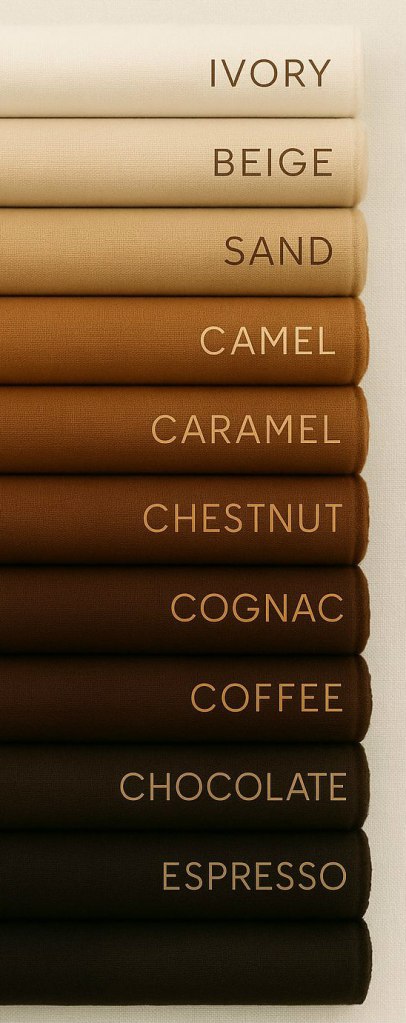
Brown skin exists in a wide spectrum of shades—from caramel and honey to chestnut, mahogany, and ebony. Each variation tells a story of genetic heritage, adaptation to climates, and ancestral roots. The psychologists Kenneth and Mamie Clark, whose research included the “doll experiments,” highlighted how societal bias against darker tones led to internalized racism in Black children (Clark & Clark, 1947). Yet, in reversing this stigma, scholars and activists today highlight the aesthetic diversity of brown skin as an emblem of resilience and cultural pride.
The psychology of brown skin is complex. On one hand, melanin-rich individuals often face negative stereotyping, colorism, and systemic discrimination, leading to stress, anxiety, and internalized self-doubt (Russell et al., 1992). On the other hand, movements like “Black is Beautiful” have reclaimed brown skin as a symbol of empowerment and unity. This duality reflects the ongoing struggle between external societal oppression and internal affirmation of self-worth. When society praises Eurocentric beauty, brown skin becomes “the most hated,” not because of its lack, but because of its strength, history, and refusal to conform.
The Bible also affirms the beauty of dark, melanated skin. In the Song of Solomon 1:5 (KJV), the Shulamite woman declares: “I am black, but comely, O ye daughters of Jerusalem.” This scripture has often been used to affirm the dignity and divine beauty of those with darker complexions. Similarly, Jeremiah 13:23 states, “Can the Ethiopian change his skin, or the leopard his spots?” suggesting the unchangeable nature of one’s God-given melanin as both identity and blessing. In this sense, the biblical witness counters the cultural devaluation of darker skin tones by emphasizing their inherent worth.
Science further affirms the benefits of melanin beyond aesthetics. Research shows melanin absorbs and scatters ultraviolet radiation, protecting DNA from damage and reducing the risk of skin cancer (Palmer et al., 2015). This gives brown-skinned individuals a biological advantage in hotter climates, ensuring survival and adaptability across generations. The phrase “Black don’t crack” finds not only cultural but also scientific legitimacy in melanin’s role in maintaining youthful, resilient skin.
Around the world, observers have noted the unique radiance of brown skin. From poets in the Harlem Renaissance to African philosophers like Leopold Senghor, melanated skin has been described as “a mask of light,” reflecting dignity and endurance. Contemporary celebrities and models extend this legacy by asserting their natural hues as high fashion and cultural pride. Brown skin is not a burden but a crown, as seen in figures like Akech, Campbell, and Chestnut, who challenge the world to redefine beauty beyond Eurocentrism.
Ultimately, brown skin embodies both biological blessing and cultural battle. Its glow tells the story of survival, endurance, and divine design, yet its existence has been politicized and stigmatized. The solution lies in dismantling colorism, celebrating melanin’s biological and spiritual significance, and teaching young Black children the truth: their skin is not only beautiful but also powerful. As Amos Wilson (1998) reminded us, “Our self-perceptions must be liberated from alien definitions if we are to be truly free.” Brown skin is not merely pigment—it is history, resilience, and brilliance wrapped in flesh.
References
Clark, K. B., & Clark, M. P. (1947). Racial identification and preference in Negro children. Journal of Negro Education, 19(3), 341–350.
Palmer, R. A., et al. (2015). Melanin’s role in skin photoprotection. Journal of Photochemistry and Photobiology, 152, 28–39.
Russell, K. K., Wilson, M., & Hall, R. (1992). The Color Complex: The Politics of Skin Color among African Americans. Anchor.
Sherrow, V. (2006). Encyclopedia of Hair: A Cultural History. Greenwood.
The Holy Bible, King James Version. Song of Solomon 1:5; Jeremiah 13:23.
Vogue. (2019). “Adut Akech is the future of fashion.” Vogue Magazine.
Wilson, A. N. (1998). Blueprint for Black Power. Afrikan World InfoSystems.
The Black is Beautiful movement emerged in the United States during the mid-1960s as a cultural and political affirmation of Black identity, aesthetics, and heritage. While the phrase became widely popularized through the work of the Black Arts Movement and fashion photography, its roots can be traced to the activism of figures such as Kwame Brathwaite and the African Jazz-Art Society & Studios (AJASS) in Harlem. Brathwaite and AJASS launched the Naturally ’62 fashion show in 1962, which celebrated natural hair, darker skin tones, and African-inspired clothing, directly challenging Eurocentric beauty standards (Ford, 2015).
The slogan Black is Beautiful was also closely aligned with the broader Civil Rights and Pan-Africanist movements, reflecting the ideological influence of leaders like Marcus Garvey, whose earlier campaigns emphasized racial pride and self-love. The movement gained visibility in magazines such as Ebony, Jet, and Essence, which featured darker-skinned models and natural hairstyles. Advertising agencies and brands—particularly those serving the African American market—began to incorporate Black beauty ideals into their campaigns. Companies such as Johnson Products (with its Afro Sheen brand) and Soft Sheen made direct use of the slogan and imagery in print and television ads during the 1970s (Taylor, 2016).
The world’s reaction to the movement varied. In the Black community, it fostered a collective sense of dignity and cultural pride, encouraging African Americans to reject skin bleaching, hair straightening, and other practices that reflected internalized racism. Globally, the movement resonated with African liberation struggles, influencing artists and activists in the Caribbean, Africa, and the United Kingdom. Internationally, the concept intersected with anti-colonial sentiment, with publications and cultural festivals abroad adopting similar affirmations of Black beauty and identity (Cummings, 2018).
The Black is Beautiful movement had a profound psychological impact on African Americans. Research in social psychology has shown that positive in-group representation can improve self-esteem and counteract internalized oppression (Cross, 1991). By redefining beauty standards, the movement helped dismantle the harmful association between whiteness and attractiveness, replacing it with an appreciation for African features such as full lips, broad noses, tightly coiled hair, and deep skin tones.
Celebrities played a significant role in popularizing the movement. Figures like Cicely Tyson, Nina Simone, and Kathleen Cleaver wore natural hairstyles and spoke openly about embracing their African heritage. Tyson rejected roles that required her to straighten her hair, stating in interviews that her natural style was a statement of self-respect. Nina Simone famously declared, “You’ve got to learn to leave the table when love’s no longer being served”—a statement tied to the larger ethos of self-worth and pride. In the sports world, Muhammad Ali’s unapologetic proclamation, “I’m Black and I’m proud” echoed the movement’s core message. In music, James Brown’s 1968 hit Say It Loud – I’m Black and I’m Proud became an anthem that galvanized support across generations.
The movement’s era was primarily the 1960s through the 1970s, coinciding with the Civil Rights Movement, the Black Power Movement, and the rise of Black cultural nationalism. Its legacy continues in contemporary movements such as Black Girl Magic and Melanin Poppin’, which similarly celebrate African-descended beauty and identity in the face of ongoing colorism and Eurocentric media dominance.
In sum, the Black is Beautiful movement was not merely a fashion statement but a political and psychological revolution. It empowered generations of African Americans to embrace their identity, reject assimilationist beauty norms, and inspire a global dialogue on race, aesthetics, and cultural pride.
References
Cross, W. E. (1991). Shades of Black: Diversity in African-American identity. Temple University Press.
Cummings, M. J. (2018). We will shoot back: Armed resistance in the Mississippi freedom movement. NYU Press.
Ford, Tanisha C. (2015). Liberated threads: Black women, style, and the global politics of soul. University of North Carolina Press.
Taylor, Ula Y. (2016). The promise of patriarchy: Women and the nation of Islam. University of North Carolina Press.
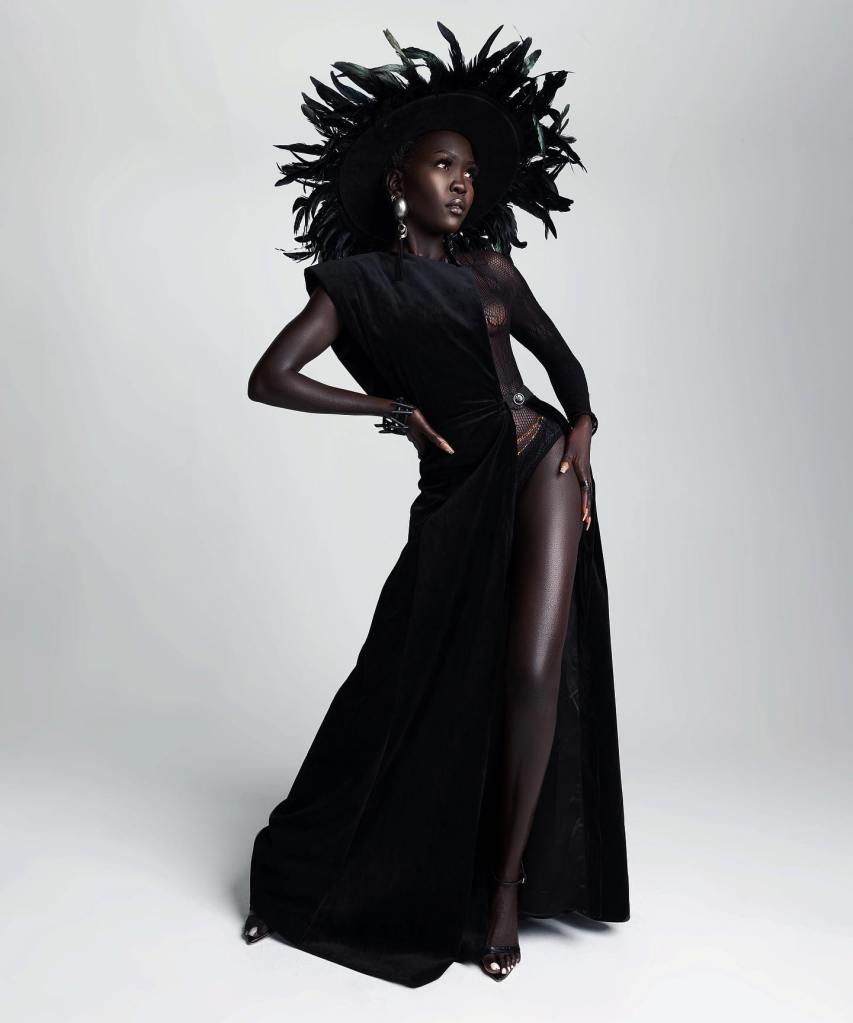
The face of high fashion, illuminated by otherworldly black beauty.
This photograph is the property of its respective owner. No copyright infringement intended.
Adut Akech’s beauty is a fusion of deep, luminous melanin, sculpted bone structure, and regal African features that command attention. She embodies a rare elegance where strength meets softness, making her presence feel both ancestral and otherworldly, as if her face were designed to redefine global standards of beauty.
Adut Akech Bior was born on December 25, 1999, in South Sudan and raised in a Kenyan refugee camp before relocating to Adelaide, Australia, at the age of 7. Her story is one of survival and transcendence—from displacement to becoming one of the world’s most recognizable fashion faces.
Discovered at 16, Adut was signed to Chadwick Models in Sydney and later joined Elite Models in Paris. Her big break came when Saint Laurent cast her as an exclusive in 2016. Since then, she has walked for Valentino, Dior, Versace, Prada, and Chanel, and graced the covers of Vogue, including the historic Vogue Italia and British Vogue issues. Her radiant melanated skin, striking facial features, and luminous smile have made her one of the most recognizable and influential faces in contemporary high fashion. Adut’s beauty is often described as regal, sculptural, and otherworldly. Her deep ebony complexion, almond-shaped eyes, symmetrical bone structure, and radiant smile create a look that is both modern and ancestral. She embodies a visual narrative that challenges Eurocentric ideals and restores dark-skinned African beauty to its rightful prominence in global media. Her presence represents a powerful shift in global beauty standards, placing dark-skinned Black women at the center of luxury and editorial fashion.
This photograph is the property of its respective owner. No copyright infringement intended.
With her deep, rich skin tone, short natural hair, and commanding runway presence, Adut redefined what mainstream beauty could look like. “My skin is not a trend,” she told Allure, challenging the tokenism and fetishization often placed on dark-skinned models. Her look is both regal and authentic, earning her a global following and editorial acclaim.
Adut’s international breakthrough came when she was selected as an exclusive model for Saint Laurent’s Spring/Summer 2017 show in Paris, an extraordinary debut that immediately elevated her status within the fashion world. Since then, she has walked for nearly every major luxury house, including Valentino, Dior, Givenchy, Versace, Fendi, Prada, Moschino, and Balenciaga.
She has appeared in major global campaigns and graced the covers of American Vogue, British Vogue, Vogue Italia, and many other international fashion publications, working with some of the most influential designers and photographers in the industry.
In 2018, she was named Model of the Year by Models.com and honored again in 2019 by the British Fashion Council, with Naomi Campbell presenting her award. Adut Akech’s achievements place her among the elite in fashion history. She won Model of the Year at the British Fashion Awards in 2019, one of the most prestigious honors in the industry. That same year, she was selected for the iconic September 2019 cover of British Vogue, curated by Meghan, Duchess of Sussex—cementing her as a cultural symbol beyond fashion alone.
Personal Life: Adut is married to Samuel Elkhier. In 2024, she announced her pregnancy and later gave birth to their daughter, Kiki, entering motherhood while continuing to work at the highest levels of fashion. She has spoken openly about balancing family life with career, and about representing Black women with dignity, visibility, and grace.
Adut Akech qualifies as an Ebony Doll not only because of her exceptional physical beauty, but because she represents Black excellence, African resilience, and the elevation of melanated femininity in a global arena that once excluded women who looked like her. She is living proof that dark skin, African features, and Black womanhood are not trends—but timeless symbols of elegance, power, and divine design
References
Adut Akech profile and biography.
Adut Akech early career and Model of the Year coverage.
Basic biographical details including age and early life.
A skin that glistens in the sun, ranging from satin black to golden brown is Melanated skin. Melanin is organic crystallized carbon, it actually runs through your blood, ravages your skin and was created by the Most High God. The dark nations possess it, although, they don’t want to own it, the lighter nations of people try to put it in a bottle to manufacture it through tanning sprays and creams.
All photographs are the property of their respective owners.
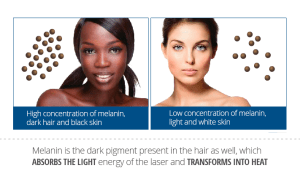
Melanin, which is Carbon, is any of a class of insoluble pigments, found in all forms of animal life, that account for the dark color of skin.
According to Dr. Francis Cress Welling on pg 205, in her book “The Isis Papers:, stated, The phrase “Golden Fleece” is made up of two words associated with Black people: “gold,” denoting black or brown skin and “fleece,” denoting lambs wool or kinky hair. The search for the Golden Fleece becomes the search for melanin. J.D. Cirlot’s dictionary of symbols says that the Golden Fleece ” is one of the symbols denoting the conquest of the impossible or the ultra=reasonable.” For white-skinned people, it is impossible to produce melanin or golden brown or black.
There is a golden hue that radiates out from dark skin, it is present no matter how dark the hue is.
The subject of color to most is probably somewhat idiosyncratic. What we think scientifically and historically about the origins of ‘race’ and the complex ways that skin color has influenced our perception of one another. The effects of colorism and racism on society within various communities. Though modern conceptions of ‘white beauty’ have evolved and become progressively more artificial in recent decades, which has led people to believe that having melanated skin is a curse and not a blessing. I must admit that it was very cathartic and endearing for me to write on this topic of “melanin.” Although, I didn’t want to appear to be a narcissist or presumptuous. I think when I first actually, thought of my skin color was when a friend compared me to a sunset, amazed at how the golden hues, brown, and orangey glow radiated from my skin. While others, always assumed that I was wearing pantyhose on my legs or foundation on my face, sorry no such thing that is the power of melanin. I believe that physical beauty is measured by your features and symmetry, not skin color. It’s really in the eye of the beholder literally. I have traveled the world, there are much beautiful dark and light women the world over, all possess one common thing – their facial features are harmony together. So the theory that your skin color makes you attractive only is a fallacy. Not to be believed. The whole premise of a debate of light vs. dark is unsettling and ignorant, and not edifying the unity between women of all shades of brown. Willie Lynch created a prevalent method for teaching slaves divisive behavior and through colonization, people around the world have adopted these self-denigrating issues that white skin is the best and anything that deviates from that theory is not good. Lynch supported division to keep the light slaves against the dark slaves to prevent rebellion and unity among blacks. Still, today that residue from the past has conditioned people around the world to adopt “white skin” as the best. This is a wide worldwide problem not just for black people but many nations face this reality daily in America, India, Africa, Latin American, South America, Brazil, Dominican Republic, the West Indies, Mexico, Puerto Rico, and Cuba just to name a few. In these countries the lighter you are the more beautiful you are perceived as, the smarter, and the nicer. The Darker you are the more you are perceived as a menace to society, evil, and ugly. These stereotypes are far from the truth, people of color are still suffering from strong delusional thinking based on skin color. Most feel that a white person has attained a status, and reached a level of success because they are the progenitors of the European standard of beauty that dark-skinned people could never measure up to. As for the white (Aryan/Nordic) men and women, they don’t have to try, they woke up in privilege. They have been born this way. They have become gods in their own eyes.
Photo Credit: blackexcellence.com
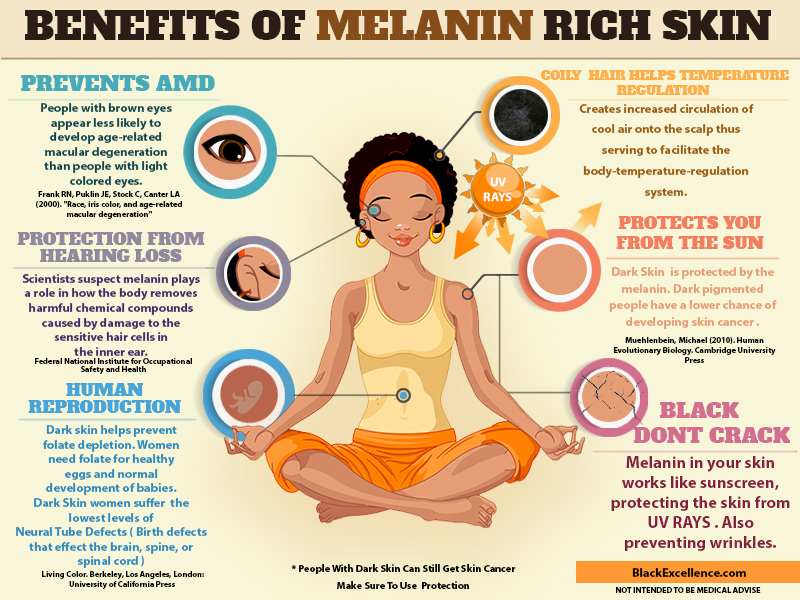
1. BLACK DOESN’T CRACK! The most celebrated quality of possessing melanated skin is its uncanny ability to be anti-aging, whereas, dark skin shows less visible signs of aging when compared to white skin. Dark-skinned people tend to look younger than their chronological age.
2. Protection from the sun, melanated skin has a natural SPF.
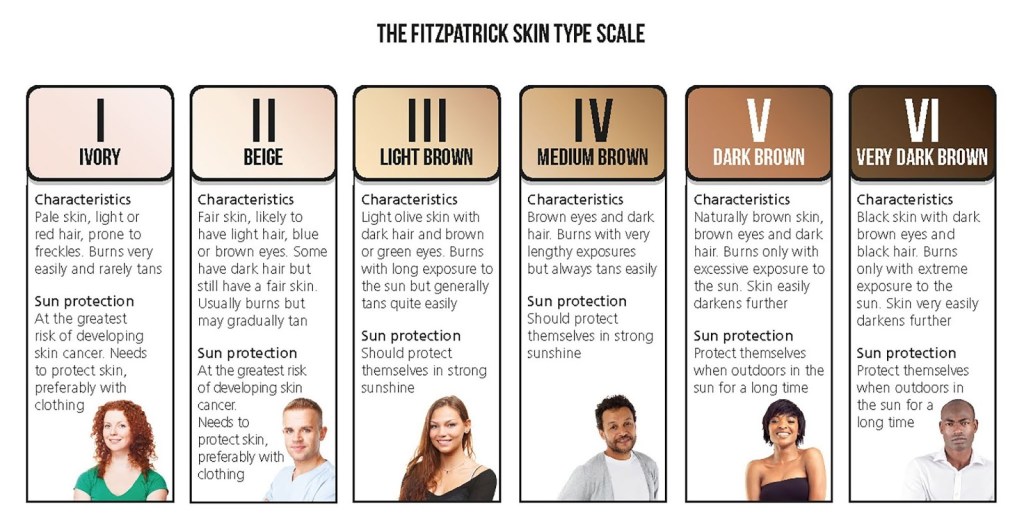
The Fitzpatrick scale (above) is a numerical classification that was created in the 1970s by Thomas Fitzpatrick, an American dermatologist. The study of human skin color underlines the categories of skin color where it relates to how it measures in terms of being exposed to the sun. It identifies that darker skin is less likely to develop skin cancer when exposed to the sun.
In his article, “Why the sun is good for Afrikan people”, Dr. Kwame Osei says,
This lack of melanin cover explains why Europeans/White people especially the albino whites burn in the sun and in the worst circumstances turn pink and get skin cancer- hence why they need to wear sunscreen because their white skin has been damaged by the sun’s UV rays because their pineal gland, an organ between the eyes has been calcified. What this means in effect that they cannot generate energy from the sun’s UV rays due to their lack of melanin. Melanin in its most concentrated form is black. It is black because its chemical structure will not allow any energy to escape once that energy has come in contact with it. This gives us insight and shows that melanin-dominant people do not require the same amount of minerals and nutrients in their diet as people with less melanin.(modernghana.com)
Nearly all black and brown skins are beautiful, but beautiful white skin is rare. Where dark complexions are massed, they make the whites look bleached-out, unwholesome, and sometimes frankly ghastly. I could notice this as a boy, down South in the slavery days before the war. The splendid black satin skin of the South African Zulus of Durban seemed to me to come very close to perfection. The white man’s complexion makes no concealments. It can’t. It seemed to have been designed as a catch-all for everything that can damage it. Ladies have to paint it, and powder it, and cosmetic it, and diet it with arsenic, and enamel it, and be always enticing it, and persuading it, and pestering it, and fussing at it, to make it beautiful; and they do not succeed. But these efforts show what they think of the natural complexion, as distributed. As distributed it needs these helps. The complexion which they try to counterfeit is one that nature restricts to the few–to the very few. To ninety-nine persons, she gives a bad complexion, to the hundredth a good one. The hundredth can keep it–how long? Ten years, perhaps. The advantage is with the Zulu, I think. He starts with a beautiful complexion, and it will last him through. And as for the Indian brown–firm, smooth, blemish free, pleasant, and restful to the eye, afraid of no color, harmonizing with all colors and adding a grace to them all–I think there is no sort of chance for the average white complexion against that rich and perfect tint. — Mark Twain, Skin Deep – Complexions
The Black skin is not a badge of shame, but rather a glorious symbol of national greatness. — Marcus Garvey
The recipients of the phenomenon we know as “MELANIN” are the people, that are referred to as Black, Colored, African, Sub-Saharan, and African American.
In his book, “The Chemical Key to Black Greatness” American Biochemist, Carol Barnes, described melanin as, “a civilizing chemical that acts as a sedative to help keep the black human calm, relaxed, caring, creative, energetic and civilized”. Research also revealed that melanin enables black skin to actively interact with the sun, to produce Vitamin D from a biochemical substance, 7- dehydrocholesterol. The study also detected that, melanin has spiritual dynamics as well as physical, since it acts as a sensory ‘receptor’ and ‘transmitter’; communicating with cosmic energy fields in the vast universe converting light energy to sound energy and back. Dr. Richard King, MD, stated that, “melanin, by its ability to capture light and hold it in a memory mode, reveals that blackness converts light into knowledge”.
All photographs are the property of their respective owners.
Melanin refines the nervous system in such a way that messages from the brain reach other areas of the body most rapidly in dark people, the first race. The abundance of melanin in our skin gives us genetic inferiority. We are physically stronger. Mentally sounder. Spiritually more connected. High absorption of vitamins, full-color range, taste of the full flavor of food, and more intelligence. Melanin (Carbon) is essential to brain, nerve, and organ function it can be found in every part of the body where cells are to reproduce and regenerate. Let’s not forget the anti-aging effects of melanin in dark skin, on average a white-skinned person will look much older than their black counterpart.
“ Melanin (Carbon) is the fundamental unit of the universe and exists in four forms: Cosmic, Planetary, plant kingdom (chlorophyll), and animal kingdom melanin. Melanin is black (carbon) because its chemical structure allows no energy to escape.. making black melanin the super absorber of energy and light. Melanin is found in almost every organ of the body and is necessary in order for the brain and nerves to operate, the eyes to see, and the cells to reproduce. Melanin can rearrange its chemical structure to absorb all energy across the radiant energy spectrum (i.e. sunlight, Xirays, music, sound, radar, radio waves, etc) The black human can charge up his/her melanin just by being in the sun or around the right type of musical sounds or other energy sources. Our body is electrical, with currents of nerves sending signals through our brain daily. Melanin itself, on a philosophical plane, is a black chemical/biological door through which the life force of African spirituality passes in moving from the spirit to the material realm. You will we learn to accept and embrace the fact that Black is not only beautiful but it comes in a variety of different shades, textures, and tones; None of which is better or worse than the other. Proof of a creator? You exist and there are no copies of you anywhere. The facial features of a person of color are more pronounced than any other nation around the world. Did you know that many white people in the Americas tan their skin and are vast consumers of tanning bronzing gels ,etc? Just the other day I saw a white woman at my local market she was as dark as me, but with a orangey tint to her face. So with the lie that states that dark skin is less desired but the hate is more a product of self-hatred and taught behavior, than a total social preference. There is a reason we have been conditioned this way.
As has its advantages dark skin so does dark eyes which can see the full-color range as it is exactly it is.
My conversation with Pascal, a professional photographer from France.
Q: What is it like to work with models/people of color?
Pascal: Let me start with you… photographing you and applying makeup to your face what a pleasure, you have the most beautiful eyes, face, and skin. Up close you are so physically beautiful, physically compelling, I’m hypnotized by your good looks. Your skin is always so soft, smooth, and creamy like churned butter, I love your light skin color. Women of color are the most beautiful creatures on earth, the skin is so deep and rich, they are the best to work with.
Q: Do you have a preference for light or dark?
Pascal: No but in my work, the darker the girl is the more light she becomes to the camera like a rare occurrence with the view. Dark skin really is the best.
Carbon is really the correct word.. but Melanin is the black man’s ace and intelligence. Our skin has the highest amount of Melanin of all nations, also, This is the color of the Savior. And his feet like unto fine brass, as if they burned in a furnace; and his voice as the sound of many waters. Revelation 1:15-17 KJV
Basking in the hot sun for hours While becoming sun-kissed to perfection The salt of our tears raped our face As we picked cotton in the southern heat No other skin could take such a beating Like the Melanin in our skin. Our skin is just like butter burned to make you want to devour it Symbolic of the melting of dark chocolate and How sweet it is Some are like coffee with milk while others are like hot chocolate Only one term to describe the beauty and dimension of the colors of our skin Resplendently Like the melanin in our skin.
The Black skin is not a badge of shame, but rather a glorious symbol of national greatness. — Marcus Garvey
All photographs are the property of their respective owners.
4 things the other nations COVET from us.
1. Lips
So they say that Angelina Jolie made our lips famous? Way before there was Angelina, there were our ancestors that possessed those ancient lumps we call lips, yes full and luscious all the way. Now today with millions of collagen injections being dished out annually for something we have been blessed with.
2. Darker Skin
Who said only white porcelain skin was all the rage with millions of dollars being spent annually on tan salons, bronzing powders, and spray tans all to achieve our sun-kissed skin?
Our melanin is a gift from the Most High God. So cherish it.
3. Our Round Bottoms
It is no secret that black women are known for their big bottoms, but we were born with them. Butt implants have become the norm like brushing your teeth, and many women have become disfigured by infecting fat into their bottoms. Hmmm, wouldn’t have been nice to be born with it.
5. Black Men
Are Truly the most desired men by all nations. The Greatest Gift to the black woman is the black man. So what if so or you are rough around the edges but so are we black women? Everyone can see your greatness, you are our King. So raise and love the black woman back. The other nations may love you, but your roots are with the black woman.
5 Great things about melanin in the skin:
1. Some of the greatest Inventors and Innovators.
Despite such impressive credentials, black people are the innovators and inventors of just about everything on earth from toothpaste to electricity.
2. The Melanin in our Skin.
Beyond a shadow of a doubt, black doesn’t crack, which contributes to our anti-aging, but more importantly, the high concentration of melanin has its benefits such as protection from the sun and produces our Vitamin D.
3. Our hair is unique and fascinating.
Everyone else grows fur. Black hair can maintain its state, whether it be kinky, coily, relaxed, fro, or cornrows can keep its shape in the harsh climates in the world.
4. A black man’s body is superior, genetically stronger than that of any other race.
It has been proven that throughout history that the black man has built the constructs of building and foundations for many nations, including America through slavery, etc.
5. A black woman’s features are highly coveted.
Our skin and facial features are highly coveted by other races, such as our lips, booty, and skin. Many Nordic/Aryan races have emulated our features in mainstream media.
Where faith, history, and truth illuminate the Black experience.



 THE BROWN GIRL DILEMMA