
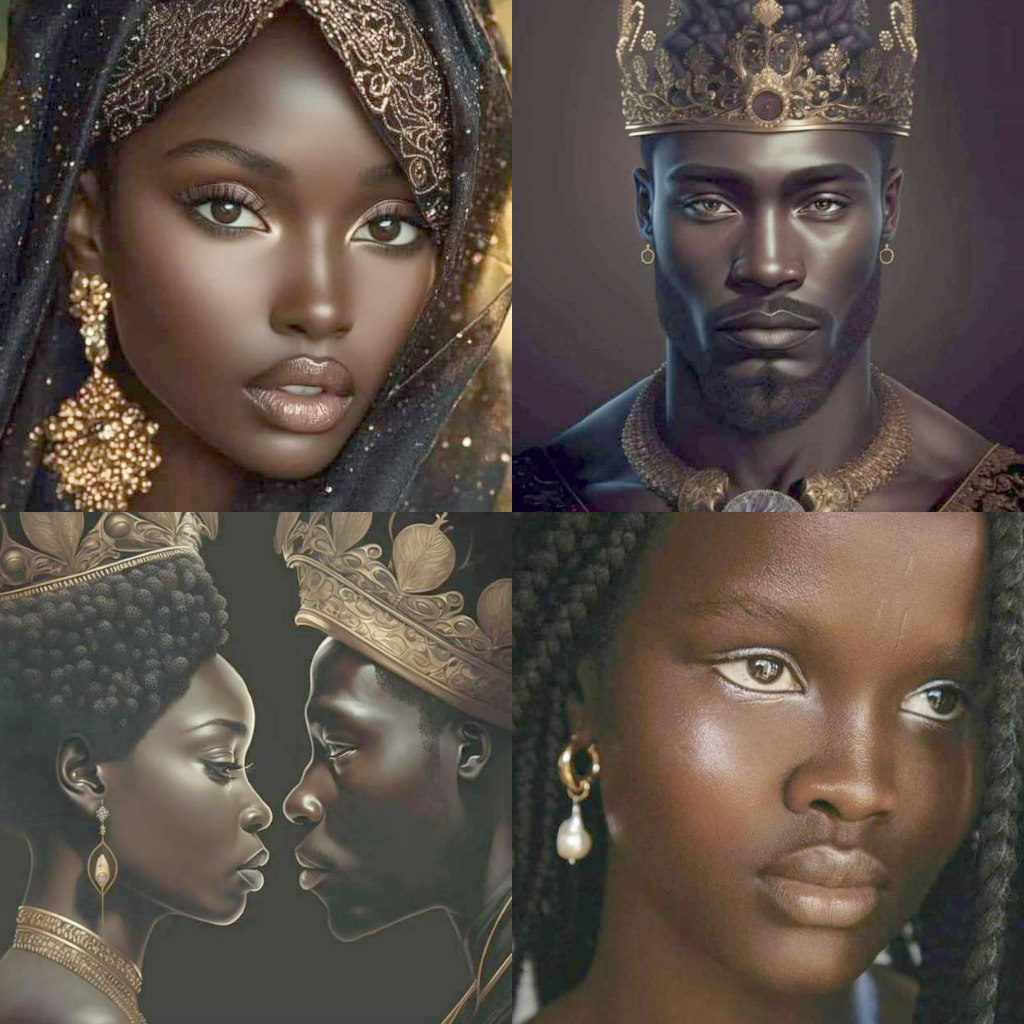
Black beauty is not a single expression but a spectrum of genetic diversity that manifests in facial features, body composition, skin tone, hair texture, and overall presence. From African roots to diasporic populations across the globe, these features convey strength, resilience, and divine artistry. Understanding this beauty requires an exploration of genetics, psychology, history, and spirituality.
Melanin-rich skin is one of the most defining features of Black beauty. High melanin content provides natural protection against ultraviolet radiation, contributes to a radiant glow, and displays a spectrum of shades from deep ebony to golden brown. The Bible celebrates skin as a divine creation: “Thou art all fair, my love; there is no spot in thee” (Song of Solomon 4:7, KJV). This scripture underscores the inherent perfection of pigmentation.
Facial structure in Black populations varies widely but often includes high cheekbones, broad noses, and full lips, reflecting African and Egyptian ancestry. These features have evolved over millennia to adapt to environmental factors, providing functional benefits such as enhanced oxygenation and protection from the sun. Anthropologists note that these structures also contribute to facial symmetry, a key element of perceived beauty (Rhodes, 2006).
The eyes, often large and expressive, are framed by naturally arched brows and long eyelashes. Psychologically, eye contact conveys dominance, confidence, and emotional depth. “The eyes of the LORD are in every place, beholding the evil and the good” (Proverbs 15:3, KJV) reminds us that vision, both literal and figurative, carries spiritual significance.
Nose shapes within the Black diaspora range from wide and rounded to straight and sculpted, reflecting genetic variation and admixture. Broad noses historically helped with humid climates and enhanced nasal airflow. Full lips, often prominent, serve not only as markers of identity but are aesthetically celebrated in global beauty paradigms.
Hair is one of the most versatile and culturally significant features. Excessively curly or coiled hair, typical in many African-descended populations, reflects high genetic diversity in hair follicle shape (Powell et al., 2012). Hair texture has symbolic importance: it represents ancestry, resilience, and adaptability. In the Bible, hair often signifies strength and identity, as in Samson’s story (Judges 16:17, KJV).
The jawline and chin provide structural strength and character. Strong jawlines in Black populations are often linked to evolutionary pressures for durability and facial symmetry. This contributes to psychological perceptions of leadership, power, and assertiveness (Little et al., 2011).
Skin elasticity and body composition vary, with many Black populations exhibiting mesomorphic or athletic builds. Muscle density, bone strength, and proportionality have both functional and aesthetic implications, highlighting physical resilience and adaptability. Scripture recognizes the body as God’s creation: “I praise thee; for I am fearfully and wonderfully made” (Psalm 139:14, KJV).
Neck and shoulder structures contribute to posture and perceived presence. Broad shoulders and muscular necks convey strength and authority, signaling both evolutionary fitness and cultural ideals of masculinity.
Hand and finger morphology, often graceful yet strong, plays roles in artistry, physical labor, and nonverbal communication. In African cultures, hands are celebrated for their expressive and functional capacities, bridging work and identity.
Torso structure varies across African and diasporic populations. A well-proportioned torso, often associated with endurance and physical capability, is both aesthetically admired and functionally advantageous. The body becomes a living testament to evolutionary adaptation and divine engineering.
Legs and lower body features display powerful musculature and athleticism, reflective of both lifestyle and genetic adaptation. Longer limbs relative to the torso, common in certain African populations, facilitate agility and endurance. Psychologically, these features contribute to perceptions of vitality and grace.
Visual “Feature Map” of Black Beauty
1. Skin Tone (Melanin Spectrum)
- Deep ebony
- Brown
- Golden caramel
- Tan/olive
(Illustrates melanin diversity and natural protection)
2. Hair Texture
- Coily / kinky (Type 4)
- Curly (Type 3)
- Wavy (Type 2)
(Shows versatility and genetic variation across African and diasporic populations)
3. Facial Features
- High cheekbones
- Broad to medium noses
- Full lips
- Almond-shaped or rounded eyes
- Defined jawline and chin
(Highlights evolutionary adaptation, aesthetic symmetry, and Egyptian influence)
4. Body Proportions
- Mesomorphic build (muscular, athletic)
- Broad shoulders, strong neck
- Proportional torso
- Long, strong legs
(Represents strength, endurance, and functional beauty)
5. Cultural and Historical Notes
- Egyptian elongation of faces and noses
- African sculpted features
- Diaspora adaptations across Caribbean, Americas, and Europe
6. Psychological & Spiritual Layer
- Confidence and presence linked to symmetry
- Expressive eyes signaling emotional depth
- Biblical affirmation: Psalm 139:13-14 (KJV)
Genetic diversity across the African continent explains the variation in features globally. From the Nilotic peoples of East Africa to West African populations and Egyptian descendants, phenotypes differ due to historical migration, environmental adaptation, and admixture. Melanin-rich skin, hair texture, and facial structure are markers of evolutionary resilience and aesthetic value.
Egyptian features, often admired historically and across cultures, include elongated faces, almond-shaped eyes, and slender noses. Art and sculpture from ancient Egypt preserve these features, which influenced Mediterranean and African aesthetics. The spread of Egyptian traits across Africa reflects both migration and intermixing of populations.
Beyond physiology, the psychology of Black beauty is tied to self-perception and societal validation. Internalized biases from colonialism and slavery have historically devalued African features, creating psychological stress and colorism. Embracing ancestral aesthetics restores dignity and affirms identity (Hunter, 2007).
Cultural adornments, including hair styling, body art, and jewelry, enhance perceived beauty while preserving heritage. Hairstyles such as braids, locs, and twists are both aesthetic expressions and cultural statements, linking identity to ancestry.
The symmetry of facial features plays a key role in attractiveness. Across populations, symmetrical faces are psychologically associated with health, genetic fitness, and beauty. African-descended populations often display facial symmetry enhanced by pronounced features, which contributes to aesthetic appeal (Rhodes, 2006).
Height and overall proportions vary widely, yet commonality lies in the harmony of features. Balanced proportions, combined with melanin-rich skin and expressive facial characteristics, create a sense of visual coherence and presence.
Eyes and facial expression are central to perceived beauty. Expressiveness conveys emotion, intelligence, and social engagement. Psychological studies show that expressive eyes increase interpersonal attraction and perceived trustworthiness.
Ultimately, Black beauty reflects a combination of genetics, evolutionary adaptation, cultural heritage, and divine design. As the Bible reminds us, each individual is crafted with intentionality and wonder: “Thou hast possessed my reins: thou hast covered me in my mother’s womb. I will praise thee; for I am fearfully and wonderfully made” (Psalm 139:13-14, KJV). Recognizing, celebrating, and understanding these features fosters pride, identity, and self-worth across the diaspora.
References
Clark, K., & Clark, M. (1947). Racial identification and preference in Negro children. Journal of Negro Education, 16(3), 169–175.
Hunter, M. (2007). The persistent problem of colorism: Skin tone, status, and inequality. Sociology Compass, 1(1), 237–254. https://doi.org/10.1111/j.1751-9020.2007.00006.x
Little, A. C., Jones, B. C., & DeBruine, L. M. (2011). Facial attractiveness: Evolutionary based research. Philosophical Transactions of the Royal Society B: Biological Sciences, 366(1571), 1638–1659. https://doi.org/10.1098/rstb.2010.0404
Powell, B., Shriver, M. D., & Parra, E. J. (2012). Genetic variation and the evolution of African hair texture. American Journal of Physical Anthropology, 149(1), 1–14. https://doi.org/10.1002/ajpa.22195
Rhodes, G. (2006). The evolutionary psychology of facial beauty. Annual Review of Psychology, 57, 199–226. https://doi.org/10.1146/annurev.psych.57.102904.190208
The Holy Bible, King James Version. (1611). Thomas Nelson.
 THE BROWN GIRL DILEMMA