Tag Archives: masculine

Lost Sons, Loud Voices: Masculinity Without Covenant in the Digital Age

Lost sons grow up in a world more connected than ever, yet relationally barren. Platforms provide community templates, while life often fails to provide community itself. Scripture speaks to men without a rooted vision: “My people are destroyed for lack of knowledge” (Hos. 4:6, KJV).

The digital age did not create male disorientation, but it amplified it. Grievance found microphones, immaturity found markets, and wound-identity found a home page. “The simple believeth every word” (Prov. 14:15, KJV), and the internet has mastered the discipling of simplicity.

Masculinity without covenant becomes performance without purpose. It boasts of control but lacks calling, command but not mission, influence but not inheritance. “A bastard shall dwell in Ashdod” (Zech. 9:6, KJV), a prophetic metaphor echoed by many scholars referencing fatherless identities displaced from spiritual lineage.

Many lost boys are algorithm-raised, not father-raised. Their rites of passage are viral, not sacred, horizontal, not prophetic; social, not spiritual. God offers the contrast: “I will be a father unto you” (2 Cor. 6:18, KJV).

Digital male movements frequently frame women as rivals, not recipients, obstacles, not co-heirs. Yet scripture orders unity, not hierarchy: “That they all may be one” (John 17:21, KJV).

Covenantal masculinity defined strength through obedience. But modern masculinity defines strength through ego-visibility. God rebukes this posture: “Pride goeth before destruction” (Prov. 16:18, KJV).

The loud male voices online echo confidence without conviction. Their identities are outspoken but not examined. But scripture demands the introspection they avoid: “Examine yourselves, whether ye be in the faith” (2 Cor. 13:5, KJV).

Many boys build masculinity on grievance because grievance feels powerful. Pain becomes political, loneliness becomes polemical, rejection becomes rhetoric. Yet scripture prescribes healing, not amplification: “He healeth the broken in heart, and bindeth up their wounds” (Psa. 147:3, KJV).

Love is dandified as weakness in digital male spaces. Yet biblical masculinity is not fragile toward softness, it fathers through it. “Fathers, provoke not your children to wrath: but bring them up” (Eph. 6:4, KJV).

The manosphere provides discipleship without doctrine, obedience without God, brotherhood without rebuke, and masculinity without cross. But scripture anchors manhood in Christ’s model: “Not as lords over God’s heritage” (1 Pet. 5:3, KJV).

Masculinity without covenant elevates voice and buries responsibility. But scripture centers provision as evidence of faith: “If any provide not for his own… he hath denied the faith” (1 Tim. 5:8, KJV).

Without a covenant, men build kingdoms that collapse under ego rather than a covenant that endures under God. Scripture calls for divine architecture over human ambition: “Except the Lord build the house, they labour in vain that build it” (Psa. 127:1, KJV).

Many men seek validation from followers rather than formation from fathers. They desire influence without instruction. But scripture re-anchors formation: “As iron sharpeneth iron, so a man sharpeneth the countenance of his friend” (Prov. 27:17, KJV).

Yet without older iron, younger iron dulls itself. Peer-sharpening-peer without covenant leads to abrasion, not formation. “They have rejected knowledge, I also will reject thee” (Hos. 4:6, KJV). The rejection is of direction, not of men, but the consequence still settles in identity.

Digital male communities promise masculine resurgence through dominance psychology, economic status, or adversarial identity politics. But scripture places rulership inward first: “He that ruleth his spirit is better than he that taketh a city” (Prov. 16:32, KJV).

The lost sons of the digital age create identity nationalism without covenantal citizenship. Their belonging is ideological, not covenantal, vocal, not obedient, outspoken, not submitted. But the biblical masculine model is radical submission to God. “Submit yourselves therefore unto God” (James 4:7, KJV).

The emotional dilemma of lost sons becomes spiritual dilemma when unresolved boys adopt identities that rival holiness itself. Pain becomes worldview before scripture becomes worldview.

Masculinity that grows without covenant eventually fathers loud movements but not healthy lineage. Its fruit is rhetoric, not restoration. But scripture promises regeneration: “A tree is known by his fruit” (Matt. 12:33, KJV). The internet bears fruit, but not every orchard is holy.

Many boys desire brotherhood but find battalion. They desire identity but find ideology. They desire purpose but find a platform. God offers the inversion: covenant before crowd, spirit before stage, rebuke before rebuild, fathering before fame.

Masculinity without covenant becomes an echo, not a root. It reverberates but does not anchor. Yet God anchors manhood firmly in divine identity formation. “The Lord hath made all things for himself” (Prov. 16:4, KJV).

The greatest dilemma is that men want transformation into unbreakable instead of transformation into new. But scripture centers re-creation, not hardness: “If any man be in Christ, he is a new creature” (2 Cor. 5:17, KJV).

Real manhood is not the absence of wound but the presence of covenant. Healing does not erase masculinity; it legitimizes it through spiritual lineage rather than digital doctrine.

The digital age gives men unlimited microphones, but the covenant gives men unlimited inheritance. True restoration is not a rise in voice but a rise in obedience, nurture, alignment, covenant, and soul shepherding through scripture.


References

American Psychological Association. (2017). Guidelines for Psychological Practice With Boys and Men. APA.

Baumeister, R. F. (1991). Meanings of Life. Guilford Press.

Berger, J. M. (2018). Extremism and grievance communities online: Group identity and psychological belonging. International Centre for Counter-Terrorism, 9(2), 1–25.

Ging, D. (2019). Online masculine communities and the discipling of male grievance ideology. Social Media + Society, 5(2), 1–14.

hooks, b. (2004). The Will to Change: Men, Masculinity, and Love. Washington Square Press.

Kimmel, M. (2013). Angry White Men: American Masculinity at the End of an Era. Nation Books.

Ribeiro, M., Ottoni, R., West, R., Almeida, V., & Meira Jr., W. (2020). The evolution of the manosphere across digital platforms. Proceedings of the International AAAI Conference on Web and Social Media, 14, 196–207.

Van Valkenburgh, S. P. (2021). Neoliberal masculinity and anti-feminist identity movements in the digital era. Men and Masculinities, 24(1), 84–103.

The Holy Bible, King James Version. (1611). Cambridge University Press.

The Sexual Economy of Appearance

Appearance operates as a form of currency within modern social life, shaping access to desire, power, and protection. The sexual economy of appearance refers to the system in which physical attractiveness is exchanged for attention, validation, opportunity, and status. This economy is not neutral; it is governed by racialized, gendered, and class-based hierarchies that determine whose bodies are most valued.

Within this economy, beauty functions as capital. Individuals who align with dominant beauty standards are rewarded with romantic abundance, social visibility, and sexual leverage. Those who do not are often rendered invisible or forced to compensate through emotional labor, compliance, or self-sacrifice. Attraction becomes less about mutual connection and more about market positioning.

Gender plays a defining role in how appearance is monetized. Women are socialized to understand their bodies as primary assets, evaluated continuously and publicly. Men, by contrast, are more often judged on status and resources, yet still benefit from partnering with women whose appearance enhances their own social standing.

Race profoundly structures this sexual marketplace. Eurocentric beauty ideals elevate lighter skin, narrower features, and looser hair textures, while darker skin and Afrocentric features are systematically devalued. This hierarchy mirrors colonial and slave-based systems that assigned worth based on proximity to whiteness.

Desire within this system is frequently mistaken for personal preference. In reality, attraction is shaped by repeated cultural messaging that teaches who is “beautiful,” “feminine,” and “worthy.” These lessons are absorbed long before conscious choice, making desire feel natural even when it reproduces inequality.

The sexual economy also governs behavior. Attractive individuals are granted more grace, patience, and forgiveness in romantic interactions. They are pursued rather than required to prove themselves. Less attractive individuals are expected to accept lower standards, tolerate disrespect, or feel grateful for attention.

Social media has intensified this economy by quantifying desirability through likes, followers, and visibility. Appearance now translates directly into economic and sexual capital, rewarding those who conform and punishing those who resist. Algorithms act as gatekeepers, reinforcing existing beauty hierarchies.

Colorism amplifies sexual stratification within marginalized communities. Lighter-skinned women are often perceived as more feminine, approachable, and “wife-worthy,” while darker-skinned women are sexualized, ignored, or cast as less desirable partners. These dynamics fracture intimacy and erode collective self-worth.

Men also navigate this economy, though differently. Physical attractiveness can elevate masculine desirability, yet men are more frequently evaluated on their ability to provide status, protection, or resources. Still, beauty influences whose masculinity is affirmed and whose is questioned.

The moral implications of this economy are significant. When beauty is treated as merit, inequality appears deserved. Sexual success is framed as virtue, while rejection is interpreted as personal failure rather than structural bias.

Resistance begins with naming the system. The sexual economy of appearance thrives on silence and denial. Honest examination disrupts the illusion that attraction exists outside culture, power, and history.

Liberation requires redefining value beyond appearance. Intimacy grounded in mutual respect, shared values, and emotional safety challenges the market logic that reduces people to visual commodities.

Ultimately, dismantling the sexual economy of appearance is not about rejecting beauty but about refusing to let it determine human worth. Desire becomes ethical when it is conscious, reflective, and free from inherited hierarchies.

References

Bourdieu, P. (1986). The forms of capital. In J. Richardson (Ed.), Handbook of theory and research for the sociology of education (pp. 241–258). Greenwood Press.

Collins, P. H. (2004). Black sexual politics: African Americans, gender, and the new racism. Routledge.

Eagly, A. H., Ashmore, R. D., Makhijani, M. G., & Longo, L. C. (1991). What is beautiful is good, but… A meta-analytic review of research on the physical attractiveness stereotype. Psychological Bulletin, 110(1), 109–128.

Hamermesh, D. S. (2011). Beauty pays: Why attractive people are more successful. Princeton University Press.

Hunter, M. (2007). The persistent problem of colorism: Skin tone, status, and inequality. Sociology Compass, 1(1), 237–254.

Illouz, E. (2007). Consuming the romantic utopia: Love and the cultural contradictions of capitalism. University of California Press.

Zelizer, V. A. (2005). The purchase of intimacy. Princeton University Press.

The Wounded Man: Online Masculinity Movements and the Quest for Purpose

The wounded man does not announce himself bleeding—he appears stoic, articulate, and armored in ideology. The suffering of modern men is frequently misread as rebellion when it is really a crisis of belonging, affirmation, and paternal absence. The Bible foreshadowed the cost of shepherdless manhood: “Smite the shepherd, and the sheep shall be scattered” (Zech. 13:7, KJV).

In every generation, men look for language to describe their pain. Today, that language is often supplied by online masculinity movements—digital nations without elders, mentors, or covenantal accountability. Scripture warns when men lead themselves without God: “Every way of a man is right in his own eyes: but the Lord pondereth the hearts” (Prov. 21:2, KJV).

The wounded man is born first from inner rupture. He is shaped by rejection before religion, culture, or politics ever reach him. “The spirit of a man will sustain his infirmity; but a wounded spirit who can bear?” (Prov. 18:14, KJV). This verse reads like a diagnosis of modern male psychology.

Today’s movements promise a reinstallation of masculine strength, yet many boys never received an original spiritual installation at all. The internet becomes a father figure when fathers become absentee statistics. God speaks against leaders who scatter rather than strengthen: “Woe unto the shepherds that do feed themselves!” (Ezek. 34:2, KJV).

Loneliness fuels digital membership. Men find in online spaces the fraternity that reality failed to provide. But scripture explains purpose is not found in numbers of followers, but divine ordering: “The steps of a good man are ordered by the Lord” (Psa. 37:23, KJV).

Many wounded males adopt hyper-dominance rhetoric because pain distrusts softness. Tenderness is interpreted as loss of authority rather than evidence of healing. Yet scripture teaches God draws nearest to brokenness, not bravado: “The Lord is nigh unto them that are of a broken heart” (Psa. 34:18, KJV).

Online masculine rhetoric often hardens men outward instead of transforming them inward. Hardened men build platforms; healed men build families. The Bible defines masculine power through self-rule, not gender rule: “He that ruleth his spirit is better than he that taketh a city” (Prov. 16:32, KJV).

The wounded man is often angry at the wrong villain. He blames women for wounds fathers created, or culture for wounds neglect cultivated. Scripture redirects accountability: “Let each man prove his own work… for every man shall bear his own burden” (Gal. 6:4-5, KJV).

The crisis of purpose is a crisis of vision. Online movements rise when boys become men without prophetic direction. Scripture declares this clearly: “Where there is no vision, the people perish” (Prov. 29:18, KJV).

Many think masculinity was lost because feminism rose. But masculinity fractured because fatherhood fell, community eroded, and spiritual responsibility was abandoned. God instructs men to provide, not posture: “But if any provide not for his own house, he hath denied the faith” (1 Tim. 5:8, KJV).

The wounded man seeks purpose in self-help rhetoric rather than divine help rhetoric. He scrolls mentorship instead of submitting to it. Scripture indicts self-direction without God: “There is a way that seemeth right unto a man, but the end thereof are the ways of death” (Prov. 14:12, KJV).

Many of these communities use scripture selectively to validate hierarchy while ignoring holiness. But scripture calls masculinity to love, sacrifice, protection, and spiritual guidance. “Husbands, love your wives, even as Christ also loved the church, and gave himself for it” (Eph. 5:25, KJV).

The ideology of conquest appeals to men because trauma creates appetite for control. But purpose is not dominion—purpose is obedience. “To obey is better than sacrifice” (1 Sam. 15:22, KJV). That is the verse the manosphere rarely remembers.

The wounded man fears irrelevance more than he fears sin. He fears being average more than he fears disobedience. Yet scripture states, “For all have sinned, and come short of the glory of God” (Rom. 3:23, KJV). God equalizes sin so holiness can individualize purpose.

Many wounded men convert disappointment into doctrine. Their movements disciple pain instead of discipling repentance. Scripture warns about building identity on emotional deception: “The heart is deceitful above all things, and desperately wicked” (Jer. 17:9, KJV).

Viral masculinity movements disciples outrage faster than pastors disciple healing. The wounded boy is celebrated when he becomes rebellious but ignored when he becomes righteous. Yet God rewards spiritual endurance, not perpetual grievance. “If ye endure chastening, God dealeth with you as sons” (Heb. 12:7, KJV).

True sonship requires correction. The manosphere creates brotherhood without rebuke; God creates manhood through rebuke. “Whom the Lord loveth he correcteth” (Prov. 3:12, KJV).

The wounded man does not lack strength—he lacks aim. Misguided power builds loud followings, but misdirected strength builds relational casualties. God defines purpose Himself: “The Lord is my rock… the horn of my salvation” (Psa. 18:2, KJV).

Many boys were wounded into men who no longer trust love, community, or covenant. Disconnection becomes a masculinity badge rather than a trauma symptom. But scripture commands restoration of heart before restoration of manhood. “A new heart also will I give you, and a new spirit will I put within you” (Ezek. 36:26, KJV).

Purpose cannot be crowd-sourced; it must be God-breathed. Influence is temporary; calling is eternal. “For the gifts and calling of God are without repentance” (Rom. 11:29, KJV).

Masculine healing does not mean the absence of struggle—it means the absence of surrender to sin. Scripture assures dominion’s reversal: “Sin shall not have dominion over you” (Rom. 6:14, KJV).

The wounded man seeks societal recognition; the healed man seeks divine alignment. The greatest dilemma is that men are trying to become “unbreakable” while God calls them to become new. “If any man be in Christ, he is a new creature: old things are passed away” (2 Cor. 5:17, KJV).

The quest for purpose ends only when a man stops asking the internet to define him and allows scripture to realign him. Healing masculinity means rescuing boys before they become statistics—and restoring men before they become hardened headlines.


📚 References

American Psychological Association. (2017). Guidelines for Psychological Practice with Boys and Men. APA.

Baumeister, R. F. (1991). Meanings of Life. Guilford Press.

Berger, J. M. (2018). Extremism and grievance communities online: Social identity, group narratives, and radical belonging. International Centre for Counter-Terrorism, 9(2), 1–25.

Ging, D. (2019). Manosphere cultures, male trauma, and the rise of digital masculine identity movements. Social Media + Society, 5(2), 1–14.

hooks, b. (2004). The Will to Change: Men, Masculinity, and Love. Washington Square Press.

Kimmel, M. (2013). Angry White Men: American Masculinity at the End of an Era. Nation Books.

Ribeiro, M., Ottoni, R., West, R., Almeida, V., & Meira Jr., W. (2020). The evolution of grievance masculinity networks across the web. International AAAI Conference on Web and Social Media Proceedings, 14, 196–207.

Schnyder, U., & Cloitre, M. (2015). Evidence-Based Treatments for Trauma-Related Psychological Disorders in Adults. Springer.

Tatum, B. D. (1997). Why Are All the Black Kids Sitting Together in the Cafeteria? Basic Books.

Van Valkenburgh, S. P. (2021). Masculinity and neoliberalism in the manosphere. Men and Masculinities, 24(1), 84–103.

Wilson, J. (2024). The mainstreaming of misogynistic male-grievance ideology online. Feminist Media Studies, 24(2), 259–276.

The Holy Bible, King James Version. (1611). Cambridge University Press.

The Weight He Carries: Masculinity in a World That Misunderstands Men

The modern man stands at a complex crossroads, expected to embody strength while simultaneously navigating an evolving cultural landscape that often misunderstands masculinity. What he carries is not merely personal—it is historical, emotional, and deeply shaped by societal expectations.

From childhood, boys are conditioned to suppress emotion, equating vulnerability with weakness. This early conditioning becomes a lifelong burden, limiting their ability to express pain, fear, or tenderness (Pollack, 1998).

As men grow older, they face contradictory messages about what masculinity should look like: be strong, but not too strong; be sensitive, but not emotional; be a leader, but not dominant. These conflicting expectations create confusion and internal conflict.

The pressure to provide financially is one of the heaviest weights men carry. In a society where worth is often measured by income, many men struggle with feelings of inadequacy when economic pressures rise or jobs are unstable (Mahalik et al., 2003).

Masculinity is frequently misunderstood as aggression or emotional detachment. In reality, these traits are often learned defenses developed to cope with environments that punish softness and reward stoicism (Connell, 2005).

Men also face isolation. While women are culturally encouraged to form supportive friendships, men are pushed toward independence, resulting in fewer emotional outlets and greater loneliness (Way, 2011).

Romantic relationships reveal another layer of struggle. Men are expected to protect and lead, yet are criticized when their leadership is perceived as controlling or outdated. The lack of clarity creates anxiety and self-doubt.

The media contributes to misunderstandings by portraying men as either hyper-masculine warriors or incompetent buffoons. These stereotypes leave little room for complexity or emotional nuance (Katz, 2011).

When men attempt to express their emotional needs, they are often dismissed as dramatic, weak, or incapable. This invalidation discourages emotional honesty and reinforces silence.

Mental health becomes a silent battlefield. Many men suffer from depression, anxiety, and trauma but avoid seeking help due to cultural stigma around therapy and vulnerability (Addis & Mahalik, 2003).

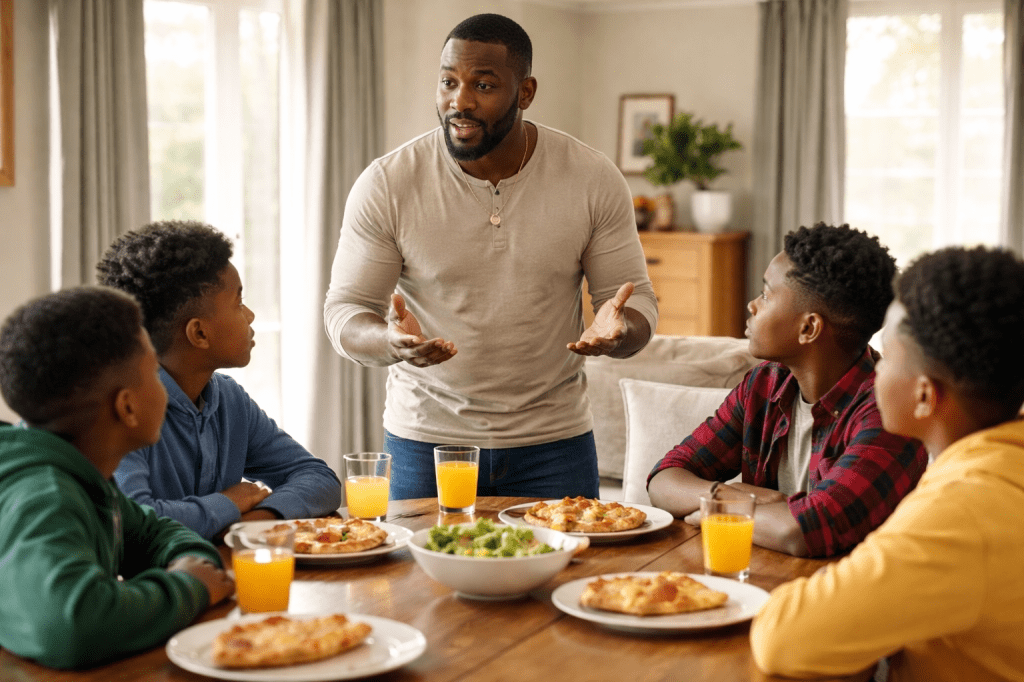
Fatherhood adds both joy and responsibility. Many men desire to be nurturing, present fathers, yet societal narratives often reduce them to mere providers rather than emotional anchors.

Black, brown, and marginalized men face additional challenges. Their masculinity is often criminalized, feared, or politicized, intensifying the misunderstanding and limiting their freedom to express their full humanity (hooks, 2004).

Economic shifts that devalue traditionally male occupations—like manufacturing—leave many men without clear roles, further complicating identity and purpose (Kimmel, 2017).

Spiritually, many men grapple with questions of worth, purpose, and identity. Faith—when embraced—offers grounding, reminding them that masculinity is not defined by culture but by divine intention and character.

Men often internalize the pain of failure more deeply than they admit. Whether they fail in relationships, careers, or personal goals, the shame they feel is compounded by the belief that men are supposed to be strong at all times.

Relationships improve when men feel safe to reveal their authentic selves. When partners, families, and communities embrace male vulnerability, healing becomes possible.

Healthy masculinity is not the absence of strength but the integration of strength with empathy, leadership with humility, and confidence with compassion. It is a balanced expression rather than a rigid mold.

The weight men carry becomes lighter when they are given language for their emotional experiences. Education around masculinity and mental health empowers men to navigate pain rather than suppress it.

Ultimately, masculinity is not broken—society’s understanding of it is. When men are allowed to be whole, emotional, spiritual, and complex beings, they rise into healthier expressions of manhood.

The man who learns to carry his weight with honesty, faith, and self-awareness discovers that he is stronger than he realized—not because he hides pain, but because he transforms it into purpose.


References

  • Addis, M. E., & Mahalik, J. R. (2003). Men, masculinity, and the contexts of help seeking. American Psychologist, 58(1), 5–14.
  • Connell, R. W. (2005). Masculinities (2nd ed.). University of California Press.
  • hooks, bell. (2004). We real cool: Black men and masculinity. Routledge.
  • Katz, J. (2011). The Macho Paradox: Why some men hurt women and how all men can help. Sourcebooks.
  • Kimmel, M. (2017). Angry white men: American masculinity at the end of an era. Nation Books.
  • Mahalik, J. R., Good, G. E., & Englar-Carlson, M. (2003). Masculinity scripts and men’s health. American Journal of Men’s Health, 2(2), 82–92.
  • Pollack, W. (1998). Real boys: Rescuing our sons from the myths of boyhood. Henry Holt.
  • Way, N. (2011). Deep secrets: Boys’ friendships and the crisis of connection. Harvard University Press.

Comparative Masculine Aesthetic Table (Genetics + Psychology + Cultural Archetypes)

Across civilizations, masculine aesthetics have served as visual language—signaling power, protection, fertility, discipline, nobility, and divine purpose. When examining masculine presentation through genetics, psychology, and cultural archetypes, we see not merely beauty standards but philosophies of manhood rooted in lineage, survival, and heritage. Masculinity becomes a relational ethic tied to duty, identity, and legacy.

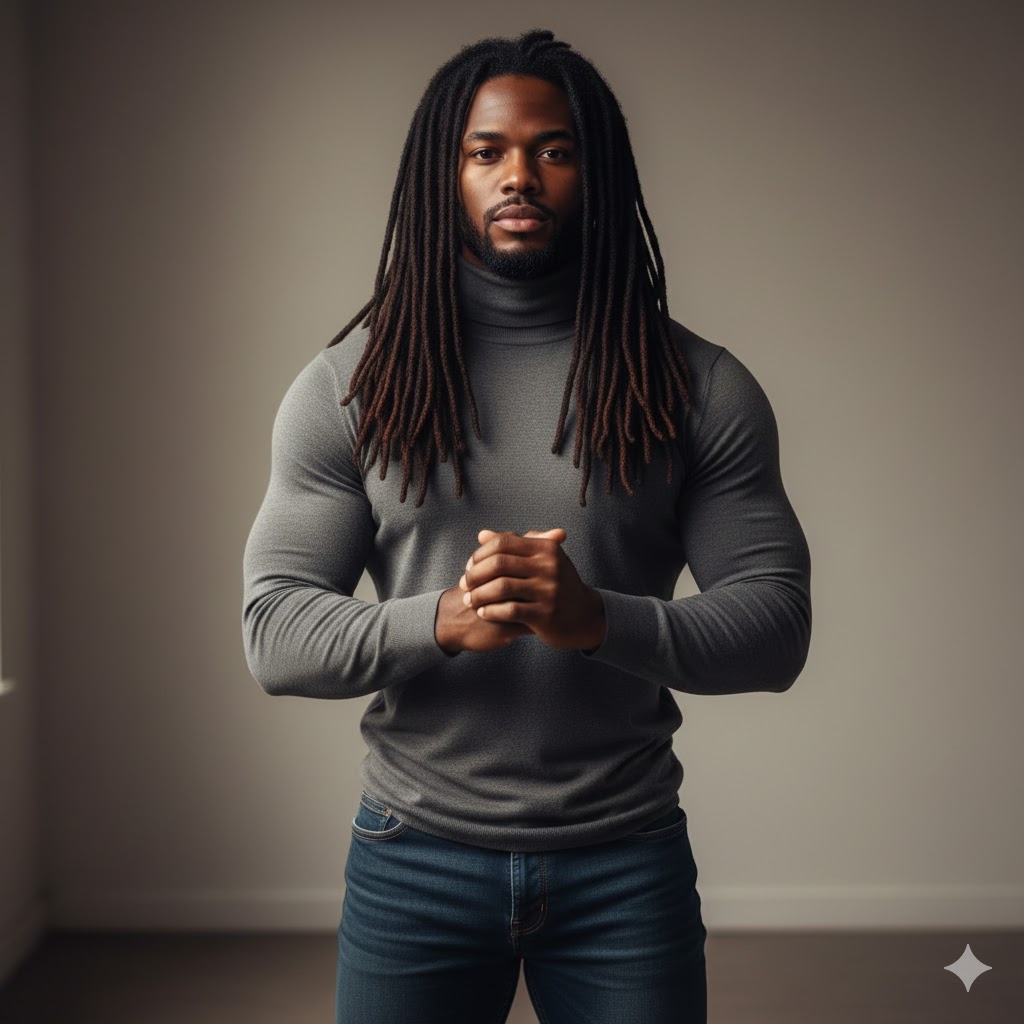
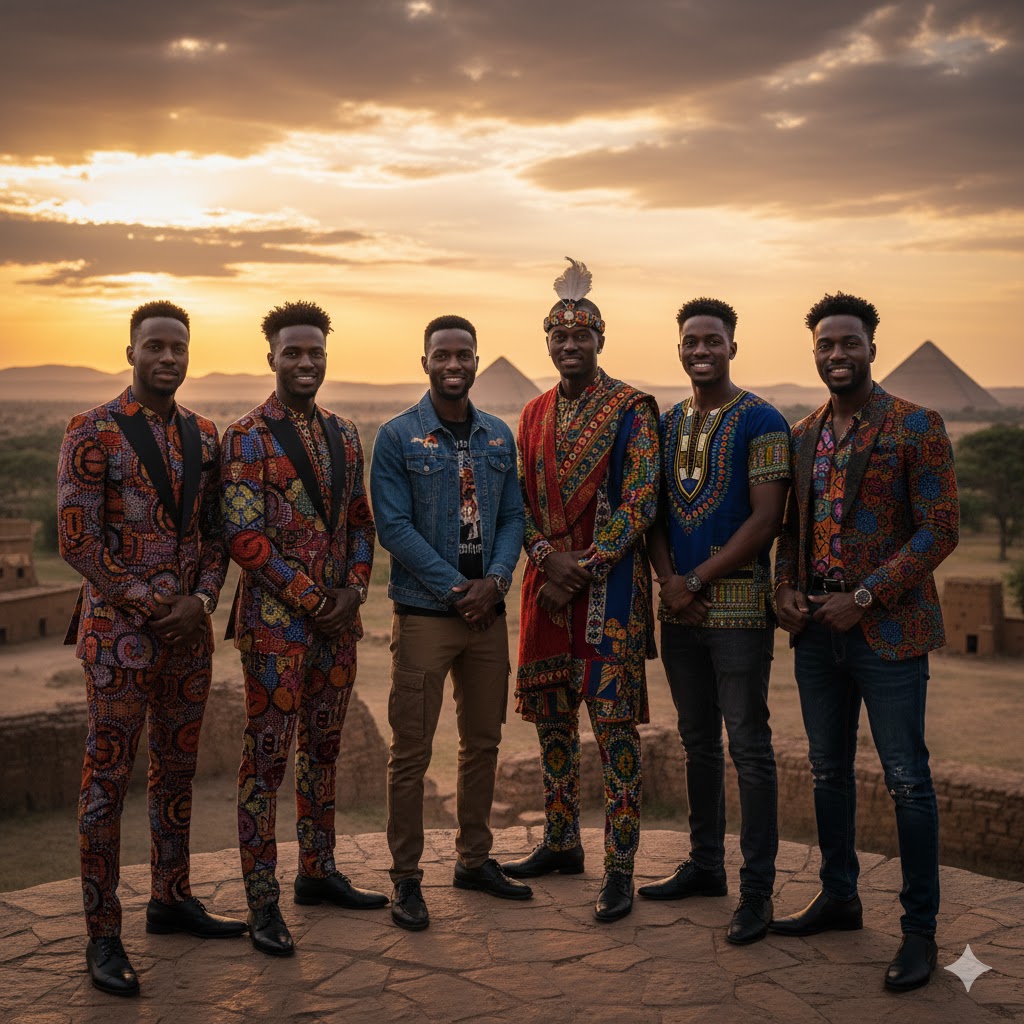
In African traditions, masculine aesthetics often centered on warrior strength and spiritual authority. Broad shoulders, strong jawlines, deep skin pigmentation, and robust bone structure—common phenotypes linked with ancestral African genetics—symbolized survival power in harsh environments. These features communicated readiness to defend the community and withstand adversity, aligning with warrior archetypes like the Zulu induna or Dahomey generals.

Psychologically, African masculine identity historically emphasized communal responsibility, courage, and divine leadership. Kings and warriors adorned themselves with symbolic emblems—leopard skins, spears, gold, spiritual markings—to visually display covenant identity and ancestral power. Beauty is intertwined with duty, where physical form expresses divine assignment and social purpose.

In Near Eastern and Hebraic traditions, masculine aesthetics blended priesthood and kingship. The biblical Israelite ideal combined moral purity, spiritual discipline, and prophetic authority. The archetype of David—warrior-poet, humble yet mighty—illustrates a masculinity where beauty flowed from righteousness, loyalty to God, and leadership rooted in covenant responsibility.

Ethiopian Solomonic imagery continued this sacred lineage, reinforcing that true masculine strength radiates from spiritual legitimacy. Royal garments, crowns, and lion symbolism communicated divine selection. The biblical statement, “Gird thy sword upon thy thigh, O most mighty… and in thy majesty ride prosperously” (Psalm 45:3–4, KJV), captured a fusion of warriorhood and holiness.

In West African Mali and Songhai empires, masculine aesthetics emphasized intellectual nobility and economic authority. Scholars, merchants, and rulers like Mansa Musa projected refinement through textiles, gold adornment, and dignified posture. Beauty symbolized abundance and wisdom—masculinity as provision and civilization-building rather than brute force alone.

Greco-Roman masculinity elevated proportion, symmetry, and muscularity, rooted in philosophical ideals of human perfection. Statues reflected ideal facial angles, balanced musculature, and calm expressions, tying genetics to aesthetic geometry. This classical archetype valued form as evidence of discipline, intellect, and civic virtue, merging beauty with philosophical excellence.

Psychologically, European masculinity later shifted toward aristocratic refinement—tailoring, grooming, posture—as symbols of social rank. The “gentleman” aesthetic emphasized controlled aggression, elite education, and strategic alliance-building. Strength was intellectual and diplomatic as much as physical, shaping modern Western masculine ideals.

In East Asian cultures, masculine aesthetics historically reflected stoicism, inner discipline, and harmony. Samurai traditions honored restrained expression, refined posture, and spiritual calm. Masculinity emphasized mastery over the self, duty to the collective, and quiet loyalty. Strength was inward strength—discipline over impulse, honor over dominance.

Genetically, masculine variation across populations emerges from evolutionary pressures. Warmer climates favored lean muscularity and melanin richness; colder environments selected for broader frames and lighter pigmentation. These genetic differences helped shape aesthetic ideals, but culture transformed biology into symbolic language—beauty expressing identity, not hierarchy.

The global archetype of the “Protector” appears universal—whether Zulu warrior, Hebrew king, Roman general, or Samurai swordsman. Yet, the expression differs: African masculinity externalized communal defense; Hebraic masculinity sanctified justice; Roman masculinity disciplined the body; Samurai masculinity disciplined the spirit.

Another shared archetype is the “Wise Leader.” African kings like Askia the Great, biblical figures like Solomon, and Chinese scholar-officials all projected masculine intelligence through regal composure, ceremonial attire, and calm authority. Beauty was not aggression but thoughtfulness, wisdom, and strategic leadership.

Modern Western culture often reduces masculinity to aesthetics of height, symmetry, muscularity, and dominance. Yet indigenous and ancient societies prioritized virtue, contribution, and communal stewardship. True masculine beauty historically flowed from service, reverence, and legacy—outward form reflecting inward purpose.

Psychologically, masculine confidence has always correlated with perceived social usefulness. Men valued for protection, knowledge, or provision developed stronger self-identity. Masculine beauty, therefore, is not vanity but affirmation of purpose—biology and psychology converging through cultural meaning.

Colonial distortions attempted to weaponize aesthetics by racializing features, privileging European symmetry standards, and devaluing African phenotype richness. Yet African features—broad noses, high cheekbones, rich melanin, coiled hair, full lips—carry evolutionary excellence and cultural depth. As consciousness rises, these traits are reclaimed as symbols of royal identity and ancestral power.

Diaspora psychology reflects a restoration journey: reclaiming Black masculine beauty as spiritual and historical truth. The modern resurgence of natural hair, African garments, sacred jewelry, and warrior postures echoes ancient aesthetics—rooted in memory and resilience.

Masculinity across cultures ultimately shares core values: courage, protection, provision, wisdom, self-mastery, and legacy. Aesthetics serve as visual prophecy—declaring who a man believes himself to be and what he is called to protect. Biology gives the canvas; culture paints its meaning; faith crowns it with divine identity.

Thus, comparative masculine aesthetics reveal not competition but diversity and sacred design. Each culture’s masculine expression illuminates a facet of creation’s purpose: the strong defender, the wise shepherd, the noble king, the disciplined warrior, the peaceful scholar. The truest masculine beauty is integrity lived in visible form.

As men embrace historically grounded identity, they move beyond performative masculinity into covenant masculinity—rooted in duty, love, excellence, and God-given dignity. Strength becomes service, beauty becomes symbolism of purpose, and the masculine form becomes a living temple of divine intention.


References

Akbar, N. (1996). Breaking the chains of psychological slavery. Mind Productions.
Blier, S. (2019). Royal arts of Africa: Majesty, power, and identity. Princeton University Press.
Dutton, E. (2021). The anthropology of beauty: What we like and why. Ulster Academic Press.
Wade, N. (2014). A troublesome inheritance: Genes, race, and human history. Penguin.
Wilson, A. N. (1999). Blueprint for Black power. Afrikan World InfoSystems.