Tag Archives: martin luther king jr

Martin Luther King Jr. Holiday

“Injustice anywhere is a threat to justice everywhere.” — Martin Luther King Jr.
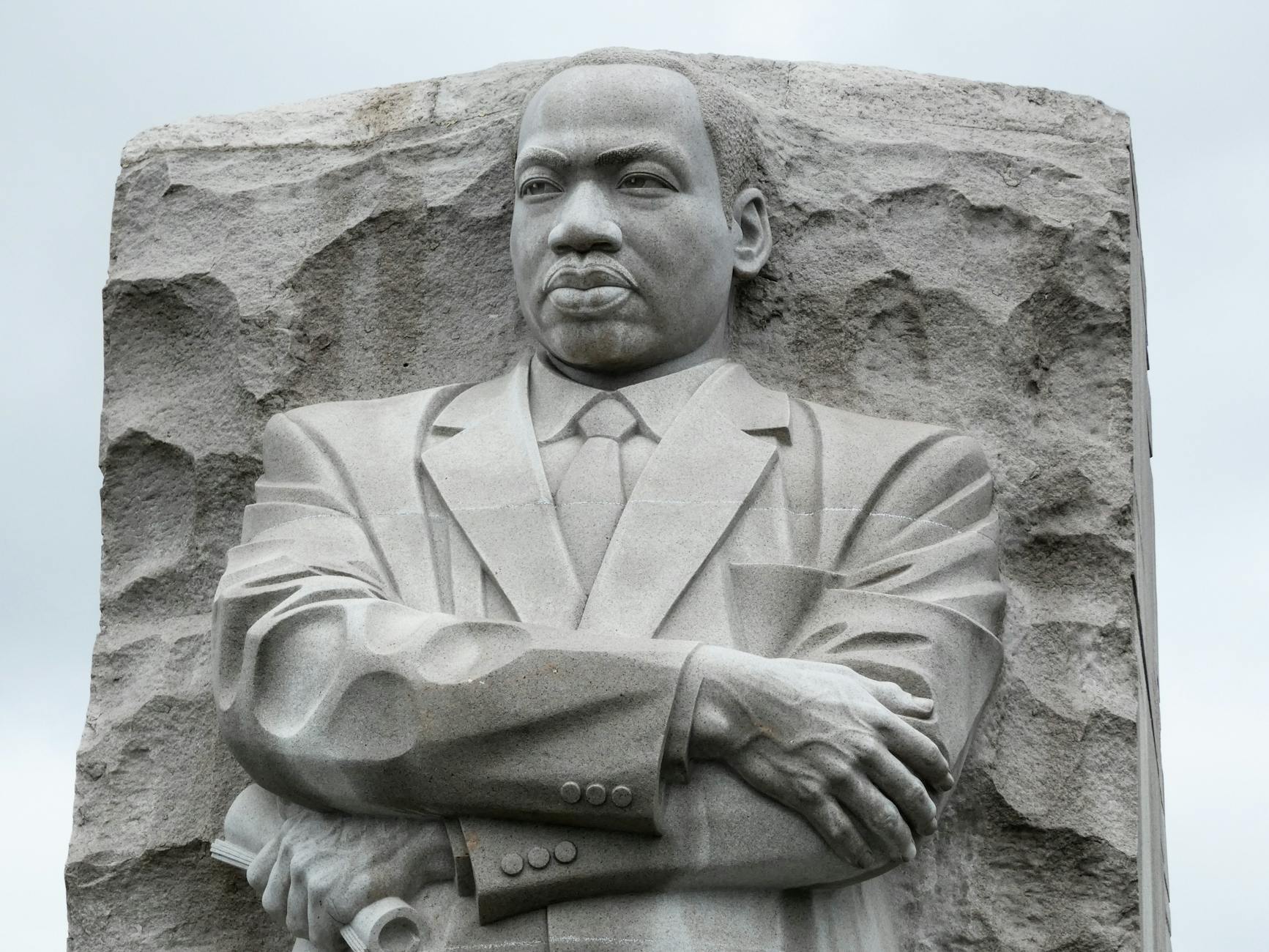
Martin Luther King Jr. Day is a federal holiday in the United States dedicated to honoring the life, legacy, and moral leadership of Dr. Martin Luther King Jr., one of the most influential figures in American history. The holiday serves not only as a remembrance of a man, but as a national reflection on justice, equality, nonviolence, and the unfinished work of civil rights.

The holiday was officially established in 1983, when President Ronald Reagan signed it into law, and it was first observed nationally on January 20, 1986. The date was chosen to fall on the third Monday of January, close to King’s birthday on January 15. The creation of the holiday followed years of public advocacy, grassroots organizing, and political struggle, reflecting the very democratic processes King championed.

He was born on January 15, 1929, with the name Michael King Jr. His father was also born Michael King. In 1934, after a trip to Germany, King’s father was deeply inspired by the 16th-century Protestant reformer Martin Luther. As a result, he changed his own name to Martin Luther King Sr. and also changed his son’s name to Martin Luther King Jr. The change reflected a theological and spiritual admiration for Martin Luther’s stand against corruption and injustice within the church.

Although the name change was used publicly and professionally from that point forward, King Jr.’s birth certificate was not formally amended, meaning “Michael King Jr.” technically remained his legal birth name on record. This renaming carried symbolic weight. Just as Martin Luther challenged entrenched systems in his era, Martin Luther King Jr. would later challenge racial injustice and moral hypocrisy in America, making the name prophetically aligned with his life’s mission.

Dr. Martin Luther King Jr. was born on January 15, 1929, in Atlanta, Georgia, into a deeply rooted Black Christian family. His father, Martin Luther King Sr., was a Baptist minister, and his mother, Alberta Williams King, was an educator and church organist. From an early age, King was immersed in faith, scholarship, and the lived reality of racial segregation in the Jim Crow South.

King was a brilliant academic. He earned a Bachelor of Arts degree from Morehouse College, a Bachelor of Divinity from Crozer Theological Seminary, and a PhD in Systematic Theology from Boston University. His education shaped his ability to articulate moral arguments against racism, drawing from Christian theology, philosophy, and social ethics.

While studying in Boston, King met Coretta Scott, a gifted musician and intellectual in her own right. They married in 1953, forming a partnership rooted in faith, justice, and shared purpose. Coretta Scott King would later become a civil rights leader herself, preserving and advancing her husband’s legacy long after his death.

Together, Martin and Coretta King had four children: Yolanda Denise King, Martin Luther King III, Dexter Scott King, and Bernice Albertine King. Each child has, in various ways, contributed to the continuation of their father’s vision for justice, equity, and nonviolent social change.

King’s public career as a civil rights leader began in earnest in 1955 during the Montgomery Bus Boycott, sparked by Rosa Parks’ arrest. As a young pastor, King emerged as the spokesperson for a mass movement that successfully challenged segregation through disciplined, collective nonviolent resistance.

Central to King’s philosophy was nonviolence, deeply inspired by the teachings of Jesus Christ and the example of Mahatma Gandhi. King believed nonviolence was not passive submission but a powerful moral force capable of transforming enemies into allies and unjust systems into redeemed institutions.

King became a central figure in the Civil Rights Movement, helping to lead campaigns against segregation, voter suppression, economic injustice, and racial violence. He co-founded the Southern Christian Leadership Conference (SCLC) in 1957, which mobilized Black churches as engines of social change.

One of King’s most iconic moments came during the 1963 March on Washington, where he delivered the “I Have a Dream” speech. This address articulated a prophetic vision of America living up to its founding ideals, resonating across racial, religious, and national boundaries.

King’s activism played a crucial role in the passage of landmark legislation, including the Civil Rights Act of 1964 and the Voting Rights Act of 1965. These laws dismantled legal segregation and expanded democratic participation for millions of Black Americans.

In recognition of his moral leadership and commitment to peace, King was awarded the Nobel Peace Prize in 1964, becoming the youngest recipient at the time. He used the prize money to further the civil rights struggle, emphasizing collective responsibility over personal gain.

Despite his global recognition, King faced constant opposition, surveillance, and threats. He was criticized by segregationists, political leaders, and even some allies who viewed his stance against war and economic inequality as too radical.

On April 4, 1968, Dr. Martin Luther King Jr. was assassinated in Memphis, Tennessee, while standing on the balcony of the Lorraine Motel. He had traveled there to support striking sanitation workers, demonstrating his growing focus on labor rights and economic justice.

King was killed by James Earl Ray, who later pleaded guilty, though questions and controversies surrounding the assassination persist. King’s death sent shockwaves through the nation and the world, igniting grief, protests, and renewed calls for justice.

In the wake of his death, Coretta Scott King founded The King Center in Atlanta in 1968. The King Center serves as a living memorial, dedicated to education, research, and nonviolent social change, ensuring that King’s philosophy remains active rather than merely historical.

The campaign to establish Martin Luther King Jr. Day was led by activists, lawmakers, and artists, including Stevie Wonder, whose song “Happy Birthday” helped galvanize public support. After years of resistance, the holiday was finally recognized as a federal observance.

Martin Luther King Jr. Day is unique among U.S. holidays because it is designated as a National Day of Service, encouraging Americans to honor King’s legacy through volunteerism and community engagement rather than leisure alone.

Today, King’s legacy lives on through movements for racial justice, voting rights, economic equity, and global human rights. His writings, sermons, and speeches continue to inform scholars, activists, theologians, and policymakers across the world.

Dr. Martin Luther King Jr. is remembered not simply as a civil rights leader, but as a moral visionary whose life testified that love, justice, and courage can bend the arc of history toward righteousness when people are willing to stand, sacrifice, and believe.


References

Carson, C. (2001). The autobiography of Martin Luther King, Jr. New York, NY: Warner Books.

King, M. L., Jr. (1963). Why we can’t wait. New York, NY: Harper & Row.

King, M. L., Jr. (1964). Nobel Peace Prize acceptance speech. Oslo, Norway.

The King Center. (n.d.). The life of Dr. Martin Luther King, Jr. Atlanta, GA.

U.S. Office of Personnel Management. (n.d.). Martin Luther King Jr. Day. Washington, DC.

Carson, C. (2001). The autobiography of Martin Luther King, Jr. New York, NY: Warner Books.
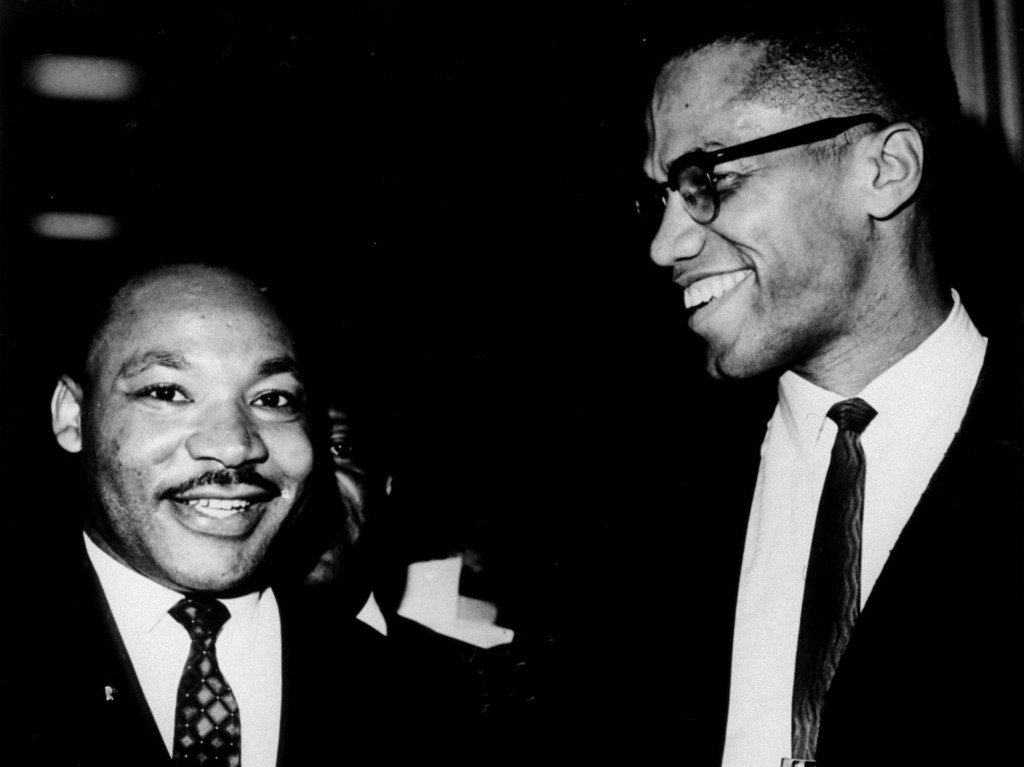
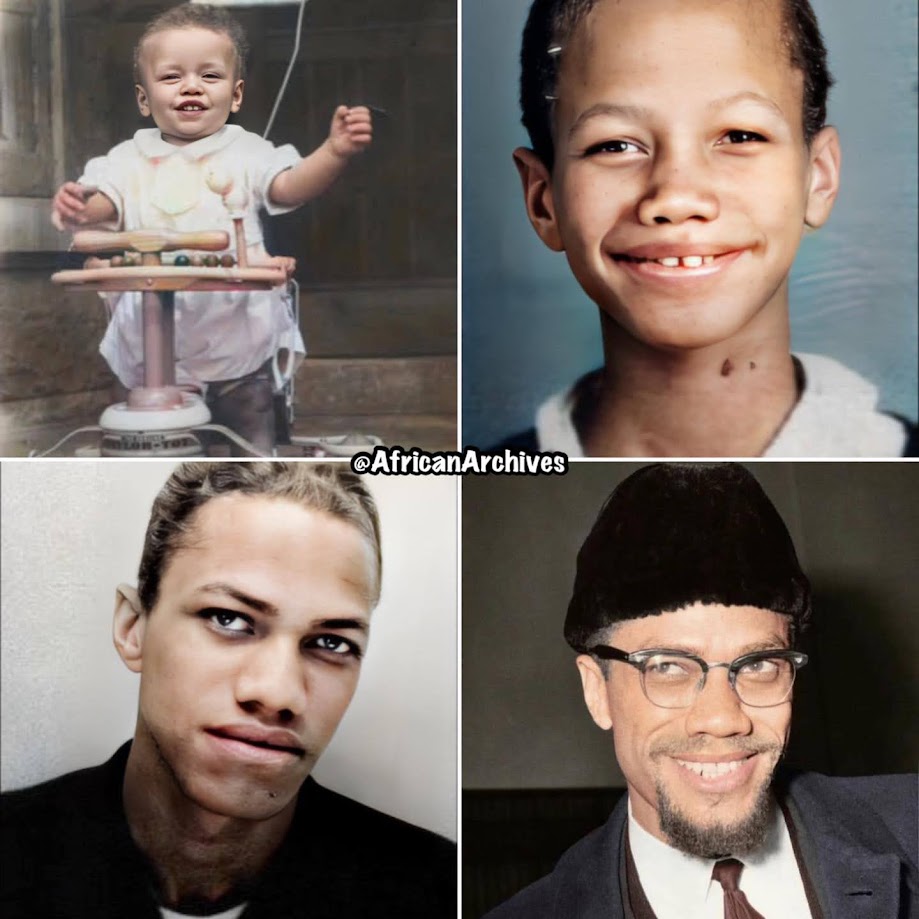
MALCOLM X vs MARTIN LUTHER KING JR.

✊🏽 Two Prophets, One Struggle for Black Liberation

(AP Photo/Henry Griffin)

In the pantheon of American civil rights icons, two names shine with unrelenting brilliance: Malcolm X and Dr. Martin Luther King Jr. Though often cast as ideological opposites—one the militant voice of self-determination, the other the peaceful champion of integration—both men were fearless visionaries who dedicated their lives to the liberation and dignity of African Americans. Despite their differences in theology, rhetoric, and strategy, both stood at the frontline of a nation grappling with racism, injustice, and the unfulfilled promise of democracy.


🕋 Malcolm X: The Firebrand of Black Nationalism

Malcolm X was born Malcolm Little on May 19, 1925, in Omaha, Nebraska. The son of a Baptist preacher and Garveyite activist, Malcolm was introduced early to the power of Black pride. However, after the tragic death of his father and institutionalization of his mother, Malcolm’s youth spiraled into crime and incarceration. While in prison, he encountered the teachings of the Nation of Islam (NOI), a Black nationalist and religious movement led by Elijah Muhammad. Renouncing his surname—“Little”—as a slave name, Malcolm adopted “X” to represent his lost African ancestry.

Through the NOI, Malcolm preached racial pride, economic self-reliance, and Black separation from white society. He famously called for Black liberation “by any means necessary”, advocating self-defense rather than passive resistance. At a time when police brutality and lynchings plagued Black communities, Malcolm X’s unapologetic stance resonated deeply.

Malcolm X’s views were complex and evolving. While he initially condemned interracial relationships, later in life, after breaking with the Nation of Islam and making a pilgrimage to Mecca in 1964, he saw Muslims of all races united in faith. This broadened his worldview and led him to embrace Pan-Africanism and human rights advocacy, softening his stance toward whites.

On Black women, Malcolm once declared:

“The most disrespected person in America is the Black woman. The most unprotected person in America is the Black woman.” (Malcolm X, 1962)

This powerful quote reflected his growing recognition of Black women’s roles in the liberation struggle.

He was married to Betty Shabazz, with whom he had six daughters. Tragically, Malcolm X was assassinated on February 21, 1965, in Harlem’s Audubon Ballroom, just as he was forming the Organization of Afro-American Unity, a non-religious group focused on global Black solidarity.


✝️ Dr. Martin Luther King Jr.: The Apostle of Peace and Justice

Born Michael Luther King Jr. on January 15, 1929, in Atlanta, Georgia, he later changed his name to Martin in honor of the German Protestant reformer. Raised in the heart of the Black church, Martin became a Baptist minister and theologian steeped in the Christian doctrine of love, peace, and redemption.

King earned his doctorate in theology from Boston University and emerged as the leader of the Montgomery Bus Boycott in 1955 after Rosa Parks’ arrest. He founded the Southern Christian Leadership Conference (SCLC) and promoted nonviolent civil disobedience inspired by the teachings of Jesus Christ and Mahatma Gandhi.

He once wrote:

“Darkness cannot drive out darkness; only light can do that. Hate cannot drive out hate; only love can do that.” (King, Strength to Love, 1963)

King’s message appealed to the moral conscience of America. He led monumental events like the March on Washington in 1963, where he delivered his iconic “I Have a Dream” speech.

King was married to Coretta Scott King, and they had four children. While widely revered today, King was labeled a radical in his time. After his death in 1968, newly released FBI files alleged moral failings and adultery, but these accusations remain controversial and heavily debated for their lack of verifiable evidence and the FBI’s notorious attempts to discredit him (Garrow, 1986).


⚖️ Christianity vs. Nation of Islam

The theological differences between the men mirrored the ideological divides of their movements:

  • Christianity, as King practiced, preached forgiveness, integration, and universal brotherhood.
  • The Nation of Islam, as Malcolm embraced in his early years, preached Black supremacy, self-sufficiency, and a theological rejection of white society as inherently evil.

While King saw America as a nation to be redeemed, Malcolm often saw it as irredeemable.


🤝🏿 Did They Respect Each Other?

Though they met only once briefly in 1964, both Malcolm and Martin acknowledged the other’s sincerity and impact. Initially, Malcolm criticized King’s nonviolence as submissive. However, toward the end of his life, Malcolm expressed admiration for King’s commitment and bravery. After Malcolm’s assassination, King said:

“Malcolm X was a brilliant man who had great insight and was an eloquent spokesman for his point of view…I think he had a great ability to analyze the problem.”


👑 What Did They Do for Black People?

  • Malcolm X gave voice to the voiceless, empowering Black people to see themselves as valuable, independent, and sovereign. He introduced terms like “Afro-American” and made “Black is Beautiful” a political statement.
  • Martin Luther King Jr. was instrumental in achieving civil rights legislation, including the Civil Rights Act of 1964 and the Voting Rights Act of 1965, transforming American society through legal and moral change.

🌍 Views on America, Racism, and Africa

  • Malcolm X denounced America’s hypocrisy, calling it a “prison of the oppressed.” After his hajj to Mecca, he embraced a broader global view, saying, “I am not a racist. I am against every form of racism and segregation.”
  • King believed America could live up to its promise if it was held accountable. He said, “I have a dream that one day this nation will rise up and live out the true meaning of its creed.”

Both men viewed Africa as central to Black identity and liberation. Malcolm made alliances with African leaders, while King supported African independence movements.


👶🏾 Wives and Children

  • Malcolm X and Betty Shabazz had six daughters, including the late activist Malikah Shabazz.
  • Martin Luther King Jr. and Coretta Scott King had four children, including Bernice King, a prominent speaker and activist.

🏁 Final Thought: Who Had the Better Message?

This question defies easy answers. Malcolm X gave us the courage to stand tall. Martin Luther King Jr. taught us the power of enduring love. Together, they represented two wings of the same freedom bird. One cried out in righteous anger; the other marched with patient hope. But both demanded that Black people be seen, respected, and free.


📚 References

  • Garrow, D. J. (1986). Bearing the Cross: Martin Luther King, Jr., and the Southern Christian Leadership Conference. William Morrow & Co.
  • Malcolm X & Haley, A. (1965). The Autobiography of Malcolm X. Grove Press.
  • King, M. L. Jr. (1963). Strength to Love. Harper & Row.
  • Marable, M. (2011). Malcolm X: A Life of Reinvention. Viking.
  • Cone, J. H. (1991). Martin & Malcolm & America: A Dream or a Nightmare. Orbis Books.
  • Nation of Islam. (n.d.). Official Website. http://www.noi.org
  • The King Center. (n.d.). Biography of Dr. Martin Luther King Jr. http://www.thekingcenter.org

“From Jim Crow to Justice: THE CIVIL RIGHTS MOVEMENT and the Long Road to Equality”


Photo by Chris on Pexels.com

Introduction

The Civil Rights Movement was one of the most transformative periods in American history. Spanning from 1954 to 1968, it represented a moral and legal battle for racial equality, dignity, and justice for Black Americans long oppressed under the shadow of slavery, segregation, and systemic racism. With grassroots courage, spiritual leadership, and national reckoning, the movement dismantled Jim Crow laws, challenged white supremacy, and redefined the conscience of a nation.


Origins of the Movement

The modern Civil Rights Movement began in earnest with the 1954 Brown v. Board of Education decision, in which the U.S. Supreme Court declared segregation in public schools unconstitutional. Yet resistance in the South was fierce, with white politicians, police, and citizens clinging to Jim Crow customs that banned Black people from using the same restrooms, water fountains, buses, restaurants, and schools as white people.

This apartheid-like system was enforced through humiliation, economic retaliation, and police brutality.


Key Leaders and Organizations

Dr. Martin Luther King Jr.

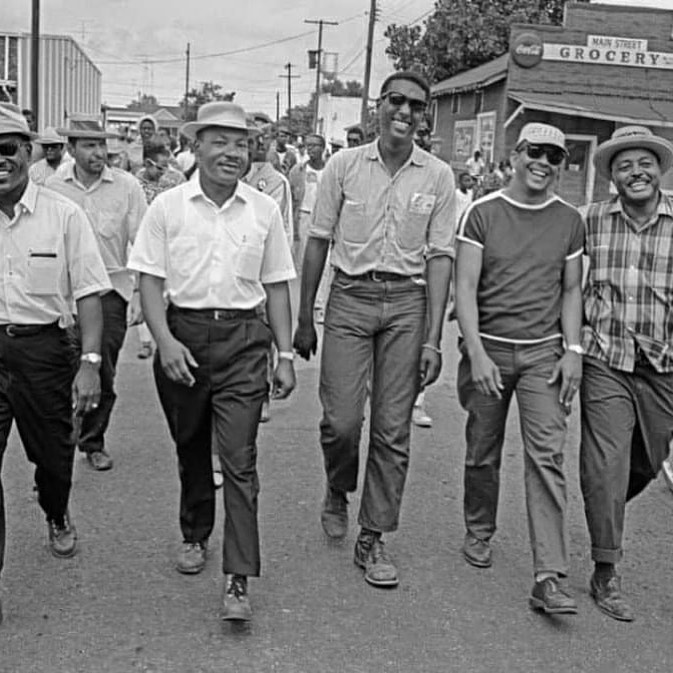
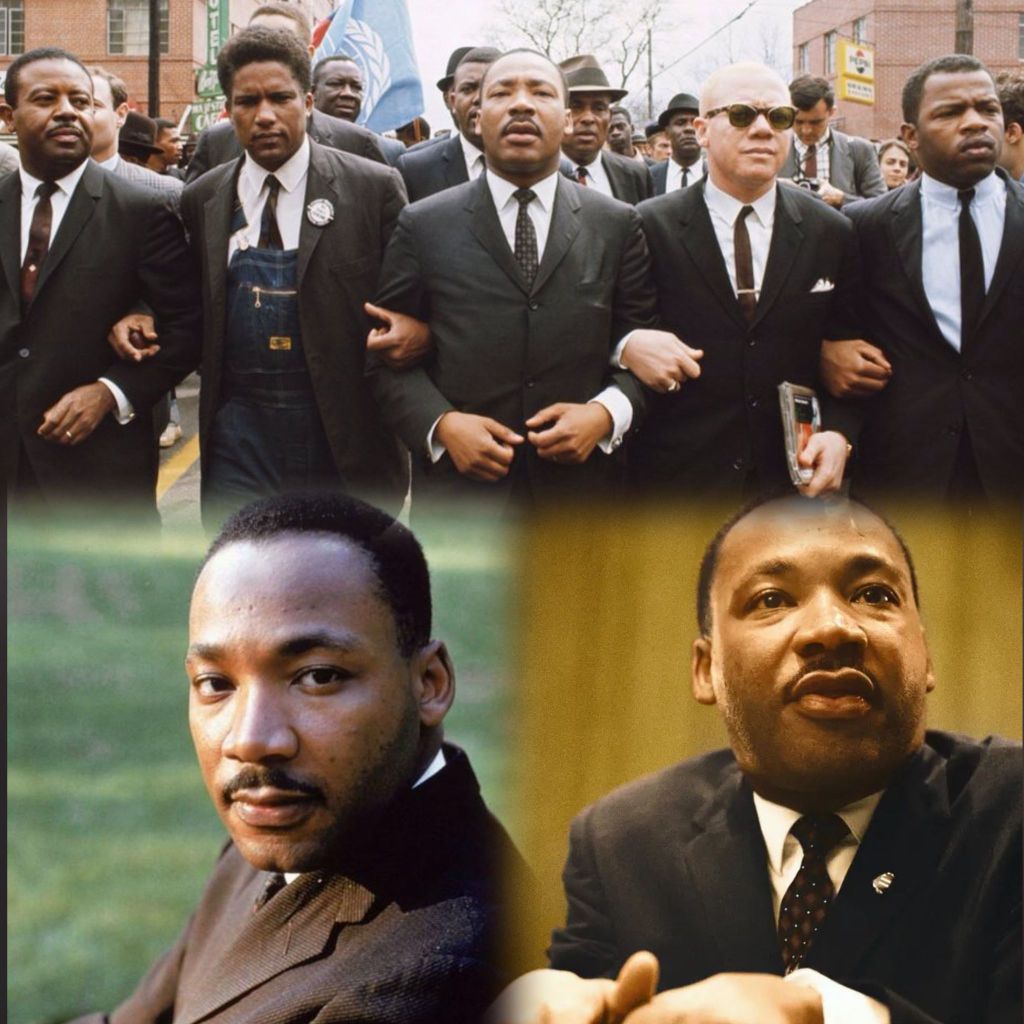
Dr. Martin Luther King Jr. emerged as the moral compass of the movement. A Baptist minister from Atlanta, Georgia, King rose to national prominence during the Montgomery Bus Boycott (1955–56), which followed the arrest of Rosa Parks, a Black woman who refused to give up her seat to a white passenger. King later founded the Southern Christian Leadership Conference (SCLC) and led nonviolent campaigns across the South—including in Birmingham, Selma, and Washington, D.C.

In his iconic “I Have a Dream” speech (1963), King called for a nation where people would not be judged by the color of their skin but by the content of their character. His philosophy of nonviolence, inspired by Jesus and Gandhi, stood in stark contrast to the brutality Black Americans faced.

Rosa Parks

Often called “the mother of the civil rights movement,” Rosa Parks’ simple act of defiance became a catalyst for mass protest. Her arrest sparked the 381-day Montgomery Bus Boycott, which crippled the city’s economy and led to the desegregation of its bus system.

Medgar Evers

Medgar Evers, a World War II veteran and NAACP field secretary in Mississippi, worked tirelessly to investigate lynchings and push for school integration. He was assassinated outside his home in 1963 by white supremacist Byron De La Beckwith, becoming a martyr for the movement.

Jesse Jackson

Jesse Jackson, a young activist and close associate of King, founded Operation PUSH and later the Rainbow Coalition, focusing on economic empowerment and political inclusion. He marched with King and continued advocating for civil rights and racial justice for decades.

White Allies

Not all white Americans opposed the movement. Many, including Jewish activists and Christian clergy, joined protests, marches, and even lost their lives—such as Viola Liuzzo, murdered by the Klan after Selma, and Andrew Goodman and Michael Schwerner, killed with James Chaney in Mississippi during Freedom Summer.


Other Influential Groups

Malcolm X

Though not part of the mainstream civil rights leadership, Malcolm X of the Nation of Islam was a vital voice. He criticized the passive approach of nonviolence, advocating for Black self-defense, racial pride, and liberation by any means necessary. His evolution toward Pan-African unity and human rights broadened the scope of the Black struggle.

The Black Panther Party

Founded in 1966 by Huey Newton and Bobby Seale, the Black Panther Party combined militant resistance with community programs—like free breakfasts and medical clinics. They stood against police brutality, which in the 1960s often included attacks with dogs, water hoses, and nightsticks, particularly during protests in Birmingham and Selma.


Police Brutality and Resistance

Black protesters often faced militarized repression. Peaceful marchers in Birmingham (1963) were attacked with police dogs and high-pressure fire hoses, scenes that shocked the world. In Selma (1965), on “Bloody Sunday,” marchers were beaten on the Edmund Pettus Bridge by Alabama state troopers. Police routinely abused, jailed, and sometimes murdered activists. The justice system largely protected white aggressors.


Major Legislative Achievements

The movement forced monumental legal changes:

  • Civil Rights Act of 1964 – outlawed segregation and workplace discrimination.
  • Voting Rights Act of 1965 – banned literacy tests and protected Black voting rights.
  • Fair Housing Act of 1968 – outlawed housing discrimination.

These victories were hard-won through protest, litigation, and bloodshed.


Assassinations and Political Turmoil

Dr. King was assassinated on April 4, 1968, in Memphis, Tennessee, by James Earl Ray. His death sparked nationwide riots and mourning. President John F. Kennedy, who had cautiously supported civil rights and proposed legislation before his assassination in 1963, was killed by Lee Harvey Oswald (officially). His successor, Lyndon B. Johnson, signed many civil rights laws into action.


Controversies and Legacy

FBI files later revealed that J. Edgar Hoover’s COINTELPRO sought to discredit King and other Black leaders. Allegations surfaced of King’s infidelity, possibly manipulated through illegal surveillance. Though claims exist that he was involved with prostitutes, these remain contested and ethically questionable due to FBI tampering. King’s wife, Coretta Scott King, a dignified civil rights leader in her own right, continued his legacy with grace. They had four children and maintained close ties with the gospel community, including Aretha Franklin’s father, Rev. C.L. Franklin, who was a friend of King.


Did It Make a Difference?

Yes—and no. The Civil Rights Movement ended legal segregation and created frameworks for equality. Black voter registration soared, Black elected officials increased, and legal protections were codified. But racism did not end. Today, systemic inequality persists through mass incarceration, housing discrimination, economic disparity, and police violence.

Yet the movement planted seeds of resistance, dignity, and unity that endure in modern movements like Black Lives Matter, and in the resilience of Black communities across America.


Conclusion

The Civil Rights Movement was a righteous uprising against injustice, born of centuries of suffering and sanctified by the blood of martyrs. Led by both preachers and Panthers, men and women, Black and white allies, the movement shattered chains both literal and psychological. It did not end racism—but it changed the law, awakened a nation, and inspired the world.

As King once said, “The arc of the moral universe is long, but it bends toward justice.” The bending continues.


References

  • Branch, T. (1988). Parting the Waters: America in the King Years 1954–63. Simon & Schuster.
  • Carson, C. (1998). The Autobiography of Martin Luther King, Jr. Warner Books.
  • Fairclough, A. (2001). Better Day Coming: Blacks and Equality, 1890-2000. Penguin.
  • Garrow, D. J. (1986). Bearing the Cross: Martin Luther King Jr. and the Southern Christian Leadership Conference. Harper Perennial.
  • Malcolm X & Haley, A. (1965). The Autobiography of Malcolm X. Grove Press.
  • Tyson, T. B. (2004). Blood Done Sign My Name. Crown.
  • Williams, J. (2013). Eyes on the Prize: America’s Civil Rights Years, 1954-1965. Penguin Books.

The Male Files: The Civil Rights Movement and Its Effect on the Male Psyche years later. #thebrownboydilemma

This photograph is the property of its respective owners. No copyright infringement intended

The Civil Rights Movement was more than a social revolution—it was a psychological awakening. For Black men in America, it reshaped not only how they were seen but also how they saw themselves. Decades of racial oppression, legal segregation, and economic disenfranchisement had fractured the male identity of many African American men, forcing them to exist between strength and survival. The fight for equality became a fight for restoration of dignity and manhood.

Before the movement, systemic racism and Jim Crow laws limited Black men’s ability to fulfill the traditional male role as provider and protector. Economic exclusion, racial terror, and criminalization created barriers to employment, education, and mobility. Sociologist E. Franklin Frazier (1939) wrote that the Black family was under “continuous economic and psychological assault.” These forces stripped Black men of the power to lead in their own homes and communities.

The male psyche under oppression developed a dual consciousness—what W. E. B. Du Bois (1903) called “two-ness.” Black men were forced to measure themselves by the white gaze while yearning to live authentically. They navigated a society that demanded compliance yet punished ambition. This internal tension bred both resilience and rage—a quiet storm of masculinity seeking meaning in a hostile world.

When the Civil Rights Movement emerged in the 1950s and 1960s, it reawakened something deeply spiritual within the Black male psyche. Marching, protesting, and organizing became acts of reclaiming agency. Leaders like Martin Luther King Jr., Malcolm X, and Medgar Evers embodied new models of manhood rooted in courage, discipline, and purpose. Their visibility and sacrifice redefined masculinity—not through dominance, but through moral strength and communal love.

Martin Luther King Jr. offered a model of nonviolent strength. His philosophy of love and moral courage required enormous self-control—a distinctly masculine restraint that challenged stereotypes of Black men as angry or animalistic. In contrast, Malcolm X represented the righteous fire of self-defense and Black pride. Together, they symbolized the balance between peace and power, intellect and instinct—two halves of the same wounded but rising psyche.

The televised brutality of the movement—the beatings, dogs, and police violence—also traumatized the male psyche. While the world saw Black men demanding justice, those same men carried unseen emotional scars. Psychologists today might recognize symptoms of racial trauma, including hypervigilance, anger, and internalized shame. The Civil Rights Movement both healed and hurt: it empowered men to stand tall, yet exposed them to violence that often lingered in their minds and bodies.

For many men, activism replaced silence with purpose. Protesting became therapy. The collective struggle provided identity, community, and pride that counteracted centuries of emasculation. The image of Black men marching in unity—dressed sharply, singing freedom songs—restored the psychological dignity that slavery and segregation had long denied. This was not just political; it was existential.

Yet, the post-movement era brought new challenges. The assassination of key leaders fractured the psyche again, creating a void in leadership and trust. The promised economic gains of civil rights legislation did not always reach Black men equally, and systemic barriers persisted through mass incarceration and job discrimination. Sociologist William Julius Wilson (1987) later argued that structural economic changes left many urban Black men in “social isolation,” fueling frustration and identity confusion.

This disillusionment led to a psychological shift. The same men who once marched for justice watched as drugs, unemployment, and violence eroded their communities in the 1970s and 1980s. The masculine pride awakened during the movement was now tested by a new kind of oppression—economic rather than legal, psychological rather than physical.

Still, the legacy of the Civil Rights Movement continued to shape Black male identity. It instilled a sense of purpose, pride, and intellectualism. Movements like Black Power and later Black Lives Matter drew from that foundation, redefining manhood yet again for new generations. Today’s Black men inherit both the pain and the pride of that era.

Psychologically, the Civil Rights Movement demonstrated that masculinity could coexist with compassion. It taught that being a man was not about control or dominance, but about courage, moral integrity, and service to one’s people. It showed that liberation was not only external but internal—a renewal of the mind.

Spirituality also played a central role in restoring the Black male psyche. Churches became safe spaces for leadership and self-expression. Men preached, organized, sang, and strategized under the belief that God was on their side. This faith-centered masculinity anchored many during times of despair and humiliation.

At the same time, the movement’s gender dynamics revealed tension. While men were often in leadership roles, women were the backbone of the struggle. This imbalance sometimes reinforced patriarchal norms, shaping how Black men viewed leadership and emotional vulnerability. Healing the male psyche also meant confronting these inherited notions of power.

The Civil Rights Movement thus reshaped the psychology of Black manhood into something complex and evolving. It created space for vulnerability, empathy, and collective identity—qualities once dismissed as weakness. It also forced men to reckon with their trauma, to define strength beyond stoicism.

In today’s society, echoes of that psychological transformation remain. The modern Black man carries both the strength of his ancestors and the scars of their struggles. He is a product of resilience—a living testament to survival against systems designed to destroy his mind, spirit, and masculinity.

Ultimately, the Civil Rights Movement did more than change laws—it changed men. It birthed a new consciousness that redefined what it means to be a man under oppression. The movement proved that liberation begins first in the mind, then in the world. The fight for civil rights was—and remains—a fight for psychological freedom.


References

Du Bois, W. E. B. (1903). The Souls of Black Folk. Chicago: A. C. McClurg & Co.

Frazier, E. F. (1939). The Negro Family in the United States. Chicago: University of Chicago Press.

King, M. L. Jr. (1963). Strength to Love. New York: Harper & Row.

Wilson, W. J. (1987). The Truly Disadvantaged: The Inner City, the Underclass, and Public Policy. Chicago: University of Chicago Press.

Watkins, W. H. (2005). The Assault on Public Education: Confronting the Politics of Corporate School Reform. New York: Teachers College Press.