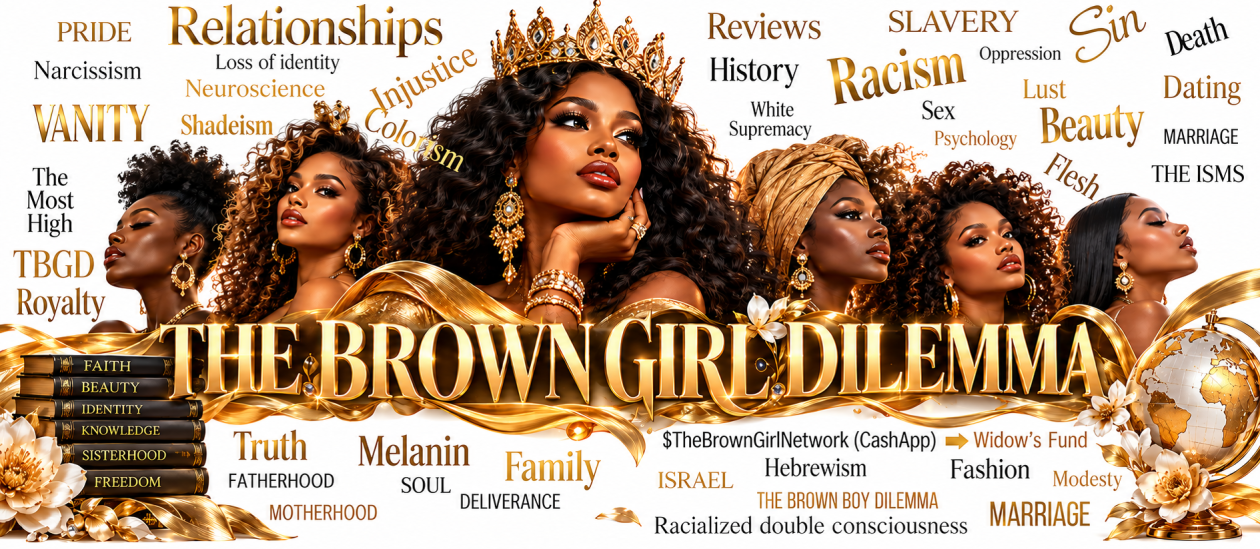


Beauty is one of the most powerful and debated concepts in human society. Throughout history, people have created standards of beauty based on culture, geography, social influences, and historical experiences. For many women, especially women of color, questions about beauty are often connected to identity, acceptance, confidence, and how society chooses to value certain appearances over others.
The question “Is she prettier than me?” is a question many women have silently asked themselves. It reflects a deeper struggle with comparison and the desire to understand one’s own worth. However, beauty is not a competition where one person’s attractiveness must diminish another person’s value.
For many Brown and Black women, the experience of beauty has been shaped by social messages about skin tone, hair texture, facial features, and body image. Colorism and Eurocentric beauty standards have historically influenced perceptions of attractiveness, creating situations where certain features are praised while others are overlooked.
The “Brown Girl Dilemma” represents the internal conflict many women experience when society teaches them to measure their beauty against another woman. Instead of asking, “Am I beautiful?” they may find themselves asking, “Am I beautiful enough compared to her?” This shift creates unnecessary emotional pressure.
The truth is that beauty is interpreted through many different lenses. Some people are drawn to facial symmetry, others to personality, confidence, kindness, intelligence, style, or cultural expression. Human attraction is complex and cannot be reduced to one universal measurement.
Psychologists have studied how beauty perceptions are influenced by both biological factors and cultural environments. Research on facial attractiveness has explored concepts such as symmetry, proportions, and familiarity, but social experiences and cultural preferences also influence what individuals perceive as beautiful.
The media plays a significant role in shaping beauty ideals. For decades, advertising, entertainment, and popular culture have often promoted narrow definitions of beauty. When only certain appearances receive consistent representation, people may begin to believe that those standards represent the only form of beauty.
For Brown girls, representation matters because seeing diverse forms of beauty can influence self-esteem and identity. When women see themselves reflected positively in media, leadership, fashion, and culture, it challenges the idea that beauty belongs to only one group.
Colorism remains an important conversation within many communities. Lighter and darker skin tones have often been treated differently because of historical systems of racial hierarchy. These experiences have affected how some women view themselves and how they are viewed by others.
However, beauty should not be defined by a hierarchy of skin tones. Every complexion carries its own uniqueness, history, and expression. The worth of a woman is not determined by whether she fits a particular beauty standard created by society.
The question “Who decides?” is perhaps the most important part of the conversation. Throughout history, beauty standards have often been influenced by social power, media industries, cultural traditions, and economic interests. These standards can change over time because beauty ideals are not fixed.
A woman’s beauty is also expressed through confidence. Confidence does not come from believing one is better than everyone else; it comes from recognizing one’s own value without needing constant comparison.
True beauty includes character. A person’s compassion, wisdom, strength, integrity, and ability to love others contribute to the way they are perceived. External appearance may attract attention, but character often determines lasting respect.
The Bible teaches that human beings are created in the image of God: “So God created man in his own image” (Genesis 1:27, KJV). This principle suggests that every person possesses inherent dignity and value beyond outward appearance.
First Samuel 16:7 (KJV) teaches that “man looketh on the outward appearance, but the LORD looketh on the heart.” This verse reminds believers that external judgments do not reveal the complete person.
Comparison can steal joy because it encourages people to focus on what they believe they lack rather than appreciating what they possess. A woman who constantly compares herself to others may overlook the qualities that make her uniquely beautiful.
The Brown Girl journey involves learning to embrace identity rather than seeking approval from standards that were never designed to fully represent her. Beauty can include heritage, culture, individuality, and the confidence to exist authentically.
Women should be able to celebrate one another’s beauty without feeling threatened. Another woman’s attractiveness does not erase someone else’s beauty. There is room for many expressions of beauty in the world.
Ultimately, the question is not “Is she prettier than me?” but “Why have we been taught to measure our worth against another woman?” True empowerment begins when women recognize that beauty is not a limited resource.
The person who decides beauty is not a magazine, a trend, a celebrity, or society alone. Beauty is shaped by perception, but dignity comes from something deeper. Every woman has value that cannot be measured by comparison.
The greatest transformation occurs when a woman looks in the mirror and sees more than appearance. She sees history, resilience, creativity, intelligence, and a unique reflection of humanity. The answer to the dilemma is not competition—it is confidence, acceptance, and self-love.
References
The Holy Bible, King James Version. Scriptures referenced: Genesis 1:27; 1 Samuel 16:7; Psalm 139:14.
Banks, I. (2000). Hair Matters: Beauty, Power, and Black Women’s Consciousness. New York University Press.
Hunter, M. L. (2005). Race, Gender, and the Politics of Skin Tone. Routledge.
Hill, M. E. (2002). Skin color and the perception of attractiveness among African Americans: Does gender make a difference? Social Psychology Quarterly, 65(1), 77–91.
Rhode, D. L. (2010). The Beauty Bias: The Injustice of Appearance in Life and Law. Oxford University Press.