Tag Archives: inspiration

The Colorism Series: Office Politics of Skin Tone.

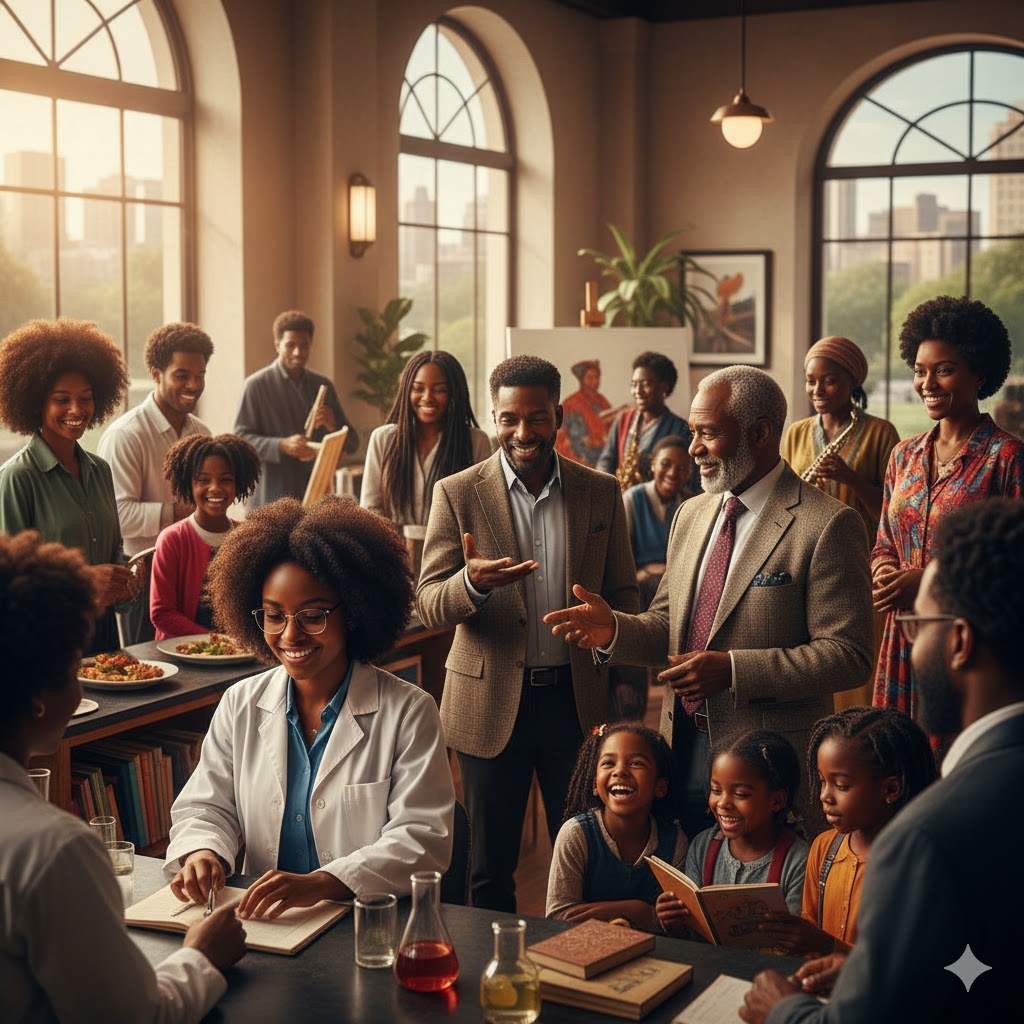
Colorism, a system of inequality that privileges lighter skin tones over darker ones within the same racial or ethnic group, continues to shape workplace dynamics in subtle yet profound ways. Rooted in colonial hierarchies and reinforced through media representation, colorism operates as a silent determinant of perceived professionalism, beauty, and competence.

Colorism operates as a quiet yet powerful force within professional environments, shaping workplace dynamics, opportunities, and perceptions of competence. “Office politics of skin tone” reflects the subtle negotiations of power, favoritism, and bias that occur not just across racial lines, but within them.

Historically rooted in colonial hierarchies and slavery, colorism established a system where lighter skin was associated with proximity to power and privilege. These historical foundations continue to influence modern workplace structures, often in ways that are difficult to detect yet deeply impactful (Hunter, 2007).

In hiring practices, lighter-skinned candidates are frequently perceived as more “professional” or “polished,” reflecting internalized standards tied to Eurocentric beauty ideals. These perceptions are rarely explicit but are reinforced through unconscious decision-making processes.

The role of implicit bias is central to understanding how these dynamics persist. Employers and colleagues may unknowingly favor individuals who align more closely with socially constructed ideals of attractiveness and acceptability (Greenwald & Krieger, 2006).

Once hired, workplace treatment often diverges along color lines. Lighter-skinned employees may receive more mentorship opportunities, positive feedback, and visibility in high-profile projects, all of which are critical for career advancement.

Conversely, darker-skinned employees may face increased scrutiny and harsher evaluations. Their mistakes are more likely to be highlighted, while their achievements may be overlooked or minimized, contributing to slower career progression (Keith & Herring, 1991).

Public figures such as Viola Davis have spoken about being overlooked in favor of lighter-skinned counterparts, illustrating how these biases extend beyond corporate offices into broader professional industries.

Similarly, Lupita Nyong’o has addressed the barriers she faced due to her skin tone, emphasizing the global nature of colorism and its influence on professional recognition.

Office politics often involve informal networks—social gatherings, mentorship circles, and alliances—that play a crucial role in career mobility. Lighter-skinned individuals are more likely to be included in these networks, granting them access to information and opportunities not equally available to others.

Colorism also affects leadership perceptions. Lighter-skinned employees are often seen as more “leadership-ready,” a bias that influences promotion decisions and reinforces disparities in executive representation (Rosette & Dumas, 2007).

In client-facing roles, companies may consciously or unconsciously select lighter-skinned employees to represent their brand, reinforcing narrow definitions of professionalism and appeal. This practice not only marginalizes darker-skinned employees but also perpetuates harmful societal standards.

The economic implications of these dynamics are significant. Research indicates that lighter-skinned individuals within the same racial group often earn higher wages and experience greater occupational mobility (Goldsmith, Hamilton, & Darity, 2007).

The psychological toll on darker-skinned employees is profound. Constant exposure to bias and exclusion can lead to stress, decreased job satisfaction, and a sense of isolation within the workplace (Thompson & Keith, 2001).

Colorism can also create tension and division among employees, as perceived favoritism based on skin tone undermines trust and collaboration. These divisions weaken organizational culture and hinder collective success.

Despite increasing awareness of diversity and inclusion, many corporate initiatives fail to address colorism explicitly. By focusing solely on race, organizations overlook the nuanced ways in which inequality operates within racial groups.

Addressing the office politics of skin tone requires intentional strategies, including bias training that specifically addresses colorism and its manifestations in professional settings.

Transparent evaluation and promotion processes are essential in minimizing subjective judgments influenced by skin tone. Standardized criteria can help ensure that decisions are based on performance rather than perception.

Mentorship and sponsorship programs that prioritize equity can help bridge the gap, providing darker-skinned employees with access to the guidance and opportunities necessary for advancement.

Representation at all levels of leadership is also critical. When diverse skin tones are visible in positions of power, it challenges existing biases and redefines standards of professionalism and success.

Faith-based perspectives offer an additional lens, reminding individuals and organizations that true worth is not determined by outward appearance but by character and integrity (1 Samuel 16:7, KJV).

Ultimately, dismantling the office politics of skin tone requires both individual accountability and systemic change. It demands a commitment to recognizing and challenging biases, fostering inclusivity, and redefining standards of excellence.

Only through deliberate action can workplaces move toward equity—where opportunity is not influenced by complexion, and all individuals are valued for their contributions rather than the shade of their skin.

In many professional environments, lighter-skinned individuals are often unconsciously associated with traits such as approachability, intelligence, and trustworthiness. These perceptions are not accidental but are deeply embedded in historical frameworks that elevated proximity to whiteness as a social advantage (Hunter, 2007).

Scholarly research has consistently demonstrated that lighter-skinned employees, particularly women, are more likely to be hired, promoted, and perceived favorably by employers. This phenomenon reflects what implicit bias scholars identify as unconscious attitudes that influence decision-making processes without deliberate intent (Greenwald & Krieger, 2006).

Within corporate spaces, beauty standards often mirror Eurocentric ideals, privileging straighter hair textures, lighter complexions, and narrower facial features. These standards influence not only hiring decisions but also workplace culture, shaping who is deemed “polished” or “presentable.”

The experiences of darker-skinned women highlight the emotional and professional toll of colorism. Actresses such as Lupita Nyong’o and Viola Davis have publicly discussed how colorism has affected their careers, shedding light on the broader systemic biases that extend beyond Hollywood into corporate America.

Colorism also intersects with gender, creating compounded disadvantages for dark-skinned women. They are often subjected to harsher scrutiny, lower performance evaluations, and fewer leadership opportunities compared to their lighter-skinned counterparts (Keith & Herring, 1991).

In contrast, lighter-skinned employees may benefit from what researchers term the “halo effect,” where physical appearance positively influences perceptions of unrelated traits such as competence and leadership ability (Dion, Berscheid, & Walster, 1972).

The preference for lighter skin can manifest in workplace social dynamics, where lighter-skinned individuals are more likely to be included in networking opportunities, mentorship relationships, and informal social circles that are critical for career advancement.

Historically, these biases can be traced back to slavery and colonial systems, where lighter-skinned individuals were often given preferential treatment due to their proximity to whiteness, sometimes receiving domestic roles instead of field labor. These historical patterns have evolved but not disappeared (Hunter, 2007).

In modern workplaces, colorism may appear in performance reviews, where darker-skinned employees are described with more negative or neutral language, while lighter-skinned employees receive more positive descriptors, even when performance levels are comparable.

Additionally, customer-facing roles often reveal colorist preferences, with lighter-skinned employees more frequently placed in positions that represent the company externally, reinforcing narrow standards of acceptability and professionalism.

The psychological impact of colorism in the workplace cannot be overlooked. Darker-skinned employees may experience decreased self-esteem, increased stress, and a heightened need to overperform to counteract biased perceptions (Thompson & Keith, 2001).

Colorism also affects wage disparities. Studies have shown that lighter-skinned individuals within the same racial group can earn significantly higher wages than their darker-skinned peers, highlighting the economic implications of this bias (Goldsmith, Hamilton, & Darity, 2007).

Corporate diversity initiatives often fail to address colorism explicitly, focusing instead on broader racial categories. This oversight allows intra-racial inequalities to persist unchallenged within organizations.

Media representation continues to reinforce workplace colorism by consistently elevating lighter-skinned individuals as the standard of success and desirability. This cultural messaging influences both employers and employees, shaping expectations and behaviors.

Despite these challenges, there has been a growing movement to confront colorism in professional spaces. Advocacy, research, and open dialogue are beginning to expose these biases and push organizations toward more equitable practices.

Leadership plays a critical role in dismantling colorism. Organizations that actively train managers to recognize and mitigate implicit bias are better positioned to create inclusive environments where all employees can thrive.

Mentorship and sponsorship programs that intentionally include darker-skinned employees can help counteract systemic disadvantages, providing access to opportunities that might otherwise be withheld.

Policy changes, such as standardized hiring practices and transparent promotion criteria, are essential in reducing the influence of subjective biases tied to skin tone.

Ultimately, addressing colorism in the workplace requires a cultural shift that challenges deeply ingrained notions of beauty, professionalism, and worth. It demands accountability from individuals and institutions alike.

By acknowledging and confronting colorism, workplaces can move toward a more just and equitable future—one where success is determined by ability and character rather than the shade of one’s skin.


References

Dion, K., Berscheid, E., & Walster, E. (1972). What is beautiful is good. Journal of Personality and Social Psychology, 24(3), 285–290. https://doi.org/10.1037/h0033731

Goldsmith, A. H., Hamilton, D., & Darity, W. (2007). From dark to light: Skin color and wages among African Americans. Journal of Human Resources, 42(4), 701–738.

Greenwald, A. G., & Krieger, L. H. (2006). Implicit bias: Scientific foundations. California Law Review, 94(4), 945–967.

Hunter, M. (2007). The persistent problem of colorism: Skin tone, status, and inequality. Sociology Compass, 1(1), 237–254.

Keith, V. M., & Herring, C. (1991). Skin tone and stratification in the Black community. American Journal of Sociology, 97(3), 760–778.

Thompson, M. S., & Keith, V. M. (2001). The blacker the berry: Gender, skin tone, self-esteem, and self-efficacy. Gender & Society, 15(3), 336–357.

Rosette, A. S., & Dumas, T. L. (2007). The hair dilemma: Conform to mainstream expectations or emphasize racial identity. Duke Journal of Gender Law & Policy, 14(2), 407–421.


The Male Files: From Enslavement to Empowerment.

The psychological and spiritual formation of Black masculinity cannot be understood apart from the historical reality of enslavement and its ongoing consequences in modern society. Chattel slavery in the Americas was not merely an economic institution, but a comprehensive system of psychological domination designed to dismantle identity, authority, and manhood itself. Black men were systematically stripped of autonomy, kinship power, literacy, and bodily sovereignty, reducing their existence to labor and control rather than personhood created in the image of God (Patterson, 1982).

Biblically, this condition mirrors the logic of bondage found throughout Scripture. The enslavement of the Israelites in Egypt reveals how oppression functions to erase memory, dignity, and covenant identity (Exodus 1). Pharaoh’s strategy—forced labor, family disruption, and the targeting of male offspring—parallels the transatlantic slave system and its destruction of Black male lineage. Yet the biblical narrative affirms that bondage is never God’s final word: “I have surely seen the affliction of my people… and I am come down to deliver them” (Exodus 3:7–8, KJV).

Psychologically, slavery produced what sociologists describe as social death—the erasure of ancestry, honor, and recognized humanity (Patterson, 1982). For Black men, this resulted in intergenerational trauma expressed through emotional suppression, hypervigilance, fractured fatherhood, and conflicted identity formation. Contemporary trauma research confirms that the psychological effects of historical violence persist through epigenetic stress responses and inherited survival behaviors (DeGruy, 2005; Yehuda et al., 2016). These conditions continue to shape the mind of the modern Black man.

Post-emancipation systems such as Jim Crow, racial terror lynching, convict leasing, and mass incarceration functioned as re-enslavement mechanisms. As Alexander (2010) argues, the modern prison system operates as a racialized structure of social control, disproportionately criminalizing Black male existence. Sociologically, Black masculinity has been constructed as threatening, hypersexual, and deviant—narratives engineered to justify surveillance, economic exclusion, and institutional neglect. These scripts shape how Black men see themselves and how society perceives them.

At the same time, the modern man faces a broader psychological crisis. Western masculinity is increasingly defined by emotional suppression, performative strength, sexual conquest, and economic dominance—what Connell (2005) terms hegemonic masculinity. Psychological studies show that these norms contribute to high rates of depression, anxiety, substance abuse, and suicide among men (APA, 2018). For Black men, these struggles are intensified by racial stress, identity fragmentation, and what scholars call racial battle fatigue (Smith et al., 2007).

Digitally, the modern male psyche is further shaped by social media, pornography, and hyper-visual culture. Men are conditioned to measure self-worth through appearance, sexual access, and economic performance. This creates a fragmented identity between the authentic self and the performed self—a phenomenon aligned with Goffman’s (1959) theory of social performance. The mind becomes overstimulated but undernourished, informed by algorithms rather than wisdom.

Biblically, however, the mind of man is framed through spiritual orientation rather than cultural conditioning. Scripture teaches that psychological transformation is inseparable from spiritual renewal: “Be not conformed to this world: but be ye transformed by the renewing of your mind” (Romans 12:2, KJV). The biblical man is called to cultivate wisdom, emotional discipline, humility, and moral clarity rather than dominance or ego (Proverbs 4:23; Galatians 5:22–23).

Christ offers the ultimate model of liberated masculinity. He rejects the world’s archetype of man as conqueror and instead embodies man as servant, healer, and sacrificial leader (Mark 10:45). His emotional expressiveness—grief, compassion, vulnerability—directly challenges modern masculinity’s emotional repression. In Christ, power is redefined as self-mastery, and leadership as moral responsibility: “He that ruleth his spirit is better than he that taketh a city” (Proverbs 16:32).

Empowerment, therefore, must be understood as both psychological and spiritual restoration. Psychologically, it involves reclaiming agency, emotional literacy, and coherent identity beyond imposed stereotypes (hooks, 2004). Spiritually, it requires deliverance from internalized oppression and alignment with divine purpose: “The righteous are bold as a lion” (Proverbs 28:1). Empowerment is not domination over others, but governance of the self.

Ultimately, From Enslavement to Empowerment – The Mind of Modern Man argues that Black male liberation is an unfinished sacred project. It requires historical truth, trauma healing, spiritual renewal, and structural justice. The journey from chains to consciousness, from captivity to clarity, is not merely political—it is theological and psychological. The modern Black man’s crisis is not a lack of strength, but a loss of meaning. His restoration lies not in external validation, but in internal alignment—between history, mind, soul, and God.


References

Alexander, M. (2010). The new Jim Crow: Mass incarceration in the age of colorblindness. The New Press.

American Psychological Association. (2018). Guidelines for psychological practice with boys and men. APA.

Connell, R. W. (2005). Masculinities (2nd ed.). University of California Press.

DeGruy, J. (2005). Post traumatic slave syndrome: America’s legacy of enduring injury and healing. Uptone Press.

Goffman, E. (1959). The presentation of self in everyday life. Anchor Books.

hooks, b. (2004). We real cool: Black men and masculinity. Routledge.

Patterson, O. (1982). Slavery and social death: A comparative study. Harvard University Press.

Smith, W. A., Hung, M., & Franklin, J. D. (2007). Racial battle fatigue and the miseducation of Black men. Journal of Black Studies, 37(4), 551–578.

Yehuda, R., Daskalakis, N. P., Bierer, L. M., Bader, H. N., Klengel, T., Holsboer, F., & Binder, E. B. (2016). Holocaust exposure induced intergenerational effects on FKBP5 methylation. Biological Psychiatry, 80(5), 372–380.

The Holy Bible, King James Version. (1611/2017). Cambridge University Press.

From Colorism to Confidence: Redefining the Brown Girl Dilemma. #TheBrownGirlDilemma

Photo by Sherman Trotz on Pexels.com

The “brown girl dilemma” is rooted in centuries of systemic bias, historical oppression, and cultural preference for lighter skin tones. Colorism—the discrimination based on skin tone within a racial or ethnic group—has shaped the lives of brown-skinned women across the globe. From social exclusion to media misrepresentation, these biases have influenced not only self-perception but opportunities for education, career advancement, and personal relationships. Yet, amidst these challenges, brown girls are reclaiming confidence, redefining beauty standards, and embracing identity in its full spectrum.

Historical Foundations of Colorism

Colorism is not a modern phenomenon. Its roots trace back to slavery, colonization, and hierarchical caste systems. During slavery in the Americas, lighter-skinned enslaved women often received preferential treatment in domestic roles, while darker-skinned women were relegated to field labor (Hunter, 2007). Similarly, European colonization imposed racial hierarchies that prized European features and lighter skin. These historical practices laid the foundation for intergenerational bias that continues to affect brown girls today.

Internalized Bias and Self-Perception

Internalized colorism manifests as a distorted sense of beauty and self-worth. Brown girls often grow up absorbing messages that equate fairness with success, desirability, and intelligence. This internalization leads to self-doubt and a desire to conform to Eurocentric ideals. Psychology research indicates that repeated exposure to biased media and societal standards contributes to low self-esteem and body dissatisfaction among girls of color (Thompson, 1996).

Media Representation and Its Limits

Media has long been complicit in perpetuating colorism. Television, film, and advertising have historically favored lighter-skinned actresses, models, and influencers, relegating darker-skinned women to supporting roles or caricatured stereotypes. While representation of darker-skinned women is increasing, tokenism remains a problem. Brown girls often feel that their presence is conditional upon fitting narrowly defined ideals of beauty and behavior.

Cultural Expectations and Marriage Markets

In many societies, skin tone continues to dictate social and romantic opportunities. In South Asia, India, and Latin America, fairness remains a highly prized attribute in marriage markets, reinforcing a hierarchy that disadvantages darker-skinned women. The perpetuation of these standards teaches brown girls from a young age that their natural complexion may be less valued—a lesson that must be unlearned for confidence to flourish.

Hair, Features, and Policing of Identity

Colorism intersects with other aspects of appearance, including hair texture and facial features. Brown girls often face pressure to straighten hair, contour facial features, or lighten skin to conform to dominant standards. These pressures reinforce the notion that natural features are inadequate, perpetuating cycles of self-alteration and identity policing. Recognizing and rejecting these pressures is a vital step toward confidence.

Psychological Toll of Bias

The brown girl dilemma affects mental health. Studies link colorism to higher levels of anxiety, depression, and social withdrawal in women of color (Monk, 2014). Living under constant scrutiny and comparison erodes confidence, making the path toward self-acceptance challenging. Addressing these effects requires both individual resilience and structural changes in media, education, and workplace representation.

The Role of Faith

Faith provides a foundation for reframing beauty and self-worth. Biblical texts such as Song of Solomon 1:5—“I am black, but comely”—affirm the inherent beauty of darker skin tones. Psalm 139:14 reminds believers that they are “fearfully and wonderfully made.” For brown girls, spiritual affirmation can counter cultural messages of inferiority, offering a source of confidence rooted in divine design rather than societal approval.

Representation as Empowerment

Positive representation plays a critical role in redefining the brown girl dilemma. Figures like Lupita Nyong’o, Viola Davis, and Issa Rae have publicly embraced their melanin-rich skin and natural features. Their visibility challenges entrenched beauty hierarchies, creating spaces where brown girls can see themselves as worthy, beautiful, and powerful. Representation, when authentic, shifts the cultural narrative from scarcity to abundance.

Intersectionality and the Dilemma

The brown girl dilemma cannot be separated from broader systems of oppression. Gender, race, and class intersect with skin tone to compound discrimination. Darker-skinned women often face limited access to education and employment, increased policing, and marginalization within both majority and minority communities. Understanding these intersections allows for holistic approaches to empowerment and confidence-building.

Community and Collective Affirmation

Building confidence requires collective affirmation. Peer groups, mentorship programs, and social networks that celebrate brown skin provide crucial reinforcement against societal bias. Through storytelling, mentorship, and representation, communities can normalize brown beauty and challenge internalized colorism. Collective affirmation transforms confidence from a personal achievement into a shared cultural value.

Education and Conscious Awareness

Education about colorism and its historical roots empowers brown girls to critically analyze societal messages. Awareness fosters resilience, enabling girls to reject harmful comparisons and embrace their unique beauty. Curricula that include diverse histories and cultural contributions help dismantle Eurocentric standards, cultivating a sense of pride and belonging.

Reclaiming Beauty Standards

Redefining the brown girl dilemma involves reclaiming beauty on one’s own terms. By celebrating melanin-rich skin, natural hair, and diverse features, brown girls reject narrow societal definitions. Beauty is reframed as holistic, encompassing strength, intelligence, character, and cultural heritage—not merely conformity to whiteness.

Social Media as a Tool

While social media can perpetuate colorism, it has also become a tool for empowerment. Hashtags like #MelaninPoppin, #BrownSkinGirlMagic, and #BlackGirlJoy create virtual spaces that celebrate brown beauty. These digital movements allow girls to connect, share experiences, and redefine standards collectively, fostering a sense of pride and belonging.

Mentorship and Role Models

Mentorship is essential in building confidence. Brown girls benefit from seeing older women navigate spaces of visibility and authority while embracing their natural features. Role models provide practical guidance, emotional support, and inspiration, showing that brown skin is not a limitation but a source of strength.

Spiritual Practice and Identity Formation

Spiritual practice reinforces confidence by aligning identity with divine purpose. Prayer, meditation, and scriptural study cultivate resilience and self-worth. When brown girls internalize spiritual truths affirming their inherent value, they are better equipped to withstand societal pressures and redefine their place in a world that often marginalizes them.

Breaking Cycles of Internalized Bias

Addressing internalized colorism is crucial. Families and communities play a role in either perpetuating or dismantling bias. Encouraging positive affirmation, rejecting discriminatory comments, and celebrating diverse shades within families ensures that confidence is nurtured across generations. Breaking cycles of internalized bias transforms personal identity and collective culture.

Fashion, Style, and Self-Expression

Fashion and personal style offer brown girls avenues for self-expression and empowerment. Choosing clothing, hairstyles, and beauty routines that reflect personal identity—rather than conforming to narrow societal expectations—becomes a form of resistance. Confidence grows when self-expression is celebrated as a declaration of individuality and pride.

Activism and Advocacy

Empowerment extends beyond personal confidence to advocacy. Brown girls who challenge colorism, engage in media representation campaigns, or educate peers about historical biases embody proactive resistance. Activism transforms confidence into agency, ensuring that the brown girl dilemma is addressed at systemic levels, not just personal ones.

Toward Holistic Confidence

Confidence for brown girls is multifaceted, combining psychological resilience, spiritual grounding, community support, and cultural pride. Holistic approaches ensure that empowerment is sustainable, addressing both internalized messages and external biases. By embracing all aspects of identity, brown girls can thrive authentically.

Conclusion: Redefining the Dilemma

The journey from colorism to confidence is ongoing but achievable. By understanding the historical, psychological, and spiritual dimensions of bias, brown girls can reclaim their narratives and redefine beauty. Representation, mentorship, community affirmation, and spiritual grounding equip them to stand boldly in their melanin-rich skin. The brown girl dilemma is no longer a limitation—it is an opportunity to assert identity, pride, and resilience in a world that once sought to diminish them.


References

  • Collins, P. H. (2000). Black feminist thought: Knowledge, consciousness, and the politics of empowerment. Routledge.
  • Hunter, M. (2007). The persistent problem of colorism: Skin tone, status, and inequality. Sociology Compass, 1(1), 237–254.
  • Monk, E. P. (2014). Skin tone stratification among Black Americans, 2001–2003. Social Forces, 92(4), 1313–1337.
  • Thompson, C. (1996). Black women, beauty, and hair as a matter of being. Women’s Studies, 25(6), 667–678.
  • The Holy Bible, King James Version.

The Vanity Trap: When Outer Beauty Hides Inner Emptiness.

Photo by Gustavo Almeida on Pexels.com

In contemporary society, the pursuit of physical beauty has become a dominant cultural preoccupation. Yet, behind the allure of aesthetic perfection lies a pervasive emptiness, as individuals often equate outward appearance with personal worth, neglecting the cultivation of inner life.

Vanity, defined as excessive pride in or concern with one’s appearance, can function as both a protective and performative mechanism. Individuals may invest in beauty to gain social approval, masking insecurity, trauma, or unmet emotional needs (Cash & Pruzinsky, 2002).

Media perpetuates the myth that beauty equals success, happiness, and moral virtue. From advertising to social media, the constant display of idealized bodies encourages the internalization of unrealistic standards, fostering dissatisfaction and superficial self-evaluation (Tiggemann & Slater, 2014).

Psychologically, this focus on appearance can contribute to body dysmorphic disorders, low self-esteem, and anxiety. When self-worth is tethered to external validation, individuals may experience perpetual inadequacy, regardless of how closely they meet cultural beauty norms (Grogan, 2016).

The vanity trap is particularly pronounced in cultures that equate youthfulness and symmetry with moral or social value. Such frameworks obscure the importance of character, wisdom, and relational depth, leading to a distorted sense of identity (Etcoff, 1999).

Historically, beauty has been leveraged as a form of social capital. Women and men with “desirable” features were often granted privileges, while those who diverged from these norms faced marginalization. This reinforces the notion that beauty is not only aesthetic but also transactional (Wolf, 1991).

Social comparison intensifies the vanity trap. In environments saturated with images of curated perfection, individuals measure themselves against often unattainable ideals, reinforcing feelings of inadequacy and fostering envy (Fardouly et al., 2015).

The psychological effects of vanity extend to relationships. When outward appearance becomes the primary measure of worth, individuals may struggle with intimacy, emotional vulnerability, and authentic connection, as relational bonds are predicated on superficial criteria (Fredrickson & Roberts, 1997).

Beauty obsession can also distract from personal growth. Time, energy, and resources invested in achieving aesthetic ideals may eclipse pursuits of intellectual, spiritual, and emotional development, leaving a hollow sense of accomplishment (Cash & Pruzinsky, 2002).

The cultural reinforcement of vanity intersects with gendered expectations. Women historically bear disproportionate pressure to maintain appearance, while men increasingly face expectations to cultivate physical fitness and style. Both groups risk internalizing external validation as self-definition (Grogan, 2016).

Social media magnifies these pressures. Platforms that prioritize visual content encourage performative beauty, where likes, comments, and followers become proxies for self-worth, often obscuring authentic personal identity (Fardouly et al., 2015).

Vanity can serve as a coping mechanism for deeper emotional wounds. Individuals may pursue perfection in appearance to compensate for rejection, neglect, or trauma, using beauty as a shield to avoid confronting inner pain (Cash & Pruzinsky, 2002).

Religious and spiritual traditions emphasize the primacy of inner virtue over external appearance. Scriptures, such as 1 Samuel 16:7, highlight that God values the condition of the heart, not outward appearances, challenging societal obsessions with beauty. This perspective offers a pathway to reconcile identity with moral and spiritual integrity.

Therapeutic interventions can address the inner emptiness associated with vanity. Cognitive-behavioral therapy, mindfulness, and narrative therapy help individuals disentangle self-worth from appearance, fostering internal validation and emotional resilience (Cash & Pruzinsky, 2002).

Community and relational contexts are crucial. Mentorship, authentic friendships, and supportive family structures provide mirrors for self-worth based on character and action, rather than appearance, reducing the compulsion toward superficial validation (Ward & Brown, 2015).

Art and creative expression can redirect focus from appearance to inner life. Through writing, painting, music, and performance, individuals can explore identity, emotions, and purpose, cultivating fulfillment that transcends external aesthetics (Etcoff, 1999).

The vanity trap is cyclical, often reinforced across generations. Children observing parental preoccupation with appearance may internalize similar values, perpetuating an endless pursuit of external approval at the expense of emotional and spiritual depth (Danieli, 1998).

Cultural critique highlights the intersection of consumerism and vanity. Beauty industries capitalize on insecurities, creating demand for products and services that promise perfection but rarely deliver lasting satisfaction, commodifying self-esteem (Wolf, 1991).

Reclaiming self-worth requires deliberate introspection. Recognizing the limits of beauty, embracing imperfection, and investing in internal growth can counter the emptiness produced by vanity. True confidence stems from alignment of values, purpose, and character with lived experience.

Ultimately, confronting the vanity trap entails a paradigm shift: valuing inner beauty, moral integrity, emotional depth, and relational authenticity over transient physical ideals. This reorientation fosters holistic well-being, resilient self-esteem, and meaningful human connection.


References

  • Cash, T. F., & Pruzinsky, T. (2002). Body image: A handbook of theory, research, and clinical practice. Guilford Press.
  • Danieli, Y. (1998). International handbook of multigenerational legacies of trauma. Plenum Press.
  • Etcoff, N. (1999). Survival of the prettiest: The science of beauty. Doubleday.
  • Fardouly, J., Diedrichs, P. C., Vartanian, L. R., & Halliwell, E. (2015). Social comparisons on social media: The impact of Facebook on young women’s body image concerns and mood. Body Image, 13, 38–45.
  • Fredrickson, B. L., & Roberts, T.-A. (1997). Objectification theory: Toward understanding women’s lived experiences and mental health risks. Psychology of Women Quarterly, 21(2), 173–206.
  • Grogan, S. (2016). Body image: Understanding body dissatisfaction in men, women, and children. Routledge.
  • Tiggemann, M., & Slater, A. (2014). NetGirls: The Internet, Facebook, and body image concern in adolescent girls. International Journal of Eating Disorders, 47(6), 630–643.
  • Ward, E., & Brown, R. L. (2015). Mental health stigma and African Americans. Journal of African American Studies, 19(2), 137–152.
  • Wolf, N. (1991). The beauty myth: How images of beauty are used against women. HarperCollins.

Brown. Brilliant. Beloved

Brown skin tells a story written in melanin, history, and resilience. It is a tapestry of ancestors who survived oppression, fought for freedom, and cultivated culture. To be brown is to carry that legacy, to stand on the shoulders of those who came before, and to embrace identity with pride and consciousness.

Brilliance is inherent in the brown experience. Historically, African civilizations such as Mali, Kush, and Songhai produced scholars, leaders, and innovators whose contributions shaped the world. This intellect is not only historical but living, manifesting in contemporary achievements across academia, arts, and leadership (Asante, 2007).

Belovedness is divine. Psalm 139:14 (KJV) reminds us, “I will praise thee; for I am fearfully and wonderfully made: marvellous are thy works; and that my soul knoweth right well.” This scripture affirms that every brown life is crafted with intention, valued, and worthy of love.

To embrace brownness fully is to resist colorism and societal bias. Hunter (2007) emphasizes the psychological impact of colorism on self-esteem. Rejecting internalized messages of inferiority allows the brown individual to celebrate their heritage and cultivate self-respect.

Brilliance extends beyond natural intelligence; it encompasses creativity, innovation, and strategic thinking. Brown people have continuously contributed to literature, science, music, and politics, demonstrating a multidimensional brilliance that defies stereotypical limitations.

Belovedness requires self-love and acceptance. 1 John 4:19 (KJV) declares, “We love him, because he first loved us.” Recognizing God’s love allows brown individuals to extend that grace inward, affirming their worth and embracing their identity.

The intersection of brownness and brilliance challenges societal narratives. By excelling academically, professionally, and creatively, brown people rewrite misrepresentations and assert visibility, demonstrating the intellectual and cultural wealth of their communities.

Being beloved is also relational. Proverbs 27:17 (KJV) teaches, “Iron sharpeneth iron; so a man sharpeneth the countenance of his friend.” Through supportive networks, mentorship, and community engagement, brown individuals cultivate love, trust, and mutual growth.

Brownness carries historical memory. Awareness of ancestral struggles—from slavery to colonization—anchors identity in resilience. This awareness transforms inherited trauma into motivation, perseverance, and empowerment.

Brilliance flourishes when nurtured. Education, curiosity, and mentorship are tools that enable brown individuals to cultivate gifts and achieve their full potential. The celebration of intellect becomes a radical act of self-determination.

Belovedness involves forgiveness and compassion. Colossians 3:13 (KJV) urges, “Forbearing one another, and forgiving one another, if any man have a quarrel against any: even as Christ forgave you, so also do ye.” Embracing love for self and others strengthens relational bonds and reinforces emotional wellbeing.

Brown bodies are sites of beauty, power, and representation. From the elegance of historical leaders to contemporary icons, physicality is intertwined with identity, affirming dignity and aesthetic pride.

Brilliance is also moral and spiritual. Proverbs 4:7 (KJV) states, “Wisdom is the principal thing; therefore get wisdom: and with all thy getting get understanding.” Ethical and spiritual wisdom enhances intellectual brilliance, guiding decisions and character.

Being beloved requires self-protection and boundary setting. Recognizing one’s value means refusing environments or relationships that diminish self-worth, while cultivating spaces that nurture growth and affirmation.

Brown identity intersects with culture. Music, literature, and traditions are vessels of storytelling and creativity. By engaging with these cultural expressions, brown people celebrate heritage, history, and collective brilliance.

Brilliance persists in adversity. Overcoming systemic oppression, prejudice, and marginalization demonstrates resilience, strategic thinking, and emotional intelligence, all facets of true genius.

Belovedness demands gratitude. Psalm 118:24 (KJV) reminds, “This is the day which the LORD hath made; we will rejoice and be glad in it.” Recognizing daily blessings reinforces joy, self-worth, and connection to divine purpose.

Brownness is revolutionary. Simply existing with pride, intellect, and authenticity challenges narratives of inferiority and inspires future generations to embrace their identity fully.

Brilliance is communal as well as personal. By mentoring, teaching, and uplifting others, brown individuals multiply the impact of knowledge, wisdom, and creativity within their communities.

To be beloved is to affirm life, celebrate achievements, and honor one’s journey. It is a holistic recognition of self, integrating history, intellect, emotion, and spirituality into an empowered existence.

Brown. Brilliant. Beloved. It is an identity, a declaration, and a daily choice. It is the integration of ancestry, intellect, and divine affirmation—a continuous act of living fully, resisting oppression, and embodying purpose.


References

Psalm 139:14, KJV.
1 John 4:19, KJV.
Proverbs 27:17, KJV.
Colossians 3:13, KJV.
Proverbs 4:7, KJV.
Psalm 118:24, KJV.
Asante, M. K. (2007). The History of Africa: The Quest for Eternal Harmony. Routledge.
Hunter, M. L. (2007). The Persistent Problem of Colorism: Skin Tone, Status, and Inequality. Sociology Compass, 1(1), 237–254.
Gates, H. L. (2019). The Black Experience in America: Identity, Culture, and Achievement. New York: Vintage Press.
Du Bois, W. E. B. (2007). The Souls of Black Folk. Oxford University Press.

Dilemma: Black Skin

The dilemma of Black skin is not biological—it is psychological, historical, and inherited through trauma. A pigment that should signify life, lineage, and divine creativity was weaponized into a mark of subjugation and dehumanization, though scripture never framed hue as inferiority. “I am black, but comely” (Song of Sol. 1:5, KJV).

Slavery altered more than labor systems; it attempted to rewrite identity itself. Black skin became a symbol falsely associated with divine rejection, though the Bible affirms that God formed all mankind intentionally. “The Lord hath made all things for himself” (Prov. 16:4, KJV).

The transatlantic slave trade kidnapped the body, but racism imprisoned the mind. Europeans repainted the theology of beauty with whiteness centered at the altar, planting a spiritual lie that melanated bodies were errors, not divine authorship. Yet God is the original designer. “Thine eyes did see my substance, yet being unperfect” (Psa. 139:16, KJV).

Negativity surrounding Black skin was not seeded in scripture but in propaganda. Colonizers inverted Ham’s lineage in Genesis into a false theology of skin-based curses, though the Bible speaks no such thing. The curse in Genesis was upon Canaan’s servitude, not complexion (Gen. 9:25, KJV).

Africa was the first cradle of human expansion. Ham’s sons—Cush, Mizraim, Put—are founders of African nations (Gen. 10:6, KJV). This means Black presence was at creation, migration, and worship’s dawn, not its aftermath.

Racism engineered theology into hierarchy. Whiteness monopolized the image of God, angels, and salvation, even though scripture gives cosmic freedom in who God calls by name. “Princes shall come out of Egypt; Ethiopia shall soon stretch out her hands unto God” (Psa. 68:31, KJV).

Colorism is racism’s domestic offspring. When a system wounds a nation long enough, the wounded begin competing in hue rather than healing in humanity. But God’s salvation is soul-deep, not skin-deep. “For man looketh on the outward appearance, but the Lord looketh on the heart” (1 Sam. 16:7, KJV).

Dark skin was mislabeled as labor-grade, not beauty-laced. The marketplace economy of slavery placed price tags on phenotype: lighter brought economic advantage, darker brought harsher labor assignment. This distortion still echoes in modern Black cultural psychology.

Black children grew up watching the world praise fairness while punishing richness. This interior conflict creates a dilemma: loving the color you wear while living in a society that still worships the opposite.

Racism convinces Black women that beauty requires editing Blackness itself. From skin bleaching to hair humiliation, the world teaches Black women to apologize for melanin instead of honoring it. Yet scripture reverses the shame of appearance. “He hath made every thing beautiful in his time” (Eccl. 3:11, KJV).

Black men carry the burden of being feared because of their shade and frame. Their complexion was interpreted socially as aggression rather than image-bearer dignity, though the Bible describes strength without equating it to moral corruption. “Be strong and of a good courage” (Josh. 1:9, KJV).

Negativity surrounding Black skin created a spiritual orphaning. Many Blacks converted into religions that used the Bible to comfort them but never used theology to defend their identity’s sacred legitimacy.

Melanin became a theological insecurity rather than a cultural crown. Black skin was reinterpreted into a social problem instead of a sacred narrative of ancestral resilience, divine endurance, and survival.

Scripture affirms that God stands with the suffering and oppressed, not the complexion they are suffering in. “He shall judge the poor of the people, he shall save the children of the needy” (Psa. 72:4, KJV) makes it clear that injustice draws God’s advocacy, not His agreement.

Christianity as preached on plantations tried to pacify revolt while ignoring identity theft. But scripture tells another story: God delivers the oppressed into restored dignity, not silent submission. “Let my people go” (Exo. 5:1, KJV).

Black skin was the canvas on which oppression attempted to permanently paint shame. But the Bible shows that suffering does not rewrite chosenness. “If ye endure chastening, God dealeth with you as sons” (Heb. 12:7, KJV).

Colorism wounded Black women into ranks of attractiveness based on gradients. The dilemma of pigmentation hierarchy taught Black mothers to desire lighter children, reflecting trauma rather than preference.

Racism built entire institutions to oppose Black elevation. Still, scripture promises divine reversal in seasons of suffering. “And the Lord thy God will turn thy captivity… and have compassion upon thee” (Deut. 30:3, KJV).

Black skin is now undergoing reclamation. The dilemma remains, but so does restoration theology. “Be renewed in the spirit of your mind” (Eph. 4:23, KJV) suggests transformation is mental liberation first.

The world tried to make Blackness symbolic of sin, foolishness, servitude, and ugliness. But scripture gives voice to beauty where culture denied it. “I will make mention of Rahab and Babylon to them that know me: behold Philistia, and Tyre, with Ethiopia; this man was born there” (Psa. 87:4, KJV).

The dilemma of Black skin is therefore a theological confrontation: rejecting the doctrine of racial inferiority, dismantling internalized oppression, calling melanin beautiful without apology, and reclaiming skin not as dilemma but testimony.

Black identity was not born in chains, curse, or erasure—it was born under heaven’s architecture, exiled through suffering, yet promised redemption. “For I know the thoughts that I think toward you, saith the Lord, thoughts of peace, and not of evil” (Jer. 29:11, KJV).

The final transformation is from shame to sacred remembrance. The original mark of identity was not color—but creation intent. And creation intent cannot be rewritten by captivity. “The gifts and calling of God are without repentance” (Rom. 11:29, KJV).


References

The Holy Bible, King James Version. (1611). Cambridge University Press.
Douglass, F. (1845). Narrative of the Life of Frederick Douglass, an American Slave. Anti-Slavery Office.
Hunter, M. (2007). “The Persistent Problem of Colorism.” Sociology Compass, 1(1), 237-254.
Walker, A. (1983). In Search of Our Mothers’ Gardens. Harcourt.

👑 Girl Talk Series: Crowns, Confidence & Calling

Hello Ladies – a crown is more than decoration—it is a declaration. When a woman places a crown on her head, even symbolically, she asserts royalty, identity, and worth. Scripture affirms a woman crowned in dignity: “Strength and honour are her clothing; and she shall rejoice in time to come” (Prov. 31:25, KJV). Ladies, before the world ever defined beauty or worth, God already crowned you in His purpose.

Many women admire crowns without recognizing that they already wear one inwardly. A woman aligned with God carries a spiritual diadem, not a borrowed vanity. “Thou shalt also be a crown of glory in the hand of the Lord” (Isa. 62:3, KJV). The crown is His, but the purpose is yours.

Confidence today is often manufactured through trends, influencers, or aesthetics, yet biblical confidence is nurtured through God’s voice, not echo chambers. “The Lord is my light and my salvation; whom shall I fear?” (Psa. 27:1, KJV). Real confidence begins without fear, not without opposition.

Many women struggle with insecurity because their identity was placed in mirrors instead of meaning. But scripture secures femininity deeper than reflection: “For we are his workmanship, created in Christ Jesus unto good works” (Eph. 2:10, KJV). A woman is crafted, not accidental.

Covenantal confidence does not walk loudly—it walks anchored. Social confidence boasts, but spiritual confidence bows. “Humble yourselves in the sight of the Lord, and he shall lift you up” (James 4:10, KJV). Lift comes after posture, not performance.

Calling is not something chased, but something uncovered through obedience. Many women run after purpose while running from submission. Yet scripture explains alignment brings assignment: “Commit thy works unto the Lord, and thy thoughts shall be established” (Prov. 16:3, KJV).

God’s calling for women includes mentorship, nurture, emotional articulation, and spiritual inheritance transmission. But not every voice online stewards identity correctly. “Take heed what ye hear” (Mark 4:24, KJV). Listening determines shaping.

A woman who walks without calling will eventually walk toward validation markets—likes, praise, trends, competition. But calling frees a woman from comparison prison. “The Lord is the portion of mine inheritance” (Psa. 16:5, KJV). Purpose comes pre-inherited under God.

Many ladies were taught to seek crowns socially—beauty crowns, success crowns, marriage crowns—but not to seek the God who crowns covenantally. Yet scripture promises the most important crowning: “He crowneth thee with lovingkindness and tender mercies” (Psa. 103:4, KJV). Mercy is the first crown, not reward.

The world celebrates outspoken women, but often mocks obedient women. Yet scripture centers quiet strength as divine feminine power: “A meek and quiet spirit… is in the sight of God of great price” (1 Pet. 3:4, KJV).

Many ladies seek confidence through economic or romantic elevation, not realizing divine positioning precedes earthly inheritance. God uplifts womanhood through righteousness, not rivalry. Christ uplifts through covenant, not conquest.

A crowned woman must still carry accountability. Crowns do not remove correction. “Whom the Lord loveth he correcteth” (Prov. 3:12, KJV). If He corrects you, you are not lost, you are loved.

Confidence without covenant becomes vanity, but confidence under covenant becomes testimony. God makes women glorious by spiritual alignment, not social applause. “The Lord shall establish thee an holy people unto himself” (Deut. 28:9, KJV). Purpose stays holy when covenant stays intact.

Many ladies carry a diagnosis of insecurity, father-wounds, fractured religious history, and relational trust ruptures, and bring those unmet needs online to influencers who monetize what God should have fathered. Scripture warns against replacing the shepherd with sectors. “Woe unto the shepherds that destroy and scatter the sheep” (Ezek. 34:2, KJV).

A woman healed under God does not deny femininity; she redefines it through scripture, not trends. She carries faith’s original blueprint, not digital doctrine. Identity was God-instated before platform-marketed.

Girls must stop believing that confidence is the absence of tears, softness, or uncertainty. Strength is not emotional burial; it is emotional clarity surrendered to God. God welcomes the tears that influencers shame. “The Lord is nigh unto them that are of a broken heart” (Psa. 34:18, KJV).

The voices online divide men into alpha/beta ranks, yet scripture reverses the ranking system entirely. “The Lord looketh on the heart” (1 Sam. 16:7, KJV). Purpose is internal rulership, not external hierarchy.

The crisis in modern feminine purpose is that many want crowns without process, confidence without covenant, influence without instruction. Yet scripture confirms true feminine inheritance flows only through divine ordering.

A crowned woman must eventually step into a calling that endures longer than applause. Influence is seasonal, calling is eternal. God began a purpose in you intentionally, and scripture promises the follow-through: “He which hath begun a good work in you will perform it” (Phil. 1:6, KJV).

Covenantal womanhood disciples nurture, guidance, humility, covenant, assignment, and inheritance—not opinion gladiatorship or grievance markets. The internet has microphones; God has mantles.

The real power of a crowned woman is not dominating rooms—but discerning them. “Give not that which is holy unto the dogs” (Matt. 7:6, KJV). Discernment is feminine spiritual rulership.

Purpose-seeking ends only when noise bows to knowledge, grievances bow to God, insecurity bows to identity, trends bow to scripture, and womanhood bows to a covenant that does not scatter under social duress. Godliness is not a trend; it is an eternal feminine inheritance installed by the spirit over the stage.

Therefore, ladies, wear your crowns spiritually first. Walk in God’s confidence before social confidence. Uncover calling through obedience rather than ideological markets. Your crown is not your burden—lack of covenant is. But once covenant returns, crowns become testimonies, confidence becomes inheritance, and calling becomes performed destiny.


📚 References

The Holy Bible, King James Version. (1611). Cambridge University Press.

hooks, b. (2004). The Will to Change: Men, Masculinity, and Love. Washington Square Press.

Tatum, B. D. (1997). Why Are All the Black Kids Sitting Together in the Cafeteria? Basic Books.

Black Men and Broken Systems: Reclaiming Purpose Through Pain

For centuries, Black men have been positioned at the intersection of systemic oppression, cultural misunderstanding, and social vulnerability. Their struggles cannot be viewed in isolation; they are the result of deeply rooted systems that were never built with their flourishing in mind. Yet, in the midst of these structures, Black men continue to pursue purpose, identity, and restoration.

The legacy of slavery established the earliest disruptions to Black male identity. Enslaved men were stripped of autonomy, dignity, and family stability, creating generational wounds that still echo through modern society (Alexander, 2010).

Jim Crow laws further entrenched barriers that limited employment, education, and political participation. Even after these laws were dismantled, their psychological and economic impacts endured, shaping the environments in which many Black men grew up (Du Bois, 1903).

Mass incarceration, often labeled the “New Jim Crow,” disproportionately targets Black men, removing them from communities, families, and careers. This system creates cycles of trauma that are passed on to younger generations (Alexander, 2010).

Educational inequality also plays a major role in the brokenness many Black men navigate. Underfunded schools, biased disciplinary practices, and the school-to-prison pipeline disrupt potential before it has a chance to fully form (Ferguson, 2000).

Economically, Black men face higher unemployment rates, wage discrimination, and limited access to generational wealth. These hardships often lead to feelings of inadequacy, frustration, and loss of purpose (Pager, 2003).

Media portrayals deepen these wounds by depicting Black men as dangerous, irresponsible, or emotionally detached. Such stereotypes influence everything from hiring decisions to policing practices, reinforcing a distorted narrative of Black masculinity (hooks, 2004).

Yet despite these systemic pressures, Black men continue to demonstrate extraordinary resilience. Many find healing in faith, spirituality, and the belief that suffering can birth strength and transformation.

Purpose is often forged in pain, and Black men who confront their challenges with transparency and courage discover a deeper sense of identity. Their resilience becomes not only personal but generational, influencing sons, brothers, and communities.

The role of fatherhood is profoundly important. Even with societal attempts to erase the presence of Black fathers, research shows that involved Black men are among the most engaged and nurturing parental figures in the nation (Cabrera et al., 2018).

Brotherhood and mentorship are also vital. When Black men pour into one another—through conversation, guidance, accountability, and shared experience—they create powerful networks of healing and empowerment.

Therapy and mental health awareness have become essential tools. Breaking the stigma around emotional vulnerability allows Black men to reclaim their humanity and confront trauma with honesty rather than silence (Ward, 2005).

Faith communities also provide grounding spaces where Black men reconnect with identity and divine purpose. Scripture reminds them that suffering can refine rather than destroy, and that purpose is often revealed through endurance.

Creativity is another medium of reclamation. Music, poetry, storytelling, and art allow Black men to express what society often refuses to hear. These forms of expression turn pain into legacy.

Black entrepreneurs and leaders are rewriting narratives by building businesses, influencing culture, and creating opportunities where systems have failed. Their success challenges the myth of inferiority and proves the power of reclaimed purpose.

Communities thrive when Black men heal. Their emotional, spiritual, and economic restoration strengthens families, reduces violence, and reshapes entire neighborhoods.

Healing is not an individual journey; it is communal and generational. When one Black man breaks a cycle, he shifts the trajectory for everyone connected to him.

Reclaiming purpose requires confronting truth—about broken systems, personal trauma, and internalized beliefs. It is difficult work, but transformative work.

In the end, the story of Black men is not defined by the systems that tried to break them. It is defined by their relentless pursuit of dignity, identity, and purpose—even when the world attempts to deny them both. Their resilience is not only a testament to survival but a blueprint for liberation.


References

  • Alexander, M. (2010). The new Jim Crow: Mass incarceration in the age of colorblindness. The New Press.
  • Cabrera, N., Fagan, J., & Farrie, D. (2018). Explaining the father involvement gap: Race, class, and caregiving in the U.S. Journal of Marriage and Family, 80(3), 691–712.
  • Du Bois, W. E. B. (1903). The souls of Black folk. A.C. McClurg.
  • Ferguson, A. A. (2000). Bad boys: Public schools in the making of Black masculinity. University of Michigan Press.
  • hooks, bell. (2004). We real cool: Black men and masculinity. Routledge.
  • Pager, D. (2003). The mark of a criminal record. American Journal of Sociology, 108(5), 937–975.
  • Ward, E. (2005). Keeping it real: A grounded theory study of Black men’s lived experience and mental health. American Journal of Men’s Health, 1(1), 19–29.

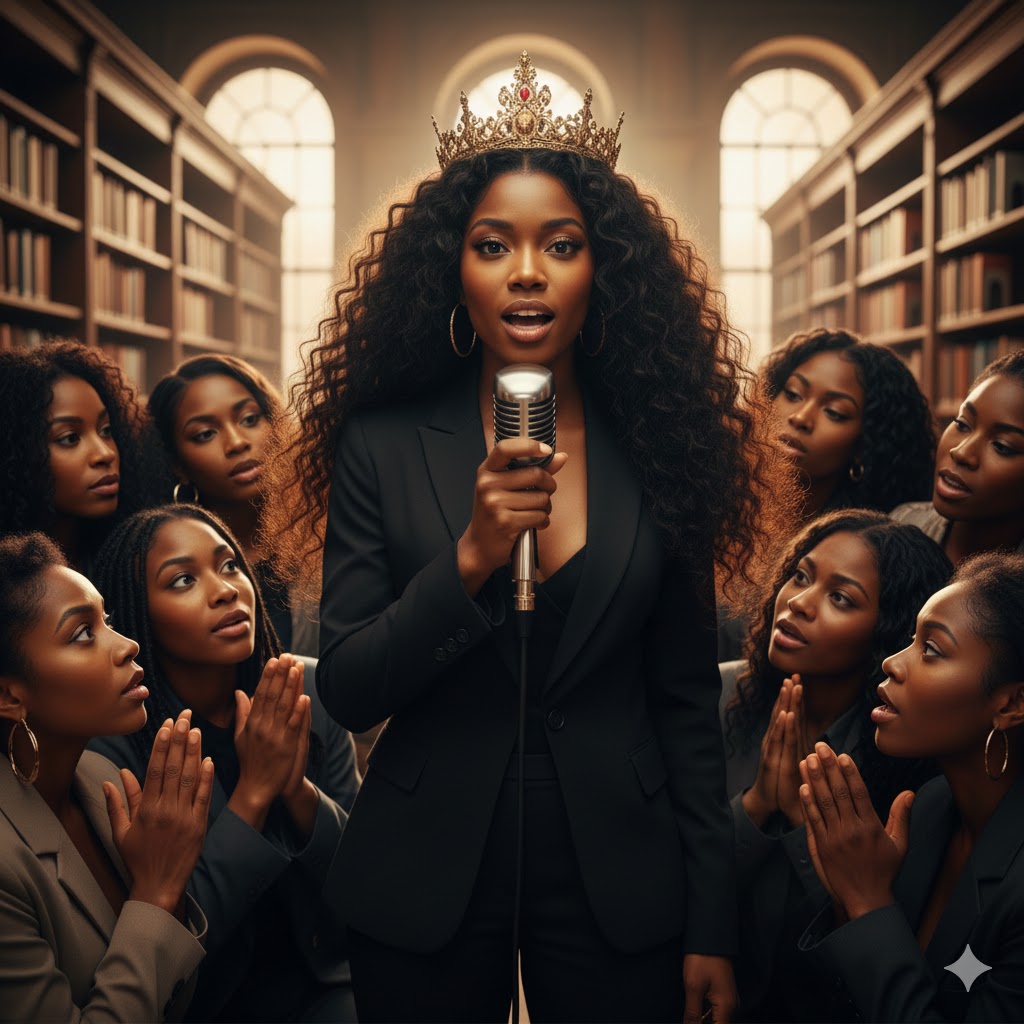
When the Black Sista Speaks, Nations Listen. 

When the Black sista speaks, she carries the weight of generations in her breath. Her voice is not merely sound—it is testimony, memory, rhythm, and revelation. She speaks from the depths of survival, the heights of spiritual knowing, and the center of a divine identity shaped by struggle and brilliance. Her voice is a vessel of truth in a world that often attempts to silence, distort, or overlook her presence. Yet still she speaks, and when she does, nations shift.

Her voice is rooted in the ancestral echo of women who endured storms that would have destroyed others. When she speaks, she carries the prayers of foremothers who sang in fields, whispered in basements, and taught their daughters to keep their heads high no matter the weight of the world. She speaks with the strength of Harriet, the dignity of Rosa, the elegance of Maya, and the fire of Assata. She speaks with wisdom earned through resilience and a love for her people that can’t be manufactured.

The Black sista speaks with authority because she has lived through experiences that demanded endurance. Her voice is shaped by overcoming—overcoming stereotypes, microaggressions, broken systems, and unspoken expectations placed on her shoulders. She has learned to navigate spaces that were never built for her, and yet she thrives anyway. Her ability to rise again and again gives her speech credibility and power.

When she speaks, she speaks not only for herself but for sisters who cannot yet articulate their pain, joy, or potential. She stands in the gap for the muted, the misrepresented, and the misunderstood. She speaks for her daughters, for her community, and for the world that has benefited from her labor but often denies her recognition. Her voice becomes a bridge between silence and liberation.

The world listens—sometimes reluctantly—because the Black sista speaks truth that cannot be ignored. Her words expose injustice, illuminate beauty, and challenge systems designed to remain unchallenged. She disrupts the lies that society has taught about womanhood, intelligence, and worth. She unmasks false narratives and replaces them with stories rooted in authenticity and dignity.

Her voice also heals. With every word of affirmation, encouragement, and wisdom, she restores what the world has tried to break. She counsels younger sisters, uplifts her brothers, and comforts wounded hearts. Her speech is seasoned with faith, compassion, and discernment. She knows how to speak life where there has been death and hope where there has been doubt.

The Black sista speaks with spiritual depth. Her voice is shaped by scripture, testimony, prayer, and a relationship with God that sustains her in quiet and loud battles. She understands that her voice is not her own—it is an instrument in God’s hands. When she speaks, she speaks with the authority of a woman who knows she is chosen, covered, and called.

She also speaks beauty into existence. In a world that constantly redefines beauty standards, the Black sista reclaims her glory. Her voice affirms natural hair, melanin, curves, intellect, and identity. She speaks against colorism, sexism, and racism, reminding the world that her presence is not accidental—it is intentional, divine, and necessary.

When the Black sista speaks, she shapes culture. She influences music, fashion, politics, art, language, and spirituality. From boardrooms to classrooms, from pulpits to stages, her voice sets trends and shifts paradigms. She carries innovation in her mind and brilliance in her tongue. Nations listen because they know that her insight has power.

And above all, when the Black sista speaks, she alters the atmosphere. Her voice calls forth justice, dignity, sisterhood, and transformation. She speaks because she must. She speaks because she is anointed to. She speaks because her silence would be too expensive for the world to afford. And as long as she speaks—unapologetically and undeniably—nations will continue to listen.

http://www.thebrowngirldilemma.com

Echoes of Brown: Truths Untold

Photo by Fortune Comfort on Pexels.com

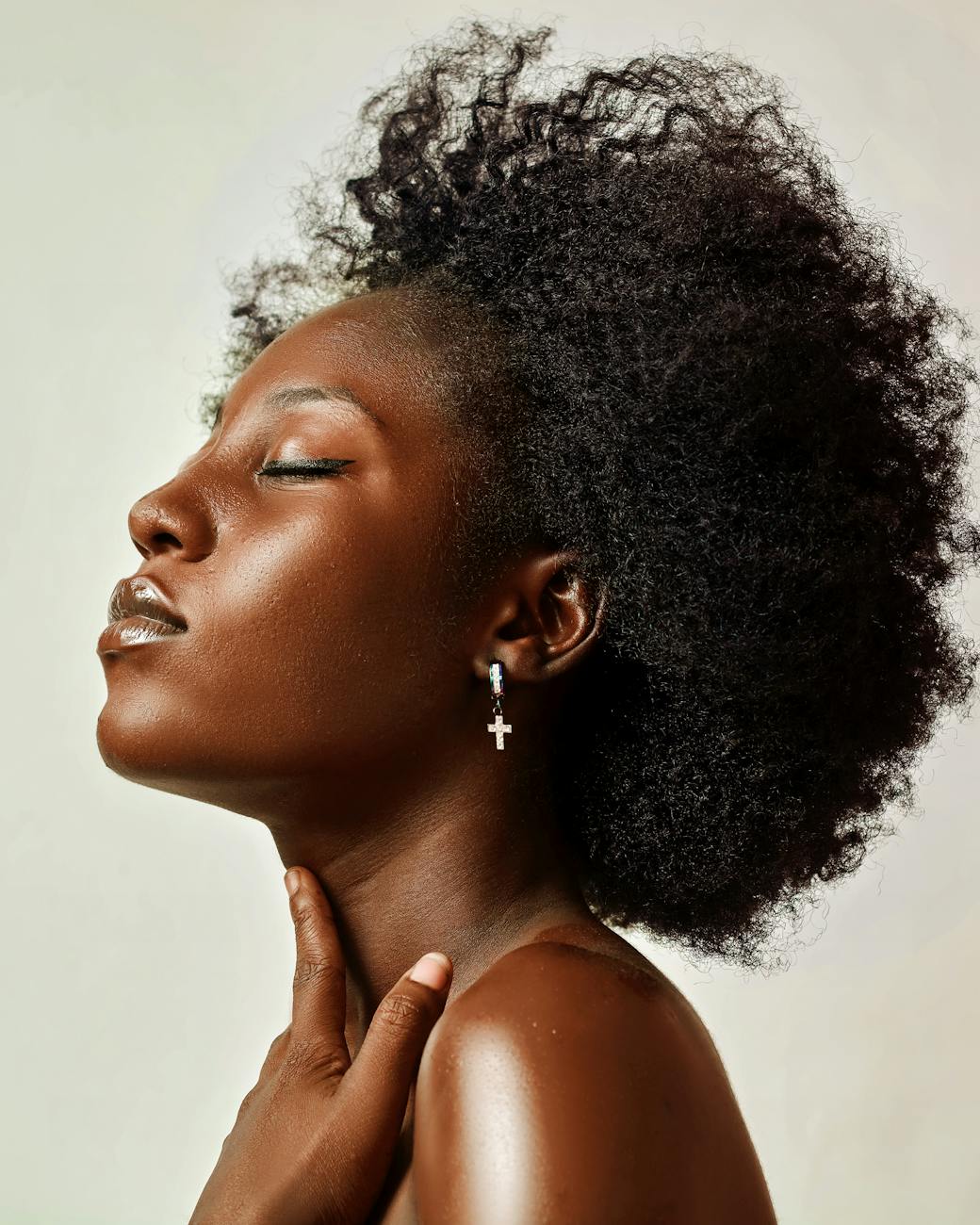
Brown skin carries the history of empires, the memory of chains, and the rhythm of survival. It is a tone that has been both romanticized and ridiculed, embraced and erased. Within its hue lies a story of resilience and rejection, of being seen too much and not enough. To be brown in a world obsessed with polarities—light or dark, good or bad—is to live in the space between admiration and invisibility. It is to echo the voices of ancestors whose worth was often measured by shade rather than soul.

The shade of brown has long been a canvas for projection. In colonial eyes, it was a signifier of “almost,” a liminal identity neither exalted nor despised, but tolerated. This ideology carved its way into modern consciousness, fragmenting self-perception among people of color. The brown individual became both bridge and battleground, carrying the psychological weight of representation while yearning for acceptance without conditions.

Media portrayal reinforces these complexities, often privileging the “safe brown”—the tone that fits diversity’s aesthetic without challenging Eurocentric comfort. Lighter-brown figures are elevated as symbols of progress, while darker tones are shadowed in narratives of struggle or aggression. Such portrayals perpetuate a hierarchy of hue that seeps into social and romantic relationships, employment, and even self-worth.

Colorism, born from colonialism and nurtured by capitalism, is not merely a preference—it is a power structure. It dictates opportunity and desirability in subtle ways. The echoes of “fairness” creams and “brightening” filters reveal an inherited inferiority complex, repackaged as beauty culture. The brown woman, for instance, is told she must lighten to be loved or darken to be “authentic”—a paradoxical performance of identity.

Yet, brown skin tells a truth that transcends bias. It reflects the earth, the sun, and the sacred balance of melanin—a divine calibration that connects all people of African descent to the elements of creation. Its variations are a testament to geography and genetics, from the copper tones of the Sahara to the deep siennas of the Congo. Each shade narrates migration, adaptation, and endurance.

For men, brownness holds another story—one of strength misread as threat, masculinity misinterpreted as menace. The brown man is often trapped in a visual stereotype, seen as protector but seldom protected, desired yet dehumanized. His shade becomes armor and target, beauty and burden all at once.

Social psychology reveals how shade bias impacts self-esteem and group dynamics within Black and Brown communities (Hunter, 2007). Studies show lighter-skinned individuals often receive preferential treatment in employment, education, and dating contexts (Keith & Herring, 1991). This internalized division fractures collective progress, perpetuating a colonial residue that whispers: “lighter is better.”

But the truth untold is that brownness, in all its forms, is not a deficit—it is divine design. It absorbs light, endures heat, and radiates richness. It tells the story of adaptation, survival, and sacred symmetry. In its deepest form, it mirrors the soil that sustains life—the very ground from which humanity rose.

When brown bodies are honored, not compared, healing begins. Art, film, and literature are reclaiming this narrative—elevating figures like Lupita Nyong’o, Viola Davis, and Mahershala Ali, whose presence challenges the false hierarchy of hue. Their beauty is not a rebellion; it is restoration.

In theology, melanin has even been interpreted as a symbol of divine favor—a natural armor against the sun’s intensity, reminding humanity of its Edenic origins (Gibson, 2020). Within this lens, brown skin becomes not merely aesthetic but sacred. It is pigment with purpose.

The echoes of brown extend into language and love. Terms like “caramel,” “mocha,” and “chocolate” have evolved from euphemisms of shame into declarations of pride. But linguistic liberation must be matched by systemic change—policies that confront bias in casting, hiring, and education.

The classroom, too, must echo truth. Children should see their shades reflected in textbooks and heroes. Representation at a young age shapes belonging. When a brown child sees beauty in her reflection, she learns to resist the world’s distortion.

Culturally, the reclamation of brownness is an act of revolution. It demands that the world see beyond hue to humanity. The “brown girl” and “brown boy” narratives circulating on social media are more than hashtags—they are healing spaces where individuals redefine worth and community through affirmation.

Economically, colorism’s influence remains potent in advertising and employment. The global skin-lightening industry, projected to surpass $20 billion by 2030, profits from pain (Statista, 2024). The darker the shade, the more the market suggests correction—a colonial lie turned commercial empire.

Psychologically, internalized shadeism manifests in subtle ways—self-doubt, social comparison, and selective pride. Healing requires both personal and communal reclamation: therapy, storytelling, and faith-based restoration.

Spiritually, the color brown carries symbolic weight across cultures—representing grounding, humility, and balance. In biblical interpretation, it evokes the imagery of dust and clay—the essence of creation itself (Genesis 2:7, KJV). Humanity was molded from earth, not ivory; thus, brown is the color of origin.

As society evolves, the challenge is not to erase color but to embrace its full spectrum. Diversity must go beyond token representation to dismantle structural bias. True equity honors every shade as sacred, not strategic.

Ultimately, the untold truth of brown is that it holds the blueprint of beauty and belonging. Its richness cannot be measured by comparison, for it is the color of history and hope intertwined. The echo of brown is not an apology—it is an anthem.

References

Gibson, T. (2020). The Melanin Mandate: Faith, Science, and the Theology of Skin. Journal of African Biblical Studies, 12(3), 45–58.
Hunter, M. L. (2007). The persistent problem of colorism: Skin tone, status, and inequality. Sociology Compass, 1(1), 237–254.
Keith, V. M., & Herring, C. (1991). Skin tone and stratification in the Black community. American Journal of Sociology, 97(3), 760–778.
Statista. (2024). Global skin lightening products market size from 2020 to 2030. Statista Research Department.