Tag Archives: handsome

Black Music History: Otis Redding – Eternal Voice of Soul Music

The Voice that carried the weight of the Soul.
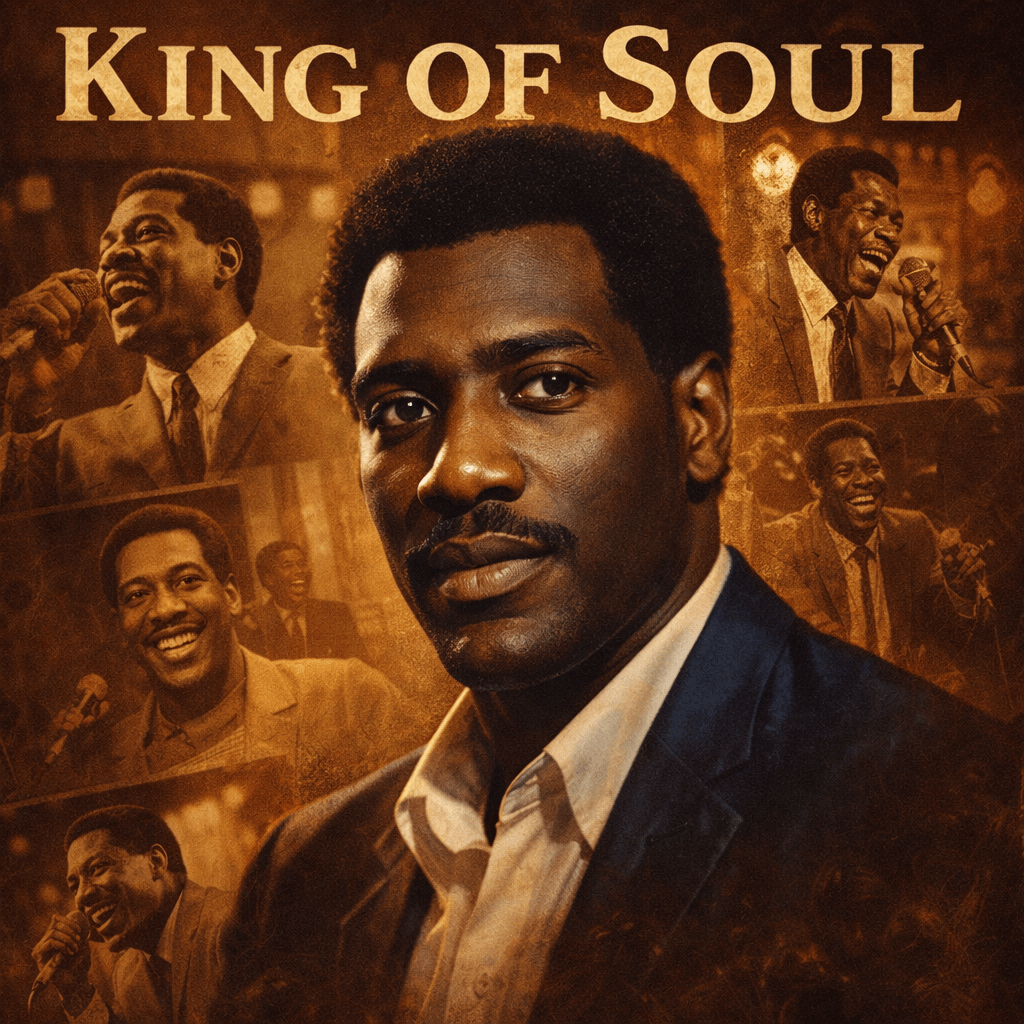
Otis Ray Redding Jr. was not merely a singer; he was a vessel through which the deepest emotional currents of Black American life were expressed. Born on September 9, 1941, in Dawson, Georgia, and raised in the deeply segregated South, Redding’s voice emerged from a cultural landscape shaped by gospel churches, laboring families, and the enduring spiritual resilience of African Americans. His upbringing in Macon, Georgia—a city that would later produce other icons such as Little Richard and James Brown—placed him at the crossroads of sacred music and secular rhythm, where soul was not a genre but a lived experience.

Redding’s earliest musical training came not from formal conservatories, but from the Black church, where he sang in choirs and absorbed the cadences of spirituals and sermons. These early influences endowed his voice with a preacher’s urgency and a mourner’s depth. By his teenage years, he was performing in local talent shows and touring the Southern “chitlin’ circuit,” singing not for glamour but for survival, often earning just enough to support his young family.

His professional breakthrough arrived in 1962 when he recorded at Stax Records in Memphis, a label that would become synonymous with the raw, unpolished sound of Southern soul. Unlike the smoother, orchestrated soul of Motown, Redding’s music carried grit—sweat, struggle, and sincerity. Songs like These Arms of Mine, Pain in My Heart, and Try a Little Tenderness revealed a voice capable of embodying vulnerability without weakness, masculinity without hardness, and romance without illusion.

What distinguished Otis Redding was not technical perfection, but emotional authority. His singing felt less like a performance and more like a confession. He did not decorate songs; he inhabited them. Whether pleading, rejoicing, or lamenting, Redding sang as though each lyric were a lived testimony. This quality made him one of the few artists who could cross the boundaries between Black gospel traditions and mainstream popular music without diluting the spiritual intensity of either.

By the mid-1960s, Redding had become one of the most influential figures in soul music, performing internationally and reaching audiences that extended far beyond the segregated American South. His appearance at the 1967 Monterey Pop Festival—where he performed before a largely white, countercultural crowd—was historic. Rather than conforming to the psychedelic trends of the era, Redding stood in a green suit and delivered soul with the force of a sermon, earning standing ovations and redefining what Black Southern music could mean on a global stage.

Wealth and Career Success

Otis Redding achieved substantial success in his short life, though he died before fully capitalizing on his earning potential. By the mid‑1960s, Redding had become one of Stax Records’ most bankable artists, generating revenue from album sales, tours, and royalties. While precise figures are scarce, his estate reportedly benefited posthumously from the massive success of his hit (Sittin’ On) The Dock of the Bay, which became a chart-topping single worldwide. His music continues to generate royalties, licensing for films, commercials, and streaming platforms, making him a long-lasting source of wealth for his family and estate.


Family Life

Otis Redding was devoted to his family. He married Patricia “Pat” Redding, and together they had several children. Despite his touring and recording schedule, he was known as a loving father and husband, committed to providing stability for his family. His early upbringing in a working-class, deeply religious household in Macon, Georgia, instilled values of family responsibility and community, which he carried into adulthood.


Voice and Musical Talent

Redding’s voice is arguably his most defining feature. Known for its raw intensity, emotional authenticity, and gospel-rooted timbre, his vocal delivery could convey vulnerability, longing, joy, or pain with astonishing immediacy. He could move effortlessly between soft, intimate phrases and powerful, soul-shaking crescendos, which earned him the title “King of Soul.” His phrasing, emotional timing, and distinctive rasp set him apart from other soul singers of his era and continue to influence generations of vocalists.


Awards and Recognition

Otis Redding received several accolades both during his life and posthumously:

  • Grammy Award: Best R&B Performance by a Duo or Group for “(Sittin’ On) The Dock of the Bay” (1968, posthumous).
  • Grammy Hall of Fame: Multiple inductions for “Try a Little Tenderness” and “(Sittin’ On) The Dock of the Bay.”
  • Rock and Roll Hall of Fame: Inducted in 1989, recognizing his influence on rock, soul, and R&B music.
  • Various industry honors and lifetime achievement recognitions acknowledge his lasting impact on American music.

Charity and Community Engagement

Though his life was tragically short, Otis Redding was known for supporting his community in Macon, Georgia, often performing at local events and mentoring young artists. His music addressed universal human experiences, giving voice to struggles and joys that resonated across communities. While formal charitable foundations were limited due to his early death, his legacy has inspired ongoing programs and scholarships in his name, supporting music education and African American cultural initiatives.


Legacy

Otis Redding’s legacy is multifaceted:

  • Musical Innovation: Bridged gospel, blues, and soul into a contemporary 1960s sound.
  • Cultural Impact: Helped shape the soul genre and influence artists across generations, from Al Green to John Legend.
  • Posthumous Fame: “(Sittin’ On) The Dock of the Bay” cemented his status as a timeless icon.
  • Inspirational Figure: His life story—rising from modest beginnings to international acclaim—continues to inspire young musicians and fans alike.

Redding’s influence persists in recordings, covers by artists worldwide, and the continued reverence of soul music enthusiasts. He remains an emblem of authenticity, emotion, and excellence in music, ensuring his presence endures far beyond his 26 years.

Tragically, Otis Redding’s life was cut short on December 10, 1967, when his private plane crashed into icy waters in Wisconsin. He was only 26 years old. Yet in that brief lifespan, he transformed the emotional language of modern music. His posthumous release, (Sittin’ On) The Dock of the Bay, marked a creative evolution—introducing introspection, subtle melancholy, and a quieter emotional register that hinted at the artistic paths he had yet to explore.

Redding’s legacy cannot be measured merely by chart rankings or awards. His influence lives in the vocal traditions of artists such as Al Green, Aretha Franklin, Marvin Gaye, and countless others who learned that soul music is not about vocal acrobatics, but emotional truth. Otis Redding gave voice to longing, love, grief, and hope in a way that mirrored the collective Black experience of the twentieth century—singing not only for entertainment, but for emotional survival.

In the final analysis, Otis Redding did not simply contribute to soul music; he embodied it. His voice remains a spiritual archive—preserving the sound of a people who turned pain into beauty, and struggle into song.

References

Guralnick, P. (1999). Sweet soul music: Rhythm and blues and the Southern dream of freedom. Back Bay Books.

Classic scholarly text on Southern soul, Stax Records, and Otis Redding’s cultural significance.

Guralnick, P. (2015). Dream boogie: The triumph of Sam Cooke. Back Bay Books.

While focused on Sam Cooke, this work situates Redding within the broader evolution of soul and Black popular music.

Bowman, R. M. (1997). Soulsville, U.S.A.: The story of Stax Records. Schirmer Books.

Definitive academic history of Stax, where Redding recorded.

Werner, C. (2006). A change is gonna come: Music, race & the soul of America. University of Michigan Press.

Explores race, politics, and the meaning of soul music, with substantial sections on Redding.

George, N. (2004). The death of rhythm and blues. Penguin Books.

Cultural analysis of R&B’s evolution, including Otis Redding’s impact.

Rock and Roll Hall of Fame. (1989). Otis Redding induction profile. Retrieved from https://www.rockhall.com/inductees/otis-redding

Official recognition of his musical contributions and awards.

Billboard Charts Archive. (1967–1968). Otis Redding chart history. Retrieved from https://www.billboard.com/music/otis-redding

Details chart performance and commercial success, including posthumous releases.

Wald, E. (2007). How the Beatles destroyed rock ’n’ roll: An alternative history of American popular music. Oxford University Press.

Discusses Redding’s cross-racial appeal and performance at Monterey.

Brackett, D. (2016). Categorizing sound: Genre and twentieth-century popular music. University of California Press.

Useful for theoretical framing of soul as genre and cultural practice.

Redding, Z., & Ritz, D. (2013). Otis: An Otis Redding biography. Da Capo Press.

Official biography by his widow—primary authoritative source.

Smith, C. (1998). Dancing in the street: Motown and the cultural politics of Detroit. Harvard University Press.

For contrasting Motown vs. Stax soul aesthetics.

Taylor, S. C. (2002). Skin of color: Biology, structure, function, and implications for dermatologic disease. Journal of the American Academy of Dermatology, 46(2), S41–S62.
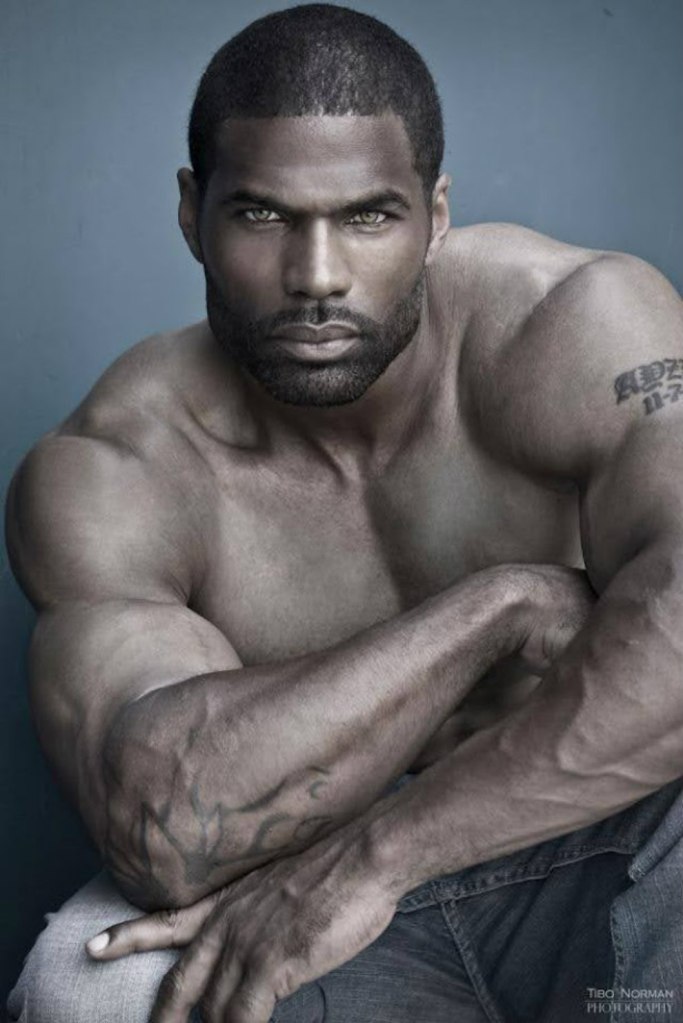
Black Men, Beautiful by Divine Design

Black men are beautiful by divine design, not as a reaction to oppression but as an original truth rooted in creation itself. From the first formation of humanity, Scripture affirms that mankind was made in the image and likeness of God, carrying dignity, purpose, and beauty that cannot be erased by history or hatred (Genesis 1:26–27, KJV). Black male beauty is therefore not merely aesthetic; it is theological, intentional, and sacred.

The beauty of Black men is expressed through strength and softness existing in harmony. Muscular frames, broad shoulders, and commanding posture often reflect physical power, yet the deeper beauty lies in restraint, wisdom, and emotional depth. Biblical masculinity never divorces strength from gentleness, as Christ Himself embodied both authority and compassion (Matthew 11:29, KJV).

Melanin itself stands as a biological testimony of divine wisdom. Scientifically, melanin provides protection against ultraviolet radiation and contributes to skin resilience, reflecting adaptation and intentional design (Jablonski, 2012). What society has often devalued, creation reveals as functional, protective, and beautiful.

Black men’s facial diversity—strong jawlines, full lips, wide or narrow noses, deep-set or expressive eyes—reflects a vast genetic inheritance rooted in Africa, the cradle of humanity. Genetics confirms that African populations possess the greatest genetic diversity on Earth, making Black features foundational rather than derivative (Tishkoff et al., 2009).

Hair textures among Black men, from tight coils and full afros to locs and curls, represent cultural memory and biological brilliance. Coiled hair conserves moisture and protects the scalp in warm climates, further revealing form following function (Jablonski & Chaplin, 2010). What was once policed and stigmatized is now being reclaimed as a crown.

Scripture consistently affirms that beauty is not accidental but crafted. Psalm 139 declares that human beings are “fearfully and wonderfully made,” language that applies fully to Black men whose bodies and identities have been historically attacked (Psalm 139:14, KJV). Divine craftsmanship cannot be undone by social distortion.

Historically, Black male beauty was intentionally suppressed during slavery and colonialism. European racial hierarchies sought to redefine beauty through whiteness to justify domination, portraying Black men as hyperphysical but subhuman (Fanon, 1952). This distortion was never truth—it was strategy.

Despite this, Black men have continually embodied dignity under pressure. From enslaved fathers protecting their families in spirit, to freedom fighters, scholars, artists, and builders, Black men have reflected a beauty rooted in perseverance and moral courage. Such beauty aligns with biblical endurance refined through trial (James 1:12, KJV).

The physical presence of Black men often communicates authority even in silence. This presence, frequently misinterpreted as threat, is in fact a reflection of bearing—what Scripture might call countenance. When Moses descended from Sinai, his face shone with divine encounter, reminding us that presence can be mistaken when observers lack understanding (Exodus 34:29, KJV).

Black male beauty is also relational. A man’s ability to love, lead, protect, and nurture reflects God’s design for masculine stewardship. Biblical manhood emphasizes responsibility and sacrificial love, not domination (Ephesians 5:25, KJV). In this, Black men mirror divine order.

In contemporary media, the reclamation of Black male beauty challenges centuries of distortion. When Black men are depicted as intellectual, tender, fashionable, faithful, and emotionally whole, the narrative shifts toward truth. Representation becomes a corrective lens rather than a superficial trend.

Psychologically, affirming Black male beauty is essential for healing. Studies show that internalized racism negatively impacts self-concept and mental health among Black men (Williams & Mohammed, 2009). Reclaiming beauty is therefore an act of restoration, not vanity.

Spiritually, beauty is linked to purpose. The Most High does nothing without intention, and Black men exist as vessels of divine assignment. Their appearance, voice, and physicality are part of how they move through the world and fulfill calling (Jeremiah 1:5, KJV).

The biblical narrative includes men of dark complexion and strength, such as the Shulammite’s beloved, described with admiration and desire in the Song of Solomon. The language of attraction and admiration in Scripture affirms that Blackness and beauty are not opposites (Song of Solomon 5:10–11, KJV).

Black men’s beauty also lives in discipline—how they carry themselves, speak with wisdom, and develop mastery in skill and craft. Proverbs teaches that skill brings a man before greatness, reinforcing that excellence itself is attractive and honorable (Proverbs 22:29, KJV).

Athleticism, often emphasized in Black male bodies, should be understood as one expression of embodied intelligence, not the limit of Black potential. The same bodies that run, lift, and endure also think, create, heal, and lead. Divine design never restricts purpose to one dimension.

Fatherhood reveals another layer of beauty. When Black men nurture children, guide families, and restore generational foundations, they reflect God as Father. This image is especially powerful in a society shaped by intentional family disruption (Malachi 4:6, KJV).

Cultural style—how Black men dress, groom, and adorn themselves—functions as visual theology. From tailored suits to casual streetwear, style communicates identity, self-respect, and cultural continuity. Even Scripture acknowledges garments as expressions of honor and position (Genesis 41:42, KJV).

Black men’s voices carry resonance, rhythm, and authority, shaped by both ancestry and lived experience. Whether preaching, teaching, singing, or speaking truth in everyday spaces, their voices reflect breath given by God Himself (Genesis 2:7, KJV).

Ultimately, declaring Black men “beautiful by divine design” is an act of truth-telling. It resists false narratives, restores dignity, and aligns with both Scripture and science. Beauty, in this sense, is not subjective—it is ordained.

When Black men see themselves as God sees them, beauty becomes a foundation for wholeness, responsibility, and righteous living. To affirm their beauty is to affirm God’s craftsmanship, wisdom, and sovereignty. What God has designed beautifully, no system has the authority to redefine.


References

Fanon, F. (1952). Black skin, white masks. Grove Press.

Jablonski, N. G. (2012). Living color: The biological and social meaning of skin color. University of California Press.

Jablonski, N. G., & Chaplin, G. (2010). Human skin pigmentation as an adaptation to UV radiation. Proceedings of the National Academy of Sciences, 107(Supplement 2), 8962–8968.

Tishkoff, S. A., et al. (2009). The genetic structure and history of Africans and African Americans. Science, 324(5930), 1035–1044.

Williams, D. R., & Mohammed, S. A. (2009). Discrimination and racial disparities in health. Journal of Behavioral Medicine, 32(1), 20–47.

The Holy Bible, King James Version. (1611/2017). Cambridge University Press.

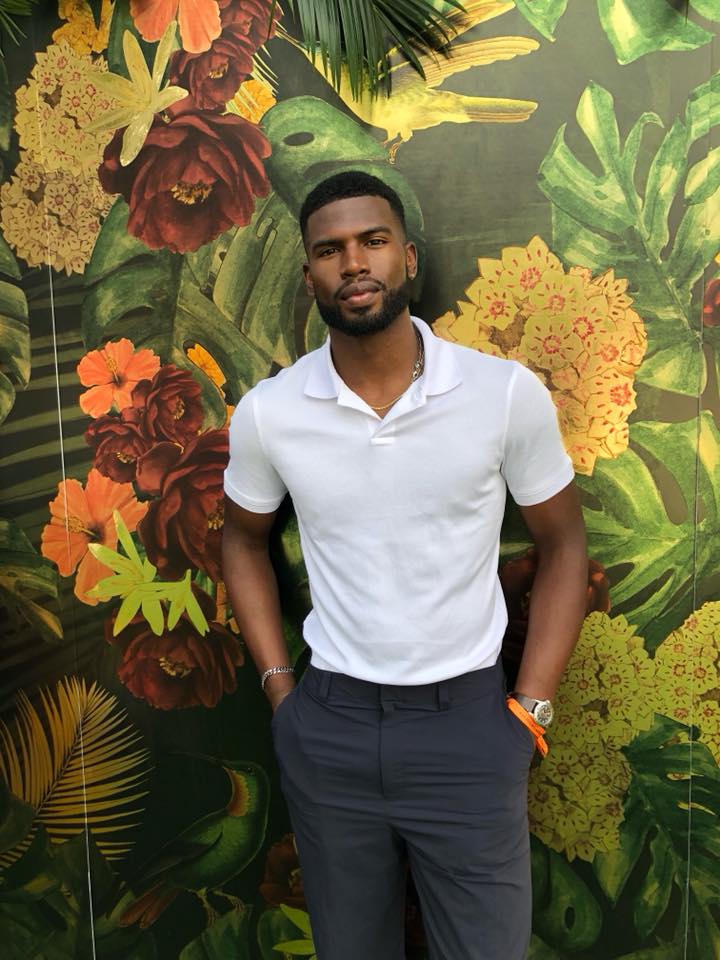
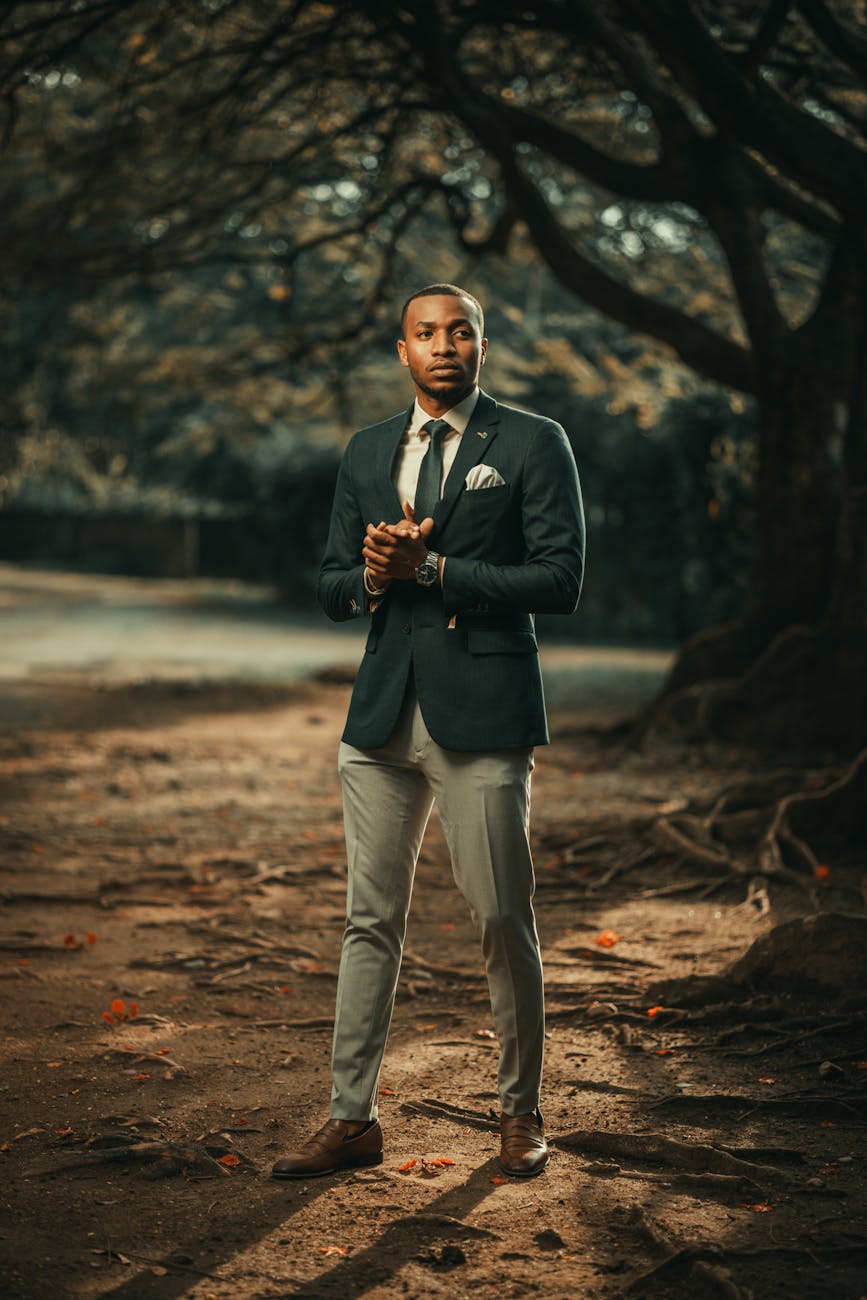
The Handsome Burden: How Society Looks at Black Male Beauty.

Photo Credit: Tibo Norman (used with permission)

Black male beauty has historically existed in a complex intersection of admiration and marginalization. In Western culture, ideals of masculinity and attractiveness have often been racially coded, favoring Eurocentric features such as light skin, straight hair, and narrow noses, leaving Black men to negotiate a beauty standard that often excludes them (Hunter, 2007). Despite these systemic barriers, Black men have consistently exemplified a wide range of physical beauty that challenges monolithic societal expectations.

The aesthetic evaluation of Black men is heavily influenced by historical and social contexts. During slavery and colonial periods, Black male bodies were subjected to objectification and dehumanization, yet their physicality was simultaneously fetishized as symbols of raw strength and virility (hooks, 1992). This duality created a paradoxical space where Black male attractiveness was both feared and desired.

Skin tone continues to play a significant role in how Black male beauty is perceived. Colorism, an intra-racial bias favoring lighter-skinned individuals, disproportionately affects Black men, impacting their representation in media and the dating market (Keith & Herring, 1991). Darker-skinned men often confront stereotypes associating them with aggression or hyper-masculinity, while lighter-skinned men are more frequently idealized in romantic or social contexts.

Facial features are another critical component in perceptions of beauty. Broad noses, full lips, and strong jawlines, which are characteristic of many Black men, are alternately fetishized and stigmatized in popular culture (Hall, 1997). Media representations often distort these features to fit palatable norms, leading to both admiration in certain subcultures and marginalization in mainstream society.

Hair texture and style also heavily influence social reception. Natural hair, afros, dreadlocks, and braids have long been sites of both cultural pride and discrimination. The policing of Black male hair in professional and social settings reflects broader societal discomfort with expressions of Black identity and beauty (Byrd & Tharps, 2014).

Athleticism is frequently conflated with attractiveness in Black men, reinforcing narrow definitions of beauty tied to physical performance rather than aesthetic nuance. This overemphasis perpetuates the stereotype that Black men’s value lies predominantly in their bodies’ functional capacity, rather than their individuality or style (Sailes, 1998).

The concept of “handsome burden” emerges from the paradox that Black male beauty, while celebrated in certain spaces, carries additional social costs. Attractive Black men are often hyper-visible, subjected to scrutiny, and stereotyped in ways that can impede social mobility and personal relationships (Griffin, 2012). The very features that draw admiration can also elicit bias.

Media representation is central to shaping societal views. Historically, Black men were either absent from mainstream portrayals of romantic leads or depicted in hypersexualized or villainized roles (Bogle, 2016). The lack of nuanced representation has contributed to a skewed understanding of Black male attractiveness, privileging exoticism over authenticity.

Black male celebrities frequently navigate the tension between societal fascination and personal agency over their image. Figures like Idris Elba, Michael B. Jordan, and Denzel Washington have gained recognition for their appearance, yet their visibility often subjects them to reductive discussions centered on looks rather than accomplishments (Russell, 2008).

Society’s obsession with physique and style creates pressures unique to Black men. Fashion, grooming, and fitness become mechanisms through which Black men negotiate social acceptance and desirability, amplifying the burden of external expectations (Banks, 2000).

Intersecting identities—such as socioeconomic status, sexuality, and regional background—further complicate the reception of Black male beauty. For example, a wealthy Black man may gain admiration that is denied to a working-class counterpart, illustrating how social capital intersects with racialized beauty standards (Patton, 2006).

Racialized beauty ideals also affect intimate relationships. Studies show that Black men often face exclusion in dating markets due to stereotypes about their masculinity or desirability (Felmlee, 2001). This phenomenon highlights how social perceptions of Black male beauty can influence both personal and emotional wellbeing.

The global circulation of Black male aesthetics offers a counter-narrative to Eurocentric beauty norms. Across Africa, the Caribbean, and the diaspora, Black men are celebrated for features that are undervalued in Western contexts, creating a multiplicity of beauty frameworks that resist homogenization (Ekine & Abbas, 2013).

Social media has amplified both the pressures and opportunities for Black men to curate their appearance. Platforms like Instagram provide spaces for self-representation and affirmation, yet they also expose individuals to heightened scrutiny and comparison, reinforcing anxieties about desirability (Tynes et al., 2016).

The commodification of Black male beauty through advertising and branding further complicates its social reception. Black men are often marketed as symbols of sexual allure or physical prowess, reducing complex identities to consumable aesthetic traits (Cole, 2015).

Historical trauma and generational narratives contribute to contemporary experiences of beauty for Black men. The lingering effects of slavery, segregation, and systemic oppression influence internalized self-perception and the valuation of physical traits, creating a psychological dimension to the “handsome burden” (Anderson, 2010).

Mental health implications are significant. Hypervisibility and the pressure to perform attractiveness can lead to stress, anxiety, and identity conflicts, revealing how aesthetic ideals intersect with emotional wellbeing (Wyatt et al., 2015).

Resistance movements have emerged, celebrating Black male beauty on its own terms. Cultural expressions such as hip hop, Afrofuturism, and Black fashion activism challenge normative aesthetics and create spaces where diverse Black male appearances are celebrated (Morgan & Bennett, 2011).

Education and scholarship play essential roles in redefining beauty narratives. By analyzing and challenging historical biases, researchers and cultural critics help to broaden society’s understanding of Black male attractiveness beyond reductive stereotypes (hooks, 1992).

Ultimately, Black male beauty exists as both a gift and a burden. The societal gaze can elevate and constrain, praise and stereotype, celebrate and marginalize. Understanding the intricate dynamics of this perception is critical to fostering cultural equity and dismantling limiting beauty paradigms.


References

Anderson, C. (2010). The psychology of African American male identity: Understanding the impact of historical trauma. Journal of Black Psychology, 36(4), 357–381.

Banks, I. (2000). Hair matters: Beauty, power, and Black men’s culture. New York University Press.

Bogle, D. (2016). Toms, coons, mulattoes, mammies, and bucks: An interpretive history of Blacks in American films (4th ed.). Bloomsbury Academic.

Byrd, A., & Tharps, L. (2014). Hair story: Untangling the roots of Black hair in America. St. Martin’s Press.

Cole, D. (2015). Advertising Blackness: Representation and racialization in marketing. Media, Culture & Society, 37(8), 1238–1254.

Ekine, S., & Abbas, H. (2013). African men and masculinities: Gendered transformations. Palgrave Macmillan.

Felmlee, D. (2001). No couple is an island: Social networks and mate selection. Social Forces, 79(4), 1259–1283.

Griffin, R. (2012). Beauty and the burden: Racialized perceptions of African American men. Journal of African American Studies, 16(3), 345–360.

Hall, R. (1997). The standard of beauty: A critical review of racialized aesthetics. Race & Society, 1(2), 123–138.

hooks, b. (1992). Black looks: Race and representation. South End Press.

Hunter, M. (2007). The persistent problem of colorism: Skin tone, status, and inequality. Sociology Compass, 1(1), 237–254.

Keith, V., & Herring, C. (1991). Skin tone and stratification in the Black community. American Journal of Sociology, 97(3), 760–778.

Morgan, M., & Bennett, D. (2011). Hip hop & the global imagination: Black male beauty and cultural resistance. Cultural Studies, 25(5), 643–664.

Patton, T. (2006). In the house of hip hop: Black masculinity and cultural capital. Gender & Society, 20(5), 599–617.

Russell, R. (2008). Image and identity: Black male celebrity culture. Media, Culture & Society, 30(5), 675–693.

Sailes, G. (1998). African American male athletes: Phenomenalism and stereotypes. Journal of Sport & Social Issues, 22(4), 390–402.

Tynes, B., Giang, M., Williams, D., & Thompson, G. (2016). Online racial discrimination and psychological adjustment among adolescents. Journal of Adolescent Health, 58(1), 30–36.

Wyatt, S., Gilbert, R., & Rivers, R. (2015). The impact of societal beauty standards on Black male mental health. Journal of Black Psychology, 41(2), 123–147.

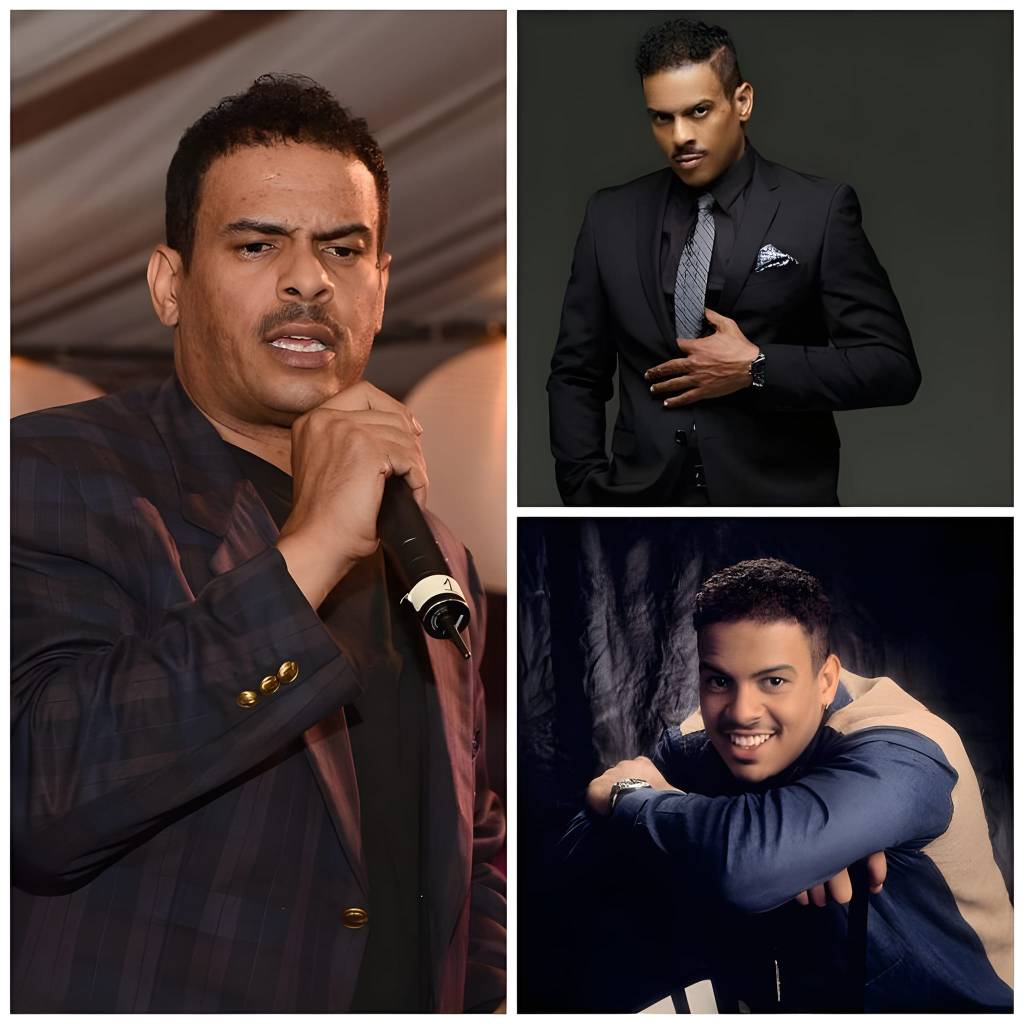
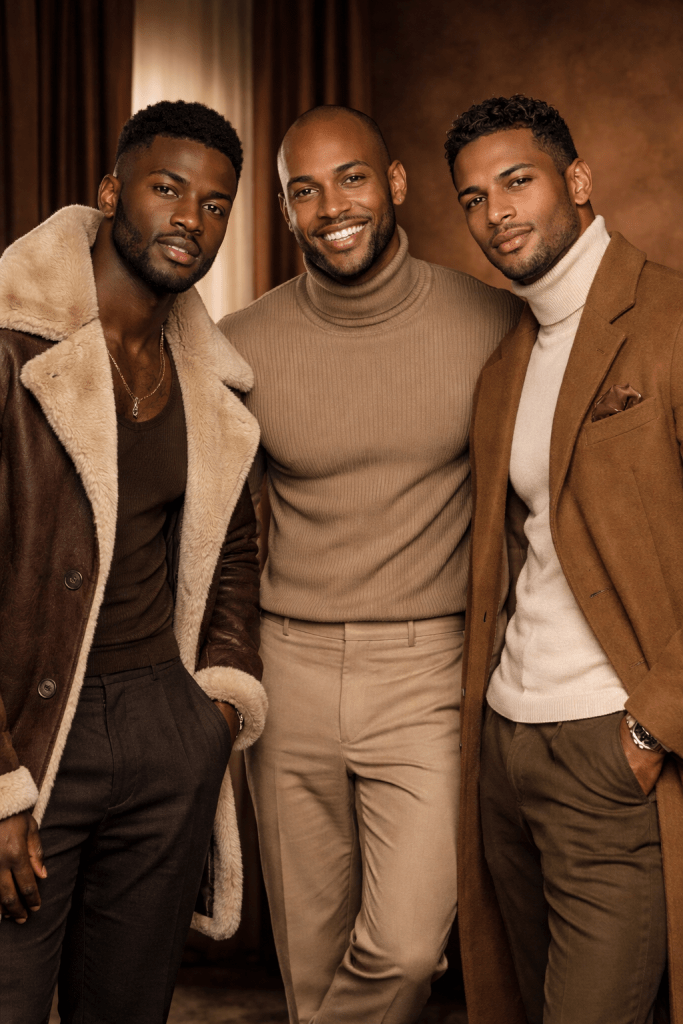
Masculine Perfection Series: Broderick Hunter, Christopher Williams, and Blair Underwood.

Broderick Hunter — “Mesmerizing eyes, boyish charm, modern Black beauty.”

Broderick Hunter Jr., born January 3, 1991, in Fontana, California, is an American model and actor. Originally a basketball player with over fifteen years of experience, an injury shifted his path toward modeling in 2011. Hunter has appeared in editorials and covers for major publications, including Vogue Paris, Italian GQ, Cosmopolitan, Maxim, and Essence. He has also modeled for top brands such as Ralph Lauren. On screen, he has acted in television series, including Insecure, showcasing versatility that combines athleticism, aesthetic polish, and charisma.

Hunter’s allure lies in his “piercing” eyes and boyish charm — a blend of youthful energy and contemporary Black male beauty. His presence conveys both confidence and approachability, making him a standout figure in fashion and media.


Christopher Williams — “Soulful crooner, gorgeous face, velvet voice.”

Christopher Williams, born August 22, 1967, in the Bronx, New York, emerged as a professional recording artist in the late 1980s. His debut album, Adventures in Paradise (1989) introduced his smooth R&B style, and his 1991 single I’m Dreamin’ topped Billboard’s Hot R&B/Hip-Hop Singles chart. Williams continued to produce hits such as Every Little Thing U Do and All I See, solidifying his reputation as a romantic and soulful performer. He has also acted in films, most notably New Jack City, and participated in theatre and smaller screen roles.

Williams embodies a classic form of Black masculinity: his gorgeous face and rich, emotional voice convey vulnerability and romantic depth. His combination of musicality and visual appeal positioned him as a beloved figure in R&B and Black culture.


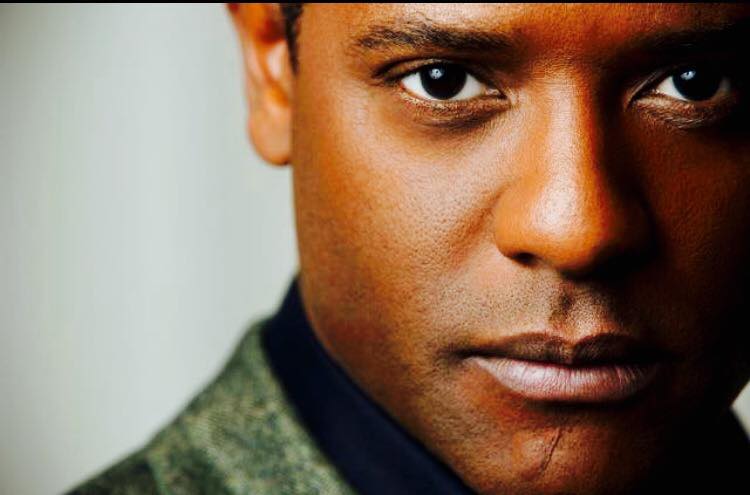
Blair Underwood — “Demure sophistication, classically handsome, acting excellence.”

Blair Underwood, born August 25, 1964, in Tacoma, Washington, is a classically trained actor with a BFA from Carnegie Mellon School of Drama. He gained prominence with the role of attorney Jonathan Rollins on NBC’s L.A. Law (1987–1994) and has sustained a prolific career in film and television, displaying versatility across genres. Underwood has received two Golden Globe nominations, multiple NAACP Image Awards, and a Grammy Award, underscoring his talent and impact.

Underwood represents a timeless, understated elegance, combining classical good looks with gravitas and sophistication. His refined style and acting skill embody a mature, dignified form of Black masculine beauty, emphasizing poise, intellect, and artistic excellence.


Why these three matter

Together, Broderick Hunter, Christopher Williams, and Blair Underwood illustrate a spectrum of Black male beauty and excellence:

  • Hunter reflects contemporary youth, athleticism, and media-ready aesthetic.
  • Williams represents soulful, romantic, and emotionally resonant masculinity.
  • Underwood embodies classical sophistication, gravitas, and unforgettable actor.

Their collective presence challenges narrow standards of Black male beauty, offering multiple models of excellence in fashion, music, and acting.


References

  • Broderick Hunter — Wikipedia, IMDb, Teen Vogue, Vogue Paris.
  • Christopher Williams — Wikipedia, IMDb, Billboard, UrbanBridgez.
  • Blair Underwood — Wikipedia, TV Guide, BET, Encyclopedia.com.

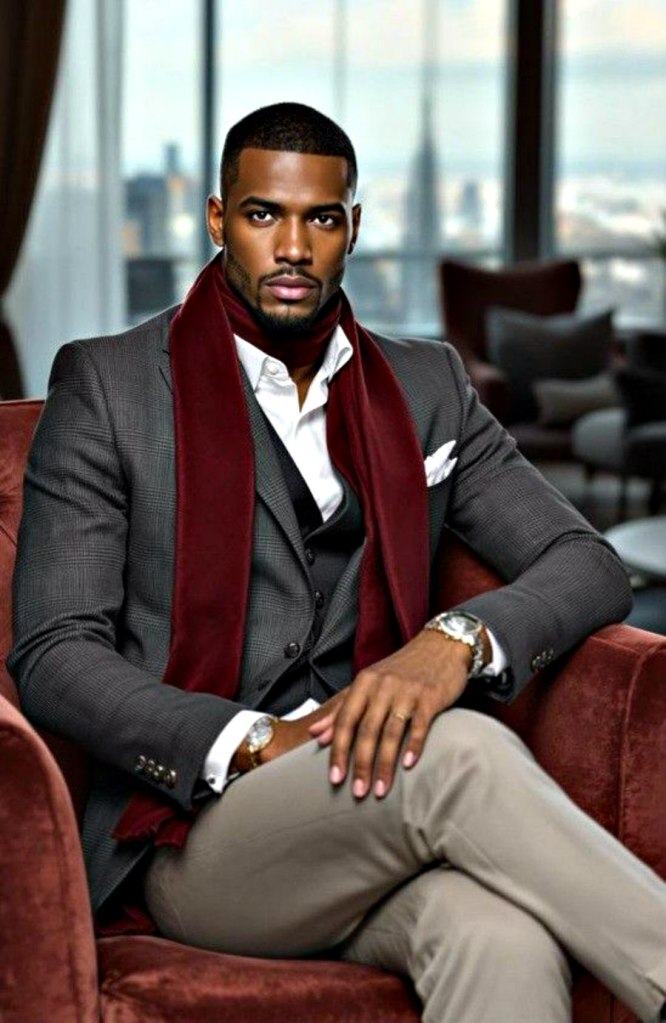
Masculine Grace: The Overlooked Beauty of the Black Man.

This photograph is the property of its respective owner. No copyright infringement intended.

The image of the Black man has long been distorted through colonial narratives, Eurocentric standards, and centuries of systemic dehumanization. Yet beneath the scars of history lies a quiet and powerful truth: the Black man embodies a form of beauty rarely celebrated—masculine grace. This grace transcends the mere physical, radiating through resilience, wisdom, emotional strength, and spiritual depth. It is the beauty of a being who has survived what was meant to destroy him and yet continues to create, lead, and love.

The world has often feared what it should have revered. From the plantation fields to the modern boardroom, the Black man’s physicality has been both fetishized and criminalized. His body—once deemed property—became a battleground for the projection of others’ fears and desires. But when seen through a lens untainted by bias, the symmetry of his form, the depth of his skin, and the fire of his eyes reflect divine craftsmanship, not danger (hooks, 2004).

To speak of masculine grace is to acknowledge that strength and softness are not opposites but complements. The Black man’s beauty rests in the balance between his power and gentleness—how he can protect without oppressing, lead without dominating, and love without losing himself. This duality challenges the Eurocentric masculine archetype that equates sensitivity with weakness (Majors & Billson, 1992).

Historically, Black men were denied the right to be seen as beautiful because beauty was defined through whiteness. The ideal male form was sculpted in marble—pale, rigid, and devoid of emotion. Yet the Black man’s presence, rich in rhythm and movement, exudes life. His grace is kinetic, a poetry of motion expressed in dance, labor, sport, and art—a beauty that moves rather than poses.

In African traditions, beauty was holistic. It encompassed virtue, spirit, and purpose, not merely appearance. The Yoruba concept of “iwa l’ewa” translates to “character is beauty,” suggesting that true beauty arises from inner moral substance (Abiodun, 2014). This philosophy restores the spiritual context that Western aesthetics stripped away. For the Black man, beauty is not vanity—it is dignity manifested.

Masculine grace can be seen in the tender way a father lifts his child, in the calm leadership of a pastor guiding his congregation, or in the perseverance of a man rebuilding his life after systemic injustice. It is the quiet confidence of knowing that one’s value is not defined by material success but by moral conviction and spiritual alignment (Kimbrough, 1997).

Yet media portrayals continue to undermine this beauty. The camera often captures the Black man as an aggressor, athlete, or entertainer, rarely as a scholar, lover, or thinker. This narrow visual vocabulary limits how society perceives Black masculinity. The absence of representation becomes a form of erasure—an aesthetic violence that teaches the world to see Black men as function rather than form (Dixon & Linz, 2000).

The reclamation of masculine grace, therefore, is an act of resistance. It says to the world: “You will not define my worth through stereotypes.” It also calls upon Black men to rediscover the divine artistry within themselves. To walk with grace is to carry both the weight of history and the light of redemption with balance and pride.

There is a sacred stillness in the Black man who knows his identity in God. His beauty reflects the imago Dei—the image of the Creator (Genesis 1:27). His walk is testimony; his voice, a melody of generations who refused to die in silence. This sacred reflection dismantles the notion that masculinity must be performative or domineering. In divine masculinity, grace and strength coexist.

Grace in the Black man also manifests in his intellectual and creative expressions. From Langston Hughes’s poetry to Chadwick Boseman’s cinematic brilliance, from Barack Obama’s eloquence to Marvin Gaye’s soul, Black men have continually shown that intellect and emotion are not contradictions but harmonies. They redefine what it means to be a man of grace—disciplined, dignified, and deeply human.

One cannot discuss the beauty of the Black man without addressing colorism’s shadow. Lighter tones have long been favored, even among people of African descent, a legacy of colonial conditioning. Yet, the deep hues of the Black man’s skin absorb light differently—reflecting warmth, history, and strength. His melanin is a masterpiece of biology and symbolism: protection and poetry in one (Blay, 2011).

To appreciate masculine grace requires decolonizing the gaze. This means rejecting the Eurocentric standards that measure beauty through whiteness and fragility. Instead, it calls for an aesthetic rooted in authenticity, where dark skin, broad noses, textured hair, and strong physiques are not liabilities but legacies—markers of ancestral power and divine design.

The modern world’s obsession with hypermasculinity has numbed emotional intelligence in men. But the Black man’s grace lies in his capacity to feel deeply—to weep, to heal, to forgive. This emotional courage is perhaps his most overlooked beauty. It takes strength to love after being unloved, to lead after being stripped of leadership, to rebuild after centuries of destruction (Akbar, 1996).

In contemporary culture, movements like “Black Boy Joy” have sought to reclaim this emotional space, celebrating the multifaceted beauty of Black men—laughing, learning, nurturing, and creating. These images disrupt toxic archetypes and reveal a truth long hidden: Black masculinity is not monolithic but mosaic.

The spiritual aspect of masculine grace cannot be overstated. The Black man’s relationship with faith—through prayer, perseverance, and praise—anchors his identity. His beauty radiates most when he walks in divine purpose. As the psalmist wrote, “The steps of a good man are ordered by the Lord” (Psalm 37:23, KJV). This divine choreography gives rhythm to his grace.

Every scar, every wrinkle, every muscle tells a story of endurance. The body of the Black man is a living archive—of battles fought, burdens carried, and victories won. His beauty is not cosmetic but cosmic, stitched with the threads of survival and hope.

In art, literature, and film, there is a growing movement to honor this beauty. Photographers like Kwame Brathwaite and writers like Ta-Nehisi Coates have reframed the Black male body as sacred rather than sinful, majestic rather than menacing. Through their work, masculine grace becomes visible again.

Ultimately, to honor the beauty of the Black man is to restore balance in a world that has long denied him softness. His grace teaches that masculinity is not the absence of vulnerability but the mastery of it. The true measure of a man lies not in his ability to dominate but in his capacity to love, forgive, and uplift.

Masculine grace, then, is both art and theology—a living testament that the Black man, made in the image of the Most High, is not merely beautiful; he is divinely composed. His existence challenges centuries of misrepresentation and stands as proof that beauty, when seen through truth, is revolutionary.


References

Abiodun, R. (2014). Yoruba art and language: Seeking the African in African art. Cambridge University Press.
Akbar, N. (1996). Breaking the chains of psychological slavery. Mind Productions.
Blay, Y. A. (2011). (1)ne Drop: Shifting the lens on race. Black Print Press.
Dixon, T. L., & Linz, D. (2000). Race and the misrepresentation of victimization on local television news. Communication Research, 27(5), 547–573.
hooks, b. (2004). We real cool: Black men and masculinity. Routledge.
Kimbrough, M. (1997). Faith and identity: African-American men in search of self. Orbis Books.
Majors, R., & Billson, J. M. (1992). Cool pose: The dilemmas of Black manhood in America. Simon & Schuster.
The Holy Bible, King James Version. (1611/2017). King James Bible Online. https://www.kingjamesbibleonline.org/

Holy Handsomeness: When the Spirit Shapes the Flesh.

Photo by Bave Pictures on Pexels.com

In every era, humanity has been captivated by the mystery of beauty and form. Yet, true beauty transcends surface and symmetry—it is a reflection of inner divinity manifesting outwardly. “Holy handsomeness” is not about vanity or aesthetic perfection, but about the embodiment of spiritual alignment. When the spirit is pure, disciplined, and rooted in truth, the physical vessel begins to mirror that sacred order. The body becomes a temple, reflecting the glory of the One who formed it (1 Corinthians 6:19–20, KJV).

Throughout scripture, physical beauty is never detached from divine purpose. Joseph was described as “a goodly person, and well favoured” (Genesis 39:6, KJV), yet his true distinction lay not in appearance but in integrity and faithfulness. Likewise, David’s handsome countenance reflected the favor of God upon him, but his heart for worship and obedience defined his greatness. Holiness enhances beauty by bringing harmony between flesh and spirit.

The concept of holy handsomeness acknowledges that spiritual wellness influences physical presence. A man or woman walking in righteousness radiates a certain glow, an aura of peace and authority that no cosmetic or charm can replicate. The Hebrew understanding of beauty—yapheh—implies wholeness, completeness, and divine proportion. Thus, when the spirit governs the body, beauty becomes balanced, sanctified, and purpose-driven.

Modern culture separates the sacred from the sensual, yet in divine design, the two were never meant to conflict. The Creator fashioned the human form in His image—strong, graceful, and expressive. Handsomeness, then, is not a carnal pursuit but a reflection of divine craftsmanship. When the heart aligns with holiness, even simple gestures become radiant expressions of divine masculinity and femininity (Genesis 1:27).

Spiritual discipline—fasting, prayer, meditation, and obedience—has tangible effects on the body. Stress diminishes, countenance brightens, and posture changes. The fruit of the Spirit—love, joy, peace, patience—reshapes the facial expressions and mannerisms of the believer (Galatians 5:22–23). This transformation illustrates how inner virtue refines outward beauty, making holiness visible.

The handsomeness that flows from holiness carries authority without arrogance. It is the presence that commands respect rather than demands attention. Moses’ face shone after being in God’s presence (Exodus 34:29–30), symbolizing how communion with the divine alters even the physical appearance. The spirit, when alive and full of light, illuminates the flesh as a living testimony.

In contrast, a life of sin, bitterness, and deceit often corrodes the body. Scripture notes that “envy is the rottenness of the bones” (Proverbs 14:30, KJV). The countenance of the wicked hardens, while the righteous shine like morning light. Inner decay reveals itself through physical dissonance, proving that true handsomeness begins within the soul, not the mirror.

The holy man is handsome not because he seeks attention but because he reflects God’s order. His confidence is rooted in humility; his strength tempered by compassion. The holy woman’s beauty likewise flows from virtue, modesty, and wisdom. Both embody the divine symmetry between form and faith, proving that when the spirit shapes the flesh, beauty transcends gender or culture.

Holiness is attractive because it restores what sin distorts. In a world saturated with artificial perfection, authenticity becomes magnetic. People are drawn to those who carry peace and moral clarity. Their beauty is a sermon without words, their composure a silent call to something higher. This is holy handsomeness in its purest form—an external echo of internal grace.

When the spirit governs desire, the body is no longer an idol but an instrument of worship. Modesty, health, and self-respect flow naturally from an awareness of divine purpose. Physical maintenance—exercise, grooming, and care—becomes stewardship rather than vanity. The believer understands that their body is a living altar where spirit and flesh harmonize (Romans 12:1).

Even the discipline of posture and movement speaks to this principle. Uprightness in stance reflects uprightness in soul. The way a person walks, speaks, or looks at others reveals the condition of their inner world. Grace in demeanor comes not from training alone but from an abiding awareness of God’s presence within.

Holy handsomeness also manifests in relational integrity. A handsome spirit loves faithfully, leads righteously, and serves humbly. The charisma that follows is not performative but spiritual—an attractiveness born of sincerity and purpose. Such presence cannot be faked; it is the fragrance of holiness that emanates from communion with the Most High (2 Corinthians 2:15).

Psychologically, this connection between spirit and appearance aligns with what scholars call “embodied cognition”—the idea that internal states shape physical form and behavior. Joy relaxes the face, peace softens the eyes, and compassion transforms voice tone and gesture (Damasio, 1999). Spirituality, therefore, is not abstract—it physically incarnates through the body.

When the spirit shapes the flesh, aging itself becomes beautiful. Wrinkles are not decay but sacred etchings of wisdom and endurance. The godly man or woman grows more radiant with time, for holiness refines rather than fades. Their beauty is eternal because it originates from a timeless source.

The holy handsome person also exudes moral fragrance—what some theologians call “the beauty of holiness” (Psalm 29:2). It is a beauty that inspires rather than tempts, that uplifts rather than entraps. This beauty draws others toward God, not toward ego. It sanctifies the senses, reminding onlookers that physical grace was designed to glorify, not gratify.

This concept challenges modern narcissism. In a culture obsessed with self-image, holy handsomeness calls for self-examination. It reminds believers that to be truly handsome is to be whole—spirit, soul, and body integrated in divine order. The world’s beauty fades; God’s beauty matures.

When men and women allow holiness to shape their expression, they redefine beauty standards. The divine countenance shines through cultural difference, proving that beauty is not Eurocentric but spiritual. Handsomeness becomes not a look but a light—one that transcends complexion, status, and age.

Ultimately, holy handsomeness is not achieved but revealed. It emerges as the spirit purifies intention, humbles ego, and restores divine order within. It is the glory of transformation—the evidence that when the Spirit of God dwells richly in a person, even the flesh begins to testify.

To be holy and handsome is to embody divine symmetry—to be living art sculpted by Spirit and sanctified by purpose. The world may chase outer perfection, but those touched by divine beauty radiate something eternal. For when the Spirit shapes the flesh, the image of God is no longer hidden—it shines through man once more.


References

Damasio, A. (1999). The feeling of what happens: Body and emotion in the making of consciousness. Harcourt Brace.

Holy Bible, King James Version. (1769/2017). Cambridge University Press.

Lewis, C. S. (1943). The abolition of man. Oxford University Press.

Lewis, T. (2008). The energy of the soul: Spirituality and embodiment in theology and psychology. HarperOne.

Willard, D. (1998). The spirit of the disciplines: Understanding how God changes lives. HarperCollins.

Wright, N. T. (2011). After you believe: Why Christian character matters. HarperOne.

Yancey, P. (2002). Rumors of another world: What on earth are we missing? Zondervan.

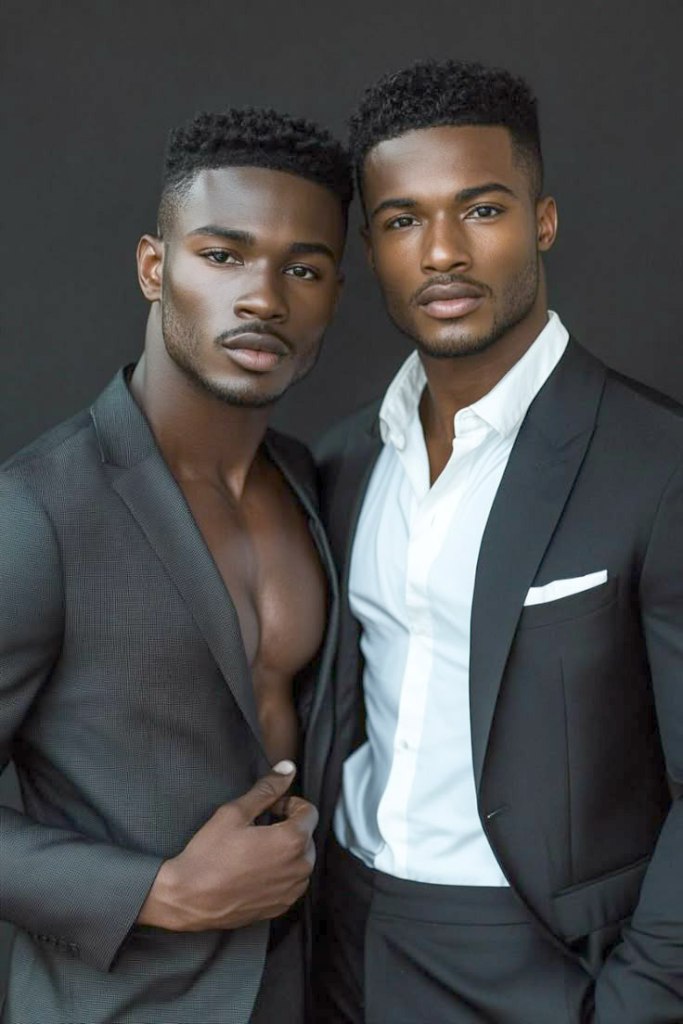
Beyond Muscles and Masculinity: The Psychology of Male Beauty.

This photograph is the property of its respective owner. No copyright infringement intended

Beauty has long been regarded as a feminine domain, while masculinity has been associated with power, dominance, and stoicism. Yet, as societal norms evolve, the concept of male beauty is emerging as a subject worthy of both admiration and analysis. The psychology of male beauty extends beyond the physical—it encompasses identity, confidence, self-worth, and cultural conditioning. To understand male beauty is to examine not only what the eye sees but what the mind perceives and the heart internalizes.

Historically, male beauty was revered in ancient civilizations. In classical Greece, statues such as the Doryphoros by Polykleitos celebrated the harmony between physical strength and aesthetic symmetry. The male body was seen as a vessel of divine proportion—a reflection of moral and physical perfection. However, in modern Western culture, this balance has shifted. The muscular ideal has overtaken the spiritual and intellectual aspects of beauty, reducing masculinity to performance rather than essence.

The modern man faces a paradox. He is told to be confident yet humble, strong yet sensitive, rugged yet refined. This psychological tension creates a quiet identity crisis, forcing men to constantly negotiate their worth through external validation. Studies have shown that men increasingly suffer from body image dissatisfaction, influenced by unrealistic media portrayals and fitness culture (Leit, Pope, & Gray, 2001). What was once considered natural masculinity has become a carefully constructed performance.

Social media has intensified this struggle. Platforms like Instagram promote curated images of muscular men with chiseled abs, perfect lighting, and designer wardrobes. These depictions reinforce narrow ideals of attractiveness, mirroring the same pressures once imposed on women. The male body, once celebrated for strength and functionality, is now commodified as spectacle. This shift reveals that beauty standards are not gender-exclusive—they are societal instruments of control.

The psychology behind male beauty is deeply tied to perception. Men, like women, internalize beauty expectations through social learning and cultural conditioning. Psychologist Albert Bandura’s theory of observational learning (1977) suggests that individuals model behaviors and self-concepts after what they repeatedly see rewarded or admired. When beauty is equated with muscularity or status, men subconsciously adopt these measures as prerequisites for self-worth.

However, physical appearance is only one layer of male beauty. True attraction and presence stem from confidence, integrity, and emotional intelligence. Research in evolutionary psychology indicates that while symmetry and strength play roles in attractiveness, traits such as kindness, humor, and authenticity hold equal if not greater weight in long-term relational appeal (Buss, 1989). Thus, male beauty should be understood as both an aesthetic and moral construct—an integration of outer form and inner character.

The danger of equating beauty solely with physique is that it narrows the definition of manhood. Many men who do not fit the stereotypical ideal—those who are thinner, shorter, or softer in demeanor—are made to feel invisible. This invisibility often leads to psychological distress, including depression and low self-esteem. In this way, patriarchy harms men as much as it controls women, enforcing emotional suppression and unattainable ideals.

To move beyond muscles, men must redefine masculinity in holistic terms. True masculine beauty is not found in dominance but in discipline, not in stoicism but in spiritual strength. Christ Himself embodied perfect manhood—not through physique or aggression but through humility, compassion, and sacrifice. Isaiah 53:2 (KJV) notes that there was “no beauty that we should desire him,” yet His spiritual beauty redeemed humanity. This suggests that divine beauty transcends the physical—it is rooted in purpose and love.

The cultural redefinition of male beauty also demands that society make room for diversity. Men of different races, body types, and aesthetics must be affirmed. The Western ideal often glorifies whiteness, angular features, and specific body types, while men of color are either fetishized or ignored. To celebrate the full range of male beauty is to challenge Eurocentric standards and affirm that grace, style, and strength manifest in every hue.

For Black and brown men, this journey of redefinition carries extra weight. They must navigate not only the pressure to appear strong but also the historical dehumanization that cast their bodies as threatening rather than beautiful. The dark-skinned man’s physique has been both hypersexualized and criminalized, stripping him of vulnerability and complexity. Reclaiming his beauty, therefore, is an act of resistance—a reassertion of his humanity and divine reflection.

In psychological terms, male beauty involves harmony between the ideal self and the real self. Carl Rogers’ theory of self-congruence explains that mental health flourishes when individuals accept themselves authentically rather than conforming to imposed ideals (Rogers, 1951). When a man embraces his unique appearance—his scars, his aging, his imperfections—he experiences liberation from comparison. Beauty, in this sense, becomes acceptance rather than aspiration.

This acceptance must also extend to aging. Society celebrates youth as the pinnacle of attractiveness, yet wisdom and maturity carry their own allure. The silver-haired man, marked by time and experience, embodies a different beauty—one defined by endurance and self-assurance. Proverbs 20:29 (KJV) reminds us, “The glory of young men is their strength: and the beauty of old men is the gray head.” Age, therefore, is not decline but refinement.

The psychological power of self-image also affects behavior and social success. Men who view themselves as attractive often exude more confidence, which in turn influences how others perceive them (Langlois et al., 2000). Yet, this confidence should not be mistaken for arrogance; it is the quiet assurance of a man who understands his worth beyond aesthetics. When inner confidence aligns with external presentation, a man becomes magnetic—not because of perfection, but because of authenticity.

Faith and spirituality further expand the definition of male beauty. The Psalms describe men of faith as “trees planted by rivers of water” (Psalm 1:3, KJV)—strong, rooted, and fruitful. This metaphor captures the essence of divine masculinity: grounded, life-giving, and steadfast. A man’s beauty is not fleeting like a muscle’s tone but enduring like his moral character and spiritual depth.

The relationship between beauty and ego must also be examined. In a culture obsessed with self-presentation, beauty can easily become vanity. Yet, there is a fine line between self-care and self-worship. When beauty becomes a means to glorify self rather than serve others, it loses sacredness. True masculine beauty reflects humility—the awareness that one’s gifts are divine, not self-made.

Emotional vulnerability enhances male beauty. A man unafraid to express love, to admit pain, or to cry demonstrates depth. Society often conditions men to suppress emotion, equating stoicism with strength. Yet, psychological studies affirm that emotional intelligence correlates with relational satisfaction and mental well-being (Salovey & Mayer, 1990). Vulnerability, therefore, is not weakness but wisdom—the courage to be fully human.

In modern times, the fashion and wellness industries are beginning to embrace this broader narrative. Campaigns that feature men of various sizes, ethnicities, and styles are helping dismantle rigid beauty standards. This inclusivity redefines attractiveness not as conformity to a mold but as confidence in authenticity. Male beauty is no longer the privilege of the few—it is the inheritance of all.

Beyond muscles and masculinity lies the truth that beauty is energy. It is how a man carries himself, how he treats others, and how he reflects purpose in his walk. His laughter, intellect, empathy, and faith radiate attractiveness more profoundly than any aesthetic standard. In the end, the most beautiful man is one who knows who he is and whom he serves.

In conclusion, the psychology of male beauty is a journey of self-acceptance, emotional liberation, and spiritual awakening. The truly beautiful man is not enslaved by mirrors or measurements; he is guided by balance and inner peace. When he transcends external validation and embraces authenticity, he redefines what it means to be a man in every sense—body, mind, and soul. Beyond muscles and masculinity, there exists a quiet power: the beauty of a heart aligned with purpose and a spirit anchored in truth.


References

Bandura, A. (1977). Social Learning Theory. Prentice Hall.
Buss, D. M. (1989). Sex differences in human mate preferences: Evolutionary hypotheses tested in 37 cultures. Behavioral and Brain Sciences, 12(1), 1–49.
Langlois, J. H., et al. (2000). Maxims or myths of beauty? A meta-analytic and theoretical review. Psychological Bulletin, 126(3), 390–423.
Leit, R. A., Pope, H. G., & Gray, J. J. (2001). Cultural expectations of muscularity in men: The evolution of body image. International Journal of Eating Disorders, 29(4), 442–448.
Rogers, C. R. (1951). Client-Centered Therapy. Houghton Mifflin.
Salovey, P., & Mayer, J. D. (1990). Emotional intelligence. Imagination, Cognition and Personality, 9(3), 185–211.*
Biblical references: Isaiah 53:2 (KJV); Proverbs 20:29 (KJV); Psalm 1:3 (KJV).