Tag Archives: good looks

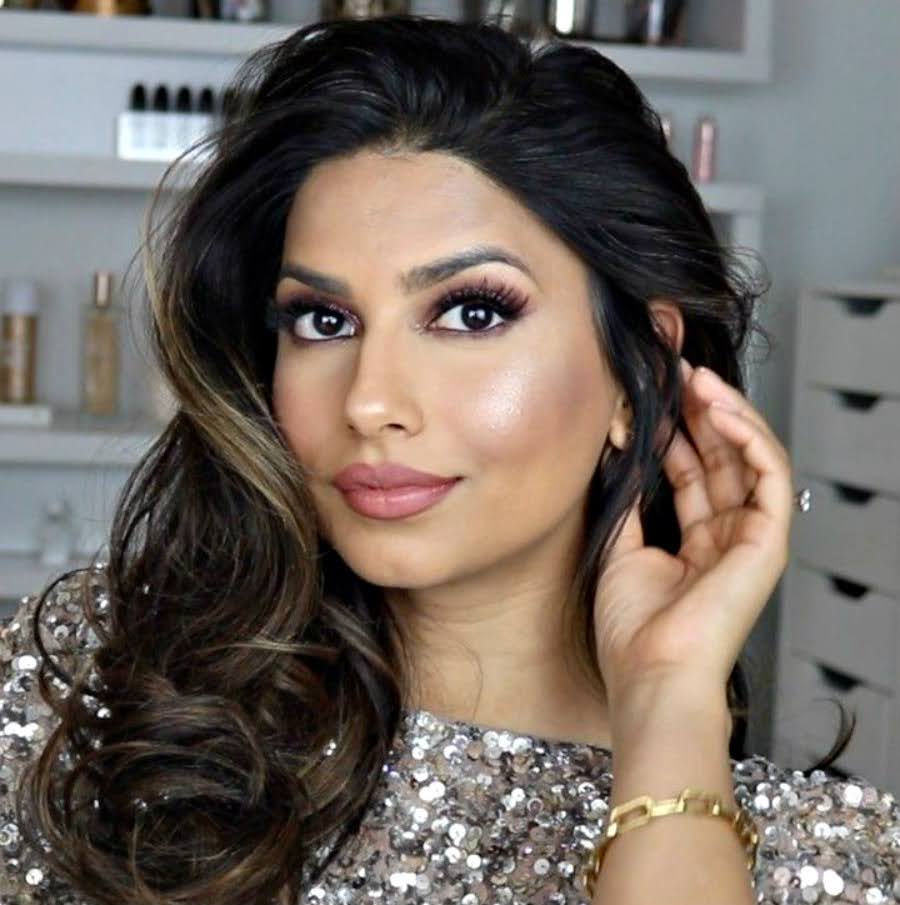
Beauty Series: The Halo Effect – How Attractiveness Shapes Perception

The concept of the “halo effect” has fascinated psychologists, sociologists, and everyday observers for decades. At its core, the halo effect describes a cognitive bias whereby one prominent positive trait, such as physical attractiveness, influences the perception of other unrelated traits. In other words, when someone appears beautiful, people often assume they are also intelligent, kind, successful, or trustworthy, even without evidence.

The halo effect was first formally studied by psychologist Edward Thorndike in 1920, who observed that commanding officers in the military rated subordinates more positively across unrelated categories if they excelled in one area. While Thorndike’s research did not focus on physical attractiveness, it laid the groundwork for understanding how first impressions can distort judgment across traits.

Later research explicitly explored how beauty generates this cognitive bias. Dion, Berscheid, and Walster (1972) coined the phrase “what is beautiful is good,” showing that physically attractive individuals were perceived as more socially competent, morally upright, and even happier than less attractive peers. Their experiments highlighted the enduring psychological power of appearance.

The halo effect operates unconsciously. People are rarely aware that their assessments are influenced by attractiveness. This automatic bias can affect evaluations in nearly every area of life, from employment decisions and leadership selection to dating preferences and legal judgments.

One of the most striking examples of the halo effect occurs in the workplace. Attractive employees are often assumed to be more competent and capable of leadership, even when performance metrics are identical. Studies show that attractive individuals receive better performance reviews, higher starting salaries, and more promotional opportunities.

In education, teachers may unconsciously give more favorable evaluations to students they perceive as attractive. This subtle form of bias reinforces social inequalities and demonstrates that the halo effect has tangible consequences beyond social perception.

The halo effect is not limited to positive traits. A single negative feature or action can produce a “horn effect,” in which one perceived flaw leads observers to assume other negative qualities. Both effects illustrate the same cognitive shortcut: humans generalize from salient cues to form overall impressions.

Physical attractiveness is closely tied to evolutionary psychology. Humans are wired to perceive health, symmetry, and vitality as indicators of genetic fitness. These evolutionary preferences amplify the halo effect, making beautiful people appear more capable or desirable.

Modern research expands the halo effect to digital spaces. Social media, filters, and photo-editing software amplify attractiveness cues, often creating inflated perceptions of competence, confidence, or social status. Gulati et al. (2024) demonstrate that AI-enhanced beauty can exacerbate the halo effect, influencing online hiring, social influence, and even dating behavior.

Cultural standards of beauty further shape the halo effect. What is considered attractive in one society may differ in another, yet the cognitive bias persists universally. Studies show that while facial symmetry and skin clarity are often valued cross-culturally, attributes such as height, body proportion, and grooming also contribute to halo-based judgments.

Celebrities and public figures benefit disproportionately from the halo effect. Actors, musicians, and politicians who are conventionally attractive often receive amplified media coverage, favorable reviews, and greater public trust, regardless of their actual competence or achievements.

The halo effect also influences judicial outcomes. Research indicates that defendants who are physically attractive receive more lenient sentences and more favorable juror assessments than less attractive defendants. This underscores how subconscious biases can infiltrate systems of justice.

In romantic relationships, attractiveness plays a dual role. Attractive individuals are often assumed to possess positive personality traits, leading to increased attention, dating opportunities, and perceived compatibility. However, these assumptions are not always accurate, and reliance on the halo effect can lead to misjudgment and disappointment.

Educational institutions, workplaces, and legal systems have developed training and awareness programs to mitigate the halo effect. By making evaluators conscious of their biases, organizations aim to reduce the disproportionate influence of attractiveness on decisions that should rely on objective criteria.

Despite its negative consequences, the halo effect can also have positive social functions. It can facilitate smoother social interactions, foster trust, and encourage prosocial behavior when applied unconsciously in small, everyday encounters. The challenge lies in balancing instinctual perceptions with critical assessment.

Media representation further entrenches halo-driven biases. Television, advertising, and film often equate beauty with moral virtue, intelligence, and social desirability, reinforcing societal beliefs about the link between appearance and character. These portrayals perpetuate stereotypes that extend the halo effect beyond personal observation.

The halo effect intersects with gender and race. Studies reveal that attractive women often experience both advantage and heightened scrutiny, while attractive men are perceived as more competent and dominant. Cultural biases also affect how attractiveness is perceived across different racial groups, revealing the interplay between beauty standards and systemic inequality.

Beauty standards evolve over time, yet the halo effect remains consistent. From Renaissance portraits to modern Instagram filters, humans are inclined to generalize from visible cues of beauty to judgments about competence, character, and social value.

Awareness of the halo effect empowers individuals to question first impressions. By actively seeking objective evidence and critically evaluating assumptions, people can reduce the unconscious influence of attractiveness on decisions, creating fairer evaluations in education, employment, and social judgment.

Ultimately, the halo effect demonstrates the profound power of perception in shaping human interactions. Beauty influences how people are treated, what opportunities they receive, and how society interprets their value. Recognizing this bias is a first step toward creating equitable systems that honor true merit over appearance.


References

Dion, K., Berscheid, E., & Walster, E. (1972). What is beautiful is good. Journal of Personality and Social Psychology, 24(3), 285–290.

Thorndike, E. L. (1920). A constant error in psychological ratings. Journal of Applied Psychology, 4(1), 25–29.

Talamas, S. N., Mavor, K. I., & Perrett, D. I. (2016). Blinded by beauty: Attractiveness bias and accurate perceptions of academic performance. PLoS ONE, 11(2), e0148284.

Gulati, A., Martínez-Garcia, M., Fernández, D., Lozano, M. A., Lepri, B., & Oliver, N. (2024). What is beautiful is still good: The attractiveness halo effect in the era of beauty filters. Computers in Human Behavior, 152, 107034.

Fiske, S. T., & Taylor, S. E. (2013). Social cognition: From brains to culture (2nd ed.). Sage Publications.

Nisbett, R. E., & Wilson, T. D. (1977). The halo effect: Evidence for unconscious alteration of judgments. Journal of Personality and Social Psychology, 35(4), 250–256.

Rosen, S., & Grossman, J. (2020). Attractiveness bias: Implications for education, employment, and justice. Social Science Review, 42(3), 112–128.

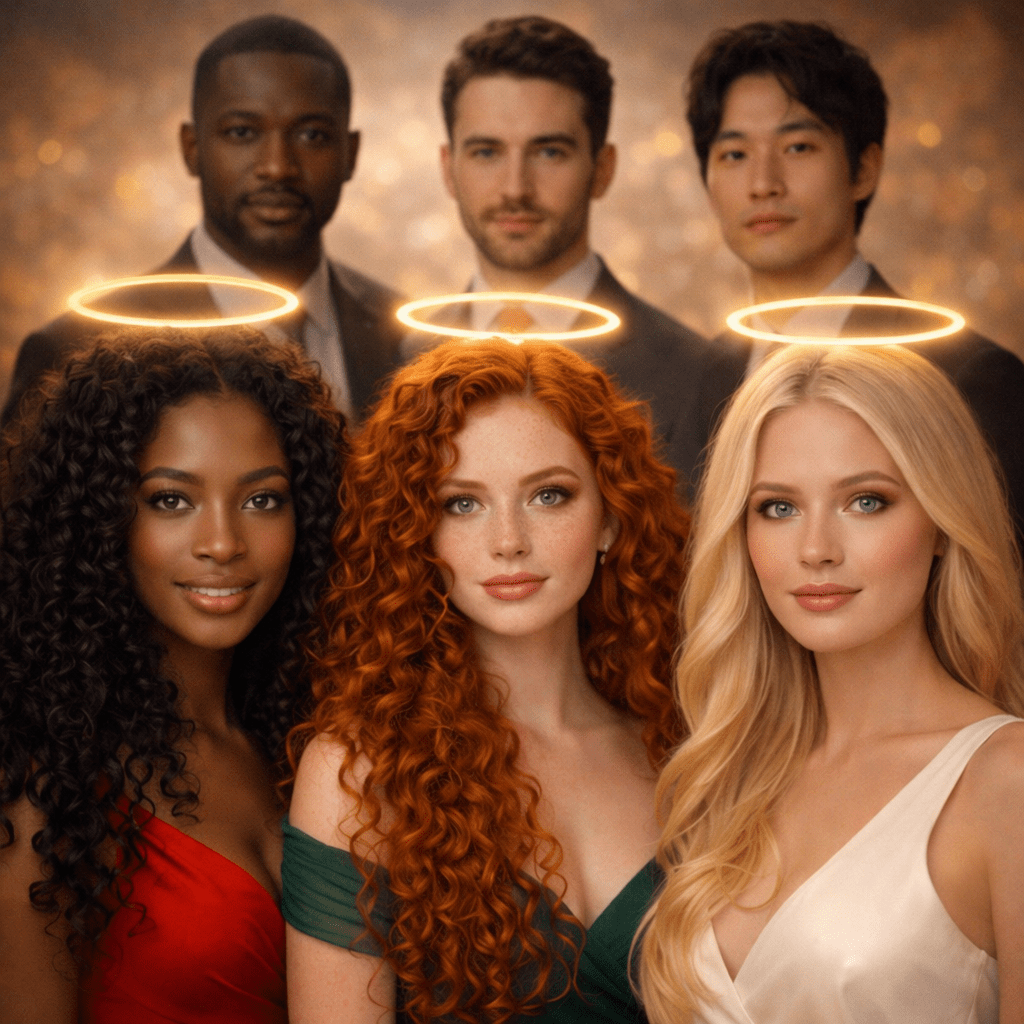
It is Okay to be “The Most Beautiful Woman in the Room” but are you making everyone else sick with it? Beverly says….

Beauty has always carried social power. From ancient civilizations to modern digital culture, physical attractiveness has functioned as a form of symbolic capital—something that grants attention, access, and influence. To be the most beautiful woman in the room is not inherently wrong; in fact, it can be a gift. The problem arises not from beauty itself, but from how it is performed, weaponized, or used to dominate social space.

Psychological research consistently shows that attractive individuals receive preferential treatment in hiring, education, and social relationships—a phenomenon known as the “halo effect.” Beauty is often unconsciously equated with intelligence, kindness, and competence. This distortion creates a power imbalance before a single word is spoken.

When a woman becomes aware of this power, she faces a choice: will she carry her beauty with humility, or with entitlement? Arrogance emerges when beauty shifts from being a trait to being an identity—when self-worth becomes entirely anchored in how one is seen rather than who one is.

Arrogance with beauty often manifests subtly. It appears in body language, tone, dismissiveness, constant comparison, or the need to dominate attention. It is not loud narcissism alone; it is a quiet assumption of superiority that others can feel immediately.

For other women in the room, this dynamic can generate insecurity, competition, and emotional fatigue. Social comparison theory explains that people evaluate themselves relative to others, especially in appearance-based environments. When one woman positions herself as the standard, others are forced into a hierarchy they never consented to.

Jealousy is not always petty—it is often psychological pain produced by unequal social valuation. When beauty is flaunted rather than shared, it can create a climate of silent hostility, where women feel diminished simply by proximity.

Men, meanwhile, respond differently. Beauty can trigger sexualization, fantasy, and projection. Research in evolutionary psychology suggests that physical attractiveness activates reward circuits in the brain similar to drugs or gambling. Lustful attention is not neutral; it changes social energy in a room.

When a woman consciously or unconsciously cultivates male desire as validation, she may enjoy attention without realizing its ripple effects. Conversations shift. Boundaries blur. Other women become invisible. Men become performative. The social space becomes eroticized rather than communal.

Over time, this environment becomes emotionally toxic. People do not feel seen; they feel measured. The most beautiful woman becomes the emotional sun around which everyone else must orbit.

This is where beauty becomes harmful—not because it exists, but because it consumes relational space. It monopolizes attention, distorts dynamics, and subtly communicates: “I matter more than you.”

The irony is that true beauty is expansive, not extractive. It makes others feel comfortable, uplifted, and safe. Arrogant beauty makes others feel smaller, anxious, or invisible.

Narcissism research shows that individuals who rely heavily on external validation often lack stable self-esteem. The need to be admired becomes addictive. Beauty becomes a performance that must be maintained at all costs—through comparison, competition, and dominance.

This is why some beautiful people leave others feeling drained. They are not just attractive; they are emotionally demanding. They require constant affirmation, attention, and deference.

Social environments thrive on reciprocity. When one person absorbs all the light, others are forced into shadow. Over time, resentment replaces admiration.

Even the beautiful woman herself becomes trapped. Her value becomes conditional. Aging, weight change, or shifting attention threatens her identity. What once felt like power becomes fragility.

The most dangerous illusion is believing that beauty makes one better than others. Attractiveness is not virtue. It is not wisdom. It is not moral superiority. It is a biological lottery shaped by genetics, culture, and social bias.

Humility is what redeems beauty. A woman who knows she is beautiful but does not need to prove it becomes magnetic without harm. She does not compete; she collaborates. She does not dominate; she invites.

Beauty with humility creates safety. It allows other women to exist without fear of comparison. It allows men to engage without objectification. It restores balance to the social field.

The real question is not “Am I the most beautiful woman in the room?” but “How do people feel when I enter the room?” Do they feel tense or at ease? Smaller or affirmed? Observed or welcomed?

It is okay to be beautiful. It is not okay to make others sick with it. Beauty should be a gift to the room, not a threat to it. When beauty becomes a mirror instead of a spotlight—reflecting humanity rather than demanding worship—it finally becomes what it was always meant to be: connection, not control.


References

Buss, D. M. (2019). Evolutionary psychology: The new science of the mind (6th ed.). Routledge.

Cash, T. F., & Smolak, L. (2011). Body image: A handbook of science, practice, and prevention (2nd ed.). Guilford Press.

Festinger, L. (1954). A theory of social comparison processes. Human Relations, 7(2), 117–140.

Hamermesh, D. S. (2011). Beauty pays: Why attractive people are more successful. Princeton University Press.

Langlois, J. H., et al. (2000). Maxims or myths of beauty? A meta-analytic and theoretical review. Psychological Bulletin, 126(3), 390–423.

Twenge, J. M., & Campbell, W. K. (2009). The narcissism epidemic: Living in the age of entitlement. Free Press.

Tate, S. A. (2009). Black beauty: Aesthetics, stylization, politics. Ashgate.

Vohs, K. D., et al. (2014). Objectification and self-objectification. Current Directions in Psychological Science, 23(6), 416–420.

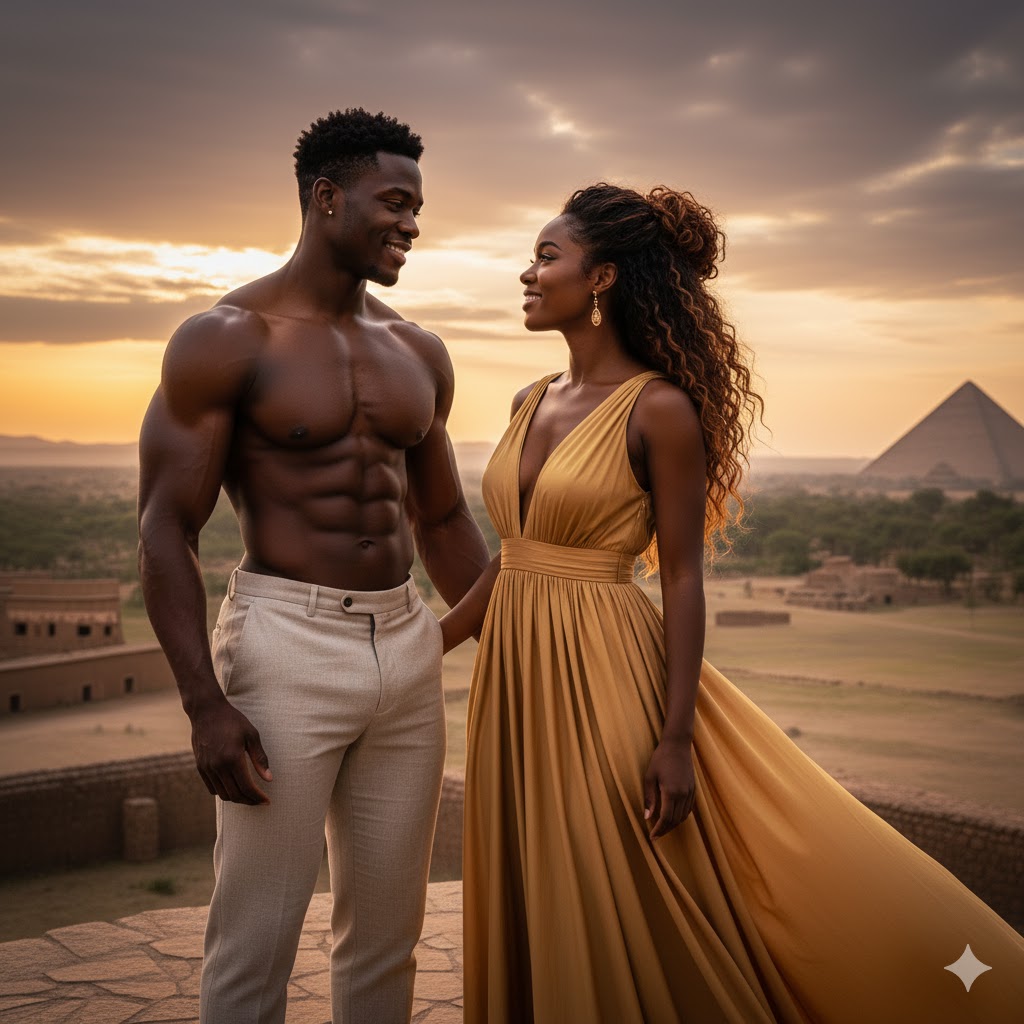
✨ The Aesthetics of Melanin: Masculine & Feminine Beauty ✨

A celebration of Black physical excellence — form, feature, and divine design

The beauty of Black people is not merely visual; it is architectural, sculptural, and elemental. It is heritage carved into flesh, ancestry alive in bone, and glory poured into skin. Melanin is not pigment — it is poetry. It reads like scripture on the body, testifying to divine intention and ancestral brilliance.

Black skin holds sunlight like a crown. Rich tones ranging from deep ebony to golden bronze shimmer with warmth and depth untouched by time. Under light, melanin glows, refracting gold and copper undertones like sacred metal. Where others burn under sun, Black skin communes with it, absorbing radiance and returning it as brilliance.

The texture of Black skin is resilient and regal. Smooth like velvet, firm like carved obsidian, it communicates strength and softness in the same breath. Even in aging, Black skin preserves youth, holding firmness and clarity as a mark of blessing and biology. Time bends gently around melanin.

Black eyes are galaxies — deep, soulful, luminous. They hold ancestral wisdom, passion, and mystery. Their depth is unmatched, reflecting strength, intuition, and spiritual perception. Brown eyes ranging from warm amber to midnight black speak without words, their intensity capable of piercing or comforting in equal measure.

Full lips remain one of the most admired features in global beauty standards — naturally plump, sculpted, and expressive. They symbolize richness and vitality, formed to communicate power, tenderness, and passion. Where imitation tries and fails, Black lips set the original blueprint for sensual symmetry.

Black noses come in noble forms — wide, sculpted, and strong. They speak of identity, rootedness, and authenticity. The elegance of broader nasal structures enhances facial harmony, balance, and presence. In an era of artificial features, original African contours stand unmatched, unapologetic, and divine.

Cheekbones in Black men and women rise like royal architecture. High, pronounced, and sculpted, they frame the face with an effortless dignity. They create definition without effort, shaping expressions into portraits of grace or power depending on the moment.

Jawlines among Black men often carry heroic structure — angular, bold, carved like marble. Their faces speak of protection, authority, and masculine divinity. Black women’s jawlines balance softness and strength, demonstrating a design that holds both gentleness and majesty.

Hair — in coils, curls, waves, and kinks — stands as a living crown. Defying gravity, it rises toward heaven in spirals mirroring galaxies. Every curl is a signature of identity, every coil a testimony to resilience. Black hair is versatile, expressive, regal — a divine engineering of texture and pride.

Black men possess physiques sculpted by nature to command, protect, and endure. Broad shoulders, powerful backs, strong chests, and athletic proportions represent raw strength and disciplined elegance. From warriors to modern athletes, the Black male form proves excellence in structure and motion.

Black women embody curvature as art — hips shaped like crescents, waists sculpted like pottery, and silhouettes that flow like water. Their bodies represent fertility, power, beauty, and grace. Their movement carries rhythm, heritage, and magnetic softness.

The legs of Black men and women tell stories of mobility, endurance, and athletic superiority. Strong thighs, graceful calves, and balanced proportions reveal bodies built for power and speed, as though carved for motion with divine precision.

Black hands reveal labor and love. Strong and expressive, they carry cultural memory — hands that have created, fought, healed, raised nations, and built empires. In their form lies capability, tenderness, and dignity.

Collarbones and shoulders among Black women shimmer like sculpture. Smooth, elegant, and defined, they reflect femininity in pure form. Black men’s shoulders stand broad and unwavering, pillars of masculine power.

Black smiles, framed by full lips and bright teeth, radiate warmth, vitality, and confidence. There is a glow behind them — one shaped by survival, joy, and soul-deep life force. When Black people smile, the room lights differently.

Posture distinguishes Black beauty — upright, proud, grounded, and graceful. Even in casual stance, there is royal poise, inherited from ancestors who walked like kings and queens despite chains.

Movement in Black bodies is music made visible. Whether walking, dancing, or simply existing, fluidity and rhythm define them. Grace lives in the hips, strength in the back, confidence in the stride.

Masculine beauty among Black men is the fusion of power and nobility. Their features command attention; their presence shifts atmosphere. Feminine beauty among Black women is softness wrapped in steel, elegance intertwined with strength. Together they form a visual symphony — balance, brilliance, and divine complementarity.

The aesthetics of melanin transcend human standards. They reflect an original blueprint — the first beauty shaped by the Creator. Black bodies are not merely physically beautiful — they are historical, celestial, and spiritual. They carry the imprint of Eden, the dignity of royalty, and the radiance of creation itself.

Black beauty is not a trend. It is a truth — ancient, eternal, and unmatched. It does not strive to belong to the world’s standard; the world strives to imitate it. And yet, imitation never surpasses authenticity. Where melanin breathes, beauty lives in its highest form.

Biblical References (KJV)

  • Genesis 1:27 – “So God created man in his own image, in the image of God created he him; male and female created he them.”
  • Psalm 139:14 – “I will praise thee; for I am fearfully and wonderfully made: marvellous are thy works; and that my soul knoweth right well.”
  • Song of Solomon 4:1–7 – Descriptions of physical beauty, including lips, eyes, and skin.
  • Proverbs 31:25–30 – The virtuous woman: strength, beauty, and dignity.
  • 1 Corinthians 15:46 – “First that which is natural; afterward that which is spiritual.”

Scientific / Anthropological References

  • Jablonski, N. G. (2006). Skin: A Natural History. University of California Press.
  • Relethford, J. H. (2012). The Human Species: An Introduction to Biological Anthropology. McGraw-Hill Education.
  • Robins, G. (2014). The Science of Beauty: Facial Symmetry, Melanin, and Aesthetic Perception. Journal of Aesthetic Research.
  • Farkas, L. G. (1994). Anthropometry of the Head and Face. Raven Press.

Sociocultural / Psychological References

  • Banks, I. (2018). The Melanin Millennium: African Aesthetics in the Modern World.
  • Byrd, A., & Tharps, L. L. (2014). Hair Story: Untangling the Roots of Black Hair in America. St. Martin’s Press.
  • Hall, R. E. (2010). African-American Facial Features and Perceptions of Beauty. Journal of Black Studies.

💄 The Power of Pretty 💄

Beauty, Influence, and Societal Dynamics

Beauty has always been more than skin deep. It functions as a subtle yet pervasive form of influence, shaping social dynamics, opportunities, and perceptions. What society labels as “pretty” carries weight, affecting lives in ways often unnoticed. From history to modern media, the influence of attractiveness impacts interpersonal relationships, professional advancement, and cultural status.

Historically, beauty standards have been codified and politicized. In Renaissance Europe, fair skin, delicate features, and symmetry were not simply aesthetic preferences but symbols of class, virtue, and morality. Across cultures, similar patterns emerge, showing that beauty consistently intersects with social capital.

Psychologically, humans respond instinctively to facial symmetry, clear skin, and proportional features, interpreting these cues as indicators of health and vitality. Pretty individuals often trigger positive biases, influencing how others perceive competence, trustworthiness, and likability.

Gender plays a significant role in how beauty is leveraged. Women, in particular, face societal pressures to maintain appearance, and attractiveness can function as social and economic currency. The “beauty premium” demonstrates that societal preference for attractive individuals can lead to higher likelihood of hiring, promotions, and social favor, yet it also subjects them to heightened scrutiny and objectification.

Appearance operates as a form of social signaling. Being conventionally attractive often conveys competence and social dominance, regardless of actual ability. This “halo effect” means pretty individuals are frequently treated more favorably, consciously or unconsciously.

Colorism adds another layer of complexity. Within communities, lighter skin and Eurocentric features are often favored, creating systemic hierarchies that reward certain appearances while marginalizing others. Beauty becomes both subjective and systemic, influencing social mobility and self-perception.

Modern media further amplifies narrow beauty ideals, presenting often unattainable standards through advertising, film, and social platforms. These images shape cultural perception, influence self-esteem, and dictate interpersonal dynamics, creating an environment where appearance is closely tied to societal validation.

Pretty individuals can consciously wield beauty as leverage. In politics, business, and entertainment, attractiveness can persuade, negotiate, and shape public opinion. Physical appearance can become an asset in both personal and professional spheres.

However, beauty also carries costs. Objectification, jealousy, and the pressure to maintain standards can create psychological and social burdens. The labor, expense, and attention required to maintain societal ideals illustrate that prettiness is as demanding as it is powerful.

Research shows that attractive individuals experience measurable advantages across professional, educational, and social contexts. In workplaces, appearance influences evaluations, promotions, and compensation. In education, students deemed attractive receive more attention and encouragement, demonstrating that beauty can affect trajectories from an early age.

In social networks, attractiveness functions as a form of social navigation. Pretty individuals often gain trust, allies, and influence more readily, using charm and appearance strategically. Digital platforms have quantified these dynamics, with likes, follows, and algorithmic visibility creating a new economy of beauty.

The psychological impact of beauty extends to both those deemed attractive and those outside dominant standards. Attractive individuals may internalize their social power, while others may experience marginalization or heightened self-awareness regarding appearance.

Leadership perception is also influenced by physical attractiveness. Attractive leaders are often judged as more competent, persuasive, and authoritative, showing a direct link between appearance and social influence. Gendered double standards exacerbate these dynamics, as women face greater scrutiny over age and deviations from beauty norms.

Contemporary movements challenging narrow Eurocentric beauty ideals empower individuals to reclaim the influence of appearance. By celebrating diverse skin tones, hair textures, body shapes, and facial features, society can begin to decouple prettiness from oppression and objectification.

Ultimately, beauty represents a form of social, psychological, and economic capital. Recognizing its influence allows individuals and communities to navigate the power of appearance with awareness, balancing advantages with responsibility and ethical consideration.

The power of pretty is undeniable, yet true liberation comes when influence is coupled with integrity, self-knowledge, and the dismantling of oppressive standards. Prettiness can empower, but its greatest expression arises when it aligns with wisdom, justice, and cultural consciousness.


References

Chou, H. T. G., & Edge, N. (2012). “They are happier and having better lives than I am”: The impact of using Facebook on perceptions of others’ lives. Cyberpsychology, Behavior, and Social Networking, 15(2), 117–121.

Dion, K., Berscheid, E., & Walster, E. (1972). What is beautiful is good. Journal of Personality and Social Psychology, 24(3), 285–290.

Elder, T., Goddeeris, J., & Williams, R. (2016). Beauty, bias, and student outcomes. Economics of Education Review, 51, 1–14.

Fredrickson, B. L., & Roberts, T. A. (1997). Objectification theory. Psychology of Women Quarterly, 21(2), 173–206.

Friedan, B. (1991). The Feminine Mystique. Norton.

Hamermesh, D. S., & Biddle, J. E. (1994). Beauty and the labor market. American Economic Review, 84(5), 1174–1194.

Hunter, M. (2007). The persistent problem of colorism: Skin tone, status, and inequality. Sociology Compass, 1(1), 237–254.

Langlois, J. H., et al. (2000). Maxims or myths of beauty? A meta-analytic and theoretical review. Psychological Bulletin, 126(3), 390–423.

Little, A. C., et al. (2007). Facial attractiveness and leadership perception. British Journal of Psychology, 98(1), 91–103.

Rhodes, G. (2006). The evolutionary psychology of facial beauty. Annual Review of Psychology, 57, 199–226.

Tiggemann, M. (2011). The impact of media on body image. In Body image: A handbook of science, practice, and prevention (pp. 169–175). Guilford Press.

Tiggemann, M., & Slater, A. (2013). NetGirls: The Internet, Facebook, and body image concern in adolescent girls. International Journal of Eating Disorders, 46(6), 630–643.

Verhulst, J., Lodge, M., & Lavine, H. (2010). The attractiveness halo: Why some candidates are more persuasive than others. Political Psychology, 31(1), 1–26.

Wolf, N. (1991). The Beauty Myth. HarperCollins.