Tag Archives: dark skin

Light Enough to Love, Dark Enough to Hate.

Colorism, the preferential treatment of lighter skin tones within communities of color, is a deeply rooted social phenomenon that emerged from colonialism and slavery. It reflects a hierarchy imposed by systems of white supremacy, where proximity to whiteness determined social status, safety, and opportunity. Within the Black community, this stratification produced complex psychological and social consequences that continue to shape relationships, identity, and perceptions of beauty. The phrase “light enough to love, dark enough to hate” captures the painful duality experienced by many Black women navigating these inherited hierarchies.

From the perspective of a light-skinned girl, the privileges of colorism are often subtle but unmistakable. Growing up, she may have noticed that teachers describe her as “pretty,” “approachable,” or “exotic,” labels that quietly elevate her within beauty standards shaped by Eurocentric ideals. Her lighter complexion becomes a form of social currency, though one she did not consciously seek. She may sense admiration from some and suspicion from others, realizing that her skin tone carries historical meaning beyond her own identity.

At the same time, the light-skinned girl may encounter the uneasy knowledge that her perceived advantages come at the expense of others who share her racial heritage. Compliments about her complexion may be framed in contrast to darker skin, reinforcing a hierarchy she did not create but is nonetheless implicated in. Statements such as “You’re pretty for a Black girl” or “Your skin is the perfect shade” subtly reinforce a narrative that beauty and worth are measured against proximity to whiteness.

The dark-skinned girl experiences a markedly different reality. Her childhood memories may include comments that diminish her beauty or question her desirability. She hears comparisons between her complexion and lighter peers, sometimes from strangers, sometimes from within her own community. These comments accumulate over time, shaping her self-perception and reminding her that her natural features exist within a social hierarchy she never consented to.

For the dark-skinned girl, colorism often manifests as exclusion in subtle and overt ways. In school, she may notice that lighter-skinned girls are more frequently chosen for performances, pageants, or leadership roles. In media representations, women who resemble her may appear less frequently or be cast in stereotypical roles. The cumulative effect is a quiet but persistent message: darker skin is less desirable.

Friendships between light-skinned and dark-skinned girls are often shaped by these unspoken dynamics. While genuine affection may exist, societal biases sometimes create tension or misunderstanding. The light-skinned girl may struggle to recognize the privileges associated with her complexion, while the dark-skinned girl may carry the emotional burden of comparison.

In some cases, colorism creates divisions that undermine solidarity. Dark-skinned girls may feel overshadowed by the social attention given to their lighter counterparts, while light-skinned girls may feel unfairly blamed for advantages they did not intentionally pursue. These tensions reflect the lingering effects of historical systems that deliberately fractured Black communities.

To understand the origins of colorism, one must return to the institution of slavery in the Americas. Enslaved Africans were subjected to brutal systems designed to maximize labor and control. Within this system, European enslavers frequently granted preferential treatment to enslaved individuals with lighter skin, many of whom were the mixed-race children of sexual exploitation by slaveholders.

These lighter-skinned enslaved individuals were sometimes assigned domestic roles within the slaveholder’s household, while darker-skinned individuals were forced into field labor under harsher conditions. Although both groups remained enslaved and oppressed, the distinction created a visible hierarchy based on complexion.

This division served a strategic purpose. By granting marginal privileges to lighter-skinned individuals, slaveholders reinforced internal divisions among enslaved people. The hierarchy discouraged unity and resistance by fostering competition and resentment within the enslaved population.

The trauma of these divisions did not disappear after emancipation. Instead, they evolved into social practices that continued to privilege lighter skin within Black communities. One of the most infamous manifestations of this legacy was the “brown paper bag test,” an informal practice used by certain social clubs, churches, and organizations in the late nineteenth and early twentieth centuries.

The brown paper bag test involved comparing a person’s skin tone to the color of a brown paper bag. Individuals whose complexions were darker than the bag were often excluded from certain social spaces. While not universally practiced, the test symbolized the internalization of color hierarchies rooted in slavery.

For the light-skinned girl, learning about this history can evoke feelings of discomfort and guilt. She may realize that her acceptance in certain spaces historically depended on a hierarchy that excluded others who looked like her own family members. This awareness complicates her understanding of privilege and belonging.

For the dark-skinned girl, the history of colorism confirms experiences she has long felt but struggled to articulate. The social patterns she encounters are not isolated incidents but part of a centuries-old structure of inequality. Recognizing this history can be both validating and painful.

White supremacy played a central role in constructing these hierarchies. European colonizers established racial classifications that placed whiteness at the top and Blackness at the bottom. Within this system, lighter skin among Black populations was perceived as evidence of proximity to whiteness and therefore treated as more valuable.

These beliefs were reinforced through media, education, and cultural narratives that celebrated Eurocentric features such as lighter skin, straight hair, and narrow facial structures. Over time, these standards influenced perceptions of beauty and desirability across societies shaped by colonial history.

In the United States, colorism also intersected with economic opportunity. Historically, lighter-skinned Black individuals were sometimes granted greater access to education and professional employment due to discriminatory hiring practices that favored those perceived as more “acceptable” to white institutions.

The light-skinned girl may grow up hearing relatives describe her complexion as an advantage in navigating the world. These comments may be intended as encouragement but carry implicit recognition of systemic bias. She learns that her skin tone may influence how others perceive her intelligence, professionalism, or beauty.

Meanwhile, the dark-skinned girl may receive messages encouraging her to compensate for perceived disadvantages. She may be told to work harder, dress more carefully, or present herself in ways that challenge stereotypes associated with darker skin. These expectations place additional burdens on her self-presentation.

Within friendships, these dynamics can create complicated emotional landscapes. The dark-skinned girl may feel invisible when attention consistently gravitates toward her lighter friend. The light-skinned girl may struggle with feelings of defensiveness or confusion when confronted with discussions about privilege.

Despite these tensions, many friendships endure through honest conversations and mutual empathy. When both individuals acknowledge the historical forces shaping their experiences, they can develop a deeper understanding and solidarity. These dialogues challenge the divisions that colorism was designed to create.

Media representation plays a significant role in perpetuating or dismantling colorism. Historically, film, television, and advertising have disproportionately featured lighter-skinned actresses as symbols of beauty and desirability. Darker-skinned women have often been marginalized or cast in limited roles.

However, recent decades have seen increasing recognition of the need for diverse representation. Celebrated figures such as Lupita Nyong’o have openly discussed the impact of colorism and advocated for broader definitions of beauty. Their visibility challenges longstanding biases.

The psychological effects of colorism can be profound. Studies in social psychology demonstrate that repeated exposure to negative messages about skin tone can influence self-esteem, identity formation, and interpersonal relationships. These effects can persist across generations.

For the light-skinned girl, confronting colorism may involve examining how society rewards her appearance while simultaneously objectifying it. She may struggle to separate genuine appreciation from biases rooted in historical inequality.

For the dark-skinned girl, resistance often involves reclaiming narratives about beauty and worth. Movements celebrating dark skin, natural hair, and African features have emerged as powerful cultural responses to centuries of marginalization.

Healing from colorism requires both individual reflection and structural change. Communities must confront the ways in which inherited biases influence social interactions, beauty standards, and opportunities. Education about history plays a crucial role in this process.

Friendships between women of different skin tones can become spaces of healing when grounded in honesty and compassion. By acknowledging the historical roots of colorism, individuals can dismantle the assumptions that once divided them.

Ultimately, the legacy of colorism reminds us that systems of oppression often extend beyond the boundaries of race into internal hierarchies within marginalized communities. These divisions were deliberately constructed to weaken collective resistance.

The phrase “light enough to love, dark enough to hate” encapsulates a painful contradiction within societies shaped by colonial history. Yet understanding this legacy also opens the possibility of transformation.

By rejecting color hierarchies and affirming the beauty of every shade, communities can challenge the narratives imposed by centuries of oppression. In doing so, they move toward a future where identity is no longer measured against the distorted standards of the past.


References

Hunter, M. (2007). The persistent problem of colorism: Skin tone, status, and inequality. Sociology Compass, 1(1), 237–254. https://doi.org/10.1111/j.1751-9020.2007.00006.x

Keith, V. M., & Herring, C. (1991). Skin tone and stratification in the Black community. American Journal of Sociology, 97(3), 760–778. https://doi.org/10.1086/229819

Russell, K., Wilson, M., & Hall, R. (1992). The color complex: The politics of skin color among African Americans. New York, NY: Harcourt Brace Jovanovich.

Walker, A. (1983). If the present looks like the past, what does the future look like? In search of our mothers’ gardens: Womanist prose. San Diego, CA: Harcourt Brace Jovanovich.

Wilder, J. (2015). Color stories: Black women and colorism in the 21st century. New York, NY: Routledge.
The Melanin Manuscripts

The Melanin Manuscripts begin with a truth older than nations: that Blackness is not an accident but an inheritance. It is a coded brilliance written by the Creator Himself, woven into the skin of a people who have shaped the world with intellect, beauty, resilience, and spiritual depth. These manuscripts are not bound in leather but in lineage, carried in memory, DNA, culture, and faith. They tell a story the world tried to bury, yet like seeds planted deep, the story rose again.

In these manuscripts, melanin becomes both metaphor and miracle. Scientifically, melanin protects, preserves, and sustains life. Spiritually, it symbolizes endurance—an outward sign of an inward strength developed through centuries of struggle and triumph. This duality makes Blackness both biological and sacred, a mark of identity that connects descendants of Africa to ancient civilizations, sacred texts, and future generations.

The first chapter of the Melanin Manuscripts stretches back to African antiquity, where knowledge, philosophy, and mathematics flourished. Civilizations like Kush, Axum, Kemet, and Mali wrote history long before Europe learned to read it. Their scholars studied the stars, their architects built wonders, and their communities thrived through systems that valued family, spirituality, and communal strength. This ancient brilliance forms the prologue of Black identity, reminding the world that African contributions are foundational, not peripheral.

The manuscripts turn their pages to the era of the transatlantic slave trade, where the brilliance of melanin came under assault. Millions of men, women, and children were forced into captivity, their bodies commodified and their identities stripped. Yet even in chains, their holiness could not be erased. The manuscripts record that their survival was not luck but divine intervention, a testament to a God who heard their cries and preserved their descendancy.

Embedded in these pages is the spiritual power of the enslaved. They found in Scripture the God of Exodus—the One who breaks chains and lifts oppressed people into promise. They turned fields into sanctuaries, sorrow into songs, and nights of terror into mornings of hope. Their hymns carried coded messages of freedom, their prayers sustained their souls, and their faith ignited movements that would one day shake nations. These entries in the manuscripts shine with spiritual fire.

The Melanin Manuscripts record the intellectual genius of Black pioneers. Inventors like Garrett Morgan, scientists like George Washington Carver, educators like Mary McLeod Bethune, and physicians like Dr. Charles Drew wrote new chapters through innovation. Their brilliance overturned stereotypes and carved space for Black excellence in disciplines where doors had long been locked. Their achievements were not mere victories—each was a reclamation of stolen dignity.

The manuscripts also honor the warriors and liberators whose courage reshaped history. Nat Turner, Queen Nzinga, Toussaint Louverture, Harriet Tubman, and Ida B. Wells appear in their pages like prophets and generals. They waged war against systems built to crush them, insisting that freedom was non-negotiable. Their stories reveal a pattern: wherever oppression rose, resistance rose higher.

No manuscript would be complete without the artistry of Black culture. From spirituals to jazz, from gospel to hip-hop, from poetry to modern cinema, the creative power of a people who endured unthinkable pain gave birth to some of the world’s most influential art forms. These artistic chapters demonstrate that beauty, rhythm, and innovation arise naturally from melanin-rich souls who turn trauma into triumph and silence into symphonies.

The modern chapters of the Melanin Manuscripts reflect a global diaspora still rising. Scholars, activists, creators, and thinkers continue to shape conversations about identity, justice, leadership, and liberation. Their voices echo across continents, tying together Africa, the Caribbean, Europe, and the Americas. The global Black experience remains interconnected, bound by shared memory and ancestral strength.

These manuscripts reveal that melanin is more than pigment—it is a legacy. In a world that attempted to define Black people by struggle alone, these documents reclaim identity as powerful, intellectual, spiritual, and dignified. They argue that a people who built civilizations, survived enslavement, and transformed every society they touched cannot be reduced to stereotypes or oversight.

The Melanin Manuscripts affirm that Blackness is a story of survival, but also of sovereignty. It is not only about suffering; it is about strategy, leadership, beauty, and brilliance. It is the story of a people who refuse to disappear, who bloom in deserts, who rise from ashes, and who turn oppression into opportunity. This resilience is not accidental—it is inherited.

The manuscripts speak of family, of mothers whose hands held together entire bloodlines, and fathers who fought silently to protect their children’s futures. These domestic chapters reveal that survival often happens in private spaces long before it is visible in public records. Their sacrifices, though unrecorded, are written in the margins of these sacred archives.

The Melanin Manuscripts highlight the spiritual dimension of Black identity. Biblical connections to ancient African nations, the presence of Ethiopian and Cushite peoples in Scripture, and the prophetic resilience of a people familiar with exile and restoration make Black identity deeply intertwined with sacred text. This theological lineage strengthens the manuscripts’ authority.

Within these pages lies a call to remembrance. To forget the brilliance of Black history is to forget the sacredness of survival. To ignore the manuscripts is to lose part of the world’s greatest story of endurance, innovation, and faith. These documents demand reverence because they are written with the ink of ancestors and the blood of martyrs.

They also offer a call to future generations: continue writing. Every Black child becomes a new page in this divine anthology. Every achievement becomes a new chapter. Every act of courage, creativity, scholarship, or leadership expands the text. The manuscripts will never be complete because the story is still unfolding.

The Melanin Manuscripts are also testimonies. They testify that no system can erase God’s imprint on a people. They testify that truth surfaces even when buried. They testify that melanin, in all its richness, reflects not only beauty but a blueprint for resilience and royalty. These truths echo across generations.

Ultimately, these manuscripts remind the world that Black history is more than a subject—it is a sacred scroll. It is scripture written through lived experience, a holy archive that blends anthropology, theology, science, and poetry. It is the record of a people who endured the impossible and still shine like gold refined in fire.

The Melanin Manuscripts end where they began—with identity. A proud, powerful, God-ordained identity that no one can diminish. And so long as the manuscripts exist in memory, culture, and bloodline, Black brilliance will continue to rise, generation after generation, as both testimony and triumph.

References:
Psalm 68:31 (KJV); Jeremiah 30:10; Genesis 10:6–12; Gates, H. L. The African Americans: Many Rivers to Cross; Asante, M. K. The History of Africa; Diop, C. A. The African Origin of Civilization; Franklin, J. H. From Slavery to Freedom; Raboteau, A. Slave Religion; Oluadah Equiano, The Interesting Narrative; Davis, A. Women, Race & Class.

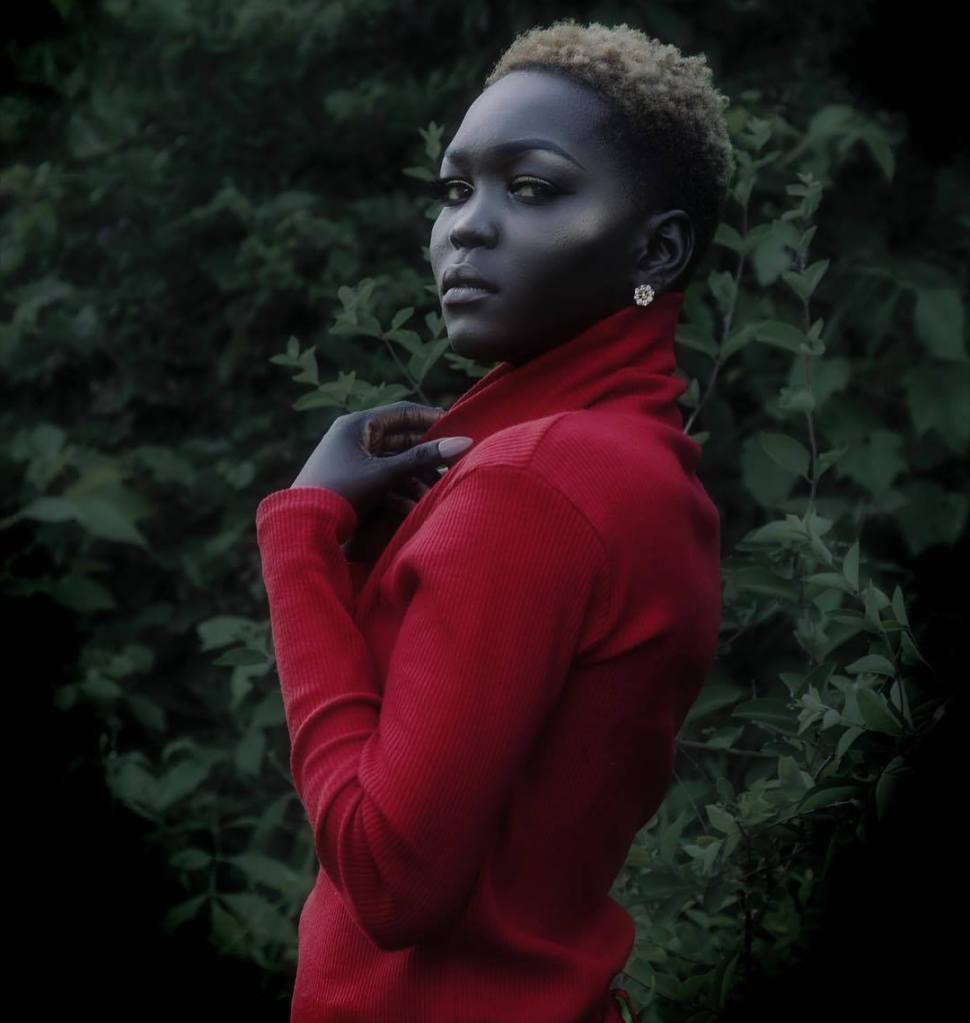
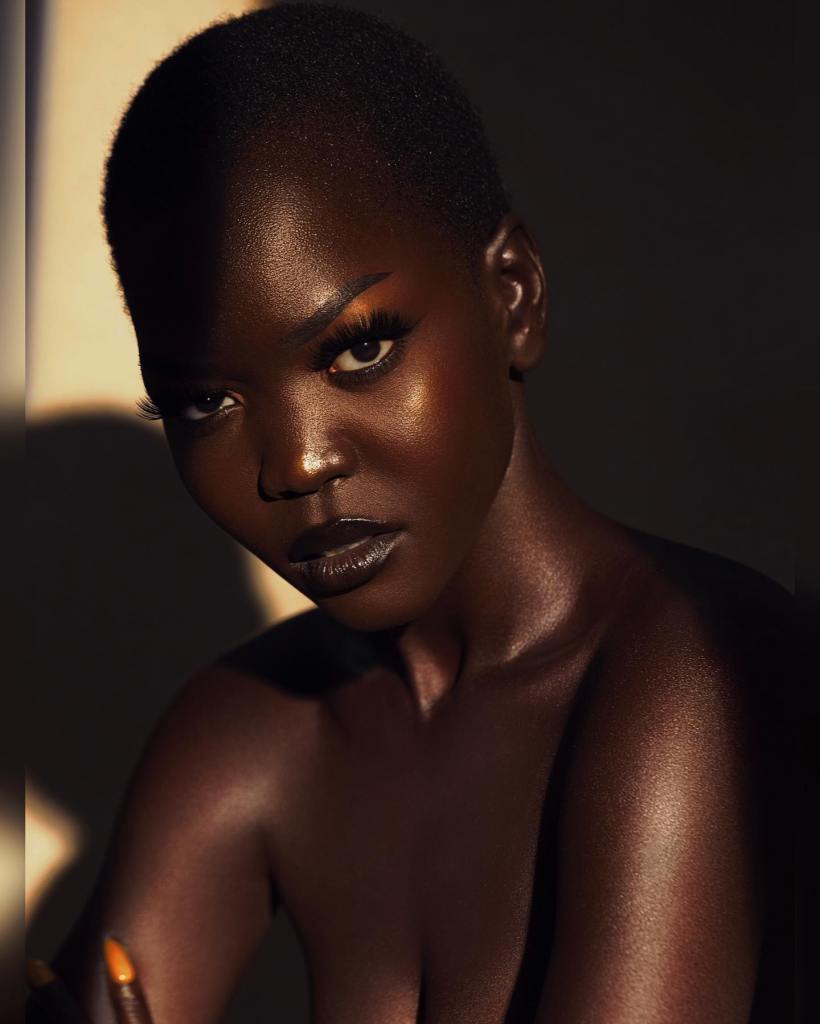
The Ebony Dolls: Nyakim Gatwech

Known as the “Queen of the Dark,” celebrated for extreme melanated skin

This photograph is the property of its respective owner. No copyright infringement intended.

Gatwech’s skin tone isn’t just a physical attribute — it’s central to her identity and public ethos. She is affectionately known as the “Queen of the Dark,” a nickname bestowed upon her by her growing global fan base in admiration of her unapologetic self-love and radiant complexion. Despite encountering colorism and ignorant comments — including being asked if she would bleach her skin for money — she has consistently embraced and celebrated her dark beauty, turning potential humiliation into empowerment for others with similar skin tones.

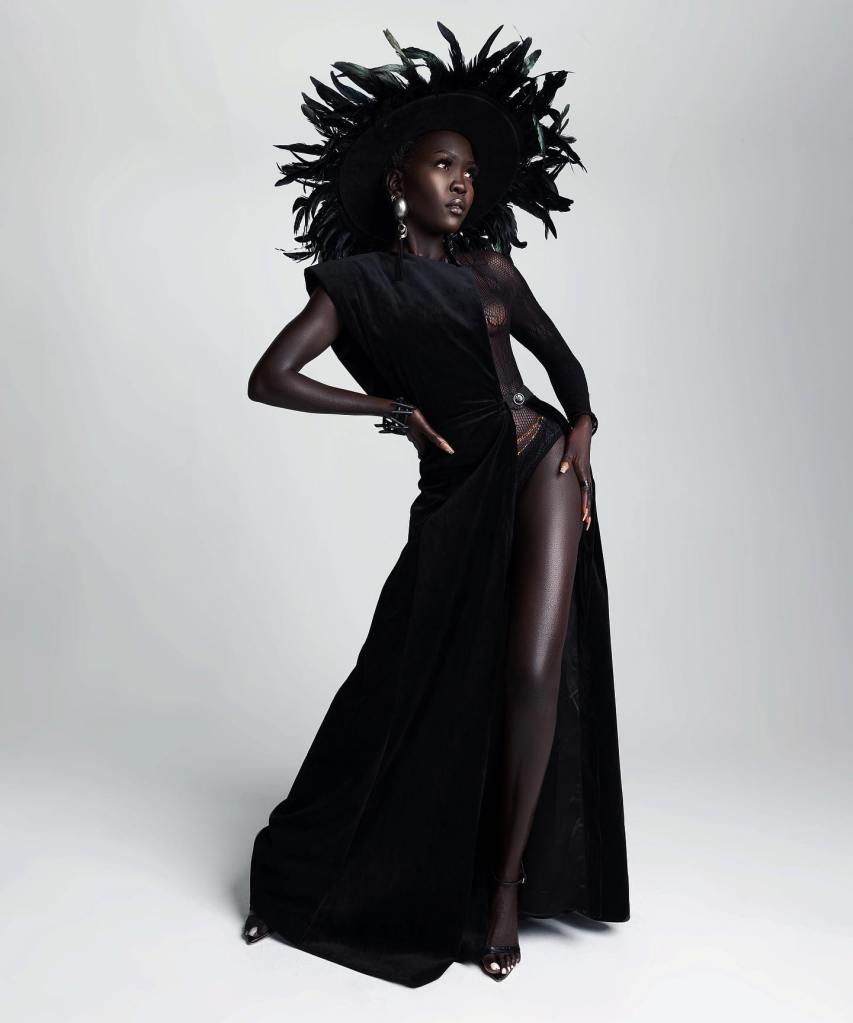
Nyakim Gatwech is an Ethiopian-born American fashion model of South Sudanese descent whose strikingly deep, radiant dark complexion has positioned her as one of the most visually and culturally significant faces in modern modeling. Widely known as the “Queen of the Dark,” Nyakim represents a powerful redefinition of beauty in an industry historically dominated by Eurocentric standards and color hierarchies. Her skin tone, rich in melanin and visually luminous, is not merely aesthetic but symbolic — a living challenge to global colorism and internalized anti-Black beauty norms. Nyakim’s beauty lies in the contrast she embodies: jet-black skin against high fashion, regal African features within Western luxury spaces, and unapologetic self-love in a world that often pressures Black women to diminish themselves.

Born on January 27, 1993, in Gambela, Ethiopia, to South Sudanese parents who fled civil war, Nyakim spent her early childhood in refugee camps across Ethiopia and Kenya. Her family later immigrated to the United States, settling in Minnesota when she was a teenager. It was in the U.S. that she first encountered intense colorism, particularly in school, where classmates mocked her skin tone, leading to early insecurity and emotional distress. Ironically, the very feature she was taught to feel ashamed of would later become the foundation of her global identity and success.

Nyakim’s entry into modeling occurred organically. While studying in Minnesota, she was invited to walk in a college fashion show, which sparked her interest in the fashion world. Without agency representation or industry connections, she began building her portfolio independently, collaborating with local photographers and using Instagram as her primary platform. Social media became her runway, gallery, and voice — a space where she could present herself without filters, whitening, or apology.

Her breakthrough came when she shared a now-viral story about an Uber driver who asked if she would bleach her skin for money. Her response — rejecting the offer and affirming her love for her natural complexion — resonated globally. The post turned her into a symbol of resistance against skin bleaching culture and a spokesperson for radical self-acceptance. From that moment, Nyakim’s following grew exponentially, and she began receiving international modeling opportunities.

She later became the face of Annabelle Cosmetics’ EDGE campaign, which celebrated unconventional beauty and diversity. Her presence in fashion editorials, beauty campaigns, and cultural platforms marked a shift in representation — not just inclusion of Black women, but elevation of the darkest shades of Blackness as luxurious, desirable, and elite.

This photograph is the property of its respective owner. No copyright infringement intended.

Nyakim’s special significance lies not only in how she looks, but in what she represents. She is part of a new generation of Black models who do not seek proximity to whiteness, but instead reclaim African features, melanin, and cultural identity as high status. Her image disrupts centuries of colonial aesthetics where lightness was equated with beauty, purity, and value. In contrast, Nyakim’s work affirms that darkness itself is divine, regal, and worthy of admiration.

Her skin has become a visual metaphor — a mirror for millions of dark-skinned women and girls who were taught that their complexion was something to “fix.” Through her modeling and public statements, Nyakim reframes melanin as a blessing rather than a burden. She speaks openly about loving her reflection, embracing contrast, and rejecting any narrative that associates darkness with inferiority.

Regarding her personal life, Nyakim is known to be private. There is no publicly verified information confirming that she is married or has children. She has spoken primarily about her parents, siblings, and her journey as a refugee and immigrant, choosing to keep romantic relationships outside of the public spotlight. Her narrative focuses more on identity, culture, and empowerment than celebrity exposure.

This photograph is the property of its respective owner. No copyright infringement intended.

In terms of awards and recognition, Nyakim has not received mainstream fashion industry prizes like Vogue or CFDA awards, but she has been widely honored in cultural and empowerment spaces. She has been recognized by African and diaspora organizations, featured at international beauty and women’s empowerment events, and celebrated across global media as one of the most influential dark-skinned models in the world. While some social media outlets claim Guinness recognition for her skin tone, this remains unverified through official Guinness records.

Nyakim Gatwech is considered an Ebony Doll because she embodies the very essence of what the term signifies: a woman whose Blackness is not diluted, modified, or assimilated, but fully embraced, elevated, and aestheticized. She represents melanin as luxury, African features as elite, and dark skin as high fashion. Her beauty is not rooted in proximity to whiteness, but in proximity to ancestry, identity, and unapologetic self-love.

She stands as both muse and message — proof that the darkest skin can sit at the center of beauty culture, not its margins. Nyakim Gatwech is not simply a model; she is a visual revolution.


References

Cosmopolitan. (2017). Nyakim Gatwech on embracing her dark skin and redefining beauty.

Fashion Magazine. (2018). Nyakim Gatwech: The model changing beauty standards.

Gatwech, N. (2017). Instagram post on skin bleaching and self-love.

Oddity Central. (2017). The Queen of Dark: The model embracing her gorgeous dark skin.

Royal Tee Magazine. (2020). Empowering quotes about self-love from Nyakim Gatwech.

Teen Vogue. (2017). Model Nyakim Gatwech challenges beauty standards on Instagram.

Yahoo Lifestyle. (2017). Dark-skinned model gives Uber driver reality check.

Wikipedia. (2025). Nyakim Gatwech.

Pulse Nigeria. (2023). Nyakim Gatwech and the global celebration of dark skin.

The Dark-Skinned Queens: Restoring the Crown to Melanin’s Deep Majesty.

The Dark-Skinned Queen stands as a living monument to ancestral glory—her skin a sacred archive of history, divinity, and resilience. Yet the world has not always treated her as such. For centuries, she has been positioned at the bottom of a racialized beauty hierarchy, burdened by the shadows of colonialism, anti-Blackness, and internal color prejudice. But the truth remains unshaken: her beauty is ancient, sovereign, and cosmic. She is not emerging—she has always been, and the world is finally remembering what was never lost.

Historically, deep melanin was revered across civilizations. In ancient Kemet, Nubia, and Kush, dark-skinned queens were worshipped as embodiments of divinity, fertility, royalty, and cosmic order. Stone carvings and temple art bear witness—deep brown skin was not merely beautiful; it was sacred. Civilization began in melanin-rich lands, and thus, the Dark-Skinned Goddess represents origin and power, not deviation or rarity.

Colonialism sought to rewrite this truth, weaponizing beauty to fracture identity. European expansion brought a violent inversion of values, casting darker skin as undesirable, uncivilized, or inferior. These lies were institutionalized through enslavement, missionary propaganda, and global media. The goal was psychological domination: if the world could be convinced that the darkest skin was the least valuable, then the original people could be controlled. Beauty became a battlefield.

Through history, dark-skinned women bore double violence—racism and colorism. Their labor was exploited, their beauty ignored or mocked, and their femininity questioned. Those wounds still echo today when darker-skinned girls struggle with visibility, self-esteem, and belonging. Yet even in oppression, the Dark-Skinned Goddess remained unbroken. Her existence is resistance. Her radiance survived the lie.

In modern media, her representation remains limited, though rising. When women like Lupita Nyong’o, Viola Davis, Khoudia Diop, and Nia Long appear, they disrupt centuries of curated beauty narratives. Their presence is not simply aesthetic—it is political. Their faces tell new stories and correct historical distortions. Their visibility is cultural restoration, not a trend.

Socially, the Dark-Skinned Goddess is often underestimated before she is known. People assume toughness, attitude, or aggression before recognizing grace, intelligence, softness, or elegance. Stereotypes cling to her not because she lacks depth, but because the world fears her power. Mischaracterization is the weapon of the intimidated.

Romantically, she has faced long-standing biases shaped by colonial beauty scripts. Some men once sought lighter-skinned partners to access false proximity to privilege. Others fetishized her body while disregarding her heart. Yet her value never depended on preference—it exists independent of perception. She is not validated by desire; she is complete by design.

Spiritually, melanin symbolizes divine creation. Scripture reminds: “I am black, but comely” (Song of Solomon 1:5, KJV). This verse is not an apology—it is a declaration. Darkness in biblical text is associated with mystery, depth, and holiness. God formed humanity from rich, fertile earth, not pale, dry dust. Melanin is not an accident—it is intentional artistry.

Psychologically, reclamation requires healing. Dark-skinned women have internal battles shaped by external rejection. They learn to love themselves in societies slow to love them back. But healing blooms when she sees the truth of her reflection—not through distortion, but revelation. Confidence, when rooted in reality rather than validation, becomes unshakable.

Within the community, colorism has damaged sisterhood. Dark-skinned girls were often teased, underestimated, or overlooked. Some developed armor; others developed silence. Yet the new era demands empathy, not competition. When beauty becomes communal instead of comparative, we rise together. No shade of Blackness needs apology—only acknowledgement.

Culturally, she carries the memory of her ancestors in her skin. Each melanin cell is a testament to sun-kissed lands and royal lineage. She does not darken in inferiority—she glows in origin. Melanin is cosmic technology—absorbing light, storing warmth, preserving youth. It is biological excellence, not burden.

Economically, she often had to work twice as hard to be seen as equal to lighter peers. Her competence was tested more; her mistakes judged harsher. Yet she consistently excelled, not because she had privilege, but because she possessed perseverance. Strength became her inheritance, not her choice. And yet, she still seeks the right to softness.

Emotionally, she navigates constant contrast—admired aesthetically in one breath, overlooked socially in another. She is celebrated on runways but ignored in workplaces. Praised in songs yet harmed in systems. This paradox teaches her discernment, depth, and inner worth. She learns that true beauty transcends environment and expectation.

The world imitates her body yet denies her humanity. Full lips, curvaceous hips, rich skin, coily hair—once mocked, now monetized. Her features trend on those without her struggle. But imitation will never equal essence. She is the blueprint, not the beneficiary of borrowed beauty.

Yet a renaissance rises. She is reclaiming beauty narratives, rewriting cultural scripts, and building new worlds where she doesn’t have to prove anything. She stands not in reaction to bias, but in revelation of identity. Her presence demands reverence, not permission.

Her beauty is not merely visual—it is metaphysical. It radiates history, intellect, intuition, empathy, and fire. Beauty is not her burden—it is her birthright. Society once tried to dim her glow; now the world adjusts its eyes to her brilliance. She is not emerging—she is unveiling.

The Dark-Skinned Queen does not seek comparison. She is not the opposite of light—she is the embodiment of depth. She is the eternal night sky, ancient soil, divine mystery, royal lineage. Her beauty is not subtractive; it is sovereign.

For she is fearfully and wonderfully made (Psalm 139:14, KJV). Not despite her shade, but because of it. Melanin is crown. Darkness is splendor. She is not defined by struggle—she is defined by glory.

And now, she does not rise alone. She rises with every shade beside her. Her divinity does not eclipse others; it illuminates the truth: Black beauty is infinite. But among its many expressions, the Dark-Skinned Goddess remains the beginning, the memory, and the majesty.

May she walk not with apology, but authority. Not seeking validation, but embodying revelation. For she is not reclaiming beauty—she is beauty, rediscovered.


References

Hunter, M. (2007). The persistent problem of colorism: Skin tone, status, and inequality. Sociology Compass, 1(1), 237–254.

Russell, K., Wilson, M., & Hall, R. (2013). The color complex: The politics of skin color in a new millennium. Anchor Books.

Wade, P. (2020). Race, nature and culture: An anthropological perspective. Pluto Press.

Song of Solomon 1:5 (KJV); Psalm 139:14 (KJV).

The Psychology of Colorism: The Light vs Dark Skin.

This photograph is the property of its respective owner. No copyright infringement intended.

Colorism is the prejudice or preferential treatment based on skin tone, typically favoring lighter skin over darker skin within the same racial or ethnic group. Unlike racism, which discriminates across different races, colorism operates within a racial or ethnic community, creating hierarchies based on proximity to Eurocentric features. The term was first popularized by Alice Walker in 1983, though the phenomenon has existed for centuries.

Within the Black community, colorism has deep historical roots. It emerged during slavery, when lighter-skinned enslaved individuals—often the children of white slave owners—were given preferential treatment, such as working inside the house rather than laboring in the fields. These house slaves often had access to better food, clothing, and education, whereas field slaves endured harsher conditions (Hunter, 2007). The social stratification created lasting intergenerational psychological effects.

Psychologically, colorism affects self-esteem, identity, and social mobility. Studies show that darker-skinned Black individuals often experience lower self-worth, fewer professional opportunities, and heightened internalized racism compared to lighter-skinned peers (Hunter, 2007; Keith & Herring, 1991). The preference for lighter skin is associated with societal ideals of beauty and success that are tied to European features.

The influence of colorism extends beyond the Black community. In India, the caste system and historical colonization reinforced the belief that lighter skin denotes higher social status, leading to widespread use of skin-lightening products (Tajfel & Turner, 1979). Among Hispanic and Latinx populations, mestizo identity and European ancestry are often valorized over Indigenous or Afro-descendant heritage. Similarly, in East and Southeast Asia, lighter skin has been historically associated with wealth, nobility, and refinement, while darker skin has been linked to laboring in the sun.

Colorism also intersects with gender, disproportionately affecting women. In the Black community, lighter-skinned women have historically been deemed more attractive, more marriageable, and more socially desirable, both by men within and outside the community (Hunter, 2007). This preference can exacerbate divisions and reinforce patriarchal hierarchies, leaving darker-skinned women marginalized and undervalued.

The psychological effects are compounded by media and cultural representation. Hollywood and Western media often present lighter-skinned Black women in leading roles while marginalizing dark-skinned women to background or stereotypical roles. This reinforces internalized colorism, creating a cycle of self-devaluation and desire for features associated with whiteness (Russell-Cole et al., 2013).

Biblically, the issue of valuing outward appearance over inward worth is cautioned against. 1 Samuel 16:7 (KJV) states, “For the LORD seeth not as man seeth; for man looketh on the outward appearance, but the LORD looketh on the heart.” Colorism, in this light, reflects human fallibility in valuing skin tone over character, faith, and spiritual depth.

Historical slavery significantly entrenched colorism in the United States. House slaves—usually lighter-skinned—were sometimes granted privileges unavailable to darker-skinned field slaves, leading to internal hierarchies and divisions within the enslaved community. Lighter-skinned children born to slave owners often had ambiguous status, creating both resentment and survival strategies that persist across generations.

During slavery, lighter-skinned Black women were often sexualized by white men, a tragic legacy that has influenced modern perceptions of beauty and desirability. This history contributes to the psychological phenomenon where Black men may consciously or unconsciously favor lighter-skinned women, associating them with beauty, status, or social capital (Hunter, 2007; Keith & Herring, 1991).

Psychology explains this as a combination of social learning, internalized bias, and reinforcement. Preferences for lighter-skinned partners may reflect both historical conditioning and the influence of media and society. Social Identity Theory (Tajfel & Turner, 1979) suggests that individuals derive self-esteem by favoring traits aligned with dominant societal standards, even within their own ethnic group.

Colorism contributes to intragroup discrimination, where darker-skinned individuals face bias not just from society but from within their own communities. This can manifest in reduced dating prospects, employment bias, or social exclusion. Studies indicate that darker-skinned women are often less likely to marry lighter-skinned men, and darker-skinned men may experience similar disadvantages in partner selection (Russell-Cole et al., 2013).

Globally, colorism intersects with class, wealth, and cultural capital. In India, lighter-skinned individuals are more likely to receive better job offers and marriage prospects. Among Latinx and Asian communities, skin tone can influence perceptions of intelligence, civility, and social mobility. These dynamics show that colorism is a global phenomenon, shaped by historical, economic, and cultural forces.

Changing colorism requires both individual and collective action. Education about the historical roots of skin-based hierarchies is essential. Communities can promote media representation that celebrates all skin tones, and religious or cultural teachings can emphasize inner worth over outward appearance. 1 Samuel 16:7 (KJV) reminds communities to value heart and character above skin tone.

In the Black community, self-affirmation and visibility of darker-skinned leaders, celebrities, and role models can counteract internalized bias. Campaigns that celebrate melanin-rich skin, such as #UnfairAndLovely or #DarkIsBeautiful, provide psychological reinforcement of worth and beauty beyond lightness.

Within family structures, parents can raise children to value character, intelligence, and faith rather than skin tone. Proverbs 22:6 (KJV) states, “Train up a child in the way he should go: and when he is old, he will not depart from it.” By instilling these values early, communities can challenge intergenerational colorist beliefs.

Colorism also intersects with religion and spirituality. Black women who embrace their natural skin often find empowerment in biblical teachings that emphasize inner beauty and God-given identity. 1 Peter 3:3–4 (KJV) instructs, “Whose adorning let it not be that outward adorning of plaiting the hair… but the hidden man of the heart, in that which is not corruptible, even the ornament of a meek and quiet spirit, which is in the sight of God of great price.”

Psychologists emphasize that internalized colorism can be mitigated through cognitive restructuring, affirmations, and representation. Therapy, mentorship, and community engagement can help individuals recognize their inherent value, countering messages from media and historical oppression.

For Black men, confronting preferences that favor lighter-skinned women requires self-reflection and awareness of historical conditioning. Biblical teachings on equality and righteousness, coupled with psychological education, can foster appreciation for all women regardless of skin tone. Galatians 3:28 (KJV) reminds us, “There is neither Jew nor Greek, there is neither bond nor free, there is neither male nor female: for ye are all one in Christ Jesus.”

Ultimately, colorism is not simply a matter of preference; it is a systemic, historical, and psychological issue that affects self-esteem, relationships, and social cohesion. Addressing it requires education, representation, cultural affirmation, and spiritual guidance. Communities must recognize the divisive impact of skin-tone hierarchies and actively work to celebrate all shades of beauty and worth.

The Psychology of Colorism

Title: Colorism: Light vs Dark Skin – History, Psychology, and Social Impact

1. Historical Origins (Slavery & Colonization)

  • House Slaves (Lighter Skin): Privileged treatment, access to education, better food, and closer to slave owners.
  • Field Slaves (Darker Skin): Hard labor, harsher conditions, social marginalization.
  • Impact: Created an intra-racial hierarchy based on skin tone.

2. Psychological Effects

  • Internalized Colorism: Lower self-esteem for darker-skinned individuals.
  • Identity & Self-Worth: Lighter skin associated with beauty, success, and desirability.
  • Behavioral Consequences: Preference for lighter-skinned partners, social mobility advantages.

3. Cultural & Global Impact

  • Black Community: Preference for light-skinned women; media representation reinforces bias.
  • India: Fair skin linked to social status; widespread use of skin-lightening products.
  • Hispanic/Latinx Communities: European ancestry valorized over Indigenous/Afro-descendant heritage.
  • East/Southeast Asia: Lighter skin historically linked to nobility and social class.

4. Gender Dynamics

  • Women: Most affected; lighter-skinned women often deemed more attractive and marriageable.
  • Men: Preferences shaped by history, culture, and media influence; some favor lighter-skinned partners.

5. Biblical & Moral Perspective

  • 1 Samuel 16:7 (KJV): God values the heart, not outward appearance.
  • Galatians 3:28 (KJV): Equality in Christ; skin tone irrelevant in spiritual worth.

6. Solutions & Interventions

  • Education: Teach history and psychological impact of colorism.
  • Media Representation: Highlight darker-skinned individuals in positive roles.
  • Community Affirmation: Encourage pride in melanin-rich skin.
  • Spiritual Guidance: Emphasize biblical truths about inner worth and godly character.
  • Parental Guidance: Raise children to value character and faith over skin tone.

The legacy of slavery, colonialism, and Eurocentric beauty standards continues to shape colorist perceptions today. By acknowledging history, valuing inner character, and promoting inclusivity, communities can gradually dismantle the hierarchy of light versus dark skin. Psychology, cultural studies, and biblical principles converge in emphasizing that true value lies not in complexion but in character, faith, and actions.


References

  • Hunter, M. (2007). The Persistent Problem of Colorism: Skin Tone, Status, and Inequality. Sociology Compass, 1(1), 237–254.
  • Keith, V., & Herring, C. (1991). Skin Tone and Stratification in the Black Community. American Journal of Sociology, 97(3), 760–778.
  • Russell-Cole, K., Wilson, M., & Hall, R. (2013). The Color Complex: The Politics of Skin Color in a New Millennium. HarperCollins.
  • Tajfel, H., & Turner, J. (1979). An Integrative Theory of Intergroup Conflict. In W. Austin & S. Worchel (Eds.), The Social Psychology of Intergroup Relations. Brooks/Cole.
  • The Holy Bible, King James Version (KJV).

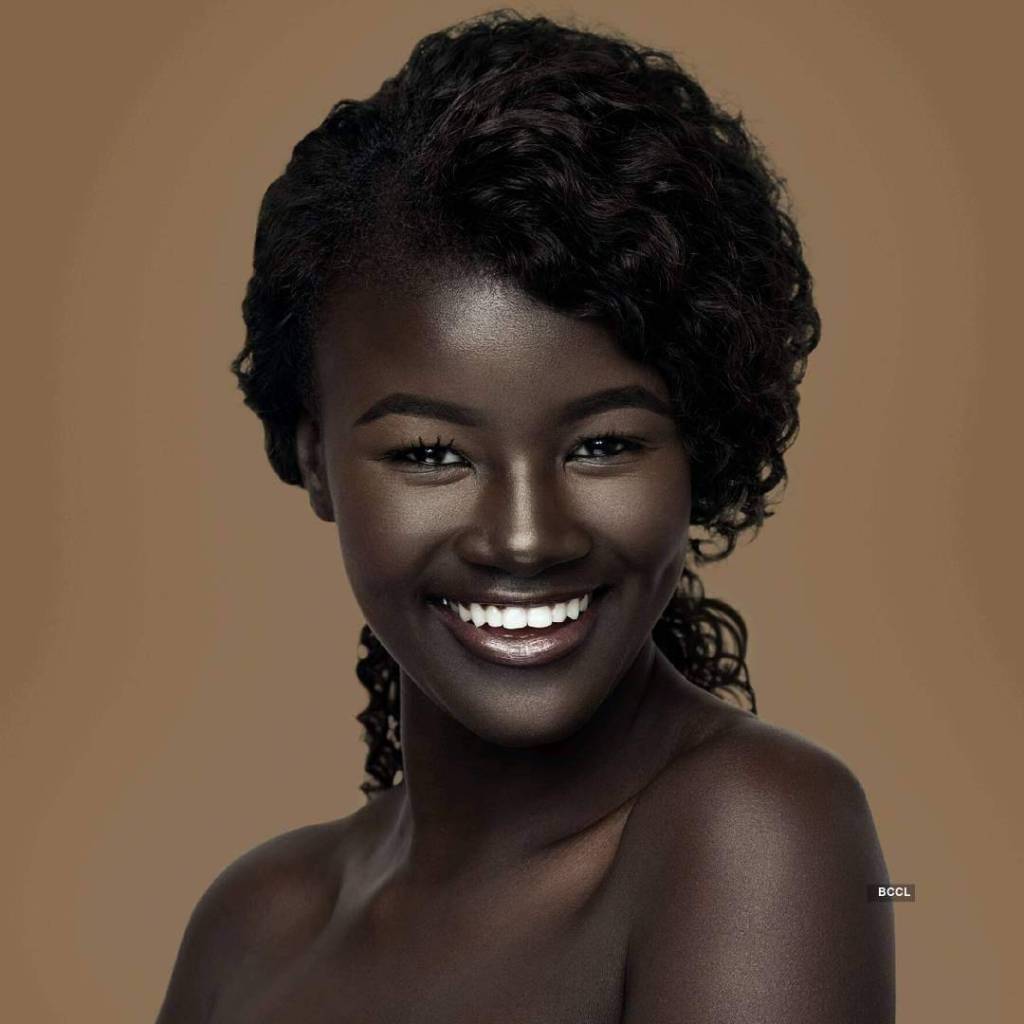
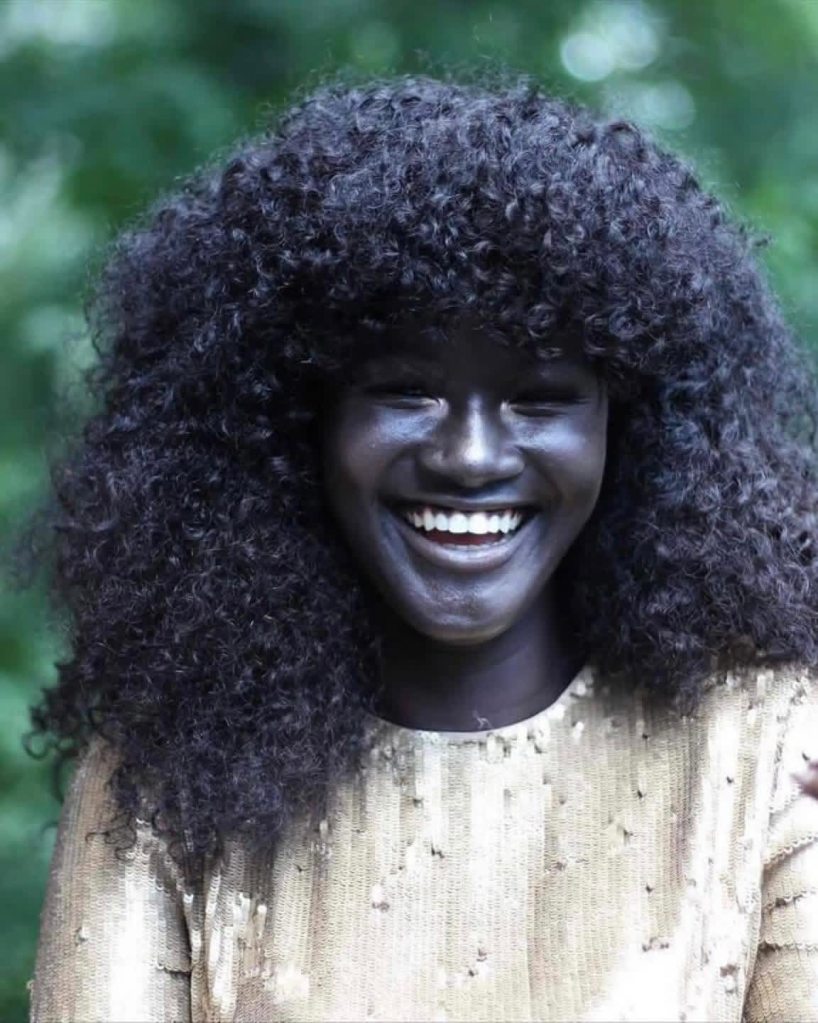
The Ebony Dolls: Khoudia Diop

Khoudia Diop, globally known as the “Melanin Goddess,” is a Senegalese model, entrepreneur, and cultural icon celebrated for her extraordinarily deep ebony complexion and her fearless celebration of Black beauty. She has become a living symbol of power, pride, and unapologetic self-love, inspiring millions around the world to embrace dark skin in a society that has historically marginalized it.

Born and raised in Senegal, Khoudia grew up in a culture where colorism was deeply ingrained, and from a young age she faced teasing and ridicule for her dark complexion. Instead of internalizing shame, she gradually transformed those experiences into strength, choosing to view her skin as a source of identity and beauty rather than something to hide. Her journey reflects the emotional reality of many dark-skinned women across the African diaspora.

Khoudia’s entry into modeling did not come through traditional fashion pathways. She began by posting self-portraits on social media, where her striking appearance quickly went viral. Her images stood out in a digital space dominated by Eurocentric beauty standards, and soon she attracted attention from photographers, brands, and global media outlets who recognized her unique presence.

Her modeling career took off as she began working with international photographers and fashion campaigns that centered on diversity and representation. Unlike conventional models, Khoudia built her brand organically, without an agency at first, proving that authenticity and confidence could compete with industry gatekeeping. She became known not just for her looks, but for her message.

Khoudia is widely recognized for her velvety midnight complexion, high cheekbones, piercing eyes, and serene yet commanding aura. Her beauty is often described as celestial and ancestral, evoking African royalty and divine femininity. She does not conform to beauty standards—she redefines them.

Throughout her career, Khoudia has used her platform to speak openly about colorism, self-worth, and mental health, especially among young Black girls. She has stated that her mission is to normalize dark skin and to ensure that future generations grow up seeing themselves reflected positively in media and fashion.

Beyond modeling, Khoudia is also an entrepreneur. She founded a fashion and lifestyle brand focused on empowerment and inclusivity, using her business ventures to extend her message beyond imagery into tangible social impact. Her work blends beauty with activism, positioning her as a cultural leader rather than just a visual icon.

Khoudia is a wife and mother, and she has spoken about how motherhood deepened her understanding of self-love and responsibility. She often shares reflections on raising children in a world shaped by racial bias, emphasizing the importance of teaching pride, confidence, and identity from an early age.

Her milestones include global media features, international fashion campaigns, public speaking engagements, and recognition as one of the most influential dark-skinned models of the modern era. While she may not collect traditional fashion awards, her true recognition lies in her cultural impact and the millions of people who credit her for changing how they see themselves.

Khoudia Diop is an Ebony Doll because she represents the highest expression of melanated beauty—unfiltered, radiant, and spiritually powerful. She is not simply admired; she is symbolic. Her life stands as proof that Blackness does not need validation from external systems—it is already divine, complete, and worthy of reverence.

References

Khoudia Diop. Wikipedia. https://en.wikipedia.org/wiki/Khoudia_Diop

BBC News. “Meet Khoudia Diop, the ‘Melanin Goddess’.” https://www.bbc.com/news/world-africa-

Vogue Arabia. “Khoudia Diop on Colorism and Redefining Beauty.” https://en.vogue.me

CNN Style. “How Khoudia Diop Became the Face of Dark Skin Pride.” https://www.cnn.com/style

The Guardian. “Khoudia Diop: From Online Trolls to Global Model.” https://www.theguardian.com

Elle Magazine. “The Melanin Goddess Speaks: Khoudia Diop on Self-Love.” https://www.elle.com

Forbes Africa. “How Khoudia Diop Built a Global Brand.” https://www.forbesafrica.com

HuffPost. “Khoudia Diop and the Power of Dark Skin Representation.” https://www.huffpost.com

Crowning Confidence: Celebrating Dark Beauty in a Light-Skinned World.

Photo by Abenezer Shewaga on Pexels.com

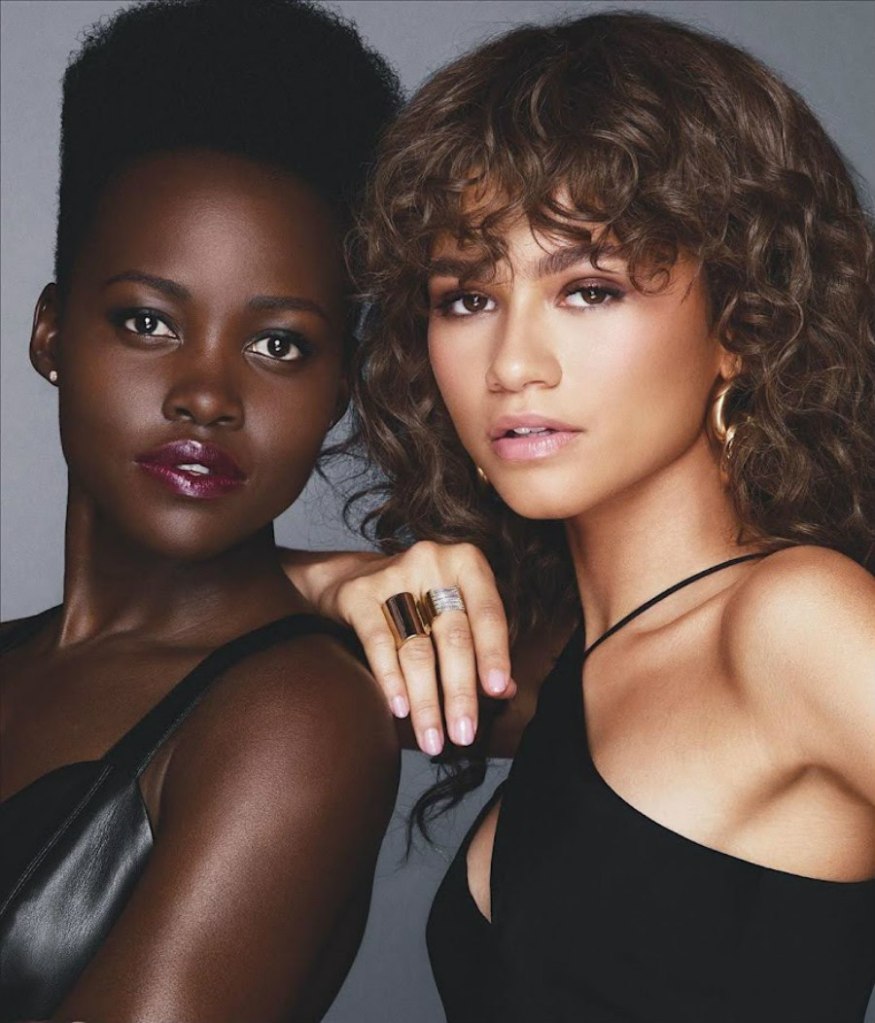
Beauty has long been racialized and hierarchized, with Eurocentric and light-skinned ideals dominating media, fashion, and cultural representation. Lighter skin has often been associated with elegance, refinement, and desirability, giving rise to systemic biases that valorize women like Yara Shahidi, Salli Richardson, and Mari Morrow. These women are celebrated for their features, poise, and charm, yet the broader narrative has historically marginalized darker-skinned women, deeming their beauty less desirable despite its richness, depth, and cultural significance.

Dark-skinned women, however, embody a powerful and resilient form of beauty that defies these narrow societal standards. Lupita Nyong’o, Kenya Moore, and Issa Rae represent a celebration of melanin-rich skin, diverse features, and cultural pride. Lupita’s radiant skin and delicate facial symmetry have been hailed as a “modern masterpiece,” earning her acclaim on red carpets and in film alike. Kenya Moore’s high cheekbones, full lips, and commanding presence have made her a standout in the pageant and reality TV worlds, while Issa Rae’s authenticity and radiant complexion have inspired countless young women to embrace their natural beauty.

While light-skinned beauty continues to dominate mainstream media, the representation of dark-skinned women is gradually increasing, challenging long-held biases. Yara Shahidi, Salli Richardson, and Mari Morrow exemplify elegance and style within lighter-complexion parameters, but their visibility contrasts with the historical underrepresentation of darker-skinned women. This disparity underscores the importance of highlighting figures like Lupita, Kenya, and Issa, whose successes demonstrate that beauty is not bound by shade but by confidence, talent, and presence.

Facial features play a critical role in this narrative. Dark-skinned women often possess unique and striking attributes—full lips, broad noses, defined jawlines, and high cheekbones—that have been historically undervalued. Lupita Nyong’o’s delicate facial symmetry and luminous skin redefine red carpet standards, while Kenya Moore’s sculpted features and radiant smile showcase the allure of dark-skinned aesthetics. Issa Rae combines natural texture, expressive eyes, and a warm, rich complexion to exemplify how authenticity enhances beauty. These features remind us that aesthetic appeal is diverse and culturally embedded.

Cultural and historical context is essential in understanding the challenges dark-skinned women face. For centuries, colonial and Eurocentric beauty standards privileged lighter skin as an aspirational ideal, relegating darker tones to marginal status. Media reinforcement of this hierarchy contributed to colorism, internalized bias, and social exclusion. By celebrating dark-skinned icons, society begins to dismantle these limiting narratives, validating beauty in all shades and promoting a more inclusive understanding of attractiveness.

Psychologically, representation impacts self-esteem and identity. Visibility of dark-skinned role models fosters confidence and resilience, counteracting the effects of colorism and societal marginalization. When young girls see Lupita, Kenya, and Issa celebrated for their melanin-rich skin and natural features, it reinforces the notion that their beauty is valid, desired, and powerful. This affirmation nurtures self-love, pride, and the courage to embrace natural aesthetics in the face of prevailing biases.

Fashion and personal style amplify the power of dark-skinned beauty. Lupita Nyong’o is known for her bold, colorful ensembles that complement her rich skin tone, while Kenya Moore often employs glamorous, classic styling that emphasizes her elegance. Issa Rae embraces chic, modern attire that highlights her unique features and authenticity. These women demonstrate that confidence is expressed not only through physical traits but through presentation, poise, and individuality.

The broader cultural impact of celebrating dark-skinned beauty extends to media, entertainment, and social movements. #BlackGirlMagic and #UnapologeticallyBlack emphasize the power, intelligence, and allure of dark-skinned women. Celebrating these figures challenges ingrained hierarchies, creates space for diverse representation, and educates society on the value and beauty of all skin tones. By centering dark-skinned icons, cultural narratives are reshaped to reflect authenticity, heritage, and resilience.

In conclusion, crowning confidence involves redefining societal standards to celebrate dark beauty in a world that historically prioritized lighter skin. Figures like Lupita Nyong’o, Kenya Moore, and Issa Rae exemplify this celebration through talent, poise, and unapologetic pride in their features and complexion. While light-skinned icons like Yara Shahidi, Salli Richardson, and Mari Morrow remain influential, the elevation of dark-skinned women challenges colorism, promotes inclusive beauty standards, and empowers a generation to embrace melanin-rich aesthetics with confidence, pride, and grace.


References

Hunter, M. (2007). The persistent problem of colorism: Skin tone, status, and inequality. Sociology Compass, 1(1), 237–254.

Byrd, A. D., & Tharps, L. L. (2014). Hair Story: Untangling the Roots of Black Hair in America. New York, NY: St. Martin’s Press.

Fardouly, J., Diedrichs, P. C., Vartanian, L. R., & Halliwell, E. (2015). Social comparisons on social media: The impact of Facebook on young women’s body image concerns and mood. Body Image, 13, 38–45.

Rhodes, G. (2006). The evolutionary psychology of facial beauty. Annual Review of Psychology, 57, 199–226.

The Dark History of Being Light-Skinned and Dark-Skinned Black Person Around the World.

The history of light-skinned Black people in the Atlantic world is inseparable from the violence of slavery, colonialism, and racial domination. Lighter complexions did not emerge as a neutral genetic variation but, in many cases, as the direct result of coercion, sexual violence, and unequal power relations between enslaved African women and European men. To discuss light skin in Black history honestly requires confronting this brutal origin story and the enduring psychological and social consequences that followed.

During chattel slavery, rape was not an aberration but a systemic feature of the institution. Enslaved women had no legal right to consent, and white slaveholders exercised near-absolute power over their bodies. The children born from these assaults often inherited lighter skin, straighter hair textures, or other Eurocentric features, marking their very existence as living evidence of sexual violence and domination.

These mixed-ancestry children were frequently labeled “mulatto,” a term rooted in dehumanization and animalization. The classification was not simply descriptive; it functioned as a legal and social category that helped slave societies manage hierarchy within Blackness. Skin tone became a tool of division, reinforcing white supremacy while fracturing solidarity among the enslaved.

Light-skinned enslaved people were often assigned domestic labor rather than field work. This distinction produced the infamous dichotomy between the “house negro” and the field slave, a hierarchy that was imposed, not chosen. Domestic labor sometimes spared individuals from the harshest physical toil, but it exposed them to constant surveillance, sexual exploitation, and proximity to white power.

Being inside the slaveholder’s home did not equate to safety or privilege in any meaningful sense. House servants were more accessible targets for abuse, especially young girls and women. The home was often the site of repeated assaults, emotional manipulation, and forced compliance masquerading as favor.

Incest further complicates this history. Because slavery followed the legal principle of partus sequitur ventrem, children inherited the status of the enslaved mother regardless of the father’s identity. This meant white men could rape their own enslaved daughters and grandchildren without legal consequence, creating generational cycles of abuse that literally lightened the complexion of the enslaved population over time.

Light-skinned children were sometimes recognized as the biological offspring of white men, yet this recognition rarely translated into protection or freedom. More often, it produced resentment, secrecy, or further exploitation. These children occupied a liminal space—never white, yet treated differently within Black communities because of their appearance.

Colorism did not end with emancipation. After slavery, lighter skin continued to carry social currency within Black communities, a legacy of plantation hierarchies and white aesthetic standards. Access to education, employment, social clubs, and marriage prospects was often influenced by complexion, reinforcing divisions rooted in trauma rather than choice.

The psychological burden placed on light-skinned Black people is rarely discussed with nuance. Many carried the stigma of being perceived as products of rape or favoritism, while simultaneously being resented for “privileges” they neither requested nor controlled. This double bind created identity conflicts that reverberate across generations.

At the same time, darker-skinned Black people bore the brunt of systemic violence and exclusion, creating a false narrative that light skin equaled safety or advantage. This obscured the reality that all Black people, regardless of shade, remained subject to racial terror, disenfranchisement, and economic exploitation.

White supremacy strategically used color hierarchies to weaken collective resistance. By elevating lighter skin as closer to whiteness, slave societies encouraged internalized racism and competition. This divide-and-conquer strategy proved effective, leaving lasting scars in Black social relations long after formal slavery ended.

The myth of the “favored” light-skinned enslaved person ignores the constant precarity of their position. Favor could be revoked at any moment, and proximity to power often meant proximity to punishment. Psychological violence—humiliation, erasure, and forced loyalty—was as real as physical brutality.

In religious and moral discourse, enslaved women were blamed for their own assaults, reinforcing misogynoir and sexual shame. Light-skinned children became symbols onto which communities projected unresolved grief, anger, and confusion about sexual violence that was never acknowledged or healed.

Post-slavery societies institutionalized colorism through laws, media, and social norms. Paper bag tests, “blue vein” societies, and caste-like systems in the Caribbean and Americas continued to privilege lighter skin while stigmatizing darker tones. These practices reflected colonial logic rather than African worldviews.

Light skin thus became a paradoxical inheritance: a marker of survival through violence, yet also a source of alienation. Many light-skinned Black people struggled with belonging, questioned their legitimacy within Blackness, or felt compelled to overperform loyalty to counter suspicions of superiority.

Modern conversations about colorism often flatten this history, framing light skin solely as advantage without acknowledging its traumatic origins. This simplification risks reproducing harm by ignoring how sexual violence, incest, and coercion shaped Black bodies and identities.

Healing requires truth-telling. Acknowledging that many light-skinned Black people exist because of rape does not indict them; it indicts the system that produced them. It reframes colorism as a legacy of white supremacy rather than a natural preference within Black communities.

Reclaiming Black unity demands rejecting plantation hierarchies in all forms. Skin tone must be understood as a consequence of history, not a measure of worth, purity, or authenticity. Both light- and dark-skinned Black people inherit trauma from the same system, expressed differently but rooted in the same violence.

To confront the dark history of being light-skinned is to confront slavery honestly. It requires resisting romanticized narratives of privilege and instead centering the realities of rape, incest, coercion, and psychological harm. Only then can colorism be dismantled at its root.

True liberation lies in dismantling the myths that slavery created about skin, beauty, and value. When Black people collectively reject these imposed hierarchies, they reclaim the dignity that was denied to their ancestors—regardless of shade.

The history of dark-skinned Black people is inseparable from the foundations of global white supremacy and the transatlantic slave system. Darkness of skin was deliberately constructed as a marker of inferiority, danger, and disposability, used to justify enslavement, colonization, and dehumanization on a massive scale. From the earliest encounters between Africa and Europe, dark skin became a visual shorthand for domination.

During chattel slavery, darker skin was closely associated with field labor, brutality, and physical exhaustion. Enslaved Africans with the darkest complexions were often assigned the harshest work under the most violent conditions, reinforcing an imposed hierarchy where darkness equaled expendability. This association was not natural but engineered to align Blackness with suffering.

Slaveholders and overseers frequently treated darker-skinned enslaved people with heightened cruelty. Punishments were more public and severe, intended to terrorize others into submission. Darkness of skin was read as strength and resistance, which paradoxically made dark-skinned bodies targets for extreme violence meant to break both body and spirit.

European racial ideology framed dark skin as evidence of savagery, hypersexuality, and moral inferiority. Pseudoscientific racism used skin color to rank humanity, placing the darkest Africans at the bottom of fabricated racial hierarchies. These ideas were embedded in law, religion, and education, ensuring their persistence beyond slavery.

Dark-skinned women endured a unique intersection of racial and gendered violence. They were depicted as unfeminine, animalistic, and unrapeable, narratives that excused sexual assault while denying their victimhood. Their pain was minimized, and their bodies were exploited without acknowledgment or protection.

Unlike their lighter-skinned counterparts, dark-skinned enslaved women were less likely to be brought into the slaveholder’s home. Instead, they were forced into grueling labor while remaining vulnerable to sexual violence without the contradictory myths of “favor” or proximity to power. Their suffering was both hypervisible and ignored.

After emancipation, the devaluation of dark skin did not disappear. Reconstruction and Jim Crow regimes continued to associate darkness with criminality, poverty, and intellectual inferiority. Dark-skinned Black people were more likely to face harsher sentencing, economic exclusion, and social ostracism.

Within Black communities, colorism took root as an internalized inheritance of slavery. Dark-skinned individuals were often subjected to ridicule, diminished marriage prospects, and limited social mobility. These biases reflected plantation hierarchies rather than African cultural values, yet they became normalized through repetition.

Dark-skinned children frequently absorbed messages that their appearance was something to overcome rather than celebrate. Insults, teasing, and media representation taught them early that beauty, intelligence, and desirability were linked to lighter skin. This psychological conditioning produced long-term effects on self-worth and identity.

In education and employment, studies have shown that darker-skinned Black people often face greater discrimination than lighter-skinned peers. Teachers, employers, and institutions unconsciously reproduce racial hierarchies by associating darkness with incompetence or threat, reinforcing inequality under the guise of neutrality.

The criminal justice system has disproportionately punished dark-skinned Black people, who are more likely to be perceived as dangerous or aggressive. Skin tone bias affects policing, sentencing, and jury decisions, revealing how deeply colorism is embedded in modern systems of control.

Media representations have historically erased or caricatured dark-skinned people. When present, they were cast as villains, servants, or comic relief, rarely afforded complexity or humanity. This absence of dignified representation reinforced societal disdain for dark skin.

Dark-skinned men have often been portrayed as inherently violent or hypermasculine, narratives used to justify surveillance, incarceration, and extrajudicial violence. These stereotypes trace directly back to slavery-era fears of rebellion and resistance.

Despite these conditions, dark-skinned Black people have consistently embodied resilience and leadership. Many of the most vocal resisters, abolitionists, and freedom fighters bore the brunt of racial hatred precisely because their appearance symbolized unapologetic Blackness.

The global preference for lighter skin, seen in bleaching practices and beauty standards, reflects unresolved trauma rather than truth. Dark skin became a site of shame not because it lacked value, but because white supremacy taught the world to fear and reject it.

Healing requires confronting how darkness was weaponized against Black people. It demands rejecting the lie that proximity to whiteness equals humanity and acknowledging that the most violently oppressed bodies were often the darkest.

Reclaiming dark skin as beautiful and sacred is an act of resistance. It challenges centuries of conditioning that equated darkness with evil and lightness with virtue. This reclamation restores dignity stolen by slavery and colonialism.

True racial justice cannot exist without addressing colorism. Ignoring skin tone hierarchies allows slavery’s legacy to persist under new names. Justice requires naming how dark-skinned people have been uniquely targeted and harmed.

The dark history of being dark-skinned is not merely a story of suffering but of survival. Against overwhelming forces designed to erase them, dark-skinned Black people endured, resisted, and shaped the world.

Honoring this history means dismantling the systems that still punish darkness today. Only by confronting the truth of how dark skin was treated can society move toward genuine liberation, healing, and collective Black unity.

The histories of being light-skinned and dark-skinned are not opposing narratives, but parallel wounds carved by the same violent system. Color hierarchies were never born within Black communities; they were engineered by slavery and colonialism to rank, divide, and control. Whether through the sexual violence that produced lighter complexions or the intensified brutality directed at darker bodies, skin tone became a tool of domination rather than a reflection of worth.

Both histories reveal how white supremacy manipulated Black bodies into symbols—of proximity or distance, favor or punishment—while denying all Black people full humanity. These imposed distinctions fractured families, distorted identity, and seeded internalized bias that continues to echo across generations. The pain attached to skin tone is not accidental; it is historical, intentional, and unresolved.

True healing requires rejecting plantation logic in every form. It demands that Black communities confront colorism honestly, without competition or denial, and recognize it as inherited trauma rather than personal failure. Light skin and dark skin alike carry the memory of survival under oppression, not moral ranking or superiority.

Liberation begins when Black people refuse to measure themselves by standards forged in violence. When the false hierarchy of shade is dismantled, space is created for collective dignity, restoration, and unity. In reclaiming the fullness of Blackness—across every tone—we reject the lies of the past and affirm a future rooted in truth, justice, and wholeness.

References

Berlin, I. (1998). Many thousands gone: The first two centuries of slavery in North America. Harvard University Press.

Davis, A. Y. (1981). Women, race, & class. Random House.

Douglass, F. (1845). Narrative of the life of Frederick Douglass, an American slave. Anti-Slavery Office.

hooks, b. (1992). Black looks: Race and representation. South End Press.

Hunter, M. (2007). The persistent problem of colorism: Skin tone, status, and inequality. Sociology Compass, 1(1), 237–254. https://doi.org/10.1111/j.1751-9020.2007.00006.x

Morgan, J. L. (2004). Laboring women: Reproduction and gender in New World slavery. University of Pennsylvania Press.

Painter, N. I. (2010). The history of white people. W. W. Norton & Company.

Smallwood, S. (2007). Saltwater slavery: A middle passage from Africa to American diaspora. Harvard University Press.

Spillers, H. J. (1987). Mama’s baby, papa’s maybe: An American grammar book. Diacritics, 17(2), 65–81.

Wood, B. (2003). Women’s work, men’s work: The informal slave economies of lowcountry Georgia. University of Georgia Press.

Davis, A. Y. (1981). Women, race, & class. Random House.

Du Bois, W. E. B. (1903). The souls of Black folk. A. C. McClurg & Co.

Fanon, F. (1952). Black skin, white masks. Éditions du Seuil.

Hall, R. E. (1995). The bleaching syndrome: African Americans’ response to cultural domination vis-à-vis skin color. Journal of Black Studies, 26(2), 172–184.

Hunter, M. (2007). The persistent problem of colorism: Skin tone, status, and inequality. Sociology Compass, 1(1), 237–254. https://doi.org/10.1111/j.1751-9020.2007.00006.x

Jordan, W. D. (1968). White over Black: American attitudes toward the Negro, 1550–1812. University of North Carolina Press.

Spillers, H. J. (1987). Mama’s baby, papa’s maybe: An American grammar book. Diacritics, 17(2), 65–81.

Thompson, C. (2009). Black women, beauty, and hair as a matter of being. Women’s Studies, 38(8), 831–856.

Wilson, M., Hugenberg, K., & Rule, N. O. (2017). Racial bias in judgments of physical size and formidability. Psychological Science, 28(8), 1136–1144.

Wood, B. (2003). Women’s work, men’s work: The informal slave economies of lowcountry Georgia. University of Georgia Press.

Your Dark Skin is Powerful. Your Natural Beauty is Divine. Your Worth is Eternal.

Photo by Chidimma peace on Pexels.com

Your dark skin tells a story of resilience, ancestry, and divine creation. It is not a flaw, a problem to fix, or a limitation to overcome. God Himself painted you in rich, deep hues, crafting a masterpiece that reflects His glory.

Society has long attempted to define beauty by Eurocentric standards, often erasing the brilliance of melanin-rich skin. Yet, those standards are man-made and temporal, while God’s design is eternal and perfect.

Dark-skinned women have historically been undervalued, both in our communities and in the world at large. But your worth is not dictated by society’s approval; it is written by the Creator Himself.

KJV Reference: Genesis 1:27 – “So God created man in his own image… male and female created he them.” God sees you as His image-bearer, worthy of love, honor, and reverence.

Your skin, your features, and your natural beauty are not mistakes. Every curve of your lips, the depth of your eyes, and the richness of your complexion are intentional works of art.

Colorism and beautyism may try to make you feel less than, but the truth is that your melanin is a crown. It carries the legacy of your ancestors who survived slavery, oppression, and marginalization with dignity.

Dark skin is powerful because it reflects endurance. It has withstood societal rejection, systemic racism, and cultural erasure, yet it remains radiant, resilient, and unbroken.

Your natural beauty is divine because it is a reflection of God’s creativity. No filter, no cosmetic, and no societal standard can replicate the perfection of His design.

KJV Reference: Psalm 139:14 – “I will praise thee; for I am fearfully and wonderfully made…” Your dark skin is a testament to His wondrous works.

Your worth is eternal because it is anchored in God’s love, not in fleeting trends or worldly definitions of beauty. Even when ignored or undervalued, your value does not diminish.

The world may try to pit shades against each other, but remember that beauty is not a competition—it is a divine gift for all skin tones. You are fully complete in your God-given hue.

To those who say lighter is better, your response is simple: God’s vision is perfect. He made you exactly as you should be, for His purpose, and for His glory.

Your dark skin invites confidence, pride, and empowerment. It is a shield against societal pressures that try to convince you to change. Stand firm, knowing your beauty is original, authentic, and sacred.

Celebrate yourself daily. Let your presence, your walk, and your voice reflect the power and divine beauty God placed within you.

Your worth is not measured by media, magazines, or social media likes. It is measured by obedience to God, faithfulness to His Word, and the love you extend to others.

KJV Reference: 1 Samuel 16:7 – “Man looketh on the outward appearance, but the LORD looketh on the heart.” Your beauty is multidimensional—heart, mind, spirit, and skin all shining together.

Every time you embrace your dark skin, you honor generations who were not allowed to see themselves as beautiful. You break cycles of internalized colorism and teach future generations that melanin is a gift, not a barrier.

Let your beauty be a testimony. Let it speak to young girls, dark-skinned women, and even men, that divinely designed beauty transcends societal definitions.

Do not apologize for the shade you were born with. Do not compromise for acceptance. Do not dim your glow for the comfort of those who cannot see true beauty.

Your dark skin is powerful. Your natural beauty is divine. Your worth is eternal. And when you walk in that truth, you walk in freedom, joy, and God’s perfect vision for your life.

Gold in the Flesh: The Science of Melanated Brilliance.

Photo by Godisable Jacob on Pexels.com

Melanin has long been reduced to a pigment, flattened and misunderstood through colonial science and racial hierarchy. Yet, modern biology, evolutionary anthropology, neurology, and biophysics all reveal a far deeper truth: melanin is not merely color — it is a biochemical masterpiece, a neuroprotective agent, an evolutionary inheritance, and a molecular signature of adaptation, intelligence, and survival. When theologians, geneticists, and cultural historians encounter melanin, they see evidence of both divine intentionality and ancestral brilliance encoded in Black flesh.

Melanin: A Biochemical Crown

Melanin refers to a group of biopolymers — primarily eumelanin and pheomelanin — that protect cellular structures from ultraviolet radiation, oxidative stress, and DNA damage (Solano, 2020). Eumelanin, the dominant form in darker-skinned populations, acts as a natural biochemical shield and antioxidant, absorbing harmful radiation and neutralizing free radicals (Hoogduijn, 2021).

Unlike artificial sunscreens, melanin operates simultaneously as:

  • A photoprotectant
  • A free radical scavenger
  • A DNA protector
  • A biological signaler affecting neural development

Its multifunctionality is singular in nature — no synthetic polymer matches its breadth of protective power.

Evolutionary Brilliance

Human origins trace to melanated ancestors in Africa. High eumelanin concentration evolved as a survival adaptation against intense UV radiation (Jablonski & Chaplin, 2013). This evolutionary presence signifies not primitiveness, but optimal biological design — engineered for heat regulation, UV protection, and vitamin balance.

Melanin was civilization’s original armor — not a mark of inferiority, but proof of humanity’s first and finest engineering.

Melanin and Neurology

Melanin extends beyond skin. Neuromelanin, concentrated in the brain’s substantia nigra and locus coeruleus, plays essential neurological roles (Zecca et al., 2017). These regions impact:

  • Movement and motor control
  • Emotion and stress regulation
  • Executive decision-making
  • Reward and motivation pathways

Dysfunction or loss of neuromelanin is associated with conditions such as Parkinson’s disease (Sulzer et al., 2018). Thus, melanin is not merely surface — it is deeply neural, cognitive, and emotional.

Melanated Skin: The Divine Architecture

Melanin’s complexity leads some scholars to describe it in spiritual language — as a “living molecule” capable of absorbing, transforming, and redistributing energy. Biophysically, melanin absorbs far-infrared, ultraviolet, and visible light, converting it into metabolic energy, a process similar to photosynthesis (García-Celma et al., 2019). This energetic conductivity evokes ancient understandings of the body as a temple of divine light.

Scripture echoes this sacred embodiment:

“I am black, but comely…” (Song of Solomon 1:5, KJV)

Here, Blackness is not deficiency — it is beauty, dignity, and divine inheritance.

Melanin, Culture, and Survival

Beyond biology, melanin carries psychosocial weight. Blackness, once weaponized as a mark of subjugation, has emerged as a symbol of resilience, resistance, and renaissance. The study of melanin intersects with psychology — particularly internalized inferiority and Eurocentric beauty norms — yet modern neurodiversity and identity studies champion melanated embodiment as power.

Black skin has been:

  • Criminalized
  • Exoticized
  • Feared
  • Desired
  • Resisted
  • Worshipped
  • Revived

To be melanated is to carry history in the flesh — pain and majesty intertwined.

Cultural Radiance

Black skin is a visual poem — absorbing light and reflecting depth. It is the aesthetic foundation of civilizations from Kush to Mali, the artistic muse for architecture, textiles, sculpture, and rhythm. Melanin holds memory — ancestral memory — whispering the brilliance of peoples who mapped the stars, engineered pyramids, advanced mathematics, and birthed language long before Europe woke from its tribal infancy.

To study melanin is to study civilizational origin and excellence.

Conclusion

Melanin is not merely pigment. It is:

  • Biological intelligence
  • Neurochemical sophistication
  • Evolutionary mastery
  • Spiritual inheritance
  • Cultural radiance
  • Historical testimony

It is gold in the flesh, crafted by Creator and nature, weaponized by oppressors, and reborn through scholarship, identity, and pride. Melanated brilliance is not myth — it is science, history, and faith converging.

Black skin does not just reflect greatness —
it remembers it.


References

  • García-Celma, J. J., et al. (2019). Biophysical properties of melanin and energy transduction. Journal of Photochemistry and Photobiology, 199, 123–130.
  • Hoogduijn, M. J. (2021). Melanin and its role in skin physiology. International Journal of Molecular Sciences, 22(9), 4352.
  • Jablonski, N. G., & Chaplin, G. (2013). Human skin pigmentation as an adaptation to UV radiation. Proceedings of the National Academy of Sciences, 110(Supplement 2), 17662–17669.
  • Solano, F. (2020). Melanin and melanogenesis: Recent advances in melanocyte biology and function. International Journal of Molecular Sciences, 21(20), 7584.
  • Sulzer, D., et al. (2018). Neuromelanin: Functions and mechanisms. Journal of Neurochemistry, 146(3), 165–181.
  • Zecca, L., et al. (2017). The role of neuromelanin in neurodegenerative diseases. Frontiers in Aging Neuroscience, 9, 1–12.