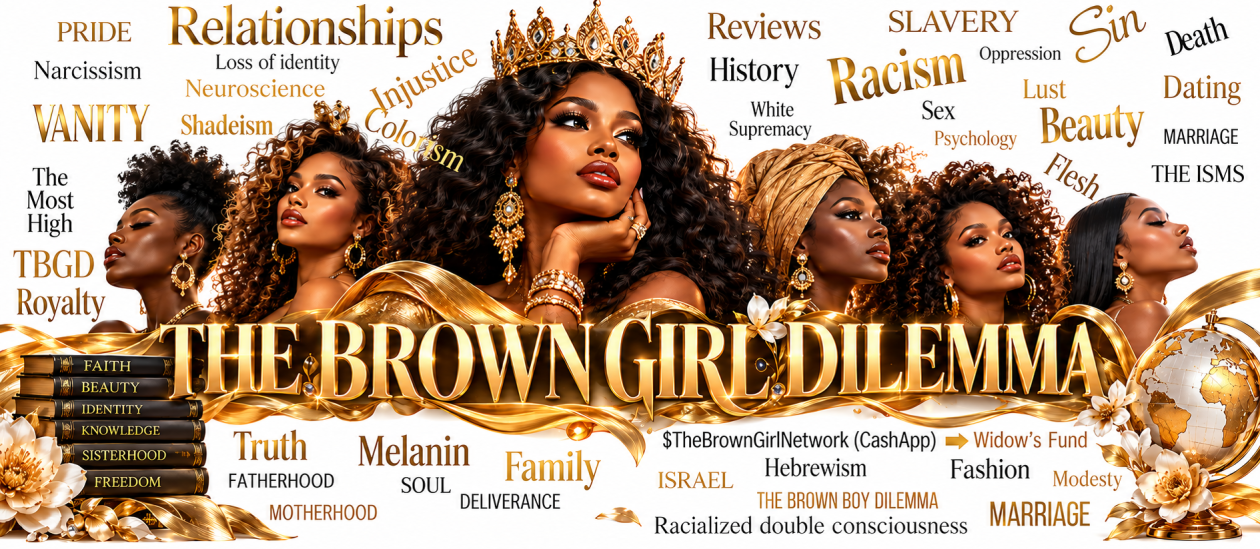


Gold has occupied a remarkable place in human civilization for thousands of years. It has been used to symbolize royalty, wealth, divine favor, beauty, achievement, and permanence across numerous cultures. To be “crowned in gold” therefore carries a meaning far deeper than wearing expensive jewelry. The image evokes distinction, dignity, celebration, and the recognition of something considered precious. Within the context of Black beauty, gold creates a particularly powerful visual language because it can illuminate the richness and dimensionality of Black skin while connecting contemporary beauty with ancient traditions of African adornment.
Across the African continent, gold has historically been associated with political authority, commerce, spirituality, and artistic achievement. Ancient Nubia and the kingdoms of West Africa developed sophisticated relationships with gold, while the Akan states became particularly renowned for gold production and goldsmithing. The Asante kingdom, in particular, incorporated gold into royal regalia, ceremonial objects, architecture, and political symbolism. Gold was not simply a commodity; it could communicate rank, authority, continuity, and sacred significance (Ross, 2002).
The historical relationship between West Africa and gold is especially important when examining images of Black people adorned in gold. The medieval Ghana Empire and later West African states participated in extensive trans-Saharan trade networks in which gold was exchanged for salt and other commodities. By the medieval period, West African gold had become an important component of international commerce. Mansa Musa, the famous ruler of the Mali Empire, became one of history’s most celebrated examples of the political and economic power associated with West African gold (Levtzion & Hopkins, 2000).
Gold also possesses unusual physical characteristics that contribute to its symbolic appeal. Unlike many other metals, gold resists corrosion and oxidation under ordinary environmental conditions. Its enduring luster has therefore made it an especially powerful metaphor for permanence. A crown made of gold does not merely communicate wealth; it visually suggests something that endures. In artistic representation, gold can consequently symbolize a person’s lasting value, legacy, dignity, or significance.
The visual relationship between gold and dark skin is particularly striking. Gold jewelry, metallic fabrics, crowns, earrings, bracelets, necklaces, and other adornments can create dramatic contrasts against richly pigmented skin. Light reflects from gold surfaces while being absorbed and reflected differently by melanin-rich skin, creating a layered visual effect. Photography and portraiture can use this relationship deliberately to emphasize facial contours, cheekbones, eyes, lips, shoulders, and overall presence.
Melanin itself is a biological pigment responsible for much of the coloration of human skin, hair, and eyes. Human pigmentation evolved through complex interactions among genetics, geography, and ultraviolet radiation. Populations with ancestors from regions experiencing high ultraviolet exposure generally developed greater concentrations of protective melanin over evolutionary time (Jablonski & Chaplin, 2010). The resulting spectrum of human pigmentation demonstrates that skin color is a biological characteristic with a complex evolutionary history rather than a simple cosmetic category.
Gold can therefore function aesthetically without requiring comparisons between different complexions. A dark-skinned Black woman wearing gold does not become beautiful because gold makes her skin appear lighter, nor does the metal need to alter her natural complexion. Instead, gold can emphasize the existing richness of her skin. The purpose of the adornment is enhancement rather than correction. This distinction allows beauty to be celebrated without creating a hierarchy based upon pigmentation.
Black women have historically used adornment as an expression of identity, status, celebration, spirituality, and personal aesthetics. Headpieces, beads, necklaces, bracelets, earrings, waist adornments, and elaborate hairstyles have appeared in different African societies for centuries. These traditions demonstrate that adornment can transform the human body into a canvas for cultural expression. Modern fashion continues this practice, although contemporary designers frequently reinterpret historical African forms through new materials, silhouettes, and techniques.
The crown is perhaps the most powerful element within the concept of “Crowned in Gold.” Across civilizations, crowns have represented authority and distinction. In African royal traditions, elaborate crowns and headpieces could communicate political status, spiritual legitimacy, lineage, and institutional authority. The crown consequently becomes more than an ornament placed on the head. It becomes a visual statement about identity and position within a broader social and historical structure.
Black male beauty can also be represented through gold. A Black man dressed in formal clothing and adorned with a gold chain, ring, watch, cufflinks, or ceremonial accessory can communicate sophistication, confidence, and refinement. Gold does not belong exclusively to feminine aesthetics. Historically, African kings, chiefs, military leaders, and other figures of authority incorporated gold into male regalia. Contemporary Black men continue to use jewelry and fashion as forms of personal expression.
The male body provides a different visual foundation for gold than the female body, but the artistic principles remain similar. A gold chain can emphasize the neckline and shoulders, while a gold watch or bracelet can accentuate the hands and wrists. A ring can become a subtle focal point, and a gold brooch or cufflink can introduce restrained elegance into formal clothing. The effect can range from understated sophistication to dramatic luxury depending upon the size, design, and placement of the jewelry.
Gold also carries religious and spiritual associations. In many traditions, precious metals have been incorporated into sacred objects, ceremonial architecture, and religious art. Biblical descriptions, for example, frequently associate gold with sacred vessels, temple furnishings, royal wealth, and objects of extraordinary value. Exodus describes extensive use of gold in the construction and furnishing of the Tabernacle, demonstrating the metal’s symbolic significance within ancient Israelite religious practice (Exodus 25–30, King James Version).
The metaphor of being “crowned” can therefore extend beyond material wealth. A crown may represent wisdom, achievement, endurance, dignity, or the culmination of a difficult journey. Someone who has endured hardship and emerged with greater strength can metaphorically be described as crowned. The gold becomes a representation of what survived the fire rather than merely an indication of what was purchased.
This symbolism is especially meaningful when considering Black history. Black communities throughout the African diaspora have endured slavery, colonialism, racial violence, economic exploitation, displacement, and political exclusion while simultaneously producing extraordinary intellectual, artistic, religious, scientific, entrepreneurial, and cultural achievements. To portray Black people as crowned in gold can therefore become a visual rejection of historical narratives that depicted Black humanity as inferior or insignificant.
At the same time, historical celebration should not romanticize the material inequalities that existed within African societies or contemporary communities. African kingdoms were complex political systems containing hierarchies, conflicts, economic relationships, and competing interests. Gold was sometimes connected to systems of labor and trade that were neither simple nor uniformly beneficial. Scholarly examination requires acknowledging that history is complicated while still recognizing the artistic and cultural significance of African gold traditions (Ross, 2002).
The symbolism of gold also appears prominently in contemporary Black fashion and popular culture. Designers, musicians, actors, athletes, models, and entertainers have used gold as a visual expression of achievement and luxury. Gold jewelry can function as a statement of success, while gold clothing can create an almost ceremonial appearance. In editorial photography, gold can transform an ordinary portrait into something resembling a royal painting, particularly when combined with dramatic lighting and carefully composed posture.
There is an important psychological dimension to adornment as well. Clothing and accessories can influence how individuals perceive themselves and how others perceive them. Research in the psychology of dress has suggested that clothing can affect cognition, behavior, and self-perception (Adam & Galinsky, 2012). Jewelry and ceremonial clothing can similarly contribute to a sense of occasion, identity, and confidence. Thus, the crown is not merely something an observer sees; it can also influence how the wearer experiences herself or himself.
Gold also works exceptionally well within portrait photography because of its interaction with light. Reflective surfaces create highlights that can direct attention toward particular areas of the composition. A gold crown can frame the face, while gold earrings can draw attention toward the eyes and cheekbones. A necklace can establish a visual line through the composition. When carefully illuminated, gold becomes almost architectural, helping construct the visual rhythm of a portrait.
Yet the most important crown does not necessarily consist of metal. A person can be “crowned” through character, perseverance, knowledge, creativity, love, leadership, or achievement. The physical crown merely makes an invisible concept visible. This is why the image can be especially powerful when portraying Black men and women: the gold can represent not only material beauty but also the accumulated value of identity, history, resilience, and accomplishment.

“Crowned in Gold” ultimately presents Black beauty as something worthy of ceremonial recognition. The gold is luminous, but the person wearing it remains the center of the composition. Whether depicting a dark-skinned Black woman in an elaborate gold crown, a Black man wearing refined gold accessories, or a group of Black people surrounded by golden light, the central message is one of dignity and distinction. The adornment becomes a frame through which human beauty and cultural history can be observed.
The crown, therefore, becomes both an object and a metaphor. It represents royalty without requiring literal kingship or queenship. It represents achievement without requiring material wealth. It represents beauty without establishing a rigid standard. Most importantly, it allows the wearer to occupy the visual center of the image with confidence. To be crowned in gold is to be presented as precious, enduring, and worthy of attention—not because gold creates that value, but because the gold symbolizes value that was already there.
© 2026 The Brown Girl Dilemma
If this work has informed or inspired you, please consider supporting it so we can continue researching, writing, and sharing these stories.
CashApp: $thebrowngirlnetwork
Make a one-time donation
Make a monthly donation
Make a yearly donation
Choose an amount
Or enter a custom amount
Your contribution is appreciated.
Your contribution is appreciated.
Your contribution is appreciated.
References
Adam, H., & Galinsky, A. D. (2012). Enclothed cognition. Journal of Experimental Social Psychology, 48(4), 918–925. https://doi.org/10.1016/j.jesp.2012.02.008
Jablonski, N. G., & Chaplin, G. (2010). Colloquium paper: Human skin pigmentation as an adaptation to UV radiation. Proceedings of the National Academy of Sciences, 107(Supplement 2), 8962–8968. https://doi.org/10.1073/pnas.0914628107
Levtzion, N., & Hopkins, J. F. P. (Eds.). (2000). Corpus of early Arabic sources for West African history. Markus Wiener Publishers.
Ross, D. H. (2002). Wrapped in pride: Ghanaian Kente and African American identity. UCLA Fowler Museum of Cultural History.
The Holy Bible, King James Version. (1611). Exodus 25–30.