Tag Archives: colonialism

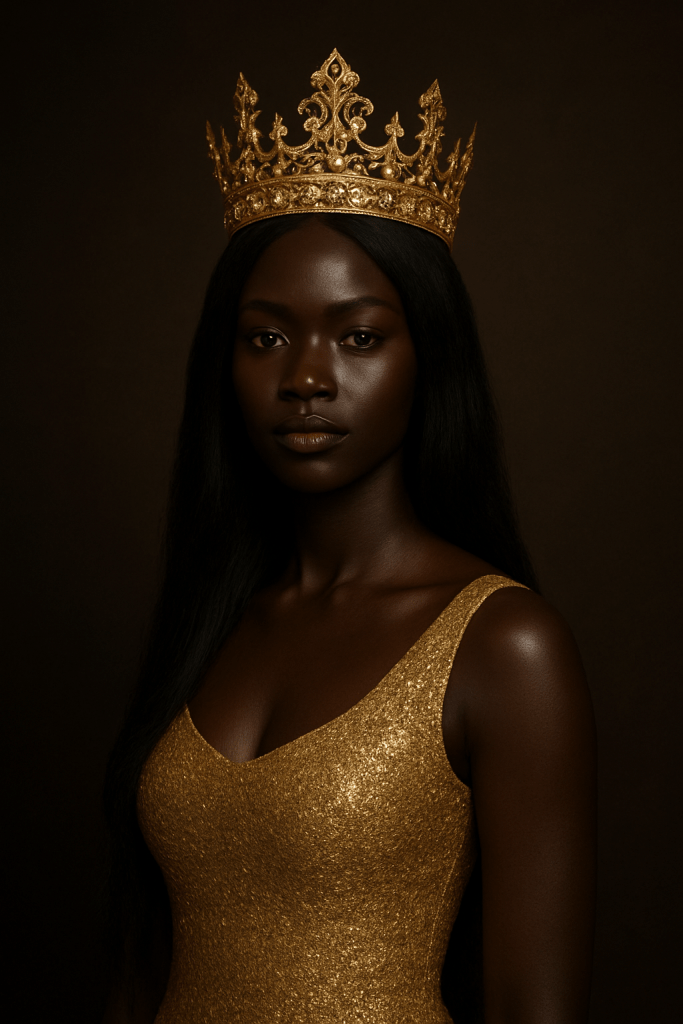
The Dark-Skinned Queens: Restoring the Crown to Melanin’s Deep Majesty.

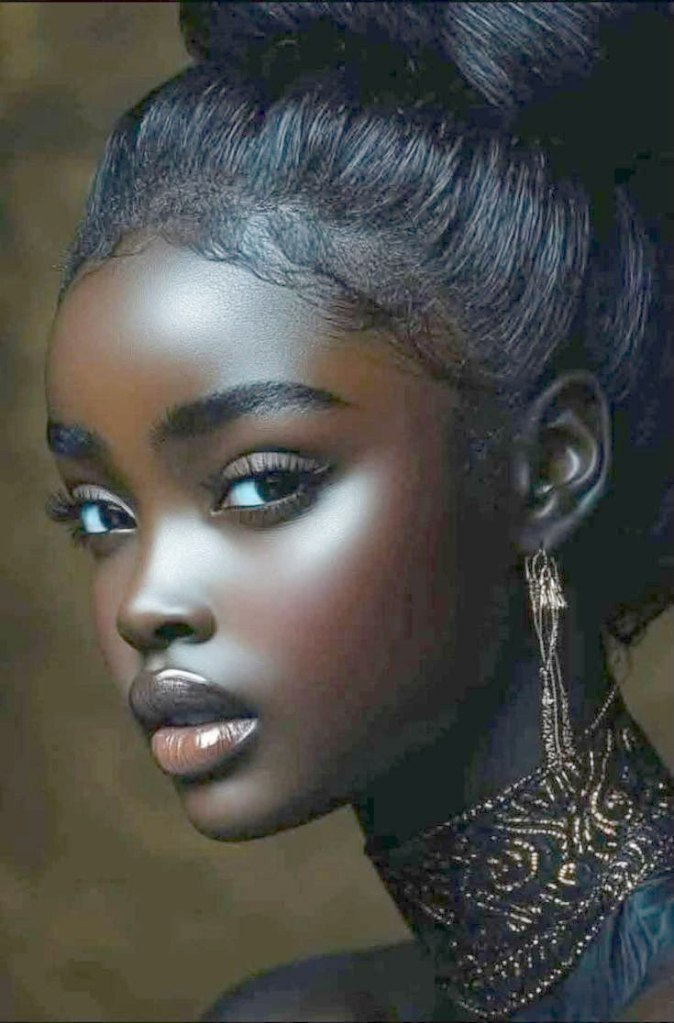
The Dark-Skinned Queen stands as a living monument to ancestral glory—her skin a sacred archive of history, divinity, and resilience. Yet the world has not always treated her as such. For centuries, she has been positioned at the bottom of a racialized beauty hierarchy, burdened by the shadows of colonialism, anti-Blackness, and internal color prejudice. But the truth remains unshaken: her beauty is ancient, sovereign, and cosmic. She is not emerging—she has always been, and the world is finally remembering what was never lost.

Historically, deep melanin was revered across civilizations. In ancient Kemet, Nubia, and Kush, dark-skinned queens were worshipped as embodiments of divinity, fertility, royalty, and cosmic order. Stone carvings and temple art bear witness—deep brown skin was not merely beautiful; it was sacred. Civilization began in melanin-rich lands, and thus, the Dark-Skinned Goddess represents origin and power, not deviation or rarity.

Colonialism sought to rewrite this truth, weaponizing beauty to fracture identity. European expansion brought a violent inversion of values, casting darker skin as undesirable, uncivilized, or inferior. These lies were institutionalized through enslavement, missionary propaganda, and global media. The goal was psychological domination: if the world could be convinced that the darkest skin was the least valuable, then the original people could be controlled. Beauty became a battlefield.

Through history, dark-skinned women bore double violence—racism and colorism. Their labor was exploited, their beauty ignored or mocked, and their femininity questioned. Those wounds still echo today when darker-skinned girls struggle with visibility, self-esteem, and belonging. Yet even in oppression, the Dark-Skinned Goddess remained unbroken. Her existence is resistance. Her radiance survived the lie.

In modern media, her representation remains limited, though rising. When women like Lupita Nyong’o, Viola Davis, Khoudia Diop, and Nia Long appear, they disrupt centuries of curated beauty narratives. Their presence is not simply aesthetic—it is political. Their faces tell new stories and correct historical distortions. Their visibility is cultural restoration, not a trend.

Socially, the Dark-Skinned Goddess is often underestimated before she is known. People assume toughness, attitude, or aggression before recognizing grace, intelligence, softness, or elegance. Stereotypes cling to her not because she lacks depth, but because the world fears her power. Mischaracterization is the weapon of the intimidated.

Romantically, she has faced long-standing biases shaped by colonial beauty scripts. Some men once sought lighter-skinned partners to access false proximity to privilege. Others fetishized her body while disregarding her heart. Yet her value never depended on preference—it exists independent of perception. She is not validated by desire; she is complete by design.

Spiritually, melanin symbolizes divine creation. Scripture reminds: “I am black, but comely” (Song of Solomon 1:5, KJV). This verse is not an apology—it is a declaration. Darkness in biblical text is associated with mystery, depth, and holiness. God formed humanity from rich, fertile earth, not pale, dry dust. Melanin is not an accident—it is intentional artistry.

Psychologically, reclamation requires healing. Dark-skinned women have internal battles shaped by external rejection. They learn to love themselves in societies slow to love them back. But healing blooms when she sees the truth of her reflection—not through distortion, but revelation. Confidence, when rooted in reality rather than validation, becomes unshakable.

Within the community, colorism has damaged sisterhood. Dark-skinned girls were often teased, underestimated, or overlooked. Some developed armor; others developed silence. Yet the new era demands empathy, not competition. When beauty becomes communal instead of comparative, we rise together. No shade of Blackness needs apology—only acknowledgement.

Culturally, she carries the memory of her ancestors in her skin. Each melanin cell is a testament to sun-kissed lands and royal lineage. She does not darken in inferiority—she glows in origin. Melanin is cosmic technology—absorbing light, storing warmth, preserving youth. It is biological excellence, not burden.

Economically, she often had to work twice as hard to be seen as equal to lighter peers. Her competence was tested more; her mistakes judged harsher. Yet she consistently excelled, not because she had privilege, but because she possessed perseverance. Strength became her inheritance, not her choice. And yet, she still seeks the right to softness.

Emotionally, she navigates constant contrast—admired aesthetically in one breath, overlooked socially in another. She is celebrated on runways but ignored in workplaces. Praised in songs yet harmed in systems. This paradox teaches her discernment, depth, and inner worth. She learns that true beauty transcends environment and expectation.

The world imitates her body yet denies her humanity. Full lips, curvaceous hips, rich skin, coily hair—once mocked, now monetized. Her features trend on those without her struggle. But imitation will never equal essence. She is the blueprint, not the beneficiary of borrowed beauty.

Yet a renaissance rises. She is reclaiming beauty narratives, rewriting cultural scripts, and building new worlds where she doesn’t have to prove anything. She stands not in reaction to bias, but in revelation of identity. Her presence demands reverence, not permission.

Her beauty is not merely visual—it is metaphysical. It radiates history, intellect, intuition, empathy, and fire. Beauty is not her burden—it is her birthright. Society once tried to dim her glow; now the world adjusts its eyes to her brilliance. She is not emerging—she is unveiling.

The Dark-Skinned Queen does not seek comparison. She is not the opposite of light—she is the embodiment of depth. She is the eternal night sky, ancient soil, divine mystery, royal lineage. Her beauty is not subtractive; it is sovereign.

For she is fearfully and wonderfully made (Psalm 139:14, KJV). Not despite her shade, but because of it. Melanin is crown. Darkness is splendor. She is not defined by struggle—she is defined by glory.

And now, she does not rise alone. She rises with every shade beside her. Her divinity does not eclipse others; it illuminates the truth: Black beauty is infinite. But among its many expressions, the Dark-Skinned Goddess remains the beginning, the memory, and the majesty.

May she walk not with apology, but authority. Not seeking validation, but embodying revelation. For she is not reclaiming beauty—she is beauty, rediscovered.


References

Hunter, M. (2007). The persistent problem of colorism: Skin tone, status, and inequality. Sociology Compass, 1(1), 237–254.

Russell, K., Wilson, M., & Hall, R. (2013). The color complex: The politics of skin color in a new millennium. Anchor Books.

Wade, P. (2020). Race, nature and culture: An anthropological perspective. Pluto Press.

Song of Solomon 1:5 (KJV); Psalm 139:14 (KJV).
Dilemma: Slavery, Colonialism, and Racial Hierarchy

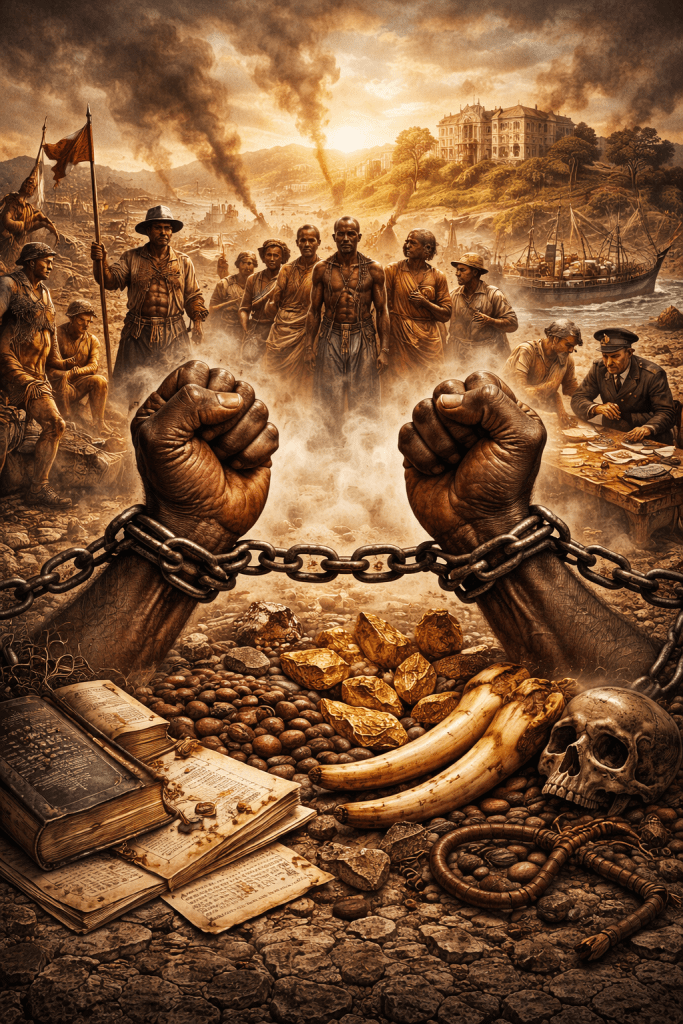
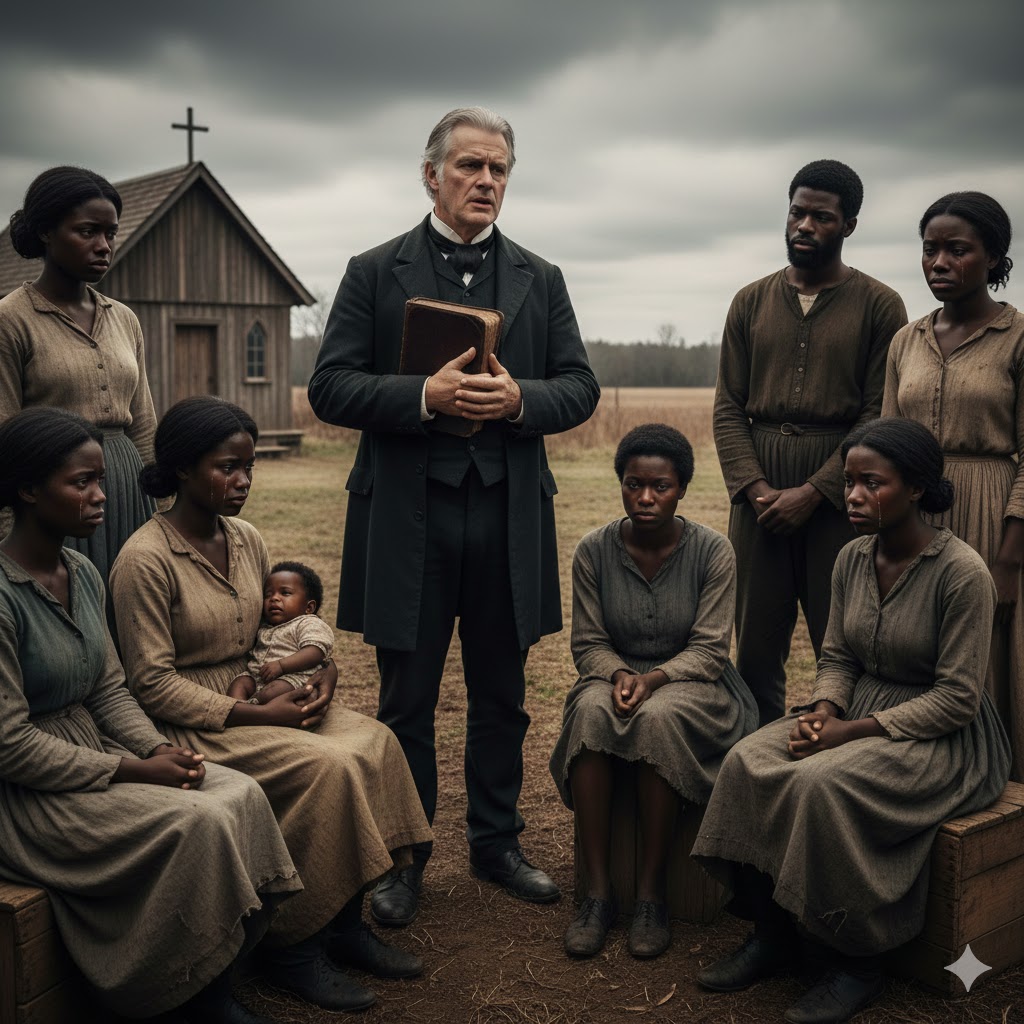
Slavery and colonialism did not emerge as isolated historical accidents but as deliberate systems engineered to extract labor, land, and life from subordinated peoples. At the center of these systems stood the construction of racial hierarchy, a framework that transformed domination into ideology and violence into normalcy.

The transatlantic slave trade marked a pivotal rupture in human history. Africans were captured, commodified, and transported across oceans under conditions designed to erase personhood. This was not merely economic exploitation; it was an ontological assault on humanity itself.

Colonialism expanded this logic globally. European empires occupied territories across Africa, the Americas, Asia, and the Caribbean, imposing foreign rule while dismantling indigenous governance, economies, and epistemologies. Control of land was accompanied by control of meaning.

Racial hierarchy emerged as the moral justification for these practices. Europeans increasingly defined themselves as fully human, rational, and civilized, while Africans and other colonized peoples were cast as primitive, inferior, or subhuman. This hierarchy was not natural; it was manufactured.

Theological distortion played a central role in legitimizing oppression. Biblical texts were selectively interpreted to sanctify slavery and empire, while passages emphasizing justice, liberation, and divine judgment against oppressors were muted or ignored.

One of the most egregious examples was the misuse of the so-called “Curse of Ham.” Though the Genesis narrative never mentions skin color or Africa as justification for enslavement, European theologians weaponized this passage to racialize bondage and claim divine approval for Black subjugation.

At the same time, enslaved Africans encountered the Bible through contradiction. The same text used to justify their chains also spoke of Exodus, covenant, judgment, and liberation. Enslaved readers discerned truths their oppressors refused to see.

The plantation economy reveals the intimate link between slavery and modern capitalism. Sugar, cotton, tobacco, and rice generated immense wealth for European nations and American colonies, laying the financial foundation of global modernity.

Colonial powers did not merely exploit labor; they extracted knowledge. African technologies, agricultural practices, metallurgy, and governance systems were appropriated, while African peoples were denied authorship of their own civilizations.

Colonial education systems reinforced inferiority by teaching colonized subjects to admire Europe and despise themselves. Language suppression, cultural erasure, and religious coercion produced psychological captivity alongside political domination.

Racial hierarchy was further codified through law. Slave codes, colonial ordinances, and later segregationist policies transformed racial inequality into legal structure, ensuring that injustice persisted beyond individual prejudice.

Even after formal abolition, slavery mutated rather than disappeared. Sharecropping, convict leasing, forced labor camps, and colonial labor systems continued extraction under new names, maintaining racial stratification.

The Bible’s prophetic tradition stands in direct opposition to such systems. Prophets repeatedly condemned societies that enriched themselves through exploitation, warning that injustice invites divine judgment regardless of national power.

Deuteronomy, Isaiah, Amos, and Jeremiah articulate a theology in which God sides with the oppressed and holds nations accountable for how they treat the vulnerable, the captive, and the poor.

Colonial Christianity often severed salvation from justice, emphasizing heaven while tolerating hell on earth. This theological bifurcation enabled believers to pray while profiting from suffering.

Black and African theology rejected this split. Faith became inseparable from survival, resistance, and hope. Worship functioned not as escapism but as protest against a world out of alignment with divine order.

Resistance to slavery and colonialism took multiple forms: revolts, maroon communities, abolitionist movements, pan-Africanism, and decolonization struggles. These movements testified that domination was never fully total.

The twentieth century witnessed formal decolonization, yet political independence did not erase economic dependency. Former colonies inherited borders, debts, and institutions designed for extraction, not flourishing.

Racial hierarchy adapted to new global arrangements. Development discourse replaced overt racism, yet inequality persisted through trade imbalances, resource exploitation, and global financial systems.

Within Western societies, the descendants of the enslaved continued to face exclusion through housing discrimination, educational inequity, mass incarceration, and economic marginalization—echoes of the original hierarchy.

Psychological consequences remain profound. Internalized inferiority, historical amnesia, and fractured identity are among the most enduring legacies of racial domination.

Scripture speaks to these realities not through denial but through remembrance. Biblical faith insists that history matters, that suffering is seen, and that injustice leaves a moral residue demanding response.

Divine justice in the biblical vision is neither rushed nor forgetful. It unfolds across generations, confronting systems rather than merely individuals.

The dilemma of slavery, colonialism, and racial hierarchy therefore confronts both history and theology. It demands honest reckoning rather than selective memory.

Healing requires truth, accountability, and restoration. Justice is not achieved through symbolic gestures alone but through material repair and transformed relationships.

The Bible ultimately refuses the permanence of oppression. Empires rise and fall, but divine justice endures beyond human power.

The continued struggle for racial justice is not a deviation from faith but a fulfillment of its ethical demand. To pursue justice is to align human action with divine intent.

Slavery and colonialism reveal the depths of human cruelty, but they also reveal the resilience of those who survived them. Survival itself stands as testimony against the lie of inferiority.

The racial hierarchy constructed to justify domination is historically contingent and morally bankrupt. It cannot withstand sustained truth.

This dilemma remains unresolved not because justice is absent, but because humanity continues to resist its demands.

Yet Scripture insists that injustice is unsustainable. The arc of history bends not by accident, but by moral weight.

The work of dismantling racial hierarchy is therefore sacred labor—historical, ethical, and spiritual—calling this generation to choose truth over comfort and justice over denial.


References

The Holy Bible, King James Version. (1611/1769).

Cone, J. H. (1997). God of the oppressed. Orbis Books.

Fanon, F. (1963). The wretched of the earth. Grove Press.

Rodney, W. (1972). How Europe underdeveloped Africa. Howard University Press.

Williams, E. (1944). Capitalism and slavery. University of North Carolina Press.

Du Bois, W. E. B. (1903). The souls of Black folk. A. C. McClurg & Co.

Heschel, A. J. (2001). The prophets. Harper Perennial.

Dilemma: Colonialism

Colonialism represents one of the most enduring and destructive systems in human history, shaping global inequalities that persist long after formal empires collapsed. At its core, colonialism involved the domination of one people by another through force, dispossession, and ideological control. The dilemma of colonialism lies not only in its historical brutality but in its long-term consequences, which continue to structure economic systems, cultural identities, and psychological realities across the modern world.

European colonial expansion was driven by the pursuit of land, labor, and resources, justified through doctrines of racial superiority and civilizational hierarchy. Indigenous societies were not encountered as equals but as obstacles to be conquered or “improved.” This worldview allowed colonial powers to rationalize enslavement, genocide, and cultural erasure as moral and economic necessities.

Economic exploitation was central to the colonial project. Colonized lands were reorganized to serve imperial markets, transforming self-sustaining economies into extractive systems dependent on the export of raw materials. Wealth flowed outward to imperial centers, while poverty was institutionalized in the colonies, laying the groundwork for global inequality.

The transatlantic slave trade functioned as a pillar of colonial capitalism. Millions of Africans were forcibly displaced, commodified, and exploited to fuel plantation economies in the Americas and the Caribbean. This system generated immense wealth for European powers while devastating African societies socially, demographically, and politically.

Colonialism also dismantled indigenous governance structures. Traditional political systems were replaced with colonial administrations designed to extract resources and suppress resistance. Artificial borders divided ethnic groups and forced rival communities into single political units, creating instability that continues to affect postcolonial states.

Cultural domination accompanied economic and political control. Colonial powers imposed their languages, religions, and value systems while denigrating indigenous cultures as primitive or inferior. This process stripped colonized peoples of historical continuity and disrupted intergenerational transmission of knowledge and identity.

Education under colonial rule was not designed to empower but to discipline. Schools trained a small elite to serve colonial administrations while teaching them to internalize European superiority. As Frantz Fanon observed, colonial education often produced alienation rather than enlightenment.

Religion was frequently weaponized to legitimize colonial expansion. Biblical narratives were selectively interpreted to justify conquest, enslavement, and submission. While Christianity offered spiritual comfort to many, it was also used as a tool of social control, obscuring the moral contradictions of colonial violence.

The psychological effects of colonialism were profound. Colonized peoples were subjected to constant messages of inferiority, leading to internalized racism and fractured self-perception. Fanon described this condition as a divided consciousness, where the oppressed come to see themselves through the eyes of the oppressor.

Racial hierarchies were meticulously constructed and enforced. Whiteness became synonymous with intelligence, beauty, and authority, while Blackness and indigeneity were associated with backwardness. These hierarchies did not disappear with independence; they were absorbed into global culture and continue to influence social relations.

Colonialism reshaped gender roles in destructive ways. Indigenous gender systems were often more fluid or complementary, but colonial rule imposed rigid patriarchal norms that marginalized women and erased their leadership roles. Colonial economies also relied heavily on the exploitation of women’s labor.

Environmental destruction was another hallmark of colonial rule. Land was treated as property rather than a sacred resource, leading to deforestation, soil depletion, and ecological imbalance. These practices prioritized short-term profit over sustainability, leaving lasting environmental scars.

Resistance to colonialism was constant, though often erased from dominant historical narratives. Enslaved Africans revolted, indigenous peoples fought invasions, and anti-colonial movements emerged across continents. Freedom was not granted by empires; it was wrested through struggle and sacrifice.

The transition from colonial rule to independence was frequently incomplete. Many nations inherited economies designed for extraction, not development, and political systems modeled on colonial governance. Independence without structural transformation left former colonies vulnerable to continued domination.

Colonial legacies remain visible in global wealth disparities. Former colonial powers continue to benefit from accumulated capital, while former colonies face debt, underdevelopment, and external interference. These inequalities are not accidental but historical outcomes of exploitation.

Colonialism also distorted historical memory. Textbooks and public narratives often minimize imperial violence while celebrating exploration and “progress.” This selective memory impedes reconciliation and allows injustice to persist without accountability.

From a moral and spiritual perspective, colonialism represents a profound violation of divine principles of justice and human dignity. Scripture condemns oppression, theft, and the exploitation of the vulnerable, warning that nations built on injustice cannot stand indefinitely.

The dilemma of colonialism is not simply whether it was harmful, but whether the world is willing to confront its consequences honestly. Apologies without reparative action risk becoming symbolic gestures rather than pathways to healing.

Decolonization requires more than political independence. It demands economic justice, cultural restoration, psychological healing, and historical truth-telling. Without these elements, colonialism merely changes form rather than ending.

Ultimately, colonialism challenges humanity to reckon with power, morality, and memory. Until its legacies are addressed with humility and justice, the wounds it created will continue to shape the present, reminding the world that history is never truly past.


References

Fanon, F. (1963). The wretched of the earth. Grove Press.

Fanon, F. (1967). Black skin, white masks. Grove Press.

Nkrumah, K. (1965). Neocolonialism: The last stage of imperialism. Thomas Nelson & Sons.

Rodney, W. (1972). How Europe underdeveloped Africa. Bogle-L’Ouverture Publications.

Said, E. W. (1978). Orientalism. Pantheon Books.

Smith, A. (1776/2007). An inquiry into the nature and causes of the wealth of nations. MetaLibri.

The Holy Bible, King James Version. (1611/1987). Cambridge University Press.

Beautyism and the Inheritance of Colonial Aesthetics.

Beauty, often perceived as an individual trait, is deeply social, political, and historically constructed. “Beautyism” refers to the systemic privileging of individuals who conform to dominant aesthetic standards, and the inheritance of colonial aesthetics highlights how these standards are racialized, gendered, and embedded in structures of power. For communities of color, particularly Black and brown populations, these standards are not neutral; they are a legacy of colonialism, slavery, and European dominance, which continue to shape perceptions of worth, social mobility, and cultural acceptance.

Colonial powers imposed Eurocentric standards of beauty on colonized populations, privileging light skin, straight hair, narrow noses, and European facial features. As Fanon (1967) argues, these imposed ideals created internalized hierarchies of appearance, teaching oppressed populations to equate proximity to European aesthetics with social value, intelligence, and morality. Over generations, these beauty norms became cultural inheritance, producing what is now widely referred to as colorism—a preference for lighter skin and Eurocentric features within communities of color (Hunter, 2007).

Colorism manifests in multiple ways: social visibility, economic opportunity, media representation, and interpersonal desirability. Light-skinned individuals frequently receive more favorable treatment in employment, education, and romantic contexts, reflecting the lingering impact of colonial aesthetics (Anderson, Grunert, Katz, & Lovascio, 2010; Hamermesh, 2011). Conversely, darker-skinned individuals, despite possessing features celebrated in ancestral or cultural contexts, often face marginalization, invisibility, and devaluation, highlighting how colonial beauty norms persist as systemic bias.

Hair has been one of the most conspicuous battlegrounds of colonial influence. European standards historically stigmatized curly, coily, or wooly hair textures, pressuring Black women and men to straighten or chemically alter their hair to fit “acceptable” ideals (Banks, 2000). Such practices extend beyond aesthetics—they reinforce internalized notions of inferiority and perpetuate the belief that natural features are undesirable. Resistance to these pressures, such as embracing natural hair and protective styling, has become an act of cultural reclamation and defiance against inherited colonial aesthetics.

Facial features and skin tone remain central to the perpetuation of beautyism. Big eyes, full lips, broad noses, and melanin-rich skin, historically undervalued under colonial influence, are increasingly celebrated in movements reclaiming Black and brown beauty (Craig, 2002). These movements challenge the internalized notion that beauty is synonymous with European features, insisting that aesthetic value is culturally situated and historically contingent.

Media representation plays a crucial role in reinforcing or challenging beautyism. For decades, Eurocentric standards dominated television, film, and advertising, marginalizing Black and brown bodies. Contemporary efforts to highlight diverse skin tones, natural hair textures, and a variety of facial features counteract these historical biases, providing visibility and affirming that inherited colonial aesthetics are neither universal nor inherently desirable (Rhode, 2010).

Psychologically, the inheritance of colonial aesthetics contributes to internalized bias and self-perception challenges. Individuals who deviate from Eurocentric ideals may experience diminished self-esteem, feelings of inadequacy, and a constant pressure to conform (Eagly, Ashmore, Makhijani, & Longo, 1991). Conversely, embracing features that align with ancestral or culturally grounded standards fosters self-confidence, pride, and cultural continuity.

Beautyism also intersects with gender. Women, particularly in Black and brown communities, are disproportionately affected by the pressure to conform to colonial aesthetics. Their features, hair textures, and skin tones are policed in professional, social, and romantic contexts. Men, though often less scrutinized in terms of aesthetics, are still influenced by preferences for lighter skin and Eurocentric traits, reflecting broader societal biases (Langlois et al., 2000).

Colorism and beautyism are not merely personal issues; they are structural. The inheritance of colonial aesthetics influences hiring practices, media representation, and social networking opportunities, reinforcing systems of inequality. Recognition of this legacy is essential to dismantling discriminatory practices and cultivating inclusive standards of beauty that honor diversity, ancestry, and cultural heritage (Hunter & Davis, 1992).

Resistance and reclamation are central to the contemporary response to beautyism. Movements such as natural hair advocacy, Afrocentric beauty campaigns, and media platforms centering melanin-rich aesthetics demonstrate that beauty is culturally constructed and that inherited colonial standards can be challenged. By embracing diverse features—full lips, broad noses, textured hair, and rich skin tones—communities affirm identity, resilience, and historical continuity.

The spiritual dimension of beauty further contextualizes resistance. Biblical principles remind us that worth is not measured by external appearance but by character, virtue, and alignment with divine purpose (1 Samuel 16:7). Celebrating ancestral aesthetics aligns with this principle, affirming that beauty, when rooted in heritage and authenticity, reflects God’s design rather than imposed societal preference.

Education is pivotal in addressing beautyism. Teaching the historical origins of Eurocentric aesthetics, colorism, and colonial beauty standards empowers individuals to recognize internalized biases and make informed choices regarding self-perception, presentation, and cultural alignment. Cultural literacy fosters pride in ancestral features and counters centuries of devaluation.

Economically, beautyism affects access to opportunities. Hamermesh (2011) notes that perceptions of attractiveness influence hiring, wages, and promotion. Since colonial aesthetics continue to inform societal standards, individuals whose appearance aligns with Eurocentric norms often enjoy systemic advantages, while those embracing ancestral features may face barriers. Recognizing and challenging this inequity is a critical step toward social justice.

The inheritance of colonial aesthetics also impacts interpersonal relationships. Preferences for lighter skin and European features shape dating dynamics, friendship hierarchies, and social inclusion, often privileging proximity to Eurocentric ideals. Such dynamics reflect broader societal biases rather than objective measures of attractiveness or compatibility.

By redefining beauty standards to honor ancestral traits, communities challenge entrenched hierarchies. Features once devalued under colonial influence—full lips, broad noses, textured hair, and melanin-rich skin—are now celebrated, affirming identity, pride, and historical continuity. This reclamation disrupts beautyism and repositions cultural aesthetics as a source of empowerment rather than limitation.

Media, fashion, and entertainment industries play a transformative role by presenting diverse representations of Black and brown beauty. Featuring a range of skin tones, natural hair textures, and varied facial features shifts public perception, challenges internalized biases, and promotes equitable valuation of appearance.

Ultimately, beautyism and the inheritance of colonial aesthetics illustrate how historical oppression continues to shape contemporary standards of appearance. Recognizing this legacy is crucial for personal empowerment, cultural reclamation, and societal equity. By embracing diverse features and ancestral aesthetics, communities resist Eurocentric dominance and affirm the dignity, worth, and beauty inherent in melanin-rich bodies.

In conclusion, understanding beautyism requires acknowledging the colonial origins of aesthetic hierarchies and their ongoing impact on perception, opportunity, and self-worth. Reclaiming ancestral beauty—through features, hair, and skin tone—resists the internalization of colonial standards, celebrates diversity, and affirms cultural pride. True beauty emerges not from conformity to inherited Eurocentric ideals but from embracing the richness, history, and authenticity of Black and brown aesthetics.


References

Anderson, T. L., Grunert, C., Katz, A., & Lovascio, S. (2010). Aesthetic capital: A research review on beauty perks and penalties. Sociology Compass, 4(8), 564–575. https://doi.org/10.1111/j.1751-9020.2010.00312.x

Banks, I. (2000). Hair matters: Beauty, power, and Black women’s consciousness. New York University Press.

Bourdieu, P. (1986). The forms of capital. In J. Richardson (Ed.), Handbook of theory and research for the sociology of education (pp. 241–258). Greenwood Press.

Craig, M. L. (2002). Ain’t I a beauty queen? Black women, beauty, and the politics of race. Oxford University Press.

Eagly, A. H., Ashmore, R. D., Makhijani, M. G., & Longo, L. C. (1991). What is beautiful is good, but… A meta-analytic review. Psychological Bulletin, 110(1), 109–128.

Fanon, F. (1967). Black skin, white masks. Grove Press.

Feingold, A. (1992). Good-looking people are not what we think. Psychological Bulletin, 111(2), 304–341.

Hamermesh, D. S. (2011). Beauty pays: Why attractive people are more successful. Princeton University Press.

Hunter, M. (2007). The persistent problem of colorism: Skin tone, status, and inequality. Sociology Compass, 1(1), 237–254. https://doi.org/10.1111/j.1751-9020.2007.00006.x

Hunter, M., & Davis, A. (1992). Colorism: A new perspective. Cultural Diversity and Mental Health, 4(2), 25–35.

Langlois, J. H., et al. (2000). Maxims or myths of beauty? Psychological Bulletin, 126(3), 390–423.

Rhode, D. L. (2010). The beauty bias: The injustice of appearance in life and law. Oxford University Press.

Wilson, T. D. (2002). Strangers to ourselves: Discovering the adaptive unconscious. Harvard University Press.

Gafney, W. (2017). Womanist midrash: A reintroduction to the women of the Torah and the Throne. Westminster John Knox Press.

Melanin and Magnificence: Redefining Beauty through a Black Lens.

This photograph is the property of its respective owner. No copyright infringement intended.

Beauty has long been defined through Eurocentric standards that valorize lighter skin, straight hair, and European facial features, marginalizing the diverse aesthetics inherent to African-descended peoples. Yet, in recent decades, there has been a resurgence of cultural pride that positions melanin—not as a marker of difference or inferiority—but as a symbol of magnificence, resilience, and heritage. This essay explores how Black communities are redefining beauty, reclaiming agency over self-image, and challenging the historical legacies of colonial aesthetics (Banks, 2019; Hunter, 2007).

This photograph is the property of its respective owner. No copyright infringement intended.

Historical Marginalization of Black Features
The privileging of European aesthetics originates in colonialism and the transatlantic slave trade, which systematically devalued African physical features. Skin tone hierarchies, hair texture biases, and facial feature preferences were not merely social preferences but tools of oppression, used to enforce racialized social stratification (Painter, 2010). Literature, early photography, and art often depicted lighter-skinned individuals with Eurocentric features as “civilized” or “desirable,” while darker-skinned individuals were framed as “other,” reinforcing internalized notions of inadequacy (Hall, 1997).

Psychological Implications of Eurocentric Standards
Internalization of Eurocentric beauty ideals has deep psychological consequences for Black communities. Studies show that colorism—favoring lighter skin over darker—affects self-esteem, social mobility, and mental health (Hunter, 2007). Children exposed to media that elevates European features may develop implicit biases against their own natural traits, associating their darker skin, full lips, or textured hair with undesirability or incompetence (Jones, 2018). This internalized bias contributes to identity conflict and social anxiety, perpetuating the very hierarchies these standards sought to enforce.

The Role of Media and Popular Culture
Modern media continues to reflect and reinforce Eurocentric beauty norms. Film, fashion, and advertising often present European features as aspirational, subtly pressuring Black individuals to conform through hair straightening, skin lightening, or cosmetic alteration (Hunter, 2011). Social media amplifies this effect, with algorithmic promotion frequently privileging lighter-skinned, Eurocentric beauty, generating both admiration and self-critique among viewers. Yet, these platforms also offer spaces for resistance and representation.

Reclaiming Beauty Through a Black Lens
Resistance to Eurocentric standards has been growing. Movements celebrating natural hair, darker skin tones, and Afrocentric aesthetics actively redefine beauty through a Black lens. Campaigns like #BlackGirlMagic and #MelaninPoppin celebrate traits historically marginalized, fostering psychological resilience, cultural pride, and communal affirmation (Thompson, 2020). Black-owned media outlets, fashion brands, and artistic platforms contribute to a paradigm shift that centers Blackness as inherently beautiful, powerful, and diverse.

The Significance of Melanin
Melanin—the pigment that gives skin its color—has become a symbol of magnificence, resilience, and heritage. Beyond its biological function, melanin represents historical survival against oppression, a legacy of strength, and an aesthetic of authenticity. Celebrating melanin challenges centuries of devaluation and reframes Black beauty not as an imitation of European ideals but as a unique, dignified, and powerful standard in its own right (Banks, 2019).

Global and Cultural Impact
Redefining beauty through a Black lens has implications beyond individual self-perception. It challenges global beauty industries to diversify representation, prompts policymakers to address hair and skin discrimination, and inspires cross-cultural appreciation of African aesthetics. The reclamation of beauty is both personal and political, confronting colonial legacies while fostering pride and inclusion in contemporary society (Hunter, 2011).

Conclusion
Melanin and magnificence are not merely aesthetic concepts—they are acts of reclamation, resistance, and empowerment. By redefining beauty through a Black lens, communities can dismantle centuries-old hierarchies that devalued their features and assert the inherent dignity, elegance, and diversity of Blackness. The celebration of melanin is a cultural, psychological, and spiritual affirmation: a declaration that Black beauty is magnificent, sovereign, and unassailable.

References

  • Banks, I. (2019). Hair matters: Beauty, power, and Black women’s identity. NYU Press.
  • Hall, S. (1997). Representation: Cultural representations and signifying practices. Sage.
  • Hunter, M. L. (2007). The persistent problem of colorism: Skin tone, status, and inequality. Sociology Compass, 1(1), 237–254.
  • Hunter, M. L. (2011). Race, gender, and the politics of skin tone. Routledge.
  • Jones, A. (2018). Colorism and psychological effects in youth. Journal of Black Psychology, 44(2), 123–145.
  • Painter, N. I. (2010). The history of White people. W. W. Norton & Company.
  • Thompson, C. (2020). Afrocentric beauty and social media activism. Cultural Studies Review, 26(3), 55–74.

Legacy of Light: Colonialism and the Brown Girl Dilemma. #thebrowngirldilemma

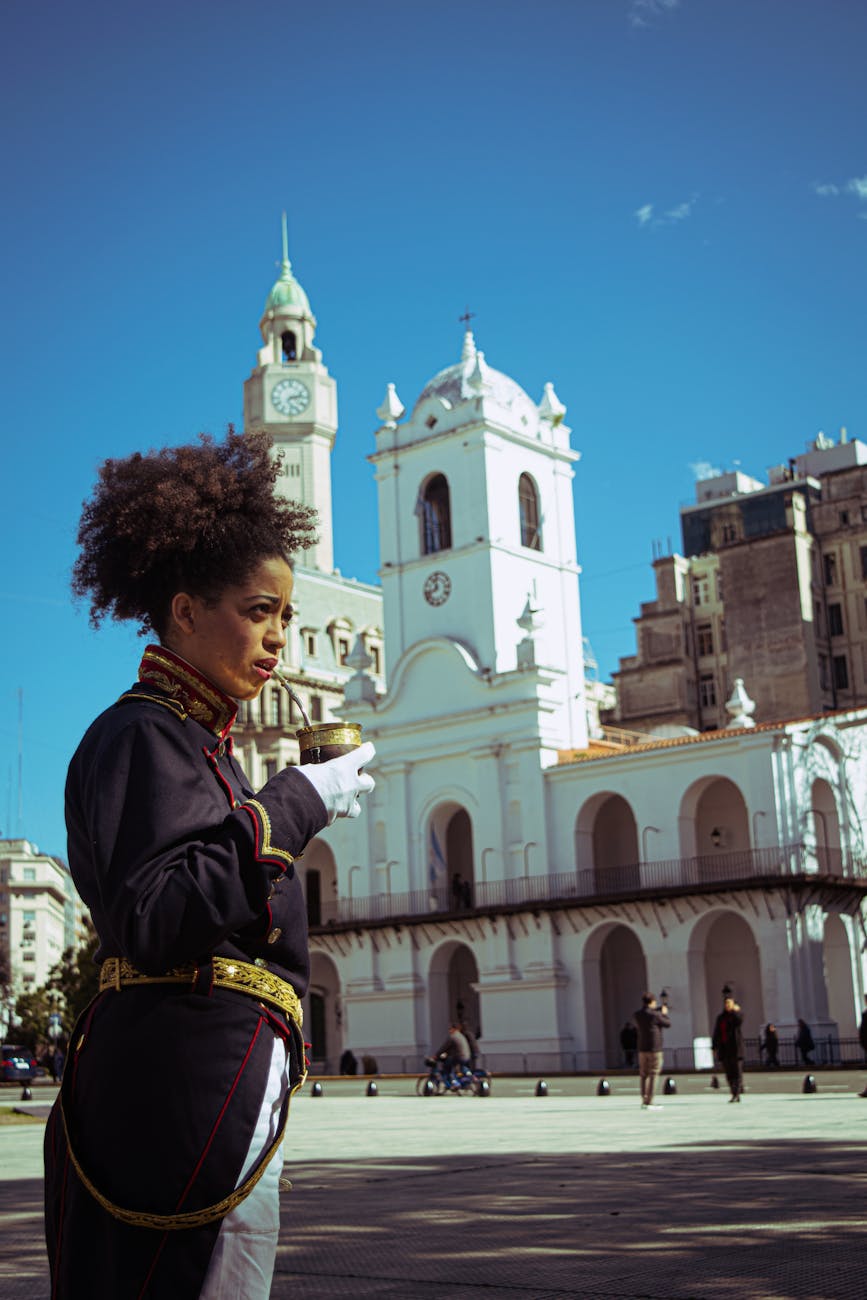
Photo by Kari Alfonso on Pexels.com

The Brown girl dilemma—the complex interplay of colorism, identity, and self-worth—cannot be understood without examining the historical legacy of colonialism. For centuries, European colonial powers imposed rigid hierarchies that privileged lighter skin, straight hair, and Eurocentric features, associating these traits with intelligence, civility, and social status. Darker-skinned individuals were often dehumanized, labor exploited, and culture denigrated. This systemic privileging of lightness laid the foundation for enduring colorist biases that continue to shape societal standards of beauty and opportunity for Brown girls today (Hunter, 2007).

Colonial narratives infiltrated cultural norms, education, and media, reinforcing the association between light skin and desirability. Literature, visual arts, and folklore frequently depicted lighter-skinned women as virtuous and aspirational, while darker-skinned women were cast as secondary or subservient. Within colonized societies, this created internalized hierarchies where lighter-skinned individuals received preferential treatment in employment, education, and social recognition. Brown girls inherited these dynamics, often navigating environments where their natural features and melanin-rich skin were undervalued (Byrd & Tharps, 2014).

Colorism, the preferential treatment of lighter skin within the same racial or ethnic group, is a direct product of these historical structures. In contemporary societies, Brown girls face pressures to conform to beauty standards rooted in colonial ideals. Skin-lightening products, straightening treatments for natural hair, and fashion trends designed to emulate Western norms exemplify the continued influence of colonial hierarchies. These pressures can produce psychological strain, erode self-esteem, and foster internalized bias among young girls struggling to reconcile their heritage with societal expectations (Hunter, 2007).

Media representation continues to amplify the dilemma. Hollywood, global advertising, and social media platforms historically elevate lighter-skinned actors, models, and influencers. Figures such as Yara Shahidi, Salli Richardson, and Mari Morrow exemplify this visibility. In contrast, dark-skinned women, despite possessing equally striking features and talent, are often marginalized, reinforcing the message that proximity to whiteness is synonymous with success, beauty, and power. The lack of authentic representation perpetuates the colonial hierarchy in contemporary cultural spaces (Fardouly et al., 2015).

However, resistance and reclamation are reshaping narratives. Dark-skinned icons such as Lupita Nyong’o, Kenya Moore, and Issa Rae challenge Eurocentric ideals by embracing their melanin-rich complexion, natural hair, and culturally rooted aesthetics. Their success demonstrates that beauty, talent, and influence are not confined to colonial constructs of desirability. By centering these figures, Brown girls receive affirming role models who validate their features, heritage, and potential, fostering resilience and pride in their identity (Banks, 2015).

Educational and community initiatives further counteract the colonial legacy. Mentorship programs, culturally responsive curricula, and leadership training equip Brown girls with the skills and confidence to navigate systemic bias. By teaching critical media literacy, celebrating heritage, and providing visibility to accomplished role models, these programs empower young women to challenge historical hierarchies while cultivating self-worth and agency (Hunter, 2007).

Spiritual and ethical grounding offers an enduring corrective lens. Proverbs 31:30 (KJV) teaches, “Favour is deceitful, and beauty is vain: but a woman that feareth the LORD, she shall be praised.” Faith affirms that worth transcends societal or media-driven hierarchies rooted in colonial constructs. By rooting identity in character and divine purpose, Brown girls can resist the pressure to conform to external standards while embracing their natural beauty and potential.

In conclusion, the Brown girl dilemma is a direct legacy of colonialism, manifesting as colorism, limited representation, and internalized bias. Yet through cultural affirmation, mentorship, education, media representation, and spiritual grounding, Brown girls can reclaim agency, redefine beauty, and navigate the world with pride and confidence. Recognizing the historical roots of these challenges is the first step in dismantling them and creating spaces where melanin-rich features, talent, and intellect are fully celebrated.


References

Banks, J. A. (2015). Cultural diversity and education: Foundations, curriculum, and teaching. Routledge.

Byrd, A. D., & Tharps, L. L. (2014). Hair Story: Untangling the Roots of Black Hair in America. St. Martin’s Press.

Fardouly, J., Diedrichs, P. C., Vartanian, L. R., & Halliwell, E. (2015). Social comparisons on social media: The impact of Facebook on young women’s body image concerns and mood. Body Image, 13, 38–45.

Hunter, M. (2007). The persistent problem of colorism: Skin tone, status, and inequality. Sociology Compass, 1(1), 237–254.

Beyond the Mirror: Unpacking the Brown Girl Dilemma. #thebrowngirldilemma

Photo by Jaycee300s on Pexels.com

The concept of the brown girl dilemma describes the tension of existing in a world that both sees and refuses to see brown-skinned women. It is a paradox of hyper-visibility and invisibility, of being exalted as exotic while simultaneously devalued as undesirable. More than an issue of surface-level aesthetics, it reflects centuries of social engineering, colonial domination, and racialized standards of femininity. To fully understand the brown girl dilemma, one must look beyond the mirror—into history, psychology, spirituality, and cultural representation.

The Mirror as Metaphor

The mirror is not simply an object; it is a metaphor for reflection and self-perception. For the brown-skinned woman, the mirror has too often reflected back distorted images shaped by Eurocentric ideals. What should be a place of affirmation becomes a site of scrutiny and comparison. The dilemma, therefore, is not only about personal insecurities but also about collective histories embedded in glass, culture, and memory.

Colonialism and the Invention of Beauty Hierarchies

The roots of this dilemma stretch deep into colonial encounters where European conquerors created hierarchies of race and beauty. Dark skin became associated with servitude and inferiority, while lighter skin was elevated as closer to civility and divinity (Painter, 2010). This system of thought shaped slavery, caste systems, and beauty industries that persist to this day. The dilemma is thus not self-imposed but historically manufactured.

Slavery and the Double Burden

During slavery in the Americas, brown-skinned women were subjected to a dual exploitation. They were both laborers and objects of sexual control. Enslavers often favored lighter-skinned women, who were frequently products of assault, while darker women endured harsher treatment. This practice seeded colorism within communities of African descent, creating internal hierarchies that still echo (Hunter, 2007). The brown girl dilemma carries this inherited wound.

Colorism as Internalized Oppression

Colorism, the preference for lighter skin over darker tones within the same racial group, continues to mark brown-skinned women. Studies show that lighter skin is often associated with higher earnings, marriageability, and social acceptance, while darker skin is linked with stigma and limited opportunities (Monk, 2014). The brown girl dilemma is therefore not just about external prejudice but also internalized self-division.

Media Representation and Stereotypes

The dilemma intensifies when examining media portrayals. Brown women are either absent, stereotyped, or exoticized. The archetype of the “strong Black woman” often denies vulnerability, while the “sassy brown girl” reduces individuality to caricature. Rarely are brown women portrayed with nuance. When actresses like Viola Davis or Lupita Nyong’o challenge these portrayals, they expand cultural imagination, showing that brown skin is not a limitation but a canvas of depth and brilliance.

The Global Reach of the Dilemma

This dilemma is not unique to African American women. Across the globe, from South Asia to the Caribbean, brown-skinned women confront similar struggles. In India, skin-lightening products remain billion-dollar industries. In the Dominican Republic, Haiti, and Brazil, color hierarchies dictate class and desirability. The brown girl dilemma is therefore a global issue, shaped by centuries of colonialism and reinforced by globalization.

The Psychology of the Mirror

Psychologists argue that beauty standards play a significant role in self-esteem and identity development. For brown girls, the mirror often reflects a struggle between internal truth and external messaging. Research shows that women of color may internalize negative stereotypes, leading to anxiety, depression, or eating disorders (Thompson, 1996). The dilemma, then, is a psychological battle, not merely cultural commentary.

Hyper-Visibility and Invisibility

One of the most painful aspects of the brown girl dilemma is the paradox of being hyper-visible yet unseen. Brown women are often hyper-sexualized in media and fetishized in relationships, yet their humanity, intellect, and individuality are overlooked. This paradox strips them of subjectivity, leaving them caught in the tension between being desired and being dismissed.

The Role of Hair in the Dilemma

Hair becomes another battlefield. Eurocentric ideals often prize straight, silky textures, leading many brown women to alter their natural hair through chemicals or heat. The natural hair movement has sought to reclaim pride in coils, curls, and kinks, asserting that beauty does not need to conform. Yet, the workplace, schools, and even legislation have historically policed Black hair. Thus, the brown girl dilemma extends from skin to scalp, from identity to acceptance.

Spiritual Dimensions of Beauty

Faith offers a powerful alternative to destructive beauty hierarchies. The Bible teaches that true beauty comes from within: “Whose adorning let it not be that outward adorning… but let it be the hidden man of the heart” (1 Peter 3:3–4, KJV). Song of Solomon 1:5 unapologetically declares, “I am black, but comely.” These scriptures affirm the dignity and worth of brown women in ways that challenge societal distortions.

Ancestral Legacy as Healing

Reconnecting with ancestral heritage is another path of healing. For centuries, African societies celebrated melanin-rich skin as divine and powerful. Brown skin was linked to fertility, wisdom, and strength. To reclaim these narratives is to resist colonial lies and honor the legacy of queens, warriors, and mothers who embodied pride long before oppression sought to define them otherwise.

Resilience and Resistance

The brown girl dilemma is not solely a story of struggle; it is also a narrative of resilience. Brown women have continually resisted erasure through art, activism, and scholarship. Writers such as bell hooks and Audre Lorde dissected the intersections of race, gender, and beauty, creating intellectual blueprints for liberation. Their voices demonstrate that naming the dilemma is the first step in dismantling it.

Representation as Revolution

Representation is not trivial; it is revolutionary. When young girls see women who look like them on magazine covers, in films, and in leadership positions, it challenges the internalized hierarchy of shade. Media visibility does not solve all issues, but it creates new frameworks for self-acceptance. Issa Rae’s rise, for example, has offered a celebration of awkward, intelligent, brown-skinned womanhood—shattering monolithic depictions.

Intergenerational Transmission of the Dilemma

The dilemma is also generational. Mothers pass down both pride and pain, shaping how daughters see themselves. Healing requires interrupting cycles of self-deprecation with affirmations of beauty and worth. Teaching brown girls to love their reflection is not vanity—it is survival.

Social Movements and Collective Healing

Movements like #MelaninMagic and #BlackGirlMagic are more than hashtags; they are affirmations of collective worth. They operate as cultural interventions, affirming that brownness is not a liability but a superpower. Social media has become a mirror of its own, where brown women can reclaim narratives, curate beauty on their terms, and create digital sisterhoods.

The Brown Girl Dilemma in Academia and Workplaces

Even in professional spaces, brown women face dilemmas of perception. They are often considered “too aggressive” or “too loud” when advocating for themselves, while lighter-skinned peers may not face the same stereotypes. Professionalism itself has been coded in ways that police Black and brown expression. Thus, the dilemma extends from beauty to competence, from mirror to office.

Beyond Victimhood: Reframing the Narrative

To unpack the brown girl dilemma is to resist framing brown women solely as victims. While acknowledging pain, it is equally essential to celebrate victories. Brown women are innovators, thinkers, artists, and leaders whose contributions to history and culture remain unparalleled. To dwell only on oppression is to diminish the fullness of their humanity.

Toward Liberation and Empowerment

Liberation requires both individual and communal action. Individually, it involves self-love, faith, and reclamation of heritage. Communally, it requires dismantling colorism, expanding representation, and creating structures that honor equity. The brown girl dilemma may have been created by oppression, but it can be undone by empowerment.

Conclusion: Beyond the Mirror

Ultimately, the mirror can no longer be the measure of brown beauty. To look beyond the mirror is to embrace a truth deeper than reflection: that brown skin is sacred, strong, and sufficient. The dilemma may persist, but it need not define. By reclaiming their narrative, brown girls transform the mirror from a place of doubt into a place of affirmation, reflecting the light of resilience, faith, and unyielding beauty.


References

  • Hunter, M. (2007). The persistent problem of colorism: Skin tone, status, and inequality. Sociology Compass, 1(1), 237–254.
  • Monk, E. P. (2014). Skin tone stratification among Black Americans, 2001–2003. Social Forces, 92(4), 1313–1337.
  • Painter, N. I. (2010). The history of White people. W.W. Norton & Company.
  • Thompson, C. (1996). Black women, beauty, and hair as a matter of being. Women’s Studies, 25(6), 667–678.
  • The Holy Bible, King James Version.

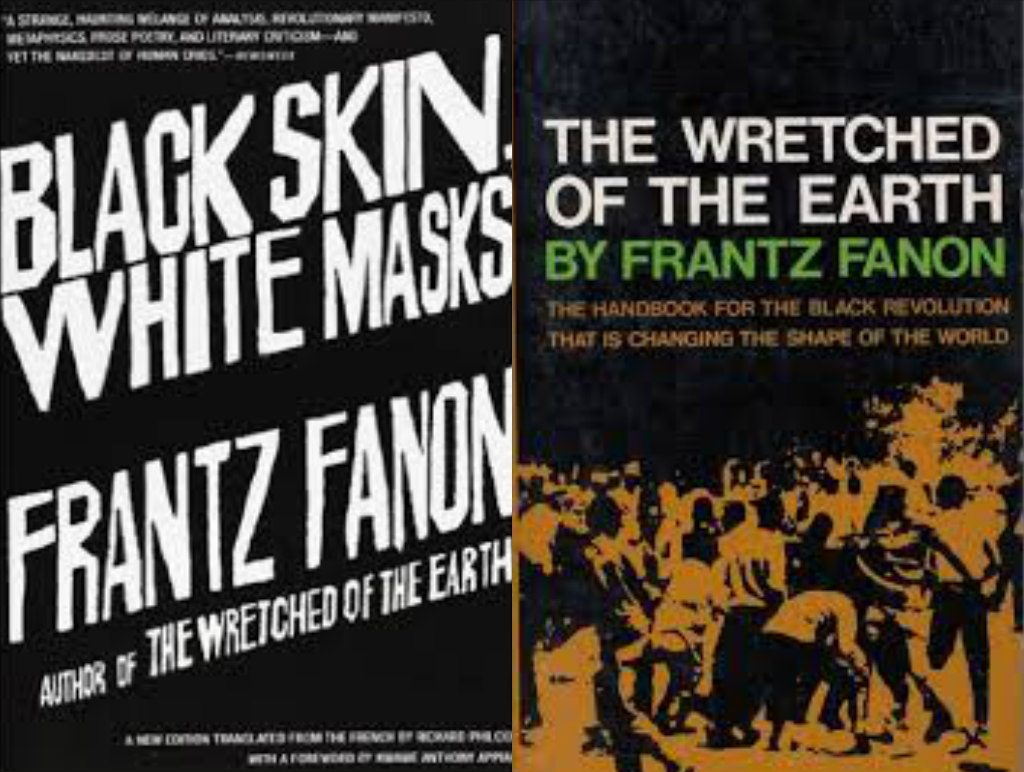
DOUBLE BOOK REVIEW: Black Skin, White Masks & The Wretched of the Earth by Frantz Fanon.

Frantz Fanon: The Revolutionary Mind of Black Liberation
Featuring Reviews of Black Skin, White Masks and The Wretched of the Earth


Who Was Frantz Fanon? Biography & Nationality

Frantz Omar Fanon was born on July 20, 1925, in Fort-de-France, Martinique, a French colony in the Caribbean. He was a Black psychiatrist, writer, revolutionary theorist, and anti-colonial activist. Fanon was of French nationality, since Martinique was a French territory, but he fiercely rejected colonial identity and became one of the most radical critics of French imperialism.

He grew up speaking French and was educated in the French system, but his experience as a Black man in a white-dominated society led him to reject colonial assimilation and instead advocate for African liberation.


His Marriage and Personal Life

Fanon married Josie (Marie-Josephe) Dublé, a white Frenchwoman, who was a nurse. This marriage sparked controversy, as Fanon wrote passionately against white colonialism and the psychological effects of internalized whiteness among Black people. Yet, he also saw personal relationships as complex and never viewed love solely through political binaries.

They had one son, Olivier Fanon.


His Language and Writing

Fanon wrote in French, and both of his major works have been translated into many languages, including English, Spanish, Arabic, and Portuguese, making his ideas accessible to freedom fighters and intellectuals around the world.


Life in Martinique and France: The Formation of a Revolutionary

Growing up in Martinique, Fanon was considered part of the Black middle class. However, he became deeply disillusioned with the racism of the French colonial structure, even in his homeland. He witnessed colorism, elitism, and a system that trained Black people to idolize whiteness.

He later moved to France to study psychiatry. As a young man, he fought in World War II for the Free French forces, believing in liberty and equality. But upon returning, he was met with the same anti-Black racism, even by those who had called him a fellow soldier. This double betrayal pushed him to rethink everything about colonialism, identity, and liberation.


Fanon wasn’t just a theorist; he joined the Algerian Revolution against French colonial rule, working as a psychiatrist and strategist for the National Liberation Front (FLN) in Algeria.

He treated Algerian fighters traumatized by war, and he exposed the use of torture by the French. His writings were not abstract—they were tools of war. The French authorities expelled him from Algeria for his radicalism, and he spent his remaining years helping liberation movements across Africa, including in Ghana and the Congo.


📘 Book Review: Black Skin, White Masks

⭐️⭐️⭐️⭐️⭐️

Published: 1952

Language: French (translated to English by Charles Lam Markmann)

Original Title: Peau Noire, Masques Blancs

This book is a psychological and philosophical dissection of what it means to be Black in a world built on white supremacy. Fanon dives deep into the Black psyche under colonialism, examining how racism shapes identity, self-worth, language, and love.

Key Messages and Themes:

  1. The Inferiority Complex of the Colonized:
    Black people, especially those educated in white systems, are taught to hate themselves and to wear “white masks” to be accepted.
  2. Language as a Tool of Oppression:
    Speaking French “well” became a way to be seen as civilized, but Fanon argued that this was a linguistic betrayal of self.
  3. Desire for Whiteness:
    Fanon was critical of Black men who sought white women to gain status, and Black women who rejected their own features for European beauty standards.
  4. Racism as a Mental Illness:
    He saw racism not just as social injustice but as a psychiatric condition—both for the oppressed and the oppressors.

“The Black man has no resistance against the white man’s culture. He becomes a mimic man.”
—Frantz Fanon, Black Skin, White Masks

🔥 Impact on the Black Psyche

The book shattered illusions. It revealed how colonialism invaded the mind, creating identity crises and self-hatred. It gave Black people language to understand their trauma and tools to decolonize the self.


📕 Book Review: The Wretched of the Earth

⭐️⭐️⭐️⭐️⭐️

Published: 1961 (just before his death from leukemia at age 36)

Translated by: Constance Farrington

Original Language: French

Introduction by: Jean-Paul Sartre

This is Fanon’s revolutionary manual, a blistering indictment of colonial violence and a blueprint for third-world liberation. Written from the frontlines of the Algerian War, it calls for armed struggle, psychological liberation, and national consciousness.

Key Messages and Chapters:

  1. “Violence is cleansing.”
    Fanon controversially argues that for the colonized to reclaim their dignity, violence is inevitable and purifying. It is how the oppressed reclaim agency.
  2. Mental Illness as a Colonial Weapon
    Fanon documents how colonial trauma causes paranoia, psychosis, and inferiority, especially among youth and fighters.
  3. Revolution Must Go Beyond Nationalism
    Independence is not enough. True liberation must dismantle capitalism, Western models of power, and Eurocentric values.
  4. Warning to Post-Colonial Elites
    Fanon criticized new African leaders who replaced white rulers but served the same Western interests, failing to uplift the masses.

“The colonized can see right away if decolonization is taking place or not. The minimum demand is for the colonized to govern their own country.”
—Frantz Fanon, The Wretched of the Earth


Why Was Fanon Revolutionary?

At a time when France still claimed moral superiority, Fanon exposed the brutality of its empire, tearing down illusions of liberal democracy. His insistence on psychological freedom, militant resistance, and cultural pride made him a hero to Black radicals and a threat to white colonial powers.


How Were Black People Seen in His Time?

In France and its colonies, Black people were exoticized, infantilized, and oppressed. They were taught that whiteness was superior, and “becoming French” was their highest goal. Fanon rejected this with rage and clarity.


Did His Light Skin Give Him Privilege?

Fanon was of mixed ancestry, and his relatively light skin may have given him closer access to French intellectual circles, but he rejected any identity built on proximity to whiteness. He used his position to amplify the pain and resistance of the oppressed, never to benefit personally.

His “je ne sais quoi” was not his skin—it was his brilliance, passion, and fearlessness.


What Was His Impact on Black People Worldwide?

Fanon inspired:

  • The Black Panther Party
  • South African anti-apartheid fighters
  • Caribbean and African revolutions
  • Black Lives Matter and global liberation movements
  • Scholars like bell hooks, Ngũgĩ wa Thiong’o, Angela Davis, and Malcolm X

His writings gave language to the rage and hope of colonized people and continue to empower those fighting white supremacy.


💡 Core Messages of Both Books

  • Colonialism is not just political—it is psychological.
  • Racism creates internalized hatred that must be unlearned.
  • Liberation requires both mental and physical decolonization.
  • Black identity must be rebuilt on truth, history, and cultural pride.
  • Freedom is not given—it must be seized.

Conclusion: The Fire That Still Burns

Frantz Fanon lived only 36 years, but he changed the world. He exposed the invisible chains in the Black mind and gave us tools to break them. His books are not just texts—they are weapons.

“Each generation must, out of relative obscurity, discover its mission, fulfill it, or betray it.”
—Frantz Fanon

Fanon fulfilled his mission. The question now is—will we fulfill ours?