Tag Archives: Civil Rights Movement

They Buried Us, But We Rose: A Journey Through Black History.

This photograph is the property of its respective owner.

Black history is a testament to endurance, resistance, and transformation in the face of systematic dehumanization. It is not merely a narrative of suffering, but a chronicle of a people who, despite being buried under centuries of oppression, continually rose with dignity, innovation, and strength.

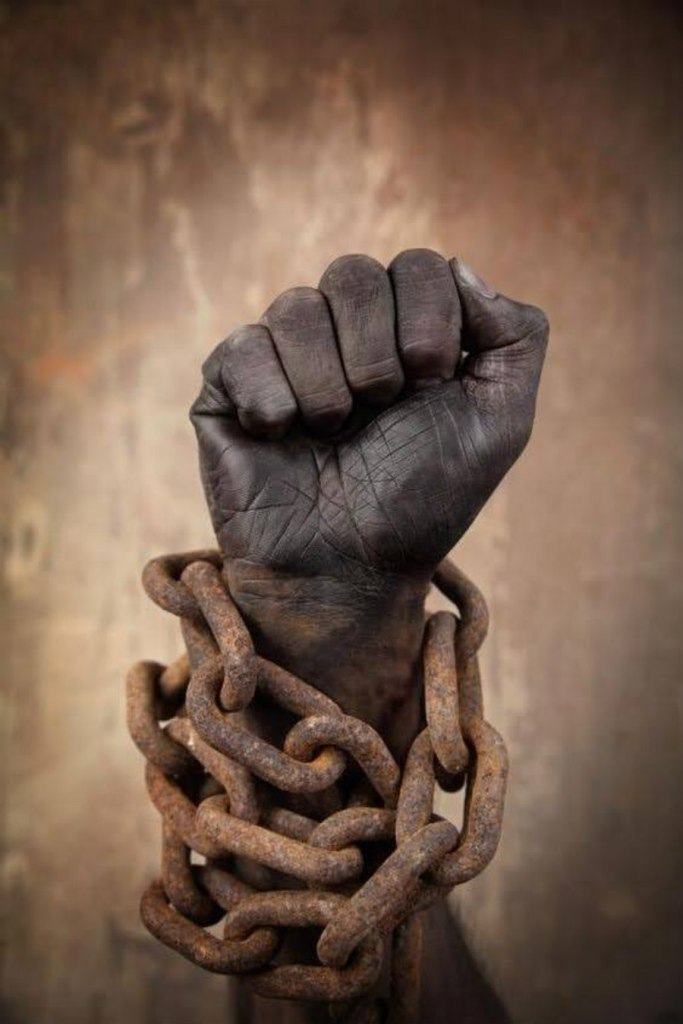
The journey begins with the Transatlantic Slave Trade, one of the most devastating forced migrations in human history. Millions of Africans were taken from their homelands, stripped of identity, language, and kinship, and thrust into a system designed to exploit their labor and erase their humanity.

Chattel slavery in the Americas institutionalized the idea that Black people were property rather than persons. Enslaved Africans were subjected to unimaginable violence, yet they preserved elements of their culture, spirituality, and communal identity, laying the groundwork for future resistance.

Resistance took many forms, from subtle acts of defiance to organized rebellions. Figures like Nat Turner led uprisings that challenged the institution of slavery, while others resisted through escape, sabotage, and the preservation of African traditions.

The abolition of slavery following the Civil War marked a significant turning point, yet freedom was incomplete. The Reconstruction era promised integration and equality, but these gains were quickly undermined by the rise of the Jim Crow Laws, which codified racial segregation and disenfranchisement.

During this period, Black Americans built institutions—churches, schools, and businesses—that served as pillars of community resilience. These institutions fostered education, leadership, and collective empowerment despite systemic barriers.

Violence remained a constant threat. Lynchings and racial terror were used to enforce white supremacy and suppress Black advancement. These acts were not isolated incidents but part of a broader system of control and intimidation.

The early twentieth century saw the rise of intellectual and cultural movements that redefined Black identity. Thinkers like W. E. B. Du Bois emphasized the importance of education and political engagement, while the Harlem Renaissance celebrated Black creativity and expression.

Migration also played a crucial role in reshaping Black history. The Great Migration saw millions of Black Americans move from the rural South to urban centers in the North and West, seeking economic opportunity and escape from racial violence.

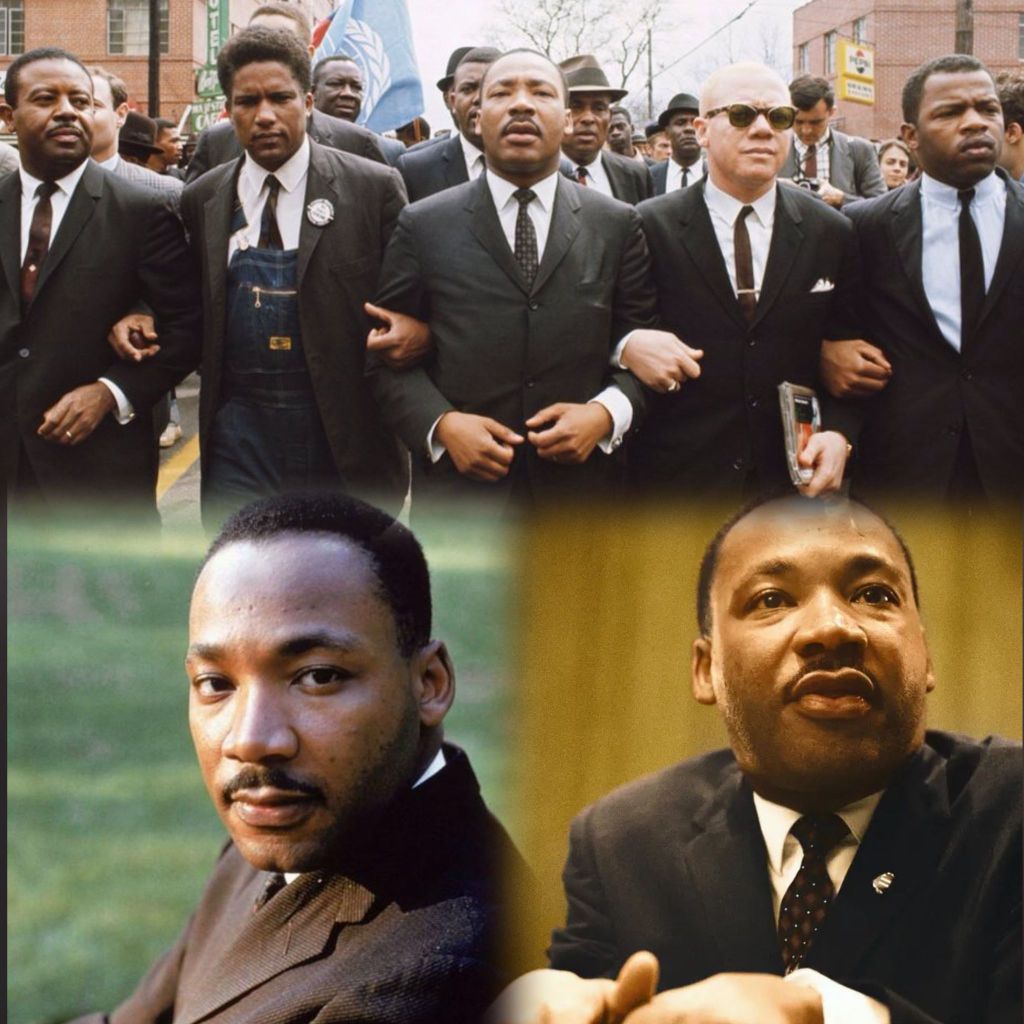
The mid-twentieth century marked the emergence of the Civil Rights Movement, a transformative period characterized by mass mobilization and demands for legal equality. Leaders such as Martin Luther King Jr. advocated for nonviolent resistance and justice.

Simultaneously, figures like Malcolm X called for Black empowerment, self-defense, and a reevaluation of identity beyond the constraints imposed by a racially oppressive society.

Legislative victories, including the Civil Rights Act of 1964 and the Voting Rights Act of 1965, marked significant progress. However, these achievements did not eradicate systemic racism or economic inequality.

The late twentieth century introduced new challenges, including mass incarceration, economic restructuring, and persistent educational disparities. These issues disproportionately affected Black communities, reinforcing cycles of disadvantage.

Scholars like Michelle Alexander have argued that the criminal justice system functions as a modern mechanism of racial control, echoing earlier systems of oppression.

Despite these challenges, Black culture has profoundly influenced global society. Music, literature, art, and language rooted in Black experiences have shaped mainstream culture, often without equitable recognition or compensation.

The resilience of Black women and men alike has been central to this journey. Figures such as Harriet Tubman exemplify courage and sacrifice, leading others to freedom and inspiring generations.

Faith and spirituality have also played a vital role. The Black church has historically served as a center for resistance, community organization, and moral guidance, reinforcing a sense of hope and purpose.

In the twenty-first century, movements such as Black Lives Matter have reignited global conversations about racial justice, police brutality, and systemic inequality. These movements continue the legacy of resistance established by earlier generations.

Black history is not confined to the past; it is a living, evolving narrative. It encompasses both the pain of oppression and the triumph of survival, reflecting the complexity of the Black experience.

To study Black history is to confront uncomfortable truths about power, privilege, and inequality. It challenges dominant narratives and calls for a more inclusive and accurate understanding of the past.

Ultimately, the story of Black history is one of rising despite being buried—of reclaiming identity, asserting humanity, and striving for justice. It is a testament to the enduring strength of a people who refused to be erased.


References

Alexander, M. (2010). The New Jim Crow: Mass incarceration in the age of colorblindness. The New Press.

Du Bois, W. E. B. (1903). The souls of Black folk. A.C. McClurg & Co.

Foner, E. (2014). Reconstruction: America’s unfinished revolution, 1863–1877. Harper & Row.

Franklin, J. H., & Higginbotham, E. B. (2010). From slavery to freedom: A history of African Americans. McGraw-Hill.

Gates, H. L. (2013). Life upon these shores: Looking at African American history, 1513–2008. Alfred A. Knopf.

Hine, D. C., Hine, W. C., & Harrold, S. (2006). The African-American odyssey. Pearson.

Kendi, I. X. (2016). Stamped from the beginning: The definitive history of racist ideas in America. Nation Books.

Wilkerson, I. (2010). The warmth of other suns: The epic story of America’s great migration. Random House.

We Are the Story America Cannot Edit

Black history in America has always been more than a chapter—it is the spine of the national narrative. Yet for centuries, this story has been edited, erased, softened, or rewritten to soothe the conscience of a nation deeply shaped by the labor, blood, and brilliance of a people it tried to silence. Still, despite redactions and revisions, the truth endures: we are the story America cannot edit.

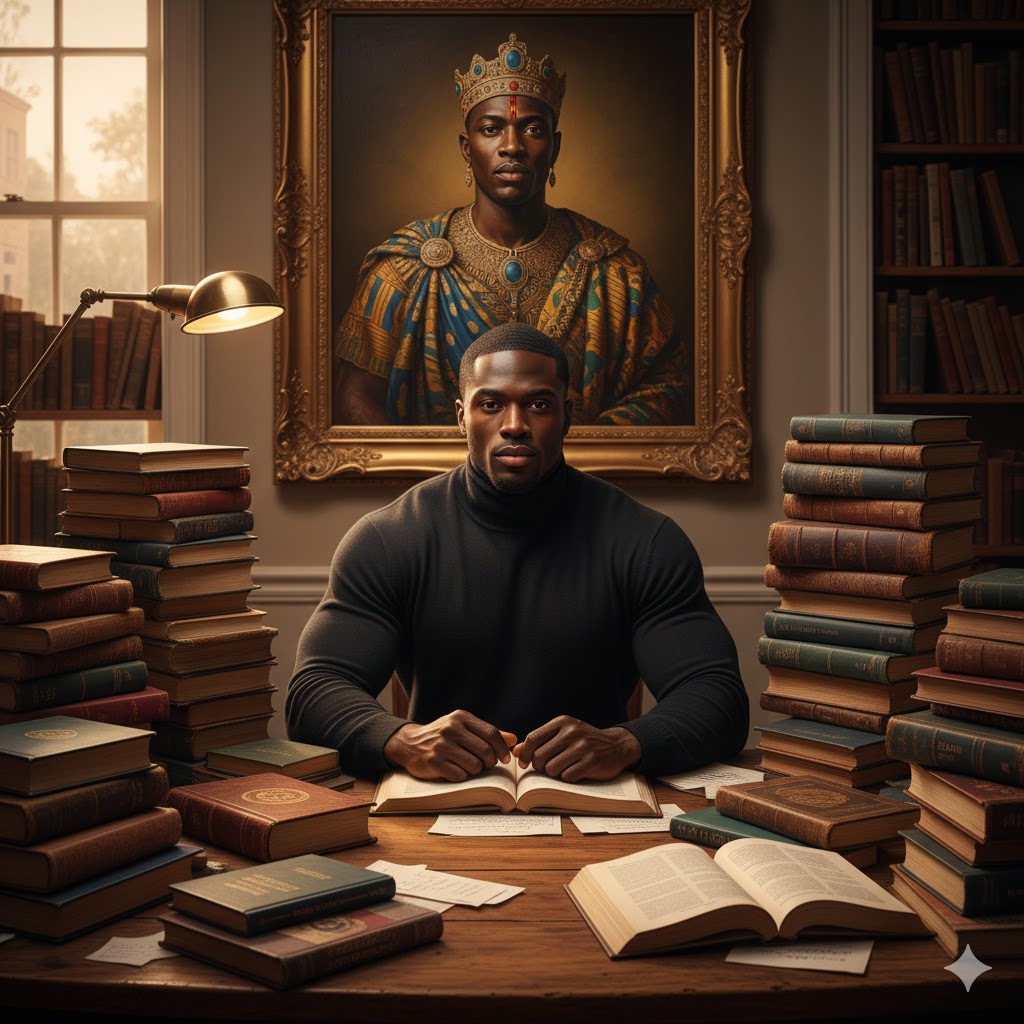
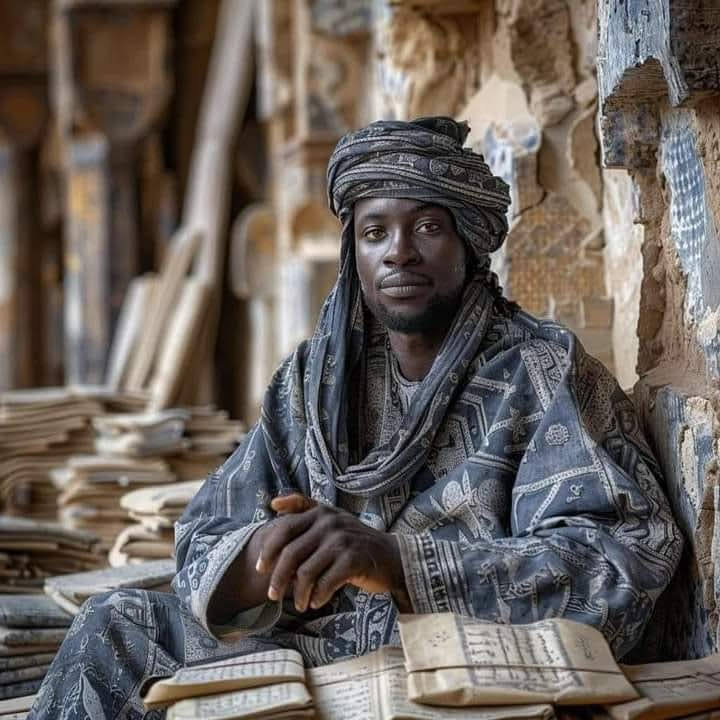
This story begins long before ships touched the Atlantic coast. It begins in African kingdoms where art, astronomy, architecture, and theology flourished. The brilliance of the ancestors did not begin in bondage; it began in royalty, innovation, and legacy. No revisionist textbook can erase the origins of a people whose civilizations helped advance global knowledge.

When the Middle Passage shattered families and scattered bodies across the ocean, America inherited a people it tried to dehumanize but could not destroy. The nation wrote laws to silence Black voices, but those voices survived. They survived in spirituals, in whispered prayers, in maroon communities, in the coded footsteps of escape routes carved in the night. The ink of this story was not blacklisted—it was carved in courage.

America tried to enslave people into subservience, but instead they became prophets, builders, warriors, and liberators. Harriet Tubman turned the Underground Railroad into a living testament of freedom. Frederick Douglass transformed literacy into a revolution. Sojourner Truth took the podium and shook the conscience of a country pretending not to hear her. These names refuse erasure.

The Civil War and Reconstruction wrote a brief chapter of possibility—Black senators, congressmen, teachers, and landowners rose swiftly. But America attempted another revision: Jim Crow. Segregation, lynching, and systemic disenfranchisement were designed to rewrite the Black story into one of subjugation. Yet the people refused the edits. Every protest, every church meeting, every organizing circle was a declaration that the pen of oppression could not overrule the pen of destiny.

The Civil Rights Movement authored a new wave of transformation. Martin Luther King Jr.’s dream, Malcolm X’s fire, Rosa Parks’ quiet firmness, and Fannie Lou Hamer’s thunderous truth-telling exposed the nation’s moral contradictions. Their lives demonstrate that Black people did not just endure history—they shaped it. They re-inked the American narrative with justice.

America has long tried to reduce Black identity to struggle, but Black culture refuses to be footnoted. Jazz, gospel, blues, soul, hip-hop, theatre, literature, and film—all are chapters written in brilliance, not brokenness. These art forms do not ask permission; they testify. They preserve memory. They uplift. They correct the historical record by embodying the power and creativity of a people the nation tried to underestimate.

Black resilience has always been inconvenient for America’s preferred storyline. It challenges myths of meritocracy, exposes the violence of past and present systems, and proves that progress was never given—only won. This is why so many attempts have been made to censor, dilute, or distort Black history. Yet truth has a way of resurfacing, even through the cracks of suppression.

The story America cannot edit also includes everyday heroes—grandmothers who kept families together, fathers who worked two and three jobs, children who dared to learn in schools that did not want them, freedom fighters whose names never made headlines, teachers who planted dreams in young minds, and church mothers who prayed communities through storms. These lives are sacred scripture for a people who built resilience into their DNA.

Even today, as political forces attempt to ban books, restrict curriculum, or sanitize the past, the story resists. Black scholars, artists, pastors, activists, and youth are documenting the truth in new ways—through digital archives, spoken word, classrooms, podcasts, and movements for justice. The story is not just preserved; it is expanding.

We are the story America cannot edit because our existence defies the narrative of inferiority that once dominated the national imagination. Every achievement in science, politics, sports, education, business, and ministry disproves the lies that once served as historical “facts.” Black excellence is not an anomaly—it is a continuation of ancestral greatness.

We are the story America cannot edit because the evidence is everywhere. It is in the economic foundation Black labor built. It is in the culture Black creativity shaped. It is in the democracy Black activism strengthened. It is in the global influence Black innovation commands. America has benefitted too deeply from Black genius to pretend it did not exist.

Our story remains uneditable because it is woven into Scripture as well as history. From Cush to Ethiopia, from the Queen of Sheba to the early church, the Bible itself records the presence, power, and purpose of African-descended people. The sacred text affirms what oppression tried to deny: that Blackness has always been part of God’s design and destiny.

We are the story America cannot edit because the truth is living, breathing, and continually unfolding. It shows up in every generation—Black children with brilliance in their eyes, Black elders carrying the wisdom of survivors, Black communities redefining strength, joy, and possibility.

Ultimately, America cannot edit what God Himself has preserved. The story of Black people is marked by divine protection, ancestral strength, and spiritual authority. It is a story of survival, transformation, and triumph. It is a story that exposes injustice but also reveals hope. It is a story bigger than slavery, bigger than segregation, bigger than racism.

We are the story America cannot edit because the truth is too powerful, too resilient, too sacred to be silenced. And as long as we continue to speak it, write it, live it, and teach it—the story will remain unaltered, unstoppable, and unforgettable.

References:
Exodus 1–3 (KJV); Psalm 68:31; Acts 8:27–39; Franklin, J. H. From Slavery to Freedom; Gates, H. L. The African Americans: Many Rivers to Cross; Hannah-Jones, N. The 1619 Project; Litwack, L. Trouble in Mind; Stevenson, B. Just Mercy; Anderson, C. White Rage; Raboteau, A. Slave Religion.

From Chains to Challenges: The Black Journey from Slavery to Modern Struggle.

The story of Black people in the Americas is a long arc of suffering, survival, and strength. Slavery was one of the most devastating atrocities in human history, yet it became the soil out of which resilience, culture, and faith blossomed. To understand where we stand today, we must revisit the beginning—how slavery started, how it ended, and what challenges remain in the present day. This narrative is not merely about the past; it is about the enduring struggle for freedom, dignity, and equality.

Black History Timeline: From Slavery to Modern Struggle

  • 1619 – First enslaved Africans arrive in Virginia, marking the beginning of chattel slavery in the English colonies.
  • 1863 – President Abraham Lincoln issues the Emancipation Proclamation, declaring enslaved people in Confederate states free.
  • 1865 – The 13th Amendment is ratified, officially abolishing slavery in the United States.
  • 1868 – The 14th Amendment grants citizenship and equal protection under the law to formerly enslaved people.
  • 1870 – The 15th Amendment grants Black men the right to vote.
  • 1896Plessy v. Ferguson Supreme Court decision establishes “separate but equal,” legalizing racial segregation.
  • 1954Brown v. Board of Education Supreme Court decision declares school segregation unconstitutional.
  • 1964 – The Civil Rights Act is passed, outlawing discrimination based on race, color, religion, sex, or national origin.
  • 1965 – The Voting Rights Act is signed into law, protecting Black Americans’ right to vote.
  • 2008 – Barack Obama is elected the first Black President of the United States.
  • 2013 – The Black Lives Matter movement is founded in response to police violence and systemic racism.
  • 2020 – Global protests erupt after the murder of George Floyd, sparking renewed calls for racial justice worldwide.

The transatlantic slave trade began in the 15th century when European powers discovered the economic potential of African labor for their colonies in the Americas. Enslaved Africans were kidnapped, sold, and shipped under brutal conditions across the Atlantic in what became known as the Middle Passage. Millions perished along the way, their bodies thrown overboard. Those who survived were forced into chattel slavery, treated as property with no rights, and subjected to physical abuse, family separation, and cultural erasure (Smallwood, 2007).

Slavery in the United States was particularly harsh because it was racialized and hereditary. The legal system ensured that children born to enslaved mothers were automatically slaves, cementing generational bondage (Baptist, 2014). Plantations thrived on cotton, sugar, and tobacco, and the wealth of the American South—and much of the North—depended on unpaid African labor. This institution became so entrenched that it divided the nation politically, socially, and economically.

Resistance was always present. Enslaved people rebelled in overt and covert ways, from uprisings like Nat Turner’s rebellion to everyday acts of defiance such as breaking tools, escaping via the Underground Railroad, or maintaining African traditions in music and religion. These acts of resistance preserved Black humanity and spirit even in the face of dehumanization (Berlin, 2003).

The formal end of slavery in the United States came with the Civil War (1861–1865). President Abraham Lincoln’s Emancipation Proclamation in 1863 declared freedom for enslaved people in Confederate states, though true liberation came only with the Union victory and the ratification of the 13th Amendment in 1865. Yet freedom was only partial—many enslavers resisted, and newly freed people faced systemic violence and oppression (Foner, 2014).

Reconstruction (1865–1877) was a critical but short-lived moment of hope. Freedmen’s schools were established, Black men gained the right to vote, and several Black politicians were elected to office. However, white supremacist backlash soon reversed these gains through Black Codes, sharecropping systems, and domestic terrorism by groups such as the Ku Klux Klan. Reconstruction’s collapse ushered in the era of Jim Crow segregation (Litwack, 1998).

Jim Crow laws legally enforced racial segregation, keeping Black Americans in a second-class status for nearly a century. Public spaces, schools, and neighborhoods were divided, with Black people denied equal access to education, housing, and voting rights. Lynchings became a tool of terror, and entire communities were burned to the ground, as in Tulsa’s 1921 massacre (Gates, 2019). Despite this, Black Americans built their own thriving institutions, from HBCUs to churches that became pillars of community life.

The Civil Rights Movement of the 1950s and 1960s was a turning point. Leaders like Martin Luther King Jr., Rosa Parks, and Malcolm X challenged racial injustice through marches, boycotts, and powerful speeches. Landmark victories included the Brown v. Board of Education decision (1954), the Civil Rights Act (1964), and the Voting Rights Act (1965). These legal changes dismantled de jure segregation, though de facto inequalities persisted (Branch, 1988).

Key Figures Who Made a Difference

  • Abraham Lincoln – Issued the Emancipation Proclamation and pushed for the 13th Amendment to abolish slavery.
  • Frederick Douglass – Escaped slave, abolitionist, writer, and orator who advocated for freedom and equality.
  • Harriet Tubman – Led hundreds to freedom through the Underground Railroad, symbolizing courage and liberation.
  • Sojourner Truth – Abolitionist and women’s rights advocate, known for her “Ain’t I a Woman?” speech.
  • W.E.B. Du Bois – Scholar and co-founder of the NAACP, championed civil rights and Pan-African unity.
  • Marcus Garvey – Advocated Black pride, economic independence, and Pan-Africanism.
  • Martin Luther King Jr. – Leader of the Civil Rights Movement, preached nonviolent resistance and racial equality.
  • Malcolm X – Spokesman for Black empowerment and self-defense, encouraged pride in African heritage.
  • Rosa Parks – Sparked the Montgomery Bus Boycott by refusing to give up her seat, inspiring nationwide action.
  • Thurgood Marshall – First Black Supreme Court Justice, fought segregation through legal challenges.
  • Ida B. Wells – Journalist and anti-lynching crusader, raised awareness of racial terror.
  • Barack Obama – First Black President of the United States, symbolizing progress and representation.

After the Civil Rights era, there were significant advances: greater representation in politics, the election of mayors, governors, and, eventually, President Barack Obama. Economic opportunities slowly expanded, but wealth disparities, mass incarceration, and systemic racism remained. The War on Drugs disproportionately targeted Black communities, leading to generations of Black men being imprisoned and families being destabilized (Alexander, 2010).

In today’s world, slavery no longer wears chains but manifests economically and psychologically. Financial bondage can be seen in predatory lending, wage disparities, and a lack of generational wealth. Black households, on average, hold a fraction of the wealth of white households due to historical exclusion from homeownership programs like the GI Bill and redlining practices (Oliver & Shapiro, 2006).

One of the clearest examples of modern-day economic slavery is student debt. Black students are more likely to take on loans for college and graduate with higher debt burdens than their white counterparts, limiting their ability to buy homes, invest, and build wealth (Scott-Clayton & Li, 2016). Education, once seen as a tool of liberation, can trap graduates in decades of repayment, mirroring the cycle of sharecropping debt from the Reconstruction era.

Prison labor is another form of present-day slavery. The 13th Amendment abolished slavery “except as punishment for crime,” allowing prisons to exploit incarcerated individuals for little to no pay. Many major corporations profit from prison labor, making mass incarceration an economic engine that disproportionately affects Black men (Davis, 2003). This system echoes the convict leasing programs of the late 19th century, where newly freed Black men were arrested for minor infractions and leased out to plantations and factories.

Corporate exploitation also plays a role in the new slavery. Many Black communities are targeted by payday lenders, fast-food chains, and predatory retailers who profit from economic desperation. Food deserts—neighborhoods with little access to fresh produce—force residents to rely on unhealthy options, contributing to poor health outcomes and reinforcing a cycle of dependency (Walker et al., 2010).

Employment discrimination continues to be a barrier. Studies have shown that resumes with “Black-sounding” names receive fewer callbacks than those with “white-sounding” names despite identical qualifications (Bertrand & Mullainathan, 2004). This systemic bias reinforces cycles of poverty and limits access to economic mobility.

Education remains a battleground. Predominantly Black schools often receive less funding, leading to fewer resources, overcrowded classrooms, and lower graduation rates. Yet, despite these challenges, Black students continue to excel, breaking barriers in academia, science, and entrepreneurship (Ladson-Billings, 2006).

Cultural slavery persists in the form of media stereotypes that shape perceptions of Black identity. From harmful tropes of the “thug” or “angry Black woman” to colorism within the Black community, these narratives influence hiring decisions, policing, and self-esteem. Representation in media, however, is slowly shifting, with more nuanced and empowering portrayals emerging.

Financial literacy has become a tool of modern liberation. Black entrepreneurs, activists, and educators are teaching about credit, investments, and ownership. Movements like #BuyBlack encourage the circulation of dollars within Black communities to build sustainable economic power (Anderson, 2017).

Social justice movements have reignited the fight against systemic oppression. These movements use technology and social media to expose police brutality, advocate for criminal justice reform, and mobilize global solidarity. The digital age has given new tools to an old struggle for freedom.

Spiritually, many in the Black community turn to faith as a source of endurance. Churches remain hubs for organizing, political activism, and community care. The Black church has historically been a place where the enslaved could sing freedom songs, where civil rights leaders could strategize, and where today’s generation continues to find hope.

Globally, the African diaspora faces similar challenges. In places like Brazil, the Caribbean, and the UK, Afro-descendant communities grapple with racial inequality, police violence, and underrepresentation. The struggle for Black liberation is international, linking us to a global human rights movement.

Despite the challenges, the Black journey is marked by incredible achievements in arts, science, sports, politics, and beyond. The cultural contributions of African Americans—from jazz to hip-hop, from literature to fashion—have transformed the world and redefined what it means to be resilient.

Today, being “enslaved” can also mean mental enslavement: internalized racism, self-hate, and the pursuit of material validation rather than true freedom. Breaking free requires education, healing, and a reorientation toward self-love and community empowerment.

This journey is not only about survival but about thriving. The legacy of slavery can be transformed into a legacy of greatness when knowledge, faith, and economic empowerment are combined. The fight is not over, but the foundation has been laid by those who came before us.


References
Alexander, M. (2010). The new Jim Crow: Mass incarceration in the age of colorblindness. The New Press.
Anderson, C. (2017). PowerNomics: The national plan to empower Black America. PowerNomics Corporation of America.
Baptist, E. (2014). The half has never been told: Slavery and the making of American capitalism. Basic Books.
Berlin, I. (2003). Generations of captivity: A history of African-American slaves. Harvard University Press.
Bertrand, M., & Mullainathan, S. (2004). Are Emily and Greg more employable than Lakisha and Jamal? American Economic Review, 94(4), 991–1013.
Branch, T. (1988). Parting the waters: America in the King years 1954-63. Simon & Schuster.
Davis, A. (2003). Are prisons obsolete? Seven Stories Press.
Foner, E. (2014). Reconstruction: America’s unfinished revolution, 1863-1877. Harper Perennial.
Gates, H. L. (2019). Stony the road: Reconstruction, white supremacy, and the rise of Jim Crow. Penguin Press.
Ladson-Billings, G. (2006). From the achievement gap to the education debt: Understanding achievement in U.S. schools. Educational Researcher, 35(7), 3–12.
Litwack, L. F. (1998). Trouble in mind: Black southerners in the age of Jim Crow. Vintage.
Oliver, M. L., & Shapiro, T. M. (2006). Black wealth/white wealth: A new perspective on racial inequality. Routledge.
Scott-Clayton, J., & Li, J. (2016). Black-white disparity in student loan debt more than triples after graduation. Brookings Institution.
Smallwood, S. (2007). Saltwater slavery: A middle passage from Africa to American diaspora. Harvard University Press.
Walker, R. E., Keane, C. R., & Burke, J. G. (2010). Disparities and access to healthy food in the United States: A review of food deserts literature. Health & Place, 16(5), 876–884.

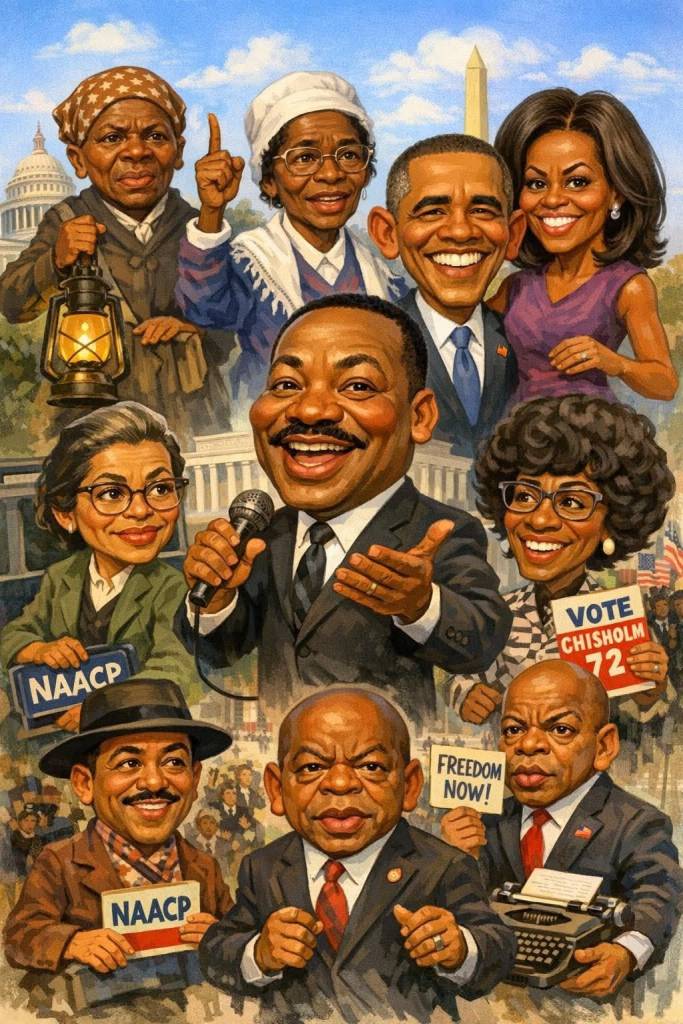
Martin Luther King Jr. Holiday

“Injustice anywhere is a threat to justice everywhere.” — Martin Luther King Jr.

Martin Luther King Jr. Day is a federal holiday in the United States dedicated to honoring the life, legacy, and moral leadership of Dr. Martin Luther King Jr., one of the most influential figures in American history. The holiday serves not only as a remembrance of a man, but as a national reflection on justice, equality, nonviolence, and the unfinished work of civil rights.

The holiday was officially established in 1983, when President Ronald Reagan signed it into law, and it was first observed nationally on January 20, 1986. The date was chosen to fall on the third Monday of January, close to King’s birthday on January 15. The creation of the holiday followed years of public advocacy, grassroots organizing, and political struggle, reflecting the very democratic processes King championed.

He was born on January 15, 1929, with the name Michael King Jr. His father was also born Michael King. In 1934, after a trip to Germany, King’s father was deeply inspired by the 16th-century Protestant reformer Martin Luther. As a result, he changed his own name to Martin Luther King Sr. and also changed his son’s name to Martin Luther King Jr. The change reflected a theological and spiritual admiration for Martin Luther’s stand against corruption and injustice within the church.

Although the name change was used publicly and professionally from that point forward, King Jr.’s birth certificate was not formally amended, meaning “Michael King Jr.” technically remained his legal birth name on record. This renaming carried symbolic weight. Just as Martin Luther challenged entrenched systems in his era, Martin Luther King Jr. would later challenge racial injustice and moral hypocrisy in America, making the name prophetically aligned with his life’s mission.

Dr. Martin Luther King Jr. was born on January 15, 1929, in Atlanta, Georgia, into a deeply rooted Black Christian family. His father, Martin Luther King Sr., was a Baptist minister, and his mother, Alberta Williams King, was an educator and church organist. From an early age, King was immersed in faith, scholarship, and the lived reality of racial segregation in the Jim Crow South.

King was a brilliant academic. He earned a Bachelor of Arts degree from Morehouse College, a Bachelor of Divinity from Crozer Theological Seminary, and a PhD in Systematic Theology from Boston University. His education shaped his ability to articulate moral arguments against racism, drawing from Christian theology, philosophy, and social ethics.

While studying in Boston, King met Coretta Scott, a gifted musician and intellectual in her own right. They married in 1953, forming a partnership rooted in faith, justice, and shared purpose. Coretta Scott King would later become a civil rights leader herself, preserving and advancing her husband’s legacy long after his death.

Together, Martin and Coretta King had four children: Yolanda Denise King, Martin Luther King III, Dexter Scott King, and Bernice Albertine King. Each child has, in various ways, contributed to the continuation of their father’s vision for justice, equity, and nonviolent social change.

King’s public career as a civil rights leader began in earnest in 1955 during the Montgomery Bus Boycott, sparked by Rosa Parks’ arrest. As a young pastor, King emerged as the spokesperson for a mass movement that successfully challenged segregation through disciplined, collective nonviolent resistance.

Central to King’s philosophy was nonviolence, deeply inspired by the teachings of Jesus Christ and the example of Mahatma Gandhi. King believed nonviolence was not passive submission but a powerful moral force capable of transforming enemies into allies and unjust systems into redeemed institutions.

King became a central figure in the Civil Rights Movement, helping to lead campaigns against segregation, voter suppression, economic injustice, and racial violence. He co-founded the Southern Christian Leadership Conference (SCLC) in 1957, which mobilized Black churches as engines of social change.

One of King’s most iconic moments came during the 1963 March on Washington, where he delivered the “I Have a Dream” speech. This address articulated a prophetic vision of America living up to its founding ideals, resonating across racial, religious, and national boundaries.

King’s activism played a crucial role in the passage of landmark legislation, including the Civil Rights Act of 1964 and the Voting Rights Act of 1965. These laws dismantled legal segregation and expanded democratic participation for millions of Black Americans.

In recognition of his moral leadership and commitment to peace, King was awarded the Nobel Peace Prize in 1964, becoming the youngest recipient at the time. He used the prize money to further the civil rights struggle, emphasizing collective responsibility over personal gain.

Despite his global recognition, King faced constant opposition, surveillance, and threats. He was criticized by segregationists, political leaders, and even some allies who viewed his stance against war and economic inequality as too radical.

On April 4, 1968, Dr. Martin Luther King Jr. was assassinated in Memphis, Tennessee, while standing on the balcony of the Lorraine Motel. He had traveled there to support striking sanitation workers, demonstrating his growing focus on labor rights and economic justice.

King was killed by James Earl Ray, who later pleaded guilty, though questions and controversies surrounding the assassination persist. King’s death sent shockwaves through the nation and the world, igniting grief, protests, and renewed calls for justice.

In the wake of his death, Coretta Scott King founded The King Center in Atlanta in 1968. The King Center serves as a living memorial, dedicated to education, research, and nonviolent social change, ensuring that King’s philosophy remains active rather than merely historical.

The campaign to establish Martin Luther King Jr. Day was led by activists, lawmakers, and artists, including Stevie Wonder, whose song “Happy Birthday” helped galvanize public support. After years of resistance, the holiday was finally recognized as a federal observance.

Martin Luther King Jr. Day is unique among U.S. holidays because it is designated as a National Day of Service, encouraging Americans to honor King’s legacy through volunteerism and community engagement rather than leisure alone.

Today, King’s legacy lives on through movements for racial justice, voting rights, economic equity, and global human rights. His writings, sermons, and speeches continue to inform scholars, activists, theologians, and policymakers across the world.

Dr. Martin Luther King Jr. is remembered not simply as a civil rights leader, but as a moral visionary whose life testified that love, justice, and courage can bend the arc of history toward righteousness when people are willing to stand, sacrifice, and believe.


References

Carson, C. (2001). The autobiography of Martin Luther King, Jr. New York, NY: Warner Books.

King, M. L., Jr. (1963). Why we can’t wait. New York, NY: Harper & Row.

King, M. L., Jr. (1964). Nobel Peace Prize acceptance speech. Oslo, Norway.

The King Center. (n.d.). The life of Dr. Martin Luther King, Jr. Atlanta, GA.

U.S. Office of Personnel Management. (n.d.). Martin Luther King Jr. Day. Washington, DC.

Carson, C. (2001). The autobiography of Martin Luther King, Jr. New York, NY: Warner Books.

Dilemma: Integration

Integration has long been presented as a moral victory and social cure for America’s racial sickness, yet for Black people it has often functioned as a double-edged sword. While access to public institutions increased, the cost was frequently the erosion of independent Black systems that had been built under segregation out of necessity and communal discipline. Integration promised equality but delivered exposure to structures that were never designed with Black flourishing in mind.

Before integration, Black communities cultivated parallel economies, educational institutions, and social networks that circulated wealth internally. Black-owned banks, schools, newspapers, and business districts were not merely economic centers but cultural strongholds. These spaces fostered dignity, self-determination, and accountability rooted in shared experience and survival.

Integration disrupted this ecosystem by redirecting Black dollars outward. When Black consumers were allowed to shop, bank, and educate elsewhere, Black-owned institutions were slowly starved of resources. What was framed as progress often resulted in dependency, not empowerment, as economic power shifted away from the community.

Scripture warns of the dangers of dependence on hostile systems. “The borrower is servant to the lender” (Proverbs KJV) speaks not only to individuals but to nations and communities. Integration without economic sovereignty placed Black communities in a perpetual position of borrowing access rather than owning infrastructure.

Historically, whenever Black people achieved visible prosperity, it was met with white backlash. The destruction of Black Wall Street in Tulsa and the massacre of Rosewood were not random acts of violence but calculated responses to Black success. Prosperity challenged the lie of Black inferiority, and that challenge was answered with terror.

These attacks reveal a deeper psychological conflict. Black excellence exposed the moral contradiction of white supremacy, creating fear that the racial hierarchy could not sustain itself if Black people thrived independently. Scripture acknowledges this dynamic when it states, “For every one that doeth evil hateth the light” (John KJV).

White women have historically played a critical role in triggering these violent outcomes, particularly through false accusations against Black men. The mythology of white female purity was weaponized to justify lynchings, massacres, and the destruction of entire communities. These narratives provided moral cover for economic and racial warfare.

The Bible repeatedly condemns false witness. “A false witness shall not be unpunished” (Proverbs KJV) underscores the spiritual gravity of lies that destroy lives and nations. Yet American history shows that these falsehoods were not only tolerated but rewarded when they reinforced racial dominance.

Integration did not dismantle this psychological framework; it merely relocated it. Black children integrated into hostile school environments often encountered lowered expectations, cultural erasure, and internalized inferiority. Black professionals integrated into white institutions faced glass ceilings and tokenism rather than true inclusion.

Meanwhile, Black communal discipline weakened. When survival no longer required collective responsibility, individualism replaced mutual obligation. Scripture emphasizes communal accountability: “Bear ye one another’s burdens” (Galatians KJV). Integration diluted this ethic by prioritizing access over unity.

The intimidation of Black prosperity remains visible today. Successful Black neighborhoods are frequently targeted for gentrification, policy neglect, or over-policing. Prosperity that cannot be controlled is perceived as a threat, echoing ancient patterns of dominance and suppression.

Biblically, this mirrors the experience of Israel in captivity, where prosperity among the oppressed provoked fear among the ruling class. “Behold, the people of the children of Israel are more and mightier than we” (Exodus KJV) reveals how growth among the oppressed is framed as danger by those in power.

The question, then, is not whether Black people can thrive, but under what conditions thriving is sustainable. History suggests that unity, ownership, and cultural coherence are essential. Prosperity without control invites exploitation; integration without power invites erasure.

Thriving requires rebuilding internal economies that circulate wealth within the community. Supporting Black-owned businesses, financial institutions, and educational initiatives restores economic leverage. Scripture affirms this principle: “Let us not be weary in well doing” (Galatians KJV), emphasizing long-term commitment.

Equally important is the restoration of narrative control. Black history, theology, and identity must be taught accurately and unapologetically. “My people are destroyed for lack of knowledge” (Hosea KJV) warns that ignorance is a tool of oppression.

Spiritual grounding is central to resilience. Faith provided enslaved Africans with a framework for dignity when the world denied their humanity. The same faith, rightly understood, can guide modern restoration through justice, wisdom, and discipline.

Thriving also demands discernment. Integration should be strategic, not sentimental. Scripture instructs, “Be ye wise as serpents, and harmless as doves” (Matthew KJV). Engagement with broader society must never come at the cost of sovereignty or truth.

The future of Black prosperity lies in reclaiming what integration weakened: unity, ownership, and purpose. Togetherness is not segregation; it is strategy. Independence is not hatred; it is self-respect.

Ultimately, the dilemma of integration forces a reckoning. Access without power is an illusion, and inclusion without protection is vulnerability. True progress emerges when Black people define success on their own terms, rooted in faith, history, and collective strength.

The path forward is neither isolation nor assimilation, but restoration. As scripture declares, “And ye shall know the truth, and the truth shall make you free” (John KJV). Freedom, for Black people, has always been tied to truth, unity, and the courage to build for ourselves.

References

The Holy Bible, King James Version. (1769/2017). Cambridge University Press.

Anderson, J. D. (1988). The education of Blacks in the South, 1860–1935. University of North Carolina Press.

Baldwin, J. (1963). The fire next time. Dial Press.

Baradaran, M. (2017). The color of money: Black banks and the racial wealth gap. Harvard University Press. https://doi.org/10.4159/9780674978535

Du Bois, W. E. B. (1903). The souls of Black folk. A.C. McClurg & Co.

Exodus 1:9–10 (King James Version).

Galatians 6:2, 9 (King James Version).

Hosea 4:6 (King James Version).

John 3:20; John 8:32 (King James Version).

Lemann, N. (1991). The promised land: The great Black migration and how it changed America. Alfred A. Knopf.

Litwack, L. F. (1998). Trouble in mind: Black southerners in the age of Jim Crow. Alfred A. Knopf.

Loewen, J. W. (2005). Sundown towns: A hidden dimension of American racism. The New Press.

Matthew 10:16 (King James Version).

Myrdal, G. (1944). An American dilemma: The Negro problem and modern democracy. Harper & Brothers.

Oklahoma Commission to Study the Tulsa Race Riot of 1921. (2001). Tulsa Race Riot: A report by the Oklahoma Commission. State of Oklahoma.

Proverbs 6:16–19; Proverbs 14:31; Proverbs 22:7 (King James Version).

Rothstein, R. (2017). The color of law: A forgotten history of how our government segregated America. Liveright Publishing.

Shapiro, T. M. (2004). The hidden cost of being African American: How wealth perpetuates inequality. Oxford University Press.

Taylor, K.-Y. (2016). From #BlackLivesMatter to Black liberation. Haymarket Books.

Washington, B. T. (1901). Up from slavery. Doubleday, Page & Company.

Williams, M. J., & Mohammed, S. A. (2009). Discrimination and racial disparities in health: Evidence and needed research. Journal of Behavioral Medicine, 32(1), 20–47. https://doi.org/10.1007/s10865-008-9185-0

Woodson, C. G. (1933). The mis-education of the Negro. Associated Publishers.

The Black Panther Party: Misunderstood Militancy and Community Empowerment

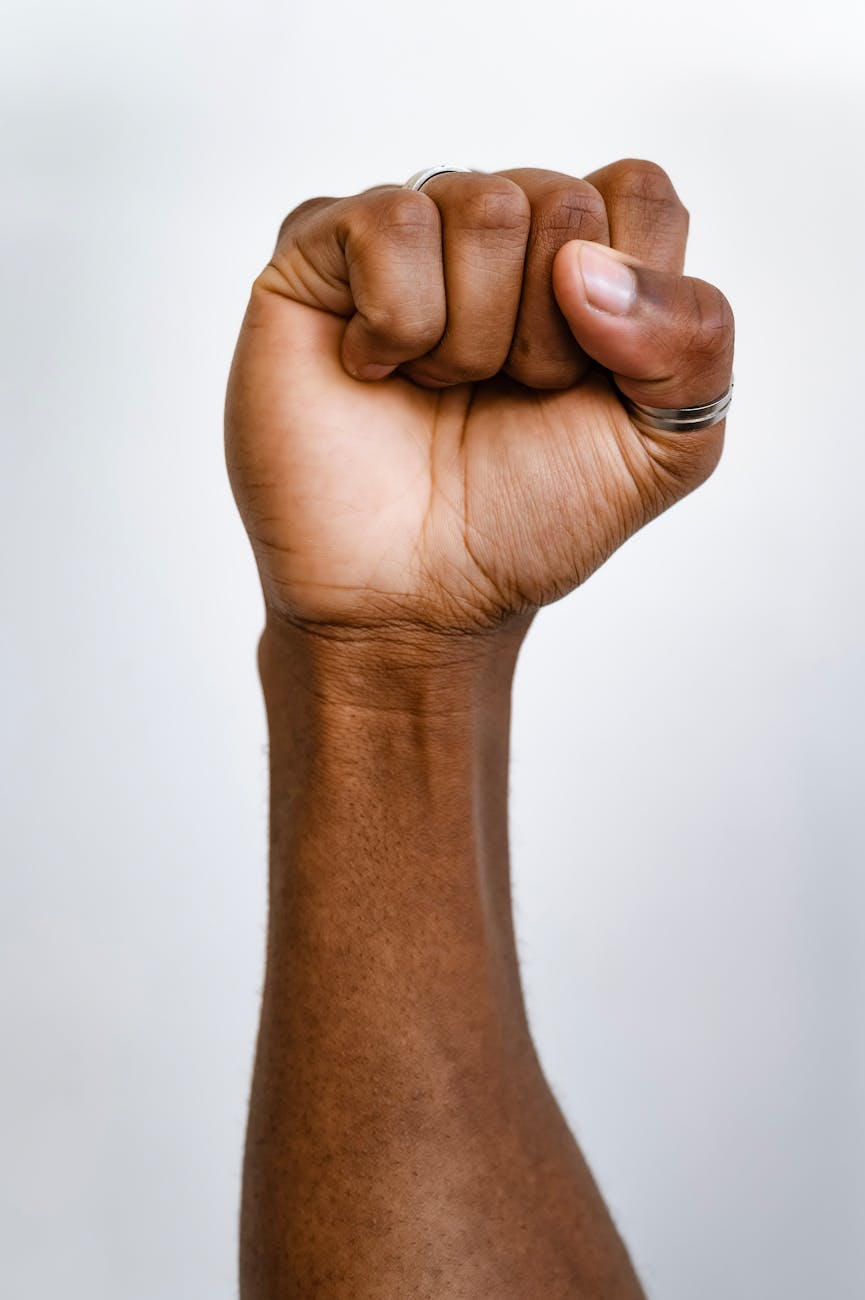
Photo by PNW Production on Pexels.com

The Black Panther Party (BPP), founded in October 1966 in Oakland, California, by Huey P. Newton and Bobby Seale, emerged as one of the most influential yet misunderstood Black liberation movements of the 20th century. Rooted in a philosophy of self-defense, the Party was a response to police brutality, systemic racism, and economic inequality. While critics labeled them a hate group, their primary mission was to protect and uplift the Black community, not to incite racial hatred. The BPP’s adoption of black clothing, leather jackets, and berets symbolized both unity and resistance, representing a visual statement against oppression rather than an embrace of violence.

Were They a Hate Group?

Labeling the BPP a hate group is inaccurate. They were motivated by anti-injustice, not hatred of white people. Instead, they demanded accountability for systemic oppression. That said, the FBI, under J. Edgar Hoover, dubbed them “the greatest threat to the internal security of the country” and launched COINTELPRO, a covert sabotage campaign involving surveillance, false charges, and infiltration intended to “neutralize” the BPP Wikipedia+1BlackPast.orgNPR.

The founders, Huey Newton and Bobby Seale, were both politically active students inspired by the teachings of Malcolm X, Frantz Fanon, and other revolutionary thinkers. Newton, born in Monroe, Louisiana, in 1942, moved to Oakland as a child and later studied law at Merritt College, where he met Seale. Seale, born in Dallas, Texas, in 1936, was an Air Force veteran and activist who believed in Black self-determination. Together, they developed the Ten-Point Program, which called for freedom, full employment, decent housing, education that exposed the true history of Black people, and an end to police brutality.

The BPP established over 60 community programs, including free breakfast programs for children, health clinics, and educational initiatives. These programs addressed systemic neglect and provided vital resources to underserved Black neighborhoods. However, their armed patrols to monitor police activities and their revolutionary rhetoric drew intense attention from law enforcement. The FBI, under J. Edgar Hoover, deemed the Panthers the “greatest threat to the internal security of the country” and initiated the COINTELPRO (Counter Intelligence Program) to infiltrate, disrupt, and dismantle the movement. This campaign included surveillance, infiltration, false arrests, and targeted violence against members.

Fred Hampton, one of the most charismatic BPP leaders, rose to prominence in Chicago for his coalition-building efforts across racial lines. Born in 1948, Hampton became known for his “Rainbow Coalition,” uniting Black, Latino, and poor white communities. His leadership was cut short when he was killed in a 1969 FBI-coordinated police raid at the age of 21. Huey Newton’s trajectory was also deeply marked by the struggle; after multiple arrests, exile in Cuba, and internal party conflicts, Newton eventually returned to Oakland but was killed in 1989.

Fred Hampton and the Fate of Revolution

Fred Hampton, chair of the Chicago chapter, exemplified community-driven Black Power. In 1968, he organized a “Rainbow Coalition” of diverse marginalized groups—Panthers, Puerto Rican Young Lords, and white Appalachian activists—building solidarity across racial lines BlackPast.orgBiography.

However, FBI infiltration (via informant William O’Neal) led to a lethal police raid on December 4, 1969, in which Hampton and fellow Panther Mark Clark were killed while sleeping. The raid exposed official misconduct and ultimately led to a $1.85 million civil settlement against the government for violating civil rights BlackPast.org+1BiographyWikipediaNational Archives.

The Black Panthers were often accused of being anti-white, but their mission targeted injustice, not individuals based on race. They collaborated with various progressive groups, including white allies who supported anti-racist causes. While some members had interracial relationships, including marriages to white women, the movement’s focus remained centered on dismantling systemic oppression. Martin Luther King Jr. and Malcolm X had differing relationships to the Panthers’ ideology—King generally supported nonviolence, while Malcolm X’s earlier advocacy for armed self-defense influenced Panther philosophy.

Public perception of the Black Panthers was polarized—mainstream media often depicted them as violent extremists, while Black communities saw them as defenders and providers. FBI files, now public, confirm the extent of government efforts to neutralize the Panthers through misinformation, surveillance, and assassination. Although the original BPP disbanded in the early 1980s, splinter groups and modern movements continue to draw inspiration from their principles, adapting their mission to today’s struggles against police violence and racial inequality.

Conclusion: Legacy & Present Impact

The Black Panther Party emerged as a revolutionary force rooted in self-defense, community service, and radical political ideology. Far from being a hate group, it sought justice for Black communities through social programs and public resistance. Targeted by COINTELPRO and law enforcement, leaders like Huey Newton and Fred Hampton made enduring impacts, even in death. Their legacy—fierce, complex, and instructive—remains vital to understanding resistance, governance, and identity.

After federal assaults and internal decline, the Party dissolved by 1982 WikipediaNational Archives. Today, the legacy of the Panthers continues through:

  • Panther cubs: children like Fred Hampton Jr. carry forward the spirit, though many also bear emotional and social burdens from surveillance and activism The Guardian.
  • Cultural resurgence: Films like Judas and the Black Messiah and series like The Big Cigar have reignited interest in their story TIME+1.

While some people question if members married outside race—there’s no notable record. The Black Panther name and uniforms (black clothing) symbolized solidarity, militancy, and Black pride, embracing African roots and resistance.


References

  • Bloom, J., & Martin, W. E. (2016). Black against empire: The history and politics of the Black Panther Party. University of California Press.
  • Federal Bureau of Investigation. (1976). COINTELPRO: The counterintelligence program against the Black Panther Party. U.S. Government Printing Office.
  • Hampton, F. (2009). The Assassination of Fred Hampton: How the FBI and the Chicago Police Murdered a Black Panther. Lawrence Hill Books.
  • Newton, H. P. (1973). Revolutionary suicide. Harcourt Brace Jovanovich.
  • Seale, B. (1991). Seize the time: The story of the Black Panther Party and Huey P. Newton. Black Classic Press.
  • Williams, J. P. (2013). “The Black Panther Party and Black self-defense.” Journal of African American History, 98(1), 48–71.

Britannica – Black Panther Party origin & founders Encyclopedia Britannica+1

HISTORY.com – Party formation, programs, decline HISTORY

Wikipedia – Details on ideology & FBI targeting Wikipedia+1

BlackPast.org & Biography.com – Fred Hampton biography and assassination BlackPast.orgBiography

National Archives – BPP records and description National Archives

Time & Apple TV+ – Huey Newton escape story (The Big Cigar) TIME+1

The Guardian – Panther cubs’ legacy The Guardian

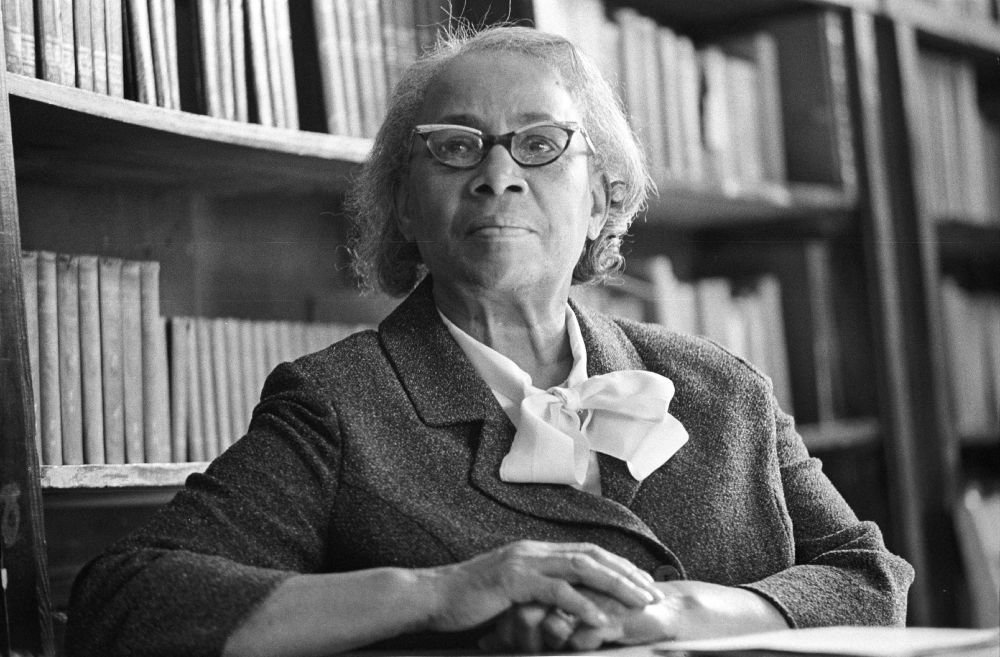
Septima Clark: The Mother of the Civil Rights Movement and Architect of Literacy Empowerment.

“I believe unconditionally in the ability of people to respond when they are told the truth. We need to be taught to study rather than believe, to inquire rather than to affirm.”Septima P. Clark

This photograph is the property of its respective owner. No copyright infringement intended.

Septima Poinsette Clark is often referred to as “The Mother of the Civil Rights Movement” because of her tireless efforts to blend education with grassroots activism. Her life was devoted to dismantling systemic barriers that excluded Black Americans from full participation in civic life. Clark believed that true freedom could not exist without literacy, and she spent her lifetime proving that education was the most powerful weapon against oppression.

Born on May 3, 1898, in Charleston, South Carolina, Septima was the daughter of a washerwoman and a former enslaved father who emphasized dignity and self-respect. Despite segregationist laws barring her from higher education opportunities in the South, she pursued teaching at the Avery Normal Institute and later advanced her studies at Columbia University and Benedict College. Her family background, particularly her mother’s insistence on hard work and her father’s resilience, shaped her commitment to justice and service (Charron, 2009).

Clark’s vision extended beyond the classroom. She understood that systemic racism was not only about physical segregation but also about intellectual deprivation. She founded and expanded Citizenship Schools, grassroots institutions designed to teach African Americans literacy skills so they could pass the literacy tests required for voter registration. These schools became essential in dismantling Jim Crow voter suppression, transforming ordinary men and women into empowered citizens ready to claim their constitutional rights (Clark, 1986).

Her collaborations with leading organizations and figures in the Civil Rights Movement amplified her reach. Clark worked with the NAACP, where she campaigned for equal pay for Black teachers, and with the Highlander Folk School, which became a training ground for activists such as Rosa Parks. She later partnered with the Southern Christian Leadership Conference (SCLC) under Martin Luther King Jr., spreading the Citizenship Schools across the South. In these partnerships, Clark blended her quiet strength with bold strategies, proving that the foundation of mass movements lies in community education (Payne, 1995).

Clark’s achievements were numerous and groundbreaking. She successfully challenged laws that denied Black teachers tenure in Charleston. She helped create a model of civic education that was adopted nationwide. In recognition of her contributions, President Jimmy Carter awarded her the Living Legacy Award in 1979, and she received the Martin Luther King Jr. Nonviolent Peace Prize in 1987. Her lifelong commitment to education, justice, and equality earned her recognition as one of the movement’s most influential yet often overlooked leaders.

Septima Clark’s legacy lies in the simple yet revolutionary idea that teaching literacy is teaching liberation. She understood that the right to vote was meaningless without the knowledge to exercise it. By empowering thousands of African Americans to read, write, and participate in democracy, she dismantled one of the most insidious barriers of segregation. Her life’s purpose was not only to fight oppression but to create a generation of leaders who could continue the work of justice. For this reason, Clark remains indispensable to the history of civil rights and to the enduring struggle for Black freedom.


📚 References

  • Clark, S. P. (1986). Ready from Within: Septima Clark and the Civil Rights Movement. Wild Trees Press.
  • Charron, K. M. (2009). Freedom’s Teacher: The Life of Septima Clark. University of North Carolina Press.
  • Payne, C. M. (1995). I’ve Got the Light of Freedom: The Organizing Tradition and the Mississippi Freedom Struggle. University of California Press.
  • National Women’s History Museum. (n.d.). Septima Poinsette Clark. Retrieved from https://www.womenshistory.org

MALCOLM X vs MARTIN LUTHER KING JR.

✊🏽 Two Prophets, One Struggle for Black Liberation

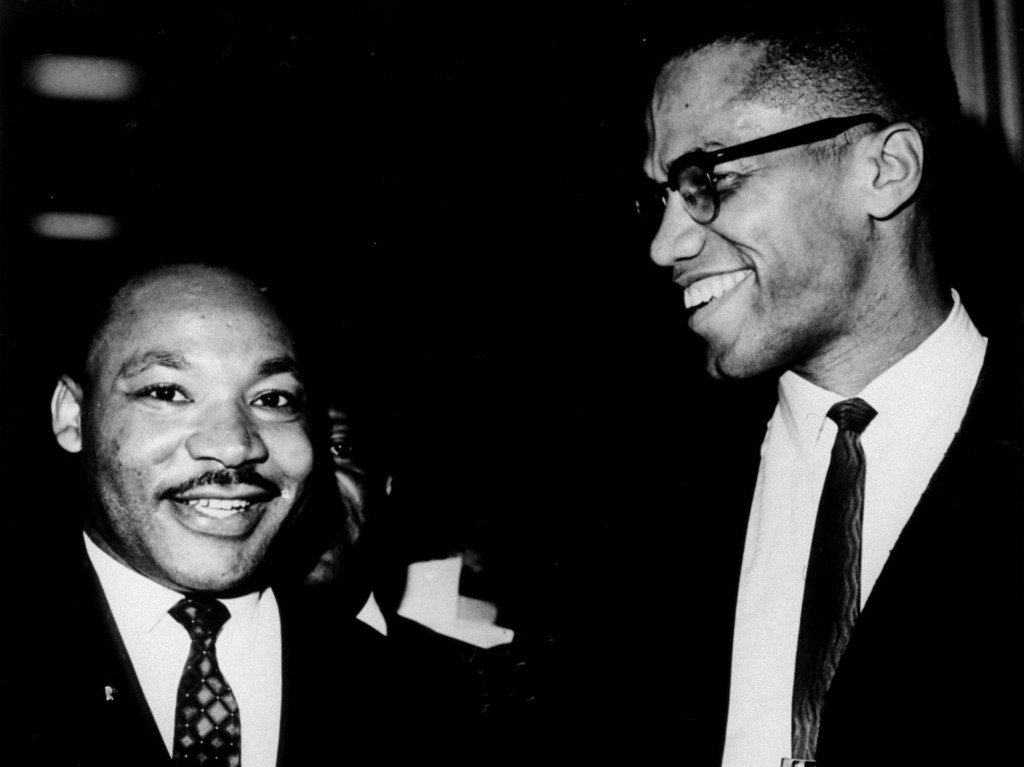
(AP Photo/Henry Griffin)

In the pantheon of American civil rights icons, two names shine with unrelenting brilliance: Malcolm X and Dr. Martin Luther King Jr. Though often cast as ideological opposites—one the militant voice of self-determination, the other the peaceful champion of integration—both men were fearless visionaries who dedicated their lives to the liberation and dignity of African Americans. Despite their differences in theology, rhetoric, and strategy, both stood at the frontline of a nation grappling with racism, injustice, and the unfulfilled promise of democracy.


🕋 Malcolm X: The Firebrand of Black Nationalism

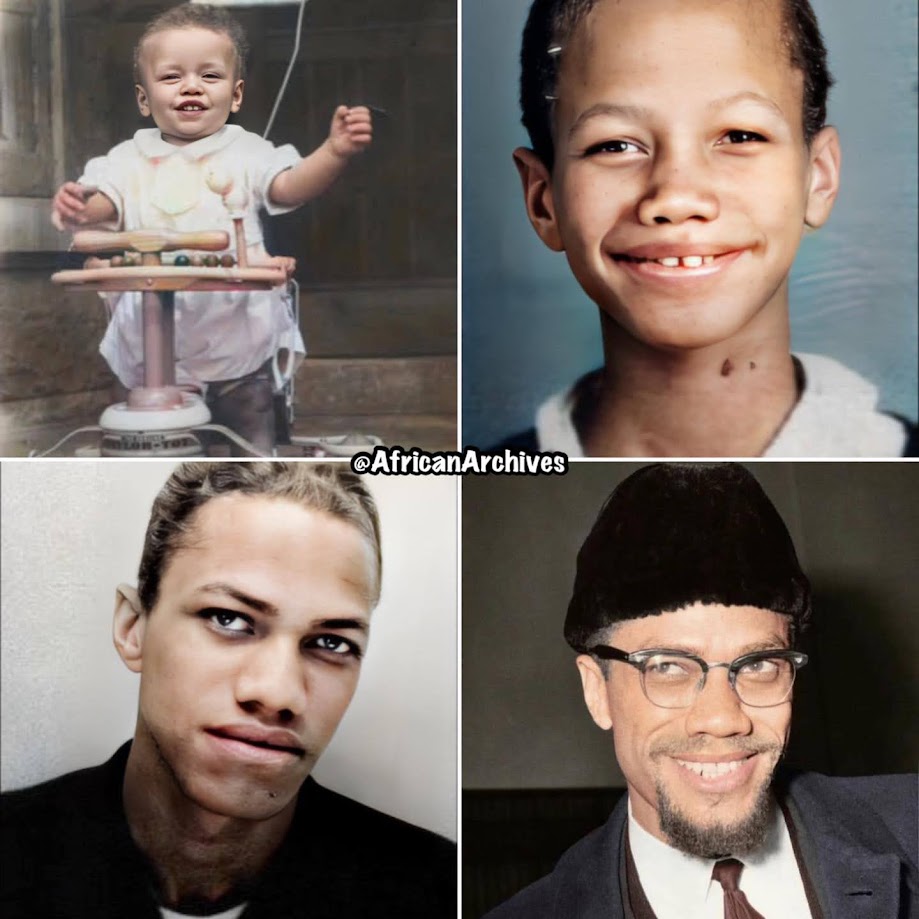
Malcolm X was born Malcolm Little on May 19, 1925, in Omaha, Nebraska. The son of a Baptist preacher and Garveyite activist, Malcolm was introduced early to the power of Black pride. However, after the tragic death of his father and institutionalization of his mother, Malcolm’s youth spiraled into crime and incarceration. While in prison, he encountered the teachings of the Nation of Islam (NOI), a Black nationalist and religious movement led by Elijah Muhammad. Renouncing his surname—“Little”—as a slave name, Malcolm adopted “X” to represent his lost African ancestry.

Through the NOI, Malcolm preached racial pride, economic self-reliance, and Black separation from white society. He famously called for Black liberation “by any means necessary”, advocating self-defense rather than passive resistance. At a time when police brutality and lynchings plagued Black communities, Malcolm X’s unapologetic stance resonated deeply.

Malcolm X’s views were complex and evolving. While he initially condemned interracial relationships, later in life, after breaking with the Nation of Islam and making a pilgrimage to Mecca in 1964, he saw Muslims of all races united in faith. This broadened his worldview and led him to embrace Pan-Africanism and human rights advocacy, softening his stance toward whites.

On Black women, Malcolm once declared:

“The most disrespected person in America is the Black woman. The most unprotected person in America is the Black woman.” (Malcolm X, 1962)

This powerful quote reflected his growing recognition of Black women’s roles in the liberation struggle.

He was married to Betty Shabazz, with whom he had six daughters. Tragically, Malcolm X was assassinated on February 21, 1965, in Harlem’s Audubon Ballroom, just as he was forming the Organization of Afro-American Unity, a non-religious group focused on global Black solidarity.


✝️ Dr. Martin Luther King Jr.: The Apostle of Peace and Justice

Born Michael Luther King Jr. on January 15, 1929, in Atlanta, Georgia, he later changed his name to Martin in honor of the German Protestant reformer. Raised in the heart of the Black church, Martin became a Baptist minister and theologian steeped in the Christian doctrine of love, peace, and redemption.

King earned his doctorate in theology from Boston University and emerged as the leader of the Montgomery Bus Boycott in 1955 after Rosa Parks’ arrest. He founded the Southern Christian Leadership Conference (SCLC) and promoted nonviolent civil disobedience inspired by the teachings of Jesus Christ and Mahatma Gandhi.

He once wrote:

“Darkness cannot drive out darkness; only light can do that. Hate cannot drive out hate; only love can do that.” (King, Strength to Love, 1963)

King’s message appealed to the moral conscience of America. He led monumental events like the March on Washington in 1963, where he delivered his iconic “I Have a Dream” speech.

King was married to Coretta Scott King, and they had four children. While widely revered today, King was labeled a radical in his time. After his death in 1968, newly released FBI files alleged moral failings and adultery, but these accusations remain controversial and heavily debated for their lack of verifiable evidence and the FBI’s notorious attempts to discredit him (Garrow, 1986).


⚖️ Christianity vs. Nation of Islam

The theological differences between the men mirrored the ideological divides of their movements:

  • Christianity, as King practiced, preached forgiveness, integration, and universal brotherhood.
  • The Nation of Islam, as Malcolm embraced in his early years, preached Black supremacy, self-sufficiency, and a theological rejection of white society as inherently evil.

While King saw America as a nation to be redeemed, Malcolm often saw it as irredeemable.


🤝🏿 Did They Respect Each Other?

Though they met only once briefly in 1964, both Malcolm and Martin acknowledged the other’s sincerity and impact. Initially, Malcolm criticized King’s nonviolence as submissive. However, toward the end of his life, Malcolm expressed admiration for King’s commitment and bravery. After Malcolm’s assassination, King said:

“Malcolm X was a brilliant man who had great insight and was an eloquent spokesman for his point of view…I think he had a great ability to analyze the problem.”


👑 What Did They Do for Black People?

  • Malcolm X gave voice to the voiceless, empowering Black people to see themselves as valuable, independent, and sovereign. He introduced terms like “Afro-American” and made “Black is Beautiful” a political statement.
  • Martin Luther King Jr. was instrumental in achieving civil rights legislation, including the Civil Rights Act of 1964 and the Voting Rights Act of 1965, transforming American society through legal and moral change.

🌍 Views on America, Racism, and Africa

  • Malcolm X denounced America’s hypocrisy, calling it a “prison of the oppressed.” After his hajj to Mecca, he embraced a broader global view, saying, “I am not a racist. I am against every form of racism and segregation.”
  • King believed America could live up to its promise if it was held accountable. He said, “I have a dream that one day this nation will rise up and live out the true meaning of its creed.”

Both men viewed Africa as central to Black identity and liberation. Malcolm made alliances with African leaders, while King supported African independence movements.


👶🏾 Wives and Children

  • Malcolm X and Betty Shabazz had six daughters, including the late activist Malikah Shabazz.
  • Martin Luther King Jr. and Coretta Scott King had four children, including Bernice King, a prominent speaker and activist.

🏁 Final Thought: Who Had the Better Message?

This question defies easy answers. Malcolm X gave us the courage to stand tall. Martin Luther King Jr. taught us the power of enduring love. Together, they represented two wings of the same freedom bird. One cried out in righteous anger; the other marched with patient hope. But both demanded that Black people be seen, respected, and free.


📚 References

  • Garrow, D. J. (1986). Bearing the Cross: Martin Luther King, Jr., and the Southern Christian Leadership Conference. William Morrow & Co.
  • Malcolm X & Haley, A. (1965). The Autobiography of Malcolm X. Grove Press.
  • King, M. L. Jr. (1963). Strength to Love. Harper & Row.
  • Marable, M. (2011). Malcolm X: A Life of Reinvention. Viking.
  • Cone, J. H. (1991). Martin & Malcolm & America: A Dream or a Nightmare. Orbis Books.
  • Nation of Islam. (n.d.). Official Website. http://www.noi.org
  • The King Center. (n.d.). Biography of Dr. Martin Luther King Jr. http://www.thekingcenter.org