Tag Archives: Chosen

The Chosen Ones Series: The Battles That The Most High God told You to Avoid.

For those who believe they are called, appointed, or set apart by God, life often comes with a heightened awareness of spiritual responsibility. Many individuals who walk a faith-centered path feel compelled to intervene in every conflict, defend every injustice, and solve every problem they encounter. Yet scripture repeatedly teaches that not every battle belongs to us. Some conflicts are spiritual tests of restraint, humility, and trust in divine justice.

The Bible reminds believers that God Himself is the ultimate judge and avenger. In a world filled with offense, betrayal, and misunderstanding, the temptation to retaliate or defend one’s honor can be powerful. However, spiritual maturity requires the discipline to release personal revenge and allow God to act according to His perfect will and timing.

Personal revenge may feel justified when someone has been wronged, but scripture clearly warns against it. The human desire to settle scores can easily lead to bitterness, anger, and destructive cycles of retaliation. The Apostle Paul instructed believers to resist this urge and instead trust that God sees every injustice.

In Romans 12:19, the Apostle Paul writes, “Dearly beloved, avenge not yourselves, but rather give place unto wrath: for it is written, Vengeance is mine; I will repay, saith the Lord.” This passage reminds believers that retaliation is not their responsibility. Divine justice operates beyond human perception, and God ultimately restores balance in ways people cannot.

Many spiritual people exhaust themselves trying to prove their worth to others. Seeking approval, admiration, or validation from people can become a quiet spiritual trap. When individuals base their identity on the opinions of others, they become emotionally dependent on external affirmation.

The desire for admiration often stems from a deeper need for acceptance and belonging. Social media culture, public recognition, and societal pressures encourage people to measure their value through applause and popularity. Yet spiritual identity is not determined by human approval but by divine purpose.

Jesus Himself warned against living for public admiration. In Matthew 6:1, He cautioned His followers to avoid performing acts of righteousness merely to be seen by others. Faith, according to Christ, is meant to be genuine and sincere, not a performance for applause.

People pleasing can quietly drain the spirit. When a person constantly adjusts their behavior to keep everyone happy, they sacrifice their own emotional and spiritual well-being. This cycle creates exhaustion because no human being can satisfy every expectation placed upon them.

Those who feel spiritually chosen often believe they must carry everyone’s burdens. They feel responsible for fixing every broken situation, mediating every conflict, and rescuing others from their problems. While compassion is a noble quality, assuming the role of savior for everyone is neither healthy nor biblical.

Scripture teaches that God alone is the ultimate burden bearer. Believers are called to help others, but they are not responsible for solving every problem. Attempting to carry burdens that belong to God often leads to burnout, anxiety, and spiritual fatigue.

Jesus invites believers to release their burdens in Matthew 11:28 when He says, “Come unto me, all ye that labour and are heavy laden, and I will give you rest.” This invitation reflects a central principle of faith: God does not expect His followers to carry the weight of the world alone.

The battle of self often proves more difficult than conflicts with others. Internal struggles such as pride, insecurity, and the need for validation can become spiritual obstacles. These inner battles require humility and self-reflection rather than confrontation with others.

Many conflicts that people engage in are rooted in ego rather than righteousness. The need to prove oneself right, defend reputation, or win arguments often disguises itself as moral courage. In reality, these battles can distract believers from their spiritual calling.

Wisdom involves discerning which battles are worth fighting. The Book of Proverbs frequently emphasizes restraint, teaching that wise individuals avoid unnecessary conflict. Silence, patience, and humility can often be more powerful than confrontation.

In Proverbs 20:3, scripture declares, “It is an honour for a man to cease from strife: but every fool will be meddling.” This verse highlights the virtue of restraint. Walking away from certain conflicts is not weakness but wisdom.

Another draining battle is the constant need to explain oneself. People often feel pressured to justify their decisions, beliefs, or boundaries to everyone around them. Yet spiritually grounded individuals understand that not everyone will understand their path.

Jesus Himself faced misunderstanding and criticism throughout His ministry. Despite this, He did not spend His time trying to win over every skeptic or satisfy every critic. Instead, He remained focused on His mission.

When individuals attempt to gain universal approval, they often lose sight of their purpose. The Apostle Paul acknowledged this tension in Galatians 1:10 when he wrote that seeking the approval of people rather than God would make him a servant of men rather than a servant of Christ.

Another hidden battle is the pressure to always be strong for others. People who are viewed as spiritually mature or emotionally resilient are often expected to carry the emotional weight of everyone around them. This expectation can become overwhelming.

Even the strongest spiritual leaders needed rest and solitude. Throughout the Gospels, Jesus frequently withdrew from crowds to pray and restore His strength. These moments reveal that spiritual renewal requires intentional withdrawal from constant demands.

Trying to fight battles that do not belong to you can drain both emotional energy and spiritual clarity. When individuals become entangled in every conflict around them, they lose the ability to focus on their own spiritual growth.

Boundaries are essential for spiritual health. Recognizing which battles belong to you and which belong to God requires discernment and humility. Not every injustice requires your intervention.

There are moments when silence is more powerful than argument. Walking away from conflict allows God to intervene in ways that human confrontation cannot achieve.

Spiritual wisdom involves trusting God’s timing. Immediate retaliation may feel satisfying, but divine justice often unfolds in ways that require patience and faith.

When believers release the need for revenge, validation, and approval, they experience freedom. Their identity becomes rooted in God rather than the shifting opinions of others.

Learning to surrender battles to God requires faith. It involves trusting that God sees every injustice, hears every prayer, and understands every hidden struggle.

The process of surrender is not passive; it is an act of spiritual discipline. It requires resisting the urge to intervene where God has instructed patience.

When individuals stop fighting unnecessary battles, they conserve their strength for the battles that truly matter—those involving justice, truth, faith, and righteousness.

Peace often arrives when people release the need to control outcomes. By allowing God to carry burdens that were never meant for human shoulders, believers experience spiritual clarity and emotional relief.

Ultimately, the chosen path is not about fighting every battle but about discerning the ones God has called you to face. Some battles are meant to be fought with courage, while others are meant to be surrendered in faith.

The wisdom of the faithful lies in knowing the difference.


References

The Holy Bible, King James Version.

Cloud, H., & Townsend, J. (2017). Boundaries: When to Say Yes, How to Say No to Take Control of Your Life. Zondervan.

Peterson, E. H. (2002). The Message: The Bible in Contemporary Language. NavPress.

Willard, D. (1998). The Divine Conspiracy: Rediscovering Our Hidden Life in God. HarperOne.

Smedes, L. B. (1996). Forgive and Forget: Healing the Hurts We Don’t Deserve. HarperOne.
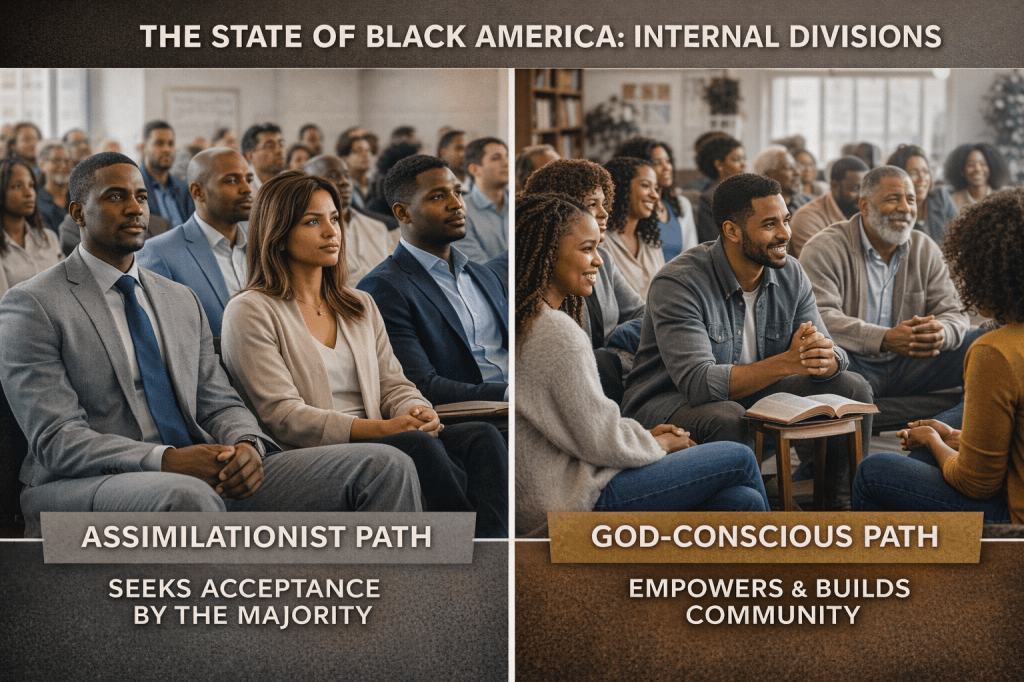
2 Paths Within the Black Community: Assimilation, Identity, and God-Conscious Restoration

Throughout history, oppressed communities have wrestled with two primary survival responses: assimilation into the dominant power structure or resistance through identity preservation and collective empowerment. Within the African American experience in the United States, this tension has manifested in visible ideological and behavioral distinctions shaped by slavery, segregation, systemic racism, and theological interpretation.

The legacy of American chattel slavery created not only economic devastation but psychological fractures. Scholars such as Frantz Fanon (1967) argued that colonized people often internalize the worldview of the colonizer as a survival mechanism. This internalization can result in identification with the dominant culture as a means of perceived safety or advancement.

In the American context, the character “Uncle Tom,” from Harriet Beecher Stowe’s novel Uncle Tom’s Cabin, became a cultural symbol—though often misinterpreted—of perceived submission to white authority. Over time, the term evolved into a pejorative label describing individuals believed to prioritize white approval over communal solidarity.

Assimilation, however, must be examined sociologically rather than emotionally. Sociologist W.E.B. Du Bois described “double consciousness” as the tension Black Americans feel between their African heritage and American citizenship (Du Bois, 1903). For some, minimizing racial conflict or denying systemic racism is not necessarily ignorance but an adaptation strategy shaped by generational trauma.

Research in racial identity development theory, particularly by William E. Cross Jr., shows that Black identity formation progresses through stages. Some individuals remain in earlier phases characterized by assimilationist leanings or a preference for proximity to dominant culture standards.

Internalized racism, defined as the acceptance of societal beliefs about Black inferiority, has been documented extensively in psychological literature (Pyke, 2010). These dynamics often manifest in beauty standards, speech patterns, cultural preferences, and political alignments.

At the same time, it is overly simplistic to categorize individuals as entirely unaware of racism. Many who emphasize cross-racial harmony may genuinely believe that integration and meritocracy are viable pathways toward equality.

Conversely, there exists another path rooted in cultural preservation, spiritual consciousness, and collective empowerment. This path emphasizes group solidarity, historical awareness, and theological identity.

The Black church historically functioned as the epicenter of resistance and social organization. Leaders such as Martin Luther King Jr. articulated liberation through Christian ethics grounded in agape love and justice.

Similarly, figures like Malcolm X emphasized self-respect, self-defense, and psychological decolonization. Though their methods differed, both leaders promoted dignity and communal uplift.

Theologically, many Black faith traditions interpret biblical narratives as parallel to the African American experience. The Exodus story and passages like Deuteronomy 28 have been understood as frameworks for interpreting suffering and covenant identity.

God-conscious empowerment emphasizes spiritual rebirth alongside cultural restoration. It teaches that liberation is not merely political but moral and spiritual.

Community builders focus on economic cooperation, educational advancement, and intergenerational teaching. The philosophy echoes the principles of collective economics articulated by Marcus Garvey and the Universal Negro Improvement Association.

Intra-community conflict, however, often undermines these efforts. Social dominance theory suggests marginalized groups can replicate hierarchical thinking internally (Sidanius & Pratto, 1999).

The call for unity does not mean uniformity. It requires shared goals centered on dignity, spiritual awareness, and structural progress.

Teaching children cultural literacy and historical truth is central to empowerment. Scholars like Carter G. Woodson argued that miseducation perpetuates subjugation.

Spiritual formation also plays a role. Biblical anthropology emphasizes identity in both flesh and spirit, reinforcing inherent worth beyond societal labels.

God-conscious frameworks encourage reconciliation within the community before external transformation.

This perspective rejects self-hatred while also avoiding racial supremacism. It affirms dignity without dehumanizing others.

Economic empowerment initiatives, cooperative models, and entrepreneurship align with this restorative vision.

Psychologically, collective pride correlates with higher resilience and well-being among marginalized populations (Neblett et al., 2012).

Faith-based empowerment movements often stress repentance from destructive behaviors such as internal violence, colorism, and fragmentation.

The metaphor of “needles in a haystack” captures the rarity of individuals fully committed to spiritual discipline and communal sacrifice.

Such builders prioritize generational legacy over short-term validation.

They recognize racism as structural rather than merely interpersonal, supported by scholarship from Michelle Alexander in The New Jim Crow.

At the same time, they resist fatalism. Faith sustains hope amid systemic obstacles.

Christ-centered identity reframes suffering through redemptive theology rather than victimhood.

Recognizing oneself as chosen does not imply superiority but covenant responsibility.

The call to stop fighting one another echoes both biblical admonition and sociological necessity.

Group progress historically required strategic unity, as evidenced during the Civil Rights Movement.

Yet even within movements, ideological differences persisted, illustrating the complexity of Black thought.

Ultimately, these two paths are not fixed identities but developmental positions shaped by history, psychology, and theology.

Healing requires compassion, education, and spiritual maturity.

Rather than condemnation, transformation must be the goal.

The future of Black empowerment lies not in caricatures but in consciousness, character, and Christ-centered community building.


References

Alexander, M. (2010). The New Jim Crow.

Cross, W. E. (1991). Shades of Black: Diversity in African-American Identity.

Du Bois, W. E. B. (1903). The Souls of Black Folk.

Fanon, F. (1967). Black Skin, White Masks.

Neblett, E. W., et al. (2012). Racial identity and psychological health.

Pyke, K. (2010). What is internalized racial oppression? Sociological Perspectives, 53(4), 551–572.

Sidanius, J., & Pratto, F. (1999). Social Dominance: An Intergroup Theory of Social Hierarchy and Oppression.

Woodson, C. G. (1933). The Mis-Education of the Negro.

The Chosen Ones Series: Seek His Will for Your Life

Chosen ones, seeking the will of the Most High is the highest calling of a believer’s life, for purpose is not discovered in ambition but in obedience. The world teaches us to chase success, status, and self-fulfillment, but Scripture teaches us to seek God’s will above all things, knowing that His plan is eternal, perfect, and aligned with our true destiny (Romans 12:2, KJV).

God’s will is not hidden in mystery to torment us, but revealed progressively to those who desire Him sincerely. The Most High does not guide the proud, the distracted, or the double-minded; He leads those who humble themselves and hunger for righteousness (Matthew 5:6, KJV).

The first way to seek God’s will is through prayer and communion. Prayer is not merely asking for blessings, but aligning your spirit with God’s mind. Through prayer, the believer learns to listen more than speak, and to submit rather than demand (Jeremiah 33:3, KJV).

The second way is through studying the Word of God. Scripture is the primary revelation of God’s will. If something contradicts the Word, it is not God’s will, no matter how appealing it seems (Psalm 119:105, KJV).

The third way is through fasting and spiritual discipline. Fasting weakens the flesh and strengthens spiritual sensitivity. Many cannot hear God clearly because their flesh is too loud and their spirit too weak (Matthew 17:21, KJV).

The fourth way is through obedience in small things. God does not reveal big assignments to people who ignore small instructions. Faithfulness qualifies you for clarity (Luke 16:10, KJV).

The fifth way is through godly counsel. The Most High often speaks through wise and spiritually grounded people. Isolation breeds deception, but wise counsel brings stability (Proverbs 11:14, KJV).

The sixth way is through patience and waiting. God’s will unfolds in seasons, not instantly. Many people rush into decisions and later pray for God to fix what they never asked Him about (Isaiah 40:31, KJV).

The seventh way is through surrender of personal desires. God’s will cannot be followed while clinging to ego, pride, or personal agendas. True guidance begins where self ends (Proverbs 3:5–6, KJV).

The eighth way is through inner peace and conviction. God’s will brings spiritual peace, even when the assignment is difficult. Confusion, chaos, and anxiety are not the voice of God (Colossians 3:15, KJV).

The ninth way is through observing spiritual fruit. God’s will produces righteousness, humility, growth, and love—not pride, greed, or destruction (Matthew 7:16, KJV).

The tenth way is through aligning your life with service. God’s will is always connected to serving others, not just enriching yourself. Purpose is found in impact, not comfort (Mark 10:45, KJV).

Seeking God’s will requires dying to the culture of self-worship and individualism. The modern world glorifies personal dreams, but Scripture calls believers to die daily and live for God’s glory (Luke 9:23, KJV).

Many people remain spiritually stuck because they want God to bless their plans instead of submitting to His. But God does not exist to serve human ambition; humans exist to serve divine purpose (Job 42:2, KJV).

The will of God often requires separation from people, environments, and habits that no longer align with your calling. Growth always involves pruning (John 15:2, KJV).

God’s will may not always be comfortable, but it will always be meaningful. It may involve sacrifice, rejection, or obscurity, but it will never be empty (2 Corinthians 4:17, KJV).

Those who seek God’s will develop spiritual discernment. They learn to recognize when opportunities are distractions and when closed doors are protection (1 Thessalonians 5:21, KJV).

When you seek God’s will, provision follows purpose. You do not chase resources; resources are assigned to your obedience (Matthew 6:33, KJV).

God’s will is not about becoming famous, wealthy, or admired, but about becoming aligned, obedient, and useful in His kingdom (Romans 8:28, KJV).

The chosen are not chosen for comfort but for calling. They are shaped by trials, refined by waiting, and strengthened by faith (James 1:2–4, KJV).

Those who truly walk in God’s will become spiritually anchored. They are not easily swayed by trends, pressure, or public opinion because their identity is rooted in divine instruction (Galatians 1:10, KJV).

Ultimately, seeking God’s will is seeking God Himself. Purpose is not found in destinations, careers, or titles, but in intimacy with the Creator who formed you before you were born (Jeremiah 1:5, KJV).

To seek the Most High’s will is to choose eternal alignment over temporary pleasure, divine purpose over human praise, and spiritual obedience over worldly success. This is the path of the chosen.

The Kingdoms of This World

The phrase “the kingdoms of this world” evokes both a theological and historical imagination, referring not only to political empires but to systems of power, culture, and identity that shape human civilization. In biblical literature, kingdoms are not merely geographic territories; they are moral, spiritual, and ideological orders that reflect humanity’s relationship to God, authority, and justice. Within this framework, Black kingdoms—both biblical and African—occupy a significant but often marginalized place in world history and sacred narrative.

The Bible presents Africa and African-descended peoples as foundational to early civilization. From the genealogies in Genesis to the empires that shaped the ancient Near East, Black kingdoms appear repeatedly as centers of power, wisdom, and divine interaction. Yet Eurocentric interpretations have historically minimized or obscured these realities, reframing biblical history through a Western racial lens.

One of the earliest Black kingdoms mentioned in the Bible is Cush, identified with Nubia and ancient Sudan. In Genesis 10, Cush is named as the son of Ham and the father of Nimrod, described as the first mighty ruler on earth. Cush is associated with military strength, wealth, and early state formation, positioning Africa at the very origin of post-Flood civilization.

Ethiopia, often synonymous with Cush in biblical texts, appears frequently in the Old Testament as a respected and powerful nation. Psalm 68:31 famously declares, “Ethiopia shall soon stretch out her hands unto God,” symbolizing divine recognition and spiritual significance. Ethiopia was not portrayed as peripheral but as a kingdom with diplomatic relations, armies, and religious authority.

Another major Black biblical kingdom is Egypt, arguably the most influential ancient civilization in human history. Egypt dominates the biblical narrative from Genesis through Exodus, serving as both refuge and oppressor. Abraham sojourned in Egypt, Joseph ruled in Egypt, and Moses was educated in the royal court of Egypt. Egypt is depicted as technologically advanced, philosophically complex, and politically dominant.

The Exodus story itself situates Egypt as the archetype of imperial power. Pharaoh represents not merely a political ruler but a symbolic embodiment of worldly authority opposing divine liberation. Yet Egypt’s greatness is never denied; it is portrayed as the supreme empire of its time, ruling through knowledge, architecture, engineering, and spiritual institutions.

Another significant biblical kingdom is Sheba, commonly associated with regions of Ethiopia, Yemen, and the Horn of Africa. The Queen of Sheba’s visit to King Solomon demonstrates Africa’s role as a source of wealth, wisdom, and international diplomacy. She is described as arriving with gold, spices, and intellectual curiosity, challenging and affirming Solomon’s wisdom.

Sheba’s appearance disrupts Western assumptions about ancient power. The Queen is not subordinate but sovereign, not exotic but intellectual, not marginal but central to the global political network of the ancient world. Her kingdom represents Africa as an epistemic authority, a producer of knowledge and culture.

Libya, known in biblical texts as Put, is another African kingdom involved in ancient warfare and alliances. Put appears in the prophetic books as a military power aligned with Egypt, indicating Africa’s geopolitical influence in the ancient Mediterranean world. These kingdoms were not isolated but deeply integrated into global history.

Beyond the Bible, African history reveals vast civilizations that rivaled and surpassed European empires in wealth, organization, and intellectual development. One of the most famous is the Mali Empire, which flourished in West Africa between the 13th and 16th centuries. Mali controlled trans-Saharan trade routes and became one of the richest empires in human history.

Mansa Musa, the most renowned ruler of Mali, is widely considered the wealthiest individual who ever lived. His pilgrimage to Mecca in 1324 reshaped global economies, distributing so much gold that it caused inflation across North Africa and the Middle East. Mali was not only wealthy but intellectually dominant, with universities in Timbuktu that rivaled medieval European institutions.

The Mali Empire also functioned as a center of Islamic scholarship, law, astronomy, and medicine. Libraries housed thousands of manuscripts, and scholars from across the Islamic world traveled to study there. This directly contradicts colonial narratives that portray Africa as intellectually barren before European contact.

Another major African kingdom was Great Zimbabwe, which flourished between the 11th and 15th centuries in Southern Africa. Its massive stone architecture, complex urban planning, and extensive trade networks demonstrate advanced engineering and political organization. European colonizers initially refused to believe Africans built it, attributing it falsely to Phoenicians or Arabs.

Great Zimbabwe controlled trade routes linking Africa to China, Persia, and India, exporting gold, ivory, and copper. Its very existence undermines the myth that Africa lacked civilization, revealing instead a long tradition of architectural mastery and global economic participation.

These African kingdoms parallel biblical themes of rise and fall. Like Egypt, Cush, and Sheba, Mali and Zimbabwe illustrate how kingdoms operate within divine cycles of power, wealth, justice, and decline. Scripture repeatedly teaches that no empire is permanent and that human authority is ultimately limited.

In the New Testament, Jesus declares, “My kingdom is not of this world,” distinguishing divine sovereignty from worldly empires. Yet Revelation speaks of “the kingdoms of this world” becoming the kingdoms of God, implying that all political systems are subject to spiritual judgment and transformation.

This theological framework invites a reinterpretation of Black history. Black kingdoms were not accidents of geography but expressions of divine order within human civilization. Their suppression through slavery and colonialism represents not natural decline but violent interruption of historical trajectories.

Colonialism functioned as a global reconfiguration of kingdoms, replacing African and Indigenous sovereignty with European imperial systems. These new “kingdoms of this world” restructured knowledge, race, labor, and power, redefining humanity itself through hierarchies of domination.

The erasure of Black kingdoms from mainstream history is therefore epistemological, not accidental. It reflects what scholars call “colonial knowledge production,” where history is written to legitimize conquest. Reclaiming Black kingdoms becomes an act of intellectual and spiritual restoration.

The Bible itself offers a counter-narrative. It consistently situates Africa within sacred history, not as an afterthought but as a foundational space of civilization, prophecy, and divine interaction. Black kingdoms are not footnotes; they are pillars.

Ultimately, “the kingdoms of this world” reveal that power is cyclical, meaning is political, and history is contested. Black kingdoms—biblical and African—demonstrate that Africa has always been central to global civilization, not marginal to it.

To study these kingdoms is not merely to recover lost history but to challenge the philosophical foundations of modernity itself. Black kingdoms remind the world that civilization did not begin in Europe, and that the future of humanity cannot be understood without Africa at its center.


References

Bible. (2011). King James Version. Hendrickson Publishers.

Diop, C. A. (1974). The African origin of civilization: Myth or reality. Lawrence Hill Books.

Fanon, F. (1967). Black skin, white masks. Grove Press.

Gordon, L. R. (2008). An introduction to Africana philosophy. Cambridge University Press.

Ki-Zerbo, J. (1997). General history of Africa, Vol. I: Methodology and African prehistory. UNESCO.

Levtzion, N., & Hopkins, J. F. P. (2000). Corpus of early Arabic sources for West African history. Markus Wiener.

Mudimbe, V. Y. (1988). The invention of Africa: Gnosis, philosophy, and the order of knowledge. Indiana University Press.

Shillington, K. (2018). History of Africa (4th ed.). Palgrave Macmillan.

Toby Green, T. (2019). A fistful of shells: West Africa from the rise of the slave trade to the age of revolution. University of Chicago Press.

Wynter, S. (2003). Unsettling the coloniality of being/power/truth/freedom. The New Centennial Review, 3(3), 257–337.

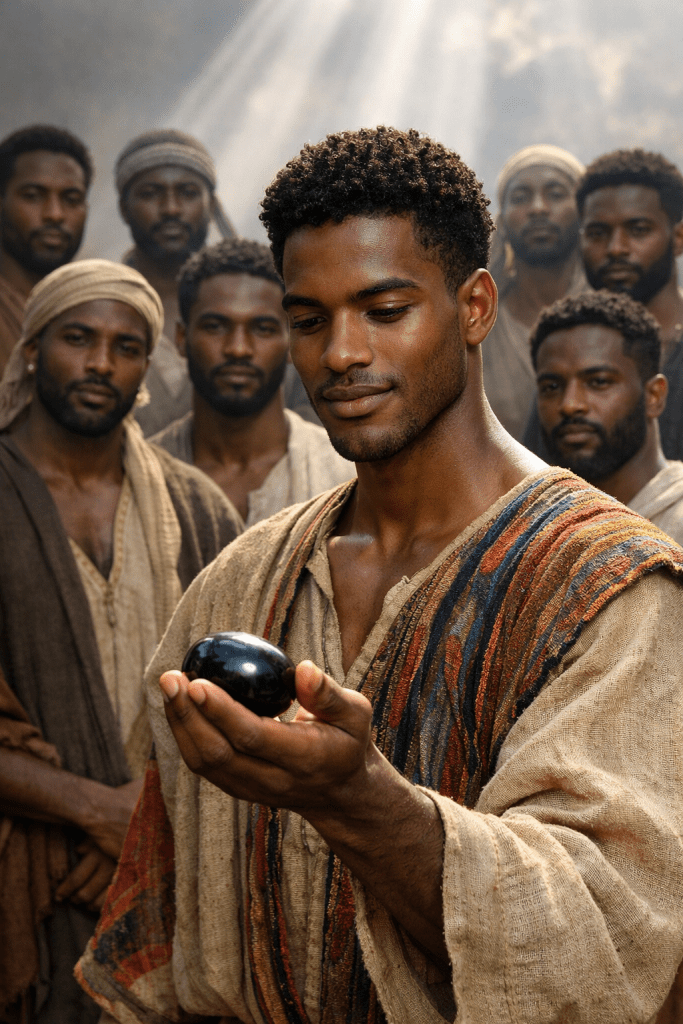
The Onyx Stone: A Family Affair — Joseph and His Brothers.

Onyx, dark as the midnight sky yet polished with hidden light,
a stone of mystery shaped by time and pressure,
a gem that carries both beauty and burden,
whispering of destinies forged through suffering,
and of souls refined in the fire of betrayal.

Onyx holds deep symbolic meaning in the biblical tradition, representing endurance, spiritual depth, and divine remembrance. In Scripture, onyx is one of the stones set in the high priest’s breastplate, engraved with the names of the tribes of Israel, signifying that each tribe was carried before God in sacred memory.

Joseph, the eleventh son of Jacob and the firstborn of Rachel, stands as one of the most compelling figures among the twelve tribes of Israel. His life narrative is not merely historical but theological, illustrating divine providence, generational conflict, and the mystery of chosenness within a fractured family system.

According to rabbinic and later symbolic traditions, Joseph is associated with the onyx stone, reflecting both his dark trials and radiant destiny. Onyx becomes a metaphor for Joseph’s life—polished through suffering, yet ultimately exalted through divine purpose.

Joseph’s story begins with favor, as he is given the coat of many colors by his father, a garment symbolizing distinction, authority, and emotional preference. This visible sign of love ignites jealousy among his brothers, sowing the seeds of betrayal long before the act itself unfolds.

The dreams Joseph receives intensify this conflict. In his visions, the sun, moon, and stars bow before him, along with sheaves of grain belonging to his brothers. These dreams are not merely youthful imagination but prophetic revelations that foreshadow his future role as a ruler and preserver of life.

Yet divine insight does not shield Joseph from human cruelty. His brothers, consumed by envy, conspire against him, stripping him of his garment and casting him into a pit before selling him to Midianite traders for silver, effectively turning family into traffickers and blood into profit.

This act of betrayal reflects one of the Bible’s deepest moral tensions: how God’s purpose often unfolds through human sin. Joseph is innocent, yet he becomes the vessel through which divine redemption will later flow, revealing the paradox of suffering as preparation.

Joseph’s descent into Egypt marks the beginning of his transformation. Though enslaved, he maintains integrity, resisting moral compromise even when falsely accused and imprisoned. His righteousness becomes a quiet rebellion against despair.

In prison, Joseph’s gift of dream interpretation resurfaces, proving that divine calling cannot be silenced by circumstance. His spiritual insight becomes the very instrument that elevates him from prisoner to prince.

Pharaoh’s dreams of famine and abundance position Joseph as a savior figure, entrusted with authority over Egypt’s economy. He rises not by lineage but by wisdom, embodying the principle that divine favor transcends social status.

Joseph’s beauty is also noted in Scripture, described as fair in form and appearance, making him both desired and tested. His physical attractiveness parallels his spiritual calling, showing how outward beauty can coexist with inner discipline.

When famine strikes, Joseph’s brothers unknowingly come before him in search of food, fulfilling the very dreams they once mocked. Their bowing becomes not an act of submission to a man, but to the divine orchestration behind his life.

Joseph’s emotional response reveals the complexity of forgiveness. He weeps privately, torn between memory and mercy, justice and compassion. His power is not in revenge, but in restraint.

The moment of reconciliation becomes one of the Bible’s most profound theological revelations. Joseph declares that what his brothers meant for evil, God intended for good, reframing trauma as testimony.

This declaration does not erase the pain of betrayal but redeems it. Joseph becomes the preserver of the family that once sought his destruction, turning the wound into a wellspring of survival.

Onyx, in this context, becomes more than a gemstone; it is a symbol of Joseph himself—darkened by suffering, refined by pressure, and set in divine memory as part of Israel’s eternal identity.

The family affair of Joseph is not merely about sibling rivalry but about generational inheritance, divine election, and moral responsibility. His story challenges the illusion of fairness and exposes the deeper logic of providence.

Joseph’s life reveals that destiny is not destroyed by betrayal, but often activated by it. The pit becomes the passageway, the prison becomes the platform, and the wound becomes the witness.

Through Joseph, the tribe associated with onyx emerges as a testament to spiritual endurance. He becomes a living stone in the architecture of Israel’s story, bearing both the scars of rejection and the seal of divine favor.

Onyx thus stands as a sacred metaphor for Joseph’s journey, reminding readers that God often engraves glory upon the darkest surfaces, and that what is polished by suffering may one day shine in sovereignty.


References
The Holy Bible, King James Version. (2017). Hendrickson Publishers. (Original work published 1611).
Exodus 28:9–12, 28:20 (KJV).
Genesis 37–50 (KJV).
Alter, R. (2018). The Hebrew Bible: A translation with commentary. W. W. Norton & Company.
Sarna, N. M. (1989). Genesis: The traditional Hebrew text with the new JPS translation. Jewish Publication Society.
Brown, F., Driver, S. R., & Briggs, C. A. (2001). The Brown-Driver-Briggs Hebrew and English lexicon. Hendrickson.

Weaponizing Scripture: How the Bible Was Used to Justify Enslavement

This photograph is the property of its respective owner. No copyright infringement intended

Weaponizing Scripture was one of the most devastating tools used to sustain the transatlantic slave system. The Bible, a text meant to proclaim liberation, justice, and the dignity of humanity, was distorted into an instrument of control. Enslavers did not merely use chains and whips; they used theology, selectively interpreted and strategically taught, to shape belief, obedience, and identity.

European slaveholders understood that physical domination alone was insufficient. To maintain long-term control, they needed mental and spiritual submission. Christianity, when stripped of its liberatory core, became a mechanism for conditioning enslaved Africans to accept suffering as divinely ordained rather than violently imposed.

One of the most common tactics was the selective reading of Scripture. Enslavers emphasized verses that appeared to support servitude while suppressing passages that spoke of freedom, justice, and God’s judgment against oppression. This manipulation created a counterfeit Christianity that served the empire rather than God.

A frequently cited passage was Ephesians 6:5, “Servants, be obedient to them that are your masters” (KJV). This verse was taught without context, stripped of its historical setting, and severed from the broader biblical narrative. Enslavers ignored that the same chapter commands masters to act justly and warns that God shows no partiality.

Similarly, Colossians 3:22 and 1 Peter 2:18 were weaponized to portray submission to abuse as holy obedience. These verses were never intended to endorse racialized, chattel slavery, yet they were recast to sanctify lifelong bondage based on skin color, a concept entirely foreign to the biblical world.

At the same time, enslavers deliberately removed or discouraged engagement with texts that threatened their power. The book of Exodus, which narrates God’s deliverance of an enslaved people, was often censored or reframed. Moses was rarely preached as a liberator, and Pharaoh’s defeat was downplayed or spiritualized to avoid political implications.

In many plantations, enslaved Africans were given a heavily edited text known as the “Slave Bible.” This version removed large portions of the Old Testament and New Testament passages that emphasized freedom, equality, or divine justice. What remained was a hollowed-out gospel engineered for compliance.

This theological distortion extended beyond omission into outright deception. Enslavers taught that Black people were cursed by God, often invoking a twisted interpretation of the so-called “Curse of Ham” in Genesis 9. This lie ignores the text itself, which never condemns Ham’s descendants to perpetual slavery and never mentions race.

By redefining God as a white authoritarian figure aligned with European power, enslavers reshaped spiritual imagination. Blackness became associated with sin, inferiority, and divine disfavor, while whiteness was falsely aligned with righteousness and authority. This inversion was not biblical; it was ideological.

Such misuse of Scripture produced mental slavery, a condition where the enslaved internalized the oppressor’s theology. Over time, some came to believe their suffering was God’s will, that resistance was rebellion against heaven, and that liberation was spiritually dangerous.

Yet even under these conditions, enslaved Africans demonstrated remarkable theological resistance. Through spirituals, coded language, and communal worship, they reclaimed biblical themes of deliverance, judgment, and hope. Songs about crossing Jordan, escaping Egypt, and seeing the promised land were not metaphorical escapism; they were theological protest.

The Bible itself consistently condemns man-stealing, the foundation of chattel slavery. Exodus 21:16 declares that kidnapping a human being and selling them is a capital crime. This verse alone dismantles the moral legitimacy of the slave trade, yet it was systematically ignored.

The prophets repeatedly denounce exploitation of the poor and vulnerable. Isaiah, Jeremiah, and Amos all portray God as hostile toward nations that enrich themselves through oppression. These texts reveal that the God of Scripture sides with the crushed, not the conqueror.

Jesus’ ministry further exposes the lie of slaveholding theology. Christ announced His mission as one to “preach deliverance to the captives” and to set the oppressed free (Luke 4:18). Any theology that sanctifies captivity directly contradicts the words of Christ Himself.

The apostolic message affirms spiritual equality among believers. Galatians 3:28 declares that there is neither slave nor free in Christ, undermining any doctrine that elevates one group over another. While early Christians lived within existing social systems, the gospel planted seeds that inevitably challenged them.

Weaponized Scripture also served to fracture Black identity. African spiritual systems were demonized, ancestral memory was erased, and biblical literacy was restricted. This was not evangelism; it was cultural warfare masquerading as salvation.

The long-term consequences of this distortion persist today. Many descendants of the enslaved wrestle with inherited religious trauma, mistrust of Christianity, or internalized inferiority rooted in centuries of theological abuse. This is one of slavery’s most enduring scars.

Yet the Bible itself is not the enemy. The problem has never been Scripture, but who interprets it, how it is taught, and whose interests it serves. When read holistically, the Bible exposes slavery as sin and oppression as rebellion against God.

Reclaiming Scripture requires restoring context, history, and truth. It demands confronting how Christianity was used as a colonial tool while also recognizing how Black faith communities preserved the liberating heart of the gospel against all odds.

Weaponized Scripture enslaved bodies for centuries, but redeemed Scripture continues to awaken minds. When the Bible is freed from manipulation, it testifies not to chains, but to justice, dignity, and divine judgment against every system built on human suffering.


References

Cone, J. H. (1975). God of the oppressed. New York, NY: Seabury Press.

Douglas, K. B. (1994). The black Christ. Maryknoll, NY: Orbis Books.

Haynes, S. R. (2002). Noah’s curse: The biblical justification of American slavery. Oxford, UK: Oxford University Press.

Raboteau, A. J. (2004). Slave religion: The “invisible institution” in the antebellum South. New York, NY: Oxford University Press.

The Holy Bible, King James Version. (1769/2017). Cambridge Edition.

Wilmore, G. S. (1998). Black religion and Black radicalism (3rd ed.). Maryknoll, NY: Orbis Books.

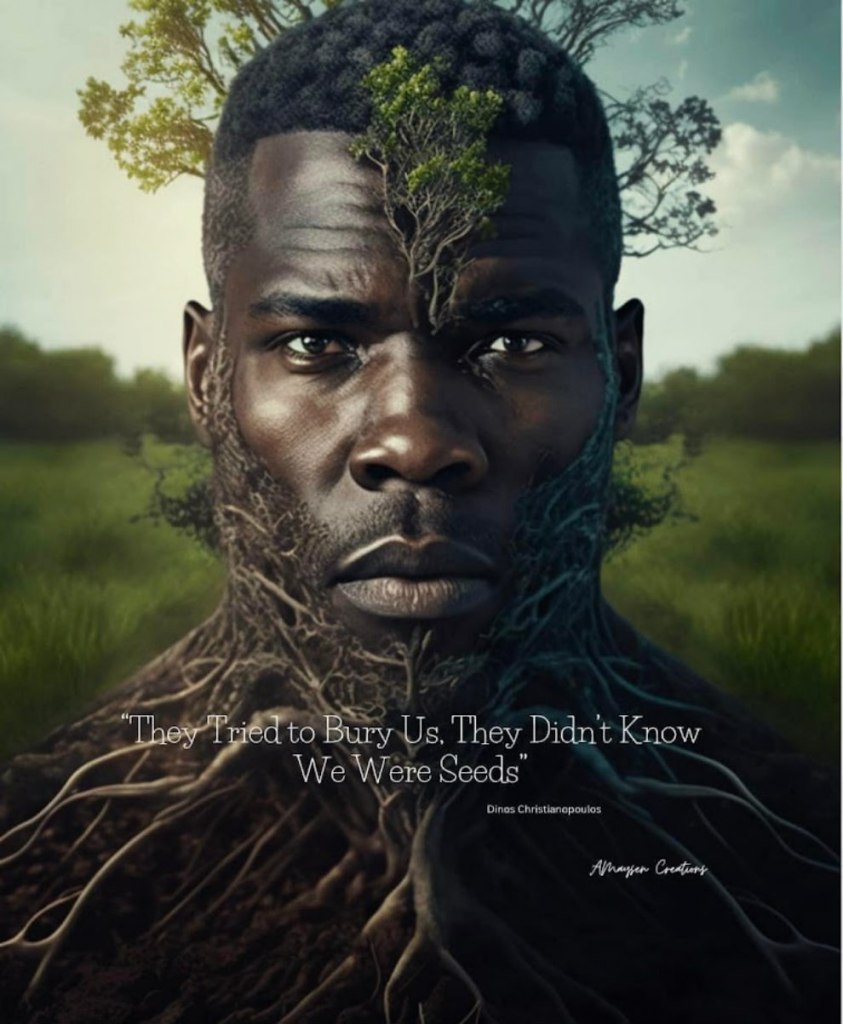
The Seeds of the Promise.

This artwork is the property of its respective owner. No copyright infringement intended.

The story of God’s chosen people is deeply rooted in Scripture, prophecy, and history. Deuteronomy 28 (KJV) outlines blessings for obedience and curses for disobedience, serving as both a covenant promise and a prophetic warning. Many within the African diaspora identify their struggles and resilience with these verses, seeing themselves as the “seeds of the promise,” scattered across the earth yet preserved by God’s hand. Like trees planted by rivers of living water, they endure oppression, displacement, and hardship while continuing to grow, flourish, and bear fruit.

The Seeds and the Promise
Seeds carry potential and continuity. Spiritually, the descendants of Israel are seeds of the covenant God made with Abraham (Genesis 17:7, KJV). Psychologically, seeds represent identity and generational transmission. Black people, despite systemic oppression, have carried cultural, spiritual, and intellectual seeds across continents, preserving language, rhythm, faith, and resilience. These seeds testify to survival against all odds.

Deuteronomy 28 and the Black Experience
The curses in Deuteronomy 28:15–68 resonate profoundly with the history of Black people. Enslavement, scattering across nations, oppression by enemies, and loss of identity parallel the transatlantic slave trade and subsequent struggles of the African diaspora. Verse 68 speaks of returning to Egypt “again with ships,” a striking image that mirrors the ships that carried millions into bondage. Many interpret these prophecies as evidence that Black people are part of God’s chosen covenant people.

Trees Planted by Living Water
Psalm 1:3 (KJV) describes the blessed man as being “like a tree planted by the rivers of water, that bringeth forth his fruit in his season.” This metaphor speaks to endurance and divine sustenance. Despite centuries of slavery, segregation, and systemic oppression, Black communities have remained rooted in faith, producing leaders, artists, scholars, and prophets who have blessed the world. The psychology of Black resilience reveals a deep wellspring of spiritual and cultural resources that mirror this biblical imagery.

Psychologically, Black people have carried generational trauma from enslavement, colonization, and racism. Yet, alongside trauma exists resilience—expressed through music, oral tradition, communal bonds, and faith in God. Na’im Akbar (1984) noted that African-descended people maintain strength by reclaiming identity, resisting oppression, and drawing on spirituality. This resilience is evidence of the “living water” that sustains God’s chosen, nourishing them in the face of systemic attempts to uproot them.

The history of Black people stretches far beyond the African continent. Evidence of African presence is found in ancient Israel, Mesopotamia, and early Christian communities. African contributions shaped global civilizations through science, mathematics, philosophy, and theology. From the Kingdom of Kush to the Moors in Spain, Black history reveals a legacy of leadership and brilliance that extends into the Americas, the Caribbean, and beyond. These contributions reveal a scattered yet resilient people, reflecting the biblical narrative of God’s chosen seed dispersed among nations.

Being chosen does not mean privilege without responsibility; it means bearing the covenant of obedience. Deuteronomy 7:6 (KJV) declares, “For thou art an holy people unto the LORD thy God: the LORD thy God hath chosen thee to be a special people unto himself, above all people that are upon the face of the earth.” This chosenness is marked not only by blessings but also by trials meant to refine and bring the people back to God. Black people’s journey through slavery, segregation, and systemic oppression mirrors this refining fire.

The transatlantic slave trade attempted to erase identity, yet language, song, and spirituality preserved the covenant consciousness of the people. Spirituals like “Go Down, Moses” encoded biblical identity, likening the plight of enslaved Africans to the Israelites in Egypt. This connection shows how deeply the promise of God was embedded in the psychology of Black communities, even in the darkest times.

Conclusion
The seeds of the promise remain alive in God’s chosen. Though scattered, bruised, and oppressed, they continue to grow like trees planted by the rivers of water, sustained by the living Word of God. Black history—beyond Africa and into the Americas, Europe, and beyond—bears witness to the fulfillment of prophecy and the preservation of a covenant people. To live as God’s chosen is to embrace both identity and responsibility, walking in obedience, resilience, and faith. The story of the seeds of the promise is not only a history lesson—it is a living testimony of God’s hand upon His people.


References

  • Akbar, N. (1984). Africentric Social Sciences for Human Liberation. Journal of Black Studies.
  • The Holy Bible, King James Version (KJV).

Girl Talk Series: Ephesians 5 Man

As women, we often make lists of qualities we desire in a partner—handsome, successful, funny, charming. Yet beyond our lists and checkboxes, one question remains: who truly meets God’s standard for a husband? The Ephesians 5 man is loyal to God, disciplined in his faith, and committed to walking in righteousness. Before we choose with our hearts or eyes, we must first ask: What does God say about the man we should marry? True discernment begins not with desire, but with alignment to God’s Word and purpose.

In a world where character often takes a backseat to charm or appearance, the Ephesians 5 man stands apart. He is a man committed to God, walking in holiness, and striving to love as Christ loves the church. His purity, discipline, and devotion make him a partner worthy of respect and trust.

The foundation of an Ephesians 5 man is faith. He places God at the center of his life, seeking guidance through prayer, scripture, and obedience. “Husbands, love your wives, even as Christ also loved the church, and gave himself for it” (Ephesians 5:25, KJV). His love is not superficial; it is sacrificial and intentional.

Purity is non-negotiable. He keeps himself morally and spiritually clean, guarding his heart, eyes, and actions. By remaining disciplined in thought and deed, he honors God and his future wife. “Flee fornication. Every sin that a man doeth is without the body; but he that committeth fornication sinneth against his own body” (1 Corinthians 6:18, KJV).

An Ephesians 5 man understands responsibility. He is accountable for his words, actions, and decisions, recognizing that leadership in the home begins with integrity and self-control. Proverbs 20:7 teaches, “The just man walketh in his integrity: his children are blessed after him” (KJV).

Faithful men protect and provide—not merely financially, but spiritually, emotionally, and relationally. Their presence fosters security, trust, and encouragement. “But I would have you know, that the head of every man is Christ; and the head of the woman is the man; and the head of Christ is God” (1 Corinthians 11:3, KJV).

Discipline is a hallmark of godly manhood. He exercises self-control in speech, conduct, and desires. By keeping the flesh under subjection, he avoids sin and remains focused on God’s purpose. “But I keep under my body, and bring it into subjection: lest that by any means, when I have preached to others, I myself should be a castaway” (1 Corinthians 9:27, KJV).

An Ephesians 5 man values covenant relationships. He does not enter lightly into marriage or commitments but understands the sacred responsibility of leadership, loyalty, and lifelong devotion. Malachi 2:14–15 underscores the importance of honoring covenant love.

Respect is integral to his interactions. He treats women with honor, patience, and kindness, reflecting the love Christ shows the church. “Likewise, ye husbands, dwell with them according to knowledge, giving honour unto the wife” (1 Peter 3:7, KJV).

He is proactive in spiritual growth. Daily prayer, scripture study, and church participation strengthen his relationship with God, which directly impacts his ability to lead and love. “Study to shew thyself approved unto God, a workman that needeth not to be ashamed, rightly dividing the word of truth” (2 Timothy 2:15, KJV).

An Ephesians 5 man does not compromise under pressure. He resists societal temptations, peer pressure, and personal desires that would lead him away from purity or righteousness. His steadfastness demonstrates integrity and discernment.

He understands the power of accountability. Surrounding himself with godly men, mentors, or spiritual guides ensures he remains grounded in truth. Proverbs 27:17 states, “Iron sharpeneth iron; so a man sharpeneth the countenance of his friend” (KJV).

Humility marks his leadership. He does not dominate or control but serves, listens, and nurtures. Christ-like leadership is rooted in sacrifice, empathy, and servant-heartedness. Philippians 2:3–4 teaches, “Let nothing be done through strife or vainglory; but in lowliness of mind let each esteem other better than themselves” (KJV).

Patience and perseverance strengthen his character. Trials refine his faith and his capacity to love faithfully. “Knowing this, that the trying of your faith worketh patience” (James 1:3, KJV). A man who endures builds trust and security for his partner.

An Ephesians 5 man is emotionally mature. He communicates effectively, processes emotions responsibly, and nurtures relational health, rejecting toxic patterns of anger, pride, or immaturity.

He prioritizes spiritual and emotional intimacy over superficial attraction. The connection he seeks is anchored in God’s Word and shared devotion, not fleeting desire or lust. “Flee fornication…glorify God in your body” (1 Corinthians 6:18–20, KJV).

Selflessness is central. He seeks the welfare of his partner, lifting her up spiritually, emotionally, and practically. Love is demonstrated in action, not just words. “Husbands, love your wives…as Christ also loved the church” (Ephesians 5:25, KJV).

Integrity shapes his reputation. His actions align with his words, and he models accountability, honesty, and trustworthiness in all areas of life. Proverbs 10:9 teaches, “He that walketh uprightly walketh surely: but he that perverteth his ways shall be known” (KJV).

He respects boundaries—his own and others’—ensuring that relationships develop with care, patience, and holiness. Boundaries protect purity and honor God’s design for relationships.

Ultimately, the Ephesians 5 man reflects God’s love in every area of life. By remaining pure, disciplined, faithful, and servant-hearted, he models the standard for biblical manhood. Women who seek such men are encouraged to recognize, affirm, and align with God’s design for relationships.

Being in the presence of an Ephesians 5 man is transformative. Men who walk in holiness, love sacrificially, and keep themselves pure inspire respect, admiration, and partnership. This is the man who elevates, protects, and cherishes—a true reflection of God’s heart.


References

The Holy Bible, King James Version. (1769/2017). Cambridge University Press.

Cloud, H., & Townsend, J. (1992). Boundaries: When to say yes, how to say no to take control of your life. Zondervan.

Eggerichs, E. (2004). Love & respect: The love she most desires; the respect he desperately needs. Thomas Nelson.

Hunter, M. A. (2010). The masculinity of faith: Biblical principles for Black men. Journal of African American Studies, 14(3), 215–230.

Africa’s Central Role in Biblical Prophecy

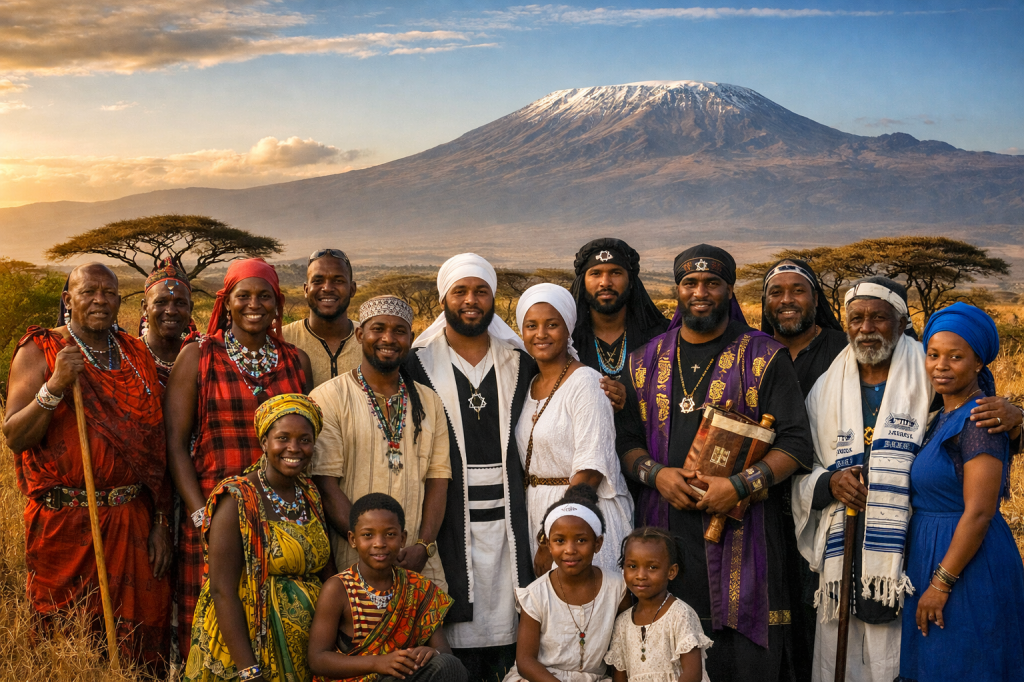
Africa holds a central and indispensable role in biblical prophecy, not as a peripheral landmass, but as a divinely positioned continent woven throughout Scripture from Genesis to Revelation. The Bible consistently presents Africa as a place of refuge, judgment, preservation, and future redemption. When read carefully through a prophetic lens, Africa emerges as a key stage upon which God’s purposes for humanity and Israel unfold.

From the earliest chapters of Genesis, Africa is present in sacred geography. The land associated with Cush, Mizraim, Put, and Ethiopia traces directly to the sons of Ham, whose descendants populated much of the African continent. Genesis records that one of the four rivers flowing from Eden, Gihon, compassed the whole land of Ethiopia, establishing Africa’s presence at the dawn of human history (Genesis 2:13, KJV). This placement signals Africa’s foundational role in God’s original creation narrative.

Africa also serves as a place of divine preservation. Egypt, located in northeast Africa, became the refuge for Joseph and later the entire family of Jacob during famine. God used Africa to sustain the covenant line through which Israel would emerge, demonstrating that African lands were instrumental in preserving the people of promise (Genesis 47:11–12, KJV).

The prophetic significance of Africa intensifies in the Exodus narrative. Egypt stands as both a place of refuge and bondage, illustrating how African territories function in God’s redemptive plan as spaces of testing, judgment, and eventual deliverance. The plagues upon Egypt were not random acts, but prophetic demonstrations of God’s supremacy over nations and false gods (Exodus 12:12, KJV).

Africa’s role extends beyond ancient Israel into messianic prophecy. The Gospel of Matthew records that Jesus Christ was taken into Egypt as a child to escape Herod’s massacre, fulfilling the prophecy, “Out of Egypt have I called my son” (Matthew 2:15, KJV). This moment affirms Africa as a protector of the Messiah and a fulfillment point of prophetic Scripture.

The prophets repeatedly reference African nations in end-time contexts. Isaiah speaks of Ethiopia as a land “shadowing with wings,” sending ambassadors by the sea, indicating geopolitical and prophetic relevance in global affairs (Isaiah 18:1–2, KJV). These passages suggest Africa’s involvement in international movements that precede divine intervention.

Psalm 68 explicitly foretells Africa’s future spiritual awakening, declaring, “Princes shall come out of Egypt; Ethiopia shall soon stretch out her hands unto God” (Psalm 68:31, KJV). This verse is widely understood as a prophetic declaration of Africa’s role in worship, restoration, and alignment with God’s kingdom purposes in the last days.

Africa also appears in prophetic judgments. Ezekiel prophesies against Egypt and its allies, including Cush and Put, demonstrating that African nations are not exempt from divine accountability (Ezekiel 30:4–5, KJV). These judgments align Africa with the broader prophetic pattern of nations being weighed according to righteousness and obedience to God.

The book of Daniel includes Africa in visions of global power shifts. The “king of the north” is said to have authority over “the precious things of Egypt,” along with the Libyans and Ethiopians following at his steps (Daniel 11:43, KJV). This prophecy places African nations within end-time geopolitical alignments.

Africa’s prophetic relevance is also seen in the spread of the gospel. Acts records the conversion of the Ethiopian eunuch, a high official who carried the message of Christ back to Africa, signaling the continent’s early and enduring connection to Christian faith (Acts 8:27–39, KJV). This event foreshadows Africa’s role in global evangelism.

The Bible repeatedly challenges Eurocentric interpretations that marginalize Africa. Scripture itself affirms Africa’s proximity to God’s redemptive acts, revealing that African lands and peoples were never spiritually distant or insignificant within biblical history or prophecy.

Africa’s suffering through colonization, enslavement, and exploitation mirrors biblical patterns of oppression followed by divine reckoning. Just as Egypt was judged for its cruelty toward Israel, Scripture warns that nations will be judged for injustice and bloodshed (Genesis 15:14, KJV). This principle reinforces Africa’s prophetic role as both witness and participant in God’s justice.

The prophetic scriptures also emphasize restoration. Isaiah foretells a time when scattered peoples will be brought back to worship the Lord from distant lands, including Africa (Isaiah 11:11, KJV). This regathering theme resonates strongly with African and diasporic histories.

Africa’s inclusion in prophecy demonstrates God’s global sovereignty. Biblical prophecy does not center exclusively on one region, but reveals a God who governs all nations, including those often overlooked or dismissed by human power structures (Acts 17:26, KJV).

The Book of Revelation depicts all nations and peoples standing before God’s throne, which necessarily includes Africa (Revelation 7:9, KJV). This vision affirms Africa’s presence in the culmination of prophetic history, not as a footnote, but as a redeemed participant in God’s eternal kingdom.

Africa’s prophetic significance also lies in its spiritual resilience. Despite centuries of trauma, African spirituality, worship, and biblical literacy remain deeply rooted, aligning with prophecies of endurance and faith under persecution (Matthew 24:13, KJV).

The repeated biblical mention of African lands underscores that prophecy is inseparable from geography. God acts in real places, among real people, and Africa consistently appears as one of those divinely appointed locations.

Understanding Africa’s role in biblical prophecy challenges distorted narratives that separate faith from Black history. Scripture affirms Africa as central to God’s plan, restoring dignity and biblical identity to African peoples worldwide.

Africa’s place in prophecy ultimately points to hope. The same God who used African lands for preservation, judgment, and refuge promises restoration, worship, and inclusion in His kingdom. This assures that Africa’s story is not marginal, but prophetic.

In the unfolding of biblical prophecy, Africa stands as a witness to God’s faithfulness across generations. From Eden to the Exodus, from the Messiah’s refuge to the final gathering of nations, Africa remains essential to the divine narrative, confirming that God’s promises encompass all lands and all peoples according to His sovereign will.

References

The Holy Bible, King James Version. (1769/2017). Cambridge University Press.

Genesis 2:13 (King James Version).

Genesis 47:11–12 (King James Version).

Exodus 12:12 (King James Version).

Genesis 15:14 (King James Version).

Psalm 68:31 (King James Version).

Isaiah 11:11 (King James Version).

Isaiah 18:1–2 (King James Version).

Ezekiel 30:4–5 (King James Version).

Daniel 11:43 (King James Version).

Matthew 2:15 (King James Version).

Matthew 24:13 (King James Version).

Acts 8:27–39 (King James Version).

Acts 17:26 (King James Version).

Revelation 7:9 (King James Version).

The Impact of Viral Culture on Identity and Confidence.

Photo by Godisable Jacob on Pexels.com

Viral culture is one of the most defining features of the digital age, reshaping how individuals understand themselves and how societies negotiate visibility, power, and belonging. It operates through algorithms, platforms, and public participation, transforming ordinary content into global phenomena. For many, the pursuit of virality has become synonymous with the pursuit of relevance. Yet, this culture has profound consequences for identity and confidence, particularly among communities whose histories of misrepresentation and marginalization complicate their online presence.

At its core, viral culture thrives on rapid dissemination and collective engagement. Unlike traditional media that required gatekeepers, virality democratizes visibility: anyone with a smartphone has the potential to reach millions within hours. This democratization has empowered voices once silenced, offering platforms for expression and identity affirmation. However, it has also tethered self-worth to visibility metrics—likes, shares, and followers—that can fluctuate wildly and leave individuals vulnerable to cycles of validation and rejection (Marwick, 2015).

From a psychological perspective, Festinger’s (1954) social comparison theory helps explain how viral culture affects confidence. Individuals often evaluate their identity through comparisons with others, and in digital spaces, these comparisons are amplified. Viral fame creates an unattainable benchmark, leading many to feel inadequate if their content does not achieve similar traction. For those who do go viral, the initial boost in confidence may be followed by anxiety and pressure to maintain relevance—a fragile cycle where identity is negotiated through external validation rather than intrinsic self-worth.

The impact is particularly pronounced among younger generations. Adolescents and young adults, who are in critical stages of identity formation, often equate online visibility with social value. Studies reveal that teenagers who seek virality experience higher rates of body dissatisfaction, anxiety, and diminished self-esteem when their posts underperform (Perloff, 2014). Viral culture thus becomes not only a stage for performance but also a mirror that distorts, reflecting back images filtered by algorithms, aesthetics, and consumer appeal rather than authentic self-expression.

For Black communities, viral culture presents both opportunities and challenges. On one hand, viral hashtags such as #BlackLivesMatter, #BlackGirlMagic, and #SayHerName have mobilized global awareness, affirming cultural identity and collective confidence. These digital movements provide visibility where mainstream media often erases or distorts Black voices, reinforcing solidarity and pride (Florini, 2019). Viral content has also allowed Black creativity—through dance, fashion, language, and humor—to reach international audiences, shaping global trends.

Yet, the commodification of Black culture within viral spaces cannot be ignored. Black dances, slang, and aesthetics often go viral only to be appropriated by non-Black creators who gain profit and visibility, while the originators remain uncredited. This dynamic mirrors historical exploitation, where Black identity is celebrated in fragments but denied in wholeness. Such exploitation can harm confidence, as cultural production becomes stripped of ownership and individuals witness their creativity detached from their identity (Nissenbaum & Shifman, 2017).

Viral shaming further complicates identity. Just as positive content can boost confidence, negative virality can destroy reputations and self-esteem. Black women, in particular, face heightened vulnerability: viral culture often amplifies misogynoir—content that combines racism and sexism—through ridicule, body-shaming, or stereotyping. This digital violence reinforces historical narratives of devaluation, leaving psychological scars even as communities attempt to reclaim narratives of strength and resilience (Bailey, 2021).

On the other hand, viral culture has created unexpected spaces of empowerment. Figures such as Tabitha Brown, whose viral videos centered on kindness and authenticity, demonstrate that virality can affirm identity by amplifying voices grounded in values of compassion and faith. These examples reveal that confidence gained through viral culture need not be shallow or performative; it can be deeply rooted in authentic identity when creators resist the pressures of conformity.

Faith provides a critical anchor in navigating viral culture. The Bible reminds believers that identity is not contingent on public approval but on divine purpose. Romans 12:2 (KJV) urges, “Be not conformed to this world: but be ye transformed by the renewing of your mind.” Viral culture thrives on conformity to trends, aesthetics, and digital clout, but scripture re-centers confidence in God’s unchanging truth. For Black communities, whose history includes resilience against erasure, faith becomes not only a source of individual grounding but also a collective shield against the volatility of online validation.

Historically, confidence among marginalized communities was cultivated through family, community, and spiritual institutions rather than fleeting moments of recognition. Viral culture disrupts these traditional anchors, shifting the measure of self-worth into digital spaces. Yet, by merging digital engagement with cultural pride and spiritual affirmation, individuals can resist the erosion of identity. Movements such as #ChurchTikTok or gospel-infused viral moments illustrate how faith traditions can intersect with viral culture to sustain confidence rather than undermine it.

The paradox of viral culture lies in its ability to both affirm and destabilize identity. On one side, it democratizes influence, amplifies marginalized voices, and builds global solidarity. On the other, it commodifies culture, fosters harmful comparisons, and reduces confidence to numbers on a screen. The key is cultivating critical engagement: using viral culture as a tool rather than a measure of worth. Individuals and communities must learn to navigate these spaces with discernment, grounding identity in values, traditions, and truths that transcend the volatility of virality.

In conclusion, viral culture has become an inescapable force that shapes identity and confidence in the modern world. It creates opportunities for visibility, empowerment, and cultural pride, while simultaneously fostering cycles of comparison, appropriation, and insecurity. For Black communities, the stakes are higher, as viral culture can both amplify resistance and reproduce exploitation. Ultimately, sustainable confidence must rest not on fleeting virality but on authentic identity, cultural grounding, and spiritual truth. When rooted in these foundations, individuals can engage with viral culture without losing themselves in the process.


References

  • Bailey, M. (2021). Misogynoir transformed: Black women’s digital resistance. New York University Press.
  • Festinger, L. (1954). A theory of social comparison processes. Human Relations, 7(2), 117–140.
  • Florini, S. (2019). Blackness, memes, and memory: The digital politics of cultural visibility. Communication and Critical/Cultural Studies, 16(4), 268–284.
  • Marwick, A. (2015). Instafame: Luxury selfies in the attention economy. Public Culture, 27(1), 137–160.
  • Nissenbaum, A., & Shifman, L. (2017). Internet memes as contested cultural capital: The case of 4chan’s /b/ board. New Media & Society, 19(4), 483–501.
  • Perloff, R. M. (2014). Social media effects on young women’s body image concerns: Theoretical perspectives and an agenda for research. Sex Roles, 71(11-12), 363–377.