Tag Archives: black men

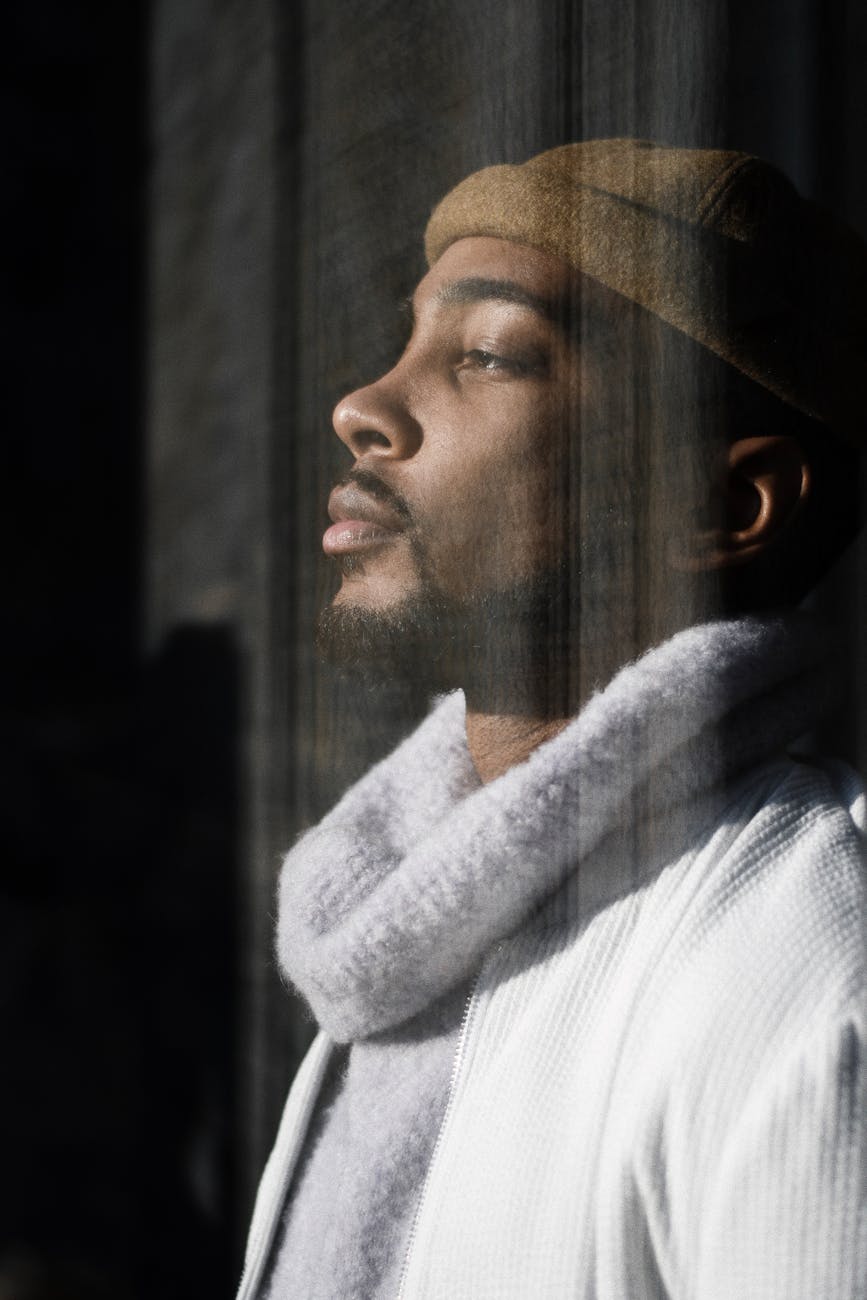
Black Men and Broken Systems: Reclaiming Purpose Through Pain

For centuries, Black men have been positioned at the intersection of systemic oppression, cultural misunderstanding, and social vulnerability. Their struggles cannot be viewed in isolation; they are the result of deeply rooted systems that were never built with their flourishing in mind. Yet, in the midst of these structures, Black men continue to pursue purpose, identity, and restoration.

The legacy of slavery established the earliest disruptions to Black male identity. Enslaved men were stripped of autonomy, dignity, and family stability, creating generational wounds that still echo through modern society (Alexander, 2010).

Jim Crow laws further entrenched barriers that limited employment, education, and political participation. Even after these laws were dismantled, their psychological and economic impacts endured, shaping the environments in which many Black men grew up (Du Bois, 1903).

Mass incarceration, often labeled the “New Jim Crow,” disproportionately targets Black men, removing them from communities, families, and careers. This system creates cycles of trauma that are passed on to younger generations (Alexander, 2010).

Educational inequality also plays a major role in the brokenness many Black men navigate. Underfunded schools, biased disciplinary practices, and the school-to-prison pipeline disrupt potential before it has a chance to fully form (Ferguson, 2000).

Economically, Black men face higher unemployment rates, wage discrimination, and limited access to generational wealth. These hardships often lead to feelings of inadequacy, frustration, and loss of purpose (Pager, 2003).

Media portrayals deepen these wounds by depicting Black men as dangerous, irresponsible, or emotionally detached. Such stereotypes influence everything from hiring decisions to policing practices, reinforcing a distorted narrative of Black masculinity (hooks, 2004).

Yet despite these systemic pressures, Black men continue to demonstrate extraordinary resilience. Many find healing in faith, spirituality, and the belief that suffering can birth strength and transformation.

Purpose is often forged in pain, and Black men who confront their challenges with transparency and courage discover a deeper sense of identity. Their resilience becomes not only personal but generational, influencing sons, brothers, and communities.

The role of fatherhood is profoundly important. Even with societal attempts to erase the presence of Black fathers, research shows that involved Black men are among the most engaged and nurturing parental figures in the nation (Cabrera et al., 2018).

Brotherhood and mentorship are also vital. When Black men pour into one another—through conversation, guidance, accountability, and shared experience—they create powerful networks of healing and empowerment.

Therapy and mental health awareness have become essential tools. Breaking the stigma around emotional vulnerability allows Black men to reclaim their humanity and confront trauma with honesty rather than silence (Ward, 2005).

Faith communities also provide grounding spaces where Black men reconnect with identity and divine purpose. Scripture reminds them that suffering can refine rather than destroy, and that purpose is often revealed through endurance.

Creativity is another medium of reclamation. Music, poetry, storytelling, and art allow Black men to express what society often refuses to hear. These forms of expression turn pain into legacy.

Black entrepreneurs and leaders are rewriting narratives by building businesses, influencing culture, and creating opportunities where systems have failed. Their success challenges the myth of inferiority and proves the power of reclaimed purpose.

Communities thrive when Black men heal. Their emotional, spiritual, and economic restoration strengthens families, reduces violence, and reshapes entire neighborhoods.

Healing is not an individual journey; it is communal and generational. When one Black man breaks a cycle, he shifts the trajectory for everyone connected to him.

Reclaiming purpose requires confronting truth—about broken systems, personal trauma, and internalized beliefs. It is difficult work, but transformative work.

In the end, the story of Black men is not defined by the systems that tried to break them. It is defined by their relentless pursuit of dignity, identity, and purpose—even when the world attempts to deny them both. Their resilience is not only a testament to survival but a blueprint for liberation.


References

  • Alexander, M. (2010). The new Jim Crow: Mass incarceration in the age of colorblindness. The New Press.
  • Cabrera, N., Fagan, J., & Farrie, D. (2018). Explaining the father involvement gap: Race, class, and caregiving in the U.S. Journal of Marriage and Family, 80(3), 691–712.
  • Du Bois, W. E. B. (1903). The souls of Black folk. A.C. McClurg.
  • Ferguson, A. A. (2000). Bad boys: Public schools in the making of Black masculinity. University of Michigan Press.
  • hooks, bell. (2004). We real cool: Black men and masculinity. Routledge.
  • Pager, D. (2003). The mark of a criminal record. American Journal of Sociology, 108(5), 937–975.
  • Ward, E. (2005). Keeping it real: A grounded theory study of Black men’s lived experience and mental health. American Journal of Men’s Health, 1(1), 19–29.
Masculine Grace: The Overlooked Beauty of the Black Man.

This photograph is the property of its respective owner. No copyright infringement intended.

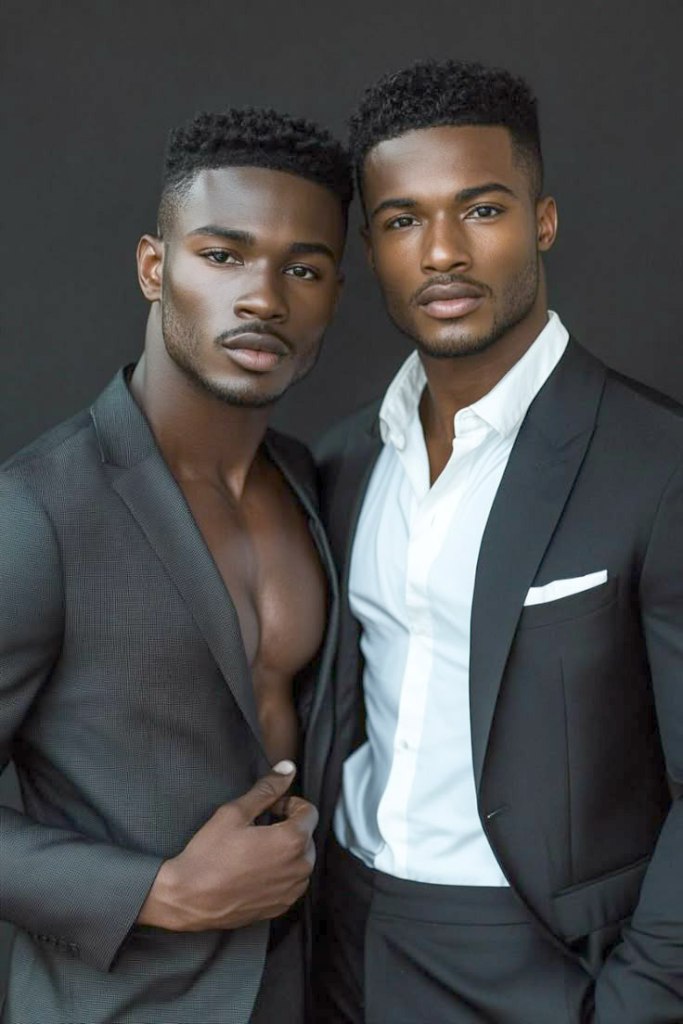
The image of the Black man has long been distorted through colonial narratives, Eurocentric standards, and centuries of systemic dehumanization. Yet beneath the scars of history lies a quiet and powerful truth: the Black man embodies a form of beauty rarely celebrated—masculine grace. This grace transcends the mere physical, radiating through resilience, wisdom, emotional strength, and spiritual depth. It is the beauty of a being who has survived what was meant to destroy him and yet continues to create, lead, and love.

The world has often feared what it should have revered. From the plantation fields to the modern boardroom, the Black man’s physicality has been both fetishized and criminalized. His body—once deemed property—became a battleground for the projection of others’ fears and desires. But when seen through a lens untainted by bias, the symmetry of his form, the depth of his skin, and the fire of his eyes reflect divine craftsmanship, not danger (hooks, 2004).

To speak of masculine grace is to acknowledge that strength and softness are not opposites but complements. The Black man’s beauty rests in the balance between his power and gentleness—how he can protect without oppressing, lead without dominating, and love without losing himself. This duality challenges the Eurocentric masculine archetype that equates sensitivity with weakness (Majors & Billson, 1992).

Historically, Black men were denied the right to be seen as beautiful because beauty was defined through whiteness. The ideal male form was sculpted in marble—pale, rigid, and devoid of emotion. Yet the Black man’s presence, rich in rhythm and movement, exudes life. His grace is kinetic, a poetry of motion expressed in dance, labor, sport, and art—a beauty that moves rather than poses.

In African traditions, beauty was holistic. It encompassed virtue, spirit, and purpose, not merely appearance. The Yoruba concept of “iwa l’ewa” translates to “character is beauty,” suggesting that true beauty arises from inner moral substance (Abiodun, 2014). This philosophy restores the spiritual context that Western aesthetics stripped away. For the Black man, beauty is not vanity—it is dignity manifested.

Masculine grace can be seen in the tender way a father lifts his child, in the calm leadership of a pastor guiding his congregation, or in the perseverance of a man rebuilding his life after systemic injustice. It is the quiet confidence of knowing that one’s value is not defined by material success but by moral conviction and spiritual alignment (Kimbrough, 1997).

Yet media portrayals continue to undermine this beauty. The camera often captures the Black man as an aggressor, athlete, or entertainer, rarely as a scholar, lover, or thinker. This narrow visual vocabulary limits how society perceives Black masculinity. The absence of representation becomes a form of erasure—an aesthetic violence that teaches the world to see Black men as function rather than form (Dixon & Linz, 2000).

The reclamation of masculine grace, therefore, is an act of resistance. It says to the world: “You will not define my worth through stereotypes.” It also calls upon Black men to rediscover the divine artistry within themselves. To walk with grace is to carry both the weight of history and the light of redemption with balance and pride.

There is a sacred stillness in the Black man who knows his identity in God. His beauty reflects the imago Dei—the image of the Creator (Genesis 1:27). His walk is testimony; his voice, a melody of generations who refused to die in silence. This sacred reflection dismantles the notion that masculinity must be performative or domineering. In divine masculinity, grace and strength coexist.

Grace in the Black man also manifests in his intellectual and creative expressions. From Langston Hughes’s poetry to Chadwick Boseman’s cinematic brilliance, from Barack Obama’s eloquence to Marvin Gaye’s soul, Black men have continually shown that intellect and emotion are not contradictions but harmonies. They redefine what it means to be a man of grace—disciplined, dignified, and deeply human.

One cannot discuss the beauty of the Black man without addressing colorism’s shadow. Lighter tones have long been favored, even among people of African descent, a legacy of colonial conditioning. Yet, the deep hues of the Black man’s skin absorb light differently—reflecting warmth, history, and strength. His melanin is a masterpiece of biology and symbolism: protection and poetry in one (Blay, 2011).

To appreciate masculine grace requires decolonizing the gaze. This means rejecting the Eurocentric standards that measure beauty through whiteness and fragility. Instead, it calls for an aesthetic rooted in authenticity, where dark skin, broad noses, textured hair, and strong physiques are not liabilities but legacies—markers of ancestral power and divine design.

The modern world’s obsession with hypermasculinity has numbed emotional intelligence in men. But the Black man’s grace lies in his capacity to feel deeply—to weep, to heal, to forgive. This emotional courage is perhaps his most overlooked beauty. It takes strength to love after being unloved, to lead after being stripped of leadership, to rebuild after centuries of destruction (Akbar, 1996).

In contemporary culture, movements like “Black Boy Joy” have sought to reclaim this emotional space, celebrating the multifaceted beauty of Black men—laughing, learning, nurturing, and creating. These images disrupt toxic archetypes and reveal a truth long hidden: Black masculinity is not monolithic but mosaic.

The spiritual aspect of masculine grace cannot be overstated. The Black man’s relationship with faith—through prayer, perseverance, and praise—anchors his identity. His beauty radiates most when he walks in divine purpose. As the psalmist wrote, “The steps of a good man are ordered by the Lord” (Psalm 37:23, KJV). This divine choreography gives rhythm to his grace.

Every scar, every wrinkle, every muscle tells a story of endurance. The body of the Black man is a living archive—of battles fought, burdens carried, and victories won. His beauty is not cosmetic but cosmic, stitched with the threads of survival and hope.

In art, literature, and film, there is a growing movement to honor this beauty. Photographers like Kwame Brathwaite and writers like Ta-Nehisi Coates have reframed the Black male body as sacred rather than sinful, majestic rather than menacing. Through their work, masculine grace becomes visible again.

Ultimately, to honor the beauty of the Black man is to restore balance in a world that has long denied him softness. His grace teaches that masculinity is not the absence of vulnerability but the mastery of it. The true measure of a man lies not in his ability to dominate but in his capacity to love, forgive, and uplift.

Masculine grace, then, is both art and theology—a living testament that the Black man, made in the image of the Most High, is not merely beautiful; he is divinely composed. His existence challenges centuries of misrepresentation and stands as proof that beauty, when seen through truth, is revolutionary.


References

Abiodun, R. (2014). Yoruba art and language: Seeking the African in African art. Cambridge University Press.
Akbar, N. (1996). Breaking the chains of psychological slavery. Mind Productions.
Blay, Y. A. (2011). (1)ne Drop: Shifting the lens on race. Black Print Press.
Dixon, T. L., & Linz, D. (2000). Race and the misrepresentation of victimization on local television news. Communication Research, 27(5), 547–573.
hooks, b. (2004). We real cool: Black men and masculinity. Routledge.
Kimbrough, M. (1997). Faith and identity: African-American men in search of self. Orbis Books.
Majors, R., & Billson, J. M. (1992). Cool pose: The dilemmas of Black manhood in America. Simon & Schuster.
The Holy Bible, King James Version. (1611/2017). King James Bible Online. https://www.kingjamesbibleonline.org/

The Art of the Male Form: Power, Presence, and Perception.

Photo by ROCKETMANN TEAM on Pexels.com

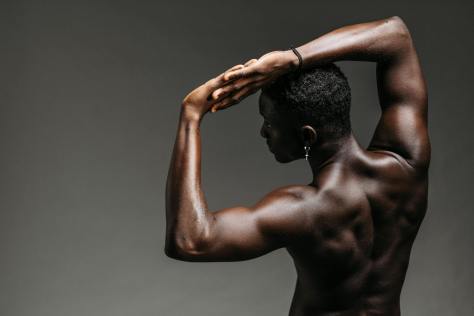
The human male form has long been a subject of fascination in art, science, and culture, reflecting not only physicality but also social hierarchies, cultural ideals, and psychological projections. Across centuries, the representation of the male body has evolved, embodying changing conceptions of masculinity, strength, and beauty. From classical sculptures of Greece and Rome to contemporary photography and film, the male form has been interpreted as a canvas of power and presence.

Historically, the Greek ideal celebrated the male body as a perfect balance of symmetry, proportion, and athleticism. Sculptures such as Polykleitos’ Doryphoros exemplified mathematical precision, with the canon of proportions establishing standards for physical perfection that would influence Western art for millennia. This idealized vision of masculinity combined both aesthetic beauty and moral virtue, suggesting that bodily perfection mirrored inner excellence.

The Renaissance reintroduced classical principles while emphasizing dynamic motion and individual expression. Artists such as Michelangelo in David portrayed not only physical strength but also psychological tension and heroic presence. The male form became an emblem of intellectual and spiritual power, reflecting a holistic understanding of human potential. Renaissance art thus bridged the external and internal, situating the male body as both a physical marvel and a symbolic vessel of identity.

In non-Western contexts, the male form has been depicted through varied cultural lenses. In African art, the male figure often embodies communal roles, leadership, and spiritual vitality rather than purely aesthetic ideals. Carvings, masks, and statues depict muscularity and posture as markers of social and ceremonial significance. Similarly, in East Asian traditions, male figures have symbolized wisdom, martial skill, and filial duty, emphasizing presence over purely sculptural beauty.

Contemporary representations of the male body have expanded to encompass a spectrum of forms, challenging classical notions of beauty and strength. Media, fashion, and advertising frequently spotlight muscular, lean physiques, reinforcing cultural ideals tied to health, athleticism, and desirability. These portrayals, however, often obscure the diversity of natural male forms, creating pressures that intersect with gender norms and body image concerns.

The perception of male strength and virility is deeply intertwined with visual cues. Broad shoulders, defined musculature, and upright posture convey dominance and confidence, signaling both physical capability and social authority. Yet these traits are culturally mediated; in some societies, intellectual presence, sartorial elegance, or artistic skill may supersede raw physicality as markers of masculine power.

Psychologically, the male form operates as a site of projection for both men and women. Men may internalize societal ideals as standards for self-worth, while women may perceive these traits through lenses of attraction, protection, or social status. The interaction of biology, culture, and psychology produces a complex matrix in which physicality, behavior, and charisma intersect.

Artistic depiction often emphasizes narrative alongside form. Paintings, photographs, and sculptures do not merely replicate anatomy but evoke story, emotion, and character. The male form thus becomes a storytelling tool, capable of conveying vulnerability, aggression, heroism, or intimacy depending on context. Such portrayals can redefine social perceptions of masculinity beyond mere physical prowess.

The study of anatomy underpins much of the artistic representation of the male body. Knowledge of skeletal structure, muscle distribution, and movement enables artists to render the body convincingly and expressively. Anatomical studies by Leonardo da Vinci and modern biomechanics research illustrate how understanding physiology enhances both aesthetic and functional interpretation of form.

In cinema and performance, the male body functions as a medium of narrative embodiment. Action films, dance, and theater utilize posture, gesture, and musculature to communicate character, intent, and emotion. Actors’ physical training is integral to credibility, reinforcing cultural associations between physical form and personal agency.

Clothing and adornment further influence perception. Tailored suits, armor, traditional garments, or casual attire interact with the body’s contours to project authority, elegance, or approachability. Fashion, therefore, becomes a form of embodied rhetoric, shaping how presence is interpreted socially and aesthetically.

The intersection of race and the male form reveals additional layers of perception. Societal biases often exaggerate or stereotype certain physiques, influencing both admiration and marginalization. Scholarly research highlights how media representation of Black, Asian, and Indigenous men can reinforce prejudicial narratives while simultaneously offering opportunities for celebration and redefinition of power.

Athleticism, historically celebrated in art and society, continues to reinforce ideals of the male form. Sports icons, Olympians, and bodybuilders exemplify disciplined cultivation of the body, symbolizing perseverance, control, and societal admiration. These figures operate at the nexus of corporeal excellence and symbolic authority.

The sexualization of the male form has also evolved, reflecting shifting cultural mores. Where once nudity implied heroism, divinity, or philosophical ideal, contemporary eroticized representations carry complex implications regarding consent, objectification, and agency. The male body thus navigates multiple discourses simultaneously: aesthetic, athletic, sexual, and symbolic.

Media proliferation intensifies scrutiny of the male form. Social platforms, advertising, and global cinema perpetuate standards of muscularity, height, and symmetry, creating feedback loops that influence self-perception and social judgment. These pressures can foster both aspiration and anxiety, highlighting the psychosocial dimensions of bodily representation.

Philosophically, the male form invites reflection on mortality, temporality, and embodiment. Aging, injury, and transformation challenge ideals of constancy and perfection, offering opportunities for more nuanced understandings of masculinity. Imperfection, once marginalized in classical aesthetics, now contributes to narratives of resilience, authenticity, and wisdom.

Cross-disciplinary studies, incorporating anthropology, psychology, and art history, illuminate the interplay between biology and culture in shaping perceptions of the male form. Evolutionary theory, for example, considers sexual selection, strength signaling, and social hierarchy as factors influencing both appearance and societal valuation. Cultural studies, in turn, examine media representation, ritual, and mythology as determinants of perception.

Digital technology and virtual spaces are redefining the male form in contemporary imagination. CGI, motion capture, and social media avatars allow manipulation of physique, posture, and expression beyond natural limits, raising questions about authenticity, aspiration, and identity. Such developments extend the discourse of perception into immersive and interactive arenas.

Ultimately, the art of the male form transcends mere anatomy. It is a dialogue among power, presence, and perception, reflecting the interdependence of physicality, culture, and cognition. The male body is both observed and experienced, a site of aesthetic contemplation, social negotiation, and personal embodiment.

Contemporary discourse urges inclusivity, diversity, and critical reflection, challenging narrow definitions of strength and beauty. Recognizing variation, vulnerability, and agency broadens appreciation of the male form beyond traditional paradigms. In this light, art, science, and lived experience converge to create a dynamic understanding of masculinity as both human and culturally mediated.

In conclusion, the male form remains a compelling locus of study and representation. Its power lies not solely in muscle or height but in the interplay of physicality, presence, and perception, shaped by history, culture, and psychology. From the classical canon to modern media, the male body continues to articulate ideals, challenge assumptions, and inspire contemplation, affirming its enduring significance in human imagination and social life.

References

Frontiers in Psychology. (2023). Body image dissatisfaction in men: Causes and consequences. https://www.frontiersin.org/journals/psychology/articles/10.3389/fpsyg.2023.1116686/full

Metropolitan Museum of Art. (n.d.). Anatomy in the Renaissance. https://www.metmuseum.org/essays/anatomy-in-the-renaissance

PubMed. (2002). Impact of media images on male body image. https://pubmed.ncbi.nlm.nih.gov/11920996/

Smarthistory. (n.d.). Polykleitos, Doryphoros (Spear Bearer). https://smarthistory.org/polykleitos-doryphoros-spear-bearer/

Smarthistory. (n.d.). Depictions of the human figure and animals in African art. https://smarthistory.org/depictions-of-the-human-figure-and-animals/

Italian Renaissance. (n.d.). Michelangelo’s David: Analysis and history. https://www.italianrenaissance.org/michelangelos-david/

Science Museum, UK. (n.d.). Anatomy, art, and science. https://www.sciencemuseum.org.uk/objects-and-stories/medicine/anatomy-art-and-science

The Boar. (2020, June). Male bodies in film: Representations of masculinity. https://theboar.org/2020/06/male-bodies-film/

Vogue Business. (2021). Sizing is stopping consumers from shopping: Here’s what brands need to know. https://www.voguebusiness.com/story/fashion/sizing-is-stopping-consumers-from-shopping-heres-what-brands-need-to-know

The Times. (n.d.). Unhealthy skinny models: Fashion week report. https://www.thetimes.co.uk/article/vogue-report-unhealthy-skinny-models-fashion-week-jj3qwhf9w

Smithsonian Asian Art Museum. (n.d.). Facing East: Portraits from Asia. https://asia.si.edu/whats-on/exhibitions/facing-east-portraits-from-asia/

The Conversations About Colorism Are Being Hijacked by Black Men — Why?

Photo by Jep Gambardella on Pexels.com

In recent years, colorism—the discrimination within the Black community based on skin tone—has reemerged as a central topic in discussions on race, identity, and representation. Yet, as the conversation has gained visibility, a troubling pattern has surfaced: Black men increasingly dominate or redirect discussions that were originally centered on the lived experiences of Black women. This phenomenon reveals not only gendered power dynamics but also deeper insecurities, social conditioning, and historical patterns of male-centered discourse in the Black community.

Colorism affects both genders, but its manifestations differ sharply. For Black women, it often determines beauty standards, desirability, and social value (Hunter, 2007). For Black men, colorism intersects more with social perception, criminalization, and masculinity (Hall, 2010). Yet, when colorism is discussed publicly—particularly online—many Black men position themselves as equal or greater victims, reframing the issue around their own grievances. This redirection often invalidates or minimizes the gendered suffering that darker-skinned Black women have historically endured.

At the root of this hijacking is defensiveness. Many Black men interpret critiques of colorism as personal attacks rather than systemic analysis. When Black women point out that men frequently idealize lighter-skinned women in media, dating, and social hierarchies, some men respond by claiming they too experience colorism from women. While men can experience shade bias, the scale, visibility, and historical roots of female-targeted colorism are far deeper.

This defensiveness is also a product of patriarchal conditioning. In patriarchal societies, men are socialized to lead conversations—even those about women’s pain. Within the Black community, this dynamic is intensified by centuries of emasculation under white supremacy, leading some Black men to over-assert authority in racial and gender dialogues (hooks, 2004). When colorism is raised, they may subconsciously reclaim the center stage to reestablish power and control over the narrative.

Furthermore, the male gaze in Black culture often amplifies colorist biases. From hip-hop videos to film and advertising, light-skinned women are frequently depicted as the ideal partner or feminine standard. When women challenge this imagery, some men perceive it as an indictment of their preferences rather than a critique of systemic conditioning (Stephens & Phillips, 2003). The reaction is often defensive, shifting focus from accountability to victimhood.

Social media has magnified this divide. Online platforms provide visibility for darker-skinned women to share their experiences of exclusion, ridicule, and invisibility. However, whenever these conversations gain traction, they are often derailed by men insisting that “colorism affects Black men too” or “dark-skinned men are fetishized, so it’s not the same.” These counterarguments distort the conversation’s intent, transforming a gendered critique into a false equivalence.

The fetishization of dark-skinned men—often cited by male participants—does not equate to systemic bias. It is frequently a hypersexualized stereotype rooted in colonial myths of Black male virility (Collins, 2000). This fetishization benefits neither gender, but it differs fundamentally from the colorist exclusion and humiliation endured by darker-skinned women in beauty, marriage, and media representation.

Another reason for male hijacking of colorism discourse lies in emotional illiteracy. Many Black men are not encouraged to process vulnerability or collective responsibility. Instead of engaging empathetically with women’s experiences, they intellectualize or deflect the issue to avoid guilt. This response is symptomatic of broader issues of gender relations and communication in the Black community.

Historically, the conversation around colorism was initiated by Black women scholars and activists, such as Alice Walker, who coined the term “colorism” in 1982 (Walker, 1982). Later scholars like Margaret Hunter (2007) and Ronald Hall (2010) analyzed how color hierarchies shape gendered oppression. Yet, as the discourse entered mainstream culture, male voices increasingly reframed the issue as a unisex problem, erasing the distinctly gendered dimensions.

Part of the reason this hijacking persists is because Black women’s pain is often minimized in both white and Black spaces. The intersection of race and gender renders their experiences less visible. When women assert that colorism harms them uniquely, they are accused of “dividing the community.” This silencing mirrors historical patterns in which Black women were expected to prioritize racial unity over gender justice (Crenshaw, 1991).

Another factor is male privilege within Blackness. Even within an oppressed racial group, men often benefit from patriarchal structures that validate their voices more than women’s. Thus, when Black men speak on colorism, their perspectives receive more attention and legitimacy, even when their narratives distort or misrepresent the issue.

Media representation further amplifies this imbalance. Films, songs, and podcasts that address colorism often feature male-led discussions, focusing on how men are “judged for being too dark” or “overlooked by women.” Meanwhile, darker-skinned actresses and public figures are still underrepresented, underpaid, or stereotyped (Monk, 2014). The structural inequity remains gendered, even if both genders experience forms of bias.

There is also an economic incentive behind this derailment. Male creators and influencers who discuss colorism from a male-centered perspective often gain larger audiences, as their narratives resonate with both male defensiveness and patriarchal norms. In contrast, women who speak about colorism face online harassment, accusations of bitterness, or dismissal as “divisive feminists.”

Psychologically, the hijacking of colorism discourse reflects projection. Many men project their internalized pain—stemming from racism, classism, or emotional neglect—onto discussions about women. Rather than confronting their own conditioning, they reframe the issue to validate their victimhood. This projection protects the ego but prevents accountability.

Colorism is, at its core, a gendered system of preference and exclusion. While men may experience it in terms of status or stereotype, women endure it in ways that intersect with desirability, marriage prospects, and self-worth. When men dominate these conversations, they obscure these nuances, flattening a multidimensional issue into a one-size-fits-all grievance narrative.

The solution lies not in silencing Black men but in rebalancing the dialogue. True allyship requires men to listen, not lead, when the topic concerns women’s pain. They must learn to amplify women’s voices without centering themselves. Doing so transforms the conversation from competition into collaboration.

Academically and culturally, it is vital to reassert that Black women’s experiences of colorism are foundational to the discourse. Their stories, research, and activism birthed this conversation; erasing or minimizing them reproduces the very inequality colorism exposes. The aim should not be to debate who suffers more, but to dismantle the structures that create suffering altogether.

Ultimately, the hijacking of colorism discussions by Black men is a reflection of unresolved patriarchal dynamics within the Black community. It reveals the lingering effects of colonial trauma—how oppression can turn inward, causing those once silenced to silence others. Healing requires courage: the courage for men to decenter themselves and for women to reclaim their voices unapologetically.

In the end, the conversation about colorism must return to its rightful center: the Black woman’s experience. Her story is not a subset of the Black struggle—it is the mirror that reflects how deeply white supremacy has fractured our perception of beauty, worth, and identity. Until her truth is fully heard and honored, the dialogue remains incomplete.


References

Collins, P. H. (2000). Black Feminist Thought: Knowledge, Consciousness, and the Politics of Empowerment. Routledge.
Crenshaw, K. (1991). Mapping the Margins: Intersectionality, Identity Politics, and Violence against Women of Color. Stanford Law Review, 43(6), 1241–1299.
Hall, R. E. (2010). The Melanin Millennium: Skin Color as 21st Century International Discourse. Springer.
hooks, b. (2004). We Real Cool: Black Men and Masculinity. Routledge.
Hunter, M. (2007). The Persistent Problem of Colorism: Skin Tone, Status, and Inequality. Sociology Compass, 1(1), 237–254.
Monk, E. P. (2014). Skin Tone Stratification among Black Americans, 2001–2003. Social Forces, 92(4), 1313–1337.
Stephens, D. P., & Phillips, L. D. (2003). Freaks, Gold Diggers, Divas, and Dykes: The Sociohistorical Development of Adolescent African American Women’s Sexual Scripts. Sexuality & Culture, 7(1), 3–49.
Walker, A. (1982). In Search of Our Mothers’ Gardens: Womanist Prose. Harcourt Brace.

50 Hard Truths I Learned from Men and Coaching Women.

Photo by August de Richelieu on Pexels.com

Over years of personal observation, counseling, and coaching women, I have discovered patterns in male behavior that are both sobering and enlightening. These truths have been affirmed through conversation, heartbreak, coaching sessions, and prayer. Men and women often speak different emotional languages, yet there are recurring realities that, once understood, empower women to make wiser relational decisions. These insights are not meant to vilify men but to bring clarity. As Jesus said in John 8:32 (KJV), “And ye shall know the truth, and the truth shall make you free.”


50 Hard Truths

1. Men know what they want early.
Within the first few conversations, most men have decided whether they see you as wife material, girlfriend material, or simply someone they want to sleep with (Finkel et al., 2013).

2. Men lie — often to protect your feelings or their access.
Many men will tell women what they want to hear to avoid conflict or rejection. Proverbs 12:22 (KJV) says, “Lying lips are abomination to the Lord.”

3. Men love to pursue.
Most men are naturally wired for pursuit. When women chase, it can kill attraction (Baumeister & Vohs, 2004).

4. If he wants you, he will make time.
Men show priority by action, not words. If he’s too busy, he likely isn’t interested enough.

5. Men compartmentalize emotions.
Unlike women, men can separate physical intimacy from emotional connection, which can lead to heartbreak if women confuse sex for love.

6. Men respect what they work for.
If everything is given too easily — attention, intimacy, commitment — many men lose respect (Cloud & Townsend, 2002).

7. Men are visual.
Appearance strongly influences men’s attraction, but this does not mean compromising modesty or self-respect. 1 Timothy 2:9 (KJV) reminds women to “adorn themselves in modest apparel.”

8. Men fear rejection deeply.
This is why some hesitate to approach or commit — their ego and self-worth are at stake.

9. Men appreciate feminine energy.
Softness, kindness, and gentleness often inspire them to lead, love, and provide (1 Peter 3:4, KJV).

10. Some men confuse lust for love.
Lust is immediate and selfish; love is patient and self-sacrificial (1 Corinthians 13:4-7, KJV).

11. Men will test boundaries.
If a woman doesn’t hold her standards, some men will push for more than she is willing to give.

12. A man’s character is revealed by consistency.
Watch what he does over time, not just what he says.

13. Men are solution-oriented.
They often want to fix problems rather than just listen, which can frustrate women who seek empathy.

14. Some men enjoy the chase, not the catch.
Once they’ve “won,” interest can fade if they were motivated by conquest rather than connection.

15. Men are territorial.
Even casual partners may display jealousy if they see another man interested — this is not always love but ego.

16. Men often marry when ready, not when in love.
Timing and readiness often determine whether he commits (Glenn & Marquardt, 2001).

17. Men can be intimidated by strong women.
Some fear being emasculated or made to feel unnecessary.

18. A man’s friends reveal his character.
“Be not deceived: evil communications corrupt good manners” (1 Corinthians 15:33, KJV).

19. Men communicate through actions.
If his words and actions don’t match, believe the actions.

20. Men crave respect even more than love.
Ephesians 5:33 (KJV) instructs wives to respect their husbands — it fuels their masculinity.

21. Men love admiration.
Praise from a woman makes a man feel valued and motivated.

22. Some men will waste your time.
If he isn’t serious, he may keep you as an option while seeking someone else.

23. Men struggle with emotional vulnerability.
Cultural conditioning teaches them to hide feelings, which can lead to emotional distance.

24. Men like to feel needed.
When a woman is completely self-sufficient, some men feel unnecessary and withdraw.

25. Men have fragile egos.
Criticism can wound deeply, even if unintended.

26. Some men don’t want commitment — ever.
No amount of convincing will change a man who has no intention of marrying.

27. Men can sense desperation.
Neediness can push them away; confidence is magnetic.

28. Men are not mind readers.
Clear communication is necessary; unspoken expectations lead to disappointment.

29. Men notice emotional security.
Women who manage their emotions attract men seeking peace, not chaos.

30. Men are affected by past hurts.
Heartbreak or betrayal can make them cautious or even avoidant in future relationships.

31. Men love peace.
A contentious spirit in the home drives them away (Proverbs 21:19, KJV).

32. Men will follow a woman’s lead morally.
If she sets a standard of purity, some men will respect and follow it.

33. Men crave physical intimacy in marriage.
Sex is a primary way they feel loved (1 Corinthians 7:3-5, KJV).

34. Men notice loyalty.
A woman who defends him in public but corrects him privately gains trust.

35. Men value submission when mutual respect exists.
Submission is not weakness but order (Ephesians 5:22-24, KJV).

36. Men appreciate support in their purpose.
Helping him fulfill his calling makes him feel partnered, not opposed.

37. Men don’t always process as fast as women.
Patience is often required in decision-making.

38. Some men only want access, not responsibility.
They may pursue intimacy without intention to provide, protect, or commit.

39. Men will compete for a high-value woman.
Healthy competition makes them step up their efforts.

40. Men often fear failure.
If they cannot provide, they may avoid serious relationships.

41. Men appreciate women who inspire them to grow.
Challenge can be healthy if done with respect and encouragement.

42. Men respect women who respect themselves.
Boundaries communicate worth.

43. Men are not perfect leaders.
They need grace as they grow into their role.

44. Men sometimes marry for convenience.
Not every marriage is based on deep love — some are practical decisions.

45. Men value freedom.
Over-controlling or smothering behavior can drive them away.

46. Men notice femininity.
Grace, softness, and warmth inspire them to be masculine.

47. Men are drawn to peace over drama.
The “strong, loud, independent” trope can repel if it communicates combativeness.

48. Men are not projects.
Trying to “fix” a man rarely works and can breed resentment.

49. Men need accountability.
Good men surround themselves with mentors or brothers who sharpen them (Proverbs 27:17, KJV).

50. Men appreciate women who let them lead — but still have a voice.
Partnership is healthiest when both contribute to decision-making.


Conclusion

These 50 hard truths are not meant to discourage women but to equip them. Understanding male psychology, spiritual order, and human nature allows women to discern intentions and protect their hearts. Proverbs 4:7 (KJV) reminds us, “Wisdom is the principal thing; therefore get wisdom: and with all thy getting get understanding.” Knowing these truths helps women make informed choices, set godly standards, and pursue relationships that reflect God’s design for love, respect, and unity.


References

  • Baumeister, R. F., & Vohs, K. D. (2004). Sexual economics: Sex as female resource for social exchange in heterosexual interactions. Personality and Social Psychology Review, 8(4), 339-363.
  • Cloud, H., & Townsend, J. (2002). Boundaries in dating. Zondervan.
  • Finkel, E. J., Eastwick, P. W., & Matthews, J. (2013). Speed-dating as an invaluable tool for studying romantic attraction: A methodological primer. Personal Relationships, 14(1), 149–166.
  • Glenn, N. D., & Marquardt, E. (2001). Hooking up, hanging out, and hoping for Mr. Right. Institute for American Values.
  • Holy Bible, King James Version.

Dear Black Man 💖

Photo by Luis Araujo on Pexels.com

💖 My Beloved Black Man, 💖

I want you to feel, deep in your soul, just how cherished and celebrated you are. You are a man of strength and wisdom, a provider whose love is steady and unwavering, a leader whose footsteps guide those around you. I see the weight you carry, the battles you’ve faced, and the countless sacrifices you’ve made—not for yourself, but for those you love. Through it all, you remain a man after God’s own heart, holding fast to faith, integrity, and purpose, even when the world has tried to break you. Your resilience inspires, your courage uplifts, and your love nourishes the hearts of all who are blessed to know you.

Through every trial, every sleepless night, and every storm, you have been here—not just physically, but with your heart fully present. You protect, provide, and love in ways that words cannot capture, leaving a legacy of strength, honor, and devotion. Never doubt the power of your influence, the beauty of your character, or the depth of your worth. You are celebrated, appreciated, and loved beyond measure. Keep standing tall, keep walking in faith, and know that your journey, your triumphs, and your very essence are treasured.

💖 With all my love and admiration, a Black woman 💖