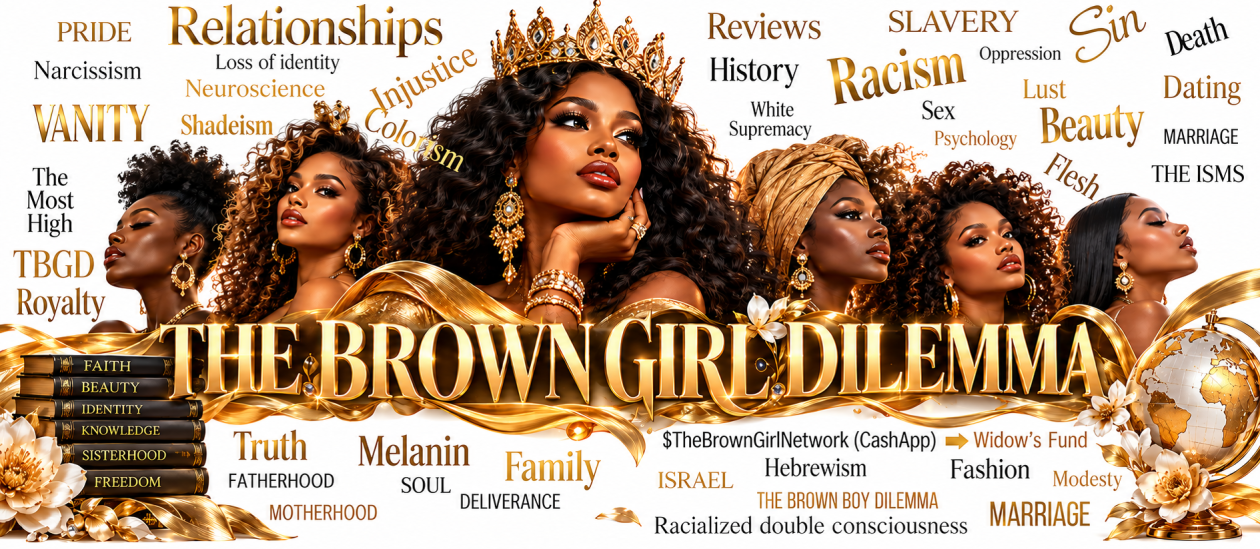

Brown and Black women have long occupied a complicated position within society—desired aesthetically, admired culturally, pursued romantically, yet frequently left emotionally unprotected. Many women experience a painful contradiction: they are celebrated for beauty, sensuality, strength, style, and emotional labor while simultaneously feeling unsupported, unheard, and undervalued in moments requiring protection, commitment, advocacy, or care.
Desire and protection are not the same thing. A woman may be physically admired while emotionally neglected. She may receive attention, compliments, and romantic pursuit while still lacking security, loyalty, empathy, or long-term commitment. This contradiction forms part of what many Brown women describe as an ongoing emotional dilemma in modern relationships and society.
Historically, Black women were often denied the social protections traditionally associated with femininity. During slavery, Black women endured labor exploitation, sexual violence, family separation, and dehumanization while legal systems refused to recognize their vulnerability or humanity. Unlike dominant ideals of womanhood that centered on delicacy and protection, Black women were frequently forced into survival roles.
These historical patterns continue shaping modern perceptions. Scholars have argued that stereotypes portraying Black women as endlessly strong, aggressive, emotionally resilient, or hypersexual contribute to reduced empathy toward their suffering. Society often assumes Brown women can “handle anything,” leading to emotional neglect both socially and relationally.
Media representation reinforces these contradictions. Brown women are frequently celebrated for physical features, fashion influence, sensuality, and cultural style, while their emotional experiences remain overlooked. Music videos, film, advertising, and social media often aestheticize Black femininity without addressing the emotional realities many women face behind the imagery.
In romantic relationships, many Brown women describe feeling deeply desired during casual stages but insufficiently protected in a serious partnership. Protection involves more than physical defense—it includes emotional consistency, honesty, accountability, provision, reassurance, public respect, and advocacy during difficult moments. Many women feel they receive attraction without emotional security.
Colorism further complicates this issue. Brown-skinned and dark-skinned women often navigate different forms of visibility and invisibility in dating culture. Some women may be fetishized for certain features while simultaneously being overlooked for long-term partnerships within societies influenced by Eurocentric beauty standards. This contradiction can affect emotional self-worth and relationship expectations.
Social media culture has intensified performative desire. Online spaces frequently reward men for publicly praising Black women aesthetically while failing to demonstrate emotional maturity or consistent support in real relationships. Compliments and attraction have become highly visible, while responsibility and protection remain inconsistent.
Psychologically, repeated emotional disappointment can lead many Brown women toward hyper-independence. When women repeatedly experience abandonment, betrayal, inconsistency, or emotional neglect, they may begin relying solely on themselves for emotional and financial stability. Over time, survival becomes normalized even when emotional exhaustion develops underneath.
The “strong Black woman” expectation also contributes to this imbalance. Many Brown women are socially conditioned to nurture others, remain emotionally composed, and continue functioning regardless of stress or heartbreak. Because they appear resilient externally, their emotional needs are frequently minimized or ignored.
Economic and social inequalities further influence relationship dynamics. Studies show Black women often carry disproportionate burdens involving caregiving, emotional labor, and financial support within families and communities. Many women become protectors themselves while rarely experiencing reciprocal care.
Spiritually and emotionally, constant survival can become exhausting. Many women desire softness, safety, reassurance, and emotional rest but feel pressured to remain guarded because vulnerability has historically exposed them to disappointment or harm. Emotional fatigue develops when a woman constantly pours into others while receiving little emotional replenishment herself.
Popular culture sometimes romanticizes struggle in Black relationships rather than healing it. Dysfunction, toxicity, emotional unavailability, and instability are often normalized through entertainment and social commentary. Consequently, unhealthy relationship behaviors may become culturally tolerated instead of challenged.
Yet many men genuinely love, respect, and protect Brown women deeply. The issue is not that protection is impossible, but that emotional maturity, accountability, and healthy relational models are often lacking within broader society. Healing requires both men and women to redefine love beyond attraction alone.
Protection also includes defending a woman’s dignity publicly and privately. A protected woman feels emotionally safe expressing vulnerability without fear of ridicule, abandonment, or exploitation. She feels valued beyond physical beauty or utility. Real protection affirms humanity, not merely desirability.
Many Brown women are now challenging older relationship patterns and expectations. Increasingly, women are prioritizing emotional intelligence, consistency, peace, communication, and safety over superficial attraction or social performance. Emotional wellness is becoming more important than simply being desired.
The conversation surrounding Brown women and protection is also connected to broader issues of mental health and self-worth. Women who repeatedly feel emotionally unsupported may internalize beliefs that they must overperform to receive love. Healing involves recognizing that love should not require self-erasure, exhaustion, or constant emotional labor.
Faith traditions often emphasize mutual care, honor, and sacrificial love within relationships. Ephesians 5:25 states, “Husbands, love your wives, even as Christ also loved the church, and gave himself for it” (KJV). The scripture frames love as protective, selfless, and nurturing rather than purely possessive or performative.
Community conversations around Black femininity are increasingly creating space for emotional honesty. Brown women are speaking openly about loneliness, emotional burnout, relationship trauma, hyper-independence, and the longing to feel genuinely protected rather than merely admired. These conversations challenge harmful cultural assumptions about endless female strength.
Ultimately, many Brown women are not asking to be pedestalized or idealized. They are asking to be loved fully and protected genuinely—emotionally, mentally, spiritually, and relationally. Desire without care leaves emptiness. Beauty without safety creates exhaustion. True love requires more than attraction; it requires responsibility, empathy, consistency, and protection of the heart as much as the body.
References
Beauboeuf-Lafontant, T. (2009). Behind the mask of the strong Black woman: Voice and the embodiment of a costly performance. Temple University Press.
Collins, P. H. (2000). Black feminist thought: Knowledge, consciousness, and the politics of empowerment (2nd ed.). Routledge.
Hooks, B. (2001). All about love: New visions. William Morrow.
Hunter, M. (2011). Shake it, baby, shake it: Consumption and the new gender relation in hip-hop. Sociological Perspectives, 54(1), 15–36.
Romero, R. E. (2000). The icon of the strong Black woman: The paradox of strength. Advances in Nursing Science, 23(3), 68–80.
The Holy Bible, King James Version. (1769/2017). Cambridge University Press.
Walker, R. L. (2015). The strong Black woman schema and psychological distress among African American women. Journal of Black Psychology, 41(5), 384–410.
American Psychological Association – Mental Health in Black Communities